
BAAM AI Blog
Writing Web Copy That Works
Good writing web copy isn’t just about putting words on a page - it’s about helping users find, understand, and act on your content quickly and naturally. Because most visitors skim rather than read deeply, copy must...
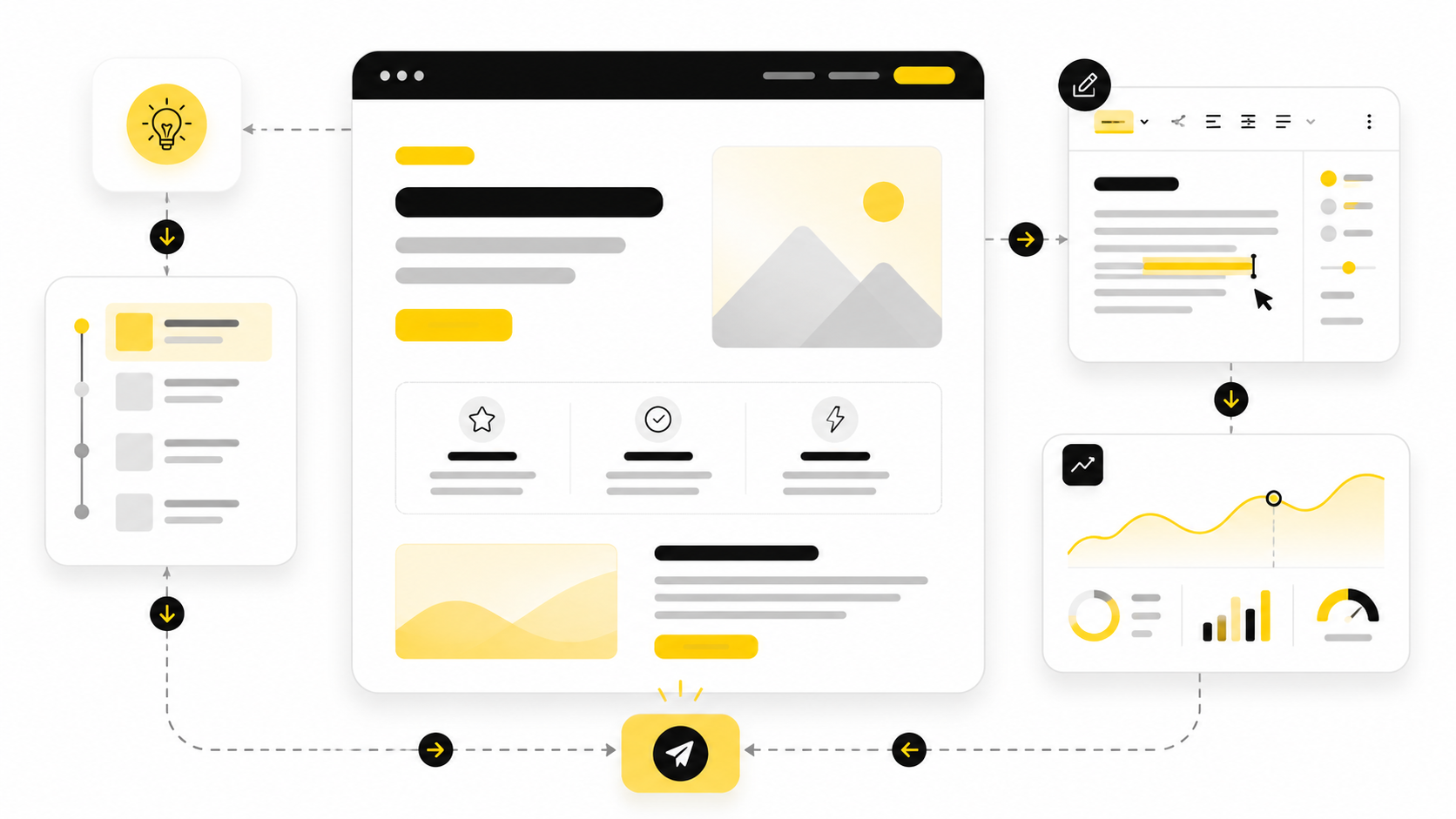
Good writing web copy isn’t just about putting words on a page - it’s about helping users find, understand, and act on your content quickly and naturally. Because most visitors skim rather than read deeply, copy must deliver clear value in the first few seconds. Research shows users read only about 20–28 % of the text on a webpage and often scan in patterns like an “F‑shape” to find the info they need most.
That makes writing for the web fundamentally different from writing for print or long‑form media. You’re competing for attention in a crowded digital environment. Good web copy grabs attention with concise language, relevant structure, and a clear call to action - all while meeting both user goals and search engine signals. When done right, it improves engagement, boosts conversions, and strengthens your site’s performance overall.
Next we’ll explore why web copy matters so much - and how it can make or break your visitor experience.
Why Good Web Copy Matters
Good writing web copy isn’t just about filling a page with words - it’s about engaging visitors quickly and guiding them toward doing something valuable, like signing up for your service or clicking a call‑to‑action. Web users read differently than they do print: most skim or scan a page rather than read every word. That means your copy must prioritize clarity, brevity, and relevance above all else. Researchers find that website visitors typically consume only a fraction of the text on a page, so getting to the point fast is essential for retention and flow.
Clear web copy improves both user experience and conversions. When a visitor lands on your homepage or landing page, they’re asking, “Will this help me?” If your copy answers that effectively in the first few seconds, you build trust and engagement - which leads to better outcomes like form submissions, purchases, or deeper exploration of your site. Well‑written copy that’s easy to scan also improves SEO performance because it helps search engines understand your page’s purpose and relevance.
Ultimately, quality web copy is a strategic tool that aligns user needs with business goals. Whether you’re writing for a homepage, a product page, or a signup flow, every sentence should serve a purpose and lead your reader closer to the action you want them to take.
How Web Copy Differs From Other Writing
Writing for the web is fundamentally different from writing emails, print brochures, or long‑form articles. The key difference lies in purpose and structure. Web copy is concise by necessity and structured for rapid scanning rather than deep reading. Users don’t scroll because they enjoy the prose - they scroll because they want answers or solutions fast. That means your copy should prioritize what’s most important first and break down complex ideas into digestible pieces with clear subheadings, bullets, and straightforward language.
Another major difference is tone and directness. Web readers respond better to conversational, active voice that speaks directly to their needs and challenges. Web copy also tends to be more persuasive, with each sentence deliberately crafted to move a reader toward a specific action, whether that’s clicking a button or submitting a form. Whereas a blog post might aim to inform or entertain, web copy aims to convert - which is why it emphasizes essential information, benefits over features, and a compelling next step.
Finally, web copy must be mindful of search intent and discoverability. Including relevant terms naturally in your copy, headings, and meta information helps ensure your content appears in search results for the queries your audience cares about - without keyword stuffing. This blend of user‑centric writing and smart SEO improves traffic quality and relevance.
Core Components of Effective Web Copy
Effective web copy bridges clarity, persuasion, and usability. These core components aren’t optional adornments - they’re the essential elements that make your writing work:
Clear, Benefit‑Driven Headlines
Your headline is often all a visitor will read - and most users read just headlines and nothing else. A strong headline tells users what they’ll get and why it matters right away.
Audience‑Centered Messaging
Great web copy speaks directly to the reader’s needs, challenges, and goals. That means understanding your audience’s language and pain points before writing.
Scannable Structure
Short paragraphs, clear subheadings, and bullet points help readers skim efficiently. It’s not just formatting - it’s how people read on screens, and your structure should reflect that reality.
Compelling Calls to Action
Every page needs a clear next step. Whether it’s “Sign Up Today,” “Get Your Quote,” or “Start Free Trial,” your CTA should be direct, specific, and tied to a single visitor goal.
Concise, Conversational Language
Keep sentences short, avoid jargon, and write as if you’re talking to someone face‑to‑face. This makes your message more accessible and persuasive to a broader audience.
Together, these elements form the backbone of persuasive web copy that helps users find what they’re looking for, understand the value, and act on it. They also create a better experience for both human readers and search engines.
Next: A Proven Web Copywriting Framework
Now that you understand why writing web copy is different and what components matter most, it’s time to explore a proven framework that organizes your writing process logically and consistently for every page. In the next section, we’ll break down that structure step‑by‑step and show how it keeps your copy purposeful and conversion‑driven.
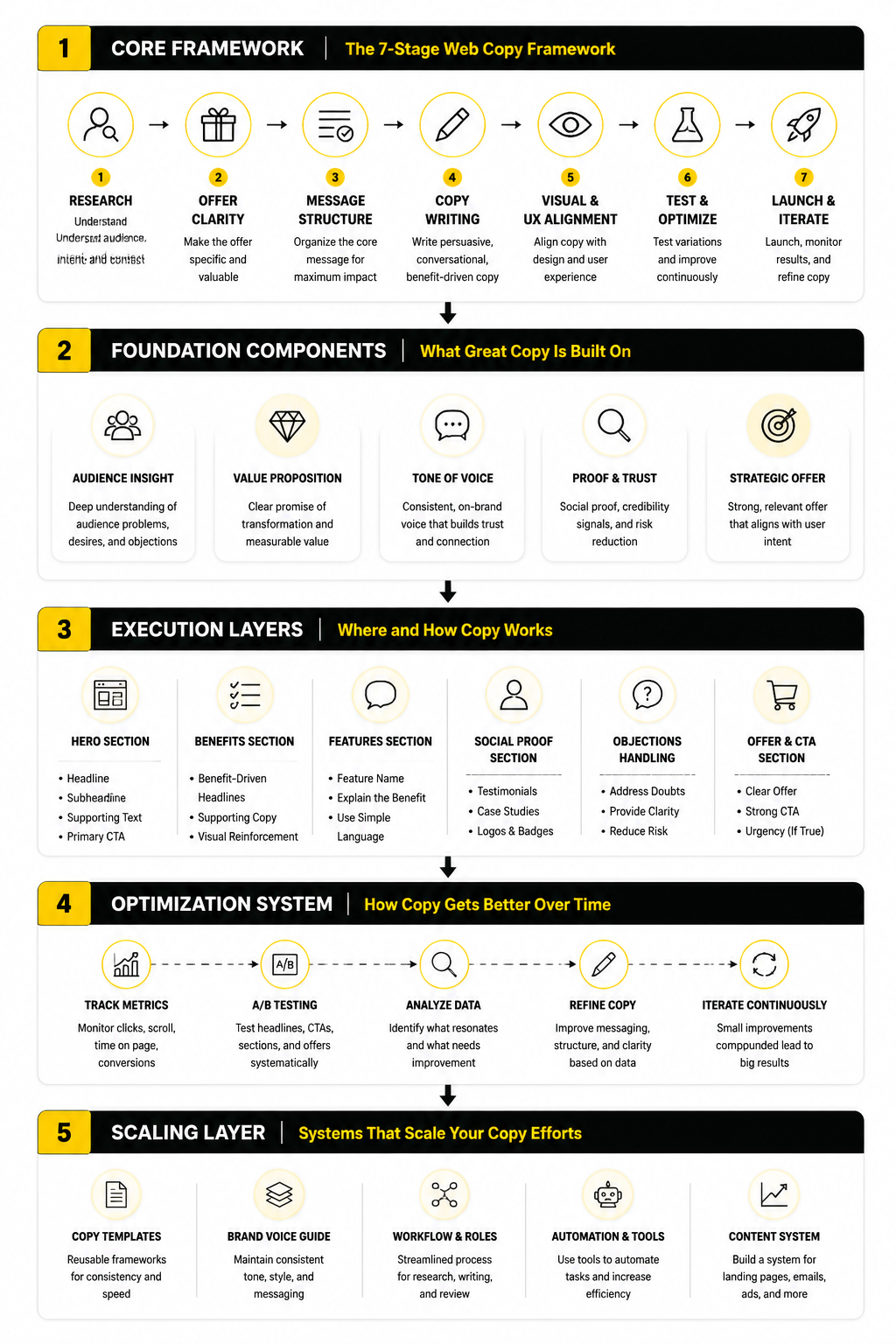
A Practical Framework for Writing Web Copy
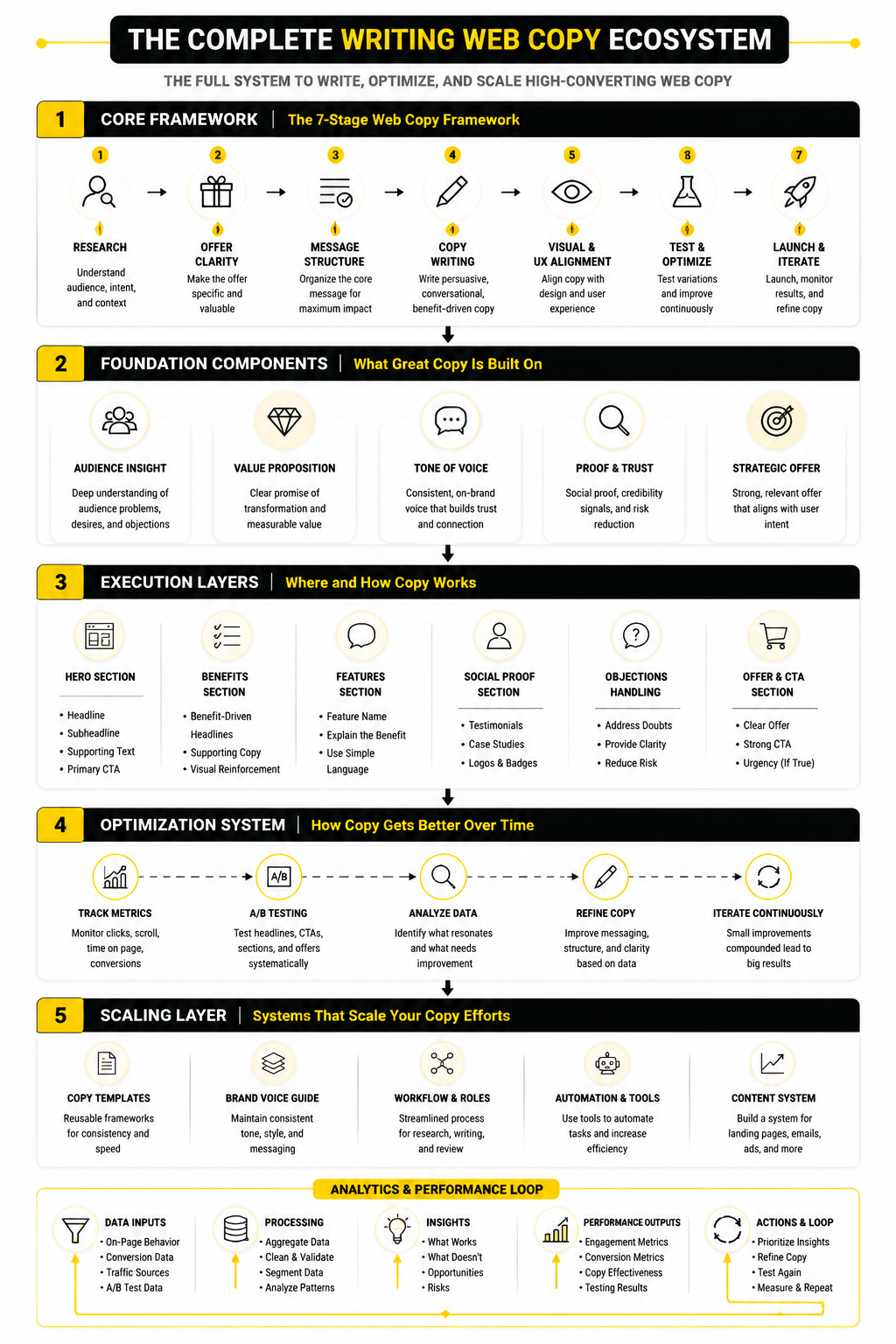
Before you write a single sentence, it helps to follow a repeatable process that keeps your writing web copy purposeful and aligned with what your audience actually needs. This isn’t theory - this is the sequence professional copywriters use, step by step.
Step 1 - Start With Audience Intent
The first step in any effective web copy project is research. That means identifying who you’re writing for and what they intend to accomplish on your site or page. Are they researching solutions, comparing tools, or ready to buy? Write down their biggest questions, struggles, and desired outcomes before you draft a word.
Step 2 - Define the Page Goal
Once you understand intent, decide what action you want the visitor to take. Do you want them to sign up, request a quote, download a guide, or start a free trial? A clear page goal keeps your messaging focused and prevents “meandering copy”, which confuses readers and dilutes conversions.
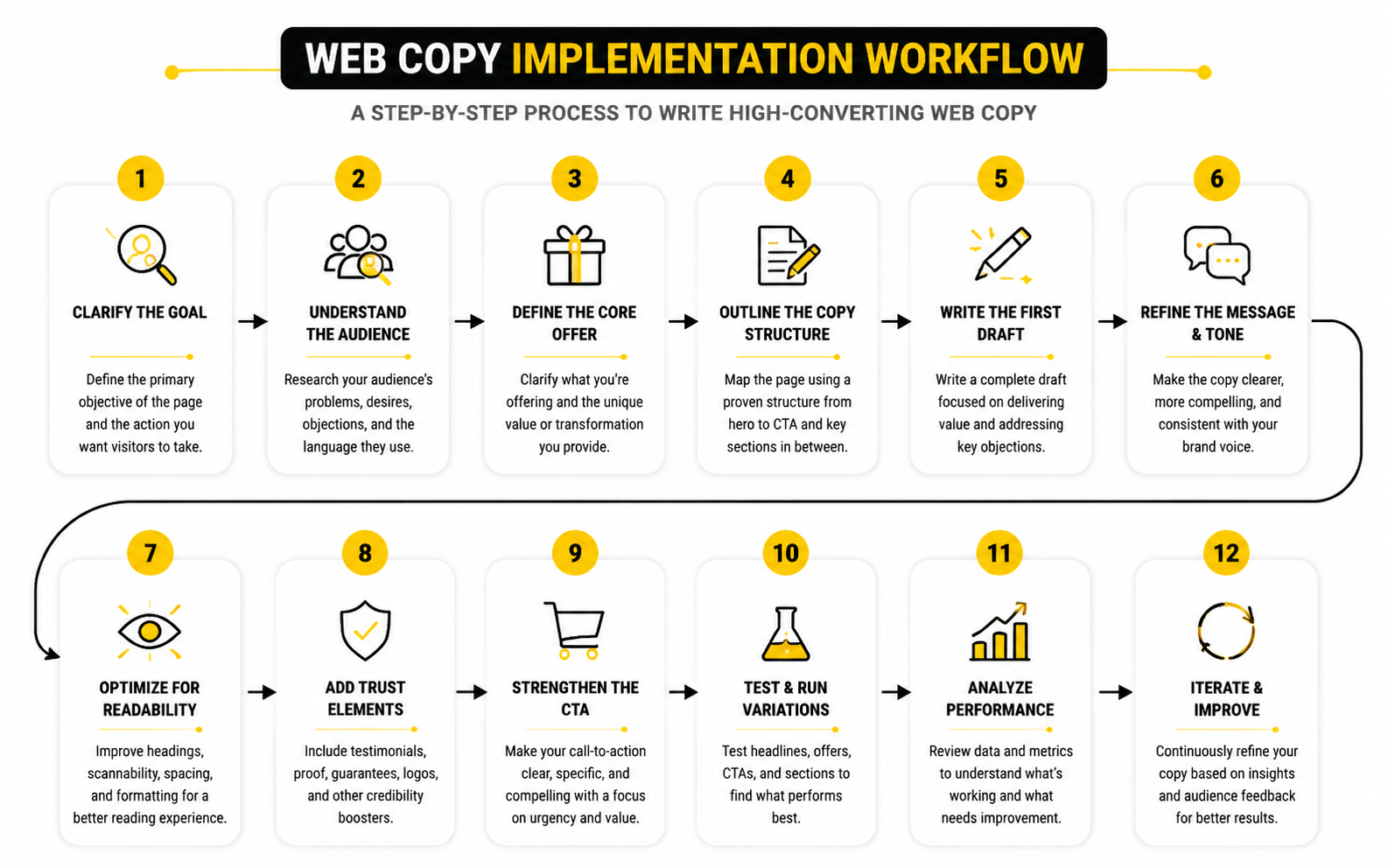
Step 3 - Craft Strong Messaging Hierarchy
Now organize your copy into a hierarchy from most important to least:
This structure gives readers a logical flow and allows people who skim to still grasp the main point. Professional copywriters often sketch this hierarchy before writing paragraphs.
Step 4 - Write in Scannable Blocks
People reading on screens tend to scan rather than read every line. Break your copy into short paragraphs, use clear subheadings, and add bullet lists where it makes sense. Each section should focus on one idea, and sentences should be concise. This makes your writing web copy easier to absorb and more inviting to read.
Step 5 - Focus on Benefits, Not Just Features
Web visitors are ultimately asking, “What’s in it for me?” Features alone rarely persuade - benefits do. For example, instead of saying “Our tool automates reporting,” translate it to “Spend less time on manual reports and more time on growth.” Centering benefits makes your copy more compelling.
Step 6 - Add Trust Signals and Proof
To reduce hesitation, integrate trust elements such as testimonials, case results, recognizable client logos, security badges, or statistics that reinforce your claims. These elements reassure readers that others have succeeded with your product or service.
Step 7 - End With a Clear Call to Action
Your CTA should be unambiguous, action‑oriented, and tied directly to the goal you defined in Step 2. Phrases like “Start your free trial today,” “Get your personalized quote,” or “Download the guide” tell users exactly what will happen next and why it matters.
Step 8 - Test and Iterate
Great web copy isn’t set in stone. Use A/B testing to compare headlines, CTA text, layouts, or even value propositions. Small adjustments in wording can dramatically improve performance because you’re optimizing what real users respond to.
By following this step‑by‑step process, your writing web copy becomes systematic rather than guesswork, and you solve real user problems while driving measurable results.
How to Measure the Success of Your Writing Web Copy
When you’re writing web copy, the real test isn’t how clever your words are - it’s whether they move your audience in measurable ways. That’s why data isn’t just supplementary; it’s central to understanding performance, prioritizing improvements, and communicating true impact to stakeholders. Good measurement turns subjective opinions about copy into objective insights you can act on.
What the Numbers Tell You
Metrics help you diagnose where copy is working - and where it isn’t. They reveal whether your messaging aligns with user intent, holds attention, and drives conversion goals. For example, a high bounce rate paired with low time on page can show that the copy isn’t engaging visitors or matching expectations set by the traffic source. Conversely, improvements in conversion rates after updating headlines or CTAs suggest more persuasive copy that better guides readers toward action.
Core Performance Metrics
Here are the most actionable analytics when evaluating web copy effectiveness:
Benchmarks That Matter
In 2026, landing pages with dedicated copy still convert very differently depending on quality:
Performance Signals and What to Do
Interpreting the Data
Numbers are only useful if they lead to action. For example, if analytics show that pages with slower load times have significantly higher exits and lower conversions, prioritize technical performance alongside your copy revisions because speed affects not just rankings but engagement.
Data also becomes more meaningful when segmented by source, device, and intent. A page converting well from email traffic but poorly from paid ads tells you that your copy might suit people already familiar with your brand but fails to persuade new prospects - a signal to tighten benefit messaging for those new audiences.
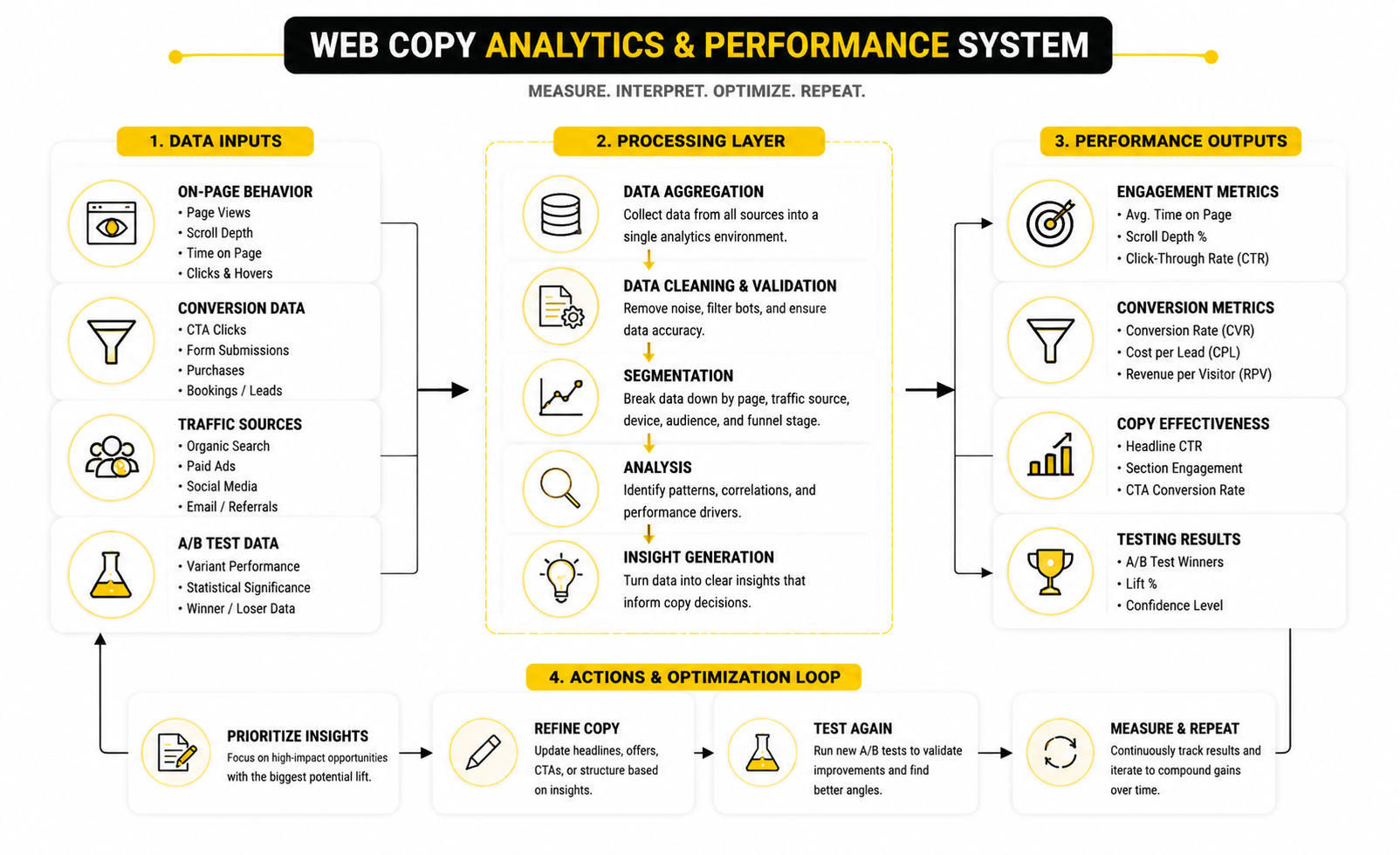
By connecting analytics with your writing web copy decisions, you transform guesswork into strategy - one where every metric guides a specific iteration or optimization toward measurable improvements.
Advanced Considerations for Writing Web Copy
Once you’ve mastered the basics of writing web copy and learned how to structure it and measure performance, it’s time to think strategically about higher‑order challenges that separate good copy from great copy. These advanced considerations deal with trade‑offs, scaling issues, and long‑term risks that most teams overlook.
Balancing Persuasion With Authenticity
High‑converting copy often walks a fine line between persuasion and pushiness. If your language is too aggressive, you risk alienating readers who sense manipulation. On the other hand, too soft a tone can leave potential customers unsure or unmotivated. Striking the right balance requires continuous testing and empathy with your audience’s mindset, especially for nuanced offerings like professional services or high‑value software.
Part of this balance is ethical: your copy should never overpromise results that your product or service can’t deliver. Users might convert initially, but over‑hyping value erodes trust and increases churn. Sustainable growth comes from setting clear, honest expectations while still highlighting benefits effectively.
Adapting Copy Across Customer Journey Stages
Not all web copy serves the same intent. Writing for someone at the top of the funnel - someone who is just learning about a problem you solve - looks very different from writing for a returning visitor ready to buy. Early‑stage copy should educate and build trust, while later‑stage copy should focus more on differentiation and closing.
This requires mapping your content to intent signals from analytics and segmentation data. For example, users coming from informational blog posts might need more context and reassurance than visitors arriving from a targeted paid ad. Tailoring your copy this way improves relevance and performance across the funnel.
Scaling Copy in Larger Organizations
As teams and content volume grow, maintaining quality and consistency in your web copy becomes a scaling challenge. Many organizations try templated or modular copy systems to streamline pages and reuse top‑performing sections, but this can backfire if it leads to rigidity or sameness.
A better approach is to define copy principles - guidelines about tone, value emphasis, and audience language - and pair them with shared templates that allow flexibility. Training and documentation help less experienced writers produce copy that still feels aligned with your brand and strategy.
Internationalization and Localization
If your audience spans multiple languages or cultures, good web copy requires careful localization beyond literal translation. Concepts that resonate in one language might confuse or lose impact in another. For example, idioms, humor, or culturally specific metaphors may need reworking to maintain clarity and persuasion.
Localization also includes adapting metrics and proof points that matter in different markets. A case study from one region may not carry the same weight elsewhere. Testing localized versions with native audiences helps ensure your messaging connects deeply and avoids miscommunication.
Risks of Over‑Optimization
A common trap in advanced copy strategy is over‑optimization: constantly tweaking headlines, CTAs, and wording without a clear hypothesis or statistical confidence. While iterative testing is valuable, too much tinkering can fragment learning and obscure big insights.
Set clear thresholds for when to stop a test and when to declare a winner. Focus on meaningful changes that drive measurable business outcomes rather than chasing marginal gains that don’t move the needle meaningfully.
Integrating Copy With Wider Marketing Systems
Finally, writing web copy shouldn’t happen in isolation from other marketing systems. Your messaging must align with email campaigns, paid advertising, social media, and even sales conversations. Consistency across these channels reinforces brand memory and reduces friction in the customer journey.
Tools that centralize messaging frameworks, audience segments, and performance data help teams coordinate copy efforts at scale. When your copy ecosystem speaks the same language internally and externally, your overall experience feels more coherent and persuasive to your audience.
By approaching writing web copy with these advanced perspectives, you improve your copy from tactical execution to strategic leverage - aligning messaging not just with words, but with growth, trust, and long‑term audience engagement.
What is writing web copy?
Writing web copy refers to crafting text specifically for websites, focused on clarity, engagement, and convincing readers to take an action like signing up, buying, or exploring further.
How is web copy different from regular writing?
Web copy prioritizes scanning, clarity, and conversion. Unlike essays or reports, it’s structured for quick comprehension with headlines, bullets, and strong calls to action that guide reader behavior.
How long should web copy be?
There’s no universal length, but each page should include just enough text to answer the visitor’s questions and prompt the next step. Concise pages often convert better when they still address intent fully.
Can web copy help with SEO?
Yes. Clear, relevant copy that naturally uses terms your audience searches for helps search engines understand context and can improve visibility, especially when headings and meta descriptions align with keyword intent.
How do I write headlines that convert?
Strong headlines state a clear benefit or solve a problem for the visitor. They focus on “what’s in it for me” rather than clever phrasing alone.
Should I focus more on features or benefits?
Benefits matter more. Features describe what your product is, while benefits explain why it matters to the reader. Web copy that highlights benefits typically drives higher engagement.
How often should I test my web copy?
Regularly. Running A/B tests on headlines, CTAs, or section order - especially after traffic accumulates - helps refine messaging based on real user behavior instead of guesswork.
What metrics show if my web copy is effective?
Key indicators include conversion rate, bounce rate, click‑through rate, and engagement metrics like time on page and scroll depth. Together, they reveal how well the copy meets user needs and drives action.
Do I need a different style for mobile users?
Yes. Mobile readers often scan even more quickly. Use shorter sentences, larger buttons, and prominent CTAs near the top of the page to improve readability on smaller screens.
How does web copy fit into the overall marketing strategy?
Web copy should align with your broader messaging in ads, emails, and social content to create a consistent experience. When all touchpoints reinforce the same value propositions, conversions improve.
Build a stronger local presence with BAAM AI
Turn your website, Google profile, social channels, and AI visibility into one growth engine
Most businesses do not need more random marketing activity. They need a consistent presence system that helps the right people find them, trust them, and take action. BAAM AI brings strategy, local SEO, website updates, Google Maps visibility, social content, AI-search readiness, media production, and reporting into one practical monthly engine.
If you want your marketing to keep working after the campaign ends, start with a free BAAM AI presence audit. See how your business shows up today and where the fastest visibility wins are at BAAM AI.