
BAAM AI Blog
Working as a Copywriter: What It Really Means and How the Career Is Structured
Starting a career working as a copywriter means entering a role at the intersection of creativity, communication, and persuasive writing - one that has grown steadily as brands invest more in digital content and...

Starting a career working as a copywriter means entering a role at the intersection of creativity, communication, and persuasive writing - one that has grown steadily as brands invest more in digital content and conversion‑driven marketing. At its core, copywriting is about using words that influence people to take action - whether that’s clicking on a link, subscribing to a newsletter, or buying a product. In today’s marketing ecosystem that spans websites, social media, email, and ads, copywriters are valued for their ability to turn ideas into words that drive results.
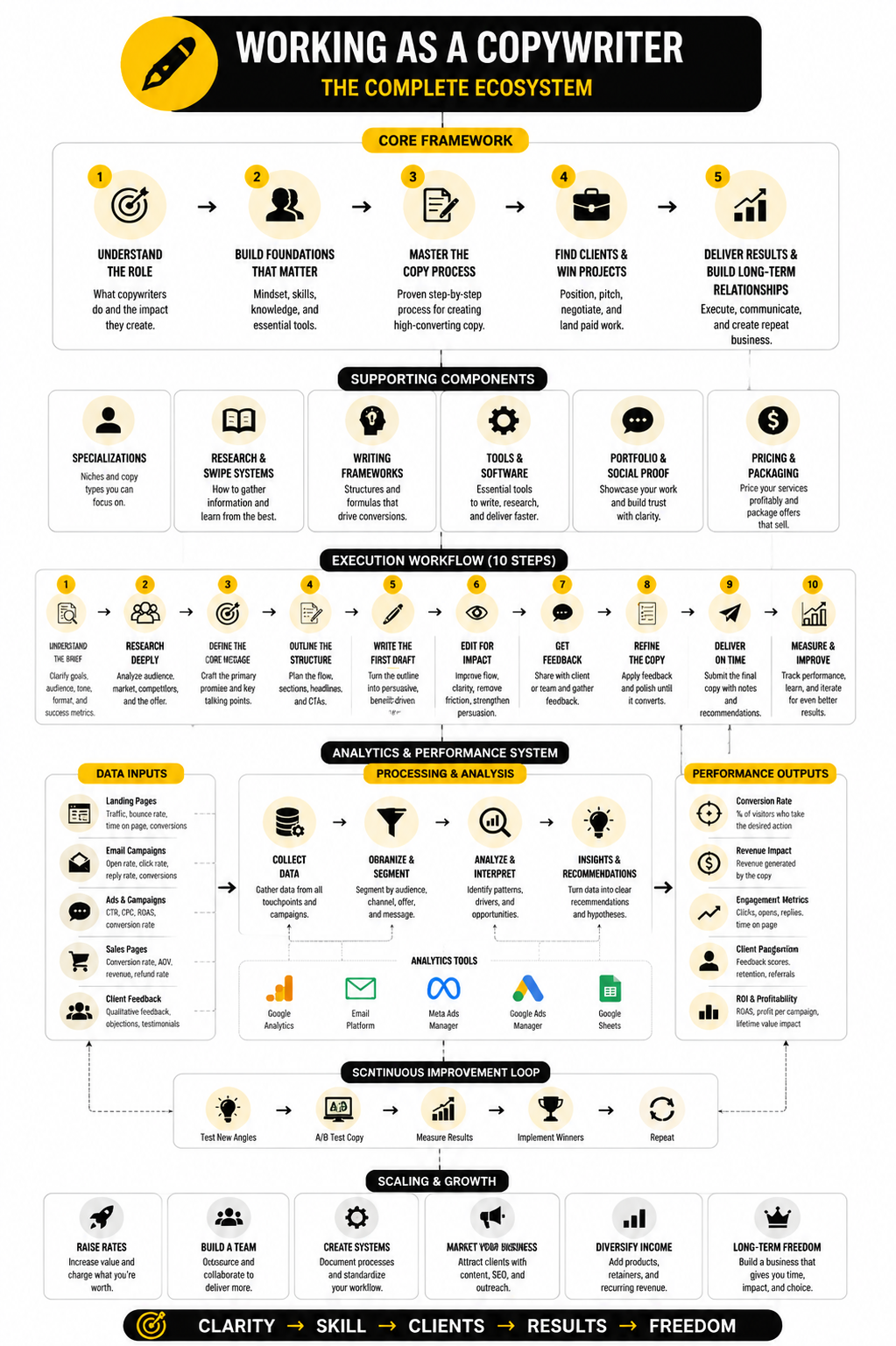
Below is the structure of this guide and what you’ll learn in each section:
Writing good copy is both an art and a science - it requires creativity and structure, as much as it requires understanding audiences and business goals. Let’s dive deeper.
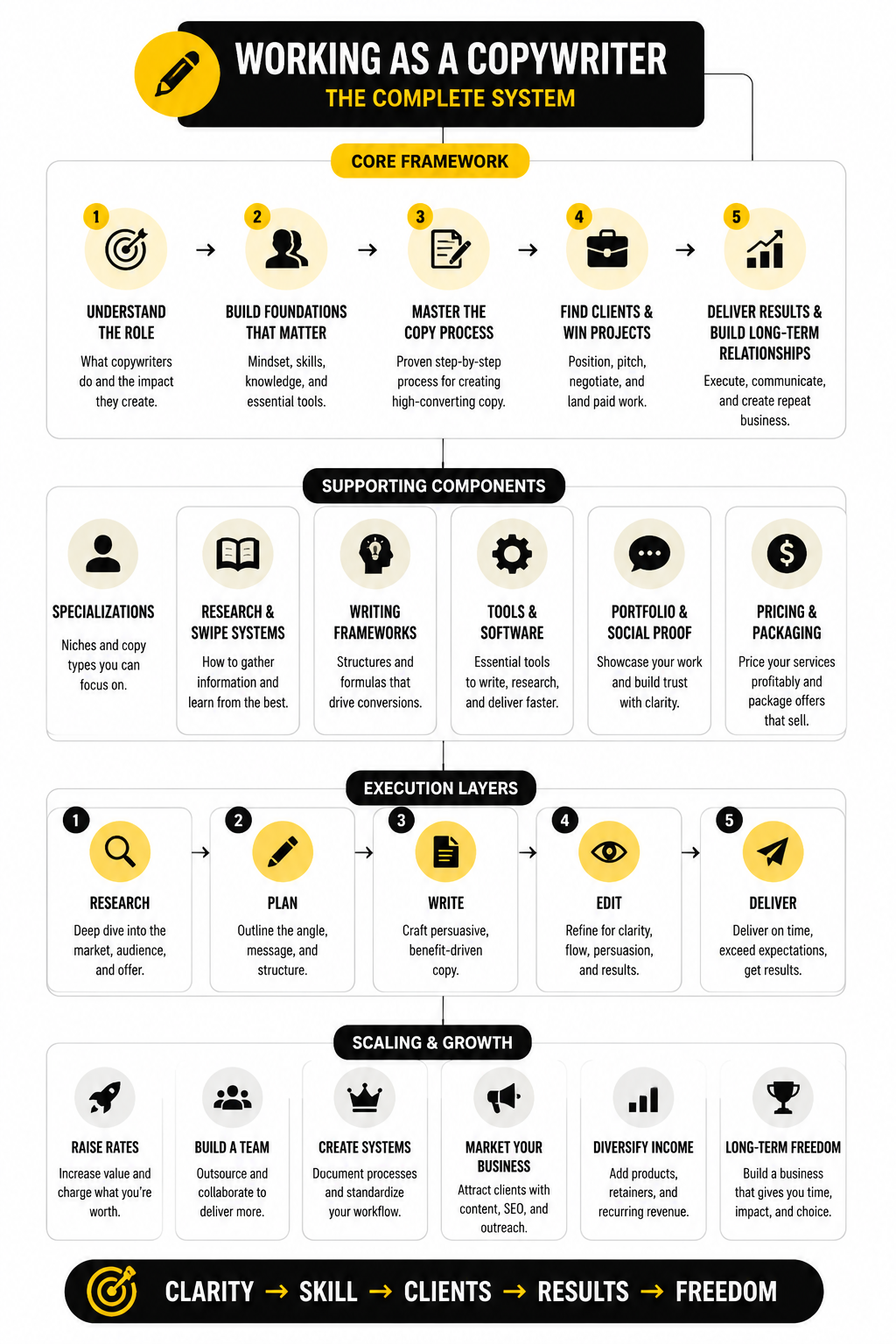
A Practical Framework for Copywriter Skills
Working as a copywriter isn’t just writing words - it’s applying a structured set of skills and processes that help you craft messages that persuade and convert. Professionals use frameworks not because they make writing rigid, but because they provide a dependable sequence of thinking that supports creativity with strategic intent.
At the foundation of any copywriting framework is understanding what the audience needs, what motivates them, and how to guide them step‑by‑step toward a desired outcome. Competency models used by professionals break copywriting into clear skill areas that grow as you advance from beginner to expert. These include audience psychology, marketing knowledge, writing and editing craft, project management, and strategic thinking.
Here’s a practical way to think about the skills framework when you’re working as a copywriter:
As you build your abilities across these categories, you can apply this framework to every project - from small social ads to long‑form email campaigns - and know exactly where you need to develop further.
Working within a skill framework helps you grow methodically, track your progress, and communicate your value to clients or employers as you navigate a long‑term career in copywriting.
Core Components of a Copywriter’s Work
When you break down what you actually do day‑to‑day as someone working as a copywriter, several core work components show up again and again across contexts - whether you’re in an agency, part of an in‑house marketing team, or freelance.
1. Research and Audience Understanding
Good copy doesn’t start with writing - it starts with understanding. Copywriters conduct research on the product or service, competitive landscape, audience motivations, and often SEO keywords for digital content.
2. Drafting and Writing
This is the visible part of the job: crafting headlines, body text, calls‑to‑action, and other copy assets. It’s iterative, with first drafts followed by refinement based on feedback and performance data.
3. Editing and Refinement
Most professional copywriters spend significant time editing - the real craft of making words sharper, clearer, and more persuasive. Revision often involves multiple rounds with stakeholders.
4. Collaboration Across Teams
Copywriters rarely work in isolation. You’ll frequently sync with designers, marketers, product leads, or clients to ensure copy aligns with visual elements and broader strategy.
5. Performance Review and Optimization
For digital copywriters especially, tracking metrics like click‑through rates or conversion improves future work. A/B testing copy and learning from results is part of professional practice.
These components are present in most copywriting environments - from writing a landing page to scripting email sequences - and help frame your role as both creative and analytical.
Working as a copywriter means continually balancing quality writing with strategic thinking, all while meeting real business objectives.
What It’s Like to Work as a Copywriter Day‑to‑Day
Working as a copywriter in practice means turning strategy into tangible work every single day. While every professional’s workflow varies by niche and client, there are consistent patterns that experienced writers follow to stay productive and aligned with goals. What separates average work from high‑impact copy is not just talent but process discipline and regular habits that support both creativity and efficiency.
A typical day usually starts with checking project briefs, deadlines, and any performance data from ongoing campaigns. Copywriters need to stay close to both the task at hand and the outcomes those words are meant to drive, whether that’s clicks, sign‑ups, or brand engagement. Many writers set aside designated research time before drafting anything, because understanding context - product benefits, audience mindset, and competitive positioning - is essential for effective copy. As one industry guide notes, research often takes up more time than writing itself. (themuse.com)
The rhythm of work can vary dramatically based on whether you’re freelance, in‑house, or agency‑side. Freelancers might juggle multiple client workflows and invoicing, while in‑house writers collaborate closely with marketers and designers on integrated campaigns. Across settings, skilled practitioners build routines that help them switch between thinking mode for big ideas and execution mode for sharp, concise writing.
Step‑by‑Step Implementation Process
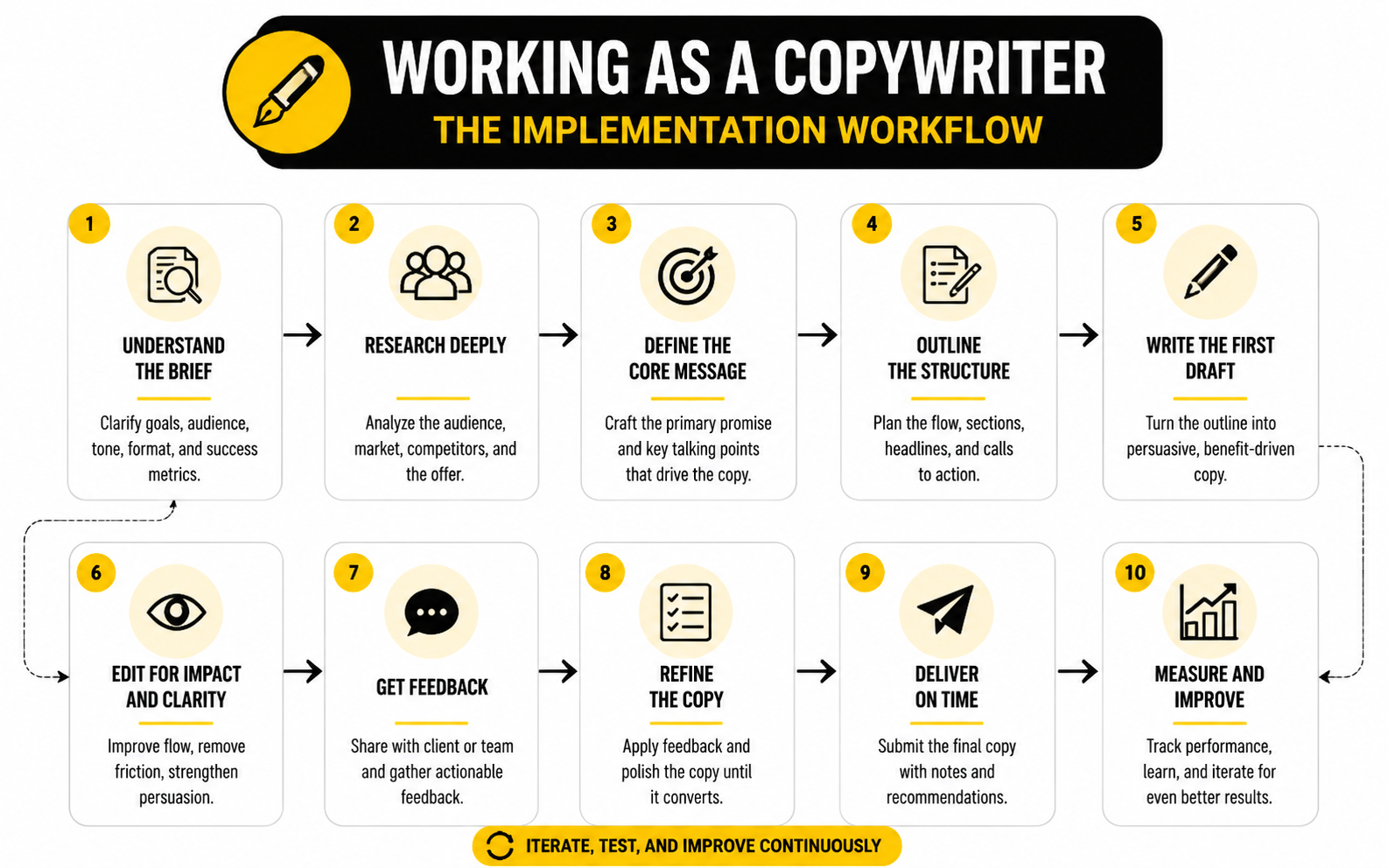
To make the abstract idea of “working as a copywriter” concrete, here’s a repeatable process that aligns with how many professionals structure their assignments:
Every project begins with a clear brief outlining goals, audience, tone, and deliverables. Spend time upfront asking questions or reviewing documentation to avoid rewrites later.
Look at how competitors are framing similar messages. This isn’t about copying others; it’s about spotting opportunities to differentiate your copy.
Before drafting sentences, sketch the flow of your message: key points, benefits, emotional drivers, and logical progression. This scaffolding makes actual writing faster and more persuasive.
Write with clarity and purpose, then refine ruthlessly. Good copy gets sharper with each pass - cutting filler, tightening calls‑to‑action, and strengthening benefit statements.
Share your draft with stakeholders and integrate feedback thoughtfully. Professional copywriters treat revision as part of the craft, not a burden.
Once live, monitor relevant metrics like click‑through rates or conversions. Use data to iterate and improve future copy projects.
This workflow isn’t rigid; it’s a living process that adapts to each assignment. But by following these steps, copywriters maintain consistency and quality, even under pressure.
Working as a copywriter demands both structure and flexibility - structure to ensure work meets objectives, and flexibility to adapt messages to real people rather than abstract concepts. By embedding process into your daily routine, you build reliability that clients and teams can trust.
Data, Analytics, and What the Numbers Mean When You’re Working as a Copywriter
When you’re working as a copywriter, your words need to do more than look good - they need to drive measurable outcomes. That’s where data and analytics come in: metrics tell you whether your copy actually influences behavior, not just whether it sounds polished. Without interpreting numbers correctly, you’re guessing instead of optimizing - and that’s a fast way to leave money and insights on the table.
Why Metrics Matter for Copywriters
Professionals don’t track numbers just for reporting. They turn analytics into actionable insights that improve future work, justify creative decisions, and show real business value. Good copywriting analytics help you:
Core Performance Metrics and How to Read Them
Research into copywriting effectiveness consistently highlights a short list of key indicators that are most connected to copy performance and business outcomes.
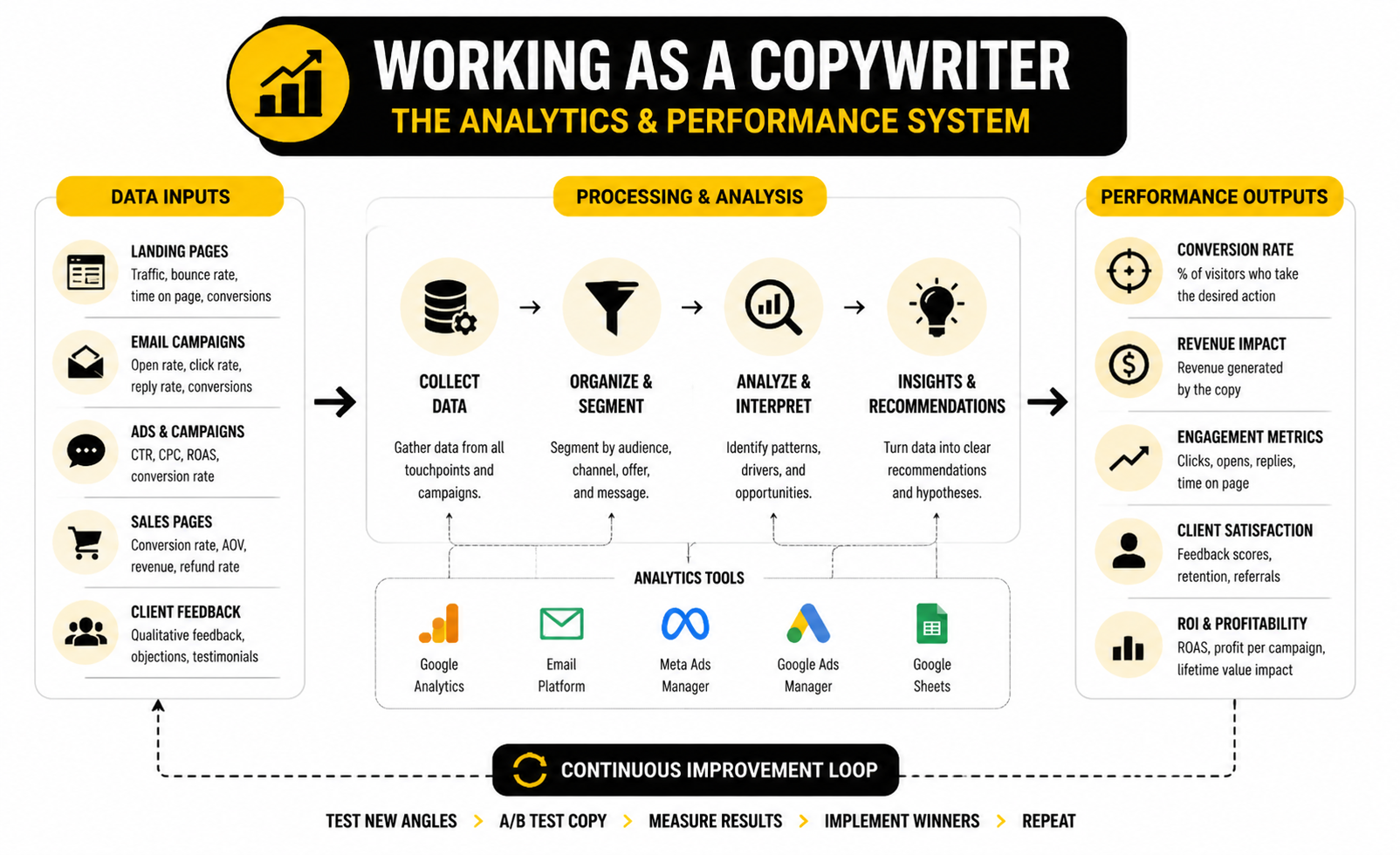
Click‑Through Rate (CTR)
CTR measures how many people who see your headline, link, or call‑to‑action click on it. In copywriting terms, CTR shows whether your opening hook and headline are compelling enough to generate interest. A low CTR can mean your value proposition, wording, or placement isn’t grabbing attention.
Conversion Rate
Conversion rate shows the percentage of visitors who complete a desired action after interacting with your copy - such as buying a product, filling out a form, or signing up for a newsletter. This is often the most important metric for evaluating persuasive copy because it links words directly to outcomes.
Bounce Rate and Time on Page
Bounce rate tells you how many visitors leave without engaging further, while time on page indicates how long they stay. Together, these metrics help you interpret whether the copy held attention. A high bounce rate with low time on page usually points to relevance or clarity issues rather than writing quality alone.
Engagement and Sharing
For social and content‑driven copy, engagement (likes, shares, comments) and social amplification are indirect signals of resonance. They don’t always convert immediately, but high engagement indicates your copy sparked enough value or emotion for readers to engage.
Benchmarks and What They Tell You
Raw numbers don’t mean much without context. Benchmarks help you interpret performance:
Turning Analytics Into Action
Knowing the numbers is only half the job - the real value comes when you use them to refine your copy and improve results:
Well‑interpreted data doesn’t just measure success - it guides strategic decisions that make your work more persuasive, relevant, and profitable.
Advanced Considerations for Experienced Copywriters
Working as a copywriter beyond the basics means confronting real-world challenges and strategic tradeoffs that separate average work from high‑impact, sustainable careers. As the profession evolves, experienced practitioners need to think about where they focus their energy - not just how they write words. Today’s top copywriters are not just writers; they’re strategists, analysts, and business consultants who understand how their work influences broader marketing outcomes.
The Changing Landscape and Strategic Tradeoffs
The copywriting landscape in 2026 is marked by rapid technological disruption and market saturation. While AI can generate draft copy quickly, it can also produce average, indistinct content that fails to differentiate brands in crowded markets. Skilled human copywriters avoid this “AI slop” by focusing on strategic messaging, emotional specificity, and clear outcomes that tools alone cannot replicate. (4, 9)
As AI takes on commodity copy tasks, the real value lies in work that is strategic, research‑driven, and results‑oriented. Copywriters are increasingly expected to interpret data, design persuasive structures, and prove impact on business goals - not just produce text that “sounds good.” This shift requires a tradeoff between writing output and analytical leadership. Writers who master metrics and customer behavior insights command higher rates than those who simply produce words.
Risks and Professional Pitfalls
Working as a copywriter at a professional level comes with specific risks you must manage beyond creative challenges:
Scaling Beyond Hourly Work
At a certain point in your career, trading time for money stops scaling. You may find yourself maxed out on hours, unable to take on more clients without sacrificing quality or personal time. Solving this requires strategic positioning and often means specializing in a niche where you offer premium services rather than generalist copy. (6)
Advanced copywriters often:
Growth at this level is less about more copy and more about strategic influence - integrating your writing with brand positioning, data interpretation, and revenue outcomes.
Long‑Term Career Risks and Rewards
As you deepen your career, you must balance craft passion with market realities. The profession’s growth means more competition, but it also means more opportunity for those who can prove results. Clients increasingly judge copywriters by outcomes - not just aesthetics. Being able to connect your work to measurable gains in traffic, engagement, or sales expands your professional credibility. (12)
In this context, working as a copywriter becomes a strategic business role rather than a purely creative one. The best practitioners blend persuasion, analytics, and industry insight to deliver measurable impact - and that’s what sustainable success looks like in an evolving marketplace.
1. What does working as a copywriter entail?
It involves creating persuasive, clear, and strategically aligned written content that drives specific outcomes, such as sales, sign-ups, or brand engagement.
2. Do I need a degree to become a copywriter?
While a degree can help, practical writing skills, portfolio experience, and understanding marketing principles are far more valuable for landing clients or roles. (themuse.com)
3. How do I build a portfolio if I’m new?
Start by creating sample work, volunteering for nonprofits, or contributing to blogs. Show versatility and ability to adapt your style to different audiences. (indeed.com)
4. Is freelance copywriting more profitable than in-house work?
Freelance rates can be higher per project, but income is less predictable. In-house roles provide stability and benefits. Many copywriters combine both approaches. (indexify.co.uk)
5. What skills are most important for success?
Core skills include audience research, persuasive writing, marketing knowledge, SEO, project management, and editing. Mastery of these drives performance and client satisfaction. (procopywriters.co.uk)
6. How do copywriters measure success?
Success is measured through metrics like click-through rates, conversion rates, engagement, and bounce rates. Interpreting these numbers helps refine strategy. (copy-house.fr)
7. Can AI replace copywriters?
AI can draft basic copy, but human writers are essential for nuance, brand voice, strategic messaging, and persuasive storytelling that resonates with audiences.
8. How do I scale my copywriting career?
Specialize in a niche, offer premium services, develop frameworks or templates, and pursue retainer relationships to create scalable and sustainable revenue streams. (6)
9. What industries need copywriters most?
Ecommerce, SaaS, B2B marketing, digital agencies, and content marketing are consistently high-demand sectors for skilled copywriters. (procopywriters.co.uk)
10. How do I stay competitive in the field?
Continuously update your skills, track performance metrics, adapt to new platforms, and learn emerging tools like AI-assisted copywriting while maintaining a distinct human voice. (9)
11. What are common mistakes new copywriters make?
Common errors include skipping research, ignoring audience needs, writing overly complex or vague copy, and neglecting performance tracking. Avoiding these builds credibility faster. (themuse.com)
12. How long does it take to become proficient?
Competence varies, but consistent practice, studying marketing principles, and analyzing results can make a copywriter proficient in 6–12 months, with mastery developing over several years. (indeed.com)
Build a stronger local presence with BAAM AI
Turn your website, Google profile, social channels, and AI visibility into one growth engine
Most businesses do not need more random marketing activity. They need a consistent presence system that helps the right people find them, trust them, and take action. BAAM AI brings strategy, local SEO, website updates, Google Maps visibility, social content, AI-search readiness, media production, and reporting into one practical monthly engine.
If you want your marketing to keep working after the campaign ends, start with a free BAAM AI presence audit. See how your business shows up today and where the fastest visibility wins are at BAAM AI.