
BAAM AI Blog
Why Your Inbound Marketing Firm Needs a Strong Brand Strategy
Brand strategy is a key component of any inbound marketing firm’s growth. If you're running or working with an inbound marketing firm, you know that it’s not just about attracting leads; it’s about positioning your...
Why Your Inbound Marketing Firm Needs a Strong Brand Strategy
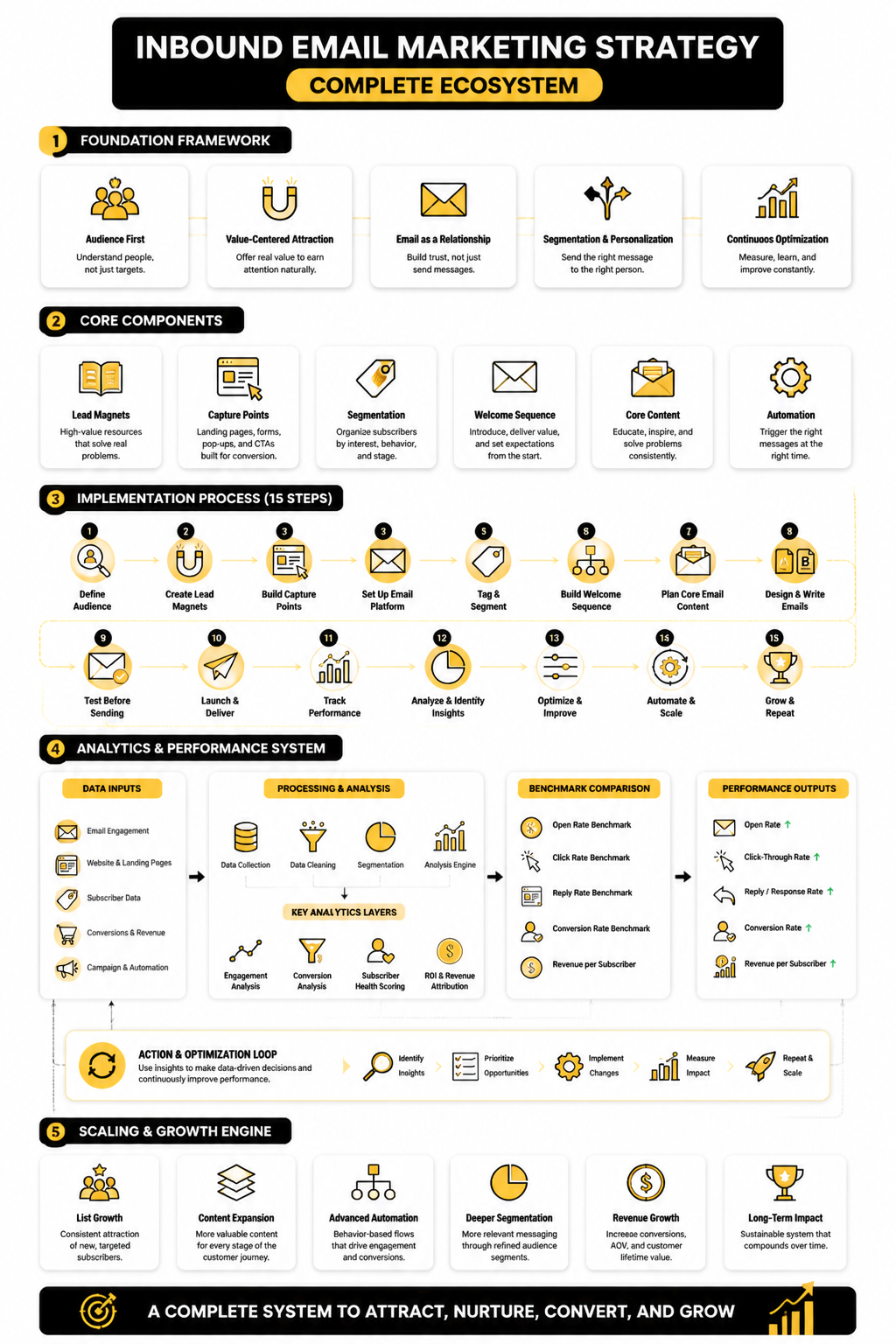
Brand strategy is a key component of any inbound marketing firm’s growth. If you're running or working with an inbound marketing firm, you know that it’s not just about attracting leads; it’s about positioning your firm in a way that appeals to the right audience. A well-executed brand strategy ensures that your inbound marketing efforts are more effective and impactful.
Define Your Unique Value Proposition
A unique value proposition (UVP) sets your firm apart in a competitive marketplace. It explains why a client should choose your inbound marketing services over others. This UVP should reflect your firm’s strengths, such as your approach to content marketing, your use of automation tools, or your expertise in a particular niche. Defining your UVP is not only about showcasing your services but also about aligning them with the needs of your target audience.
Incorporating a clear UVP into your marketing efforts will ensure consistency across all channels and make your firm’s messaging more compelling. It helps potential clients immediately understand what makes you different and why they should trust you with their business.
Focus on Building Trust Through Content
Content is the heart of inbound marketing. Your firm should focus on creating high-quality, educational content that addresses the challenges and questions of your target audience. Whether it's blog posts, white papers, or social media posts, each piece of content should offer real value to your audience.
Building trust through content involves more than just publishing articles. It’s about creating content that is informative, relevant, and timely. By addressing customer pain points and providing solutions, you create a resource that helps prospects see your firm as a trusted authority in your industry. Additionally, using content to share success stories and testimonials from existing clients can further solidify trust in your brand.
Consistency Across Channels
Your inbound marketing firm’s brand should remain consistent across all digital channels, from your website and social media profiles to email newsletters and paid advertising campaigns. Consistent branding builds recognition and helps you stand out in a crowded market.
This means your messaging, design, and tone should align seamlessly across all touchpoints. A potential client should be able to interact with your firm across multiple platforms and instantly recognize the voice and style of your brand. Consistency also extends to the user experience. Make sure that the navigation, design, and content on your website are all aligned with your brand’s voice and mission.
Leverage Automation Tools to Strengthen Your Brand
One of the biggest advantages of inbound marketing is the ability to use automation tools to streamline processes and reinforce your brand. From email marketing to social media scheduling and lead nurturing, automation allows you to stay in touch with your prospects and clients consistently.
Incorporating automation tools into your inbound marketing strategy can improve efficiency and allow your firm to scale its efforts. For example, using a tool like GoHighLevel enables you to manage all your leads, track client interactions, and customize messaging based on customer behavior. This kind of automation ensures your marketing messages are personalized, timely, and relevant.
Why Personalization Matters in Inbound Marketing
Personalization is another essential element of a successful inbound marketing strategy. By tailoring your messages to the individual needs and behaviors of your prospects, you make them feel valued and understood. Personalization can include anything from personalized email subject lines to product recommendations based on past interactions.
Tools like ManyChat offer powerful ways to automate personalized interactions with your leads and customers, making them feel more engaged with your brand. By using personalized experiences, you’ll see higher engagement rates and greater conversion potential. It’s no longer enough to send generic messages - your clients want to feel like they are a part of your brand’s story.
Monitoring and Measuring Your Brand’s Performance
Once your inbound marketing campaigns are running, you need to regularly monitor and measure their effectiveness. This involves tracking key performance indicators (KPIs) such as website traffic, social media engagement, email open rates, and lead conversions.
Regular analysis will help you understand what’s working and where there are opportunities for improvement. Make adjustments to your strategies as necessary to align your marketing efforts with your overall business goals. Tools like Brevo and ClickFunnels can help you track these KPIs and provide you with actionable insights to improve your inbound marketing campaigns over time.
In conclusion, building a strong brand strategy is essential for any inbound marketing firm. By clearly defining your value proposition, focusing on trust-building content, maintaining consistency, leveraging automation, personalizing your efforts, and regularly measuring performance, your firm can ensure long-term success and stand out in a competitive market.
How to Implement Inbound Marketing for Your Firm
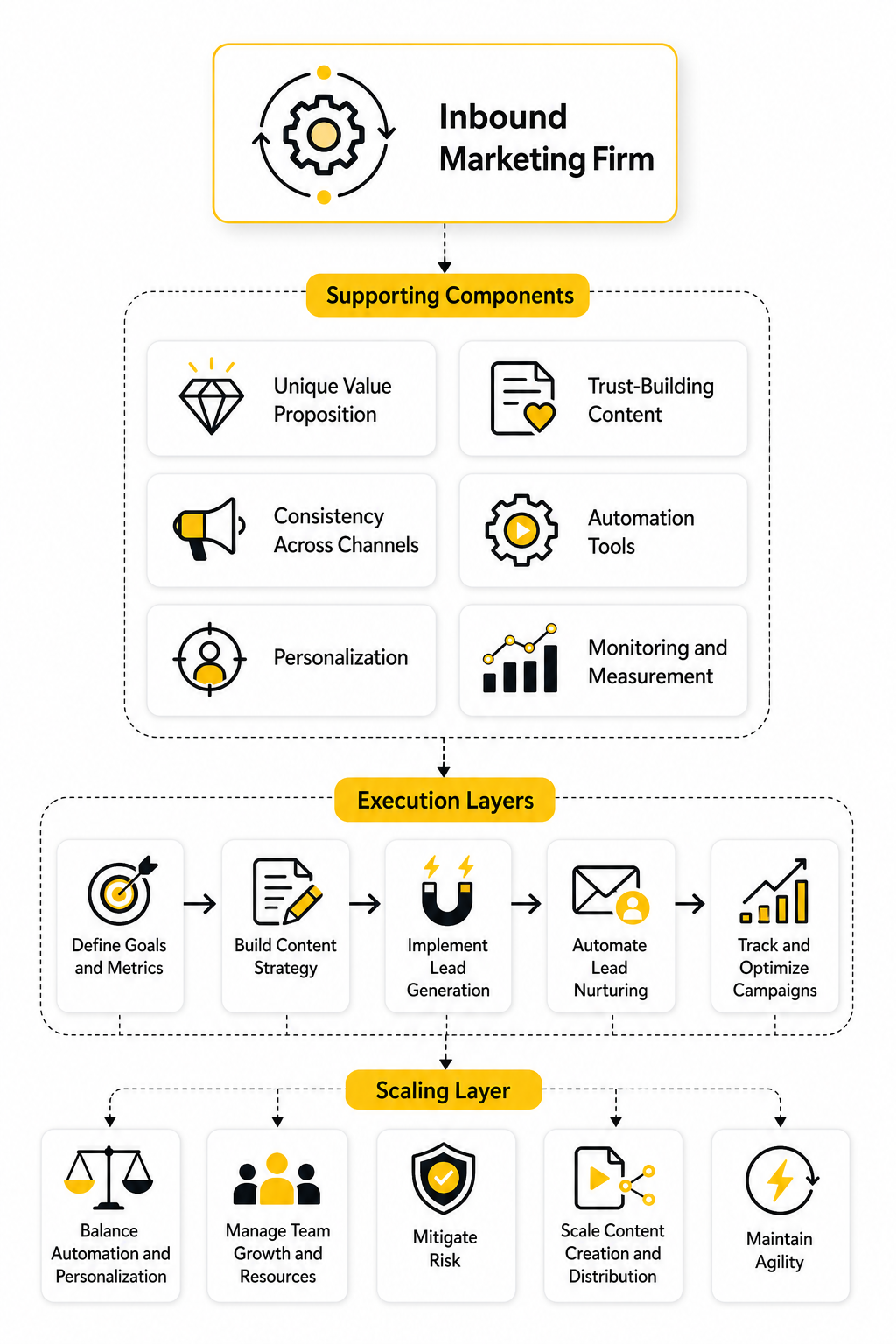
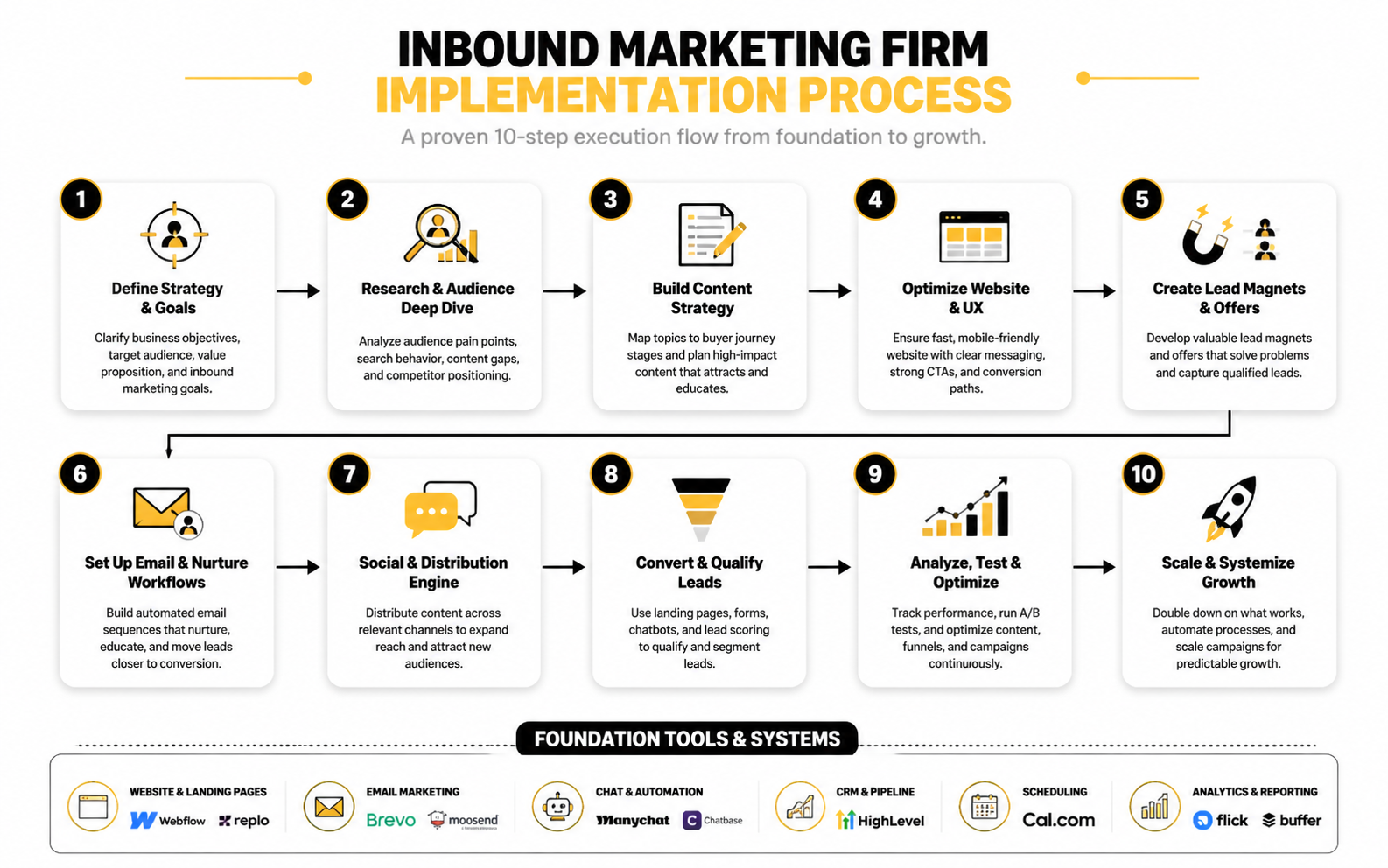
Now that we’ve discussed the importance of a strong brand strategy and the key elements of inbound marketing, it’s time to look at the implementation process. This is where theory meets action, and it’s crucial to approach the process in a structured, step-by-step manner. Follow these steps to ensure your inbound marketing firm runs efficiently and achieves long-term success.
Step 1: Define Your Goals and Metrics
Before diving into any inbound marketing activities, you need to clearly define your goals. Are you aiming to increase brand awareness, generate more leads, or boost customer retention? Whatever your objectives, make sure they align with your overall business goals.
Once your goals are set, establish key performance indicators (KPIs) to track progress. Common inbound marketing metrics include:
These metrics will provide valuable insights into the effectiveness of your strategies and allow you to make adjustments as needed.
Step 2: Build Your Content Strategy
Content is the backbone of inbound marketing. Start by developing a content strategy that aligns with your target audience’s interests, needs, and pain points. You’ll want to create content that not only attracts visitors but also engages and nurtures them through the sales funnel.
Your content strategy should include:
The key to successful content is consistency. Develop a content calendar to ensure that content is regularly produced and distributed across all platforms.
Step 3: Implement Lead Generation Tactics
Once your content is up and running, focus on generating leads. Use tools like landing pages, lead magnets, and forms to capture the contact information of visitors. A well-designed landing page with a compelling call to action can significantly increase conversion rates.
A great tool for this process is GoHighLevel, which can help automate and track your lead generation efforts. Using features like workflow automation and lead tracking, GoHighLevel ensures that no potential client slips through the cracks.
Step 4: Use Automation to Nurture Leads
After capturing leads, it’s time to nurture them. Implement automated workflows that send targeted content to leads based on their behavior. For example, if a lead downloads an e-book on social media strategies, follow up with a series of emails offering additional tips and case studies related to social media.
Automation tools like ManyChat can help with this process by automatically sending personalized messages to leads at the right moment. These tools ensure your firm stays top-of-mind without requiring manual intervention for each contact.
Step 5: Track and Optimize Your Campaigns
The final step in the implementation process is to track and optimize your inbound marketing efforts. Regularly review the KPIs you set in Step 1 and use them to assess the performance of your campaigns. This will help you identify areas for improvement and make data-driven decisions.
For example, if you notice that a particular type of blog post generates a lot of leads but low engagement, it may be time to experiment with new content formats or promote the post through paid advertising.
Using tools like ClickFunnels and Brevo, you can A/B test different strategies, such as subject lines, landing page designs, or email content. These tools help you optimize your campaigns, ensuring that each lead generation effort yields the best possible results.
By following these five steps, your inbound marketing firm will be on its way to achieving sustainable growth and success.
The Power of Analytics and Measurement in Inbound Marketing
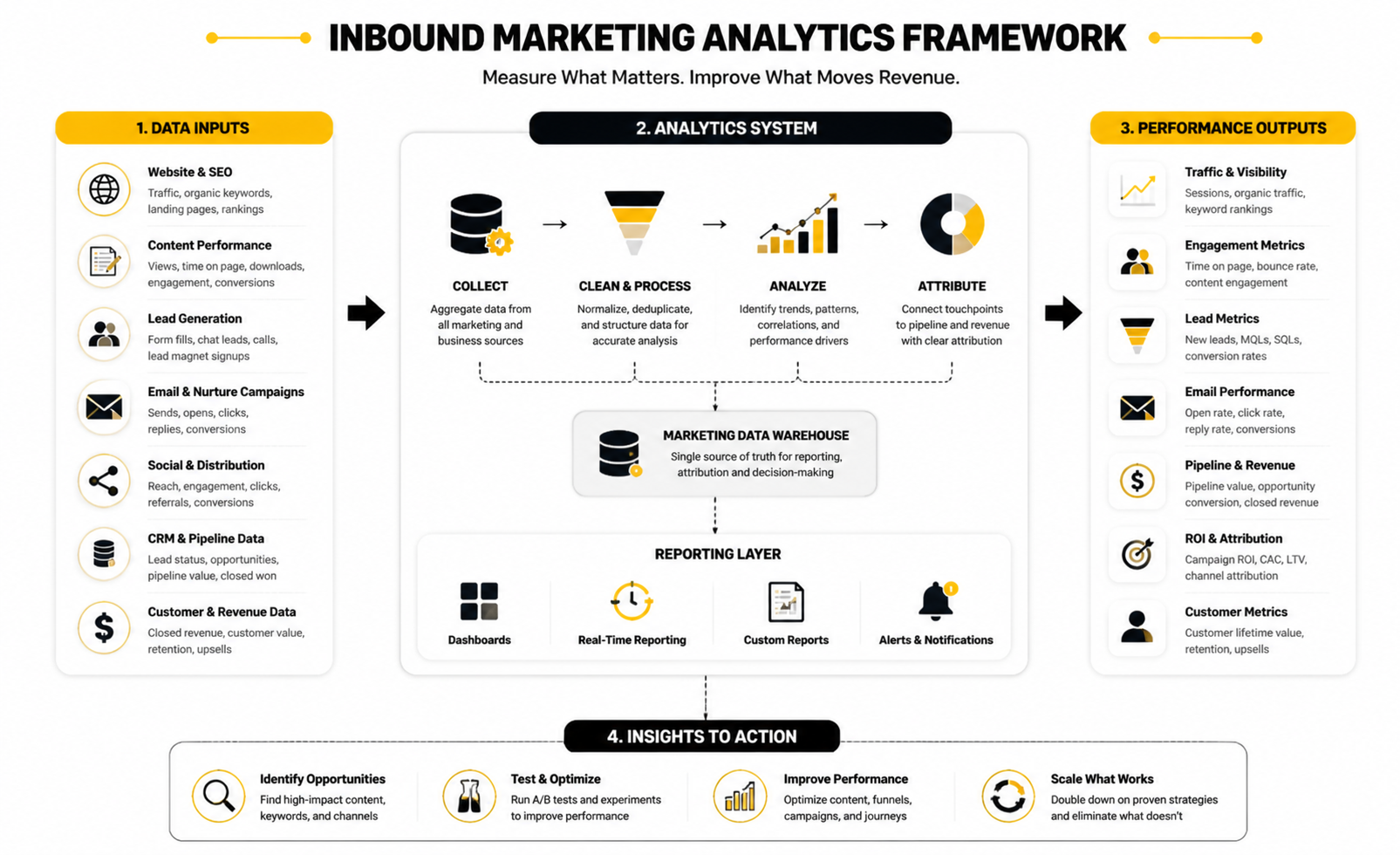
In order to refine and improve your inbound marketing strategies, you need to track and measure their performance. Analytics and data help you understand what's working, what's not, and where there’s room for improvement. Without proper measurement, you’re essentially flying blind, making decisions based on assumptions instead of hard facts.
Key Metrics to Track for Inbound Marketing Success
When running an inbound marketing campaign, the metrics you track will provide key insights into the effectiveness of your strategies. Here are some of the most important metrics to monitor:
How to Interpret Data and Take Action
It’s important to understand what the numbers mean so you can take appropriate action. For example, a drop in website traffic could indicate that your SEO efforts need a boost or that your content isn’t resonating with your audience anymore. On the other hand, an increase in lead generation without a corresponding increase in conversions could signal a mismatch between your offers and what your audience actually wants.
When interpreting your data, always consider the context. A sudden spike in traffic might look like success at first, but if that traffic isn't converting, it’s not really driving business growth. Similarly, improving your conversion rates is often a more important signal of success than just generating more traffic.
Using tools like GoHighLevel and ClickFunnels, you can track all of these metrics in one place, making it easier to see the bigger picture and adjust your marketing strategies as needed. These platforms also allow you to set up automated reporting so you can monitor key performance indicators (KPIs) in real time.
Benchmarks for Inbound Marketing Success
Benchmarks provide context to your data. They allow you to compare your results against industry standards or your own historical performance. While benchmarks vary by industry, some general benchmarks for inbound marketing include:
While benchmarks are helpful, it’s also important to track your progress against your own previous results. Incremental improvements are often a sign that your strategy is working, even if you're not hitting industry benchmarks right away.
Why Analytics Matter for Continuous Improvement
Inbound marketing isn’t a “set it and forget it” strategy. It requires constant monitoring and tweaking to achieve the best results. Analytics provide the data you need to make informed decisions, improve campaign performance, and increase your ROI.
By consistently tracking your marketing efforts, you can adjust your tactics to better serve your audience, refine your content strategy, and ultimately build stronger customer relationships.
Scaling Your Inbound Marketing Firm: Advanced Strategies and Considerations
As your inbound marketing firm grows, so too will the complexity of your operations. At this stage, it's important to scale intelligently. Scaling involves more than just increasing your marketing spend or doubling down on your best-performing tactics. It requires an advanced strategy that takes into account resource allocation, risk management, and long-term sustainability. In this section, we’ll cover some expert-level considerations for scaling your firm and the strategic tradeoffs that come with it.
Balancing Automation and Personalization
As you scale, you’ll be tempted to automate more and more aspects of your inbound marketing. Automation tools, like GoHighLevel and ClickFunnels, can help you streamline repetitive tasks, such as email marketing and lead nurturing. However, it’s crucial not to sacrifice personalization for efficiency.
At scale, you can still personalize your campaigns, but it will require a more sophisticated approach. Segmentation of your audience based on behaviors, needs, and preferences allows you to deliver tailored messages at scale. The challenge is ensuring that your automated workflows remain relevant and feel individualized to your customers. Too much automation can make your firm appear impersonal, so be sure to strike the right balance.
Managing Team Growth and Resource Allocation
As your firm grows, so will the need for additional resources. Hiring more team members and managing increased workloads will become a key part of scaling. One strategic tradeoff here is the balance between quality and quantity.
On one hand, adding more team members can help you scale faster and handle a larger client base. On the other hand, you’ll need to ensure that the quality of your work doesn’t decline. Outsourcing some tasks or leveraging specialized contractors for specific campaigns might be a good option to preserve the quality of your output while scaling.
Furthermore, the tools and software you use will also scale with your team. Implementing platforms that integrate with each other (like Brevo for email marketing and CRM integration) can help manage this increased complexity. The challenge lies in choosing the right platforms that grow with your firm and help streamline operations without introducing unnecessary friction.
Identifying Risks as You Scale
Scaling any business comes with inherent risks. In inbound marketing, these risks might include overextending your budget, investing in tools that aren't the right fit for your needs, or losing the personal touch that makes your firm unique. It’s important to be aware of these potential pitfalls and plan for them.
For example, investing heavily in paid media campaigns to drive traffic and leads may provide immediate results, but over-reliance on paid traffic can be risky. If your firm doesn't have strong organic reach or a diversified lead generation strategy, you could find yourself dependent on platforms like Google or Facebook, where changes in algorithms can have a direct impact on your business.
Mitigating these risks involves continuous monitoring and staying agile. Diversifying your lead-generation strategies, such as strengthening SEO efforts or using organic social media campaigns, can help spread your risk. You can also use A/B testing to assess the effectiveness of your strategies, making sure you’re always optimizing and not overcommitting to a single tactic.
Scaling Content Creation and Distribution
At scale, producing high-quality content consistently can be a challenge. As your firm grows, you’ll need to consider expanding your content team or using external resources. One way to streamline this process is by repurposing existing content. For instance, a well-written blog post can be turned into a series of social media posts, an email campaign, or even a podcast episode.
To avoid burnout, consider implementing a content strategy that includes user-generated content (UGC). Encourage your clients to contribute testimonials, case studies, or other content that aligns with your brand. This not only helps with content creation but also builds stronger client relationships.
Content distribution also becomes more complex as your firm grows. The number of platforms, channels, and formats you use to distribute content must be optimized for maximum reach. Automated tools like ManyChat can assist with content distribution by managing engagement across multiple channels, saving time while ensuring your content gets in front of the right people.
Maintaining Agility Amidst Growth
As your inbound marketing firm grows, it's important to maintain agility. Larger firms often face the challenge of becoming too rigid in their processes, which can slow down innovation and responsiveness. Ensure that your team remains flexible and adaptable as you scale.
Encourage an agile approach to project management, where experimentation is welcomed and lessons learned from one campaign are quickly applied to the next. This culture of constant iteration and improvement is what will keep your inbound marketing firm competitive and innovative, even as you grow.
In summary, scaling an inbound marketing firm requires careful planning and strategic execution. By balancing automation with personalization, managing team growth wisely, mitigating risks, optimizing content creation, and maintaining agility, you can ensure sustainable growth while still delivering high-quality services to your clients.
An inbound marketing firm specializes in strategies that attract customers through relevant content and interactions, rather than through traditional outbound tactics like cold calls. They focus on building long-term relationships with clients through content marketing, SEO, social media, and lead nurturing.
Inbound marketing is focused on attracting and nurturing potential customers through valuable content and interactions, while traditional marketing relies on direct, interruptive methods such as TV ads, radio spots, and cold calling.
A strong inbound marketing strategy typically includes content creation, search engine optimization (SEO), social media marketing, email campaigns, and lead generation tactics like landing pages and calls to action.
Inbound marketing is a long-term strategy. Typically, it takes about 6 to 12 months to start seeing significant results, as it requires time to build content, establish SEO rankings, and nurture leads through the funnel.
Success can be measured using metrics like website traffic, conversion rates, lead generation, customer acquisition cost, and return on investment (ROI). Using analytics tools such as Google Analytics or platforms like GoHighLevel helps track these metrics.
Scaling requires balancing automation with personalization, managing increased workload, and ensuring quality content creation. As you scale, it’s important to use the right tools, like ClickFunnels, and hire skilled team members to maintain efficiency and quality.
Start by understanding your target audience’s needs and pain points. Create informative and valuable content that addresses these challenges. Consistency in publishing content, optimizing for SEO, and leveraging social media for distribution will ensure your content reaches and resonates with potential customers.
Yes, inbound marketing is highly effective for B2B companies. By focusing on creating valuable content, such as case studies, whitepapers, and detailed blogs, B2B firms can attract and nurture leads, build credibility, and establish trust with decision-makers.
Tools like ManyChat for automated messaging, Brevo for email campaigns, and GoHighLevel for lead management and CRM integration are powerful for automating and streamlining inbound marketing efforts.
Content creation is arguably the most crucial element of inbound marketing. It serves as the foundation for attracting, engaging, and converting leads. Without valuable, relevant content, it’s hard to sustain an inbound marketing strategy effectively.
Build a stronger local presence with BAAM AI
Turn your website, Google profile, social channels, and AI visibility into one growth engine
Most businesses do not need more random marketing activity. They need a consistent presence system that helps the right people find them, trust them, and take action. BAAM AI brings strategy, local SEO, website updates, Google Maps visibility, social content, AI-search readiness, media production, and reporting into one practical monthly engine.
If you want your marketing to keep working after the campaign ends, start with a free BAAM AI presence audit. See how your business shows up today and where the fastest visibility wins are at BAAM AI.