
BAAM AI Blog
Why Online Direct Marketing Matters Now
The reason online direct marketing matters now is not that “digital is growing.” That part is obvious. The real reason is that businesses are being pushed into a harder environment where every click, lead, call, and...
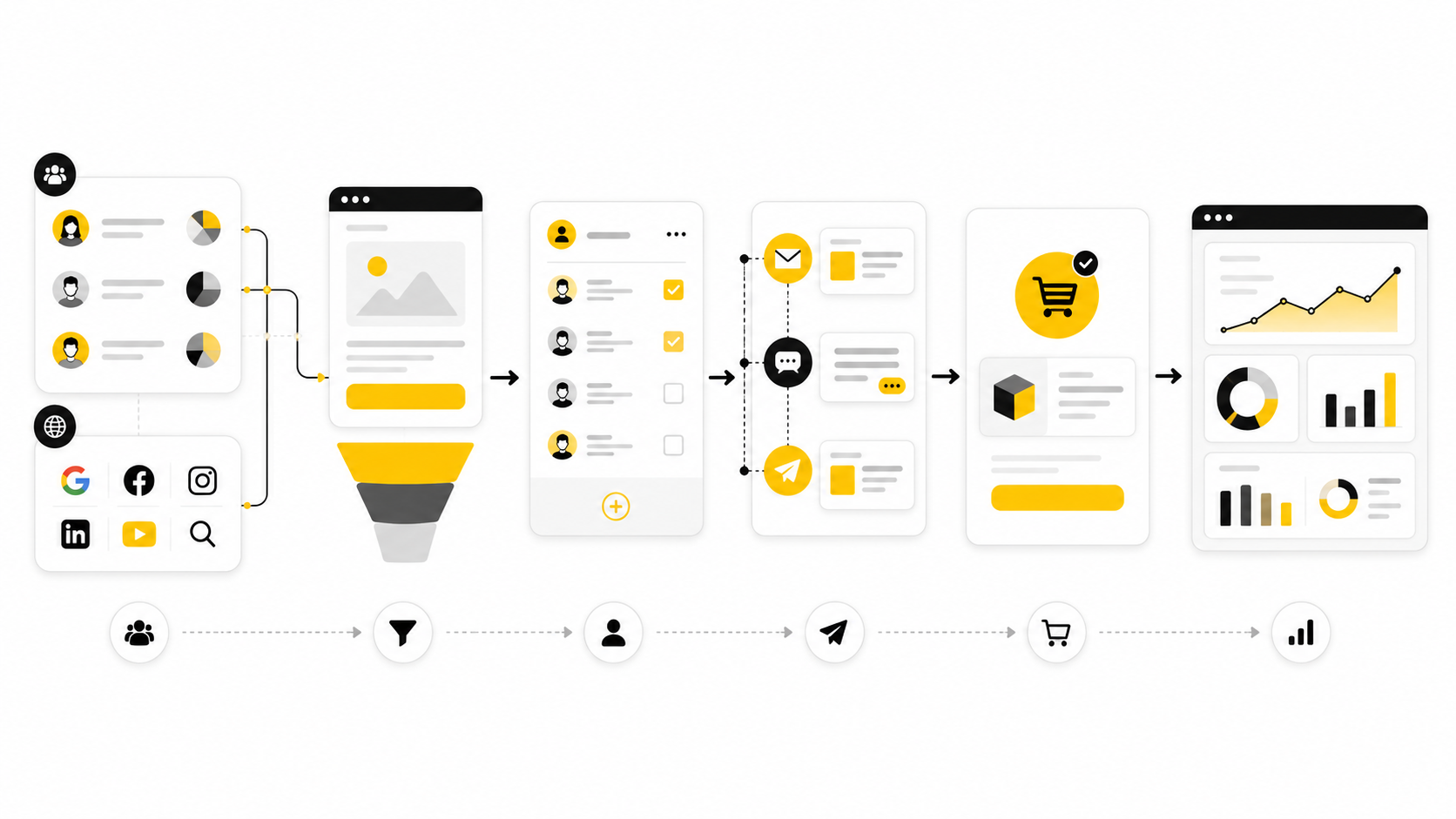
The reason online direct marketing matters now is not that “digital is growing.” That part is obvious. The real reason is that businesses are being pushed into a harder environment where every click, lead, call, and sale has to justify itself.
Digital channels now take the majority of many marketing budgets, with Gartner’s 2025 CMO Spend Survey showing that digital channels account for 61.1% of total marketing spend. That does not automatically mean marketers are spending better. It means more money is moving into channels where performance can be tracked, compared, and challenged.
This is where online direct marketing becomes more than a tactic. It gives you a practical way to connect spend to response, response to revenue, and revenue to the next decision. When the market gets noisier, the advantage goes to the business that can see what is working and improve it faster.
Buyers Are More Digital, But Less Patient
People spend a huge part of their buying journey online, but that does not mean they want more marketing noise. They compare options quickly, scan pages instead of reading every word, and leave when the next step feels confusing. If your campaign asks for too much attention before giving a clear reason to care, you lose the moment.
The global digital audience is massive, with DataReportal’s Digital 2025 report tracking continued growth across internet, social media, ecommerce, mobile, and online media behavior in its global overview of connected behavior. That scale creates opportunity, but it also creates competition. Your buyer is not choosing between you and silence; they are choosing between you, your competitors, creators, review sites, inboxes, feeds, videos, and a dozen open tabs.
Online direct marketing helps because it forces clarity. You define the person, the problem, the offer, and the next action. Instead of hoping someone remembers you later, you build a path that helps them move while interest is fresh.
Paid Attention Is Getting More Expensive
Performance marketing has become the default for many teams because it is measurable. The problem is that when more advertisers chase the same audiences, the easy wins disappear. Costs rise, creative fatigue hits faster, and weak funnels become painfully obvious.
U.S. internet advertising revenue reached $294.6 billion in 2025, which shows how much money is already competing for digital attention. Social media advertising alone reached $117.7 billion in 2025, so brands are not exactly underinvesting in reach. The question is whether that reach turns into a profitable customer relationship.
This is why the funnel matters. A business with better landing pages, sharper offers, stronger follow-up, and cleaner measurement can afford to pay more for traffic because it gets more value from each visitor. A business with a weak direct response system has the opposite problem: every traffic source starts looking “too expensive” because the conversion path is leaking.
First-Party Data Is Becoming A Strategic Asset
For years, many businesses got comfortable borrowing targeting power from ad platforms. That still works in some cases, but it is a risky place to build the whole business. Privacy changes, cookie restrictions, platform rules, and tracking limitations make it harder to rely only on third-party signals.
A strong online direct marketing system captures first-party data in a useful and respectful way. That might mean email opt-ins, quiz answers, form fields, purchase behavior, booking history, product interest, lead source, customer tags, or CRM notes. The point is not to hoard data. The point is to understand what people asked for, what they need next, and how to follow up without sounding random.
This is also where trust matters. IAB’s consumer privacy research shows that privacy and personalization can coexist when people understand the value exchange, while the same research also highlights strong concern around data security and misuse in its consumer privacy study. Direct marketing works best when the buyer feels guided, not tracked.
Personalization Has Moved From Nice-To-Have To Expected
Personalization used to mean adding a first name to an email. That is not enough anymore. Real personalization means changing the message, timing, offer, proof, and next step based on what the person actually cares about.
McKinsey’s research found that faster-growing companies drive 40% more revenue from personalization than slower-growing companies. That does not mean every business needs a complex AI engine on day one. It means relevant communication has a measurable commercial advantage.
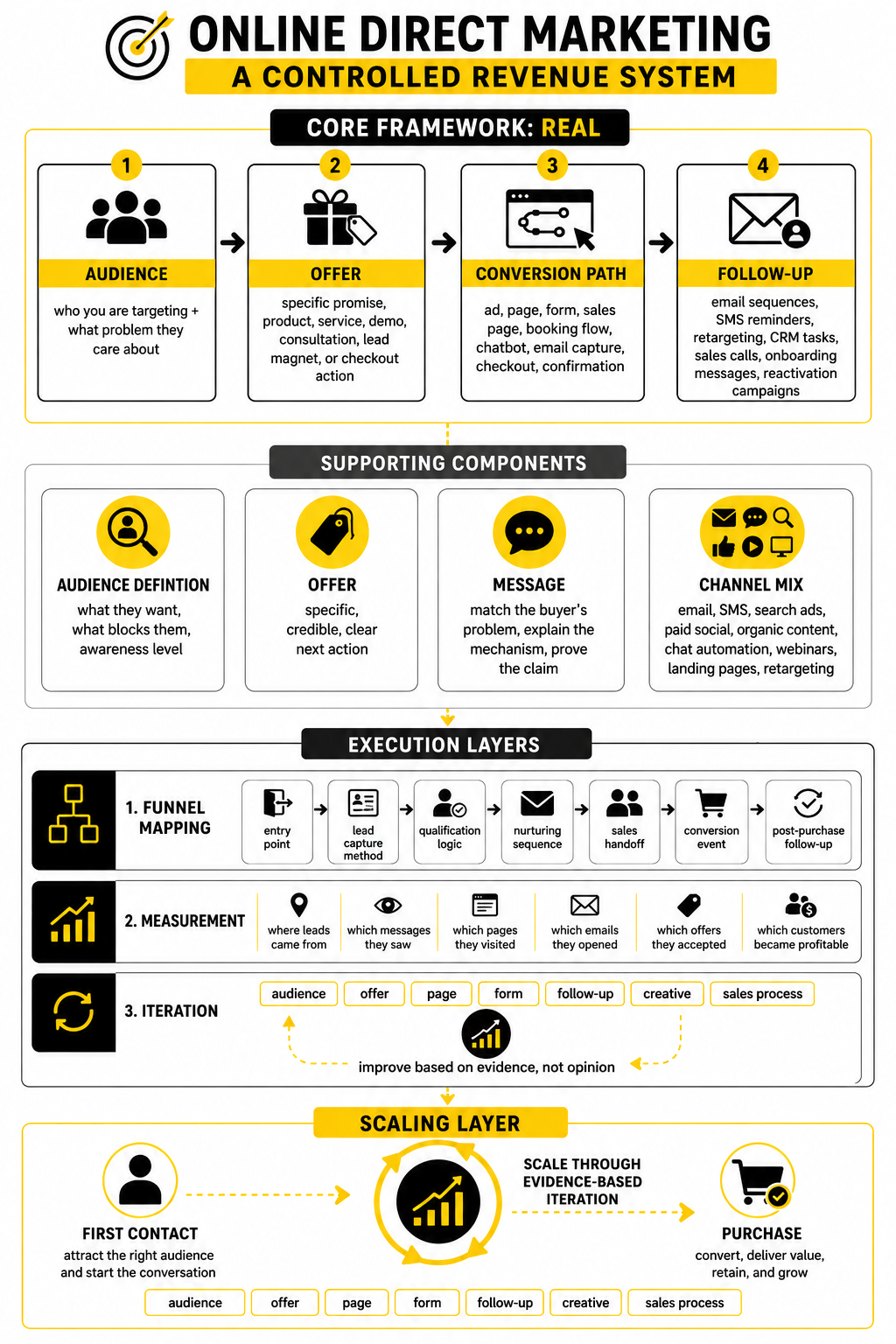
The practical version is straightforward. A returning visitor should not always see the same message as a cold visitor. A lead who downloaded a buying guide should not receive the same follow-up as someone who abandoned checkout. A booked-call prospect should not be treated like a newsletter subscriber. Online direct marketing gives you the structure to make those differences useful.
Automation Is Useful Only When The Strategy Is Clear
Automation can save time, but it can also multiply bad thinking. If the offer is unclear, automation sends unclear messages faster. If the audience is poorly segmented, automation annoys more people at once. If the follow-up sequence is generic, automation simply turns weak marketing into scheduled weak marketing.
That is why tools should support the system, not replace it. A CRM and automation platform like GoHighLevel can help agencies and service businesses manage pipelines, follow-up, bookings, messages, and client campaigns in one place. An email platform like Brevo can support direct communication through email and automation when the business needs practical audience nurturing.
The same logic applies to funnel builders and landing page tools. ClickFunnels can make sense when the priority is building sales funnels, checkout flows, and offer paths quickly. Systeme.io can fit businesses that want a simpler all-in-one setup for funnels, email, courses, and basic automation. But none of these tools fix a vague promise, a weak page, or a follow-up sequence nobody wants to read.
The Sales Process Needs Marketing To Do More Of The Heavy Lifting
In many businesses, the sales team should not be wasting time explaining the basics to every lead. Marketing should already handle the first layer of education, qualification, trust-building, and objection removal. When that does not happen, sales calls become messy, pipelines fill with weak leads, and close rates suffer.
Online direct marketing improves the handoff because it can capture intent before a conversation begins. A lead who requests pricing, watches a webinar, completes a form, or replies to a campaign gives the business useful context. That context helps the sales team focus on the right problem instead of starting from zero.
This is especially important for agencies, consultants, local service businesses, SaaS companies, ecommerce brands, and high-ticket offers. The more expensive or complex the decision, the more the buyer needs structured follow-up. Direct marketing gives the business a way to educate without depending on a salesperson to manually rescue every opportunity.
Measurement Protects You From Expensive Opinions
Marketing teams waste a lot of time arguing from preference. One person likes the ad creative. Another hates the landing page. Someone wants shorter emails. Someone else wants more brand storytelling. Without measurement, the loudest opinion usually wins.
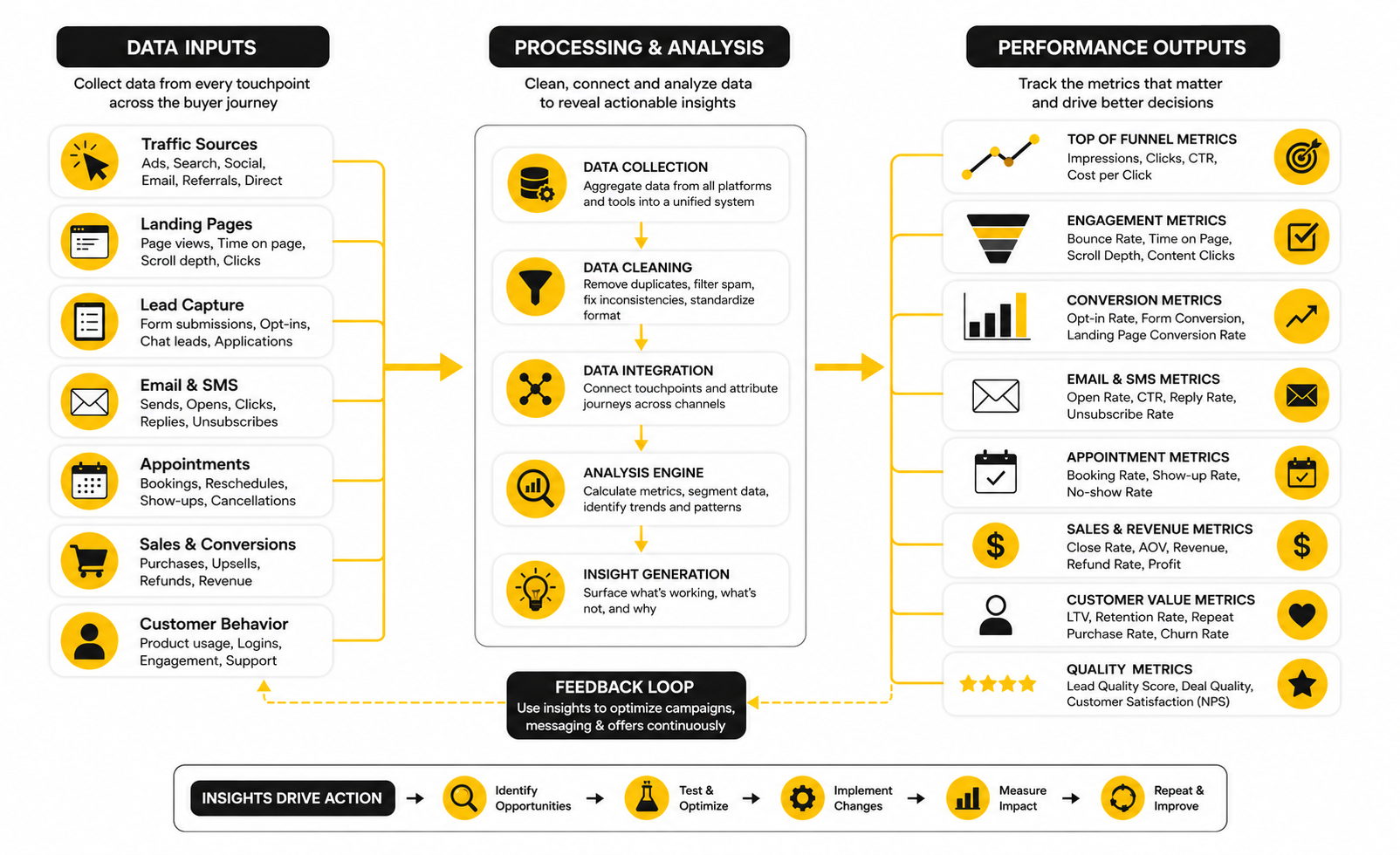
Online direct marketing makes the discussion more grounded. You can track opt-in rate, cost per lead, lead quality, booked-call rate, show-up rate, sales conversion rate, average order value, lifetime value, unsubscribe rate, and payback period. The goal is not to obsess over dashboards; the goal is to make better decisions with less drama.
This is where direct marketing becomes a management system. If traffic is expensive but conversion is strong, you may need better acquisition. If leads are cheap but sales are poor, you may have a quality or offer problem. If sales are strong but retention is weak, the issue may be onboarding or expectation-setting. The numbers do not tell the whole story, but they show you where to look.
The Brands That Win Build A Direct Path To The Customer
The businesses that benefit most from online direct marketing are not always the ones with the biggest budgets. They are the ones that build clear paths from attention to action. They know what they are offering, who it is for, why it matters, and what should happen next.
This matters because platforms will keep changing. AI search will change discovery. Social algorithms will change reach. Paid media costs will move. Privacy rules will keep tightening. But the core discipline stays the same: understand the buyer, make a relevant offer, capture the relationship, follow up well, and measure the result.
That is the real reason online direct marketing deserves serious attention. It is not a hack, and it is not just another channel. It is the operating system behind digital revenue when you want more control than “post more content” or “spend more on ads.”
Advanced Strategy And Scaling
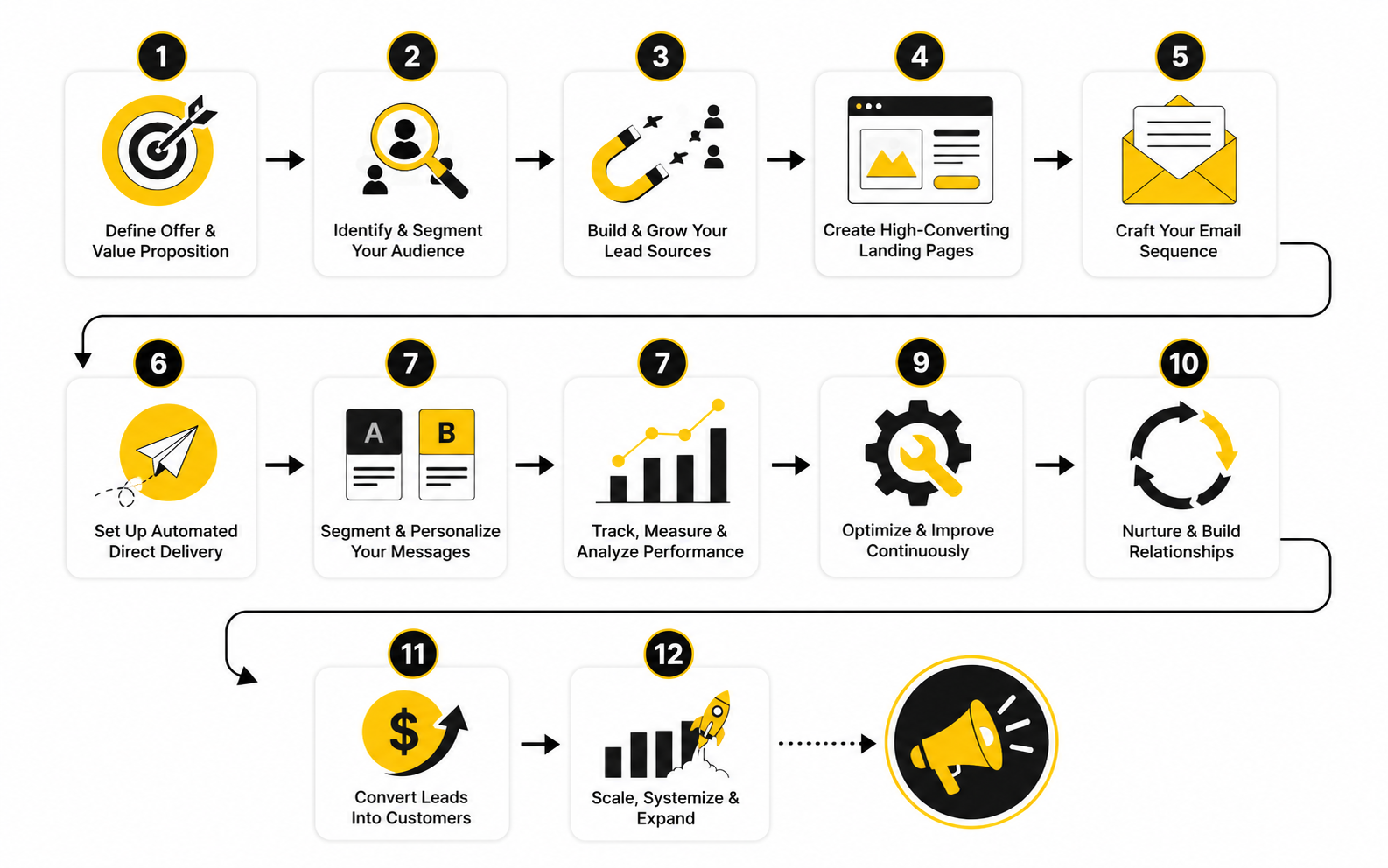
Once the basic online direct marketing system is working, the next challenge is not “more.” More traffic, more emails, more automations, more offers, and more tools can easily make the system weaker if the foundation is not ready. Scaling only works when the business understands what is already converting, why it is converting, and where the next constraint will appear.
This is where advanced strategy becomes practical. You are no longer asking whether online direct marketing can generate leads or sales. You are asking whether the system can grow without damaging lead quality, customer experience, margin, deliverability, trust, or team capacity.
That is a different game. Beginners chase volume. Professionals protect the economics while they grow.
Scaling Starts With One Proven Path
The safest way to scale is to start with one path that already works. That means one audience segment, one offer, one conversion path, one follow-up system, and one reliable sales or checkout process. Once that path produces profitable customers consistently, you can decide whether to scale traffic, expand the offer, add channels, or build new segments.
The mistake is scaling a half-proven campaign because the early numbers look exciting. A campaign can generate cheap leads for a few days and still fail once sales quality, fulfillment, churn, refunds, or ad fatigue shows up. Early performance is useful, but it is not proof until the numbers connect to revenue and customer quality.
A better scaling question is simple: can this system handle more of the same buyer without breaking? If the answer is yes, increase volume carefully. If the answer is no, fix the constraint before you pour more money into it.
The Main Scaling Tradeoff Is Volume Versus Quality
Every online direct marketing system faces the same tension. You can usually get more leads by widening the audience, softening the offer, lowering friction, or making the call to action less demanding. But more leads do not always mean more profit.
For example, a free checklist may generate more opt-ins than a detailed application form. That can be useful if the business has a strong nurture system and a low-cost product. But for a high-ticket service, a lower-friction form may flood the pipeline with people who are curious but not serious.
This is why lead quality must stay close to the money. If a campaign produces more leads but lowers booked-call rate, show-up rate, close rate, average deal value, or retention, the growth may be fake. The business is busier, but not stronger.
Segmentation Should Increase Relevance, Not Complexity
Segmentation is powerful when it makes the buyer experience clearer. It becomes a problem when every tiny audience difference creates another page, another sequence, another tag, another dashboard, and another operational headache. The goal is not to build a complicated system that nobody can manage.
Good segmentation usually starts with meaningful differences in intent, pain, value, or timing. A new visitor, warm lead, abandoned checkout user, booked-call prospect, customer, and inactive customer should not all receive the same message. Those differences are worth segmenting because they change what the person needs next.
Bad segmentation is cosmetic. It creates different campaigns that say basically the same thing. If the segment does not change the offer, proof, objection handling, timing, or call to action, it may not deserve its own path yet.
Creative Fatigue Is A Real Constraint
Paid traffic often works until the market gets tired of the message. The same hook, angle, visual, or promise can lose power as people see it repeatedly. When that happens, costs rise, click-through rates fall, conversion quality changes, and the campaign starts looking worse even if the funnel has not changed.
The answer is not to panic and rebuild everything. First, separate creative fatigue from funnel problems. If click-through rate drops but landing page conversion stays stable for people who do arrive, the creative may be the issue. If click-through is stable but page conversion drops, the issue may be message match, traffic quality, offer fatigue, or page performance.
A serious direct marketing operation needs a creative testing rhythm. That does not mean random new ads every day. It means testing new hooks, proof angles, pain points, formats, objections, and calls to action while keeping the offer and conversion path controlled enough to read the result.
Deliverability And Trust Can Limit Growth
Email and SMS are direct channels, but they are not guaranteed channels. Inbox providers, spam filters, carrier rules, unsubscribe behavior, complaint rates, and list quality all affect whether your messages actually reach people. If you treat direct channels like unlimited free traffic, performance will eventually suffer.
This is especially important now because inbox competition is intense. Validity’s 2025 deliverability research highlights that senders are dealing with major pressure from AI, privacy, personalization, mobile-first design, and accessibility shifts. MoEngage’s 2025 email benchmark report also found that 87% of emails analyzed were only minimally personalized, which explains why so many campaigns feel technically automated but strategically lazy.
The practical rule is simple: protect the relationship. Send messages people actually expect, make the value clear, segment by intent, remove inactive contacts when needed, and do not abuse urgency. Short-term pressure tactics can create long-term deliverability and trust problems.
Privacy Is Now Part Of Conversion Strategy
Privacy is not just a legal checklist. It affects whether people feel safe enough to submit a form, join a list, book a call, or share useful information. If the data request feels excessive or unclear, the conversion path loses trust.
Consumer research from Qualtrics XM Institute found that when people trust companies to use personal information responsibly, they are more comfortable with data being used for personalization. That matters because personalization depends on data, and data depends on trust. You cannot separate the two.
A better approach is to ask for the data you actually need, explain the value of sharing it, and avoid collecting information just because a tool makes it possible. In online direct marketing, restraint can improve performance. People are more likely to complete a form when the request feels relevant to the outcome.
AI Can Speed Up The System, But It Can Also Flatten The Message
AI can help with research, segmentation ideas, ad variations, email drafts, landing page outlines, chatbot flows, and campaign analysis. Used well, it speeds up production and helps teams test more angles. Used badly, it creates generic campaigns that sound like every other brand in the inbox.
The risk is not that AI writes imperfectly. The risk is that teams stop thinking. They publish messages without understanding the buyer, the offer, the objections, or the proof. That creates content that is polished on the surface and empty underneath.
AI is best used as a production assistant, not the strategist. The strategist still needs to decide who the campaign is for, what pain matters, what promise is credible, what proof is strong, and what action should happen next. A tool like GoHighLevel AI can support faster execution inside a marketing system, but the system still needs human judgment.
The Offer Ladder Matters More As You Scale
A single offer can start the system, but scaling often requires a stronger offer ladder. That means you need a logical path from first interaction to deeper value. A buyer may start with a free resource, move to a low-risk entry offer, book a consultation, buy a core product, then later upgrade, renew, or refer.
The offer ladder matters because not every buyer is ready for the same step. If you only have one hard conversion point, you may lose people who need more education. If you only have free content, you may train people to consume without buying.
A balanced ladder gives buyers the right next step based on readiness. For funnel-driven businesses, ClickFunnels can support structured sales paths and checkout flows. For simpler digital products, courses, and email-based funnels, Systeme.io can support a leaner setup. The point is not the tool itself; the point is having a clear progression from interest to revenue.
Channel Expansion Should Follow Buyer Behavior
Adding channels is not automatically scaling. It is only useful when the next channel matches how your buyers discover, evaluate, or buy. A B2B service may need search, retargeting, email nurture, LinkedIn content, and sales outreach. An ecommerce brand may need paid social, email, SMS, product pages, creator content, and abandoned cart recovery.
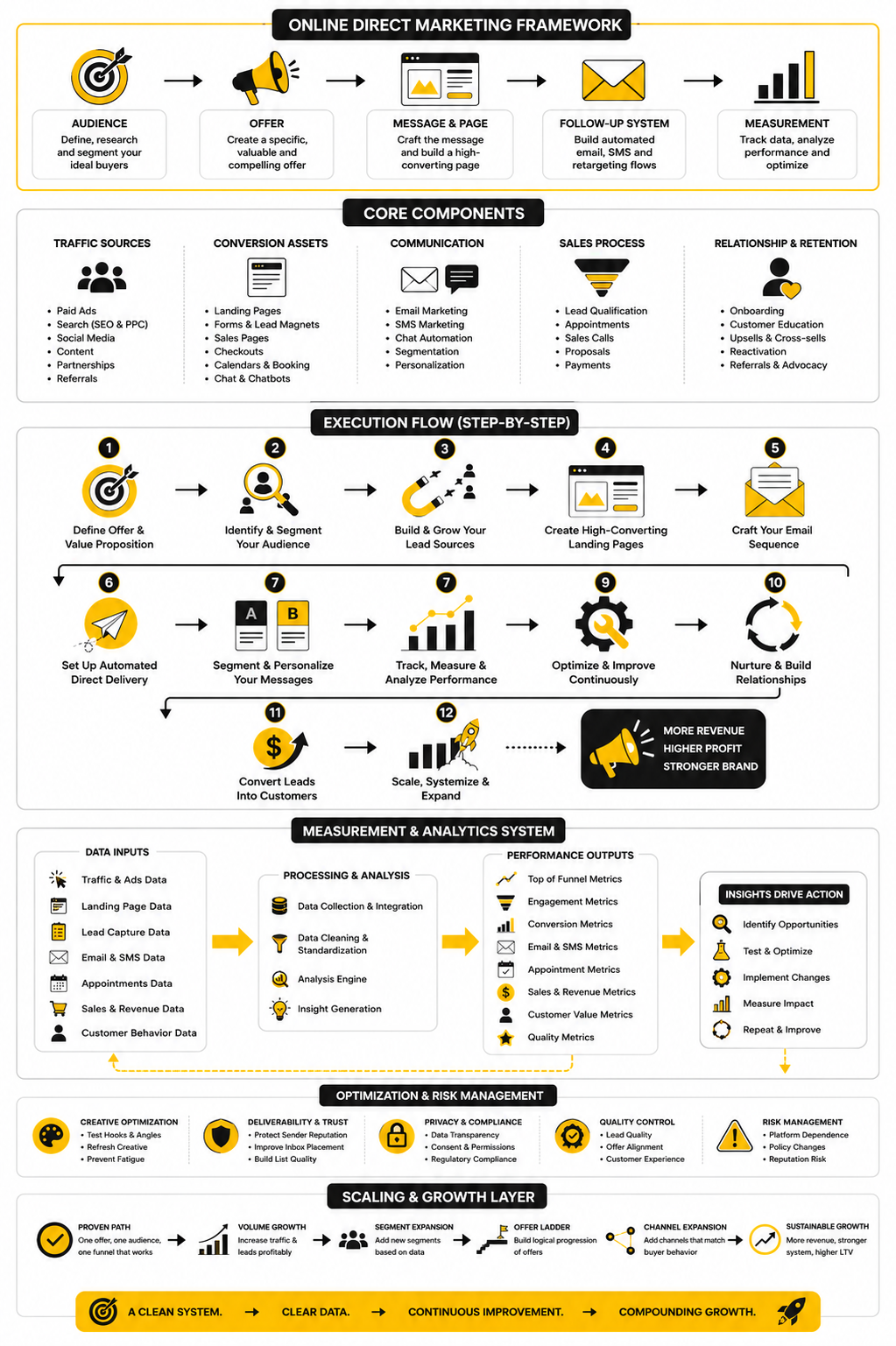
The danger is copying another company’s channel mix without matching the buying journey. A channel that works beautifully for a low-ticket impulse product may fail for a complex B2B service. A long-form webinar may work for a high-consideration offer but feel heavy for a simple purchase.
Before adding a channel, ask what role it will play. Will it create demand, capture demand, educate leads, recover abandoned intent, support sales, retain customers, or reactivate old buyers? If you cannot answer that, the channel is probably a distraction.
Sales Capacity Can Become The Bottleneck
When online direct marketing starts working, the bottleneck often moves from marketing to sales. More leads come in, but response time slows down. Calls get booked, but no-shows rise. The sales team gets busier, but the close rate drops because qualification is weak.
That is not a marketing failure by itself. It is a system design problem. The campaign is creating demand, but the business is not ready to handle it cleanly.
This is where sales operations matter. Use qualification questions, calendar rules, reminders, pipeline stages, lead scoring, and fast follow-up. A CRM such as Copper can help teams manage relationship-driven sales, while Cal.com can reduce booking friction when scheduling is a key conversion step.
Retention Is Part Of Direct Marketing
Many teams treat direct marketing as an acquisition machine only. That leaves money on the table. Once someone becomes a customer, the direct relationship becomes even more valuable because the business has context, trust, purchase history, and a clearer understanding of what the customer may need next.
Retention campaigns can include onboarding, usage reminders, education sequences, replenishment prompts, renewal campaigns, loyalty offers, upgrade paths, review requests, referral campaigns, and win-back messages. These are not afterthoughts. They often determine whether acquisition costs are sustainable.
This is where CAC and LTV become operational, not theoretical. If acquisition costs rise, stronger retention can protect margin. If repeat purchase improves, the business can afford more competitive acquisition. The front end and back end of the system should work together.
Risk Management Keeps The System Healthy
Online direct marketing has risks that are easy to ignore when campaigns are growing. Platform dependence is one. If one ad account, one traffic source, one email list, or one marketplace creates most of your revenue, the business is exposed. A policy change, deliverability issue, account suspension, or algorithm shift can hurt quickly.
Compliance is another risk. Email consent, SMS rules, privacy disclosures, data handling, claims, testimonials, and industry-specific regulations all matter. The more aggressive the campaign, the more carefully the business needs to review what it is promising and how it is collecting data.
Brand risk matters too. Direct response can be persuasive without becoming manipulative. If the campaign uses fake scarcity, exaggerated claims, misleading testimonials, or pressure that damages trust, the business may gain short-term sales while weakening long-term reputation. That tradeoff is rarely worth it.
The Expert Move Is To Simplify Before You Scale
Advanced online direct marketing is not about making the system more complicated. It is about knowing what can be simplified without losing performance. Remove weak segments, merge redundant sequences, cut low-quality lead sources, clean up tracking, tighten the offer, and make the follow-up easier to understand.
Complexity should earn its place. A new automation should solve a real bottleneck. A new page should serve a distinct intent. A new offer should create a clearer next step. A new channel should fill a real role in the buyer journey.
This is the standard to use before scaling: can the team explain the system clearly, measure it reliably, and improve it without chaos? If yes, growth becomes much easier. If no, the next best move is not more traffic. It is a cleaner machine.
Build a stronger local presence with BAAM AI
Turn your website, Google profile, social channels, and AI visibility into one growth engine
Most businesses do not need more random marketing activity. They need a consistent presence system that helps the right people find them, trust them, and take action. BAAM AI brings strategy, local SEO, website updates, Google Maps visibility, social content, AI-search readiness, media production, and reporting into one practical monthly engine.
If you want your marketing to keep working after the campaign ends, start with a free BAAM AI presence audit. See how your business shows up today and where the fastest visibility wins are at BAAM AI.