
BAAM AI Blog
What Social Media Engagement Actually Measures
Before you can measure social media engagement properly, you need to be clear on what engagement is not.
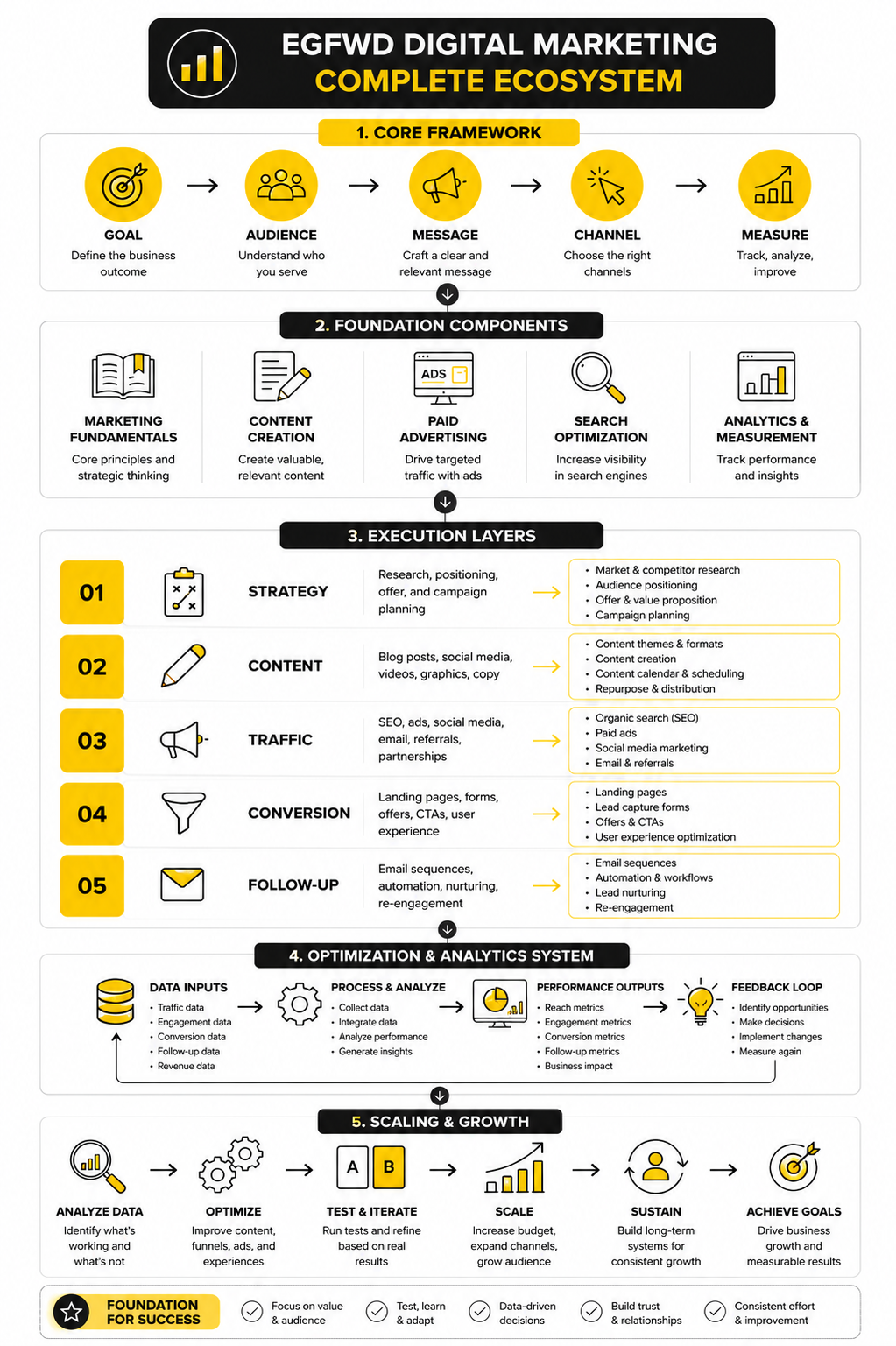
What Social Media Engagement Actually Measures
Before you can measure social media engagement properly, you need to be clear on what engagement is not.
It is not just “getting likes.” It is not just watching a follower count go up. And it is definitely not the same as reach, because reach only tells you how many people may have seen your content, while engagement tells you what people did after seeing it.
Social media engagement measures the actions people take when your content earns enough attention, interest, trust, curiosity, or emotion to make them respond. That response can be small, like a like or reaction. It can be deeper, like a comment, save, share, direct message, profile visit, click, reply, mention, tag, or review.
That distinction matters because engagement is where social media starts becoming useful. Visibility is nice, but visibility without response is just noise. Engagement shows whether your audience is paying attention, whether your message is landing, and whether your content is moving people closer to a real business outcome.
The mistake many brands make is treating every engagement as equal. A like is not the same as a save. A comment is not the same as a qualified DM. A share from a random viewer is not the same as a share from a buyer, partner, or creator in your niche.
So when you measure social media engagement, your first job is not to collect every possible metric. Your first job is to decide which actions actually matter for your current goal.
The Core Engagement Metrics Worth Tracking
Most platforms give you more numbers than you need. That can make reporting feel advanced, but it often creates the opposite problem: you drown in dashboards and lose the business signal.
Start with the core metrics. These are the numbers that show whether people are interacting with your content in meaningful ways.
Likes And Reactions
Likes, reactions, and quick taps are the lightest form of engagement. They show that a post created enough interest for someone to acknowledge it, but they rarely prove deep intent on their own.
That does not make them useless. Likes can help you compare creative angles, hooks, formats, and topics across a consistent posting schedule. If one style of post repeatedly earns more reactions than another, that is useful feedback.
The trap is using likes as your main success metric. A post can get a lot of likes and still generate zero leads, sales, conversations, or brand memory. Treat likes as an early signal, not the final verdict.
Comments And Replies
Comments usually carry more weight because they require more effort. Someone had to stop, think, type, and publicly respond. That makes comments useful for understanding what your audience cares about, disagrees with, questions, or wants more of.
But comment volume alone can be misleading. A controversial post can get flooded with low-quality replies and still do nothing for the brand. A smaller post with fewer but more thoughtful comments may reveal stronger audience fit.
When you measure comments, look at quality as well as quantity. Are people asking buying questions? Are they sharing personal experiences? Are they tagging others? Are they objecting in a way that gives you useful content or sales insight?
Shares And Reposts
Shares are one of the strongest signals that your content has value beyond the original viewer. When someone shares your post, they are putting a small piece of their reputation behind it.
That is why shares often matter more than likes. A share means the content was useful, funny, identity-driven, timely, surprising, or emotionally resonant enough for someone to pass it on. In many cases, shares also extend reach into audiences you could not access through your own account alone.
Research from social platforms and industry studies keeps pointing toward the same broad pattern: people engage more when content feels relevant, useful, entertaining, or community-driven, not when it feels like a brand simply pushing a campaign. The 2025 Sprout Social Index highlights how consumers expect brands to show up with originality, care, and cultural awareness, which is exactly the kind of environment where shares become more meaningful.
Saves And Bookmarks
Saves are underrated. A save means someone found the content useful enough to come back to later.
That makes saves especially important for educational content, product comparisons, checklists, tutorials, frameworks, recipes, templates, and buying guides. A post with fewer likes but many saves may be far more valuable than a post with many likes and no lasting usefulness.
Saves also reveal content depth. If people save your posts, you are not just entertaining them for a second. You are becoming a reference point.
Clicks
Clicks connect social engagement to owned assets. That could be a landing page, newsletter, product page, booking page, webinar, lead magnet, podcast, YouTube video, or checkout flow.
Clicks are important because they show movement. Someone went from passively consuming content to actively choosing the next step. That is a stronger signal than a like, especially if your goal is lead generation, sales, bookings, or email list growth.
This is where tools and tracking discipline matter. For example, if you are sending social traffic into funnels, pages, or campaigns, platforms like ClickFunnels, GoHighLevel, or Systeme.io can help you connect engagement to actual follow-up, conversion, and revenue instead of stopping at platform-level vanity metrics.
Direct Messages
Direct messages are often where the most valuable engagement happens, especially for service businesses, coaches, agencies, creators, local businesses, and high-ticket offers.
A DM can reveal buying intent, confusion, objections, urgency, and relationship strength. It can also move much faster than a public comment because the conversation becomes personal. This is why some brands care less about broad engagement and more about how many qualified conversations their content creates.
If DMs are part of your customer journey, track them separately. Measure total DMs, qualified DMs, response time, booked calls, lead source, and conversion rate. For brands that rely on Instagram or Facebook conversations, ManyChat can be useful when the goal is to turn comments, keywords, and message flows into measurable follow-up.
Mentions And Tags
Mentions and tags show that people are bringing your brand into their own conversations. That can happen because they like your product, want customer support, are sharing a result, are asking for advice, or are comparing you with another option.
This kind of engagement matters because it is less controlled by you. It shows how people talk about the brand when they are not simply reacting to a post you published. That makes it useful for brand health, customer experience, and community measurement.
Do not only count mentions. Read them. A hundred neutral mentions may be less valuable than twenty enthusiastic ones from customers who are showing proof, recommending you, or defending the brand in public.
Engagement Rate: The Metric Most People Use Wrong
Engagement rate is useful, but it is also one of the most misunderstood social media metrics.
At its simplest, engagement rate tells you how much interaction your content earns relative to audience size, reach, impressions, or views. That context matters because raw engagement numbers can be misleading. A post with 500 engagements from 5,000 viewers performed very differently from a post with 500 engagements from 500,000 viewers.
The problem is that there is no single universal engagement rate formula. Different tools, platforms, and marketers calculate it differently. That is why comparing your number to someone else’s number can be dangerous unless you know exactly how both numbers were calculated.
Engagement Rate By Reach
Engagement rate by reach shows the percentage of reached users who engaged.
The formula is:
Engagement rate by reach = total engagements ÷ reach × 100
This is one of the cleaner ways to measure content effectiveness because it focuses on the people who actually had a chance to see the post. If two posts reached different audience sizes, this formula helps you compare how engaging each post was among exposed users.
Use this when you want to understand creative performance. It is especially helpful for comparing hooks, topics, formats, captions, offers, and content pillars.
Engagement Rate By Impressions
Engagement rate by impressions compares engagements to total impressions.
Engagement rate by impressions = total engagements ÷ impressions × 100
This can be useful when the same person may see your content multiple times. It is common in paid social, boosted posts, high-frequency campaigns, and content that gets resurfaced in feeds.
The downside is that impressions can inflate quickly. If the same user sees a post several times but only engages once, your rate may look lower even though the content still worked. Use this formula when impressions are the most reliable visibility metric available, but do not treat it as the only truth.
Engagement Rate By Followers
Engagement rate by followers compares engagements to your follower count.
Engagement rate by followers = total engagements ÷ followers × 100
This is popular because follower count is easy to find. It also helps you understand how active your existing audience is.
But it has a major flaw: not all followers see every post. Organic reach varies widely by platform, content type, algorithm behavior, posting frequency, and audience activity. So this formula can be useful for high-level account tracking, but it is weaker for judging individual posts.
Engagement Rate By Views
For short-form video, engagement rate by views can be more useful than follower-based formulas.
Engagement rate by views = total engagements ÷ video views × 100
This helps you understand whether viewers cared enough to take action after watching. It becomes even stronger when paired with watch time, average view duration, completion rate, rewatches, saves, shares, and profile visits.
This is important because a video can get a lot of views without creating much value. Views can be driven by curiosity, a strong hook, trend momentum, or algorithmic testing. Engagement shows whether the content did anything after the view.
Do Not Measure Every Platform The Same Way
A common reporting mistake is using one engagement benchmark across every platform. That sounds efficient, but it creates bad decisions.
Instagram, TikTok, LinkedIn, YouTube, Facebook, X, Pinterest, and Threads do not reward the same behaviors in the same way. People use them with different intent. They also interact differently depending on whether they are watching, scrolling, searching, learning, networking, buying, or being entertained.
The 2025 social data from Buffer’s analysis of platform engagement trends shows that engagement patterns can shift significantly from one platform to another, with LinkedIn and Instagram behaving very differently in terms of content interaction and audience behavior. The useful lesson is not “post everywhere.” The useful lesson is to measure each platform based on how people actually use it.
On LinkedIn, comments, reposts, profile visits, connection requests, and inbound messages may matter more because the platform is tied to professional identity and business relationships. On Instagram, saves, shares, story replies, DMs, and profile actions often tell a stronger story than likes alone. On TikTok, watch time, rewatches, shares, comments, follows, and search-driven discovery can be more revealing than surface-level reactions.
This is also why platform-native analytics should not be your only source of truth. Native analytics tell you what happened inside the platform. They do not always tell you whether that engagement became a lead, a sale, a booked call, a subscriber, or a retained customer.
If you schedule and review content across channels, Buffer can make the process easier because it keeps publishing and analytics more organized in one workflow. The real value is not just convenience. It is being able to spot patterns across content types without jumping between ten different dashboards.
Match Engagement Metrics To The Customer Journey
The easiest way to make engagement measurement practical is to connect each metric to a stage of the customer journey.
Not every post is supposed to sell immediately. Some posts should attract new people. Some should build trust. Some should answer objections. Some should create conversations. Some should drive clicks. Some should reactivate existing customers.
When you judge every post by the same metric, you punish good content for doing the job it was designed to do.
Awareness Engagement
Awareness content is designed to reach new people and create recognition. For this stage, useful engagement metrics include:
This content often performs best when it is easy to understand, emotionally clear, and highly shareable. It does not need to explain everything about your offer. Its job is to make the right people notice you.
Trust-Building Engagement
Trust-building content helps people believe you understand their problem and can help solve it. For this stage, useful engagement metrics include:
This is where educational content, proof content, behind-the-scenes content, comparison content, and point-of-view content can work well. People may not buy immediately, but they start paying closer attention.
Conversion Engagement
Conversion content is designed to move people toward a specific action. For this stage, useful engagement metrics include:
This is where measurement has to get tighter. If a post drives 2,000 likes but no clicks, it may not be your best conversion asset. If another post drives fewer visible engagements but creates ten qualified sales conversations, it may be more valuable.
Retention And Loyalty Engagement
Retention content helps existing customers stay active, successful, and connected to the brand. For this stage, useful engagement metrics include:
This stage is easy to ignore because it does not always look as flashy in public. But it can be one of the most profitable areas of social media. A strong customer community can reduce support friction, increase referrals, and make your brand feel more alive.
Build A Simple Measurement System Before You Post More
Once you know which engagement metrics matter, the next step is building a system that captures them consistently. This is where most brands get sloppy. They post, check the platform dashboard when they remember, screenshot a few numbers, and then wonder why the data never turns into better decisions.
A good measurement system does not need to be complicated. It needs to be repeatable. If you measure social media engagement differently every week, you will not know whether performance changed because your content improved or because your reporting method changed.
The goal is to create one clear process for collecting, tagging, reviewing, and acting on your engagement data. That way, every post becomes feedback. Every campaign becomes easier to understand. Every month gives you a clearer picture of what your audience actually responds to.
Step 1: Define The Goal Before Choosing Metrics
Start with the business goal, not the dashboard.
This sounds obvious, but it is the step people skip most often. They open Instagram Insights, LinkedIn analytics, TikTok analytics, or a scheduling tool and let the available metrics decide what matters. That is backwards.
The right question is simple: what is this content supposed to do?
If the goal is awareness, you may care most about reach, shares, profile visits, and follower growth. If the goal is trust, you may care more about saves, comments, watch time, replies, and repeat engagement. If the goal is conversion, you need to track clicks, DMs, booked calls, form fills, trials, purchases, and revenue.
This is the point where you stop treating engagement as one giant bucket. A save, a comment, and a click can all be valuable, but they usually mean different things. Your measurement system should make that difference clear.
Step 2: Create A Content-To-Metric Map
A content-to-metric map connects each type of content to the metric that proves whether it worked. This keeps you from judging every post by the same standard.
For example, a thought leadership post may be designed to earn comments and reposts. A tutorial may be designed to earn saves. A product comparison may be designed to earn clicks. A behind-the-scenes post may be designed to earn replies and relationship-building engagement.
This map does not have to be fancy. A simple spreadsheet works. The important thing is that every content type has a primary success metric and one or two supporting metrics.
Use a structure like this:
This makes reporting much easier. Instead of saying, “This post only got 40 likes,” you can say, “This post was designed for saves, and it became one of our strongest saved posts this month.” That is a much more carefully way to measure social media engagement.
Step 3: Set Up Tracking Links Before The Campaign Goes Live
If your social content sends people anywhere outside the platform, you need tracking links. Without them, you are guessing.
A clean tracking setup helps you separate traffic from Instagram, LinkedIn, TikTok, Facebook, YouTube, email, paid ads, influencer posts, and partner campaigns. It also helps you see which specific post, campaign, creative angle, or call to action drove the visit. This matters because social engagement inside the platform does not always match business results outside the platform.
At minimum, your links should identify the source, medium, campaign, and content variation. You can keep the naming simple, but you must keep it consistent. One messy campaign can pollute your analytics for months.
A practical naming structure might look like this:
This is also where your funnel or CRM setup becomes important. If social traffic lands on a page but never gets connected to a lead, email subscriber, booked call, checkout, or customer record, your reporting will stop too early. For teams that want social engagement connected to pipelines and follow-up, GoHighLevel can make that link between content, leads, conversations, and revenue easier to manage.
Step 4: Collect Native Platform Data On A Fixed Schedule
Native analytics are still useful. They show you what happened inside each platform, and that is information you do not always get from your website analytics or CRM.
The key is collecting the data on a fixed schedule. Do it weekly for active content review and monthly for bigger trend analysis. If you wait too long, some platforms limit historical visibility or make it harder to compare post-level performance cleanly.
Your weekly review should be fast and practical. Look for the posts that overperformed, the posts that underperformed, and the reasons behind both. Do not just copy numbers into a sheet and call that analysis.
Track the basics consistently:
This final notes column is underrated. Numbers tell you what happened. Your notes help you build judgment about why it happened.
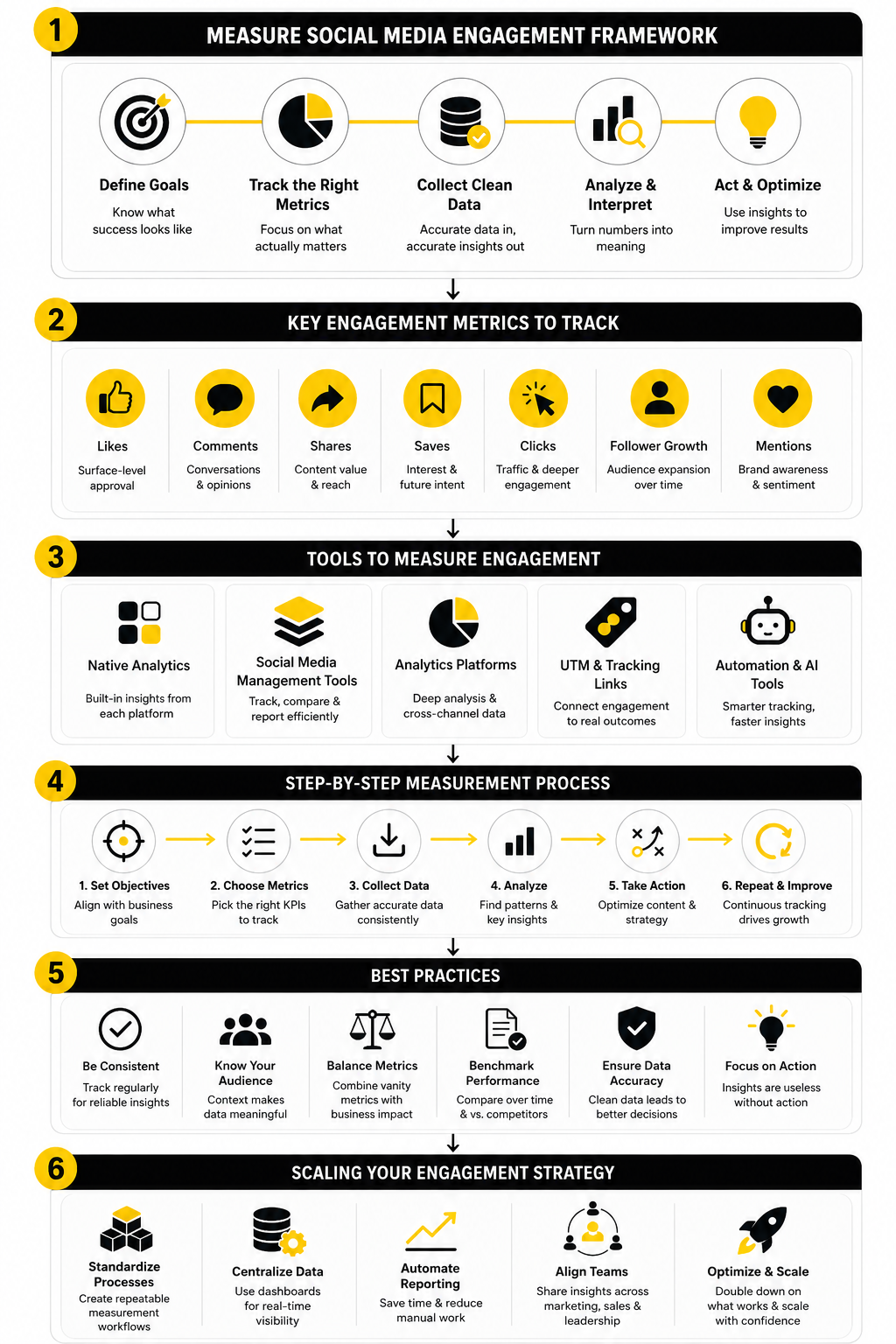
Step 5: Build One Dashboard That Shows The Whole Journey
A dashboard should not be a decoration. It should help you make decisions faster.
The best dashboard connects three layers: platform engagement, website behavior, and business outcomes. Platform engagement shows what people did with the content. Website behavior shows what happened after the click. Business outcomes show whether the attention created pipeline, revenue, retention, or another meaningful result.
Do not overload the dashboard with every possible number. A bloated dashboard makes people feel informed while helping nobody act. Keep the top layer clean and let deeper details live in tabs, filters, or monthly exports.
A useful dashboard might include:
If you are managing multiple channels, a scheduling and analytics workflow like Buffer can help keep content publishing and performance review more organized. The real point is not the tool itself. The point is having one place where patterns become visible enough to act on.
Step 6: Review Content In Groups, Not One Post At A Time
Individual posts can lie to you. A single post may underperform because it was posted at the wrong time, used the wrong hook, followed a platform glitch, or hit an audience segment that was not ready for it. One post can give you clues, but it should not control your whole strategy.
Review content in groups instead. Compare posts by format, topic, funnel stage, audience segment, CTA, and creative angle. Patterns are more reliable than isolated spikes.
For example, you may notice that your educational carousels earn saves but few clicks. That is not necessarily bad. It may mean they are strong trust-building assets, but they need a clearer next step or a stronger bridge to your offer.
You may also notice that opinion posts earn comments and profile visits but do not convert directly. Again, that does not make them useless. They may be doing the job of visibility and authority, while your proof posts and offer posts handle conversion later.
This is how mature measurement works. You do not force every post to do everything. You build a content mix where each type of post has a role.
Step 7: Turn Engagement Data Into Content Decisions
Measurement only matters if it changes what you do next.
Every reporting cycle should end with decisions. Not vague observations. Actual decisions about what to create more of, what to stop doing, what to test, what to improve, and what to connect more tightly to your customer journey.
Ask direct questions:
This is where you improve the machine. You may rewrite hooks, test clearer CTAs, turn high-save posts into lead magnets, convert strong comment threads into follow-up posts, or build retargeting audiences around engaged viewers. You may also discover that a platform is giving you attention but not the kind of attention your business needs.
That last point matters. More engagement is not always better. Better engagement is better.
Step 8: Build A Monthly Engagement Review Ritual
A monthly review gives you enough data to see trends without reacting emotionally to every post. It also forces you to look beyond vanity metrics.
Your monthly review should answer three questions. What worked? Why did it work? What are we changing next month because of it?
Keep the review focused. You do not need a 40-slide report unless you are presenting to a large team. For most creators, founders, agencies, and small marketing teams, a simple written summary is more useful.
A strong monthly review includes:
This ritual is where your social strategy compounds. You stop guessing from scratch every week. You start building from evidence.
Step 9: Separate Organic Engagement From Paid Engagement
Organic and paid engagement should not be blended together without context. They behave differently, and they answer different questions.
Organic engagement tells you what your existing audience and algorithmic discovery are responding to without direct media spend. Paid engagement tells you how selected audiences respond when distribution is bought. Both are useful, but they should be analyzed separately before being combined.
For organic content, you are often looking for resonance, community response, shareability, and trust. For paid content, you are looking for creative efficiency, audience-message fit, cost per result, and conversion quality. A paid ad with a low public engagement rate may still perform well if it drives profitable conversions.
This is why your dashboard should label traffic and engagement clearly. Do not let boosted posts, influencer campaigns, dark ads, and organic posts all sit in one bucket. If you mix them together, your conclusions get muddy fast.
Step 10: Use Automation Carefully
Automation can save time, but it can also create lazy measurement. The danger is thinking that because a tool collected the data, the thinking has been done for you.
Use automation for repetitive work: collecting post metrics, tagging leads, routing DMs, updating CRM records, sending follow-ups, and organizing reports. Do not use automation as a replacement for judgment. A dashboard can show that comments increased, but it cannot always tell you whether those comments were thoughtful, angry, spammy, or full of buying intent.
For social conversations, automation is most useful when it helps people get a faster and more relevant response. For example, comment-to-DM workflows can help deliver resources, start lead qualification, or guide people toward the next step. Used well, ManyChat can make engagement easier to capture and follow up on without forcing every conversation to be handled manually from the start.
The rule is simple. Automate the capture. Automate the routing. Automate the reminders. But keep the strategy human.
The Practical Engagement Measurement Workflow
Here is the process in plain English.
That is how you measure social media engagement without getting trapped in vanity metrics. You are not just asking, “Did people interact?” You are asking, “What did this interaction tell us, and what should we do next?”
Statistics And Data
Data should make your social strategy sharper, not heavier.
The point is not to collect impressive-looking numbers for a report. The point is to understand what your audience is doing, what your content is causing, and what your next move should be. When you measure social media engagement, the data only matters if it helps you make a better decision.
That is why benchmarks are useful, but only when you treat them as context. They can show whether your performance is unusually strong, weak, or average compared with the wider market. But they should never replace your own trend line, because your audience, offer, content mix, industry, and platform strategy are specific to you.
Benchmarks Are A Starting Point, Not A Strategy
Social media benchmarks are helpful because they give you a reality check. If your Instagram engagement rate is falling, it helps to know whether your content is declining or whether engagement is falling across the platform more broadly. That context prevents panic.
For example, the 2025 Rival IQ Social Media Industry Benchmark Report found that engagement rates declined across major platforms, including Facebook, Instagram, TikTok, and X. That does not mean brands should give up on engagement. It means teams need to interpret performance against a changing environment instead of assuming last year’s numbers are still the right target.
This is where many reports go wrong. They compare this month’s engagement to a random benchmark and declare success or failure. A more carefully approach is to compare your performance against three things at the same time: your own historical average, your direct competitors, and the wider platform benchmark.
The Three Benchmark Layers That Actually Matter
Use benchmarks in layers. One number by itself is rarely enough.
The first layer is your own baseline. This is your average performance over the last 30, 60, or 90 days. It tells you what is normal for your account.
The second layer is your category or industry benchmark. This helps you understand whether your performance is strong for your niche. A B2B SaaS company, local restaurant, ecommerce beauty brand, and personal creator should not all expect the same engagement pattern.
The third layer is the platform benchmark. This tells you what is happening across Instagram, TikTok, LinkedIn, Facebook, YouTube, X, Pinterest, or any other channel you use. Platform behavior changes fast, and your measurement system should account for that.
A practical benchmark review looks like this:
That last question matters most. A benchmark can tell you whether a number is high or low. It cannot tell you whether the engagement was valuable for your business.
Engagement Rate Needs Context
Engagement rate is one of the most useful metrics when you want to compare posts of different sizes. But it can also trick you if you do not know what is behind it.
A small post can have a high engagement rate because it reached a tight, loyal group of followers. A large post can have a lower engagement rate because it reached a colder, broader audience. Both can be successful, depending on the goal.
This is why you should never judge engagement rate alone. Pair it with reach, follower growth, saves, shares, clicks, DMs, and conversions. That gives you a fuller picture of whether the post simply entertained people or moved them toward something meaningful.
The best way to interpret engagement rate is by asking what the post was supposed to accomplish. If the post was built for awareness, shares and profile visits may matter more than comments. If the post was built for conversion, clicks and qualified DMs may matter more than likes.
Platform Averages Can Hide Huge Differences
Average engagement rates are useful, but averages hide a lot.
A platform-wide average blends creators, brands, industries, formats, account sizes, posting frequencies, and audience types. That means your account can perform below the average and still be healthy, or above the average and still be failing commercially. The number needs interpretation.
Buffer’s 2025 engagement analysis reported LinkedIn at a strong average engagement rate compared with several other major platforms, with the Buffer engagement rate study highlighting how different platform behaviors can be. The takeaway is not that every brand should suddenly focus only on LinkedIn. The takeaway is that you should measure each platform by the behavior it is best at producing.
LinkedIn may create comments, reposts, profile visits, and inbound business conversations. TikTok may create reach, watch time, shares, and discovery. Instagram may create saves, DMs, story replies, and product interest. You need to read the data through the platform’s natural role in your customer journey.
Format Benchmarks Matter More Than Account-Wide Averages
Account-wide averages can be misleading because different formats are designed to do different jobs.
A carousel, Reel, static image, story, livestream, poll, short-form video, long-form video, text post, and link post will not behave the same way. They ask for different levels of attention. They also trigger different user actions.
The 2025 Rival IQ benchmark report noted that Instagram carousels outperformed Reels for engagement in its dataset. That is useful because it shows why format-level measurement matters. If you only look at account-level engagement, you might miss that one format is quietly doing the heavy lifting.
So instead of asking, “What is our engagement rate?” ask better questions:
That is how you turn benchmarks into action.
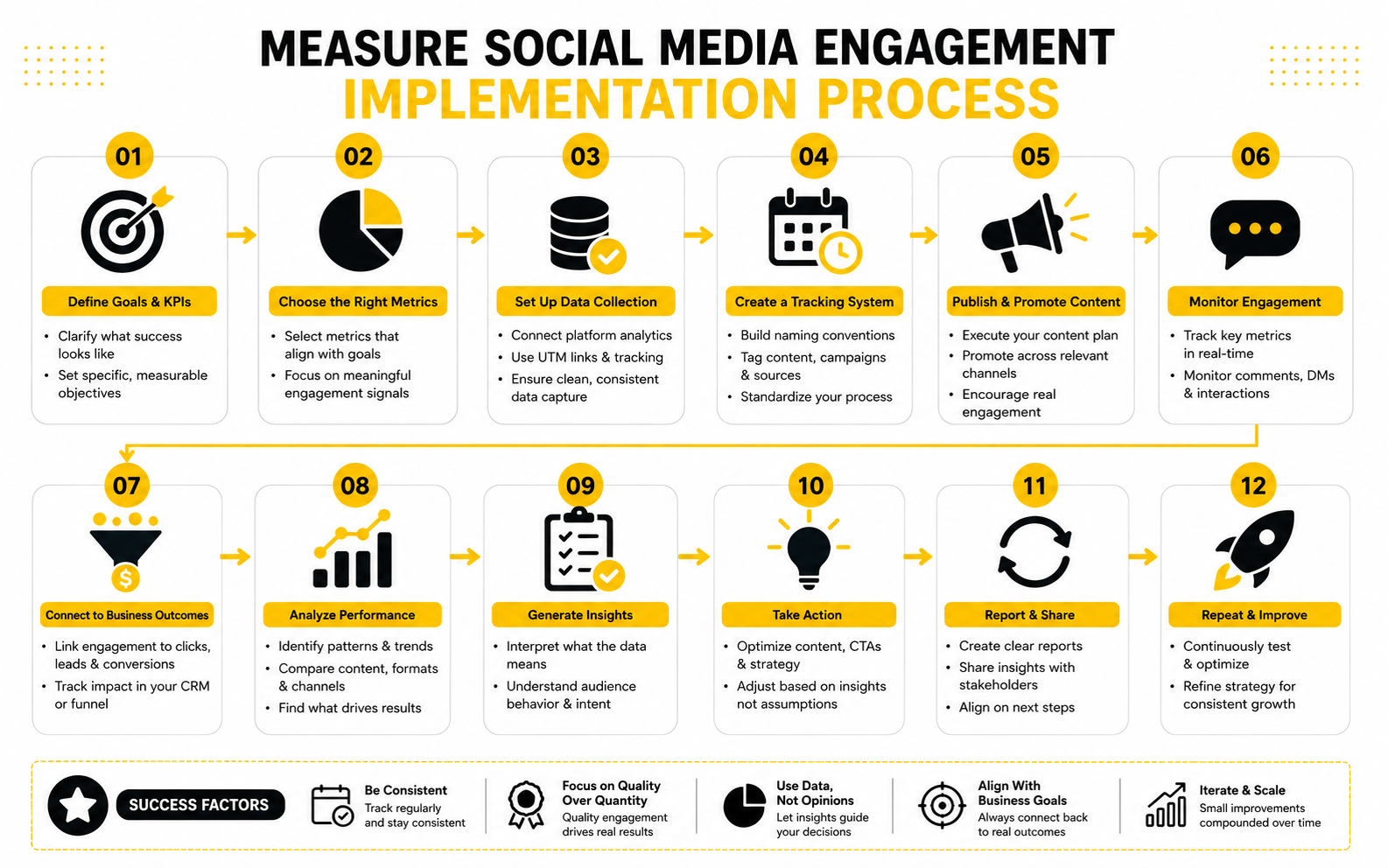
The Analytics Stack Should Connect Attention To Outcomes
Your analytics system should not stop at platform engagement. It should connect the full path from content to outcome.
Think of it in four layers. The first layer is content performance. The second layer is audience behavior. The third layer is traffic and conversion. The fourth layer is revenue or business impact.
At the content layer, you measure reach, impressions, views, likes, comments, saves, shares, follows, profile visits, and DMs. At the audience layer, you look at retention, repeat engagement, sentiment, follower quality, and community response. At the traffic layer, you measure clicks, landing page views, form fills, trials, booked calls, and email signups.
At the business layer, you measure pipeline, revenue, customer acquisition cost, retention, referrals, and repeat purchase behavior. This is where social media stops being “content activity” and starts becoming a measurable growth channel.
If you already use a CRM or funnel tool, connect your social campaigns to it as early as possible. A platform like GoHighLevel can be useful when you want social leads, DMs, forms, appointments, automations, and sales follow-up in one system. The key is simple: do not let valuable engagement disappear because nobody tracked what happened after the interaction.
Do Not Confuse Volume With Quality
High engagement volume feels good, but it is not always the best signal.
A post can attract thousands of low-quality reactions and still fail to attract buyers, subscribers, community members, or serious prospects. Another post can attract fewer interactions but produce stronger sales conversations, more saves, and better-fit leads. The second post may be the better business asset.
This is why you should separate engagement into quality levels. Not every action carries the same weight. A like is light. A save is stronger. A share is stronger again. A qualified comment, DM, click, lead, or booked call is closer to business value.
A simple scoring model can help:
This does not need to become complicated. The goal is to stop treating all engagement as equal. Once you weight actions by value, your reporting becomes much more honest.
Watch Time Is A Signal Of Attention Quality
For video content, watch time is one of the most important engagement signals because it shows whether people stayed.
Views can be inflated by curiosity, autoplay, trending audio, or a strong opening hook. Watch time shows whether the content held attention after the first second. Completion rate, average view duration, rewatches, and drop-off points help you understand where the content gained or lost people.
This matters because short-form video can create a lot of surface-level reach. But reach without attention depth is weak. If people leave after two seconds, the hook may be misleading, the topic may be too broad, or the payoff may be too slow.
Use watch time to improve creative decisions. Tighten your opening. Remove slow intros. Move the strongest proof earlier. Make the next step clearer. The data should shape the edit, not just sit in a report.
Saves Show Future Intent
Saves are one of the clearest signals that your content has lasting value.
When someone saves a post, they are saying, “I may need this later.” That is very different from tapping like and moving on. Saves often indicate that the content is useful, practical, educational, inspirational, or relevant to a decision the person has not made yet.
This is why saves are especially important for tutorials, frameworks, checklists, comparison posts, product education, templates, and deep-dive carousels. A high-save post may not convert immediately, but it can become a trust asset that keeps pulling people back toward your brand.
If a post earns a lot of saves, do not just celebrate it. Repurpose it. Turn it into an email, lead magnet, webinar topic, video series, landing page section, or sales enablement asset. Strong saves are often your audience telling you what they want explained more clearly.
Shares Reveal Message-Market Fit
Shares show that your content gave people a reason to pass it on.
That reason could be utility, entertainment, identity, emotion, status, urgency, or relevance. A person shares content because it says something useful to their network or about themselves. That makes shares one of the strongest indicators of message-market fit.
Do not only measure how many shares you got. Look at what kind of content gets shared. Are people sharing contrarian takes? Step-by-step tutorials? Funny observations? Data-backed insights? Customer proof? Personal opinions? Product comparisons?
Once you know what people share, you understand what your audience sees as worth spreading. That is valuable creative intelligence.
Comments Need Sentiment, Not Just Counting
Comment volume is not enough.
You need to know what the comments mean. Are people agreeing, disagreeing, asking questions, tagging friends, challenging your claim, requesting pricing, sharing personal experiences, or complaining? Each of those actions tells a different story.
This is where qualitative review matters. A dashboard may say a post received 200 comments, but the business meaning depends on the content of those comments. Two hundred low-effort comments from a giveaway are very different from twenty detailed comments from ideal buyers.
For a simple review, group comments into categories:
This gives you a better read on audience quality. It also helps your next content decision because questions and objections can become future posts.
Clicks Are Not The Finish Line
Clicks matter, but they are not the end of measurement.
A click only tells you someone left the platform and visited the next step. That is useful, but you still need to know what happened after the click. Did they bounce? Did they read? Did they sign up? Did they book? Did they buy?
This is where landing page performance matters. If social content earns strong clicks but the landing page does not convert, the problem may not be the content. It may be message mismatch, weak page structure, slow load speed, unclear offer, poor mobile experience, or a CTA that does not match the intent of the post.
For campaigns where social traffic goes to sales pages or funnels, a tool like ClickFunnels can help you test pages, offers, and conversion paths more deliberately. The important thing is to measure the whole path, not just the first click.
Compare Leading And Lagging Indicators
Good analytics separate leading indicators from lagging indicators.
Leading indicators show early signs of momentum. These include reach, watch time, saves, shares, comments, profile visits, clicks, DMs, and follower growth. They help you understand whether your content is creating attention and movement.
Lagging indicators show the final business result. These include leads, booked calls, trials, purchases, revenue, renewals, referrals, and customer lifetime value. They usually take longer to appear, but they matter more for business decisions.
You need both. If leading indicators are strong but lagging indicators are weak, your content may be attracting attention without enough conversion intent. If lagging indicators are strong but leading indicators are weak, you may have a high-quality offer but limited distribution.
The job is not to worship one metric. The job is to understand the relationship between them.
Build A Scorecard That Forces Better Decisions
A good scorecard should make your next move obvious.
Do not build a report that only lists numbers. Build a scorecard that connects metrics to interpretation and action. Every reporting cycle should end with a decision.
Use a simple structure:
For example, if saves increased on educational carousels but clicks stayed flat, the action might be to add stronger mid-funnel CTAs or turn the best carousel into a lead magnet. If shares increased on opinion posts but comments became negative, the action might be to sharpen the point of view without creating unnecessary confusion. If clicks increased but conversions dropped, the action might be to fix the landing page or align the offer with the post more closely.
This is how you measure social media engagement like an operator. You do not stop at “performance went up” or “performance went down.” You turn the data into a decision.
The Best Data Tells You What To Do Next
The real value of social analytics is not accuracy for its own sake. It is direction.
You want the data to tell you which topics deserve more attention, which formats are worth repeating, which platforms are creating real business movement, and which engagement signals are just noise. You also want it to show where the customer journey is leaking.
If people watch but do not engage, the content may be entertaining but not useful enough. If people save but do not click, the content may need a clearer next step. If people click but do not convert, the landing page or offer may be the issue. If people DM but do not buy, the follow-up process may need work.
That is the mindset. Every number should point to a next action. If a metric does not help you make a decision, it probably does not belong in your main report.
Advanced Measurement: What Changes When You Scale
Once your social media system becomes more mature, the challenge changes.
At the beginning, the main problem is usually clarity. You need to know what to track, how to calculate engagement, and how to connect social activity to business outcomes. But once you are publishing regularly, testing different formats, running campaigns, using paid amplification, and managing multiple platforms, the problem becomes interpretation.
More data does not automatically mean better decisions. In fact, more data can make your decisions worse if your team starts optimizing for whatever is easiest to see. That is why advanced measurement is less about adding more metrics and more about protecting the quality of your judgment.
Attribution Gets Messy Fast
Social media rarely works in a clean straight line.
Someone may see your LinkedIn post today, watch your Instagram Reel next week, click a retargeting ad later, join your email list, ignore three emails, then book a call after a founder story finally hits the right nerve. If you only credit the final click, social looks weaker than it really is. If you credit every interaction equally, social looks cleaner than it really is.
That is the attribution problem. Engagement often creates demand before analytics can clearly prove it. This is why you need to separate measurable conversion from influenced conversion.
Measurable conversion is what you can directly track through links, forms, CRM records, checkout data, and campaign tags. Influenced conversion is harder to prove, but it shows up in patterns: more branded search, more direct traffic, more people saying they found you on social, more warmer sales calls, and more prospects who already understand your point of view before they talk to you.
Do not use attribution uncertainty as an excuse to ignore tracking. Also, do not pretend tracking is perfect. The mature answer is to measure what you can, document what you cannot, and look for consistent patterns across channels.
Dark Social Can Make Engagement Look Smaller Than It Is
A lot of social sharing happens where public analytics cannot fully see it.
People copy links into Slack, WhatsApp, Messenger, Discord, private communities, email threads, group chats, and DMs. Someone may screenshot your post and send it to a colleague. Someone may describe your idea in a meeting without ever clicking share. This kind of activity is often called dark social, and it can make public engagement numbers understate the real spread of your content.
That does not mean you should throw out your metrics. It means you should treat visible engagement as the measurable layer, not the whole truth. If a post gets modest public engagement but leads to a wave of inbound messages, sales mentions, branded search, or direct traffic, something is happening below the surface.
To capture more of this, ask better intake questions. Add “Where did you first hear about us?” to forms. Ask sales teams what prospects mention on calls. Track increases in branded search after major content pushes. Review DMs and email replies alongside public engagement.
This is how you measure social media engagement more realistically. You stop assuming the platform dashboard sees everything.
The Algorithm Is Not Your Strategy
It is tempting to chase whatever the algorithm seems to reward this month.
More hooks. Shorter videos. Longer captions. More controversy. More carousels. More posts. More trends. More everything.
The problem is that platform incentives do not always match business incentives. A platform wants more time spent, more content consumed, and more ad inventory. Your business wants attention that turns into trust, demand, pipeline, revenue, retention, or community strength.
Those goals can overlap, but they are not identical.
If you optimize only for platform engagement, you may create content that performs well but attracts the wrong people. You may train your audience to expect entertainment when your offer requires education. You may create debates that inflate comments while damaging trust. You may increase posting volume while weakening the quality of your point of view.
So yes, understand platform behavior. Use the formats that work. Study retention, shares, saves, comments, and watch time. But never let the algorithm become the boss.
Engagement Quality Should Shape Your Content Mix
At scale, you should not only ask which posts got the most engagement. You should ask which posts attracted the best engagement.
Best does not always mean biggest. Best means most aligned with the business goal. A smaller number of thoughtful comments from ideal customers can matter more than thousands of reactions from people who will never buy, subscribe, refer, or remember you.
This is where content mix becomes strategic. You need some content for reach. You need some content for trust. You need some content for conversion. You need some content for retention. If you try to make every post do every job, the whole system gets weaker.
A balanced advanced content mix might include:
The mix will vary by business model. A creator selling a low-ticket digital product may need different engagement signals than a B2B agency selling high-ticket retainers. A local business may care more about DMs, reviews, maps traffic, and repeat customers than broad viral reach.
Beware Of Engagement Bait
Engagement bait can make numbers look better while making the brand worse.
Posts that ask shallow questions, force artificial comments, exaggerate outrage, or manipulate people into reacting can create short-term spikes. But the spike is not always worth it. If the wrong tactic lowers trust, confuses your positioning, or trains the audience to engage only with gimmicks, the metric is lying to you.
This matters even more in an environment where trust is fragile. The 2025 Edelman Trust Barometer Special Report on Brands surveyed 15,000 people across 15 countries and focused heavily on the shift from broad institutional trust to more personal, individual expectations of brands. The practical lesson for marketers is clear: engagement that feels manipulative can cost more than it gives.
A simple test helps. Ask whether the post would still be worth publishing if public engagement were hidden. If the answer is no, you may be chasing reaction instead of building value.
Sentiment Can Change The Meaning Of A Metric
High engagement is not always good news.
A product issue can create comments. A poorly worded post can create shares. A controversial statement can generate reach. A public complaint can attract attention faster than a helpful tutorial.
That is why sentiment matters. You need to understand whether engagement is positive, negative, neutral, confused, skeptical, supportive, or purchase-driven. Without sentiment, you may misread a reputation problem as a content win.
This does not mean every negative comment is a disaster. Sometimes pushback reveals a strong point of view. Sometimes objections give you better sales material. Sometimes disagreement means you are finally saying something specific enough to matter.
But you need to know the difference between productive friction and brand damage. Productive friction creates debate while strengthening the right audience’s trust. Brand damage creates confusion, distrust, or frustration among the people you actually want to serve.
The More You Scale, The More Governance Matters
When one person runs social, judgment can live in that person’s head. When a team runs social, judgment needs structure.
Governance sounds boring, but it protects quality. It defines how you tag campaigns, name links, approve content, classify engagement, respond to comments, escalate complaints, and report results. Without it, your data becomes inconsistent and your brand voice becomes unstable.
This is especially important when multiple people are creating content across several platforms. One person may tag a campaign as “launch,” another as “product_launch,” another as “maypromo,” and suddenly your reporting is a mess. The same thing happens with content pillars, formats, CTAs, audience segments, and lead sources.
Create simple rules before the system gets too big. Decide naming conventions. Decide which metrics go in the main report. Decide how comments and DMs get categorized. Decide who owns follow-up. Decide what counts as a qualified social lead.
The goal is not bureaucracy. The goal is clean decision-making.
Do Not Let AI Inflate Output And Destroy Signal
AI can help social teams move faster. It can summarize comments, draft post variations, organize themes, repurpose content, and identify patterns in large sets of engagement data. Used well, that is powerful.
But AI can also flood your channels with average content. If output rises while originality falls, engagement data becomes harder to interpret. You may publish more, but learn less.
The risk is not just low-quality writing. The risk is sameness. If your posts sound like everyone else’s posts, you may get some engagement from familiar formats, but you will struggle to build memory, trust, and distinction.
Use AI for leverage, not replacement. Let it help with analysis, structure, repurposing, summarization, and first drafts. Keep the point of view, examples, judgment, and final editorial call human.
Scaling Requires Better Lead Handling
As engagement grows, follow-up becomes a bottleneck.
More comments, more DMs, more clicks, and more leads are only useful if the business can respond quickly and relevantly. Otherwise, you create demand and then leak it. That is painful because the expensive part already happened: you earned attention.
This is where operational systems matter. Social engagement should connect to your CRM, email platform, calendar, sales process, and customer support workflow. A qualified DM should not disappear in a crowded inbox. A lead form should not sit untouched for three days. A booked call should not lack context about which post created the interest.
If your business relies on conversations and appointments, a connected system like GoHighLevel can help centralize follow-up, automations, calendars, pipelines, and messaging. If your goal is to turn social attention into email sequences and lifecycle campaigns, tools like Brevo or Moosend can help you keep the relationship going after the first interaction.
The point is simple. Engagement is not the finish line. It is the handoff.
Watch For Audience Drift
Audience drift happens when your content starts attracting people who are not aligned with your business.
This can happen when a post goes viral outside your niche. It can happen when you lean too heavily into broad memes, trends, controversy, or beginner-level content. It can also happen when paid targeting is too loose.
At first, audience drift can look like growth. More followers. More reach. More comments. More notifications.
Then the problems show up. Conversion rates drop. Comments get less relevant. DMs become lower quality. Email subscribers stop opening. Sales calls become weaker. Your content has attracted attention, but not the right attention.
To catch this early, track audience quality signals. Look at profile visits that become followers, followers that become email subscribers, DMs that become qualified opportunities, and comments from people who match your ideal customer profile. If those ratios decline while top-line engagement rises, you may be growing in the wrong direction.
Separate Brand Content From Performance Content
Brand content and performance content should work together, but they should not be judged the same way.
Brand content builds memory, trust, preference, community, and emotional connection. Performance content drives measurable action. Both are valuable, but they operate on different timelines.
A founder perspective post may not drive immediate clicks, but it can make future conversion posts work better. A customer story may not generate massive reach, but it can reduce risk for serious buyers. A direct offer post may not earn many shares, but it can produce revenue.
This is why you should label content by strategic role before you analyze it. If you judge brand-building content only by immediate conversion, you will underinvest in trust. If you judge performance content only by engagement rate, you may underinvest in clear selling.
A mature social strategy needs both.
Know When Lower Engagement Is Acceptable
Not every important post will get high engagement.
Pricing updates, product details, policy changes, technical explanations, case study breakdowns, niche buyer education, and direct offers may earn lower public engagement than broad awareness content. That does not make them bad. It may mean they are serving a narrower but more valuable audience.
This is where confidence matters. If a post is strategically important, do not kill it just because it did not go viral. Look at the right signals.
Did it help sales conversations? Did it answer an objection? Did it drive qualified clicks? Did prospects mention it? Did it reduce confusion? Did it support retention? Did it help the right people make a decision?
Sometimes the most valuable content is not the content that gets the loudest public response. Sometimes it is the content that makes buying easier.
Build Experiments, Not Random Tests
Testing is powerful when it is structured. Random testing is just guessing with extra steps.
A real experiment has one clear question, one main variable, one success metric, and a defined review window. If you change the hook, format, CTA, topic, posting time, and audience all at once, you will not know what caused the result.
Good experiments might test:
Each experiment should teach you something. Even a failed test is useful if it improves your next decision.
The Expert Move Is To Measure Tradeoffs
Advanced social measurement is really tradeoff management.
More reach can reduce engagement rate. More frequency can reduce average quality. More controversy can increase comments but lower trust. More automation can improve speed but weaken human connection. More direct selling can increase short-term revenue but reduce audience warmth if overused.
There is no perfect metric that solves all of this. You have to decide what you are optimizing for in each season.
If you are launching, you may accept more direct response content. If you are repositioning, you may prioritize authority and point of view. If you are building a category, you may invest in education. If you are trying to improve retention, you may care more about customer stories, community response, and support-oriented content.
The best teams do not ask, “How do we get more engagement?” They ask, “What kind of engagement do we need right now, and what are we willing to trade to get it?”
That is the level where social media becomes strategic.
Make Engagement Measurement Part Of The Business System
At this stage, the big lesson is clear: social media engagement should not live in a separate marketing bubble.
It should connect to positioning, content strategy, sales follow-up, customer experience, retention, and product feedback. When you measure social media engagement well, you are not just measuring posts. You are measuring how your market responds to your message in public and private.
That is why the strongest teams treat engagement as an operating system. Content creates signals. Signals create insights. Insights shape campaigns, offers, landing pages, sales scripts, email sequences, and customer support. Then the next round of content gets sharper because the business is learning from the market instead of guessing.
The brands that struggle are usually not short on data. They are short on integration. They have social analytics in one place, CRM data somewhere else, landing page data in another tool, and customer conversations scattered across inboxes.
That makes the truth hard to see.
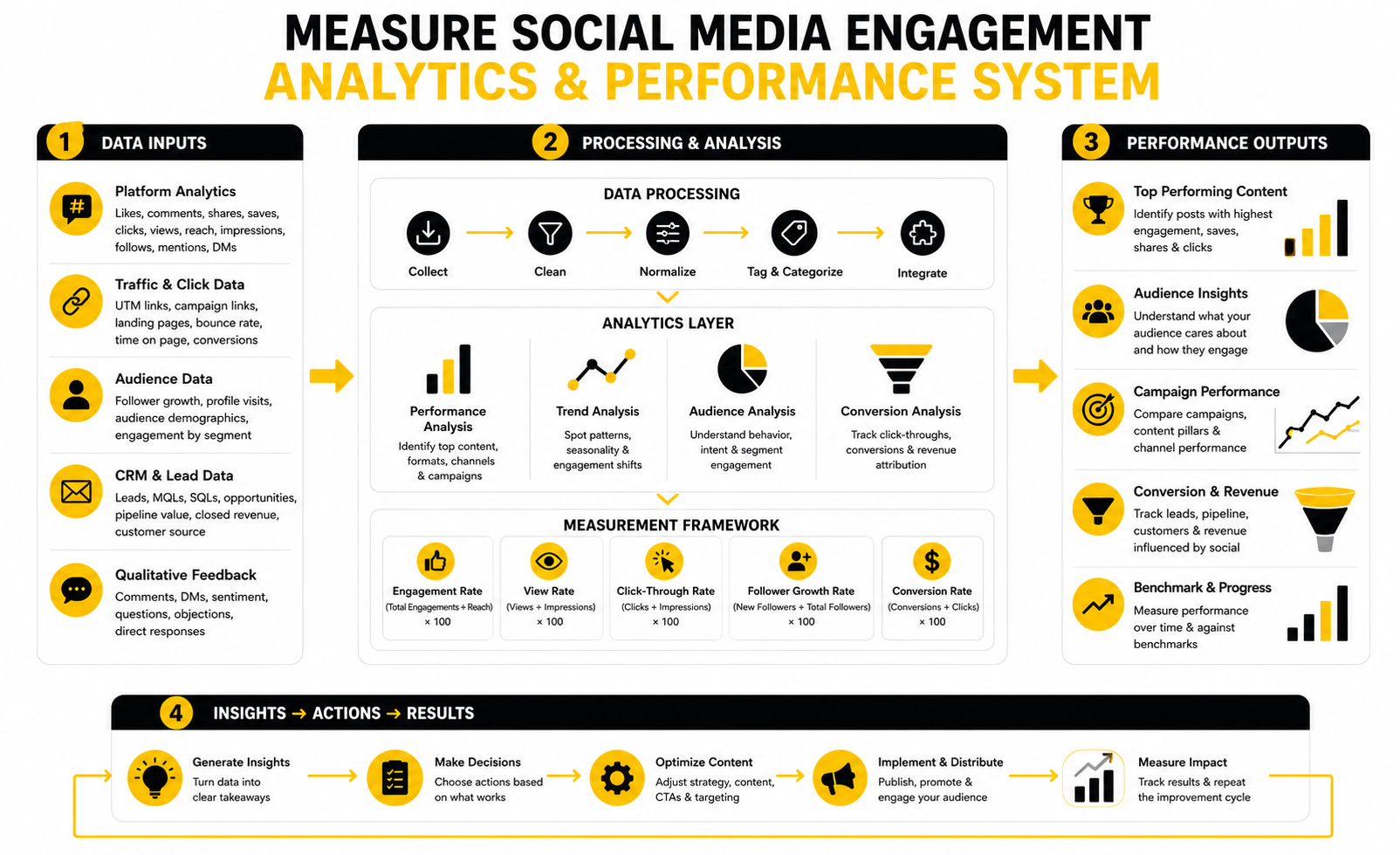
Build Your Final Engagement Measurement Stack
A clean engagement measurement stack does not need twenty tools. It needs clear ownership and a simple flow of information.
Start with platform analytics because that is where the first signal appears. Then connect social traffic to your website or landing pages. Then connect leads and conversations to a CRM or email system. Finally, review the full journey on a weekly and monthly rhythm.
A practical stack looks like this:
This keeps your measurement system grounded. You are not trying to make every tool do everything. You are making sure every important signal has somewhere to go.
For smaller teams, this can be lightweight. A spreadsheet, native analytics, clean tracking links, and a simple CRM can be enough. For larger teams, tools like Buffer, GoHighLevel, ClickFunnels, Brevo, and ManyChat can help connect publishing, conversations, funnels, follow-up, and reporting into a more usable workflow.
What To Do When The Numbers Are Confusing
Sometimes the data will not tell a clean story.
A post may get strong reach but weak saves. A video may get a lot of views but poor watch time. A carousel may get saves but no clicks. An offer post may get low public engagement but produce qualified DMs. A campaign may look average in-platform but create strong branded search and direct traffic later.
This is normal. Social media is not a controlled lab.
When the numbers conflict, do not rush to force a simple answer. Look at the goal, the platform, the format, the audience, and the next-step behavior. Then decide which signal matters most for that specific content type.
Use this simple interpretation framework:
That is how you avoid lazy conclusions. You interpret the metric inside the situation that produced it.
The Final Rule: Measure For Decisions, Not Decoration
The best social media report is not the prettiest report. It is the report that changes what happens next.
If your dashboard does not help you decide what to post, pause, test, improve, repurpose, promote, or connect to sales, it is not doing its job. If your team reviews engagement data and leaves with no clear action, the report is decoration.
This is why the whole system should end with decisions.
Decide which content pillar deserves more production. Decide which platform needs a different role. Decide which offer needs a cleaner bridge from social. Decide which posts should become ads, emails, landing page sections, lead magnets, or sales assets.
When you measure social media engagement this way, the work becomes much more useful. You are no longer chasing likes. You are building a feedback loop between your audience and your business.
What is social media engagement?
Social media engagement is the collection of actions people take in response to your content. This can include likes, reactions, comments, shares, saves, clicks, replies, mentions, tags, profile visits, DMs, follows, and other platform-specific actions. The important part is that engagement shows behavior, not just exposure.
Reach tells you how many people may have seen the content. Engagement tells you what people did after seeing it. That makes engagement one of the clearest ways to understand whether your content is creating attention, interest, trust, or action.
How do you measure social media engagement?
You measure social media engagement by tracking the actions people take on your content and comparing those actions to reach, impressions, views, followers, or business outcomes. The most common calculation is total engagements divided by reach, impressions, followers, or views, multiplied by 100.
The best formula depends on the question you are trying to answer. If you want to compare content quality, engagement rate by reach is often useful. If you want to understand video performance, engagement by views and watch time can be more relevant.
What is a good engagement rate on social media?
A good engagement rate depends on the platform, industry, content format, audience size, and goal. Broad benchmarks can help, but they should not become your only target. The 2025 Rival IQ benchmark report showed that engagement rates declined across several major platforms, which is why comparing your performance to your own recent baseline matters.
A better question is whether your engagement rate is improving among the audience that matters. If your rate is rising but lead quality is falling, that is not a win. If your rate is modest but the content creates strong DMs, saves, clicks, or conversions, it may be performing exactly as it should.
Which social media engagement metrics matter most?
The most important engagement metrics are the ones tied to your goal. For awareness, shares, reach, profile visits, and follower growth may matter most. For trust, saves, comments, replies, watch time, and repeat engagement can be more useful.
For conversion, clicks, DMs, form fills, booked calls, trials, purchases, and revenue matter more than surface-level reactions. Do not rank every metric the same way. A like, a save, and a sales inquiry are not equal signals.
Are likes still important?
Likes still have value, but they are usually a light signal. They can help you compare topics, creative angles, and post formats, especially when you review them over time. But likes alone rarely prove that content created trust, intent, or business value.
Treat likes as an early feedback signal. They can tell you that the content caught attention, but they do not tell you the full story. Always compare likes with deeper signals like comments, saves, shares, clicks, DMs, and conversions.
Why are saves so valuable?
Saves are valuable because they show future intent. When someone saves a post, they are signaling that the content is useful enough to revisit. That is stronger than a quick reaction.
Saves are especially important for educational content, tutorials, frameworks, checklists, buying guides, and product comparison content. If a post gets a high save rate, it may be a strong candidate for repurposing into an email, lead magnet, landing page section, or longer-form asset.
Why do shares matter so much?
Shares matter because they show that someone found the content valuable enough to pass along. That makes shares a strong signal of relevance, identity, utility, entertainment, or emotional resonance. They also help your content reach audiences beyond your existing followers.
A high-share post can tell you which messages are worth spreading. Study the posts that earn shares and look for patterns in topic, format, hook, tone, and audience emotion. Those patterns often reveal what your market actually cares about.
How often should you review engagement data?
Review engagement data weekly for content-level decisions and monthly for strategic decisions. Weekly reviews help you spot what is working while the content is still fresh. Monthly reviews help you see patterns without overreacting to one post.
The weekly review should focus on performance signals like saves, shares, comments, clicks, watch time, and DMs. The monthly review should connect those signals to bigger decisions about content pillars, platforms, campaigns, offers, and customer journey gaps.
Should organic and paid engagement be measured together?
Organic and paid engagement should be labeled separately before being compared. Organic engagement shows how your audience and platform distribution respond without direct media spend. Paid engagement shows how selected audiences respond when distribution is bought.
If you blend them too early, the data gets muddy. A paid campaign may have lower public engagement but stronger conversion economics. An organic post may have strong engagement but limited conversion value. Measure them separately, then analyze how they work together.
How do you know if engagement is high quality?
High-quality engagement comes from the right people and moves them closer to a meaningful outcome. That could mean a thoughtful comment, a qualified DM, a useful question, a save, a share from an ideal customer, a click, a lead, or a booked call. It depends on the goal.
Low-quality engagement may look good on the surface but create little business value. Giveaway comments, irrelevant reactions, spam, broad viral attention, and unqualified followers can inflate reports while weakening the signal. Quality matters more than volume.
What is the biggest mistake people make when measuring engagement?
The biggest mistake is treating all engagement as equal. A like is not the same as a save. A comment is not the same as a qualified sales question. A viral post is not automatically better than a lower-reach post that creates serious buyers.
The second mistake is measuring engagement without a goal. Before you judge performance, define what the post was supposed to do. A post built for awareness should not be judged the same way as a post built for conversion.
How do you connect social engagement to revenue?
You connect social engagement to revenue by tracking the full path from content to business outcome. That means using clean tracking links, landing page analytics, forms, CRM records, booking data, email attribution, checkout data, and customer intake questions. You also need consistent naming conventions so campaigns can be compared properly.
This will never be perfect, because some social influence happens through dark social, word of mouth, private DMs, and delayed buying behavior. But you can still build a strong picture by combining direct tracking with pattern analysis. Look for increases in branded search, direct traffic, warmer leads, and prospects mentioning social content during sales conversations.
What should I do if engagement is dropping?
Start by checking whether the drop is happening across one platform, one format, one topic, or your whole content system. If only one format is down, the issue may be creative fatigue. If one platform is down, broader platform behavior or algorithm changes may be involved.
Then review quality signals. Are saves down? Are shares down? Are comments weaker? Are clicks lower? Are DMs less qualified? Do not fix everything at once. Identify the weakest part of the journey and run a focused test.
Can you measure engagement without expensive tools?
Yes. You can measure social media engagement with native platform analytics, a spreadsheet, tracking links, website analytics, and a basic CRM or email tool. Expensive tools can save time, but they are not required for clear thinking.
The key is consistency. Track the same metrics on the same schedule, tag content clearly, and review results against the goal of each post. A simple system used every week beats a complicated dashboard nobody trusts.
What should a social media engagement report include?
A useful report should include the goal, platform, content format, primary metric, supporting metrics, top-performing posts, weak-performing posts, engagement quality, traffic results, conversion results, and recommended actions. It should not just list numbers.
Every report should answer three questions. What happened? What does it mean? What are we doing next? If the report cannot answer those questions, simplify it until it can.
Build a stronger local presence with BAAM AI
Turn your website, Google profile, social channels, and AI visibility into one growth engine
Most businesses do not need more random marketing activity. They need a consistent presence system that helps the right people find them, trust them, and take action. BAAM AI brings strategy, local SEO, website updates, Google Maps visibility, social content, AI-search readiness, media production, and reporting into one practical monthly engine.
If you want your marketing to keep working after the campaign ends, start with a free BAAM AI presence audit. See how your business shows up today and where the fastest visibility wins are at BAAM AI.