
BAAM AI Blog
What Changes the Social Media Marketing Cost Per Month?
The social media marketing cost per month changes because “social media marketing” can mean five very different things. One business wants three posts per week and basic scheduling. Another wants daily video...
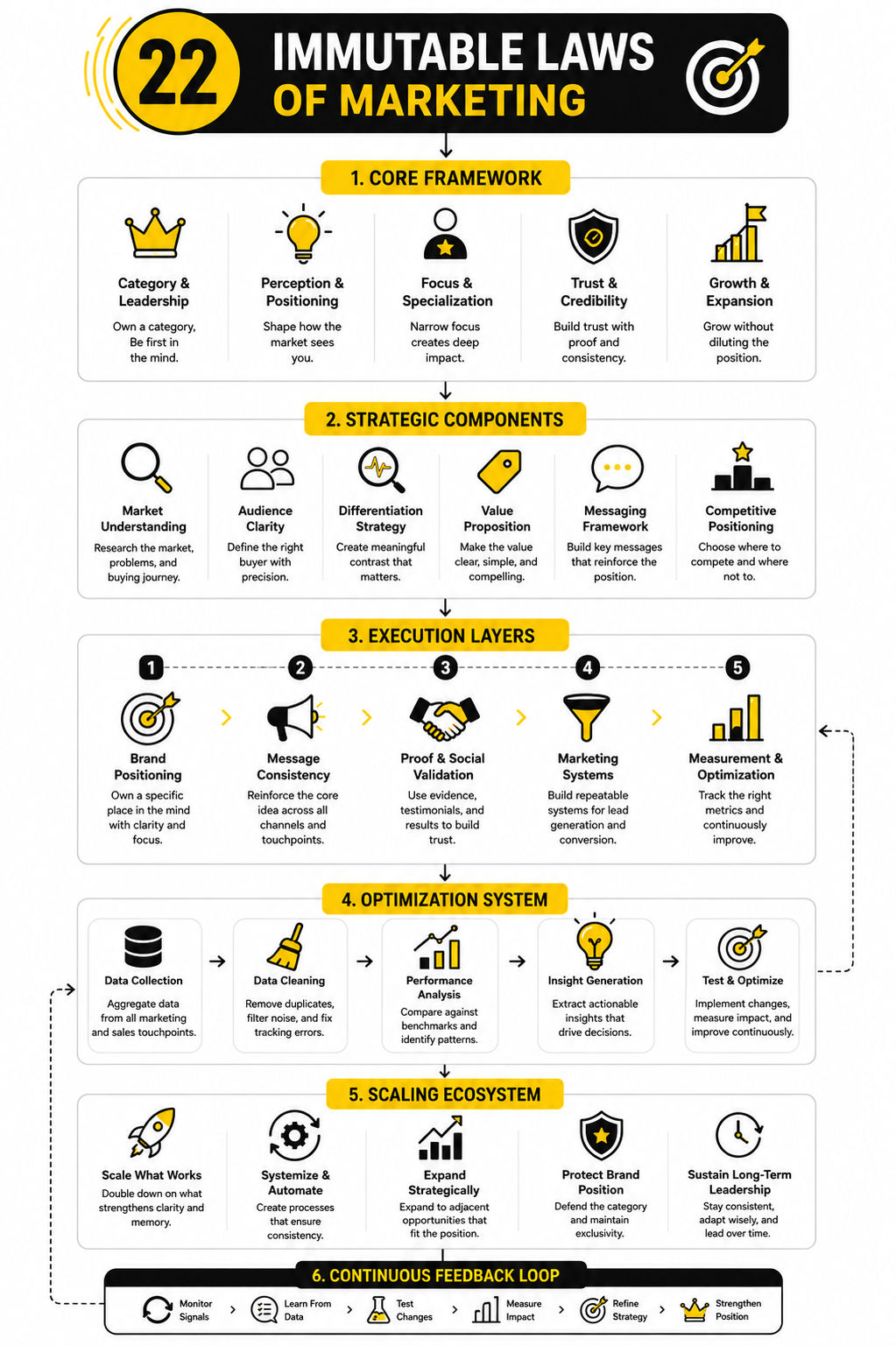
What Changes the Social Media Marketing Cost Per Month?
The social media marketing cost per month changes because “social media marketing” can mean five very different things. One business wants three posts per week and basic scheduling. Another wants daily video, influencer coordination, paid ads, community management, reporting, creative testing, and a full funnel behind every post.
That is why cheap quotes and expensive quotes can both be real. A freelancer managing one Instagram account is not selling the same thing as an agency running paid campaigns across Meta, TikTok, LinkedIn, YouTube Shorts, and retargeting audiences. Before you compare prices, you need to compare scope.
The biggest cost drivers are usually:
A basic monthly package may only include content scheduling and captions. A serious growth package usually includes strategy, creative direction, short-form video editing, ad testing, lead capture, email follow-up, and weekly optimization. That second version costs more because it has more moving parts, more labor, and more accountability.
This matters because social media is no longer just a “posting” channel. Social media ad revenue in the U.S. reached $117.7 billion in 2025, with growth driven by creator campaigns, commerce integration, targeting, measurement, and attribution improvements, as shown in the IAB Internet Advertising Revenue Report. In plain English: brands are spending more because social is now connected to sales, not just awareness.
The Main Monthly Cost Buckets
Most businesses make the mistake of asking one broad question: “How much does social media marketing cost per month?” A better question is: “What am I actually paying for each month?” Once you split the work into buckets, pricing becomes much easier to understand.
Strategy and Planning
Strategy is the part most people undervalue until their content stops working. This includes audience research, competitor analysis, offer positioning, content pillars, campaign planning, platform selection, and monthly priorities. Without strategy, the business usually ends up posting random content and hoping something catches.
For a small business, strategy may be a light monthly call and a simple content plan. For a larger brand, it can include deep analytics, campaign mapping, platform-by-platform positioning, influencer selection, and creative testing plans. The more decisions your social media partner has to make, the more this bucket costs.
A practical monthly strategy budget can start around a few hundred dollars when bundled into a freelancer package. With an agency, it may be baked into a larger retainer. If you are paying for strategy, make sure you are getting decisions, not just a vague calendar full of awareness posts.
Content Creation
Content creation is usually the largest cost driver because it takes the most time. Captions are the easy part. The real work is concepting, scripting, filming, designing, editing, formatting, revising, and adapting content for each platform.
A static graphic is cheaper than a polished short-form video. A repurposed founder clip is cheaper than a planned shoot. A batch of template-based posts is cheaper than custom creative built around campaigns, launches, and offers.
This is where the monthly cost can rise fast. Sprout Social’s own pricing breakdown estimates a more comprehensive program at around $19,000 per month when content creation, social advertising, and platform management are combined in a full-service setup, with content creation carrying the largest share in that example through their social media management cost guide. That does not mean every business should spend that much. It means the ceiling gets high when you want content volume, paid support, and professional management at the same time.
Publishing and Scheduling
Publishing sounds simple, but it still takes operational work. Someone has to format posts correctly, schedule them, check links, write platform-specific copy, add hashtags where relevant, tag accounts, choose thumbnails, and make sure content goes out at the right time. This is one of the easiest parts to systemize, which is why it should not eat your whole budget.
Tools can help here. For lean teams, Buffer is often a practical fit because pricing starts low and scales by channel. The official pricing page lists paid plans from $5 per month per channel when billed yearly, which makes it easier for small businesses to avoid paying enterprise-level software costs before they need enterprise-level features.
Publishing should be included in most monthly retainers. If someone charges a high monthly fee and only schedules content you already created, you are probably overpaying. Scheduling is useful, but it is not the same as marketing strategy.
Community Management
Community management means replying to comments, answering DMs, handling basic questions, escalating support issues, and keeping the brand active in conversations. This is where social media becomes relationship-driven instead of broadcast-driven. It can also become expensive because it requires real-time attention.
A local service business may only need light comment monitoring a few times per week. An ecommerce brand running ads may need daily inbox support because customers ask about sizing, shipping, discounts, returns, and product details. A personal brand may need careful filtering because every public reply affects reputation.
This bucket is often underestimated. If your social media manager is expected to respond quickly, protect the brand voice, and coordinate with sales or support, that should be priced separately or clearly included in the retainer. Otherwise, the work becomes invisible until something goes wrong.
Paid Social Advertising
Paid ads are a separate cost from organic social media management. You have the ad spend itself, which goes to the platform. Then you have the management fee, which goes to the person or agency planning, launching, optimizing, and reporting on campaigns.
For example, Meta explains that daily budgets can fluctuate by day but are controlled across the week, with spend not exceeding seven times the daily budget over a weekly period in its daily budget documentation. That detail matters because a business may see uneven daily spend and think something is broken. A competent ad manager should understand these platform mechanics and explain them clearly.
Ad management can be priced as a flat monthly fee, a percentage of ad spend, or a hybrid. Smaller businesses often pay a flat fee because the budget is modest. Larger accounts often pay a percentage because campaign complexity grows with spend, creative testing, audiences, offers, and reporting needs.
Analytics and Reporting
Reporting is not just a PDF with follower counts. Good reporting explains what changed, why it changed, what it means, and what should happen next. Bad reporting lists numbers without decisions.
At minimum, monthly reporting should cover reach, engagement, clicks, leads, conversions, top-performing content, weak content, audience signals, and next steps. If paid ads are included, reporting should also cover spend, CPM, CPC, CTR, cost per lead, cost per purchase, ROAS where trackable, and creative performance. The point is not to drown in metrics. The point is to make better decisions next month.
This is one reason the cheapest social media marketing cost per month is not always the best deal. If nobody is interpreting the data, you are paying for activity instead of progress. That can feel affordable at first, then expensive later when months pass without clear learning.
Typical Monthly Pricing Ranges
Monthly pricing varies by market, provider, and scope, but most businesses can think in tiers. These tiers are not perfect, but they help you avoid comparing a $500 freelancer package to a $7,000 agency package as if they are the same offer.
$500 to $1,500 Per Month: Basic Presence
This range usually fits solopreneurs, local businesses, early-stage startups, and small service providers that need consistency more than aggressive growth. You may get a few posts per week, light scheduling, basic captions, simple graphics, and limited reporting. You should not expect deep strategy, daily video, advanced ad management, or heavy community management at this level.
WebFX lists monthly packages and retainers in a broad $500 to $5,000 per month range for agency or freelancer monthly social media services in its social media pricing guide. That range is useful because it shows how quickly scope changes the number. A $500 package is usually execution-heavy and narrow, while a $5,000 package should include more planning, production, and optimization.
This tier can work well if you already know your offer, already have brand assets, and only need help staying visible. It is not the right tier if your business needs social media to become a major acquisition channel immediately. Expectations matter.
$1,500 to $3,500 Per Month: Managed Growth
This is the middle range where many serious small businesses land. You can usually expect stronger planning, more consistent content, better creative, light reporting, and some strategic direction. Depending on the provider, you may also get short-form video editing, monthly calls, and basic campaign planning.
This range often makes sense for service businesses, coaches, consultants, clinics, agencies, and local brands that want to look credible and generate demand. It can also work for ecommerce brands that already have product photos, UGC, and a clear offer. The catch is that ad management, landing pages, and email automation may still cost extra.
If you are in this range, ask what happens every week. You want to know who creates the content, who approves it, who schedules it, who checks performance, and who adjusts the plan. A clean process is often the difference between a decent retainer and a frustrating one.
$3,500 to $7,500 Per Month: Strategy Plus Production
At this level, you should expect more than “we post for you.” You should be getting a content system. That may include monthly campaign planning, short-form video production, design, analytics, community support, paid social coordination, and regular optimization.
This range is common when social media is tied to revenue goals. A business may be launching offers, building a creator program, running lead magnets, retargeting website visitors, and turning content into email or SMS follow-up. The monthly cost is higher because the channel is no longer isolated.
This is also where tools and funnel infrastructure become more important. If you are capturing leads from social, a platform like GoHighLevel can help connect forms, CRM, follow-up, automations, calendars, and pipeline tracking in one place. Social media gets easier to justify when leads do not disappear after the click.
$7,500 to $20,000+ Per Month: Full-Service Social Growth
This tier is for brands that need serious execution. It may include content strategy, creative production, paid social management, influencer campaigns, social listening, community management, reporting, landing pages, offer testing, and conversion support. The team may include a strategist, account manager, designer, video editor, copywriter, ad buyer, analyst, and creator coordinator.
This level makes sense when social media is a major growth engine, not a side project. It can also make sense for funded startups, multi-location businesses, ecommerce brands, SaaS companies, and companies with aggressive acquisition goals. The investment is only justified when there is a clear path from attention to revenue.
The risk is paying full-service pricing for partial-service work. Before committing, ask what deliverables are included, what is excluded, how often strategy is reviewed, what reporting looks like, and who owns the assets. Big retainers need clear accountability.
Organic Social vs Paid Social: Why the Budget Should Be Separate
Organic social and paid social work together, but they should not be treated as the same line item. Organic builds trust, personality, authority, and audience memory. Paid social gives you reach, testing speed, retargeting, and more predictable distribution.
The problem is that many businesses want organic content to behave like paid ads. They expect every post to generate leads, every reel to go viral, and every follower to become a buyer. That is not how the channel works.
Organic is strongest when it compounds. It helps people understand your point of view, see your proof, trust your expertise, and remember your offer. Paid social is strongest when you already have a clear offer, decent creative, and a destination that can convert traffic.
A healthier monthly budget might separate:
This separation keeps the conversation honest. If you spend $2,000 per month on management but $0 on ads, your growth expectations should be different from a business spending $2,000 on management and $5,000 on media. Same retainer, completely different distribution power.
For businesses that want to turn paid social clicks into leads or sales, the landing page matters too. A tool like ClickFunnels can make sense when the goal is to build dedicated campaign funnels instead of sending paid traffic to a generic homepage. That does not replace strategy, but it can make the traffic you already paid for work harder.
The Hidden Costs Most Businesses Forget
The visible monthly retainer is only part of the cost. The hidden costs are the pieces that quietly determine whether the whole system works. Ignore them, and your “affordable” social media plan can become expensive fast.
The first hidden cost is approval time. Someone inside the business needs to give feedback, provide subject matter expertise, approve content, and share raw material. If that person is slow, the whole system slows down.
The second hidden cost is creative input. Social media teams need product details, customer objections, proof points, testimonials, founder opinions, behind-the-scenes access, and offer updates. Without that input, content becomes generic.
The third hidden cost is tooling. Scheduling tools, analytics platforms, AI tools, design software, CRM systems, landing page builders, link tracking, and form builders can all add monthly expense. None of these costs are bad by default, but they should be planned.
The fourth hidden cost is testing. You may need to test hooks, formats, offers, CTAs, landing pages, audiences, creators, and posting styles before the channel becomes predictable. That testing period is not wasted money. It is the price of learning what your market responds to.
The fifth hidden cost is follow-up. If leads come from social and nobody replies quickly, the campaign leaks money. For many businesses, a simple automation through ManyChat or a CRM workflow can protect more revenue than another batch of posts. The boring back end often matters as much as the public content.
How to Know If a Quote Is Fair
A fair quote is not the cheapest quote. A fair quote clearly connects price to scope, skill, time, output, and expected business value. You should be able to look at the proposal and understand exactly what you are buying.
A strong proposal should explain:
A weak proposal hides behind vague phrases like “brand awareness,” “engagement,” or “growth strategy” without defining the work. Those things can be valuable, but only when tied to real actions. If the provider cannot explain the process, that is a warning sign.
The simplest test is this: ask what the first 30 days look like. A competent freelancer or agency should be able to explain onboarding, research, content planning, asset collection, publishing rhythm, reporting, and next steps. If the answer is fuzzy, the monthly cost probably is too.
How to Implement a Monthly Social Media Marketing Plan
Once you understand the price ranges, the next question is simple: what should actually happen each month? This is where many businesses get burned. They agree to a social media marketing cost per month, then realize later that nobody defined the process.
A good monthly social media plan should feel organized, not improvised. You should know what happens before content is created, how ideas are approved, when posts go live, how leads are handled, and how performance is reviewed. The process does not need to be complicated, but it does need to be clear.
The goal is not to create a perfect machine on day one. The goal is to build a repeatable system that improves every month. That is what you are really paying for when you hire someone serious.
Step 1: Define the Business Goal First
Start with the business goal, not the platform. A restaurant, SaaS company, real estate agent, ecommerce store, and online coach should not run social media the same way. Different businesses need different outcomes, which means different content, budgets, and workflows.
The goal might be brand awareness, booked calls, local foot traffic, ecommerce sales, email list growth, community building, or lead generation. Each goal changes what should be created and how success should be measured. If the goal is unclear, the monthly cost becomes harder to judge because nobody knows what the money is supposed to produce.
This is also where you decide whether social media is mainly organic, paid, or both. Organic content may support trust and authority. Paid social may support reach, retargeting, and faster offer testing. The best plan usually connects the two instead of treating them like separate worlds.
Step 2: Choose the Right Platforms
You do not need to be everywhere. In fact, trying to be everywhere too early is one of the fastest ways to waste money. Every platform adds more work, more creative formatting, more scheduling, more reporting, and more management.
The better move is to choose platforms based on where your buyers already spend time and how they make decisions. LinkedIn may be stronger for B2B consulting, recruiting, enterprise services, and founder-led sales. Instagram, TikTok, Facebook, Pinterest, and YouTube may each make sense depending on the product, audience, and content style.
Platform choice affects the social media marketing cost per month because each channel requires a slightly different execution rhythm. A TikTok-first strategy needs video volume and fast creative testing. A LinkedIn strategy may need stronger writing, founder opinions, and relationship-driven engagement. A YouTube Shorts strategy may require tighter hooks, editing, and repurposing from longer content.
Step 3: Build the Monthly Content System
This is where the work becomes tangible. A monthly content system turns random ideas into scheduled assets. It gives your social media manager or agency a structure to follow, and it gives your business a way to review the work without chaos.
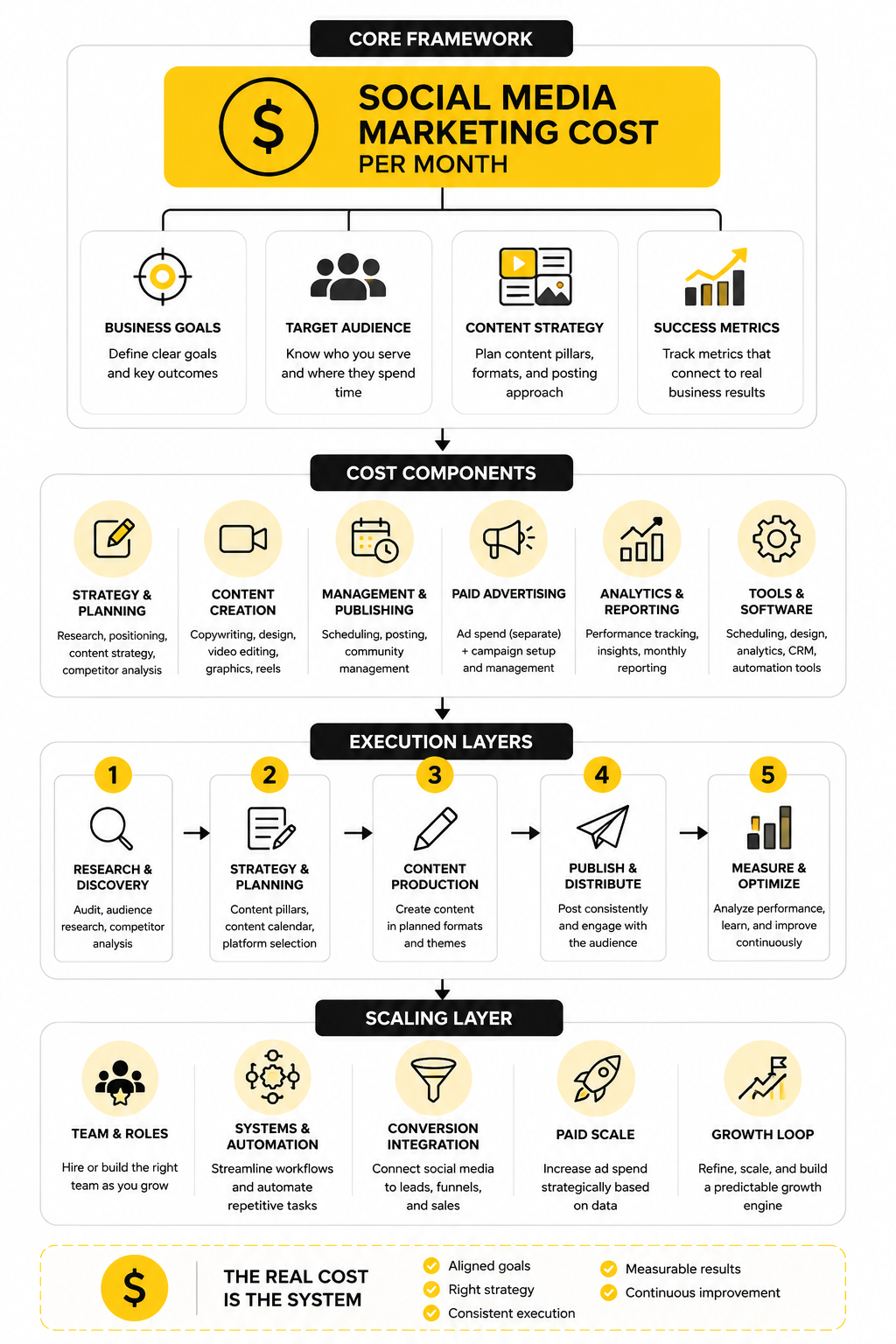
A simple monthly content workflow looks like this:
This workflow matters because it protects the budget from becoming busywork. Without it, people end up creating content because the calendar has empty slots. With it, every post has a job.
Step 4: Create Content Pillars That Actually Help Sales
Content pillars are not just categories for your calendar. They should support how buyers move from stranger to customer. If your pillars are too generic, your content will sound like every other brand in your market.
A practical social media plan usually needs a mix of education, proof, point of view, behind-the-scenes content, offer content, and trust-building content. Education helps people understand the problem. Proof helps them believe you can solve it. Offer content tells them what to do next.
The mistake is posting only tips. Tips can attract attention, but they do not always create demand. You also need content that explains your process, handles objections, shows results, introduces your offer, and makes the next step obvious.
Step 5: Set a Realistic Posting Cadence
Posting frequency should match your budget, your content quality, and your team’s ability to keep up. More posts are not automatically better. More good posts can help, but more rushed posts usually just create noise.
For a lean small business, three to five strong posts per week may be enough to build consistency. For brands investing heavily in short-form video, daily posting or multiple posts per day can make sense if there is a real production system behind it. The right cadence is the one you can maintain without destroying quality.
This is where monthly cost becomes practical. If you want ten videos per week, you are paying for ideation, scripting, editing, formatting, revisions, thumbnails, captions, scheduling, and performance review. That is a different workload than three static posts and one simple reel.
Step 6: Create a Simple Approval Process
Approval is one of the most underrated parts of social media management. A slow approval process can wreck the whole month. Content gets delayed, trends expire, the calendar falls apart, and everyone starts blaming the algorithm.
The approval process should answer a few basic questions. Who gives feedback? How many rounds of revisions are included? What deadline does the business have to approve content? What can the social media team publish without asking?
This matters even more when your monthly budget is limited. Every unnecessary revision eats time that could have gone into better strategy, better creative, or better reporting. Clear approvals keep the work moving.
Step 7: Connect Social Media to a Lead Capture System
If social media is supposed to generate business, you need a place for attention to go. That could be a landing page, booking page, lead form, email opt-in, DM automation, webinar registration, product page, or consultation funnel. Without that next step, social media can create interest but still fail to create revenue.
For service businesses, a tool like GoHighLevel can help connect social traffic to forms, calendars, CRM pipelines, automations, and follow-up. For funnel-heavy campaigns, ClickFunnels can be useful when you want dedicated pages for offers instead of sending people to a general homepage. For leaner businesses that want an all-in-one funnel and email setup, Systeme.io can keep the tech stack simpler.
This is where many businesses underinvest. They pay for content, but the click leads to a weak page or a slow manual follow-up process. Then they blame the social media manager when the real leak is after the click.
Step 8: Use DM and Comment Automation Carefully
Automation can help, but it should not make your brand feel robotic. The point is to respond faster, route people better, and make the next step easier. It is not to spam everyone who comments with the same lifeless message.
DM automation works best when there is clear intent. For example, someone comments a keyword to get a guide, coupon, checklist, webinar link, or product recommendation. A tool like ManyChat can help turn that interaction into a structured conversation instead of relying on manual replies all day.
The key is restraint. Automation should support the human experience, not replace it. If the conversation becomes sales-heavy too fast, people feel it.
Step 9: Track the Right Metrics
Metrics should match the goal. If the goal is awareness, reach and views matter. If the goal is leads, clicks, form submissions, booked calls, and cost per lead matter more.
The problem is that many reports focus on whatever number looks best. A post with lots of likes may not drive sales. A post with fewer likes may generate high-intent DMs, email signups, or consultation requests.
A useful monthly report should separate attention metrics from business metrics. Attention metrics show whether the content is getting seen and engaged with. Business metrics show whether the attention is turning into something valuable.
Step 10: Run a Monthly Review and Adjust
The monthly review is where the plan gets more carefully. This is not just a recap. It is the moment where you decide what to keep, what to cut, and what to test next.
A strong review should answer three questions. What worked? Why did it work? What should we do differently next month? If those questions are not being answered, the report is mostly decoration.
This is also how you protect your budget. A fixed social media marketing cost per month becomes more valuable when the system improves over time. The first month sets the foundation, but the real gains come from learning, refining, and repeating what works.
A Practical Monthly Workflow for Small Businesses
A small business does not need an enterprise process. It needs a simple rhythm that can actually be followed. Overcomplication kills execution.
A practical monthly workflow could look like this:
This rhythm gives the business structure without making the process feel heavy. It also makes it easier to see where your money is going. Strategy, creation, publishing, engagement, and reporting all have a place.
What Your Social Media Manager Needs From You
Even the best social media manager cannot create strong content from nothing. They need access to the real business. That means customer questions, sales objections, product details, behind-the-scenes moments, founder opinions, testimonials, offers, promotions, and raw footage.
You should expect to provide input every month. That does not mean doing the manager’s job for them. It means giving them the material they need to make the content specific instead of generic.
The businesses that get the best results usually treat social media as a collaboration. The manager brings strategy, structure, writing, creative direction, publishing, and reporting. The business brings expertise, proof, access, and fast feedback.
What Should Be Documented Before Work Starts
Before you pay a monthly retainer, document the basics. This protects both sides. It also prevents awkward conversations later when one person assumed something was included and the other person did not.
Your agreement should clarify:
This does not need to be scary or overly legalistic. It just needs to be specific. Clear scope is what keeps the relationship healthy.
The Biggest Implementation Mistake
The biggest implementation mistake is trying to buy outcomes without building the system that creates them. A business pays for posts, but not strategy. Or it pays for ads, but not landing pages. Or it pays for content, but nobody replies to leads.
That is why the cheapest monthly option often becomes frustrating. It may technically include social media management, but not enough of the actual process to move the business forward. You end up with activity, not momentum.
A better approach is to decide what stage you are in. If you need consistency, buy consistency. If you need leads, build the path from content to conversion. If you need scale, invest in creative testing, paid distribution, automation, and reporting.
Statistics and Data
Data should make your monthly social media budget easier to manage, not harder to understand. The point is not to collect every metric available. The point is to know whether your social media marketing cost per month is buying attention, trust, leads, sales, or just activity.
The mistake most businesses make is looking at numbers in isolation. A high-reach post may look successful but produce no buyers. A low-reach post may look weak but generate three serious sales conversations. Context is everything.
Good measurement answers one practical question: what should we do next month? If the data does not help you make a better decision, it is probably noise.
Why Benchmarks Matter, But Only Up to a Point
Benchmarks are useful because they give you a starting point. They help you see whether your performance is unusually low, roughly normal, or unusually strong for the platform. But benchmarks should never become the whole strategy.
Rival IQ’s 2025 benchmark research found that engagement rates dropped across major platforms, with Facebook down 36%, Instagram down 16%, TikTok down 34%, and X down 48% year over year in its social media industry benchmark report. That does not mean social media stopped working. It means attention became harder to earn, so businesses need better creative, clearer positioning, and more carefully distribution.
This matters when judging cost. If a provider promises easy organic growth without explaining creative testing, audience fit, and conversion tracking, be careful. The market is more competitive now, and your monthly budget should reflect the work needed to stand out.
The Big Market Numbers Behind Social Media Spend
Social media is not cheap because attention is not cheap. The channel has become one of the main places where brands compete for demand. That is why the cost conversation has moved from “posting content” to “building a measurable growth system.”
Digital advertising revenue in the U.S. reached $294.6 billion in 2025, with growth tied to video, social, AI, and commerce integration in the IAB full-year revenue report. DataReportal’s Digital 2026 overview also notes that social media ads were projected to account for 32.1% of total digital ad spend in 2025, which means social is no longer a side channel in many budgets through the Digital 2026 global overview.
This tells you something important. Your competitors are not just posting for fun. Many are using social media for lead generation, retargeting, ecommerce sales, recruitment, customer education, and brand defense. If your own budget only covers light posting, your expectations need to match that reality.
The Core Metrics That Actually Matter
The right metrics depend on your goal, but every monthly report should separate surface signals from business signals. Surface signals show whether people noticed the content. Business signals show whether that attention moved people closer to buying.
A simple analytics system should track:
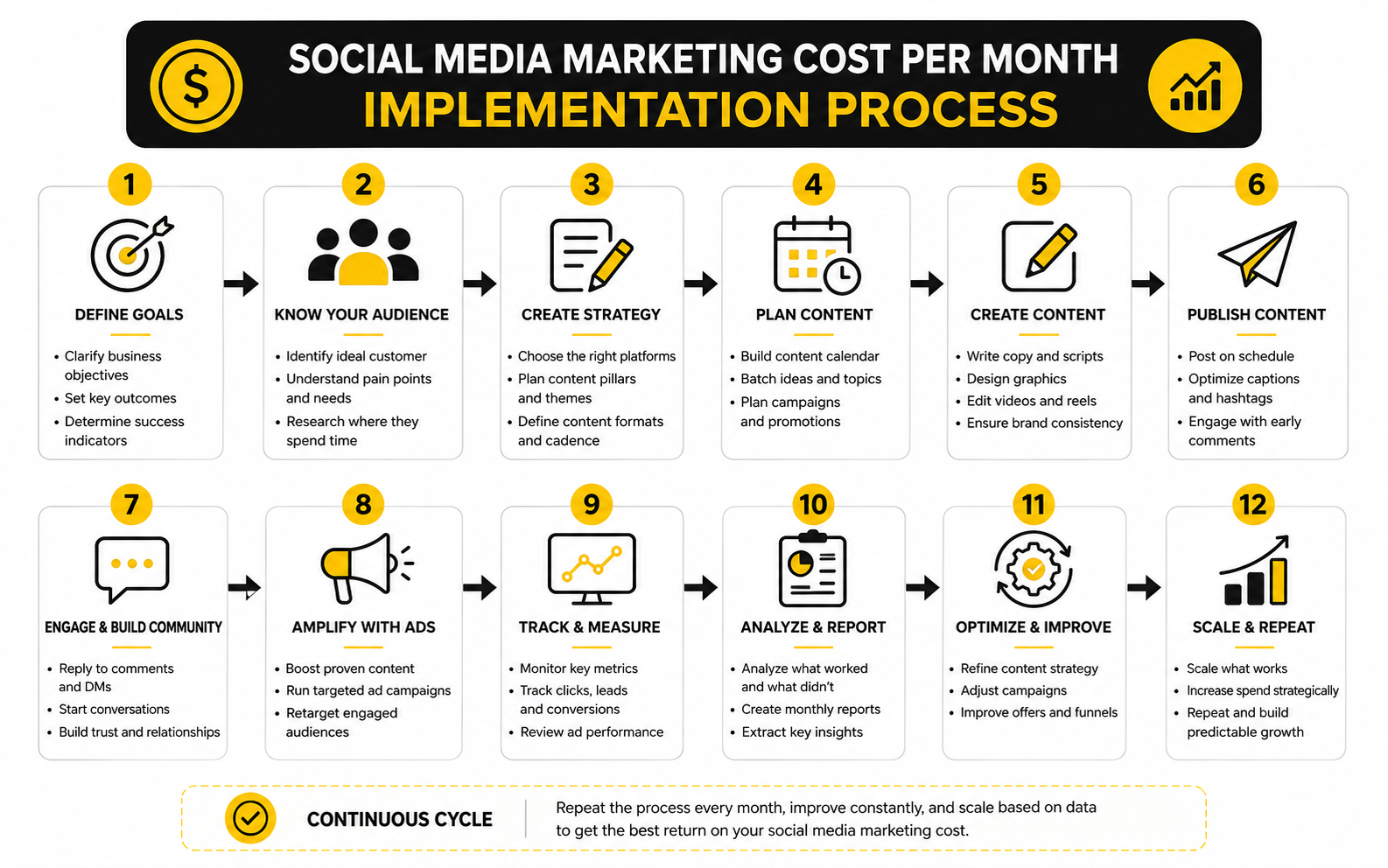
The structure matters more than the dashboard design. You want a clean path from content to action. A post creates reach, reach creates engagement, engagement creates curiosity, curiosity creates clicks or DMs, and those actions become leads or sales when the back end is built properly.
How to Read Reach and Impressions
Reach tells you how many unique people saw your content. Impressions tell you how often the content was displayed. Both are useful, but they do not mean the same thing.
If reach is low, the content may not be getting enough distribution. That could be a platform issue, a weak hook, inconsistent posting, poor timing, a small audience, or simply a topic that does not resonate. The action is to test stronger hooks, better formats, clearer topics, and possibly paid distribution.
If impressions are much higher than reach, people may be seeing the same content multiple times. That can be good for retargeting and brand recall, but it can also mean your content is circulating inside a small audience. The action is to check whether repetition is helping conversions or just inflating the report.
How to Read Engagement
Engagement shows whether people reacted, but it does not automatically prove business value. Likes are easy to get in some categories and difficult in others. Comments can be meaningful, but they can also be shallow. Saves and shares often reveal stronger content quality because they show usefulness or social value.
Socialinsider’s 2026 benchmark data puts average engagement rates at about 0.48% for Instagram and 0.15% for Facebook, which gives businesses a rough reality check through its social media benchmark data. These numbers are not targets you should blindly chase. They are reminders that tiny percentage changes can matter when content reaches the right people.
The best way to interpret engagement is by intent. A comment saying “price?” is more valuable than ten fire emojis. A saved post about your process may be more valuable than a funny post that gets likes but attracts the wrong audience.
How to Read Clicks and Traffic
Clicks are where social media starts moving closer to revenue. A click shows that someone did more than consume the content. They were interested enough to leave the platform or take the next step.
But clicks still need quality control. A high click count with a terrible conversion rate may mean the content is attracting curiosity but not buying intent. A lower click count with a strong booking rate may mean the content is doing a better job pre-qualifying people.
This is why every serious monthly plan should use tracked links, dedicated landing pages, or CRM attribution where possible. Without tracking, you are guessing. With tracking, you can see which posts, platforms, campaigns, and offers deserve more budget.
How to Read Leads and Sales
Leads and sales are the strongest signals, but they also require the cleanest tracking. A lead may come from a LinkedIn post, then visit the website, then return through a retargeting ad, then book from an email. If you only credit the final click, social may look weaker than it really is.
That does not mean you should accept vague attribution forever. It means you need a practical tracking setup. Use UTM links, CRM fields, lead forms, booking sources, coupon codes, post-purchase surveys, and manual sales notes where needed.
For businesses using social media to generate booked calls or local leads, GoHighLevel can help connect forms, calendars, pipelines, automations, and follow-up in one place. That makes performance easier to judge because leads are not scattered across DMs, spreadsheets, inboxes, and random contact forms.
What Paid Social Metrics Mean
Paid social gives you more numbers, but not all of them deserve equal attention. CPM tells you the cost to reach people. CPC tells you the cost to get a click. CTR shows whether the ad gets enough interest. Cost per lead or purchase shows whether the campaign is commercially viable.
The mistake is optimizing too early for the wrong metric. A cheap CPC is not helpful if nobody buys. A high CPM is not always bad if the audience is valuable and the conversion rate is strong. Paid social has to be judged by the full journey, not one number.
Meta’s own ad budget guidance explains that daily budget delivery can fluctuate while staying controlled across a weekly period in its budget documentation. That matters because day-to-day changes can look scary if you do not understand how platforms pace spend. A serious ad manager should explain what is normal volatility and what is an actual performance problem.
What Organic Metrics Mean
Organic metrics are slower and more qualitative than paid metrics. They show whether your market is paying attention, whether your positioning is landing, and whether your content is building trust over time. That does not make organic less valuable. It just means you need patience and the right expectations.
Organic content should be judged by patterns. Which topics consistently get saves? Which posts create DMs? Which founder opinions start conversations? Which proof-based posts lead to profile visits or calls?
If the only organic metric you care about is follower growth, you will miss the real signal. A smaller audience of buyers is better than a larger audience of spectators. Social media should build commercial trust, not just vanity.
What a Good Monthly Report Should Include
A good monthly report should be short enough to read and specific enough to act on. Nobody needs a 40-page report full of screenshots. You need the numbers, the interpretation, and the decision.
A useful monthly report should include:
The recommendations are the most important part. If the report says “Instagram reach increased by 18%” but does not explain what to do next, it is incomplete. Data should drive action.
How Data Should Change the Monthly Budget
Your monthly budget should not stay frozen forever if the data is telling you something useful. Sometimes the right move is to spend more. Sometimes the right move is to cut waste. Sometimes the right move is to keep the same budget but shift the work.
If organic content is creating strong engagement but few leads, you may need better calls to action, landing pages, lead magnets, or DM flows. If paid ads are getting clicks but no conversions, the problem may be the offer or page, not the ad platform. If social is generating leads but sales are weak, the follow-up process may need work.
This is the practical way to think about social media marketing cost per month. The number should be judged by what the system teaches you and what it produces over time. A cheap plan that teaches you nothing is expensive. A more expensive plan that gives you clarity, assets, leads, and compounding learning can be a much better deal.
The Signals That Mean You Should Increase Spend
You should consider increasing spend when the data shows repeatable traction. That means the content is reaching the right audience, engagement is coming from relevant people, and the next step is converting. More budget only makes sense when there is something worth amplifying.
Good signs include rising profile visits from high-intent content, consistent DMs from qualified prospects, landing page conversion that holds steady as traffic grows, and paid campaigns with stable cost per lead or purchase. You do not need perfect numbers. You need enough evidence that more distribution would help.
This is where a tool stack can support the decision. If your social traffic is already converting but your funnel is messy, improving the landing page with a focused builder like ClickFunnels or simplifying your follow-up inside GoHighLevel may be more carefully than buying more posts. More traffic does not fix a broken path.
The Signals That Mean You Should Pause or Rework
You should pause or rework the plan when the same problems repeat for multiple cycles. Low reach once is not a disaster. Low relevance, weak messaging, poor conversion, and unclear reporting for months is a bigger issue.
Warning signs include content that attracts the wrong audience, reports that focus only on vanity metrics, paid campaigns with no clear learning, and a lack of connection between social activity and business outcomes. Another warning sign is when nobody can explain why something worked or failed. That means the process is not learning.
Do not panic over one bad month. But do not ignore a pattern either. If the data keeps saying the strategy is off, changing the budget without changing the system will not help.
Advanced Budget Decisions Most Businesses Miss
Once the basics are in place, the social media marketing cost per month becomes less about “how many posts do we get?” and more about “where does the next dollar create the most leverage?” This is where strategy starts to matter more than volume. A business that understands the tradeoffs can spend less wastefully and scale with fewer expensive mistakes.
At this stage, you are not just buying content. You are deciding how much to invest in creative testing, paid distribution, conversion infrastructure, community, creator partnerships, and retention. Each choice can be smart, but only if it matches the business model.
The danger is treating social media like a fixed checklist. More platforms, more posts, more tools, and more reports do not automatically create better performance. The best budget is usually the one that removes the biggest bottleneck first.
When to Spend More on Creative
Creative is usually the best place to increase budget when the offer already works but the content is not getting enough attention. If the business has proof, a clear audience, and a decent conversion path, better creative can build growth. This can mean better hooks, sharper scripts, stronger editing, better product demos, clearer testimonials, or more founder-led content.
This is especially true now that organic engagement has become harder to earn. The 2025 Rival IQ social media benchmark report showed engagement rates falling across major platforms, including Facebook, Instagram, TikTok, and X. That should push businesses toward better ideas, not just more posts.
The practical move is to fund creative testing before scaling distribution. If five versions of a message all fall flat organically, spending more on ads may only amplify weak content. But if one angle consistently creates saves, shares, clicks, or DMs, that is the kind of signal worth backing with more budget.
When to Spend More on Paid Distribution
Paid distribution makes sense when the business has something worth amplifying. That could be a proven lead magnet, a strong sales page, a high-performing video, a converting webinar, or a product offer with clear demand. Paid social is not magic; it is an acceleration tool.
The mistake is using ads to compensate for weak positioning. If people do not understand the offer, trust the brand, or care about the problem, paid traffic will expose that faster. You will not just lose money; you will get confusing data because the issue may be the offer, the page, the audience, the creative, or the follow-up.
A better approach is to use paid distribution in layers. Start by boosting proven content to a relevant audience. Then retarget people who engaged, visited the site, watched a video, or clicked. Once the funnel shows signs of working, increase spend gradually instead of jumping straight into a large monthly ad budget.
When to Spend More on Conversion Infrastructure
Sometimes the content is fine and the traffic is fine, but the system after the click is weak. This is painfully common. The business pays for attention, then sends people to a generic homepage, slow website, unclear booking page, or manual follow-up process.
If that is the bottleneck, increasing the social media marketing cost per month for more posts is the wrong move. You need better conversion infrastructure. That may include a dedicated landing page, a stronger offer, faster forms, clearer calls to action, booking automation, CRM tracking, email sequences, or retargeting audiences.
For service businesses, GoHighLevel can make sense when the priority is connecting leads, calendars, pipelines, and automated follow-up. For campaign-specific funnels, ClickFunnels can work well when you want dedicated pages for a webinar, lead magnet, consultation, or product offer. For leaner funnel and email setups, Systeme.io can keep the stack simpler.
When to Bring Social Media In-House
Hiring in-house starts to make sense when social media needs daily access to the business. If your content depends on the founder, team culture, product changes, customer moments, or fast-moving opinions, an external partner may struggle without constant input. In-house support can capture the raw material faster.
But in-house is not automatically cheaper. A salary may replace the retainer, but you still need tools, creative support, management, strategy, training, editing, and sometimes paid media expertise. One junior hire rarely replaces a full agency team.
The strongest setup is often hybrid. Keep strategy, ads, analytics, or creative direction with specialists, while an internal person captures footage, coordinates approvals, gathers customer insights, and keeps the brand active day to day. That way, the business gets speed without expecting one person to do everything.
When to Use Freelancers Instead of an Agency
Freelancers are a good fit when the scope is specific. You may need a short-form video editor, paid ads specialist, LinkedIn ghostwriter, designer, community manager, or content strategist. If you know the exact gap, a freelancer can be efficient.
Agencies are a better fit when you need coordination across multiple functions. Strategy, content, design, video, reporting, ads, and account management all require different skills. An agency costs more because it is supposed to reduce the management load on your side.
The risk with freelancers is fragmentation. One person schedules, another edits, another runs ads, another writes copy, and nobody owns the full outcome. If you choose freelancers, assign one person to manage the system and make sure every role connects to the same monthly goal.
When to Use an Agency Instead of Freelancers
An agency makes sense when complexity is the real problem. If your business has multiple platforms, paid campaigns, product launches, creator partnerships, community management, and reporting needs, coordination becomes a job by itself. A good agency should bring process, accountability, and strategic oversight.
The tradeoff is cost and flexibility. Agencies usually need minimum retainers, defined scopes, onboarding time, and structured communication. That can be frustrating for a tiny business, but valuable for a growing company that needs reliability.
Before hiring an agency, ask who will actually touch the account. Senior strategy in the sales call does not help if execution is handed to a junior team with no context. The monthly fee should buy thinking, not just a prettier content calendar.
The Risk of Underfunding Social Media
Underfunding social media is not always obvious because the business is still “doing something.” Posts go out, reports arrive, and the brand looks active. But under the surface, the system may be too thin to create meaningful learning.
The common underfunded setup looks like this: too many platforms, too little creative time, no clear offer, no conversion path, no paid testing, and no real reporting. The business pays a small amount every month, then feels disappointed because nothing moves. The issue is not always the provider; sometimes the budget cannot support the expectation.
This is why scope discipline matters. A $1,000 monthly budget may work if it focuses on one platform and one clear goal. The same budget spread across Instagram, Facebook, LinkedIn, TikTok, YouTube Shorts, email, and ads will almost always become shallow.
The Risk of Overspending Too Early
Overspending is just as dangerous. A business can burn thousands per month on an agency, ad spend, creators, tools, and production before the offer is validated. That creates expensive noise.
The more carefully path is staged investment. First, prove that the audience cares. Then prove that the content can create action. Then prove that the landing page or sales process converts. Then scale the budget.
This is not slow thinking. It is disciplined thinking. If you spend heavily before the system has proof, you are not scaling growth; you are scaling uncertainty.
The Role of Creator and Influencer Spend
Creator partnerships can be powerful, but they should not be treated as a shortcut. A creator gives you borrowed trust and distribution, but the offer still has to fit their audience. The content also needs to feel native, not like a forced ad read.
Creator spending has become more serious because brands are looking for content that feels human and performs across social feeds. U.S. creator ad spending was projected to reach $37 billion in 2025, growing faster than the broader media market in an IAB creator economy report covered by Business Insider. That growth matters because creator content is no longer just an awareness play; brands are using it for creative testing, paid amplification, social proof, and direct response.
The advanced move is to separate creator fees from content usage rights and paid amplification. A creator post on their own account is one asset. Permission to run that content as an ad is another asset. A batch of raw clips for your brand to edit and reuse is another asset again.
How to Think About AI in the Monthly Budget
AI can reduce production friction, but it does not replace strategy. It can help with outlines, first drafts, repurposing, transcript cleanup, caption variations, content research, and customer support workflows. Used well, it makes the team faster.
Used badly, it creates generic content at scale. That is the last thing most brands need. If every post sounds like it was written by the same machine, the business may save money on production and lose trust in the market.
The better use of AI is behind the scenes. Use it to organize customer questions, summarize sales calls, generate content angles, tag leads, draft follow-up messages, and speed up reporting. The final public voice still needs human judgment.
Platform Dependence Is a Real Business Risk
Social media platforms are rented land. Algorithms change, reach drops, ad costs move, accounts get restricted, and formats shift. If your entire marketing system depends on one platform, you are exposed.
That does not mean you should avoid social media. It means you should use social media to build assets you control. Email lists, SMS lists, communities, CRM records, customer data, and owned content libraries are more durable than followers alone.
This is where follow-up tools become strategic, not just operational. A platform like Brevo can support email and customer messaging when the goal is to keep nurturing people after social media creates the first touch. The more you capture and nurture demand outside the feed, the less fragile your growth becomes.
How to Scale Without Losing Brand Quality
Scaling social media is not just doing more. More content can weaken the brand if quality control disappears. More ads can damage trust if the creative becomes aggressive or repetitive.
The first rule is to document the brand voice. What does the brand believe? What does it never say? What objections does it address directly? What proof can it use? What tone feels natural?
The second rule is to build a creative review system that protects the big ideas without slowing everything down. Not every caption needs executive approval, but core offers, claims, testimonials, and sensitive topics should be reviewed carefully. Scaling works when speed and standards coexist.
How to Negotiate a Better Monthly Retainer
Negotiating should not be about squeezing the provider until the work becomes weak. That usually backfires. The better move is to negotiate scope, priorities, and incentives.
If the quote is too high, reduce platforms, posting frequency, meeting load, reporting depth, or revision rounds before cutting the strategic parts. Strategy and learning are usually more valuable than extra low-impact posts. You want a smaller sharp plan, not a bigger diluted one.
You can also structure the retainer in phases. Month one may focus on audit, strategy, tracking, and content foundation. Months two and three may focus on publishing, creative testing, and conversion improvements. After that, the budget can increase only if the data supports it.
Red Flags in Social Media Pricing
Some pricing red flags are obvious. Guaranteed viral results, vague deliverables, fake follower growth, and no reporting should make you pause immediately. Serious marketers do not promise what they cannot control.
Other red flags are quieter. A provider may offer many platforms for a surprisingly low price, but the content is copied across every channel with no adaptation. Another may include “strategy” but only deliver a content calendar. Another may report engagement but ignore leads, sales, and buyer intent.
Watch for these signs:
A low price with these problems can cost more than a higher retainer with a better process. The real cost is not just the invoice. It is the months of weak learning, weak positioning, and missed demand.
What Expert-Level Social Media Management Looks Like
Expert-level social media management feels calm and intentional. There is a clear reason for the platforms, the content, the cadence, the offers, and the reporting. The team knows what they are testing and why.
It also connects creative with commercial reality. The content is not just designed to look good. It is designed to attract the right audience, build belief, answer objections, and move people toward a next step.
Most importantly, expert-level management gets sharper over time. The first month may be imperfect, but the system learns. The budget becomes easier to defend because every month produces assets, insights, and decisions instead of just another batch of posts.
Final Budget Check Before You Commit
Before you sign a monthly agreement, zoom out and look at the full system. Social media is not just content, ads, reporting, or tools. It is an ecosystem where attention, trust, conversion, and follow-up all need to work together.
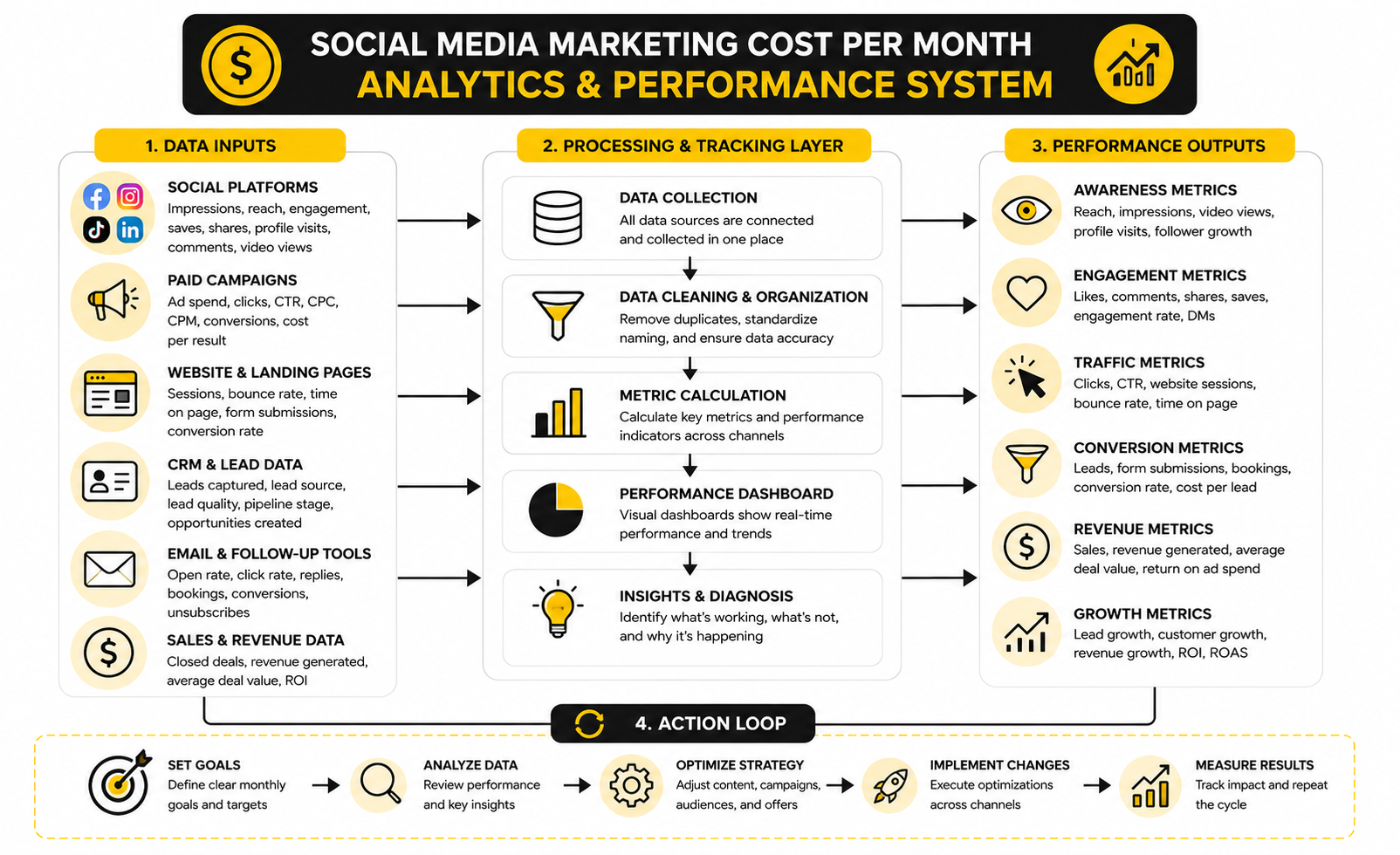
This is the cleanest way to think about it: content creates attention, attention creates signals, signals guide better decisions, and the right back end turns interest into revenue. If one part is missing, the whole system gets weaker. That is why the real social media marketing cost per month is not only the invoice from a freelancer or agency; it is the total cost of making the channel work properly.
A healthy monthly setup should answer these questions clearly:
If you can answer those questions, you are in a strong position. If you cannot, do not rush into a bigger budget just because someone offers more posts, more platforms, or more promises.
How to Choose the Right Monthly Budget
The right monthly budget depends on your business stage. A new business may need consistency, positioning, and proof before it needs aggressive paid campaigns. A growing business may need stronger creative, better tracking, and faster lead follow-up. A larger business may need an integrated team that handles content, ads, analytics, community, and conversion.
For a lean business, it is usually more carefully to dominate one or two platforms than to spread a small budget across every channel. For a business with proven demand, it may be more carefully to invest in creative testing and paid distribution. For a business with steady traffic but poor sales results, the best move may be funnel improvement, CRM cleanup, or better follow-up.
This is where tools should support the strategy, not replace it. Buffer can help with scheduling and publishing when the team needs structure. ManyChat can help when comments and DMs need faster response flows. GoHighLevel can help when leads, calendars, pipelines, automations, and reporting need to live in one place.
The Simple Rule for Spending more carefully
Spend where the bottleneck is. That is the rule. Do not buy more content if the offer is unclear. Do not buy more ads if the page does not convert. Do not buy more platforms if the team cannot manage the first one properly.
If attention is the problem, improve the creative. If trust is the problem, improve proof, testimonials, founder content, case studies, and educational content. If conversion is the problem, improve the landing page, offer, call to action, and follow-up process.
This keeps the monthly budget practical. The number itself matters, but the allocation matters more. A smaller budget focused on the right bottleneck can outperform a larger budget spread across the wrong work.
How much does social media marketing cost per month?
Social media marketing cost per month can range from a few hundred dollars for basic posting to $10,000+ for full-service strategy, content, ads, reporting, and conversion support. Most small businesses fall somewhere between $1,500 and $5,000 per month when they want consistent management without a large enterprise setup. The real price depends on platforms, content volume, creative quality, paid ads, community management, and reporting depth.
Is $500 per month enough for social media marketing?
$500 per month can work for a very basic setup, but expectations need to be realistic. At that level, you are usually paying for light scheduling, simple captions, limited design, or a narrow freelancer scope. It is not enough for deep strategy, daily video, paid ad management, advanced analytics, and active community management.
What should be included in a monthly social media package?
A solid monthly package should define platforms, number of posts, content formats, strategy, scheduling, reporting, revisions, approvals, and communication rhythm. If paid ads are included, the package should also explain whether ad spend is separate and how campaigns are managed. The clearer the scope, the easier it is to judge whether the price is fair.
Is paid ad spend included in social media marketing cost per month?
Usually, no. Paid ad spend is normally separate from the management fee. For example, you might pay $2,000 per month for social media management and another $1,500 per month directly to Meta, TikTok, LinkedIn, or another ad platform.
Should I hire a freelancer or an agency?
Hire a freelancer when the job is specific and simple. That could mean content writing, video editing, design, scheduling, or paid ads. Hire an agency when you need a coordinated system across strategy, creative, ads, reporting, and account management.
How many posts per month should I expect?
It depends on the strategy, platform, and budget. A lean plan might include 12 to 20 posts per month. A more aggressive short-form video plan may include 30 or more assets per month, but that requires a real production process behind it.
Why do some agencies charge so much more than others?
Agencies charge more when they include strategy, creative production, paid media, reporting, account management, community management, and senior oversight. Some also charge more because they specialize in a certain industry or growth model. The important thing is to compare deliverables, process, and expertise instead of only comparing the monthly fee.
What is the biggest hidden cost in social media marketing?
The biggest hidden cost is usually internal time. Someone from the business needs to provide feedback, approve content, share raw material, answer strategic questions, and give the marketer access to real customer insights. Without that input, the content becomes generic and performance usually suffers.
How do I know if my monthly social media spend is working?
Your spend is working if the data is improving in the direction of your business goal. That could mean better reach, stronger engagement, more qualified DMs, more clicks, more leads, more booked calls, or more sales. The key is to connect the metrics to business outcomes instead of judging everything by likes.
What metrics should I track every month?
Track reach, impressions, engagement, saves, shares, profile visits, clicks, leads, bookings, purchases, and cost per result if you run ads. You do not need to obsess over every number. You need enough data to understand what worked, what failed, and what should change next month.
Should I spend more on organic content or paid ads?
Spend more on organic content when you need trust, positioning, authority, and creative testing. Spend more on paid ads when you have proven content, a strong offer, and a conversion path that works. The best setup usually uses organic to learn and paid to amplify what already shows promise.
How long does social media marketing take to work?
You can often see early signals within the first 30 to 90 days, but strong results usually take longer. The first phase is about building the system, testing messages, learning what the audience responds to, and improving the path from content to conversion. If someone promises instant results without understanding your offer, audience, and funnel, be careful.
Can I manage social media myself instead of paying monthly?
Yes, especially if the business is early and budget is tight. Managing it yourself can help you learn your audience, refine your voice, and understand which topics create interest. The downside is that consistency, editing, reporting, and strategy can become difficult when you are also running the business.
When should I increase my monthly budget?
Increase the budget when you have evidence that the system is working. Good signs include qualified DMs, consistent profile visits, strong landing page conversion, profitable ad tests, or content themes that repeatedly create buyer intent. Do not increase spend just because the current plan feels slow.
When should I reduce or pause the budget?
Reduce or pause the budget when the strategy is unclear, reporting is weak, the content attracts the wrong audience, or there is no learning after several months. A bad month is not always a reason to quit. But repeated weak execution with no clear diagnosis is a serious problem.
What is a good monthly budget for a small business?
A practical small business budget often starts around $1,500 to $3,500 per month for meaningful support. That can cover planning, content creation, scheduling, and basic reporting, depending on scope. If the business also needs ads, landing pages, CRM setup, or heavy video production, the budget should be higher.
Is social media marketing worth it for local businesses?
Yes, but only when the strategy matches local buying behavior. Local businesses often need trust-building content, customer proof, location-specific offers, reviews, community visibility, and fast response to inquiries. Social media works better when it connects directly to bookings, calls, visits, or local promotions.
What should I ask before hiring someone?
Ask what the first 30 days look like, which platforms they recommend, how they create content, how approvals work, what reports include, who owns the assets, and how they connect social media to business goals. Also ask what is not included. The exclusions often matter as much as the deliverables.
Build a stronger local presence with BAAM AI
Turn your website, Google profile, social channels, and AI visibility into one growth engine
Most businesses do not need more random marketing activity. They need a consistent presence system that helps the right people find them, trust them, and take action. BAAM AI brings strategy, local SEO, website updates, Google Maps visibility, social content, AI-search readiness, media production, and reporting into one practical monthly engine.
If you want your marketing to keep working after the campaign ends, start with a free BAAM AI presence audit. See how your business shows up today and where the fastest visibility wins are at BAAM AI.