
BAAM AI Blog
What An Email Marketing Specialist Actually Does
An email marketing specialist turns business goals into email campaigns, automations, and measurable customer journeys. That can include newsletters, promotional campaigns, product updates, onboarding flows...
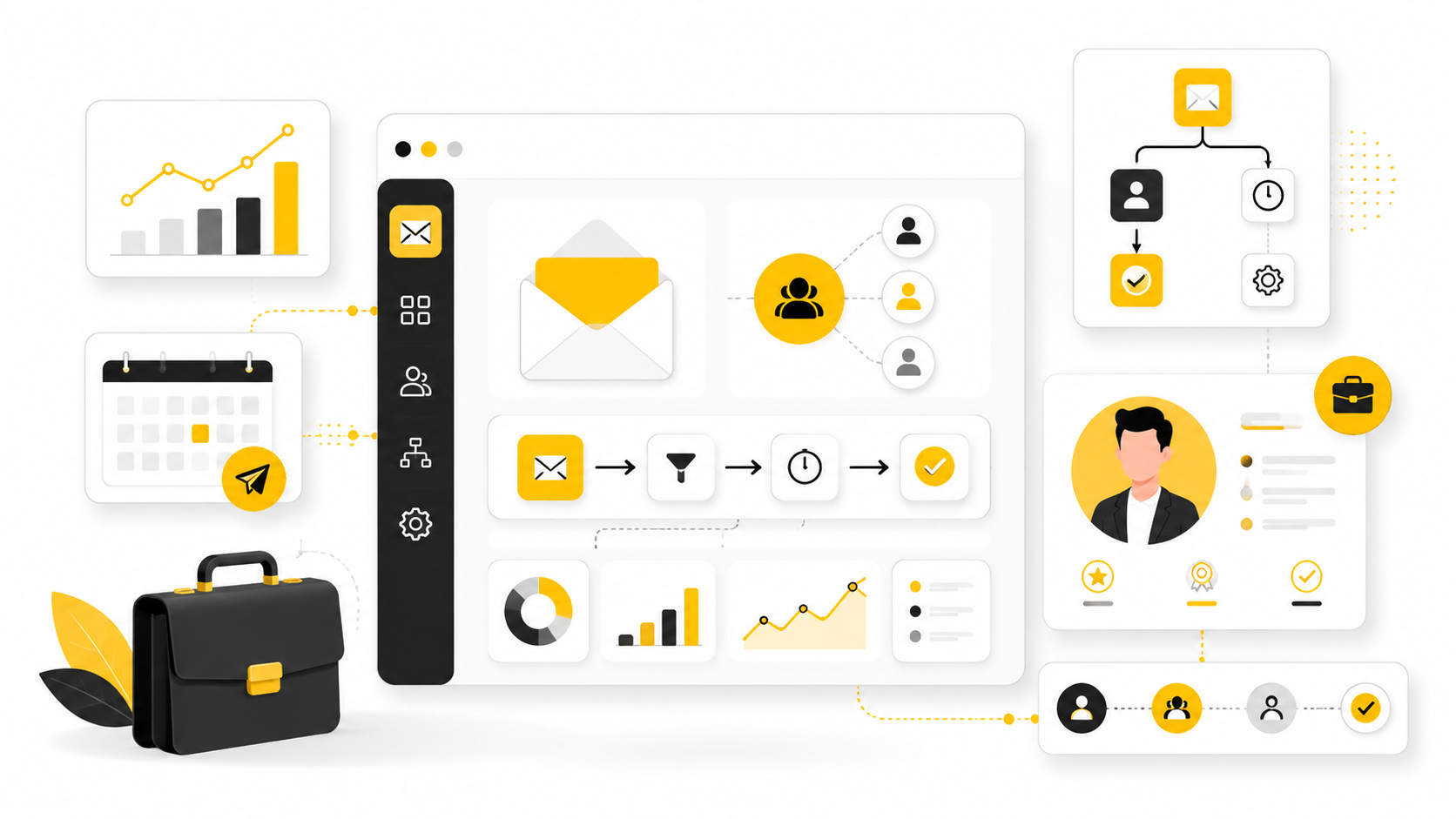
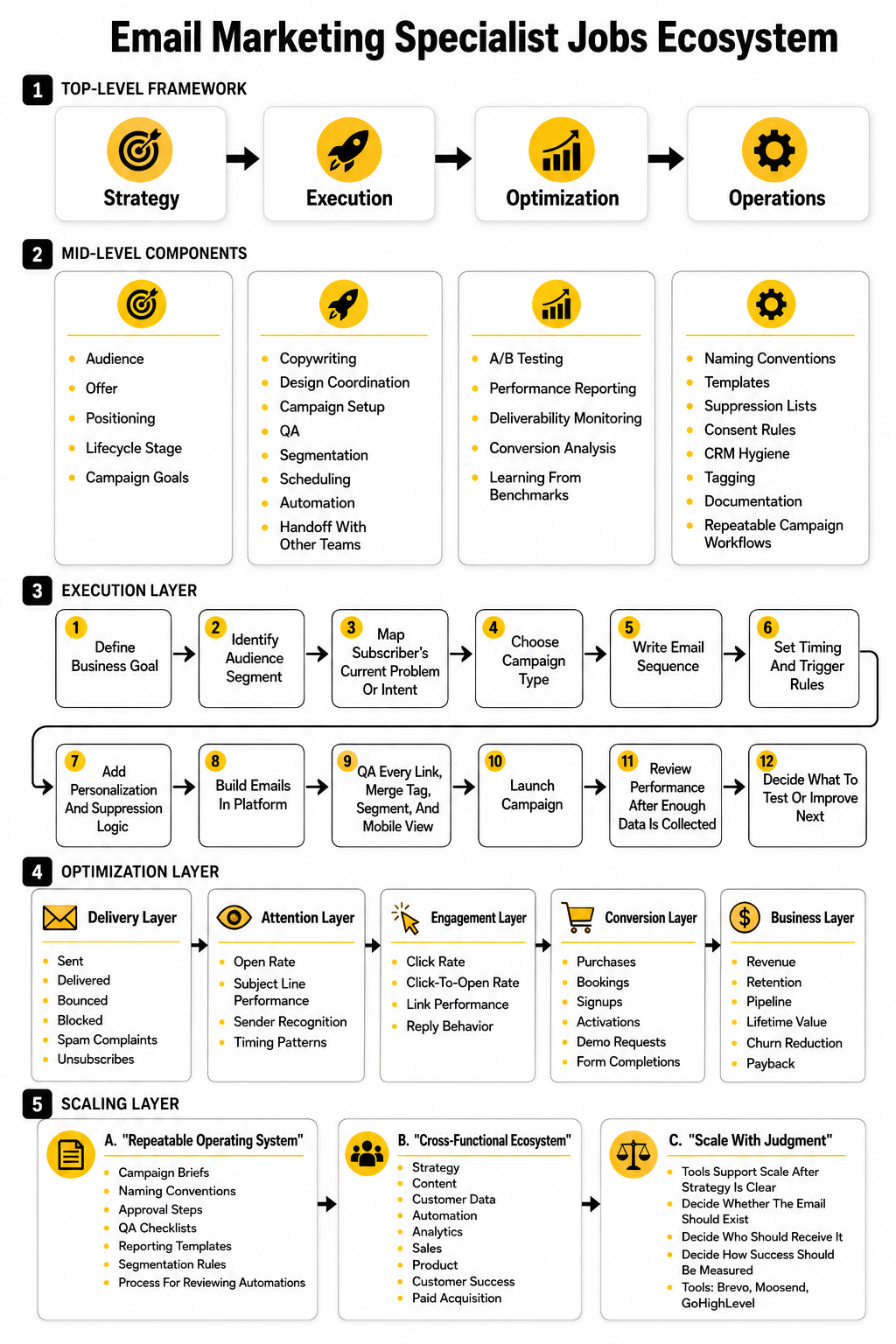
An email marketing specialist turns business goals into email campaigns, automations, and measurable customer journeys. That can include newsletters, promotional campaigns, product updates, onboarding flows, abandoned cart sequences, reactivation campaigns, lead nurture emails, event reminders, review requests, and post-purchase follow-ups. The work looks simple from the outside, but inside a real marketing team it touches copy, data, design, sales, product, analytics, compliance, and customer experience.
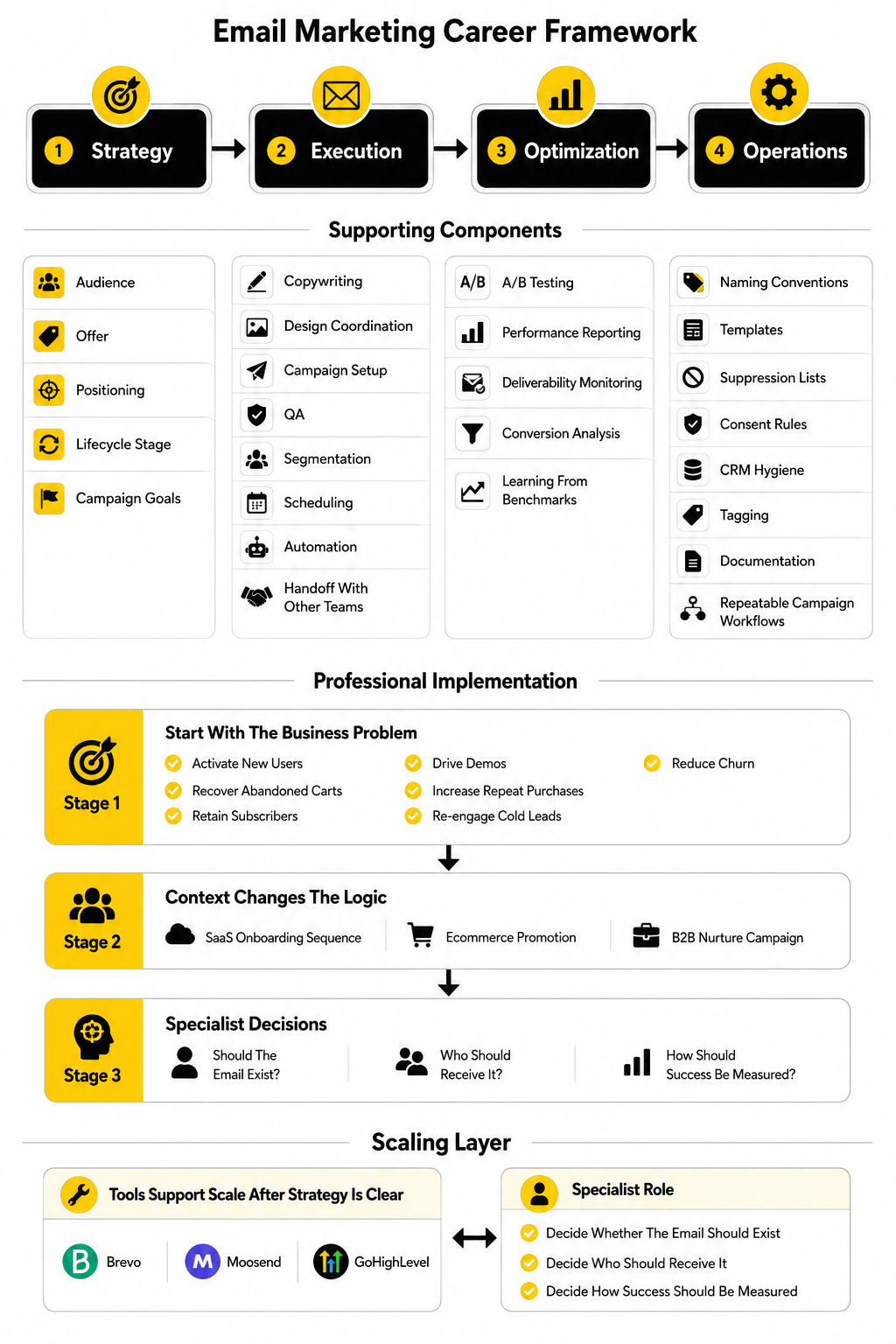
The day-to-day role usually includes planning campaigns, writing or editing email copy, building segments, setting up automations, coordinating creative assets, testing emails before launch, monitoring performance, and reporting what changed after each send. Career resources describe the role as a mix of campaign creation, list management, performance analysis, and conversion improvement, which is a fair description when you strip away the buzzwords. A useful specialist is not just “the email person”; they are the person who helps the company communicate with leads and customers in a way that drives action without damaging trust.
That last part matters. Email marketing specialist jobs often involve access to customer data, purchase behavior, lifecycle stages, engagement history, and consent records. If you handle that carelessly, you do not just hurt campaign metrics; you can hurt deliverability, brand reputation, and revenue.
Campaign Planning
Campaign planning starts with the objective. A promotion, a product announcement, and a reactivation campaign should not be planned the same way because each one asks the subscriber to do something different. A specialist needs to know what the email is supposed to achieve before touching the subject line, template, or send time.
Good planning usually answers five questions. Who is the audience, what do they already know, what action should they take, what offer or message makes that action reasonable, and how will success be measured? This is where strong candidates separate themselves from beginners, because beginners often start with “what should we send?” while professionals start with “why are we sending this?”
The better the plan, the easier the execution becomes. If the goal is demo bookings, the email should be judged differently than a brand newsletter. If the goal is repeat purchase, segmentation and timing become more important than clever copy alone.
Copywriting And Message Development
Copywriting is still central to most email marketing specialist jobs, but it is not the only skill. The job is not to write pretty paragraphs. The job is to create a clear message that earns attention, communicates value quickly, and moves the reader toward a relevant next step.
Strong email copy usually has a specific audience, a clear promise, a natural tone, and one primary action. That sounds basic, but many campaigns fail because they try to say everything at once. A specialist should know when an email needs a short direct message, when it needs more context, and when the right move is to cut the copy in half.
This is also where brand voice matters. A SaaS company, an ecommerce store, a local service business, and a media brand should not sound identical. The specialist needs enough range to adapt the writing while still keeping the message simple and credible.
Segmentation And Personalization
Segmentation is one of the biggest differences between basic email sending and professional email marketing. A single broadcast to the whole list can work sometimes, but it is rarely the best long-term strategy. Better email programs group people by behavior, interest, customer type, lifecycle stage, location, engagement, purchase history, or source.
Personalization does not mean stuffing a first name into the subject line and calling it advanced. It means using what the business knows about the subscriber to make the message more relevant. That could be sending different onboarding emails to trial users based on product usage, different promotions to first-time buyers and loyal customers, or different nurture paths for leads who downloaded different resources.
This is why email marketing specialist jobs often mention CRM knowledge, customer data, and lifecycle marketing. Platforms such as GoHighLevel, Brevo, and Moosend can support segmentation and automation, but the tool does not create the strategy for you. The person behind the tool needs to understand the customer journey.
Automation And Lifecycle Flows
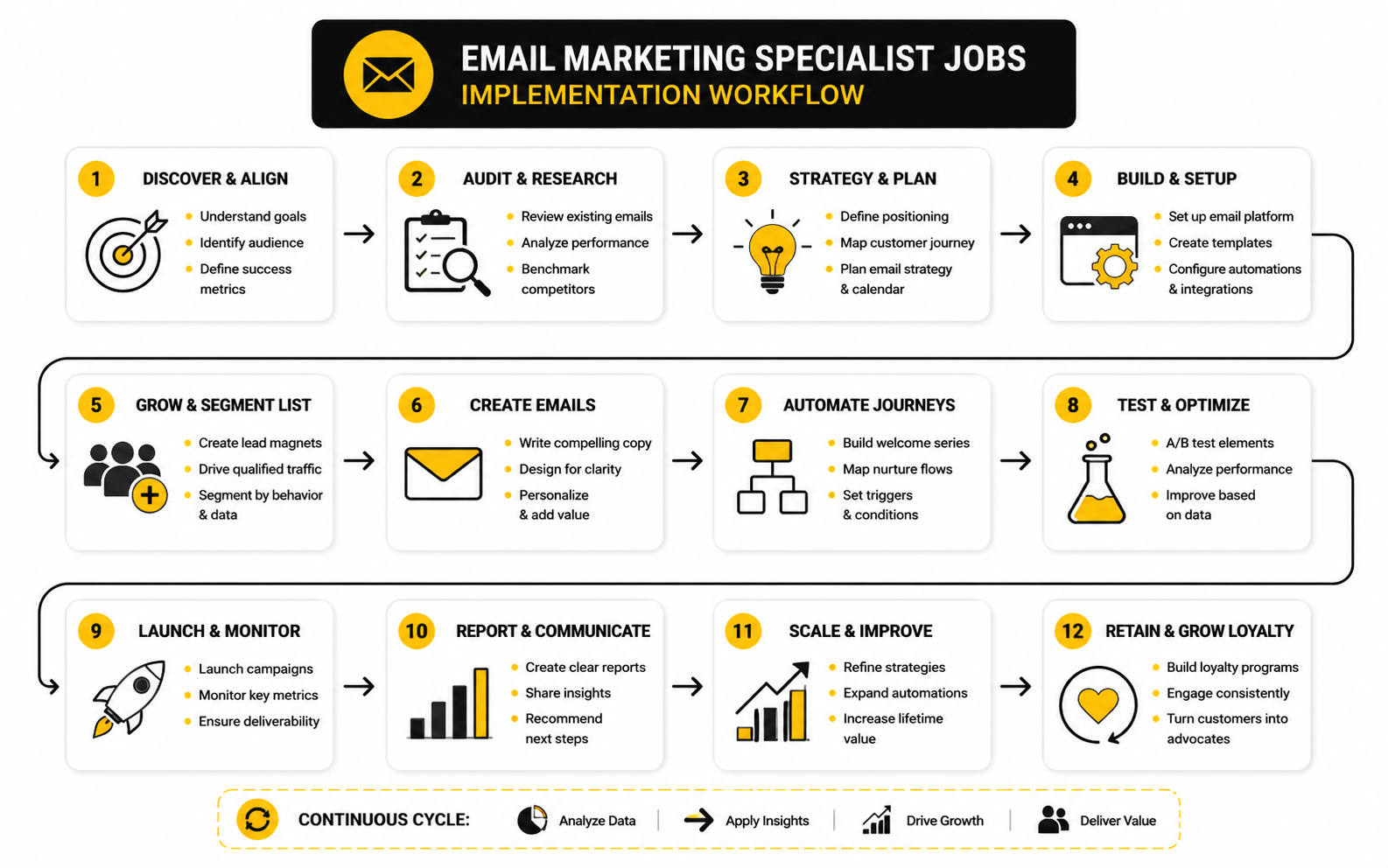
Automation is where email marketing becomes more than scheduled campaigns. A good automation can welcome a new subscriber, educate a lead, recover a missed sale, onboard a customer, or re-engage someone before they churn. These flows often create value every day without needing a fresh campaign launch every morning.
Common lifecycle flows include welcome sequences, lead magnets, abandoned cart emails, post-purchase education, renewal reminders, trial onboarding, customer win-back campaigns, and referral prompts. Each flow needs a trigger, a goal, timing logic, exit rules, and a clear measurement plan. Without those pieces, automation can turn into a pile of random emails that annoy people instead of helping them.
This is why automation skill is now a serious advantage for candidates. Training providers and career guides increasingly frame modern email work around automated workflows, A/B testing, CRM integration, compliance, and performance analysis because those are the pieces companies need at scale. A candidate who can build a clean five-email onboarding flow and explain the logic behind it is more useful than someone who only says they “know email marketing.”
Core Skills Employers Look For
Most email marketing specialist jobs combine creative, analytical, and technical skills. Some companies lean heavier on copywriting, while others want a marketing operations person who can live inside the ESP all day. The safest career move is to build enough range that you can own the full campaign process, even if you later specialize.
Employers usually want proof that you can create campaigns, manage lists, understand customer behavior, report on results, and improve performance over time. That does not mean you need to be an expert in everything on day one. It does mean you should be able to speak clearly about how an email program works from strategy to send to analysis.
The best candidates are not just tool users. They understand what the tool is trying to accomplish. That makes them adaptable when a company uses Klaviyo, HubSpot, Mailchimp, ActiveCampaign, Braze, Customer.io, Salesforce Marketing Cloud, or any other platform.
Copywriting Skill
Copywriting is valuable because email is an attention game. People open crowded inboxes quickly, scan messages fast, and ignore anything that feels vague or irrelevant. A specialist needs to write subject lines, preview text, body copy, calls to action, and sometimes landing page copy that matches the campaign.
But copywriting for email is not the same as writing ads or blog posts. You have less space, less patience from the reader, and more pressure to make the next step obvious. Every sentence should earn its place.
A practical way to build this skill is to study real emails from strong brands and ask what each part is doing. Why does the subject line work? Why is the first sentence there? What objection does the body handle? What makes the CTA feel natural instead of forced?
Analytical Skill
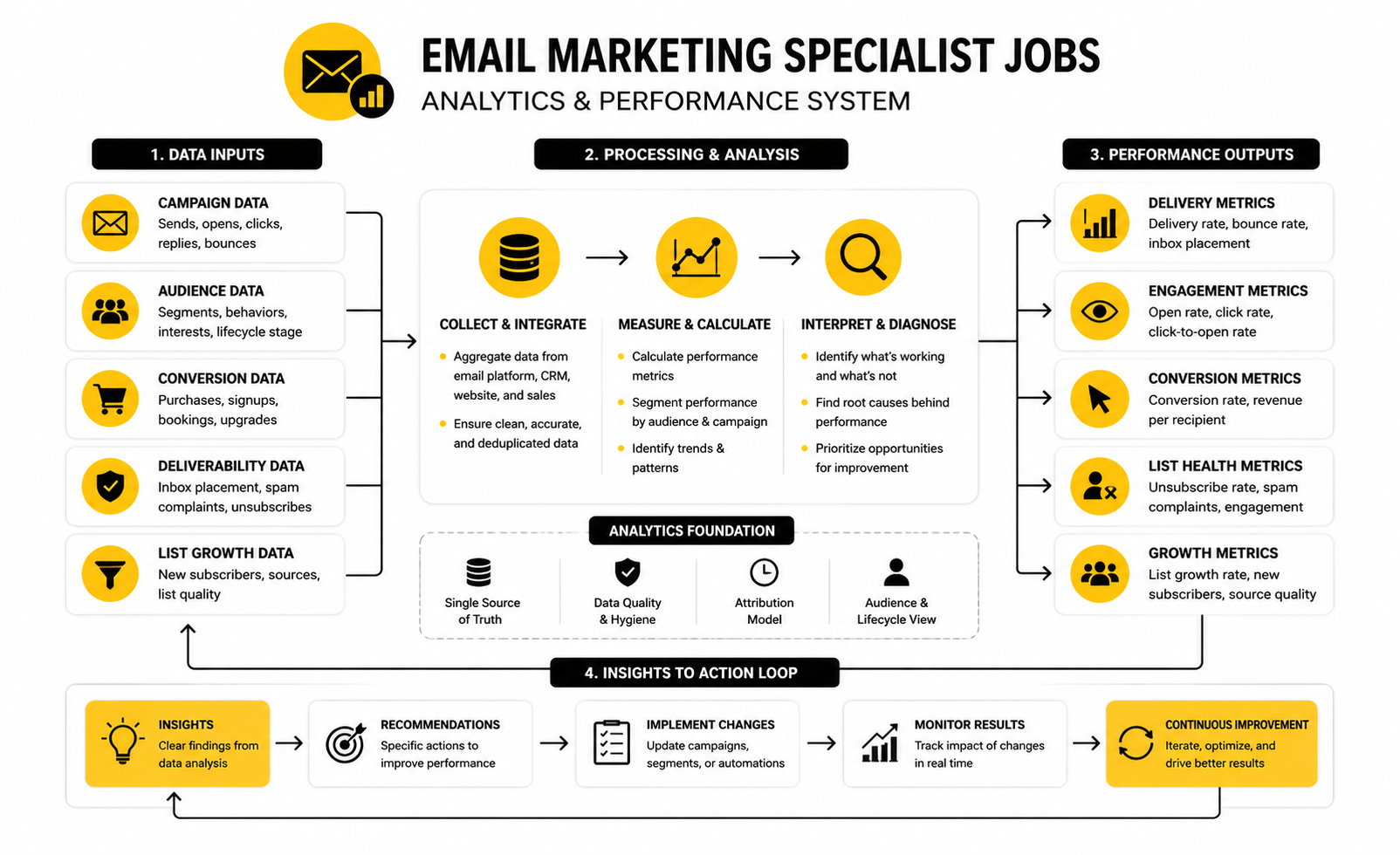
Analytics is what turns email marketing from guessing into professional work. A specialist needs to understand open rate, click rate, click-to-open rate, conversion rate, unsubscribe rate, spam complaint rate, bounce rate, revenue per recipient, deliverability trends, and list growth. More importantly, they need to know which metric matters for which campaign.
Benchmarks help, but they should not be treated like universal grades. MailerLite’s benchmark data shows major industry differences, with ecommerce open rates listed at 32.67% and nonprofit open rates at 52.38%, which proves that context matters when judging performance through email marketing benchmark data. A low open rate in one market may be normal, while the same number in another market could signal a serious problem.
The strongest specialists look beyond surface-level reporting. They ask whether the email reached the inbox, whether the audience was right, whether the offer matched intent, whether the click led to a useful page, and whether the business result justified the send. That is the thinking employers pay for.
Deliverability Skill
Deliverability is no longer a niche technical topic. If emails do not reach the inbox, the rest of the campaign does not matter. Google’s sender guidelines tell bulk senders to authenticate mail, keep spam complaints low, and support easy unsubscribing, with user-reported spam rates expected to stay below 0.1% and avoid reaching 0.3% or higher through Gmail sender requirements.
That means an email marketing specialist should understand the basics of SPF, DKIM, DMARC, list hygiene, bounce management, engagement quality, suppression rules, and unsubscribe handling. You do not need to be a full-time email deliverability consultant for every job. But you do need to know enough to avoid obvious mistakes that can damage sender reputation.
This skill is becoming more valuable because inbox providers are less forgiving than they used to be. Validity’s 2025 deliverability research describes a tougher environment shaped by Gmail and Yahoo sender requirements, Microsoft filtering changes, and Apple Intelligence through its 2025 Email Deliverability Benchmark Report. For candidates, that creates an opportunity: if you can talk about deliverability clearly, you instantly sound more professional than the average applicant.
Marketing Operations Skill
Marketing operations is the part of email work that keeps everything organized. It includes naming conventions, campaign calendars, UTM structure, QA checklists, audience rules, suppression lists, form connections, CRM fields, automation triggers, and documentation. It is not glamorous, but it prevents expensive mistakes.
Many email marketing specialist jobs include operational work even when the job ad does not say it directly. Someone has to make sure the right segment gets the right campaign, the links work, the mobile version looks clean, the unsubscribe link is present, the tracking is correct, and the campaign does not conflict with another send. That someone is often the email specialist.
This is a very practical place to stand out. A hiring manager may expect candidates to talk about subject lines and open rates. Fewer candidates can explain how they would QA a campaign before launch, document an automation, or prevent duplicate sends across overlapping segments.
Build a stronger local presence with BAAM AI
Turn your website, Google profile, social channels, and AI visibility into one growth engine
Most businesses do not need more random marketing activity. They need a consistent presence system that helps the right people find them, trust them, and take action. BAAM AI brings strategy, local SEO, website updates, Google Maps visibility, social content, AI-search readiness, media production, and reporting into one practical monthly engine.
If you want your marketing to keep working after the campaign ends, start with a free BAAM AI presence audit. See how your business shows up today and where the fastest visibility wins are at BAAM AI.