
BAAM AI Blog
Triggered Email Marketing: A Practical Framework For Turning Customer Behavior Into Revenue
Triggered email marketing is the practice of sending automated emails when a subscriber, lead, or customer takes a specific action. Instead of blasting the same campaign to everyone, you respond to behavior: someone...
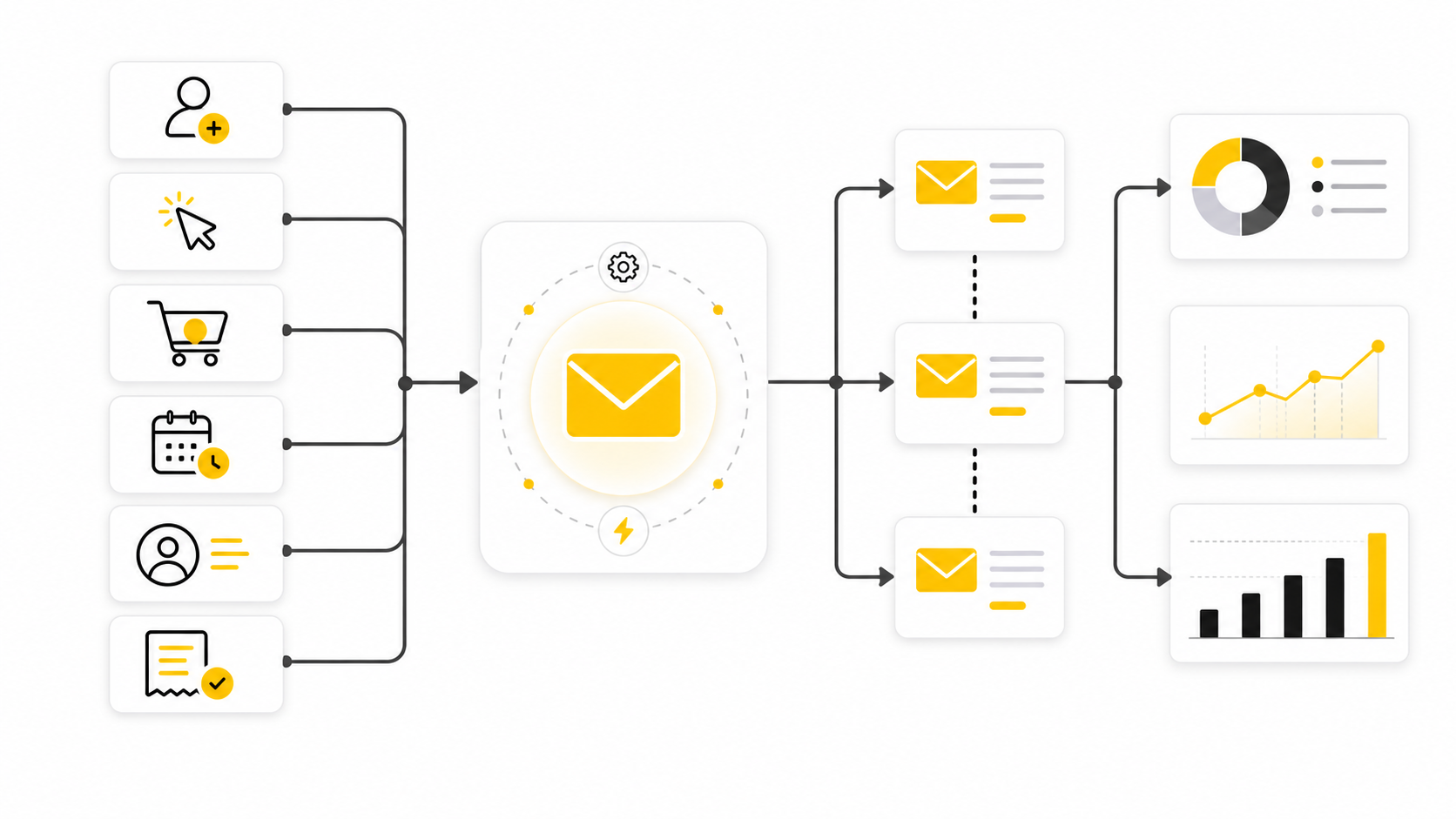
Triggered email marketing is the practice of sending automated emails when a subscriber, lead, or customer takes a specific action. Instead of blasting the same campaign to everyone, you respond to behavior: someone joins your list, abandons a cart, views a product, books a call, downloads a lead magnet, misses a payment, or becomes inactive.
That sounds simple. But the real power is not the automation itself. The real power is timing, relevance, and intent.
A triggered email arrives because something happened. The customer did something, failed to do something, or reached a stage where the next message becomes useful. That is why triggered email marketing sits in a different category from regular newsletters. A newsletter asks, “What do we want to say this week?” A triggered email system asks, “What does this person need next based on what they just did?”
This matters because email is still one of the few owned channels where you can combine first-party data, segmentation, automation, and direct response without depending entirely on an algorithm. Industry reports from platforms like Klaviyo, DMA, and Litmus keep pointing in the same direction: better performance comes from relevance, segmentation, and lifecycle-based communication, not from sending more generic campaigns.
The mistake most businesses make is treating triggered emails like a checklist. Welcome sequence? Done. Abandoned cart? Done. Post-purchase email? Done. But a profitable triggered email marketing system is not a collection of random automations. It is a structured customer journey that helps people move from first interest to first purchase, from first purchase to repeat purchase, and from repeat purchase to long-term loyalty.
That is the difference this guide will focus on. Not “what is an abandoned cart email?” Not another shallow list of automation ideas. We are going to build a full framework for triggered email marketing that a serious business can actually use.
Triggered Email Marketing Basics
Triggered email marketing starts with a trigger. A trigger is the condition that tells your email platform to send a message or start a sequence. That condition can be behavioral, transactional, date-based, engagement-based, or data-based.
A behavioral trigger might be a product page visit, form submission, link click, trial signup, or abandoned checkout. A transactional trigger might be an order confirmation, shipping update, password reset, invoice reminder, or subscription renewal notice. A date-based trigger might be a birthday, renewal date, appointment reminder, or “30 days after purchase” follow-up.
The important thing is that the message is not sent randomly. It is sent because the recipient’s context changed. That context gives the email a reason to exist.
For example, when someone subscribes to a list, they are not just “a new contact.” They are in a short window of fresh attention. A welcome sequence should use that window to confirm the promise, set expectations, introduce the brand, and guide the person toward the next logical action.
When someone abandons a cart, they are not just “a lost sale.” They are a high-intent visitor who got close enough to consider buying. The follow-up should reduce friction, answer objections, restore urgency, and make returning easy.
When someone buys, they are not “finished.” They have entered the post-purchase stage, where confirmation, reassurance, onboarding, education, cross-sell timing, and retention all matter. This is where many brands leave money on the table because they stop communicating right when the customer relationship becomes most valuable.
Why Triggered Email Marketing Matters
Triggered email marketing matters because customer attention is highest around action. When someone does something meaningful, the next message has a better chance of feeling useful instead of intrusive. That is the whole game.
A generic promotional campaign has to fight for relevance. A triggered email already has context. The person signed up, clicked, browsed, booked, bought, cancelled, hesitated, or disengaged. Your job is to respond with the right message while that context is still fresh.
This is also why triggered emails are useful for both ecommerce and service businesses. Ecommerce brands use them for welcome flows, abandoned carts, browse abandonment, replenishment reminders, winback campaigns, and post-purchase education. Service businesses use them for lead nurturing, appointment reminders, sales follow-up, onboarding, review requests, reactivation, and client retention.
For smaller teams, triggered email marketing also creates leverage. Once the logic is built, the system keeps responding to customer behavior without requiring someone to manually follow up every time. Tools like Brevo, Moosend, ManyChat, and GoHighLevel can support different parts of that workflow depending on whether the business needs email automation, CRM follow-up, messaging automation, or a broader sales pipeline.
The Triggered Email Marketing Framework
A strong triggered email marketing system has four layers: customer moments, trigger logic, message strategy, and measurement. If one layer is weak, the whole system gets weaker.
Customer moments are the important points in the journey. These are the moments where a person’s intent, risk, or opportunity changes. A new subscriber needs orientation. A cart abandoner needs help deciding. A new customer needs reassurance. An inactive customer needs a reason to come back.
Trigger logic turns those moments into automation rules. This includes entry conditions, delays, filters, exclusions, split paths, suppression rules, and exit criteria. Good trigger logic prevents the embarrassing stuff: sending a discount to someone who just paid full price, asking for a review before the product arrives, or pushing a sales email to someone waiting for support.
Message strategy decides what to say once the trigger fires. This is where most weak automations fail. They have the right trigger but the wrong message. The email should match the customer’s stage, level of awareness, objections, urgency, and next step.
Measurement closes the loop. You need to know whether each triggered email is doing its job. That does not only mean opens and clicks. Depending on the flow, the meaningful metric might be first purchase rate, recovered revenue, booked calls, activation rate, repeat purchase rate, churn reduction, review completion, or reactivation.
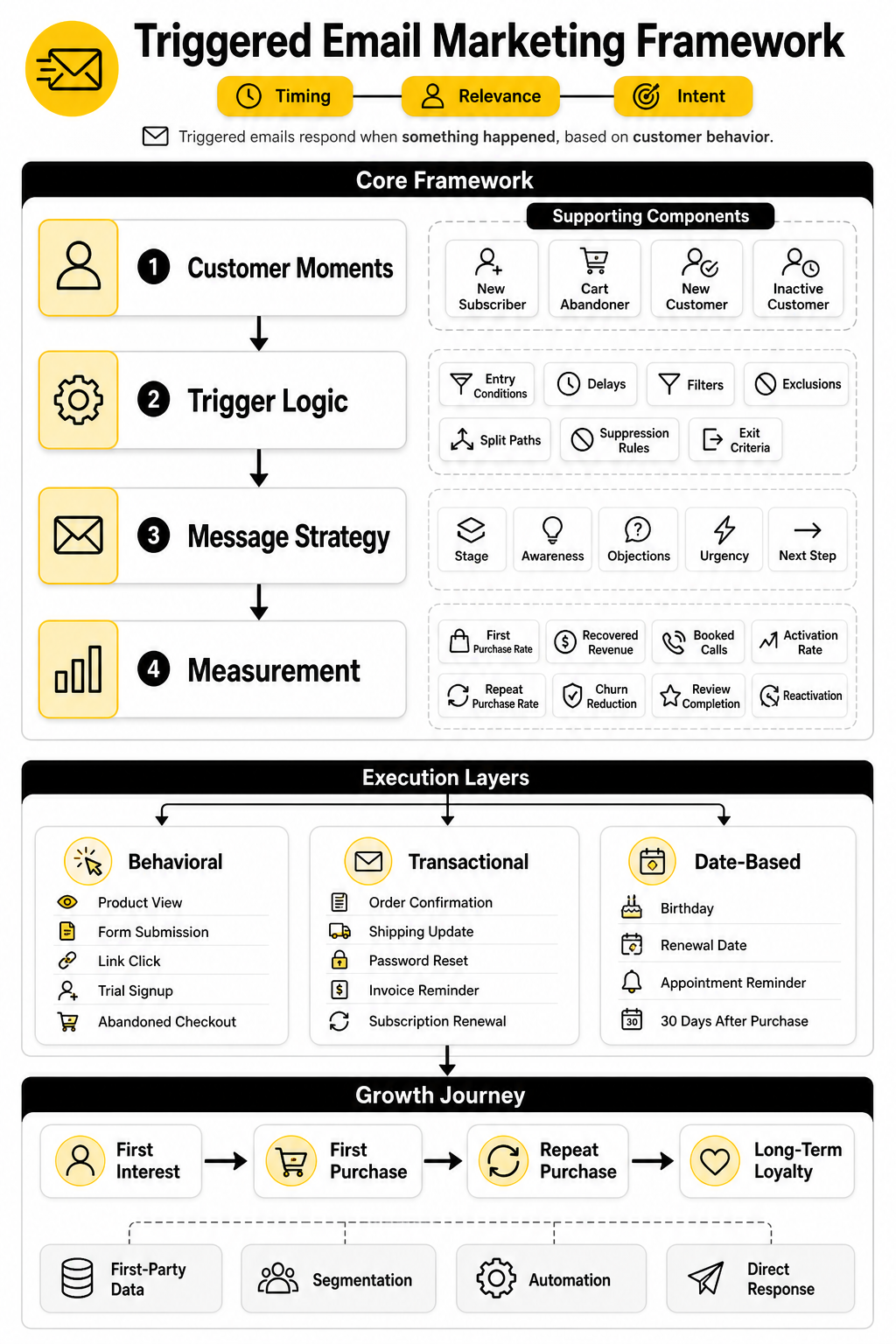
The framework is simple, but it is not shallow. A triggered email system should behave like a good salesperson, customer success rep, and retention marketer working together. It notices what happened, understands why it matters, and sends the next useful message without making the customer feel processed.
That is where the rest of this guide will go next. We will move from the basic concept into the specific components, flows, implementation rules, and optimization habits that separate a basic automation setup from a professional triggered email marketing system.
Build a stronger local presence with BAAM AI
Turn your website, Google profile, social channels, and AI visibility into one growth engine
Most businesses do not need more random marketing activity. They need a consistent presence system that helps the right people find them, trust them, and take action. BAAM AI brings strategy, local SEO, website updates, Google Maps visibility, social content, AI-search readiness, media production, and reporting into one practical monthly engine.
If you want your marketing to keep working after the campaign ends, start with a free BAAM AI presence audit. See how your business shows up today and where the fastest visibility wins are at BAAM AI.