
BAAM AI Blog
Triggered Campaigns: A Complete Foundation for Marketers
Triggered campaigns are one of the most powerful strategies in modern digital marketing, letting businesses reach the right people, with the right message, at the right moment. Unlike generic blast campaigns...
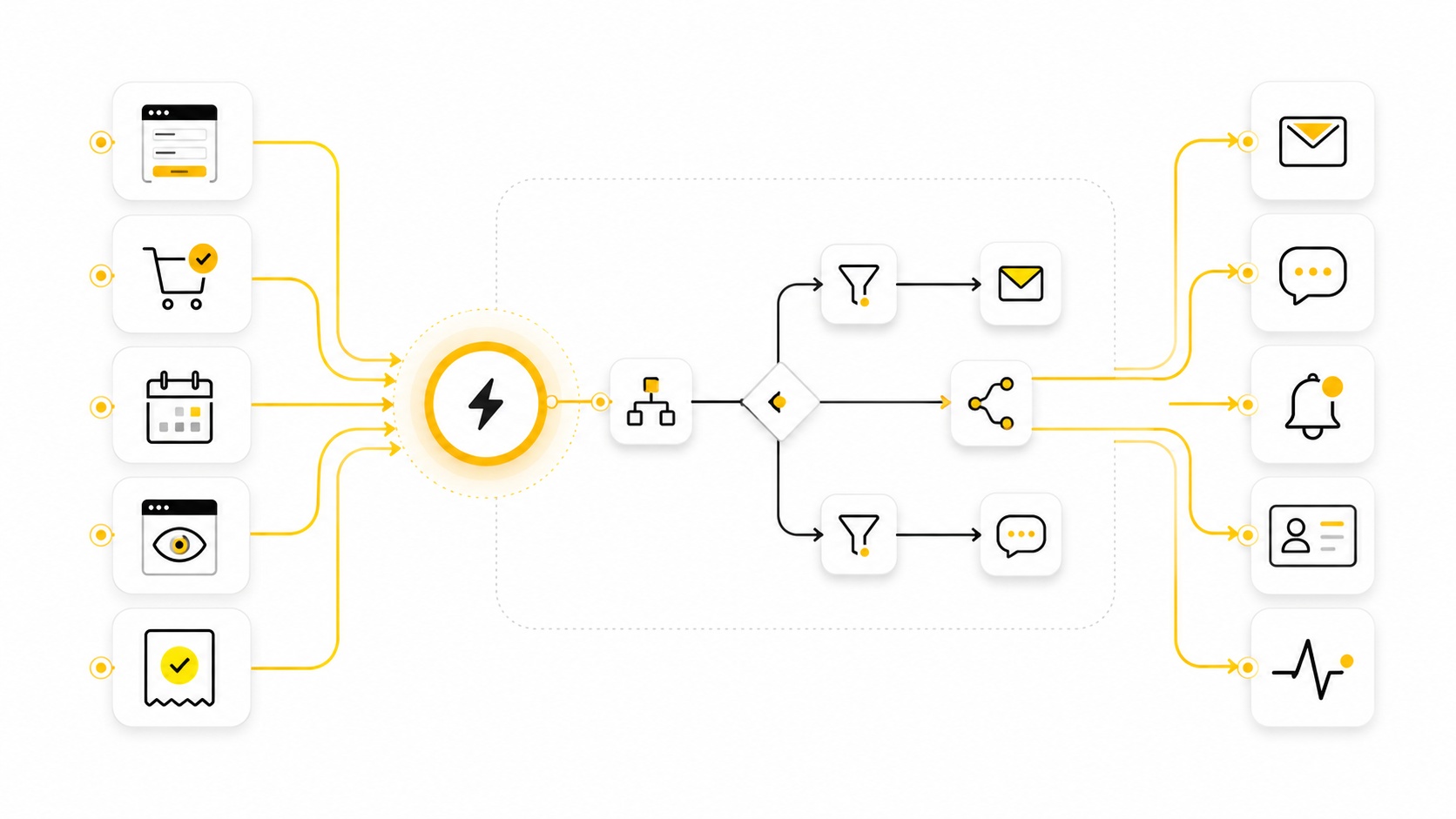
Triggered campaigns are one of the most powerful strategies in modern digital marketing, letting businesses reach the right people, with the right message, at the right moment. Unlike generic blast campaigns, triggered campaigns are activated automatically in response to specific user actions, events, or conditions, which makes the messaging far more relevant and effective in driving engagement and conversion.
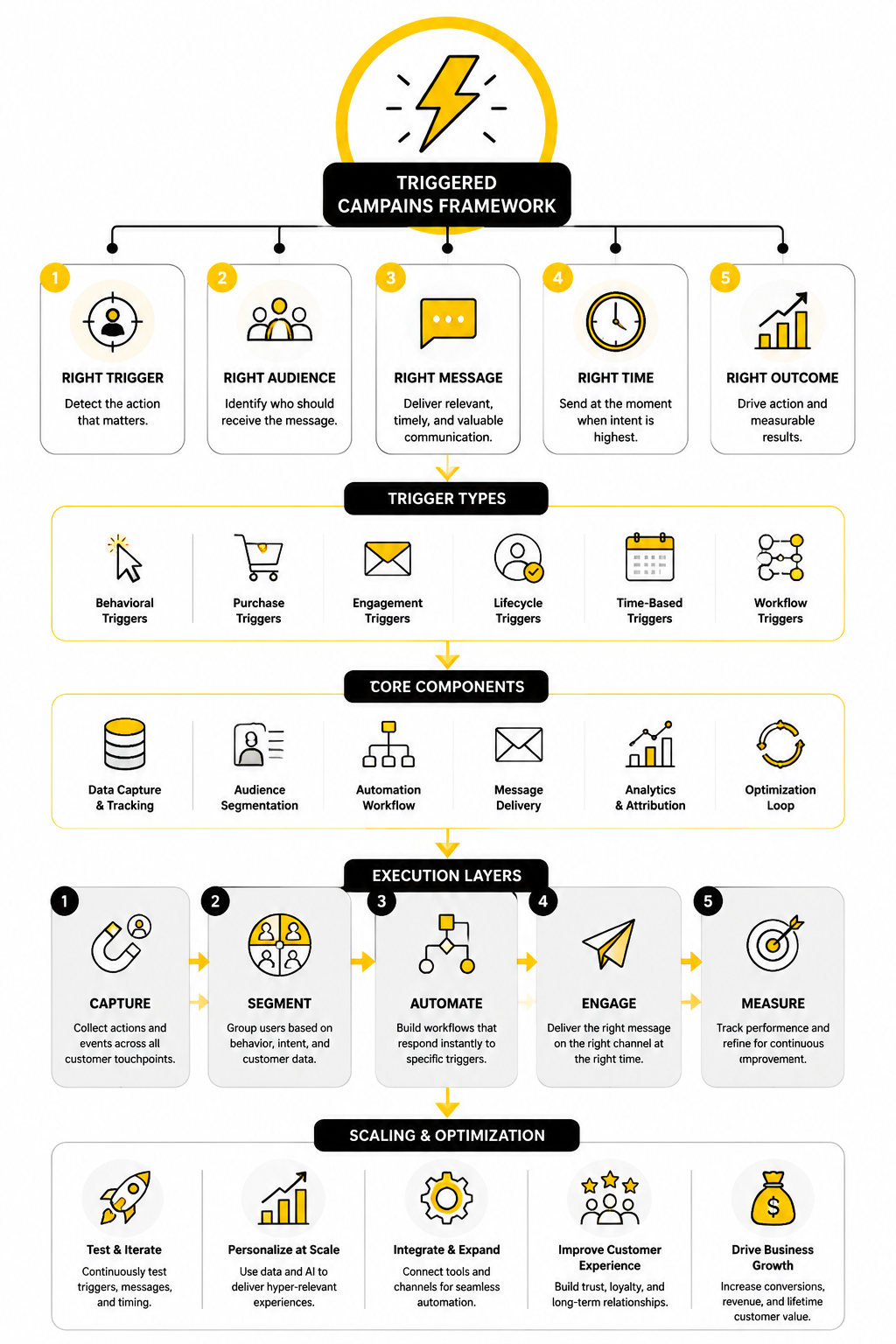
Triggered campaigns are an essential part of any modern automation strategy because they pivot communication away from mass scheduling and toward real-time relevance—delivering messages exactly when users take meaningful steps, like making a purchase, abandoning a cart, or completing a signup.
Marketers increasingly lean on these automated workflows because they can dramatically boost engagement compared to traditional marketing sends, often seeing higher open rates and stronger customer responses when messages are tied to real user behavior rather than static schedules.
In the sections that follow, we’ll break down the building blocks of successful triggered campaign strategies and walk through practical frameworks that help teams plan, build, and optimize them with confidence.
What Triggered Campaigns Are
Triggered campaigns are automated marketing efforts that launch in response to specific actions, events, or behaviors your audience takes - or sometimes doesn’t take - rather than on a fixed schedule. These actions could be anything measurable: a visitor browsing a product, a shopper abandoning a cart, a subscriber signing up, or even a long period of inactivity.
The core difference between a triggered campaign and a traditional broadcast is timing and relevance. Traditional campaigns are sent to large segments at predetermined times, while triggered campaigns are sent only when a defined condition is met. This makes them inherently more personalized and contextually relevant to each recipient’s journey.
In practical terms, triggered campaigns can span channels like email, SMS, push notifications, or in‑app messages. Their automation means once you set them up in your marketing platform, they run continuously in response to user behavior - no manual sends required.
Why Triggered Campaigns Matter
Triggered campaigns matter because they represent a more carefully, more effective way to communicate with your audience. The core reason is simple: messaging that arrives at the exact moment a user is thinking about you gets better engagement than messages sent on a schedule.
Multiple industry analyses show that behaviour‑based messages consistently outperform blasts: triggered messages often generate significantly higher opens and engagement because they align with what your audience just did or experienced.
From a bottom‑line perspective, real‑time automation also drives better ROI. Behaviour‑triggered email and SMS messages tend to generate considerably more revenue per send compared with broad campaigns because they intercept users at moments of intent..
Perhaps most importantly, triggered campaigns move marketers away from one‑size‑fits‑all communication toward personalized experiences. When your audience sees content that matches what they just did - whether completing an onboarding step or abandoning a cart - your message feels helpful, not interruptive.
Framework for Building Triggered Campaigns
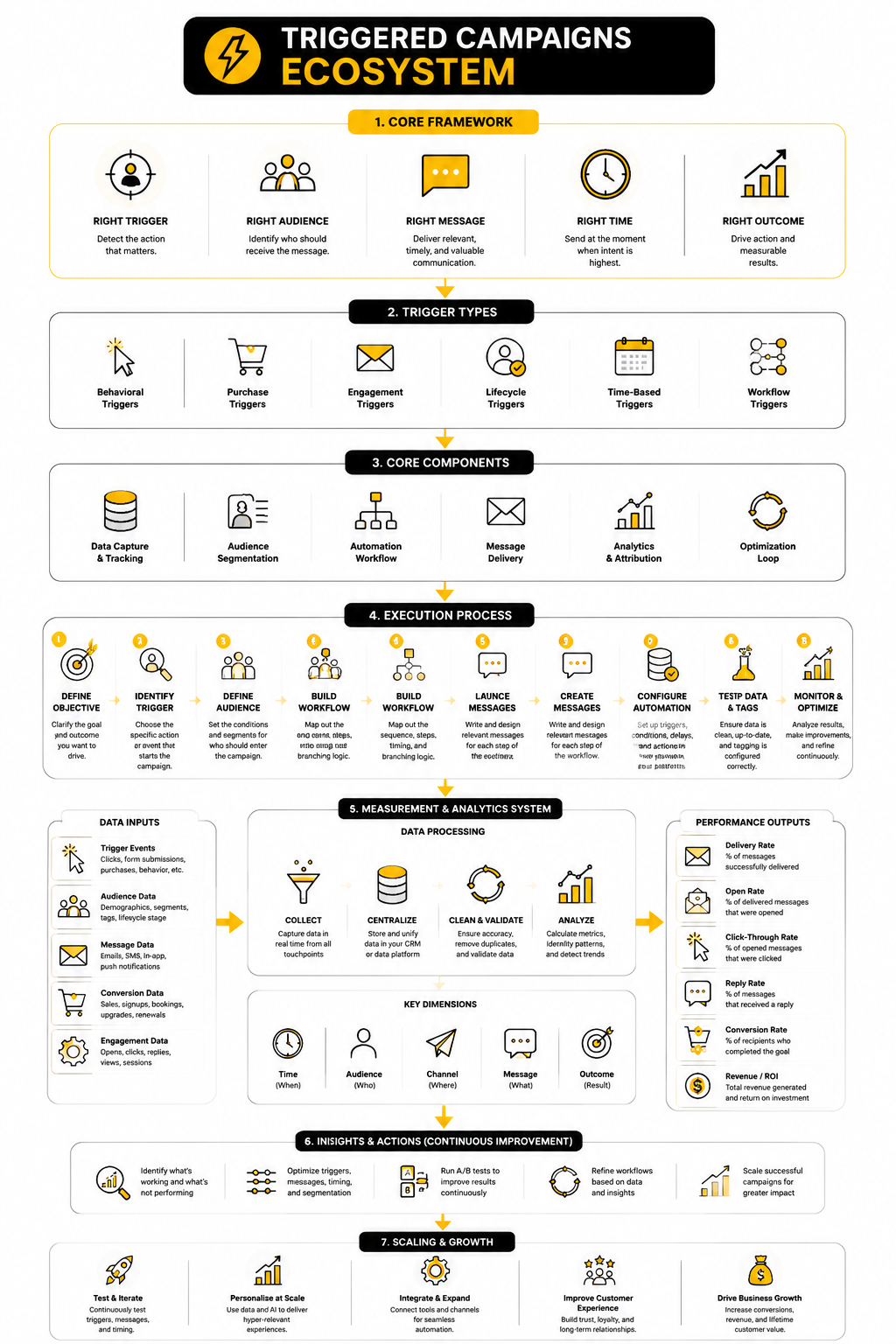
A strong framework helps you design triggered campaigns that are reliable, relevant, and measurable. While specifics vary by platform, every solid triggered campaign strategy includes three key stages:
Effective frameworks also include monitoring and optimization - tracking how recipients interact with the triggered messages and adjusting logic, timing, or content to improve results over time.
Core Components of a Triggered Campaign
At their heart, triggered campaigns rely on four core components that ensure they work reliably:
These components work together to create campaigns that feel responsive rather than generic, which in turn drives better engagement.
How Professionals Implement Triggered Campaigns
Professionals approach triggered campaigns as lifecycle automation pieces rather than one‑off messages. It starts with picking the right tools: modern automation platforms like GoHighLevel provide infrastructure to define triggers, sequence messages, and monitor performance without heavy developer involvement.
Once the tool is chosen, experts follow a repeatable process:
By treating triggered campaigns as thoughtful automation rather than tactical messages, teams ensure communications are timely, relevant, and measurable. This not only improves engagement metrics but also deepens customer relationships - the ultimate goal of any modern marketing strategy.
In the next part, we’ll explore common challenges teams face when building triggered campaigns and how to optimize them for maximum impact.
How Professionals Execute Triggered Campaigns
Once you’ve defined why triggered campaigns matter and what their core components are, the next step is putting them into action in a structured, repeatable way. Implementation isn’t about flipping a single switch - it’s about building reliable processes that scale as your audience grows.
The first part of execution is choosing the right tools that let you both define triggers and build automated sequences without heavy development overhead. Platforms like GoHighLevel or comparable automation solutions let you configure triggers based on behavior, apply logic rules, attach content, and monitor performance all in one place. Good tooling makes it easier to maintain your campaigns and measure results over time.
Next, you map actual customer journeys and identify where automation can improve conversion or retention. The practical process professionals follow typically looks like this:
Determine which specific actions will launch each campaign - for example, a new signup, cart abandonment, or trial expiry. The clarity of this definition dictates how accurate and useful your automation will be. A loosely defined trigger often fires too broadly or at the wrong moment, reducing effectiveness.
This goes beyond a single send. Most triggered campaigns have branched logic that adapts based on user response or timing. For instance, you might include wait conditions (such as “wait 24 hours after abandonment”) and conditional branches (e.g., send a different follow‑up if a user has previously purchased).
The content has to match the moment - a welcome message feels very different from an abandoned cart reminder. Personalization tokens (like name, product viewed, or last action taken) make the message feel specific and contextual, which boosts engagement.
Not every user who triggers an event should receive the same message. You must define filters (e.g., only send if email is verified) and suppressions (e.g., don’t send abandonment reminders to recent purchasers). These filters keep your messages relevant and reduce unsubscribes or deliverability issues.
Use internal testing before exposing your automation to the full list. A common mistake is assuming a workflow works because it “looks right” - real test sends help uncover timing or personalization errors that can hurt performance.
Implementation isn’t done once the campaign goes live. Track key metrics like opens, clicks, and conversions, and refine triggers or content as needed. Many professional teams treat triggered campaigns as living systems, adjusting logic and timing to optimize results.
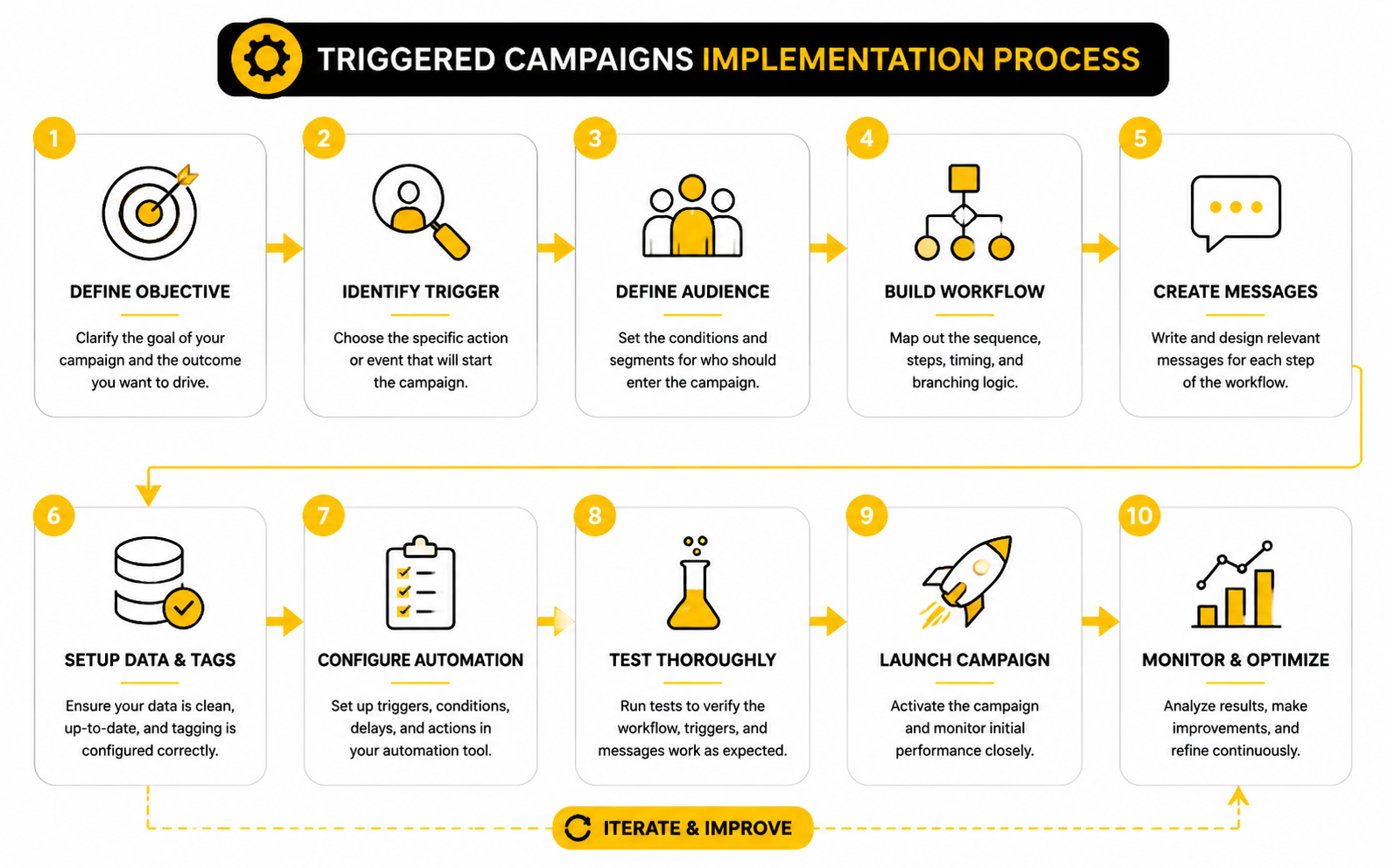
Step‑By‑Step Implementation Process
Below is a practical sequence you can follow when implementing triggered campaigns in your own marketing stack:
Ensure the systems you depend on - CRM, analytics, product events - are capturing accurate user behavior. Triggered campaigns are only as reliable as the signal behind them.
Map each campaign trigger to a specific part of the customer lifecycle that has a clear next step (e.g., a welcome series after signup, reminders after abandonment, or renewal nudges). Be specific with conditions so only the right segments enter a workflow.
In your platform, start by setting a trigger condition, then define entry criteria, delays, conditional logic, and exit rules. Add your content blocks and personalize them where possible (names, products, dates).
To avoid overwhelming users, professionals cap how many automated messages any one person can receive over a given period, and suppress campaigns when necessary.
Begin with a smaller segment if possible to verify event timing, message relevance, and delivery accuracy. Then scale to your full audience once confidence is high.
Use your automation platform’s analytics to compare engagement rates against your goals. Identify drop‑off points in sequences and refine those stages to improve conversion rates.
This structured process turns abstract ideas about triggered campaigns into repeatable execution steps, helping you build automation that doesn’t just run - it delivers measurable business value.
Measurement and Analytics for Triggered Campaigns
Analytics aren’t an afterthought - they’re essential for understanding whether your triggered campaigns are actually moving the needle. The numbers you track tell you not just how many people saw a message, but whether it prompted meaningful action at the right moment in the user journey.
When professional teams evaluate triggered campaign performance, they look at benchmarks across channels (like SMS and email), behavioral engagement signals (like click‑through or conversion rates), and revenue impact relative to goals. Those metrics help you interpret the quality of your messaging and decide what to optimize next.
Why These Metrics Matter
Evaluating open rates, clicks, and conversions - and comparing them to industry benchmarks - reveals whether a triggered campaign is resonating with your audience or merely sending noise.
For example, automated email flows tied to user behavior consistently outperform broad broadcast emails across engagement and conversion metrics - often by significant margins - because they arrive when interest and intent are high.
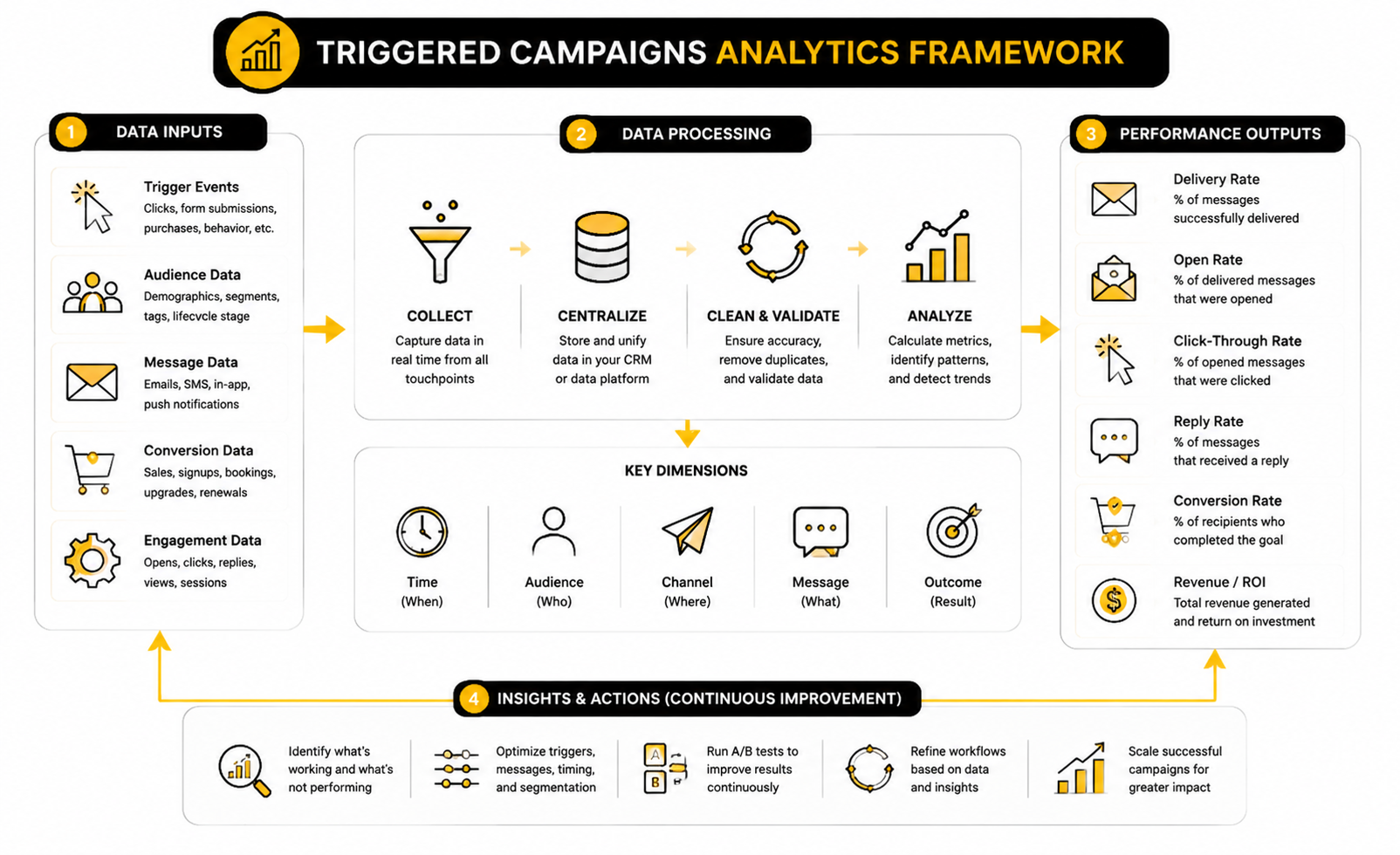
Key Benchmarks to Track
Here are a few trusted benchmarks you can use to evaluate your own triggered messages:
Interpreting What the Data Means
Benchmarks are guides, not absolutes. Strong performance for one brand may look different from another depending on audience, timing, channel, and campaign objective. Let’s break it down:
For triggered campaigns specifically, context is everything. A cart abandonment email triggered within 60 minutes of abandonment typically performs far better than the same message sent the next day because relevance fades fast. So understanding patterns in your own data - and comparing them to broader benchmarks - should drive your optimization choices.
What Actions the Metrics Should Drive
Once you have your data:
By focusing on meaningful metrics tied to user intent and business outcomes, you keep your triggered campaigns aligned with real performance rather than vanity numbers that don’t translate into revenue. This approach ensures your automation isn’t just firing - it’s working.
Advanced Considerations When Scaling Triggered Campaigns
Once you’ve implemented triggered campaigns and measured their performance, the next challenge is scaling them responsibly while navigating strategic trade‑offs and risks that can emerge at higher complexity or volume. Many teams find that what works at small scale - simple welcome flows or cart reminders - becomes harder to manage as the number of triggers, audience segments, and channels grows.
Scaling triggered campaigns successfully means balancing responsiveness with control, personalization with relevance, and automation with oversight. Without that balance, your campaigns can create noise instead of value, overwhelm users, and even degrade deliverability or data quality.
Avoiding Trigger Overload and Message Fatigue
One of the most common strategic risks is over‑triggering. When you have too many triggers firing for the same person - especially without thoughtful prioritization - users can receive multiple messages in a short period. This isn’t just annoying; it can erode trust and increase unsubscribes or complaint rates. Marketing platforms often provide frequency capping and priority logic for this reason, letting you limit how many triggered messages a person can receive in a given timeframe.
Trigger collisions - such as sending an abandoned cart email after a purchase - are a symptom of poor sequencing and rule logic. Designing your campaign flows with clear entry, exit, and suppression conditions helps prevent these overlaps and ensures that each message remains relevant and timely.
Data Dependencies and Quality Risks
Triggered campaigns depend on accurate event and profile data. As you scale, managing martech complexity becomes more challenging. Each data source, tag, or API introduces potential failure points, and misconfigured tracking can lead to triggers firing at the wrong times or not at all. Teams often spend significant time fixing tracking and integration before they can scale campaigns reliably, because inconsistent data directly affects segmentation and personalization accuracy.
Poor data quality also affects analytics: if events aren’t captured or attributed correctly, you can reach incorrect conclusions about which triggers perform best or where to invest optimization effort. A reliable data governance plan - with validation and monitoring of event streams and customer profiles - becomes essential at scale.
Personalization Depth vs. Practical Manageability
While personalization is a core strength of triggered campaigns, too much personalization without guardrails can actually make campaigns feel robotic or disjointed. If automation logic is built around every possible behavior - email opens, clicks, page scrolls, form completions - engagement can drop as recipients feel bombarded or misunderstood. Experts recommend prioritizing a few high‑value triggers and designing deeper personalization only for those, rather than trying to automate every possible behavioral signal from the start.
This prioritization reduces complexity in your automation stack and makes your analytics more interpretable. You can then expand personalization as your team gains confidence and data maturity.
Deliverability and Frequency Management
As triggered campaigns scale, deliverability risk becomes a strategic concern. Sending larger volumes of automated messages - particularly to unengaged contacts - can harm your sender reputation and reduce inbox placement over time. Integrating engagement filters into your workflows (such as excluding contacts who haven’t engaged recently) and setting overall frequency limits across all campaigns helps protect deliverability while keeping your audience receptive.
It’s also wise to stagger sends and define quiet hours, ensuring that triggered messages aren’t clustering at inconvenient times or creating spikes that spam filters might flag.
Organizational Alignment and Process Discipline
Scaling triggered campaigns effectively often requires cross‑team alignment - particularly between marketing, sales, and data operations. If marketing defines trigger logic without sales input on what constitutes meaningful lead behavior, for example, workflows can send premature or irrelevant messages that confuse prospects and frustrate sales teams. Establishing shared definitions for key behaviors and trigger conditions encourages collaboration and improves results.
Documentation and naming conventions also matter: as trigger libraries grow, clear documentation ensures that teams understand why each trigger exists, what it’s designed to accomplish, and how it relates to broader customer journeys.
Strategic Trade‑offs When Expanding Your Triggered Program
Here are some strategic questions that high‑performing teams confront as they scale:
Scaling responsibly means designing with both people and performance in mind, not just volume or automation sophistication. By maintaining focus on relevance, respecting user preferences, and investing in data health and collaboration, you ensure your triggered campaigns remain effective - even as they grow.
1. What are triggered campaigns?
Triggered campaigns are automated messages that send when a specific user action or event occurs - like signing up, abandoning a cart, or reaching a usage milestone - instead of on a set schedule. They’re designed to match messages to real user intent and behaviour in real time.
2. How do triggered campaigns differ from traditional scheduled campaigns?
Traditional campaigns go out to a broad audience based on a calendar, while triggered campaigns send to individuals only when defined conditions are met, making them contextually relevant and typically more engaging.
3. Why should I focus on click‑through rates instead of open rates?
With modern privacy tools inflating open metrics, click‑through rates offer a more reliable indication of genuine engagement and intent to convert for triggered campaign performance.
4. What benchmarks should I use to evaluate my triggered campaigns?
Benchmark click rates vary by industry and campaign type, but many triggered email flows see substantially higher engagement and conversion rates than broad blasts - often several times higher, especially in high‑intent segments.
5. Are SMS triggers more effective than email triggers?
SMS generally has higher open and click rates due to the immediacy of the channel and its proximity to users’ day‑to‑day communication, which can make certain triggered SMS more effective for time‑sensitive moments like abandoned carts or appointment reminders.
6. Can triggered campaigns run on multiple channels at once?
Yes - many brands run triggers across email, SMS, push notifications, and in‑app messages. The key is to coordinate them so they complement rather than overwhelm your audience.
7. How often should I send triggered messages?
Triggered sends shouldn’t be overused. Experts recommend frequency capping and clear timing rules to avoid user fatigue and unsubscribe or opt‑out rates rising.
8. What can reduce the effectiveness of a triggered campaign?
Poor data quality, delayed event tracking, and overly complex automation logic can misfire triggers or send irrelevant messages, which harms performance and user trust.
9. Do triggered campaigns only work for ecommerce brands?
No - while ecommerce sees clear revenue lift from triggers like abandonment recoveries, many B2B or SaaS companies use triggered campaigns for onboarding, activation reminders, and reactivation flows with strong results.
10. What’s the easiest way to get started with triggered campaigns?
Begin with a few core workflows such as welcome messages, cart abandonment, and post‑purchase or onboarding flows. Get them performing well before scaling to more complex triggers and deeper personalization.
Build a stronger local presence with BAAM AI
Turn your website, Google profile, social channels, and AI visibility into one growth engine
Most businesses do not need more random marketing activity. They need a consistent presence system that helps the right people find them, trust them, and take action. BAAM AI brings strategy, local SEO, website updates, Google Maps visibility, social content, AI-search readiness, media production, and reporting into one practical monthly engine.
If you want your marketing to keep working after the campaign ends, start with a free BAAM AI presence audit. See how your business shows up today and where the fastest visibility wins are at BAAM AI.