
BAAM AI Blog
Traditional and Digital Marketing: What They Are and How They Compare
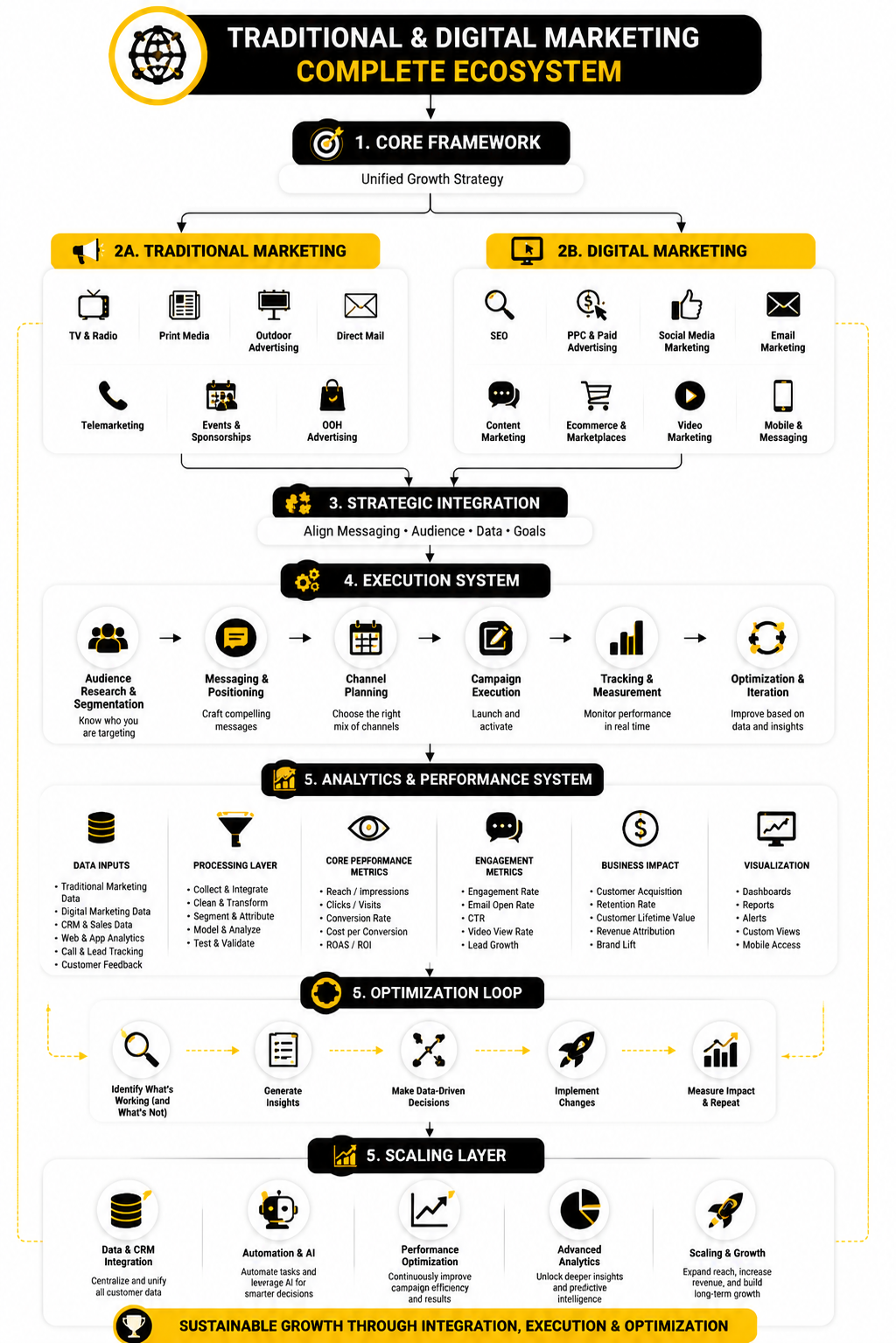
And here’s a structural framework that we’ll use to explore their differences and synergies:
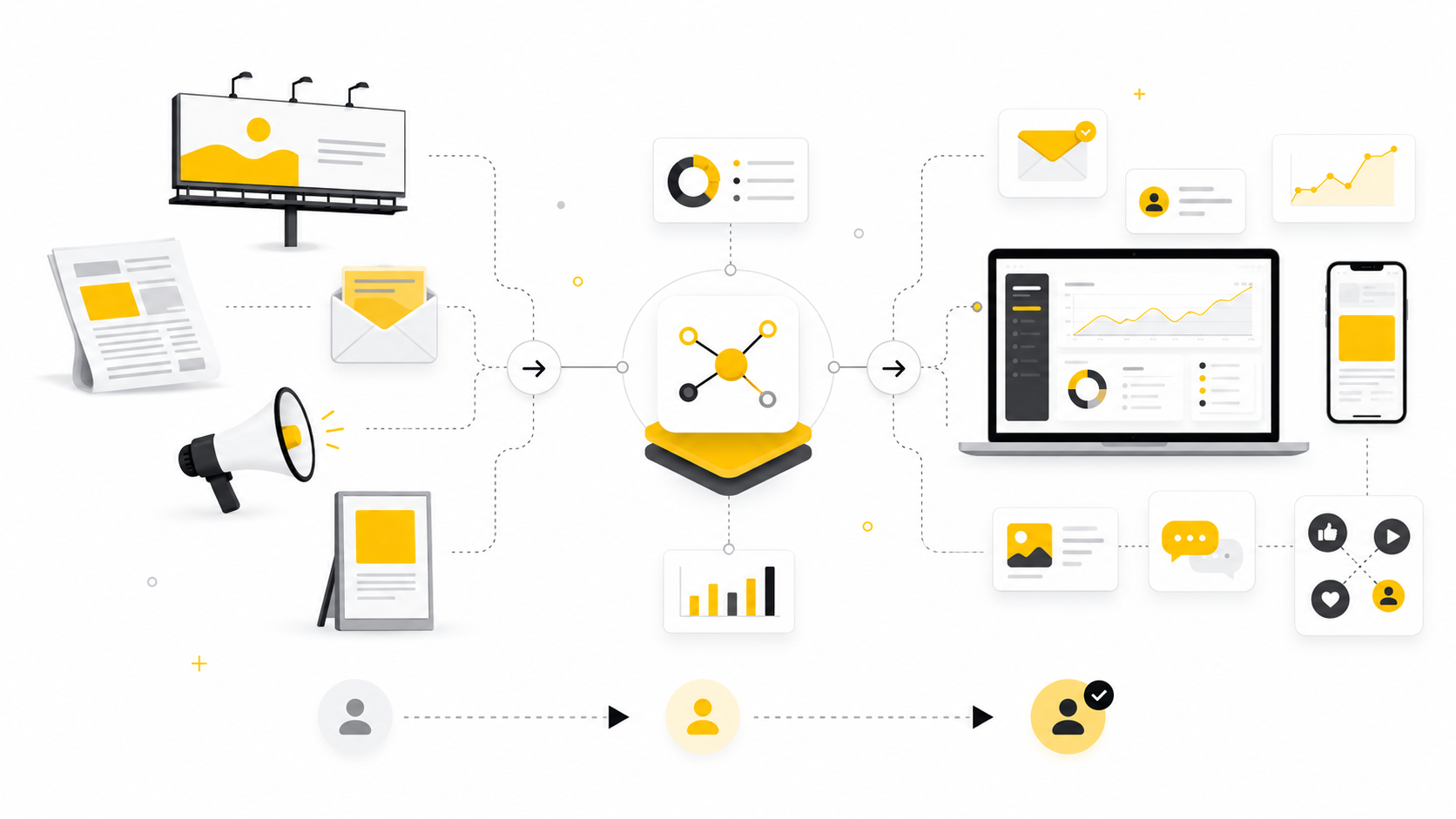
And here’s a structural framework that we’ll use to explore their differences and synergies:
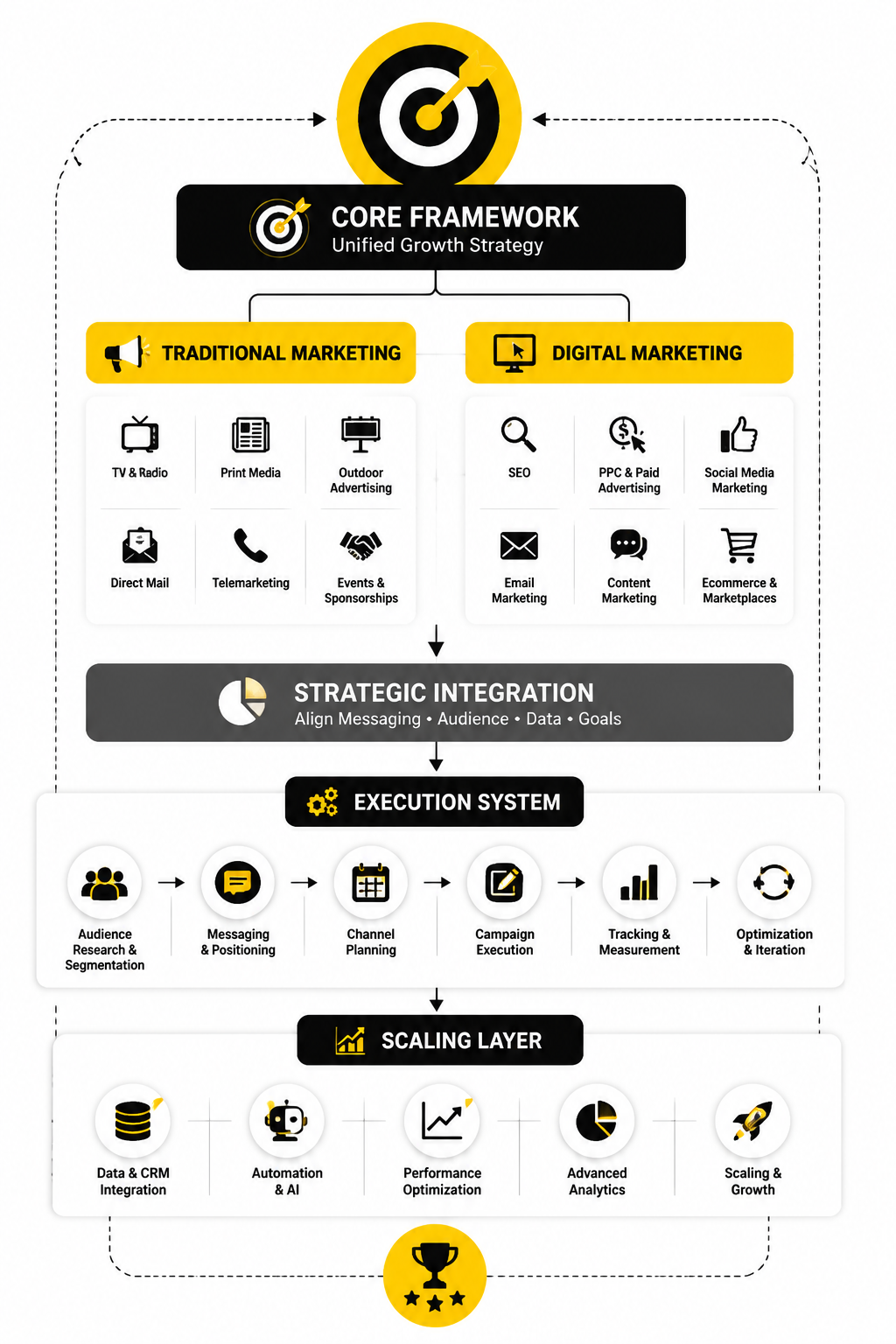
Marketing isn’t just about shouting louder than competitors - it’s about reaching the right people in ways that resonate and drive action. Traditional marketing refers to offline promotional channels that existed before the internet became ubiquitous - like print ads, TV commercials, radio spots, and billboards - and these continue to be powerful, especially for broad audience visibility and building local trust.
Conversely, digital marketing uses online platforms and technology to connect with audiences on search engines, social media, email, and other digital environments. It’s distinguished by real‑time measurability, precise targeting, and adaptability at scale.
Businesses still debate whether one approach is “better,” but that’s often the wrong question. Instead, understanding how and when to use each method - and how they complement each other - adds more consistent growth, brand recognition, and measurable business results.
In upcoming sections we’ll unpack why both matter, how their frameworks differ in practice, and what professional implementation looks like across industries and business models.
Why Traditional and Digital Marketing Both Matter
To understand why businesses still invest in both traditional and digital marketing, it helps to look at what each approach uniquely delivers. Traditional marketing remains important for broad visibility, local presence, and brand credibility - especially for audiences less engaged online or for campaigns that benefit from physical presence, like community events or outdoor billboards. In fact, many small business owners still allocate budget to these offline channels because they create memorable, tangible brand impressions that can’t always be replicated online.
Digital marketing, by contrast, excels at precision, measurability, and adaptability. Campaigns can be adjusted in real time based on performance data, and outcomes like clicks, conversions, and engagement are tracked with granular accuracy. These capabilities allow businesses to optimise spend and scale the tactics that are driving results.
The reason both matter in 2026 isn’t nostalgia - it’s strategy. Traditional channels still connect with key segments of the audience and reinforce brand awareness, while digital channels capture intent‑driven traffic, nurture leads, and provide measurable return on investment. Blending these approaches gives businesses the advantages of each without being overly dependent on one medium.
Overview of the Marketing Framework
When you map out how marketing functions today, you’ll notice two broad frameworks at play: broadcast‑oriented outreach and digital interaction‑centred engagement.
Traditional marketing fits squarely into the broadcast model. It places your message into environments where audiences consume media passively - watching TV, listening to the radio, flipping through magazines, or encountering outdoor ads. Because these channels deliver messages to broad populations, they’re often used for brand building and mass awareness campaigns that don’t rely on direct response metrics.
Digital marketing, on the other hand, uses addressable channels that allow brands to speak to specific people based on behaviour, interests, and customer journey stage. Whether it’s search engine optimisation that attracts discovery traffic, social media ads targeting a defined audience segment, or email campaigns designed to nurture leads, digital marketing channels are interactive, measurable, and adaptable in near real time.
This framework - broadcast versus addressable engagement - isn’t a debate over superiority; it’s a way to decide which tools match your objectives. For awareness and reputation, traditional channels may carry more weight. For conversion, retention, and lifecycle engagement, digital tools give businesses control and performance insights.
What Traditional Marketing Includes
Traditional marketing encompasses the offline media and promotional tactics that pre‑date the internet. These channels have stood the test of time and continue to play a role in brand strategy for many sectors:
The common thread is that traditional channels deliver one‑way communication - you share a message and the audience receives it, but there’s limited immediate interaction or tracking of individual responses.
Traditional marketing’s strength lies in its ability to build familiarity and presence across a wide or localised audience. For industries where trust and visibility are critical - like healthcare, automotive, or community services - these channels help establish credibility and reinforce messaging over time.
What Digital Marketing Includes
Digital marketing is the collection of online strategies and tools that connect brands to users where they spend much of their time: on screens and connected devices. These channels are characterised by interactivity, data‑driven optimisation, and precise audience reach:
Digital channels give businesses the ability to test, refine, and scale their campaigns based on real‑time performance insights - something that’s simply not possible with traditional formats.
This precision and adaptability make digital marketing especially effective for lead generation, customer retention, and performance optimisation, while also enabling global reach even for smaller brands with limited budgets.
In the next part of this guide we’ll look at professional implementation and best practices for combining these approaches effectively.
Professional Implementation and Best Practices
So far we’ve talked about what traditional and digital marketing are, and why blending them matters. Now let’s get practical: how do you actually implement both approaches in a real marketing process so that your business doesn’t just “do marketing,” but executes strategically and consistently. A successful implementation transforms planning into measurable results and clear action.
Start With Clear Goals and Strategy
Before you execute anything, align your team around specific objectives. These should be outcomes you can measure, such as increasing brand awareness, generating leads, or boosting sales. A well‑defined mix of traditional and digital tactics only makes sense if you know what success looks like. Build these goals into your planning documents with timelines and metrics attached.
Once goals are set, develop a cohesive strategy that maps each tactic to your objectives. That means deciding not just where you’ll advertise or publish, but why you’re choosing a billboard versus a social ad, or a print campaign versus an email sequence. The strategy phase is also where you consider budget allocation across channels so you’re investing where your audience actually spends their time.
Know Your Audience and Segment Appropriately
Understanding who you’re targeting is foundational. Build or refine audience personas based on demographics, behaviours, and preferences across online and offline channels. These personas help you choose which traditional channels (local radio, print publications, events) and which digital channels (search, email, social media) will reach your audience most effectively.
Segmentation - grouping audiences into meaningful categories - lets you tailor messaging. For example, a small‑business owner might see value in a local newspaper ad and a LinkedIn campaign, while a younger demographic might respond better to social video content and targeted search ads. Aligning both traditional and digital messaging to these segments avoids wasted spend and improves relevance.
Build an Execution Plan With Roles and Timelines
Implementation isn’t just creativity - it’s logistics. Create a detailed execution plan that outlines:
This operational clarity prevents bottlenecks and ensures that your traditional marketing efforts (like print ad placement or event sponsorship) align with digital campaigns (like search ads or email follow‑ups) in time and message.
Step‑by‑Step Execution Process
Turning high‑level plans into real campaigns can feel overwhelming, but breaking it into repeatable stages helps teams stay focused and responsive.
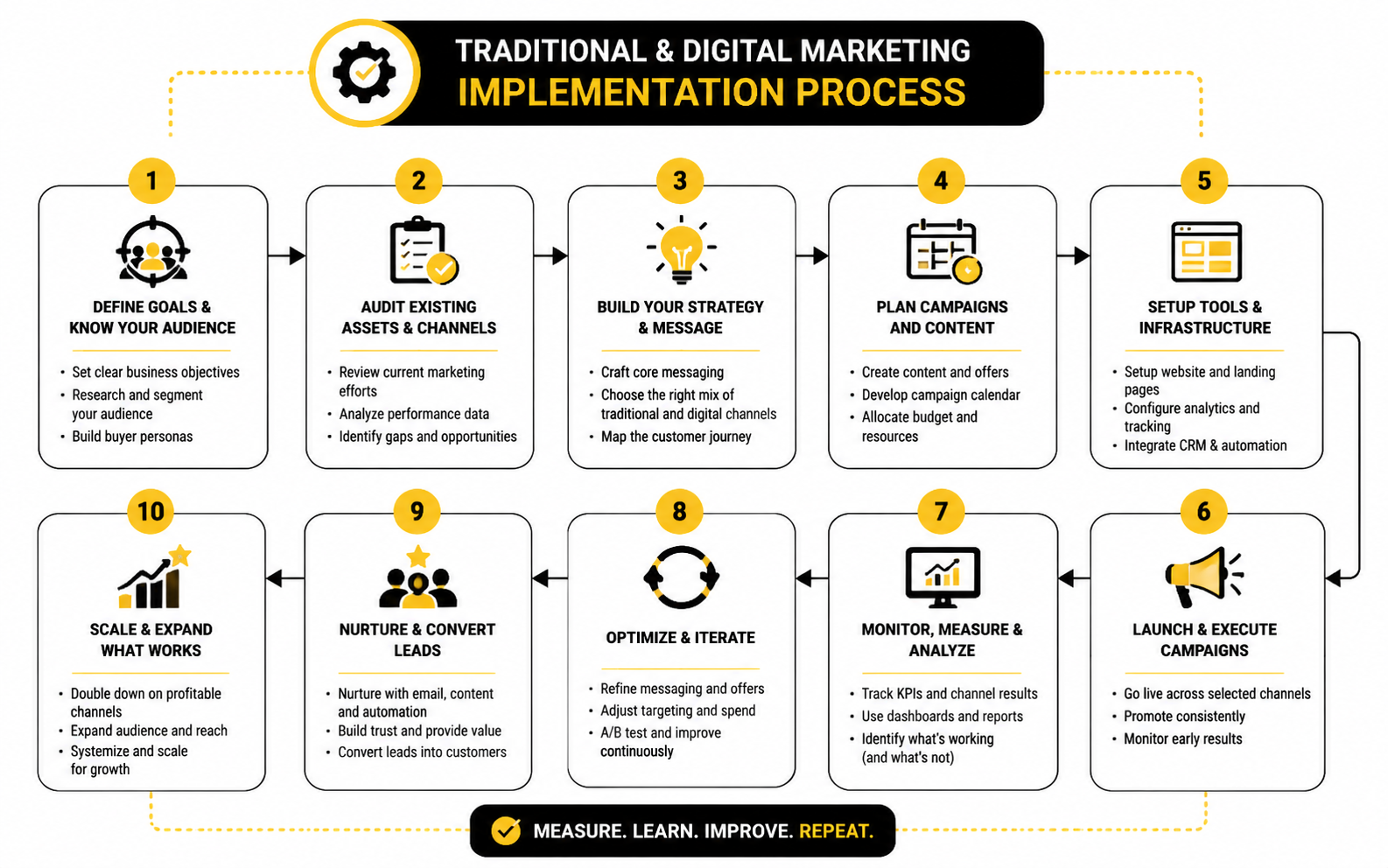
1. Align Messaging Across Channels
Consistency matters. Your brand voice and key value propositions should be the same whether someone sees your message on a billboard, hears it on radio, or encounters it in a social feed. Unified messaging strengthens recognition and reinforces trust no matter where someone engages with your brand.
2. Launch Foundational Digital Tools
Before you activate campaigns, set up tools that support measurement and automation:
Having these digital foundations in place ensures you can measure and optimise performance in real time once campaigns go live.
3. Coordinate Traditional Tactics With Digital Touchpoints
Instead of running traditional and digital efforts in silos, think about how they can feed each other:
These connections help you track conversions more accurately and deepen engagement across the whole buyer journey.
4. Monitor Performance and Adjust Quickly
Once your campaigns are live, don’t just “set it and forget it.” Schedule weekly or monthly reviews to assess performance:
Use these insights to refine creative, reallocate budget to high‑performing channels, or pivot tactics that aren’t resonating. This feedback loop transforms traditional and digital marketing from a static plan into a living, improving strategy.
In the next part, we’ll explore common metrics and how to measure success across your combined marketing efforts.
Measuring Performance: Analytics, Benchmarks, and What the Data Tells You
Understanding how traditional and digital marketing perform isn’t just about collecting data - it’s about interpreting it in ways that lead to more carefully decisions, better budgets, and stronger business outcomes. In this section we’ll look at the most useful metrics, benchmarks you can compare against, and how to interpret measurement signals so that you can optimise both traditional and digital efforts together.
Why Measurement Matters
Marketing measurement turns effort into insight. Without a clear view of data, you’re guessing whether campaigns are working or not. The real value of metrics is that they:
Traditional and digital channels differ in how they provide data: digital channels give precise, real‑time analytics, while traditional channels often rely on aggregated surveys, estimations, and proxy indicators like unique codes or coupon responses.
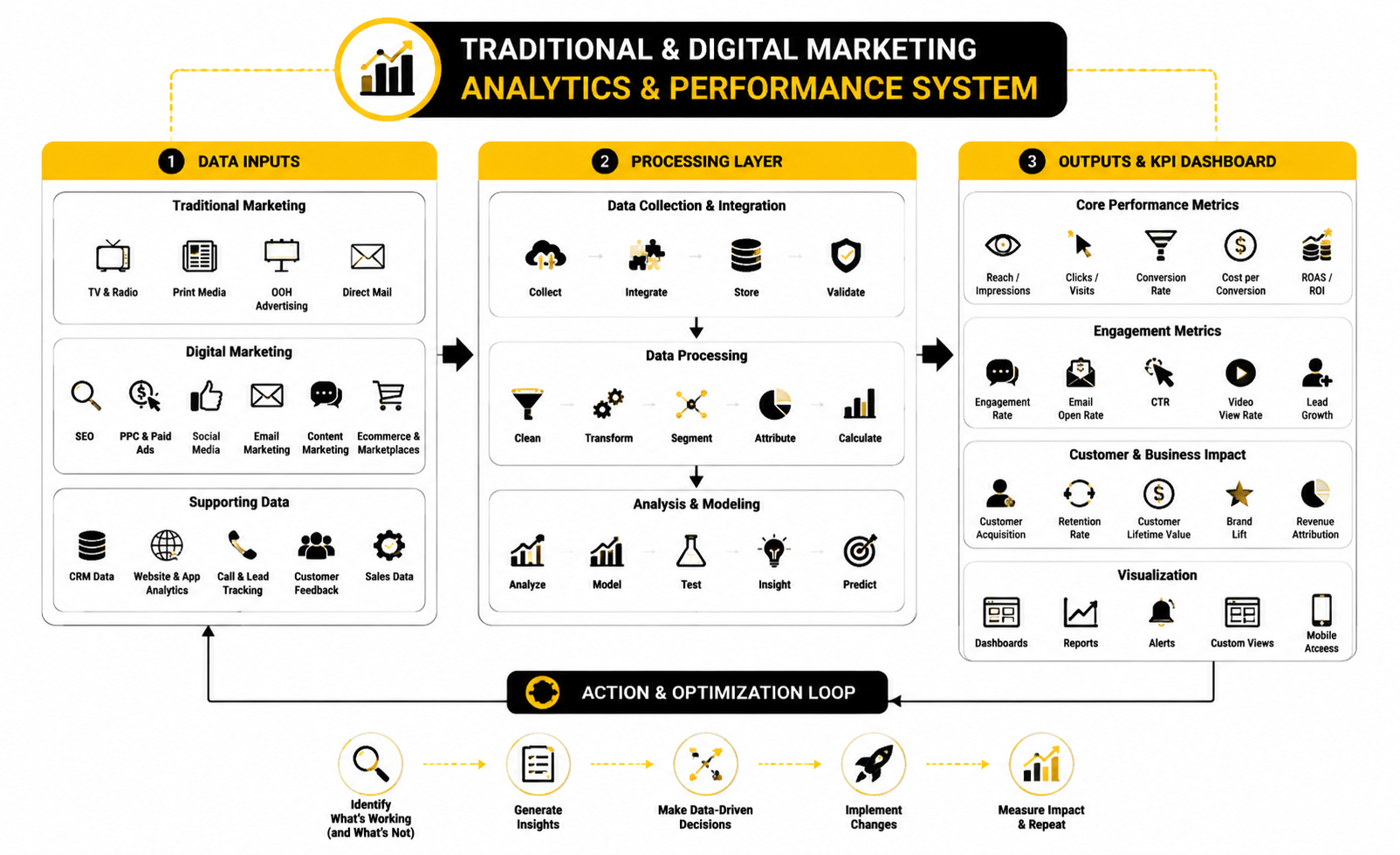
Core Metrics That Matter Across All Channels
Whether you’re evaluating a TV ad or a social campaign, a few key performance indicators help you compare and improve:
Return on Investment (ROI)
ROI is the foundational metric that answers the question: Did our marketing make money? It compares the revenue generated against the cost invested and is fundamental for both digital and traditional measurement.
ROI isn’t just a percentage - it informs strategic decisions like whether to scale a campaign or pivot to a different channel. (Benchmarks vary, but digital channels often aim for a 5:1 return - that’s $5 generated for every $1 spent - with exceptional campaigns exceeding 10:1.)
Return on Ad Spend (ROAS)
ROAS focuses specifically on advertising efficiency, telling you how much revenue each ad dollar produces. It’s especially useful for comparing paid media performance and optimising budgets across platforms.
Digital platforms track ROAS precisely with built‑in analytics, while traditional channels might require estimated reach and conversions to approximate the metric.
Cost Per Acquisition (CPA) and Cost Per Lead (CPL)
These metrics show how much it costs to get a lead or customer:
Lower CPL and CPA generally mean more efficient marketing, but they must be balanced against quality - a low cost per lead that doesn’t convert to revenue isn’t truly successful.
Conversion Rates
Conversion rate reveals how effectively your campaigns turn visibility into action - such as clicks, form submissions, purchases, or sign‑ups.
Benchmark ranges differ by channel: paid search might see conversion rates of 2–3% as strong performance, while email click‑through rates above 2.5% often indicate solid engagement.
Interpreting the Numbers: What They Tell You
Data on its own is noise. The power comes when you contextualise metrics in terms of your goals:
Challenges in Measurement
Not all metrics are created equal:
In both cases, focusing on a handful of actionable metrics rather than every available number will keep your measurement practical and decision‑oriented.
Next we’ll explore how to use these metrics in planning budgets and scaling campaigns in Part 5.
Advanced Considerations When Blending Traditional and Digital Marketing
As your marketing matures, thinking beyond basics becomes necessary. Mastery of traditional and digital marketing isn’t just about running ads in different places - it’s about making strategic tradeoffs, managing risks, and scaling what works without overextending resources. These advanced considerations help experienced teams refine performance and keep growth sustainable.
Balancing Reach With Precision
Traditional channels tend to deliver broad reach - billboards, print ads, and TV spots can expose your brand to large audiences. Digital channels, on the other hand, offer precision targeting and customisation. Combining these effectively requires judgement:
The risk here is simple: investing too heavily in one area can leave blind spots where potential customers never see your message.
Attribution and the Data Gap
One of the biggest challenges when mixing traditional and digital marketing lies in attribution - that is, understanding which channels genuinely drive conversions. Digital channels often deliver detailed, near‑real‑time attribution data, but traditional channels don’t always integrate easily.
For example, tracking a TV commercial’s direct impact on sales requires either third‑party measurement tools or clever use of unique offers and URLs. Without careful attribution planning, you might misallocate budget based on incomplete data. Prioritise tools and processes that help bridge the gap, such as:
Solving attribution isn’t a one‑time task - it’s an ongoing investment in data infrastructure.
Scaling Without Losing Control
As campaigns grow, so does complexity. When you’re running multiple concurrent digital and traditional campaigns, scaling responsibly means:
For digital channels, automation tools can increase efficiency and reduce manual work. For teams looking to level up their automation game, platforms like GoHighLevel provide integrated tools for CRM, email sequences, and lead management that reduce overhead while maintaining control.
Strategic Tradeoffs: Budget, Timing, and Impact
Everyone has a finite budget. Choosing between traditional and digital investment - or the balance between them - depends on:
Experienced marketers plan seasonal strategies that prioritise channels based on campaign timing. For example, retail brands often combine print and radio during holiday seasons while boosting digital retargeting to catch high‑intent shoppers immediately.
Managing Risk and Compliance
As marketing evolves, regulations around data privacy and consumer protection grow more stringent. Digital channels require compliance with laws such as GDPR and ePrivacy rules, especially when tracking user behaviour or sending personalised messages. Traditional channels have fewer data privacy constraints but are not exempt from regulations around truth in advertising and fair use.
Teams must establish governance frameworks that ensure:
Ignoring these considerations can lead to fines, reputational damage, and loss of customer trust.
When to Seek Expert Support
There comes a point where internal teams benefit from external expertise. Agencies and consultants specialising in integrated marketing can offer:
If your campaigns have plateaued or internal resources are stretched thin, bringing in specialised support can catalyse growth and build new efficiencies.
In Part 6, we’ll wrap up with a concise set of key takeaways and actionable steps you can apply immediately to your own marketing mix.
Frequently Asked Questions About Traditional and Digital Marketing
1. What’s the basic difference between traditional and digital marketing?
Traditional marketing uses offline channels like print ads, TV, radio and outdoor displays to build brand awareness at scale, while digital marketing uses online platforms such as search, social media, email, and websites to deliver targeted, measurable campaigns.
2. Is one better than the other for all businesses?
No - the right mix depends on your goals, audience and budget. Traditional often excels at broad credibility and local presence, while digital delivers precision, flexibility and measurable results.
3. Can traditional and digital marketing work together?
Yes - blending the two can amplify reach and engagement. For example, offline ads can drive audiences to digital landing pages or social content, creating a cohesive experience across channels.
4. Which approach offers better measurement and tracking?
Digital marketing provides far more detailed analytics, allowing you to monitor clicks, conversions and ROI in real time, whereas traditional marketing often relies on estimates, surveys or proxy signals.
5. Do traditional methods still matter in a digital world?
Absolutely - traditional channels remain valuable for reaching audiences that spend less time online, building trust through physical media, and strengthening local brand presence.
6. How do costs compare between traditional and digital marketing?
Traditional marketing typically involves higher upfront production and placement costs, while digital marketing often lets you start with modest budgets and scale based on performance.
7. Should small businesses focus more on digital marketing?
Many small brands start with digital due to lower barriers to entry and measurable impact, but adding targeted traditional elements can help build broader awareness and community trust over time.
8. How does audience targeting differ between the two?
Traditional methods usually reach broader demographics, while digital channels allow precise targeting based on interests, behaviour, and intent, making campaigns more efficient and personalised.
9. Can digital marketing reach global audiences?
Yes - online channels like search and social media can reach users worldwide, making it easier for brands of all sizes to expand beyond local markets.
10. Which strategy delivers faster results?
Digital marketing typically delivers results more quickly because campaigns can be launched, monitored, and optimised in real time, whereas traditional campaigns may take longer to produce and evaluate.
11. How does engagement differ between traditional and digital channels?
Digital channels offer interactive opportunities - likes, shares, comments, and direct messages - while traditional marketing tends to be one‑way communication without immediate audience response.
12. Should my business track the same KPIs for digital and traditional efforts?
While some KPIs overlap (like brand awareness and customer acquisition), traditional campaigns often need alternative metrics like reach estimates and unique offer responses, whereas digital uses precise data like click‑through and conversion rates.
Build a stronger local presence with BAAM AI
Turn your website, Google profile, social channels, and AI visibility into one growth engine
Most businesses do not need more random marketing activity. They need a consistent presence system that helps the right people find them, trust them, and take action. BAAM AI brings strategy, local SEO, website updates, Google Maps visibility, social content, AI-search readiness, media production, and reporting into one practical monthly engine.
If you want your marketing to keep working after the campaign ends, start with a free BAAM AI presence audit. See how your business shows up today and where the fastest visibility wins are at BAAM AI.