
BAAM AI Blog
Tools, Automation, and AI in Internet Marketing Optimization
Tools can accelerate internet marketing optimization, but they can also make a weak system more complicated. This is the uncomfortable truth. If the offer is unclear, the audience is poorly defined, and the follow-up...
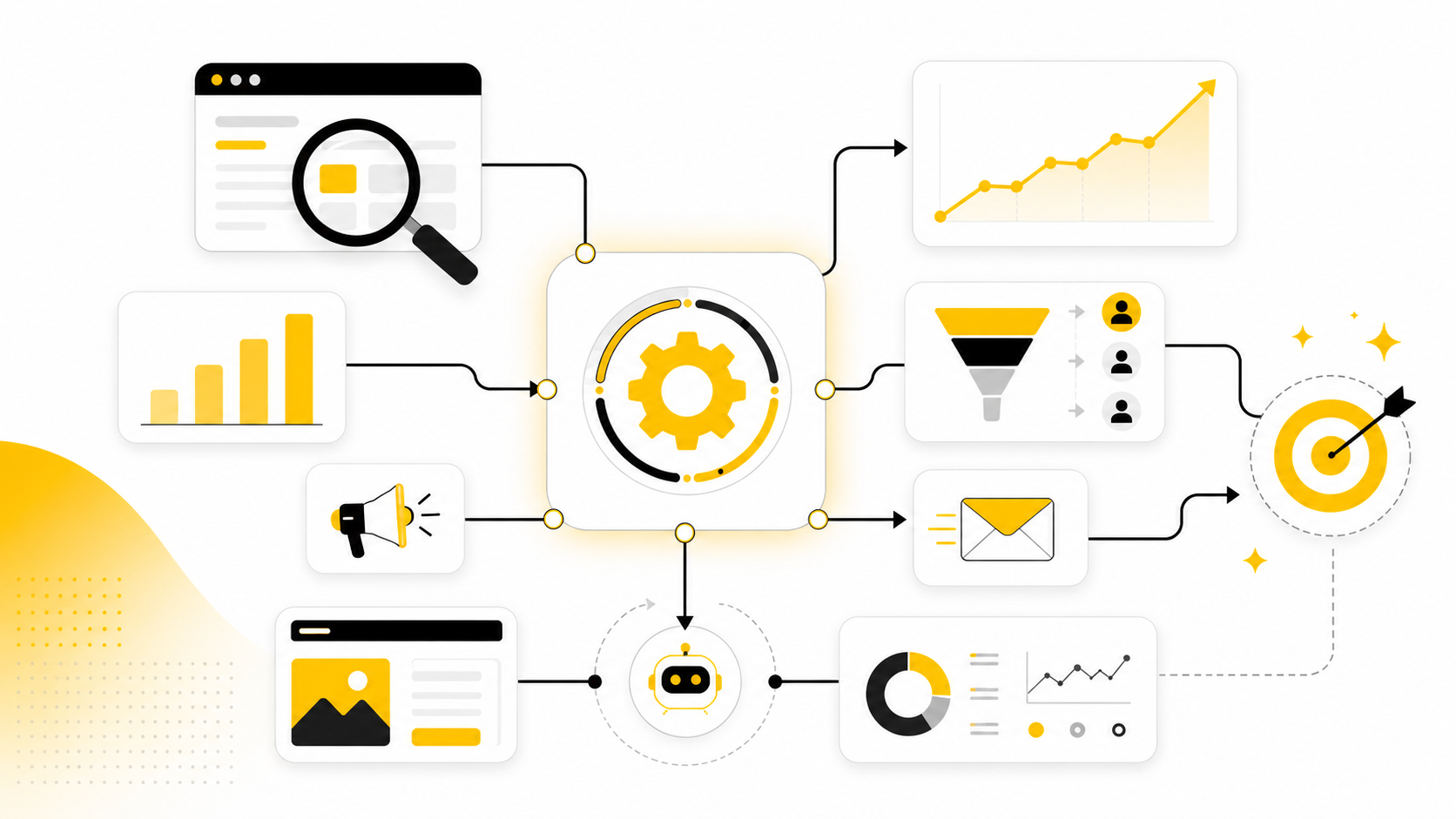
Tools can accelerate internet marketing optimization, but they can also make a weak system more complicated. This is the uncomfortable truth. If the offer is unclear, the audience is poorly defined, and the follow-up strategy is thin, adding more software usually creates more dashboards, more automations, and more ways to avoid the real problem.
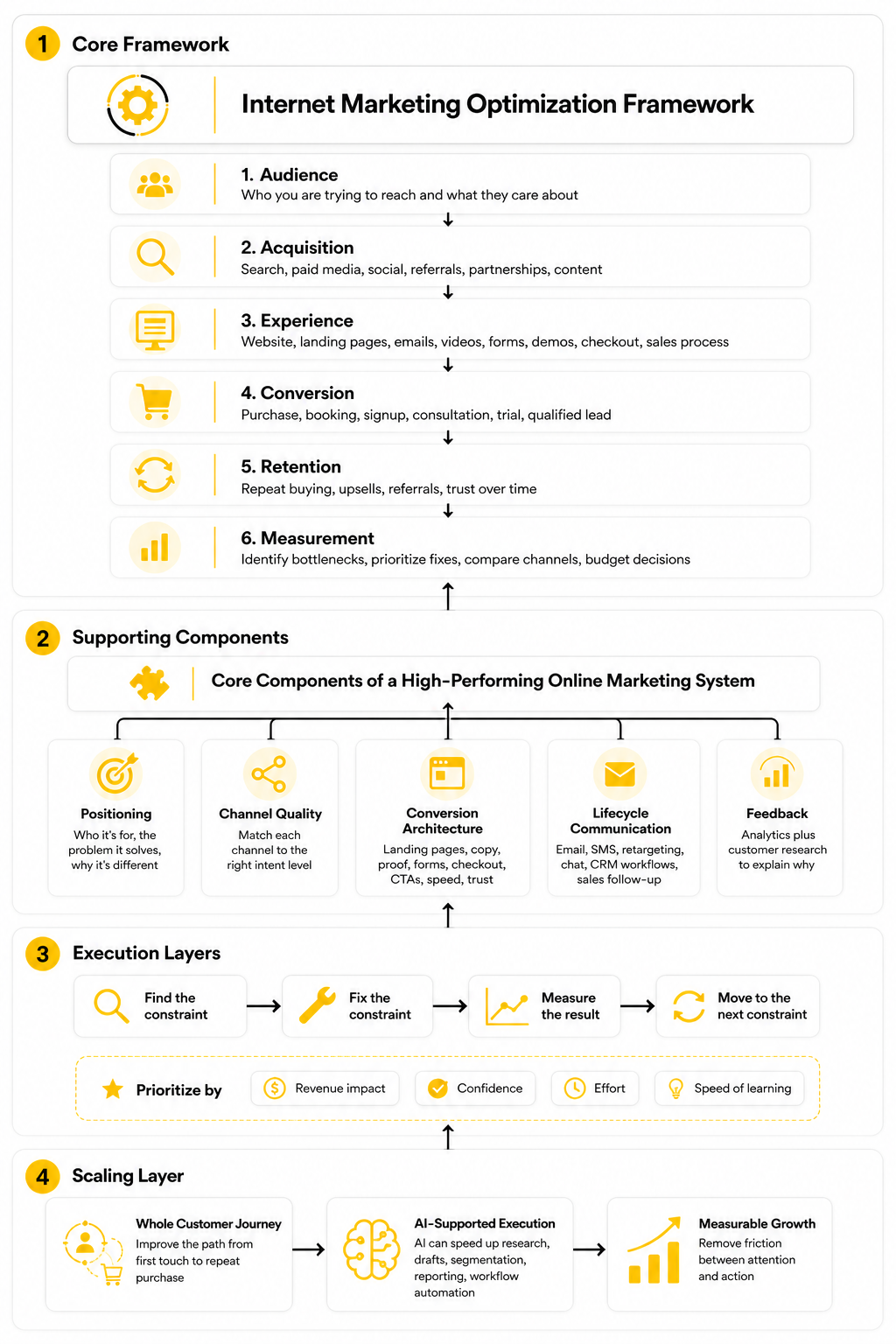
The right way to think about tools is simple: they should remove execution friction, improve data flow, or make the customer experience more relevant. They should not become the strategy. A funnel builder, CRM, email platform, chatbot, analytics tool, or AI assistant is only useful when it supports a clear growth process.
This part is where the article gets more advanced because the risks change as a system matures. Early on, the main challenge is getting the basics working. Later, the challenge becomes scaling without breaking trust, losing measurement clarity, over-automating the customer journey, or optimizing so narrowly that the brand becomes forgettable.
Do Not Automate a Broken Journey
Automation should make a working journey faster and more consistent. It should not be used to hide confusion. If a lead magnet attracts the wrong audience, an automated email sequence will not magically make those leads valuable. If the sales page overpromises, automated onboarding will not prevent disappointment after purchase.
Before adding automation, check the human version of the journey. Can you explain the offer clearly in a conversation? Do customers understand what happens after they sign up? Do leads ask the same questions because the page does not answer them? Do sales calls reveal objections that should have been handled earlier?
Once the journey works, automation becomes powerful. It can route leads, trigger reminders, segment contacts, personalize follow-up, recover abandoned carts, book appointments, send onboarding steps, and alert the team when a high-intent action happens. That is the point: automation should support better timing and relevance, not just more messages.
For service businesses and agencies, GoHighLevel can be useful when the priority is connecting forms, calendars, messaging, pipelines, automations, and follow-up in one operational system. For simpler funnel builds, Systeme.io can fit teams that want pages, email, and sales flows without making the stack too heavy. Choose based on the workflow you need, not because a feature list looks impressive.
AI Should Improve Decisions, Not Just Output Volume
AI has changed marketing execution because it can speed up research, content drafting, segmentation, reporting, creative variation, support workflows, and analysis. That does not mean the smartest move is to publish more of everything. More output can become a liability if it is generic, inaccurate, off-brand, or disconnected from real customer intent.
The strongest use of AI in internet marketing optimization is decision support. It can help summarize customer feedback, cluster objections, compare landing page versions, generate test hypotheses, identify content gaps, draft campaign variations, and turn messy data into clearer questions. McKinsey’s work on AI-powered customer experience argues that next-best-experience systems can improve satisfaction, revenue, and cost-to-serve when they are built around better decisions across the journey in its next-best-experience analysis.
The danger is using AI to create speed without judgment. If AI helps you produce 50 ad variations but none of them come from a strong customer insight, you have not improved strategy. You have only made weak execution faster.
Use AI where it improves learning speed, personalization, and operational consistency. Keep humans responsible for positioning, ethics, offer design, customer empathy, final claims, legal risk, and brand judgment. That split matters.
Personalization Has to Earn Trust
Personalization can improve performance when it helps people get a more relevant experience. It can also feel invasive when the customer does not understand why they are seeing something or how their data is being used. That trust line is getting more important as AI-driven targeting, dynamic content, and automated decisioning become more common.
McKinsey’s personalization framework emphasizes data, decisioning, design, distribution, and measurement as connected capabilities in its personalization research. That is a useful way to think because personalization is not just inserting a first name into an email. It is the ability to understand context and deliver the next useful message, offer, page, or action.
The tradeoff is control. The more personalized the journey becomes, the more carefully the business needs to manage data quality, consent, frequency, fairness, and message consistency. Bad personalization is worse than no personalization because it signals that the brand has data but does not understand the customer.
A practical rule works well here. Personalize when it helps the customer make progress. Do not personalize just because the technology allows it.
Privacy Is Now a Growth Constraint
Privacy is no longer just a compliance topic. It is a marketing performance issue. As tracking becomes more restricted and consumers become more aware of data use, businesses need cleaner consent, better first-party data, stronger server-side measurement where appropriate, and more realistic attribution expectations.
IAB’s State of Data 2025 work frames the current environment around AI, data, privacy, and measurement changes in its State of Data companion guide. The practical message is clear: marketing teams cannot rely forever on old tracking habits and fragmented third-party signals. They need systems that respect privacy while still helping the business make decisions.
This affects internet marketing optimization directly. If your tracking is incomplete, you may overvalue channels that are easier to measure and undervalue channels that influence demand earlier in the journey. If your consent experience is clumsy, you may damage trust before the relationship begins. If your customer data is messy, your segmentation and automation will be messy too.
The response is not panic. It is better data discipline. Collect what you need, explain why it helps, protect it, keep it clean, and use it to improve the customer experience rather than just squeeze more short-term conversions.
Attribution Will Never Be Perfect
Attribution is useful, but it is not a religion. It tries to answer a hard question: which touchpoints contributed to a conversion? The problem is that real buying journeys are messy, especially when people see ads, search the brand, read reviews, talk to friends, visit comparison pages, open emails, leave, return, and convert later.
The mistake is expecting attribution to deliver perfect truth. It will not. Platform attribution, last-click attribution, first-click attribution, media mix modeling, incrementality testing, and CRM reporting all show different angles of reality. Each has limitations.
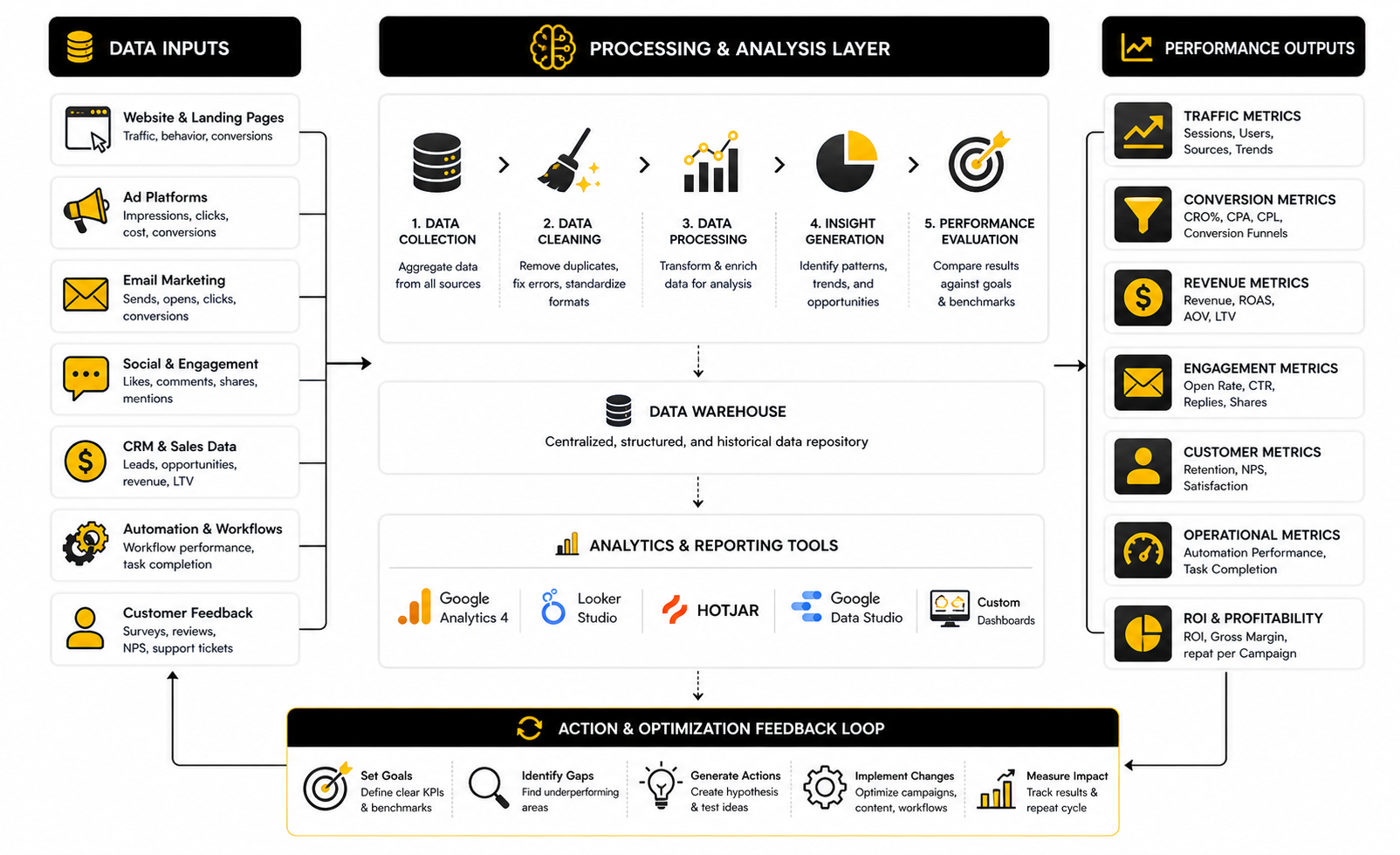
A more mature approach is to use attribution as one input among several. Look at platform data, analytics data, CRM data, customer surveys, search demand, sales feedback, and controlled tests. If several signals point in the same direction, you can make a better decision.
This matters when scaling. If you cut every channel that does not look good in last-click reporting, you may accidentally weaken the channels that create demand. If you trust ad platform attribution without checking customer quality, you may scale campaigns that look profitable but attract the wrong buyers. Optimization requires judgment, not blind dashboard obedience.
Brand and Performance Have to Work Together
Performance marketing is easier to measure in the short term, so it often gets more attention. Brand building is harder to attribute, so it often gets underfunded until acquisition becomes expensive and every competitor starts saying the same thing. That is a dangerous pattern.
Internet marketing optimization should not turn the brand into a conversion machine with no personality. If every page, ad, and email is stripped down to urgency, discounts, and direct response tricks, the business may get short-term lifts while weakening long-term trust. People remember clear positioning, distinct language, useful content, reliable experiences, and proof that feels real.
The balance depends on the stage of the business. A new offer may need more direct response because the immediate job is proving demand. A mature brand may need more differentiation, category authority, community, retention, and customer experience work. Both still need measurement, but they should not be measured with the same time horizon.
The best systems connect brand and performance. Brand creates memory, trust, and preference. Performance captures and converts demand. When they support each other, paid traffic gets easier, organic search gets stronger, referrals become more likely, and conversion work has a better foundation.
Scaling Makes Weaknesses Louder
Scaling does not fix a fragile system. It exposes it. If a funnel has weak economics, more spend will make the weakness more expensive. If onboarding is poor, more customers will create more churn and support load. If tracking is messy, more campaigns will make reporting more confusing.
Before scaling, check whether the unit economics make sense. You need to understand customer acquisition cost, gross margin, payback period, average order value, lifetime value, retention, refunds, and operational capacity. A campaign that looks good at low volume may become less efficient when the audience broadens or frequency rises.
Scaling also changes creative requirements. One winning ad angle rarely lasts forever. As volume increases, teams need more creative testing, stronger audience segmentation, better landing page alignment, and clearer budget rules. The goal is not just to spend more. The goal is to spend more without destroying efficiency.
This is where documentation from earlier optimization sprints becomes valuable. When you know which messages, offers, pages, segments, and follow-up paths have already worked, scaling becomes less chaotic. You are not guessing from scratch every time.
Advanced Segmentation Beats Generic Optimization
Generic optimization treats all visitors, leads, and customers the same. Advanced optimization looks for meaningful differences. A first-time visitor from organic search should not always see the same journey as a returning lead from an email campaign. A high-value customer should not receive the same retention flow as someone who bought once with a discount and disappeared.
Useful segmentation can be based on source, intent, behavior, purchase history, lifecycle stage, product interest, deal size, engagement, geography, company type, or problem category. The point is not to create endless segments. The point is to create segments that change what you do.
For example, a warm lead who visited the pricing page three times may deserve a different follow-up than a new subscriber who only downloaded a broad educational guide. A customer who purchased a complex product may need onboarding and success content, while a repeat buyer may respond better to replenishment reminders or loyalty offers. A prospect who clicked a comparison page may need proof, risk reversal, and direct objection handling.
Tools can support this, but the thinking comes first. Fillout can help collect cleaner lead and customer information through better forms. Cal.com can help reduce friction when booking is a key conversion step. Copper can support relationship tracking when sales follow-up and pipeline visibility matter. Use segmentation to make the journey more useful, not more complicated.
Creative Testing Needs a System
Creative is often the biggest lever in paid and organic distribution, but many teams treat it casually. They launch a few ads, keep the one with the lowest cost per click, and move on. That is not enough.
A better creative testing system separates the variables. Test angles, hooks, offers, proof points, formats, audiences, and landing page matches. Do not just ask which ad won. Ask why it won and what that says about the customer.
Creative data can reveal what people care about before they ever fill out a form. If one angle consistently gets qualified action, it may indicate a stronger pain point or buying trigger. If another angle gets cheap clicks but weak sales, it may be attracting curiosity instead of intent.
The lesson should feed back into the whole marketing system. Winning creative angles can improve landing page headlines, email subject lines, sales scripts, content topics, webinar positioning, and product messaging. This is how internet marketing optimization becomes more than channel management.
Content Should Support the Buying Journey
Content is not just for traffic. It should help people move from problem awareness to trust, comparison, decision, and success. When content is planned only around keyword volume, it often attracts visitors without giving them a clear path forward.
A stronger content system covers different levels of intent. Educational articles help people understand problems. Comparison content helps them evaluate options. Case-based content builds confidence. Product-led content explains how the solution works. Retention content helps customers get results after purchase.
The tradeoff is that not every content piece should be judged by immediate conversion. Some content builds trust before the buyer is ready. Some supports sales conversations. Some reduces support burden. Some attracts links or improves topical authority. The key is assigning each piece a job before judging whether it worked.
This is where internal linking, content upgrades, email capture, retargeting, and sales enablement matter. A useful article should not leave the reader stranded. It should naturally guide them to the next relevant step.
AI Search and Answer Engines Change the Optimization Game
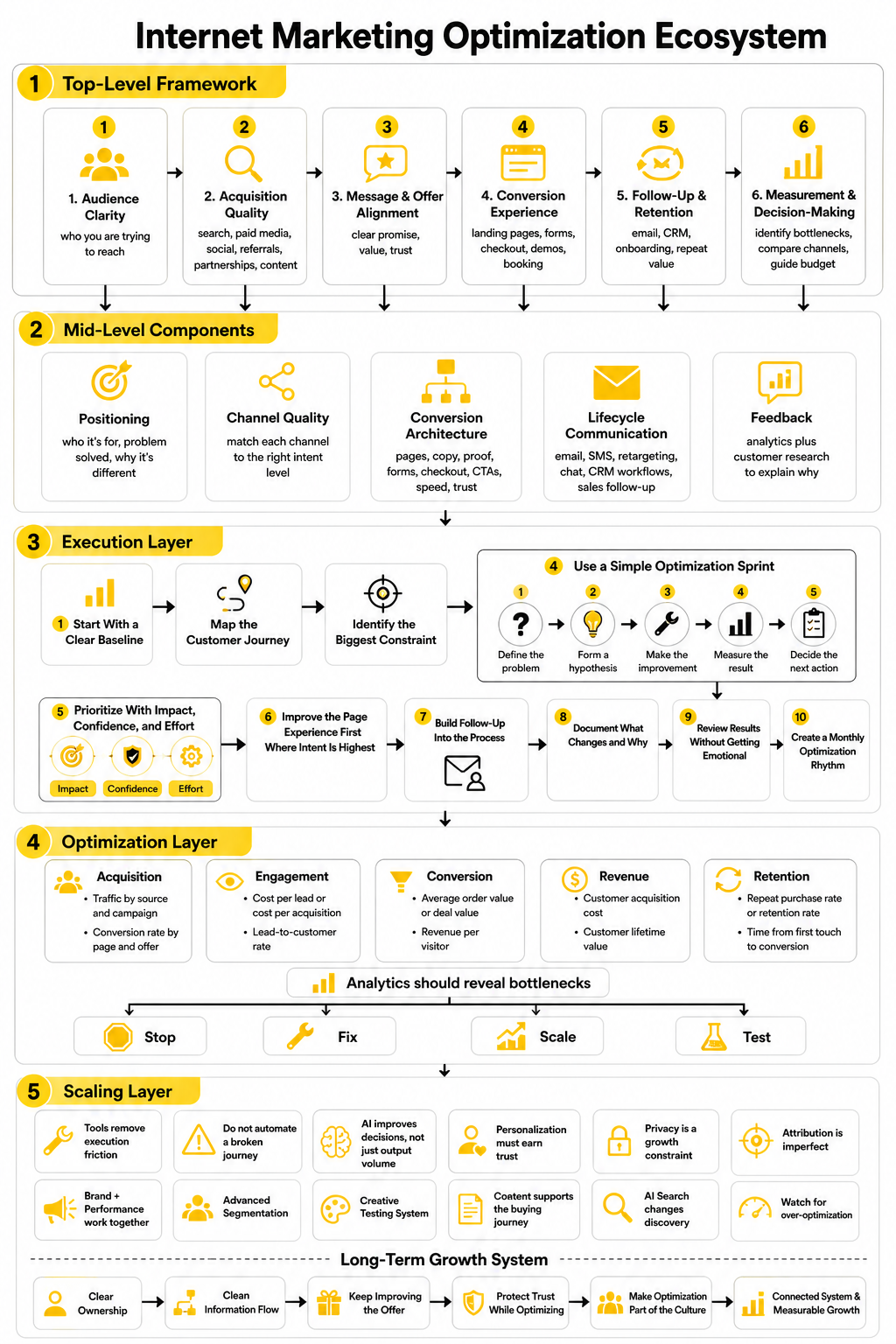
Search is changing as AI summaries, answer engines, and conversational discovery become more common. This does not make SEO irrelevant, but it does make shallow content less defensible. If your page only repeats obvious information, it becomes easier for an AI-generated answer to replace the click.
The response is to build content that deserves to be referenced, trusted, and acted on. That means clearer expertise, original insight, strong structure, useful comparisons, first-hand knowledge, transparent methodology, and pages that answer the real decision questions buyers have. Thin content is a weak asset in this environment.
Technical accessibility matters too. If your content, product data, documentation, or site structure is hard for systems to crawl and understand, you limit how discoverable and usable your information can become. Tools like Firecrawl can fit technical workflows where teams need cleaner web data extraction, crawling, or AI-ready content pipelines.
The strategic point is bigger than one tool. Optimization is moving from “rank and convert” toward “be discoverable, trustworthy, useful, and easy to act on across more surfaces.” That raises the bar.
Watch for Over-Optimization
Over-optimization happens when every decision is squeezed for short-term metrics while the customer experience gets worse. You see it in aggressive popups, misleading urgency, endless email pushes, cluttered landing pages, manipulative pricing, and retargeting that follows people long after interest has cooled. It may improve a metric temporarily, but it damages trust.
The warning sign is when the team celebrates a number while customers feel more friction. Higher email frequency may lift short-term revenue but increase unsubscribes and complaints. More form fields may improve qualification but reduce volume too much. A stronger scarcity message may lift conversions but create disappointment if it feels fake.
Optimization should make the buying process clearer, easier, and more persuasive. It should not trick people into decisions they regret. Sustainable performance comes from aligning the business goal with the customer’s progress.
That standard keeps the work grounded. If a tactic improves a dashboard while weakening trust, it is not a real win. It is borrowed performance.
The Expert Mindset
The expert mindset is not about knowing every tactic. It is about knowing what to ignore. There will always be a new platform, AI tool, growth hack, attribution model, funnel template, content trend, or automation feature promising a shortcut.
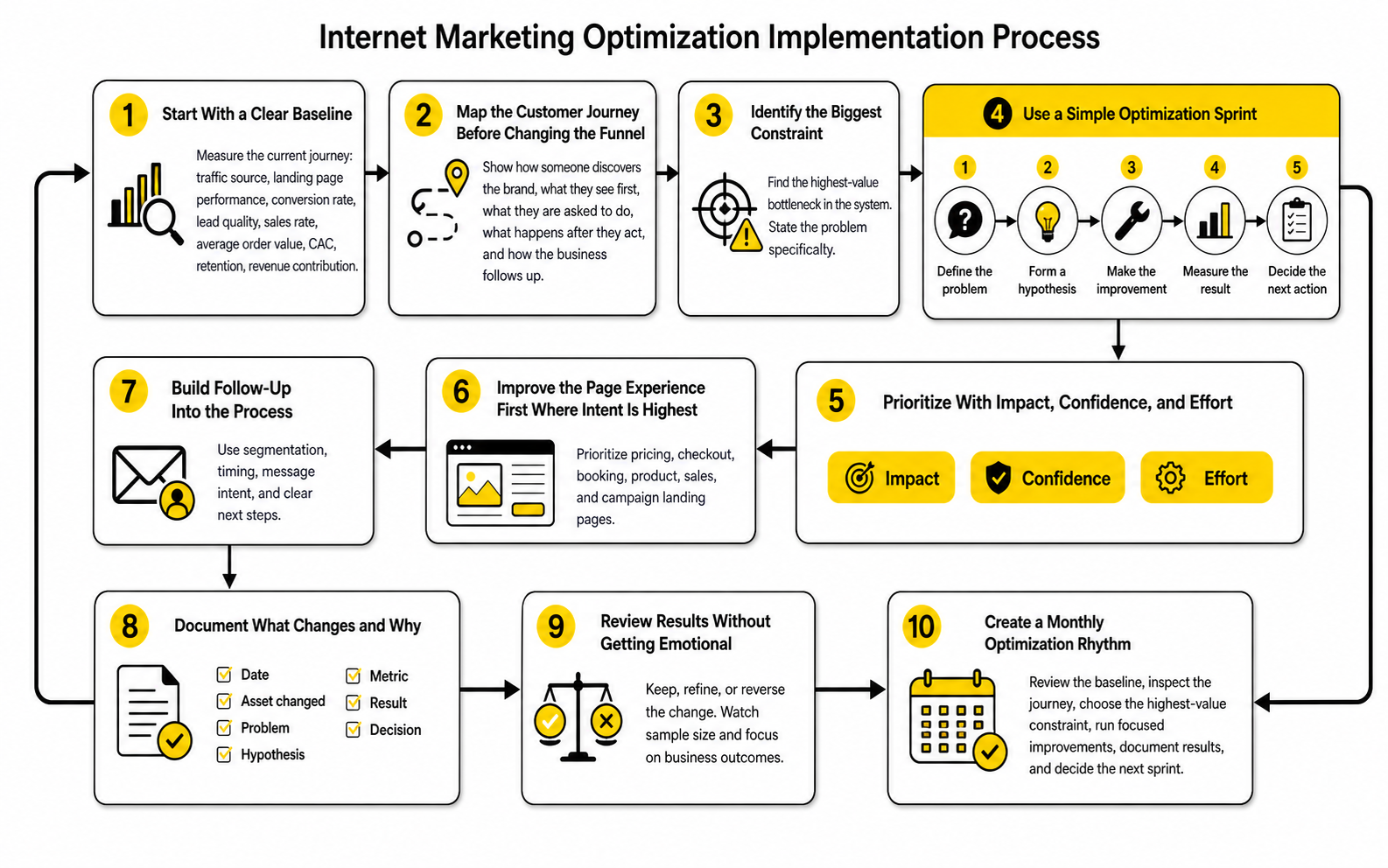
Most of it is noise until you know your constraint. If the constraint is offer clarity, fix the offer. If the constraint is traffic quality, fix targeting and channel fit. If the constraint is conversion friction, fix the page and action path. If the constraint is lead quality, fix qualification and source alignment. If the constraint is retention, fix onboarding, customer success, and lifecycle communication.
That is the discipline. Internet marketing optimization is not about doing everything. It is about improving the most important thing next, then repeating that process with better data, sharper judgment, and more respect for the customer journey.
Build a stronger local presence with BAAM AI
Turn your website, Google profile, social channels, and AI visibility into one growth engine
Most businesses do not need more random marketing activity. They need a consistent presence system that helps the right people find them, trust them, and take action. BAAM AI brings strategy, local SEO, website updates, Google Maps visibility, social content, AI-search readiness, media production, and reporting into one practical monthly engine.
If you want your marketing to keep working after the campaign ends, start with a free BAAM AI presence audit. See how your business shows up today and where the fastest visibility wins are at BAAM AI.