
BAAM AI Blog
The Revenue Architecture Behind High-Performing Email Programs
Once the foundation is clear, the next step is revenue architecture. This is where an advanced email marketing course moves from “email as communication” to “email as a business system.” The point is not to send more...
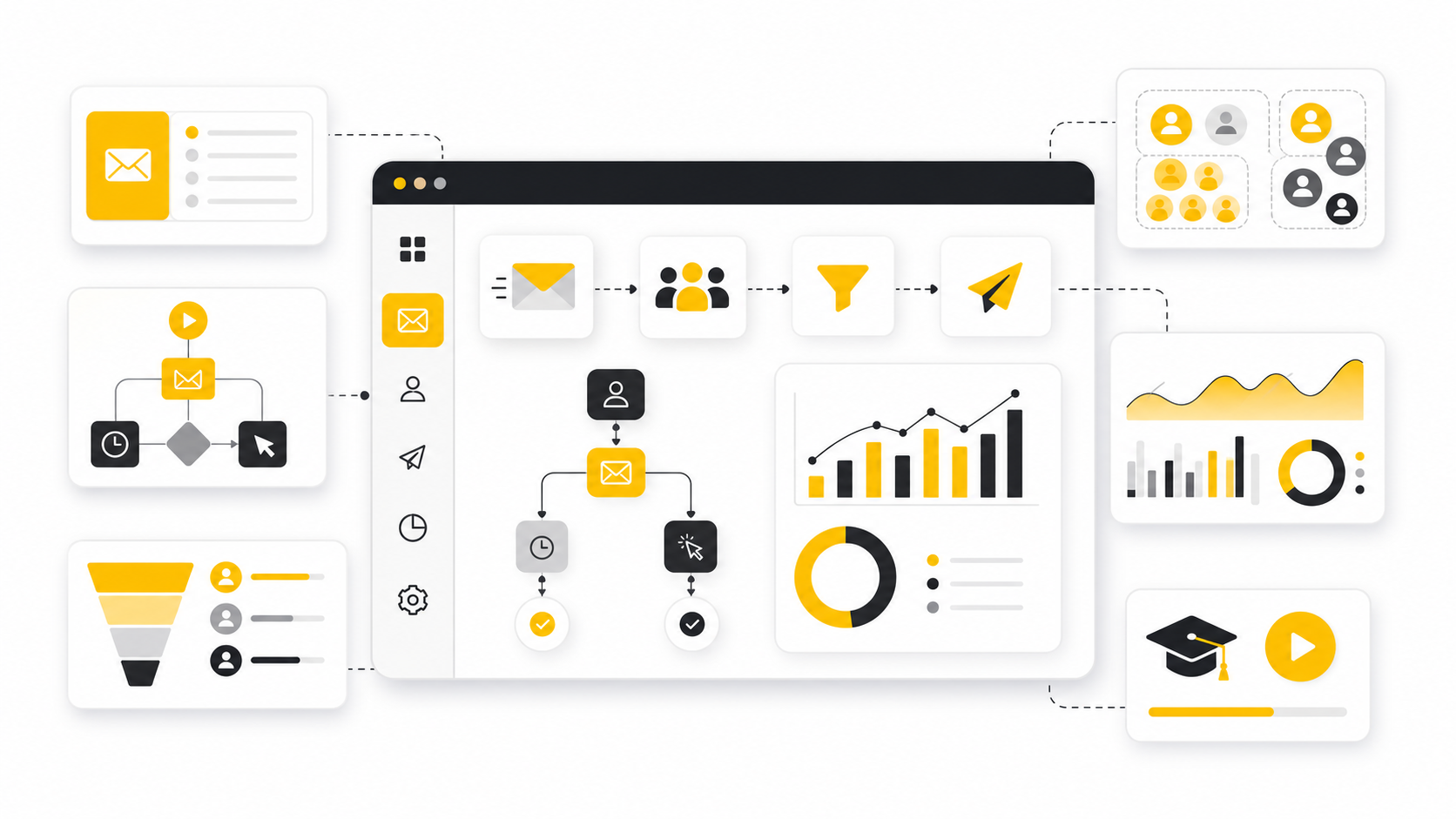
Once the foundation is clear, the next step is revenue architecture. This is where an advanced email marketing course moves from “email as communication” to “email as a business system.” The point is not to send more messages; the point is to connect customer intent with the right commercial path.
Revenue architecture starts by mapping how money actually moves through the business. For an ecommerce brand, that may mean first purchase, second purchase, replenishment, bundles, subscriptions, referrals, and winback. For a service business, it may mean lead capture, qualification, consultation booking, follow-up, sales pipeline movement, onboarding, and retention.
This is why email strategy should never begin inside the email editor. It begins with the business model. When you understand where revenue is created, where people hesitate, and where timing matters most, email becomes a lever instead of a loudspeaker.
Start With The Revenue Moments
Every serious email program has revenue moments. These are the points where a subscriber or customer is close enough to a decision that the right message can influence action. A welcome email, abandoned cart reminder, demo follow-up, renewal reminder, post-purchase education sequence, and reactivation campaign all exist because timing changes behavior.
The mistake is treating all subscribers as equal. Someone who downloaded a beginner checklist is not in the same place as someone who viewed pricing three times. Someone who bought yesterday does not need the same message as someone who has not opened or clicked in six months.
So the first job is to identify the moments that already exist in the customer journey. You are not inventing pressure. You are removing friction at the moments where the customer already has momentum.
A practical revenue map usually includes:
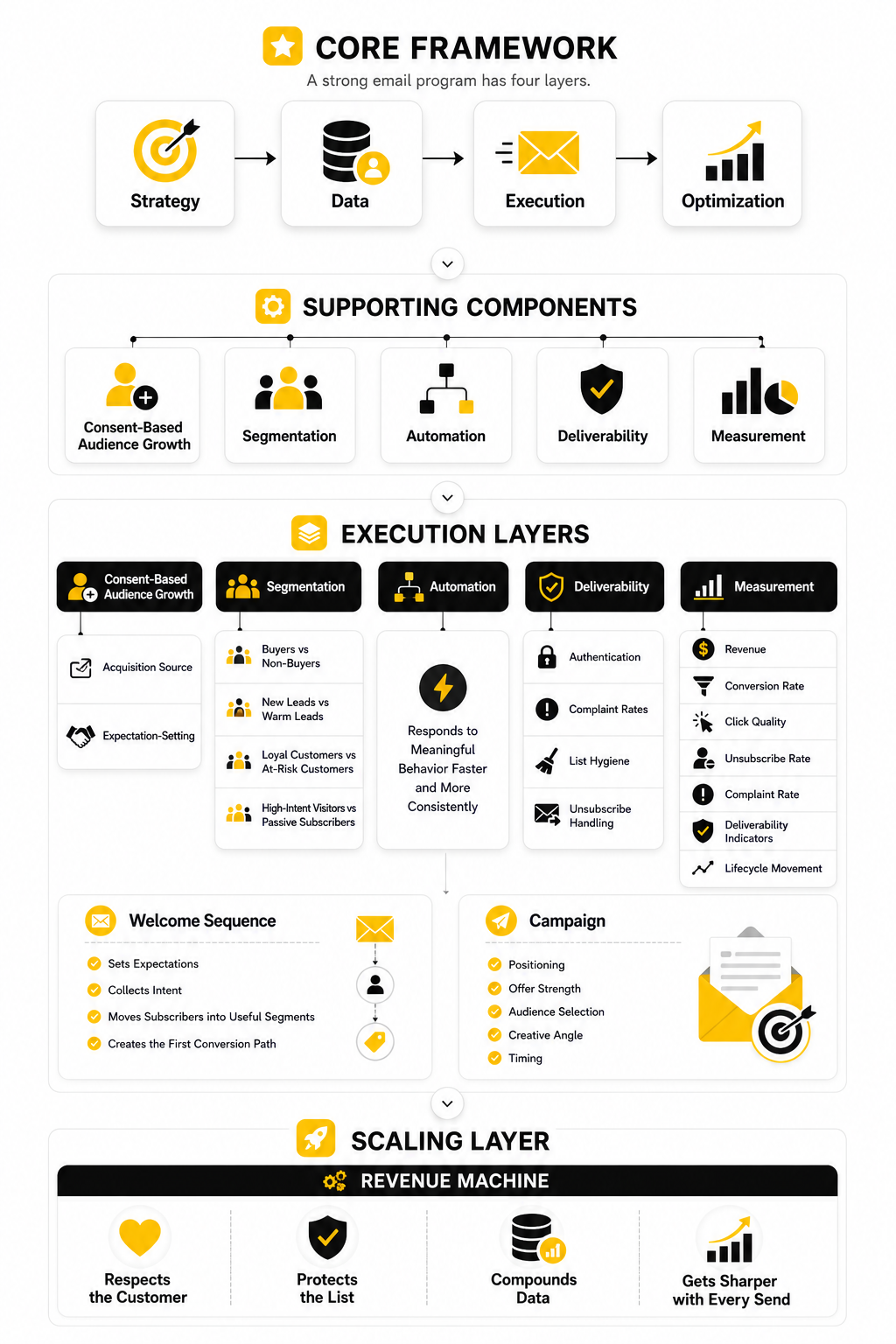
This is the part many marketers skip. They jump into copy, designs, and subject lines because those feel visible. But if the revenue moments are wrong, even excellent copy will be aimed at the wrong behavior.
Build The Funnel Before You Build The Campaign
Campaigns work better when they sit inside a clear funnel. That does not mean every business needs a complicated 37-step automation maze. It means each email should have a job that supports the next business action.
A lead capture page should create a clean reason to subscribe. A welcome sequence should explain the promise, build trust, and move the reader toward the next step. A sales sequence should handle objections, clarify value, and make the offer easy to act on.
This is where funnel tools can be useful, but only when the strategy is already clear. If you need a fast landing page and checkout path around an offer, ClickFunnels or Systeme.io can help you connect capture, email, and conversion without stitching together too many tools too early.
For agencies, coaches, local businesses, and sales-led funnels, the funnel often needs CRM visibility as much as email automation. A platform like GoHighLevel can make sense when the email program is connected to pipelines, appointment booking, SMS, reputation management, and client follow-up. Again, the tool is not the architecture; it is the place where the architecture gets executed.
Separate Broadcast Revenue From Lifecycle Revenue
A mature email program has two different revenue engines. Broadcast revenue comes from planned campaigns: product launches, promotions, announcements, newsletters, seasonal offers, and editorial emails. Lifecycle revenue comes from behavior-based automation: welcome, browse abandonment, cart abandonment, post-purchase, replenishment, upgrade, renewal, and winback flows.
You need both, but they do different jobs. Broadcast campaigns create timely spikes. Lifecycle automations create consistent capture of demand that would otherwise leak out of the business.
The distinction matters because automation usually reaches fewer people but at a much stronger moment of intent. Omnisend’s 2025 ecommerce data found that automated emails produced 37% of email sales from just 2% of email volume, while abandoned cart, welcome, and browse abandonment messages accounted for 87% of automated orders in its 2025 ecommerce marketing report. That is exactly why an advanced email marketing course should teach automation as revenue infrastructure, not as a convenience feature.
Broadcast campaigns should still have a clear place. They are useful for education, new offer awareness, demand creation, list activation, community building, and periodic selling. The problem starts when a business uses campaigns to compensate for missing lifecycle systems.
Design Offers Around Customer Readiness
A good email program does not push the same offer at every stage. It matches the offer to readiness. A cold lead may need clarity and trust, a warm lead may need proof and urgency, and an existing customer may need a logical next step.
This is where offer sequencing becomes important. You can think of the list in terms of temperature, not just demographics. Cold subscribers need orientation, active prospects need decision support, new buyers need onboarding, and loyal customers need expansion paths that feel natural.
The offer should not feel random. A subscriber who joined through an educational guide should be moved toward a related diagnostic, trial, webinar, consultation, or starter offer. A customer who bought a product should receive education that helps them use it, then a related offer that makes sense after that first win.
Strong offer architecture usually answers three questions:
When those answers are clear, email becomes much easier to write. You are no longer trying to persuade everyone from scratch. You are guiding different people toward the next reasonable step.
Connect Email To The Customer Data Layer
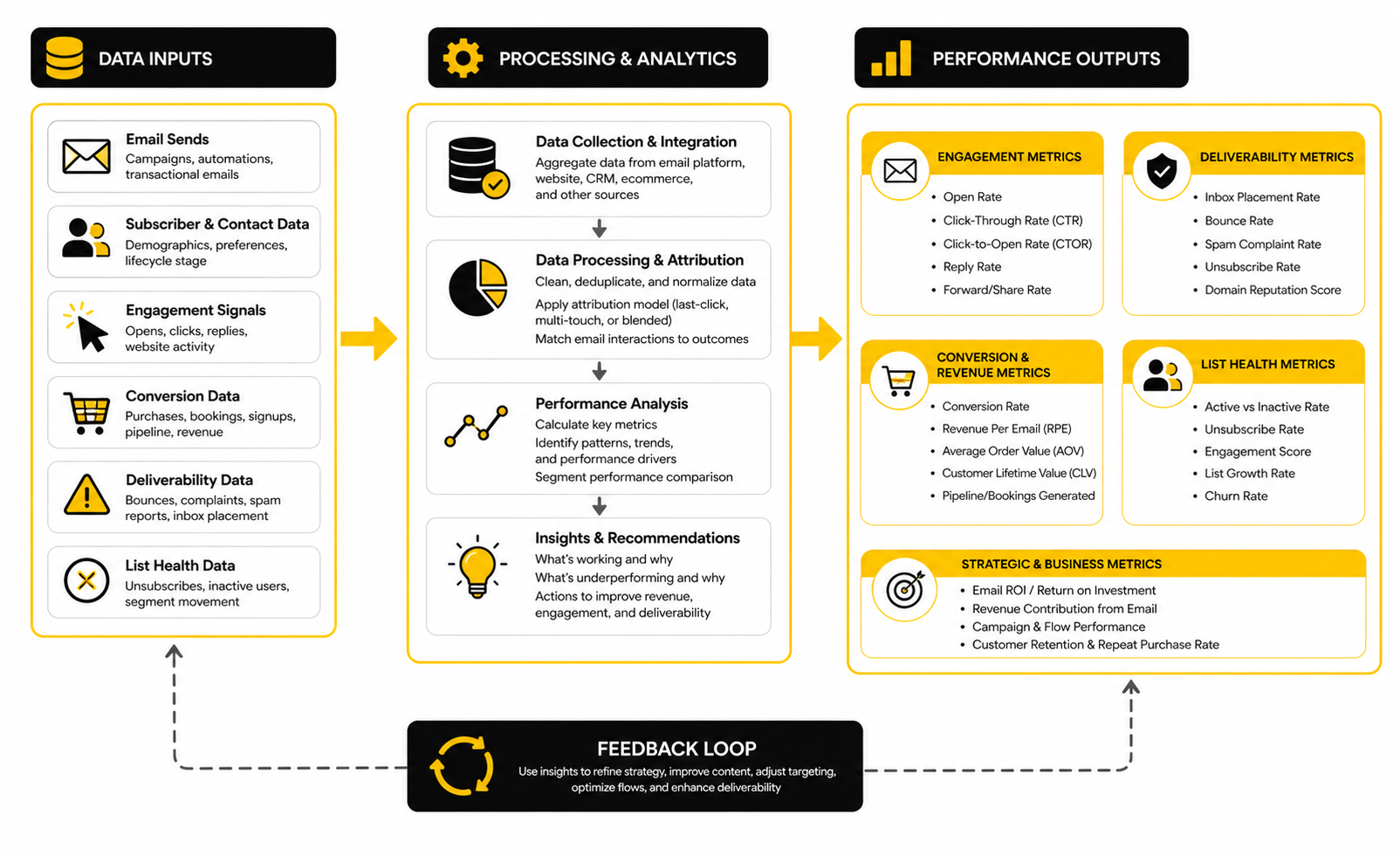
Revenue architecture depends on data quality. You cannot create advanced segmentation, meaningful personalization, or accurate lifecycle logic if your data is messy. That means your email platform needs useful signals from forms, purchases, product activity, CRM stages, bookings, support interactions, and preference data.
This is why advanced email marketers care about integrations. They want purchase history, lead source, average order value, product category interest, lifecycle stage, engagement behavior, and sales status to flow into the email system. Without that, personalization becomes cosmetic.
A platform like Brevo can be useful for businesses that want email, automation, transactional messaging, and CRM-style organization in one place. Moosend can fit teams that want accessible automation and campaign tools without overcomplicating the early build. The right choice depends less on feature lists and more on whether the platform can support the customer data your strategy actually needs.
The data layer should stay practical. You do not need hundreds of tags just because the platform allows them. You need the few signals that help you send better messages, suppress irrelevant messages, prioritize high-intent contacts, and measure real business movement.
Define The Primary Conversion Path
Every email program needs a primary conversion path. This is the main route from subscriber to customer, customer to repeat customer, or lead to sales opportunity. Without it, the list receives scattered content and the business receives scattered results.
For ecommerce, the primary path may be signup offer, welcome sequence, product discovery, first purchase, post-purchase education, second purchase, and loyalty. For B2B, it may be lead magnet, nurture sequence, problem education, proof, demo booking, sales follow-up, and onboarding. For creators or consultants, it may be free content, trust building, webinar or workshop, application, call, and close.
Once that path is defined, each email can be judged by its role. Does it move the reader forward? Does it reduce hesitation? Does it increase trust? Does it create a cleaner decision?
This discipline matters because not every email should sell directly. Some emails should educate, some should qualify, some should segment, some should invite replies, and some should make a clear offer. The architecture tells you which job matters most at each stage.
Use Metrics That Match The Revenue Role
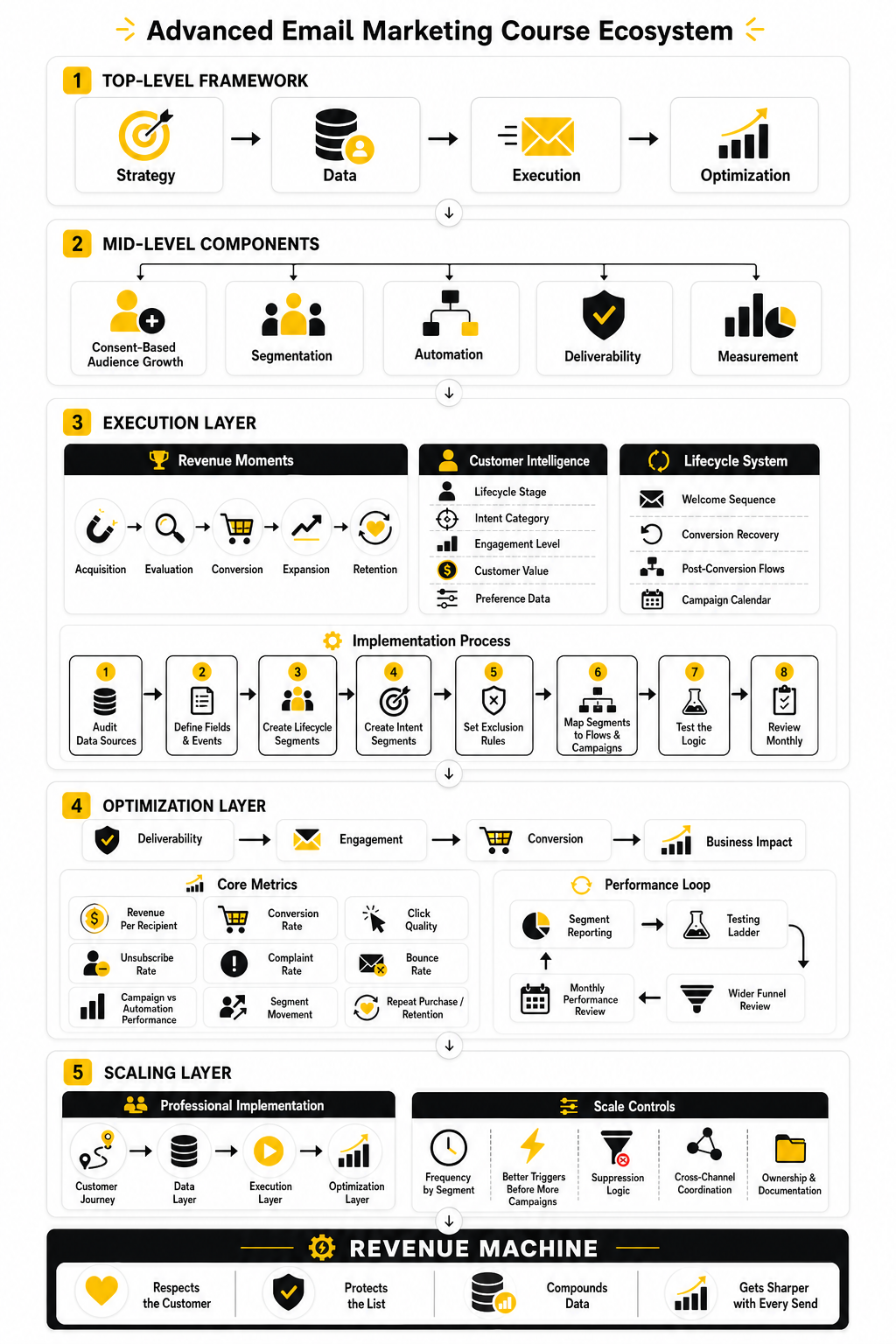
The metric should match the job of the email. A welcome email may be judged by click quality, preference capture, first purchase rate, or booked calls. A cart abandonment email should be judged by recovered orders, revenue per recipient, and unsubscribe or complaint behavior.
This is where many dashboards mislead people. Open rate can give a directional signal, but it should not be treated as the main truth. Klaviyo’s 2025 benchmark report notes that open rates are less reliable because Apple’s iOS privacy changes can inflate them, and it separates performance by message type so marketers do not compare a welcome flow to an abandoned cart flow as if they are the same thing in its 2025 benchmark report.
A better measurement model looks at the purpose of each flow and campaign. If the email is meant to sell, track revenue and conversion. If it is meant to qualify, track replies, form completions, sales-ready leads, or booked appointments.
The deeper point is simple: advanced email marketing is not about chasing pretty numbers. It is about knowing which numbers prove that the system is working. When you measure the right thing, optimization becomes focused instead of random.
Turn The Architecture Into A Working System
The best way to build the system is in layers. Start with the highest-leverage lifecycle flows, then add campaign planning, then improve segmentation, then refine testing and reporting. Trying to build everything at once usually creates a messy account that nobody wants to manage.
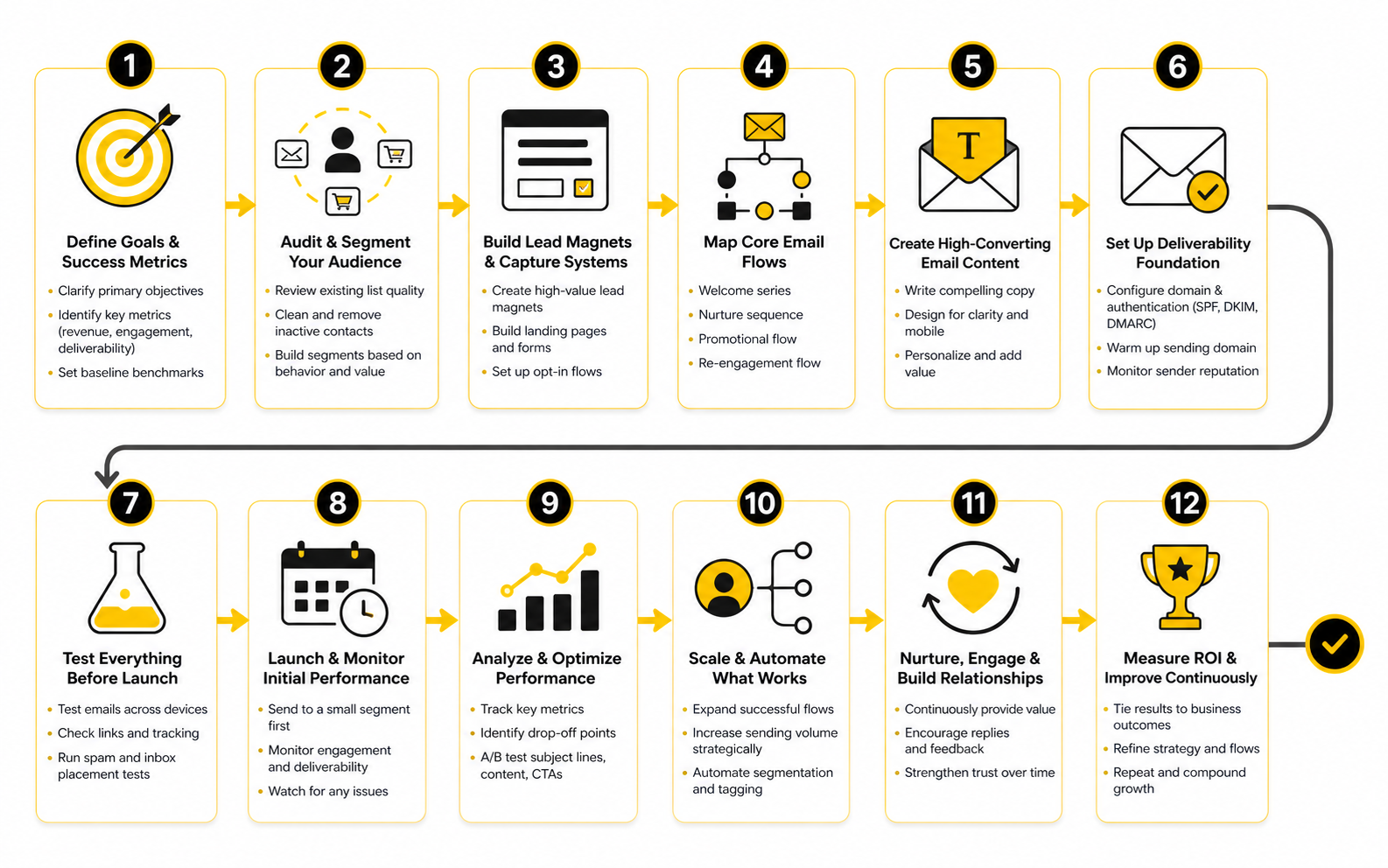
A practical build order usually looks like this:
This is where the work becomes real. You are no longer thinking in isolated emails. You are building a commercial engine where every flow, segment, campaign, offer, and metric has a job.
Build a stronger local presence with BAAM AI
Turn your website, Google profile, social channels, and AI visibility into one growth engine
Most businesses do not need more random marketing activity. They need a consistent presence system that helps the right people find them, trust them, and take action. BAAM AI brings strategy, local SEO, website updates, Google Maps visibility, social content, AI-search readiness, media production, and reporting into one practical monthly engine.
If you want your marketing to keep working after the campaign ends, start with a free BAAM AI presence audit. See how your business shows up today and where the fastest visibility wins are at BAAM AI.