
BAAM AI Blog
The Influence of Influencers on Modern Marketing
In the ever-evolving world of marketing, one of the most significant developments in recent years has been the rise of influencers. These individuals have become a dominant force in shaping consumer behavior and the...
The Influence of Influencers on Modern Marketing
In the ever-evolving world of marketing, one of the most significant developments in recent years has been the rise of influencers. These individuals have become a dominant force in shaping consumer behavior and the way brands communicate with their audiences. Whether through Instagram posts, YouTube videos, or TikTok challenges, influencers have demonstrated the power of personal connection in driving engagement and brand loyalty.
Defining the Influencer
At its core, an influencer is someone who has the ability to affect the purchasing decisions of others due to their authority, knowledge, position, or relationship with their audience. This influence can come in various forms, from celebrities with millions of followers to niche experts or everyday individuals who have cultivated a smaller but highly engaged following. Regardless of size, the key is their ability to reach and resonate with their audience, making them valuable partners for brands looking to tap into new markets.
Why Influencer Marketing Works
Influencer marketing works for several reasons, but one of the most compelling is the trust that influencers have built with their followers. In a world saturated with advertisements and sales pitches, consumers are increasingly skeptical of traditional marketing. However, when an influencer recommends a product or service, it feels more like a personal endorsement rather than a corporate push. This authenticity can drive higher conversion rates than traditional ads.
The value of influencer marketing is also amplified by the ability to create content that is both highly targeted and engaging. By collaborating with influencers who already cater to a specific demographic, brands can ensure that their message is reaching the right people in a format that resonates with them. This has proven to be far more effective than generic TV commercials or banner ads, which often fail to connect on a personal level.
Types of Influencers
Influencers come in many shapes and sizes. Broadly speaking, they can be categorized into several types based on their reach and expertise:
The Role of Social Media Platforms
Social media platforms have provided influencers with the tools to build their personal brands and connect with audiences on a global scale. Platforms like Instagram, YouTube, and TikTok have enabled influencers to create content that resonates deeply with their followers, whether it’s through photos, videos, or live streams. These platforms also provide analytics tools, allowing influencers to track engagement and tailor their content to the preferences of their audience.
For brands, these platforms offer unparalleled access to diverse consumer segments. By partnering with influencers on these platforms, brands can craft more personalized and engaging marketing campaigns that speak directly to their target audience’s interests and values. Social media’s interactive nature also allows influencers to maintain a continuous conversation with their followers, creating a level of engagement that traditional advertising simply cannot match.
Measuring the Effectiveness of Influencer Marketing
As with any marketing strategy, it’s essential to track the success of influencer campaigns. The effectiveness of influencer marketing can be measured through various key performance indicators (KPIs), including:
Brands can use these metrics to determine the ROI of their influencer partnerships and optimize future campaigns for better results. Many influencer marketing platforms also provide detailed analytics, making it easier to track these KPIs in real time.
Ethical Considerations in Influencer Marketing
While influencer marketing can be incredibly effective, it also raises ethical concerns. One of the main issues is transparency. It’s essential for influencers to disclose when a post is sponsored, ensuring that their followers are aware of the commercial nature of the content. Failure to do so can lead to distrust, which undermines the very authenticity that makes influencer marketing so powerful.
Additionally, there are concerns about the pressure influencers may feel to promote products that don’t align with their personal values or the interests of their followers. Ethical influencer marketing involves choosing partnerships that feel authentic and aligning with products that genuinely benefit the audience. Transparency and authenticity should always remain at the core of any influencer campaign.
The Future of Influencer Marketing
As influencer marketing continues to evolve, it’s clear that it’s here to stay. With the rise of new social media platforms and changes in consumer behavior, the landscape of influencer marketing will likely continue to shift. However, the fundamental principles will remain the same: influencer marketing works because it taps into the trust and authenticity that influencers have built with their audiences.
In the future, we can expect to see more advanced technologies, such as artificial intelligence and augmented reality, being incorporated into influencer campaigns. These tools will allow influencers to create even more immersive and personalized content, further blurring the lines between advertising and entertainment.
For brands, this means that influencer marketing will become an even more essential part of their overall marketing strategy. By partnering with the right influencers and leveraging the latest technologies, brands can continue to reach and engage their audiences in innovative and impactful ways.
Implementing an Influencer Marketing Strategy
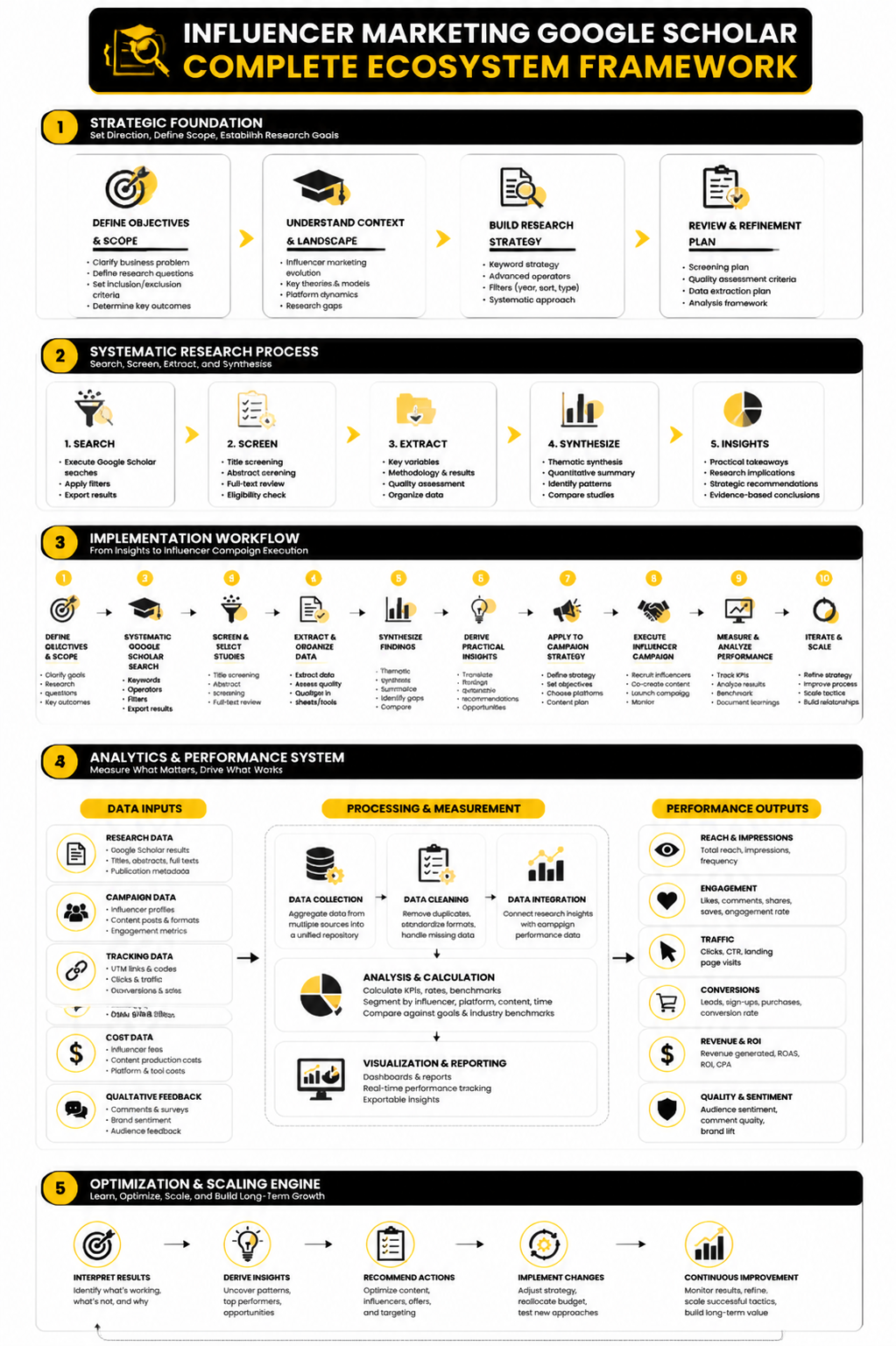
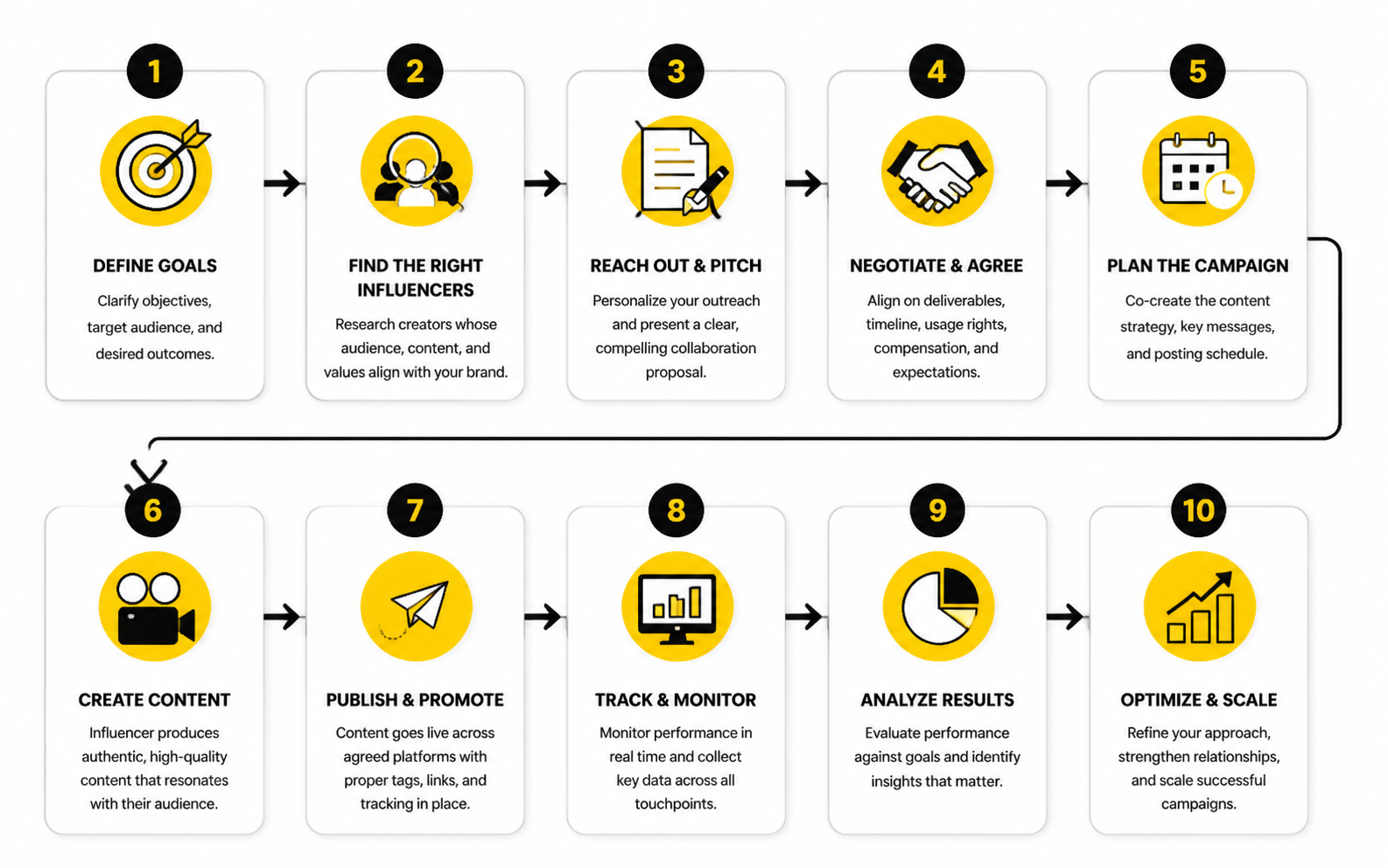
Once you’ve decided to integrate influencer marketing into your brand strategy, it’s time to move from theory to action. While the idea of working with influencers might seem straightforward, the process requires careful planning and execution to ensure its success. Here’s a step-by-step guide to help you implement an effective influencer marketing campaign.
Step 1: Define Your Goals and Objectives
Before reaching out to influencers, clearly define what you want to achieve with your campaign. Are you looking to increase brand awareness, drive traffic to your website, or boost sales? Your goals will dictate the type of influencer you should partner with and the type of content you need to create. For example, if your goal is brand awareness, you might focus on partnering with macro-influencers who have a broader reach. If you’re looking for conversions, micro-influencers or even nano-influencers might be more effective due to their highly engaged and loyal followings.
Step 2: Choose the Right Influencers
Selecting the right influencers is a crucial step. This process should go beyond looking at follower count. Instead, focus on finding influencers who align with your brand values and appeal to your target audience. Consider the following when choosing influencers:
The right influencer will have a natural connection with their followers, and their recommendations will be perceived as genuine. It’s also important to review past collaborations and see if their previous brand partnerships align with your campaign goals.
Step 3: Reach Out and Establish the Partnership
Once you’ve identified the right influencers, reach out with a personalized message. Acknowledge their work, explain why you think they’re a great fit for your brand, and outline the potential partnership. Be transparent about your goals and expectations, including deliverables, compensation, and timelines. Clear communication from the start will set the stage for a successful collaboration.
Many influencers also offer packages or media kits that provide details about their audience demographics, engagement rates, and past collaborations. Reviewing these materials can help you decide if they’re the right fit for your campaign.
Step 4: Co-Create Content
One of the keys to a successful influencer campaign is collaboration. While influencers are content creators, they know what resonates with their audience better than anyone. Allow them creative freedom to produce content that aligns with both your brand and their unique style.
Discuss ideas, themes, and messaging beforehand, but trust the influencer to inject their personality into the campaign. This will make the content feel authentic and natural. Whether it’s an Instagram post, a YouTube video, or a TikTok challenge, co-creating content ensures that it resonates with the influencer's followers while also promoting your brand’s message.
Step 5: Monitor the Campaign and Track Performance
Once the content is live, it’s time to monitor its performance. Keep an eye on key metrics such as engagement rate, website traffic, and conversion rates. Influencers usually provide detailed reports on how their posts are performing, but it’s also important for you to track these metrics on your end. Tools like Google Analytics, UTM parameters, and social media insights will help you measure the success of your influencer marketing campaign.
In addition to quantitative metrics, pay attention to qualitative feedback from the influencer’s followers. Are they leaving positive comments? Are they engaging with your product or service? These insights can help you refine future campaigns and strengthen your brand's relationship with influencers.
Step 6: Adjust and Optimize for Future Campaigns
Once you’ve gathered data from your campaign, assess what worked and what didn’t. Were your goals met? Did the influencers you chose resonate with your target audience? Use this data to optimize future campaigns. Maybe your audience responded better to Instagram Stories than YouTube videos, or perhaps a particular influencer generated higher engagement rates than others. Adjust your strategy to continuously improve and scale your influencer marketing efforts.
Influencer marketing is not a one-size-fits-all approach. It requires flexibility and a willingness to test, learn, and adapt. With each campaign, you’ll refine your strategy and get closer to building more meaningful, lasting relationships with both influencers and their audiences.
Statistics and Data: Measuring the Success of Influencer Marketing
To truly gauge the success of an influencer marketing campaign, it's essential to leverage data and analytics. While influencer marketing can feel like an art form, measuring its impact requires a solid understanding of key metrics and performance signals. These numbers are not just vanity metrics but serve as the foundation for refining and optimizing future campaigns.
Key Performance Indicators (KPIs) for Influencer Marketing
When working with influencers, there are several metrics you should track to determine the effectiveness of your campaign. Here’s a breakdown of the key performance indicators (KPIs) you should focus on:
Engagement rate refers to the level of interaction (likes, comments, shares) that the influencer's content receives in relation to their follower count. A higher engagement rate generally indicates that the influencer’s followers are actively interested in their content and more likely to take action based on their recommendations. A good engagement rate can vary depending on the platform, but typically, a rate of 1-3% is considered healthy on Instagram. However, a lower engagement rate can still be acceptable if the influencer has a highly-targeted, niche audience.
Reach measures the total number of unique people who have seen the influencer's content. Impressions, on the other hand, refer to the total number of times the content has been displayed. These metrics are useful for understanding the overall visibility of your campaign and how far your brand message has spread. A high reach number indicates that your campaign is reaching a broad audience, while impressions show how often your content is being viewed, whether by the same individuals or different ones. Both metrics are crucial for brand awareness goals.
Conversions track the number of people who take a specific action after seeing the influencer’s content, such as purchasing a product, signing up for a newsletter, or downloading an app. The click-through rate (CTR) measures how many people clicked on a link in the influencer’s post. This is one of the most important metrics when your goal is to drive traffic or sales directly from influencer content. For a campaign to be successful in terms of conversions, it’s essential that your influencer’s audience matches your target customer demographic, and that the content they produce clearly communicates the benefits of your product or service.
Sentiment analysis is the process of evaluating the tone and context of comments or feedback on the influencer’s posts. Positive sentiment is a clear indication that the influencer’s audience resonates with your brand, while negative sentiment could suggest a mismatch between the influencer’s values and your brand. By analyzing sentiment, you can gain deeper insights into how well your campaign is being received, allowing you to adjust your messaging or approach if necessary.
ROI is the most comprehensive measure of an influencer marketing campaign’s effectiveness. It compares the revenue generated by the campaign to the amount spent on it. A high ROI means that your investment in the influencer was well worth it, while a low ROI could indicate that the partnership did not produce the expected results. Calculating ROI can be tricky because influencer marketing campaigns often drive indirect benefits like brand awareness and long-term loyalty, which are harder to quantify. However, by setting clear goals and tracking key metrics like conversions and CTR, you can get a good sense of whether your investment paid off.
Using Data to Optimize Future Campaigns
The numbers tell you where you stand, but they can also guide your future actions. When analyzing the data from your influencer marketing campaigns, consider these next steps:
By closely monitoring data and continuously refining your strategy, you can ensure that your influencer marketing efforts remain effective and profitable.
Advanced Considerations and Strategic Trade-offs in Influencer Marketing
As you scale your influencer marketing efforts, the complexity and sophistication of your strategy will naturally increase. Understanding advanced considerations and strategic trade-offs is essential for optimizing your influencer campaigns and ensuring long-term success. Let’s dive deeper into the aspects of scaling, risk management, and expert-level guidance.
Scaling Influencer Marketing Campaigns
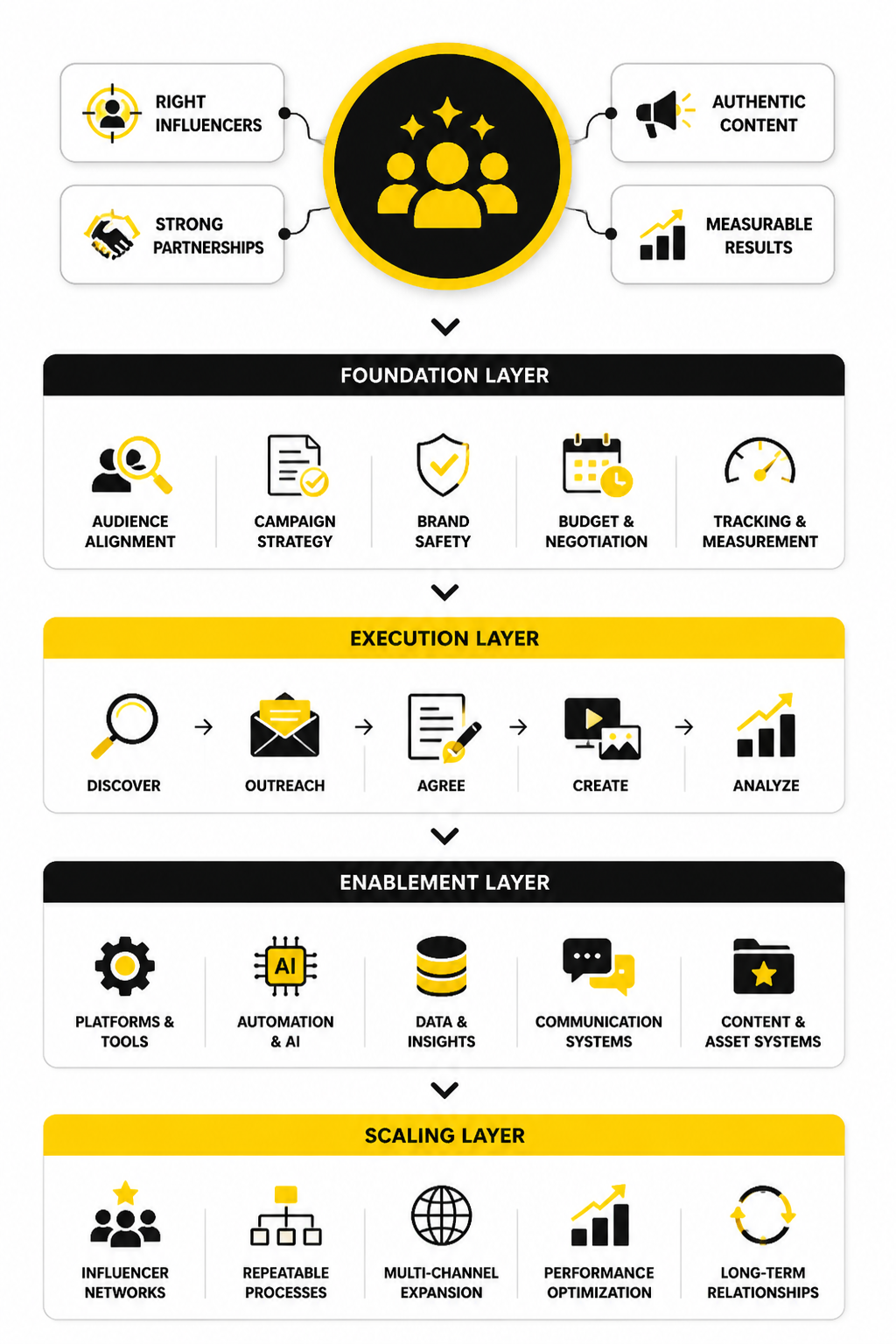
Scaling your influencer marketing strategy can be both exciting and challenging. The key to success lies in strategically expanding your efforts while maintaining quality and authenticity. Here’s how to scale effectively:
Initially, you may work with a small number of influencers to maintain tight control over your brand messaging. As you scale, it’s crucial to diversify the types of influencers you work with. This could include partnering with micro, macro, and even nano-influencers to access different segments of your target audience. The beauty of influencer marketing is that it allows for hyper-targeted campaigns, which can be scaled by adding influencers from various niches.
Many influencers work with talent agencies or have established partnerships with networks of influencers. Partnering with these networks allows you to reach multiple influencers at once, saving time and effort on negotiations and outreach. Networks also bring added value by managing relationships, ensuring content quality, and providing detailed reports on campaign performance.
As you expand, consider creating templated approaches for different influencer collaborations. This could include standardized contracts, content guidelines, and campaign briefings. Streamlining these processes will allow you to scale without sacrificing the quality or consistency of your campaigns. Automation tools can also play a significant role in managing multiple influencers and tracking campaign performance.
Risks and Challenges in Influencer Marketing
Like any marketing strategy, influencer marketing comes with its risks. Recognizing and mitigating these risks can help prevent costly mistakes and protect your brand's reputation.
While it can be tempting to invest heavily in a single influencer with a massive following, this can be risky. If something goes wrong with that influencer—whether it’s a public scandal, a sudden loss of credibility, or a change in audience dynamics—your brand may suffer significant fallout. It’s wise to work with multiple influencers across different tiers to spread the risk.
One of the most significant risks is partnering with influencers whose personal brand or values clash with yours. If an influencer promotes products or services that are controversial, or if their actions or opinions don't align with your brand ethos, it can lead to negative associations. Always vet influencers thoroughly and ensure that their persona and actions align with your brand values.
The rise of influencer marketing has also led to the emergence of fake followers and inflated engagement stats. Some influencers might buy followers or use bots to boost engagement metrics. This can lead to wasted marketing dollars. It’s essential to verify an influencer’s audience authenticity through analytics tools that can detect suspicious activity or unusual patterns in follower growth.
Optimizing for Long-Term Success
While influencer marketing can provide quick wins, the most successful brands use it as part of a long-term strategy. Here’s how to optimize for sustained growth:
Don’t view influencers as just a one-time tool for promotion. Building long-term relationships with influencers can lead to more authentic content and stronger brand loyalty. Establishing a continuous partnership allows influencers to create deeper connections with their audience, which translates into better results for your brand.
The data from your campaigns is invaluable for refining your strategy. As you scale your efforts, continually analyze your performance metrics to determine what’s working and what’s not. Are certain influencers driving better engagement or sales? Are specific content types or platforms performing better? Adjust your strategy based on these insights for more effective campaigns moving forward.
Social media platforms evolve rapidly, and new trends or features can have a significant impact on influencer marketing. For example, TikTok’s rise has shifted the way brands approach video content. Keeping a close eye on emerging platforms and adapting your influencer strategy accordingly will keep you ahead of the curve.
Expert-Level Guidance for Influencer Campaigns
Micro-influencers often have smaller followings, but their audiences tend to be more engaged and loyal. Working with multiple micro-influencers can be more beneficial than a few macro-influencers, especially when aiming for long-term brand awareness and customer loyalty. The ROI may be higher, and the partnerships are typically more cost-effective.
Encouraging influencers to create user-generated content (UGC) can give your brand a more authentic voice. UGC doesn’t just boost trust; it also extends your content library for future use. Always ensure that UGC is repurposed effectively across your own marketing channels, such as email campaigns and social media, for maximum impact.
Influencers today operate on multiple platforms, from YouTube to Instagram to TikTok. When scaling, ensure that you’re not limiting your campaigns to a single platform. Cross-channel campaigns allow you to reach different audience segments and create a more comprehensive brand presence. Be sure to adapt your content for each platform’s unique format and audience.
By implementing these advanced strategies and considering the risks, trade-offs, and opportunities, you’ll be able to scale your influencer marketing efforts successfully. The key is to remain adaptable, continuously monitor performance, and maintain strong relationships with the influencers you work with.
Influencer marketing is a strategy where brands partner with individuals who have a significant following on social media or other platforms. These influencers promote the brand’s products or services to their audience, leveraging trust and authority to drive engagement, awareness, and sales.
Choose an influencer whose audience aligns with your target market. Consider factors like their niche, engagement rates, and authenticity. It's important to ensure the influencer’s values and content style resonate with your brand’s mission.
Engagement rate measures how actively an influencer’s audience interacts with their content. High engagement often translates to more meaningful connections with followers, leading to better conversion rates for campaigns.
Track key performance indicators (KPIs) such as engagement rate, reach, conversions, click-through rate (CTR), and ROI. These metrics provide insights into how well the influencer’s content is performing and whether your campaign objectives are being met.
Risks include working with influencers whose values don’t align with your brand, dealing with fake followers or engagement, and over-relying on a single influencer. It’s essential to vet influencers carefully and maintain diversity in your partnerships.
To scale, diversify your influencer portfolio, work with influencer networks, and streamline campaign processes. Use data from previous campaigns to refine your strategy and expand across multiple platforms for broader reach.
Authenticity is key to maintaining trust with an influencer’s audience. Audiences can spot insincerity, so it's crucial that influencers promote products or services they genuinely believe in. Authentic endorsements are more likely to lead to higher engagement and conversions.
ROI can be measured by comparing the revenue generated from the campaign to the costs of working with influencers. Track metrics like conversions, sales, and traffic to determine the effectiveness of the campaign and whether the investment was worth it.
Yes, influencer marketing is highly effective for small businesses, especially when working with micro and nano-influencers. These influencers often have niche audiences and can generate highly engaged leads at a lower cost compared to mega-influencers.
Build a stronger local presence with BAAM AI
Turn your website, Google profile, social channels, and AI visibility into one growth engine
Most businesses do not need more random marketing activity. They need a consistent presence system that helps the right people find them, trust them, and take action. BAAM AI brings strategy, local SEO, website updates, Google Maps visibility, social content, AI-search readiness, media production, and reporting into one practical monthly engine.
If you want your marketing to keep working after the campaign ends, start with a free BAAM AI presence audit. See how your business shows up today and where the fastest visibility wins are at BAAM AI.