
BAAM AI Blog
The Biggest Social Media Companies in the World
Social media isn’t just part of how we stay in touch - it’s become one of the most powerful forces in communication, business, politics, and culture globally. In 2026, a handful of companies control platforms that...
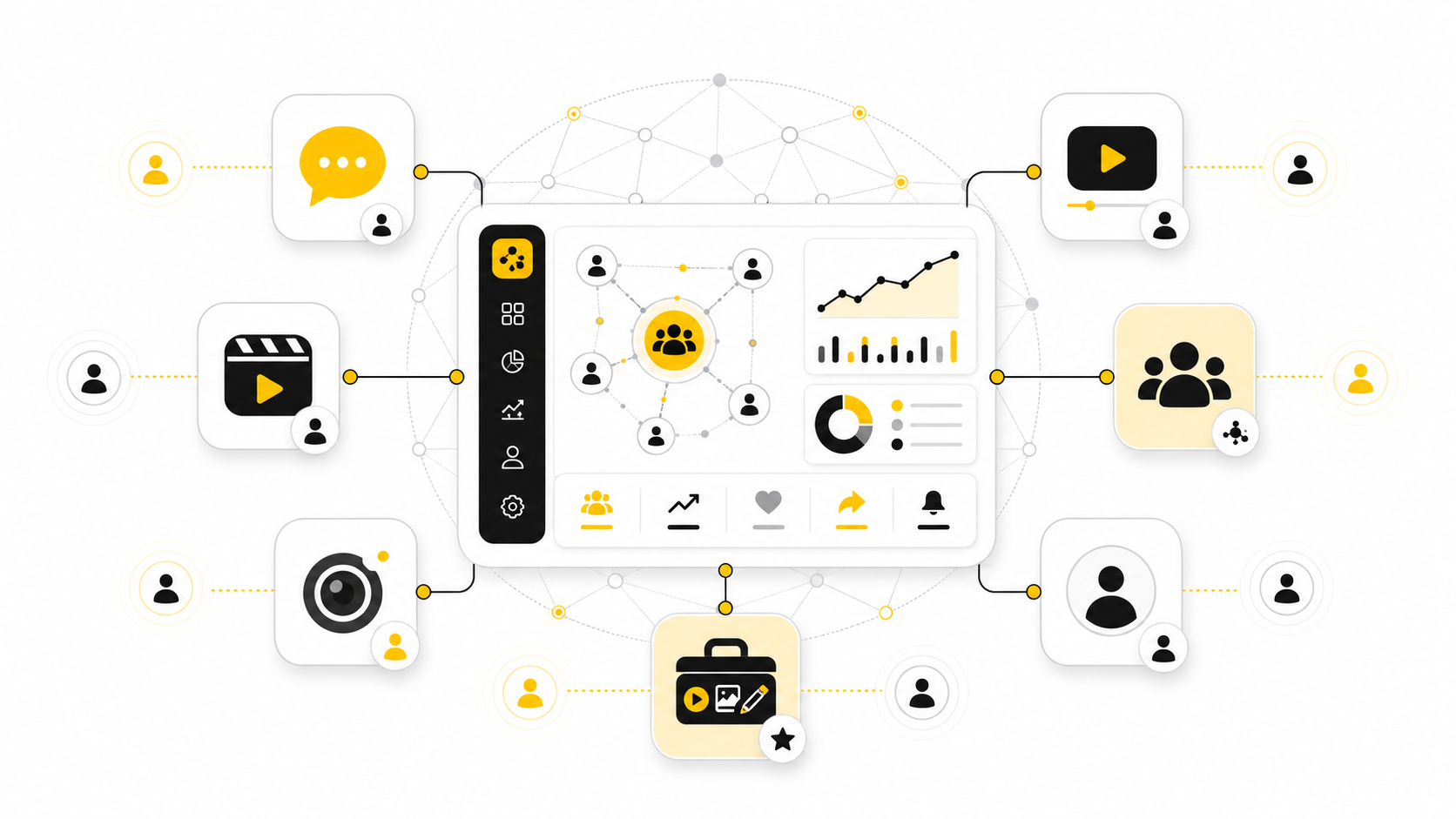
Social media isn’t just part of how we stay in touch - it’s become one of the most powerful forces in communication, business, politics, and culture globally. In 2026, a handful of companies control platforms that reach billions of people every month, influence trends, and generate massive advertising revenue. Understanding who the biggest players are - and what makes them dominant - helps marketers, creators, and businesses make better strategic decisions.
Here’s how we’ll break down this guide:
Why This Topic Matters
Social media platforms now reach more than half of the global population, with an estimated 5.66 billion people using social media in 2026. That’s roughly 69 % of the world’s population engaging with platforms every month, from personal communication to public discourse, entertainment, and commerce.
The size and reach of these companies mean they don’t just influence how we connect with friends - they shape global culture, economics, and even politics. Platforms like Facebook, YouTube, Instagram, and TikTok are central to brand strategies, news distribution, and social movements around the world.
Because of their scale, the companies behind these platforms - not just the apps themselves - are important to understand for anyone building a digital presence.
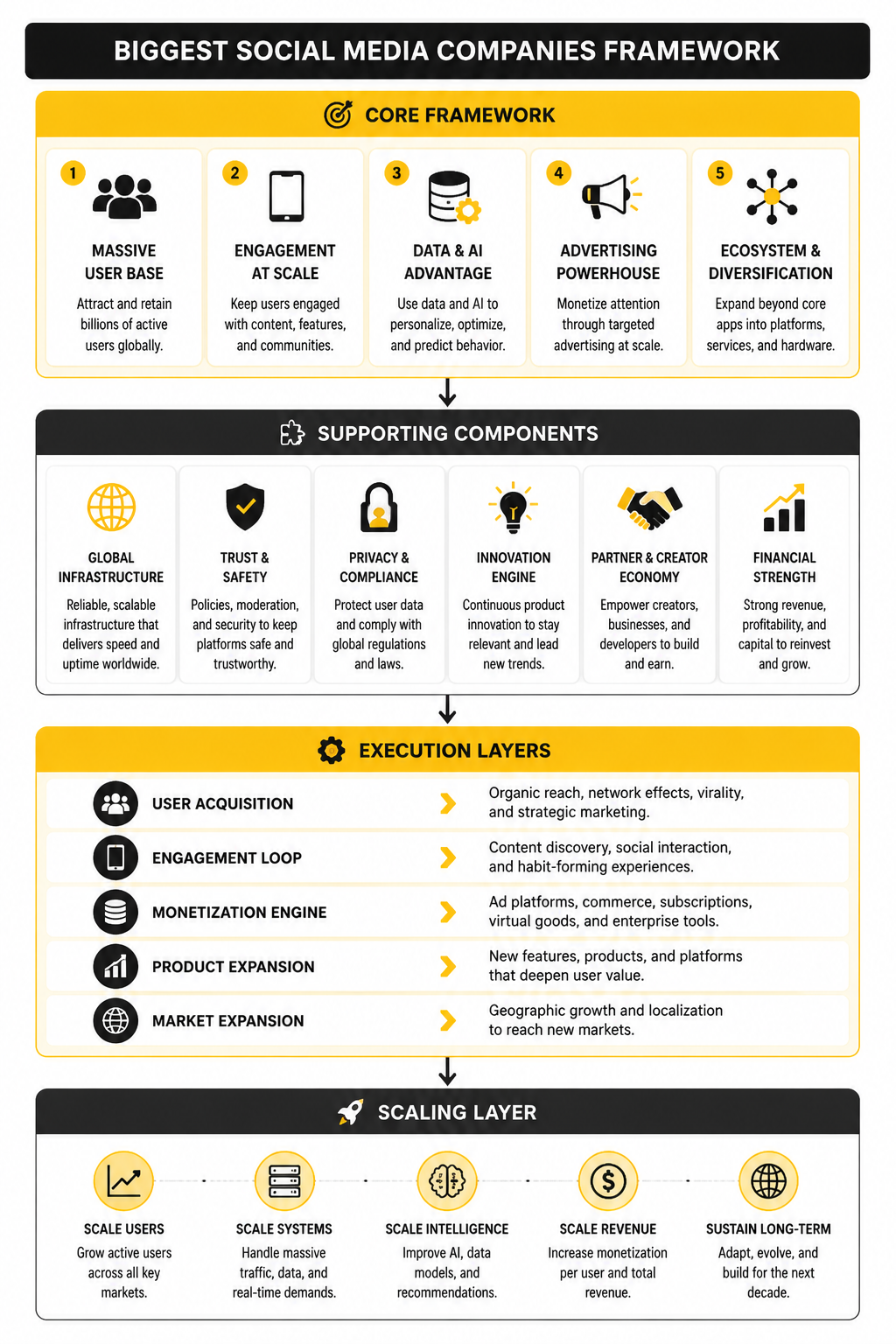
Overview of the Largest Social Media Platforms
When we talk about the biggest social media companies, the most common measure is monthly active users (MAUs) - how many unique people engage on a platform in a 30‑day period. In 2026, the leading platforms include:
Collectively, these platforms reach well over 10 billion accounts, because many users maintain presence on multiple services.
How These Companies Make Money
The business models behind these giants are different, but most rely heavily on advertising revenue:
Some companies also experiment with subscriptions, tipping, creator monetisation tools, and commerce features as additional revenue streams.
User Growth and Engagement Trends
Several trends are shaping how people use social media:
Growth varies by region and age group, but in most markets, users spend hours per day across multiple platforms.
Challenges Facing the Biggest Players
Despite their size, these companies confront several headwinds:
These pressures influence product strategy and long‑term growth prospects.
Future Outlook for Social Media Giants
Looking ahead, social media’s biggest companies are investing heavily in AI‑driven experiences, creator monetisation, live commerce, and immersive formats. The platforms that succeed will be those that adapt to changing user behaviour while maintaining trust, safety, and global relevance.
For brands and individuals alike, staying informed about these companies - not just individual apps - will be essential as social media continues to evolve how we communicate and do business online.
How These Companies Make Money
The biggest social media companies all turn users and engagement into revenue, but they do it in slightly different ways depending on their audience and strengths. At the core of most business models is advertising - platforms sell space to brands who want to reach specific audiences.
For example, Meta Platforms (Facebook, Instagram, WhatsApp, Messenger) earns nearly all of its revenue from advertising across its “Family of Apps,” with about 98 % of total revenue derived from ads in 2025. Most of this comes from ad placements in feeds, stories, reels, and messaging surfaces that reach billions of users globally, and this revenue scale makes Meta one of the largest players in digital advertising overall.
Other platforms use hybrid models. YouTube’s revenue includes traditional video ads as well as significant income from subscriptions such as YouTube Premium and other paid services, contributing to total projected revenue that could rival major entertainment providers.
TikTok’s monetization focuses primarily on ads but also leverages commerce features like in‑app shopping and creator partnerships that take a cut of transactions.
Meanwhile, some companies are experimenting with subscriptions and creator tools as additional revenue streams. Platforms such as Snapchat have introduced Snapchat+ paid tiers, and others provide tipping, memberships, and premium features to give users and creators more ways to pay.
Across these models, the common thread is turning attention and engagement into predictable revenue - whether by selling impressions, fostering commerce, or offering paid benefits.
User Growth and Engagement Trends
Even for the biggest social media companies, user behavior is shifting rapidly as attention fragments across formats and generations. The most noticeable change in recent years has been the explosive popularity of short‑form video content. Platforms like TikTok and Instagram Reels rose quickly because short videos are easy to consume repeatedly, which boosts engagement. Meanwhile, YouTube has seen renewed interest in longer‑form video as brands and creators rediscover its value for deeper storytelling, giving it a unique advantage over purely short‑form competitors.
Messaging apps are also reshaping engagement. Apps that began as simple chat tools - such as WhatsApp and Telegram - now behave more like social networks, with status updates, media sharing, and community features that keep users engaged outside traditional feeds.
At the same time, user growth is uneven across regions. In some mature markets like North America and Western Europe, growth slows as most people are already connected. But in Asia, Africa, and parts of Latin America, social platforms continue to add users rapidly as internet access expands.
Challenges Facing the Biggest Players
Despite their scale, the largest social media companies face serious challenges that could affect growth and profitability. One major issue is regulatory scrutiny - governments around the world are pushing for stricter rules on privacy, content moderation, and competition. For example, an advocacy group in Italy sued both Meta and TikTok over minors’ use of social media, demanding stronger age verification and transparency about algorithmic harms. These kinds of cases reflect a broader political push for oversight.
Platforms also confront global digital markets regulations, like the EU’s Digital Markets Act, which labels powerful platforms as “gatekeepers” and forces them to alter competitive behavior. TikTok is actively challenging such status in court, showing just how intensely these companies are contesting new governance frameworks.
Another challenge is monetisation balance. Heavy reliance on advertising means companies depend on ad budgets that fluctuate with economic conditions. Platforms are racing to diversify revenue, but consumers often resist paying for services they’ve historically used for free, complicating that shift.
Finally, user trust and safety concerns - especially about data privacy, misinformation, and youth protection - continue to shape public perception and legislative responses. Meta’s reaction to state‑level safety laws in the U.S. illustrates how contentious these debates have become.
How User Engagement and Growth Work in Practice
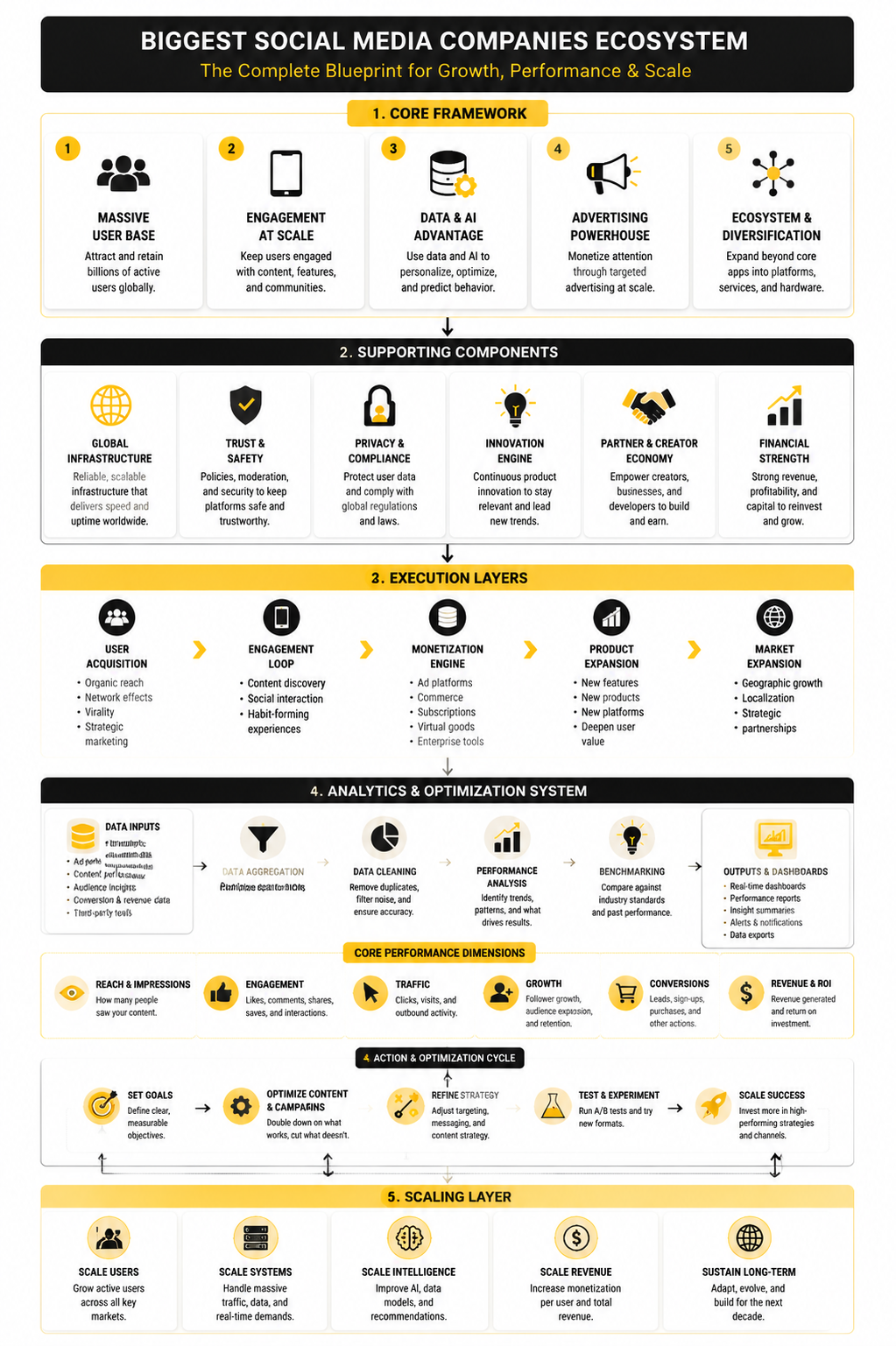
For the biggest social media companies, strategy isn’t just a concept - it’s a set of repeatable processes that guide product development, user acquisition, and engagement optimization. Understanding how these companies iterate on features helps explain why they consistently attract attention and grow usage.
Successful platforms integrate data‑driven experimentation, feature rollouts, and community feedback loops into structured workflows. These aren’t abstract ideas: they are documented practices used by leading social companies to refine what they build and how they deliver it.
Core Processes Behind Platform Growth
At a high level, the biggest social media companies follow a familiar cycle:
This iterative loop lets companies like Meta and TikTok innovate without disrupting the entire platform at once, and it’s how they keep users engaged with fresh, relevant functionality.
Experimentation and Data in Product Decisions
Behind every new feature on these platforms lies a significant investment in data science and analytics. For example, YouTube’s recommendation engine continuously adjusts what videos it surfaces based on real‑time user signals, and TikTok’s For You Feed famously adjusts in milliseconds based on subtle user preferences. These data‑centric processes are integral to how user attention is shaped and retained.
This focus on experimentation means product teams don’t make changes based on intuition alone - they rely on statistically significant evidence showing that new features or tweaks actually improve core metrics like session duration or user retention.
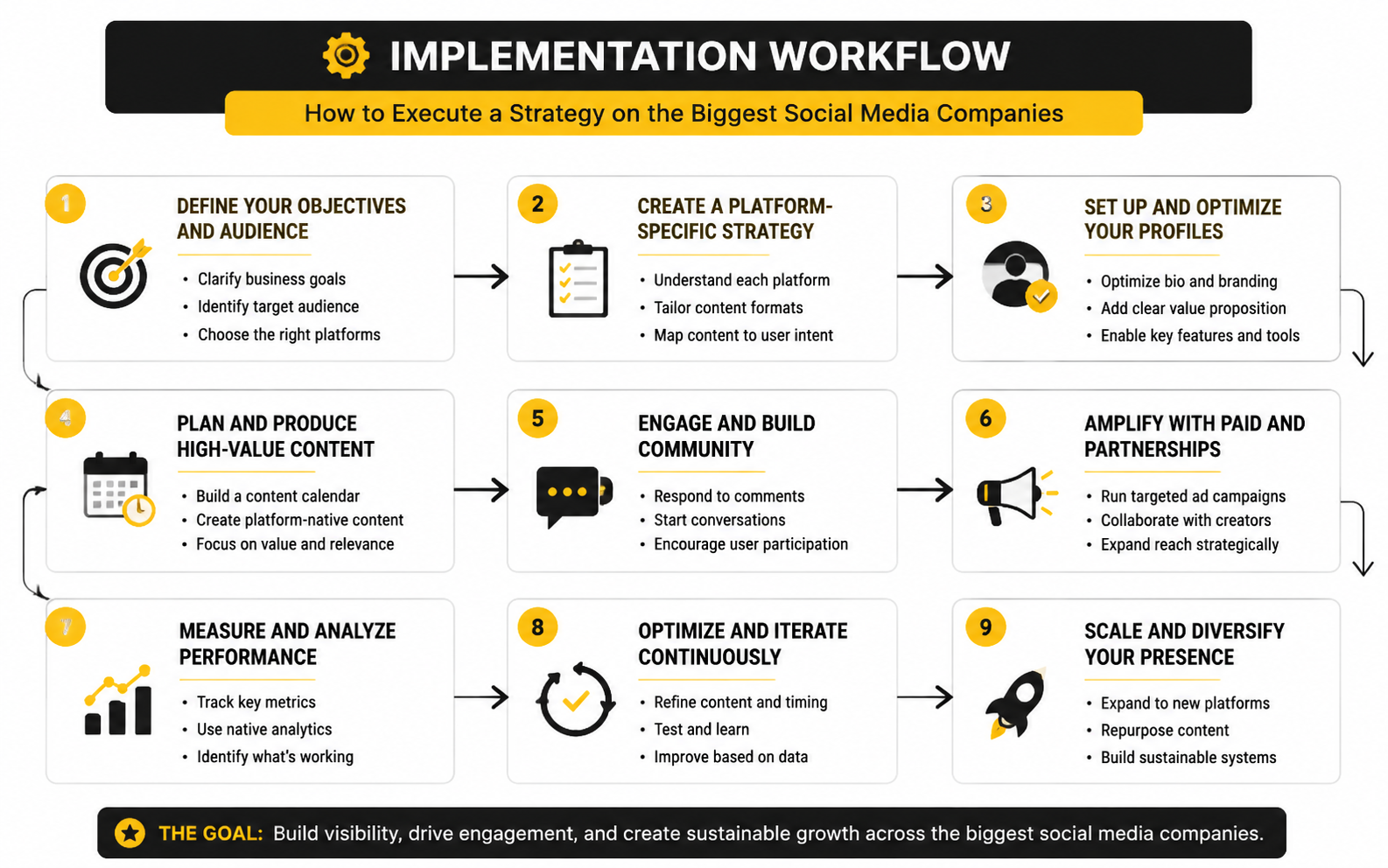
Step‑by‑Step Breakdown of How a Feature Goes Live
To make this even more tangible, here’s a general step‑by‑step view of how the biggest social media companies bring a feature from concept to everyday use:
This structured process explains how the largest platforms can innovate at scale while still maintaining stability for billions of users. It also shows why change on these networks can feel both rapid and thoughtful - because it’s backed by systematic testing and measurement.
How Monetization Features Are Rolled Out
Monetization for creators and advertisers follows a similar implementation pattern, but with additional checks for policy compliance, payment infrastructure, and fraud prevention. For example:
This layered rollout ensures that revenue features are not only effective for the platform but also reliable and compliant for users around the world.
By breaking down how the largest social media companies execute their product and growth strategies, it becomes clear that these processes - while complex - are repeatable and highly data‑informed. That’s a big part of why these platforms continue to define how billions of people connect and consume content every day.
How to Read Social Media Statistics and What They Mean
When we talk about the biggest social media companies, raw numbers only tell part of the story. Statistics matter because they reveal how platforms reach, engage, and influence users, and they drive strategic decisions for businesses, creators, and advertisers alike. But interpreting those numbers productively means looking at what they measure and why they matter in practice.
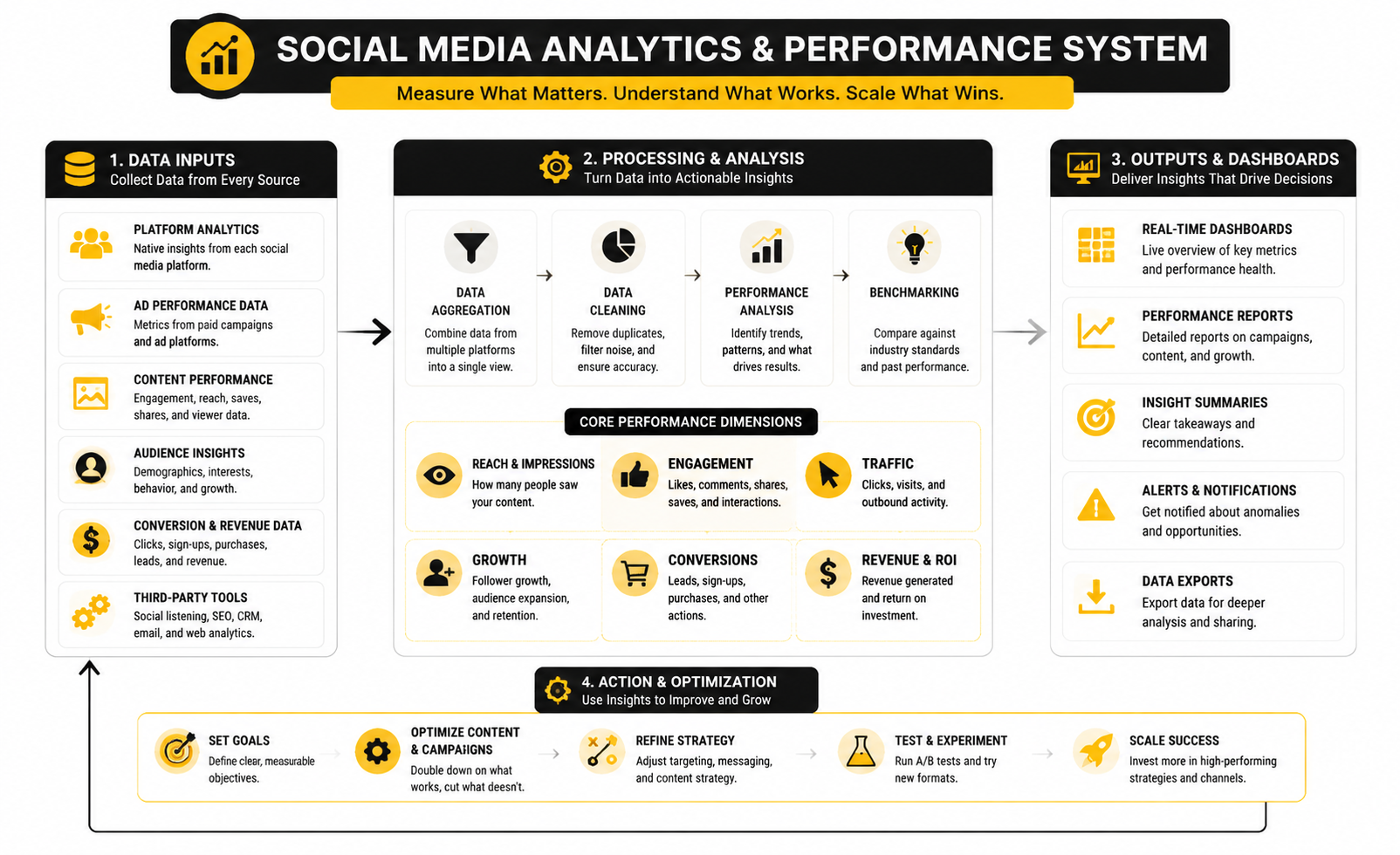
Why Monthly Active Users (MAUs) Matter
One of the most common benchmarks for platform size is monthly active users (MAUs) - how many people interact with a service at least once in a 30‑day period. This metric is a key indicator of reach and relevance. For example, platforms like Facebook and WhatsApp each register over 3 billion MAUs, showing they touch nearly half the world’s population every month. These figures help advertisers decide where to allocate budgets based on audience size.
But reach isn’t everything. Two platforms might both have a billion users, yet if one retains users longer, or more frequently, that deeper engagement typically translates into better ad performance and stronger monetisation opportunities.
Engagement Metrics: Deeper Signals of Value
Engagement statistics - such as average time spent per day, session frequency, and content interactions - are qualitatively more powerful than user counts alone. For instance, global social media users spend roughly 2 hours and 20 minutes per day across their platforms, engaging with content multiple times daily. Knowing this helps businesses tailor content for formats and durations that match real user behaviour.
Engagement also varies by platform and format: short‑form video features like TikTok’s For You Feed or Instagram Reels often drive more frequent sessions, while long‑form content like YouTube videos can yield longer individual sessions. Understanding these patterns helps marketers choose where to test ad creatives, which content formats to prioritise, and how to allocate time and budget most effectively.
Growth Rates and Competitive Momentum
Static numbers are useful, but trend data tells a more dynamic story. Growth rates - such as year‑over‑year increase in MAUs - indicate where platforms are gaining momentum or losing traction. Regions with faster internet adoption are where emerging platforms and formats often take off first, so global numbers help contextualise opportunities and risks.
For example, platforms like Instagram and TikTok continue to outpace others in growth percentages, suggesting stronger appeal among younger audiences and content creators. This type of growth can signal higher future engagement and long‑term platform viability.
Multiple Platforms Per User: Network Complexity
Another important statistic is how many platforms an average user interacts with. Most social media users maintain identities on 6–7 different platforms, meaning audiences are rarely exclusive to one network. This insight nudges brands toward cross‑platform strategies rather than “betting on a single winner.”
Rather than focusing exclusively on user size, understanding how users move between platforms - and how they behave differently on each - enables more nuanced planning. For instance, a campaign might prioritise TikTok for trend discovery, Instagram for lifestyle branding, and WhatsApp for direct customer engagement.
What These Numbers Should Drive
Knowing the statistics isn’t just academic - it should shape action:
By interpreting the stats thoughtfully - not just reciting user counts - companies and creators can turn data into decisions, using evidence to drive more carefully, more effective social strategies that match modern user behaviour.
Strategic Considerations for Working With the Biggest Social Media Companies
By the time you’ve absorbed how the biggest social media companies grow, measure performance, and iterate products, the next layer of strategy becomes clear: exploiting their scale without being overwhelmed by it. At this stage, tactics shift from “just being present” to prioritising resources, adapting to platform dynamics, and setting realistic expectations for investment and outcomes.
Balancing Reach With Sustainable Engagement
Large platforms offer enormous reach, but reach is only part of the value equation. Engagement depth - how users interact with your content - often drives stronger return on investment. A brand with a billion‑person audience segment might sound appealing, but if engagement rates are shallow, conversion and retention can suffer.
To manage this:
This approach acknowledges that the largest social media companies can deliver attention, but attention quality matters more than pure quantity.
Strategic Tradeoffs in Resource Allocation
Another advanced consideration is resource prioritisation. Working across every major platform owned by the biggest social media companies can strain teams and dilute focus. Brands often face tradeoffs:
For many organisations, a hybrid strategy works best: dominating in a couple of core platforms while maintaining a presence on others. This reduces operational complexity while still covering key audience touchpoints.
Risk Management: Compliance and Brand Safety
Engaging with large platforms also introduces potential risks that require strategic mitigation:
These risk factors are not intrinsic advantages of smaller platforms; they are byproducts of scale that demand thoughtful policies and oversight.
Scaling Creatively With Platforms and Tools
While the biggest social media companies offer plugins, APIs, and analytics dashboards for power users, not every team needs to build custom infrastructure. For many brands and creators, adopting external tools that integrate across platforms helps maintain strategic coherence.
For example:
These setups don’t replace native platform features, but they extend capacity without reinventing fundamental workflow systems.
Managing Expectations With Data Reality
Finally, the biggest social media companies often surface impressive statistics - but not all metrics equate to business value. A spike in likes or followers doesn’t always correspond to revenue or loyalty. Established teams set actionable KPIs that bridge platform data with business outcomes, such as:
By linking social metrics to business goals, organisations stop chasing vanity numbers and start optimising for measurable impact.
In essence, mastering engagement with the biggest social media companies requires strategic discipline. It means allocating budget where performance data justifies it, balancing pursuit of scale with realistic resource planning, and always interpreting platform statistics through the lens of business goals rather than surface‑level popularity.
What defines the biggest social media companies?
Biggest social media companies are measured by their global reach, typically monthly active users (MAUs), revenue scale, and influence on digital communication patterns across markets.
Why does monthly active user count matter?
MAUs reflect how many people interact with a platform regularly. Higher MAUs usually mean stronger network effects and more value for advertisers and creators because the audience pool is larger and more consistent.
How do the biggest social media companies make money?
Most earn through advertising, selling targeted ad space to brands. Some platforms also use subscriptions, commerce integrations, and paid features to diversify income beyond ads.
Is user engagement more important than user count?
Yes. Engagement metrics like session duration and interaction rates show how deeply users interact with content, which often correlates more directly with revenue potential than sheer audience size.
Can brands succeed on smaller platforms if they’re not among the biggest social media companies?
Absolutely. Smaller or niche platforms can deliver higher engagement within specific demographics, and many brands find better conversion rates with less competition.
What are common risks when working with major social platforms?
Regulatory changes, privacy updates, and brand safety issues - like ads appearing next to harmful content - are top risks. It’s essential to have compliance and monitoring practices in place.
Should a business invest in all major platforms equally?
Not usually. Most marketers prioritise a few where their audience is most active and engaged, then maintain a lighter presence elsewhere to balance resources and impact.
How do algorithm changes on big platforms affect brands?
Algorithms can shift what content is shown and to whom. These changes may change engagement patterns rapidly, so brands need to monitor performance and adapt content strategies as needed.
Are analytics dashboards on big platforms reliable for decision‑making?
Yes, they provide valuable performance insights. However, combining platform data with third‑party tools or cross‑platform dashboards often gives a more complete view of audience behaviour.
What metric should marketers focus on first?
It depends on objectives. For awareness focus on reach and impressions; for conversion goals track clickthrough rates and downstream actions tied to revenue.
How important is video content for engagement?
Video - especially short‑form - is one of the top drivers of engagement on major platforms today, often leading to higher interaction and repeat usage compared with static posts.
Build a stronger local presence with BAAM AI
Turn your website, Google profile, social channels, and AI visibility into one growth engine
Most businesses do not need more random marketing activity. They need a consistent presence system that helps the right people find them, trust them, and take action. BAAM AI brings strategy, local SEO, website updates, Google Maps visibility, social content, AI-search readiness, media production, and reporting into one practical monthly engine.
If you want your marketing to keep working after the campaign ends, start with a free BAAM AI presence audit. See how your business shows up today and where the fastest visibility wins are at BAAM AI.