
BAAM AI Blog
Statistics And Data That Actually Matter
Measurement is not about collecting every possible number. It is about knowing which numbers explain customer behavior and which numbers should trigger action. In google digital marketing and ecommerce, the best data...
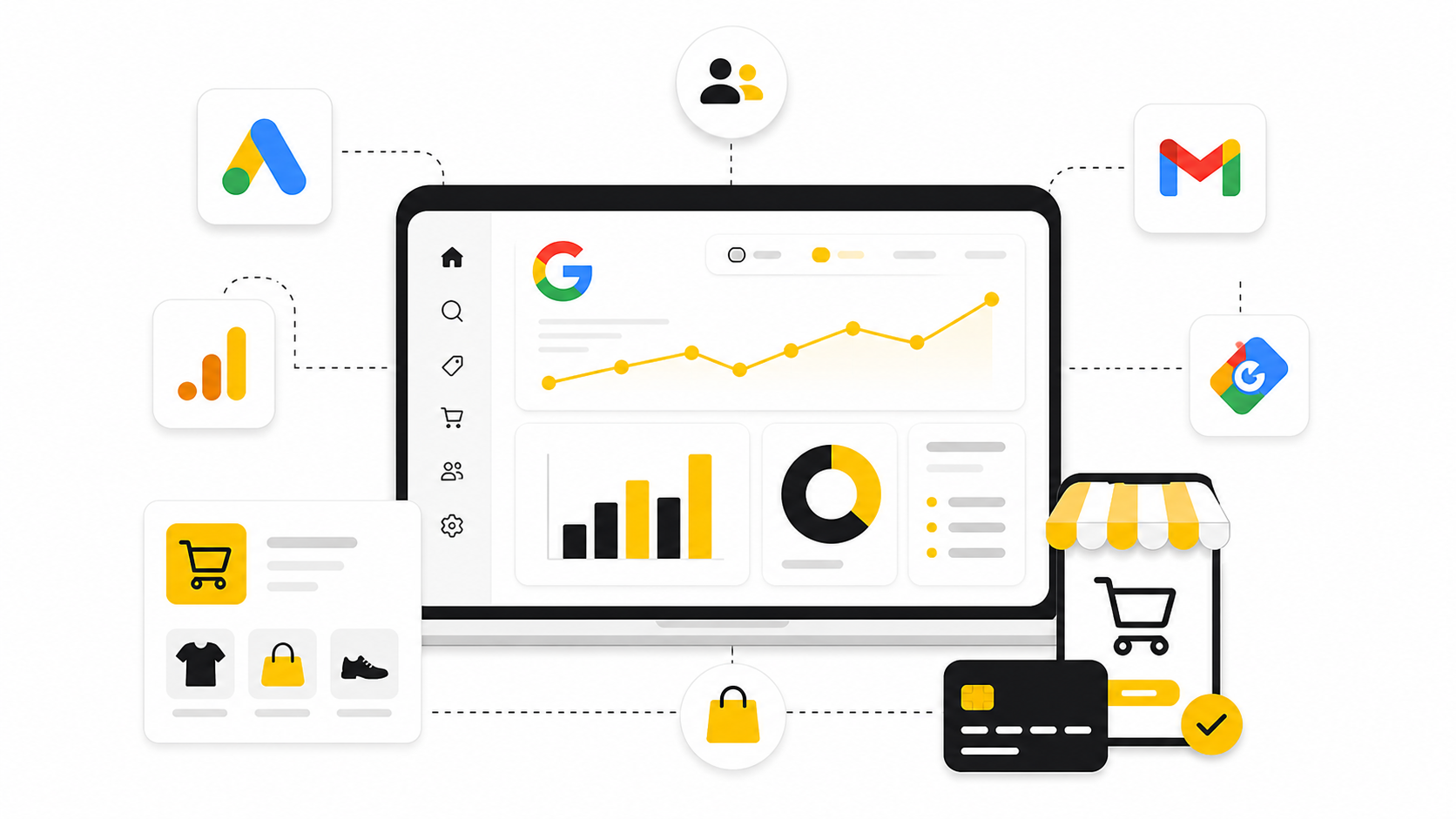
Measurement is not about collecting every possible number. It is about knowing which numbers explain customer behavior and which numbers should trigger action. In google digital marketing and ecommerce, the best data tells you where attention is coming from, where buyers slow down, and where revenue is being created or lost.
The ecommerce market is big enough that weak measurement gets expensive fast. Global online consumer goods revenue passed $4.12 trillion in 2024, with year-over-year growth of 14.6%, based on DataReportal’s Digital 2025 ecommerce coverage from DataReportal. That growth is useful context, but it does not mean every store will grow automatically. It means competition is serious, customer expectations are higher, and sloppy analytics will hide expensive problems.
The Analytics System You Actually Need
A clean analytics system follows the customer journey instead of drowning you in dashboards. You want to track how people arrive, what they view, what they add to cart, where they begin checkout, where they drop off, and what finally turns into revenue. Google’s ecommerce event setup supports that exact flow through events such as item views, add-to-cart actions, checkout steps, and purchases in Google Analytics ecommerce measurement.
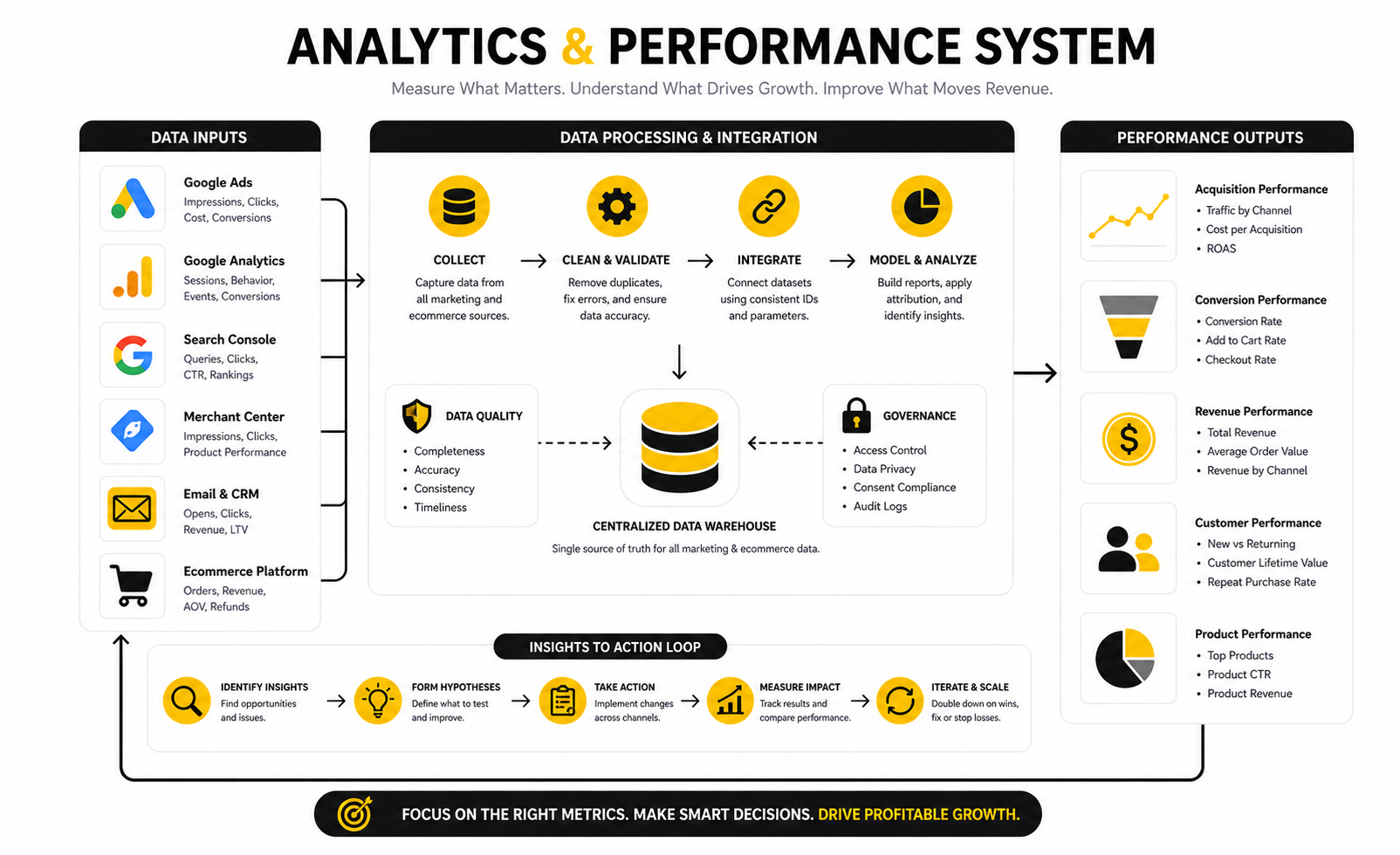
This matters because each event answers a different business question. If product views are low, the traffic or navigation problem comes first. If add-to-cart is weak, the product page, pricing, offer, or trust signals need attention. If checkout starts are strong but purchases are weak, the issue is likely friction, payment options, shipping clarity, or unexpected costs.
Do not treat all traffic as equal either. Organic search, paid search, email, social, affiliates, retargeting, and direct traffic can behave very differently. A lower conversion rate from a colder traffic source may still be profitable if acquisition costs are low and repeat purchases are strong.
Benchmarks Are Useful, But Your Baseline Matters More
Benchmarks can help you spot whether something is obviously broken. For example, Baymard’s checkout research has long shown an average cart abandonment rate near 70% across ecommerce studies through its checkout usability research. That number is a warning, not a verdict. Some abandonment is normal because people compare, browse, save items, and leave for reasons outside your control.
The useful question is not, “Is my number exactly the same as the benchmark?” The useful question is, “Is my number improving against my own baseline after I remove obvious friction?” If your checkout abandonment drops after you clarify shipping costs, simplify forms, or add payment options, the data has done its job.
Conversion rate works the same way. A store selling low-cost impulse products will behave differently from a store selling expensive, considered purchases. The benchmark gives context, but your product category, price point, traffic mix, device mix, and brand trust explain the real performance.
The Metrics That Should Drive Decisions
The best ecommerce operators do not stare at one number. They look at a small group of connected metrics that show how the system is performing. That is the practical difference between reporting and decision-making.
Useful metrics include:
Each metric should lead to a possible action. Low add-to-cart rate should push you toward better product pages, clearer offers, stronger images, or sharper pricing. Low repeat purchase rate should push you toward better post-purchase education, replenishment offers, loyalty campaigns, or customer segmentation.
Email And Automation Data Needs A Different Lens
Email performance should not be judged only by open rates. Opens can be affected by privacy changes, inbox behavior, subject lines, timing, and audience quality. Revenue, click behavior, unsubscribe rate, spam complaints, and flow performance usually tell a more useful story.
Klaviyo’s 2025 benchmark material analyzes performance across billions of email and SMS messages for ecommerce brands in its 2025 Benchmark Report. The important takeaway is not to copy another brand’s numbers blindly. The important takeaway is that segmentation, triggered flows, and lifecycle timing are measurable, and they usually reveal where customer follow-up is either helping or wasting attention.
This is where tools like Brevo and Moosend become useful when paired with a clear plan. You want to know which welcome emails create first purchases, which cart recovery messages recover real revenue, and which post-purchase flows increase the chance of a second order. That is more valuable than celebrating a high open rate on an email that does not move the business.
What Good Data Should Make You Do Next
Good data should reduce debate. If search traffic is growing but product views are flat, improve internal paths and collection pages. If product views are strong but add-to-cart is weak, sharpen the offer and product content. If carts are strong but purchases are weak, fix checkout friction before buying more traffic.
This is the professional way to use google digital marketing and ecommerce skills. You do not chase numbers for the sake of looking smart. You use measurement to decide what deserves attention this week, what should be tested next, and what should be left alone because it is already working.
A simple weekly review is enough for most teams. Look at the journey, identify the biggest leak, choose one action, and measure whether it improved the result. That rhythm turns analytics from a reporting chore into a growth system.
Build a stronger local presence with BAAM AI
Turn your website, Google profile, social channels, and AI visibility into one growth engine
Most businesses do not need more random marketing activity. They need a consistent presence system that helps the right people find them, trust them, and take action. BAAM AI brings strategy, local SEO, website updates, Google Maps visibility, social content, AI-search readiness, media production, and reporting into one practical monthly engine.
If you want your marketing to keep working after the campaign ends, start with a free BAAM AI presence audit. See how your business shows up today and where the fastest visibility wins are at BAAM AI.