
BAAM AI Blog
Statistics and Data That Actually Matter
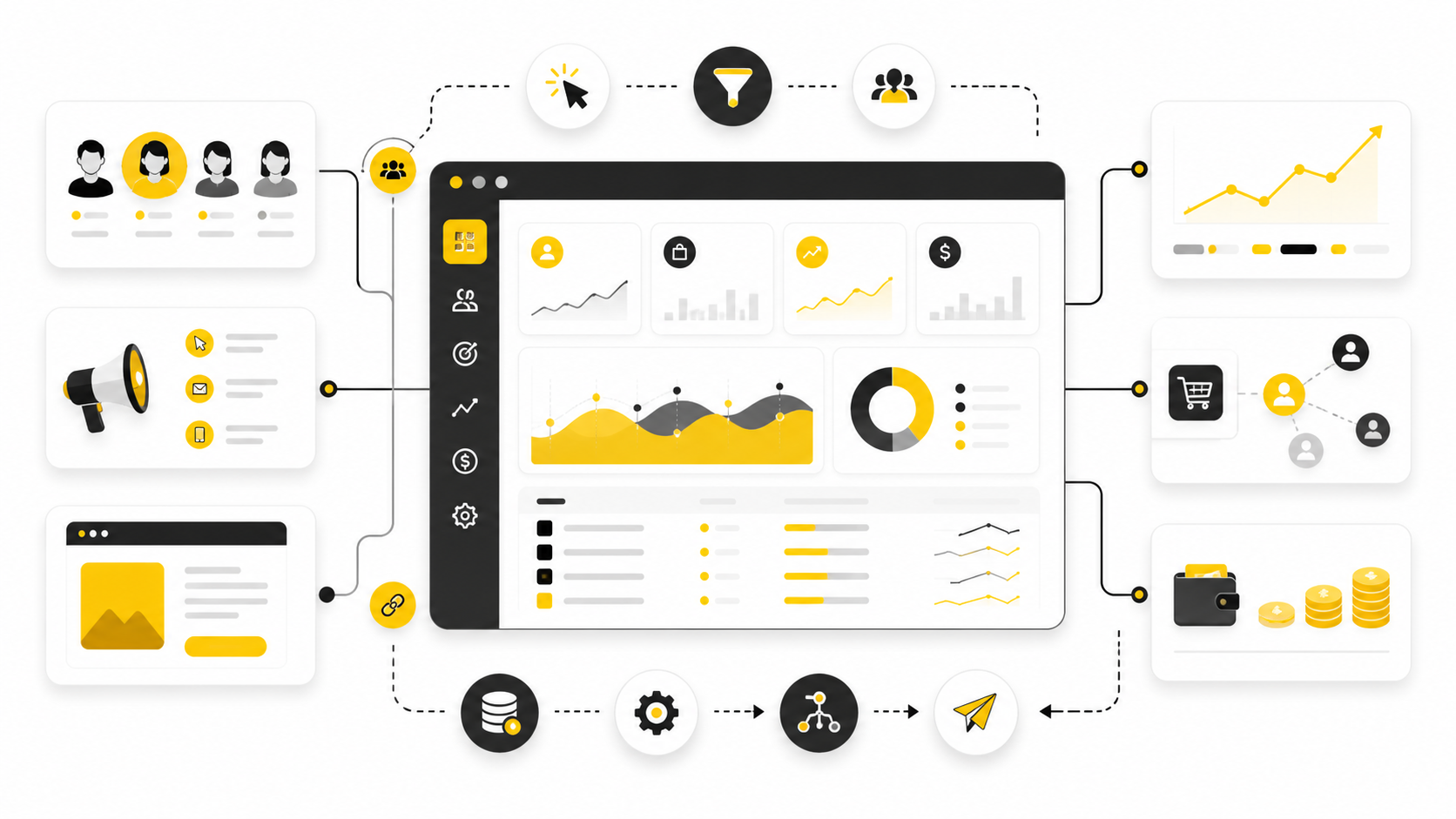
The right data turns affiliate marketing from guessing into operating. That was true in the PeerFly era, and it is even more true now because the channel is more competitive, more regulated, and more fragmented...
Affiliate disclosure: this article may include compensated links. Recommendations should still be evaluated against your use case, budget, and current provider terms.
Should you choose this tool?
this tool is worth considering when the use case, budget, and implementation effort match what you actually need to do next.
teams that want a practical tool decision without reading another generic feature list
Check this toolThe right data turns affiliate marketing from guessing into operating. That was true in the PeerFly era, and it is even more true now because the channel is more competitive, more regulated, and more fragmented across content, paid traffic, creators, email, search, and partner platforms. But the mistake is treating every number as equally important.
You do not need a dashboard full of vanity metrics. You need a small set of performance signals that tell you whether the system is healthy. The best affiliate operators look at numbers in layers: market demand, traffic quality, page engagement, lead capture, affiliate clicks, conversion feedback, approval quality, and long-term revenue.
That is the difference between data and noise. A click count tells you someone moved. A conversion path tells you why they moved, where they hesitated, and what needs to improve next.
The Market Is Still Growing, But That Does Not Guarantee Easy Wins
Affiliate marketing is still a serious channel, not a dead tactic from the PeerFly days. The U.S. affiliate marketing sector grew from $9.1 billion in 2021 to $13.62 billion in 2024, a 49.8% increase, based on the Performance Marketing Association’s 2025 industry study. That matters because advertisers are still putting real budget behind partners when the channel can prove value.
But growth at the industry level does not mean every affiliate campaign becomes easier. More money attracts more competition, better tracking, stricter partner review, and higher expectations from brands. The opportunity is bigger, but the standard is higher.
That is the first data lesson. Do not use market growth as permission to be lazy. Use it as proof that the channel is worth building properly, with stronger positioning, cleaner measurement, and a real operating system behind the links.
Paid Traffic Data Needs Context
Paid traffic metrics can look exciting before they mean anything. A campaign can have cheap clicks, a strong click-through rate, and plenty of landing page visits while still producing weak affiliate revenue. This is why old PeerFly-style testing could become dangerous when affiliates judged performance too early.
A low cost per click is only useful if the traffic has buyer intent. A high click-through rate is only useful if the page prepares the visitor for the offer. A high affiliate link click rate is only useful if the advertiser sees quality conversions and keeps approving commissions.
Digital ad markets also keep moving. U.S. internet advertising revenue reached $225 billion in 2023, and retail media grew 16.3% year over year to $43.7 billion, based on the IAB and PwC Internet Advertising Revenue Report. That matters because affiliates are competing in the same attention markets as brands with deeper budgets, better data, and stronger retargeting systems.
The Core Affiliate Measurement Stack
A modern affiliate system should measure the full path, not only the final commission. PeerFly gave affiliates a network dashboard, but a network dashboard was never the whole truth. Today, you need to connect what happens before the affiliate click with what happens after it.
At minimum, measure these signals:
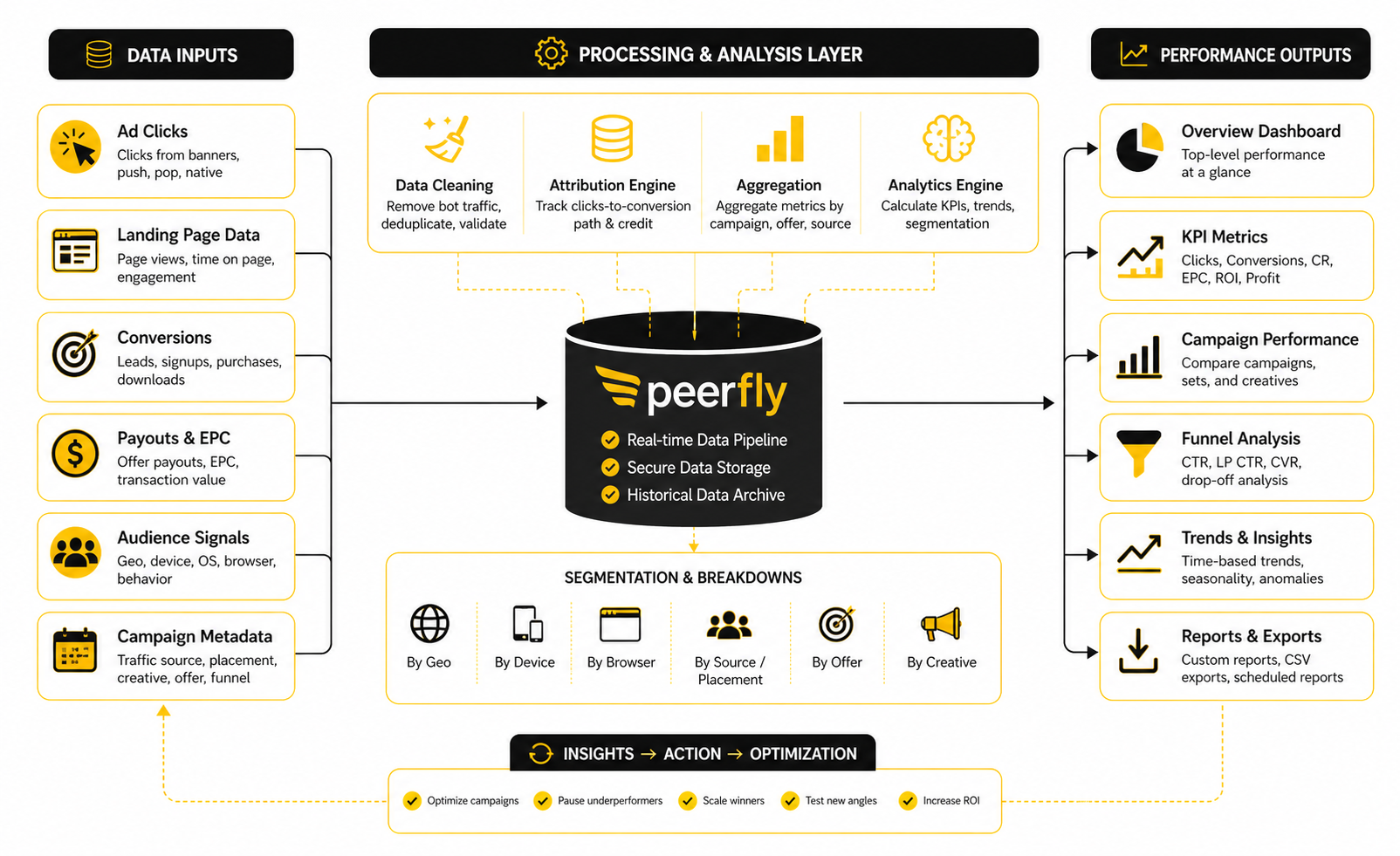
This stack gives you a cleaner diagnosis. If traffic is strong but page engagement is weak, the problem is probably messaging or audience fit. If engagement is strong but affiliate clicks are weak, the page may not create enough buying confidence. If clicks are strong but commissions are weak, the issue may be offer fit, advertiser landing page quality, approval rules, or traffic quality.
The Numbers Should Drive Specific Decisions
Data is only useful when it changes what you do. If a metric does not help you make a decision, it probably does not belong in the main dashboard. Keep the reporting simple enough that you can act on it every week.
If traffic grows but affiliate revenue does not, do not celebrate traffic. Check whether the traffic source matches the buyer segment, whether the page answers the right objections, and whether your call-to-action appears at the right moment. More visitors can simply expose a weak funnel faster.
If affiliate clicks are high but approved commissions are low, stop assuming the offer is good. Review the advertiser’s conversion path, payout terms, geographic rules, device restrictions, and reversal behavior. A campaign is not profitable because people click; it is profitable because the right people convert and stay approved.
Benchmarks Are Useful, But Only After You Know Your Model
Benchmarks can help you spot obvious problems, but they can also mislead you. A content affiliate, paid search affiliate, creator, comparison site, newsletter operator, and agency referral partner will all produce different numbers. Comparing them directly is lazy analysis.
Recent partner marketing data shows why the channel is splitting into different performance patterns. Impact’s 2025 benchmark analysis found that technology solution partners improved conversion rates by 25% year over year, influencers improved conversion rates by 8%, and loyalty and rewards partners drove 50% of transactions in the measured period through its affiliate benchmark report. Those numbers are useful because they show that partner type affects behavior.
The action is not to copy whichever partner type has the biggest number. The action is to understand what role your affiliate asset plays. A comparison article may capture buyers close to purchase, while a newsletter may warm people up earlier, and a creator campaign may build trust before the final search ever happens.
Approval Rate Is More Important Than Raw Conversion Count
One of the most underrated affiliate metrics is approval rate. In CPA marketing, a tracked lead does not always become a paid lead. Advertisers may reject duplicate submissions, low-quality leads, fake information, geographic mismatches, incentive violations, or traffic that fails quality checks.
This was a major issue in the network world around PeerFly, and it still matters now. A campaign with 100 tracked leads and a poor approval rate can be worse than a campaign with 40 leads and strong approval quality. Raw conversion count is only impressive if the advertiser agrees the conversions are valuable.
Approval rate also tells you whether your promotion is aligned with the offer. If people click because of hype but do not match the advertiser’s ideal customer, the dashboard may look good for a moment and then collapse when reversals arrive. That is not a scaling problem; that is a quality problem.
Revenue Per Visitor Shows the Real Funnel Health
Revenue per visitor is one of the cleanest numbers in affiliate marketing because it combines traffic, page quality, click intent, offer performance, and payout reality. It does not care how impressive one isolated metric looks. It tells you how much the system earns from the attention it receives.
The formula is simple: total affiliate revenue divided by total visitors to the relevant page or funnel. If a page receives 5,000 visitors and earns $1,000, the revenue per visitor is $0.20. That number helps you decide whether paid traffic is realistic, whether SEO traffic is worth expanding, and whether conversion improvements are worth prioritizing.
Revenue per visitor also makes offer comparisons more honest. A high-ticket offer may generate fewer conversions but better revenue per visitor. A low-friction offer may convert more often but produce less total value. The better choice depends on the economics, not the ego boost of seeing more conversions.
Email Metrics Reveal Whether You Own the Relationship
Email performance matters because it shows whether you are building an asset beyond the first visit. In the PeerFly model, many affiliates sent traffic directly to offers and never built a relationship with the visitor. That left them exposed when offers paused, rules changed, or traffic costs rose.
A basic email dashboard should track opt-in rate, confirmation rate where relevant, open trends, click behavior, unsubscribe rate, and downstream affiliate revenue from email traffic. These numbers show whether your follow-up is useful or just promotional noise. If people join but do not engage, the promise on the opt-in page may not match the actual emails.
For operators who want simple automation and email follow-up, Brevo can support the email layer without turning the setup into a technical project. For agencies or service businesses that need CRM pipelines, appointment follow-up, and campaign automation in the same system, GoHighLevel is a better fit.
Attribution Should Be Directional, Not Delusional
Attribution is useful, but it is never perfect. Privacy changes, browser restrictions, cross-device behavior, and multi-touch journeys make it harder to know exactly which interaction deserves credit. Pretending the data is perfect leads to bad decisions.
A better approach is directional attribution. Look for strong patterns, not fantasy precision. If a comparison article consistently creates high-intent clicks, keep improving it. If a paid campaign brings lots of visitors but no approved revenue, cut or rebuild it. If email follow-up produces better revenue per lead over time, invest more in list growth.
This is also why affiliate marketers should use link tracking and clean campaign naming. A tool like Dub.co can help organize affiliate links, track clicks, and keep campaigns cleaner across content, email, and social distribution. The goal is not to worship the tracking tool; the goal is to make decisions with less fog.
The Weekly Affiliate Performance Review
A serious affiliate operation needs a weekly review rhythm. This does not have to be complicated, but it does need to happen. Most problems become expensive when nobody looks at the numbers until revenue drops.
A practical weekly review should answer five questions:
This rhythm protects the business. It catches broken links, weak offers, rising traffic costs, falling engagement, and bad-fit recommendations before they become bigger problems. More importantly, it forces you to think like an operator instead of a gambler.
What Good Data Should Make You Do Next
Good data should push you toward one of four actions: improve the audience, improve the page, improve the offer, or improve the follow-up. If the audience is wrong, better copy will not save the campaign. If the page is weak, more traffic will not fix trust. If the offer is bad, better tracking only proves the problem faster.
This is where the PeerFly lesson becomes very practical. A network could give affiliates offers and reporting, but it could not build a durable business for them. The affiliate still had to understand the numbers, interpret them honestly, and make the right operational moves.
That is the real measurement standard. Do not ask whether the dashboard looks busy. Ask whether the data tells you what to do next.
Build a stronger local presence with BAAM AI
Turn your website, Google profile, social channels, and AI visibility into one growth engine
Most businesses do not need more random marketing activity. They need a consistent presence system that helps the right people find them, trust them, and take action. BAAM AI brings strategy, local SEO, website updates, Google Maps visibility, social content, AI-search readiness, media production, and reporting into one practical monthly engine.
If you want your marketing to keep working after the campaign ends, start with a free BAAM AI presence audit. See how your business shows up today and where the fastest visibility wins are at BAAM AI.