
BAAM AI Blog
Social Selling Marketing: What It Is and Why It Changes How You Sell
Social selling marketing is one of the biggest shifts in how companies generate leads, build relationships, and close deals in the digital age. Rather than blasting ads or cold calling prospects out of the blue...

Social selling marketing is one of the biggest shifts in how companies generate leads, build relationships, and close deals in the digital age. Rather than blasting ads or cold calling prospects out of the blue, social selling focuses on connection, credibility, and dialogue - and it’s reshaping sales in both B2B and B2C contexts. At its core, this strategy uses social media platforms to find the right prospects, engage them with value, and build authentic relationships that eventually lead to revenue.
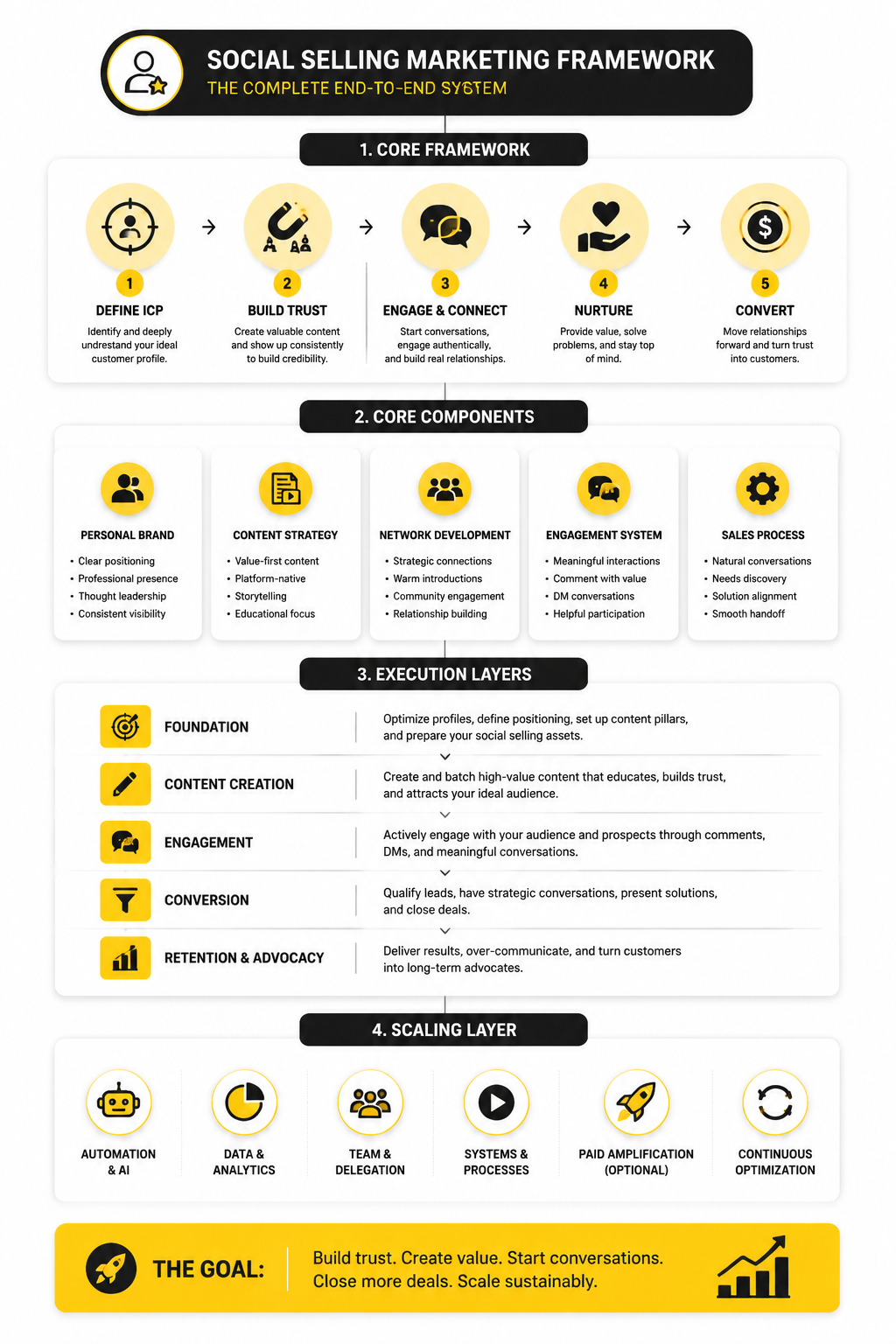
Social selling isn’t just another buzzword - it’s a strategic response to how modern buyers behave. With most people spending significant time on platforms like LinkedIn, Instagram, and TikTok, the buying journey increasingly starts long before any sales call or demo. Instead of interruptive outreach, social selling meets prospects on the platforms where they’re already active and builds trust over time through meaningful interaction.
Why Social Selling Matters
Social selling marketing has become essential because buyers now control the early stages of their purchase journey. Most prospects research, compare options, and form preferences long before speaking to a salesperson - which means traditional cold calls and generic outreach are far less effective. Social selling meets buyers where they already are: on social platforms, actively consuming content and forming opinions. This shift has empowered buyers and reshaped expectations, making trust and credibility more valuable than ever in closing deals.
The impact this has on sales outcomes is substantial. For example, sales professionals who practice social selling consistently outperform peers who rely solely on traditional prospecting - they’re reported to outsell those counterparts at significantly higher rates. This performance edge isn’t just about numbers; it reflects deeper connections and stronger relationship-building that resonate with modern buyers.
At the same time, buyers themselves are signaling demand for more authentic engagement. A large portion of today’s buyers use social media to inform their purchasing decisions, seeking insights and validating options before engaging with sales. By aligning outreach with buyer behavior on social platforms, businesses tap into intent signals that traditional channels often miss. This is why social selling matters: it bridges the gap between how buyers want to be engaged and how sales teams need to connect with them to generate pipeline.
Social Selling Framework Overview
Understanding social selling requires seeing it as a strategic framework - not a random collection of posts and messages. At its core, effective social selling consists of several interconnected activities that together guide prospects from awareness to engagement to conversion.
First, insight generation helps teams discover and interpret buyer signals. This goes beyond tracking likes or follower counts; it’s about social listening, identifying topics prospects are discussing, and surfacing cues that suggest readiness to engage. Salespeople who systematically gather these insights can tailor outreach precisely, improving relevance and resonance.(6)
Next, the framework emphasizes connecting with the right audience. This isn’t about amassing followers, but about strategically building a relevant network. Professional platforms like LinkedIn, for example, offer tools that help sales teams find and engage decision‑makers and influencers connected to their ideal customer profile. The strength and relevance of these connections directly influence how effectively a social seller can nurture prospects.
Finally, effective frameworks prioritize engagement through meaningful content and dialogue. Instead of pitching products, social sellers share helpful insights, respond to conversations, and demonstrate expertise in ways that build credibility over time. This sustained engagement transforms casual interactions into qualified opportunities because prospects come to view the seller as a trusted advisor rather than a vendor.(6)
Together, these framework elements form a repeatable process for turning social interactions into measurable business outcomes. A thoughtful framework keeps social selling focused and strategic, not haphazard - and that’s what separates top performers from the rest.
How to Implement Social Selling Marketing
When you’ve defined why social selling matters and how the framework works, the next step is implementing it in a way that produces real results. Implementation isn’t guesswork - it’s a set of coordinated actions that bring your strategy to life and create measurable business outcomes.
Effective implementation begins with alignment and purpose. Your sales and marketing teams must agree on what success looks like and how social selling will support broader goals like revenue growth or lead generation. With clear goals in place, you avoid random posting and unfocused engagement - two of the biggest pitfalls in social selling marketing.
Set Clear Goals and Prioritize Platforms
Before you post anything, decide what you aim to achieve with social selling. This could be:
These goals should tie back to measurable outcomes, not just feel‑good metrics like followers. Once you’ve defined targets, pick the platforms where your ideal customers are most active. LinkedIn is often central for B2B relationships, while Instagram or TikTok may matter more for B2C audiences.
Build a Repeatable Process
A successful social selling marketing process has sequential steps that teams follow consistently. These usually include:
This discipline avoids sporadic activity and builds predictable momentum over time.
Equip Your Team and Tools
Before your team starts executing on social selling, equip them with the right resources. This includes:
Marketing should support sales reps by supplying ready‑to‑share content and guidelines so they feel confident representing the brand online. When you lower the friction between intent and action, activity increases and quality improves.
IMAGE 3
Launch and Iterate
Roll out your implementation in phases rather than all at once. Start with a pilot group of sellers or teams, gather feedback, and adjust your approach before broader scaling. During launch:
Use this data to refine outreach timing, content types, and engagement tactics. Social selling marketing isn’t a “set and forget” tactic - like any strategic initiative it evolves as buyer behavior shifts and new platforms emerge.
This structured execution approach turns social selling from an abstract concept into an operational advantage that supports both sales and marketing goals.
Measuring Success: What the Data Really Tells You
Measurement is one of the most misunderstood aspects of social selling marketing - and also one of the most important. Data shouldn’t be a dump of numbers that feel good; it needs to tell a story about what’s working, what isn’t, and how social selling impacts the business. Tracking the right metrics helps you verify that your social efforts are driving real pipeline, not just vanity signals.
Good measurement starts with benchmarks that reflect realistic performance expectations for your team and industry. For example, engagement rates on social posts that fall in the 2–5 % range suggest content is resonating with audiences rather than being ignored. Similarly, message acceptance and response rates in defined ranges show whether your outreach is earning attention or being overlooked. These numbers aren’t arbitrary - they’re grounded in observed patterns from real social selling programs across teams.
What to Measure - and Why It Matters
Rather than tracking every available data point, focus on metrics that show how social selling contributes to business outcomes and the health of your funnel:
IMAGE 4
Interpreting Numbers and Acting on Them
Numbers without context are meaningless. When you look at your social selling data, ask yourself:
Benchmarks can guide interpretation, but don’t treat them as rigid targets. Your context - industry, audience, platform - shapes what “good” looks like. What matters most is trend and direction: are your key performance indicators (KPIs) improving in ways that align with revenue and pipeline growth? When you frame metrics this way, measurement becomes a tool for decision‑making and improvement instead of just reporting.
Advanced Considerations and Strategic Trade‑Offs
Once social selling marketing is running and you’re tracking performance, the next challenge is scaling with sophistication without diluting quality. Many teams treat social selling like volume outreach - the belief that more messages and more content automatically means more pipeline. That’s a strategic trap. Effective scaling isn’t about quantity alone, it’s about amplifying relevance and efficiency simultaneously.
Balancing Personalization with Scale
Personalized engagement yields the best results, but it’s time‑intensive. Sending bespoke messages to each prospect is ideal, yet not feasible as your audience grows. A strategic compromise is to build personalization frameworks - templates informed by buyer segments, combined with cues from social listening. This lets your team tailor outreach quickly without slipping into one‑size‑fits‑all messaging. In practice, this means drafting messaging blocks that can be assembled based on intent signals like recent activity, job role, or expressed pain points - instead of cold pasting generic scripts.
The risk with automation is obvious: if you automate too early or too broadly, your messages feel robotic, harm your brand, and sabotage trust. Tools that assist with prioritizing leads and suggesting engagement actions can help, as long as every touch still feels human. This balance between automation and authenticity is fundamental to professional social selling.
Platform Shifts and Audience Behavior
Social platforms change their algorithms and feature sets frequently. What drove engagement on LinkedIn last year might not perform as well this year. Advanced social selling strategies anticipate these shifts by:
Strategic flexibility enables you to pivot when platforms tighten reach or de‑prioritize professional content. A rigid approach tied to one site or one content type becomes brittle quickly, especially when platform incentives change.
Organizational Maturity and Cross‑Team Alignment
In mature social selling marketing programs, sales and marketing aren’t operating in silos - they’re tightly aligned with shared KPIs and feedback loops. Marketing doesn’t just hand over content; it collaborates with sales to refine messaging based on real engagement trends and buyer responses. Conversely, sales provide feedback that shapes marketing’s editorial priorities and content calendar.
For example, a marketing team might produce a series of thought leadership posts targeting a specific industry pain point. Sales, seeing traction on that topic during conversations, can cue marketing that this messaging is resonating, prompting more resources to that theme rather than less‑relevant ones. This feedback loop accelerates the effectiveness of both teams and avoids wasted content spend.
Managing Resource Constraints
Not all teams have the luxury of large dedicated social selling squads. Smaller organizations face real resource trade‑offs: Should your best sellers spend an hour every day on social engagement, or should that time go to closing deals? Strategic prioritization means identifying impact levers - where your time and attention generate the highest return - and doubling down there.
Sometimes this looks like empowering a specialist or small sub‑team to handle content creation, social listening, and campaign reporting, while frontline sellers focus on engagement and conversion. Other times it means investing in external tools that streamline repetitive tasks so sellers spend more time where they add the highest value.
Risk Management and Reputation
Because social selling marketing involves public interaction, there’s always a risk of missteps leading to reputational damage. A response that lands poorly, a shared post that’s misread, or a message that goes too far can have outsized consequences. Advanced practitioners build risk awareness into their strategy by:
Reputation isn’t just a soft metric in social selling - it’s foundational. When social interactions build trust, they accelerate pipeline; when they erode trust, they can close doors.
Strategic maturity in social selling marketing is about making deliberate choices - choosing where to automate, where to personalize, where to experiment, and where to protect your brand. The best teams don’t just follow a process; they refine it continuously in response to data, audience behavior, and business priorities.
INSERTIMAGE5
1. What exactly is social selling marketing?
Social selling marketing is a strategy where sales professionals use social media platforms to find prospects, build trust, and nurture meaningful relationships that eventually lead to sales - rather than relying on cold outreach alone. It’s about meeting buyers where they are and being helpful before selling.
2. How is social selling different from social media marketing?
Social selling focuses on one‑to‑one relationships and guiding individual prospects through the sales journey, while social media marketing is broader, aiming for reach and brand awareness across a wide audience. The goals, tactics, and success metrics of each differ - though they complement each other.
3. Which platforms work best for social selling?
LinkedIn is the most effective for B2B social selling because of its professional focus and tools like Sales Navigator. For B2C audiences, platforms like Instagram, TikTok, and Facebook can play a bigger role depending on where target customers engage most.
4. How long does it take to see results from social selling?
Social selling builds trust over time. Many professionals see initial engagement within weeks, but meaningful pipeline growth and revenue impact often take several months of consistent effort and thoughtful engagement.
5. Do I need a large following to succeed with social selling?
No - quality matters more than quantity. A smaller network of engaged, relevant prospects who interact with your content and trust your insights will drive more business value than a large but disinterested audience.
6. Can social selling replace traditional sales tactics?
Social selling complements traditional methods like cold calling and in‑person meetings. It enhances outreach by warming up prospects and building trust, not replacing all other sales activities.
7. How do I measure success in social selling marketing?
Success is measured with metrics like engagement rates, connection acceptance rate, conversations started, and pipeline influenced, alongside business outcomes like revenue attributed to social interactions. The goal is to link social activity to measurable sales results.
8. What’s the Social Selling Index (SSI)?
SSI is a LinkedIn score from 0 to 100 that benchmarks how effectively a professional builds their brand, finds the right people, engages with insights, and builds relationships. A higher SSI correlates with greater opportunity creation and quota achievement.
9. Is social selling suitable for both B2B and B2C businesses?
Yes - although it originated in B2B, social selling has relevance in B2C, particularly for brands that rely on trust, personalization, and long‑term engagement rather than impersonal ads. Success tactics differ by audience and platform.
10. How does social listening fit into social selling?
Social listening is tracking conversations, topics, and sentiment across platforms to find buying signals and understand prospect needs. It informs content and engagement strategies, making outreach more timely and relevant.
11. Can social selling be automated?
Some parts, like scheduling posts or alerts for keywords, can be automated. But the core relational elements - genuine conversation and personalized engagement - should be human‑led to maintain trust and credibility.
12. What are common mistakes to avoid in social selling marketing?
Common missteps include treating social selling as one‑off campaigns, focusing on vanity metrics like follower count, and pitching too quickly without providing value - all of which undermine trust and long‑term results.
Build a stronger local presence with BAAM AI
Turn your website, Google profile, social channels, and AI visibility into one growth engine
Most businesses do not need more random marketing activity. They need a consistent presence system that helps the right people find them, trust them, and take action. BAAM AI brings strategy, local SEO, website updates, Google Maps visibility, social content, AI-search readiness, media production, and reporting into one practical monthly engine.
If you want your marketing to keep working after the campaign ends, start with a free BAAM AI presence audit. See how your business shows up today and where the fastest visibility wins are at BAAM AI.