
BAAM AI Blog
Social Media Search Engine Optimization: How to Be More Discoverable in 2026
Social media is no longer just a place for engagement and brand awareness - it’s become a search engine in its own right. People don’t only scroll anymore; they search for products, how‑tos, recommendations, and...
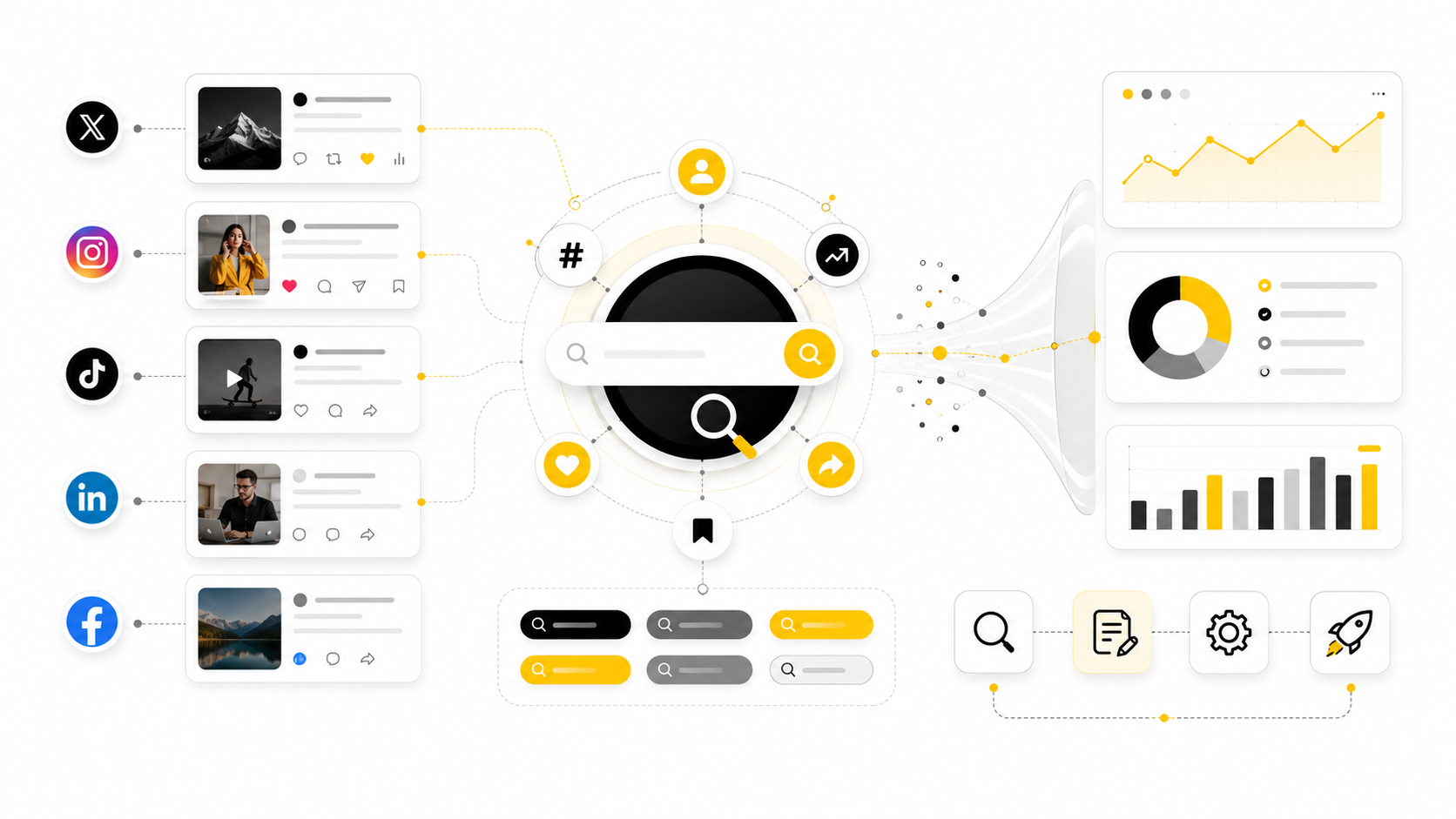
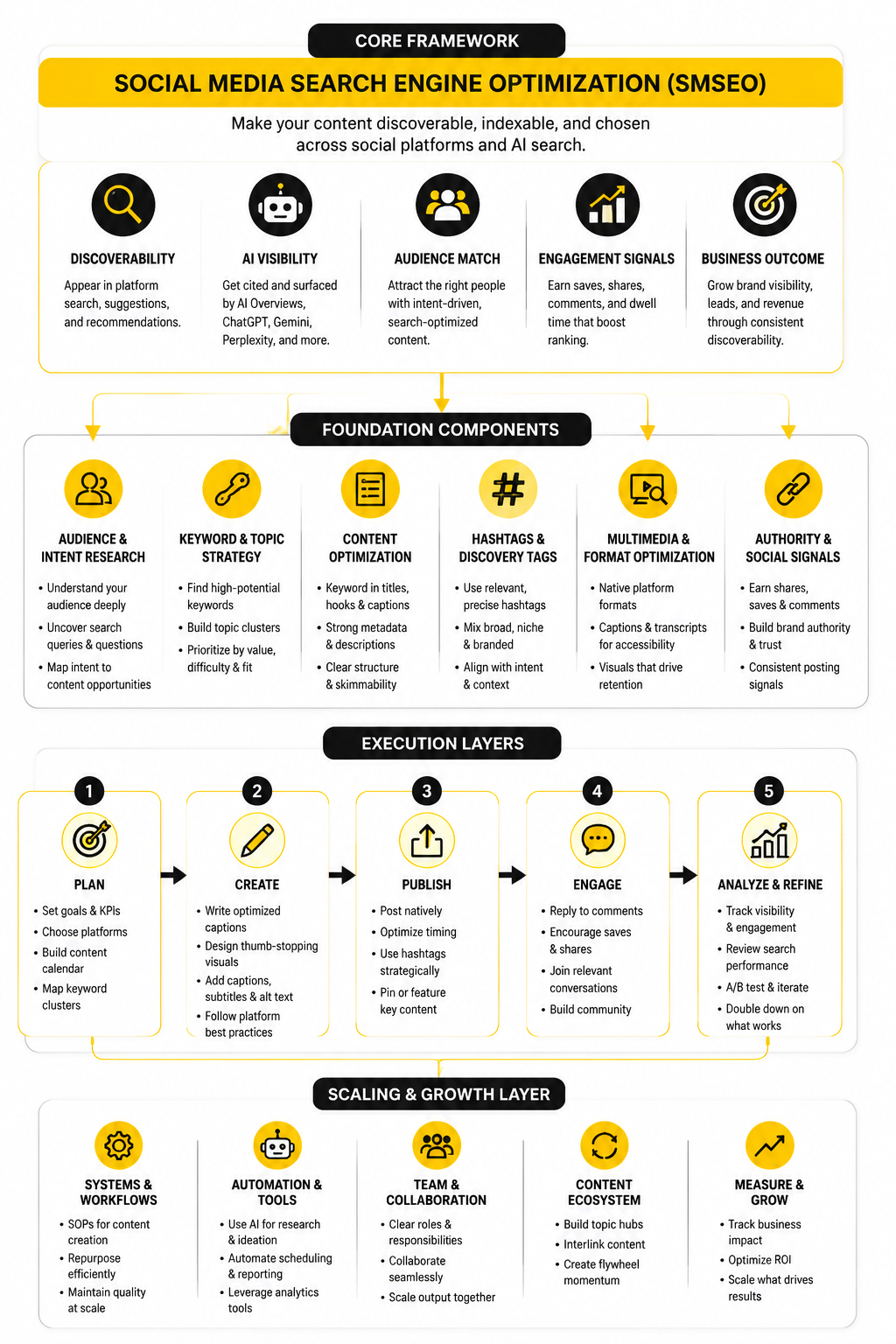
Social media is no longer just a place for engagement and brand awareness - it’s become a search engine in its own right. People don’t only scroll anymore; they search for products, how‑tos, recommendations, and answers directly inside platforms like TikTok, Instagram, YouTube, and Pinterest, often before they ever open Google. This shift has fundamentally changed how brands need to approach visibility online. In fact, recent research shows that a significant portion of consumers now start their product and information searches on social platforms rather than traditional search engines.
At the intersection of traditional SEO and social media marketing sits social media search engine optimization - a strategy focused on making your content discoverable both within social platforms and on external search engines. Social SEO is about understanding how people use search inside apps, aligning content to what they’re looking for, and ensuring your brand appears at the right moment.
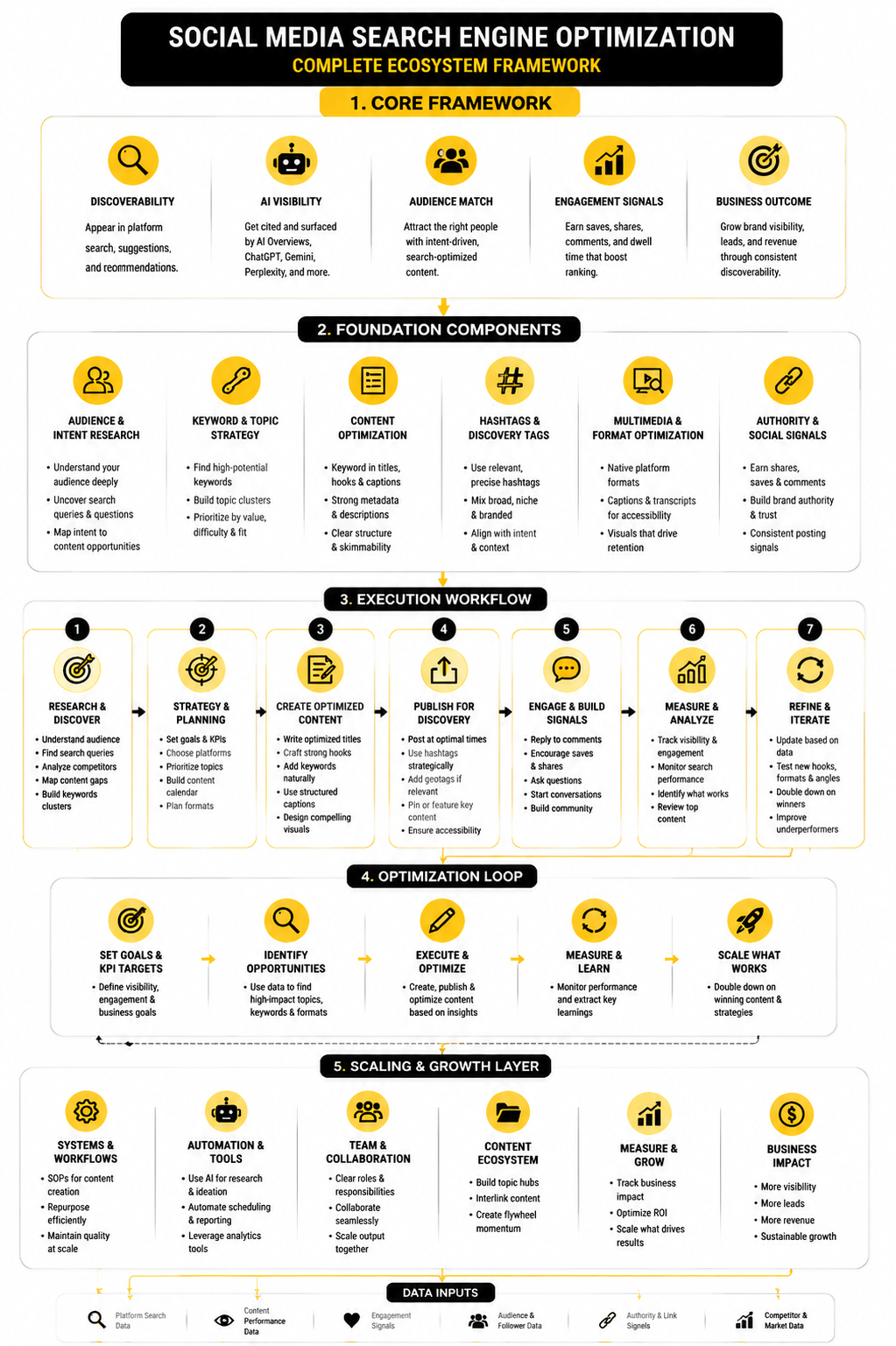
This first part of the article will define the full structure we’ll use to explore the subject, explain why social SEO matters today, and lay out the roadmap for actionable implementation in the later parts.
Why Social SEO Matters Now
In 2026, social media search engine optimization isn’t an optional add‑on - it’s a core component of digital visibility. Consumer search behavior has shifted dramatically: for millions of people, especially younger audiences, social platforms are the first place they look for products, tutorials, reviews, and recommendations rather than traditional search engines. Research shows that a large portion of users now skip Google entirely, turning first to TikTok, Instagram or YouTube when they want answers about what to buy or how to do something.
Platforms like Reddit, TikTok and Instagram are no longer just channels for content discovery - they function as search engines with their own indexing systems, ranking signals, and user intent behaviors. Users at every stage of the buying journey now expect to type queries directly into these apps and receive relevant results in real time. This matters because if your content isn’t optimized to be discoverable on these internal search engines, you’re invisible to a growing segment of high‑intent audiences.
Another critical reason social SEO matters is that social search and traditional SEO are starting to overlap. Content that ranks well inside social platforms often appears in external search listings too, and strong social signals like engagement, shares and saves can boost broader visibility. That means optimizing content to perform well in social search not only improves discoverability on the platforms themselves but also strengthens your overall organic presence.
Beyond pure visibility, social platforms are now shaping purchasing decisions. Most consumers who start searches on social channels are already in a high‑intent mindset, meaning they’re closer to taking action - whether that’s buying a product, subscribing to a service, or signing up for a demo. Optimizing your social content to match what people are actively searching for will meet audiences at the moment they’re most receptive, amplifying your reach and conversion potential.
In the next section, we’ll walk through a practical framework for how to approach social media SEO so you can systematically improve how your content surfaces in discovery.
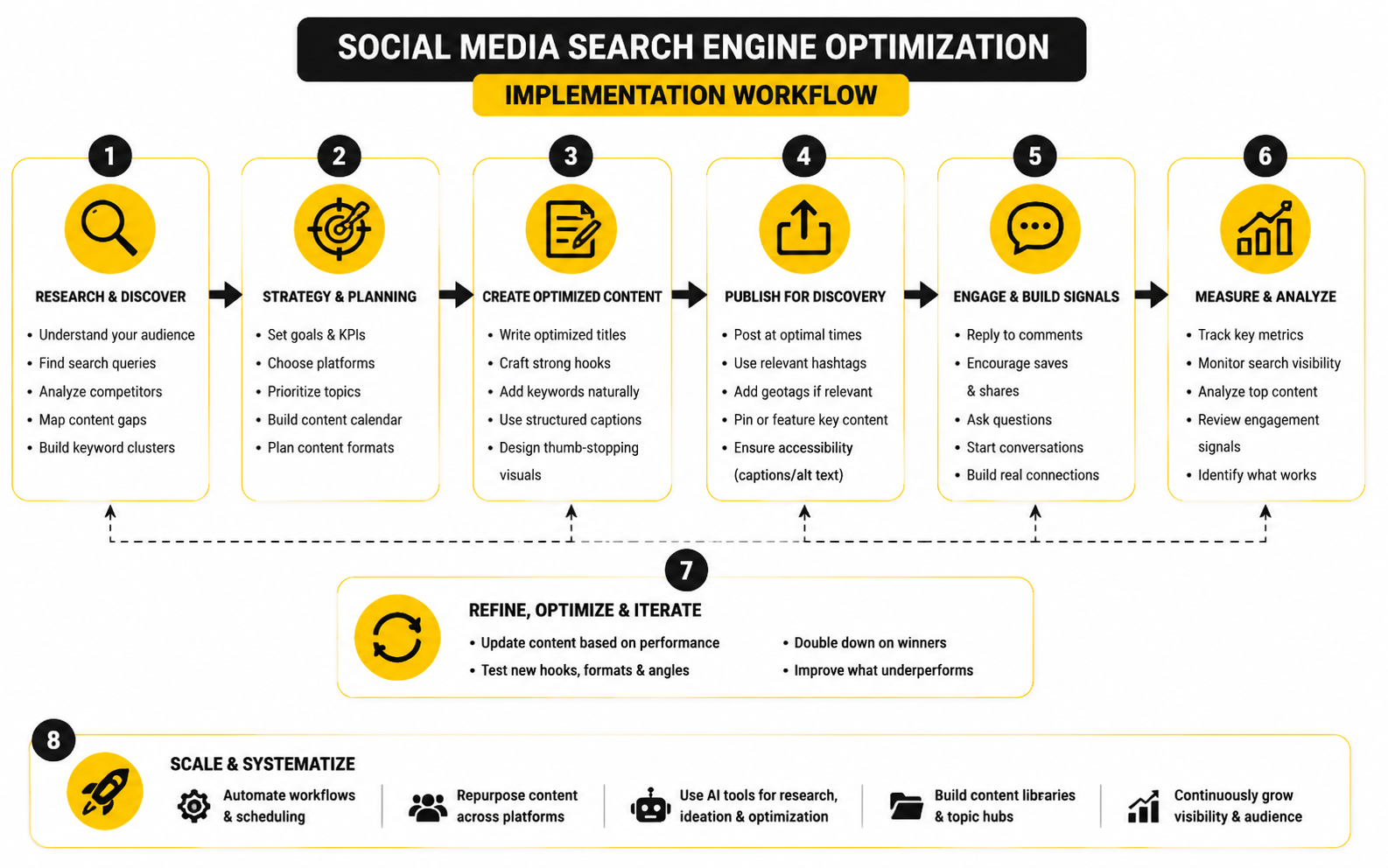
A Practical Social Media Search Engine Optimization Process
Implementing social media search engine optimization begins with a clear, systematic process that helps your content become discoverable inside platform search engines and beyond. Across TikTok, Instagram and YouTube, the consistent theme is this: optimize everything you publish - from your profile to how you structure captions and video metadata - so that the platforms can understand and surface your content for relevant queries.
Start With Keyword Research for Social Platforms
The foundation of social SEO is knowing what your audience is searching for on each platform. Platforms’ search engines are driven by actual user queries, so start by using the in‑app search bar to discover autocomplete suggestions and related search terms that people are actively typing.
This research helps you choose precise phrases people are actively searching, rather than guessing topics.
Optimize Your Profile as Searchable Real Estate
Your profile is often the first thing people see - and many platforms index profile text and metadata for search results. Make every piece of your profile count:
A fully optimized profile not only improves platform search visibility but also increases the chances your profile surfaces in external search engines like Google for brand queries.
Craft Search‑Optimized Captions, On‑Screen Text & Dialogue
Once you’ve identified relevant search terms, the next stage is integrating them into your actual content - naturally and strategically:
This multi‑signal approach increases your chances of ranking when users type those phrases into the platform’s search bar.
Design Content for Engagement and Completion
Social search engines like TikTok and Instagram don’t rank content solely on keywords - engagement metrics are part of ranking signals too. Content that keeps viewers watching, saves or shares gets elevated in search results because it signals relevance and quality.
This blend of search signals and engagement behavior helps platforms understand that your content solves a user’s query, not just entertains momentarily.
Track and Adjust Based on Performance Signals
Optimization is not a one‑time task - it’s iterative. Once you’ve published search‑optimized content:
By systematically researching search intent, optimizing profiles and captions, designing for engagement, and continuously refining your approach, social media search engine optimization becomes a predictable part of your discovery strategy - not a guessing game.
Measuring Success in Social Media Search Engine Optimization
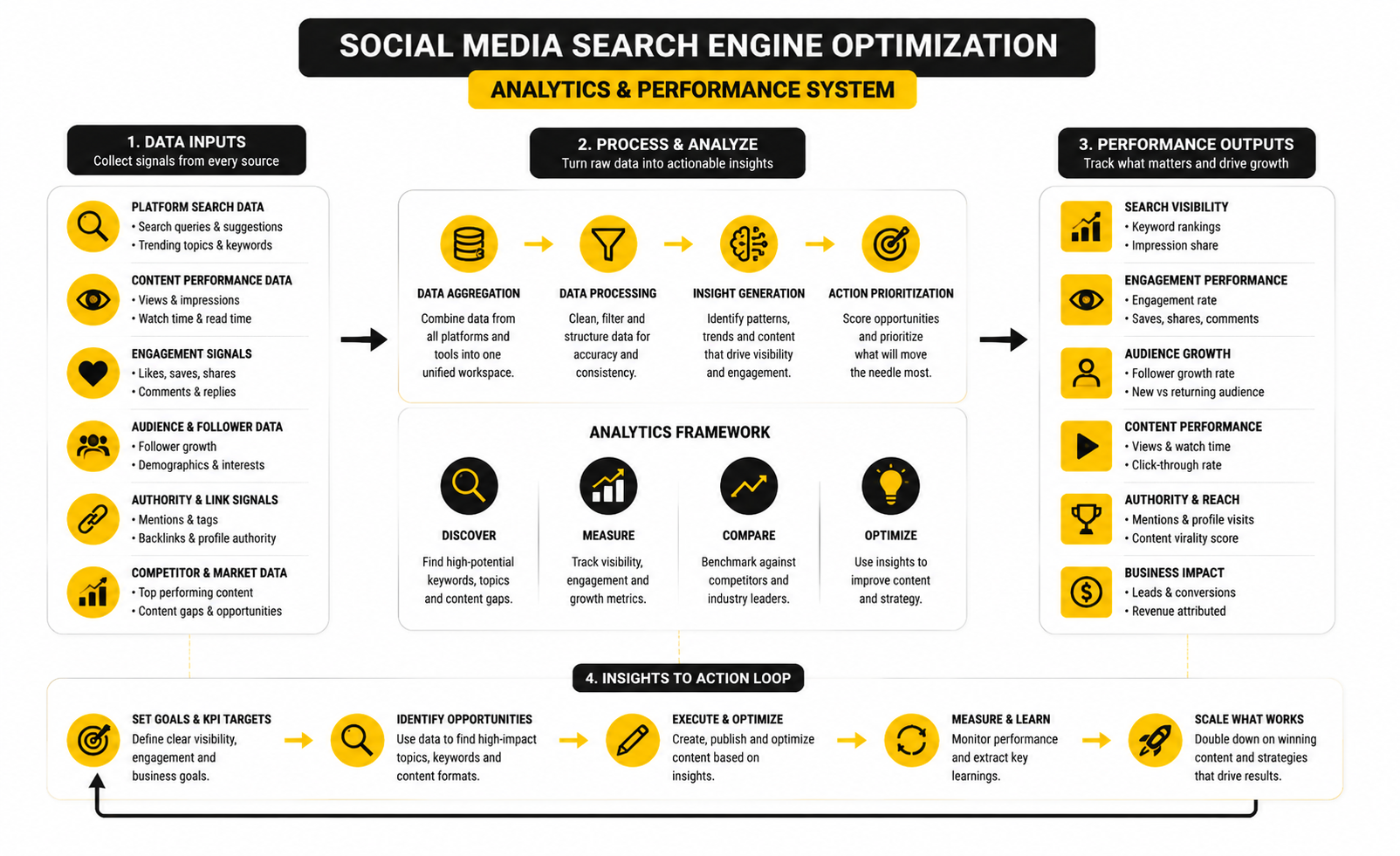
Effective social media search engine optimization isn’t something you hope works - it’s something you measure, analyze and iterate. The right data helps you understand not just whether your content is getting attention, but why it’s showing up in searches and what you should do next to increase visibility, engagement, and conversions.
What Metrics Truly Matter for Social SEO
When evaluating social SEO performance, it’s easy to get distracted by vanity numbers like total views or follower count. But those figures alone don’t tell you whether your content is discoverable in search or influencing decision‑making. These are the core metrics that matter:
How to Interpret What the Numbers Are Telling You
Understanding metrics is only useful if you can convert them into decisions that improve your social SEO over time:
If your content appears in searches often but doesn’t get clicks, likes or longer watch time, it tells you your keyword choice might be right but the content doesn’t deliver value. Focus on improving relevance, clarity, or early hooks in your content.
Great engagement with little visibility means you’ve made compelling content - but you’re not being found. That signals a need to refine your keyword research, update captions, on‑screen text and hashtags to match real search behavior more closely.
When discovery metrics climb, it shows your optimization efforts are working. Use this momentum to double down on content formats that the platform is promoting in search and replicate the keyword patterns that drove those visits.
Benchmarks That Signal Healthy Social SEO
It can help to anchor interpretation in broader industry patterns so you know what good looks like:
These data points don’t just tell you where people are searching - they help you prioritize where to track success metrics and invest your time.
Using Analytics to Drive Action
Once you’re tracking the right metrics and understanding their patterns, you can connect data with action. For example:
Measuring social media SEO isn’t just about counting numbers; it’s about reading patterns and acting on them so your posts become easier to find, more relevant when discovered, and a consistent contributor to your broader visibility and conversion goals.
Advanced Guidance for Scaling and Strategizing Social Media Search Engine Optimization
Once you’ve mastered the basics of social media search engine optimization, the next level is about strategic refinement, scaling, and mitigating risks that can quietly undermine your hard‑won visibility. In 2026, social platforms behave more like interconnected search ecosystems than siloed channels, meaning your advanced strategy must balance depth, consistency, adaptability and efficiency across platforms and audiences.
Harmonize Search Strategies Across Teams
A frequent challenge brands face as they scale social SEO is fragmented strategy - where social teams optimize for discovery in silos while SEO or content teams do their own thing. Modern search behavior doesn’t distinguish between social search and broader discovery: people move fluidly from TikTok or Instagram searches to Google, AI assistants and community platforms. When teams share keyword insights, content calendars and performance metrics, you amplify discoverability across ecosystems rather than just on isolated networks.
This means coordinating:
The outcome isn’t only higher visibility within a platform’s internal search - it’s consistent reinforcement of your brand’s relevance wherever people look for answers.
Evaluate Investment vs. Return by Platform
Not all platforms deliver equal value for every brand. For example, YouTube remains one of the most powerful social search engines for long‑form educational or review content, whereas Instagram and TikTok excel for visually driven, attention‑hooked content. Understanding where your audience actively searches versus where they passively consume helps you allocate resources intelligently.
Consider these tradeoffs:
By weighing production cost, discovery duration and audience intent, you shift from scattershot posting to strategic deployment - which is essential as you scale.
Manage the Risk of Over‑Optimization
Advanced social SEO isn’t just about stuffing content with targeted phrases and hashtags - that risks creating bland, over‑engineered posts that audiences tune out. Users respond to authentic, conversational content that satisfies search intent while feeling human, not corporate. Over‑optimization can also backfire algorithmically if platforms detect repetitive or low‑value signals.
Mitigation tactics include:
This balance preserves both search discoverability and community trust, which is especially critical for brands that rely on long‑term relationships.
Embrace Tools and Automation Wisely
Scaling social SEO becomes unwieldy without tooling. Analytics platforms and listening tools help you track discoverability trends, keyword performance and audience queries over time - essential for advanced optimization. For example, unified analytics solutions show search‑origin impressions, keyword clusters and engagement signals that feed your content strategy intelligently.
However, advanced tools also come with complexities:
Approach automation as an augmentation, not a replacement, of strategic thinking.
Prepare for Evolving Algorithmic Change
Social platforms continually refine how they interpret search and engagement signals. Searches may begin to weigh additional behaviors such as saved collections, comment sentiment or watch‑replay rates as signals of value. Staying ahead requires both experimentation and continuous learning from emerging benchmarks and platform documentation. Bringing internal learnings from one platform to another - such as what drives retention on YouTube vs. saves on Instagram - gives you an early advantage as ranking factors evolve.
This advanced perspective ensures that your social media search engine optimization efforts aren’t static checklists but living strategies that grow with audience behavior and platform evolution.
What exactly is social media search engine optimization?
Social media search engine optimization is the practice of crafting and positioning your content so it’s discovered through search behavior inside social platforms, not just seen in feeds or timelines. This means using keyword‑rich captions, on‑screen text, spoken words, and optimized profiles so platforms’ search systems understand your content and rank it for relevant queries.
How is social search different from traditional SEO?
Traditional SEO mainly focuses on ranking web pages in search engines like Google, while social SEO focuses on visibility inside TikTok, Instagram, YouTube, Pinterest, LinkedIn and other platforms’ internal search engines. The content formats, ranking signals and user intent vary, so social SEO uses different tactics like spoken keyword inclusion and engagement‑based signals.
Do hashtags still matter for social search optimization?
Yes - but the role of hashtags has evolved. Platforms now prioritize natural, relevant language and keyword context over long blocks of generic hashtags. A focused set of 3–5 hashtags that reflect what users are searching helps indexing, but placing real descriptive keywords in captions and on‑screen text has more influence on search ranking.
Can social media search optimization help with external search engines like Google?
Indirectly, yes. Content that’s highly discoverable and engaging on social platforms can generate referral traffic, backlinks, and increased brand searches - all factors that contribute to stronger visibility in broader search ecosystems. However, social signals themselves are not direct ranking factors for Google.
Which platforms benefit most from social SEO?
Platforms with strong internal discovery features - such as TikTok, Instagram, YouTube and Pinterest - benefit significantly because users actively use their search bars to find content like reviews, how‑tos, and product recommendations. Each platform has unique ranking logic, so tactics must be adapted accordingly.
How soon will I see results from social SEO efforts?
The performance timeframe varies by platform and content type. Short‑form videos that match emerging search trends can surface quickly, often within hours, while building topic authority across multiple posts may take weeks or months. Tracking search discovery metrics and refining your approach is key to understanding your timeline.
Is social SEO only for brands and businesses?
No. Creators, educators, small businesses and anyone looking to be found in niche conversations can benefit from optimizing their profiles and posts for social search. The principle is the same: make it easy for your target audience to find you when they search.
Should I tailor my SEO strategy per platform?
Absolutely. Each network has unique search behavior and ranking signals - for example, TikTok indexes spoken include keywords, while Pinterest leans heavily on visual discovery and descriptive pin text. A tailored approach ensures your content matches how users search on that platform.
How do engagement signals impact social search visibility?
Engagement like comments, saves and watch time communicates value to search algorithms. Content that keeps users interacting signals relevance and quality, which can boost rankings in search results and extend discovery beyond your immediate audience.
Can social SEO strategies evolve with future algorithm changes?
Yes - and they must. Search features and ranking logic change as platforms refine how discovery works. The core truth is that both user intent and natural language remain fundamental, so optimizing for real queries and engagement positions your content to adapt as systems evolve.
Build a stronger local presence with BAAM AI
Turn your website, Google profile, social channels, and AI visibility into one growth engine
Most businesses do not need more random marketing activity. They need a consistent presence system that helps the right people find them, trust them, and take action. BAAM AI brings strategy, local SEO, website updates, Google Maps visibility, social content, AI-search readiness, media production, and reporting into one practical monthly engine.
If you want your marketing to keep working after the campaign ends, start with a free BAAM AI presence audit. See how your business shows up today and where the fastest visibility wins are at BAAM AI.