
BAAM AI Blog
Social Media Marketing Management Services: A Practical Framework for Turning Content Into Growth
Social media marketing management services are not just about posting on Instagram, scheduling a few updates, and hoping something catches. At their best, they give a business a repeatable system for planning...
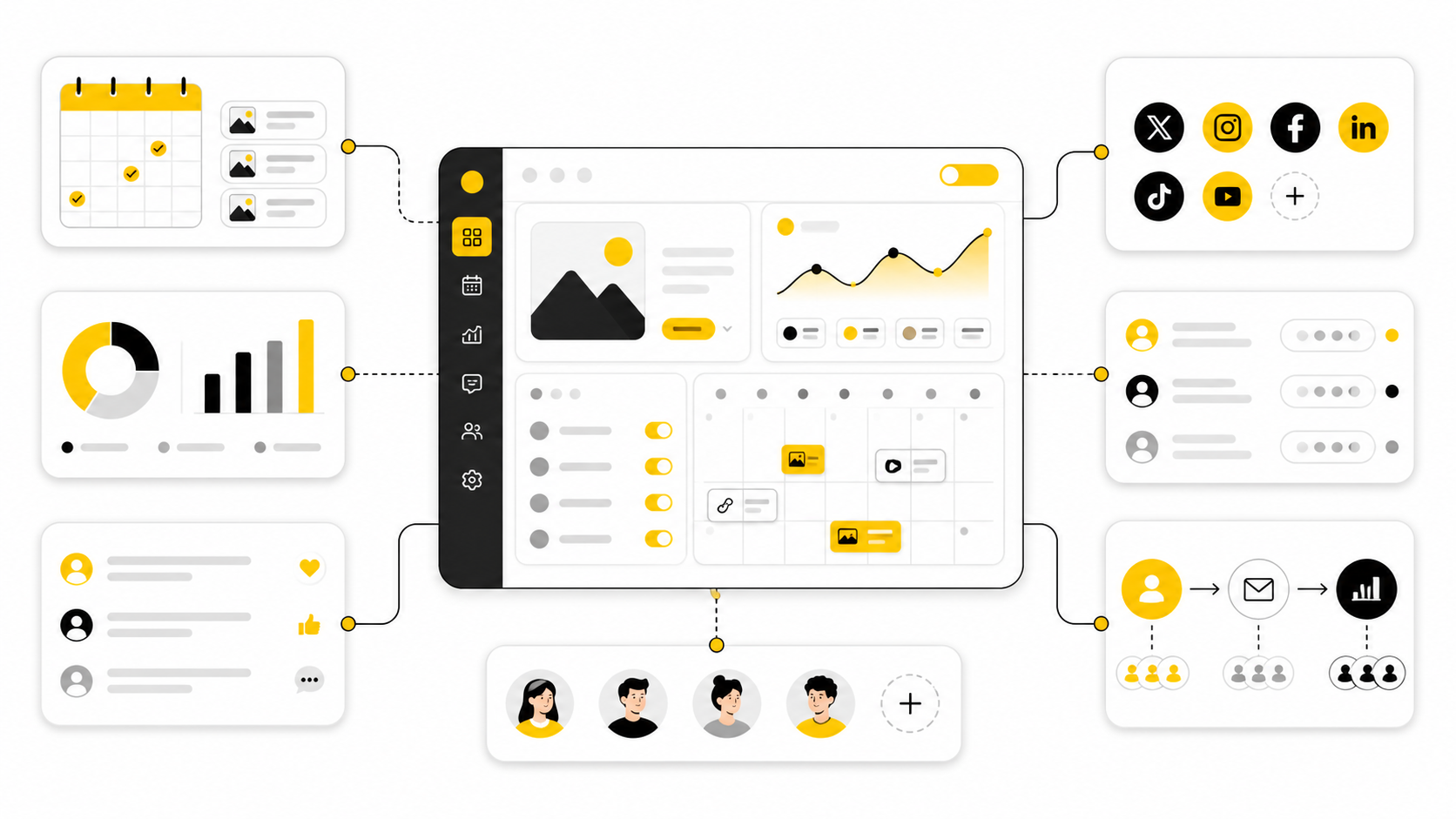
Social media marketing management services are not just about posting on Instagram, scheduling a few updates, and hoping something catches. At their best, they give a business a repeatable system for planning content, publishing consistently, managing conversations, learning from performance data, and turning attention into pipeline, sales, retention, or community growth.
That matters because social media is now too big, too fragmented, and too fast-moving to treat casually. More than two-thirds of the world now uses social media, based on the latest Digital 2026 global overview, and buyers use these platforms to discover brands, research options, compare credibility, ask questions, and decide who feels trustworthy. A business that shows up randomly will usually get random results.
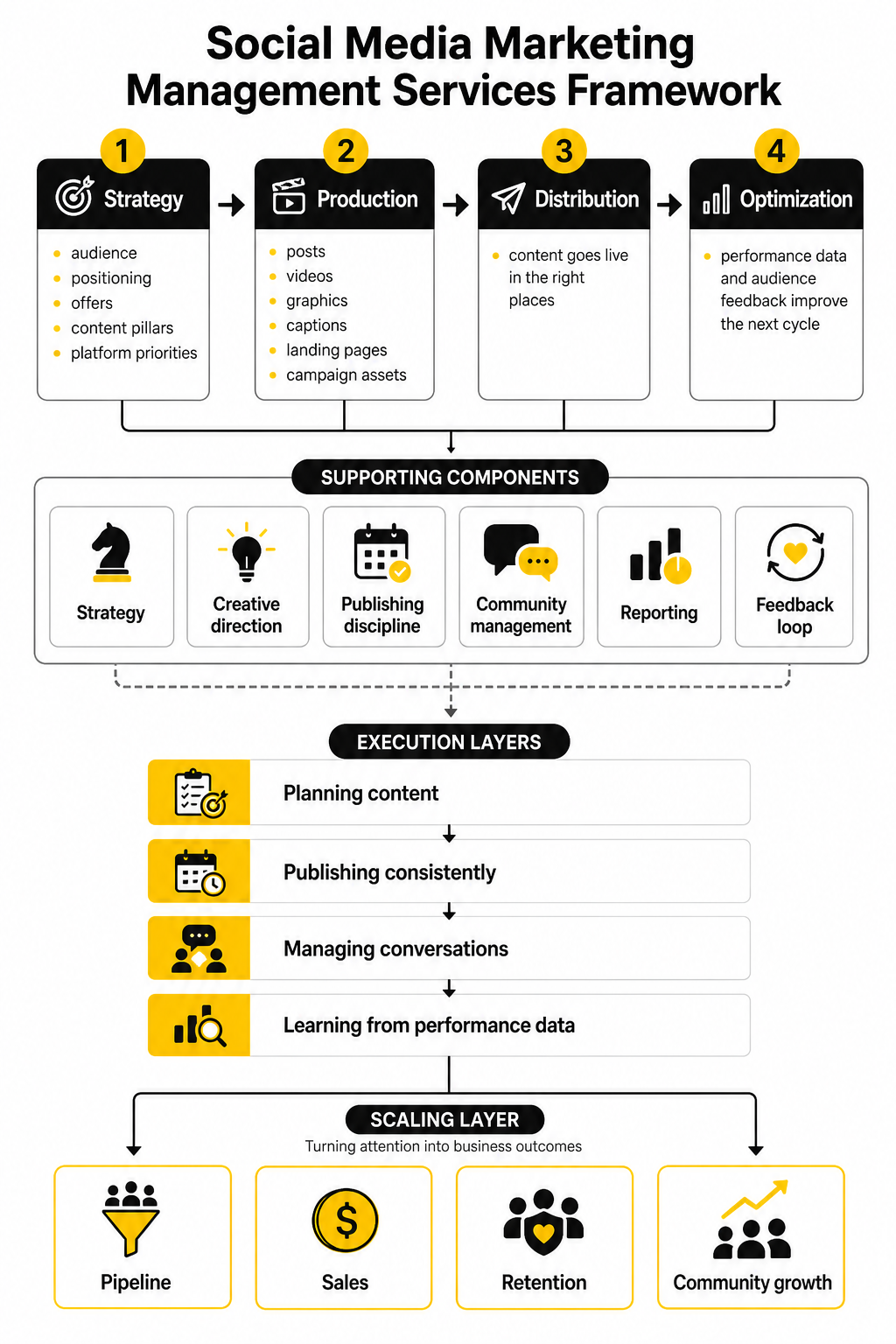
The real value of professional social media marketing management services is structure. You are not paying someone to “make posts.” You are paying for strategy, creative direction, publishing discipline, community management, reporting, and a feedback loop that keeps improving the work over time.
Why Social Media Marketing Management Services Matter
Social media has become one of the few marketing channels where brand visibility, customer conversation, product education, social proof, and demand generation all happen in the same place. That is powerful, but it also creates pressure. If your content is inconsistent, your replies are slow, or your messaging feels disconnected from the rest of your marketing, people notice.
The challenge is that social platforms reward consistency, relevance, and speed, while most teams are already stretched. A founder might have ideas but no time to post. A marketing manager might have a content calendar but no design support. A sales team might hear the same objections every week, but those insights never become useful content.
That is where managed social media becomes valuable. A good service turns scattered ideas into a clear operating rhythm: what to say, where to say it, when to publish, how to engage, and how to measure whether the work is actually helping the business. For teams that want a simple publishing and scheduling layer, tools like Buffer can support the workflow, but the bigger win comes from having the right strategy behind the tool.
The Management Framework Behind Strong Social Media Results
Strong social media management starts with the business objective, not the content format. A brand trying to book sales calls needs a different plan from an ecommerce store trying to drive product discovery, and both need a different plan from a local service business trying to build trust in one city. The mistake is starting with “we need more reels” before defining what the content is supposed to accomplish.
A practical framework usually has four layers: strategy, production, distribution, and optimization. Strategy defines the audience, positioning, offers, content pillars, and platform priorities. Production turns that strategy into posts, videos, graphics, captions, landing pages, and campaign assets. Distribution makes sure the work actually goes live in the right places, while optimization uses performance data and audience feedback to improve the next cycle.
This is also where social media marketing management services separate themselves from basic content posting. Posting is an activity. Management is a system. It connects content ideas to business goals, audience behavior, platform mechanics, and measurable outcomes.
The Core Components of a Professional Social Media Management Service
A professional social media management service usually combines strategy, content production, publishing, engagement, reporting, and campaign improvement. Those pieces should not live in separate silos, because social media gets weaker when one person plans, another posts, another replies, and nobody connects the results back to the business. The whole point is to create one working system that keeps the brand visible, useful, and commercially relevant.
This matters even more now because audiences are spread across multiple platforms and formats. People may discover a brand through a short video, check its credibility through comments, click through to a landing page, ask a question in DMs, and only later become a lead or customer. With global social media use continuing to cover a massive share of the online population, social media marketing management services need to handle the full journey, not just the public-facing post.
Strategy and Positioning
Strategy comes first because content without direction turns into noise. Before a team creates posts, it needs to understand who the business is trying to reach, what those people care about, what problems the offer solves, and why the brand deserves attention. Without that clarity, the content calendar becomes a list of random themes instead of a focused growth asset.
Good social media strategy also defines the role of each platform. LinkedIn may be used for authority and B2B demand. Instagram may support brand familiarity and visual proof. TikTok or YouTube Shorts may be useful for discovery, while Facebook Groups, Messenger, or WhatsApp can support community and conversation depending on the market.
The best strategies are specific enough to guide daily decisions. They clarify content pillars, tone of voice, offer angles, posting cadence, audience objections, and conversion paths. That way, every post has a job, whether it is building trust, educating prospects, handling resistance, creating demand, or moving people toward the next step.
Content Planning and Editorial Direction
Content planning turns strategy into a practical schedule. This is where the team decides what will be published, when it will go live, what format it will use, and how each post supports the broader marketing plan. A useful calendar is not just a spreadsheet full of dates; it is the operating system for consistent communication.
Editorial direction is what keeps that calendar from becoming bland. It defines the themes, hooks, examples, proof points, and angles that make the content feel sharp instead of generic. This is especially important for service businesses, because social content often needs to explain invisible value before someone understands why the service is worth paying for.
Strong planning also creates room for flexibility. Some posts should be prepared in advance, but the team still needs space to respond to platform trends, product updates, customer questions, industry shifts, and sales feedback. That balance is where social media management becomes practical rather than rigid.
Creative Production
Creative production includes the writing, design, video editing, graphics, short-form clips, carousels, captions, thumbnails, and campaign assets that bring the strategy to life. This is the part most people see, so it is easy to assume it is the whole service. It is not, but it is still critical because weak creative can make a strong strategy invisible.
The creative needs to match both the brand and the platform. A polished LinkedIn document post may work well for a consulting business, while a fast, direct, vertical video may be stronger for a consumer product. A good management team knows how to adapt the same core message without lazily copying and pasting it everywhere.
Production also benefits from clear workflows. Brands need a process for briefs, approvals, edits, asset storage, and publishing handoff. If the team is using a scheduling tool, a platform like Buffer can help keep planned posts organized, but the quality still comes from the thinking behind the content.
Publishing and Platform Management
Publishing sounds simple until a business has to do it consistently across multiple platforms, time zones, campaigns, and content formats. A professional service manages the cadence so the brand does not disappear for two weeks and then suddenly post five times in one day. Consistency builds familiarity, and familiarity is one of the quiet advantages in social media marketing.
Platform management also includes profile optimization. Bios, pinned posts, highlights, links, banners, featured sections, and call-to-action placements all shape what happens after someone discovers the brand. If those pieces are unclear, even good content can leak attention.
This is where the difference between activity and management becomes obvious. Activity is publishing because the calendar says something is due. Management is publishing the right thing, in the right format, with the right context, and with a clear next step for the audience.
Community Management and Response Handling
Once content starts bringing people in, the work shifts from publishing to managing the conversation. Comments, DMs, mentions, reviews, and tagged posts are all part of the brand experience now. A business can have strong content and still lose trust if the audience feels ignored after engaging.
This is one reason social media marketing management services should include clear response handling, not just content creation. The team needs rules for common questions, escalation paths for sensitive issues, response tone, lead qualification, spam filtering, and when to move a public conversation into a private channel. Social media is not a billboard; it is a live touchpoint.
Fast response also has a commercial impact. The 2025 Sprout Social Index shows how much pressure brands face to be responsive and useful on social channels, especially as consumers expect social media to function as both a content channel and a customer care channel. If the management process does not cover engagement, the brand is only doing half the job.
Lead Capture and Conversion Paths
Attention is valuable, but it is not the finish line. A social media strategy needs a clean path from interest to action, whether that action is booking a call, joining an email list, downloading a guide, asking for a quote, or buying a product. This is where many businesses quietly lose money: the content creates interest, but the next step is unclear.
The conversion path should match the audience temperature. A cold viewer may need a helpful post, a simple lead magnet, or a useful follow-up sequence. A warmer prospect may be ready for a consultation page, a demo request, a product page, or a direct message conversation that qualifies their need.
For service businesses, this often means connecting social media with CRM, automation, and follow-up. A platform like GoHighLevel can be useful when the business wants to manage leads, pipelines, messaging, and campaigns in one place. For brands that rely heavily on Instagram, Messenger, or WhatsApp conversations, ManyChat can help turn social engagement into structured conversations instead of scattered inbox activity.
How Professional Implementation Works Day to Day
Professional implementation is where the strategy stops being a document and becomes a rhythm. The team needs a weekly and monthly operating process that keeps ideas moving from research to content to approval to publishing to reporting. Without that rhythm, even smart strategies become unused PDFs.
The process should be simple enough to follow but strong enough to protect quality. Most businesses do not need a bloated system with endless meetings and complicated approval layers. They need a clean workflow that makes sure the right content gets produced, reviewed, published, measured, and improved.
A practical implementation flow usually looks like this:
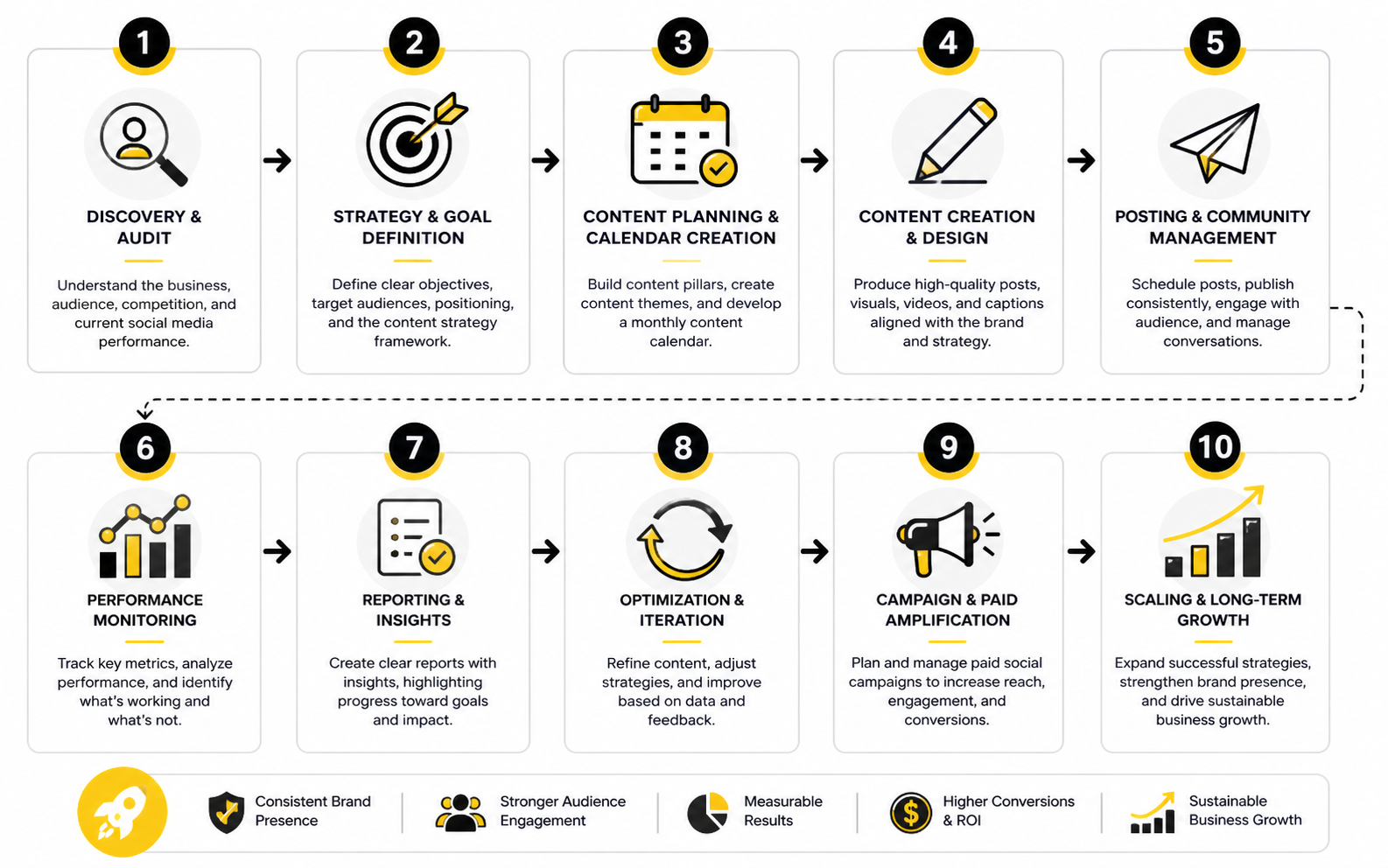
Discovery and Onboarding
The first stage is discovery, and it should be more than a quick form asking for logo files. A serious provider needs to understand the business model, offer structure, audience, margins, sales process, competitors, brand voice, and existing marketing assets. Without that context, they are guessing.
Onboarding should also clarify who owns what. The client may need to provide product updates, customer insights, subject matter expertise, approvals, testimonials, or sales feedback. The management team may own strategy, creative direction, production, publishing, engagement, reporting, or a specific subset of those responsibilities.
This is also the point where access and tooling get cleaned up. Accounts, permissions, brand assets, analytics access, tracking links, approval workflows, and communication channels should be organized before content production begins. Messy access creates delays, and delays kill consistency.
Monthly Planning and Weekly Execution
Monthly planning gives the social strategy a direction, while weekly execution keeps it moving. The monthly layer should map bigger themes, campaigns, offers, seasonal moments, product priorities, and content pillars. The weekly layer should turn those decisions into specific posts, scripts, edits, approvals, and publishing tasks.
This split matters because social media needs both perspective and speed. If everything is planned too far ahead, the content can feel stale. If everything is created at the last minute, quality drops and the team burns out.
A good service keeps the two connected. The monthly plan gives the team a strong base, and the weekly cycle gives them room to adjust based on what the audience is actually doing. That is how social media marketing management services stay strategic without becoming slow.
Statistics and Data
Measurement is where social media marketing management services either become a real business function or stay stuck as “content activity.” The numbers should not be used to decorate a report. They should tell the team what is working, what is weak, what needs more budget, what needs to stop, and what should be tested next.
The first thing to understand is scale. Social is not a small side channel anymore; DataReportal’s Digital 2026 Global Overview puts global social media user identities at 5.66 billion, equal to 68.7% of the world’s population. That does not mean every business should be everywhere, but it does mean the audience is probably using social media in some part of their discovery, research, or buying journey.
The second thing to understand is context. A 2% engagement rate can be excellent in one industry and weak in another. A post with fewer likes but more qualified clicks may be more valuable than a viral post that attracts the wrong audience. Good reporting does not chase the biggest number; it explains what the number means.
The Metrics That Actually Matter
The most useful metrics depend on the business goal. If the goal is awareness, reach, impressions, profile visits, follower growth, share rate, and video views matter. If the goal is demand generation, clicks, saves, DMs, lead form submissions, booked calls, and assisted conversions become more important.
Engagement still matters, but it needs to be interpreted carefully. Likes are easy to count, but they are not always the strongest signal. Saves, shares, meaningful comments, replies, and direct messages usually show deeper interest because they require more effort from the audience.
For service businesses, the best social media reports usually separate metrics into three layers:
This is important because each layer answers a different question. Visibility shows whether enough people are seeing the content. Engagement shows whether the right people care. Business metrics show whether social activity is helping the company make money, save time, or strengthen relationships.
How to Read Benchmarks Without Getting Misled
Benchmarks are useful, but only when they are used properly. The 2025 Sprout Social benchmarks research is based on analysis of 3 billion messages across 1 million active public profiles, which makes it helpful for understanding broad performance patterns. Still, a benchmark should be a reference point, not a rulebook.
The mistake is comparing your brand to every other brand on the internet. A local legal firm should not judge its performance against a global fashion brand. A B2B software company should not expect the same engagement patterns as a creator-led fitness account. Different audiences behave differently, and that is exactly why industry and competitor context matters.
A more carefully approach is to use three benchmark types together. Personal benchmarks show whether your own account is improving. Competitive benchmarks show whether you are gaining or losing ground against similar brands. Industry benchmarks show whether your performance is broadly healthy for your category.
Building an Analytics System That Drives Action
A useful analytics system starts before the report is created. The team needs to define campaign goals, trackable actions, platform priorities, and the decision each metric will support. If nobody knows what action a metric should drive, it probably does not belong in the main report.
The system should connect platform analytics with website and conversion data wherever possible. Native analytics can show reach, engagement, views, and audience behavior inside the platform. Website analytics, CRM data, and booking tools help show what happened after someone clicked, subscribed, filled out a form, or started a conversation.
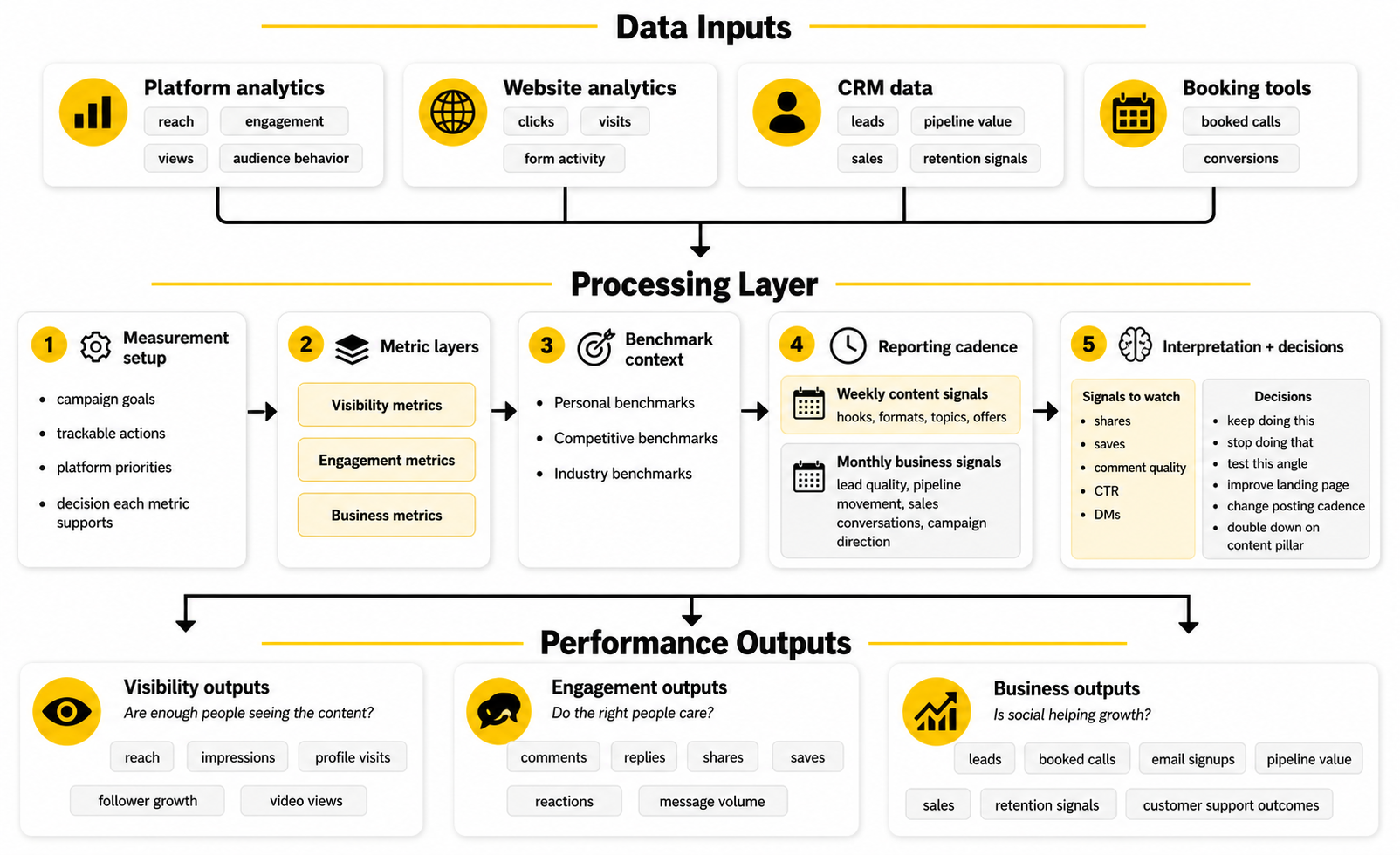
A simple reporting system might track weekly content signals and monthly business signals. Weekly reviews help the team spot creative patterns quickly, such as which hooks, formats, topics, and offers are getting attention. Monthly reviews help connect that activity to bigger outcomes like lead quality, pipeline movement, sales conversations, and campaign direction.
Performance Signals Worth Watching Closely
Shares are one of the strongest signals for content-market fit because people are putting their own reputation behind the post. Saves are also powerful because they show the content has future value. Comments can be useful, but only when the team looks at comment quality instead of counting every emoji as equal.
Click-through rate matters when the content is designed to move people off-platform. A low click-through rate might mean the offer is unclear, the call to action is weak, or the post attracted the wrong audience. A strong click-through rate with poor conversions may mean the landing page, form, offer, or follow-up process needs work.
Direct messages are especially important for many service businesses. They often reveal objections, buying intent, confusion, and demand that public metrics miss. If a social media management team is not reviewing DMs and audience questions, it is missing some of the most useful market research available.
Reporting Should Explain What Happens Next
The best reports are not long; they are useful. A good report should explain what happened, why it likely happened, what the team learned, and what will change next. Anything else is usually just dashboard decoration.
This is where professional social media marketing management services should become more valuable over time. After several months, the team should know which topics create saves, which formats create shares, which offers create leads, which platforms deserve more attention, and which activities are not worth the effort. The strategy should get sharper because the data keeps removing guesswork.
A practical report should end with decisions. Keep doing this. Stop doing that. Test this angle. Improve this landing page. Change this posting cadence. Double down on this content pillar. That is the difference between reporting performance and managing growth.
What to Look For When Choosing a Social Media Management Partner
Choosing a provider is not just about finding someone who can make decent-looking posts. Plenty of people can design graphics, write captions, and schedule content. The harder question is whether they can understand your business model, protect your brand, manage tradeoffs, and turn social media into a disciplined marketing function.
The right partner should be able to explain how their work connects to the rest of your growth system. That includes your website, CRM, email follow-up, sales process, customer support, and paid campaigns if those are part of the strategy. Social media marketing management services work best when they do not operate like an isolated content department.
Strategy Before Volume
More content is not always better. Publishing more can help when the message is clear, the audience is defined, and the production process is strong. But if the offer is confusing or the content is generic, scaling volume usually just creates more noise.
A strong partner should push back on the idea that every brand needs to be everywhere. Some businesses need depth on one or two platforms before they expand. Others need a broader distribution system because their audience is split across multiple channels and buying contexts.
The question is not “how many posts do we get?” The better question is “what is each content type supposed to do?” Once that answer is clear, volume becomes a strategic decision instead of a vanity deliverable.
Platform Fit and Audience Behavior
A good social media plan respects how people actually use each platform. LinkedIn rewards professional relevance, strong points of view, useful commentary, and credible expertise. Instagram often depends more on visual identity, short-form storytelling, community cues, and brand familiarity.
TikTok, YouTube Shorts, and Reels can create discovery faster, but they also demand stronger hooks and more native creative. Facebook can still matter for local businesses, communities, groups, events, and certain demographic segments. Pinterest, Reddit, X, and niche platforms may also matter depending on the category, but they should not be added just to look comprehensive.
This is where experience matters. A weak provider gives every client the same platform mix. A strong provider studies the audience, the buying journey, the content format, and the commercial goal before deciding where the brand should compete.
Brand Risk and Reputation Management
Social media creates upside, but it also creates risk. A careless reply, poorly timed trend, inaccurate claim, or off-brand joke can create problems faster than most teams expect. This is especially true in regulated industries, high-trust service categories, health-adjacent markets, financial topics, legal services, and B2B companies with longer sales cycles.
A professional provider should have review standards for accuracy, tone, permissions, sensitive topics, and escalation. They should know when content needs client approval and when fast execution is safe. They should also understand that not every trend deserves a response.
Brand safety does not mean the content has to be boring. It means the team knows the difference between being sharp and being reckless. That distinction matters a lot when the brand has customers, employees, partners, and future buyers watching.
Organic Social, Paid Social, and Funnel Support
Organic social can build trust, teach the market, create demand, and keep the brand visible. Paid social can amplify proven messages, retarget warm audiences, test offers faster, and support specific campaigns. They are different levers, but they work better when they share the same strategic foundation.
The mistake is treating paid campaigns as a shortcut for weak organic strategy. If the message does not resonate organically at all, paid traffic may only expose that weakness faster. On the other hand, strong organic content can reveal angles, objections, hooks, and proof points that later become better ads.
This is why social media management should connect with landing pages and follow-up systems. If the content sends people to a broken or unclear next step, performance will suffer. For service businesses that need funnels, booking flows, and follow-up, platforms like GoHighLevel, ClickFunnels, or Systeme.io can support the conversion side when the business needs more than content scheduling.
Scaling Without Losing Quality
Scaling social media is not just posting more often. It means creating a production system that can handle more ideas, more formats, more approvals, more conversations, and more reporting without the quality falling apart. That requires process, not chaos.
The first scaling challenge is creative fatigue. Audiences get tired of seeing the same hooks, layouts, opinions, and offers. A serious team needs a way to refresh angles, test new formats, repurpose strong ideas, and keep the brand from sounding like it is copying itself every week.
The second challenge is operational complexity. More platforms mean more assets, more specs, more comments, more analytics, and more chances for mistakes. Before scaling, the team should have clear ownership, clean workflows, and tools that make execution easier instead of adding another layer of confusion.
The Tools Should Support the Strategy
Tools are useful, but they are not the strategy. A scheduling tool can organize publishing. A chatbot can manage conversations. A CRM can track leads. None of them will fix weak positioning, vague offers, or content that does not say anything useful.
Still, the right stack can make social media management much smoother. Buffer can help with planning and publishing. ManyChat can help when conversations and message automation are central to the customer journey. Brevo or Moosend can support email follow-up after social traffic turns into subscribers or leads.
The key is to choose tools based on bottlenecks. If the bottleneck is publishing consistency, use a scheduling system. If the bottleneck is lead follow-up, improve CRM and automation. If the bottleneck is weak creative, no software will save you until the messaging improves.
Red Flags to Avoid
A weak provider usually talks mostly about deliverables. They promise a certain number of posts, reels, stories, or captions, but they do not ask enough about the business. That is a warning sign because social media management without business context often turns into pretty content with no commercial direction.
Another red flag is reporting that hides behind vanity metrics. Reach, impressions, and likes are useful in the right context, but they should not be the whole story. The provider should be able to explain what the metrics mean and what decisions they are making because of them.
Be careful with anyone who guarantees viral growth as the main pitch. Virality can happen, but it is not a dependable strategy by itself. A stronger partner will focus on repeatable learning, consistent execution, better audience understanding, and business outcomes that compound over time.
Bringing the Whole System Together
At this stage, the main point should be clear: social media marketing management services are not one task. They are an operating system for strategy, content, publishing, engagement, measurement, conversion, and improvement. When those pieces work together, social media becomes easier to manage and much easier to connect to real business outcomes.
The strongest teams do not treat social as a random content machine. They build a system where insights from sales shape content, audience reactions shape the next campaign, reports shape priorities, and every platform has a clear role. That is how the work compounds instead of constantly starting from zero.
The final system should feel simple from the outside and disciplined on the inside. The audience sees useful content, consistent presence, fast responses, and clear next steps. Behind the scenes, the business has workflows, accountability, performance signals, and a repeatable way to improve.
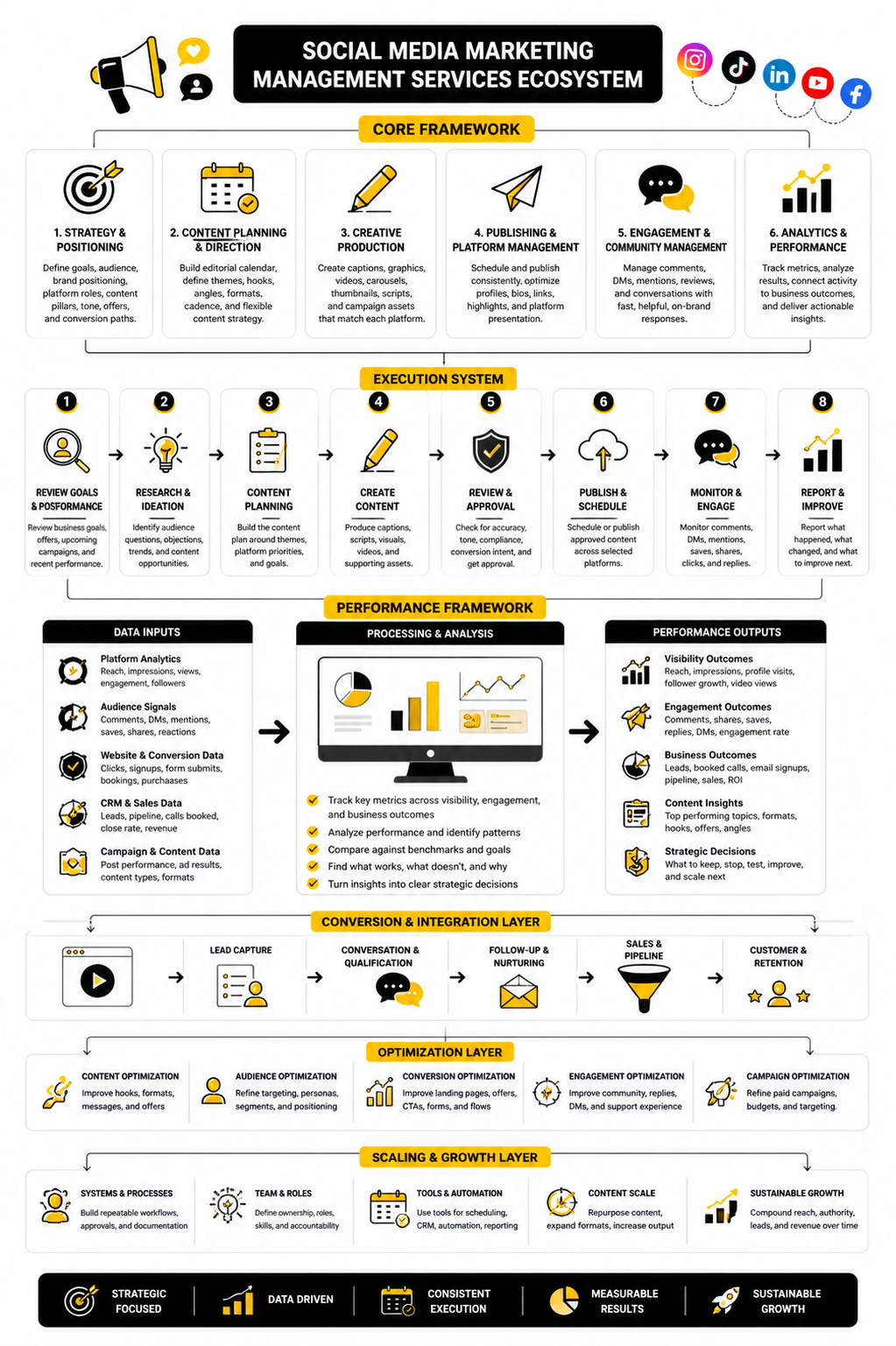
Social media marketing management services can look simple from the outside, but there are a lot of moving parts under the surface. The right questions help separate basic posting from serious management. These answers are built to clarify what businesses should expect before hiring a provider or building an internal process.
What are social media marketing management services?
Social media marketing management services help a business plan, create, publish, manage, and improve its social media presence. A full service usually includes strategy, content planning, creative production, scheduling, engagement, analytics, and reporting. The goal is not just to post more content, but to make social media support awareness, trust, lead generation, sales, and customer relationships.
Who should use social media marketing management services?
These services are useful for businesses that need consistent social media execution but do not have the time, team, or expertise to manage it properly in-house. They are especially helpful for service businesses, agencies, ecommerce brands, local businesses, consultants, SaaS companies, creators, and growing teams with active marketing goals. If social media already influences how people discover or evaluate your brand, professional management can make the channel more structured and reliable.
What is included in a typical social media management package?
A typical package may include strategy, content calendars, caption writing, graphic design, short-form video editing, scheduling, platform management, community engagement, monthly reporting, and campaign recommendations. Some providers also include influencer coordination, paid social support, email follow-up, funnel planning, or automation setup. The best package depends on the business model, platform mix, internal resources, and expected outcomes.
How much should a business post on social media?
There is no universal posting frequency that works for every business. A brand should post often enough to stay visible and gather useful performance data, but not so often that quality drops or the content becomes repetitive. The better question is whether the posting cadence is sustainable, strategic, and connected to a clear audience need.
Which platforms should a business focus on first?
A business should start with the platforms where its audience already spends time and where the brand can create strong native content. LinkedIn may be the best first platform for B2B services, while Instagram, TikTok, Facebook, YouTube Shorts, or Pinterest may make more sense for consumer brands depending on the offer. Choosing fewer platforms and executing well is usually better than spreading weak content everywhere.
How long does social media management take to show results?
Some signals can appear quickly, such as better consistency, clearer messaging, higher engagement quality, more profile visits, or more direct conversations. Business results usually take longer because trust, content testing, audience learning, and conversion paths need time to develop. A realistic approach looks for early indicators first, then connects those signals to leads, sales, retention, and pipeline over time.
What metrics should a business track?
A business should track visibility, engagement, and business metrics together. Visibility metrics show whether people are seeing the content, engagement metrics show whether the audience cares, and business metrics show whether social activity is helping growth. The most important numbers depend on the goal, so a lead generation strategy should not be judged the same way as a brand awareness campaign.
Can social media management generate leads?
Yes, but it needs a clear conversion path. Content can create attention and trust, but leads usually come from strong calls to action, useful offers, landing pages, DMs, lead forms, booking flows, or email capture. Social media marketing management services are strongest when they connect content with follow-up instead of leaving interested people with nowhere obvious to go.
What is the difference between social media management and social media marketing?
Social media management often focuses on the day-to-day operation of social channels, including publishing, scheduling, engagement, and reporting. Social media marketing is broader because it connects those activities to positioning, campaigns, funnels, offers, audience growth, and revenue outcomes. In practice, a strong provider should understand both because management without marketing strategy usually becomes busywork.
Should a business hire an agency, freelancer, or in-house social media manager?
The right choice depends on budget, complexity, speed, and how much strategic support the business needs. A freelancer can be a strong fit for focused execution, an agency can bring broader resources, and an in-house manager can stay closer to daily company knowledge. The best setup is the one that gives the business consistent execution, clear ownership, and enough strategic thinking to avoid random posting.
What should be prepared before hiring a social media management partner?
A business should prepare its brand guidelines, offer details, audience information, existing content, platform access, analytics access, customer questions, sales objections, and examples of content it likes or dislikes. It should also clarify who approves content, who provides subject matter expertise, and what results matter most. The smoother the onboarding, the faster the provider can move from setup to useful execution.
What are the biggest mistakes businesses make with social media?
The biggest mistakes are posting without strategy, chasing trends without fit, measuring only vanity metrics, ignoring comments and DMs, and treating social media as separate from the rest of the business. Another common mistake is expecting one viral post to replace consistent positioning and follow-up. Social media works better when it is managed as a long-term system, not a slot machine.
Build a stronger local presence with BAAM AI
Turn your website, Google profile, social channels, and AI visibility into one growth engine
Most businesses do not need more random marketing activity. They need a consistent presence system that helps the right people find them, trust them, and take action. BAAM AI brings strategy, local SEO, website updates, Google Maps visibility, social content, AI-search readiness, media production, and reporting into one practical monthly engine.
If you want your marketing to keep working after the campaign ends, start with a free BAAM AI presence audit. See how your business shows up today and where the fastest visibility wins are at BAAM AI.