BAAM AI Blog
Social Media Marketing Can Be Done On Which Social Network? A Practical Guide For Choosing The Right Platforms
Social media marketing can be done on which social network is a simple question with a slightly uncomfortable answer: almost all of them can work, but not all of them should be your priority. Facebook, Instagram...
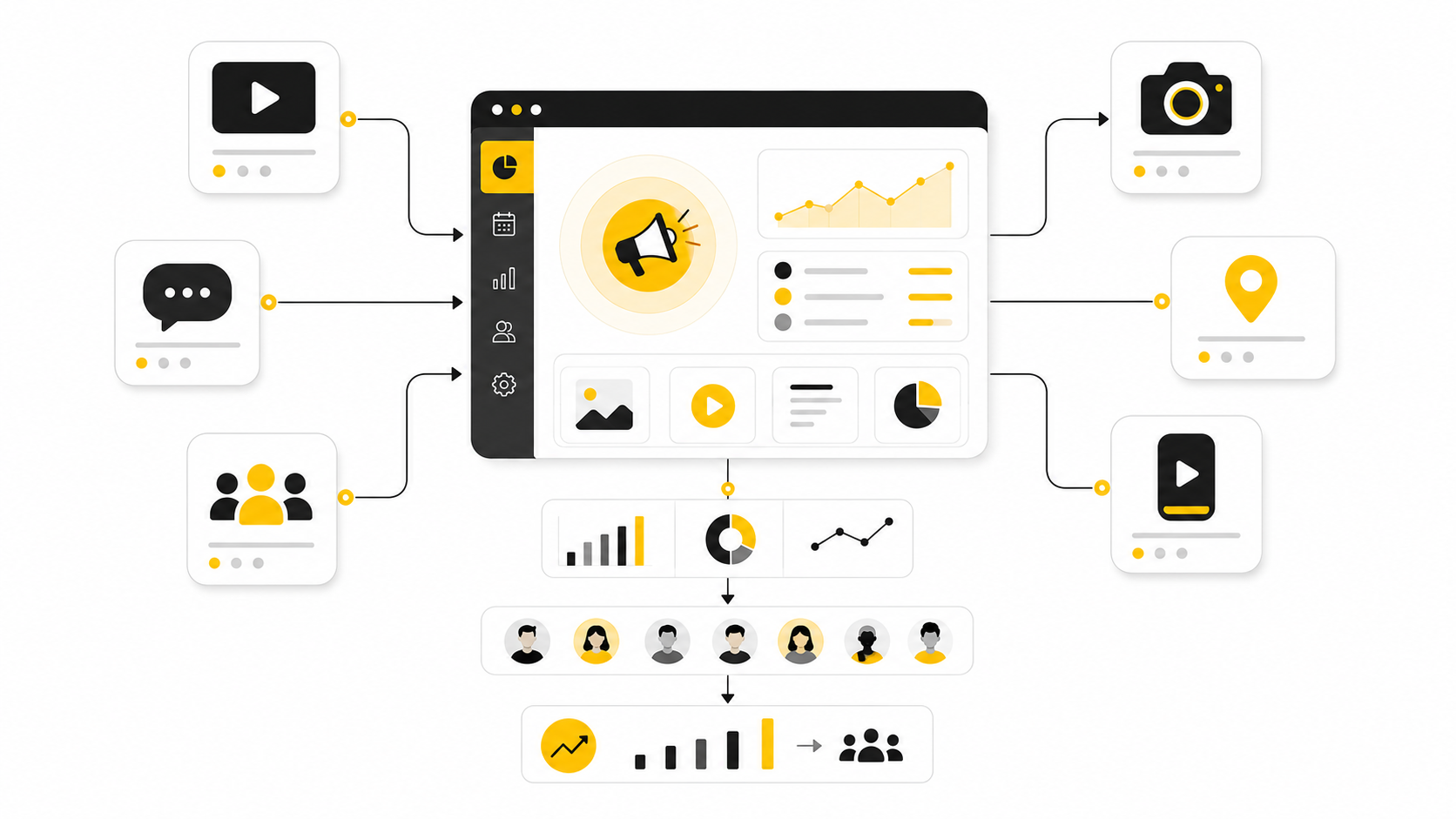
Social media marketing can be done on which social network is a simple question with a slightly uncomfortable answer: almost all of them can work, but not all of them should be your priority. Facebook, Instagram, YouTube, TikTok, LinkedIn, Pinterest, Snapchat, Reddit, X, Threads, WhatsApp, and Messenger can all support marketing in different ways. The real decision is not “which platform is best?” but “which platform gives this business the best match between audience, content format, buying intent, and operational capacity?”
That distinction matters because social media is no longer one neat channel. It is discovery, entertainment, search, customer support, community, direct messaging, creator partnerships, product education, paid acquisition, and retention all mixed together. Global social media use has reached supermajority scale, and DataReportal’s Digital 2026 research shows that social platforms now sit inside the daily behavior of billions of people, not just younger early adopters.
So the practical answer is this: use the social network where your audience already pays attention, where your message fits the native format, and where the next step toward revenue is realistic. A B2B consultant may get stronger results from LinkedIn and YouTube than Snapchat. A beauty brand may lean into Instagram, TikTok, Pinterest, and creator-led short video. A local service business may need Facebook, Instagram, Google-adjacent video, Messenger automation through ManyChat, and a simple follow-up system before it needs a viral TikTok strategy.
this guide is structured as a six-part guide because platform choice only makes sense when it is connected to strategy. First, we will map the major social networks by role, then we will move into the practical decision framework, implementation, measurement, and final platform recommendations. The goal is to help you choose with confidence instead of copying whatever platform is trending this month.
Why Social Network Choice Matters
Choosing the wrong social network usually does not fail loudly at first. It fails quietly through weak engagement, inconsistent posting, vague reporting, and content that feels like it was copied from somewhere else. That is why the question “social media marketing can be done on which social network” should be treated as a strategy question, not a listicle question.
Every major platform has a different job. YouTube is strong for searchable video, tutorials, reviews, and long-term content assets, with YouTube reporting that Shorts now averages more than 200 billion daily views. Meta’s family of apps, including Facebook, Instagram, WhatsApp, and Messenger, remains enormous, with Meta reporting 3.56 billion family daily active people in March 2026. LinkedIn is not the biggest entertainment platform, but it is often the right place when the buying committee, founder, hiring manager, consultant, or B2B operator is the audience.
The cost of choosing badly is not just wasted time. It also creates distorted learning because poor platform fit can make a good offer look weak. A company may think its message does not work when the real issue is that the message is being delivered in the wrong format, to the wrong audience, on the wrong network.
The Social Media Platform Framework
A useful framework starts with four questions: who is the audience, what are they trying to do on the platform, what format does the platform reward, and what business outcome should happen next? This keeps the decision grounded. It also prevents the common mistake of treating every social network like a place to dump the same caption, same graphic, and same call to action.
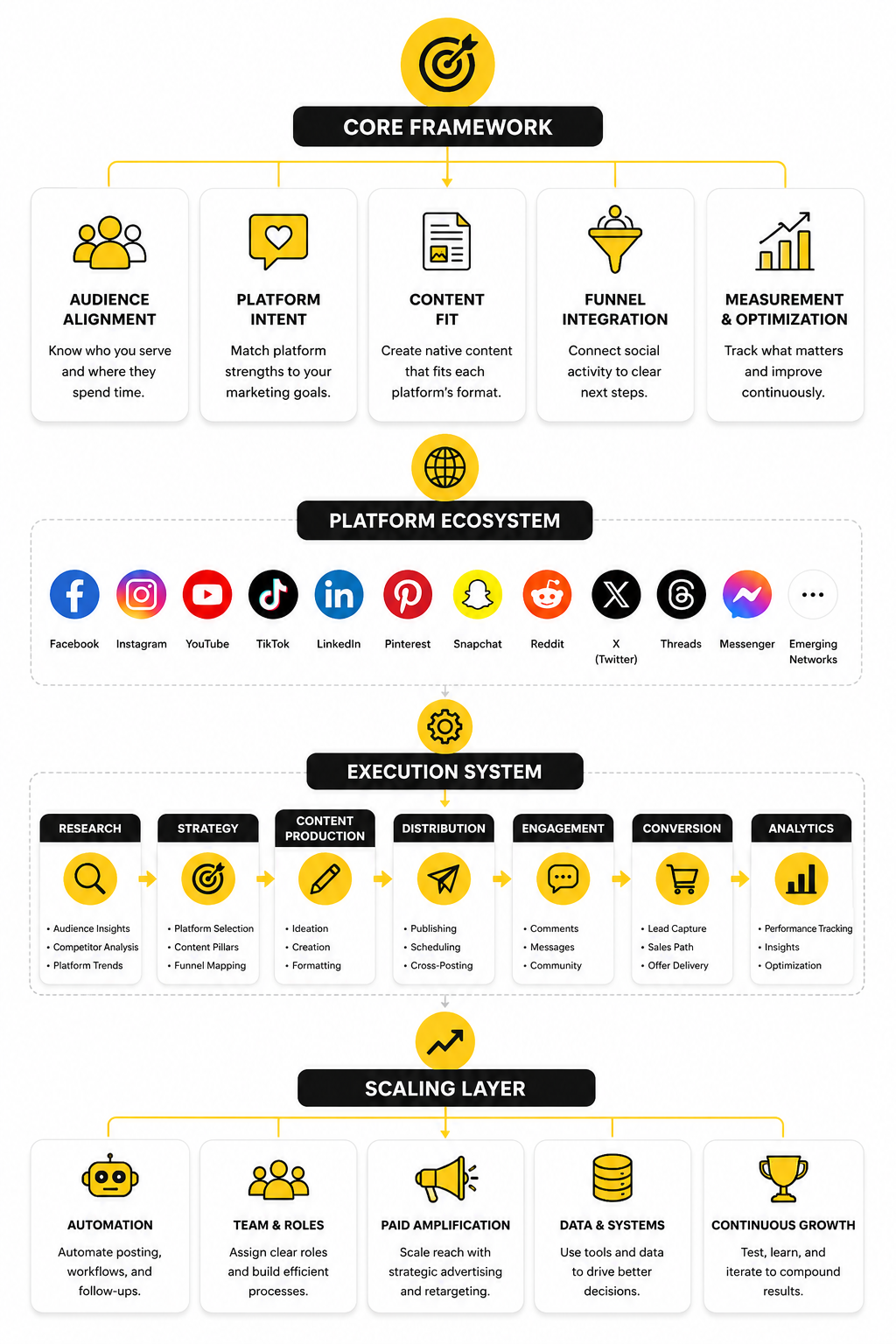
The first layer is audience fit. Pew’s teen research, for example, shows that YouTube remains nearly universal among U.S. teens, while TikTok, Snapchat, and Instagram are also heavily used by that age group, which matters for youth-oriented categories but does not automatically make those platforms right for every business. The second layer is intent fit, because a person browsing Pinterest for home ideas, watching a YouTube tutorial, scrolling TikTok for entertainment, or reading LinkedIn during work mode is in a very different state of mind.
The third layer is content fit. TikTok and Instagram Reels reward fast, native, personality-driven short video. YouTube supports both short-form reach and deeper long-form education. Pinterest supports visual discovery and planning, and Pinterest reported 631 million monthly active users in Q1 2026, which is especially relevant for categories where people collect ideas before buying.
Core Platform Categories
Most businesses should think in platform categories before choosing individual networks. This makes the decision less emotional and more operational. Instead of asking whether Instagram is better than LinkedIn, ask what job the platform must perform in the funnel.
The category matters because a platform can be excellent and still wrong for your current goal. Reddit reported 126.8 million daily active uniques in Q1 2026, but that does not mean every brand should start posting promotional content there. Reddit can be powerful for listening, research, community credibility, and problem discovery, but it punishes lazy self-promotion quickly.
Professional Implementation Starts With Focus
A professional social media strategy usually starts narrower than people expect. One or two primary networks are enough for most small teams, especially if they are still proving message-market fit. Once a repeatable content system is working, scheduling tools like Buffer or content-specific tools like Flick Social can help turn that system into a manageable workflow.
The starting point should be a simple platform role map. Pick one platform for reach, one for trust, and one for conversion or follow-up if your business has the capacity to support all three. For example, a service business could use Instagram Reels for discovery, YouTube for deeper education, and Messenger automation through ManyChat for lead follow-up.
This is also where businesses need to be honest about resources. Short-form video requires creative volume. YouTube requires stronger planning and production discipline. LinkedIn requires consistent point-of-view content, while Pinterest requires strong visuals and search-aware content organization.
How Part 2 Will Continue
The next section will go deeper into the framework and explain how to evaluate each platform based on audience, intent, content format, funnel stage, and buying behavior. That is where the answer becomes more useful than a generic list of networks. Once those filters are clear, choosing between Facebook, Instagram, YouTube, TikTok, LinkedIn, Pinterest, Snapchat, Reddit, X, Threads, WhatsApp, and Messenger becomes much easier.
The Social Media Platform Framework
The best way to answer social media marketing can be done on which social network is to stop ranking platforms in isolation. A platform is only useful when it matches the audience, the content format, the user’s intent, and the next business step. When those four things line up, social media starts feeling less random and much more controllable.
This framework gives you a practical way to choose. It does not assume that the biggest platform is automatically the best one. It also does not assume that the newest platform deserves attention just because people are talking about it.
Audience Fit
Audience fit comes first because marketing does not work when the right message is shown to the wrong people. YouTube and Facebook still have unusually broad reach in the United States, with Pew Research showing that they are the only major platforms used by a majority of adults across every age group in its 2025 social media research. That makes them strong default candidates when a business serves a broad consumer market.
But broad reach is not always the goal. Instagram, TikTok, Snapchat, Reddit, and Pinterest can be stronger when the business needs a younger audience, visual discovery, creator-style content, or niche community attention. The mistake is assuming that a platform with more total users will always produce better results than a smaller platform with better audience concentration.
For B2B, audience fit often looks different. LinkedIn may not match YouTube or Facebook in total daily consumer attention, but it concentrates professionals, founders, recruiters, consultants, creators, and decision-makers in a work-oriented environment. That means a software company, agency, consultant, recruiter, or professional service provider may get better commercial signals from LinkedIn than from a larger entertainment-first platform.
Intent Fit
Intent fit is about what people are trying to do when they open the app. Someone opening TikTok may want entertainment, trend discovery, product inspiration, or quick answers. Someone opening YouTube may be ready to learn, compare, research, or solve a problem in more depth.
That difference matters because the same offer can perform very differently depending on the user’s state of mind. A direct sales pitch may feel intrusive inside a fast entertainment feed, but a useful product comparison or tutorial may feel natural on YouTube. Pinterest users often arrive in a planning mindset, which is why the platform can work well for fashion, interiors, food, weddings, beauty, travel, crafts, and lifestyle commerce.
Intent also explains why Reddit is tricky but valuable. Reddit can be excellent for understanding objections, category language, product research, and community sentiment, especially because Reddit reported 126.8 million daily active uniques in Q1 2026. But if a brand enters Reddit with obvious self-promotion instead of genuine participation, the same community strength that makes it valuable can turn against the campaign.
Content Format Fit
Every social network has a native content language. Instagram and TikTok are built around visual rhythm, personality, fast hooks, remix culture, and repeated creative testing. YouTube can support Shorts, but it also rewards deeper videos that answer real questions and keep working long after the publish date.
LinkedIn rewards expertise, point of view, credibility, and professional relevance. Pinterest rewards clear visuals, searchable ideas, and content that helps people plan or decide. Snapchat rewards fast, personal, mobile-native communication, and Snap reported 483 million daily active users and 956 million monthly active users in Q1 2026, which keeps it relevant for brands that understand younger, camera-first behavior.
This is where many brands make the wrong move. They choose a network because they like the audience, but they do not have the content muscle to compete there. A founder who hates being on camera may struggle on TikTok but thrive on LinkedIn writing, while a visual ecommerce brand may find Instagram, Pinterest, and short-form video much easier to sustain.
Funnel Fit
A good platform choice should match the stage of the customer journey. Some networks are better at creating first contact, while others are better at building trust, capturing leads, or driving repeat engagement. You do not need every platform to do every job.
Discovery platforms help people notice you. Education platforms help people understand why your offer matters. Conversion systems help turn attention into appointments, email subscribers, purchases, demos, or conversations.
For many businesses, the strongest setup is a simple chain. Use TikTok, Instagram, YouTube Shorts, or LinkedIn for attention, then send qualified people into a landing page, email list, booking page, or message automation. Tools like GoHighLevel can help when the business needs CRM, pipeline, appointment booking, and follow-up in one place instead of letting leads disappear after the first click.
Buying Behavior Fit
Buying behavior is the part most people skip, and it is often the reason campaigns disappoint. A $19 impulse product, a $500 ecommerce product, a $3,000 coaching offer, and a six-figure B2B contract do not need the same social media path. The bigger the decision, the more trust, education, proof, and follow-up usually matter.
Low-friction purchases can work well from short video, creator content, paid social, and simple landing pages. Higher-consideration offers usually need more than one touchpoint. They may need YouTube education, LinkedIn authority, case studies, email follow-up, webinars, consultations, or direct messages before a buyer feels ready.
This is why the right answer to social media marketing can be done on which social network changes by business model. A local gym, SaaS startup, skincare brand, mortgage broker, online course creator, and B2B agency may all use social media successfully, but the path from attention to revenue will look completely different. The platform has to match how the buyer actually decides.
Operational Fit
Operational fit is the honest question: can you actually execute this platform well for long enough to learn? A platform that requires five strong videos per week may be the wrong choice for a team that can barely produce one decent video per month. Consistency does not mean posting junk every day, but it does mean having a repeatable content process.
Small teams usually need leverage. A scheduling workflow with Buffer, a content research process, reusable templates, and clear approval rules can make social media manageable instead of chaotic. If the business also uses direct messages as part of the funnel, ManyChat can help automate replies, lead capture, and simple follow-up flows on supported messaging channels.
The point is not to turn social media into a factory. The point is to remove unnecessary friction so the team can focus on better ideas, sharper creative, and clearer offers. A boring but reliable workflow beats a chaotic “post when inspired” system almost every time.
How To Use The Framework
Start by scoring each platform from one to five across audience fit, intent fit, content fit, funnel fit, buying behavior fit, and operational fit. Do not overcomplicate the scoring. The value is in the conversation it forces, not in pretending the score is mathematically perfect.
A platform with a slightly smaller audience but stronger intent and better operational fit should usually beat a huge platform the team cannot execute well. That is especially true for small businesses, solo operators, creators, and agencies. Focus creates feedback, and feedback creates improvement.
Once the scoring is done, pick one primary platform and one supporting platform. The primary platform is where your best content and learning happen. The supporting platform should either deepen trust, capture demand, or improve conversion, not simply duplicate the same post in a slightly different size.
Major Social Networks For Marketing
Once the framework is clear, the platform list becomes much easier to use. Social media marketing can be done on which social network depends on what the business sells, who it serves, and how people prefer to discover and evaluate that offer. The strongest choice is rarely based on personal preference.
A platform should earn its place in the strategy. It needs a clear role, a realistic content plan, and a measurable next step. Otherwise, the business ends up “being active” without actually building attention, trust, or revenue.
Facebook still matters because it combines reach, groups, local discovery, ads, events, pages, and Messenger in one ecosystem. Meta reported 3.56 billion daily active people across its family of apps in March 2026, which keeps Facebook relevant even when younger marketers underestimate it. For local businesses, community-based brands, older consumer audiences, events, and retargeting, it can still be a practical platform.
The best Facebook strategy usually does not rely on page posts alone. Organic page reach can be inconsistent, so businesses often get more value from groups, paid ads, video, marketplace-style discovery, and direct messaging. If the audience expects conversation before purchase, Facebook can also connect naturally with Messenger automation through ManyChat.
Use Facebook when you need local reach, community engagement, retargeting, lead forms, event promotion, or message-based follow-up. Do not use it as a dumping ground for recycled Instagram graphics with no context. Facebook works best when the content fits the way people actually interact there: comments, shares, groups, recommendations, and conversations.
Instagram is a strong marketing platform for visual brands, creators, ecommerce, personal brands, lifestyle businesses, restaurants, fitness, beauty, fashion, travel, real estate, and service providers with a clear visual angle. Its advantage is not just reach. It gives brands several formats in one place: Reels for discovery, Stories for daily connection, carousels for education, Lives for interaction, and DMs for conversion.
The implementation mistake on Instagram is treating every post like a polished brochure. Reels need movement, hooks, and native pacing. Stories need immediacy and personality. Carousels need a clear idea, not just decorative slides.
Instagram also works well when the buying journey includes direct interaction. A person may watch a Reel, check the profile, tap highlights, read comments, and send a DM before ever visiting a website. That makes the profile, pinned content, highlights, and message flow part of the funnel, not cosmetic details.
YouTube
YouTube is one of the best platforms when education, search behavior, product research, tutorials, reviews, or long-term content value matter. YouTube states that Shorts averages more than 200 billion daily views, but the platform is also powerful because long-form videos can keep working after the first week. That gives YouTube a different strategic role than feeds that rely heavily on constant freshness.
A strong YouTube implementation usually separates content into three buckets. The first bucket answers high-intent search questions. The second builds authority with deeper explanations, comparisons, and opinions. The third uses Shorts to create discovery and route viewers toward stronger long-form assets.
YouTube is a good fit for software, education, coaching, finance, fitness, beauty, technical products, home improvement, B2B expertise, and any category where people research before buying. It is less forgiving when the brand has no patience for planning, scripting, packaging, and improving retention. The reward is big, but so is the discipline required.
TikTok
TikTok is best understood as a discovery and culture platform. Its own business positioning focuses on helping brands turn attention into action, and TikTok for Business describes the platform as a place where people discover what is new and engage with what they love through its official marketing platform. That makes it useful for brands that can create quickly, test many angles, and speak in a native, human voice.
TikTok can work for ecommerce, apps, creators, restaurants, beauty, fashion, fitness, books, entertainment, consumer services, education, and some B2B categories when the content is sharp enough. The platform rewards hooks, speed, relatability, and pattern recognition. It does not reward content that feels like a traditional ad wearing a casual outfit.
The practical implementation is simple but demanding. Create a repeatable testing rhythm, watch comments closely, turn questions into new videos, and let winners influence the next batch. TikTok is not the place to publish five safe posts and declare that the platform “doesn’t work.”
LinkedIn is the strongest default platform for many B2B, professional services, recruiting, consulting, SaaS, founder-led, and career-oriented brands. Microsoft-owned LinkedIn reported 12 percent year-over-year revenue growth in its Q3 FY26 highlights, which reinforces that the platform remains commercially important even as the broader social landscape changes. Its value comes from context: people are already thinking about work, careers, business problems, and professional identity.
Good LinkedIn content is not corporate filler. It needs a point of view, practical insight, and a reason for the right person to trust you. Founder posts, expert commentary, hiring insights, customer lessons, market observations, and clear educational posts can all work when they are specific.
LinkedIn is also useful because the comment section can become part of the distribution. A thoughtful comment on the right post can sometimes create more qualified visibility than publishing to an empty audience. That makes LinkedIn a relationship platform as much as a content platform.
Pinterest is a strong fit when people plan, save, compare, and collect ideas before making a decision. Pinterest reported 631 million monthly active users in Q1 2026, which makes it too large to ignore for visual and planning-heavy categories. It is especially relevant for home decor, fashion, weddings, recipes, travel, crafts, beauty, parenting, design, and ecommerce.
The key difference is that Pinterest behaves more like a visual search and discovery engine than a normal social feed. Content can have a longer shelf life when it is organized around clear ideas, strong visuals, and searchable language. That changes the workflow because the goal is not only to post but to create assets people will save and revisit.
Pinterest works best when the business can turn products, ideas, tutorials, checklists, and inspiration into useful visual pins. It is not the strongest fit for every urgent, conversation-heavy, or personality-led brand. But for the right category, it can quietly become a reliable discovery channel.
Building The Platform Execution Process
Choosing platforms is only half the job. The next step is turning the choice into a repeatable process that does not collapse after two busy weeks. This is where social media becomes operational instead of theoretical.
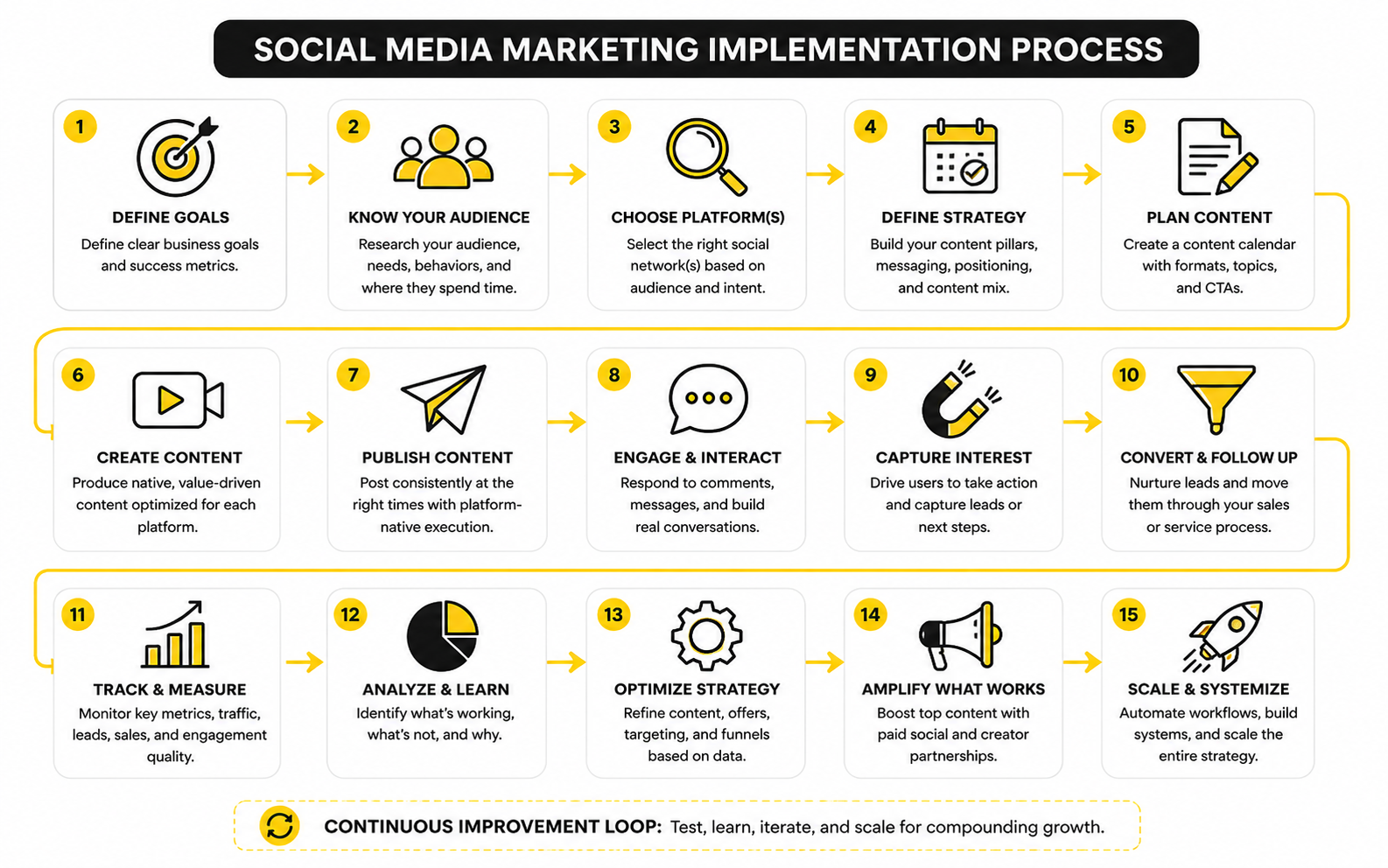
A useful execution process has five stages: research, content planning, production, publishing, and feedback. Each stage should be simple enough that the team can repeat it. If the process only works when everyone is unusually motivated, it is not a real process yet.
Step 1: Research The Platform Before Posting
Start by observing what already works on the platform. Look at creator formats, brand accounts, comment sections, search suggestions, saved posts, and recurring audience questions. The goal is not to copy competitors but to understand the platform’s native language.
Research should answer three practical questions. What does the audience already engage with? What objections or desires show up repeatedly? What content formats feel normal on this platform instead of forced?
This step protects the brand from publishing content that looks professional but feels out of place. A polished webinar clip may work on LinkedIn, but it may need a faster hook and different pacing on TikTok or Instagram Reels. The idea can stay the same while the format changes.
Step 2: Define The Content Pillars
Content pillars turn scattered posting into a coherent system. A brand does not need twenty pillars. Three to five is usually enough, especially if each one connects to a real buyer question, belief shift, or decision point.
For example, a marketing agency might use pillars such as strategy education, campaign breakdowns, founder perspective, client objections, and behind-the-scenes process. A skincare brand might use ingredients, routines, customer questions, product use, and lifestyle context. The right pillars depend on the business, but they should always support the buyer journey.
This is where many teams get too abstract. “Education” is not specific enough. “How to choose the right social network for a local service business” is much better because it points toward a real problem and a useful piece of content.
Step 3: Match Each Pillar To A Platform Format
A content pillar becomes stronger when it has a native format. On LinkedIn, a pillar might become a text post, document post, or short expert video. On YouTube, the same pillar might become a tutorial, comparison, or long-form explanation.
On Instagram, it could become a Reel, carousel, Story sequence, or DM prompt. On TikTok, it may need a faster hook, a more conversational delivery, and a stronger visual pattern. On Pinterest, it may become a searchable pin, idea pin, checklist, or product inspiration asset.
This is the practical answer to why one idea should not be copied everywhere unchanged. The core message can travel, but the format should be rebuilt for the network. That is how a brand stays consistent without looking lazy.
Step 4: Build A Publishing Workflow
A publishing workflow should make social media easier to execute, not more bureaucratic. The basic workflow is simple: collect ideas, select the best ones, produce assets, schedule posts, monitor responses, and review performance. A tool like Buffer can help keep publishing organized when the business is active across multiple platforms.
The workflow should also include ownership. Someone needs to decide what gets published, who creates the asset, who approves it, who responds to comments, and who reviews results. Without ownership, even a good strategy becomes a shared folder full of unfinished drafts.
Keep the workflow lightweight at the beginning. A solo creator may only need a weekly planning session and a simple scheduler. A larger team may need briefs, approvals, campaign calendars, brand guidelines, and a reporting rhythm.
Step 5: Turn Engagement Into A Next Step
Social media activity should lead somewhere. That does not mean every post needs a hard pitch. It means the account should make it easy for the right person to take the next logical step.
That next step could be a newsletter, booking page, product page, webinar, free resource, consultation, community, or DM conversation. If the business sells through calls, a calendar tool like Cal.com can help remove friction from booking. If the business needs forms, quizzes, applications, or intake flows, Fillout can help capture cleaner information before follow-up.
This part matters because attention without a next step is fragile. A person may like a post today and forget the brand tomorrow. The implementation should make the path from interest to action obvious without making every post feel like a sales page.
Step 6: Review Results And Adjust
The review stage should focus on learning, not ego. Views, likes, comments, saves, shares, clicks, replies, leads, and sales all tell different parts of the story. A post with fewer views but more qualified leads may be more valuable than a viral post that attracts the wrong audience.
Review performance by platform role. If TikTok is your discovery channel, reach and audience feedback matter. If YouTube is your education channel, watch time, search terms, and assisted conversions matter. If LinkedIn is your authority channel, profile visits, qualified comments, inbound messages, and sales conversations may matter more than raw impressions.
The goal is not to change strategy every week. The goal is to identify useful signals, double down on what is working, and stop spending energy on platforms that do not support the business model. That is how social media becomes a compounding system instead of a treadmill.
Statistics And Data That Actually Matter
Measurement is where platform choice gets real. It is easy to ask social media marketing can be done on which social network and then chase whichever platform has the biggest user count, highest engagement rate, or loudest hype cycle. But raw numbers do not make decisions by themselves.
Good measurement connects platform behavior to business movement. That means the question is not “did this post get views?” The better question is “did this platform help the right people move closer to trust, action, or purchase?”
Start With Platform Scale, But Do Not Stop There
Scale tells you whether a platform has enough audience to deserve consideration. It does not tell you whether that audience is qualified, reachable, affordable, or ready to buy. Global social media “user identities” reached 5.79 billion at the start of April 2026, which proves that social media is mainstream infrastructure, not a side channel.
But huge scale can hide weak fit. A platform with hundreds of millions of users may still be a poor choice if your buyers are not active there in the right mindset. A smaller professional or niche platform can outperform a larger entertainment platform when the offer requires expertise, trust, or a specific community context.
Use scale as a filter, not a final answer. If a network has enough of your audience, it moves to the next stage of evaluation. After that, engagement quality, intent, conversion behavior, and operational fit matter more than total user count.
Engagement Benchmarks Need Context
Engagement benchmarks help you understand what “normal” performance looks like, but they can be misleading when used carelessly. Socialinsider’s 2026 benchmark data shows TikTok with a reported 3.70 percent engagement rate, Instagram around 0.48 percent, and Facebook around 0.15 percent. That does not automatically mean every brand should prioritize TikTok over Instagram or Facebook.
A high engagement rate can mean the platform is good at generating interaction. It can also mean the content format is more entertainment-driven, the audience is more reactive, or the benchmark is shaped by specific account types and industries. A lower engagement rate on Facebook or LinkedIn may still produce stronger leads if the people engaging are closer to a buying decision.
The useful move is to compare your own performance against similar accounts, formats, and goals. A local service business should not judge itself against a global entertainment account. A B2B SaaS company should not panic because its LinkedIn engagement rate is lower than a creator’s TikTok engagement rate if LinkedIn is producing demos, sales conversations, or qualified pipeline.
Reach Measures Attention, Not Business Value
Reach tells you how many people had the opportunity to see your content. That is useful, especially for discovery platforms like TikTok, Instagram Reels, YouTube Shorts, and X. But reach alone does not prove that the content attracted the right people.
A post can reach a large audience and still create very little commercial value. This happens when the hook is broad, entertaining, or controversial but disconnected from the offer. It also happens when the content attracts people who enjoy the topic but have no realistic reason to buy.
The action from reach data is creative refinement. If reach is low, the hook, format, timing, or topic may need work. If reach is high but business results are weak, the content may need stronger audience qualification, clearer positioning, or a better next step.
Saves And Shares Reveal Deeper Interest
Saves and shares often matter more than surface likes. A save suggests that the content has future value. A share suggests that someone found it useful, entertaining, or identity-relevant enough to pass along.
These signals are especially useful on Instagram, TikTok, Pinterest, LinkedIn, and YouTube. A tutorial, checklist, comparison, or practical framework may not always generate the most comments, but it can produce strong saves because people want to return to it. Pinterest is built heavily around this behavior, and its reported 631 million monthly active users in Q1 2026 make that planning-and-saving behavior commercially relevant for visual categories.
The action from save and share data is content packaging. If people save tactical posts, create more useful assets. If people share opinion posts, sharpen your point of view. If neither is happening, the content may be too generic to be remembered.
Clicks And Profile Actions Show Intent
Clicks, profile visits, link taps, bio clicks, message starts, and booking actions show that someone moved beyond passive consumption. These metrics are not perfect, but they are closer to business intent than likes. They help separate content that entertains from content that creates movement.
This is especially important when comparing platforms. A TikTok video may generate large reach but few clicks. A LinkedIn post may reach fewer people but trigger more profile visits, connection requests, or sales conversations. A YouTube video may move slowly at first but keep generating qualified website traffic months later.
Track these actions by platform role. If Instagram is meant to drive DMs, measure message starts and qualified conversations. If YouTube is meant to educate buyers, measure video retention, search discovery, assisted conversions, and clicks to deeper resources.
Conversions Need Clean Tracking
Conversions are the moments where social media turns into measurable business action. That could mean a purchase, booked call, email signup, form submission, webinar registration, demo request, trial start, or qualified conversation. The exact conversion depends on the business model.
This is where many social strategies become blurry. The team knows posts are going out, but it cannot clearly see which platform creates which business outcome. A simple tracking setup should include UTM links, platform-specific landing pages when useful, CRM source fields, and a clear definition of what counts as a qualified lead.
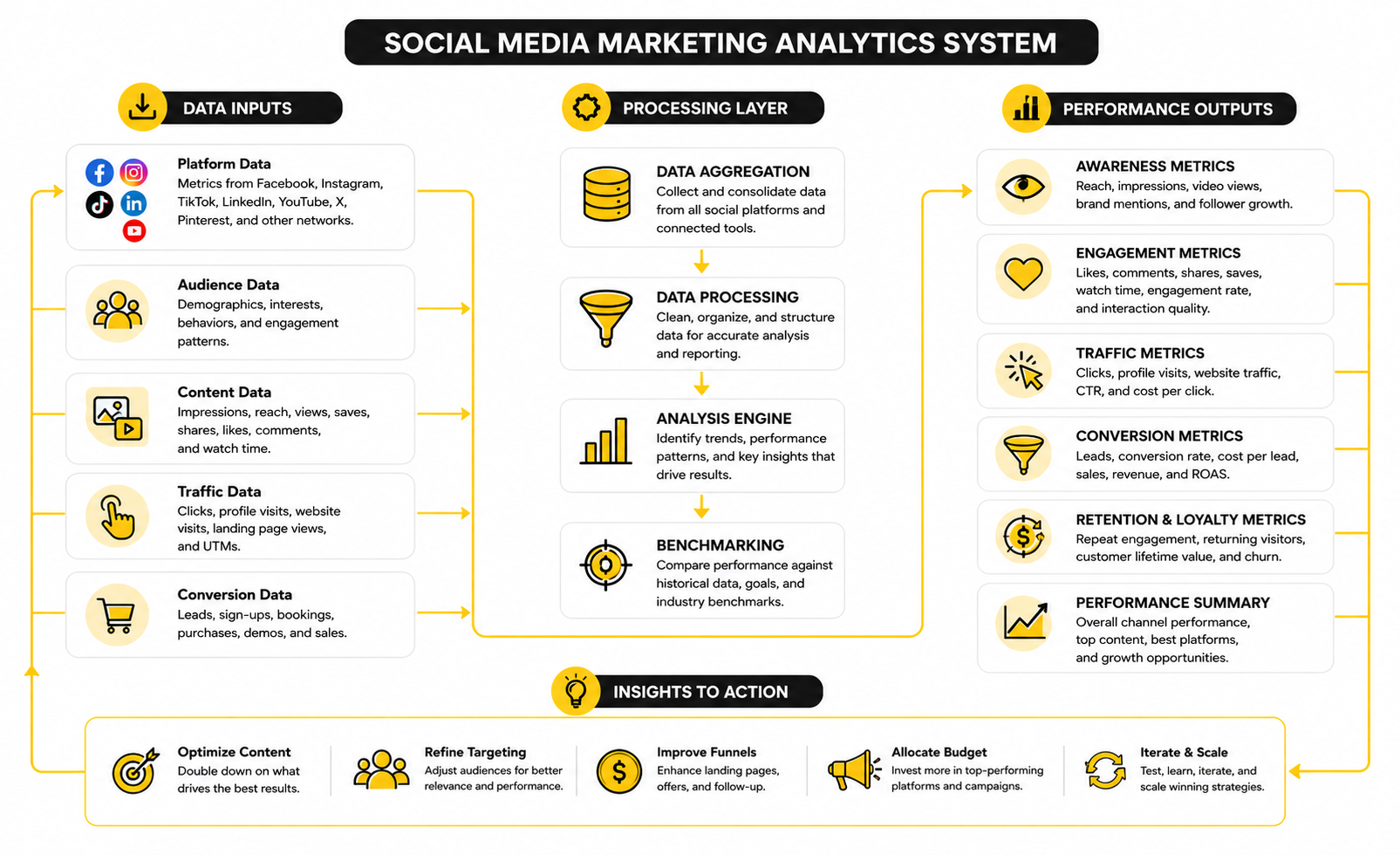
If the business needs a central system for leads, pipeline, bookings, and follow-up, GoHighLevel can help connect social traffic to a more complete sales process. If the business is running funnel-specific campaigns, ClickFunnels can be useful when the next step needs a focused landing page rather than a general website. The tool is not the strategy, but clean tracking makes the strategy visible.
Cost Metrics Matter For Paid Social
Paid social needs a separate measurement layer because money changes the question. Organic content asks, “Can we earn attention?” Paid content asks, “Can we buy the right attention profitably?” Those are related, but they are not the same.
For paid campaigns, the most important metrics usually include cost per thousand impressions, click-through rate, cost per click, cost per lead, cost per acquisition, conversion rate, average order value, lead quality, and payback period. A campaign can look cheap at the click level and still be expensive if the leads are weak. A campaign can look expensive at the lead level and still work if the sales conversion rate and customer value are strong.
The action from paid data is budget allocation. Move budget toward the platforms, audiences, creatives, and offers that produce profitable outcomes. Cut spend where the numbers only look good at the top of the funnel.
Watch Time And Retention Explain Video Quality
Video performance should not be judged by views alone. Watch time, retention, average view duration, completion rate, rewatches, and drop-off points reveal whether people actually stayed with the content. This matters across YouTube, TikTok, Instagram Reels, Facebook video, LinkedIn video, and Shorts.
A video with a strong hook but poor retention may attract attention without delivering enough value. A video with modest reach but strong watch time may have a topic or structure worth improving and republishing in a stronger package. On YouTube especially, retention and satisfaction signals can influence whether a video keeps getting discovered over time.
The action from retention data is editing and structure improvement. Tighten the opening, remove slow setup, deliver value earlier, and make each section earn attention. Video marketing improves faster when the team studies where people leave instead of only celebrating total views.
Comments And DMs Reveal Message Quality
Comments and direct messages show what people actually think, ask, resist, and want. These signals are messy, but they are extremely useful. They often reveal the language buyers use better than a planning meeting ever could.
A high-quality comment section can show objections, emotional triggers, comparison points, confusion, and demand. DMs can reveal whether the content is attracting serious prospects or casual browsers. For platforms where messaging is part of the funnel, automation through ManyChat can help route common questions, collect basic information, and keep response time under control.
The action from comment and DM data is content and offer refinement. Turn repeated questions into posts. Turn objections into education. Turn strong buying signals into better landing pages, better sales scripts, and clearer calls to action.
Build A Simple Scorecard
A useful scorecard should be simple enough to review every week. Do not build a dashboard so complicated that nobody uses it. Start with a few metrics tied to each platform’s job.
For a discovery platform, track reach, follower growth from target audiences, shares, saves, and profile actions. For an education platform, track watch time, retention, clicks, returning viewers, and assisted conversions. For a conversion platform, track leads, booked calls, purchases, cost per result, and revenue.
The scorecard should also include qualitative notes. Which posts created useful conversations? Which topics attracted the wrong audience? Which platform felt heavy to maintain compared with the value it produced? Those notes help interpret the numbers instead of reacting blindly.
What The Data Should Make You Do
Data is only useful when it changes decisions. If the numbers do not affect content, platform choice, budget, or workflow, the team is just reporting for decoration. Measurement should lead to action.
When a platform has strong reach but weak conversion, improve qualification and the next step. When a platform has low reach but strong lead quality, improve creative volume before abandoning it. When a platform has poor performance and heavy operational cost, reduce focus or pause it.
This is the practical standard: each social network must justify its role. It can justify that role through reach, trust, community, research, leads, revenue, or retention. But it needs to justify it somehow, because “we should be there” is not a strategy.
Professional Implementation And Workflow
Advanced social media strategy starts when the business stops treating platforms as isolated places to post. The real system is bigger than any one network. It includes positioning, content production, creator relationships, paid distribution, owned audience capture, customer care, analytics, and sales follow-up.
That is why the question social media marketing can be done on which social network eventually becomes a workflow question. The right network creates opportunity, but the workflow turns that opportunity into something measurable. Without a system behind the content, even good posts become scattered wins instead of a repeatable growth engine.
Do Not Build The Strategy Around One Platform
Platform concentration is one of the biggest risks in social media. A business can build an audience for years and still be vulnerable to algorithm changes, ad account issues, policy updates, declining reach, or shifts in user behavior. This does not mean every brand needs to be active everywhere, but it does mean the business should not be dependent on one feed for survival.
The more carefully approach is to use one or two platforms as growth engines while steadily moving the right people into assets the business controls. That could mean email subscribers, SMS lists where legally appropriate, CRM records, booked calls, community memberships, product accounts, or customer databases. The social network creates attention, but the owned system protects the relationship.
This is especially important when paid and organic social work together. Paid campaigns can scale reach, but they are still rented distribution. Organic content can build trust, but it is still shaped by platform rules. A resilient strategy turns both into audience capture, customer insight, and repeatable follow-up.
Separate Brand Content From Conversion Content
Brand content and conversion content should work together, but they should not be judged by the same standard. Brand content builds recognition, trust, memory, authority, and preference. Conversion content gives a motivated person a reason to take action now.
If every post is built to convert immediately, the brand starts to feel needy and repetitive. If every post is built only for awareness, the audience may like the content without ever understanding what to do next. The balance matters.
A practical split is to create content for three jobs: attract the right people, deepen belief, and invite action. Attract content earns attention through relevance and format fit. Belief content answers objections, teaches, proves, compares, or clarifies. Action content points people toward a demo, product, consultation, download, webinar, waitlist, or purchase.
Treat Creators As Distribution And Creative Partners
Creators are not just media placements. They are often closer to the audience’s language, timing, humor, objections, and trust patterns than the brand itself. That makes creator partnerships useful for both distribution and creative learning.
The creator economy keeps pulling more budget because brands want culturally native content, not just polished ads. IAB’s 2025 creator economy research projected U.S. creator ad spend at $37 billion in 2025, which shows that creator partnerships are no longer a fringe tactic. The important takeaway is not “hire influencers because everyone does.” The takeaway is that creators can help brands communicate in ways that platform-native audiences actually accept.
The best creator campaigns usually have clear constraints and creative freedom. The brand should define the audience, offer, claims, compliance limits, and success metrics. The creator should help shape the hook, format, delivery, and angle because that is where native trust usually lives.
Use Paid Social To Amplify Proof, Not Hide Weak Strategy
Paid social can scale a strong message, but it cannot permanently rescue a weak one. If organic content, customer conversations, and sales feedback show that the offer is unclear, paid ads will usually expose that problem faster. More budget creates more data, not automatically better results.
A better paid strategy starts by finding proof in organic performance, customer language, creator content, search data, and sales objections. Then paid media can test stronger hooks, audiences, offers, and landing pages with more control. This makes the ad account a learning system instead of a slot machine.
Digital video continues to absorb more advertising budget, with IAB reporting that U.S. digital video ad spend grew 18 percent year over year in 2024 and was projected to reach $72 billion in 2025. That matters because video-heavy social platforms are no longer just awareness channels. They are performance channels, research channels, and brand-building channels at the same time.
Build For Search Inside Social Platforms
Social search is now part of the platform decision. People use YouTube, TikTok, Reddit, Pinterest, Instagram, and LinkedIn to find answers, compare products, learn skills, check opinions, and validate decisions. That means social content should not only be entertaining; it should also be findable.
This changes how content is planned. Titles, captions, keywords, spoken phrases, hashtags, on-screen text, comments, and descriptions can all help a platform understand what the content is about. The goal is not to stuff keywords everywhere. The goal is to make the topic clear enough that both humans and recommendation systems can place it correctly.
For evergreen topics, search-aware content is especially valuable. A TikTok trend may fade quickly, but a useful YouTube video, Pinterest pin, Reddit discussion, or LinkedIn post can continue creating discovery if it answers a durable question. That is why a mature strategy mixes timely content with evergreen assets.
Protect Brand Trust While Moving Fast
Speed matters on social media, but speed without judgment creates risk. Brands can damage trust by jumping on the wrong trend, responding poorly to criticism, making unsupported claims, mishandling customer data, or publishing content that feels tone-deaf. The larger the brand, the more important this becomes, but small brands are not immune.
A simple approval system helps. Define which content can be published quickly, which topics need review, and which claims require evidence. This is especially important in finance, health, legal, education, employment, supplements, children’s products, and any category where bad advice can create real harm.
Trust also depends on consistency between the post and the actual customer experience. Social content can generate demand, but customer support, onboarding, fulfillment, product quality, and sales follow-up decide whether that demand turns into reputation. A strong social strategy should never promise what the business cannot deliver.
Use AI For Leverage, Not Laziness
AI can make social media workflows faster. It can help with research organization, content repurposing, draft outlines, transcript cleanup, comment analysis, briefing, and creative variation. Hootsuite’s 2026 trend research highlights AI workflows and creative acceleration as major forces in social media teams, especially as brands try to respond faster to culture and performance signals through its 2026 social trends report.
But AI should not become the brand voice by default. Audiences can feel when content is generic, detached, or written without a real point of view. AI is useful for speed, structure, and pattern recognition, but the strategy still needs human judgment, taste, experience, and accountability.
The best use of AI is usually behind the scenes. Use it to summarize comments, extract objections, turn long videos into short drafts, organize ideas, and prepare content briefs. Then let a human sharpen the angle, add lived experience, check accuracy, and decide whether the piece deserves to be published.
Create A Conversion System Behind The Content
A platform strategy gets stronger when every serious expression of interest has somewhere to go. That may be a landing page, application form, booking link, checkout page, email sequence, chatbot, CRM pipeline, or sales call. The right next step depends on the offer and buying cycle.
For simple digital products or low-ticket offers, a focused funnel through Systeme.io or ClickFunnels can keep the path direct. For service businesses, agencies, and local companies that need CRM, pipelines, reminders, and multi-step follow-up, GoHighLevel can make more sense. For email campaigns and newsletters, Brevo can help when the business needs to keep nurturing people after the first social touch.
This is where many brands leave money on the table. They invest in content, earn attention, and then send people to a confusing homepage or no next step at all. A serious social media strategy should make the action obvious while keeping the experience natural.
Know When To Expand To Another Network
Expansion should happen after a platform has a working role, not because the team is bored. A business should usually expand when it has repeatable content formats, clear audience signals, stable production capacity, and a strong reason another network can add incremental value. Otherwise, expansion just spreads the same weak system across more places.
The cleanest expansion path is format-adjacent. If YouTube long-form is working, YouTube Shorts, LinkedIn clips, or Instagram Reels may be natural extensions. If Instagram carousels are working, Pinterest and LinkedIn document posts may be worth testing. If LinkedIn posts are creating strong professional demand, YouTube explainers or webinars may deepen trust.
The wrong expansion path is chasing every platform because competitors are there. Being present everywhere can look impressive from the outside and feel terrible inside the business. A focused strategy with clear roles will beat a scattered strategy with too many accounts almost every time.
Decide What To Stop Doing
Advanced strategy is not only about adding more. It is also about cutting what no longer earns its place. Some platforms will produce weak signals even after a fair test, and keeping them alive can drain creative energy from channels that actually work.
A fair test should include enough time, enough content volume, and enough platform-native execution to learn something real. If a platform still produces poor audience quality, weak conversion signals, and heavy workflow cost, it may be time to pause it. That is not failure. That is resource allocation.
Stopping also creates focus for better experiments. The goal is not to prove that every social network can work. The goal is to find the few that work well enough for this business, with this audience, this offer, and this team.
Platform Selection Checklist And Final System
By this point, the answer to social media marketing can be done on which social network should feel more strategic than simple. Yes, marketing can be done on Facebook, Instagram, YouTube, TikTok, LinkedIn, Pinterest, Snapchat, Reddit, X, Threads, WhatsApp, Messenger, and other emerging platforms. But the real skill is choosing the few networks that match your audience, message, content capacity, and revenue path.
A good final system does not depend on luck. It gives each platform a job, connects social activity to a next step, and measures whether the channel is actually helping the business grow. That is the difference between “posting content” and building a social media marketing engine.
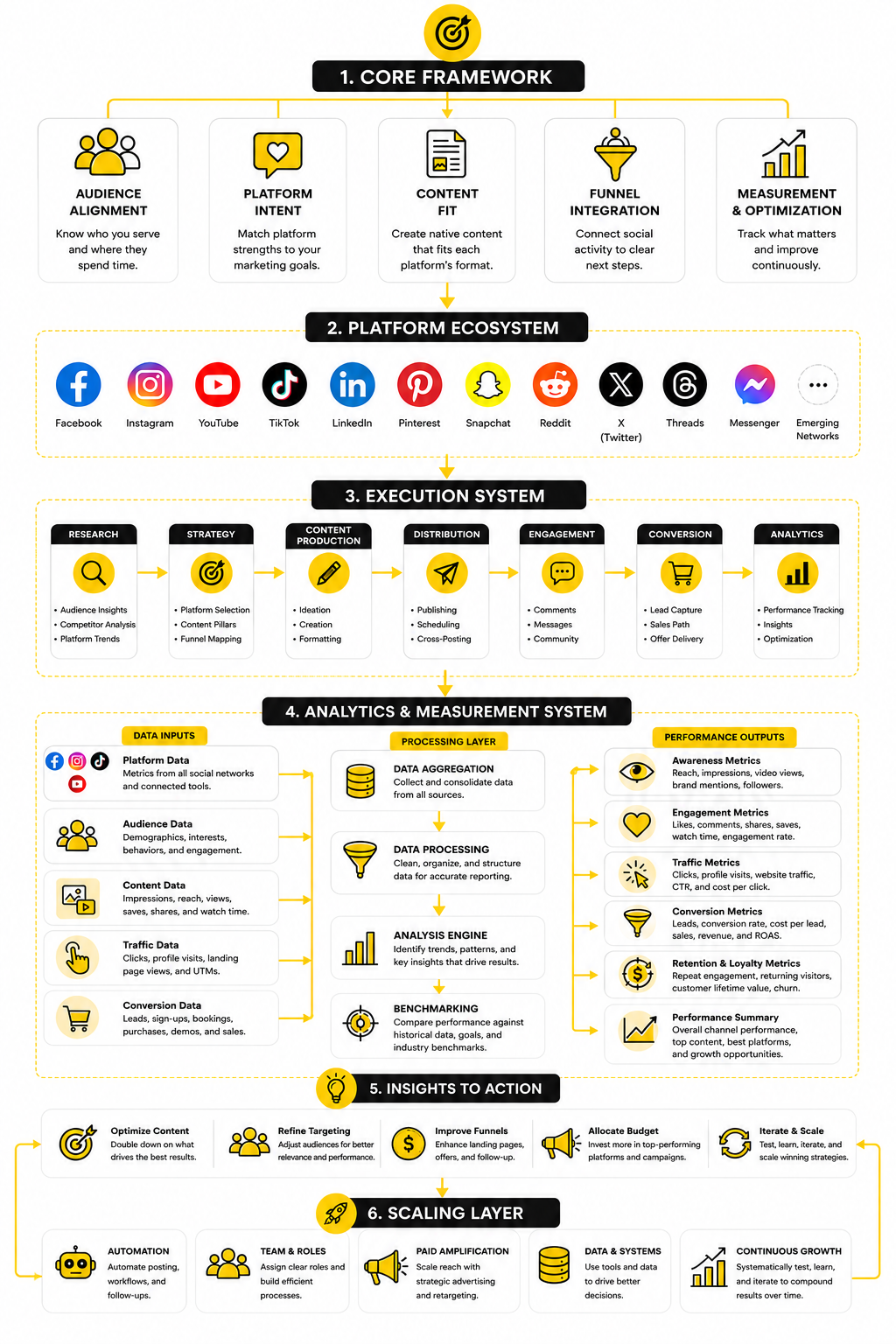
The Final Platform Decision Checklist
Use this checklist before committing serious time, money, or team energy to a social network. The goal is not to make the decision feel complicated. The goal is to prevent expensive guesswork.
This checklist keeps the decision grounded. A platform should not win because it is trendy. It should win because it has a clear role in the system and a realistic path to business value.
Best Platform Choices By Business Type
A local service business should usually start with platforms that support local discovery, trust, and direct response. Facebook, Instagram, Google-adjacent video through YouTube, and Messenger or WhatsApp follow-up can work well when the buying journey involves questions before booking. A CRM and follow-up system like GoHighLevel can help keep those conversations from getting lost.
An ecommerce brand should usually prioritize visual discovery, creator content, product education, and retargeting. Instagram, TikTok, YouTube Shorts, Pinterest, and Facebook ads can all play a role depending on the product category. If the brand needs focused sales pages for campaigns, ClickFunnels or Systeme.io can help keep the path from social click to conversion cleaner.
A B2B company, agency, consultant, or software business should think seriously about LinkedIn, YouTube, X, Reddit research, webinars, and email follow-up. LinkedIn can create professional visibility, YouTube can build deep trust, and email can nurture people who are not ready to buy today. A tool like Brevo can support that follow-up layer when social attention needs to turn into a longer relationship.
The Most Practical Answer
The most practical answer is this: choose one primary platform, one support platform, and one conversion channel. The primary platform is where you build attention. The support platform deepens trust or captures people in a different intent state. The conversion channel turns attention into leads, sales, bookings, or subscribers.
For example, a coach might use LinkedIn as the primary platform, YouTube as the trust platform, and a booking page as the conversion step. A fashion brand might use TikTok as the primary discovery platform, Instagram as the trust and community platform, and a focused product funnel as the conversion step. A local clinic might use Facebook and Instagram for community reach, YouTube for education, and automated messaging for appointment requests.
This is the part that matters: do not choose a network because someone else went viral there. Choose it because your audience is there, your message fits there, and your business can convert the attention into something real. That is how social media becomes a serious marketing channel instead of a content treadmill.
1. Social media marketing can be done on which social network?
Social media marketing can be done on Facebook, Instagram, YouTube, TikTok, LinkedIn, Pinterest, Snapchat, Reddit, X, Threads, WhatsApp, Messenger, and other community or messaging platforms. The better answer depends on your audience, content format, business model, and conversion path. A platform is only useful if it helps the right people move closer to trust, action, or purchase.
2. Which social network is best for small businesses?
For many small businesses, Facebook, Instagram, YouTube, and LinkedIn are the strongest starting points. Facebook and Instagram can support local reach, community, visual content, ads, and direct messages. YouTube works well when education and search matter, while LinkedIn is stronger for professional services, B2B, consulting, and founder-led brands.
3. Is TikTok good for social media marketing?
TikTok can be very effective when the business can create native, fast, useful, or entertaining short-form video. It is especially strong for discovery, creator-style content, ecommerce, consumer brands, education, and trend-responsive categories. It is weaker when the brand refuses to adapt its format and simply reposts traditional ads.
4. Is LinkedIn only for B2B marketing?
LinkedIn is strongest for B2B, recruiting, consulting, software, agencies, founders, and professional services, but it is not limited to those categories. It can also work for personal brands, creators, education companies, high-ticket services, and career-related offers. The key is that the content should fit a professional mindset.
5. Should a business post on every social network?
Most businesses should not start by posting everywhere. Posting everywhere usually creates weak execution, inconsistent quality, and messy measurement. It is better to master one or two platforms first, then expand when the business has a repeatable content system and a clear reason to add another network.
6. Which platform is best for ecommerce marketing?
Ecommerce brands often do well on Instagram, TikTok, Pinterest, YouTube, and Facebook, depending on the product and audience. Visual products, lifestyle categories, beauty, fashion, home decor, food, and accessories often benefit from platforms where people discover and save ideas. The strongest ecommerce strategies usually combine organic content, creator content, retargeting, and a clear sales page.
7. Which social network is best for lead generation?
LinkedIn, Facebook, Instagram, YouTube, and TikTok can all generate leads when the offer and funnel are built properly. For B2B and professional services, LinkedIn and YouTube are often strong because they support trust and education. For local services, Facebook, Instagram, and Messenger follow-up can work well when the business responds quickly and tracks lead quality.
8. How do I know if a platform is working?
A platform is working if it produces the result assigned to it. A discovery platform should grow relevant reach and awareness. A trust platform should improve retention, saves, comments, profile visits, and qualified interest. A conversion platform should create leads, bookings, purchases, trials, applications, or sales conversations.
9. What metrics should I track first?
Start with reach, engagement quality, saves, shares, profile visits, clicks, direct messages, leads, conversion rate, and revenue where possible. Do not obsess over likes alone because likes rarely tell the full story. Track the metrics that match the platform’s job in your funnel.
10. Is YouTube better than Instagram for marketing?
YouTube is often better for search, education, tutorials, reviews, long-form trust, and evergreen content. Instagram is often better for visual connection, short-form discovery, social proof, daily interaction, and direct messages. The better choice depends on whether your audience needs deeper research or faster visual relationship-building.
11. Can Reddit be used for social media marketing?
Reddit can be useful for research, community listening, category insight, reputation, and authentic participation. It is usually not the best place for obvious promotional posting. Brands should use Reddit carefully because communities can respond negatively when marketing feels fake, lazy, or self-serving.
12. How often should I post on social media?
Posting frequency depends on the platform and the team’s capacity. A simple starting point is to publish consistently enough to gather useful feedback without sacrificing quality. For some teams, that means three strong posts per week; for others, it means daily short-form tests plus one deeper weekly asset.
13. Should I use automation for social media marketing?
Automation is useful for scheduling, reporting, message routing, lead capture, and follow-up. It should not replace human judgment, customer care, or brand voice. Tools like Buffer, ManyChat, and GoHighLevel can help when the workflow is clear.
14. What is the biggest mistake in choosing a social network?
The biggest mistake is choosing a platform because it is popular instead of choosing it because it fits the business. Popularity does not guarantee qualified attention, trust, or sales. The right platform should match your audience, content strengths, buying journey, and ability to follow up.
15. What should beginners do first?
Beginners should pick one primary platform and commit to learning it properly. Study what works there, define clear content pillars, publish consistently, and measure real signals instead of guessing. Once the first platform has traction, add a second platform only if it has a clear role in the system.
Build a stronger local presence with BAAM AI
Turn your website, Google profile, social channels, and AI visibility into one growth engine
Most businesses do not need more random marketing activity. They need a consistent presence system that helps the right people find them, trust them, and take action. BAAM AI brings strategy, local SEO, website updates, Google Maps visibility, social content, AI-search readiness, media production, and reporting into one practical monthly engine.
If you want your marketing to keep working after the campaign ends, start with a free BAAM AI presence audit. See how your business shows up today and where the fastest visibility wins are at BAAM AI.