
BAAM AI Blog
Social Media Content Development: Why It Matters and How It Works
Social media content development is central to modern marketing, turning everyday posts into strategic tools that help brands grow, engage audiences, and meet business goals. It goes far beyond simply publishing more...
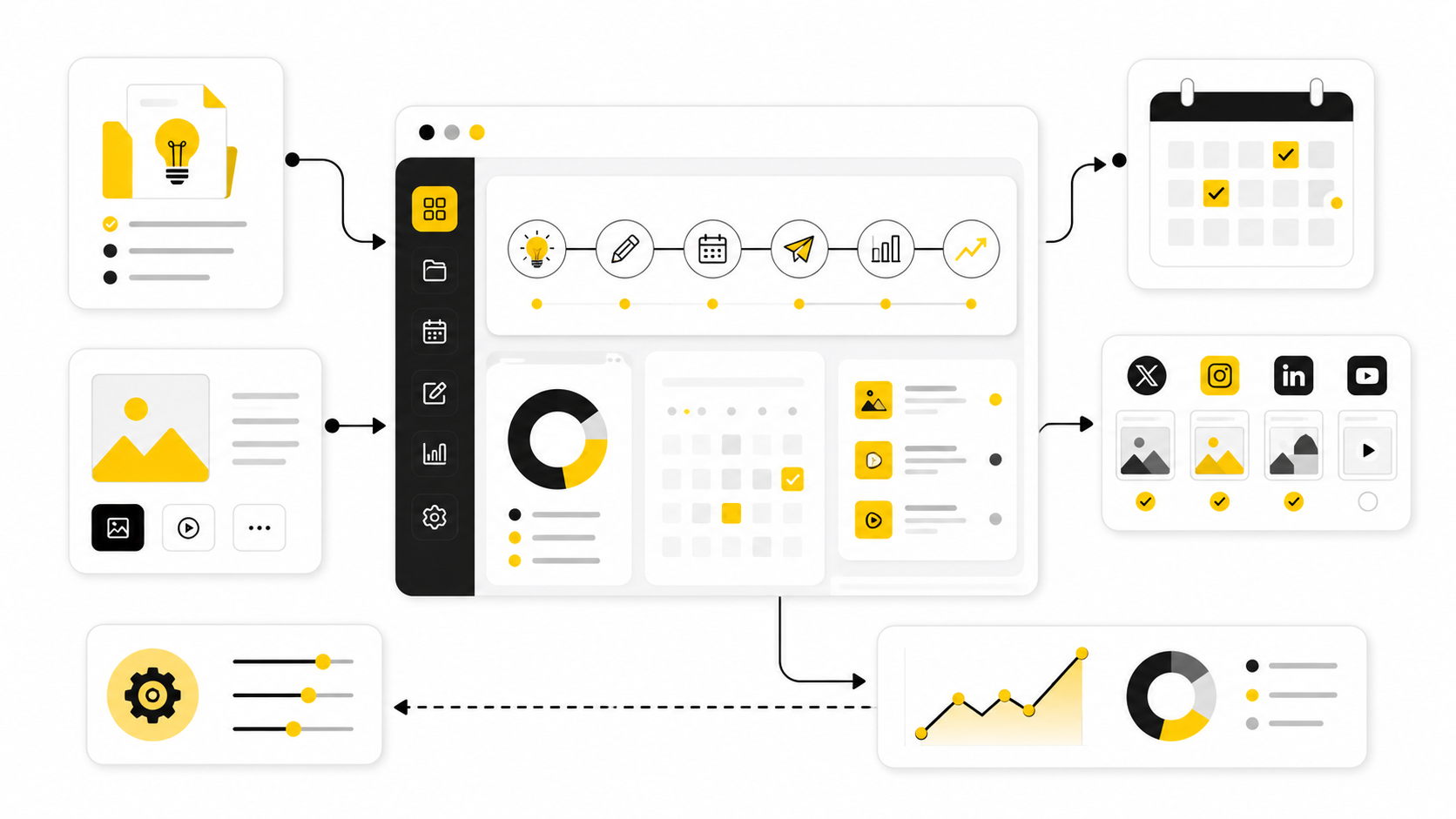
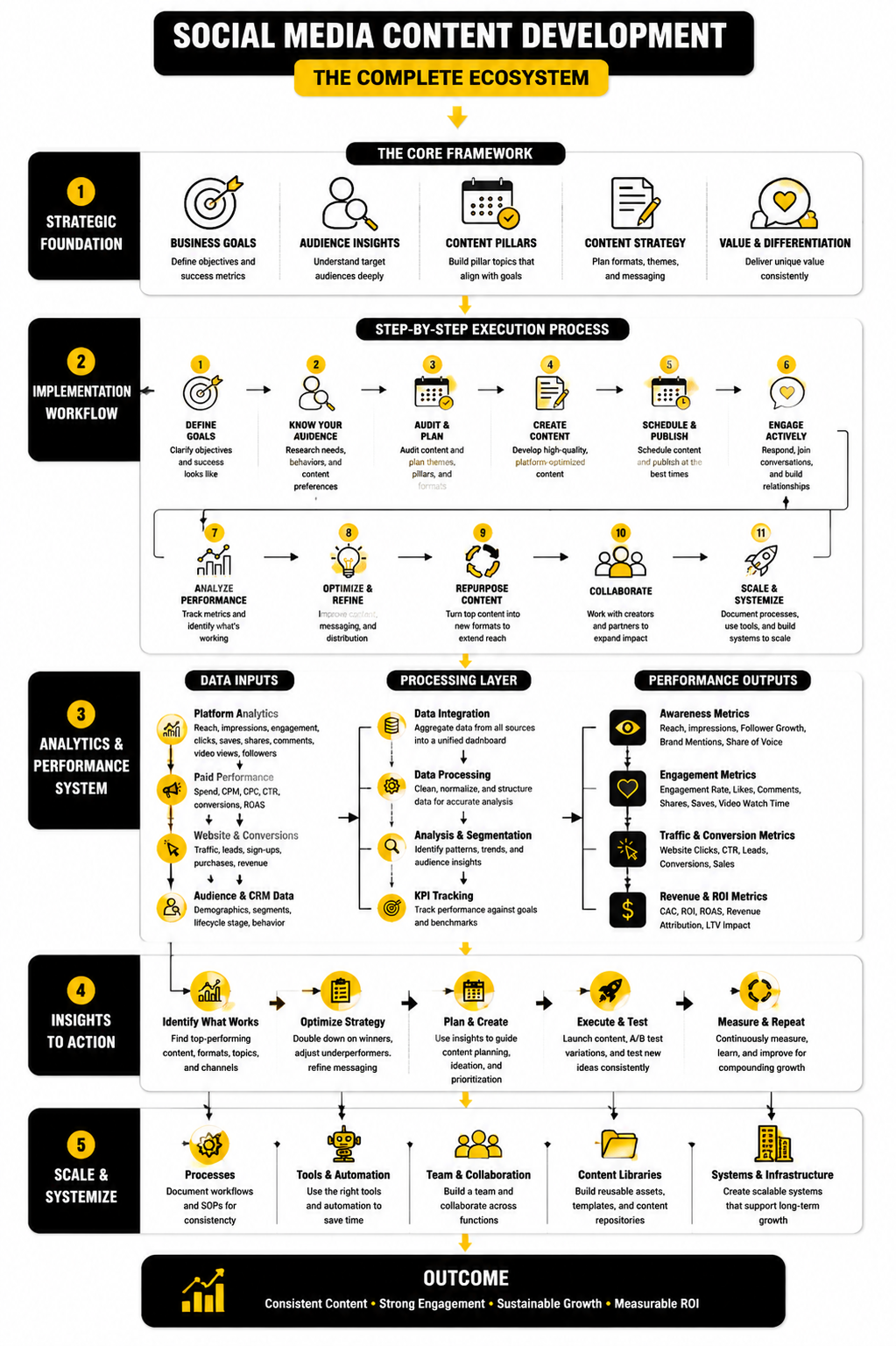
Social media content development is central to modern marketing, turning everyday posts into strategic tools that help brands grow, engage audiences, and meet business goals. It goes far beyond simply publishing more content - it’s about building the right content with intention, purpose, and measurable outcomes. Research shows that brands emphasizing structured content strategies tend to outperform those that post randomly, with frameworks like content pillars offering clarity and direction within the noise of oversaturated feeds.
Here’s the structure we’ll follow across the full article:
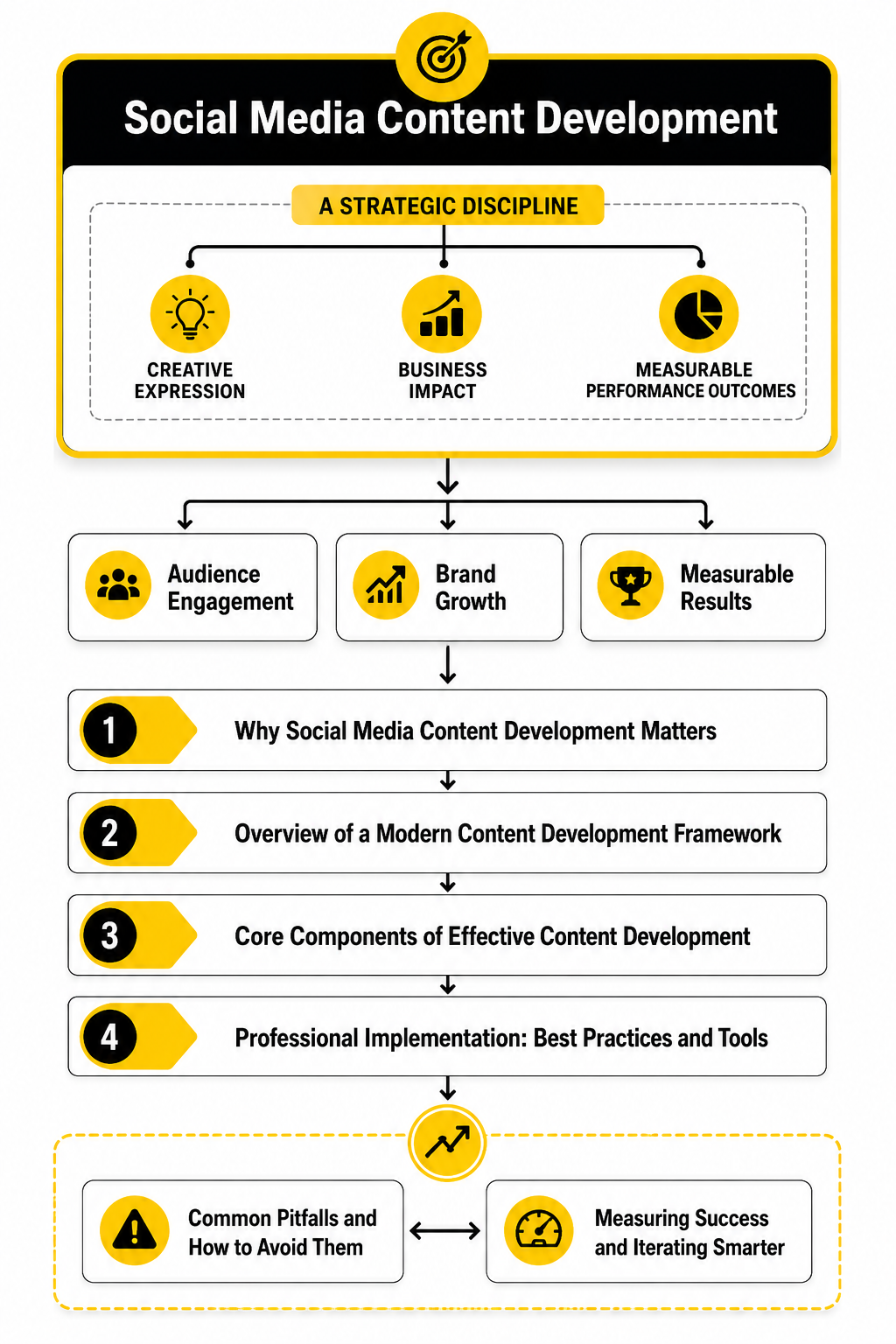
Social media content development isn’t just a tactical task; it’s a strategic discipline that connects creative expression with business impact and measurable performance outcomes. Over the coming sections, we’ll help you understand the systems that make content stick, how to build frameworks that scale, and why having a development process is no longer optional in competitive digital landscapes.
Why Social Media Content Development Matters
Social media content development isn’t just about posting regularly - it’s the practice of shaping your content so every post serves a defined purpose, supports your brand narrative, and moves key performance indicators forward. At its core, effective social media content development closes the gap between scattershot posting and strategic storytelling, helping brands build deeper audience trust and clearer identity over time. A structured content approach also reduces guesswork while increasing consistency and relevance, which are critical in competitive digital environments where users see hundreds of posts daily.
A core reason this discipline has grown is that audience expectations are shifting. Users increasingly favor content that adds value, whether through education, entertainment, or community engagement, rather than promotional noise. Organizing your social media content around meaningful themes - often called content pillars - gives every post a clear role and improves both discoverability and long‑term engagement.
Moreover, strategic content development aligns with broader business goals, turning social media into a measurable driver of outcomes like brand awareness, customer acquisition, and customer loyalty. Without this alignment, social teams may accumulate vanity metrics but miss real impact.
Overview of a Modern Content Development Framework
A well‑built social media content development framework acts like an engine: defined inputs (goals, audience insight, themes) go through repeatable processes and produce measurable outputs (engagement, growth, conversions). In practice, the framework helps teams answer five essential questions:
This structured approach contrasts sharply with ad‑hoc posting. Instead of reactive decision‑making (“What can we post today?”), a framework gives teams a proactive system that scales with audience needs and business goals.
Ultimately, a framework isn’t static. It evolves as platforms change, audience interests shift, and business priorities update. What matters most is that it gives your content development a foundation to build on, rather than leaving success to chance.
Core Components of Effective Implementation in Social Media Content Development
Implementing a social media content development system moves strategy into action. It’s where goals become real posts, ideas become creative assets, and engagement becomes measurable performance. A strong implementation process ensures you avoid common pitfalls like last‑minute scrambling, inconsistent messaging, and wasted creative energy. The key is building a repeatable workflow that your team can rely on week after week, even as priorities and platforms evolve.
Establish Clear Roles and Workflow
Every effective social media content development process starts with clarity around who does what. Even in small teams this could mean defining responsibilities for:
When roles are named - even if one person fills multiple tasks - there’s less ambiguity and fewer stalled deliverables.
Build a Weekly Content Loop
A weekly loop or cadence keeps implementation structured and predictable. Instead of reacting to daily whims, teams work in rhythms that support both consistency and quality:
This loop turns social media content development into a repeatable system, not a series of one‑offs.
Use Templates and Batch Creation to Scale
One of the most effective ways to speed up social media content development is by using templates and batch creation:
Together, these methods keep the focus on quality while increasing output without burning out the team.
Align Tools to the Workflow
Execution becomes easier when the right tools support your workflow. Scheduling platforms that centralize posting across networks save time and ensure consistency, while analytics dashboards help you track which posts are moving key indicators. Tools that support collaboration - such as shared calendars, asset repositories, and approval systems - also reduce bottlenecks in review and publishing stages.
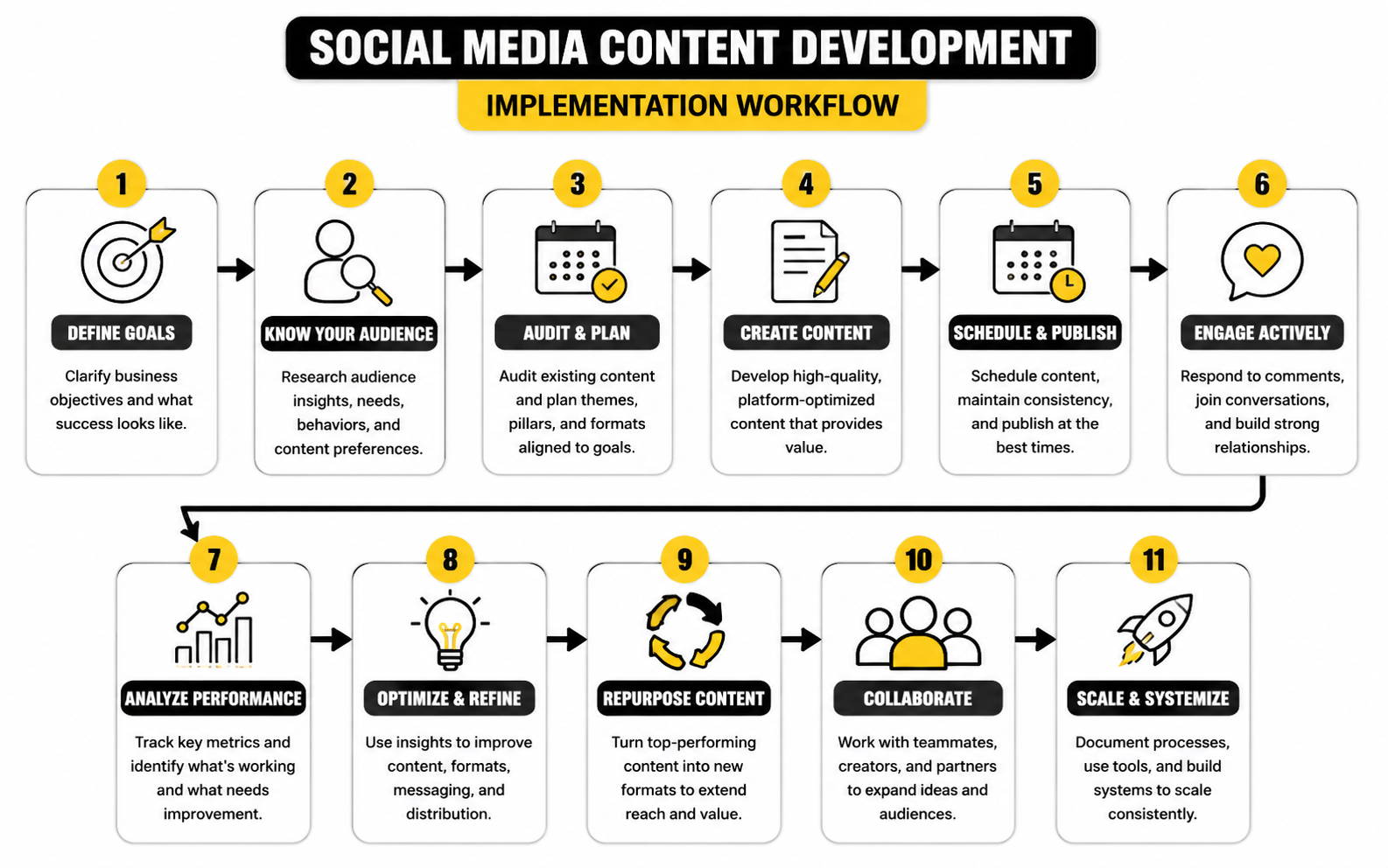
Measure, Learn, and Iterate
Implementation isn’t complete without measurement. Tracking the performance of your social media content development efforts isn’t just about counting likes - it’s about understanding which content types and topics actually advance your business goals. Establish clear KPIs tied to your strategy (for example, saves on Instagram for educational content or qualified replies on LinkedIn for thought leadership) and review these regularly. Then iterate:
Through this disciplined process improvement, social media content development becomes a cycle of continuous learning and growing impact rather than a static checklist.
Measuring Performance: Analytics, Benchmarks, and What the Numbers Mean
Effective social media content development doesn’t end with publishing - the real payoff comes from understanding performance data and acting on it. Numbers without context are noise; the right metrics become a compass, guiding what works, what doesn’t, and where you should invest your creative energy next. Well‑structured analytics transform your social efforts into a learning engine that drives more carefully decisions over time.
What Metrics Truly Tell You
Not all numbers matter equally. Some metrics show reach (how many saw your content), some signal engagement (how people interacted), and others reveal action (how your content influenced behavior). Here’s how to think about them:
Why Benchmarks Matter
Benchmarks help you interpret numbers rather than react to them blindly. For example, engagement rates vary widely by platform and audience size - what’s strong on one network may be average on another. Comparing your performance to reliable industry baselines prevents misjudging success or failure.
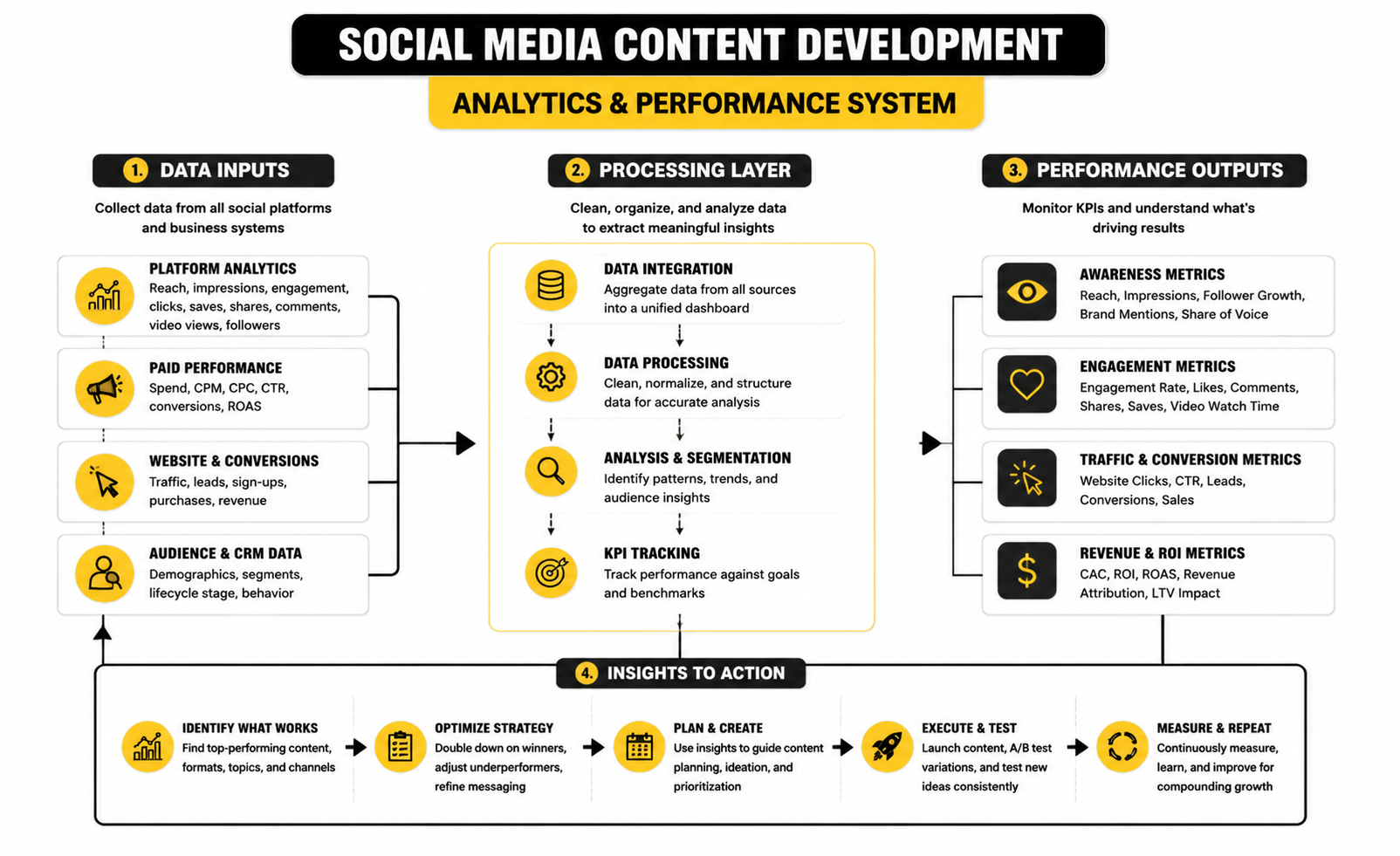
Common benchmark insights include:
Interpreting the Data to Drive Action
Numbers should lead to decisions, not just reports:
In disciplined social media content development, analytics are not retrospective judgments - they are real‑time feedback loops that improve your next cycle of content planning, creation, and optimization. With meaningful metrics and benchmarks in place, every number you track becomes a clue about how to improve your presence and deepen your audience’s connection to your brand.
Advanced Considerations for Scaling Social Media Content Development
As your social media presence grows, so do the complexities of managing content development effectively. Scaling requires more than adding team members or posting more frequently; it demands strategic planning, operational discipline, and a nuanced understanding of platform-specific dynamics. Without advanced systems, even strong content strategies can falter under increased volume and audience expectations. (sproutsocial.com)
Balancing Quality with Quantity
One of the primary challenges in scaling social media content development is maintaining quality while increasing output. Rapid growth can dilute messaging if creative review and audience alignment are neglected. To address this:
Strategic Tradeoffs and Platform Prioritization
Not all platforms yield equal returns for every brand. Advanced content teams must weigh strategic tradeoffs:
Risk Management and Brand Safety
Scaling social media content development exposes brands to potential risks such as tone misalignment, misinformation, and negative public reactions. Mitigation strategies include:
Optimizing Team and Resource Allocation
Advanced scaling involves aligning personnel, tools, and processes to sustain performance:
By integrating these advanced considerations into social media content development, organizations can expand their reach and impact while maintaining control, consistency, and strategic focus. This approach transforms growth from a reactive challenge into a scalable, repeatable process that drives sustained engagement and measurable business results.
1. What is social media content development?
Social media content development is the strategic process of creating, planning, and publishing content on social platforms with the goal of engaging audiences, reinforcing brand identity, and achieving measurable business outcomes. It goes beyond simple posting to include content strategy, production, and performance measurement. (sproutsocial.com)
2. Why are content pillars important?
Content pillars provide structure and focus, guiding which topics, formats, and messaging themes your social content should follow. They help maintain brand consistency, improve audience relevance, and make content planning more efficient. (brandwatch.com)
3. How often should I post on social media?
Posting frequency depends on your audience, platform, and goals. The key is consistency over volume: maintaining a predictable schedule ensures ongoing engagement and builds audience trust. Analytics help refine optimal posting frequency. (buffer.com)
4. Which metrics matter most for social media content development?
Engagement rate, click-through rate, reach, follower growth, and conversions are critical metrics. They reveal how audiences interact with content and whether your strategy drives real results beyond vanity numbers. (heropost.io)
5. How can I scale my content development effectively?
Scaling requires clear roles, batch content creation, templates, and automation tools. Strategic tradeoffs, platform prioritization, and structured workflows allow teams to produce more without sacrificing quality. (filipkonecny.com)
6. Should all content be promotional?
No. A balanced approach combining educational, entertaining, and community-driven posts alongside promotional content drives better engagement and brand loyalty. (sproutsocial.com)
7. How do I measure ROI on social media content?
ROI comes from tracking conversions, leads, purchases, or other business outcomes tied directly to content campaigns. Combine these with engagement and reach metrics to evaluate full performance. (mediafa.st)
8. What tools are best for social media content development?
Tools like GoHighLevel, Buffer, and Brevo help with scheduling, analytics, and collaboration. Choosing tools that match your workflow streamlines production and measurement.
9. How can I avoid content fatigue in my audience?
Rotate content formats, refresh creative assets, and maintain diverse content pillars. Listening to engagement patterns and responding to feedback helps prevent audience burnout. (sproutsocial.com)
10. How often should I review and iterate my content strategy?
Review your content performance at least monthly and iterate quarterly. Use analytics to adjust themes, formats, and posting schedules based on real engagement and business outcomes. (heropost.io)
Build a stronger local presence with BAAM AI
Turn your website, Google profile, social channels, and AI visibility into one growth engine
Most businesses do not need more random marketing activity. They need a consistent presence system that helps the right people find them, trust them, and take action. BAAM AI brings strategy, local SEO, website updates, Google Maps visibility, social content, AI-search readiness, media production, and reporting into one practical monthly engine.
If you want your marketing to keep working after the campaign ends, start with a free BAAM AI presence audit. See how your business shows up today and where the fastest visibility wins are at BAAM AI.