
BAAM AI Blog
Social Media Branding Services: The Practical Framework for Building a Recognizable Brand Online
Social media branding services are no longer just about making posts look polished. They help a business become recognizable, consistent, trusted, and easy to understand across the platforms where people already...
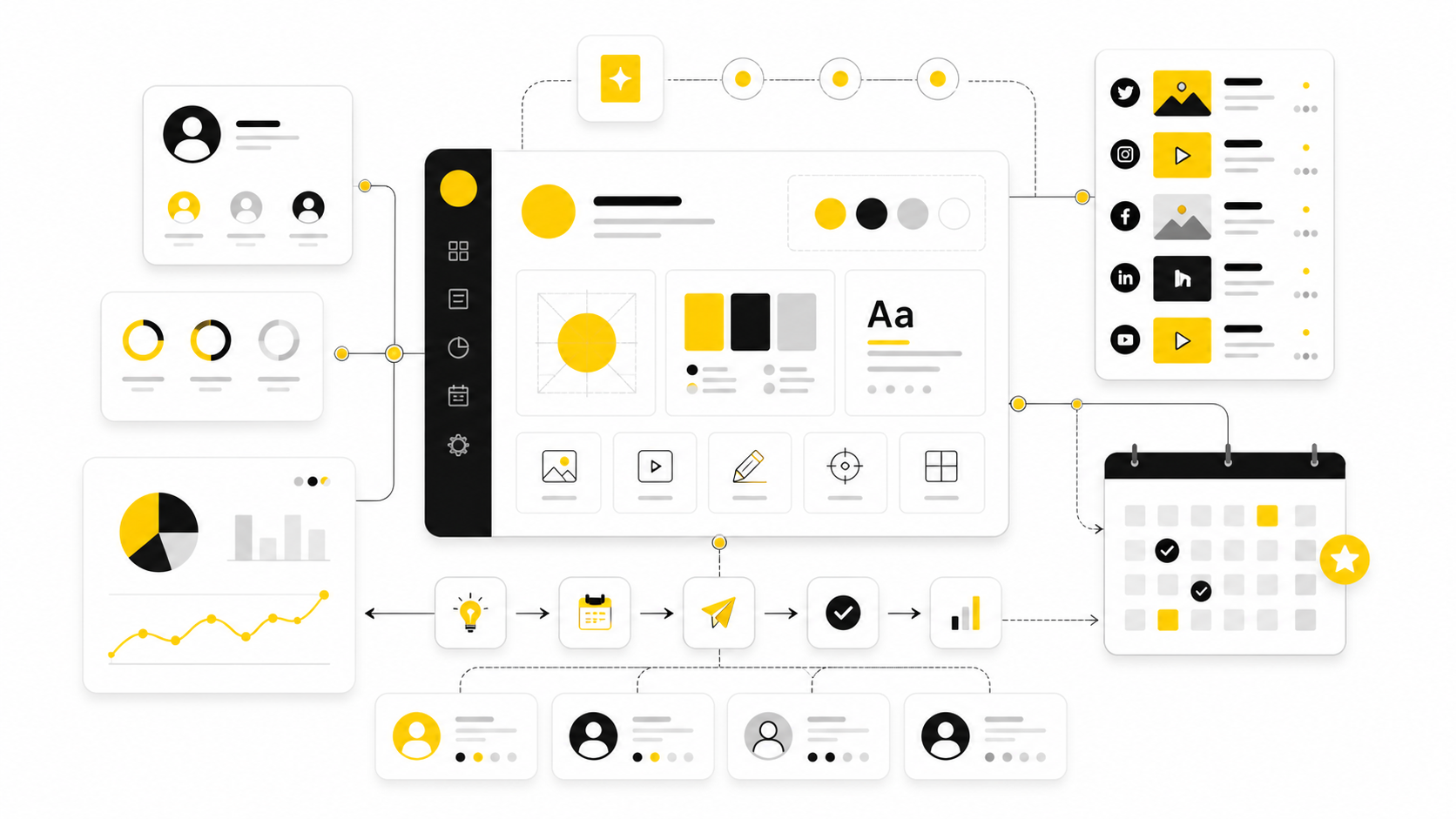
Social media branding services are no longer just about making posts look polished. They help a business become recognizable, consistent, trusted, and easy to understand across the platforms where people already spend their attention. That matters because most brands are not losing because their product is bad; they are losing because their online presence feels scattered, forgettable, or interchangeable.
A strong social brand does not happen by accident. It needs positioning, visual identity, messaging, content systems, community habits, and a clear way to measure whether the brand is actually becoming more memorable. Without that structure, social media becomes a treadmill: more posts, more trends, more noise, but not much brand equity.
The real value of professional social media branding services is that they turn scattered activity into a recognizable system. The goal is not to make every post go viral. The goal is to make every useful interaction strengthen the same brand idea in the audience’s mind.
Why Social Media Branding Services Matter Now
Social media has become one of the main places where people judge a brand before they ever visit a website, book a call, walk into a store, or ask for a quote. That first impression is often built from small signals: the profile photo, the bio, the pinned posts, the tone of replies, the quality of visuals, and whether the brand feels alive or abandoned. This is why social media branding services matter so much; they shape the signals people use to decide whether a brand feels relevant, credible, and worth remembering.
The problem is that many businesses treat social media like a publishing task instead of a brand-building channel. They post offers, tips, memes, announcements, and behind-the-scenes content without a clear brand system behind it. Some of it may perform in isolation, but the audience does not walk away with a sharper understanding of who the brand is, what it stands for, or why it is different.
Branding fixes that gap. It gives the content a center of gravity. When the positioning, visuals, voice, and content themes all work together, every post has a job beyond filling the calendar.
The Social Media Branding Framework
A useful framework for social media branding starts with a simple question: what should the audience remember after seeing the brand repeatedly? Not what should they click once, not what should they like today, and not what trend should the brand jump on this week. The core question is about memory, meaning, and recognition.
Strong social media branding services usually work across four layers. First, they clarify the brand’s position so the audience understands who the brand helps and why it exists. Second, they build a recognizable identity system so the brand looks consistent without becoming boring. Third, they define the voice and messaging so the brand sounds like one clear personality instead of a committee. Fourth, they create an implementation system so the brand can keep showing up consistently without reinventing everything every week.
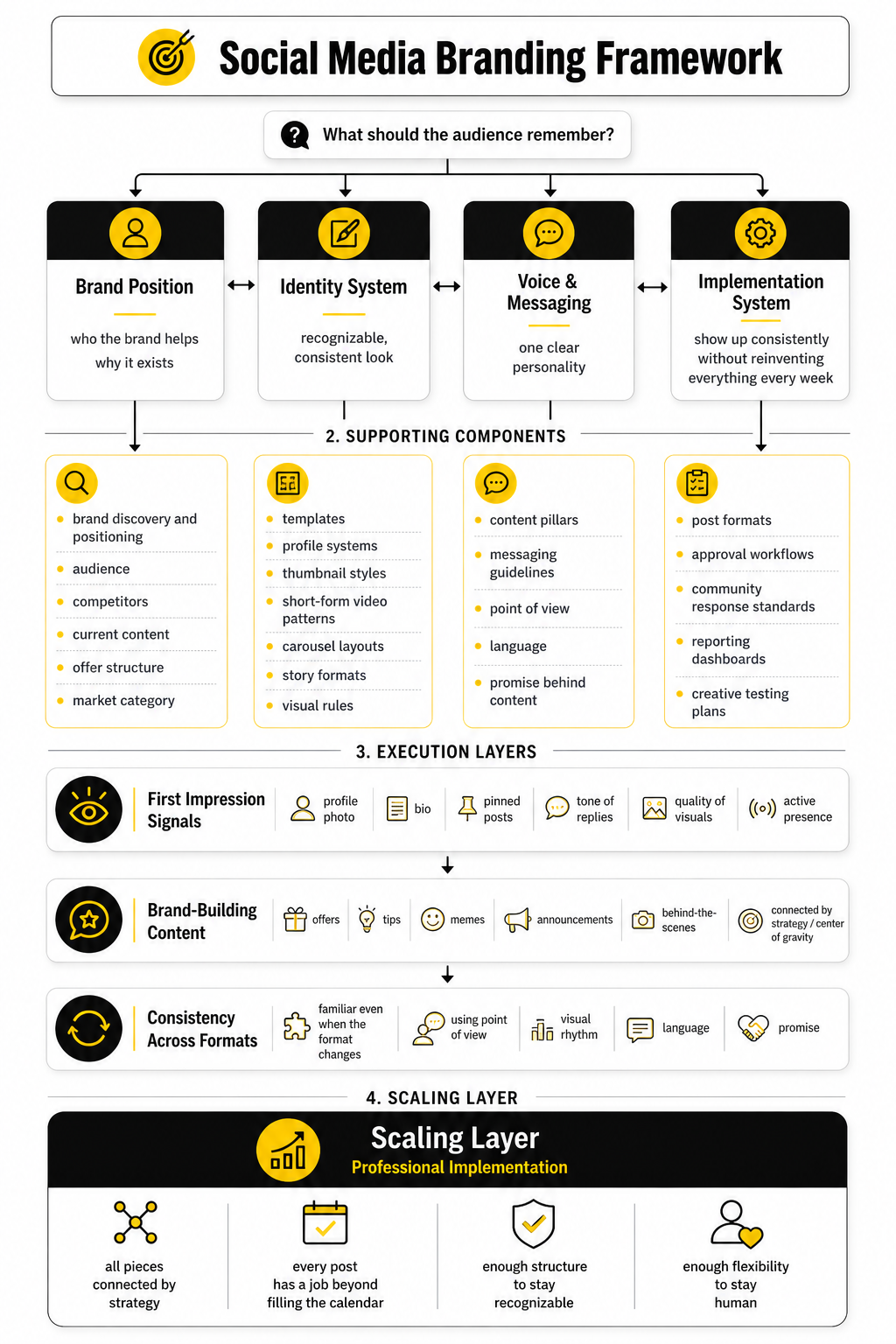
This framework matters because social branding is easy to underestimate. A business can hire a designer, a copywriter, a social media manager, or an ads specialist and still end up with a disconnected presence. The work only becomes powerful when those pieces are connected by a strategy that tells everyone what the brand is trying to become in the mind of the market.
What Social Media Branding Services Usually Include
Social media branding services often begin with brand discovery and positioning. This is where the service provider studies the audience, competitors, current content, offer structure, and market category. The point is not to create a vague mission statement; the point is to define a practical direction that can guide content decisions every day.
The next layer is identity translation. A brand may already have a logo, colors, and fonts, but that does not automatically mean it has a usable social identity. Social platforms need templates, profile systems, thumbnail styles, short-form video patterns, carousel layouts, story formats, and visual rules that work in fast-moving feeds.
The final layer is operational. This can include content pillars, messaging guidelines, post formats, approval workflows, community response standards, reporting dashboards, and creative testing plans. This is where branding becomes usable, because a team can follow the system without needing to debate the basics every time a new post is created.
Why Consistency Does Not Mean Looking the Same Everywhere
Consistency is one of the most misunderstood parts of social media branding. It does not mean every post should use the same template, the same caption style, or the same type of call to action. That kind of sameness can make a brand feel stiff, especially on platforms where people expect personality and momentum.
Real consistency means the brand feels familiar even when the format changes. A short video, a founder post, a product update, a customer reply, and a carousel can all look different while still feeling like they came from the same brand. The connective tissue is the point of view, the visual rhythm, the language, and the promise behind the content.
This is where professional implementation makes a difference. A good branding system gives a team enough structure to stay recognizable and enough flexibility to stay human. That balance is the difference between a brand that feels alive and a brand that feels trapped inside a style guide.
Brand Positioning and Audience Clarity
Before a brand worries about templates, captions, posting frequency, or short-form video ideas, it needs a sharp position. This is the part many businesses skip because it feels slower than publishing content, but it is the part that makes everything else easier. Social media branding services should start here because the audience needs to understand the brand before they can care about it.
Positioning answers the practical questions behind every strong social presence. Who is this for? What problem does the brand solve? Why should people believe it? What makes it different from the other options already filling the feed?
This matters even more because social platforms are crowded by default. DataReportal’s global social media research shows that there were 5.79 billion social media user identities worldwide at the start of April 2026, which means brands are not competing against a few direct competitors. They are competing against creators, friends, entertainment, news, ads, communities, and every other brand trying to earn the same few seconds of attention.
The Audience Must Be More Specific Than “Everyone”
A weak audience definition creates weak content. When a brand says it targets “small businesses,” “busy professionals,” “founders,” or “people who want better results,” the content usually becomes too general to be memorable. The audience may technically understand it, but they do not feel like the brand is speaking directly to them.
A stronger audience definition includes the person’s situation, motivation, frustration, buying context, and level of awareness. A local service business owner who needs more booked appointments has different concerns than a funded startup founder trying to build category credibility. Both may need social media branding services, but they do not need the same message, proof, or content structure.
This is where good strategy becomes practical. The brand should know what the audience already believes, what they are tired of hearing, what they secretly want, and what objections block them from taking action. Once that is clear, content stops sounding like generic marketing and starts sounding like a useful conversation.
The Brand Promise Needs To Be Easy To Repeat
A brand promise is not a slogan written for a slide deck. It is the simple idea the audience should be able to repeat after seeing the brand enough times. If people cannot explain what the brand helps them do, the social presence is probably too vague.
For social media branding services, the promise should connect the business outcome to the emotional reason the audience cares. A restaurant may not simply promise “great food”; it may promise a reliable place where people can celebrate without stress. A B2B consultant may not simply promise “better strategy”; they may promise clarity that helps leadership teams stop wasting budget on disconnected campaigns.
The promise should also be believable. Social media makes inflated claims easy to spot because the audience can compare a brand’s words against its posts, comments, reviews, founder presence, and customer interactions. Edelman’s 2025 brand trust research found that 80% of people trust brands they use, which reinforces an important point: trust is built through repeated, direct experience, not one perfect brand statement.
Competitive Clarity Keeps The Brand From Blending In
Most brands do not need to invent a completely new category to stand out. They need to understand the patterns in their market and make deliberate choices against the boring ones. If every competitor sounds premium, friendly, innovative, and customer-first, those words no longer create separation.
Competitive clarity looks at what other brands say, what they avoid, how they present themselves visually, and which audience emotions they lean on. Some markets are full of polished but cold brands. Others are full of loud personalities with little structure. The opportunity is usually hiding in the gap between what the audience wants and what the category keeps repeating.
This does not mean being different just to be different. That is a trap. The goal is to choose a position the audience values, the business can prove, and the brand can consistently express across content, offers, and customer experience.
Content Pillars Should Come From Positioning
Content pillars are often treated like a generic planning tool. A brand picks education, inspiration, promotion, and behind-the-scenes content, then wonders why the feed still feels interchangeable. Those categories are too broad to carry a brand.
Better content pillars come directly from the brand’s position. If the brand wants to be known for simplifying complex decisions, one pillar may focus on breakdowns and comparisons. If the brand wants to be known for speed and execution, one pillar may show process, timelines, and decision-making. If the brand wants to be known for taste, one pillar may focus on curation, critique, and standards.
This is where social media branding services can save a team from random content creation. The service provider should turn positioning into repeatable content themes that make the brand easier to recognize over time. Tools like Buffer can help organize publishing, but the tool only works well when the strategic inputs are already clear.
Audience Research That Actually Helps The Brand
Audience research does not need to become a 90-page document nobody reads. It needs to give the brand better language, sharper decisions, and fewer assumptions. The best research helps the team understand what the audience says before they buy, what they worry about when comparing options, and what proof makes them feel safe enough to move forward.
Good research combines several inputs. Customer interviews show the real words people use. Sales calls reveal objections and urgency. Reviews expose emotional patterns. Social comments show what people argue with, laugh at, save, and share.
This matters because social media is not just a broadcast channel anymore. HubSpot’s 2025 social media marketing research highlights community, customer experience, and relatable content as major themes in modern social strategy, which means brands need to understand conversations instead of only planning campaigns. The better a brand understands the audience’s language, the easier it becomes to create content that feels relevant without chasing every trend.
Look For Buying Triggers, Not Just Demographics
Demographics can be useful, but they rarely explain why someone acts now. A person’s age, location, or job title may describe them, but it does not reveal the trigger that makes them search for help. Branding becomes stronger when the business understands the moment that pushes someone from passive awareness into active evaluation.
For social media branding services, those triggers might include a brand refresh, a failed launch, inconsistent engagement, a new funding round, a franchise expansion, a founder becoming more public, or a team finally realizing their social presence does not match the quality of their offer. Each trigger creates a different messaging angle. A company preparing for a launch needs confidence and speed, while a mature business fixing a messy presence may need structure and consistency.
This is why audience clarity should go deeper than persona labels. The brand should know what is happening in the buyer’s world when the need becomes urgent. Once that is clear, the content can meet people at the right moment instead of shouting general advice into the feed.
Use Social Listening Without Losing Human Judgment
Social listening can reveal useful patterns, but it should not replace judgment. A dashboard can show what topics are rising, which posts get engagement, and which phrases appear often in conversations. It cannot fully decide what the brand should stand for.
The smart approach is to use social listening as evidence, then filter it through the brand strategy. A trend may be popular but wrong for the brand. A common complaint may reveal a positioning opportunity. A repeated customer phrase may become the clearest language for a future campaign.
This is also where many brands get lazy. They see what performs and copy the surface, instead of studying why it works. Professional social media branding services should help the brand separate useful signals from noise, because not every high-engagement idea builds the kind of recognition the business actually needs.
Visual Identity and Content Systems
Once the position is clear, the brand needs a visual system that can survive real social media work. A logo and color palette are not enough. The team needs practical rules for how the brand should look in posts, reels, carousels, stories, thumbnails, profile assets, highlights, ads, and landing page previews.
This is where social media branding services become very tangible. The work moves from strategy into assets people can actually use. Instead of asking a designer to invent a new layout every time, the brand gets a system that makes good content faster to produce and easier to recognize.
A strong social identity should not feel like decoration. It should help people understand the brand faster. The design should guide attention, support the message, and make the brand feel consistent even when the content format changes.
The Social Brand Kit
A social brand kit is the practical version of a style guide. It should include the elements the team needs every week, not just the polished assets used in a formal brand presentation. The best kits are simple enough for daily use and clear enough that new team members can create content without guessing.
A useful social brand kit usually includes:
The point is not to restrict creativity. The point is to remove unnecessary decisions. When the basic identity choices are already solved, the team can spend more energy on the idea, the hook, the message, and the quality of execution.
Templates Should Speed Up Thinking, Not Replace It
Templates are useful when they create consistency and save time. They become a problem when every post starts feeling like a recycled asset with different words dropped into the same box. A strong template system gives the brand structure, but it should still leave room for freshness.
For example, a brand may use one carousel format for educational breakdowns, another for opinion-led posts, another for customer proof, and another for product explanations. Each format has a different job. That is much better than forcing every idea into one visual pattern just because it looks “on brand.”
This is especially important for brands publishing across multiple platforms. LinkedIn may reward clarity and point of view. Instagram may need stronger visual pacing. TikTok and Reels may depend more on opening frames, captions, cuts, and creator-style delivery. The identity system should adapt to the platform without losing the brand.
Content Formats Need Clear Jobs
Every content format should have a reason to exist. A short video should not be created just because short video is popular. A carousel should not be created just because the team has a template. A founder post should not exist only because everyone says personal branding matters.
The practical way to think about formats is to assign jobs. Some posts build awareness. Some explain the brand’s point of view. Some prove credibility. Some reduce objections. Some start conversations. Some move people toward a lead magnet, booking page, product page, or newsletter.
This is where social media branding services can improve both quality and efficiency. When the team knows the job of each format, planning becomes easier and performance analysis becomes more honest. A trust-building post should not be judged only by clicks, and a conversion-focused post should not be judged only by likes.
The Execution Process Behind A Strong Social Brand
The implementation process should turn the brand strategy into a working machine. Not a bloated system. Not a 40-step approval maze. A simple operating rhythm that helps the brand show up clearly, consistently, and with enough quality to be taken seriously.
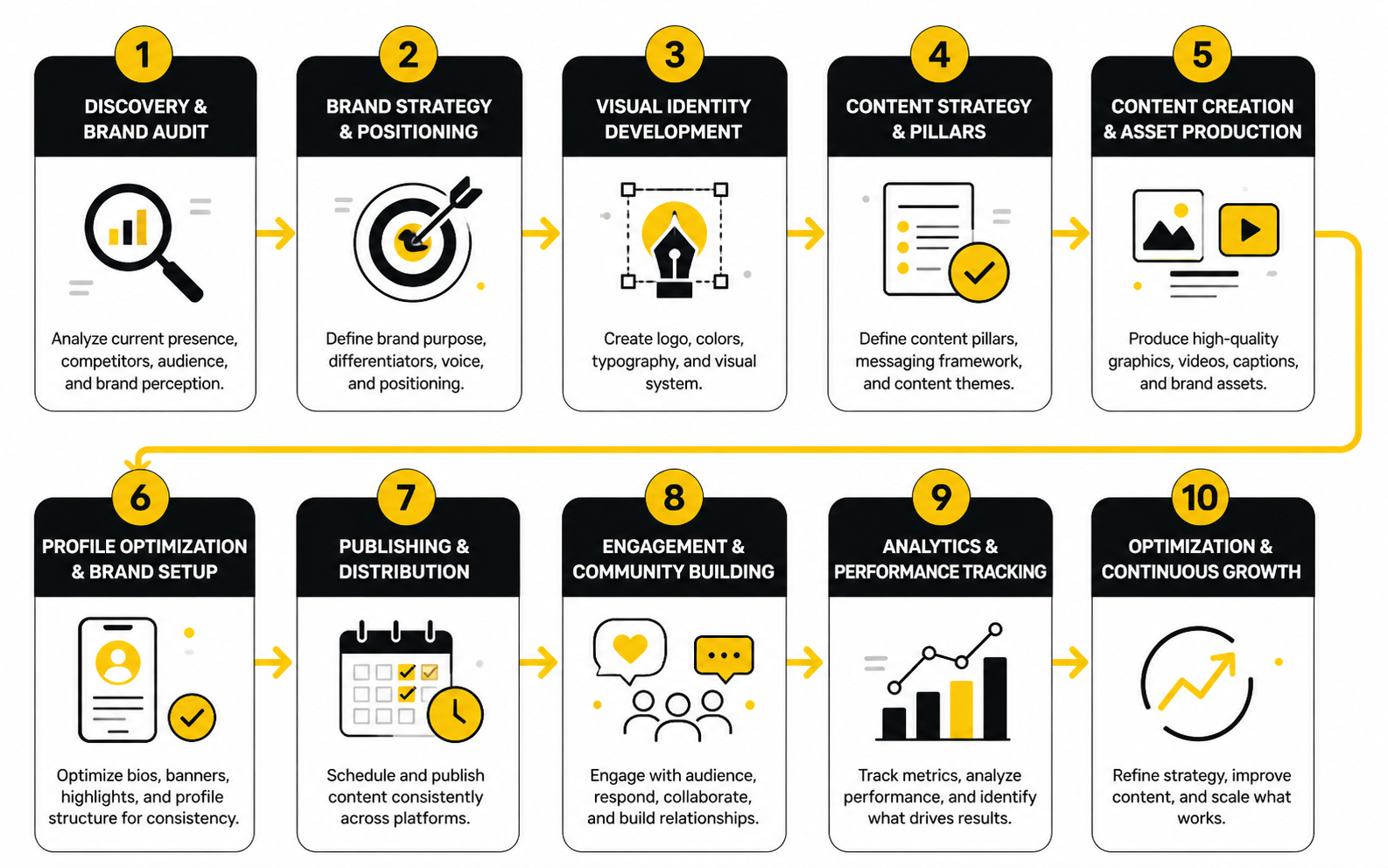
The execution process usually works best when it follows a clear sequence:
This sequence matters because random execution creates random learning. If the brand changes the message, format, design, and offer every week, it becomes hard to know what is actually working. A system gives the team enough consistency to improve instead of constantly starting over.
Step One: Turn Strategy Into Messaging Themes
Messaging themes are the bridge between positioning and content creation. They take the big brand idea and break it into angles the audience can understand in everyday posts. Without this step, even a strong strategy can stay trapped in a document.
A good messaging theme is specific enough to guide content but broad enough to produce many posts. For a social media branding agency, one theme might be “recognition beats random reach.” Another might be “your content should make the buying decision easier.” Another might be “brand consistency is an operational advantage, not just a design preference.”
These themes help the brand repeat its core ideas without sounding repetitive. That is important. Repetition builds memory, but lazy repetition creates fatigue. The skill is to say the same important thing from different useful angles.
Step Two: Build A Content Operating System
A content operating system defines how ideas move from strategy to published posts. It includes ideation, writing, design, filming, editing, approval, scheduling, engagement, and reporting. This may sound basic, but weak operations are one of the biggest reasons good brand strategies fail.
The system should answer practical questions. Who owns the calendar? Who approves the message? Who checks whether the post matches the brand voice? Who replies to comments? Who reviews performance and decides what gets repeated, improved, or retired?
A tool can help here, but it cannot replace the thinking. For brands that need a clean publishing workflow, Buffer can support planning and scheduling. For brands that rely heavily on Instagram planning, hashtag research, and visual workflow, Flick Social can also fit naturally into the content process.
Step Three: Connect Social Content To The Customer Journey
Social branding is not only about what happens inside the feed. The brand experience continues when someone clicks through to a landing page, joins a list, books a call, starts a chat, or compares offers. If that next step feels disconnected, the trust built on social media gets weaker.
This is why implementation should include the path after the post. A campaign may need a landing page that matches the same message and visual identity. A service brand may need a booking flow that feels clear and professional. An ecommerce brand may need a product page that continues the story introduced in the content.
For simple funnels and campaign pages, ClickFunnels can support the conversion side of the system. For agencies or service businesses that need CRM, automation, pipeline tracking, and follow-up in one place, GoHighLevel may be a better fit. The important thing is not the tool itself; it is whether the tool helps the brand deliver a consistent experience after attention is earned.
Creative Production Without Losing The Brand
Creative production is where the system gets tested. It is easy to sound strategic in planning. It is much harder to publish consistently while keeping the brand sharp, human, and useful.
The production process should protect the brand from two common mistakes. The first mistake is overproduction, where everything becomes so polished that it feels distant and slow. The second mistake is underproduction, where speed becomes an excuse for messy design, unclear messaging, and random posting.
The best production systems create a middle path. They make content fast enough for social platforms, but structured enough that the brand still feels intentional. That is the standard professional social media branding services should aim for.
Build A Weekly Creative Rhythm
A weekly rhythm keeps the team moving without turning content into chaos. One day may focus on reviewing insights and choosing angles. Another may focus on writing and scripting. Another may focus on design, filming, or editing. Another may focus on scheduling, engagement, and performance review.
This rhythm does not need to be complicated. The goal is to avoid the last-minute panic that creates weak posts. When content is always rushed, the brand voice gets inconsistent, visuals get sloppy, and the team starts publishing just to stay active.
A simple weekly system also makes it easier to involve subject-matter experts. Founders, sales teams, customer support, and product teams often have the best raw material. The branding process should make it easy to turn their insight into content without asking them to become full-time creators.
Create Quality Control Rules
Quality control is not about making every post perfect. It is about catching the mistakes that weaken the brand over time. A post can be timely and informal while still meeting the brand’s standards.
The team should check every piece of content against a few simple questions. Does this sound like us? Is the point clear within the first few seconds or lines? Does the visual style support the message? Is the claim believable? Does this post strengthen the brand idea we want people to remember?
These checks are boring in the best possible way. They prevent drift. Without them, even strong brands slowly become inconsistent because every creator, designer, writer, and manager makes small personal decisions that pull the identity in different directions.
Make Room For Testing
A brand system should not freeze the brand. It should create a stable base for smart testing. The team should test hooks, formats, topics, calls to action, creative styles, and content angles while keeping the underlying identity consistent.
Testing works best when the variables are clear. If one post uses a new design, a new message, a new offer, and a new format, the team will struggle to understand why it performed differently. If the brand keeps most elements stable and changes one meaningful variable, the learning becomes cleaner.
This is the difference between experimentation and randomness. Randomness burns time. Experimentation compounds. A strong social media branding system makes experimentation safer because the brand can evolve without losing recognition.
Statistics and Data
Data should make the brand sharper, not noisier. The mistake is treating social media analytics like a scoreboard where every number has the same importance. For social media branding services, the real job is to separate activity metrics from brand signals and business signals.
A post with many likes can still do very little for the brand if people only reacted to the format and forgot who published it. A post with fewer likes can be more valuable if it attracts the right comments, gets saved by the right audience, starts sales conversations, or reinforces the exact position the brand wants to own. This is why measurement needs context, not just screenshots of “growth.”
The better question is not “Did this post perform?” The better question is “What did this post strengthen?” If the answer is awareness, trust, clarity, demand, community, or conversion, the data becomes useful.
Why Benchmarks Need A Reality Check
Benchmarks are helpful when they give the team a baseline. They are dangerous when they become the strategy. Industry averages can show whether a brand is underperforming, but they cannot tell the brand what it should become.
For example, social performance varies heavily by platform, audience, industry, content type, and account maturity. Sprout Social’s 2025 benchmark research separates inbound engagements by both daily content activity and per-post performance because those two views answer different questions: one shows the overall demand on the channel, while the other shows how individual creative decisions perform. That distinction matters because a brand can improve individual post quality while still needing a stronger publishing rhythm.
The practical move is simple. Use benchmarks to understand the playing field, then judge the brand against its own goals, audience quality, and historical trend. A niche B2B brand should not blindly chase the same numbers as a lifestyle creator or mass-market consumer brand.
The Metrics That Matter For Brand Building
Social media branding services should measure more than reach and engagement. Those numbers matter, but they do not tell the full story. A brand needs to know whether people are noticing it, understanding it, remembering it, and taking meaningful next steps.
Useful brand-building metrics include:
These metrics work best when viewed together. Reach tells you how far the content traveled. Saves and shares show whether people found it useful enough to keep or pass on. Profile visits, branded search, and direct traffic show whether the content made people curious about the brand itself.
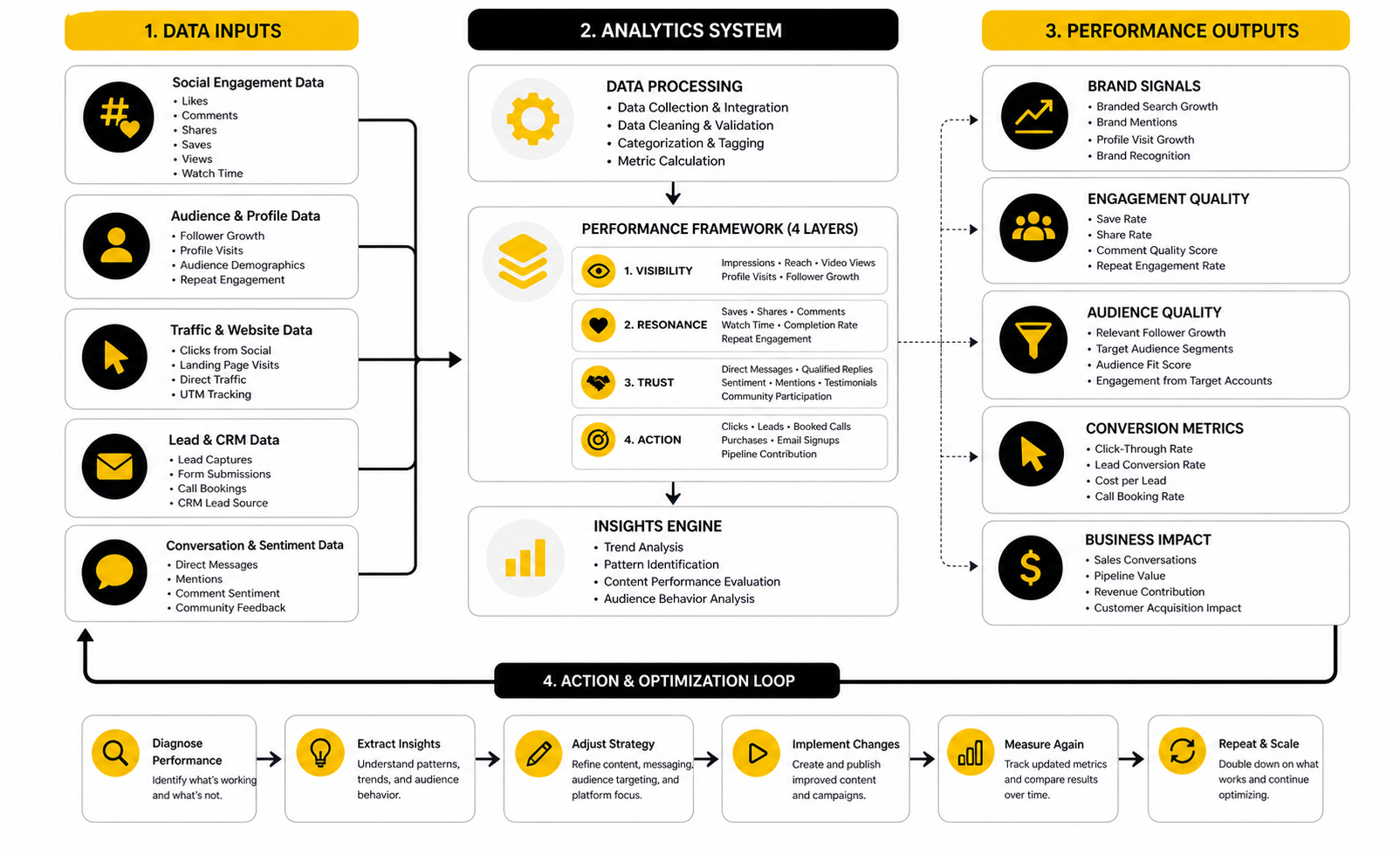
A Simple Analytics System For Social Branding
A good analytics system does not need to be complicated. It needs to connect content activity to brand outcomes and business outcomes. That means the team should organize reporting around the role each piece of content was supposed to play.
A practical system can group performance into four layers:
This structure stops the team from judging every post by the same metric. A thought-leadership post may be successful because it earns high-quality comments from the right people. A product explanation may be successful because it sends a smaller but more qualified group of visitors to a landing page.
What Engagement Actually Means
Engagement is useful, but it is often misunderstood. A like is a light signal. A save is usually a stronger signal because the person wants to return to the content. A share may be even stronger because the person is willing to attach their own reputation to the brand’s idea.
Comments need the most interpretation. A high comment count can come from disagreement, confusion, controversy, spam, or genuine interest. The number alone is not enough.
Professional reporting should look at the type of engagement, not just the total. Are people asking buying-related questions? Are they tagging decision-makers? Are they repeating the brand’s language? Are they challenging the idea in a way that reveals a stronger content angle?
Why Reach Alone Can Mislead The Team
Reach is seductive because it is easy to celebrate. Big numbers look good in reports, and they can be valuable when the right people are seeing the brand. But reach without relevance can create a false sense of progress.
A brand can reach a large audience and still fail to build demand if the content attracts people who will never buy, refer, partner, or care. This happens when brands chase broad trends that produce attention but dilute positioning. The audience remembers the joke, the trend, or the format, but not the brand.
That does not mean reach is bad. It means reach should be interpreted through audience fit. The best social media branding services help a brand grow visibility while protecting the strategic idea the business wants to be known for.
Performance Signals That Should Drive Action
Data only matters when it changes what the team does next. A report that shows numbers without decisions is just decoration. The point of measurement is to improve the next creative cycle.
If saves are high but clicks are low, the content may be useful but the next step may be unclear. If reach is high but follower quality is weak, the content may be too broad. If comments are strong but conversions are low, the brand may need better offer alignment or a clearer landing page.
The same logic applies to underperforming content. A post with low engagement is not automatically a failure. It may have had a weak hook, poor timing, unclear packaging, or a topic that needs a different format. The team should diagnose before it discards.
Match Metrics To The Content Job
Every post should have a job before it is published. That job determines how performance should be judged. Without this step, teams end up making bad decisions based on mismatched expectations.
For example, a brand story post may aim to build emotional connection. A comparison post may aim to help buyers understand tradeoffs. A behind-the-scenes post may aim to make the brand feel more credible and human. A direct offer post may aim to create leads or booked calls.
Once the job is clear, the metric becomes clearer. Awareness content needs reach and profile actions. Trust content needs saves, shares, comments, and sentiment. Conversion content needs clicks, leads, calls, and revenue contribution.
Track Patterns, Not Isolated Wins
One viral post does not prove the brand is working. One weak post does not prove the strategy is broken. The team needs to look for patterns across formats, topics, audience segments, and time.
Patterns reveal what the audience consistently responds to. Maybe direct opinion posts drive the most qualified comments. Maybe educational carousels drive saves but not sales conversations. Maybe founder-led video creates trust faster than polished brand content.
This is where a publishing and reporting workflow becomes valuable. Tools like Buffer can help organize content and review performance across channels, but the tool is only useful if the team knows what patterns to look for. The insight is not inside the dashboard by default; it comes from asking better questions.
Connect Social Data To Sales And CRM Data
Social media should not live in a separate reporting universe. If the brand is investing in content, campaigns, community, and creative production, the team should understand how social activity influences leads, pipeline, retention, and sales conversations. This is especially important for service businesses, agencies, consultants, and B2B companies with longer buying cycles.
The connection does not need to be perfect to be useful. The team can track referral traffic, UTM links, lead source fields, form submissions, call bookings, CRM notes, and customer self-reported attribution. Each signal adds a little more clarity.
For businesses that want social activity, lead capture, follow-up, and pipeline tracking closer together, GoHighLevel can be useful because it connects CRM and automation with campaign execution. The strategic point is bigger than any single platform: if the brand cannot see what happens after attention, it will keep overvaluing surface-level engagement.
What The Data Should Tell You
The right analytics system should help the brand answer a few hard questions. Are we becoming more recognizable? Are we attracting the right audience? Are people understanding our promise? Are we creating enough trust before we ask for action?
If the answer is unclear, the brand may not have a measurement problem. It may have a strategy problem. Analytics often exposes what the content calendar is hiding.
This is why professional social media branding services should combine creative judgment with data discipline. The brand needs both. Creative makes the brand worth paying attention to, and data shows whether that attention is turning into recognition, trust, and commercial movement.
Advanced Brand Decisions That Separate Serious Brands From Busy Brands
At this stage, the brand has positioning, audience clarity, a visual system, an execution process, and a measurement model. That is already more than most businesses have. But the harder work starts when the brand has to make tradeoffs.
Social media branding services are not just about adding more structure. They also help a business decide what not to do. That matters because social platforms constantly reward reaction, speed, imitation, and noise.
The strongest brands do not treat every trend, format, audience request, and platform update as a command. They filter opportunities through the brand strategy. They know when to move fast, when to ignore the noise, and when to protect the long-term brand even if a short-term tactic looks tempting.
The Trend Trap
Trends can create reach, but they can also weaken the brand if they pull attention away from the core idea. A brand should not join a trend only because it is popular. It should join when the trend gives the brand a better way to express something it already believes.
This is where judgment matters. A playful consumer brand may use trend-driven content to show personality. A high-trust professional service brand may need to be much more selective because the wrong trend can make the business feel unserious.
The test is simple. After someone sees the post, do they remember the brand more clearly or just remember the trend? If the brand disappears behind the format, the content may perform while the branding fails.
Authenticity Is Not An Excuse For Weak Execution
Audiences often reward content that feels human, direct, and unpolished. That does not mean brands should publish careless content. There is a big difference between being real and being sloppy.
A brand can use quick videos, informal captions, founder-led posts, and reactive content while still having standards. The message should still be clear. The opinion should still connect to the brand’s position. The visual or audio quality should not distract from the point.
This is especially important as more brands use AI, automation, and templated content. Hootsuite’s 2026 social trends research points to humanizing brands, creator-style communication, and AI-native workflows as major shifts in social strategy, but the brands that win will not be the ones that automate the most. They will be the ones that use technology without sanding off their taste, judgment, and personality.
Platform Fit Matters More Than Platform Presence
A brand does not need to be everywhere. It needs to be excellent where its audience pays attention and where the format supports the brand’s strengths. Showing up badly on five platforms is not better than showing up sharply on two.
Platform choice should be based on audience behavior, content capability, buying journey, and operational capacity. A B2B brand with strong experts may perform well on LinkedIn and YouTube. A visual consumer brand may need Instagram, TikTok, Pinterest, or creator partnerships. A local service business may need a mix of Instagram, Facebook, Google Business Profile activity, and review-driven proof.
The real danger is spreading the brand too thin. Each platform has its own pacing, language, creative norms, and engagement expectations. If the team cannot adapt content properly, the brand starts looking like it is reposting leftovers.
Scaling Social Media Branding Services Without Losing Quality
Scaling a social brand is not just publishing more. It is increasing output without losing clarity. This is where many growing teams run into trouble.
At the beginning, one founder, marketer, or agency partner may control most decisions. The brand feels consistent because one person is making the calls. As the team grows, more people touch the content, and the brand can start drifting.
That drift usually happens slowly. One designer changes the visual rhythm. One copywriter changes the tone. One manager approves posts that chase performance but ignore positioning. None of these choices look dangerous alone, but together they make the brand harder to recognize.
Build A Brand Governance System
Brand governance sounds corporate, but it does not need to be heavy. It simply means the brand has rules, ownership, and review points that protect consistency. The bigger the team, the more important this becomes.
A lightweight governance system should define:
The goal is not to slow everyone down. The goal is to prevent brand damage before it becomes expensive. Clear rules make teams faster because people do not need to debate the same decisions again and again.
Separate Core Brand Assets From Campaign Assets
Not every asset should have the same lifespan. Core brand assets should stay stable for long enough to build recognition. Campaign assets can change more often because they are built around a specific launch, offer, season, partnership, or message.
This distinction is useful because it gives the brand room to be creative without constantly reinventing itself. The logo, profile system, voice principles, color logic, and key positioning should not change every month. Campaign visuals, hooks, content angles, and promotional formats can evolve much faster.
Professional social media branding services should help a business manage both layers. The core identity creates memory. The campaign layer creates momentum. Confusing the two is how brands become either boring or chaotic.
Document The Decisions That Matter
A brand system that lives only in someone’s head is fragile. If that person leaves, gets overloaded, or hands work to another team, quality drops. Documentation protects the brand from dependency.
This documentation should be practical, not bloated. It should explain the brand position, voice, visual rules, audience insights, content pillars, approval process, and measurement logic. It should also include real examples of strong and weak content so people can see the standard.
The best documentation feels like a working tool. A team should be able to open it and make better decisions immediately. If nobody uses the document, it is probably too long, too vague, or too disconnected from the daily workflow.
Risks That Can Damage A Social Brand
Social media makes brand damage visible quickly. A weak campaign, careless reply, misleading claim, or off-brand partnership can spread faster than the team expects. That does not mean brands should become timid, but it does mean they need better judgment.
The biggest risks usually come from misalignment. The brand says one thing and behaves another way. The content promises a level of quality the customer experience does not match. The social team chases engagement while the business needs trust.
This is why social media branding services should look beyond the content calendar. The social brand is affected by product quality, customer support, employee behavior, founder communication, reviews, community management, and the experience after someone clicks. Social media simply makes those signals easier to see.
Inconsistent Voice Creates Confusion
Voice inconsistency is one of the fastest ways to make a brand feel amateur. One week the brand sounds formal. The next week it sounds like a meme account. Then it becomes motivational, then technical, then aggressively sales-driven.
A flexible voice is fine. A confused voice is not. The brand can adjust tone based on context while still sounding like the same organization.
The solution is to define voice principles instead of only listing adjectives. “Confident” is not enough. The team needs to know what confidence sounds like in a caption, a comment reply, a video script, a sales post, and a customer complaint response.
Over-Automation Can Flatten The Brand
Automation is useful when it handles repetitive tasks, follow-up, routing, reminders, reporting, and operational friction. It becomes dangerous when the audience can feel that the brand is replacing judgment with generic output. People can tell when content is technically correct but emotionally empty.
This matters because AI-assisted content is now easy to produce at scale. Easy production creates a new problem: sameness. When many brands use similar prompts, templates, and formulas, their content starts to sound interchangeable.
The practical answer is not to avoid AI. It is to use AI for leverage while keeping human ownership over point of view, proof, taste, and final judgment. Tools like GoHighLevel AI can support automation and campaign workflows, but the brand still needs a clear strategy behind what gets automated and why.
Poor Community Management Breaks Trust
Branding does not stop when the post is published. The comment section, direct messages, reviews, and tagged conversations are part of the brand experience. A brand that publishes polished content but ignores people will eventually feel hollow.
Community management should have standards. The team should know when to reply, how to handle complaints, when to move a conversation to private channels, and how to keep the voice consistent under pressure. This is especially important for brands with active audiences or high-consideration offers.
Some businesses can also use automation carefully for first responses, routing, or common questions. For brands that need conversational flows on social channels, ManyChat can support that layer. The key word is carefully, because automation should make the brand more responsive, not less human.
When To Hire Professional Social Media Branding Services
A business does not always need outside help. If the brand is early, simple, and founder-led, a lean internal system may be enough. But there are clear moments when professional support becomes valuable.
Hiring makes sense when the brand has grown beyond random posting but does not yet have a clear system. It also makes sense when the business is entering a more competitive market, preparing a launch, repositioning, expanding locations, building a founder brand, or trying to turn social attention into a more reliable pipeline.
The strongest reason to hire is not because the team is too busy to post. It is because the brand needs strategic clarity, creative consistency, and operational discipline at the same time. That combination is hard to build casually.
What A Good Provider Should Bring
A good provider should not begin by promising viral content. That is the wrong starting point. They should begin by understanding the business, audience, market, offer, customer journey, and current brand perception.
They should also be able to explain their process clearly. If the process is vague, the outcome will probably be vague too. The provider should show how they move from research to strategy, from strategy to identity, from identity to content systems, and from content systems to measurement.
Look for practical thinking. The best social media branding services do not only make things look better. They make the brand easier to understand, easier to trust, easier to remember, and easier to operate.
What To Avoid
Avoid providers who talk only about aesthetics. Visuals matter, but beautiful posts cannot fix weak positioning. Also avoid providers who focus only on volume, because posting more of the wrong thing just creates more noise.
Be careful with anyone who guarantees specific engagement numbers without understanding the brand, audience, budget, platform mix, or starting point. Social platforms change, audience behavior changes, and creative performance is never fully predictable. Serious providers talk about systems, testing, learning, and business alignment.
Also avoid teams that cannot explain how social content connects to the next step. The feed is only one part of the journey. If the landing page, CRM, email follow-up, booking process, or sales handoff is weak, the brand will leak value after earning attention.
Bringing The Full Social Brand Ecosystem Together
A social brand becomes stronger when every part of the system points in the same direction. Positioning tells the audience what the brand should mean. Messaging turns that meaning into language people can understand. Visual identity makes the brand easier to recognize. Content systems keep the brand active without creating chaos. Measurement shows whether the work is actually building trust, memory, and demand.
This is the final shift: stop seeing social media as a pile of posts. A strong brand ecosystem connects the feed, profile, content, comments, landing pages, lead capture, sales follow-up, customer experience, and reporting. When those pieces work together, social media branding services become a business asset instead of a creative expense.
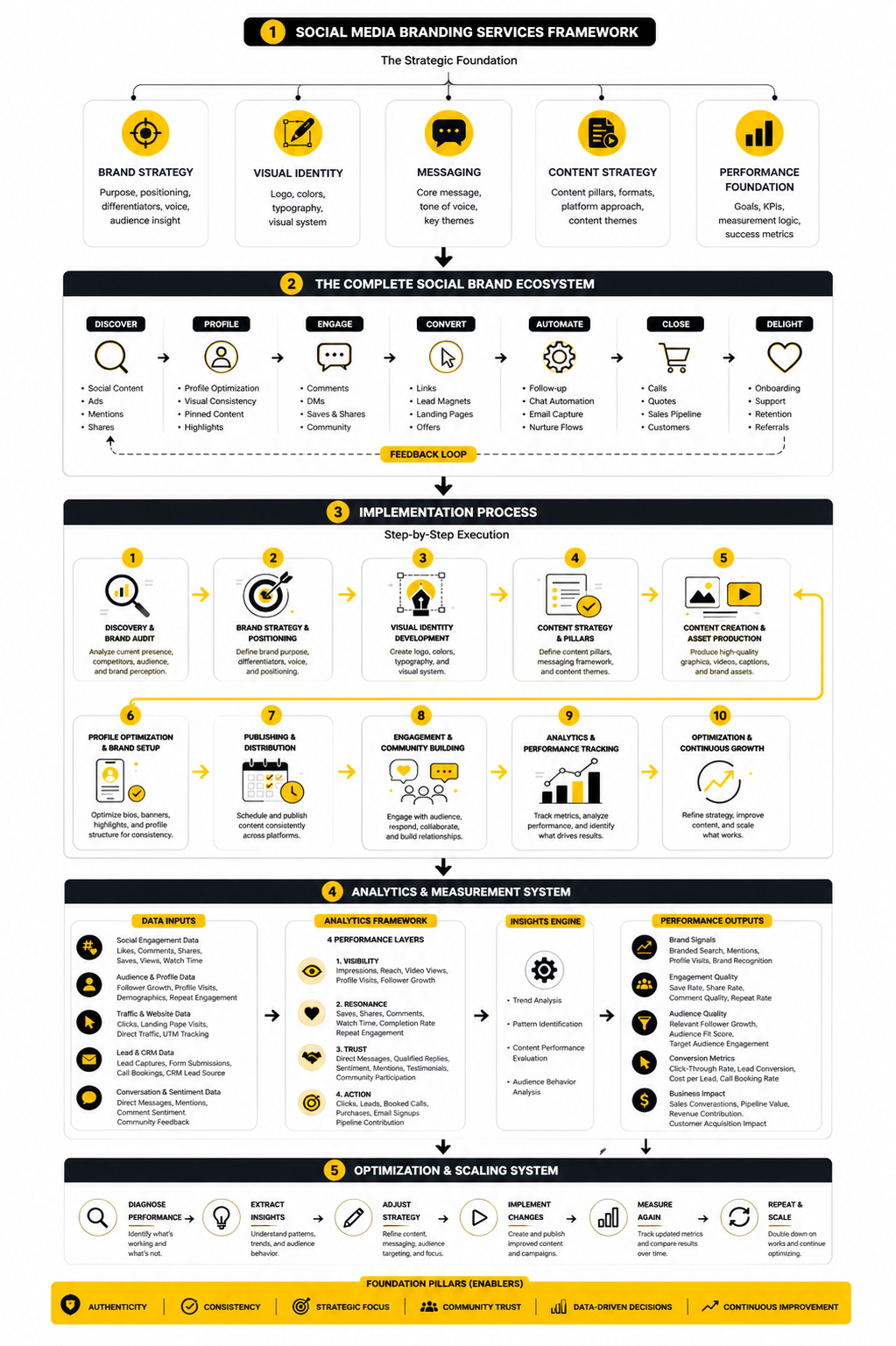
The best brands make the journey feel consistent from first impression to final decision. Someone may discover the brand through a short video, check the profile, read a pinned post, click a landing page, join a list, ask a question, book a call, and later become a customer. Every step either strengthens trust or weakens it.
The Final System Check
Before investing more time, money, or team energy into social content, a brand should run a simple system check. This is not a theoretical exercise. It is a practical way to find the weak links that stop attention from becoming brand equity.
Ask these questions:
If the answer is no to several of these, the brand does not need more random content. It needs a clearer system. That is where professional social media branding services can help most.
What are social media branding services?
Social media branding services help a business create a recognizable, consistent, and trusted presence across social platforms. The work usually includes positioning, audience research, visual identity, messaging, content pillars, profile optimization, platform-specific content systems, community standards, and performance measurement. The goal is not only to make posts look better, but to make the brand easier to understand, remember, and choose.
How are social media branding services different from social media management?
Social media management usually focuses on the ongoing execution of content, scheduling, posting, engagement, and reporting. Social media branding services focus on the strategic and creative system behind that activity. In simple terms, branding defines what the brand should mean and how it should show up, while management keeps the brand active and consistent.
Who needs social media branding services?
A business needs social media branding services when its online presence feels inconsistent, unclear, outdated, or disconnected from the quality of its offer. This is common for growing service businesses, agencies, consultants, ecommerce brands, local businesses, startups, creators, and companies preparing for a launch or repositioning. It is also useful when multiple team members create content and the brand starts to lose one clear voice.
What should be included in a social media brand strategy?
A strong social media brand strategy should include the target audience, brand position, core promise, messaging themes, visual rules, content pillars, platform priorities, profile standards, community guidelines, and measurement logic. It should also explain how social content connects to the next step in the customer journey. Without that connection, the brand may earn attention but fail to create meaningful action.
How long does it take to build a strong social media brand?
A brand system can be built in weeks, but recognition takes longer. The strategy, visuals, templates, and workflows can be created quickly when the business has clear inputs. The audience memory builds through repeated, consistent, high-quality execution over time.
What platforms should a brand focus on first?
A brand should start with the platforms where its audience is active and where the team can create strong native content. A B2B company may prioritize LinkedIn and YouTube. A visual consumer brand may focus on Instagram, TikTok, or Pinterest. A local business may need Instagram, Facebook, Google Business Profile activity, and review-driven content.
Do social media branding services include logo design?
Sometimes they do, but not always. A full rebrand may include logo design, typography, colors, and broader identity work. A social-focused branding project may instead adapt an existing brand identity into usable social templates, profile assets, short-form video formats, content layouts, and platform-specific rules.
What is the biggest mistake brands make on social media?
The biggest mistake is posting without a clear brand idea. Many brands publish tips, trends, promotions, and behind-the-scenes content without giving the audience one consistent reason to remember them. Activity feels productive, but it does not build a stronger position in the market.
How do you measure whether social media branding is working?
You measure it by looking at brand, engagement, and business signals together. Useful signals include profile visits, branded search, direct traffic, saves, shares, quality comments, relevant follower growth, direct messages, mentions, clicks, leads, booked calls, and sales conversations. The key is to match the metric to the job of the content instead of judging every post by likes.
Should small businesses invest in social media branding services?
Small businesses can benefit a lot from social media branding services because clarity is a competitive advantage. A small business does not need a massive brand department to look professional, sound consistent, and build trust online. Even a lean system with clear positioning, strong profile assets, simple templates, and a consistent voice can make the business feel more credible.
Can AI help with social media branding?
AI can help with research synthesis, content drafts, caption variations, workflow automation, reporting summaries, and campaign organization. It should not replace brand judgment. The brand still needs human ownership over point of view, quality standards, customer understanding, proof, and final creative decisions.
How often should a social media brand system be updated?
A brand system should be reviewed regularly, but not changed constantly. The core positioning and identity should stay stable long enough to build recognition. Content formats, hooks, campaign angles, templates, and workflows can be updated more often based on performance, platform changes, and audience feedback.
What should I ask before hiring a social media branding provider?
Ask how they define positioning, how they research the audience, how they turn strategy into content systems, how they handle visual identity, and how they measure success. Ask to see how their process works from discovery to implementation. A serious provider should talk about clarity, consistency, execution, and business alignment, not just aesthetics or viral posts.
Are social media branding services worth it?
They are worth it when the business has a real offer, a real audience, and a need for stronger trust or recognition. They are not worth it if the business only wants prettier posts without changing the strategy behind them. The value comes from building a system that makes every social interaction reinforce the same brand idea.
Build a stronger local presence with BAAM AI
Turn your website, Google profile, social channels, and AI visibility into one growth engine
Most businesses do not need more random marketing activity. They need a consistent presence system that helps the right people find them, trust them, and take action. BAAM AI brings strategy, local SEO, website updates, Google Maps visibility, social content, AI-search readiness, media production, and reporting into one practical monthly engine.
If you want your marketing to keep working after the campaign ends, start with a free BAAM AI presence audit. See how your business shows up today and where the fastest visibility wins are at BAAM AI.