
BAAM AI Blog
Social Media Agency Services: What They Include, Why They Matter, And How To Choose The Right Partner
Social media agency services used to mean posting a few times per week, replying to comments, and sending a monthly report with follower growth. That version is outdated. Today, a serious social media agency sits...
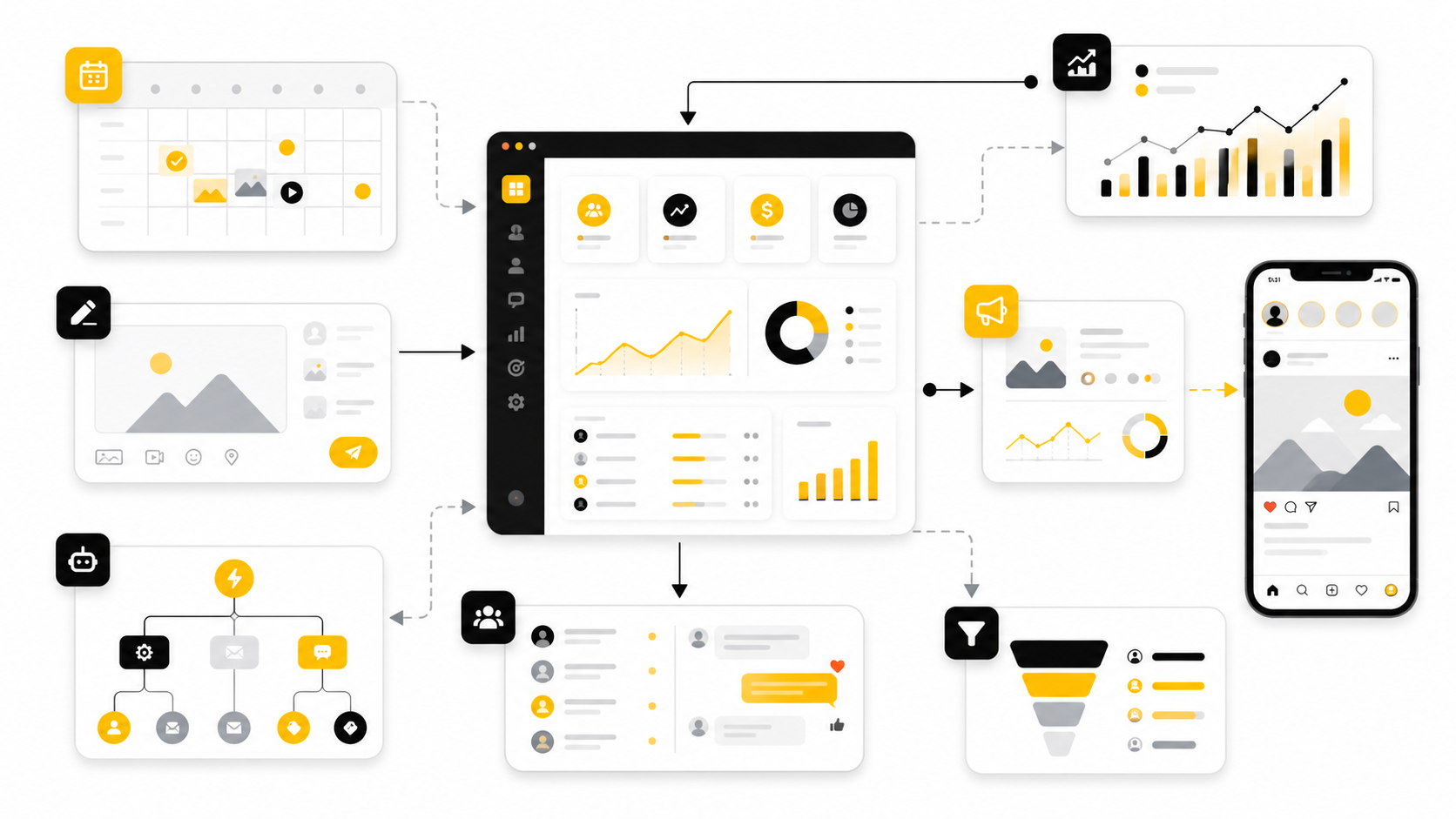
Social media agency services used to mean posting a few times per week, replying to comments, and sending a monthly report with follower growth. That version is outdated. Today, a serious social media agency sits much closer to revenue, customer experience, content strategy, paid acquisition, creator partnerships, community building, and brand trust.
That shift matters because social media is no longer just a visibility channel. Global users now spend an average of 2 hours and 21 minutes per day on social media, and buyers often check a brand’s social presence before they ever fill out a form, book a call, or buy. The best agencies understand that every post, reply, ad, landing page, and campaign should move people closer to a real business outcome.
For founders, marketing leaders, and local service businesses, the challenge is not deciding whether social matters. It clearly does. The harder question is what kind of social media agency services you actually need, how those services should work together, and how to avoid paying for activity that looks busy but does not create demand, leads, sales, retention, or authority.
Why Social Media Agency Services Matter Now
Social media has become one of the few places where brand, performance, customer support, and public reputation collide in real time. A weak social presence does not simply mean fewer likes. It can mean slower trust-building, weaker recruitment, poor customer response, and missed buying signals from people who are already comparing options.
The pressure is higher because the platforms are noisier. Sprout Social’s 2025 research was based on surveys of more than 4,000 consumers, 900 social practitioners, and 300 marketing leaders, which reflects how seriously brands now treat social as a business function rather than a side task. That is the right way to think about it: social is not just content, it is a system.
A good agency helps you build that system with focus. Instead of guessing what to post, chasing every trend, or copying competitors, the agency should connect social activity to the buyer journey. That means strategy before content, measurement before reporting, and commercial intent before creative volume.
The Social Media Agency Services Framework
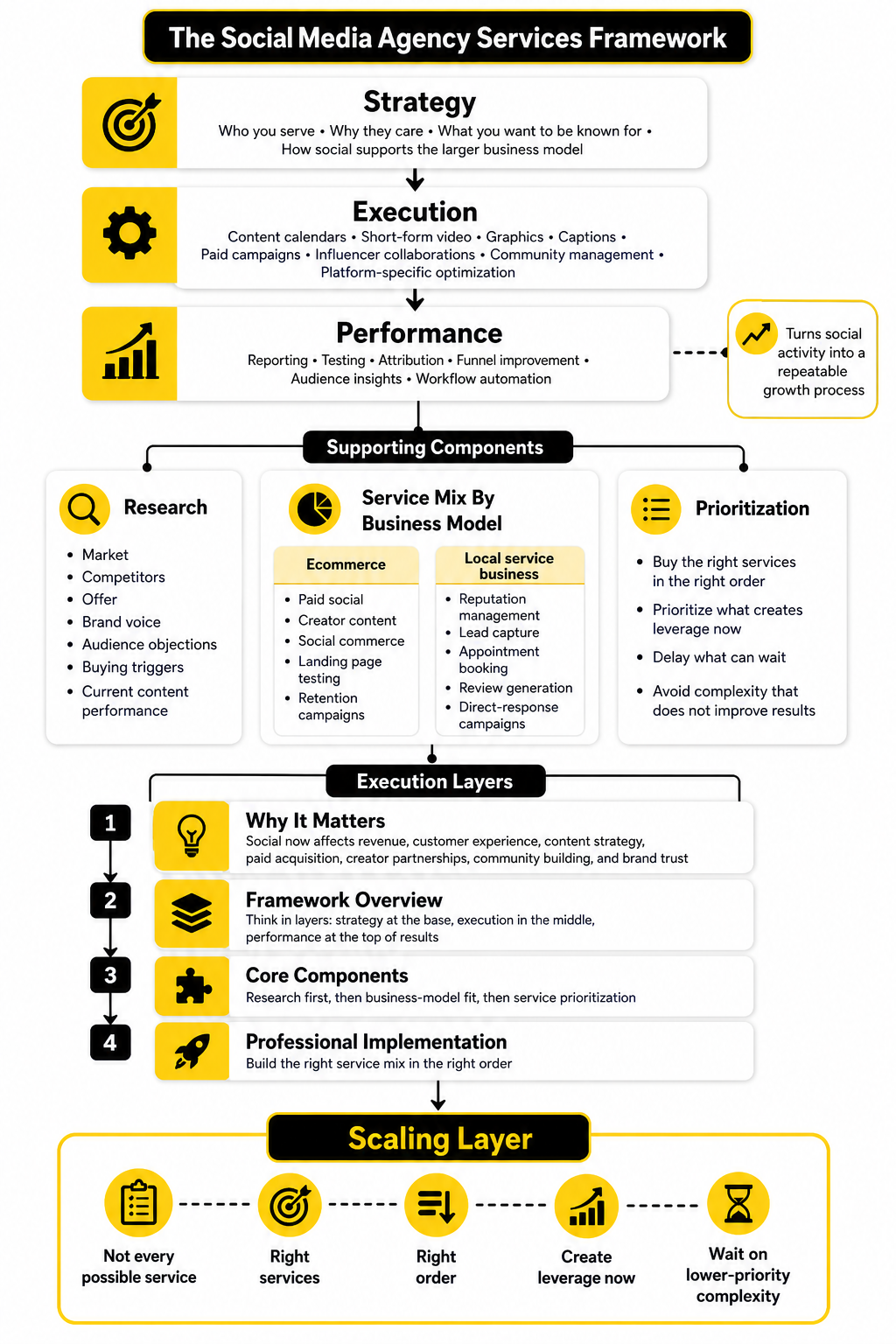
The easiest way to understand social media agency services is to think in layers. At the bottom is strategy: who you serve, why they care, what you want to be known for, and how social supports the larger business model. Without that layer, everything else becomes random output.
The next layer is execution. This includes content calendars, short-form video, graphics, captions, paid campaigns, influencer collaborations, community management, and platform-specific optimization. Execution is where most people start, but it only works when the strategic foundation is clear.
The final layer is performance. This is where reporting, testing, attribution, funnel improvement, audience insights, and workflow automation turn social activity into a repeatable growth process. This layer is what separates a content vendor from a real strategic partner.
Core Components Of Professional Social Media Agency Services
Professional implementation usually begins with research. The agency should understand your market, competitors, offer, brand voice, audience objections, buying triggers, and current content performance before recommending a publishing schedule. If they skip this step and jump straight into posting, they are probably selling production, not strategy.
From there, the agency should build a service mix that matches your business model. An ecommerce brand may need paid social, creator content, social commerce, landing page testing, and retention campaigns. A local service business may need reputation management, lead capture, appointment booking, review generation, and direct-response campaigns supported by a platform like GoHighLevel.
The point is not to buy every possible service. The point is to buy the right services in the right order. A strong agency will help you prioritize what creates leverage now, what can wait, and what would only add complexity without improving results.
Strategy, Positioning, And Audience Research
A social media agency should never start with “How many posts do you want per week?” That question sounds practical, but it skips the real work. The better starting point is simple: what does the business need social media to change?
For some brands, the goal is awareness because nobody knows them yet. For others, the goal is trust because people are aware but not convinced. For service businesses, the goal may be booked calls, qualified leads, faster follow-up, or more referrals. This is where social media agency services become valuable: they translate broad marketing goals into a focused social strategy that a team can actually execute.
The strategy should define the audience, the message, the platform mix, the content pillars, the campaign rhythm, and the success metrics. It should also explain what the agency will not do. That part matters because saying yes to every platform, trend, and content idea is how brands end up with scattered activity and no clear market position.
Positioning Comes Before Posting
Positioning is the difference between being another option and being the obvious choice for a specific buyer. Before an agency builds content, it should clarify who the brand is for, what problem the brand solves, why the offer is different, and what belief the audience needs to adopt before buying. Without that, social content often becomes a mix of generic tips, recycled industry opinions, and promotional posts nobody asked for.
Good positioning gives the agency creative constraints. It tells the team what topics to own, what tone to use, what objections to handle, and what proof points to repeat over time. That repetition is not boring when it is done well; it is how a brand becomes memorable.
This is especially important because buyers rarely make decisions from one post. They see a short video, then a founder post, then a testimonial, then a comparison, then a comment thread, then a landing page. If those touchpoints feel disconnected, the brand feels weaker than it really is.
Audience Research Should Be Specific, Not Vague
Most weak social strategies describe the audience in broad labels like “small business owners,” “busy moms,” “B2B decision-makers,” or “fitness enthusiasts.” Those labels are not enough. A real agency digs into the audience’s buying triggers, anxieties, objections, desired outcomes, language, platform habits, and level of category awareness.
Platform choice should come from that research, not personal preference. Pew’s 2025 research found that YouTube and Facebook still have the broadest reach among U.S. adults, while Instagram, TikTok, Snapchat, and Reddit skew much younger. That does not mean every brand needs YouTube or Facebook. It means a smart agency chooses channels based on where the buyer actually pays attention, not where the loudest marketing conversations are happening.
The agency should also study how the audience behaves at different stages of intent. Someone discovering a problem needs different content from someone comparing vendors. Someone ready to buy may need proof, clarity, speed, and a simple next step more than another educational carousel.
Competitor And Category Analysis
Competitor research is not about copying what other brands post. It is about finding the gaps they leave open. A strong agency studies competitors to see which promises are overused, which objections are ignored, which formats dominate the category, and where the brand can sound sharper.
This analysis should include direct competitors, substitute solutions, creators in the niche, review sites, search results, paid ad libraries, and comment sections. The most useful insights often come from what customers complain about, not what brands say about themselves. That is where you find frustration, unmet demand, and language that can make content feel instantly relevant.
The output should be practical. The agency should be able to say, “Here is the position we can own, here are the topics we should avoid because they are saturated, and here are the proof points we need to make our message believable.” That is much more useful than a slide deck filled with screenshots.
Content Pillars That Actually Support The Business
Content pillars are only helpful when they connect to the buying journey. A common mistake is building pillars around internal categories like company news, tips, testimonials, and promotions. That creates a calendar, but it does not necessarily create demand.
Better pillars usually map to audience problems and business outcomes. For example, a B2B agency might use pillars around problem awareness, strategic education, proof, founder perspective, customer transformation, and conversion. A local service business might use pillars around trust, urgency, process clarity, reviews, before-and-after proof, and booking friction.
This is where a tool stack can support the strategy without replacing the thinking. A scheduling tool like Buffer can help organize publishing, but it cannot decide what your market needs to believe before they buy. The agency’s job is to build that logic first, then use tools to make execution cleaner.
Brand Voice And Messaging Guidelines
Social media exposes weak brand voice fast. If every caption sounds like it was written by a different person, the audience feels it. If every post sounds like a corporate announcement, the audience ignores it.
A professional agency should create messaging guidelines that make the brand easier to recognize. These guidelines should cover tone, vocabulary, point of view, claims, proof standards, offer language, recurring phrases, and topics the brand should not touch. This keeps the content consistent without making it robotic.
The best brand voices are not random personality exercises. They come from the audience, the offer, and the market position. A premium consulting firm should not sound like a meme page, and a consumer lifestyle brand should not sound like a legal memo. Simple, but a lot of brands get this wrong.
Goals, Metrics, And The First 90 Days
The first 90 days should not be treated like a magic window where social suddenly fixes everything. It should be treated as a focused learning period. The agency should use it to validate audience assumptions, test content angles, build a publishing rhythm, review early engagement quality, and identify which formats deserve more investment.
The metrics should match the objective. Awareness work may track reach, video retention, profile visits, branded search lift, and share of voice. Lead generation work may track clicks, conversion rate, booked calls, cost per lead, response speed, pipeline value, and close rate. Customer trust work may track sentiment, response quality, review volume, community participation, and recurring questions.
This is also where automation can help if the business has a clear follow-up process. For agencies handling local businesses, coaches, consultants, or appointment-based services, GoHighLevel can centralize CRM, forms, follow-up, booking, and campaign workflows. That only works when the strategy is already clear, though. Automation makes a good process faster, but it makes a messy process messier.
Content Planning, Creative Production, And Publishing
Once the strategy is clear, the work becomes practical. This is where a social media agency turns positioning, audience research, and business goals into a repeatable content machine. Not a random pile of posts, not a last-minute scramble, and definitely not “let’s see what trends today.”
Content planning is where strong social media agency services start to feel operational. The agency should know what is being created, why it matters, who it is for, where it will be published, how it supports the offer, and what action the audience should take next. That level of clarity removes the guesswork and gives the creative team room to move fast without drifting away from the strategy.
The best agencies do not treat content calendars like storage folders. They treat them like campaign systems. Every week should have a purpose, every format should have a role, and every piece of content should either build trust, create demand, answer objections, show proof, or move people toward a decision.
From Strategy To Content Calendar
A useful content calendar is not just a list of dates and captions. It should show themes, formats, hooks, production status, approval stages, publishing channels, campaign links, and performance notes. This helps the client understand what is happening without needing to micromanage the agency.
The calendar should also balance planned content with room for timely content. Social moves quickly, and brands that need two weeks to approve a simple post often miss the moment. That does not mean the agency should chase every trend, but it does mean the process needs enough flexibility to respond when a relevant opportunity appears.
A clean publishing workflow usually includes:
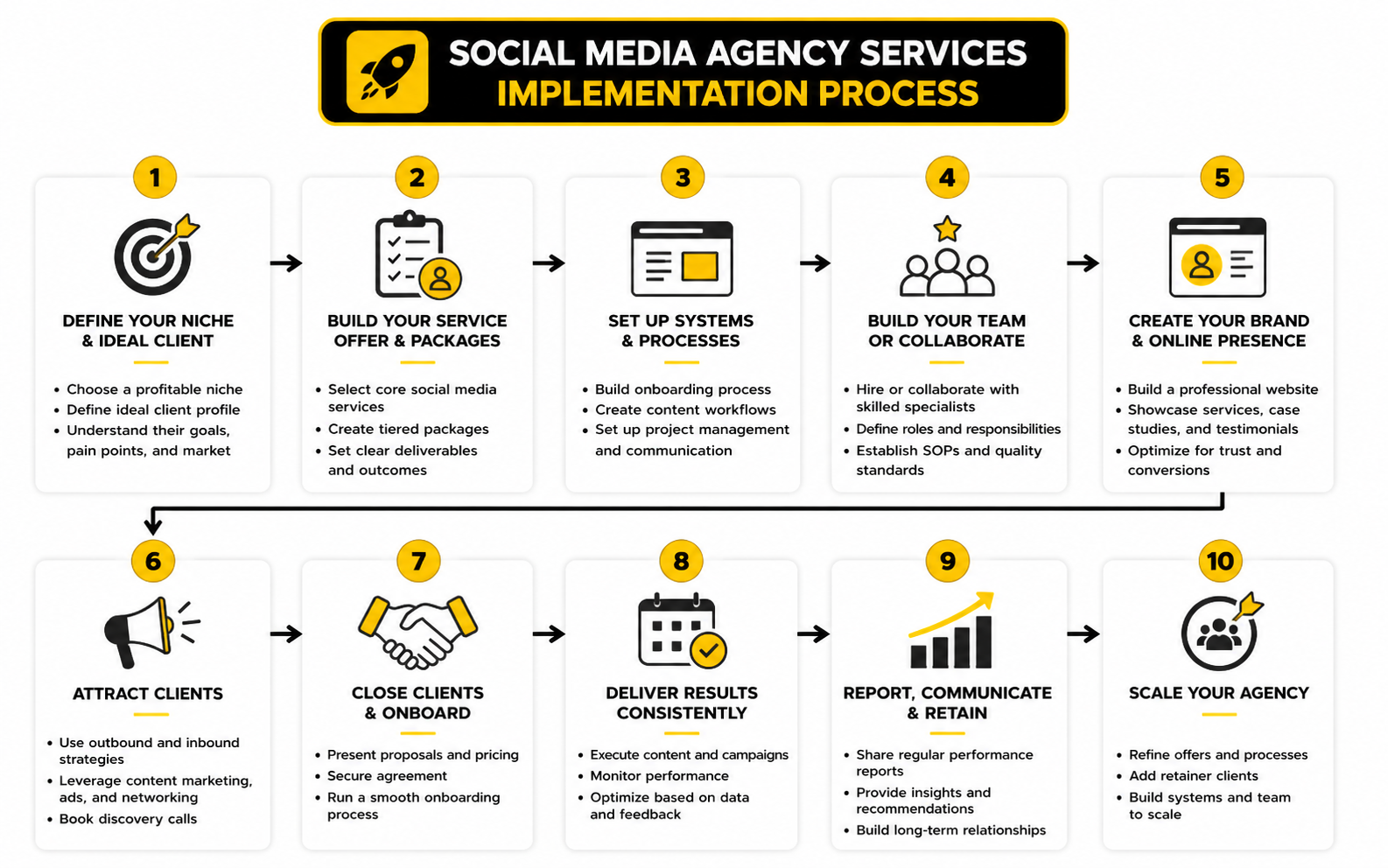
This is the point where execution becomes tangible. The agency is no longer talking about “brand awareness” in the abstract. It is building the actual pipeline that turns strategy into posts, videos, carousels, stories, ads, replies, and conversion paths.
Creative Briefs Keep The Work Sharp
A creative brief is the bridge between the strategist and the creator. Without it, designers, editors, copywriters, and video teams are forced to guess what the content is supposed to do. That is how you get beautiful content that does not move the audience.
A good brief explains the audience insight, the goal of the piece, the hook, the core message, the format, the proof point, the call to action, and any brand constraints. It should be short enough to use, but specific enough to prevent vague creative. The point is not bureaucracy. The point is better work with fewer revisions.
This becomes even more important when agencies produce short-form video. A strong video is not just a nice clip with captions. It needs a fast opening, a clear angle, tight pacing, visual variety, and a reason to keep watching. Short-form video continues to shape social behavior, and WPP Media projected that creator-generated content revenue would grow 20% in 2025, which says a lot about where attention and ad money are moving.
Platform-Specific Execution
One lazy agency habit is publishing the same asset everywhere with the same caption. Sometimes repurposing makes sense, but copy-paste distribution usually weakens performance. Each platform has its own consumption pattern, creative language, and user expectation.
LinkedIn often rewards strong points of view, founder insight, practical lessons, hiring updates, market observations, and professional proof. Instagram leans heavily into visual identity, Reels, Stories, creator-style content, product education, and social proof. TikTok requires sharper hooks, faster pacing, native-feeling creative, and a willingness to test angles that may feel less polished but more alive.
YouTube Shorts, Facebook, Pinterest, Reddit, X, and Threads all have their own logic too. The agency does not need to force every brand onto every channel. It needs to adapt the idea to the channel when the channel is worth using.
Content Formats That Agencies Usually Manage
Most social media agency services include a mix of content formats, but the right mix depends on the business. A B2B software company does not need the same production system as a med spa, restaurant group, ecommerce brand, law firm, coach, or local contractor. The agency should tailor the format mix to the buyer journey and the internal resources available.
Common deliverables include:
The key is not having the longest list of deliverables. The key is knowing which deliverables create leverage. A founder-led LinkedIn post may outperform ten generic graphics for a B2B consulting firm, while a sharp creator-style product video may do more for ecommerce than another polished brand reel.
Publishing Systems And Approval Workflows
Publishing sounds simple until several people are involved. The client wants accuracy, the agency wants speed, the designer needs feedback, the copywriter needs context, the media buyer needs assets, and the community manager needs to know what is going live. Without a workflow, everything becomes reactive.
A professional agency should define who approves what, how revisions are handled, when content is locked, and what happens when urgent changes are needed. This protects both sides. The client gets quality control, and the agency gets the speed needed to keep campaigns moving.
Tools can help here, but they should not become the strategy. A platform like Buffer can make scheduling and coordination easier, especially when several channels are active. Still, the real advantage comes from the operating rhythm: clear briefs, realistic deadlines, fast feedback, and consistent publishing.
Repurposing Without Making Everything Feel Recycled
Repurposing is smart when it respects the platform and the audience. A webinar can become short clips, quote posts, carousels, email ideas, sales enablement content, and ad angles. A customer interview can become proof posts, objection-handling clips, landing page copy, and retargeting creative.
The mistake is treating repurposing as a shortcut instead of a creative process. A 45-minute webinar clip dropped onto TikTok without a hook is not repurposing. It is dumping. Real repurposing rebuilds the idea for the format.
This is where agencies can create a lot of value. They can take one strong idea and turn it into multiple assets without making the brand sound repetitive. That lowers production pressure while keeping the message consistent across the buyer journey.
Quality Control Before Content Goes Live
Quality control is not just checking for typos. It means checking whether the content matches the strategy, brand voice, platform format, claim standards, compliance needs, and campaign goal. This matters even more for regulated industries, high-ticket services, healthcare, finance, legal, and brands with strict internal review processes.
A simple pre-publish check can prevent expensive mistakes. The agency should review whether the hook is strong, the visual is clear, the claim is supportable, the CTA makes sense, the link works, and the content fits the platform. Boring? Maybe. Necessary? Absolutely.
Good quality control also protects brand trust. People may forgive a typo, but they notice sloppy claims, broken links, inconsistent messaging, and tone-deaf posts. Social media moves fast, but speed without judgment is not a strategy.
Statistics And Data
Data is where social media agency services either become more valuable or get exposed. A nice content calendar can look impressive, but performance data shows whether the work is reaching the right people, creating useful engagement, and helping the business move closer to revenue. The goal is not to drown the client in dashboards; the goal is to turn signals into more carefully decisions.
The first mistake is treating all metrics as equal. Reach, impressions, saves, comments, click-through rate, cost per lead, booked calls, and sales all matter in different contexts. A post that gets high reach but attracts the wrong audience may be less useful than a lower-reach post that brings qualified prospects into the pipeline.
The second mistake is judging social media too quickly. Some signals show up fast, like watch time, saves, comments, and clicks. Other signals take longer, like brand recall, direct traffic, organic search lift, sales conversations, and referral quality. A good agency knows how to read both short-term and long-term signals without pretending every post must produce instant sales.
The Numbers That Actually Matter
The most useful social metrics usually fall into four groups: attention, engagement, intent, and business impact. Attention tells you whether the content is being seen. Engagement tells you whether people care enough to react, save, share, comment, or continue watching.
Intent metrics are more serious. These include profile visits, link clicks, direct messages, form starts, lead magnet downloads, booked calls, demo requests, and cart activity. Business impact then connects the social media work to pipeline, sales, customer acquisition cost, retention, repeat purchases, or lifetime value.
This is why context matters. DataReportal’s 2025 research shows that people spend significant daily time on social platforms, with social still functioning as entertainment, communication, news discovery, and work-related activity for many users in different markets. That tells you social has attention, but attention alone does not pay the bills. The agency still has to turn that attention into trust and action.
Benchmarks Are Useful, But They Are Not The Strategy
Benchmarks can help you understand whether performance is unusually weak, healthy, or strong for your category. Rival IQ’s 2025 benchmark research analyzed millions of posts and billions of engagements across major industries, which makes it useful for comparing platform-level engagement patterns. But benchmarks should guide interpretation, not replace judgment.
A benchmark does not know your offer, price point, audience sophistication, creative quality, or sales cycle. A high-ticket B2B service may have lower visible engagement but much higher commercial value per lead. A consumer brand may need broader reach and faster creative testing because the buying journey is shorter and more impulse-driven.
The right question is not “Are we above average?” The better question is “Are the right numbers improving for the right business reason?” If engagement rises because the content became more entertaining but leads drop because the message became less relevant, the data is warning you.
Building A Social Analytics System
A clean analytics system should show what happened, why it likely happened, and what the agency will do next. This means the reporting should connect content themes, creative formats, audience segments, platform behavior, campaign timing, and conversion results. Without that connection, the report becomes a pile of numbers.
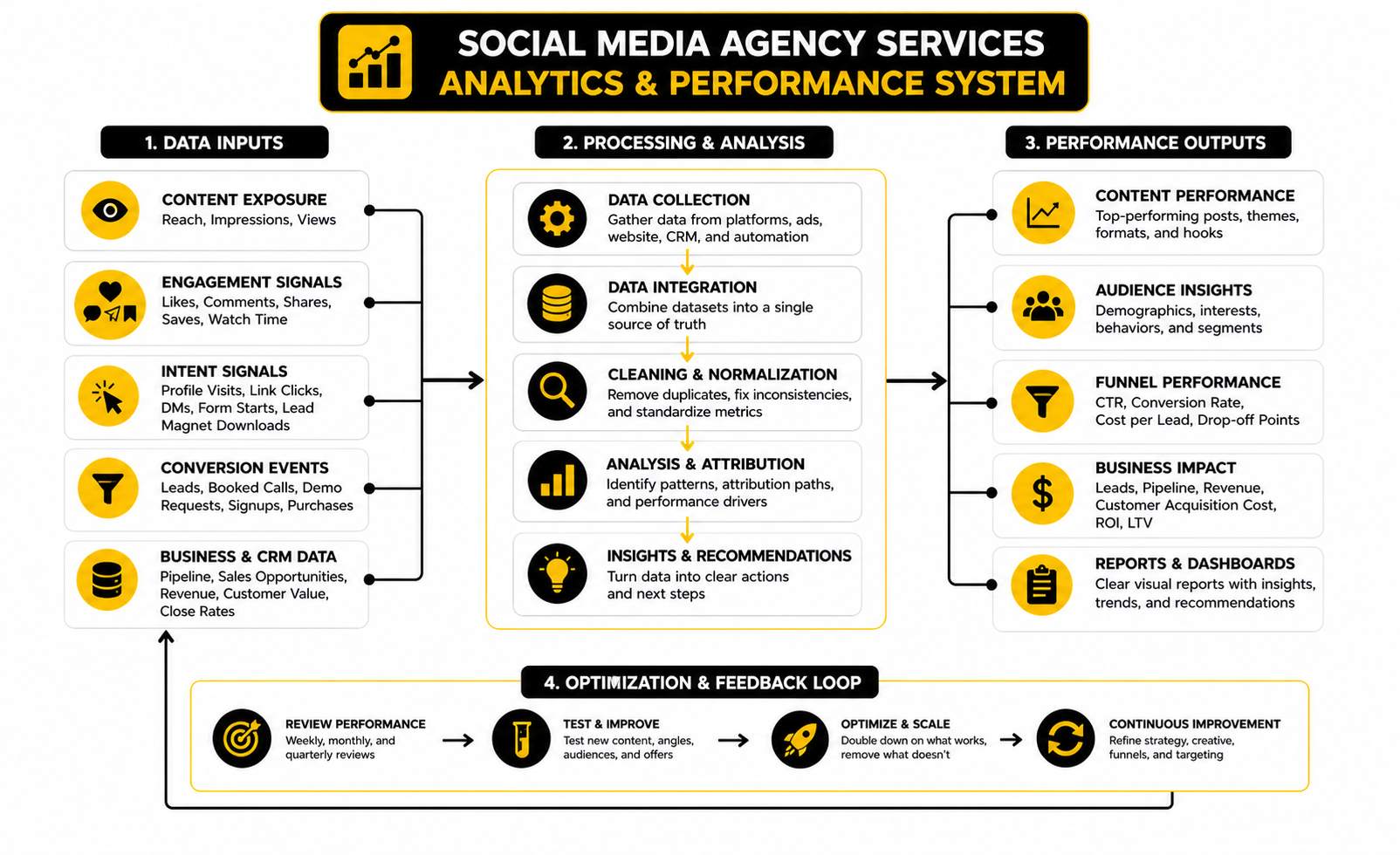
A practical analytics system usually tracks the journey from content exposure to business outcome. It starts with reach and impressions, then moves into watch time, saves, shares, comments, clicks, landing page behavior, lead capture, follow-up, booked calls, sales opportunities, and closed revenue. Not every business can track all of that perfectly from day one, but the agency should move the client closer to that level of visibility over time.
This is where CRM and automation tools become important. For local businesses, agencies, consultants, and appointment-based brands, GoHighLevel can help connect social leads to forms, pipelines, reminders, and follow-up workflows. That matters because a lead generated from social is only valuable if someone responds quickly and moves the conversation forward.
Reading Engagement Without Getting Distracted
Engagement is useful, but it is easy to misread. A funny post may get comments and shares without attracting buyers. A direct offer post may get fewer reactions but generate serious inquiries from people who were already close to making a decision.
Agencies should separate casual engagement from commercial engagement. Casual engagement includes likes, emoji replies, broad comments, and low-intent reactions. Commercial engagement includes questions about pricing, availability, process, results, product fit, location, timelines, and next steps.
This distinction changes how you judge content. A post with fewer likes but several qualified DMs may be a winner. A viral post that brings irrelevant followers, confused comments, and no buyer intent may be useful for reach, but it should not become the foundation of the strategy.
Measuring Creative Performance
Creative performance is not just about which post got the most likes. It is about which angles, hooks, visuals, formats, and proof points move the audience. A good agency reviews creative patterns instead of treating each post as an isolated event.
For short-form video, that may include hook retention, average watch time, completion rate, replays, shares, saves, and comments. For carousels, it may include swipe depth, saves, shares, and profile actions. For paid social, it may include thumb-stop rate, click-through rate, cost per landing page view, conversion rate, cost per lead, and lead quality.
The action should be clear. If hooks are weak, improve the first three seconds. If people watch but do not click, sharpen the offer or CTA. If clicks are strong but conversions are weak, the issue may be the landing page, form, proof, or follow-up rather than the social content itself.
Why Attribution Is Messy
Attribution in social media is rarely clean. People may see a post on LinkedIn, watch a video on Instagram, search the brand on Google, read reviews, ask a colleague, and then book a call directly. If the agency only measures last-click conversions, social may look less valuable than it really is.
That does not mean attribution should be ignored. It means it should be interpreted with common sense. UTM links, CRM source tracking, platform pixels, form fields, call tracking, post-purchase surveys, and sales team notes can all help build a clearer picture.
For ecommerce and funnel-heavy campaigns, tools like ClickFunnels or Systeme.io can make the conversion path easier to measure. The agency still needs to look beyond the dashboard, though. Sometimes the best social impact shows up in better sales conversations, more direct brand searches, and prospects who already understand the offer before they speak to the team.
Reporting That Leads To Action
A good report should not make the client work hard to understand what matters. It should explain what changed, what caused the change, what was learned, and what the agency recommends next. If a report has twenty charts but no decision, it is not useful.
The best reports usually answer a few practical questions. Which content themes are gaining traction? Which formats deserve more production? Which platforms are producing useful attention? Which campaigns are creating qualified intent? Where is the funnel leaking?
This is also where the agency should be honest. If performance is weak, the report should say so and explain the next test. If results are improving, the report should explain why and how to scale without breaking what is working. That is the difference between reporting activity and managing performance.
Turning Data Into Better Decisions
Data should improve the next round of strategy, content, creative, publishing, and conversion work. If the agency learns that objection-handling videos drive more qualified inquiries, that insight should shape the next content plan. If customer proof posts create more sales conversations than generic tips, the agency should produce more proof.
This is why measurement belongs inside the operating rhythm, not at the end of the month as an afterthought. Weekly reviews can catch creative issues quickly. Monthly reviews can show pattern changes. Quarterly reviews can connect social performance to bigger business goals.
Professional social media agency services use data to make the work sharper, not colder. The numbers should help the brand sound more relevant, choose better campaigns, remove wasted effort, and invest where the audience is clearly responding. Data is not the opposite of creativity. Used properly, it is what makes creative work harder.
Community Management, Social Listening, And Reputation
Community management is where social stops being a broadcast channel and becomes a relationship channel. This is also where many brands quietly lose money. They publish decent content, attract attention, and then respond slowly, ignore buying questions, miss complaints, or leave useful audience insights sitting in the comments.
A strong agency should define how comments, DMs, reviews, mentions, and tagged posts are handled. That includes response tone, escalation rules, response time expectations, saved replies, crisis triggers, and lead handoff. This part of social media agency services is not glamorous, but it can be the difference between interest and revenue.
The real value is not just answering people. It is learning from what people ask, challenge, repeat, misunderstand, praise, and complain about. Every serious comment section is market research if the agency knows how to read it.
Social Listening Should Influence Strategy
Social listening is more than checking brand mentions. It means tracking conversations around the category, competitors, customer pain points, emerging objections, industry shifts, and content topics that keep appearing in the market. Done well, it helps the agency see demand before it shows up in a spreadsheet.
This matters because customers often explain their problems in plain language long before they search for a solution formally. They complain in Reddit threads, ask questions in Facebook groups, compare vendors in LinkedIn comments, and react to creator content before they ever visit a brand’s website. An agency that watches those conversations can sharpen messaging faster than one that only looks at monthly engagement reports.
Social listening should feed the content system directly. If prospects keep asking the same pricing question, build content around pricing clarity. If customers keep praising one part of the process, turn that into proof. If competitors are creating confusion in the market, create content that makes the choice easier.
Reputation Management Is Not Optional
Reputation management has become part of social media, whether brands like it or not. Reviews, screenshots, public complaints, creator critiques, and comment threads can all shape buying decisions. The agency’s job is to help the brand respond with speed, judgment, and consistency.
This does not mean every negative comment deserves a long public debate. Sometimes the right move is a short reply, a private escalation, or no response at all. The agency should know the difference because overreacting can make a small issue bigger, while underreacting can make the brand look careless.
Compliance matters here too. The FTC’s business guidance on endorsements, influencers, and reviews makes it clear that brands need to handle endorsements and consumer reviews honestly. For agencies, that means no fake reviews, no hidden incentives, no misleading testimonials, and no sloppy influencer disclosure practices.
Creator Partnerships And Influencer Risk
Creator partnerships can be powerful, but they are not magic. The IAB projected U.S. creator ad spend would reach $37 billion in 2025, up 26% year over year, which shows how much budget is moving toward creators. More money also means more risk, more noise, and more bad deals.
A serious agency should evaluate creators beyond follower count. Audience fit, trust, content quality, past brand integrations, comment quality, pricing, usage rights, exclusivity, disclosure behavior, and conversion potential all matter. A creator with a smaller but highly relevant audience can outperform a larger account with weak trust or vague influence.
The contract matters too. The agency should clarify deliverables, deadlines, approval rights, usage permissions, whitelisting, paid amplification, reporting access, cancellation terms, and disclosure requirements. If those details are not clear upfront, the campaign can become messy fast.
Paid Social, Funnels, Automation, And Conversion Systems
Paid social is where strategy gets stress-tested. Organic content can show what people respond to, but paid campaigns force the agency to prove whether the message, creative, audience, offer, landing page, and follow-up system can work together. This is why paid social should not be separated from the rest of the social strategy.
The biggest mistake is blaming ads when the real issue is the funnel. If the creative gets clicks but the page does not convert, the landing page may be weak. If leads come in but do not book, the follow-up may be slow. If calls are booked but do not close, the offer, qualification process, or sales conversation may need work.
Good agencies look at the whole path. They do not just optimize cost per click while ignoring what happens after the click. That is how you end up with cheap leads nobody wants.
Matching The Funnel To The Business Model
A local service business, ecommerce store, SaaS company, online coach, med spa, agency, and B2B consultant should not use the same funnel. The buying journey, urgency, price point, proof requirements, and sales process are different. The funnel has to match the decision.
For appointment-based businesses, the path may be ad, landing page, form, automated follow-up, booking calendar, reminder sequence, sales call, and reactivation campaign. For ecommerce, the path may be creator content, product page, abandoned cart sequence, retargeting, post-purchase upsell, and customer-generated content. For B2B, the path may be thought leadership, retargeting, lead magnet, email nurture, case proof, consultation, and pipeline tracking.
This is where tools can support execution. A funnel builder like ClickFunnels can help teams build dedicated conversion paths, while GoHighLevel can help agencies manage CRM, automation, booking, and follow-up for clients. The tool is not the strategy, but the right tool can remove friction when the strategy is already solid.
Automation Should Improve Speed, Not Replace Judgment
Automation is useful when it helps people get faster, cleaner, and more consistent. It can send reminders, route leads, trigger follow-up, segment contacts, collect reviews, and keep sales conversations from falling through the cracks. That is valuable because social leads often go cold quickly.
But automation becomes dangerous when brands use it to fake human attention. Generic DM blasts, irrelevant autoresponders, and robotic comment replies can damage trust. People can feel when a brand is trying to scale conversations without caring about the conversation.
For direct-response social campaigns, messaging automation can be useful when it is clear, permission-based, and relevant. A platform like ManyChat can support comment-to-DM flows and lead capture, but the agency still needs to design the journey carefully. The best automation feels helpful. The worst automation feels like spam.
Scaling Without Losing The Brand
Scaling social media is not just publishing more. More posts, more ads, more creators, and more channels can create growth, but they can also dilute the message. The agency has to protect the brand while increasing output.
The main scaling risk is complexity. More campaigns require clearer briefs, stronger approval systems, better asset management, cleaner reporting, and tighter communication between creative, media, sales, and leadership. Without that structure, performance often drops even as activity rises.
Smart scaling usually happens in stages. First, prove the message. Then prove the format. Then prove the channel. Then increase production and paid distribution. Skipping those steps often leads to expensive noise.
When To Keep Work In-House
Not every social task should be outsourced. Some content depends on internal expertise, founder perspective, customer access, product knowledge, or real-time company context. An agency can shape, edit, package, and distribute that material, but it cannot manufacture lived experience out of nothing.
In-house teams are often better at fast internal updates, executive access, technical product nuance, and cultural authenticity. Agencies are often better at strategy, systems, production capacity, platform expertise, paid media, reporting, and outside perspective. The best setup is usually not either-or.
A strong agency will tell you what needs to come from inside the business. That might include founder voice notes, customer stories, product demos, sales objections, behind-the-scenes access, or subject matter expertise. If the client gives the agency nothing real to work with, the content will eventually become generic.
Red Flags When Hiring A Social Media Agency
Some red flags are obvious. Guaranteed viral results, fake follower promises, unclear reporting, vague deliverables, and no strategic onboarding should all make you cautious. But the more dangerous red flags are quieter.
Be careful when an agency talks only about posting frequency and not business outcomes. Be careful when they cannot explain how content supports the buyer journey. Be careful when they push every client into the same package, same platforms, same formats, and same reporting template.
Strong agencies ask better questions. They want to understand your margins, sales cycle, capacity, customer quality, positioning, offer, and follow-up process. That is because real social media agency services do not live in isolation. They plug into the business.
Analytics, Reporting, Optimization, And Agency Selection
At this stage, the full system should be visible. Strategy defines the direction, content creates demand, community work builds trust, paid campaigns test conversion, and analytics shows what deserves more investment. This is how social media agency services become a growth function instead of a content subscription.
The agency selection process should reflect that. You are not just hiring someone to post. You are choosing a partner who may influence how your brand is perceived, how quickly prospects are handled, how your campaigns are measured, and how confidently your team decides what to do next.
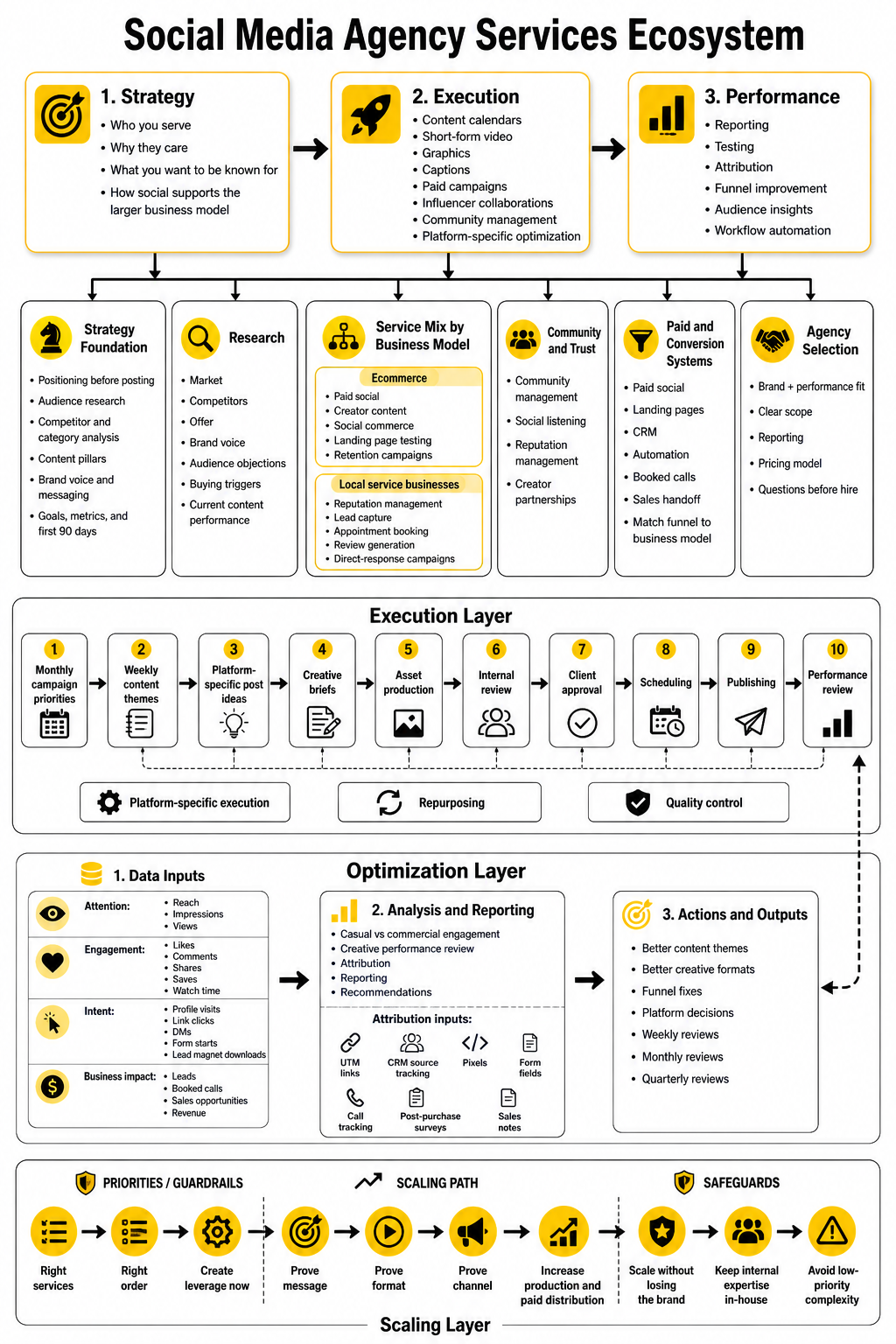
A strong partner should be able to explain the whole ecosystem in plain language. They should show how social activity connects to positioning, creative production, customer conversations, paid acquisition, follow-up, and business outcomes. If they cannot explain that without hiding behind buzzwords, keep looking.
What To Look For In A Social Media Agency
The right agency should understand both brand and performance. Brand-only agencies may create beautiful work that never reaches commercial intent. Performance-only agencies may chase cheap leads while damaging trust, tone, and long-term positioning.
Look for an agency that asks about your offer, margins, sales cycle, customer quality, capacity, brand constraints, and follow-up process. Those questions reveal whether they think like operators or just content producers. A serious agency wants to know how the business actually makes money because that changes the strategy.
You should also review how they communicate. Good agencies are clear about scope, timelines, responsibilities, approvals, reporting, and what they need from you. Bad agencies make everything sound easy until the work starts, then suddenly every delay becomes your problem.
Questions To Ask Before You Hire
The questions you ask before signing matter more than the pitch deck. A polished deck can hide weak process, but clear questions expose how the agency really works. You want to understand their thinking, not just their deliverables.
Ask questions like:
The last question is important. A confident agency should have standards. If they say yes to everything, they may not be protecting your brand, budget, or results.
Pricing Models And Scope Control
Social media agency pricing depends on strategy depth, production volume, platform count, paid media management, creator coordination, reporting complexity, and community management needs. A simple local content package is not the same thing as a multi-channel growth system with paid campaigns, CRM workflows, landing pages, and creator partnerships. Comparing prices without comparing scope is pointless.
Common pricing models include monthly retainers, project-based packages, paid media management fees, performance incentives, and hybrid arrangements. Retainers usually work best when the work is ongoing and cross-functional. Projects can work well for audits, strategy builds, campaign launches, content systems, and funnel setup.
Scope control matters because social can expand forever. More platforms, more posts, more revisions, more meetings, more reports, and more urgent requests can quietly break the relationship. A good agreement defines what is included, what costs extra, and how priorities are handled when new opportunities appear.
When An Agency Is Worth The Investment
An agency is worth the investment when it gives the business capability it could not build quickly or effectively in-house. That may be strategic clarity, creative output, paid social expertise, reporting discipline, faster testing, better customer response, or cleaner campaign operations. The return is not always immediate, but the work should become more focused and measurable over time.
The investment makes the most sense when the business already has a real offer, a defined audience, and enough operational capacity to handle the opportunities social creates. If the offer is unclear, the sales process is broken, or the team ignores leads, even a strong agency will struggle. Social can amplify a business, but it cannot fix every business problem by itself.
The clearest sign is momentum. Better content should create better conversations. Better conversations should reveal better insights. Better insights should improve campaigns. Better campaigns should produce stronger commercial signals. That loop is what you are paying for.
What Are Social Media Agency Services?
Social media agency services are professional services that help a business plan, create, publish, manage, promote, and measure social media activity. They can include strategy, content production, community management, paid social, creator partnerships, analytics, reporting, automation, and funnel support. The best agencies connect these services to business outcomes instead of treating social media as isolated posting.
What Does A Social Media Agency Actually Do?
A social media agency helps a brand decide what to say, where to say it, how to package it, how often to publish, how to respond to the audience, and how to measure results. The work may include research, content calendars, short-form video, captions, graphics, ads, landing pages, reporting, and customer response workflows. A strong agency also helps the business understand what the data means and what should happen next.
How Much Do Social Media Agency Services Cost?
Pricing varies widely because the scope can be very different from one agency to another. A basic posting package may cost far less than a full-service system with strategy, paid ads, creator management, community support, reporting, and CRM integration. The more carefully move is to compare the scope, decision-making process, and expected business impact instead of choosing based only on the lowest monthly fee.
Are Social Media Agency Services Worth It For Small Businesses?
They can be worth it when the small business has a clear offer, a real audience, and a way to convert attention into inquiries, bookings, or sales. A local business may not need a massive content operation, but it may need consistent trust-building, review support, lead capture, follow-up, and appointment booking. In that case, an agency can help turn social media into a practical growth channel rather than another task on the owner’s plate.
What Should Be Included In A Social Media Strategy?
A strong strategy should define the target audience, positioning, content pillars, platform priorities, publishing rhythm, creative direction, community approach, paid media role, funnel path, and reporting metrics. It should also clarify what the brand will not do. That focus matters because scattered social media activity usually creates scattered results.
How Long Does It Take To See Results?
Some signals can appear quickly, especially content engagement, watch time, link clicks, DMs, and early lead flow. Stronger business results usually take longer because the agency needs time to test messages, build trust, improve creative, and connect social activity to conversion systems. The first 90 days should be treated as a structured learning and testing period, not a guarantee of instant transformation.
Which Platforms Should A Social Media Agency Manage?
The right platforms depend on the audience, offer, content format, and business model. A B2B service may prioritize LinkedIn and YouTube, while a consumer brand may lean into Instagram, TikTok, Pinterest, or creator-led content. A good agency should recommend platforms based on buyer behavior and commercial opportunity, not because every client gets the same package.
What Is The Difference Between Organic Social And Paid Social?
Organic social builds visibility, trust, community, and authority through unpaid publishing and engagement. Paid social uses advertising budget to reach specific audiences, test offers, drive traffic, retarget prospects, and generate leads or sales. The strongest strategies often use both because organic content informs what people care about, while paid campaigns help scale the messages that show commercial potential.
Should A Social Media Agency Handle DMs And Comments?
Yes, if community management is part of the agreed scope and the agency has clear guidelines. Comments and DMs can contain customer questions, objections, complaints, praise, and buying intent, so ignoring them is a mistake. The agency should have response rules, escalation paths, brand voice guidance, and a process for handing qualified opportunities to the sales or support team.
What Metrics Should I Expect In Agency Reports?
Reports should include metrics that match the goal of the work. Awareness campaigns may focus on reach, impressions, video retention, profile visits, and share of voice. Conversion-focused campaigns should also include clicks, leads, booked calls, sales opportunities, cost per lead, conversion rate, and pipeline quality where tracking is possible.
How Do I Know If A Social Media Agency Is Doing A Good Job?
A good agency should make the work clearer, more consistent, and more connected to business outcomes. You should see stronger messaging, better creative discipline, useful reporting, faster learning, and more relevant audience response. If the agency only sends posts for approval and reports follower growth without explaining what it means, the relationship may be too shallow.
What Are The Biggest Red Flags When Hiring A Social Media Agency?
Major red flags include guaranteed virality, fake follower promises, vague reporting, no strategic onboarding, unclear ownership, and one-size-fits-all packages. Another warning sign is an agency that only talks about posting volume and never asks about sales, follow-up, offer quality, customer fit, or business capacity. Real social media work plugs into the business, so the agency should care about more than the content calendar.
Can Social Media Agency Services Help With Lead Generation?
Yes, but only when the agency connects content, paid campaigns, landing pages, forms, follow-up, and sales handoff. Lead generation does not come from posting alone. It comes from a clear offer, strong targeting, persuasive creative, a smooth conversion path, and fast response after someone shows interest.
Should I Hire An Agency Or Build An In-House Team?
An in-house team can be better when the brand needs constant internal access, technical expertise, founder involvement, or fast real-time updates. An agency can be better when the business needs outside strategy, production capacity, paid media expertise, reporting systems, and a broader execution team. Many strong brands use a hybrid model where internal experts provide the raw insight and the agency turns it into a repeatable social system.
Build a stronger local presence with BAAM AI
Turn your website, Google profile, social channels, and AI visibility into one growth engine
Most businesses do not need more random marketing activity. They need a consistent presence system that helps the right people find them, trust them, and take action. BAAM AI brings strategy, local SEO, website updates, Google Maps visibility, social content, AI-search readiness, media production, and reporting into one practical monthly engine.
If you want your marketing to keep working after the campaign ends, start with a free BAAM AI presence audit. See how your business shows up today and where the fastest visibility wins are at BAAM AI.