
BAAM AI Blog
Sendinblue Prices: The Practical Guide To Brevo Pricing In 2026
Sendinblue prices are now Brevo prices, because Sendinblue rebranded to Brevo in 2023. The name changed, but the buying question stayed the same: how much will this platform actually cost once you add the email...
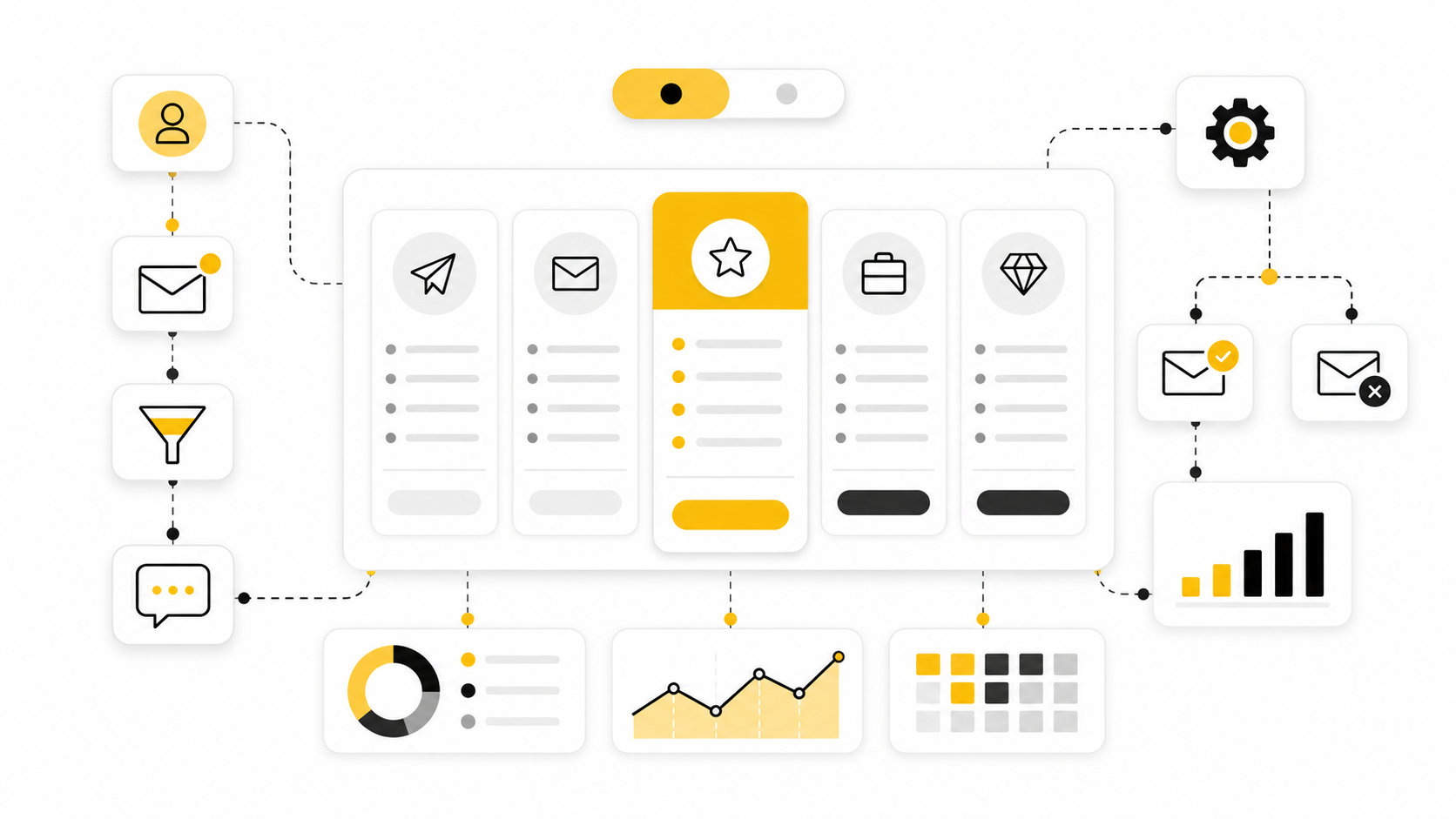
Sendinblue prices are now Brevo prices, because Sendinblue rebranded to Brevo in 2023. The name changed, but the buying question stayed the same: how much will this platform actually cost once you add the email volume, automation needs, users, SMS credits, transactional email, CRM features, and deliverability requirements your business really needs?
That is where most pricing comparisons get too shallow. They look at the starting monthly fee, then ignore the parts that can change the real bill: daily send limits, monthly email tiers, branding removal, automation limits, sales add-ons, SMS and WhatsApp credits, dedicated IPs, and annual billing discounts. Brevo can still be a strong value, especially because its model is built around email volume rather than simply charging more as your contact list grows, but you need to read the pricing page like an operator, not like a casual shopper.
The goal of this guide is simple. You will understand what each Brevo plan is really for, where the hidden decision points are, when the free plan is enough, when Starter becomes too limiting, and when Standard, Professional, or Enterprise pricing starts to make sense. You will also see how to compare Brevo against alternatives without falling into the classic trap of comparing the cheapest entry plan from one tool against the fully loaded plan from another.
Why Sendinblue Prices Matter More Than The Monthly Sticker Price
Pricing matters here because email marketing software becomes infrastructure once it touches revenue. A newsletter tool is one thing; a platform that handles welcome flows, abandoned cart emails, transactional messages, lead capture, SMS, CRM records, sales pipelines, and reporting is something else entirely. When that tool sits between your business and your customers, the cheapest plan is not always the cheapest choice.
Brevo’s pricing is especially important to understand because the platform mixes several cost models. Email marketing plans are tied to monthly email volume, the free plan includes 300 email sends per day, SMS is handled through prepaid credits, and advanced sales or security features can be added separately. That gives you flexibility, but it also means you should calculate total cost around your actual use case instead of asking only, “What is the cheapest Brevo plan?”
This is also why Sendinblue prices are still searched so often, even though the product is now Brevo. People remember the old brand as an affordable email marketing platform, then land on a broader customer engagement suite with email, SMS, WhatsApp, automation, forms, landing pages, CRM, and AI features. The pricing conversation has moved from “Can I send emails cheaply?” to “Which plan gives me the right growth system without paying for features I will not use?”
The Brevo Pricing Framework
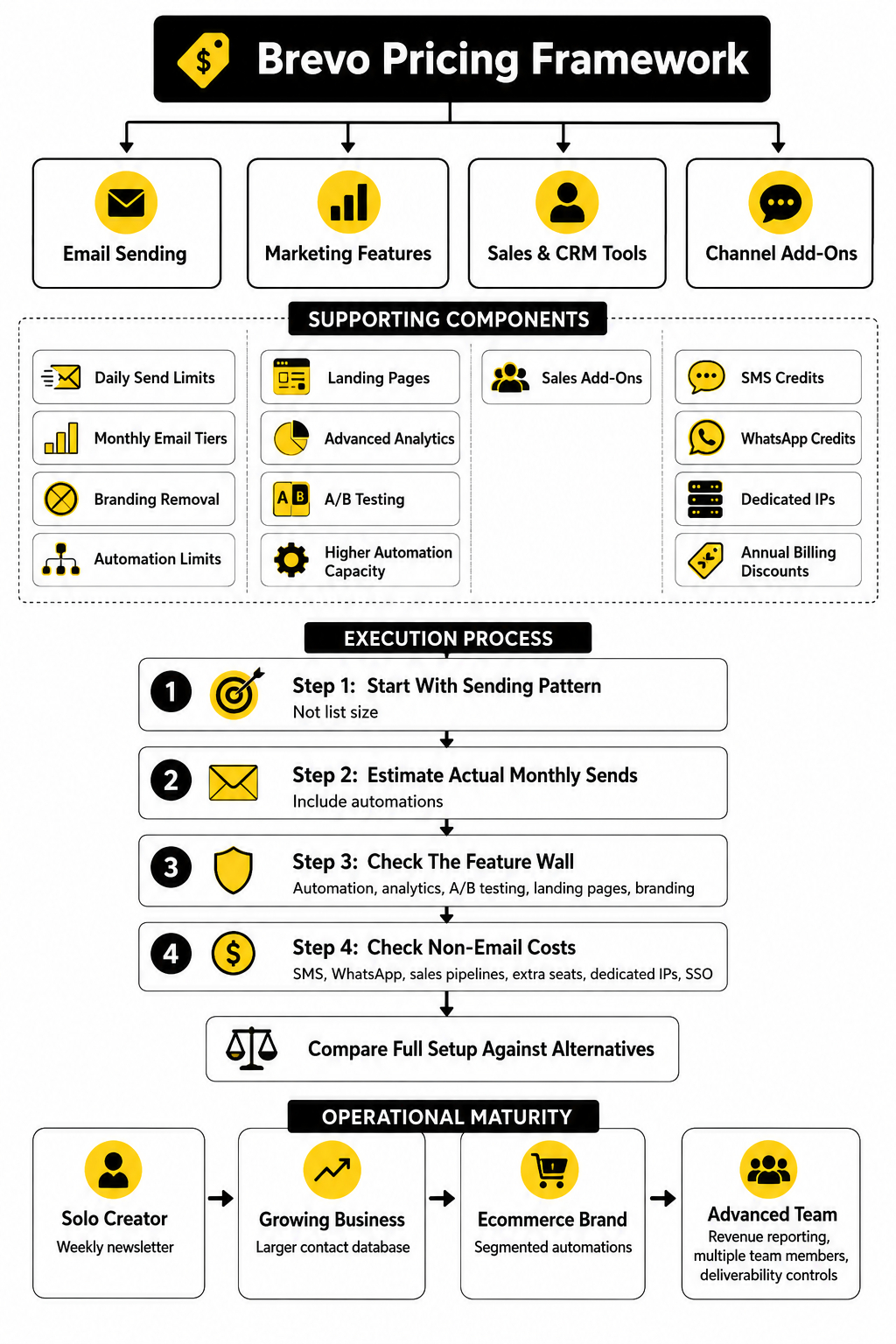
The simplest way to evaluate Brevo is to separate the cost into four layers: email sending, marketing features, sales and CRM tools, and channel add-ons. Email sending is the foundation because Brevo’s paid marketing plans start from a monthly email allowance, while features such as landing pages, advanced analytics, A/B testing, and higher automation capacity depend on the plan level. This is the part most buyers should map first, because it tells you whether you are paying for more volume, more capability, or both.
The second layer is multi-channel communication. Brevo’s marketing platform brings email, SMS, WhatsApp, push, forms, automation, and landing pages into one environment, and its own product page positions the platform around unified channels and personalized journeys. SMS does not work like a normal monthly plan, because Brevo sells SMS credits separately, and the number of credits needed depends on the recipient country and message length. That matters if you plan to use Brevo for promotional SMS, order updates, appointment reminders, or reactivation campaigns.
The third layer is operational maturity. A solo creator sending a weekly newsletter does not need the same setup as an ecommerce brand with segmented automations, revenue reporting, multiple team members, and deliverability controls. Brevo’s help documentation lists add-ons such as branding removal on Starter, additional marketing seats, Sales Essentials, Sales Advanced, SAML SSO, and dedicated IPs, so the “right” Brevo price depends heavily on what your team needs to run professionally, not just how many contacts you have.
How To Read Brevo Pricing Without Getting Misled
Start with your sending pattern, not your list size. A list of 20,000 contacts that receives one monthly newsletter has a very different cost profile from a list of 5,000 contacts receiving weekly campaigns, lifecycle automations, product updates, and reactivation emails. Brevo can be attractive because its structure is friendly to businesses with larger contact databases, but you still need to estimate monthly sends realistically.
Then look at the feature wall. The Free plan is useful for testing because it lets you send up to 300 emails per day, but that daily limit can quickly become annoying once campaigns become time-sensitive. Starter can work for basic sending, but if you need deeper automation, advanced analytics, A/B testing, landing pages, or a cleaner brand experience without add-ons, you should compare it against Standard rather than assuming Starter is automatically the more carefully buy.
Finally, check the non-email costs before you commit. If SMS, WhatsApp, sales pipelines, extra seats, dedicated IPs, or SSO are part of your real workflow, they belong in the pricing calculation from day one. The practical move is to build your expected Brevo setup around the current Brevo pricing page, then compare that full setup against the other tools you are considering.
Brevo Plan Breakdown: Free, Starter, Standard, Professional, And Enterprise
The smartest way to understand sendinblue prices is to stop treating the plans as a simple ladder from cheap to expensive. Each plan solves a different stage of the same problem: how to communicate with customers reliably without overbuying software. Once you see the plans that way, the decision gets much easier.
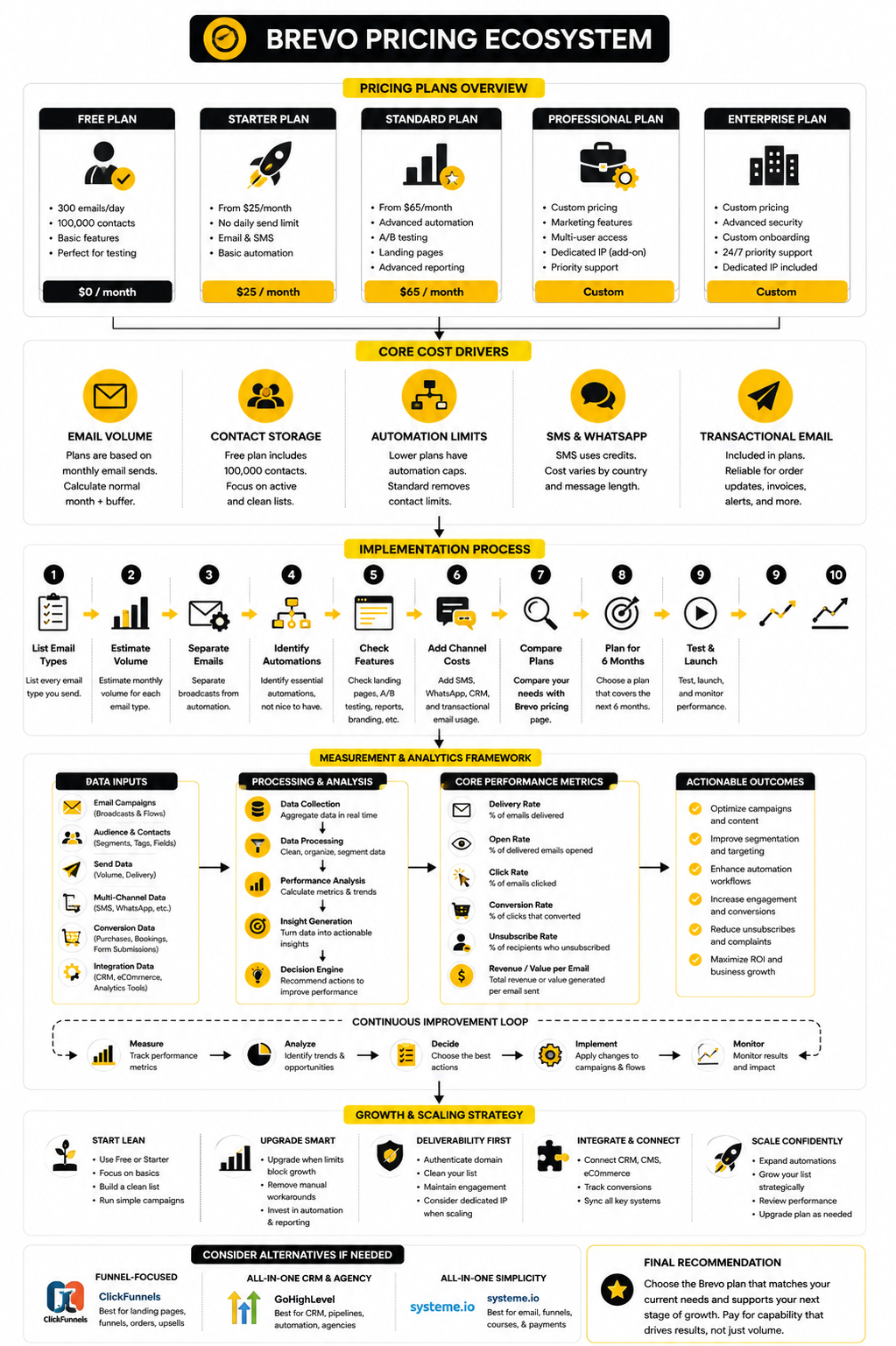
Brevo currently separates its main marketing platform into Free, Starter, Standard, Professional, and Enterprise tiers. The current Brevo pricing page shows the entry price by plan, but the real buying decision depends on monthly email volume, contact storage, automation depth, support expectations, and whether your team needs more advanced marketing operations. Think of the plan name as the starting point, not the full answer.
Free Plan
The Free plan is best for testing Brevo, validating a small newsletter, or building your first signup flow before you are ready to pay. It includes a daily sending limit, so it works well when your audience is small and your campaigns are not urgent. The important detail is that unused sends do not roll over, because the Free plan limit resets every day.
This plan is useful, but it is not a serious long-term operating system for most growing businesses. Daily limits can create awkward timing problems when you want to send one campaign to the whole list at once. Branding and feature restrictions also matter because the more your email program contributes to revenue, the more professional the customer experience needs to feel.
Use Free when you are still learning the platform or when your list is genuinely tiny. Do not use it as a way to avoid upgrading after email starts driving sales, leads, bookings, or product usage. At that point, the cost of working around limits is usually higher than the price of the next plan.
Starter Plan
Starter is the first plan to consider when you want predictable monthly sending without the Free plan’s daily cap. The Brevo help center describes Starter as a plan for single users getting started with email and multi-channel marketing, with paid tiers beginning at 5,000 monthly email sends. That makes it a natural fit for newsletters, basic promotional campaigns, early ecommerce lists, and simple lead nurturing.
The trade-off is that Starter is still a lean plan. It can remove the sending friction, but it is not where Brevo becomes a full advanced marketing system. If you want deeper reporting, more complete automation, landing pages, A/B testing, and a cleaner growth workflow, Starter can become the place where you save money on the bill but lose time in execution.
Starter is usually the right move when your main need is sending email campaigns consistently. It is less compelling when you are already planning segmented funnels, lifecycle automation, or multi-step customer journeys. That is the point where comparing Starter against Standard becomes more useful than comparing Starter against Free.
Standard Plan
Standard is where Brevo starts to feel like a more complete marketing platform rather than just an affordable email sender. The plan documentation for Standard positions it for growing businesses that are ready to scale their marketing, with monthly email tiers starting at 5,000 sends and scaling much higher. That wording matters because Standard is not just about more volume; it is about fewer operational constraints.
This is the plan to look at when automation matters. If your business needs welcome sequences, behavior-based campaigns, sales follow-up, customer reactivation, or more useful reporting, Standard is usually the first serious comparison point. You are paying for a smoother marketing engine, not just more email allowance.
For many small teams, Standard is the practical middle. It avoids the limitations that make Free and Starter feel cramped, but it does not jump straight into enterprise-style pricing. If you are comparing sendinblue prices because you want a realistic growth plan, Standard deserves careful attention.
Professional Plan
Professional is built for teams that are already operating at higher volume or need more advanced capabilities around data, channels, and execution. The public pricing structure places Professional well above the lower plans, so this is not the casual upgrade path for someone sending a few newsletters per month. It is for businesses that have enough marketing activity to justify stronger infrastructure.
This plan starts to make sense when email is only one part of a broader customer engagement system. You may be managing several campaigns at once, coordinating multiple team members, using AI-driven segmentation, sending across channels, or needing more advanced deliverability support. At that point, software cost has to be judged against the revenue and operational risk tied to your campaigns.
Professional is also where the conversation shifts from “Can we afford this?” to “Can we afford a weaker setup?” That sounds dramatic, but it is real. When your database, automations, and messaging cadence become central to sales, a limited system can cost more than the subscription you were trying to avoid.
Enterprise Plan
Enterprise is for organizations that need custom limits, advanced governance, deeper support, security options, and a more tailored commercial agreement. This is the plan for larger teams, regulated environments, complex customer data setups, and companies that need direct help managing scale. The price is custom because the requirements are custom.
Enterprise should not be judged against the low-end monthly plans. It belongs in a different buying category where procurement, compliance, support, integrations, account management, and service-level expectations matter. If your team needs features such as advanced permissions, SSO-related controls, custom onboarding, or high-volume deliverability guidance, Enterprise is the plan to discuss with Brevo directly.
For most readers, Enterprise will be overkill. But it is useful to know where the ceiling is, because it shows that Brevo is not just a starter email tool. You can begin with a low-cost plan, then move into a more serious setup without immediately rebuilding your entire marketing stack elsewhere.
Core Cost Drivers Inside Brevo Pricing
The next step is to turn the plan breakdown into a buying process. This is where sendinblue prices become practical, because the monthly number on the pricing page is only one input. Your real cost depends on how many emails you send, which features you need to run campaigns properly, and which channels sit around email.
Brevo is still attractive because it lets many businesses avoid the classic “pay more just because your contact list grew” problem. But that does not mean every Brevo setup is automatically cheap. A poorly planned account can still become inefficient if you upgrade for the wrong reason, buy SMS credits without a clear use case, or choose a plan that blocks the automations you actually need.
Monthly Email Volume
Start with monthly email volume because it is the cleanest pricing driver. Brevo’s paid marketing plans are built around email sends, and the public plan structure starts with lower monthly send tiers before scaling upward. That is why a business with a large list but low sending frequency can sometimes get better value from Brevo than from platforms that price mainly by contact count.
The simple formula is contacts multiplied by average campaigns per month, plus automation sends. Most people forget the automation part, and that is where the estimate breaks. A welcome sequence, abandoned cart flow, lead magnet delivery, onboarding sequence, reactivation campaign, and transactional-style messages can quietly add thousands of sends before you even schedule a newsletter.
Do not estimate from your best month or your quietest month. Use a normal month, then add a buffer for launches, holidays, promotions, and list growth. If your business is seasonal, calculate the highest realistic month first, because that is when the wrong plan becomes painful.
Contact Storage And List Quality
Brevo’s pricing has historically been attractive for businesses with bigger contact databases, but contact storage still matters because limits and plan rules can change over time. The Free plan documentation lists 100,000 contacts of storage, but that does not mean every old, cold, unengaged contact belongs in your account. A bloated list can damage reporting, weaken deliverability signals, and make your campaigns look less effective than they really are.
List quality is not just a deliverability issue. It affects how confidently you can choose a plan. If half your database has not opened or clicked in years, planning around that entire list can push you toward a larger setup than your active audience actually needs.
Clean the list before you price the plan. Segment active buyers, recent leads, newsletter subscribers, cold contacts, and suppression lists separately. Once you know who should actually receive campaigns, the pricing decision becomes much more honest.
Automation Limits
Automation is where low-cost plans can become expensive in disguise. Brevo’s quota documentation lists automation limits by plan, including a cap for active automation contacts on Free and Starter, while Standard removes that cap for marketing automation contacts. That difference matters if your business relies on lifecycle campaigns instead of occasional broadcasts.
A simple newsletter setup does not need much automation. A serious funnel does. Once you have different flows for new subscribers, trial users, buyers, abandoned carts, repeat customers, and inactive contacts, the automation layer becomes the operating system behind your revenue.
This is the point where choosing the cheapest plan can backfire. If your real strategy depends on behavior-based follow-up, plan around automation capacity first and email volume second. Sending more emails manually because the automation setup is too limited is not a smart saving.
A Practical Brevo Pricing Process
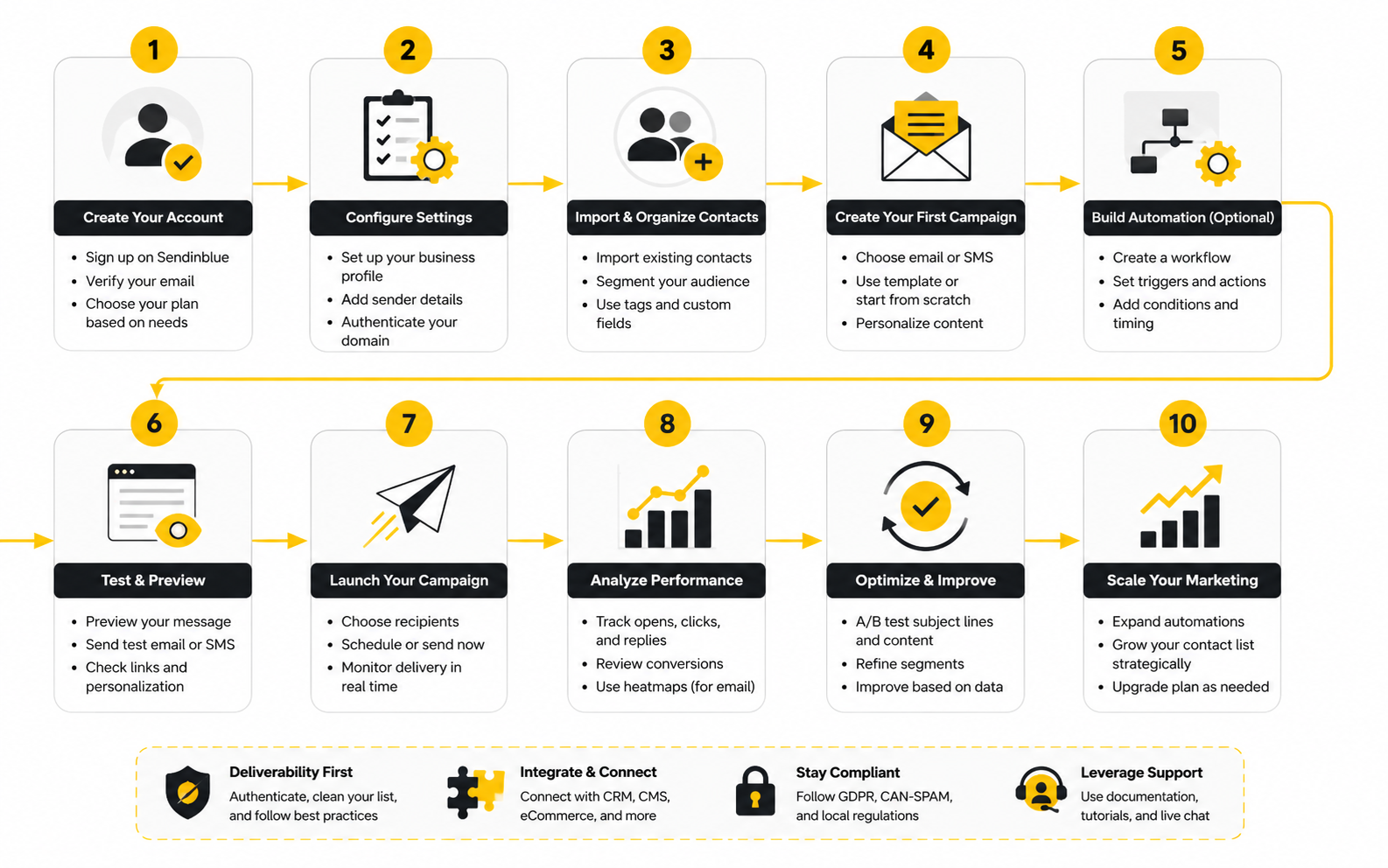
Use this process before choosing a plan. It keeps the decision grounded in the way your business actually communicates, not in the way pricing tables are designed to look. The goal is not to buy the biggest plan; the goal is to buy the smallest plan that does the job properly.
This process prevents the two most common mistakes. The first mistake is starting too low and rebuilding everything when the limits hit. The second mistake is overbuying because the higher plan looks more “professional” even though the business does not yet use the features.
The practical answer usually appears after step five. If you only need basic campaigns, Starter may be enough. If automation, testing, and reporting are part of the growth plan, Standard is often the cleaner starting point.
SMS, WhatsApp, And Add-On Channel Costs
Brevo becomes more interesting when you look beyond email, but this is also where pricing needs more discipline. SMS is not usually included as a simple unlimited monthly feature. Brevo’s SMS pricing documentation explains that SMS credits are bought separately, are purchased in packs, and the number of credits used depends on the recipient country and message length.
That is not a problem if SMS is used intentionally. Appointment reminders, order updates, urgent alerts, event reminders, and high-intent promotional messages can justify the extra cost because SMS reaches people differently from email. But SMS becomes wasteful when it is treated like a louder newsletter.
WhatsApp and push notifications belong in the same decision bucket. They can be powerful, but they should have a job. If the channel does not have a clear role in the customer journey, do not add it just because the platform supports it.
Transactional Email And Deliverability Needs
Transactional email is often overlooked when people compare sendinblue prices. Brevo can handle transactional messages, and the Free plan includes transactional email access within its send limits. For small businesses, that can simplify the stack because marketing and transactional communication can live closer together.
The important question is whether your transactional email volume and importance justify a separate technical setup. Password resets, order confirmations, invoices, delivery updates, and account alerts are not optional marketing messages. They are customer experience infrastructure, so reliability matters more than squeezing the last dollar out of the plan.
Deliverability features should be judged the same way. A dedicated IP, advanced support, or higher-touch deliverability help is not necessary for everyone. But once email revenue is meaningful, deliverability is not a technical detail; it is money entering or missing the inbox.
Statistics And Data
The numbers around Brevo pricing only matter when they change a decision. Open rates, click rates, delivery rates, unsubscribe rates, automation performance, and cost per campaign are not vanity metrics if you connect them to the plan you are paying for. They tell you whether your current setup is earning its keep or whether you are simply buying more email volume to send more mediocre campaigns.
This is especially important when comparing sendinblue prices against other platforms. A cheaper email tool is not really cheaper if poor segmentation, weak reporting, or missing automation causes lower conversion. The better question is not “How little can I pay?” but “Which plan gives me the measurement and execution layer needed to improve revenue per send?”
What Email Benchmarks Actually Tell You
Email benchmarks give you a reference point, not a verdict. The DMA Email Benchmarking Report 2025 reported delivery rates of 98% in 2024, open rates of 35.9%, and unique click rates of 2.3%. Those numbers are useful because they show the range of normal performance, but they do not tell you whether your business is healthy on their own.
Open rates are the easiest metric to obsess over and the easiest one to misread. Apple Mail Privacy Protection and similar privacy changes can inflate or distort opens, so an open rate should be treated as a directional signal rather than a clean measure of human attention. If your open rate rises but clicks, replies, purchases, bookings, or form submissions do not move, the campaign probably did not get more effective in a meaningful way.
Click rate is usually a cleaner signal because it shows that someone moved from passive attention to active interest. A low click rate can point to weak offers, poor segmentation, unclear calls to action, or campaigns that are being sent to too broad an audience. That is where Brevo’s pricing becomes strategic, because better segmentation and automation may matter more than a higher email allowance.
The Metrics That Should Influence Your Brevo Plan
Your Brevo plan should be chosen around the metrics you can actually improve. If you only send one basic newsletter per month, advanced analytics may not change much. If you send revenue-driven campaigns every week, the ability to test, segment, automate, and analyze performance can directly affect the money coming back from the platform.
Start with five metrics that connect pricing to business impact:
These metrics help you avoid emotional pricing decisions. If your campaigns generate clear revenue and your automation flows convert, a higher Brevo plan can be a rational investment. If the numbers are weak, upgrading may only give you more capacity to repeat a broken process.
A Simple Analytics System For Brevo Pricing
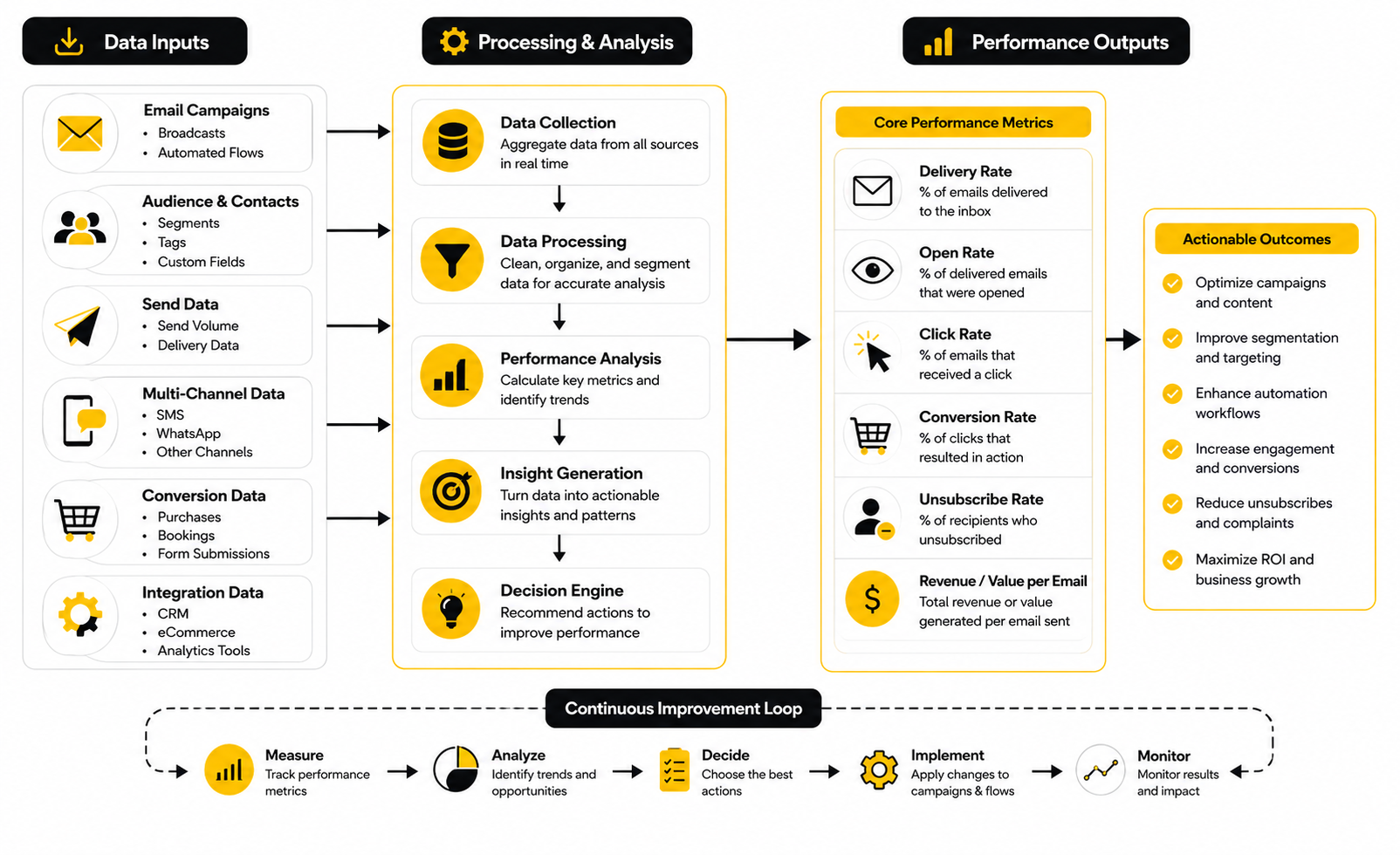
Use a simple monthly scorecard before upgrading. You do not need a complicated dashboard at first, but you do need a consistent way to see whether your current plan is limiting growth. The scorecard should compare email volume, campaign performance, automation performance, and revenue outcomes side by side.
Track each campaign by audience segment, send volume, click rate, conversion rate, unsubscribe rate, and business result. Then separate broadcast campaigns from automations, because they behave differently. A weekly newsletter, a welcome sequence, and an abandoned cart flow should never be judged as if they have the same job.
The most useful pattern is trend over time. One strong campaign does not prove the plan is right, and one weak campaign does not prove the tool is wrong. If three months of data show that automation-driven emails consistently produce better outcomes than broad broadcasts, that is a strong argument for choosing a Brevo plan with stronger automation and reporting rather than simply buying more monthly sends.
How To Interpret Cost Per Send
Cost per send is useful, but only when it is paired with value per send. A low cost per email looks good in a spreadsheet, but it means nothing if the emails are not generating clicks, replies, purchases, or qualified leads. This is where many pricing comparisons become misleading.
For example, sending 100,000 cheap emails to a cold or poorly segmented list can be worse than sending 20,000 highly relevant emails to people who actually want the message. The first scenario may look efficient on cost per send, but the second can produce better revenue, stronger engagement, and fewer deliverability issues. Volume is not the win; profitable relevance is the win.
The practical calculation is simple. Divide your monthly Brevo cost by the number of emails sent, then compare that with the revenue, pipeline, booked calls, purchases, or retained customers those emails influenced. If value per send rises as your segmentation and automation improve, paying for a stronger plan can make sense even when the monthly subscription is higher.
Why Automation Data Matters More Than Campaign Data
Campaign data tells you how a single send performed. Automation data tells you how your customer journey performs while you are not manually pushing buttons. That is why automation reporting often matters more when you are deciding between cheaper and more capable Brevo plans.
A welcome flow can show whether new subscribers understand your offer. A lead nurture sequence can show whether interest turns into action. A reactivation sequence can show whether old contacts still have value or should be cleaned from the list.
This is where the cheapest plan can become limiting. If you cannot properly run, measure, or scale the automations that create predictable outcomes, you are not saving money; you are delaying the system your business needs. For a serious growth setup, the Brevo pricing page should be evaluated against automation requirements first, not just the visible monthly price.
Benchmarks Should Drive Action, Not Anxiety
Benchmarks are helpful when they push you toward a better next step. If your click rate is far below your industry range, do not immediately blame Brevo or upgrade the plan. First check the offer, subject line, audience segment, email design, sending frequency, and landing page experience.
If delivery is weak, focus on list hygiene, authentication, consent quality, sender reputation, and engagement patterns. If unsubscribes are climbing, your send frequency or targeting may be wrong. If opens are strong but conversions are poor, the gap is probably between the click and the offer, not necessarily inside the email platform.
This is the mindset that keeps sendinblue prices in perspective. Brevo gives you the infrastructure, but your pricing decision should follow the performance problem you are trying to solve. Buy more capability when the data shows you can use it, not because the next plan looks impressive.
Professional Implementation: Choosing The Right Brevo Setup
At this stage, the pricing decision becomes more strategic. You are no longer asking which Brevo plan looks affordable on the surface. You are deciding which setup gives your business enough room to execute cleanly without paying for complexity before you need it.
The best Brevo implementation starts with the customer journey, not the software menu. Map how someone discovers you, joins your list, receives value, considers the offer, buys, gets onboarded, and returns later. Once that journey is clear, sendinblue prices become easier to interpret because every feature has a job or it does not.
When To Stay Lean
Stay lean if email is still a supporting channel rather than a primary growth engine. If you are sending a few newsletters, collecting leads from one or two forms, and running simple follow-up, a lower Brevo plan may do the job perfectly well. The point is not to look advanced; the point is to avoid buying a system your business is not ready to use.
This is also the right approach for early-stage creators, local businesses, service providers, and small ecommerce stores that are still finding product-market fit. You need reliable sending, clean forms, basic segmentation, and simple reporting more than you need a sophisticated automation machine. A lean setup keeps the bill low while forcing you to improve the fundamentals first.
The risk is staying lean too long. Once your list starts producing meaningful revenue, manual workarounds become expensive. If you are exporting contacts, manually tagging leads, delaying campaigns, or avoiding automations because your plan is too limited, the cheaper setup has already started costing you time and growth.
When To Upgrade
Upgrade when the limitation is clearly blocking execution. That might mean your daily send cap is slowing campaigns, your automation contact limit is restricting lifecycle flows, or your reporting is too thin to make confident decisions. A plan upgrade is smart when it removes a bottleneck that already exists, not when it solves a problem you only imagine having someday.
The clearest upgrade signal is repeated friction. If your team hits the same workaround every week, that is no longer a minor inconvenience. It is a process cost, and process costs often hide because they show up as wasted time instead of a clean invoice line.
The Brevo quota documentation is worth checking before you upgrade because it shows where plan limits actually sit. For example, Free and Starter have a limit on unique contacts entering active automations, while Standard removes that limit for marketing automation contacts. That one difference can matter more than the headline monthly price if automation is central to your revenue.
When To Consider A Different Stack
Brevo is a strong fit when you want email marketing, automation, basic CRM, and multi-channel communication in one practical platform. It is less ideal if your main bottleneck is a complex funnel builder, a full sales agency operating system, or advanced ecommerce personalization that requires a more specialized platform. This is where comparing tools honestly matters.
If your business revolves around landing pages, order forms, upsells, and funnel testing, a funnel-first platform like ClickFunnels may deserve a separate look. If you want an all-in-one business platform with CRM, automation, pipelines, forms, calendars, and agency-style client management, GoHighLevel may be closer to the real job. If your priority is a lightweight all-in-one setup for email, funnels, courses, and payments, Systeme.io can be a simpler alternative.
That does not mean Brevo is worse. It means the tool should match the center of gravity in your business. If email and customer communication are the core need, Brevo makes sense; if funnels, sales pipelines, or course monetization are the core need, the best answer may be a different stack with Brevo playing a smaller role.
The Deliverability Tradeoff
Deliverability is one of the most important advanced considerations because it is invisible until it hurts. You can have the right plan, good copy, strong offers, and beautiful design, but none of that matters if enough emails miss the inbox. This is why pricing decisions should include sender reputation, authentication, list hygiene, sending consistency, and support needs.
Brevo’s own deliverability guidance emphasizes good sending practices, and dedicated IPs are only available as add-ons on Professional and Enterprise, with one dedicated IP included by default on Enterprise. The dedicated IP documentation also makes clear that setup involves associating a subdomain and gradually warming up the IP. That is not a casual feature; it is a responsibility.
A dedicated IP is not automatically better for every sender. Shared infrastructure can be perfectly fine for smaller or moderate-volume senders, especially when the list is clean and engagement is healthy. Dedicated IPs become more relevant when volume is high, sending patterns are consistent, and the business has the discipline to warm and manage reputation properly.
The CRM And Sales Layer
Brevo is not only an email tool, and that is both useful and potentially confusing. The platform includes sales and CRM-related capabilities, but you should decide whether those features are central to your workflow or just convenient extras. A CRM that is “included” still has a cost if it creates messy data, unclear ownership, or weak sales follow-up.
For a simple business, having contacts, deals, forms, email campaigns, and automations close together can reduce tool sprawl. You avoid stitching together too many platforms before you have the team or traffic to justify it. That is a good reason to keep Brevo as the central customer communication hub.
For a more sales-heavy business, the CRM layer needs stricter evaluation. Ask whether your team needs advanced pipeline reporting, call tracking, appointment workflows, lead assignment, custom permissions, or deep integrations. If those needs are serious, the right comparison may not be Brevo versus another email platform, but Brevo versus a broader sales and marketing system.
Annual Billing And Commitment Risk
Annual billing can lower the monthly equivalent cost, but it also increases commitment risk. The current Brevo pricing page presents annual pricing as a way to save compared with monthly billing. That can be sensible once you are confident the plan fits.
Do not buy annual too early just to feel efficient. If you are still testing your email strategy, integrations, contact quality, or automation architecture, monthly billing gives you room to learn. A small discount is not worth being locked into the wrong plan for the wrong system.
Once the setup is proven, annual billing becomes more attractive. You already know your send volume, your core automations are running, your list quality is under control, and your reporting shows that the platform supports real outcomes. That is when a billing discount becomes an optimization instead of a gamble.
The Scaling Rule
The scaling rule is simple: upgrade after the system proves it can use the extra capability. Do not upgrade because the plan table makes the higher tier look more legitimate. Do not stay cheap when the lower tier is actively slowing execution either.
A mature Brevo setup should scale in stages. First, get the list clean and campaigns consistent. Then build the essential automations. Then measure performance and improve segmentation. Then add channels, users, deliverability support, or advanced features only when the data shows the next bottleneck.
This is the practical way to think about sendinblue prices. You are not buying software in isolation. You are buying the operating capacity to communicate with customers better, and every dollar should have a clear reason to be there.
Final Recommendation
The best way to think about sendinblue prices is to treat Brevo as a scalable communication system, not a flat email bill. Free is for testing, Starter is for basic sending, Standard is for most serious small businesses, Professional is for high-volume teams, and Enterprise is for organizations that need custom support, governance, and scale. That is the cleanest decision path.
For most growing businesses, Standard is the plan to compare carefully because it sits at the point where Brevo becomes more useful for real marketing operations. It gives you more room for automation, testing, landing pages, reporting, and team usage without forcing you straight into enterprise-style pricing. If your email program already has revenue attached to it, this is often where the value conversation becomes more honest.
Use the cheaper plan when your process is simple. Upgrade when a limit blocks a proven growth system. And before buying anything, map your monthly send volume, must-have automations, channel needs, reporting requirements, and the next six months of growth against the current Brevo pricing page.
1. Are Sendinblue prices the same as Brevo prices?
Yes, the modern version of Sendinblue pricing is Brevo pricing because Sendinblue rebranded to Brevo. People still search for sendinblue prices because the old brand name is familiar, especially among email marketers and small businesses. When you compare plans today, use Brevo’s current plan names, limits, and add-ons rather than older Sendinblue articles.
2. Does Brevo still have a free plan?
Yes, Brevo still offers a free plan for users who want to test the platform or send a small number of emails. The important limitation is the daily sending cap, which makes it useful for early testing but less ideal for serious campaigns. If you need to send to your whole list on one day, a paid plan is usually more practical.
3. What is the cheapest paid Brevo plan?
Starter is the cheapest paid marketing plan on Brevo’s current pricing structure. It is designed for basic email and multi-channel marketing, especially when you want to remove the Free plan’s daily send limit. It is a good fit for simple newsletters and early campaigns, but it can feel restrictive once automation, reporting, and testing become important.
4. Which Brevo plan is best for most small businesses?
Standard is usually the most balanced option for small businesses that are serious about email marketing. It gives you more practical room for automation, analytics, landing pages, testing, and growth workflows. Starter can be enough for basic sending, but Standard is often the better fit once email starts influencing leads, sales, appointments, or customer retention.
5. Does Brevo charge by contacts or email sends?
Brevo’s marketing pricing is mainly built around email sends, which is one reason many businesses compare it favorably against contact-based tools. This can be helpful if you have a large database but do not email every contact constantly. You still need to check plan-specific contact storage, automation, and feature limits because the headline pricing does not tell the whole story.
6. Are SMS messages included in Brevo pricing?
SMS is not usually treated like unlimited email inside a normal monthly plan. Brevo uses SMS credits, and the number of credits needed can vary by recipient country and message length. That means SMS should be budgeted separately if you plan to use it for reminders, promotions, order updates, or customer follow-up.
7. Is Brevo good for automation?
Brevo can be a strong automation platform, especially once you move beyond the most limited setup. The key is matching your plan to the number and complexity of automations you need. If your growth strategy depends on welcome flows, lead nurturing, abandoned cart emails, reactivation, and customer lifecycle messaging, automation capacity should be one of the first things you check.
8. When should I upgrade from Brevo Free to Starter?
Upgrade from Free to Starter when the daily send cap starts slowing you down. That usually happens when your list grows, your campaigns become time-sensitive, or you want more predictable monthly sending. The upgrade makes sense when you are no longer experimenting and email has become part of your regular marketing rhythm.
9. When should I upgrade from Starter to Standard?
Upgrade from Starter to Standard when you need stronger marketing execution, not just more sending room. The usual signs are more serious automation needs, better analytics, landing pages, A/B testing, multi-user workflows, or a more professional campaign process. If you are manually working around Starter limits every week, Standard is probably worth comparing closely.
10. Is Brevo cheaper than Mailchimp, HubSpot, or other email tools?
Brevo can be cheaper for many businesses because its pricing is friendly to send-volume planning rather than purely contact-count growth. But the true answer depends on your list size, sending frequency, automation needs, CRM requirements, ecommerce stack, and add-ons. A cheap plan is only cheaper if it supports the workflow you actually need.
11. Do I need a dedicated IP with Brevo?
Most small senders do not need a dedicated IP right away. A dedicated IP becomes more relevant when you send high volumes consistently and have the discipline to warm and manage your sender reputation properly. If your list is small, inconsistent, or not yet highly engaged, better list hygiene and sending practices usually matter more than buying a dedicated IP.
12. Can Brevo replace a CRM?
Brevo can replace a simple CRM for some businesses, especially when the main need is storing contacts, managing basic deals, sending campaigns, and running automations in one place. It may not replace a more advanced sales CRM if your team needs complex reporting, lead routing, deep pipeline customization, or heavy sales operations. The right answer depends on whether your business is marketing-led, sales-led, or needs both systems working together.
13. Is annual billing worth it for Brevo?
Annual billing can be worth it once you are confident the plan fits your workflow. It is not always smart during the testing stage because you may still be learning your send volume, automation needs, integrations, and list quality. Once your setup is proven, annual billing can reduce the effective monthly cost without adding much operational risk.
14. What is the biggest mistake when comparing sendinblue prices?
The biggest mistake is comparing only the visible monthly plan price. That ignores email volume, automation limits, reporting depth, SMS credits, WhatsApp usage, extra users, branding removal, CRM needs, and deliverability support. A better comparison starts with your actual customer journey, then checks which plan supports it with the fewest compromises.
15. Should I choose Brevo or another platform?
Choose Brevo if your main priority is practical email marketing, automation, multi-channel communication, and a sensible pricing structure for a growing contact database. Consider another platform if your core need is advanced funnel building, a full agency CRM, course selling, or a highly specialized ecommerce system. The best tool is the one that matches the business model, not the one with the most attractive pricing table.
Build a stronger local presence with BAAM AI
Turn your website, Google profile, social channels, and AI visibility into one growth engine
Most businesses do not need more random marketing activity. They need a consistent presence system that helps the right people find them, trust them, and take action. BAAM AI brings strategy, local SEO, website updates, Google Maps visibility, social content, AI-search readiness, media production, and reporting into one practical monthly engine.
If you want your marketing to keep working after the campaign ends, start with a free BAAM AI presence audit. See how your business shows up today and where the fastest visibility wins are at BAAM AI.