
BAAM AI Blog
Scaling The System Without Breaking It
Scaling mkt online is not the same as doing more of everything. More content, more ads, more emails, more funnels, and more tools can create growth, but they can also create chaos if the business has not earned the...
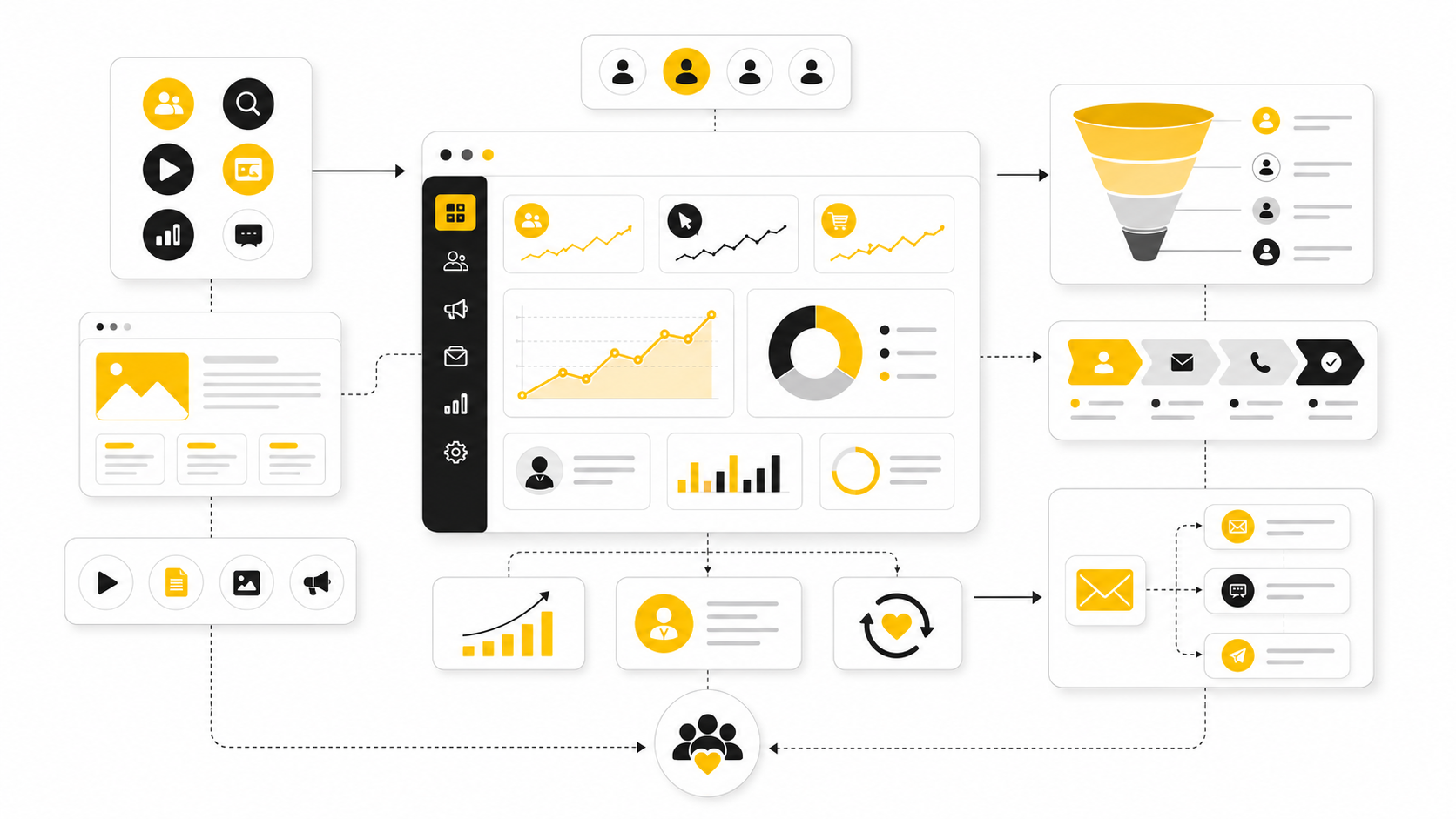
Scaling mkt online is not the same as doing more of everything. More content, more ads, more emails, more funnels, and more tools can create growth, but they can also create chaos if the business has not earned the right to scale. The more carefully question is not “How do we do more?” It is “Which part of the system is already working well enough to deserve more pressure?”
A funnel with weak conversion should not be scaled with a bigger ad budget. A content channel with no clear buyer intent should not become the center of the strategy just because it gets attention. An email list should not be blasted more often simply because revenue is behind target. Scaling works when you amplify a proven constraint, not when you multiply unfinished work.
This is where discipline matters. The business needs to know which offer converts, which audience is most profitable, which channel produces quality, and which follow-up process actually turns interest into revenue. Once those pieces are visible, scaling becomes a controlled process instead of a gamble.
Channel Expansion Has A Cost
Adding a new channel always looks exciting from the outside. There is a new platform, a new format, a new trend, and usually a few loud examples of brands getting results. But every channel has a hidden cost: strategy, content adaptation, creative production, moderation, reporting, testing, and management.
That does not mean you should avoid new channels. It means you should enter them with a clear reason. If search is already producing high-intent leads, maybe the next step is improving conversion before starting a podcast. If paid social is creating demand but not enough trust, maybe the next step is educational content, proof assets, or better retargeting.
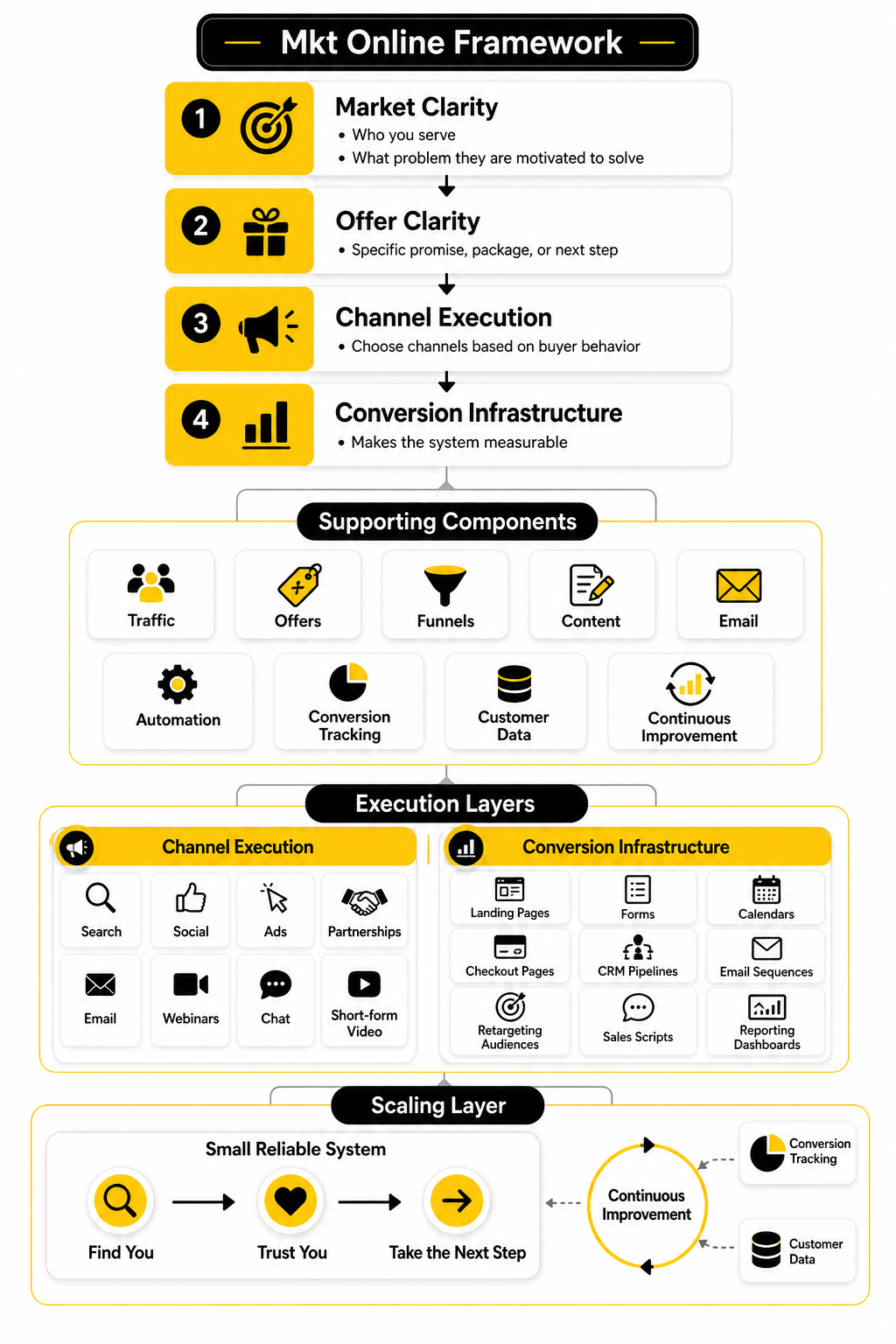
A practical mkt online system expands channels only when the core journey can support them. Otherwise, the business spreads attention too thin and starts confusing activity with progress. One well-run channel connected to a strong funnel can outperform five half-built channels that never compound.
Automation Should Increase Relevance, Not Noise
Automation is powerful, but it is easy to misuse. Bad automation sends more messages without adding more value. Good automation makes the experience more relevant, faster, and easier for the buyer.
The difference comes down to intent. A lead who booked a call should not receive the same message as someone who downloaded a guide and disappeared. A customer who bought yesterday should not be treated like a cold prospect. A subscriber who clicked three pricing emails is showing different behavior from someone who only reads educational content.
This is why automation should be built around behavior, not just time delays. Tools like GoHighLevel, Brevo, Moosend, and ManyChat can help with workflows, segmentation, email, SMS, and messaging. But the real leverage comes from the logic behind the automation: what did the person do, what does that likely mean, and what would genuinely help them take the next step?
AI Changes The Workflow, Not The Fundamentals
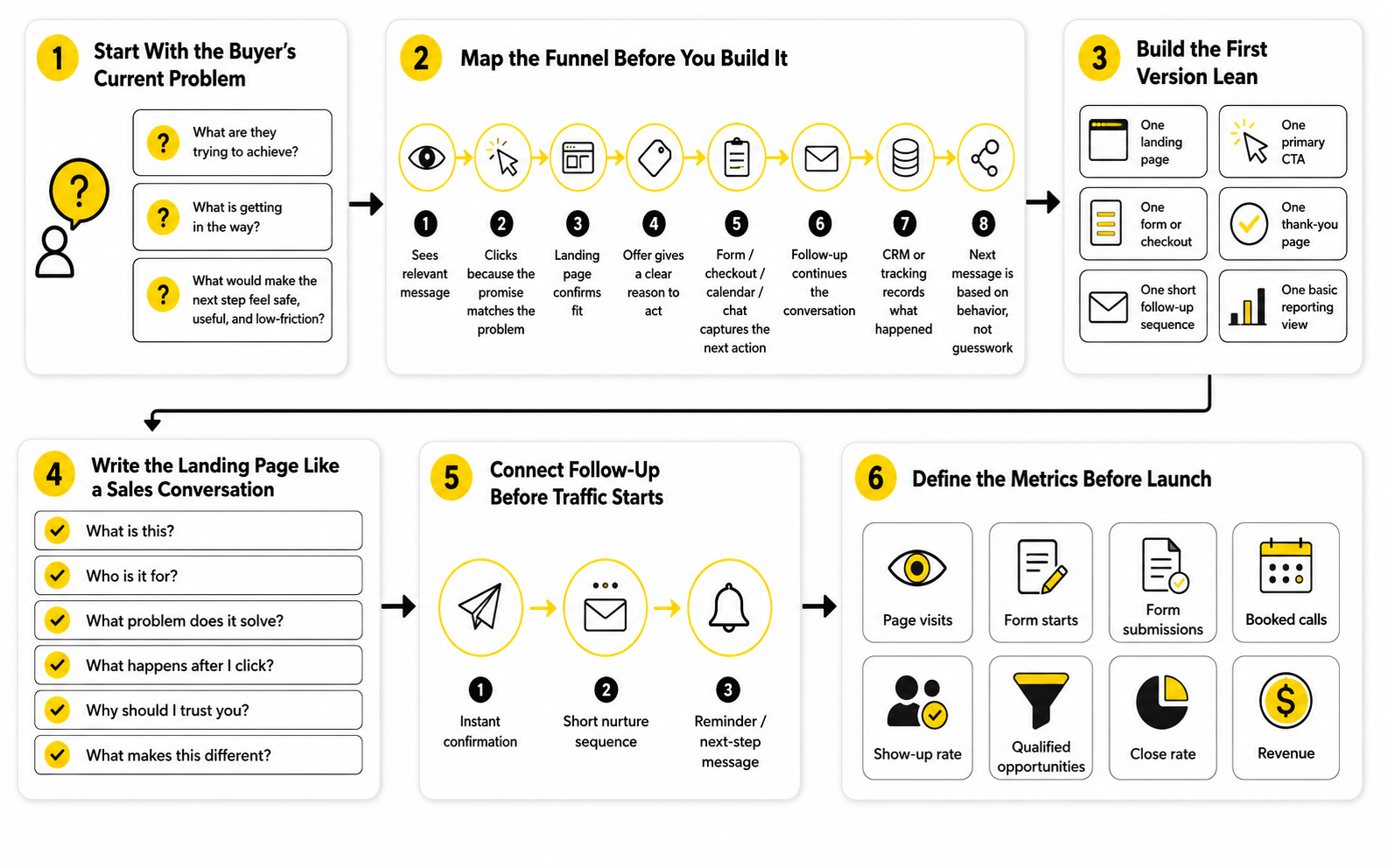
AI is changing online marketing fast, especially in research, content production, personalization, reporting, testing, and customer support. Marketing leaders are already reporting measurable AI-related business benefits, including productivity improvements, cost reductions, and stronger customer outcomes in the 2025 CMO Survey. That makes AI important, but it does not make the fundamentals disappear.
The risk is using AI to produce more average work at higher speed. More generic emails, more generic posts, more generic landing page copy, and more generic chatbot answers do not create a better mkt online system. They just create more noise.
The better use of AI is to remove bottlenecks and improve decisions. Use it to summarize customer research, generate test variations, analyze patterns, repurpose strong ideas, draft first versions, identify gaps, and support faster response times. Keep human judgment close to positioning, offers, proof, brand voice, customer empathy, and final decision-making. That is where the money is.
Privacy And Trust Are Strategic Issues
Data collection is not just a technical topic anymore. It is a trust topic. Buyers are more aware of tracking, platforms are more restrictive, and regulations have made sloppy data practices riskier. A serious mkt online strategy has to respect that reality.
First-party data is becoming more valuable because it comes from direct relationships. Email subscribers, customers, quiz answers, form submissions, purchase history, event signups, product usage, and declared preferences can all help a business market better without relying only on rented platform data. Deloitte’s 2025 marketing trends coverage highlights the importance of turning privacy-friendly first-party data into a real customer insight asset through direct relationships and trust-building.
The action is practical. Ask only for the data you can actually use. Explain the value of sharing it. Keep consent clear. Make unsubscribing easy. Protect the customer experience. Trust is not a soft metric when it affects deliverability, conversion, retention, referrals, and brand reputation.
Tool Stacking Can Become A Growth Tax
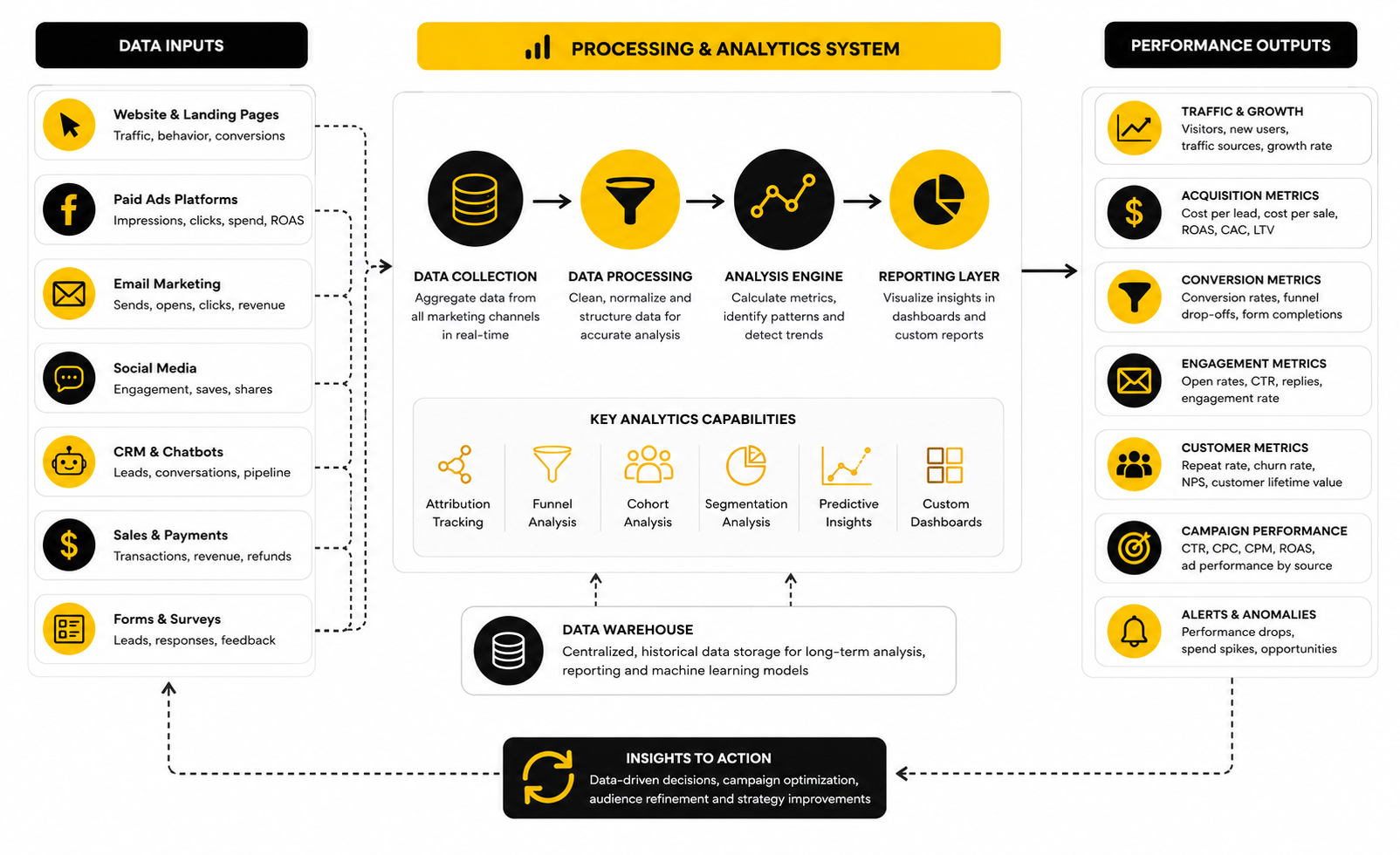
Marketing tools can solve real problems, but too many tools can create a new problem. Teams end up with disconnected landing pages, duplicate contact records, broken tracking, overlapping email systems, unused dashboards, messy attribution, and no single view of the customer. At that point, the stack becomes a tax on growth.
This is not rare. Gartner’s 2025 marketing technology coverage notes that martech utilization has fallen to 49%, which is a clear warning for businesses that keep buying tools without operational discipline. The issue is not whether software is useful. The issue is whether the business can actually implement, integrate, maintain, and measure it.
Before adding another tool, ask what job it will do and what it will replace. If it only creates another place to log in, another dashboard to ignore, or another automation nobody owns, it may not be helping. A lean stack that the team uses well is usually better than an impressive stack that nobody fully understands.
Scaling Requires Operational Ownership
At a small scale, one skilled person can hold the whole marketing system together. They know the offer, the funnel, the content plan, the email logic, the ad tests, the reporting, and the next priorities. That works for a while, but it becomes fragile as the business grows.
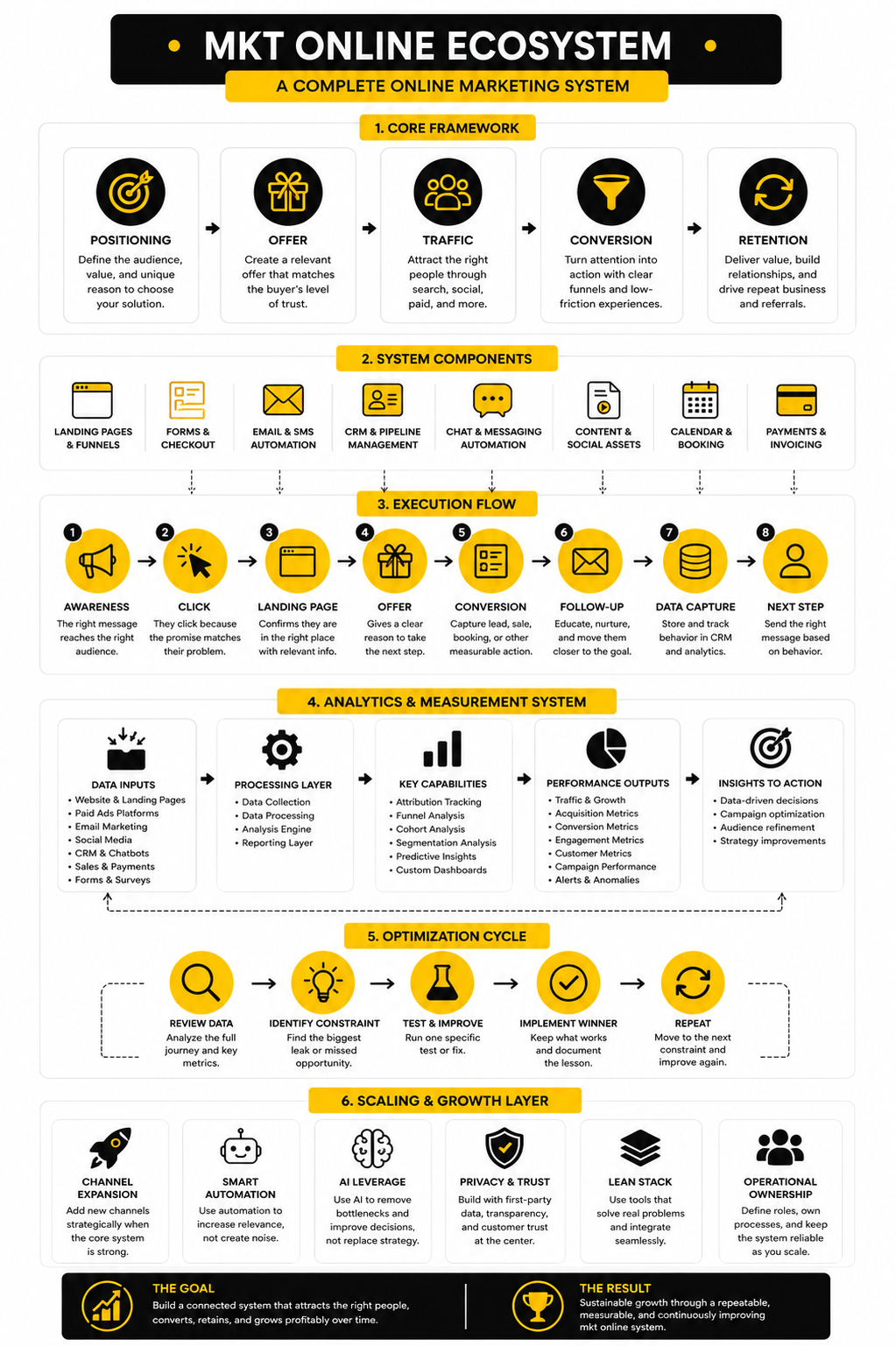
Professional implementation needs ownership. Someone must own the offer. Someone must own traffic. Someone must own conversion. Someone must own CRM hygiene, reporting, creative production, and follow-up quality. These roles can be handled by one person early on, but the responsibilities still need to be clear.
Without ownership, issues hide between departments. Marketing blames sales for weak close rates. Sales blames marketing for poor leads. Operations blames both for messy handoffs. The customer does not care who is responsible. They just experience the friction.
The Biggest Risk Is Optimizing The Wrong Thing
The most dangerous mkt online mistake is not low traffic or a bad ad. It is optimizing the wrong thing with confidence. A business can improve click-through rates while attracting worse leads. It can increase lead volume while lowering sales efficiency. It can publish more content while weakening brand clarity. It can automate follow-up while making the buyer feel less understood.
This is why every optimization should be tied to the business outcome it is supposed to improve. If the goal is revenue, measure revenue quality. If the goal is qualified pipeline, measure qualification and close rate. If the goal is retention, measure repeat behavior and customer value over time.
Expert-level marketing is often less glamorous than beginners expect. It is not constant reinvention. It is careful diagnosis, sharper tradeoffs, cleaner execution, and fewer distractions. The businesses that win online are usually not the ones chasing every tactic. They are the ones building a system that gets clearer, faster, and more useful every cycle.
Build a stronger local presence with BAAM AI
Turn your website, Google profile, social channels, and AI visibility into one growth engine
Most businesses do not need more random marketing activity. They need a consistent presence system that helps the right people find them, trust them, and take action. BAAM AI brings strategy, local SEO, website updates, Google Maps visibility, social content, AI-search readiness, media production, and reporting into one practical monthly engine.
If you want your marketing to keep working after the campaign ends, start with a free BAAM AI presence audit. See how your business shows up today and where the fastest visibility wins are at BAAM AI.