
BAAM AI Blog
Property Copywriter: The Practical Guide To Writing Real Estate Copy That Gets Enquiries
A property copywriter does more than make a listing sound polished. The job is to turn property facts into buyer motivation without exaggerating, overpromising, or drifting into generic “dream home” language. Good...
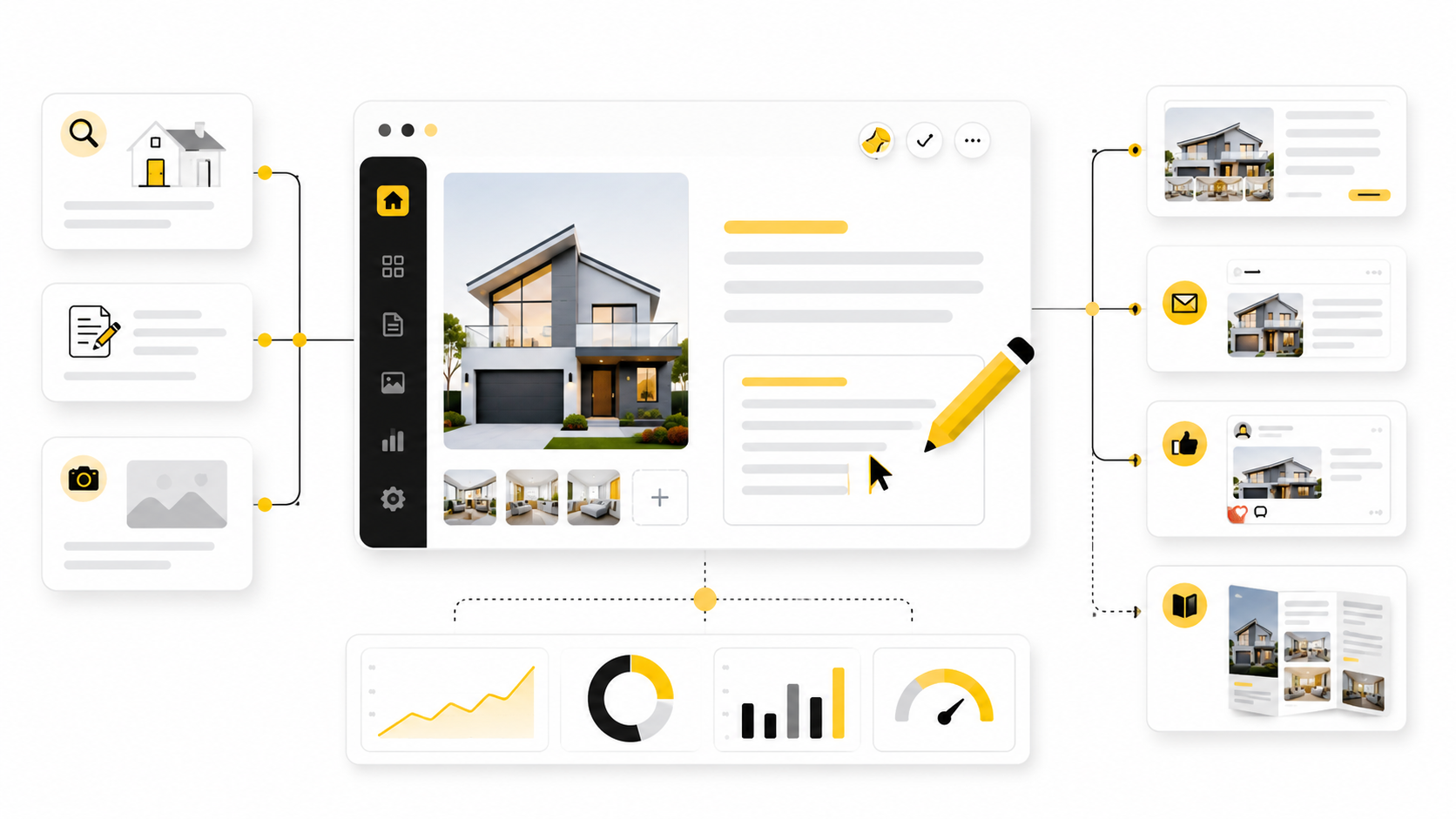
A property copywriter does more than make a listing sound polished. The job is to turn property facts into buyer motivation without exaggerating, overpromising, or drifting into generic “dream home” language. Good property copy helps the right buyer understand what matters, why it matters, and what to do next.
That matters because property marketing usually has a tiny window to earn attention. Buyers compare photos, prices, floor plans, locations, descriptions, and agent credibility quickly, often before they ever speak to anyone. The copy has to support that decision, not decorate it.
The best property copy is clear, specific, compliant, and emotionally intelligent. It does not hide weak points behind fluff. It frames the strongest facts in a way that helps buyers picture the next step.
this guide is split into six parts so each section can build naturally from strategy to execution. The full structure follows the way a professional property copywriter would approach a listing, campaign, or agency marketing system in real life. Each part moves from buyer psychology into practical writing, implementation, and improvement.
Why Property Copywriting Matters
Property copywriting matters because buyers are not just collecting facts. They are trying to decide whether a property deserves their time, attention, emotional energy, and often a viewing slot in a crowded schedule. A bland description makes that decision harder, while sharp copy makes the opportunity easier to understand.
Online behaviour has made this even more important. The National Association of Realtors reports that its buyer and seller research has tracked home buying behaviour since 1981, and recent buyer profiles continue to show how central digital search has become in the property journey through the NAR Profile of Home Buyers and Sellers. In that environment, a listing description is not just a paragraph under the photos; it is part of the first impression.
A property copywriter also protects the seller or agency from weak positioning. If the copy simply repeats “spacious,” “beautiful,” “must-see,” and “rare opportunity,” it sounds like every other listing. Strong copy uses the actual property, the likely buyer, the location context, and the next-step offer to create a reason to enquire.
The Property Copywriting Framework
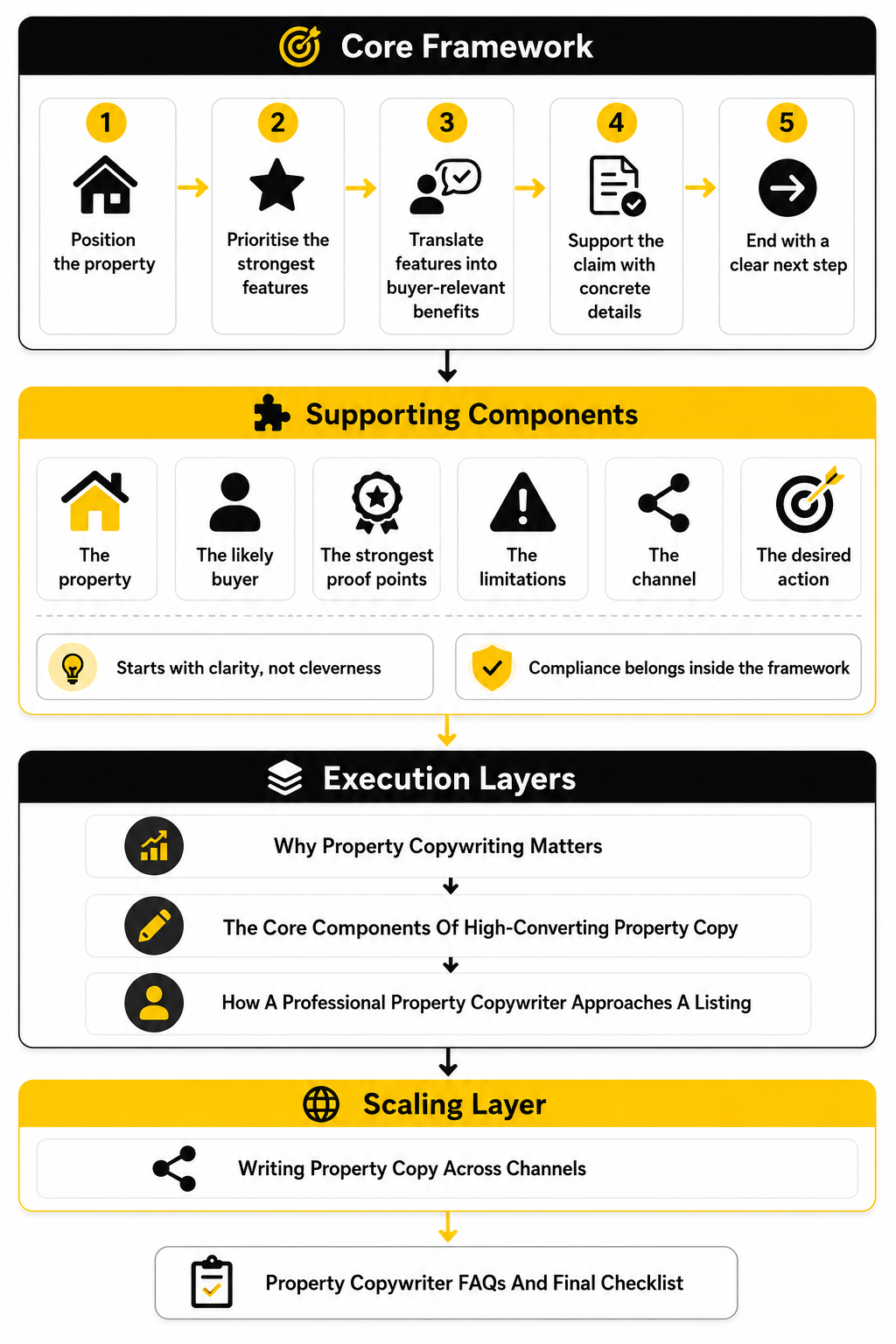
A practical property copywriting framework starts with clarity, not cleverness. Before writing, you need to understand the property, the likely buyer, the strongest proof points, the limitations, the channel, and the desired action. Without that, even polished copy becomes decoration.
The framework is simple: position the property, prioritise the strongest features, translate those features into buyer-relevant benefits, support the claim with concrete details, and end with a clear next step. This keeps the copy focused instead of letting it become a list of rooms and adjectives. It also helps the writer avoid the biggest mistake in real estate copy: trying to make every property sound luxurious.
Compliance belongs inside the framework too. Housing copy must avoid language that signals preference, limitation, or exclusion around protected characteristics, and HUD’s guidance on advertising through digital platforms reinforces that fair housing rules apply to modern digital advertising as well as traditional marketing through its Fair Housing advertising guidance. A professional property copywriter knows that persuasive copy still has to be responsible copy.
The Core Components Of High-Converting Property Copy
Strong property copy is not built from adjectives. It is built from useful decisions. A property copywriter needs to decide what the buyer should notice first, what details support that interest, and what action should happen after the reader finishes the description.
This is where a lot of listings fall apart. They either read like a feature dump or they try so hard to sound premium that the actual property disappears. The better approach is to make each component do a clear job.
Positioning
Positioning answers one simple question: who is this property really for? Not in a discriminatory or exclusionary way, but in a practical marketing sense. A city apartment near transport, a family-sized home near schools, and a rural property with land all need different angles because buyers are solving different problems.
A property copywriter should never start with “beautifully presented” just because it sounds safe. Safe is often forgettable. The opening line should frame the property around its strongest marketable reality, whether that is layout, location, renovation quality, outdoor space, income potential, privacy, convenience, or scarcity.
This does not mean forcing a dramatic hook onto every listing. Some properties need calm, precise copy because the buyer is already serious and detail-driven. The point is to give the listing a clear place in the buyer’s mind before moving into room-by-room information.
Buyer Motivation
A property listing is not only competing with similar homes. It is competing with every hesitation the buyer already has. Price, mortgage pressure, timing, commute, maintenance, uncertainty, and fear of overpaying can all slow down action.
That is why copy needs to connect features to motivation. “Three bedrooms” is a fact. “Three bedrooms arranged to suit guests, work-from-home space, or a growing household” gives the buyer a practical reason to care. The second version does not invent anything; it simply translates the feature into everyday use.
This matters because modern buyers research heavily before they enquire. Zillow’s buyer research shows that recent buyers use a mix of online tools, agent support, tours, and listing information while moving through the search process in its Consumer Housing Trends Report. A property copywriter should respect that behaviour by writing copy that helps buyers make a decision, not copy that merely fills space under the photos.
Specific Detail
Specific detail is what separates useful copy from vague copy. “Large garden” is weaker than “south-facing garden with space for outdoor dining and mature planting.” “Great location” is weaker than naming the relevant transport links, nearby amenities, parks, coastline, business district, or local landmarks when they genuinely matter.
The rule is simple: if a detail helps the buyer picture the property more accurately, include it. If it only makes the sentence sound bigger, cut it. Property copy should feel confident because it is grounded in observable facts.
This is especially important for premium, unusual, or hard-to-compare properties. The more distinctive the property, the more the copy has to guide interpretation. Buyers may see the photos, but the words explain why the layout, finish, plot, outlook, or location creates value.
Emotional Relevance
Good property copy has emotion, but it does not become cheesy. Buyers do imagine their life in a home, but they also notice when copy sounds forced. A professional property copywriter keeps the emotional layer tied to real features.
For example, a quiet rear garden can support language about privacy and slower evenings. An open-plan kitchen with direct garden access can support language about hosting and family routines. A top-floor apartment with skyline views can support language about light, outlook, and a sense of space.
The danger is writing emotional claims that the property cannot support. “A peaceful retreat” makes sense if the setting, layout, or outlook genuinely delivers that feeling. If the property sits on a busy road with limited privacy, the copy needs another angle.
Proof And Trust
Property copy earns trust when it sounds accurate. Buyers are used to inflated listing language, so every overstatement creates friction. The copy should make the property attractive without making the reader suspicious.
Proof can come from measurable details, recent upgrades, floor area, energy features, planning potential, lease information, service charges, rental history, local transport links, or verified amenities. The right proof depends on the property type and market. A buy-to-let listing needs different support than a lifestyle-led coastal home.
Trust also includes legal and ethical discipline. The U.S. Department of Housing and Urban Development makes clear that fair housing rules apply to digital housing advertising, including advertising systems that use automation or AI, in its guidance on digital advertising platforms. Even outside the U.S., the principle is useful: persuasive property marketing should focus on the property, not on excluding or steering people.
The Call To Action
The call to action should match the buyer’s stage of intent. A portal listing usually needs a direct viewing or enquiry prompt. A landing page may need a valuation request, brochure download, open-house registration, or call booking.
A weak call to action says, “Contact us for more information.” It is not wrong, but it is passive. A stronger version tells the reader what the next step gives them, such as arranging a private viewing, requesting the full brochure, or speaking with the agent about availability.
For agencies managing multiple leads, the call to action also needs operational follow-through. If enquiries come in from portals, landing pages, ads, and social campaigns, a CRM and automation platform like GoHighLevel can help keep viewing requests, follow-ups, and lead nurturing from falling through the cracks. The copy gets the enquiry, but the system has to protect the opportunity.
How A Professional Property Copywriter Approaches A Listing
A professional property copywriter does not start by writing. They start by diagnosing. Before a single sentence is drafted, they need to understand what makes the property worth attention, what the buyer already cares about, and what the listing must achieve.
This is the implementation stage where the strategy becomes practical. The aim is not to create one pretty paragraph and hope it works. The aim is to build a repeatable process that turns property information into clear, persuasive copy across the listing, brochure, email, landing page, and social posts.
Step 1: Gather The Right Property Information
The first job is to collect the facts that actually affect buyer decisions. That includes the property type, size, layout, condition, upgrades, tenure, service charges, parking, outdoor space, energy information, local amenities, transport access, and any restrictions or planning considerations. A property copywriter should also review the photos, floor plan, map position, comparable listings, and agent notes before writing.
This matters because weak copy often starts with weak inputs. If the writer only has a short list of features, the final description will sound thin. Better information creates better angles, better phrasing, and fewer vague claims.
The goal is to separate what is merely present from what is marketable. A utility room, for example, is not exciting by itself. But if the likely buyer values storage, family routines, pets, or practical space, that detail may deserve a stronger role in the copy.
Step 2: Identify The Main Buyer Decision
Every property has a main decision behind it. A buyer may be asking, “Is this worth viewing?” or “Can this fit my family?” or “Does this location justify the price?” The copy has to answer the real decision, not just describe the rooms.
A professional property copywriter looks for the friction point first. If the property is compact, the copy should explain efficiency and layout. If it is more expensive than nearby alternatives, the copy should support the premium with finish, outlook, location, land, specification, or scarcity.
This is where practical judgement matters. The buyer does not need every possible angle at once. They need the strongest reason to keep reading and enough confidence to take the next step.
Step 3: Build The Listing Message Before Writing
Before drafting the listing, write the message in plain language. This is the one-sentence idea the whole listing should support. It might be about low-maintenance city living, a move-in-ready family home, a renovation opportunity, a private rural setting, or a strong rental proposition.
This internal message is not always the headline. It is the control point. If a sentence does not support the message, clarify the property, or move the reader toward an enquiry, it probably does not belong.
A simple message also keeps the copy consistent across channels. Property portals, brochures, social captions, emails, and ads all have different formats, but they should not feel like five different versions of the same property. One clear message makes the campaign feel joined up.
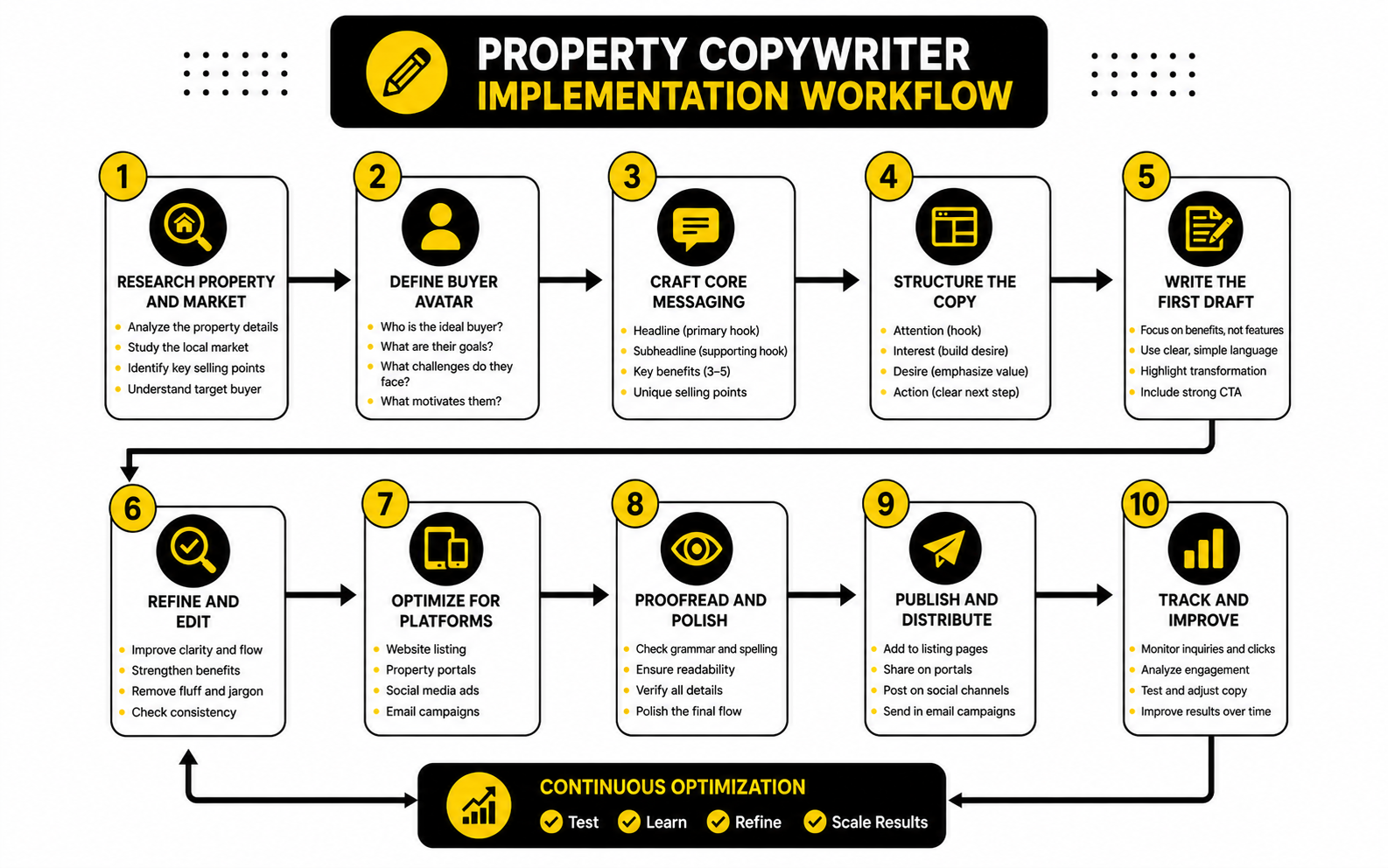
Step 4: Draft The Copy In A Useful Order
The best order is not always the order of the floor plan. Start with the strongest reason to care, then move into the supporting details, then close with the next step. That gives the reader a guided path instead of making them assemble the argument themselves.
A practical property listing draft usually follows this flow:
This structure works because it respects how people scan. Zillow’s buyer research shows that 94% of buyers used at least one online shopping resource during their search, which means listing copy has to perform in a fast, comparison-heavy environment. A property copywriter should make the first few lines earn the rest of the reader’s attention.
Step 5: Edit For Accuracy, Pace, And Restraint
Editing is where property copy becomes professional. The first draft often includes too many adjectives, repeated benefits, and sentences that sound impressive but say very little. The edit should make the copy sharper, cleaner, and more believable.
A useful editing pass checks three things. First, every claim should be accurate and supportable. Second, every sentence should add something new. Third, the tone should match the property, because a studio flat, country house, new-build apartment, and commercial investment should not all sound the same.
Restraint is important. If the copy calls everything stunning, exceptional, rare, and perfect, the reader stops trusting it. Strong property copy does not need to shout when the details are doing the work.
Step 6: Adapt The Copy For Each Channel
A portal listing needs clarity and speed. A brochure can carry more atmosphere and detail. A landing page can build a fuller argument with sections, proof, calls to action, and lead capture.
This is where many agents and developers lose consistency. They write the listing once, then copy and paste the same text everywhere. That saves time, but it often misses the purpose of each channel.
A property copywriter should adapt the same core message to fit the format. The listing description should help buyers decide whether to enquire. The email should create a reason to click. The social post should stop the scroll. The brochure should deepen confidence. Same property, different job.
Step 7: Connect The Copy To The Follow-Up System
Copy does not finish when the buyer clicks enquire. That click is only useful if the follow-up is fast, relevant, and organised. A strong listing can still leak opportunities if the agency has no clean process for handling leads.
This is why implementation should include the handoff from copy to sales activity. Viewing requests, brochure downloads, valuation leads, and investor enquiries should move into a system where they can be tracked and followed up. For agencies that want one place to manage enquiries, pipelines, and automated follow-up, GoHighLevel can fit naturally into the operational side of the process.
The important point is simple: copy creates intent, but process captures value. A property copywriter can improve the message, but the business still needs to respond while the buyer is warm. That part is not glamorous, but it matters.
Statistics And Data
Measurement is where property copy stops being a personal opinion. A property copywriter can prefer a certain opening line, tone, or structure, but the market gets the final vote. If the copy does not help the listing earn attention, enquiries, viewings, or qualified conversations, it needs to be improved.
The mistake is treating analytics like a scoreboard instead of a diagnosis tool. High views with low enquiries usually means the listing is attracting attention but not building enough confidence. Low views with strong enquiry quality may mean the property is well-positioned for the right buyer but needs better distribution, stronger photography, or a sharper headline.
This is why performance data has to be read in context. A luxury rural property, a city rental, a first-time-buyer flat, and a commercial unit will not behave the same way. The job is not to chase generic benchmarks; the job is to understand what the numbers say about this property, this audience, and this offer.
The Numbers That Actually Matter
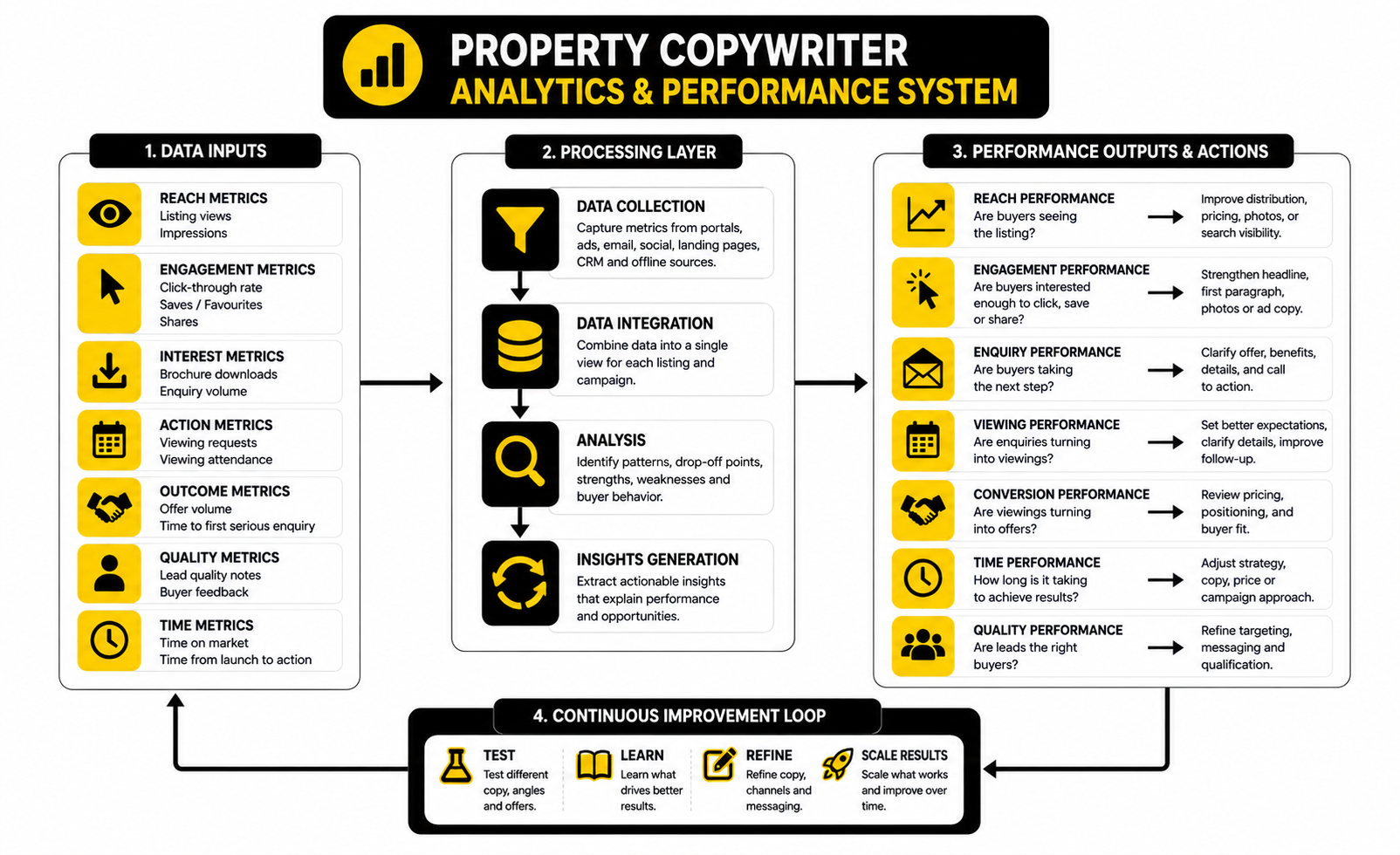
A useful analytics setup focuses on buyer movement, not vanity metrics. Views matter, but only because they show whether the listing is being seen. Saves, shares, enquiries, brochure requests, viewing bookings, call quality, and time-to-offer usually tell you more about whether the copy is doing its job.
Online search behaviour makes this unavoidable. Zillow’s 2024 buyer research found that 94% of buyers used at least one online shopping resource during the home search process, while NAR’s 2024 buyer profile reported that 43% of buyers started by looking online for properties. That means property copy is often working before an agent has any direct influence over the buyer.
The practical takeaway is simple. If buyers are making early decisions online, the listing copy must reduce uncertainty quickly. It should clarify the property’s strongest angle, answer obvious buyer questions, and make the next step feel worthwhile.
Views Show Reach, Not Persuasion
A listing with strong views is getting exposure. That is useful, but it does not prove the copy is effective. Views can be driven by location, price, photography, portal placement, market demand, or simple curiosity.
If views are high but enquiries are weak, the property copywriter should look for gaps between expectation and reality. The headline, photos, price, and first paragraph may be attracting one type of buyer, while the details reveal something that does not match their intent. In that case, better copy may not mean more exciting copy; it may mean more accurate positioning earlier.
This is especially important when a property has a trade-off. A smaller floor area, unusual layout, limited parking, service charge, lease length, or renovation requirement should not be buried. You do not need to lead with the weakness, but the copy should frame the property honestly so the right buyer keeps moving and the wrong buyer filters out sooner.
Enquiry Rate Shows Intent
The enquiry rate is one of the clearest signals that the copy is doing something useful. It tells you how many people moved from passive attention to active interest. That shift is the whole point of property copy.
A weak enquiry rate can mean the offer is unclear. The reader may like the photos but not understand the layout, availability, viewing process, location advantage, or reason the property is priced where it is. A property copywriter should treat that as a messaging problem before assuming the market is simply cold.
The fix usually starts with the opening and the call to action. The first few lines should explain why the property deserves attention now, and the closing should make the next step obvious. If the copy ends vaguely, the buyer has to create their own momentum, and many will not.
Saves And Shares Reveal Consideration
Saves and shares are useful because they often show slower, more thoughtful buyer behaviour. A buyer may not enquire immediately, but saving a listing can signal that the property has entered their comparison set. Sharing can also mean the buyer wants a second opinion from a partner, family member, investor, or adviser.
These signals matter because property decisions are rarely instant. Zillow’s 2024 report notes that many buyers use online tools throughout the process, and the same buyer may return to a listing several times before acting. A property copywriter should therefore write for both the first scan and the second read.
That means the copy needs layers. The opening should be fast and clear. The body should reward closer attention with specific details. The final section should remove friction by telling the buyer exactly how to view, request details, or speak with the agent.
Viewing Quality Beats Lead Volume
More enquiries are not always better. If a listing generates lots of weak leads, confused questions, or poorly matched viewings, the copy may be too broad. Good property marketing should attract interest, but it should also qualify that interest.
A property copywriter can improve viewing quality by making the practical facts easy to understand. Layout, parking, outdoor space, tenure, transport access, running costs, availability, and condition all help buyers self-select. Clear copy saves time because it reduces avoidable back-and-forth.
This matters for agents as much as sellers. A smaller number of serious enquiries can be more valuable than a large number of vague ones. The copy should create enough desire to act, but enough clarity to prevent wasted appointments.
Time On Market Needs Context
Time on market is often treated as a simple success or failure metric. That is too crude. A property may sit longer because of pricing, lending conditions, seasonality, location, buyer affordability, property condition, or seller flexibility.
The copy still plays a role, but it should not be blamed for everything. If the analytics show strong views, strong saves, and weak enquiries, the issue may be confidence or positioning. If views are low from the start, distribution, pricing, photos, or search visibility may be the bigger problem.
The useful question is not “why has this not sold yet?” The useful question is “where are buyers dropping off?” Once you know that, you can decide whether to adjust the headline, rewrite the first paragraph, clarify key details, improve the CTA, update photos, change the price strategy, or retarget warm traffic.
How To Build A Simple Measurement System
A simple measurement system is enough for most agencies and property marketers. You do not need a complicated dashboard to make better decisions. You need consistent tracking across the buyer journey.
Track these signals for each listing:
The key is to review the numbers together. One metric rarely tells the full story. A property copywriter should look for patterns that explain buyer behaviour, then make one clean change at a time so the impact is easier to read.
What The Data Should Change
Data should lead to action. If buyers click but do not enquire, strengthen the first paragraph, add missing proof, or make the viewing CTA more direct. If buyers enquire but do not attend viewings, the copy may need clearer expectation-setting around condition, location, access, or price.
If social posts get attention but the listing does not convert, the campaign may be creating curiosity without enough buyer confidence. If emails drive clicks but not calls, the landing page or portal description may not continue the same message strongly enough. Each metric points to a different weak link.
For agencies handling leads from several channels, a CRM can make this much easier to see. A platform like GoHighLevel can help track enquiries, follow-ups, pipeline stages, and campaign performance in one place, which makes the copy easier to judge against real commercial outcomes. The point is not to obsess over dashboards; the point is to stop guessing.
Writing Property Copy Across Channels
Once the listing message is clear and the measurement system is in place, the next challenge is consistency. A property copywriter is rarely writing for one surface anymore. The same property may need portal copy, a brochure description, an email campaign, paid ads, social captions, landing page copy, agent talking points, and follow-up messages.
The strategic mistake is treating every channel as a place to paste the same description. That creates repetition, weakens the buyer journey, and wastes the strengths of each format. The more carefully approach is to keep the core message consistent while changing the job each piece of copy performs.
Portal Listings Need Speed And Clarity
Portal copy has to work fast. Buyers are comparing options, scanning photos, checking prices, and looking for reasons to keep or reject a property. The copy should make the property easy to understand before the reader loses interest.
This is where a property copywriter needs discipline. The first lines should not be slow, decorative, or stuffed with generic praise. They should quickly establish the strongest angle, then support it with the most useful details.
Portal copy also has to respect material information. In the UK, the government’s consultation on material information in property listings highlights the risk of omitting, hiding, or presenting important consumer information unclearly. That is a useful standard even outside the UK: buyers should not have to chase basic facts that affect whether the property is suitable.
Brochures Can Build More Confidence
A brochure gives the property more breathing room. It can carry a richer description, more context, and a calmer pace than a portal listing. That does not mean it should become flowery or bloated.
The brochure should help the buyer feel more certain. It can explain the layout, the flow between spaces, the outdoor areas, the local setting, and the practical details that support the property’s value. A good brochure does not just repeat the listing; it deepens the argument.
This is especially useful for higher-value, unusual, rural, lifestyle-led, or investment properties. The buyer may need more context before booking a serious viewing or sharing the property with someone else involved in the decision. The copy should give them that context without making them work for it.
Email Copy Should Create One Clear Click
Email is not the place to explain everything. It is the place to create enough interest for one action. That action might be viewing the full listing, downloading a brochure, booking a viewing, registering interest, or asking for a valuation.
A property copywriter should avoid cramming an entire listing into an email. The subject line, opening, and body copy should work together around one clear reason to click. Too many angles make the email feel unfocused.
Segmentation matters here. A downsizer, investor, first-time buyer, landlord, developer, and relocation buyer may all respond to different details. The property stays the same, but the email angle should reflect what that audience is most likely to care about.
Landing Pages Need A Stronger Argument
A landing page has a different job from a portal listing. It can build a complete case around one property, a development, a valuation offer, or an agency service. That makes it useful when the traffic comes from ads, email, social media, or offline campaigns.
The page should open with the strongest promise, then support it with property details, location context, photography, floor plans, proof, enquiry options, and a clear call to action. It should not feel like a brochure pasted onto a web page. The structure needs to guide the buyer toward a decision.
For agents or property marketers running paid traffic, a funnel builder such as ClickFunnels can be useful when the goal is to create dedicated landing pages for campaigns instead of sending every click to a generic website. The tool is not the strategy, though. The strategy is matching the page to the buyer’s intent.
Social Copy Should Stop The Scroll Without Overselling
Social media copy has to earn attention in a messy environment. People are not usually opening Instagram, Facebook, LinkedIn, or TikTok to read property descriptions. The copy needs to create a reason to pause.
That does not mean hype. It means choosing one strong angle and making it easy to understand quickly. A new listing post might lead with a view, renovation, location, garden, price bracket, open-house slot, or unusual feature.
The risk with social copy is exaggeration. If the post creates expectations the listing cannot support, the campaign may get clicks but poor enquiries. A property copywriter should make social posts sharper, not less honest.
Paid Ads Need Message Match
Paid ads are unforgiving because every mismatch costs money. The ad, landing page, and follow-up must feel connected. If the ad promises a premium waterside apartment but the page opens with generic agency language, the buyer’s attention drops.
Message match means the same core idea appears across the full journey. The ad hook introduces it. The landing page expands it. The call to action continues it. The follow-up confirms it.
This is where strategic tradeoffs become real. A broad ad may bring cheaper clicks but weaker intent. A specific ad may bring fewer clicks but better-qualified leads. A property copywriter should help choose the angle based on the commercial goal, not just the prettiest sentence.
Follow-Up Copy Protects Warm Interest
Most property copy focuses on the first enquiry, but follow-up copy is often where money is won or lost. A buyer who downloads a brochure, asks about viewing times, or clicks from an email has already shown intent. The next message should make it easy to continue.
Follow-up copy should be short, relevant, and useful. It can confirm viewing availability, answer common questions, send the brochure, highlight a key feature, or ask whether the buyer wants to speak with the agent. It should not feel like a generic nurture sequence that ignores the property they actually engaged with.
For agencies using automation, this is where tools such as GoHighLevel, Brevo, or Moosend can support the workflow. The important part is still the message. Automation only helps if the copy respects the buyer’s context.
Scaling Property Copy Without Losing Quality
Scaling is hard because property copy depends on detail. The more listings an agency handles, the more tempting it becomes to use templates, recycled phrases, and quick rewrites. That saves time, but it can quietly weaken the brand.
A scalable system needs reusable structure, not recycled language. The process can be templated, but the insight should stay property-specific. That means every listing still needs its own positioning, proof points, buyer angle, and call to action.
A strong property copywriter can build a practical copy system for an agency. That might include listing intake questions, headline formulas, compliance checks, tone guidelines, channel templates, and editing rules. The goal is to make quality easier to repeat, not to make every property sound the same.
The Biggest Risks To Avoid
The biggest risk is overclaiming. Buyers notice when copy promises more than the property delivers. Once trust is gone, even good features become less persuasive.
The second risk is hiding important information. If buyers discover a material issue too late, the agency may get more enquiries but worse conversations. Clear information attracts better-fit buyers and saves everyone time.
The third risk is writing for the seller instead of the market. Sellers often want copy that praises the property heavily, but buyers want copy that helps them decide. A professional property copywriter has to balance enthusiasm with usefulness, because useful copy usually sells the property better than flattery.
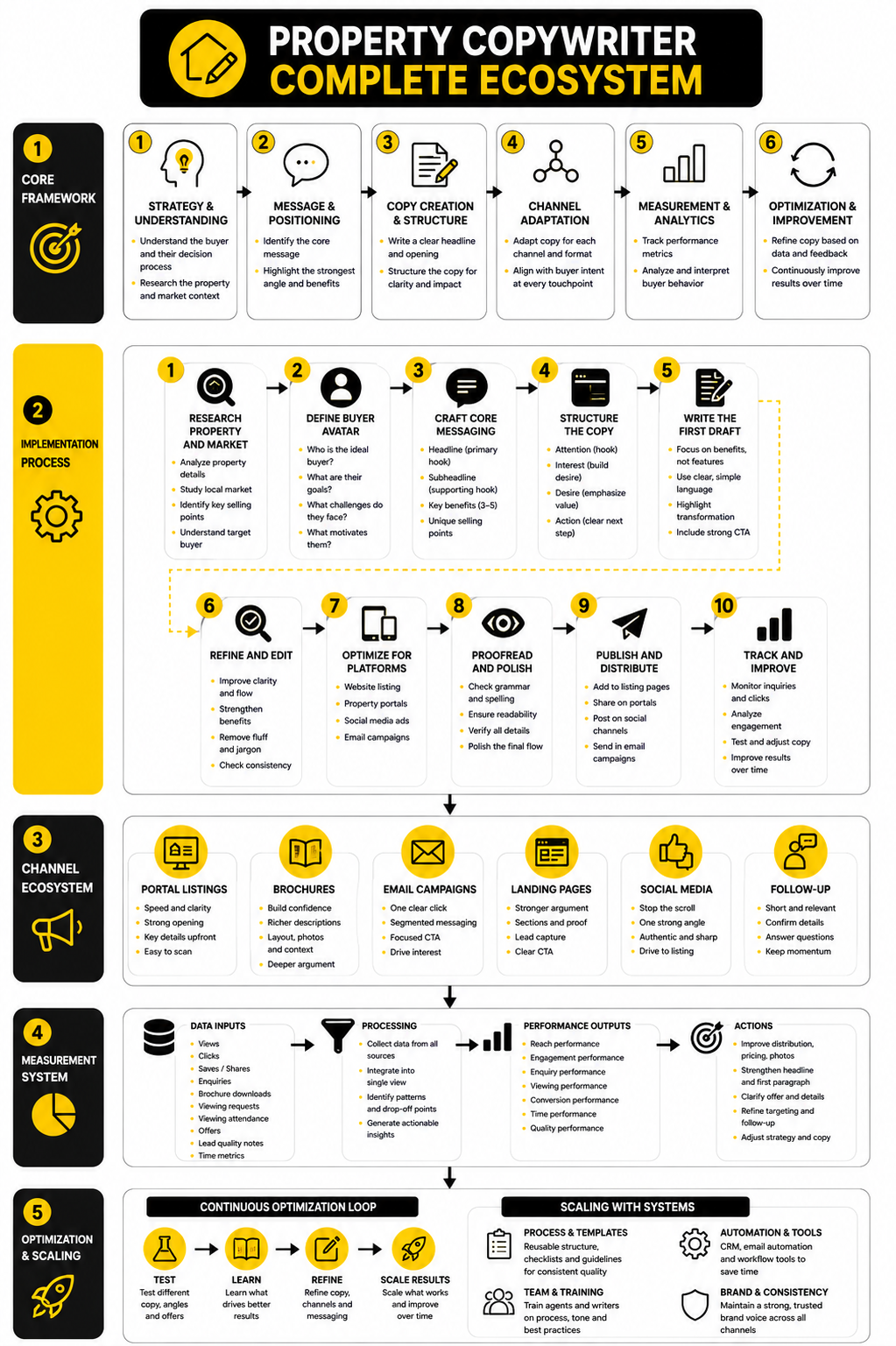
Property Copywriter FAQs And Final Checklist
The final test is simple: does the copy help the right buyer take the next step with more confidence? If yes, it is doing its job. If it only sounds nice, fills space, or repeats what the photos already show, it needs another pass.
A property copywriter should think in systems by the end of the process. The listing needs a clear message, the channel copy needs a clear role, the analytics need to show where buyers are dropping off, and the follow-up needs to keep warm interest moving. When those pieces work together, the copy becomes part of a real sales engine instead of a last-minute marketing task.
Use this final checklist before publishing:
What does a property copywriter do?
A property copywriter writes marketing copy for real estate listings, brochures, landing pages, emails, ads, social posts, and follow-up campaigns. The role is not just to make a property sound attractive. The real job is to turn property facts into clear buyer motivation.
A good property copywriter studies the likely buyer, the property’s strongest features, the local context, and the action the campaign needs to produce. Then they write copy that helps the buyer understand why the property is worth attention. That can mean more enquiries, better-qualified viewings, stronger brochure engagement, or clearer positioning for an agency or developer.
Is property copywriting the same as normal real estate listing writing?
Not exactly. Basic listing writing often describes the property room by room. Property copywriting goes further by shaping the message, choosing the strongest angle, and connecting details to buyer intent.
That difference matters because buyers are not only reading for information. They are comparing options, filtering risks, and deciding whether a property is worth their time. A property copywriter writes for that decision, not just for the page.
Why should an estate agent hire a property copywriter?
An estate agent should hire a property copywriter when listings need to sound sharper, clearer, and more persuasive without becoming exaggerated. This is especially useful for premium homes, unusual properties, new developments, investment listings, competitive markets, or agencies that want a more professional brand voice.
The benefit is not only better wording. Strong copy can make the agent’s marketing feel more considered and easier to trust. It can also save internal time because negotiators and agents are not forced to write every listing from scratch under pressure.
What makes property copy convert?
Property copy converts when it gives the right buyer enough clarity and confidence to act. That usually means a strong opening angle, specific details, buyer-relevant benefits, accurate proof points, and a direct call to action. It should be easy to scan and useful on a second read.
The best copy does not try to persuade everyone. It helps suitable buyers move forward and unsuitable buyers filter themselves out. That is better for the seller, the agent, and the buyer.
How long should a property description be?
A property description should be long enough to answer the buyer’s main questions and short enough to keep momentum. A simple rental listing may only need a concise description. A high-value home, development, or investment property may need more explanation.
The channel also matters. Portal descriptions should be clear and efficient. Brochures and landing pages can carry more detail because the reader has usually shown deeper intent. A property copywriter should adjust length based on buyer stage, not use one fixed word count for everything.
What details should be included in property copy?
Property copy should include the details that affect buyer decisions. That can include layout, bedroom count, outdoor space, parking, condition, upgrades, energy features, tenure, service charges, transport links, local amenities, availability, and viewing instructions. The exact mix depends on the property and market.
The important part is not to overload the copy with every minor feature. Buyers need the details that help them judge fit, value, and urgency. The strongest copy chooses information carefully instead of dumping everything into one dense paragraph.
Can AI replace a property copywriter?
AI can help draft, structure, summarise, and repurpose property copy, but it should not replace judgement. Property marketing still needs accuracy, buyer insight, compliance awareness, local knowledge, and strategic positioning. Those are the parts where human review is essential.
AI is most useful when it supports a clear process. It can speed up first drafts or create channel variations, but a property copywriter should still check the facts, remove generic language, sharpen the angle, and make sure the copy fits the property. Fast copy is not automatically good copy.
What are the biggest mistakes in property copywriting?
The biggest mistake is writing vague praise instead of useful information. Words like “stunning,” “spacious,” “beautiful,” and “rare” lose power when they are not supported by detail. Buyers have seen those phrases too many times.
Another mistake is hiding practical information that serious buyers need. If key facts are missing, the copy may generate curiosity but also create unnecessary friction. Strong copy is persuasive because it is clear, not because it avoids reality.
How should a property copywriter handle a property with weaknesses?
A property copywriter should not pretend the weakness does not exist. They should understand it, frame the property honestly, and focus on the buyer for whom the trade-off still makes sense. Every property has trade-offs, and serious buyers know that.
For example, a compact apartment may still be strong because of location, efficiency, finish, or rental demand. A renovation property may appeal because of potential, plot, price, or long-term upside. The goal is not to disguise the issue; the goal is to position the property accurately.
How do you measure whether property copy is working?
You measure property copy by looking at buyer behaviour. Useful signals include views, click-through rate, saves, shares, enquiries, brochure downloads, viewing requests, viewing attendance, offer volume, lead quality, and time to first serious enquiry. No single metric tells the whole story.
The best approach is to find where buyers are dropping off. If views are strong but enquiries are weak, the copy may not be building enough confidence. If enquiries are strong but viewings are poor, the copy may be attracting the wrong expectations.
Should property copy be emotional or factual?
It should be both, but in the right order. Facts create trust. Emotion helps the buyer picture why those facts matter.
The weak version is emotional language with no support. The strong version ties emotion to real features, such as light, privacy, outlook, flow, convenience, or outdoor space. A property copywriter should make the buyer feel something without making the copy feel fake.
How can agencies scale property copy across many listings?
Agencies can scale property copy by creating a repeatable process rather than recycling the same phrases. That means using better intake forms, clear positioning prompts, channel-specific templates, compliance checks, editing rules, and performance reviews. The structure can repeat, but the insight must stay specific.
This is the difference between a system and a shortcut. A shortcut makes every listing sound the same. A system helps every listing become easier to write while still sounding accurate and distinct.
What should a property copywriter know about compliance?
A property copywriter should know that housing copy must stay focused on the property, not on excluding or steering people. Fair housing and consumer protection principles matter because property advertising can influence access, expectations, and decisions. HUD’s digital advertising guidance explains that housing-related advertising rules can apply to online platforms and automated targeting through its Fair Housing digital advertising guidance.
They should also understand the importance of upfront material information. UK government guidance on material information in property listings focuses on helping buyers receive relevant information during residential property transactions. For copywriters, the practical lesson is simple: clarity protects trust.
What is the difference between property copywriting and property marketing strategy?
Property copywriting is the writing itself. Property marketing strategy is the plan behind the writing. Strategy decides the audience, channel, offer, positioning, follow-up, and measurement.
The two should work together. Copy without strategy can sound polished but unfocused. Strategy without good copy can look smart on paper but fail when buyers actually read the listing.
When should a listing be rewritten?
A listing should be rewritten when the data shows a messaging problem or when the copy no longer reflects the property accurately. Weak enquiry rates, poor viewing quality, repeated buyer confusion, or a mismatch between traffic and action can all justify a rewrite. The same applies after price changes, new photos, staging updates, renovations, or changes in availability.
A rewrite should not simply add more excitement. It should fix the specific issue. Sometimes that means a stronger hook, sometimes clearer details, and sometimes a more honest explanation of the property’s trade-offs.
Build a stronger local presence with BAAM AI
Turn your website, Google profile, social channels, and AI visibility into one growth engine
Most businesses do not need more random marketing activity. They need a consistent presence system that helps the right people find them, trust them, and take action. BAAM AI brings strategy, local SEO, website updates, Google Maps visibility, social content, AI-search readiness, media production, and reporting into one practical monthly engine.
If you want your marketing to keep working after the campaign ends, start with a free BAAM AI presence audit. See how your business shows up today and where the fastest visibility wins are at BAAM AI.