
BAAM AI Blog
Pepperjam Ascend: A Practical Guide to Affiliate Program Growth
Pepperjam Ascend is best understood as an affiliate and partnership marketing platform built for brands that want more control over publisher discovery, recruitment, tracking, commissions, payments, and brand...

Affiliate disclosure: this article may include compensated links. Recommendations should still be evaluated against your use case, budget, and current provider terms.
Should you choose this tool?
this tool is worth considering when the use case, budget, and implementation effort match what you actually need to do next.
teams that want a practical tool decision without reading another generic feature list
Check this toolPepperjam Ascend is best understood as an affiliate and partnership marketing platform built for brands that want more control over publisher discovery, recruitment, tracking, commissions, payments, and brand protection. The Pepperjam affiliate network is now positioned as Ascend by Partnerize, following Partnerize’s acquisition of Pepperjam in 2020, so the name still matters because many marketers, publishers, and legacy users continue to search for “Pepperjam Ascend” when comparing affiliate platforms.
That context is important. Pepperjam Ascend is not just another link-tracking tool. It sits in the broader shift from basic affiliate programs toward managed partnership ecosystems, where brands need clean attribution, partner quality controls, flexible commission rules, and reliable reporting before they scale.
The timing also explains why this topic keeps showing up in buying conversations. Affiliate marketing is still moving money because it connects spend to measurable outcomes, and recent industry research shows brands continue to treat affiliate partnerships as a meaningful revenue channel rather than a side project. The practical question is not whether affiliate marketing works; it is whether a platform like Pepperjam Ascend gives your team the structure, controls, and partner access needed to make it work profitably.
Pepperjam Ascend in Context
Pepperjam Ascend was created for a problem most growing affiliate programs eventually hit: the channel becomes too operationally messy to manage with spreadsheets, basic links, and scattered partner emails. A brand may start with a few publishers, coupon partners, creators, or content sites, but the work changes once the program needs real recruitment, fraud controls, attribution logic, and payout governance. That is where a platform-led approach becomes valuable.
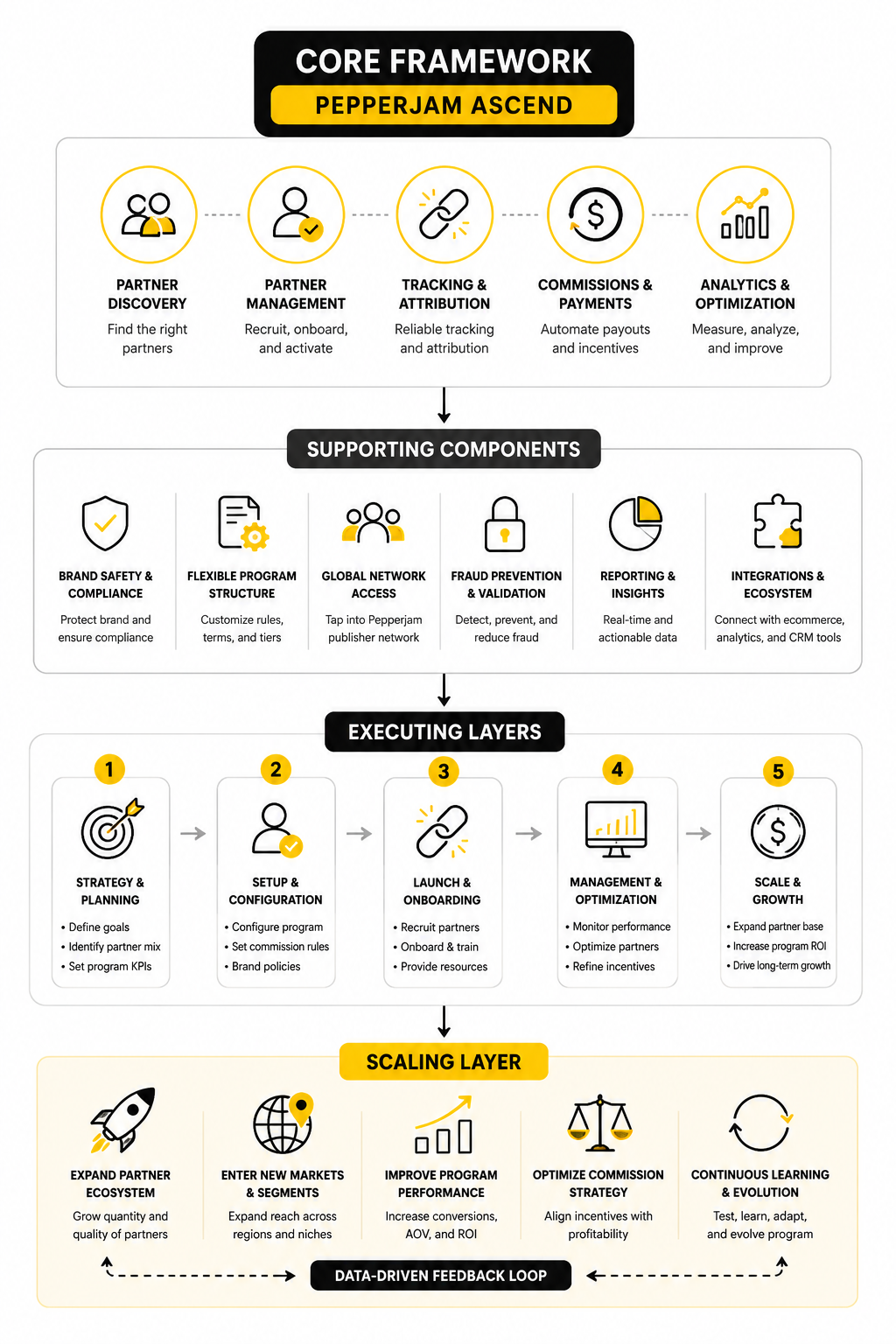
The platform’s core promise is lifecycle management. Instead of treating affiliate marketing as only tracking and commissions, Pepperjam Ascend organizes the work around discovery, recruitment, tracking, optimization, payments, and protection. That matters because weak execution in any one of those areas can quietly drain the channel, even when top-line revenue looks healthy.
The acquisition by Partnerize also changed how the product should be evaluated today. The old Pepperjam name still carries recognition, but buyers should understand that the current path leads into the Partnerize ecosystem. The smartest way to research Pepperjam Ascend is to evaluate both the legacy strengths of Pepperjam and the broader partnership automation capabilities now associated with Ascend by Partnerize.
Why Pepperjam Ascend Matters
Pepperjam Ascend matters because affiliate marketing gets complicated the moment it starts working. At a small scale, a brand can manage a few partners manually, approve links one by one, and check performance in a basic dashboard. Once the program grows, the same loose setup creates attribution disputes, commission leakage, partner quality issues, and reporting gaps that make the channel harder to trust.
That is the real reason platforms like Pepperjam Ascend exist. They are not only there to track referrals. They help brands turn affiliate marketing from a loose collection of publisher relationships into a structured growth system with rules, visibility, and accountability.
The key point is simple: affiliate programs do not fail only because the offer is weak. They often fail because the operating system behind the program is weak. If recruitment is random, tracking is unclear, commissions are too broad, and reporting is shallow, even a promising program can become noisy, expensive, and hard to scale.
Affiliate Growth Needs More Than More Partners
A common mistake is thinking that affiliate growth means adding as many publishers as possible. That sounds logical at first, but it usually creates a low-quality program. More partners can mean more reach, but it can also mean more coupon leakage, more duplicate attribution, more brand compliance work, and more commission paid on sales that would have happened anyway.
Pepperjam Ascend is relevant because it pushes the program manager to think in terms of partner quality, not just partner count. A strong affiliate program needs partners who bring real influence, relevant audiences, clean traffic, and measurable incremental value. That is very different from accepting every applicant and hoping volume solves the problem.
This is where structure becomes a growth advantage. When a brand can evaluate partners by category, performance, promotional behavior, audience fit, and contribution to the buying journey, the channel becomes easier to improve. You stop asking, “How many affiliates do we have?” and start asking, “Which partners are actually helping us grow profitably?”
Control Protects the Economics of the Channel
Affiliate marketing is attractive because it is performance-based, but performance-based does not automatically mean profitable. A brand can still overpay for low-value traffic, reward the wrong touchpoints, or let partners capture commissions on traffic they did not meaningfully influence. That is why control matters so much.
Pepperjam Ascend gives teams a way to manage commission logic more deliberately. Instead of treating every partner, product, order, and customer type the same, a mature program can use different rules for different situations. That flexibility matters when margins vary, customer acquisition goals change, or the brand wants to reward upper-funnel partners differently from last-click coupon activity.
The bigger lesson is that affiliate economics should be designed, not guessed. A healthy program needs clear rules for who gets paid, when they get paid, and why the payout makes sense. Without that discipline, affiliate marketing can look good in a revenue report while quietly damaging margin.
Transparency Makes Performance Easier to Trust
Affiliate data can become messy fast. A single customer journey may include paid search, organic content, email, influencers, loyalty sites, coupon pages, and retargeting before conversion. If the affiliate platform does not give enough visibility into what happened, the team ends up arguing over credit instead of improving the program.
Pepperjam Ascend matters here because transparency is one of the practical foundations of a scalable partnership channel. Program managers need to see which partners are driving sales, which placements are working, where traffic is coming from, and whether activity aligns with program rules. Without that visibility, optimization becomes mostly opinion.
Trust also affects internal buy-in. Finance wants to know whether commissions are justified. Marketing wants to know which partners deserve more investment. Leadership wants to know whether affiliate is incremental or just another way to discount existing demand. A platform that improves visibility helps affiliate managers defend the channel with cleaner evidence.
Brand Safety Is Not Optional
Affiliate partners represent the brand in places the brand does not fully control. That can be powerful, but it also creates risk. A partner might use misleading claims, outdated offers, unauthorized coupon language, poor disclosure practices, or promotional tactics that conflict with the brand’s positioning.
This is why brand safety belongs near the center of the Pepperjam Ascend conversation. A serious affiliate program needs approval workflows, partner monitoring, terms enforcement, and a clear process for handling violations. The goal is not to make the program restrictive for no reason; the goal is to protect the trust that makes the program valuable in the first place.
This matters even more as affiliate and creator activity overlap. Creators, publishers, review sites, and community-driven partners can influence buying decisions before a shopper ever reaches the brand’s website. That influence is valuable, but only when the message is accurate, compliant, and aligned with the brand experience.
The Platform Helps Teams Move From Reactive to Proactive
Many affiliate managers spend too much time reacting. They approve partners, answer emails, fix tracking issues, review commission questions, pull reports, and chase updates across disconnected tools. That leaves less time for the work that actually grows the program.
Pepperjam Ascend is useful because it gives the team a more organized operating layer. When discovery, recruitment, tracking, payments, and reporting sit closer together, the manager can spend more time improving partner mix, testing commission strategies, and building relationships with the partners that matter. That shift is not glamorous, but it is where a lot of the profit is found.
A proactive affiliate program looks different from a reactive one. It has planned recruitment targets, partner segments, commission logic, promotional calendars, compliance standards, and performance reviews. The platform does not replace strategy, but it can give the strategy a cleaner place to live.
Why This Matters for Different Types of Brands
Pepperjam Ascend will not matter equally to every business. A small brand with a few manual referral relationships may not need an enterprise-grade partnership system right away. But a brand with a growing ecommerce operation, a meaningful publisher base, or a real need for partner governance will feel the limits of a lightweight setup quickly.
For direct-to-consumer brands, the value is often in managing publisher quality, coupon behavior, and creator relationships without losing margin control. For larger retailers, the value is usually in scale, reporting, partner segmentation, and operational efficiency. For agencies, the value is in repeatable program management across multiple clients without rebuilding the process from scratch every time.
That is the practical lens to use. Pepperjam Ascend is not important because it has a recognizable name. It is important because affiliate marketing becomes a serious channel only when the systems behind it are serious too.
The Pepperjam Ascend Framework
A strong Pepperjam Ascend implementation starts with a simple idea: affiliate marketing should be managed like a revenue system, not a folder full of links. The platform can support discovery, recruitment, tracking, commissions, payments, optimization, and brand safety, but those pieces only work well when the business has a clear process behind them. Without that process, even good software becomes another dashboard people check without changing the program.
The framework below keeps the channel practical. It begins with strategy, moves into partner setup, then turns into measurement and optimization. That order matters because the wrong sequence creates avoidable problems later, especially around partner fit, commission rules, tracking accuracy, and performance expectations.
Start With the Program Strategy
Before touching configuration, the brand needs to decide what the affiliate program is actually supposed to do. Some programs are built to acquire new customers. Others are built to expand publisher coverage, support product launches, reactivate existing customers, or build relationships with creators and commerce content partners.
Pepperjam Ascend can support different goals, but the settings should reflect the strategy. A new-customer acquisition program should not use the same commission logic as a retention-heavy discount program. A content-led program should not be judged the same way as a coupon-heavy program because the partner’s value may happen earlier in the buying journey.
The practical move is to define the program’s role before recruiting partners. That means choosing the target customer, partner categories, payout model, approval standards, and reporting priorities. Once those are clear, Pepperjam Ascend becomes easier to configure because the platform is supporting a real operating model instead of vague affiliate activity.
Map the Partner Journey
The next step is to map how partners will move through the program. This sounds basic, but it is where many brands lose control. A partner journey should cover discovery, invitation, application review, onboarding, activation, performance review, optimization, and renewal or removal.
Pepperjam Ascend fits naturally into this because the platform is designed around the affiliate lifecycle. The current Partnerize positioning describes Ascend as a home for partnership technology, affiliate network access, and expert services in one place. That matters because the implementation should not treat partner recruitment and partner management as separate worlds.
A clean partner journey makes the program easier for both sides. The brand knows what happens after a partner applies. The partner knows what they need to promote, how they get paid, which rules apply, and what performance looks like. Less confusion means fewer support issues and more time spent on growth.
Build the Execution Process
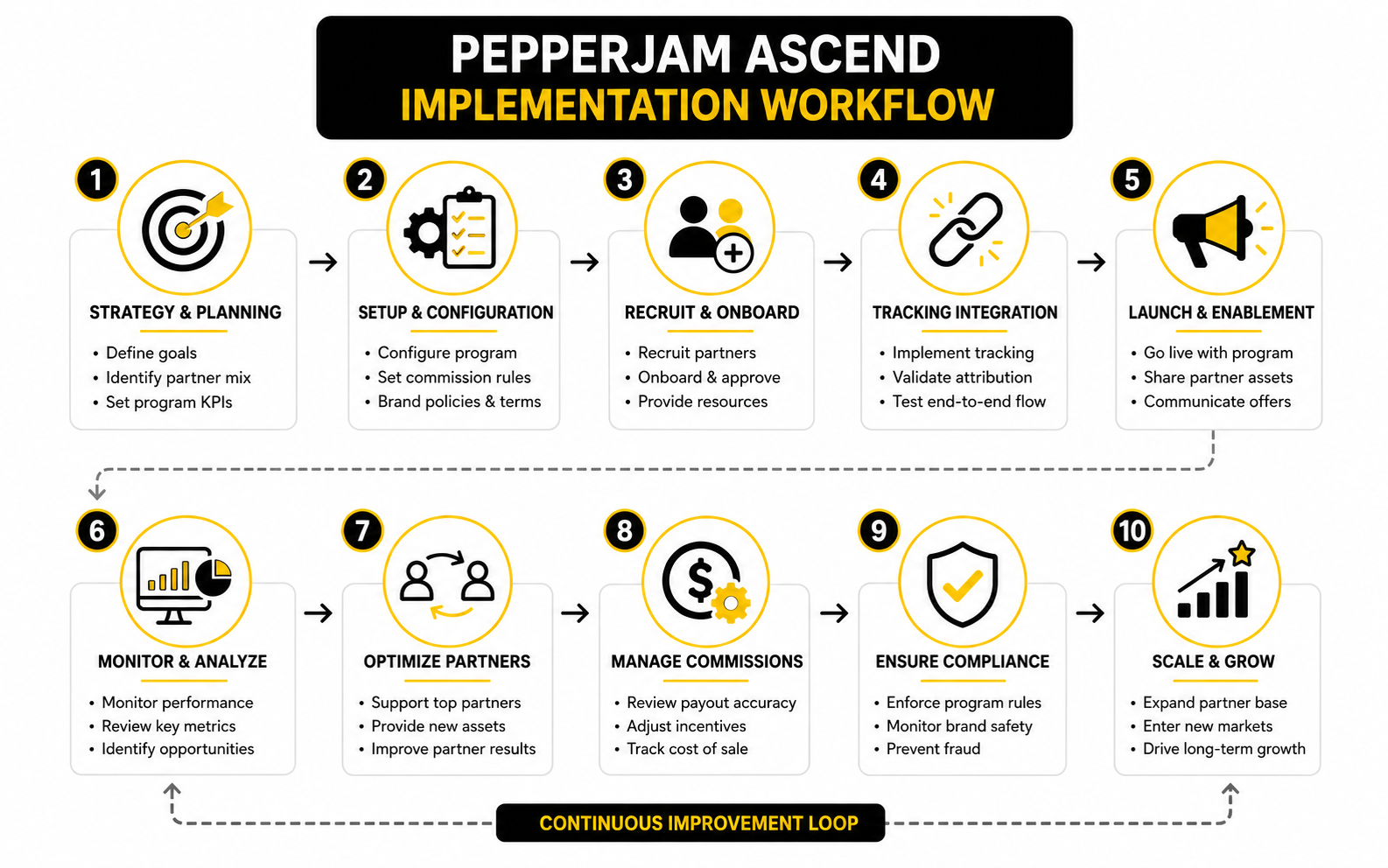
Once the strategy and partner journey are clear, the work becomes tangible. This is where Pepperjam Ascend shifts from concept to implementation. The goal is to create a repeatable process that the team can run every week without reinventing the program.
A practical execution process looks like this:
This process keeps the program grounded. Instead of launching everything at once and hoping the numbers explain themselves, the team builds in layers. That is especially important when affiliate activity touches multiple internal teams, including ecommerce, finance, legal, analytics, and brand marketing.
Configure Tracking Before Scaling Recruitment
Tracking deserves its own discipline because it is the foundation of the whole program. If tracking is unreliable, every downstream decision becomes weaker. Partner rankings, commission approvals, fraud reviews, budget decisions, and performance forecasts all depend on whether the platform is capturing the right events correctly.
Pepperjam Ascend should be configured around the conversion actions that actually matter to the business. For ecommerce, that usually means validated orders, order value, product details, coupon usage, customer status, and returns or cancellations when available. For lead-generation programs, the setup may need to distinguish between raw leads, qualified leads, booked calls, and closed deals.
Do not scale recruitment until the tracking setup has been tested. A small tracking mistake can become a large payment problem once many partners are active. It is far easier to validate the mechanics with a controlled group than to clean up reporting disputes after a full launch.
Design Commission Rules Around Value
Commission rules should reflect business value, not habit. Paying every partner the same amount for every sale is simple, but simple is not always smart. A partner who introduces a new customer through high-intent content may deserve a different payout from a partner who appears at the final coupon-checking step.
Pepperjam Ascend is useful because it gives brands room to think more carefully about outcomes. Dynamic commissioning, partner segmentation, and outcome-based payment logic can help protect margin while still rewarding partners fairly. This becomes especially important when products have different margins, customer types have different lifetime value, or promotional campaigns carry different priorities.
The best commission structure is clear enough for partners to understand and flexible enough for the brand to optimize. If the structure is too complicated, partners will not know what to push. If it is too blunt, the brand may overpay for low-value behavior or underpay the partners that actually create demand.
Create Partner Assets That Reduce Friction
A platform cannot fix a weak partner experience. If approved affiliates do not know what to promote, where to find approved messaging, which offers are current, or how the brand wants to be represented, they will either do nothing or improvise. Neither outcome is ideal.
Pepperjam Ascend implementation should include a practical partner asset system. That means clear program terms, approved brand copy, product positioning, seasonal campaign details, landing page guidance, creative assets, promotional rules, and contact expectations. The easier it is for partners to promote correctly, the faster the program can move.
This is also where the broader marketing stack can support affiliate execution. A brand using dedicated funnels or landing pages may want to test campaign-specific pages with tools like ClickFunnels or systeme.io when the goal is fast offer deployment. For ecommerce teams that need more tailored product pages, Replo can also fit naturally into the workflow because partners perform better when the destination page matches the campaign promise.
Review the First 30 Days Like a Diagnostic
The first month should not be judged only by revenue. Early revenue is useful, but it does not tell the whole story. The first 30 days should be treated as a diagnostic period where the team checks whether the setup is producing clean, explainable signals.
Look at partner activation, click quality, conversion rates by partner type, average order value, coupon usage, approval speed, declined applications, tracking consistency, and commission exceptions. These details show whether the program is healthy beneath the surface. They also reveal whether the brand recruited the right partners or simply accepted the easiest ones.
This is where disciplined teams separate themselves. They do not panic if the first version is imperfect, and they do not celebrate too early because a few partners drove initial sales. They use Pepperjam Ascend to find the friction, clean up the process, and build a program that becomes more profitable as it matures.
Statistics and Data
Measurement is where Pepperjam Ascend becomes more than an affiliate management tool. It becomes the place where a brand can separate real partner value from surface-level activity. That distinction matters because affiliate dashboards can look healthy while the economics underneath are weak.
The performance marketing channel is large enough to deserve serious measurement. U.S. affiliate and partnership marketing spend reached $13.62 billion in 2024, which makes the channel too significant to manage casually. But the size of the market does not prove that every program is working; it only proves that brands are investing enough money for bad measurement to become expensive.
That is the practical mindset for Pepperjam Ascend analytics. The goal is not to stare at more numbers. The goal is to understand which partners create profitable demand, which partners capture demand that already existed, and which operational decisions should change next.
The Metrics That Actually Matter
The most useful Pepperjam Ascend metrics are the ones that connect partner activity to business outcomes. Clicks matter, but only as an early signal. Revenue matters, but only when it is understood alongside margin, customer quality, order value, returns, discount behavior, and commission cost.
A healthy affiliate reporting system should track these signals together:
Each metric answers a different question. Partner activation shows whether recruitment is turning into real promotion. Conversion rate shows whether the traffic has buying intent. Effective cost of sale shows whether the program is financially disciplined, not just busy.
Why Benchmarks Need Context
Benchmarks are useful, but only when they are treated as directional signals. A content publisher, loyalty partner, coupon site, creator, comparison site, and B2B referral partner will not behave the same way. If a team compares all of them against one flat benchmark, the data will create bad decisions.
Pepperjam Ascend should help the team build internal benchmarks by partner segment. For example, a content partner may produce lower immediate conversion but stronger new-customer value. A coupon partner may convert well but require closer analysis around incrementality and margin. A creator may drive uneven results campaign by campaign, but still create valuable demand when the offer and audience fit.
This is why the most useful benchmark is often your own historical baseline. Compare each partner category against its previous performance, not against a generic internet average. Once the program has enough data, the team can see what “good” looks like inside its own economics.
Reading the Analytics System Correctly
The analytics system should make the affiliate program easier to manage, not harder to explain. A practical setup connects partner behavior, customer behavior, commercial outcomes, and operational actions. When those layers are separated, the team ends up with reports that look detailed but do not tell anyone what to do next.
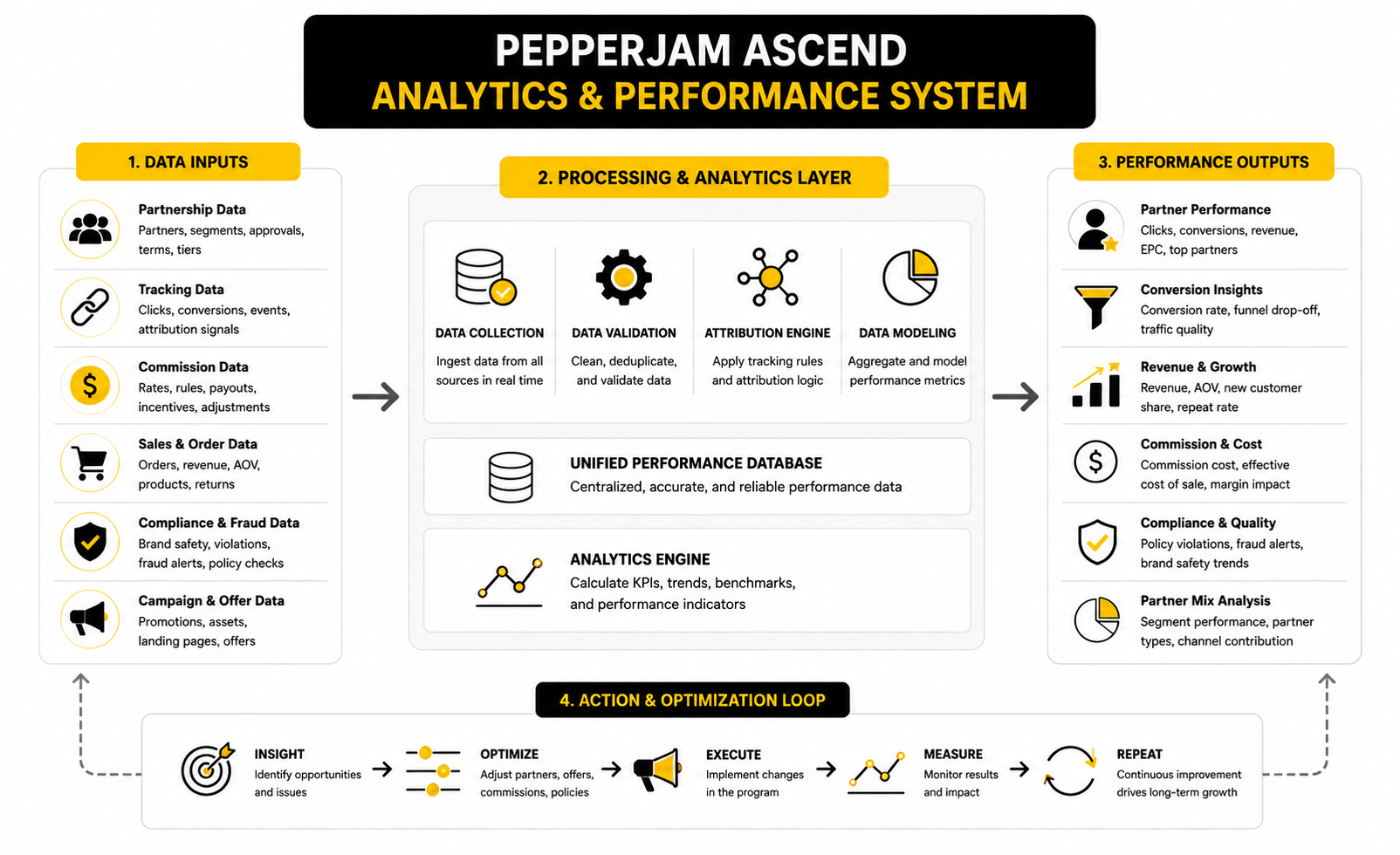
The cleanest way to read Pepperjam Ascend data is to move from signal to diagnosis to action. A signal might be that a partner has high clicks but weak conversions. The diagnosis might be poor audience fit, weak landing page alignment, bad offer timing, or low-intent traffic. The action might be a new landing page, tighter partner guidance, a commission change, or removal from the program.
That sequence matters. Data by itself does not improve the program. The improvement comes from the decision the data forces.
Revenue Is Not the Same as Incremental Value
This is one of the most important distinctions in affiliate analytics. A partner can drive tracked revenue without creating much incremental value. That happens when the partner appears late in the journey, captures shoppers who were already buying, or relies too heavily on discount-seeking traffic.
Pepperjam Ascend data should be used to ask sharper questions about contribution. Did the partner introduce the customer? Did the partner influence the decision earlier in the journey? Did the order require a deep discount? Did the customer buy again later? Did the commission make sense after returns, discounts, and margin?
This is where brands need discipline. Do not punish every lower-funnel partner automatically, because some of them genuinely help close sales. But do not treat last-click revenue as the full truth either, because that is how affiliate programs become expensive without becoming more strategic.
Partner Segmentation Makes the Numbers Useful
Averages hide too much. If the overall program conversion rate is down, that does not mean every partner type is underperforming. It may mean one traffic source changed, one coupon partner pushed the wrong offer, one landing page broke, or one content category stopped ranking.
Pepperjam Ascend reporting becomes more useful when partners are grouped into practical segments. The team should separate content publishers, creators, loyalty partners, coupon partners, review sites, technology partners, and strategic business-development partners. Each group needs its own expectations because each group plays a different role.
Segmentation also makes optimization more respectful. A creator should not be managed like a coupon site. A commerce publisher should not be judged only by immediate click-to-sale conversion. A strategic partner with a longer sales path should not be cut too early just because the first campaign did not close instantly.
Commission Data Should Drive Better Rules
Commission reporting is not just finance hygiene. It is strategy. The data should show whether the brand is paying the right partners for the right outcomes at the right level.
If commission cost rises faster than gross profit, the program needs tighter rules. If high-value new customers are coming from a small group of content partners, those partners may deserve better terms. If a partner sends high revenue but also high returns, heavy coupon usage, or low repeat purchase behavior, the payout structure needs a closer look.
This is where Pepperjam Ascend can support more carefully program design. The team can use performance data to refine partner tiers, campaign-specific incentives, product-level commissions, and new-customer bonuses. The best programs do not set commissions once and forget them; they keep adjusting until partner incentives and business value line up.
What Good Performance Signals Look Like
Good performance is not only a higher revenue number. A stronger affiliate program usually shows several improvements at the same time. The best signals are balanced because they show both growth and control.
A healthy Pepperjam Ascend program should start showing patterns like these:
These signals matter because they show that the program is becoming more resilient. A program that relies on one coupon partner or one seasonal campaign is fragile. A program with multiple productive partner types, clear commission rules, and explainable performance patterns is much easier to scale.
Turning Reports Into Weekly Decisions
The best analytics rhythm is simple. Every week, the team should review performance by partner segment, flag unusual changes, and choose a small number of actions. The goal is not to rebuild the program every Monday; the goal is to keep the program moving in the right direction.
A useful weekly review can focus on three questions. First, which partners or segments created the most valuable outcomes? Second, which numbers changed in a way that needs investigation? Third, what should be changed this week in recruitment, commissions, assets, landing pages, or compliance?
That rhythm keeps Pepperjam Ascend connected to execution. Data becomes practical when it changes what the team does next. Without that loop, analytics becomes decoration, and decoration does not grow an affiliate program.
Professional Implementation and Optimization
Once the measurement system is in place, the next question is how to scale without damaging the channel. This is where Pepperjam Ascend needs to be managed with discipline. The platform can support broader recruitment, more carefully tracking, payment workflows, fraud prevention, and brand safety, but growth still depends on the quality of the operating decisions behind it.
Advanced affiliate management is mostly about tradeoffs. More partners can create more reach, but they can also create more noise. Higher commissions can motivate stronger partners, but they can also destroy margin. Faster approvals can improve activation, but they can also let weak-fit partners into the program before the brand has proper controls.
The best teams do not treat Pepperjam Ascend as a set-and-forget system. They treat it as a control center. Every setting, rule, partner group, and report should make the program easier to scale while protecting the economics of the business.
Scaling Partner Recruitment Without Losing Quality
Recruitment is one of the easiest areas to overdo. A brand sees early affiliate revenue, gets excited, and starts accepting too many partners too quickly. That can inflate the program on paper while making it harder to manage in practice.
Pepperjam Ascend is strongest when recruitment is handled by partner segment, not by raw volume. The current Partnerize platform describes discovery, recruitment, optimization, payment, brand safety, and fraud prevention as part of an integrated partnership automation suite, which is exactly the kind of structure scaling programs need. The practical move is to create separate recruitment tracks for content publishers, creators, loyalty partners, coupon partners, comparison sites, and strategic partners.
Each track should have different approval standards. A content publisher may need audience relevance and editorial quality. A coupon partner may need stricter promotional rules. A creator may need brand fit, disclosure discipline, and campaign alignment. Scaling only works when partner growth is controlled by fit, not just access.
Managing the Coupon and Loyalty Tradeoff
Coupon and loyalty partners can be valuable, but they need careful handling. They often convert well because they appear close to the purchase decision. That does not automatically make them bad, but it does mean the brand has to understand what role they are playing.
The risk is over-attributing sales that were already likely to happen. If a shopper reaches checkout, searches for a discount, clicks a coupon partner, and completes the order, the platform may record a sale. The strategic question is whether that partner created the sale, saved the sale, or simply intercepted it.
Pepperjam Ascend should be used to manage this tradeoff with clear rules. Brands can separate coupon partners into controlled tiers, limit unauthorized offer language, monitor discount stacking, and compare performance against new-customer share and margin. The goal is not to eliminate lower-funnel partners; the goal is to stop lower-funnel activity from dominating the economics of the whole program.
Building a more carefully Commission Architecture
A mature affiliate program should not rely on one flat commission rate forever. Flat rates are easy to understand, but they rarely reflect the real value of different partners, products, and customer types. As the program grows, commission design becomes one of the most powerful optimization levers.
Pepperjam Ascend gives program managers a better environment for building that architecture. The structure can include baseline commissions, VIP partner tiers, new-customer bonuses, product-specific payouts, seasonal incentives, and temporary campaign boosts. This lets the brand reward the behavior it actually wants instead of paying the same amount for every outcome.
The key is to keep the system explainable. Partners need to understand how they earn more. Internal teams need to understand why the higher payout makes sense. If the commission model becomes too complex to explain in plain English, it will create confusion instead of better performance.
Protecting the Program From Fraud and Low-Quality Activity
Affiliate fraud is not always dramatic. Sometimes it looks like suspicious traffic patterns, forced clicks, trademark bidding violations, fake leads, unauthorized coupon promotion, or partners using tactics that create attribution without real influence. These issues can quietly turn a profitable channel into a messy one.
Pepperjam Ascend should be configured with a prevention mindset. That means reviewing partners before approval, monitoring unusual spikes, checking conversion quality, enforcing promotional rules, and investigating patterns that do not match normal customer behavior. Fraud prevention is not just a compliance task; it is margin protection.
The strongest programs make expectations clear before problems happen. Terms should explain allowed traffic sources, paid search restrictions, coupon rules, disclosure requirements, brand usage, and consequences for violations. When partners know the rules and the platform supports enforcement, the program becomes easier to defend.
Aligning Affiliate With the Rest of the Marketing Stack
Pepperjam Ascend should not live in isolation. Affiliate performance is influenced by landing pages, email flows, product positioning, creative assets, checkout experience, paid media, retention campaigns, and customer support. If those pieces are weak, even strong partners will struggle to perform.
This is especially true when partners are sending traffic to campaign-specific offers. A content publisher may warm up the buyer well, but the landing page still has to convert. A creator may create demand, but the follow-up system has to capture and nurture that demand. Tools like GoHighLevel, Brevo, and ManyChat can fit into the broader revenue system when a brand needs stronger follow-up, automation, or messaging around partner-driven traffic.
The point is not to bolt on tools randomly. The point is to make sure the affiliate program has a conversion path that deserves the traffic partners are sending. Better partners will not fix a broken funnel, and a better funnel will not fix careless partner management. Both sides have to work together.
Handling Attribution Without Pretending It Is Perfect
Attribution will never be perfectly clean. Buyers move across devices, channels, content, creators, search results, email, and retargeting before they purchase. Any platform can report what it can track, but the team still has to interpret the data with judgment.
Pepperjam Ascend should be part of a broader attribution conversation, not the only source of truth. The affiliate dashboard can show tracked partner performance, but the brand should also compare that data with ecommerce analytics, CRM records, paid media reports, coupon behavior, and customer cohorts. The more valuable the channel becomes, the more important this cross-checking gets.
This is where incrementality becomes a serious topic. The Affiliate & Partner Marketing Association’s 2024 industry research highlights the growing need to standardize how the industry measures and accesses incrementality, because brands want to understand whether partnerships are creating net-new value, not just claiming credit for visible conversions. That is the right lens for advanced Pepperjam Ascend optimization.
Knowing When to Tighten the Program
Growth is not always the next move. Sometimes the right move is to tighten the program before adding more partners. That can feel counterintuitive, but it is often what separates a durable program from a bloated one.
A Pepperjam Ascend program may need tightening when too much revenue comes from a small number of low-margin partners, approval standards have become loose, commission exceptions are rising, coupon behavior is hard to control, or internal teams no longer trust the reporting. These are not small issues. They are warning signs that scale is starting to outrun governance.
Tightening does not mean killing momentum. It means reviewing partner tiers, pausing weak partners, updating terms, refining commission logic, improving landing pages, and rebuilding trust in the data. A smaller, cleaner program can often outperform a larger, messier one because the team can see what is actually working.
Preparing for Enterprise-Level Complexity
As the program matures, the work becomes more cross-functional. Legal may care about disclosures and brand claims. Finance may care about payout timing and commission reserves. Ecommerce may care about margin and return rates. Brand teams may care about messaging, while analytics teams may care about attribution and incrementality.
Pepperjam Ascend can support that complexity, but the internal process has to mature too. The team needs clear ownership, reporting cadence, escalation paths, partner review cycles, and decision rights. Without those, the platform can show problems before the organization is ready to solve them.
This is the expert-level reality: affiliate marketing becomes more valuable when it becomes more accountable. That accountability is exactly what makes some teams uncomfortable at first. But once the program has strong rules, clean data, and a serious optimization rhythm, Pepperjam Ascend can support a channel that is much easier to scale with confidence.
Choosing, Measuring, and Troubleshooting Pepperjam Ascend
At this stage, the decision is not just whether Pepperjam Ascend has enough features. The better question is whether your team has the maturity to use those features well. A platform can give you tracking, partner discovery, payment workflows, analytics, and compliance tools, but it cannot make unclear goals clear by itself.
Pepperjam Ascend makes the most sense when affiliate marketing is already important enough to require structure. If the program has multiple partner types, meaningful payout volume, margin sensitivity, or internal pressure to prove incrementality, the platform conversation becomes serious. If the program is still tiny and informal, the better move may be to define the channel strategy first before adding more operational weight.
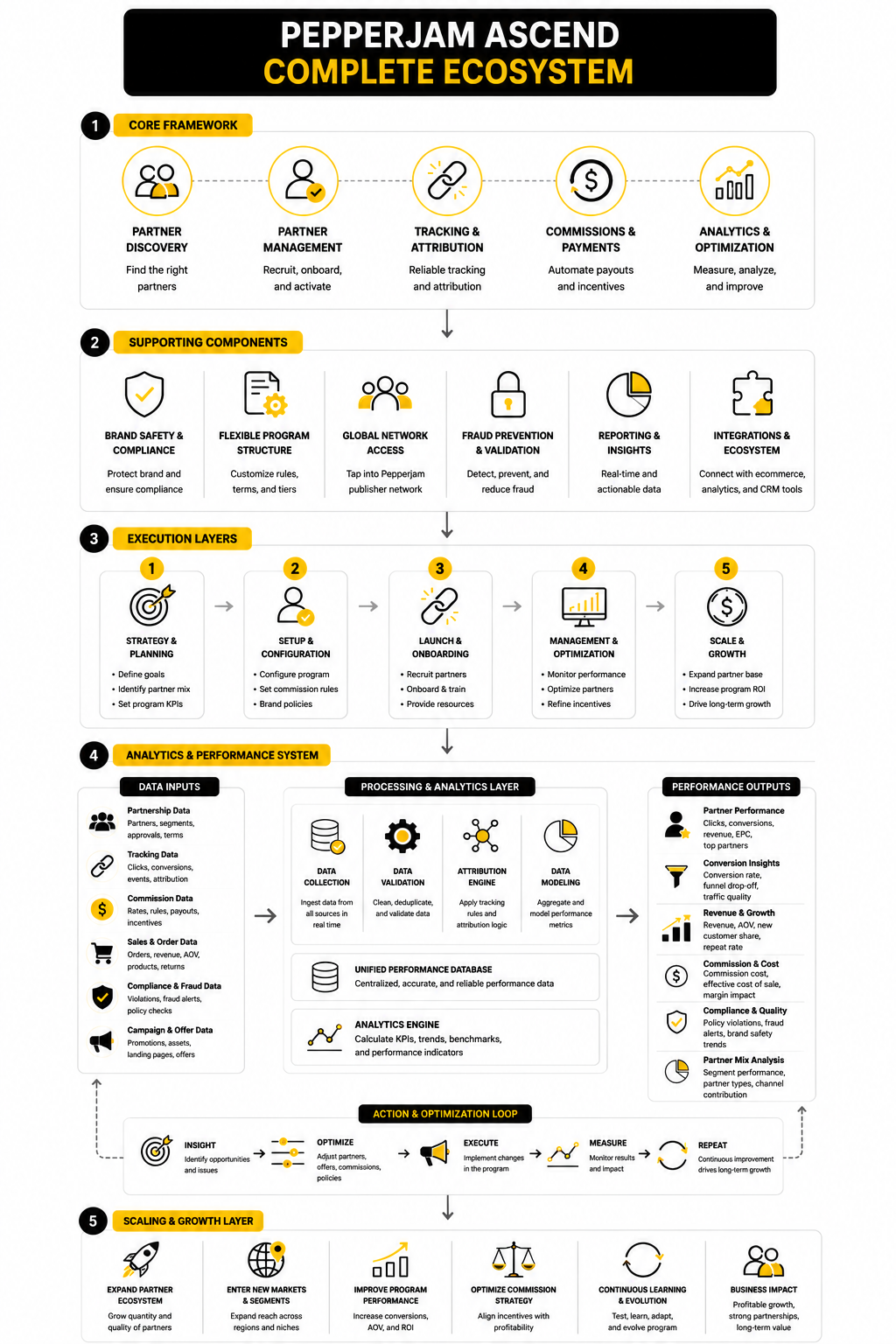
The final system should connect five pieces: partner quality, tracking accuracy, commission logic, performance analysis, and governance. When those pieces work together, affiliate marketing becomes easier to defend internally and easier to improve externally. When they are disconnected, the program may still generate sales, but it will be harder to know whether those sales are profitable, incremental, or scalable.
How to Decide Whether Pepperjam Ascend Fits
The best fit usually comes down to complexity. A brand with simple referral needs may not need a full partnership management platform. A brand managing a serious affiliate program, especially across multiple partner categories, will usually need stronger systems than basic link tracking can provide.
Pepperjam Ascend is a stronger candidate when you need partner recruitment, lifecycle management, tracking infrastructure, commission flexibility, payment workflows, fraud monitoring, and reporting in one operating environment. The current Ascend by Partnerize positioning describes the product as a single destination for partnership technology, affiliate network access, and expert services, which is useful when the program has already outgrown manual management. That does not mean every business should buy it; it means the platform should be evaluated against the complexity of the program.
A practical buying question is this: would better partner governance, better reporting, and better commission control directly improve profit? If yes, Pepperjam Ascend deserves a close look. If no, the team may need to fix the offer, funnel, landing page, or partner strategy first.
Common Problems and What They Usually Mean
Most affiliate problems are symptoms, not root causes. Low revenue may look like a partner issue, but it can come from weak creative, poor landing pages, unclear incentives, or bad targeting. High revenue may look positive, but it can hide margin leakage, coupon dependency, or weak incremental value.
Here are the patterns to watch:
The point is not to panic when these problems appear. The point is to diagnose them correctly. Pepperjam Ascend can surface the signals, but the team still has to interpret the pattern and take action.
When to Bring in Expert Help
There is a point where affiliate management becomes too valuable to treat casually. If your team is managing significant partner revenue, handling complex attribution questions, negotiating with publishers, or trying to prove incrementality to leadership, expert help can pay for itself quickly. The cost of poor structure is often higher than the cost of better execution.
Expert support is especially useful during migration, relaunch, commission redesign, tracking validation, partner cleanup, and growth planning. These are moments where small mistakes can create large operational consequences. A platform like Pepperjam Ascend gives you the system, but experienced operators help you avoid using that system in a shallow way.
This is also where marketing operations matters. Affiliate managers should not be left alone to solve tracking, landing pages, CRM follow-up, and analytics gaps. A strong affiliate program usually needs input from ecommerce, analytics, finance, creative, and lifecycle marketing so partner traffic turns into measurable business value.
What is Pepperjam Ascend?
Pepperjam Ascend is an affiliate and partnership marketing platform originally associated with Pepperjam and now connected to Ascend by Partnerize. It helps brands manage the affiliate lifecycle, including partner discovery, recruitment, tracking, commissions, payments, analytics, and brand protection. In practical terms, it gives teams a more controlled way to run affiliate programs instead of relying on disconnected tools and manual workflows.
Is Pepperjam Ascend the same as Partnerize?
Pepperjam Ascend is now part of the Partnerize ecosystem because Partnerize acquired Pepperjam in 2020. Many marketers still search for Pepperjam Ascend because the Pepperjam name has legacy recognition in affiliate marketing. Today, buyers should evaluate it through the current Ascend by Partnerize positioning and capabilities.
Who should use Pepperjam Ascend?
Pepperjam Ascend is best suited for brands, retailers, ecommerce teams, and agencies that need structured affiliate program management. It is especially relevant when the program has multiple partner types, meaningful commission volume, or a need for stronger governance. Very small programs may want to clarify their strategy first before adopting a more advanced platform.
What makes Pepperjam Ascend different from basic affiliate tracking?
Basic affiliate tracking usually focuses on links, clicks, conversions, and commissions. Pepperjam Ascend is broader because it supports more of the affiliate lifecycle, from partner discovery and recruitment to brand safety, fraud prevention, reporting, and payment workflows. That broader structure matters when the program needs to scale without losing control.
Can Pepperjam Ascend help with partner recruitment?
Yes, partner recruitment is one of the main reasons a brand would consider Pepperjam Ascend. The platform is designed to help brands find, evaluate, and manage affiliate partners through a more organized process. The important point is that recruitment should still be guided by partner fit, not just by the desire to add more affiliates.
Does Pepperjam Ascend handle payments?
Pepperjam Ascend supports payment workflows as part of affiliate program management. That is useful because payments are not just an administrative task; they affect partner trust, finance controls, and commission accuracy. A strong payment process also reduces disputes when program terms and tracking rules are clear.
How should brands measure success in Pepperjam Ascend?
Brands should measure success through a balanced set of metrics rather than only revenue. Useful signals include active partner rate, conversion rate by partner type, new-customer share, average order value, commission cost, effective cost of sale, return patterns, coupon usage, and compliance issues. The best measurement system connects partner performance to profitable growth.
Is Pepperjam Ascend good for ecommerce brands?
Pepperjam Ascend can be a strong fit for ecommerce brands that rely on publishers, creators, coupon partners, loyalty partners, and commerce content. Ecommerce teams often need clear tracking, product-level visibility, commission control, and promotional governance. The platform becomes more useful as the affiliate program grows beyond a small group of informal partners.
What are the risks of using Pepperjam Ascend poorly?
The biggest risk is treating the platform like a magic fix. If the offer is weak, landing pages are poor, partner rules are unclear, or commission logic is lazy, the software will not solve the core problem. Pepperjam Ascend works best when the team already has a serious strategy and uses the platform to execute it with more discipline.
How does Pepperjam Ascend help with brand safety?
Pepperjam Ascend supports brand safety by giving teams a more structured way to approve partners, monitor activity, enforce terms, and identify suspicious or non-compliant behavior. This matters because affiliates represent the brand in places the brand does not fully control. A strong brand safety process protects trust, margin, and long-term partner quality.
How often should teams review Pepperjam Ascend reports?
Teams should review core performance weekly and deeper program health monthly. Weekly reviews help catch sudden changes in partner activity, conversion quality, commission cost, and compliance issues. Monthly reviews are better for bigger decisions like partner tier changes, commission redesign, recruitment priorities, and strategic cleanup.
Can Pepperjam Ascend prove incrementality?
Pepperjam Ascend can support incrementality analysis by providing partner-level performance data, attribution signals, commission details, and conversion patterns. It should not be treated as the only source of truth, though. The strongest analysis compares platform data with ecommerce analytics, CRM records, coupon behavior, paid media reports, and customer-level performance.
What should a brand prepare before launching Pepperjam Ascend?
A brand should prepare its program goals, partner categories, approval rules, commission structure, tracking requirements, promotional terms, creative assets, reporting priorities, and internal ownership. This preparation makes the implementation smoother because the platform can be configured around real business logic. Skipping this work usually creates confusion later.
Is Pepperjam Ascend only for large brands?
No, but it is most valuable when the affiliate program has enough complexity to justify a full management system. A smaller brand with serious affiliate ambitions may still benefit if it needs structure early. The key is whether the platform will improve partner quality, tracking, reporting, commissions, and governance enough to justify the investment.
What is the biggest mistake brands make with Pepperjam Ascend?
The biggest mistake is scaling partner recruitment before the program is ready. If tracking is not validated, commission rules are too broad, landing pages are weak, and partner terms are unclear, adding more affiliates will multiply the problems. The more carefully path is to build a clean operating system first, then scale partner volume with control.
Build a stronger local presence with BAAM AI
Turn your website, Google profile, social channels, and AI visibility into one growth engine
Most businesses do not need more random marketing activity. They need a consistent presence system that helps the right people find them, trust them, and take action. BAAM AI brings strategy, local SEO, website updates, Google Maps visibility, social content, AI-search readiness, media production, and reporting into one practical monthly engine.
If you want your marketing to keep working after the campaign ends, start with a free BAAM AI presence audit. See how your business shows up today and where the fastest visibility wins are at BAAM AI.