
BAAM AI Blog
Paid Social Media Marketing: A Practical Framework For Profitable Growth
Paid social media marketing used to be simple enough to explain in one sentence: pay a platform, reach an audience, get clicks, make sales. That version is gone. Today, the platforms are more automated, the buyer...
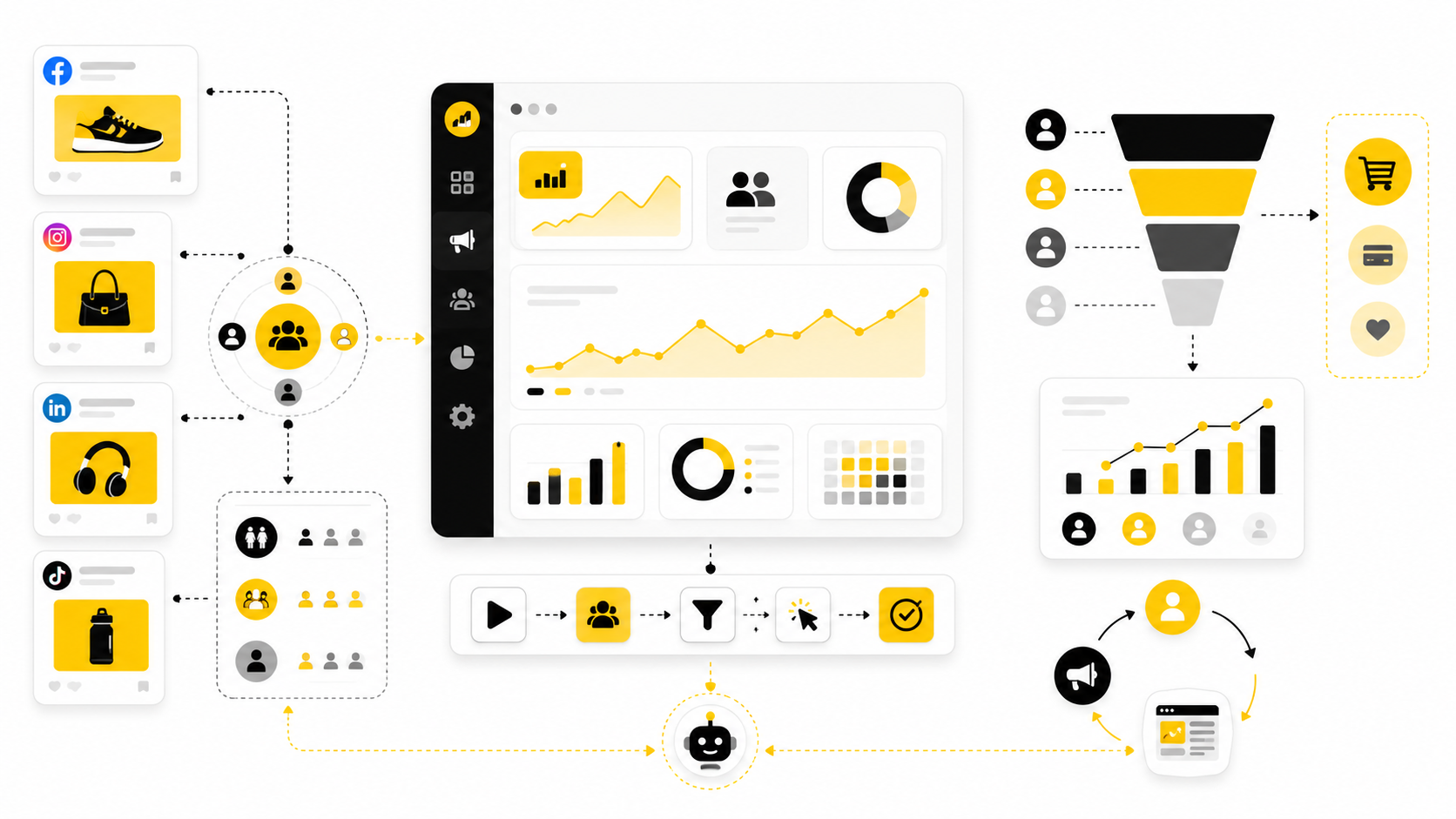
Paid social media marketing used to be simple enough to explain in one sentence: pay a platform, reach an audience, get clicks, make sales. That version is gone. Today, the platforms are more automated, the buyer journey is less linear, creative fatigue hits faster, privacy rules are tighter, and the brands winning with paid social are not just “running ads.” They are building a repeatable growth system.
The opportunity is still massive. Digital channels now represent most global advertising investment, with online ad spend passing $790 billion in 2024 and accounting for 72.7% of worldwide ad investment in the Digital 2025 advertising trends report. In the U.S., internet advertising revenue reached a record $259 billion in 2024, while social media advertising revenue grew to $88.8 billion, based on the IAB and PwC Internet Advertising Revenue Report.
That does not mean paid social is easy money. More budget usually means more competition, higher expectations, and less patience for vague reporting. The brands that do well are the ones that treat paid social media marketing as a disciplined operating system: clear positioning, sharp creative, useful offers, clean tracking, realistic testing, and honest measurement.
this guide is split into six parts so each section can build on the last without rushing the strategy. Part 1 sets the direction, defines the full structure, and gives you the high-level framework. The remaining parts go deeper into planning, execution, measurement, and scaling without repeating the same surface-level advice.
Why Paid Social Media Marketing Matters Now
Paid social matters because organic reach alone is not a dependable growth plan for most businesses. Organic content can still build trust, test ideas, and create demand, but platforms increasingly reward content based on engagement signals that brands cannot fully control. Paid distribution gives you a way to put your best message in front of a specific market instead of hoping the algorithm gives it enough momentum.
It also matters because buyer behavior has changed. People discover products on TikTok, Instagram, LinkedIn, YouTube, Reddit, Pinterest, and creator-led content long before they search for a brand directly. Paid social media marketing helps you show up earlier in that journey, shape demand before comparison shopping begins, and retarget people once they start showing intent.
The real value is not just reach. The real value is controlled learning. Every campaign can tell you which angle gets attention, which offer creates action, which audience is expensive but profitable, and which landing page breaks the buying journey. When you use paid social properly, it becomes a feedback engine for the entire business, not just an ad channel.
Framework Overview
A strong paid social system has four layers: market clarity, message quality, campaign mechanics, and performance feedback. Market clarity answers who you are trying to reach and why they should care. Message quality turns that insight into creative that feels relevant instead of generic.
Campaign mechanics decide how the budget is deployed across prospecting, retargeting, testing, and scaling. Performance feedback closes the loop by turning spend, creative results, funnel metrics, and sales data into better decisions. Without all four layers, campaigns usually become random experiments with expensive lessons.
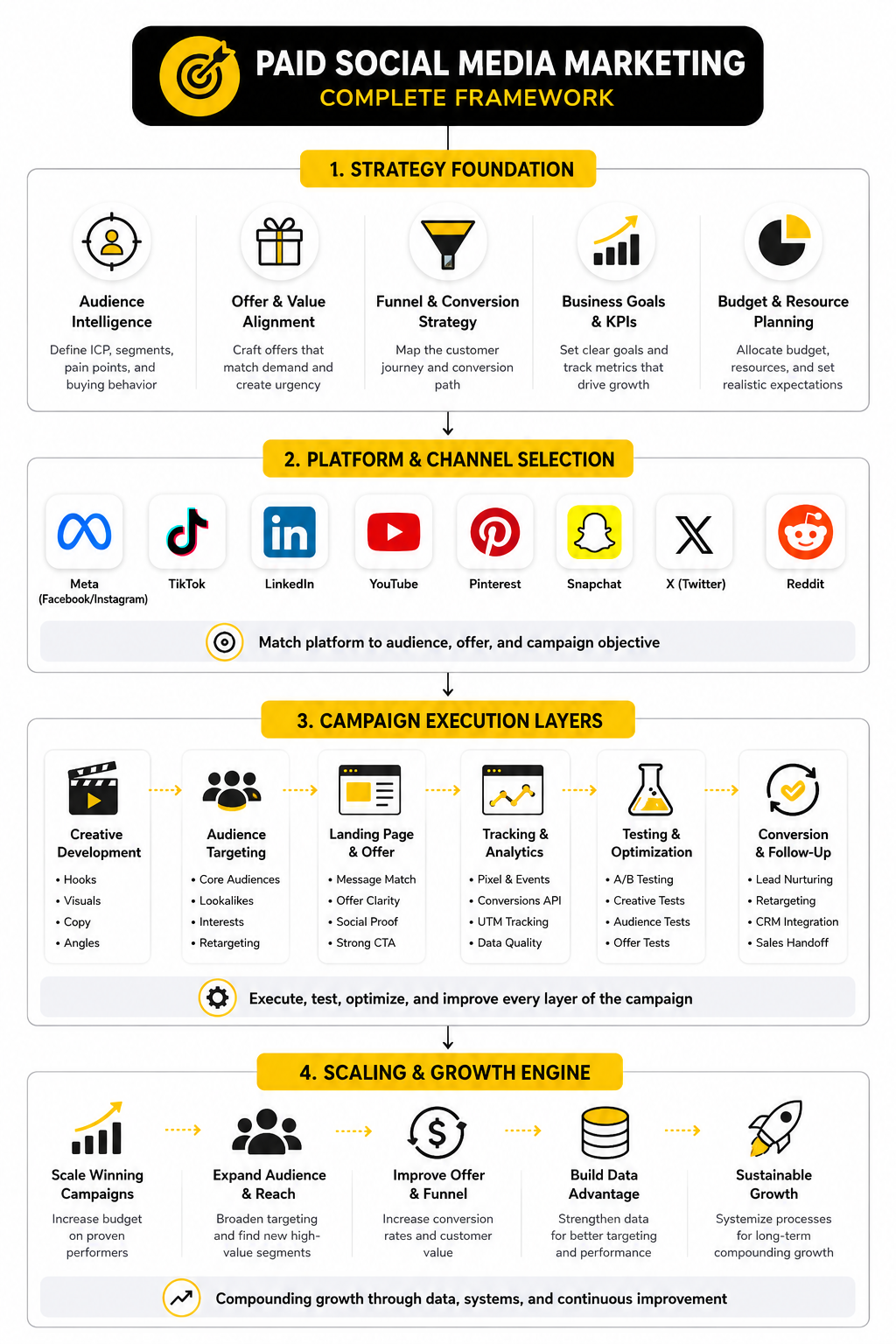
This framework also keeps you from overreacting to platform noise. Meta may push more AI-powered automation, TikTok may reward faster creative cycles, LinkedIn may work better for high-ticket B2B demand, and Pinterest or Reddit may fit certain intent patterns better than expected. The platform matters, but the system matters more.
Core Components Of A Paid Social System
The first component is the offer. A weak offer makes every other part of paid social harder because the campaign has to compensate for a lack of urgency, clarity, or perceived value. A strong offer does not always mean a discount; it can be a better promise, a sharper bundle, a more useful lead magnet, a clearer demo, or a lower-friction first step.
The second component is creative. Paid social is a creative-first environment because the ad has to earn attention before the targeting, funnel, or optimization can do anything useful. Good creative makes the right person feel understood quickly, then gives them a reason to keep watching, reading, clicking, or saving.
The third component is conversion infrastructure. That includes landing pages, forms, checkout pages, follow-up sequences, CRM hygiene, and retargeting paths. This is where many campaigns quietly lose money, because the ad account may be doing its job while the post-click experience leaks the demand it creates.
The fourth component is measurement. You need platform metrics, but you cannot rely on them blindly. Paid social performance should be judged through a blend of ad account data, website analytics, CRM data, contribution margin, sales cycle length, and the quality of leads or customers being acquired.
Professional Implementation
Professional paid social media marketing starts with a simple rule: do not scale confusion. Before increasing budget, you need to know what the campaign is supposed to prove, what success looks like, and what decision will be made from the data. Otherwise, you are not testing; you are just spending.
Implementation also requires a healthy creative pipeline. One or two ads rarely provide enough signal, especially when audiences fatigue quickly and platforms increasingly optimize around creative engagement. A professional workflow includes research, scripting, production, launch, analysis, iteration, and retirement of tired assets.
Finally, paid social should be connected to the rest of the growth system. Ads can create attention, but email, SMS, sales calls, landing pages, webinars, community, and remarketing often do the heavy lifting after the first click. That is why the next part starts with strategy foundation, because profitable campaigns are usually built before the first ad goes live.
The Paid Social Strategy Foundation
Before you touch campaign settings, you need a strategy that can survive real-world pressure. Paid social media marketing gets messy fast when the business does not know exactly who it wants, what it is offering, where the customer is in the buying journey, and what a profitable outcome actually looks like. The ad account should not be the place where those questions get answered for the first time.
This is where a lot of campaigns go wrong. The brand launches ads because it wants traffic, leads, sales, or awareness, but the strategy underneath is too vague to guide decisions. Then every bad week becomes a panic, every good week becomes a false victory, and nobody knows whether the campaign is actually building something valuable.
A strong foundation gives you filters. It tells you which audiences are worth testing, which offers deserve budget, which metrics matter, and which results should be ignored because they do not move the business forward. That clarity is not glamorous, but it is what keeps paid social from becoming an expensive guessing game.
Start With The Business Goal
The first question is not “Which platform should we advertise on?” The first question is “What business result are we trying to create?” That result could be profitable ecommerce purchases, booked sales calls, qualified demos, app installs, webinar registrations, local appointments, newsletter subscribers, or pipeline for a longer sales cycle.
Each goal changes the campaign structure. An ecommerce brand with a short buying cycle may focus heavily on product ads, landing page testing, bundles, and repeat purchase economics. A B2B service business may need lead magnets, retargeting, case proof, booked calls, CRM follow-up, and a sales team that can convert interest into revenue.
This matters because paid social metrics can look good while the business outcome stays weak. Cheap leads are not useful if they never buy. High click-through rates are not useful if the landing page attracts the wrong people. A strong goal keeps the campaign accountable to the business, not just the platform dashboard.
Define The Customer Before The Audience
An audience is a targeting input. A customer is a real person with a problem, a context, a budget, objections, expectations, and a reason to act now. Paid social media marketing works better when you define the customer first and only then translate that understanding into platform targeting.
Start with the buying situation. What happened in the customer’s life or business that made the problem urgent? What have they already tried? What do they misunderstand? What would make them skeptical of your offer? These answers create better ads than a generic demographic profile ever will.
Then turn that customer understanding into practical audience logic. You might target broad audiences and let the algorithm optimize, use lookalikes or custom audiences where available, build retargeting pools from website traffic and engagement, or segment by role, industry, interest, location, and behavior. The point is not to overcomplicate targeting. The point is to make sure the targeting supports a real customer thesis.
Position The Offer Clearly
A paid social offer needs to be understood quickly. People are scrolling, comparing, multitasking, and mentally filtering out anything that feels irrelevant. If your offer takes too long to explain, the campaign will struggle before the algorithm has a fair chance to help.
Good offer positioning answers three things fast: who it is for, what outcome it helps them achieve, and why this is a better next step than doing nothing. That does not mean every ad needs to shout a hard sales pitch. It means the value has to be obvious enough that the right person can recognize themselves in it.
For lead generation, the offer might be a useful guide, audit, calculator, quiz, webinar, consultation, or product recommendation flow. For ecommerce, it might be a starter kit, limited bundle, comparison angle, subscription benefit, or problem-solution product page. If the offer needs a funnel behind it, tools like ClickFunnels, Systeme.io, or Replo can fit naturally because the post-click experience often decides whether the ad spend has any chance of paying back.
Match The Platform To The Buying Journey
Different platforms play different roles in the buying journey. Meta is often strong for visual discovery, retargeting, ecommerce, lead generation, and broad creative testing. TikTok can be powerful for native-feeling creative, trend-sensitive products, creator-led education, and fast attention capture. LinkedIn usually makes more sense when the customer is defined by role, company type, industry, or professional intent.
That does not mean you should chase every platform at once. Spreading a small budget across too many channels usually creates weak data and shallow learning. It is better to choose one or two platforms where your audience, creative style, offer, and budget have a realistic chance of working.
The buying journey should guide the choice. If people need education before they buy, your strategy may need more video, retargeting, and email follow-up. If demand already exists and the product is easy to understand, you may be able to push harder toward direct response. If trust is the main barrier, the platform should support proof, authority, and repeated exposure.
Build A Funnel That Matches The Level Of Intent
Not every paid social click is ready to buy. Some people are problem-aware but not solution-aware. Some are comparing options. Some are almost ready but need proof, reassurance, or a better reason to act today. Your funnel should match that intent instead of forcing everyone into the same path.
For cold audiences, the first step may need to lower friction. That could mean a useful lead magnet, a quiz, a short demo, a comparison page, a free consultation, or a product education page. For warmer audiences, the next step can be more direct because the person already has context from earlier touchpoints.
This is especially important for service businesses, agencies, coaches, SaaS companies, and local businesses where the sale does not always happen on the first visit. In those cases, a CRM and follow-up system can be just as important as the ads themselves. A platform like GoHighLevel can make sense when paid social leads need booking flows, pipeline tracking, automated follow-up, and sales visibility in one place.
Set A Measurement Plan Before Launch
Measurement should be decided before the campaign goes live. If you wait until results come in, people will naturally cherry-pick the numbers that make the campaign look good or bad depending on their bias. That is how teams end up arguing about clicks while ignoring revenue.
Start by defining the primary metric. For ecommerce, that might be contribution margin, new customer acquisition cost, or blended return on ad spend. For lead generation, it might be cost per qualified lead, booked call rate, show-up rate, close rate, and customer acquisition cost. For B2B, it may include pipeline quality and sales cycle movement, not just form submissions.
Then define the supporting metrics. These include cost per click, click-through rate, hook rate, landing page conversion rate, lead-to-call rate, add-to-cart rate, checkout completion, frequency, creative fatigue, and revenue quality. Supporting metrics help diagnose problems, but they should not replace the main business outcome.
Decide What You Are Testing
A good test isolates one meaningful question. Are you testing the audience, the offer, the creative angle, the landing page, the format, the hook, or the follow-up sequence? If you change too many things at once, you may get a result, but you will not know what caused it.
For most campaigns, creative and offer testing should come before tiny targeting tweaks. Platforms have become better at finding people inside broader audiences, but they still need strong signals from the ad and the conversion path. If the message is weak, narrowing the audience usually does not fix the problem.
Testing also needs enough budget and time to produce a useful signal. That does not mean you should waste money on losers. It means you should avoid killing campaigns after a handful of impressions or celebrating winners before enough people have gone through the funnel. Paid social rewards disciplined learning, not emotional reactions.
Prepare The Follow-Up System
The moment someone clicks, submits a form, books a call, starts checkout, or sends a message, the follow-up system becomes part of the paid social campaign. Slow response times, weak emails, broken booking links, missing reminders, and unclear next steps can destroy results that looked promising in the ad account. This is why serious paid social media marketing cannot stop at the ad.
For lead generation, the follow-up should be fast, clear, and connected to the promise made in the ad. If someone asked for an audit, guide, quote, or consultation, the next message should continue that exact conversation. If they receive a generic sales pitch instead, trust drops immediately.
For ecommerce, follow-up may include abandoned cart emails, product education, review-driven retargeting, replenishment reminders, and post-purchase flows. For chat-based funnels, tools like ManyChat can help connect social engagement to automated conversations when the use case genuinely fits.
Create The Strategy Document
Your strategy does not need to be a 40-page deck. In fact, it is usually better when it is short enough to use. The goal is to create a practical document that keeps everyone aligned before money starts moving.
At minimum, it should define the goal, target customer, offer, platform choice, funnel path, budget range, testing priorities, primary metrics, and decision rules. It should also include the core message angles you plan to test and the assumptions behind them. This makes it easier to review performance without rewriting history.
The strategy document becomes your reference point when results start coming in. If a campaign fails, you can identify which assumption broke. If it works, you can see what deserves more budget, more creative, and more operational support. That is how paid social becomes a system instead of a series of disconnected launches.
Audience, Offer, And Creative Development
Once the strategy is clear, the next job is turning it into assets people can actually respond to. This is where paid social media marketing becomes practical. You are no longer talking about “running ads” in the abstract; you are building the audience logic, offer structure, creative angles, landing experience, and follow-up path that will carry the campaign.
This part matters because most campaigns do not fail from one obvious mistake. They fail because the audience is too vague, the offer is too soft, the creative is too generic, and the landing page does not continue the same promise made in the ad. Each piece may look acceptable on its own, but together they create friction.
The goal is not to make everything perfect before launch. The goal is to build a clean enough first version that the data means something. When your inputs are intentional, your results become easier to read.
Turn Customer Research Into Campaign Angles
Customer research should not sit in a document nobody opens again. It should become specific campaign angles that guide the ads, hooks, copy, visuals, and landing page. If the research does not change what you create, it is not being used properly.
A good campaign angle connects the customer’s current situation to the outcome they want. For example, one angle might focus on speed, another on risk reduction, another on simplicity, another on status, and another on avoiding a painful mistake. These angles are not random creative ideas; they are different ways of framing the same offer around different buying motivations.
The strongest angles usually come from repeated language in reviews, sales calls, customer interviews, support tickets, comments, and competitor research. Pay attention to the words people use when they describe the problem before they discover your solution. Those words often become better hooks than anything invented in a brainstorming session.
Build The Offer Around A Clear Next Step
The offer should make the next step feel obvious. If the customer has to think too hard about what happens after they click, the ad is already working against itself. This is especially true on social platforms, where attention is borrowed for a few seconds at a time.
For direct purchase campaigns, the next step might be a product page, bundle page, quiz, comparison page, or limited starter offer. For lead generation, it might be a booked call, free audit, downloadable guide, live workshop, calculator, checklist, or application form. The format matters less than the fit between the customer’s intent and the level of commitment you are asking for.
Do not ask cold traffic to take a high-friction step unless the perceived value is strong enough to justify it. A $20 impulse purchase and a $5,000 service consultation are not the same journey. Paid social media marketing works better when the offer respects how ready the buyer actually is.
Map The Message Before Producing Creative
Before creating ads, map the message. This keeps the team from jumping straight into visuals, templates, or editing without knowing what the ad is supposed to communicate. A strong message map gives each creative asset a job.
The basic structure is simple. Define the audience, the problem, the desired outcome, the objection, the proof point, and the call to action. Then turn those inputs into several creative directions instead of forcing one ad to say everything.
This is where many teams overcomplicate things. You do not need twenty brand-new concepts for every test. You need a clear set of distinct messages that help you learn which promise, pain point, proof, or format creates the strongest response.
Use Creative Formats That Match The Platform
Creative should feel native to the platform without losing the brand’s credibility. A TikTok-style ad should not feel like a polished television commercial that was awkwardly cropped into vertical video. A LinkedIn ad should not sound like a meme account unless that genuinely fits the audience and offer.
For Meta, a healthy mix can include short-form video, founder-led clips, customer proof, static product images, carousels, testimonial-style creative, and direct-response copy. For TikTok, the creative often needs faster pacing, stronger opening hooks, vertical framing, human presence, and a style that feels closer to creator content than traditional advertising. For LinkedIn, clarity, authority, and relevance usually matter more than entertainment.
The format should serve the message. A complex B2B offer may need a document ad, webinar registration, direct demo path, or proof-led video. A visual ecommerce product may need product demonstrations, comparison shots, problem-solution clips, and user-generated style content.
Build The Execution Process Step By Step
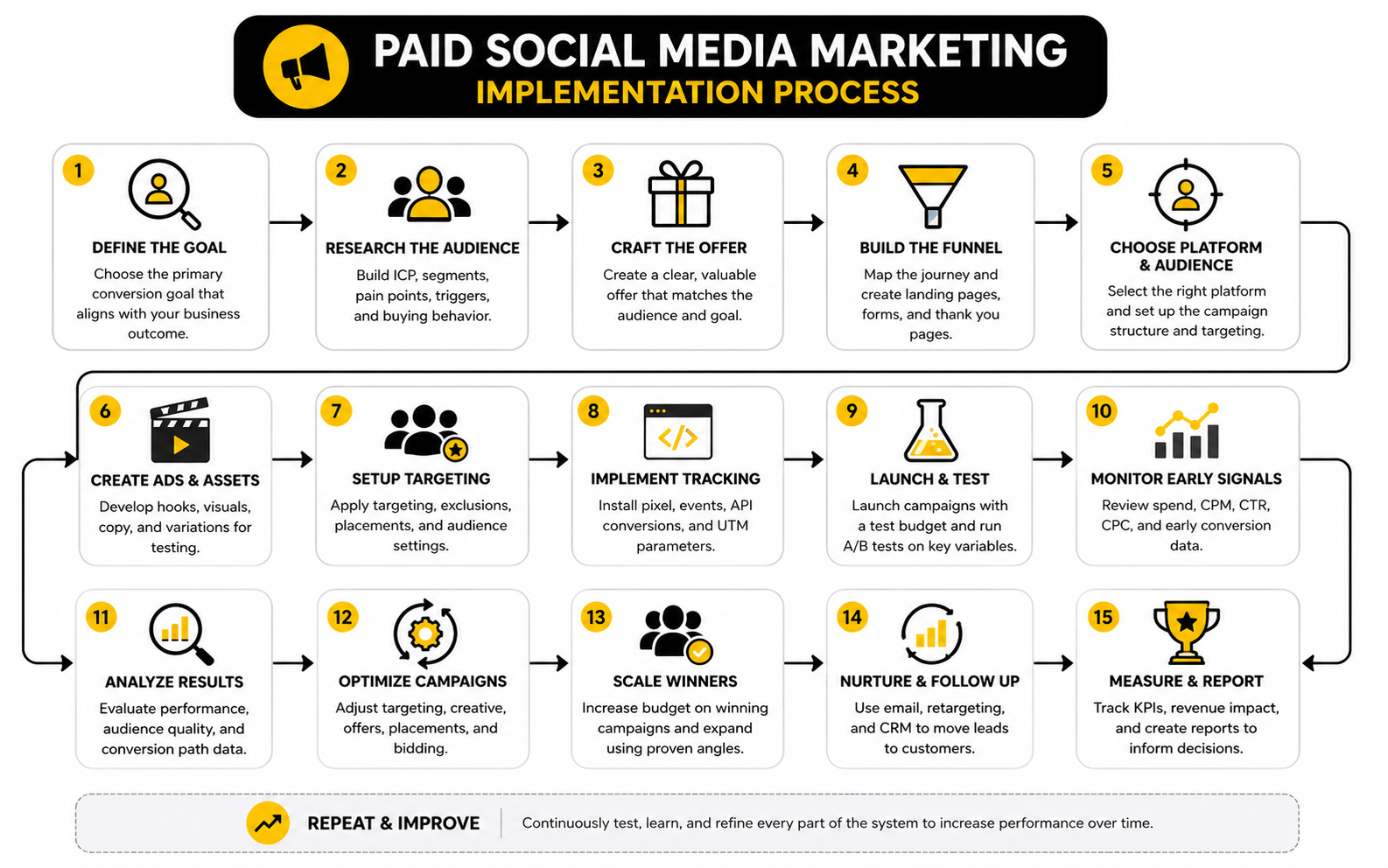
A repeatable implementation process makes paid social easier to manage. It also prevents the common problem where every launch feels like a fresh emergency. The process does not need to be complicated, but it does need to be consistent.
Use this sequence before launching a new campaign:
This process keeps the work grounded. You are not just uploading ads and hoping for the best. You are moving from strategy to execution in a way that makes the results easier to understand.
Create A Practical Creative Testing System
Creative testing should be organized enough to learn from, but not so rigid that it slows everything down. The key is to separate meaningful variables. If one ad has a different hook, format, offer, landing page, and call to action, you may find a winner, but you will not know why it worked.
A practical testing system starts with a few core angles. For each angle, create multiple executions. One might be a founder talking to camera, another might be a product demonstration, another might be a text-led static ad, and another might be a customer proof format.
This gives you two levels of learning. You can see which angle resonates, and you can see which execution style gives that angle the best chance. That is much more useful than throwing ten unrelated ads into a campaign and calling it a test.
Develop Landing Pages That Continue The Ad
The landing page should feel like the natural next step after the ad. If the ad promises a specific outcome, the page should open with that same idea. If the ad speaks to a specific audience, the page should not suddenly become broad and generic.
For ecommerce, the page should quickly show what the product is, who it is for, why it is different, how it works, what proof supports it, and what the buyer should do next. For lead generation, the page should explain the value of the next step, reduce uncertainty, and make the form or booking action feel worth the effort. The page does not need to be long by default, but it does need to answer the questions that block action.
If the campaign depends heavily on conversion pages, tools like Replo, ClickFunnels, and Systeme.io can be useful when you need to build and test funnels without waiting on a full development cycle. The tool is not the strategy, but faster page iteration can make the strategy easier to execute.
Connect Forms, Calendars, And Follow-Up
Lead generation campaigns are only as strong as the handoff after the lead comes in. If someone fills out a form and nothing useful happens for hours or days, the campaign is leaking opportunity. Speed and relevance matter.
The follow-up should match the original promise. If the ad offered a free audit, the confirmation message should explain what happens next and how the person can prepare. If the ad offered a consultation, the booking flow should be simple, the reminders should be clear, and the sales team should know which ad or offer created the lead.
For service businesses and agencies, GoHighLevel can fit when you need funnels, calendars, pipeline tracking, and automated follow-up connected in one place. For campaigns built around conversations in Instagram, Messenger, or comment-to-message flows, ManyChat can help turn social engagement into a more structured conversion path.
Prepare The Asset Library
A serious paid social system needs an asset library. This includes raw video clips, edited ads, hooks, headlines, body copy, product shots, testimonials, founder clips, customer objections, proof points, landing page sections, and past test results. Without a library, every new campaign starts slower than it should.
The library should be organized by angle, funnel stage, platform, format, and performance status. Winning assets should be easy to find. Failed assets should also be documented, because they prevent the team from repeating the same bad test three months later.
This is also where organic and paid teams should work together. Organic content can reveal what people care about before you put budget behind it. Paid campaigns can reveal which messages deserve more organic support, creator briefs, emails, and sales enablement.
Keep Creative Production Realistic
Creative volume matters, but it has to be sustainable. A small team should not copy the workflow of a large brand with an in-house studio, multiple editors, and a creator network. The right system is the one you can run consistently without burning out.
Start by batching the work. Write hooks together, film multiple variations in one session, edit templates that can be reused, and keep a running list of objections, comments, and questions that could become new ads. This makes creative production part of the operating rhythm instead of a last-minute scramble.
You can also separate polish from usefulness. Some campaigns need highly designed brand assets, but many paid social tests only need a clear message, a credible person or product, and a format that feels native to the platform. Do not hide behind production quality when the real issue is that the message is weak.
Review Everything Before Launch
Before launch, review the full path like a customer. Click the ad preview, read the copy, land on the page, complete the form or checkout flow, check the confirmation page, inspect the emails or messages, and make sure the CRM receives the right data. This sounds basic, but it catches expensive mistakes.
The review should also include tracking. Confirm the pixel or tag is active, the conversion event is firing, UTMs are attached, and the campaign naming is clean enough to understand later. Bad tracking does not just create reporting problems; it weakens decision-making.
Finally, check message consistency. The ad, landing page, form, checkout, calendar, and follow-up should all feel like one connected experience. When that journey is smooth, the campaign has a fair shot. When it is broken, even strong creative will struggle to carry the weight.
Campaign Structure, Budgeting, And Testing
At this stage, the campaign has a clear strategy, a defined customer, a real offer, creative angles, and a conversion path. Now the work moves into structure. This is where paid social media marketing becomes less about ideas and more about control.
Campaign structure decides how the platform receives signals, how budget is distributed, how quickly you learn, and how easy it is to diagnose performance. A messy structure can hide good creative, overfund weak tests, underfund promising audiences, and make reporting painful. A clean structure does the opposite: it gives the platform enough room to optimize while giving you enough clarity to make decisions.
The goal is not to build the most complicated ad account. The goal is to build one that matches the business model, the buying journey, and the level of data you realistically have. Simple is usually better until the numbers prove you need more complexity.
Statistics And Data
The data around paid social is useful, but only when you know what it is supposed to tell you. Digital channels now account for 72.7% of worldwide ad investment, with online ad spend exceeding $790 billion in 2024, based on the Digital 2025 global advertising trend data. That matters because paid social is not a side channel anymore; it sits inside a much larger digital auction where attention, creative quality, and measurement discipline directly affect efficiency.
In the U.S., internet advertising revenue reached $259 billion in 2024, while social media advertising revenue grew 36.7% year over year, based on the IAB and PwC full-year 2024 report. That growth tells you two things at once. There is still huge demand for paid social inventory, but stronger demand also means advertisers need better creative, tighter funnels, and clearer economics to compete.
Benchmarks can help you spot whether something is obviously broken, but they should never replace your own economics. For example, one 2025 Facebook ads benchmark set found an average 2.59% click-through rate and $1.92 cost per click for lead campaigns across industries in WordStream’s Facebook Ads benchmark data. Those numbers are useful as reference points, but they do not tell you whether your campaign is profitable. A $10 lead can be terrible for one business and incredible for another.
What Benchmarks Can And Cannot Tell You
Benchmarks are a diagnostic tool, not a business model. They can tell you whether your click-through rate is unusually low, your cost per click is far above category norms, or your conversion rate suggests a landing page problem. They cannot tell you whether your customers are profitable, whether your lead quality is strong, or whether your offer is positioned correctly.
This is why two brands can look similar in the ad account and have completely different outcomes. One brand may have a higher cost per lead but a strong sales process, high close rate, and profitable lifetime value. Another may have cheap leads that never answer the phone, never buy, and waste the sales team’s time.
Use benchmarks to ask better questions. If CPM is rising, ask whether the audience is too narrow, the creative is fatiguing, or the auction is more competitive. If CTR is weak, ask whether the hook, format, or promise is failing. If conversion rate is weak after the click, stop blaming the ad account and inspect the page, offer, form, checkout, or follow-up.
Build The Measurement System Around The Funnel
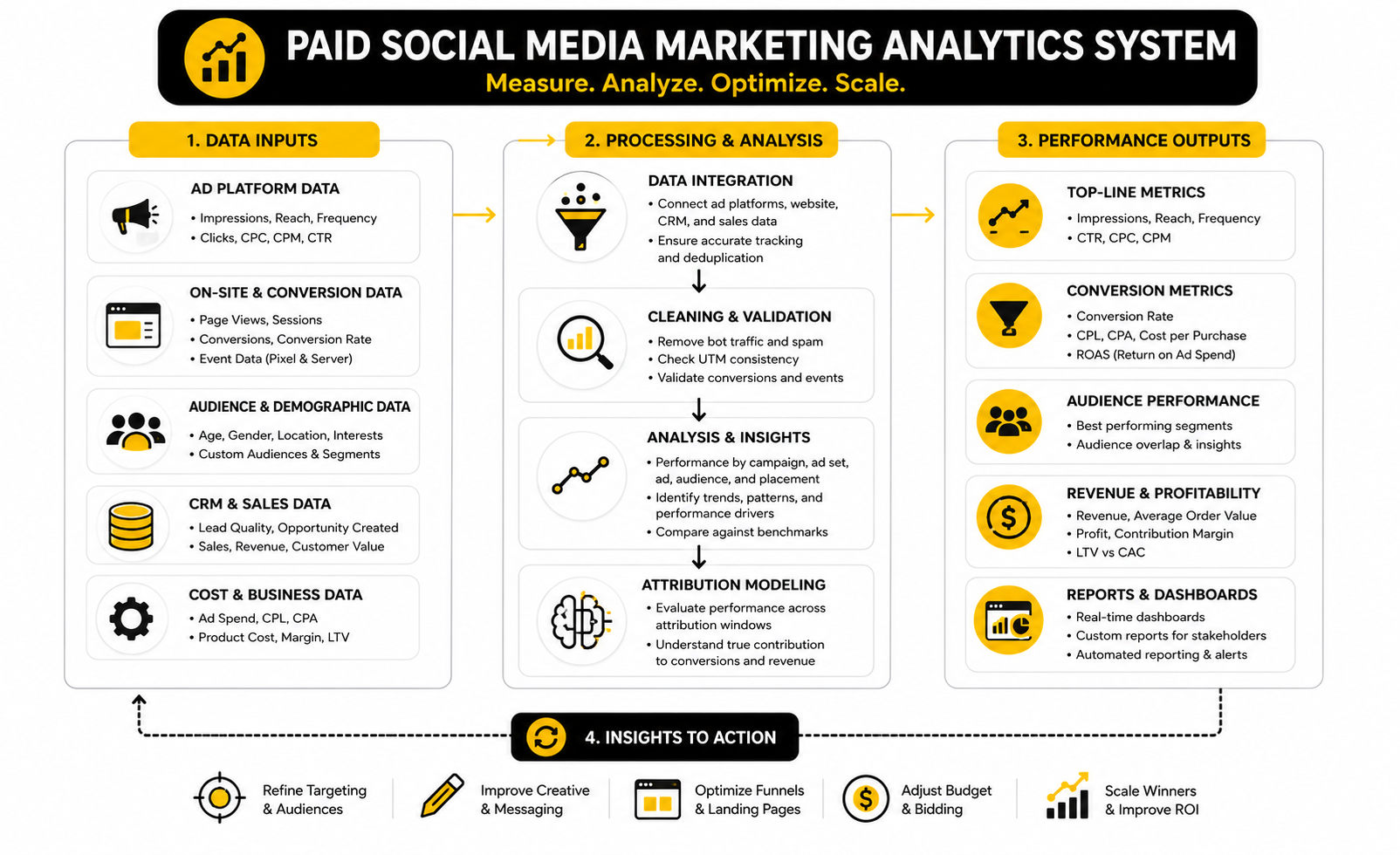
Measurement should follow the customer journey from impression to revenue. That means you need visibility into the ad, the click, the landing page, the conversion event, the follow-up, and the final business outcome. If one part of that chain is missing, your interpretation gets weaker.
For ecommerce, the core measurement path usually includes impressions, CPM, click-through rate, CPC, landing page views, add-to-cart rate, checkout initiation, purchase conversion rate, average order value, customer acquisition cost, contribution margin, and repeat purchase behavior. For lead generation, the path usually includes impressions, clicks, form starts, form completions, booked calls, show-up rate, qualified opportunities, close rate, revenue, and payback period.
This is where campaign measurement becomes practical. You are not just asking, “Did the ad work?” You are asking where the funnel created momentum and where it lost people. That distinction matters because the solution depends on the location of the problem.
Read Performance Signals In Context
A single metric rarely tells the full truth. High CTR can mean the creative is relevant, but it can also mean the hook is attracting curiosity clicks from people who will never buy. Low CPC can look efficient, but cheap traffic is useless if the audience has poor intent.
The same is true for conversion metrics. A high landing page conversion rate is not automatically good if the form attracts unqualified leads. A low conversion rate is not automatically bad if the offer is high-ticket and the few people who convert are serious buyers.
Paid social media marketing works best when you read metrics together. CPM tells you about the cost of reaching people. CTR tells you whether the ad earns action. Conversion rate tells you whether the next step matches the promise. Sales and revenue data tell you whether the campaign is creating business value.
Track Creative Fatigue Before It Gets Expensive
Creative fatigue happens when an ad stops producing the same level of response because the audience has seen it too many times or the message has lost freshness. You usually see it through rising frequency, falling CTR, weaker conversion rates, higher CPM, or a cost per result that slowly drifts upward. The mistake is waiting until performance collapses before producing new creative.
Fatigue does not always mean the whole strategy is wrong. Sometimes the angle still works, but the execution needs a new hook, opening frame, format, visual, spokesperson, proof point, or call to action. That is why a creative testing system from the earlier section matters so much.
Look at fatigue by audience and funnel stage. Retargeting audiences often fatigue faster because they are smaller. Prospecting campaigns may tolerate higher volume, but they still need new assets to keep the auction efficient and the message fresh.
Separate Platform Metrics From Business Metrics
The platform wants to optimize toward the event you give it. That does not always mean it is optimizing toward your actual profit. If the conversion event is too shallow, the algorithm may find people who submit forms easily but do not buy. If the campaign optimizes for purchases without enough conversion volume, the learning may be slow and unstable.
Platform metrics include CPM, CPC, CTR, cost per result, frequency, reach, impressions, view rate, engagement rate, and platform-reported ROAS. Business metrics include gross margin, contribution margin, qualified lead rate, close rate, refund rate, sales cycle length, customer lifetime value, and payback period. You need both, but they do different jobs.
The platform metrics help you troubleshoot delivery and engagement. The business metrics help you decide whether the campaign deserves more budget. Confusing the two is one of the fastest ways to scale campaigns that look good in the dashboard but fail in the bank account.
Use Attribution Carefully
Attribution is not perfect. Platform-reported conversions, website analytics, CRM data, and payment data often disagree because they measure different parts of the journey with different rules. That does not mean the data is useless. It means you need to understand what each source is good at.
Platform attribution can help you understand which campaigns, audiences, and creatives are likely influencing results inside the platform’s own view of the journey. Website analytics can show broader traffic behavior and channel comparisons. CRM and revenue data can show lead quality, sales progress, and actual money collected.
The best approach is to look for directional agreement instead of expecting every system to match perfectly. If the ad account, analytics, CRM, and revenue trend all point in the same direction, you can act with more confidence. If they disagree, slow down and investigate before making aggressive changes.
Set Decision Rules Before You Optimize
Optimization gets emotional when decision rules are missing. One person wants to kill an ad after one bad day. Another wants to keep spending because the creative “feels on brand.” Neither is a reliable system.
Set rules before launch. Define how long a test should run, how much budget it needs, what metric determines success, and what action happens when the result is strong, weak, or inconclusive. This prevents random decision-making and protects the campaign from constant interference.
A simple rule set could look like this:
These rules do not remove judgment. They make judgment more consistent. That is the point.
Understand Budget As A Learning Tool
Budget is not only a growth lever. It is also a learning tool. If the budget is too small, tests take too long and results are noisy. If the budget is too large too early, you can waste money before the system has enough proof.
A practical testing budget should be large enough to generate meaningful signals around the main conversion event. For a low-ticket product, that might mean enough spend to produce a reasonable number of purchases. For a high-ticket service, it may mean enough spend to generate qualified conversations and early pipeline, even if closed revenue takes longer to appear.
Do not judge every campaign on the same timeline. Ecommerce purchases, booked calls, SaaS demos, and B2B pipeline all mature differently. The budget and reporting window should match the sales cycle, not someone’s impatience.
Diagnose Problems By Funnel Stage
When performance drops, do not immediately rebuild everything. Diagnose the funnel stage first. Most problems are easier to solve when you know where the friction starts.
If reach is expensive, inspect audience size, competition, placement mix, and creative relevance. If people do not click, inspect the opening message, visual pattern, promise, and call to action. If people click but do not convert, inspect the page speed, message match, proof, offer clarity, and form friction.
If leads convert but do not buy, the issue may be qualification, follow-up speed, sales process, pricing, trust, or expectation mismatch. If customers buy once but do not return, the issue may be product experience, onboarding, retention, or post-purchase communication. Paid social exposes these problems, but it does not always cause them.
Report In A Way That Drives Action
A good paid social report should not be a screenshot dump. It should explain what happened, why it likely happened, what it means, and what will happen next. If the report does not lead to a decision, it is just decoration.
The best reporting format is usually simple. Start with the business outcome, then show the main funnel metrics, then break down creative and audience learnings, then list the next actions. This keeps the conversation focused on progress instead of vanity metrics.
For teams managing multiple campaigns, a clean reporting rhythm matters. Weekly reviews can handle tactical optimization. Monthly reviews can handle budget allocation, offer decisions, platform mix, and creative direction. Quarterly reviews can look at channel economics, customer quality, and whether paid social is helping the business grow in the right direction.
Measurement, Optimization, And Scaling
Once the campaign is live and the first data starts coming in, the work changes again. You are no longer building the system from scratch. You are reading signals, protecting what works, fixing what breaks, and deciding when the campaign deserves more budget.
This is where paid social media marketing becomes a strategic discipline. Anyone can increase a budget inside an ad account. The hard part is knowing whether the business can absorb more volume without destroying lead quality, margin, fulfillment, cash flow, or customer experience.
Scaling is not just “spend more.” Scaling means increasing profitable output while keeping the system stable. That requires a different level of thinking than basic campaign management.
Know What You Are Really Scaling
Before you scale a campaign, define the thing that is actually working. Is it the audience, the offer, the creative angle, the landing page, the follow-up system, the price point, or the timing? If you do not know what is driving the result, scaling can accidentally break the very thing that made the campaign profitable.
A campaign may look strong because one creative asset is carrying the performance. Another may work because a narrow audience is still fresh. Another may look profitable because the first wave of buyers had unusually high intent. These are not bad outcomes, but they need different scaling plans.
The safest scaling decisions come from pattern recognition. If several creatives, audiences, or offer variations produce similar quality results, the system is stronger. If one isolated variable is doing all the work, scale more carefully and build support around it first.
Scale Horizontally Before You Force Vertical Growth
Vertical scaling means increasing budget inside the same campaign, ad set, or structure. Horizontal scaling means creating more ways for the system to win, such as new creative angles, new offers, new funnel paths, new audiences, or new platforms. Both matter, but horizontal scaling usually creates a healthier foundation.
If you only raise budget on one winning campaign, you may hit saturation quickly. Costs can rise, frequency can climb, and the audience may stop responding at the same rate. That does not mean the campaign was fake; it means the opportunity had limits.
Horizontal scaling gives the business more surface area. You might test a new lead magnet for colder traffic, a stronger retargeting sequence for warm visitors, a higher-intent demo path for buyers closer to action, or a new creative theme built around an objection that keeps appearing in sales calls. This makes growth more resilient.
Protect Margin While Increasing Spend
The most dangerous paid social campaigns are the ones that look impressive but quietly damage profit. Revenue can increase while margin gets worse. Lead volume can increase while the sales team spends more time on bad opportunities. Purchase volume can increase while refunds, discounts, shipping costs, or support load eat the upside.
That is why scaling decisions should include contribution margin, not just return on ad spend. If a product has thin margins, the campaign may need higher average order value, stronger upsells, lower refund rates, or better repeat purchase behavior before aggressive scaling makes sense. If a service has high delivery costs, the campaign needs to attract customers who are not just easy to close but also good to serve.
This is where business owners need to be brutally honest. Paid social can expose weak economics fast. If the unit economics do not work at a small scale, a bigger budget usually makes the problem louder.
Watch For Signal Quality Problems
Paid social platforms optimize toward the signals you provide. If those signals are low quality, the campaign can learn the wrong lesson. This is especially common in lead generation, where the platform may find people who submit forms easily rather than people who are likely to become customers.
The fix is to move quality signals closer to revenue wherever possible. Instead of treating every lead as equal, connect the ad platform, analytics, CRM, and sales process so you can distinguish between raw leads, qualified leads, booked calls, attended calls, opportunities, closed deals, and retained customers. The more useful the signal, the better your optimization decisions become.
For teams that rely on lead nurturing, a CRM matters because the ad account alone cannot tell the full story. Tools like GoHighLevel, Copper, or Brevo can fit different workflows when the business needs stronger follow-up, segmentation, pipeline visibility, or email automation after the first conversion.
Do Not Let Automation Replace Judgment
Automation is now built into the major ad platforms. Campaign objectives, bidding systems, placements, audience expansion, creative delivery, and even ad variations can all be heavily automated. That can be powerful, but it does not remove the need for strategy.
Automation is good at finding patterns inside the data it can see. It is not good at understanding your margin pressure, sales team capacity, brand positioning, customer objections, inventory constraints, or long-term retention goals unless you feed those realities back into the system. The machine can optimize delivery, but it cannot define what a valuable customer means for your business by itself.
Use automation as leverage, not as an excuse to stop thinking. Give the platform enough creative, clean events, realistic budgets, and clear conversion goals. Then judge the results through business metrics, not blind faith in the recommendation tab.
Manage Risk As Spend Grows
The bigger the budget, the more risk matters. A tracking error that costs $200 in a small test can cost thousands at scale. A landing page bug that hurts one campaign can damage an entire launch. A rejected ad, suspended account, payment issue, or broken checkout can interrupt revenue at the worst possible moment.
Risk management is not paranoia. It is responsible operations. Use naming conventions, backup payment methods, account access controls, tested landing pages, documented tracking, and regular QA before major pushes.
You should also avoid depending on one platform too heavily for too long. If all acquisition depends on one ad account, one algorithm, and one offer, the business is exposed. Paid social can be a major growth engine, but it should not be the only engine the business owns.
Handle Platform Volatility Calmly
Performance will fluctuate. Costs will move. Attribution will shift. Competitors will enter the auction. Creative will fatigue. Tracking rules will change. This is normal.
The mistake is reacting to every movement as if it is a crisis. A bad day does not always mean the strategy is broken. A great day does not always mean you found a scalable winner. Paid social decisions should be based on enough data to reduce noise, especially when the sales cycle is longer than a single session.
When volatility appears, compare it against the funnel. Did CPM rise across the account, or only on one audience? Did CTR fall because the creative is tired? Did conversion rate drop because the page changed? Did lead quality drop because the offer attracted the wrong people? Calm diagnosis beats emotional rebuilding.
Balance Short-Term ROAS With Long-Term Growth
Direct response matters because businesses need cash flow. But not every valuable paid social effect appears immediately in platform-reported ROAS. Some campaigns introduce the brand, build retargeting pools, increase branded search, support creator content, educate buyers, or shorten the sales cycle later.
That does not mean you should excuse unprofitable advertising with vague “brand awareness” language. It means you should understand the role of each campaign. A cold educational video and a warm retargeting offer should not be judged by the exact same metric.
The practical move is to separate campaign roles. Prospecting campaigns can be judged by qualified traffic, engaged visitors, assisted conversions, and downstream buyer quality. Conversion campaigns should be held closer to acquisition cost, revenue, and margin. Retargeting campaigns should prove they are adding incremental value, not just claiming credit for people who were already going to buy.
Use Incrementality Thinking
Attribution asks which touchpoint gets credit. Incrementality asks what would have happened without the campaign. That second question is harder, but it is often more useful.
A retargeting campaign may show a strong return because it reaches people already close to buying. That does not automatically mean it created all those purchases. A prospecting campaign may look weaker in last-click reporting but may be responsible for introducing new buyers who convert later through search, email, or direct traffic.
You do not need a perfect lab experiment for every decision, but you should think this way. Holdout tests, geo tests, reduced-spend periods, customer surveys, and blended performance analysis can all help you understand whether paid social is creating demand or just harvesting demand that already existed.
Build A Creative Learning Loop
Advanced paid social is not about finding one winning ad and riding it forever. It is about building a creative learning loop that keeps producing new winners before the old ones decay. This is one of the biggest differences between occasional success and consistent growth.
The loop starts with insight. Pull ideas from ad performance, comments, reviews, sales objections, customer interviews, competitor positioning, organic content, and support conversations. Then turn those insights into new angles, produce assets, launch tests, measure results, and feed the learnings back into the next production cycle.
This creates momentum. The longer the system runs, the more carefully the creative becomes. Instead of guessing what to say next, you are letting the market show you which messages deserve more investment.
Scale The Team, Not Just The Budget
At some point, the bottleneck is not the ad account. It is the team. More campaigns require more creative production, more analysis, more landing page work, more CRM hygiene, more sales follow-up, and more operational discipline.
A growing paid social operation usually needs clear ownership across strategy, media buying, creative, copywriting, landing pages, analytics, and sales feedback. One person can handle several of these roles early on, but the responsibilities still need to be defined. Otherwise, important work falls between people.
The team also needs a rhythm. Weekly performance reviews, creative planning sessions, landing page reviews, sales quality feedback, and monthly budget decisions help keep the system moving. Without that rhythm, scaling becomes chaotic.
Know When Not To Scale
Sometimes the best decision is to pause, fix, or simplify. If lead quality is poor, scaling will frustrate sales. If fulfillment is already strained, more customers may create bad reviews. If the landing page converts poorly, more traffic only creates more waste.
You should also avoid scaling when the result is too new to trust. One good day is not a trend. One lucky creative does not prove a channel. One small audience does not guarantee broader market demand.
This is not being timid. It is being professional. The best paid social operators know when to push hard and when to protect the business from its own excitement.
Prepare For Multi-Channel Spillover
As paid social grows, it will affect other channels. Branded search may increase. Direct traffic may rise. Email subscribers may grow. Organic engagement may improve. Sales conversations may include references to ads that never got the final click.
This spillover is valuable, but it makes measurement more complex. If you judge each channel in isolation, you may underinvest in campaigns that assist the buying journey. If you give every channel too much credit, you may overstate performance and overspend.
The answer is not perfect attribution. The answer is disciplined triangulation. Look at platform data, analytics data, CRM data, customer quality, blended acquisition cost, and total revenue movement together. When several signals support the same conclusion, you can act with more confidence.
Build A System That Can Survive Change
The platforms will keep changing. Creative trends will move. Privacy rules will evolve. AI tools will get more capable. Costs will rise and fall. Competitors will copy what works.
A durable paid social media marketing system does not depend on one hack. It depends on customer insight, strong offers, fast creative iteration, clean measurement, operational follow-up, and honest economics. Those fundamentals stay useful even when the platform interface changes.
That is the real advantage. Not knowing which button to click this month. Knowing how to build a growth system that keeps learning when the market shifts.
Tools, Workflows, Mistakes, And FAQ
The final layer of paid social media marketing is the ecosystem around the ads. By this point, the campaign is not just an ad account, a few creatives, and a landing page. It is a connected system of research, production, tracking, reporting, follow-up, sales feedback, and continuous improvement.
This is where strong operators separate themselves. They do not rely on one dashboard, one tactic, or one platform setting to carry everything. They build workflows that make the work easier to repeat, easier to measure, and easier to improve.
A good paid social ecosystem should help you move faster without becoming careless. It should reduce manual friction, protect data quality, keep creative production moving, and make it clear what needs attention next. When that system is in place, every campaign becomes easier to manage.
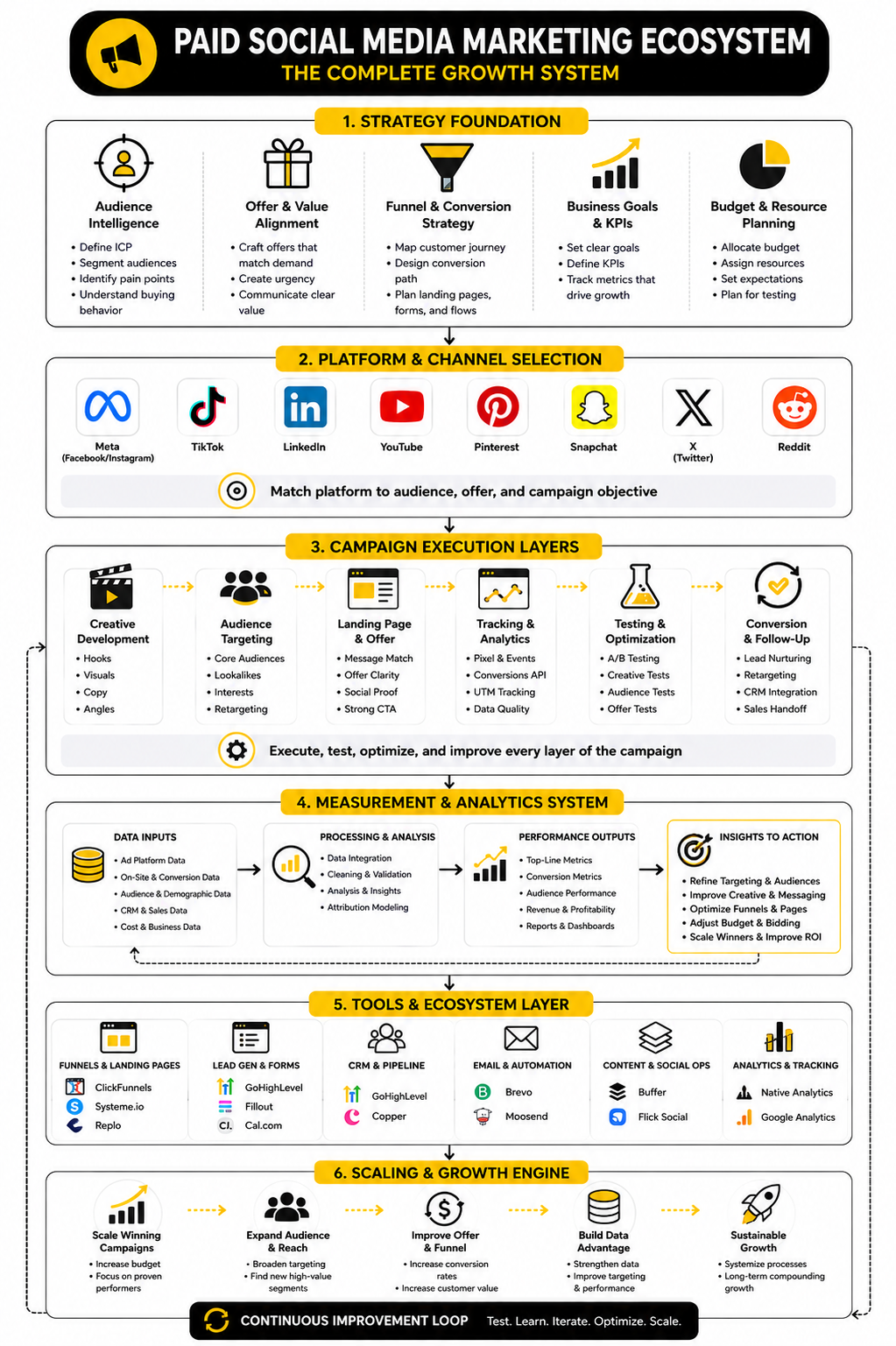
Build The Paid Social Ecosystem
A complete paid social ecosystem has several connected layers. The ad platform creates reach and demand, the creative system earns attention, the funnel captures intent, the CRM tracks the relationship, and the reporting layer shows whether the business is moving in the right direction. If one layer is weak, the entire system feels harder than it should.
The most important thing is connection. A lead form that does not sync properly with the CRM creates sales delays. A checkout that does not fire the right event weakens optimization. A reporting dashboard that ignores lead quality makes bad campaigns look better than they are.
This is why the tool stack should be chosen around the workflow, not the other way around. If your main bottleneck is landing page testing, prioritize funnel and page tools. If your bottleneck is lead follow-up, prioritize CRM and automation. If your bottleneck is creative production, prioritize research, scripting, editing, and asset management.
Choose Tools Based On The Bottleneck
Tools should solve specific problems. Buying software before defining the bottleneck usually creates more complexity, not more growth. The question is not “Which tool is best?” The question is “Which part of the paid social system is slowing us down?”
For funnel building and page testing, ClickFunnels, Systeme.io, and Replo can make sense when campaigns need faster post-click iteration. For lead generation, GoHighLevel, Fillout, and Cal.com can support forms, booking flows, and pipeline handoff.
For content operations, Buffer and Flick Social can help organize publishing and social workflows around the paid engine. For email and nurturing, Brevo and Moosend can fit when the campaign needs stronger follow-up after the first conversion.
Avoid The Mistakes That Kill Performance
The biggest mistake is treating paid social as a traffic source instead of a growth system. Traffic is only useful when the message, offer, page, follow-up, and economics are strong enough to turn attention into business value. Without that foundation, more clicks simply expose more weakness.
Another common mistake is changing campaigns too often. Constant edits can disrupt learning, muddy the data, and make it impossible to understand what actually worked. Optimization should be active, but it should not be chaotic.
The third mistake is trusting surface metrics too much. A campaign can have cheap clicks, high engagement, and low-quality leads. A campaign can also look expensive at the click level but produce serious buyers. The numbers only matter when they are connected to the customer journey and the business model.
Keep The Workflow Simple Enough To Maintain
A paid social workflow should be easy to run every week. If the system depends on heroic effort, it will eventually break. You need a cadence that the team can actually maintain.
A simple weekly workflow might include performance review, creative review, funnel review, sales feedback, and next-test planning. The team should know which assets are live, which are being produced, which tests are finished, and which decisions need to be made. This creates momentum without turning every week into a fire drill.
The workflow should also make learning visible. Keep a simple record of tested angles, winning hooks, weak offers, strong objections, landing page changes, and sales-quality feedback. Over time, this becomes one of the most valuable assets in the paid social operation.
What is paid social media marketing?
Paid social media marketing is the practice of paying social platforms to distribute ads to specific audiences. It can be used for awareness, traffic, leads, sales, app installs, bookings, retargeting, and customer nurturing. The strongest campaigns connect the ad account to a clear offer, conversion path, follow-up system, and business goal.
Is paid social the same as social media advertising?
They are often used the same way, but there is a slight difference in how people talk about them. Social media advertising usually refers to the ads themselves, while paid social can include the broader system around those ads. That broader system includes creative testing, funnel strategy, tracking, retargeting, landing pages, CRM workflows, and reporting.
Which platform is best for paid social media marketing?
There is no universal best platform. Meta, TikTok, LinkedIn, Pinterest, Reddit, YouTube, Snapchat, and X can all work in the right context. The right choice depends on your audience, offer, creative style, buying journey, budget, and measurement setup.
How much should a business spend on paid social?
The right budget depends on the cost of the product or service, the sales cycle, the conversion goal, and the amount of data needed to make a decision. A small ecommerce test may need enough spend to generate meaningful purchase data, while a high-ticket lead generation campaign may need enough spend to create qualified conversations. The budget should be treated as a learning investment first and a scaling lever second.
What makes a paid social campaign profitable?
A profitable campaign needs more than a good ad. It needs a strong offer, relevant creative, efficient targeting, a conversion path that matches user intent, reliable follow-up, and business economics that can support the acquisition cost. Profit usually comes from the whole system, not one isolated campaign setting.
Why do paid social campaigns stop working?
Campaigns often stop working because creative fatigue sets in, audience quality drops, competition increases, tracking changes, the offer loses urgency, or the funnel starts leaking conversions. Sometimes the market shifts, and sometimes the campaign was only strong inside a narrow audience. The solution starts with diagnosing where the performance drop is happening instead of rebuilding everything blindly.
How many ads should you test at once?
You should test enough ads to compare meaningful creative angles without overwhelming the budget. A practical starting point is to test several distinct messages with multiple executions for each one. The goal is not to launch as many ads as possible; the goal is to learn which angles and formats create the best business outcome.
Should paid social campaigns use broad targeting or detailed targeting?
Broad targeting can work well when the platform has strong conversion data, enough budget, and clear creative signals. Detailed targeting can still help when the audience is niche, the offer is specialized, or the platform needs more guidance. The best approach depends on the account’s data volume, the product, the platform, and the quality of the creative.
What is the most important paid social metric?
The most important metric is the one closest to the business result you actually need. For ecommerce, that may be customer acquisition cost, contribution margin, or new customer revenue. For lead generation, it may be qualified lead cost, booked call rate, show-up rate, close rate, and revenue per lead.
How long should a paid social test run?
A test should run long enough to collect a useful signal around the main conversion event. That timeline depends on budget, traffic volume, conversion rate, and sales cycle length. Killing tests too early creates false negatives, but letting weak tests run forever wastes budget.
Do you need a landing page for paid social media marketing?
Not always, but many campaigns perform better with a dedicated landing page. Sending paid traffic to a generic homepage often creates confusion because the page is not built around the ad’s promise. A dedicated page can match the message, reduce distractions, answer objections, and guide the visitor toward one clear next step.
Is retargeting still worth using?
Retargeting can still be valuable, but it should be measured carefully. It often reaches people who already showed intent, so it may look stronger than it really is if you only rely on platform attribution. The best use of retargeting is to answer objections, provide proof, support comparison, and bring warm prospects back into the buying path.
How does creative affect paid social performance?
Creative is one of the biggest drivers of paid social performance because it shapes attention, relevance, intent, and conversion quality. Strong creative does not just get clicks; it attracts the right people for the right reason. Weak creative can make a good offer look boring, confusing, or irrelevant.
Can paid social work for B2B companies?
Yes, paid social can work for B2B, but the campaign usually needs a longer-view strategy. B2B buyers may need education, proof, trust, internal alignment, and multiple touchpoints before they become sales-ready. LinkedIn can be useful for professional targeting, while Meta, YouTube, Reddit, and other platforms can support awareness, retargeting, and demand creation depending on the audience.
What should beginners focus on first?
Beginners should focus on one clear offer, one primary audience, one conversion goal, and one or two platforms. They should build a clean landing path, track the right events, launch a small set of intentional creative tests, and review results against business outcomes. Starting simple makes it easier to learn what is actually working.
Build a stronger local presence with BAAM AI
Turn your website, Google profile, social channels, and AI visibility into one growth engine
Most businesses do not need more random marketing activity. They need a consistent presence system that helps the right people find them, trust them, and take action. BAAM AI brings strategy, local SEO, website updates, Google Maps visibility, social content, AI-search readiness, media production, and reporting into one practical monthly engine.
If you want your marketing to keep working after the campaign ends, start with a free BAAM AI presence audit. See how your business shows up today and where the fastest visibility wins are at BAAM AI.