
BAAM AI Blog
Organic Search Engine Marketing: How It Works and Why It Matters
Organic search engine marketing is a fundamental digital marketing discipline focused on earning visibility in search engines through quality content and optimization rather than buying ads. At its heart, this...
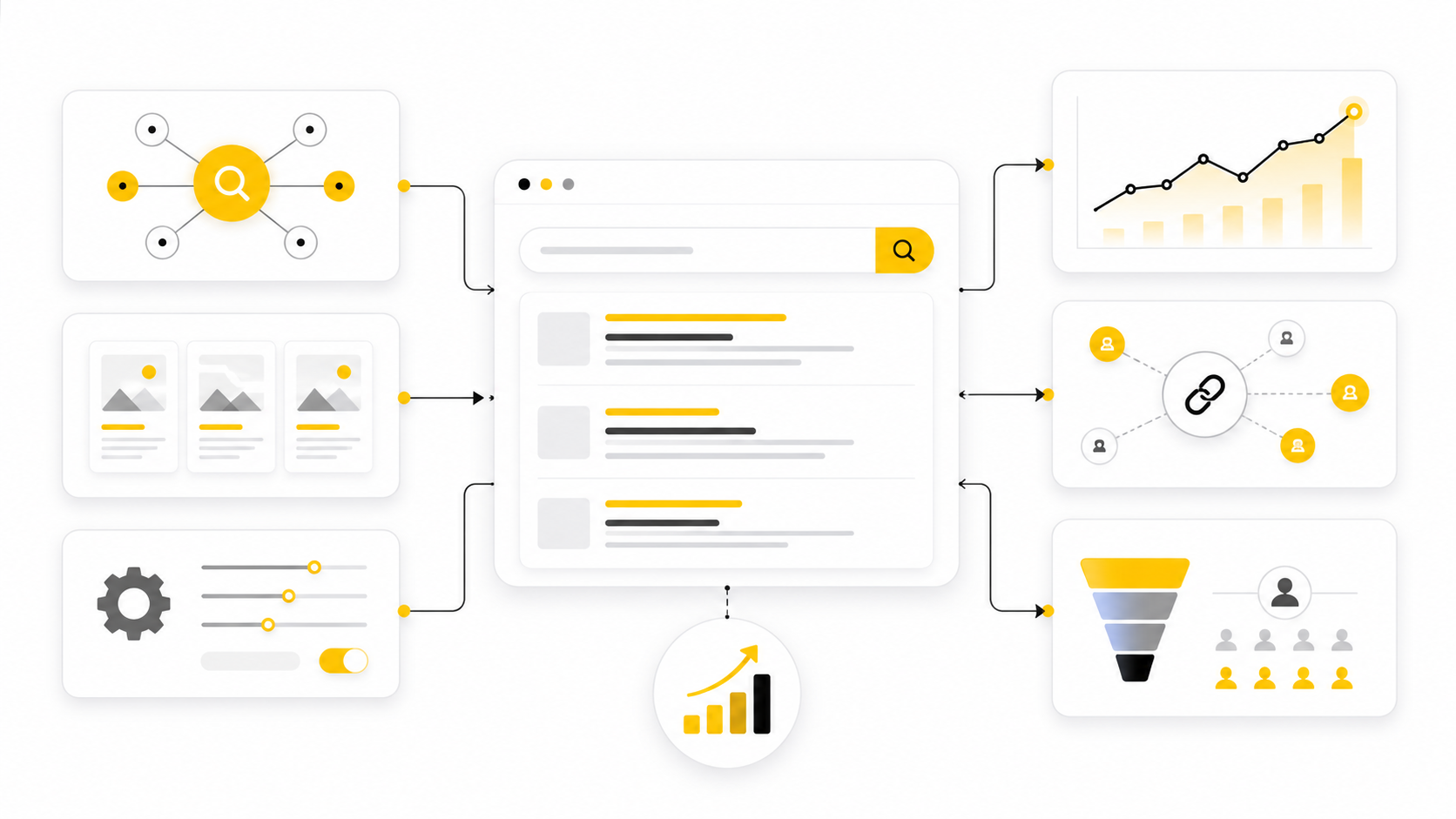
Organic search engine marketing is a fundamental digital marketing discipline focused on earning visibility in search engines through quality content and optimization rather than buying ads. At its heart, this strategy helps brands attract people who are actively searching for information, solutions, or products relevant to their business.
Organic visibility on search engines like Google accounts for a massive portion of web traffic - research shows that over half of all visits come from organic search, making it the largest channel for most websites. For example, data compiled from multiple industry sources indicates about 53% of website traffic originates from organic search - more than any other channel.
When executed well, organic search engine marketing isn’t just about higher rankings - it’s about sustainable visibility that continues to drive traffic, leads, and revenue over the long term without ongoing spend on ad placements.
this guide breaks down how organic search engine marketing works, why it matters, and how professionals build strategies that truly move the needle.
What Organic Search Engine Marketing Is and Isn’t
Organic search engine marketing - often called organic SEO - is the practice of optimizing a website so that it ranks higher on search engine results pages (SERPs) without paying for placement. This includes improving content relevance, site structure, technical performance, and authority signals so the search engine algorithms view your site as a strong match for user queries.
It’s different from paid search marketing (paid SEM), where companies pay for ads to appear at the top of search results. Organic search engine marketing focuses on earning clicks naturally, as opposed to renting visibility via paid placements.
At scale, organic search becomes a durable asset - once a page ranks well, it can continue attracting visitors with little ongoing cost beyond maintenance and periodic updates.
Why Organic Search Engine Marketing Still Matters
Organic search traffic remains the backbone of most digital strategies for several reasons:
Even with emerging AI search formats shifting some user behavior, organic search still drives the bulk of referrals and conversions for most brands.
A Framework for Organic Search Engine Marketing
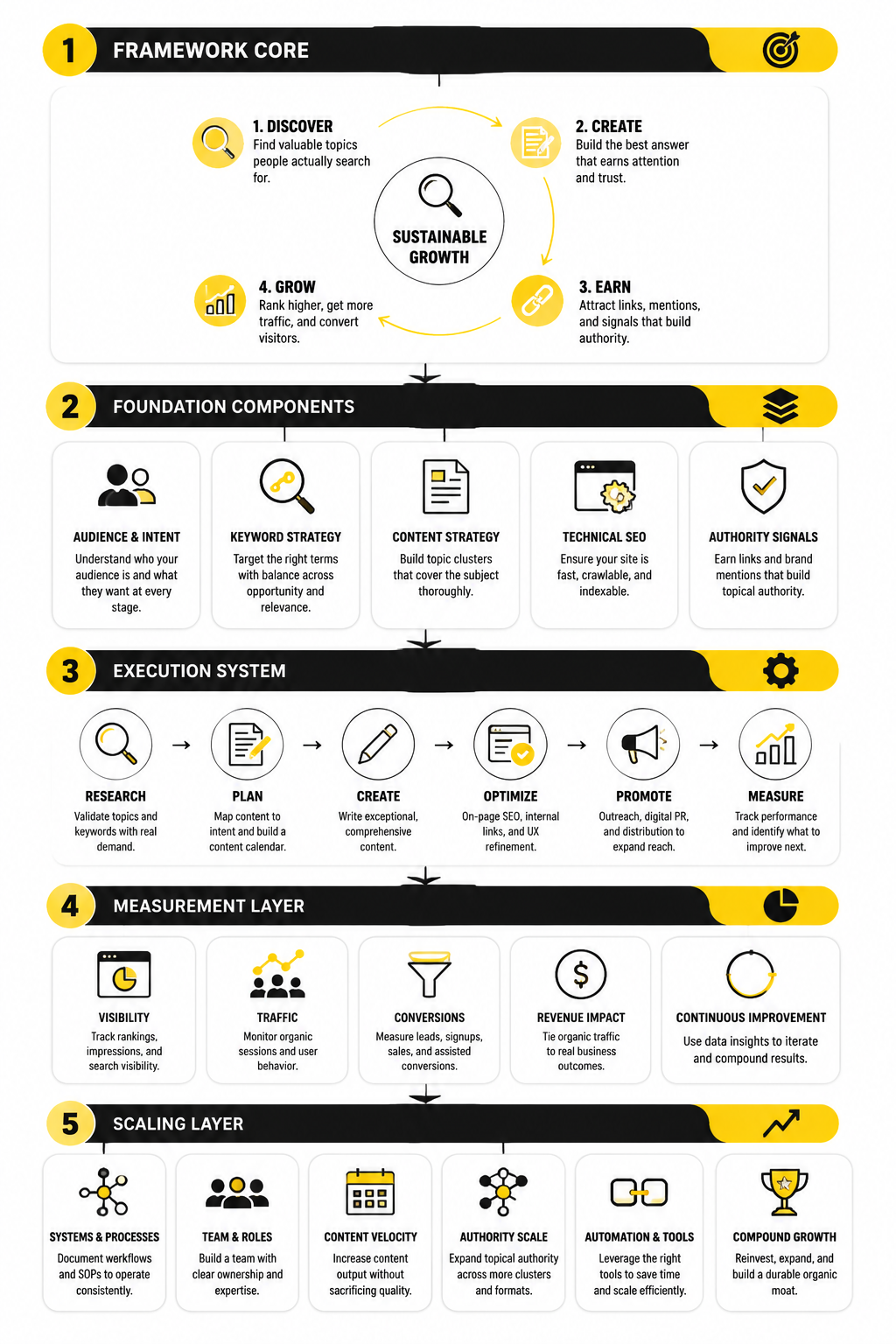
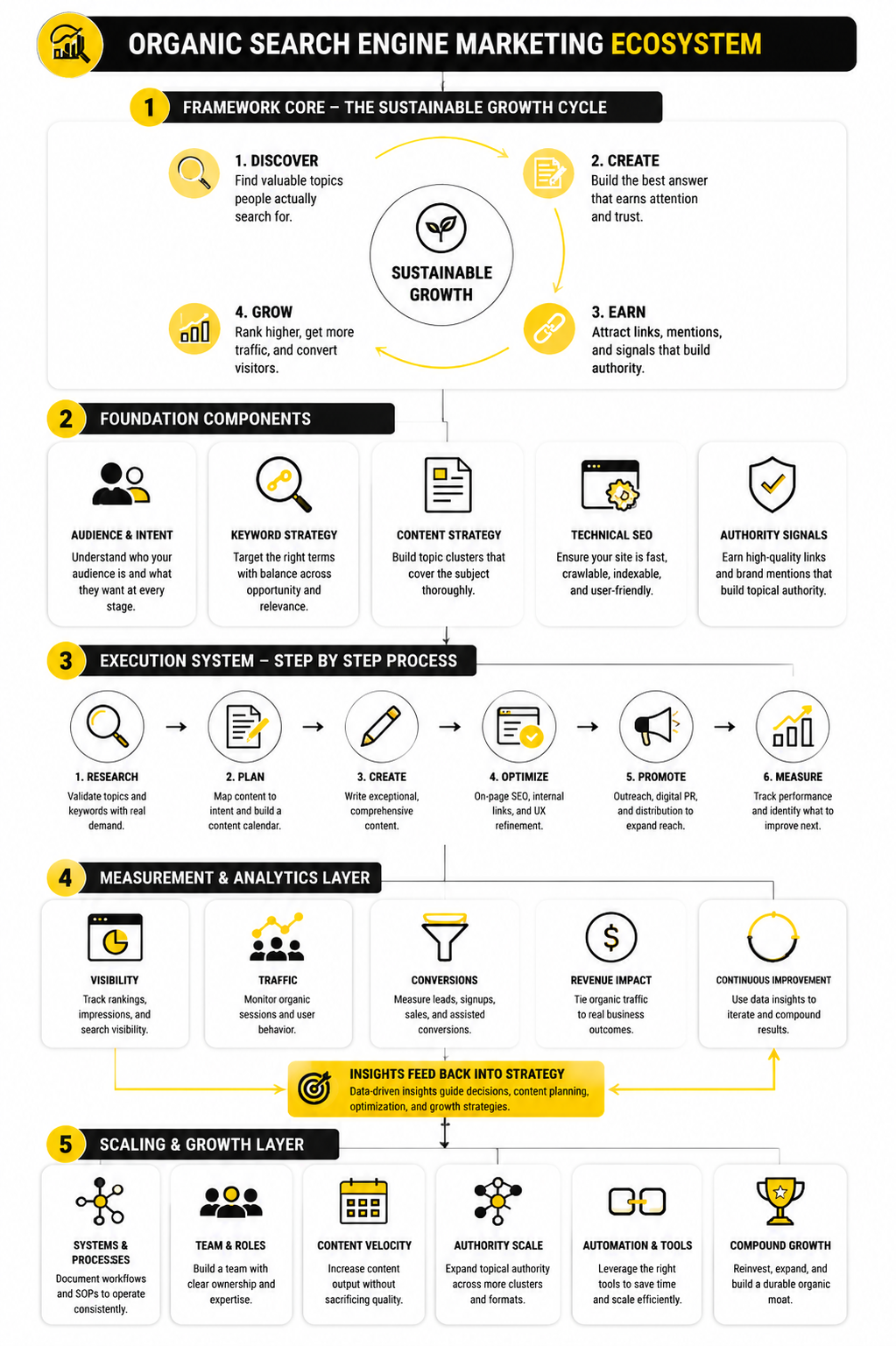
A solid organic search engine marketing strategy rests on several key components that work together to generate sustainable visibility:
Understanding what users are searching for and why they care about it is the foundation. Keyword research reveals intent and demand so you can align content with real user needs.
Creating high‑quality, relevant content that answers searcher questions, solves problems, and reflects search intent is the core of organic marketing.
This includes optimizing titles, headings, meta descriptions, and content structure to signal relevance to search engines and users.
Ensuring your site is crawlable, fast, mobile‑friendly, secure, and structured well helps search engines index your pages and deliver them to users.
Earning links and mentions from reputable sites builds trust and signals authority - a key ranking factor for search algorithms.
Tracking rankings, organic traffic, engagement, and conversions enables continuous improvement and optimization.
How Professionals Implement Organic Search Engine Marketing
Professional practitioners approach organic search engine marketing with a blend of strategic planning, technical expertise, and continuous testing:
Metrics That Matter in Organic Search Engine Marketing
To evaluate success, marketers track a mix of traffic, engagement, and conversion metrics:
In a landscape where search engines continue to evolve, organic search engine marketing remains a long‑term growth driver when executed thoughtfully and consistently. Understanding its core elements and how they fit together keeps your strategy resilient - whether algorithms shift or user behaviors evolve.
What’s Next: Technical and Content Priorities for Organic Search
In the next section, we’ll dive deeper into the technical foundations of organic search engine marketing and how to prepare your site for lasting search visibility.
Metrics That Show Whether Organic Search Engine Marketing Is Working
One of the biggest challenges for marketers and growth teams isn’t doing organic search engine marketing work - it’s measuring whether that work is actually making a difference. Because organic strategies take time to mature and don’t have the instant feedback loop of paid ads, you need a reliable set of metrics that connect search visibility to tangible business outcomes.
To make sense of your organic search engine marketing performance, it helps to group indicators into layers that tell a complete story:
1. Organic Traffic and Visibility
Organic traffic - the number of users who arrive at your site from unpaid search results - is the foundational metric for any organic search engine marketing strategy. It shows whether your content and optimization efforts are increasing visibility and attracting searchers to your site. You can track this through tools like Google Analytics (for sessions) and Google Search Console (for clicks and impressions). Sustained growth here usually signals that your content is gaining relevance and visibility in search results.
But traffic alone doesn’t tell the whole story. Impressions - how often your pages appear in search results - provide early indication of whether your visibility is expanding before clicks translate into visits.
2. Keyword Rankings With Context
Ranking positions for target search terms remain useful as leading indicators of future organic traffic. If your target keywords move up on search engine results pages (SERPs), that generally predicts higher click volume over time. Tracking not just the number of keywords you rank for but where they rank (e.g., top 3 vs top 10) gives insight into quality of visibility rather than just presence.
3. Click‑Through Rate (CTR)
CTR measures the percentage of users who click on your listing after seeing it in search results. A high CTR signals that your snippet - the title, description, and sometimes structured data like rich snippets - is compelling and relevant to search intent. Low CTR despite high impressions suggests tweaking metadata or improving how your content appears in SERPs.
4. Engagement and Behavior Metrics
Once users land on your site from organic search, engagement metrics show whether your content holds their attention and meets their needs. Metrics like bounce rate, time on page, and pages per session help you understand content relevance and user experience, which influence how search engines rank your pages over time as well as how likely visitors are to convert.
5. Conversion and Revenue Outcomes
For most businesses, the ultimate measure of organic search engine marketing success is whether the traffic actually converts into meaningful actions - leads, purchases, or revenue. Tracking organic conversions requires setting up conversion events in analytics platforms and attributing them back to organic search. When conversions are tied to revenue or lead pipeline, you can justify your organic strategy in financial terms.
This distinction matters: metrics like rankings or traffic might look good on a dashboard, but conversions and revenue are what influence budget decisions and stakeholder confidence.
6. Authority and Backlink Indicators
Search engines use links from other reputable sites as a signal of trust and authority. Tracking the number and quality of referring domains can provide early insights into how search engines perceive your site’s authority. While authority metrics aren’t direct outcomes, they help explain why organic search visibility may be improving or stagnating.
7. Technical Health Signals
Technical SEO metrics such as mobile usability, crawl errors, and Core Web Vitals affect how easily search engines index your site and how fast and smoothly pages load for users. Poor technical health can limit the effectiveness of content and keyword strategies if search engines can’t crawl or render your pages efficiently.
Building a Balanced Measurement System
The best measurement approach ties these layers together:
Because organic search engine marketing effects often take months to fully materialize, trend analysis matters more than snapshots. Comparing year‑over‑year growth, looking at rolling averages, and segmenting data help you filter noise and understand whether your strategy is progressing toward meaningful results.
By structuring measurement this way, you gain clarity on where to focus improvements and are better equipped to communicate the real impact of your organic search engine marketing efforts to stakeholders.
How to Implement Organic Search Engine Marketing Step by Step
Before you look at technical tools or content calendars, implementing organic search engine marketing starts with a clear, repeatable process. This ensures you don’t just check tactical boxes but actually build a strategy that delivers search visibility and business results.
At a high level, the implementation process ties back directly to the framework we outlined earlier: research, optimization, content, technical setup, authority building, and measurement. What follows is a logical, practical sequence most experienced SEO teams follow when building or scaling organic search engine marketing for a brand.
1. Audit Your Current Organic Visibility
A strong implementation begins with understanding where you already stand:
This baseline lets you prioritize the right work rather than shooting in the dark.
2. Conduct Intent‑Driven Keyword and Audience Research
Organic search engine marketing isn’t about ranking for random keywords - it’s about matching what your audience actually wants with what you can credibly deliver. Use keyword research tools to uncover search demand, group keywords by intent (informational, transactional, navigational), and map them to stages of your customer journey. The goal is to find high‑value opportunities where demand is clear and competition is beatable.
3. Align Your Content Strategy With Search Intent
Once you know which topics and queries matter most, build a content plan that satisfies those needs in depth:
Better content creates stronger signals to search engines that your site deserves visibility.
4. Optimize Technical SEO Foundations
Before new content can shine, your site must be structurally ready:
Technical fidelity isn’t glamorous, but without it, organic gains will be limited.
IMAGE 3
5. Execute On‑Page and Content Optimization
Now comes the hands‑on work that directly influences rankings:
This stage bridges research insights with real content impact.
6. Build Authority and Backlinks
Search engines use links from other trusted sites as signals of credibility. A consistent approach here includes:
High‑quality backlinks remain a cornerstone of organic search strength.
7. Measure, Iterate, and Scale
Organic search engine marketing is never “done.” Once your initial work goes live:
Over time, this continuous improvement cycle turns sporadic wins into sustained growth.
What Effective Implementation Looks Like in Practice
Teams that nail this process treat organic search engine marketing as both a creative and analytical discipline. They don’t just publish content - they measure how that content performs in real human contexts and refine it based on real user behavior. This rigor is what separates occasional search visibility from lasting organic authority that consistently drives traffic, leads, and revenue.
In the next part, we’ll explore how to integrate organic search engine marketing into broader marketing systems so you maximize collaboration and ROI.
How Measurement and Data Drive Better Organic Search Engine Marketing
To truly succeed with organic search engine marketing, you need more than impressions and rankings - you need a *measurement framework that tells you why the numbers matter and what to do next***. In 2026, data plays a central role in diagnosing performance gaps, setting realistic benchmarks, and steering strategic priorities where they’ll have the greatest impact.
Measurement isn’t about collecting every metric available. It’s about choosing the right signals that connect search visibility to real business results and interpreting them in a way that prompts meaningful action.
Why Numbers Matter in Organic Search Engine Marketing
Organic search is still the dominant traffic source for most businesses, but shifts in user behavior and search engine features require careful context when reading the numbers:
Tracking these core indicators lets you assess visibility, engagement, and business impact - three layers that should guide every optimization decision.
Key Organic Search Performance Benchmarks
To interpret your analytics properly, it helps to ground them in concrete benchmarks. These aren’t rigid targets, but reference points that reveal whether your strategy is underperforming or aligned with broader trends:
IMAGE 4
How to Interpret Organic Search Metrics
Raw numbers don’t tell you much unless you tie them to what they mean for user behavior and business goals.
1. Traffic Growth Isn’t Enough on Its Own
Seeing increased organic sessions in your analytics tool feels great, but you also need to ask:
Traffic growth without engagement gains often means you’re attracting uninterested or irrelevant visitors - a rip‑off of your own resources.
2. Rankings Must Be Paired With Click‑through Effectiveness
Improving to position 3 from position 8 might not feel dramatic, but because CTR compounds rapidly near the top, even moderate ranking improvements can translate into substantial traffic increases. Conversely, if your CTR lags benchmarks for your position, metadata and snippet optimization should be your first corrective action.
3. Conversion Rates Reveal Intent Alignment
Conversion benchmarks help you understand whether your pages are serving the search intent. For example:
A poor conversion rate isn’t a traffic problem - it’s an alignment problem between what users expect and what your page delivers.
4. Engagement Signals Tell You About Quality
Metrics like time on page, bounce rate, and pages per session are indirect predictors of how well your content satisfies search intent. If engagement falls short, you should revisit your content depth, clarity of answers, and page structure.
From Data to Decisions
Interpreting analytics isn’t just about performance visibility - it’s about leading to intentional decisions:
Using data this way turns organic search engine marketing from a guessing game into an evidence‑driven engine that learns and improves over time.
In the next part, we’ll explore how to integrate organic search engine marketing with broader digital marketing workflows so you maximize the cumulative impact across channels.
Advanced Strategic Considerations in Organic Search Engine Marketing
Once you’ve laid the groundwork for organic search engine marketing and built processes that consistently drive visibility and traffic, you inevitably run into strategic and scaling challenges that most beginner guides don’t cover. At higher levels, the work gets less about doing more and more about doing the right kind of work - all while navigating organizational trade‑offs, complexity, and evolving discovery systems.
Understanding these advanced considerations helps you move beyond simple checklist SEO into a scalable engine that supports long‑term business growth without burning budget or bandwidth.
Scaling Risks and Infrastructure Constraints
As your site grows, tactical optimizations like writing more content or fixing a handful of meta tags become insufficient. Large websites face structural drag - a phenomenon where outdated pages, redundant content, or unmanaged technical complexity degrade overall organic performance rather than lift it. For example, enterprise sites with tens of thousands of pages often struggle with crawl inefficiencies and indexation waste, meaning search engines never see the pages you most want to rank. Effective scaling requires governance systems, automation, and architectural planning, not just manual adjustments.
This is where organizations grapple with crawl budget management - ensuring that search engine bots spend their limited crawling resources on your highest‑value pages rather than low‑priority or duplicate content. At scale, this becomes a deliberate task involving noindex rules, sitemap strategy, parameter handling, and prioritization logic.
Coordination Across Teams and Organizational Ownership
A sophisticated organic search engine marketing program touches nearly every part of a digital organization - from content and marketing to product, engineering, legal, and UX teams. One widespread risk is diffused accountability: no single team owns the full set of decisions that affect organic visibility, even though one team may be held responsible for the results. When SEO changes are dependent on development backlog schedules, legal approvals, or product roadmap priorities, progress slows and opportunities slip through gaps.
In enterprise environments, this often leads to accountability without authority, where SEO teams must report on traffic and rankings but lack control over the upstream systems that determine those outcomes. Resolving this requires formalized governance, cross‑functional SLAs, and shared performance targets - not just SEO best practices written in a doc.
Balancing Broad Reach With Focus
At advanced stages, you’re no longer optimizing for a handful of keywords. You’re managing a portfolio of topics, user intents, content formats, and regional variations all at once. This breadth creates two strategic trade‑offs:
Navigating Algorithmic Evolution
The organic search landscape is not static. Search engines continually refine how they assess content quality, relevance, and authority. Emerging features like AI‑generated overviews and answer boxes are shifting how users find and engage with content, changing what “visibility” even means. While traditional ranking remains important, teams now need to consider visibility in answer engines and AI discovery systems as part of their organic footprint. This pushes organic search engine marketing beyond classic SEO into hybrid practices that consider both traditional search results and structured, AI‑driven discovery.
Integration With Broader Marketing Strategy
When organic search engine marketing is operating at scale, it can’t live in a silo. It must integrate with content marketing, paid acquisition, brand messaging, conversion optimization, and customer lifecycle programs. For instance, SEO insights about user intent can inform paid campaign messaging or product feature prioritization. Conversely, paid data can reveal high‑value queries that organic content should target more aggressively.
This integrated view also shifts how you measure success. Rather than valuing rankings or sessions in isolation, the focus becomes pipeline contribution, assisted conversions, and lifetime value of users arriving through organic search.
Expert Guidance: Navigating Trade‑offs and Complexity
Senior practitioners often emphasize systemization over tactics. Instead of micromanaging individual pages, they invest in:
These moves require broader organizational buy‑in and investment but build sustainable growth that compounds over time - turning organic search engine marketing from a tactical cost center into a strategic growth engine.
By anticipating these advanced risks and trade‑offs, teams can build resilient organic strategies that scale without breaking and continue delivering value even as the search ecosystem evolves.
1. What is organic search engine marketing?
Organic search engine marketing is the practice of optimizing your website and content to appear naturally in search engine results, without paying for ads. It focuses on relevance, authority, and user experience to attract traffic that genuinely wants your content or products.
2. How long does it take to see results?
Results vary depending on site authority, competition, and content quality. Typically, noticeable improvements in rankings and traffic can take 3–6 months, with significant ROI often appearing after 6–12 months. Consistency and strategic implementation are key.
3. Is it better than paid search?
Both have value, but organic search builds a long-term asset that continues to drive traffic without ongoing ad spend. Paid search provides instant visibility but stops delivering once the budget ends. A balanced strategy often combines both.
4. How do I measure success in organic search?
Focus on traffic, keyword rankings, engagement, and conversions. Metrics like impressions, CTR, bounce rate, and goal completions provide insight into both visibility and business impact. Tracking these together helps identify actionable improvements.
5. What are the biggest mistakes businesses make?
Common mistakes include:
Avoiding these helps maintain consistent growth.
6. Do backlinks still matter?
Yes, backlinks from reputable sites signal authority to search engines. High-quality links enhance rankings, while spammy or low-value links can harm performance. Focus on natural, authoritative links rather than quantity.
7. How important is technical SEO?
Technical SEO is critical. It ensures search engines can crawl, index, and render your pages efficiently. Poor site speed, broken links, or mobile usability issues can limit even the best content from ranking well.
8. Can AI help with organic search engine marketing?
AI tools can assist in keyword research, content optimization, and analytics interpretation. However, human oversight remains essential to ensure quality, relevance, and adherence to brand voice.
9. How do I scale organic search marketing?
Scaling requires structured processes, automation, and governance. Use content clusters, templated technical standards, and cross-functional coordination to handle large sites without losing quality or control.
10. Should I hire a professional or manage in-house?
It depends on resources and expertise. Professionals provide strategic guidance, advanced technical skills, and ongoing optimization. For consistent growth and ROI, partnering with experienced teams often accelerates results.
11. How does organic search integrate with other channels?
Organic search insights inform content marketing, paid campaigns, and conversion optimization. Coordinating across channels amplifies results, ensuring the audience receives consistent messaging while maximizing the value of each visitor.
12. What trends should I watch in 2026?
Watch for AI-driven search interfaces, featured snippets, and mobile-first indexing changes. Adapting to evolving algorithms, understanding new SERP formats, and optimizing for voice and AI search will become increasingly important.
Build a stronger local presence with BAAM AI
Turn your website, Google profile, social channels, and AI visibility into one growth engine
Most businesses do not need more random marketing activity. They need a consistent presence system that helps the right people find them, trust them, and take action. BAAM AI brings strategy, local SEO, website updates, Google Maps visibility, social content, AI-search readiness, media production, and reporting into one practical monthly engine.
If you want your marketing to keep working after the campaign ends, start with a free BAAM AI presence audit. See how your business shows up today and where the fastest visibility wins are at BAAM AI.