
BAAM AI Blog
Organic Media Marketing: A Practical Framework for Growth
Organic media marketing isn’t about quick paid boosts - it’s about earning attention and building a loyal audience through natural, unpaid content that adds value over time. In a world where paid costs continue to...
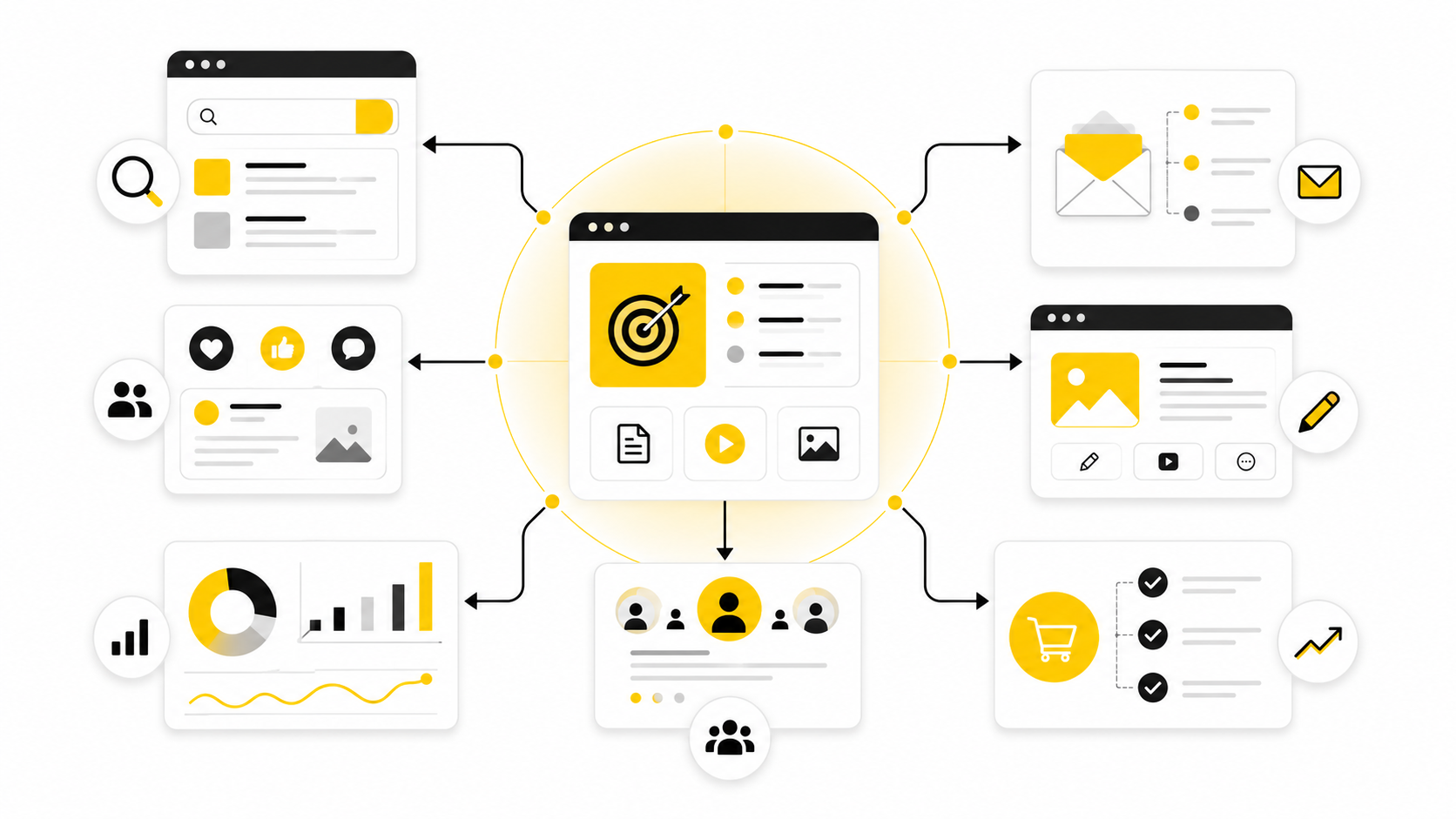
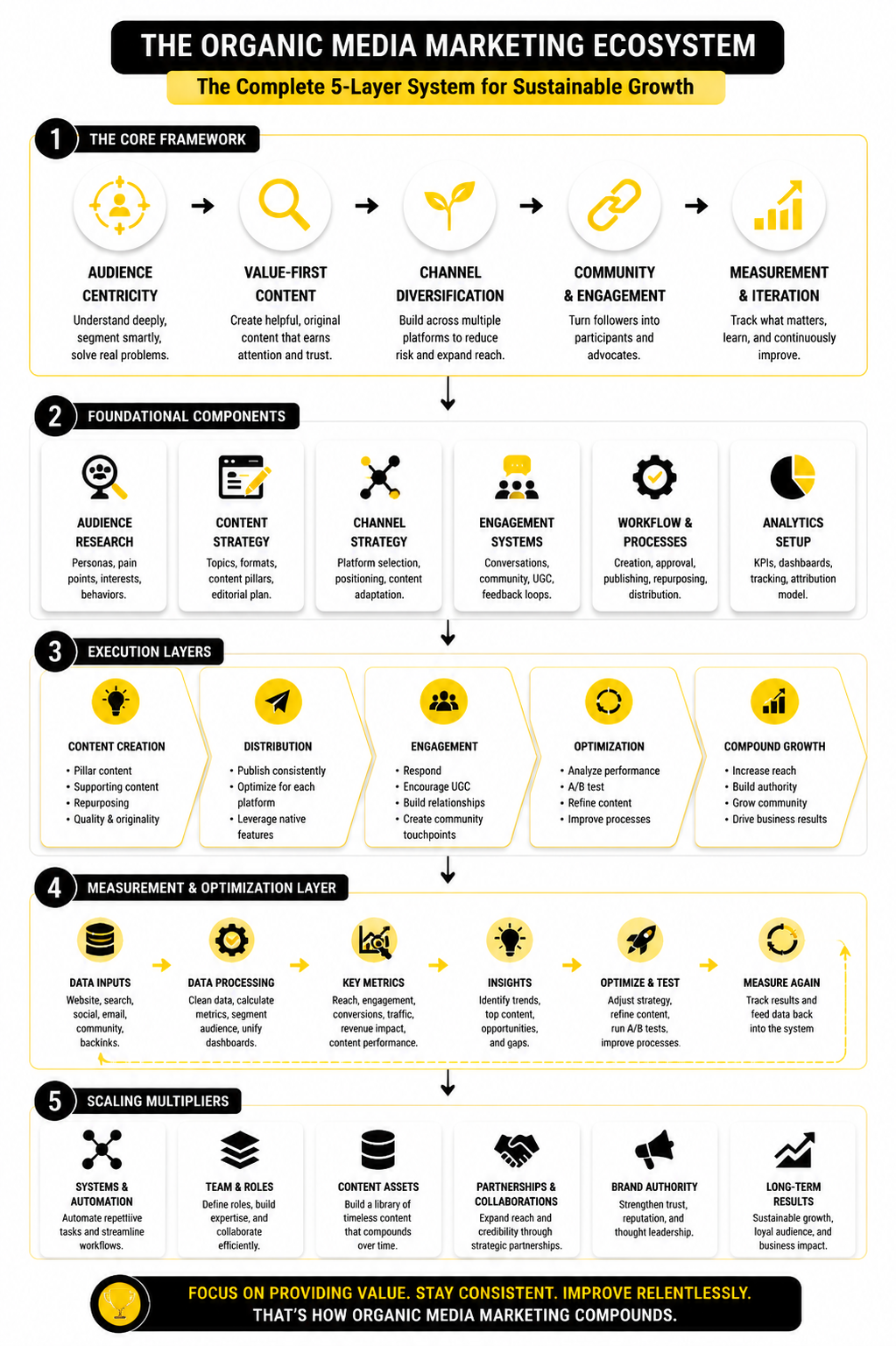
Below is how this guide will unfold - the six clear sections that guide you from why organic media marketing matters to how to do it well:
Organic media marketing isn’t about quick paid boosts - it’s about earning attention and building a loyal audience through natural, unpaid content that adds value over time. In a world where paid costs continue to rise and algorithms make reach scarce, a well‑crafted organic strategy builds trust, recognition, and sustainable engagement that compounds rather than expires the moment you turn off a budget. Research shows many brands are increasing investment in organic social spend precisely because it supports long‑term visibility and upper‑funnel objectives that paid alone can’t deliver as effectively without prior audience affinity.
At its core, organic media marketing is not “free advertising.” It’s a distinct channel that relies on creating high‑quality content and genuine interactions that platforms choose to show to users because of relevance and engagement - not because you’re paying for placement. This approach builds credibility and audience trust in ways paid ads simply can’t match.
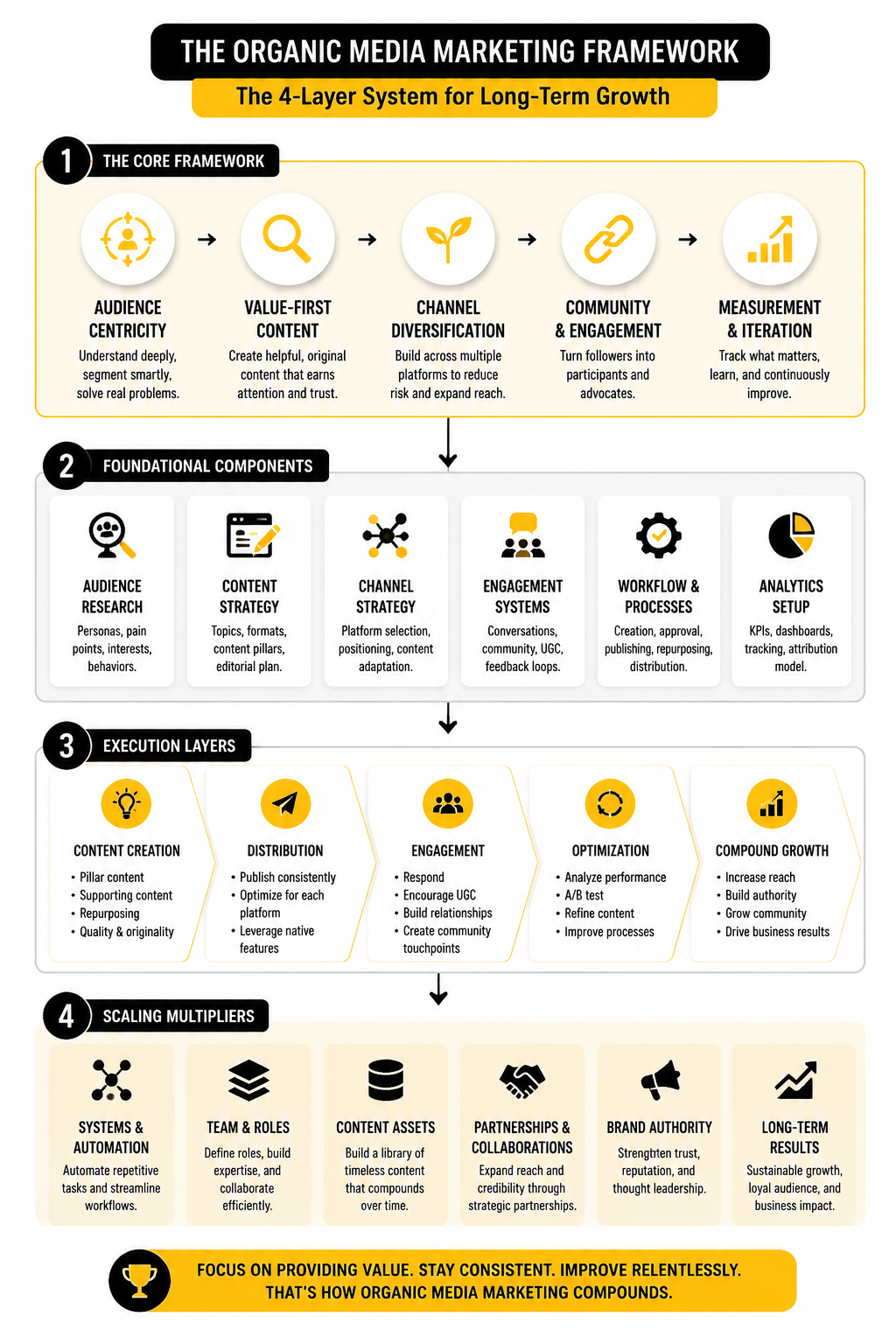
From here, this guide will guide you through each essential piece - starting with what organic media marketing truly is and why it belongs in every serious growth plan - and ending with how to measure what matters so your organic efforts become predictable, strategic assets rather than random posts on a feed.
Let’s begin.
What Organic Media Marketing Really Means
Organic media marketing refers to the strategic use of non‑paid channels to attract, engage, and retain audiences through value‑driven content and genuine interactions rather than sponsored placement. Unlike paid ads that buy visibility or clicks, organic media relies on relevance, user interest, and platform mechanics to earn exposure naturally. It includes things like search engine optimization (SEO), blog content, social media posts, community engagement, and email outreach - all designed to build lasting visibility, trust, and authority over time. This is foundational to sustainable online growth because it helps brands connect with people in ways that feel authentic and useful.
In practical terms, organic media marketing isn’t just creating content and hoping it sticks. It’s a systematic practice of understanding what your audience cares about, producing content that aligns with those needs, and optimizing it so platforms naturally show it to the right people. It’s less predictable week‑to‑week than paid campaigns, but its outcomes compound - content you publish today can continue to bring traffic and engagement for months or even years.
Successful organic efforts are often the backbone of brand ecosystems. For example, a well‑optimized blog post can attract search traffic long after publication, and a strong social media presence can deepen audience loyalty without recurring advertising spend. These long‑term payoffs make organic media indispensable for brands focused on authority, reach, and sustained growth.
Core Components of an Organic Media Strategy
A high‑impact organic media strategy is built around several core components that work together to increase visibility, engagement, and long‑term growth. Each piece plays a distinct role in earning attention without paying for distribution:
1. Search Engine Optimization (SEO)
SEO ensures your content is discoverable in search engines like Google by matching what your audience is searching for. This involves keyword research, optimizing on‑page elements, improving site structure, and earning backlinks. Over time, strong SEO can make your content a reliable source of continuous traffic without ongoing spend.
2. Content Creation and Distribution
Content is the heart of organic media - blogs, videos, infographics, podcasts, and guides that answer real audience questions or solve real problems. High‑quality, valuable content builds trust and increases shareability, which in turn expands reach across channels and platforms.
3. Organic Social Media Engagement
Publishing regular, relevant posts on platforms like TikTok, Instagram, LinkedIn, or YouTube fosters connection and community. Engagement - comments, replies, shares - signals relevance to platform algorithms, which can boost reach without paid support.
4. Email and Permission‑Based Marketing
Email remains one of the most effective organic channels for direct audience connection. It allows you to deliver content, updates, and value straight to subscribers without platform restrictions, making it easier to nurture leads and guide them through the customer journey.
5. Thought Leadership and PR
Earning credibility through guest posts, industry commentary, interviews, and collaboration with influencers or media outlets can expand your audience and solidify authority. This kind of presence boosts organic visibility by associating your brand with trusted voices and platforms.
Each component contributes differently - SEO brings evergreen visibility, social media fuels engagement and community, content and email deepen relationships - but together they create a self‑reinforcing ecosystem that grows reach and influence without perpetual ad spend.
How to Implement Organic Media Effectively
Getting organic media marketing right isn’t guesswork - it’s a repeatable sequence of practical steps that turn strategy into activation. Execution is where planning meets real results: clear goals become published content, and audience insight becomes measurable growth signals. Experts agree the strongest organic approaches follow a systematic process connecting audience, content, distribution, and performance measurement.
Start With Clear Goals and Audience Insight
Before creating a single post or blog article, you need to know what success looks like and who you’re trying to reach.
Documented audience personas and goals give your team direction and keep execution focused.
Build a Structured Content Plan
Once goals and audience are clear, map out what, when, and where you will publish so effort isn’t left to chance.
Consistency and planning reduce last‑minute scrambles and ensure quality content publishes on a rhythm your audience can count on.
Produce and Optimize Content With Intent
Content production is where the strategy turns into tangible assets your audience engages with:
Good organization and brief templates streamline quality and help teams scale production without chaos.
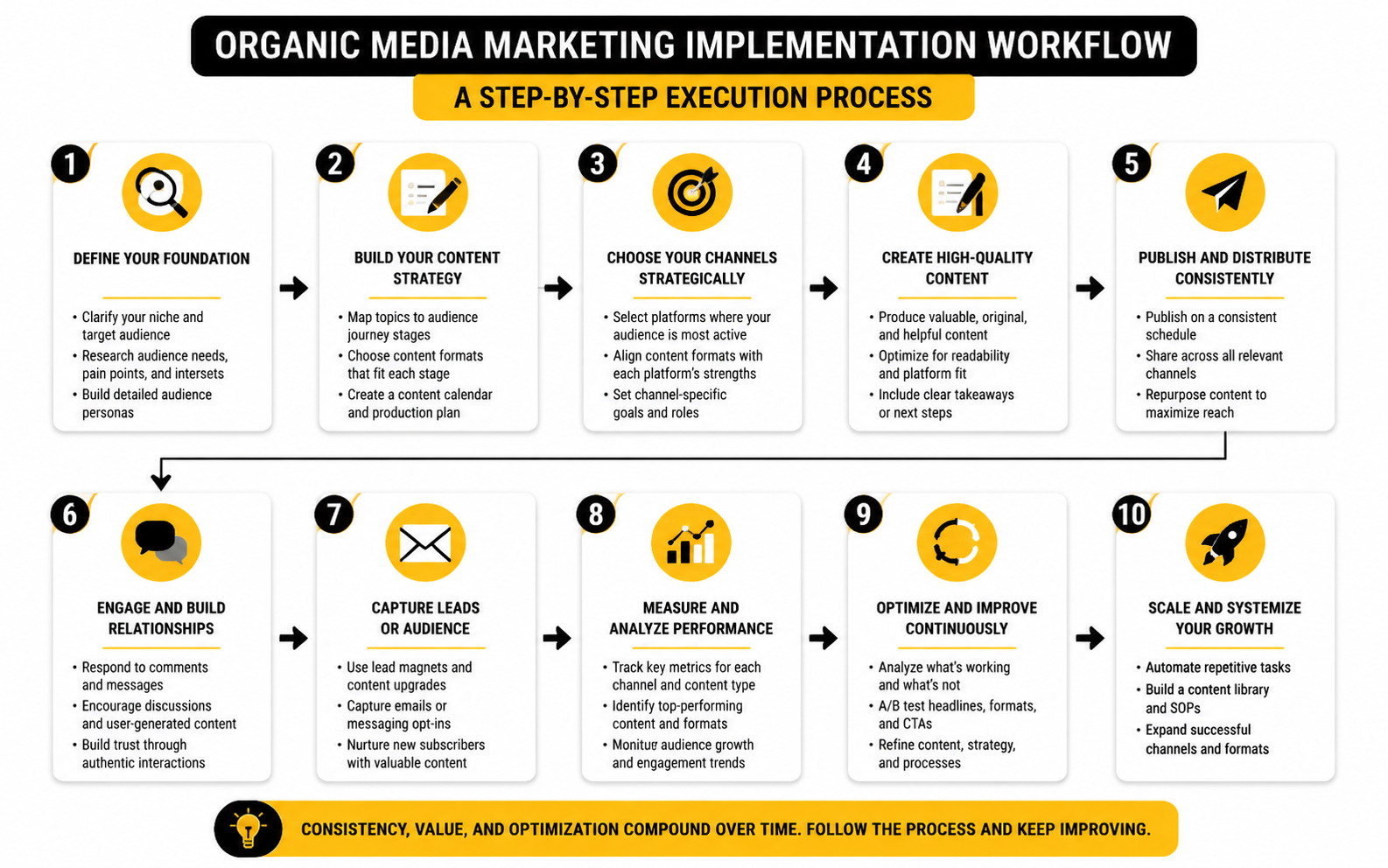
Publish, Distribute, and Engage
With content produced, the execution shifts to getting it seen and interacted with:
This engagement isn’t an add‑on - it’s intrinsic to how platforms choose what content they show to more users.
Measure and Refine What Works
Organic media marketing improves when you track performance and learn from data:
This cycle turns each piece of content into an evolving asset rather than a one‑time post.
By following this structured implementation path - from planning and production to publishing and measurement - your organic media marketing becomes predictable, scalable, and aligned with real audience needs rather than a scattershot posting routine. Organic content isn’t passive; it’s deliberate work that rewards consistency and strategic iteration.
How to Measure Performance and Interpret Data
In organic media marketing, measurement isn’t just tracking numbers - it’s interpreting signals that drive action. Without proper context, metrics can mislead teams into optimizing for the wrong things, like likes or follower counts, instead of outcomes that actually grow awareness or revenue. Good measurement connects your strategy to business results, shows where tactics are working, and reveals where you need to adjust.
What Metrics Tell You What
Organic media combines different channels and goals, so you need metrics that reflect both visibility and impact. Here’s how to think about the main categories:
1. Reach and Discovery Metrics (Top of the Funnel)
These show how many people are seeing your content without paid amplification.
These metrics matter because you can’t convert what you can’t reach - they’re the first sign of momentum.
2. Engagement Metrics (Interest and Relevance)
Engagement goes deeper than visibility - it signals whether your content resonates with the audience and encourages interaction.
These data points help you understand quality, not just quantity. (,)
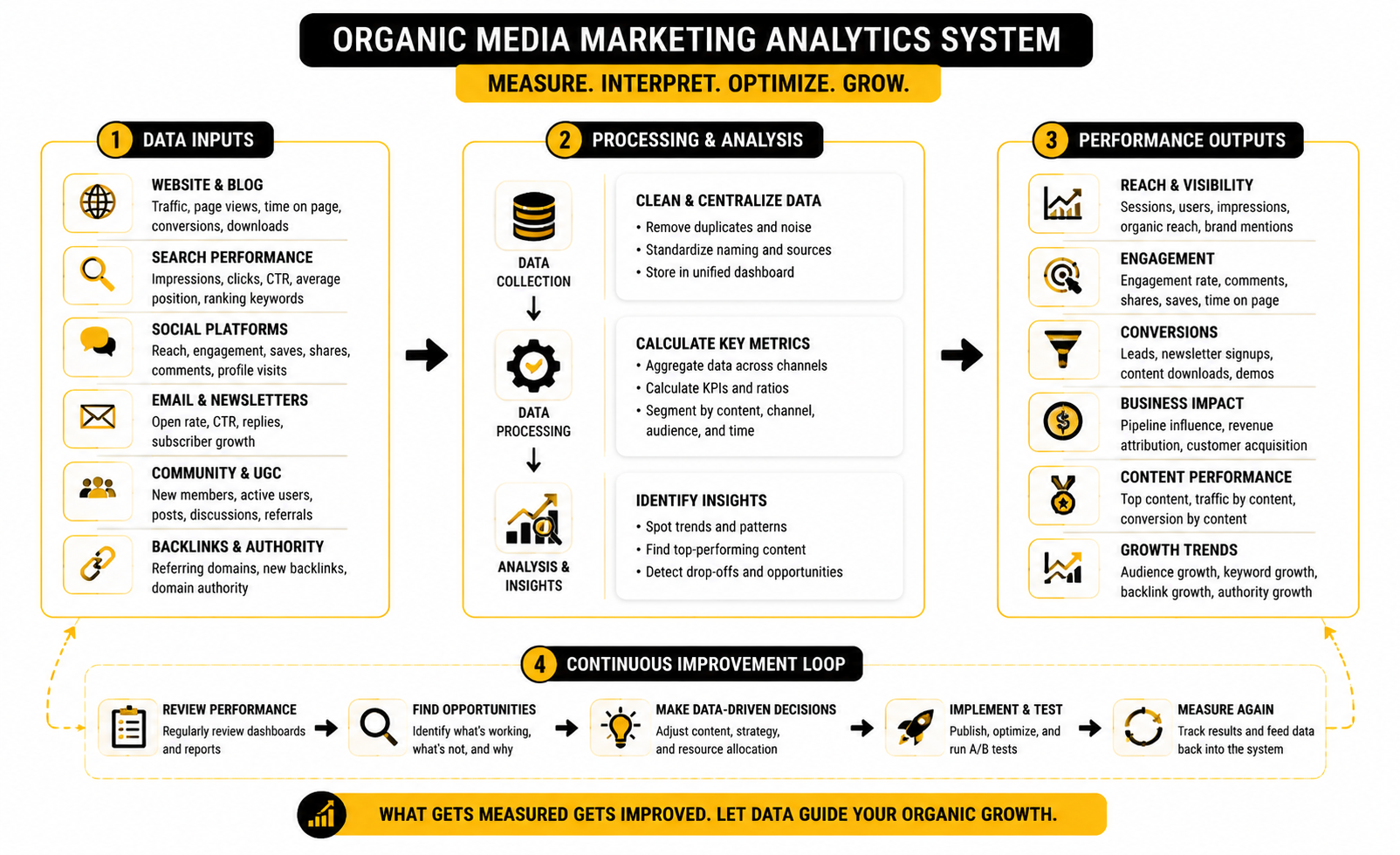
3. Conversion and Outcome Metrics (Business Impact)
The highest‑value metrics tie directly to real business objectives - leads, signups, sales, or revenue - that result from organic media activities.
Focusing on outcomes ensures your measurement aligns with strategic goals rather than vanity indicators.
Benchmarks - Knowing What “Good” Looks Like
Benchmarks help you interpret whether a metric reflects healthy performance or a warning sign:
Interpreting Trends, Not Just Numbers
Numbers only become meaningful when viewed in context:
Good measurement turns raw numbers into strategic insights that guide content planning, optimization, and resource allocation so your organic media marketing efforts become more effective and accountable over time.
Advanced Considerations for Organic Media Marketing Growth
Once you’ve mastered the basics of planning, publishing, and measuring organic media marketing, the next level is managing complex tradeoffs and scaling challenges that separate average programs from high‑impact ones. Leaders in organic strategy balance depth with breadth, quality with consistency, and short‑term visibility with long‑term brand equity. This section explores those nuanced decisions and how to approach them with strategic clarity.
Balancing Quality and Consistency
One of the toughest decisions teams face is how to allocate effort between high‑quality content and frequent publishing. High‑quality, deeply researched content drives sustained search visibility and authority, while more frequent, timely posts help keep your brand top of mind on social channels. These goals sometimes pull in different directions because quality takes time and can slow your publishing cadence.
To navigate this, define content tiers and purposes - for example, flagship cornerstone articles or videos versus quick update posts that reinforce topical relevance. Prioritize flagship assets around core strategic themes and use lighter content to maintain steady engagement. Over time, the flagship content becomes a reference point that fuels long‑term traction, while consistent updates maintain audience touchpoints.
Organic Reach Versus Paid Reinforcement
Even seasoned marketers need to decide when to augment organic efforts with paid support - and when not to. Pure organic media marketing can take weeks or months to generate velocity, especially in competitive verticals. On the other hand, combining a small paid budget with high‑performing organic content can accelerate discovery while preserving overall cost efficiency.
The key consideration is whether paid amplification complements organic performance rather than substitutes for it. When data shows that a piece of content is resonating organically - high engagement, strong CTR, growing backlinks - that’s often when a modest paid boost can build new audience segments and extend momentum. The opposite - boosting underperforming content - often wastes budget without teaching the algorithm that your content is genuinely relevant.
Scaling Across Platforms Without Diluting Strategy
As your organic efforts grow, brands frequently feel pressure to be everywhere: TikTok, Instagram, LinkedIn, YouTube, newsletters, blogs, and more. But spreading thin can dilute your impact and exhaust resources. Advanced strategy means choosing focus channels where your audience is most active and receptive instead of chasing every trend.
Evaluate each platform’s role: use search‑oriented content to capture high‑intent audiences, social platforms for engagement and community building, and email for deeper owner‑controlled relationships. Tools like content repurposing frameworks help you scale without reinventing the wheel - for example, turning a blog post into a short video, infographic, and email series. This keeps your message consistent while maximizing reach.
Guarding Against Algorithm Dependency
Platforms change their algorithms frequently, and a strategy overly reliant on a single channel’s organic reach can be vulnerable. TikTok’s shift in recommendations, Instagram’s ongoing feed changes, or search ranking updates can disrupt performance overnight. Smart organic media marketers build diversified pipelines of visibility so that no single algorithm change cripples their entire strategy.
This means blending search, owned properties (like your website or email list), and multiple social networks so that audience connection points reinforce one another. It also means investing in community - comments, groups, and subscriber relationships - which are less dependent on algorithmic whims.
Resource Planning and Team Alignment
Advanced organic media marketing is not a solo pursuit; it requires aligned teams and clear operational rhythms. Editorial calendars need governance, SEO specialists need support from writers and designers, and social community managers need empowerment to respond in real time.
To scale effectively, define roles and responsibilities clearly so that content ideation, production, publishing, and measurement operate like an integrated system rather than isolated tasks. In larger organizations, consider establishing a cross‑functional hub that meets regularly to assess performance data and pivot strategy based on trends and goals. A data‑informed, aligned team is far more effective than isolated contributors each pushing in different directions.
By thinking beyond basic execution and measurement, and by embracing strategic tradeoffs with intentional frameworks, organic media marketing becomes far more than a tactical channel - it becomes a competency that strengthens brand resilience, audience loyalty, and long‑term business growth.
1. What exactly is organic media marketing?
Organic media marketing is the practice of earning visibility and engagement without paying for placement. It includes creating helpful content, engaging audiences on social platforms, optimizing for search, and building community - all in ways that platforms naturally distribute based on relevance and interaction.
2. How does organic media marketing differ from paid social?
Organic media relies on unpaid content and engagement to reach audiences, while paid social uses budgeted ads to target specific segments. Organic builds trust and long‑term recognition; paid offers precise targeting and immediate scale. The smartest strategies understand how both complement each other rather than compete.
3. Is organic media marketing still effective in 2026?
Yes - though the landscape is more competitive today. Organic reach on some platforms has declined, but authentic content and engagement still attract audiences, build trust, and generate sharing and search traffic without ad spend when done well.
4. How long does it take to see results from organic media marketing?
Because organic media depends on earned attention, results are typically slower than paid - often a matter of weeks to months of consistent content and engagement before measurable growth appears. But the payoff compounds over time as content continues to attract attention.
This long‑term visibility is one of the reasons brands invest in organic alongside paid.
5. Should organic media marketing be used alone or with paid tactics?
Most modern strategies blend both: organic builds trust and authority, while paid extends reach, accelerates traffic, and tests creative. Using paid to boost or amplify high‑performing organic content often leads to stronger overall performance than either tactic used in isolation.
6. What skills do marketers need for effective organic media marketing?
Effective organic media marketing requires content creation, SEO understanding, analytics literacy, community engagement skills, and the ability to adapt messaging based on data. These combined competencies help ensure your content resonates, gets discovered, and keeps evolving.
7. How do you know if your organic media marketing is working?
Track relevant KPIs - organic traffic, engagement rates, audience growth, content shares, and conversions - and compare them against realistic benchmarks over time. Metrics should map back to business goals (like lead generation or brand lift) rather than isolated “vanity” indicators.
8. What are common pitfalls in organic media marketing?
Mistakes include inconsistent publishing, focusing only on reach without engagement, ignoring measurement, or treating organic like paid (expecting instant results). Sustainable organic growth comes from discipline, audience focus, and iterative improvement.
9. Can small businesses benefit from organic media marketing?
Absolutely. Organic media lets small businesses compete without large ad budgets, build community relationships, and showcase expertise. Especially in niche markets or communities, strong organic presence can translate directly into loyal customers and word‑of‑mouth growth.
10. What role do communities and comments play in organic media marketing?
Engaging in comments, forums, and niche communities fosters real conversations and signals relevance to platforms. As many marketers find, active community interaction often drives deeper visibility and loyalty than passive posting alone.
Build a stronger local presence with BAAM AI
Turn your website, Google profile, social channels, and AI visibility into one growth engine
Most businesses do not need more random marketing activity. They need a consistent presence system that helps the right people find them, trust them, and take action. BAAM AI brings strategy, local SEO, website updates, Google Maps visibility, social content, AI-search readiness, media production, and reporting into one practical monthly engine.
If you want your marketing to keep working after the campaign ends, start with a free BAAM AI presence audit. See how your business shows up today and where the fastest visibility wins are at BAAM AI.