
BAAM AI Blog
Optimization, Reporting, And Scaling Decisions
Once the core system is live, the next question is not “what else can we send?” The better question is “where is the biggest constraint now?” That shift matters because scaling privy email marketing is not about...
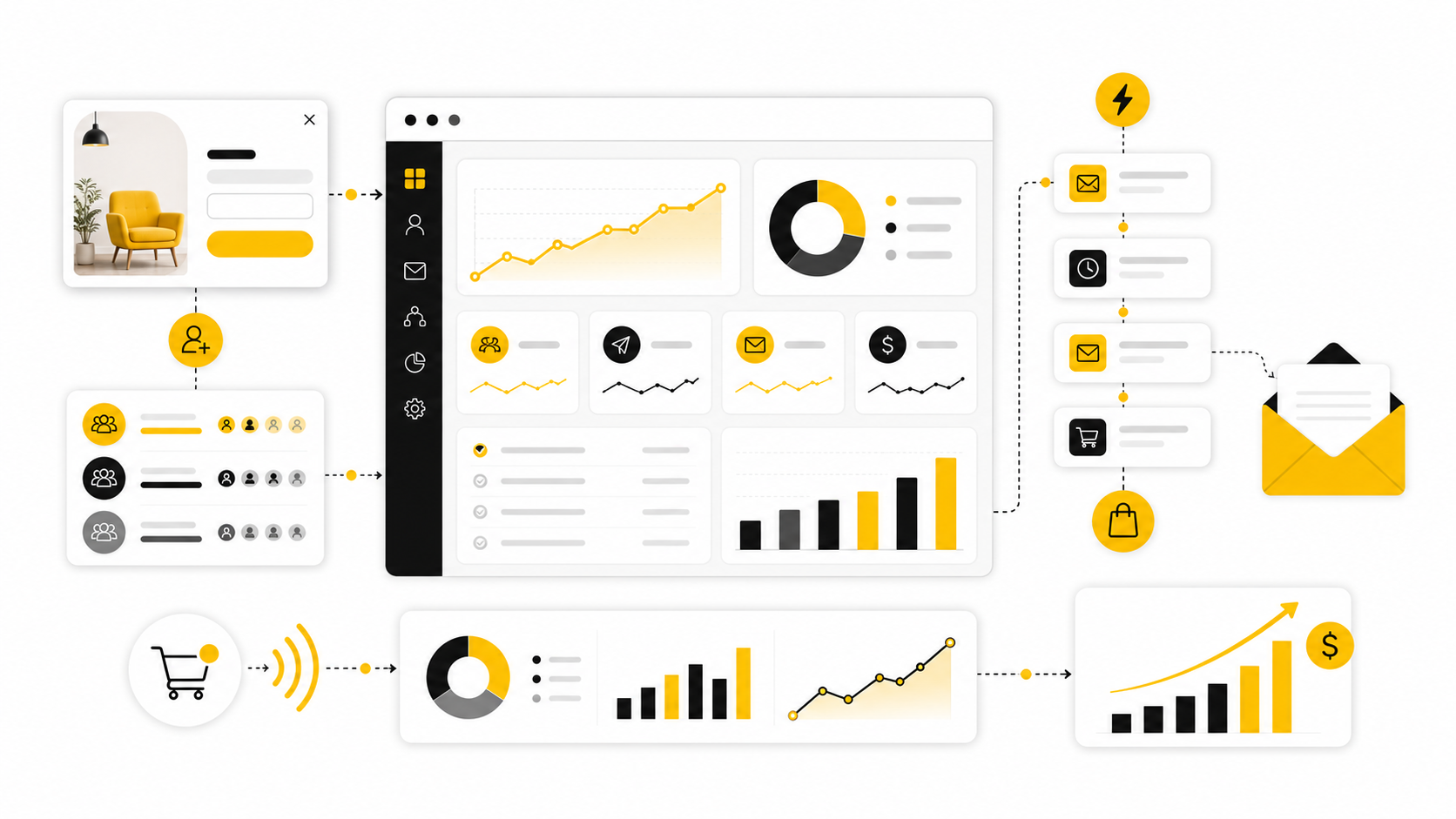
Once the core system is live, the next question is not “what else can we send?” The better question is “where is the biggest constraint now?” That shift matters because scaling privy email marketing is not about adding more noise; it is about improving the weak points that limit revenue, trust, or repeat purchase.
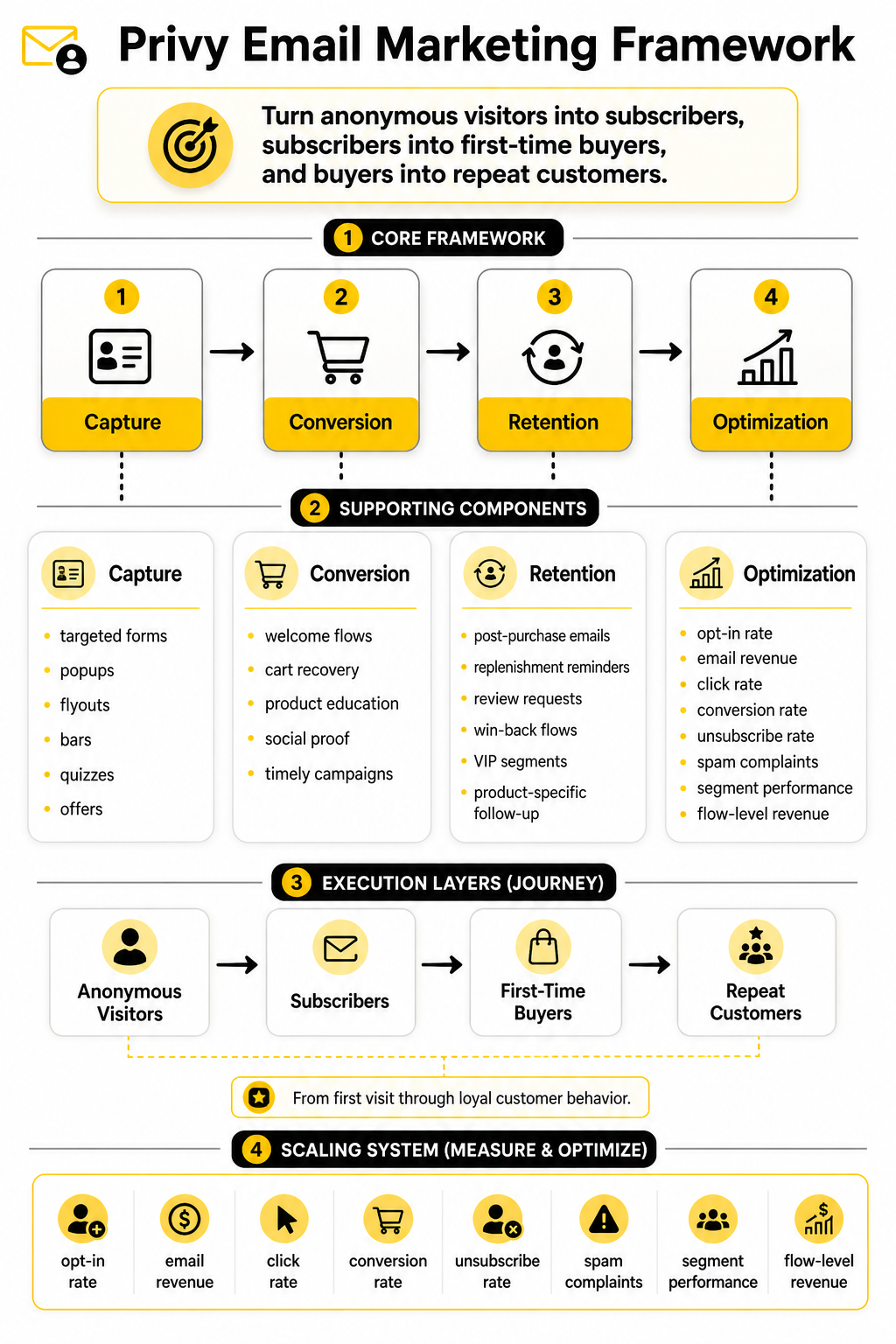
For one store, the constraint might be capture because traffic is coming in but the list is growing too slowly. For another, the constraint might be first-purchase conversion because subscribers join but do not buy. For a more mature store, the constraint may be retention because buyers purchase once and then disappear.
This is where you stop thinking like a tool user and start thinking like an operator. Privy is the execution layer, but the strategy comes from reading the journey honestly. Every optimization decision should connect back to a measurable bottleneck.
When To Optimize Capture
Capture optimization comes first when your store has meaningful traffic but weak subscriber growth. If thousands of visitors are leaving without joining the list, you are paying for attention and letting it disappear. That does not automatically mean you need a more aggressive popup, but it does mean your offer, timing, or targeting needs review.
Start by separating popup performance by device, page type, traffic source, and visitor status. A homepage visitor from cold social traffic may need a different capture message than a shopper who has viewed three product pages. A mobile visitor may need a shorter form, a clearer button, and less intrusive timing.
The strongest capture tests usually involve the offer itself. Test a first-order incentive against free shipping, early access, a quiz, a buying guide, or a product-matching angle when those fit the brand. Do not test button color before you have tested whether the visitor actually wants what you are offering.
When To Optimize Flows
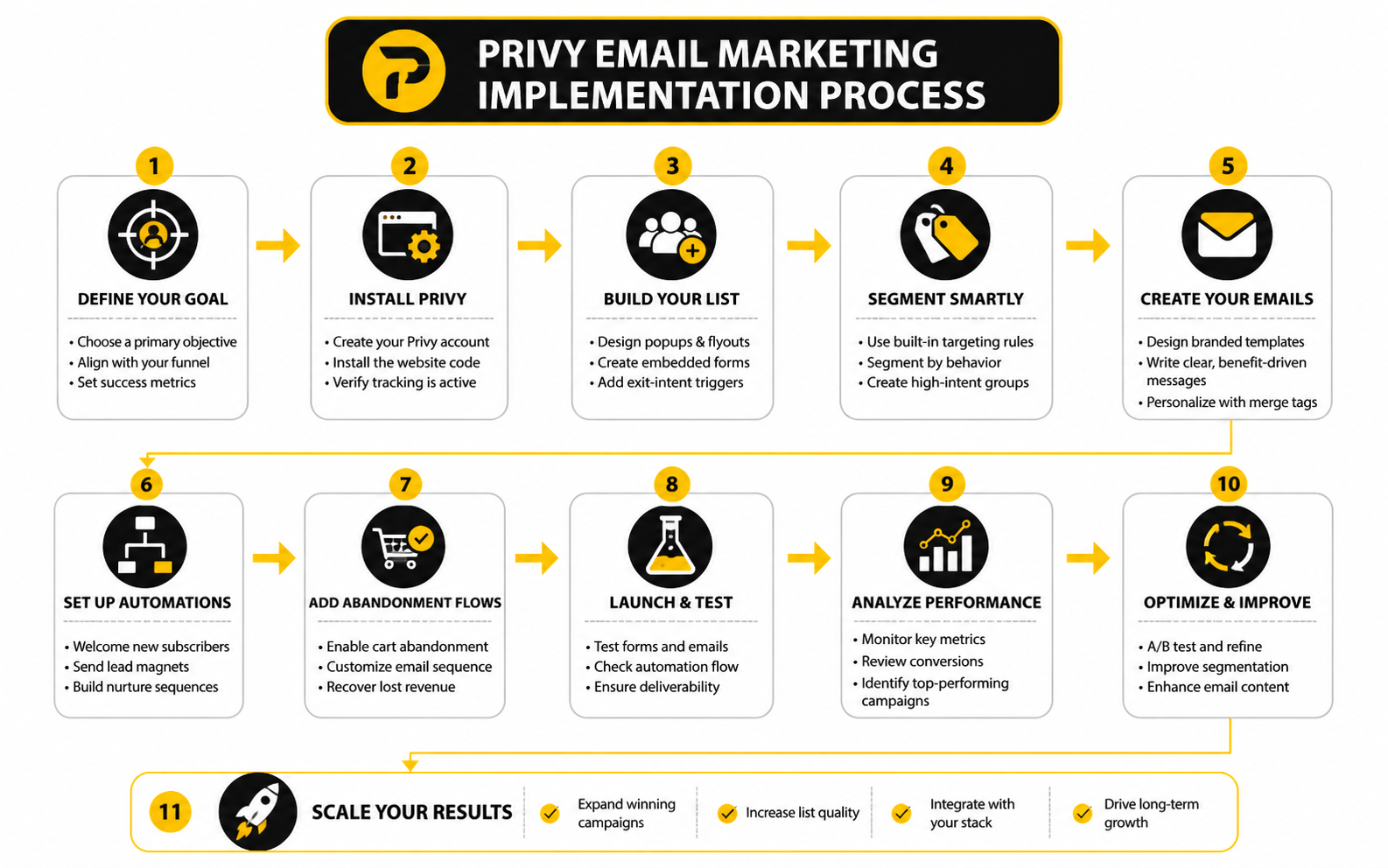
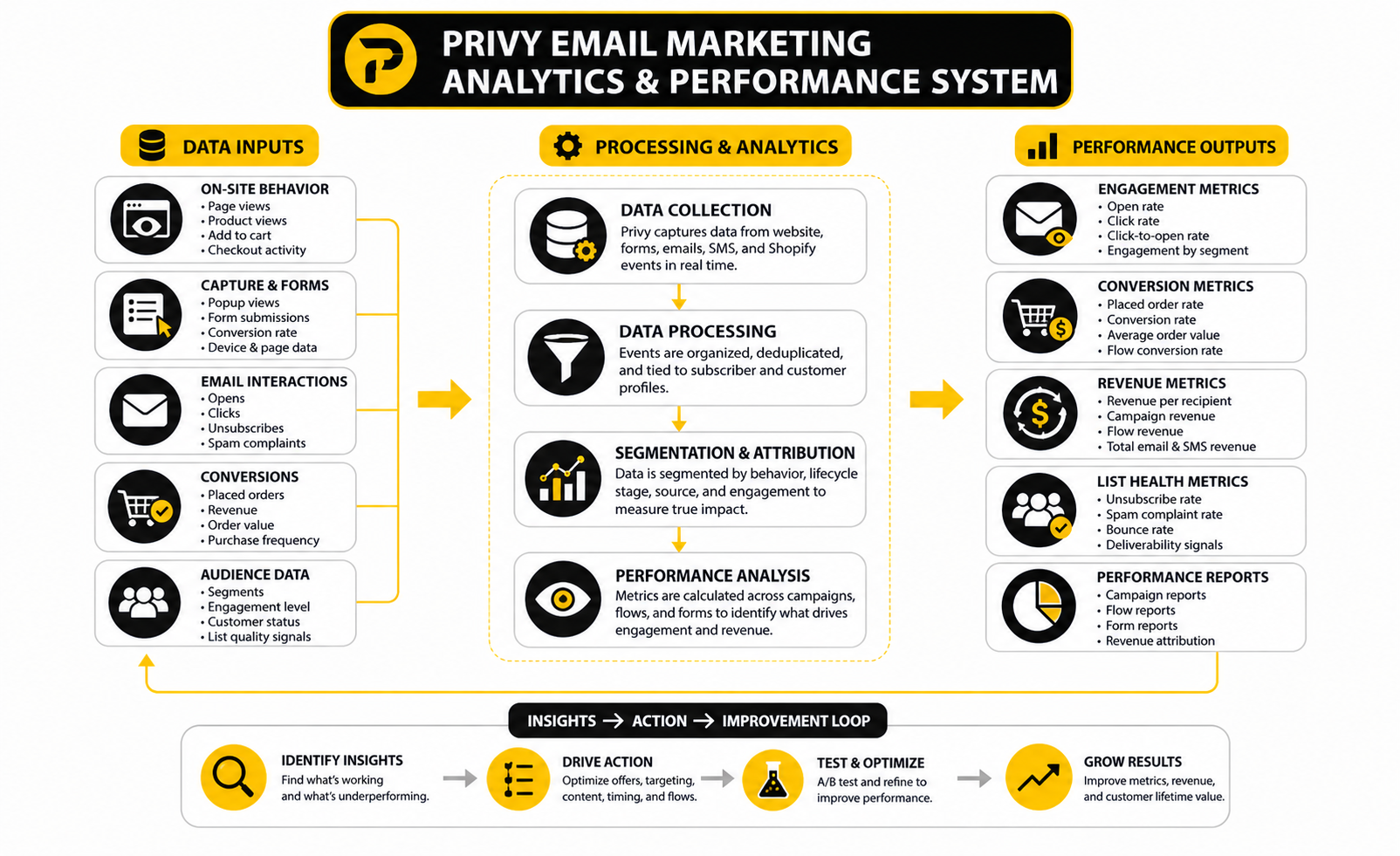
Flow optimization should come next when your list is growing but lifecycle revenue is weak. This usually shows up as low revenue per recipient, weak placed order rate, or strong opens with poor clicks. The good news is that flows are easier to improve than one-off campaigns because each flow has a clear job.
Welcome flows should be optimized around first purchase. Cart recovery flows should be optimized around recovered checkout intent. Post-purchase flows should be optimized around confidence, product success, and the next logical buying moment. Win-back flows should be optimized around whether the customer still has a real reason to return.
Recent ecommerce data keeps pointing in the same direction: automated messages are small in volume but large in impact. Omnisend’s 2025 ecommerce report found that automated emails drove 37% of email sales from only 2% of email volume, and abandoned cart, welcome, and browse abandonment emails were responsible for 87% of automated orders in its ecommerce marketing report. The action is clear: if your flows are underbuilt, do not compensate by blasting more campaigns.
When To Optimize Campaigns
Campaign optimization matters when your automations are stable and your list has enough active subscribers to support regular sends. At that point, campaigns can create revenue spikes around launches, holidays, product education, bundles, and time-sensitive offers. But frequency must be earned.
The first campaign scaling mistake is sending every idea to the whole list. That might work occasionally, but over time it teaches subscribers to ignore you. Segment campaigns by buyer status, product interest, engagement, purchase recency, and likely intent so each message has a sharper reason to exist.
The second mistake is making every campaign promotional. Discounts can move revenue quickly, but they can also weaken brand equity and train customers to wait. Strong campaign calendars mix promotions with education, product storytelling, customer proof, replenishment, seasonal relevance, and useful buying guidance.
The Tradeoff Between Simplicity And Sophistication
Privy is often attractive because it keeps ecommerce email and onsite capture relatively simple. That simplicity can be a strength, especially for smaller Shopify teams that want popups, email, SMS, segmentation, and reporting without building a complicated marketing operations stack. Privy’s pricing page positions the platform around no email sending limits, no annual contracts, and no hidden fees, with paid plans starting at $30 per month on Privy’s pricing page.
The tradeoff is that simplicity can eventually create limits. A brand with highly complex segmentation, advanced predictive modeling, custom event architecture, heavy multi-channel orchestration, or deep data warehouse requirements may eventually need a more advanced platform or supporting tools. That does not make Privy wrong; it means tool fit changes as the business changes.
The practical question is not “which platform has the most features?” The better question is “which platform helps this team execute the right work consistently?” A simple tool used well will beat a sophisticated tool that the team barely understands.
SMS, Email, And Channel Balance
SMS can be powerful, but it needs more restraint than email. A phone number is more personal than an inbox, so the message has to be timely, valuable, and clearly permission-based. If you treat SMS like cheap email, customers will punish you quickly with opt-outs.
Privy’s Shopify listing separates email and SMS capabilities, including SMS credits, advanced SMS targeting, and automation on higher plans in the Shopify app listing. That is useful for stores that want one system for onsite capture, email follow-up, and selective SMS campaigns. But “available” does not mean “send constantly.”
Use SMS for moments where urgency or timing genuinely matters. Cart reminders, shipping-sensitive promotions, limited drops, back-in-stock alerts, and VIP early access can make sense. Long educational content, broad newsletters, and vague brand updates usually belong in email instead.
Deliverability Risks That Show Up As Scaling Problems
As email volume grows, deliverability becomes less forgiving. A small store can sometimes get away with messy list habits because volume is limited. A larger sender cannot.
Mailbox providers are increasingly strict about authentication, spam complaints, unsubscribe handling, and engagement quality. Sinch Mailgun’s 2025 deliverability research highlights the importance of SPF, DKIM, DMARC, one-click unsubscribe, and keeping spam complaints low, with senders specifically warned around complaint thresholds and inbox protection requirements in its deliverability report. That is not just a technical checklist; it is a revenue protection checklist.
The fix is boring but important. Authenticate the sending domain, remove bad addresses, suppress unengaged subscribers, avoid scraped or purchased lists, and make unsubscribing easy. If someone does not want your emails, forcing them to stay is not growth. It is deliverability debt.
When Privy Is The Right Fit
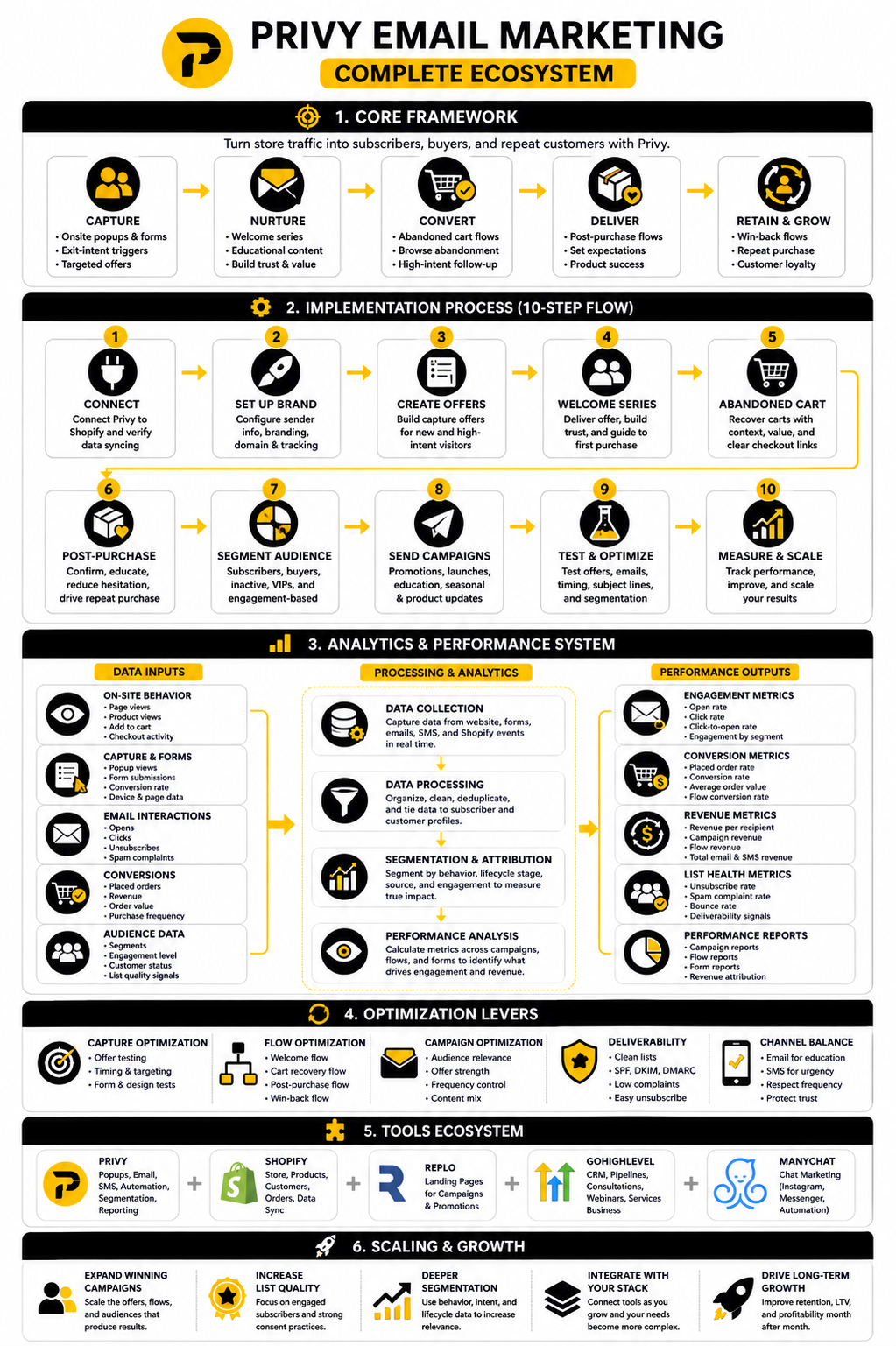
Privy is a strong fit for ecommerce brands that want to move quickly on list growth, email automation, SMS, and Shopify-connected campaigns without overcomplicating the stack. It is especially practical when the team is small, the store needs better capture and follow-up, and the main goal is to turn existing traffic into more owned audience and repeat sales.
It can also be a good fit when the brand has not yet built the basic lifecycle flows. If the welcome series, abandoned cart flow, post-purchase sequence, win-back flow, and campaign segmentation are missing or inconsistent, Privy gives the team a straightforward place to build them. That matters more than chasing advanced features too early.
Privy may be less ideal when the brand needs highly customized enterprise reporting, deep cross-channel orchestration, or complex data science workflows. At that stage, the conversation changes from “how do we build the fundamentals?” to “how do we integrate retention marketing into a larger data and customer experience architecture?” For most growing Shopify brands, though, the fundamentals are still where the money is.
Tools That Can Support The Wider Funnel
Privy can handle the ecommerce email and capture layer, but the wider funnel may need supporting tools depending on how the business sells. If the store uses dedicated landing pages for campaigns, a builder like Replo can help create Shopify pages that match paid traffic and email campaign intent more closely. That is useful when clicks are strong but the destination page is not converting.
If the brand also sells through webinars, funnels, consultations, or service-style offers, a CRM and automation platform like GoHighLevel can make more sense for the non-Shopify side of the business. That is not a replacement for ecommerce email in every case. It is a broader sales and follow-up layer when the customer journey extends beyond a product page and checkout.
For brands that need more conversational automation around social channels, ManyChat can support Instagram, Messenger, and chat-based lead capture. The important thing is to avoid stacking tools for the sake of it. Add tools only when they solve a clear constraint that Privy is not meant to solve.
Build a stronger local presence with BAAM AI
Turn your website, Google profile, social channels, and AI visibility into one growth engine
Most businesses do not need more random marketing activity. They need a consistent presence system that helps the right people find them, trust them, and take action. BAAM AI brings strategy, local SEO, website updates, Google Maps visibility, social content, AI-search readiness, media production, and reporting into one practical monthly engine.
If you want your marketing to keep working after the campaign ends, start with a free BAAM AI presence audit. See how your business shows up today and where the fastest visibility wins are at BAAM AI.