
BAAM AI Blog
Lead Capture, Follow-Up, And Automation
At this stage, the strategy has moved beyond posting. You have positioning, content pillars, a weekly process, and an analytics system. Now the question becomes more serious: what happens when social media actually...

At this stage, the strategy has moved beyond posting. You have positioning, content pillars, a weekly process, and an analytics system. Now the question becomes more serious: what happens when social media actually works?
This is where many agents lose money. They create useful content, people start replying, profile visits increase, and a few leads come through. But the follow-up is scattered across Instagram DMs, text messages, email threads, sticky notes, open house forms, and memory. That is not a pipeline. That is a leak.
Social media marketing for real estate agents only becomes a real business asset when attention is captured, organized, and followed up with consistently. Zillow’s 2025 agent research found that online channels now play a major role in agent discovery, with 36% of sellers finding agents online and 33% of buyers saying online research helped them choose an agent in the 2025 Consumer Housing Trends Report for Agents. If online discovery is influencing the relationship, your follow-up system has to treat those signals seriously.
The Strategic Tradeoff: Reach Versus Relationship
Reach is attractive because it is visible. You can see the views, likes, comments, and follower growth. Relationship-building is less flashy because it happens in private conversations, CRM notes, buyer consultations, seller calls, and long-term nurture.
The tradeoff is important. If you optimize only for reach, you may create content that attracts a broad audience but does not help the right people trust you. If you optimize only for immediate lead capture, your content can become too sales-heavy and stop earning attention in the first place.
The balance is to build content that earns reach and then offers a natural path into a relationship. A neighborhood comparison can invite people to request current listings. A seller prep post can offer a checklist. A market update can invite homeowners to ask how the shift affects their price range. The content creates the context, and the next step continues the conversation.
Lead Magnets That Make Sense For Real Estate
A lead magnet should solve a real problem, not just collect an email address. People are already cautious with their information. If the offer feels generic, they will ignore it or give you low-quality details.
For buyers, useful lead magnets include neighborhood guides, first-time buyer checklists, monthly payment planning worksheets, relocation guides, open house checklists, and current inventory alerts. For sellers, stronger offers include pricing review forms, seller prep checklists, repair-priority guides, staging timelines, and local market reports. For past clients and referral partners, the offer may be a homeowner update, annual equity check, or local market brief.
The best lead magnets are tied directly to the content that created the interest. If someone watches a video about inspection mistakes, offer an inspection checklist. If someone engages with a post about selling before buying, offer a move-up planning call. Matching the offer to the moment makes the conversion feel helpful instead of forced.
Keep The Offer Specific
A vague offer creates vague action. “Download my buyer guide” is better than nothing, but it is still broad. “Get the first-time buyer checklist I use before clients start touring homes” is more concrete because it tells the reader what they will receive and when it matters.
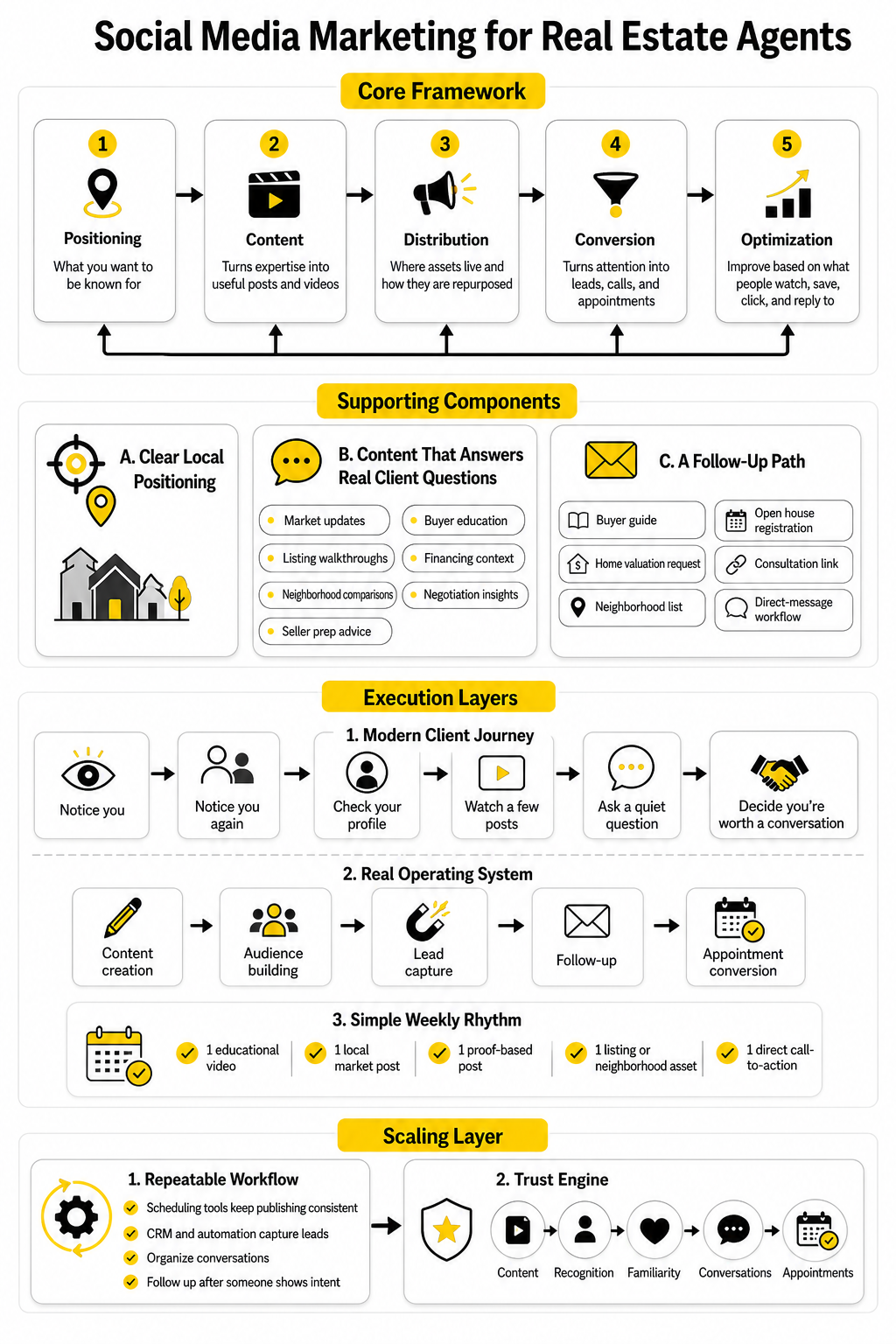
Specificity also helps you qualify intent. Someone who requests a luxury seller prep guide is probably in a different stage than someone who downloads a general neighborhood PDF. Someone who asks for a current inventory list in a specific price range is closer to action than someone who simply likes a post.
This is why forms should collect just enough information to guide the next step. Ask for name, email, phone number only when needed, market area, timeframe, and the decision they are trying to make. A simple form built with Fillout can work well for guide requests, valuation requests, open house registrations, and neighborhood interest forms.
Build Follow-Up Around Client Timing
Real estate timing is uneven. Some leads are ready now. Some are three months away. Some are a year away but worth nurturing because their future transaction is real. Your follow-up should reflect that difference.
A ready-now buyer needs fast response, a consultation path, financing clarity, and relevant inventory. A future buyer needs education, market context, and occasional check-ins. A ready-now seller needs pricing guidance, preparation advice, and a clear listing timeline. A future seller needs market updates, equity context, and practical prep steps before they feel pressure.
This is where a CRM becomes more than a database. NAR’s 2025 technology research found that social media remained the top lead-generating technology for REALTORS®, while CRM tools followed behind it in the 2025 REALTORS® Technology Survey. That pairing is the real lesson: social media may create the lead, but the CRM helps protect the relationship.
Use Pipeline Stages That Match Real Decisions
Most agents do not need a complicated pipeline. They need stages that match the way clients actually move. A simple buyer pipeline might include new inquiry, guide requested, consultation booked, lender connected, actively touring, offer stage, under contract, closed, and nurture. A seller pipeline might include new inquiry, valuation requested, prep consultation, listing timeline, signed agreement, active listing, under contract, closed, and nurture.
These stages make follow-up obvious. A buyer who requested a guide but never booked a consultation should receive a different message than a buyer who already toured homes. A seller who requested a pricing review should not get the same generic email as someone who downloaded a neighborhood report.
A platform such as GoHighLevel can help manage forms, calendars, pipelines, reminders, SMS, email, and automation in one place. That matters when volume increases, because the real risk is not having too many tools. The real risk is missing serious intent because it arrived through a comment, message, or form at the wrong moment.
Automation Should Support Trust, Not Replace It
Automation is useful when it removes friction. It can deliver a guide instantly, confirm an appointment, send a reminder, tag a lead, notify you about a hot inquiry, and trigger a follow-up sequence. That is valuable because speed matters when someone is actively researching.
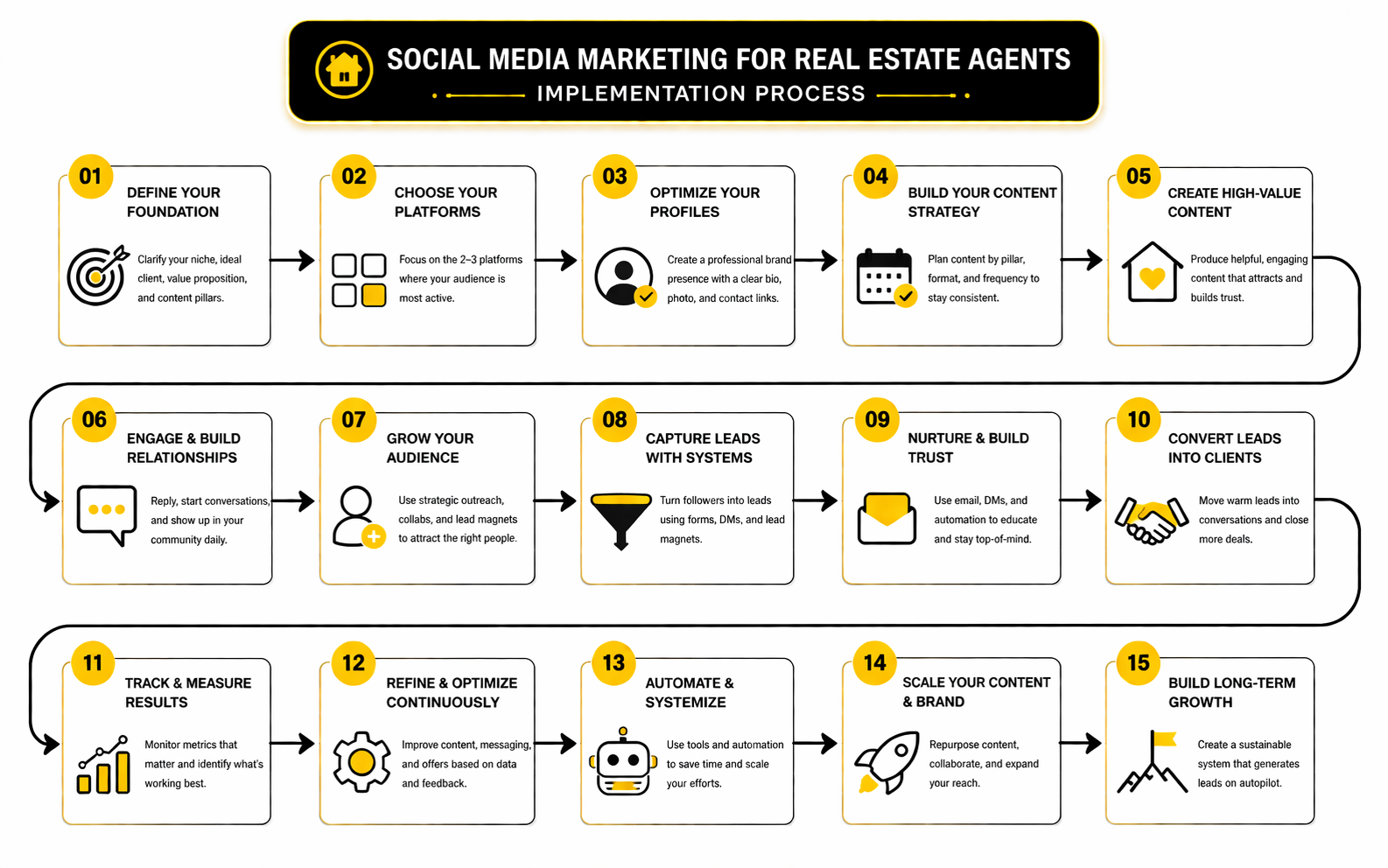
But automation becomes a problem when it pretends to be a relationship. Real estate is too personal for cold, generic drip campaigns that ignore what the person actually asked. A seller who wants pricing guidance does not need ten emails about your brand story. They need a relevant next step.
Use automation for logistics, segmentation, and consistency. Use your actual judgment for the moments that require empathy, negotiation context, market nuance, and trust. The best system feels responsive without feeling robotic.
Direct Message Automation
Direct-message automation can be powerful when the entry point is clear. For example, someone comments “checklist” under a seller prep post, receives the checklist automatically, and then gets a simple question about their timeline. That can reduce friction and help you identify who needs a personal reply.
The risk is overusing it. If every post turns into a keyword funnel, your account starts to feel transactional. Use DM automation for high-intent assets, not every casual topic.
For agents who use Instagram or Facebook heavily, ManyChat can help deliver guides, collect basic answers, and move serious prospects toward a call or CRM. Keep the flow short. The goal is to start a useful conversation, not trap someone in a maze.
Scaling Without Losing Local Authority
Scaling content is tempting. Once a system starts working, agents often want more posts, more platforms, more automation, more ads, and more offers. Some of that can help, but only if the foundation stays local, credible, and human.
The first scaling move should not be posting more. It should be repurposing better. Turn one strong market explanation into a short video, carousel, email, story, blog section, and follow-up message. Turn one neighborhood guide into several buyer-focused clips. Turn one seller prep checklist into a mini-series.
The second scaling move is delegation. A virtual assistant, editor, transaction coordinator, or marketing assistant can help with clipping videos, scheduling posts, updating CRM records, preparing reports, or formatting newsletters. But do not delegate the thinking too early. Your judgment is the part clients are buying.
What To Delegate First
Delegate repeatable tasks before strategic tasks. Editing, scheduling, resizing, basic reporting, database cleanup, and form setup are usually safe to hand off with clear instructions. These tasks take time but do not require the same level of market judgment.
Be careful delegating captions, market commentary, neighborhood opinions, or client-facing responses without review. Those are trust-building assets, and weak execution can damage your positioning. A generic caption written by someone who does not know your market can undo the authority your content is supposed to build.
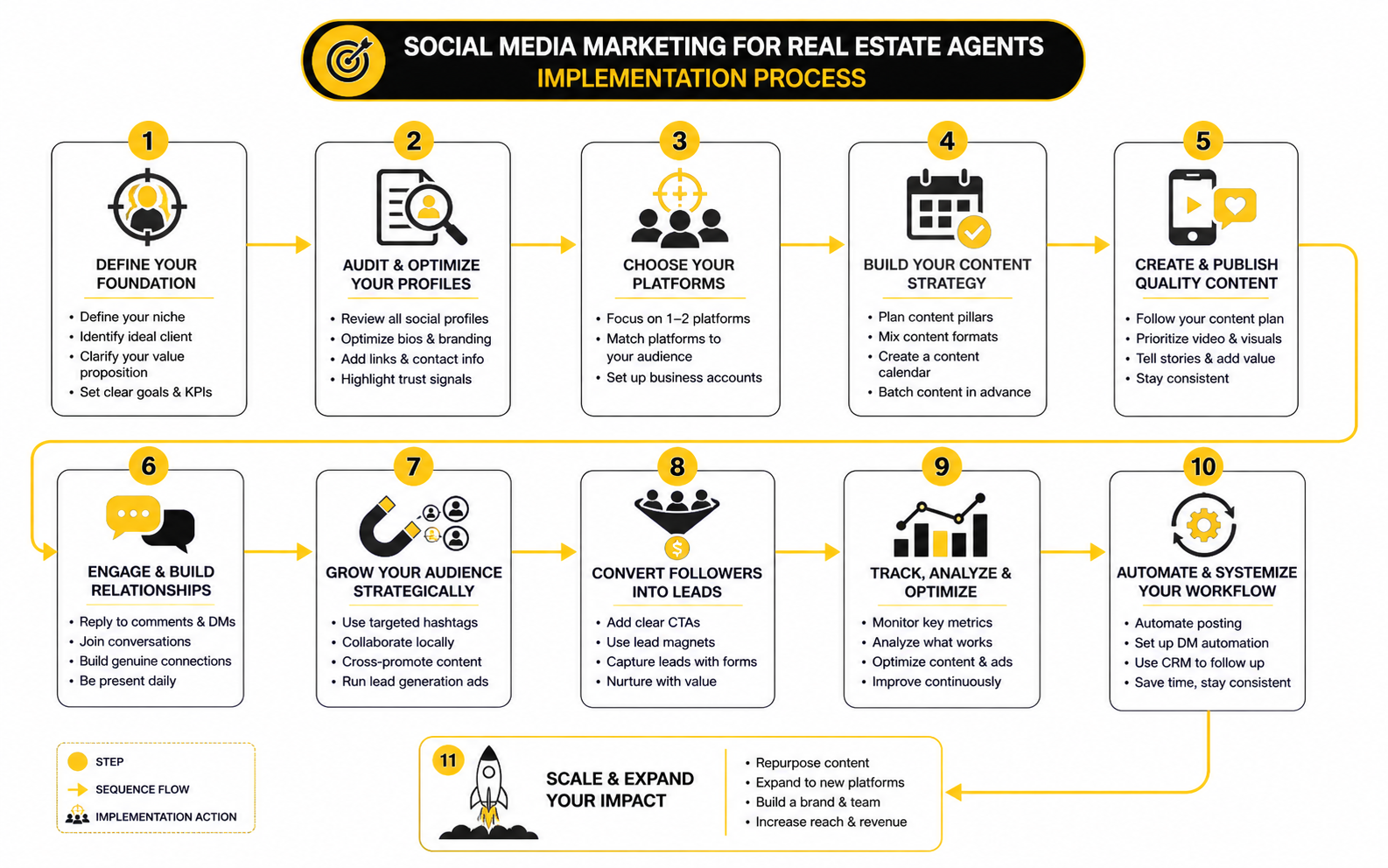
A scheduling tool like Buffer can make delegation easier because the workflow is visible and organized. The agent can approve the message, while someone else handles the publishing details. That is a good division of labor.
Paid Promotion And Retargeting
Paid promotion can help, but it should amplify a working message rather than rescue a weak one. If organic content is creating saves, replies, guide requests, or consultations, paid distribution can push that proven message to more of the right people. If organic content is getting ignored, spending money will usually make the problem more expensive.
For real estate agents, paid promotion is often strongest when used for local awareness, listing exposure, seller guides, buyer webinars, relocation assets, and retargeting people who already engaged. The offer still matters. A boosted post with no next step is just rented attention.
A simple funnel can support paid traffic when the offer is specific. A seller checklist, valuation request, buyer consultation, or relocation guide can send people to a focused page built with ClickFunnels, Systeme.io, or Replo if the agent or team already has a page-building workflow. Keep the page focused on one action. Do not send paid traffic into a cluttered homepage and hope people figure it out.
Retargeting Requires Discipline
Retargeting works best when it respects the stage of the relationship. Someone who watched a seller pricing video may be ready for a valuation offer. Someone who clicked a neighborhood guide may be ready for current listings or a relocation call. Someone who visited a consultation page but did not book may need a softer follow-up.
Do not retarget everyone with the same message. Segment based on the content they consumed and the action they took. This makes your ads feel more relevant and less intrusive.
Also keep compliance in mind. Housing-related advertising is sensitive, especially when targeting, exclusion, automation, or algorithmic delivery is involved. HUD’s guidance on digital advertising explains that the Fair Housing Act applies to housing and real estate-related advertising on digital platforms, including systems that use automated processes and AI in the 2025 digital advertising guidance.
Compliance, Claims, And Reputation Risk
Advanced social media strategy is not only about growth. It is also about risk management. Real estate agents operate in a regulated environment, and the wrong post can create fair housing issues, advertising problems, brokerage policy conflicts, MLS concerns, or reputation damage.
Be careful with language around neighborhoods, schools, safety, demographics, protected classes, investment returns, appreciation, guarantees, and exclusivity. Avoid steering language. Avoid implying that certain people belong in certain areas. Avoid making performance claims you cannot support.
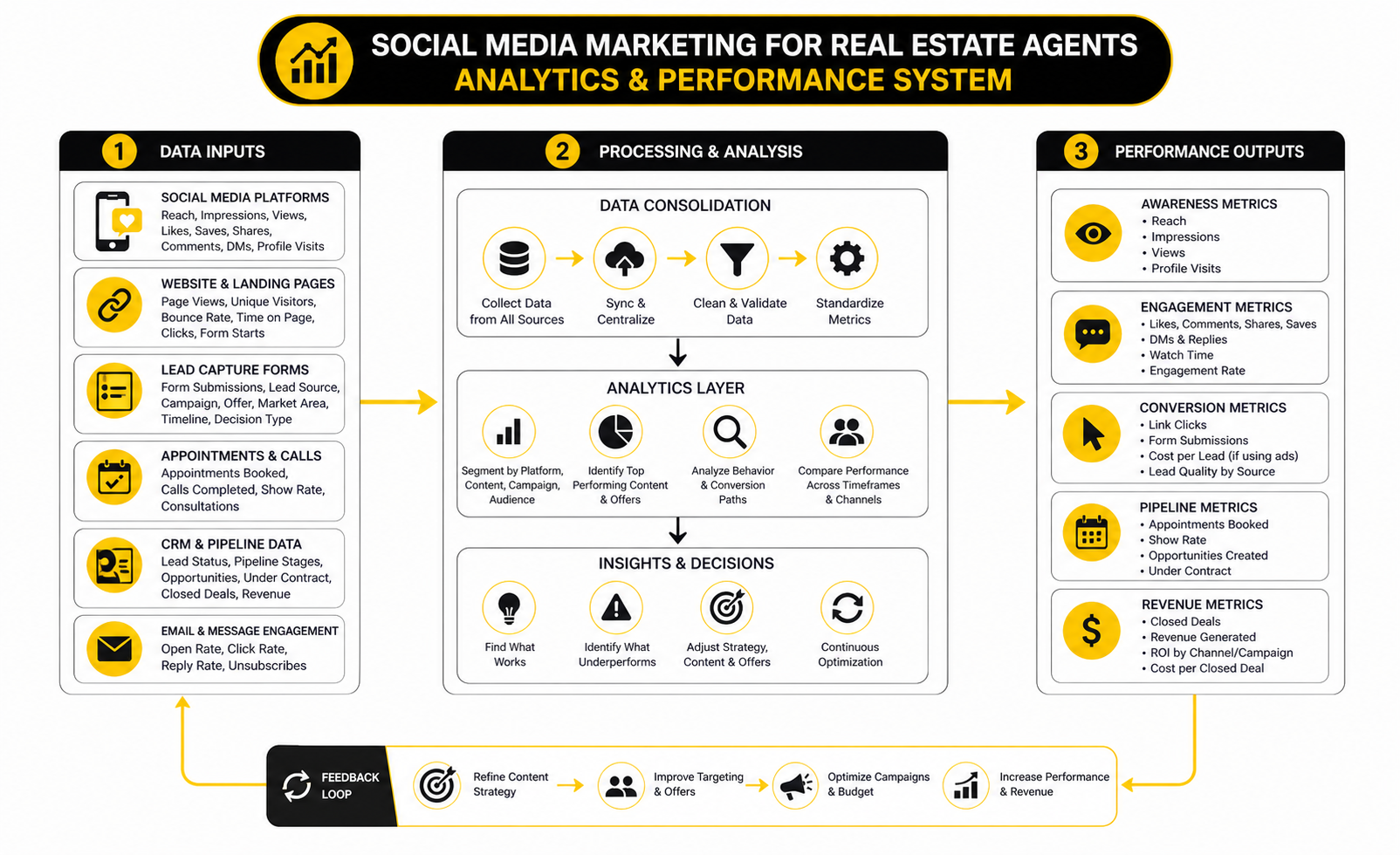
AI adds another layer. Tools can help draft, summarize, transcribe, and repurpose content, but you still own the message. If AI invents a statistic, overstates a market trend, or creates a questionable neighborhood description, that is still your content when you publish it.
Review Before You Publish
A simple compliance review can prevent expensive problems. Before publishing, ask whether the post is accurate, fair, non-discriminatory, locally defensible, and aligned with brokerage rules. If the content discusses pricing, inventory, schools, safety, financing, or investment outcomes, slow down and check it carefully.
For listing content, make sure you have permission to use images, video, property details, client information, and testimonials. For testimonials, follow platform rules, brokerage rules, and any applicable disclosure requirements. Do not create fake urgency, fake scarcity, fake reviews, or fake case studies.
This is where professional discipline matters. Strong marketing should make you more trustworthy, not more exposed. The best agents grow attention while protecting the credibility that attention depends on.
When To Add More Tools
Tools should enter the system when they solve a real bottleneck. If you are inconsistent with publishing, use a scheduler. If leads are slipping through the cracks, use a CRM. If direct messages are repetitive, use a simple automation. If landing pages are unclear, use a focused page builder.
Do not add tools just because the stack looks impressive. More software can create more confusion if the process is not clear. The question is always: what bottleneck does this remove?
A practical stack might include a scheduler, a CRM, a form tool, a booking link, a landing page builder, and a reporting habit. That is enough for many solo agents and small teams. The point is not to build a tech empire. The point is to make every serious signal easier to capture, understand, and follow up on.
The Expert-Level Shift
The expert-level shift is moving from “I need to post” to “I need to manage demand.” Posting is only one part of the system. Demand management includes positioning, content, lead capture, follow-up, pipeline organization, compliance, and client experience.
This shift changes how you think. You stop asking whether a single post went viral and start asking whether your market knows what you stand for. You stop chasing every platform feature and start improving the path from attention to appointment. You stop treating social media as a daily chore and start treating it as a business development channel.
Part 6 will close the guide by tying the system together with optimization, practical next steps, and FAQ. By that point, the goal is clear: build a social media presence that feels human, earns trust, captures demand, and supports real transactions without turning your business into a content hamster wheel.
Build a stronger local presence with BAAM AI
Turn your website, Google profile, social channels, and AI visibility into one growth engine
Most businesses do not need more random marketing activity. They need a consistent presence system that helps the right people find them, trust them, and take action. BAAM AI brings strategy, local SEO, website updates, Google Maps visibility, social content, AI-search readiness, media production, and reporting into one practical monthly engine.
If you want your marketing to keep working after the campaign ends, start with a free BAAM AI presence audit. See how your business shows up today and where the fastest visibility wins are at BAAM AI.