
BAAM AI Blog
Klaviyo Free Trial: The Practical Guide Before You Start
A Klaviyo free trial is not really about “testing an email tool.” It is about finding out whether your store has enough customer data, buying intent, and repeat-purchase potential to justify using a serious lifecycle...
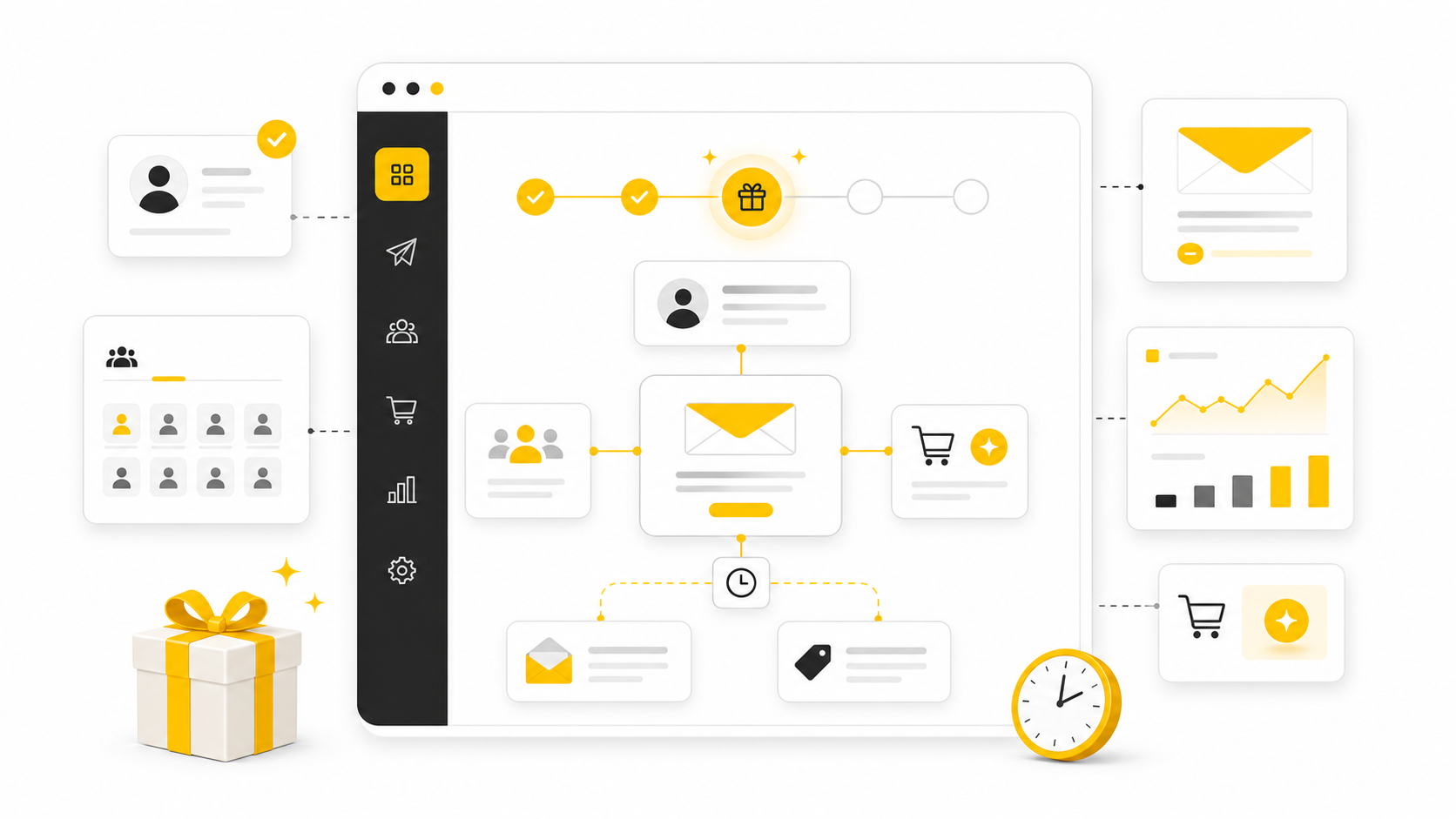
A Klaviyo free trial is not really about “testing an email tool.” It is about finding out whether your store has enough customer data, buying intent, and repeat-purchase potential to justify using a serious lifecycle marketing platform.
That distinction matters. Klaviyo is built for ecommerce and B2C brands that want email, SMS, segmentation, automations, analytics, and customer profiles working together. The official Klaviyo pricing page positions the entry point as a free plan, while Klaviyo’s own investor materials describe the company as a B2C CRM serving more than 193,000 customers as of Q4 FY25 through its built-in data platform, AI, marketing automation, analytics, and service tools.
So the smart question is not just, “Can I get Klaviyo for free?” You can start free. The better question is, “What should I do during the free period so I know whether Klaviyo is worth paying for before my list, message volume, and workflow complexity grow?”
This guide breaks that decision down in a practical way. You will see what the Klaviyo free trial includes, where the limits usually show up, what to set up first, how to judge early performance, and when a different platform may make more sense.
Why the Klaviyo Free Trial Matters
The Klaviyo free trial matters because email and SMS are not side channels for a serious ecommerce brand. They are owned channels, which means you are not fully dependent on ad platforms, marketplace algorithms, or social reach to bring customers back. That becomes more important as acquisition costs rise and brands need more revenue from people they already paid to acquire.
Klaviyo’s appeal is that it connects customer behavior with messaging. A visitor joins a list, views a product, starts checkout, buys, reviews, comes back, or goes quiet, and those events can shape what they receive next. That is very different from sending the same newsletter to everyone and hoping the timing works.
The free period is your chance to prove whether that data is useful in your business. A small list can still teach you a lot if you test the right flows, segments, and reporting. A large list can still waste time if you only import contacts, send one campaign, and call that a trial.
How the Klaviyo Free Trial Fits Into the Buying Decision
A Klaviyo free trial should be treated like a buying decision with a scoreboard. You are not just browsing templates or clicking through menus. You are checking whether Klaviyo can help you capture more subscribers, recover more abandoned carts, increase repeat purchases, and understand which messages actually influence revenue.
That does not mean you need a perfect setup on day one. It means the trial needs a clear sequence. Start with the ecommerce integration, confirm that customer and product data are syncing correctly, then build the flows most likely to produce measurable results.
The biggest mistake is testing Klaviyo like a generic newsletter app. Klaviyo becomes valuable when behavior, segmentation, timing, and revenue reporting are connected. If you ignore those pieces, the tool will look more complicated than it really is and less profitable than it can be.
Klaviyo Free Trial Framework
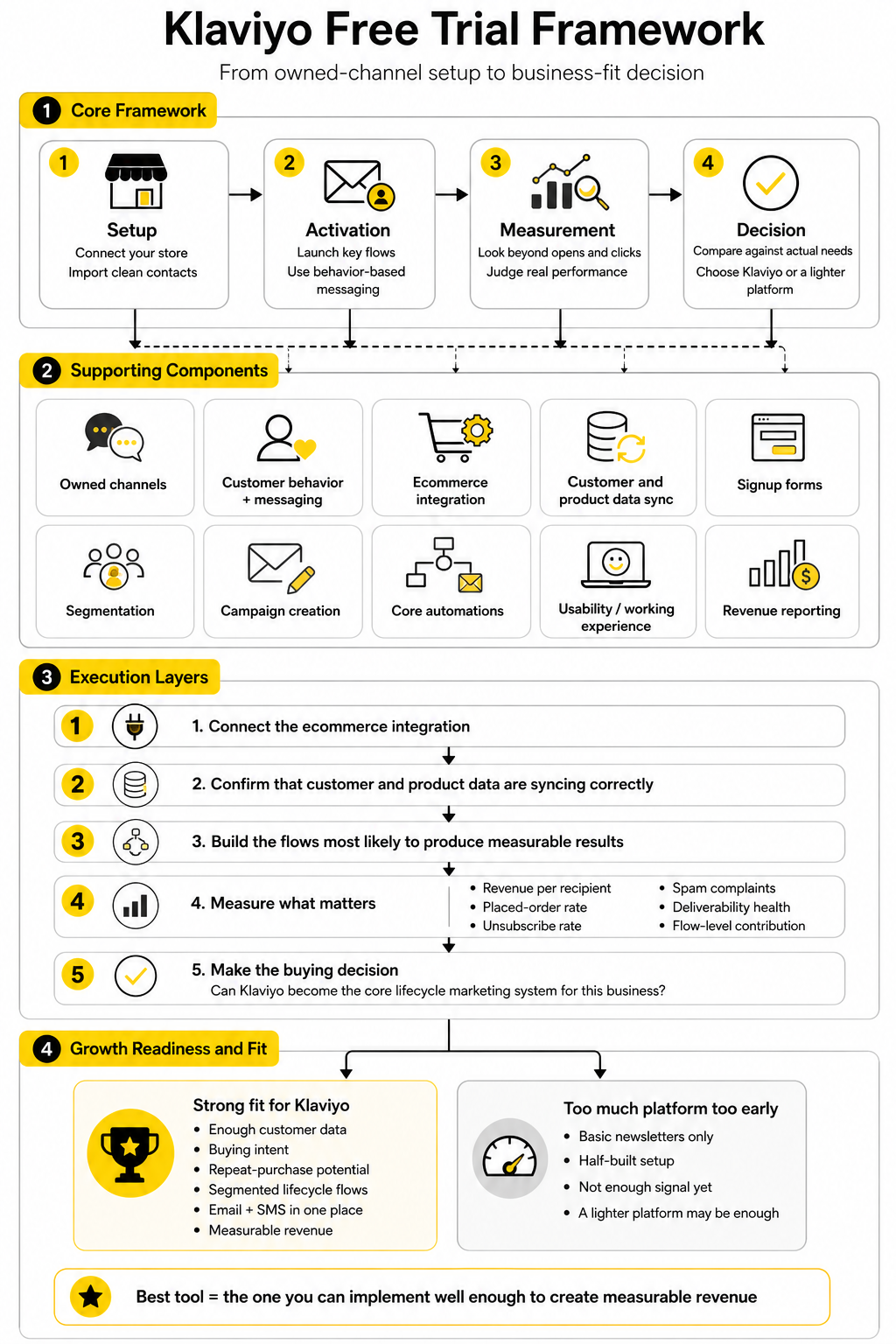
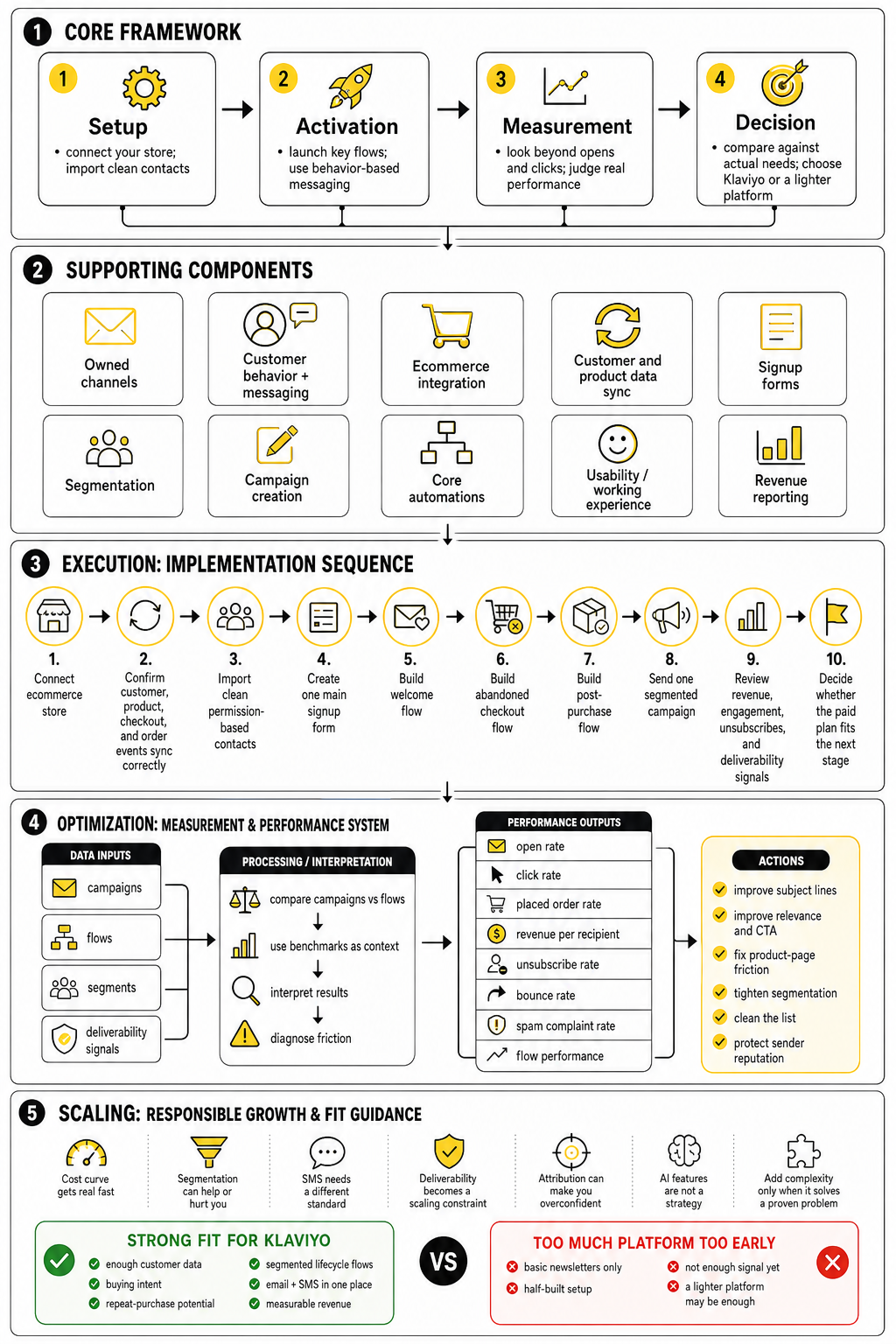
A useful Klaviyo free trial has four moving parts: setup, activation, measurement, and decision. Setup is about connecting your store and importing clean contacts. Activation is about launching the few automations that can show value quickly.
Measurement is where most brands get lazy. You need to look beyond opens and clicks because those metrics do not tell the whole story. Revenue per recipient, placed-order rate, unsubscribe rate, spam complaints, deliverability health, and flow-level contribution give you a more realistic view.
The decision stage is where you compare Klaviyo against your actual needs. If your store depends on Shopify data, segmented lifecycle flows, and email plus SMS in one place, Klaviyo may earn its keep quickly. If you only need basic newsletters, a lighter platform such as Brevo, Moosend, or Systeme.io may be enough.
What this guide Will Help You Decide
By the end of the full guide, you should know whether Klaviyo is a good fit for your current stage or whether it is too much platform too early. That is the real point. The best tool is not the one with the longest feature list; it is the one you can implement well enough to create measurable revenue.
this guide will also help you avoid the common free-trial trap: judging software before you have configured it properly. Klaviyo needs clean data, thoughtful segments, and the right flows before it can show its value. Without that foundation, you are not testing Klaviyo; you are testing a half-built setup.
The next section will walk through how the Klaviyo free trial works in practice, including what you can usually do for free, where pricing starts to matter, and what to check before you commit to a paid plan.
How the Klaviyo Free Trial Works
The Klaviyo free trial is best understood as a free plan you can use to test the platform before you commit to a paid tier. You can create an account, connect your store, bring in customer data, build forms, create email campaigns, set up automations, and review performance without paying upfront. The important detail is that the free experience is limited by account size and sending volume, so it is not designed for a full-scale launch if you already have a large list.
For most brands researching a Klaviyo free trial, the practical limit is the real decision point. The free plan is useful when you are under the contact and monthly send thresholds, but it becomes restrictive once you need to email a larger list or run multiple active flows at the same time. That is not a flaw; it simply means the free plan is a testing environment, not a long-term growth plan for a serious ecommerce operation.
Think of it like a controlled pilot. You are not trying to prove every possible use case. You are trying to prove whether Klaviyo can connect with your store, organize your customer data, launch the right lifecycle messages, and show enough signal to justify upgrading.
What You Can Usually Test for Free
The first thing to test is the store integration. If you use Shopify, WooCommerce, BigCommerce, Magento, or another supported ecommerce platform, Klaviyo’s value depends heavily on whether customer, product, checkout, and order events sync cleanly. Without that data, Klaviyo becomes just another email editor, and that is not where it shines.
You should also test signup forms, basic segmentation, campaign creation, and core automations. A welcome flow, abandoned checkout flow, and post-purchase flow are usually enough to understand whether the platform fits your business. You do not need twenty flows during the trial; you need a few flows that touch the highest-intent moments in the customer journey.
The free plan also lets you judge the working experience. Is the editor comfortable? Are the segments easy to understand? Can you find the metrics that matter without digging through menus for an hour? Those small usability details matter because the platform you choose will become part of your weekly marketing workflow.
Where the Free Plan Starts to Feel Limited
The free plan starts to feel tight when your list grows, your send frequency increases, or your team wants to test more advanced lifecycle campaigns. If you have a bigger audience, you may hit the send ceiling before you have enough data to make a fair judgment. In that case, the trial still helps with setup validation, but it may not be enough for a complete revenue test.
Support is another point to watch. Free plans often include more limited support than paid plans, so you should not build your entire launch around needing hands-on help at every step. If your store has complex data, custom events, international catalogs, or multiple brands, you need to account for implementation time before judging the tool.
This is where simpler platforms can make sense for leaner businesses. If you mainly need basic newsletters, lightweight automation, and a lower learning curve, Brevo, Moosend, or Systeme.io may be easier to justify. Klaviyo makes more sense when ecommerce behavior, segmentation, and revenue attribution are central to your marketing.
The Right Mindset Before You Start
Do not start the Klaviyo free trial by designing a pretty newsletter. Start by deciding what proof would make the platform worth paying for. That proof might be a working abandoned checkout flow, cleaner customer segments, better subscriber capture, or a clearer view of revenue from email.
A good trial has a focused goal. For example, you might decide that Klaviyo needs to successfully sync your store data, collect new subscribers through one form, and launch three essential automations before you consider upgrading. That gives you a fair test without turning the trial into a messy software tour.
You should also decide what you will not test yet. Loyalty programs, advanced personalization, predictive analytics, and deep SMS strategy can wait if your foundation is not ready. The free trial should answer the basic question first: can Klaviyo become the core lifecycle marketing system for this business?
When You Should Upgrade From Free
You should consider upgrading when the free limits prevent you from testing the real version of your marketing strategy. If you can only send to a small slice of your audience, you may not be seeing Klaviyo’s real upside. If your flows stop because you hit a sending limit, your trial results become distorted.
The upgrade decision should be tied to expected revenue, not emotion. If you already have steady traffic, active buyers, and a growing list, paying for Klaviyo may be a rational move because the platform can work across acquisition, conversion, retention, and winback. If your store has almost no traffic or customer data yet, the better move may be to build demand first and come back when there is more signal to work with.
For funnel-heavy businesses that need landing pages, checkout paths, and simple email follow-up in one place, ClickFunnels may be a more direct starting point. For agencies or service businesses managing pipelines, appointments, automations, and client communication, GoHighLevel may fit better than an ecommerce-first platform. The point is not that one tool is universally better; the point is that your free trial should match the business model you are actually running.
Core Components to Test First
Before you judge the Klaviyo free trial, you need to test the pieces that actually affect revenue. Not every feature deserves your attention during the first pass. The goal is to build a working lifecycle system, not explore every menu inside the platform.
Start with the components that sit closest to purchase intent. That means your ecommerce integration, signup form, welcome flow, abandoned checkout flow, post-purchase flow, and reporting view. If those six pieces are working, you can make a much better decision about whether Klaviyo deserves a paid spot in your stack.
This is also where the free trial becomes useful in a very practical way. You are not guessing from sales pages or feature lists. You are seeing how your own store data behaves inside the system.
Store Integration
Your store integration is the foundation. If customer profiles, product views, checkout starts, purchases, and order history are not coming through correctly, everything built on top of that data becomes weaker. This is why the first real task inside the Klaviyo free trial should be checking the integration before writing a single email.
Do not assume the connection is fine just because the app says it is installed. Open customer profiles, check recent events, confirm product data, and make sure orders are attached to the right people. This sounds basic, but it prevents a lot of messy troubleshooting later.
A clean integration gives you the raw material for segmentation and automation. Without it, you are stuck sending broad campaigns to broad lists. With it, Klaviyo can respond to what people actually do in your store.
Signup Form
Your signup form is the first place Klaviyo can create new value. A visitor who is not ready to buy may still be willing to join your list if the offer is clear, relevant, and easy to understand. That makes the form more than a design element; it is a customer acquisition asset.
During the trial, keep the form simple. Test one strong offer, one clear headline, and one clean placement before you start adding complicated targeting rules. You need to know whether Klaviyo can help you capture subscribers without hurting the shopping experience.
The form should also send people into the right welcome flow immediately. A subscriber who joins today is warm right now. Waiting days to follow up is one of the easiest ways to lose momentum.
Welcome Flow
The welcome flow is usually the first automation to build because it introduces the brand while attention is still fresh. This is where you explain what makes the store different, show bestsellers, answer common buying objections, and create a clean path back to the site. It should feel helpful, not desperate.
A good welcome flow does not need to be long during the Klaviyo free trial. Three to five emails can be enough to test the basic sequence. The first message confirms the signup and delivers the promise, the next messages build trust, and the final message gives the subscriber a reason to act.
Keep the structure tight. If every email tries to say everything, the flow becomes noise. Each message should have one job and one obvious next step.
Abandoned Checkout Flow
The abandoned checkout flow is one of the most important trial tests because it connects directly to purchase recovery. These are not cold subscribers. These are people who showed buying intent and left before completing the order.
That does not mean you should blast them with discounts immediately. Start by reminding them what they left behind, reducing friction, and answering the question that may have stopped them. Shipping, returns, sizing, trust, payment options, and delivery timing often matter more than another coupon.
During the trial, make sure the trigger and filters are working correctly. The flow should target people who started checkout but did not buy, and it should stop for anyone who completes the purchase. If this logic is wrong, the entire test becomes unreliable.
Professional Implementation Plan
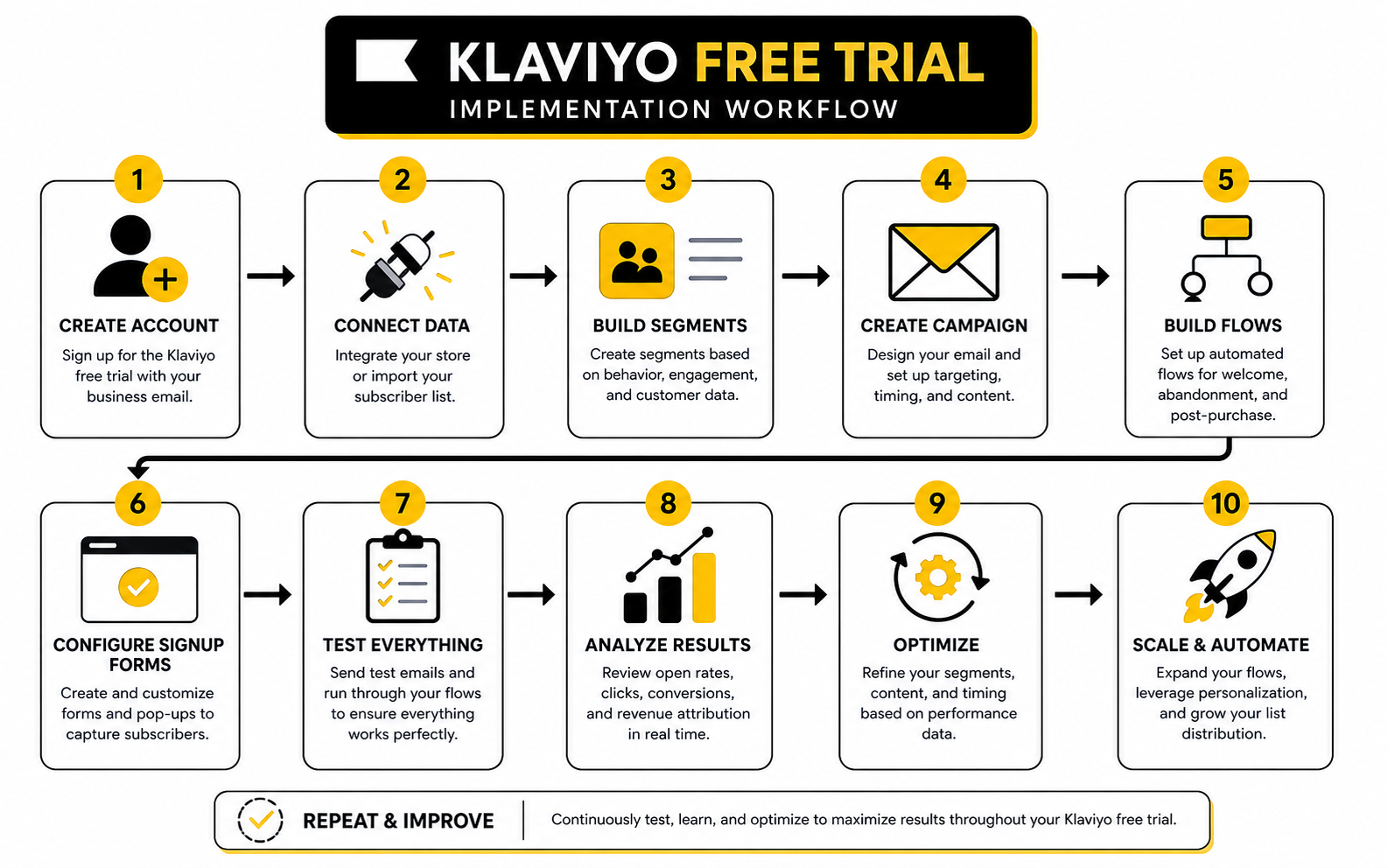
A professional Klaviyo free trial implementation should follow a simple order: connect, verify, build, launch, measure, and decide. That order matters because each step depends on the one before it. When brands skip verification and jump straight into campaigns, they usually create problems they could have avoided in the first hour.
The process does not need to be complicated. It needs to be disciplined. You want a clean enough setup to make a real buying decision, without turning the trial into a full migration project before the tool has earned it.
Use this process as your working path:
Step 1: Connect and Verify Your Data
The first step is not glamorous, but it is the step that protects everything else. Connect your store, then verify that the right events are appearing inside customer profiles. Look for recent activity from real customers instead of relying only on test data.
You should check whether orders, checkout starts, product interactions, and email consent are mapped correctly. If your data is messy, your segments will be messy too. That is a bad way to judge any marketing platform.
This is also the point where you should clean your list. Importing old, cold, or questionable contacts into a new Klaviyo account can damage performance before you have even started. A smaller engaged list is more useful than a bloated list full of people who no longer care.
Step 2: Build the First Three Flows
Once the data is verified, build the first three flows: welcome, abandoned checkout, and post-purchase. These flows cover three different moments: new interest, buying hesitation, and customer retention. Together, they give you a practical view of how Klaviyo handles the customer journey.
Do not overbuild these flows during the trial. The point is to launch clean versions that can collect useful data. You can always add branches, splits, personalization, and deeper logic once you know the foundation works.
For the welcome flow, focus on trust and first purchase. For the abandoned checkout flow, focus on recovery and friction removal. For the post-purchase flow, focus on reassurance, product education, and the next logical step.
Step 3: Create One Segmented Campaign
After the core flows are live, send one campaign to a specific segment instead of blasting everyone. For example, you might send to recent subscribers who have not purchased, past buyers of a certain category, or engaged contacts who clicked recently. The segment should have a clear reason to exist.
This campaign gives you a different kind of signal than automations. Flows tell you how Klaviyo performs when behavior triggers the message. Campaigns tell you whether you can use Klaviyo to plan and send relevant promotions without treating your whole list the same.
Keep the campaign focused on one offer, one audience, and one action. A trial campaign is not the place to test five messages at once. You want clean feedback that helps you decide what to improve next.
Step 4: Measure the Right Signals
The biggest trap in the Klaviyo free trial is judging only by opens. Opens can be useful, but they are not enough. You need to look at clicks, placed orders, revenue per recipient, unsubscribes, spam complaints, and whether your flows are triggering correctly.
You should also compare campaign behavior against flow behavior. If flows perform better than campaigns, that may show that behavior-based messaging is the real opportunity. If campaigns perform well but flows are weak, your automation timing or message structure may need work.
Do not expect perfect results from a brand-new setup. The better question is whether the platform gives you enough visibility to improve. If Klaviyo shows you where the money, friction, and engagement are, the trial has done its job.
Statistics and Data
The Klaviyo free trial becomes useful when you stop treating analytics like a scoreboard and start treating them like a diagnostic system. A high open rate can make you feel good, but it does not prove that the trial is working. A low click rate can look bad, but it may simply mean the audience, offer, or message timing was wrong.
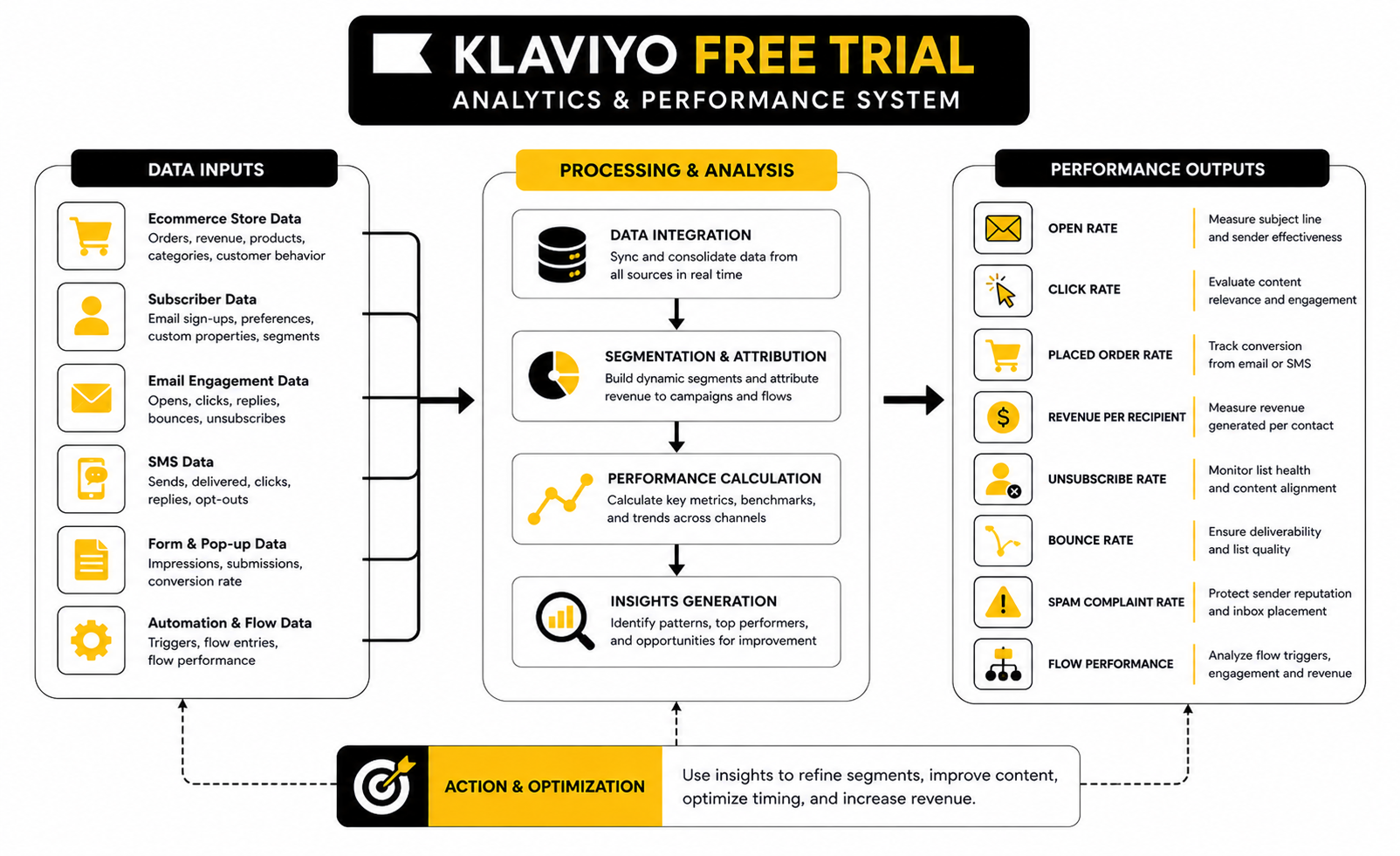
The numbers matter because each metric points to a different part of the customer journey. Opens tell you whether the subject line and sender reputation are strong enough to earn attention. Clicks tell you whether the message created enough interest to move someone back to the store. Orders and revenue per recipient tell you whether the campaign or flow actually influenced buying behavior.
This is why you should not judge the Klaviyo free trial from one campaign. You need to compare different message types, especially campaigns versus flows. Campaigns test planned promotions, while flows test behavior-based timing, and those are two very different marketing jobs.
The Benchmarks That Actually Matter
Klaviyo’s 2026 email benchmark data shows average campaign open rates around 31%, average campaign click rates around 1.69%, and average campaign placed order rates around 0.16% across industries in its dataset. The same benchmark data shows automated email flows performing differently, with average flow click rates around 5.58%, which makes sense because flows are triggered by customer behavior rather than broad promotional timing. You can review those figures in Klaviyo’s own email marketing benchmark data.
Do not use those numbers as a pass-or-fail test. Benchmarks are context, not law. A store selling high-consideration products may have fewer orders per send but stronger revenue per purchase, while a replenishment brand may convert faster because the buying cycle is shorter.
The better move is to use benchmarks to spot direction. If your campaign click rate is far below average, the offer, creative, segment, or call to action may be weak. If your flow click rate is much stronger than your campaign click rate, that is a clear signal that behavior-based messaging deserves more attention.
Campaign Metrics Versus Flow Metrics
Campaign metrics tell you how your list responds to planned communication. These are newsletters, product launches, promotions, seasonal pushes, and content-driven emails. They are useful, but they are also more exposed to audience fatigue because the message is based on your marketing calendar, not necessarily the customer’s immediate behavior.
Flow metrics tell you how customers respond when the timing is connected to an action they already took. Someone who just subscribed, abandoned checkout, bought a product, or became inactive is in a specific moment. That timing is why flows often produce stronger intent signals than general campaigns.
During the Klaviyo free trial, separate these two categories in your review. If you mix campaign and flow performance together, you will not know what is actually working. A weak campaign does not mean Klaviyo is weak, and a strong abandoned checkout flow does not mean every campaign will perform.
How to Read Open Rates
Open rates are useful, but they are easy to overvalue. They are influenced by subject lines, sender name, list quality, inbox placement, audience familiarity, and privacy-related tracking limitations. A strong open rate means people are giving you attention, but attention alone does not pay for the platform.
If open rates are low during the trial, first check the basics. Make sure your sender name is recognizable, your subject line is specific, and your list is not full of cold contacts. Also check whether you sent to a segment that had a real reason to care about the message.
If open rates are healthy but clicks are weak, the problem is usually not the inbox. It is usually the message. That means the email may be too vague, too crowded, too promotional without enough reason, or disconnected from what the audience expected when they joined.
How to Read Click Rates
Click rate is one of the cleanest signals inside the Klaviyo free trial because it shows whether people found the email compelling enough to act. A click is not a purchase, but it is stronger than an open. It tells you the email created movement.
If clicks are weak, do not immediately blame the platform. Look at the offer, audience match, layout, and call to action. A broad campaign sent to everyone will usually struggle more than a focused message sent to a segment with clear intent.
For flows, click rate can tell you whether the sequence is doing its job. A welcome flow should move subscribers toward product discovery, proof, or first purchase. An abandoned checkout flow should move people back to the cart or checkout. A post-purchase flow should move people toward confidence, education, review, replenishment, or the next logical product.
How to Read Revenue Per Recipient
Revenue per recipient is where the trial starts becoming a business decision. It helps you compare the money generated from each send against the cost of the platform, the effort required to manage it, and the opportunity cost of using something simpler. This is much more useful than asking whether the email “looked good.”
Klaviyo’s benchmark page lists revenue per recipient as a core comparison metric because it connects engagement to commercial outcome. That matters because a campaign with fewer clicks can still be valuable if the buyers who clicked placed larger orders. It also matters because a high-click email with no revenue may be creating curiosity without purchase intent.
During the free trial, look at revenue per recipient by message type. Compare welcome emails, abandoned checkout emails, post-purchase emails, and campaigns separately. The goal is not to find one magic number; the goal is to see where Klaviyo creates the clearest economic signal.
How to Read Deliverability Signals
Deliverability is not exciting, but it can quietly decide whether your Klaviyo free trial succeeds. If emails do not reach the inbox, the best copy and offer will not matter. This is why bounce rate, unsubscribe rate, and spam complaint rate deserve serious attention from the beginning.
Klaviyo’s deliverability guidance treats a bounce rate below 1%, unsubscribe rate below 0.3%, and spam complaint rate below 0.01% as healthy ranges for negative engagement. Klaviyo’s deliverability FAQ also notes that Gmail advises senders to stay under a 0.1% spam complaint threshold and that higher complaint levels can create serious inbox problems. You can review the details in Klaviyo’s deliverability monitoring guidance and email deliverability FAQ.
The action is simple: protect the list. Send to people who gave permission, avoid importing questionable contacts, set expectations clearly on signup forms, and stop sending broad campaigns to people who never engage. A smaller engaged audience is usually more profitable than a large list that damages your sender reputation.
What Good Trial Data Looks Like
Good trial data does not have to mean huge revenue in the first few days. It means the system is giving you clean, useful signals. You can see which segments respond, which flows trigger correctly, which messages create clicks, and which emails generate orders.
A strong Klaviyo free trial usually shows at least one of three things. First, the flows create more intent than general campaigns. Second, segmented campaigns outperform broad sends. Third, the platform makes it easier to understand customer behavior than your previous setup.
If none of those things happen, do not rush to blame the tool. Check whether the setup was fair. If the data sync was incomplete, the list was cold, the offer was weak, or the flows barely had time to run, the trial did not produce a reliable answer.
What Bad Trial Data Is Telling You
Bad data is still useful when you know how to read it. Low opens usually point to deliverability, sender recognition, subject lines, or list quality. Low clicks usually point to weak message relevance, unclear offers, poor segmentation, or a call to action that does not match the reader’s intent.
Low orders with decent clicks can mean the email did its job but the product page, pricing, shipping, trust signals, or checkout experience created friction. This is important. Klaviyo can bring people back to the store, but it cannot fix a confusing product page or an offer people do not want.
High unsubscribes or spam complaints are more serious. They usually mean the audience did not expect the message, did not recognize the sender, or no longer wants that frequency. During the free trial, that is a warning to slow down, tighten segmentation, and clean the list before scaling.
The Decision Scorecard
The best way to finish the measurement stage is with a simple decision scorecard. You do not need a complicated spreadsheet. You need a clear answer to whether Klaviyo helped you understand and improve your lifecycle marketing.
Use these questions after the trial data starts coming in:
If the answer is mostly yes, the Klaviyo free trial did its job. You now have evidence that the platform can support a more serious email and SMS strategy. If the answer is mostly no, you either need to fix the implementation before judging it or choose a simpler tool that better matches your current stage.
Advanced Considerations Before You Scale
Once the Klaviyo free trial gives you early signal, the next question is not just whether the platform works. The next question is whether your business is ready to scale it responsibly. That means thinking about cost, data quality, deliverability, SMS compliance, team workload, and the limits of automation.
This is where a lot of brands get sloppy. They see a few early wins, turn on more flows, send more campaigns, add SMS, and assume more activity means more revenue. Sometimes it does, but sometimes it creates list fatigue, rising costs, messy attribution, and weaker customer experience.
A strong Klaviyo setup is not about sending more messages. It is about sending better-timed messages to better-defined audiences with a clear commercial reason behind each touchpoint. That is the difference between lifecycle marketing and inbox noise.
The Cost Curve Gets Real Fast
Klaviyo pricing scales with active profiles and channel usage, so your cost can rise as your list grows. The free plan can be useful for testing, but it is capped at up to 250 active profiles, 500 monthly email sends, and 150 mobile messaging credits on the current Klaviyo pricing page. That makes the free tier helpful for setup and early proof, not a replacement for a paid plan once email becomes a serious revenue channel.
The practical issue is not that Klaviyo costs money. Good tools should cost money if they help you make better decisions and create measurable revenue. The issue is whether your revenue per recipient, repeat purchase behavior, and customer lifetime value can support the platform as your audience grows.
Before upgrading, estimate the cost at your next few list milestones. Look at where you are now, where you will be in three months, and where you could be in twelve months. If the economics only work at your current list size but break at scale, you need to know that before you build your whole lifecycle system around it.
Segmentation Can Help or Hurt You
Segmentation is one of Klaviyo’s biggest strengths, but it can also become a trap. It is easy to create dozens of segments that look sophisticated but never improve decision-making. More segments do not automatically mean better marketing.
Start with segments that change what you actually send. Recent buyers, non-buyers, high-intent browsers, VIP customers, inactive subscribers, category buyers, and discount-sensitive customers can all support different messages. A segment is only useful when it leads to a better offer, better timing, or better exclusion.
The advanced move is using segmentation to avoid bad sends, not just create clever ones. Excluding recent purchasers from an irrelevant discount campaign can protect margin and customer trust. Suppressing inactive contacts can protect deliverability. Separating first-time buyers from repeat buyers can help you avoid treating loyal customers like strangers.
SMS Needs a Different Standard
SMS can be powerful, but it is not just “email with fewer words.” It is more personal, more interruptive, and more sensitive from a compliance perspective. Klaviyo’s own SMS compliance guidance frames compliance around proper consent, appropriate message content, and sending rules, which is exactly how you should think about it before adding SMS to your trial strategy.
Do not add SMS just because credits are available. Add it only when the message deserves the channel. Order updates, time-sensitive offers, replenishment reminders, appointment-style notices, and high-intent cart recovery can make sense, but generic promotional blasts can burn trust quickly.
You also need to understand the cost side. SMS usage can scale differently from email, especially across countries and carrier rules. If your audience is international or your margins are tight, test SMS carefully before making it a central part of your retention strategy.
Deliverability Becomes a Scaling Constraint
When your list is small, deliverability problems can feel invisible. As your list grows, those problems become expensive. A weak sender reputation can reduce inbox placement, which means lower engagement, weaker revenue, and misleading campaign data.
Klaviyo’s sending-domain guidance explains that a branded sending domain gives a brand more control over sender reputation, while its domain-warming guidance emphasizes gradually building reputation with inbox providers when moving to a new email service provider. That matters because scaling too quickly from a new setup can create problems that look like bad copy, bad offers, or bad software when the real issue is trust with mailbox providers. You can review Klaviyo’s branded sending domain guide and domain warming process for the technical details.
The strategic takeaway is simple. Do not treat the Klaviyo free trial like a reason to email everyone immediately. Start with engaged contacts, prove that people want the messages, then expand carefully.
Attribution Can Make You Overconfident
Klaviyo can show revenue connected to campaigns and flows, but attribution still needs judgment. A customer may receive an abandoned checkout email, click later, return through search, and buy after seeing a retargeting ad. The email mattered, but it may not deserve all the credit.
That does not make Klaviyo reporting useless. It makes it something you need to interpret. Attribution is a decision tool, not a perfect truth machine.
Look for patterns instead of obsessing over one number. If abandoned checkout consistently contributes revenue, that is useful. If post-purchase education lowers support questions or increases repeat buying over time, that is useful. If broad campaigns show attributed revenue but unsubscribes spike every time, that revenue may be more expensive than it looks.
AI Features Are Not a Strategy
Klaviyo has been moving deeper into AI and B2C CRM, and its 2025 investor reporting described the company’s direction around customer service, marketing analytics, and AI-powered customer experiences. That is relevant because the platform is no longer just an email tool; it is trying to become a broader customer intelligence and activation layer.
Still, AI will not fix weak positioning, bad offers, poor product-market fit, or lazy segmentation. AI can help with content creation, prediction, personalization, and workflow speed, but it needs clean inputs and a clear strategy. If your data is messy, AI will simply help you act on messy data faster.
Use AI as an accelerator, not a substitute for thinking. The question is not, “Can Klaviyo generate something for me?” The question is, “Can this feature help me make a better decision, send a more relevant message, or reduce manual work without lowering quality?”
When Klaviyo Is the Wrong Fit
Klaviyo is not the right fit for every business. If you do not have ecommerce behavior data, repeat purchase potential, meaningful traffic, or a growing permission-based list, you may not get enough value from the platform yet. In that case, the Klaviyo free trial may show you that the tool is strong, but your business is not ready for it.
If your priority is building funnels, landing pages, checkout sequences, and simple follow-up, ClickFunnels may be the more direct system. If you are running a service business, agency, local business, or client pipeline where CRM, appointments, lead follow-up, and automation matter more than ecommerce events, GoHighLevel may fit the operating model better. If you want simpler email marketing without a heavy ecommerce automation layer, Brevo or Moosend may be easier to run.
This is not a downgrade. It is fit. The wrong tool used too early becomes another cost center, while the right tool at the right stage becomes leverage.
The Scaling Rule That Keeps You Honest
The safest way to scale after the trial is to add complexity only when it solves a proven problem. Do not build a VIP flow until you have enough repeat buyers. Do not create category-specific automations until category behavior is meaningful. Do not launch SMS until you have a message important enough to justify the interruption.
This rule keeps your account clean and your strategy focused. Every flow, segment, campaign, and channel should earn its place. If it does not change timing, relevance, revenue, retention, or customer experience, it is probably clutter.
A Klaviyo free trial is successful when it gives you a clear next move. Maybe that move is upgrading and building a deeper lifecycle system. Maybe it is cleaning your list, improving your offer, or choosing a simpler platform for now. Either way, the trial should leave you with a decision, not just another login.
Klaviyo Free Trial FAQ and Final Recommendation
At this point, the Klaviyo free trial should no longer feel like a vague software test. You have looked at setup, core flows, measurement, scaling risks, cost behavior, segmentation, SMS, deliverability, and fit. Now the final decision comes down to one thing: does Klaviyo help your business make better lifecycle marketing decisions than your current setup?
That is the standard I would use. Not hype. Not feature count. Not whether the dashboard looks impressive. If the platform helps you turn customer behavior into timely emails, clearer segments, healthier retention, and measurable revenue, it is doing the job.
Is there a Klaviyo free trial?
Klaviyo offers a free plan rather than a traditional short-term trial that expires after a fixed number of days. The current free plan includes up to 250 active profiles, 500 monthly email sends, and 150 mobile message credits on the official Klaviyo pricing page. That makes it useful for testing the platform, setting up your store connection, and launching basic email automation before paying.
The important thing is to treat the free plan as a controlled test. It is not built for a large list or a full ecommerce retention program. Once your audience and sending needs grow, you will need to compare paid pricing against the revenue and time savings Klaviyo can create.
What is included in the Klaviyo free trial?
The free plan lets you create an account, import or sync contacts, use email and SMS editors, build automations, create segments, and review reporting inside the platform. Klaviyo’s own pricing page describes the free plan as including essential marketing tools for small businesses and startups. For a new or smaller store, that is enough to test the foundation.
You should use that access to validate the basics first. Connect your ecommerce store, check that customer and order data sync correctly, build one form, and launch the first few lifecycle flows. That will tell you much more than browsing templates or sending one generic newsletter.
Does the Klaviyo free trial require a credit card?
Klaviyo’s current public pricing page presents the free plan as a start-free option, but account signup requirements can change. The safest move is to check the signup screen directly before creating the account. Do not assume every SaaS free plan handles billing details the same way.
From a practical standpoint, the payment field matters less than the limit structure. The bigger question is whether your profile count and monthly sends fit inside the free plan long enough to run a fair test. If you already have more than 250 active profiles, the free plan may become restrictive quickly.
How long does the Klaviyo free trial last?
The free plan does not work like a typical seven-day or fourteen-day trial. It is tied to usage limits rather than a simple countdown. You can stay on the free plan while you remain within the free plan limits, but sending capacity and profile limits will shape what you can actually test.
That is why you should not waste the early setup period. Build the essential pieces quickly and use the trial for real signal. A free account that sits untouched for weeks teaches you nothing.
What happens if I go over the free plan limits?
Klaviyo’s help documentation explains that free plans are limited to 500 emails per month and 250 profiles, and that going over those limits can block sending until you reduce profiles, wait for the next monthly reset, or upgrade. Klaviyo also notes that reaching the email limit may affect flow email delivery because additional messages cannot continue sending. You can review the details in Klaviyo’s guide to how free and paid plans differ.
This matters because hitting limits can distort your trial results. If an abandoned checkout flow stops sending because you used up the monthly email allowance, the flow did not really fail. The test failed because the account ran out of capacity.
Is Klaviyo worth it for a small ecommerce store?
Klaviyo can be worth it for a small ecommerce store if the store has enough traffic, purchase activity, and repeat-purchase potential to benefit from lifecycle marketing. A small list is not automatically a problem. A small list with real intent can still produce useful data.
The warning is that very early stores may not have enough customer behavior to justify a heavier platform yet. If you are still validating the offer, building traffic, or collecting your first subscribers, a simpler email platform may be easier to manage. Klaviyo becomes more compelling when customer actions can trigger meaningful follow-up.
What should I build first during the Klaviyo free trial?
Build the store integration first, then the signup form, welcome flow, abandoned checkout flow, and post-purchase flow. That sequence gives you a realistic view of the customer journey. It also keeps you from wasting time on advanced features before the revenue foundation is working.
After those pieces are live, send one segmented campaign. Do not blast the entire list just to “test email.” Pick an audience with a reason to care, make one clear offer, and judge the response.
Should I test SMS during the Klaviyo free trial?
You can test SMS if you have proper consent and a message that deserves the channel. SMS is more personal than email, so it should not be treated as just another promotional blast. Use it carefully for high-intent or time-sensitive moments.
Klaviyo’s SMS credit system also means message cost can vary by destination, carrier rules, and message length. The official Klaviyo help center explains that SMS messages can use multiple segments and therefore more credits, especially when messages are longer or sent across different regions. That is why SMS should be tested with discipline, not excitement.
What metrics should I watch during the Klaviyo free trial?
Watch open rate, click rate, placed order rate, revenue per recipient, unsubscribe rate, bounce rate, spam complaints, and flow trigger accuracy. Each metric explains a different part of performance. Together, they show whether the system is healthy.
Do not rely on one number. A strong open rate with weak clicks means the email got attention but did not create action. A healthy click rate with weak sales may point to product-page friction, pricing concerns, shipping issues, or checkout problems outside Klaviyo.
How do I know if Klaviyo is better than a simpler email tool?
Klaviyo is better when ecommerce behavior, segmentation, automation, and revenue reporting matter to your strategy. If your store needs customer-level data, abandoned checkout logic, post-purchase journeys, VIP segments, replenishment flows, and revenue attribution, Klaviyo has a strong case. If you only need occasional newsletters, it may be more platform than you need.
A simpler tool may win if speed, cost, and ease of use matter more than deep ecommerce automation. Brevo, Moosend, and Systeme.io can make sense when the lifecycle strategy is still basic. The right choice depends on the job, not the logo.
Is Klaviyo good for non-ecommerce businesses?
Klaviyo is strongest for ecommerce and B2C brands where customer behavior, products, purchases, and repeat buying shape the messaging strategy. A non-ecommerce business can technically use email tools in Klaviyo, but it may not benefit from the platform’s biggest advantages. If there is no product catalog, checkout behavior, or purchase history, a lot of Klaviyo’s power is less relevant.
For service businesses, agencies, local businesses, and pipeline-driven sales teams, GoHighLevel may be a better operational fit. For funnel-first businesses selling through landing pages and direct response offers, ClickFunnels may be more direct. Klaviyo is not bad for those businesses; it is just not always the cleanest tool for the job.
Can I migrate from another email platform during the free trial?
You can start the migration process during the Klaviyo free trial, but you should avoid importing a messy list just because you can. Only bring in contacts with proper permission, and separate engaged subscribers from old or inactive contacts. A sloppy migration can damage deliverability before Klaviyo gets a fair chance.
The more carefully approach is staged migration. Connect the store, sync data, import clean segments, warm sending carefully, and launch the most important flows first. Once those pieces are working, you can expand the account with more confidence.
What is the biggest mistake people make with the Klaviyo free trial?
The biggest mistake is testing Klaviyo without a real implementation plan. People connect the store, send one campaign, look at surface-level metrics, and decide too quickly. That is not a fair test.
A better trial has a clear goal, clean data, a few essential flows, one segmented campaign, and a simple decision scorecard. That gives you enough evidence to decide whether Klaviyo should become part of your growth system. Without that structure, the free trial becomes a tour instead of a business test.
When should I upgrade from the Klaviyo free plan?
Upgrade when the free limits prevent you from testing or running the strategy properly. If your flows are blocked, your audience is too large, or your monthly send volume is too low for a serious test, the free plan has reached its useful limit. At that point, the decision should be based on expected return, not curiosity.
Use revenue per recipient, flow performance, segmentation value, and retention potential to make the call. If Klaviyo is helping you recover carts, convert subscribers, retain customers, and understand performance, upgrading can be rational. If the trial only exposed weak traffic, poor list quality, or an unproven offer, fix those issues first.
What is the final recommendation?
Use the Klaviyo free trial if you run an ecommerce or B2C brand and want to test serious lifecycle marketing before paying. It is especially useful when you can connect real store data, launch behavior-based flows, and measure revenue from email. That is where Klaviyo has the best chance to prove itself.
Do not use the free trial as an excuse to overbuild. Start with the core system, measure the right signals, and scale only when the data supports it. The best outcome is not “I tried Klaviyo.” The best outcome is knowing whether Klaviyo deserves a permanent place in your marketing stack.
Build a stronger local presence with BAAM AI
Turn your website, Google profile, social channels, and AI visibility into one growth engine
Most businesses do not need more random marketing activity. They need a consistent presence system that helps the right people find them, trust them, and take action. BAAM AI brings strategy, local SEO, website updates, Google Maps visibility, social content, AI-search readiness, media production, and reporting into one practical monthly engine.
If you want your marketing to keep working after the campaign ends, start with a free BAAM AI presence audit. See how your business shows up today and where the fastest visibility wins are at BAAM AI.