
BAAM AI Blog
Jason Capital Copywriting: A Practical Breakdown Of The Framework, Style, And Lessons Worth Using
Jason Capital copywriting gets attention because it sits in a very specific corner of direct response marketing: bold positioning, clear persuasion, emotional sales arguments, and a strong belief that copy should...
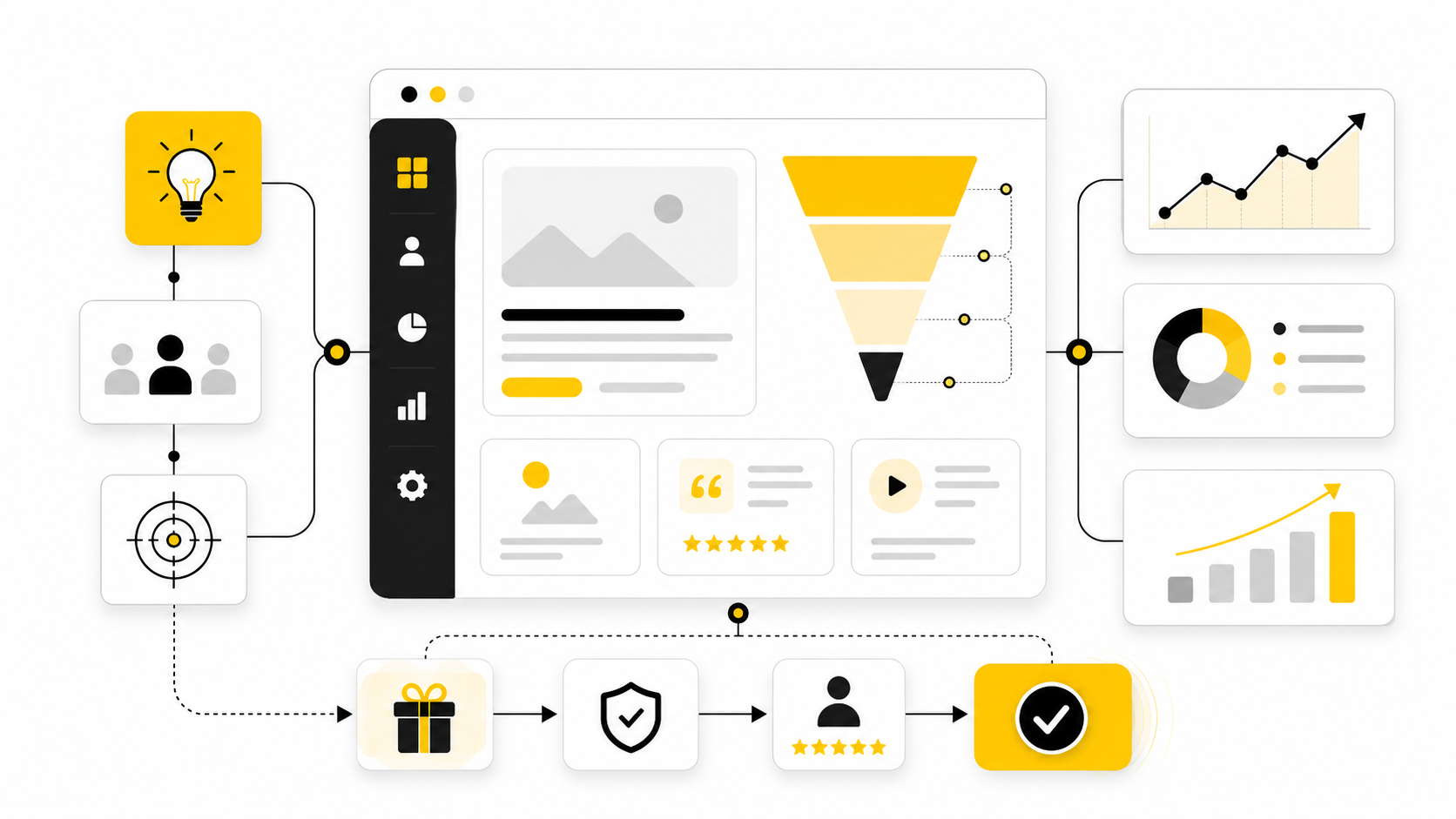
Jason Capital copywriting gets attention because it sits in a very specific corner of direct response marketing: bold positioning, clear persuasion, emotional sales arguments, and a strong belief that copy should move people toward action. That does not mean every line should be loud, aggressive, or over-polished. The useful lesson is simpler: strong copy creates a clear reason to care, then makes the next step feel obvious.
this guide breaks down Jason Capital copywriting as a practical system rather than treating it like a personality cult. We will look at the structure, the persuasion logic, the language patterns, the offer mechanics, and the implementation process behind the style. The goal is not to copy someone’s voice word for word, but to understand what is usable, what needs restraint, and how to apply the core ideas professionally.
Good copy is not just “better writing.” It affects how quickly people understand an offer, whether they believe it, and whether they feel enough urgency to act. Web usability research has shown that concise, scannable, objective writing can dramatically improve user performance, with one Nielsen Norman Group study reporting 124% higher measured usability when those principles were combined.
Why Jason Capital Copywriting Still Gets Attention
Jason Capital built much of his public brand around high-income skills, influence, sales, and status-based positioning. His official site presents him as a premium consultant, with client work beginning through an intensive consultation model rather than a low-ticket service menu. That matters because the copy is not only selling information; it is selling authority, access, and transformation.
The reason people search for Jason Capital copywriting is usually not because they want a grammar lesson. They want to understand how persuasive offers are framed so they feel valuable before the reader sees every feature. That is the real lesson: the copy starts by shaping perception, not by listing details.
This is also where beginners often get it wrong. They see confident wording and assume the secret is intensity. But intensity without clarity becomes noise, and research from Nielsen Norman Group repeatedly shows that users scan, avoid fluff, and prefer information that helps them make decisions quickly through concise and scannable web writing.
The Framework Overview
Jason Capital copywriting is best understood as a persuasion framework built around four practical moves: identify the desire, intensify the gap, reposition the solution, and make the next action feel natural. This is not exclusive to him, but his style tends to make each move more direct and emotionally charged. The copy often works because it does not treat the reader as mildly curious; it treats them as someone who already wants a different outcome.
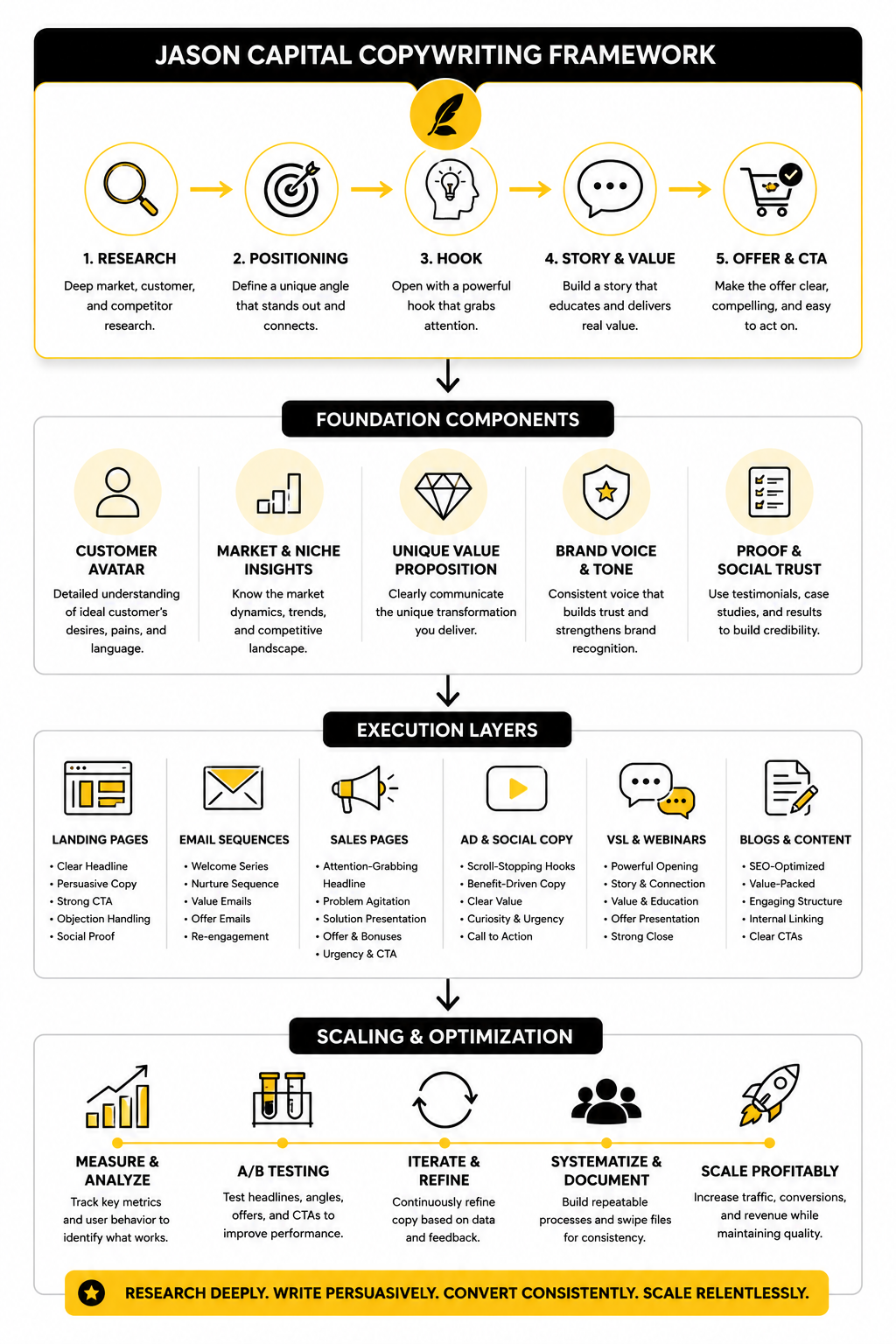
The framework starts with the reader’s current frustration. That frustration might be low income, weak positioning, poor sales ability, low confidence, or inconsistent lead flow. The copy then connects that frustration to a larger identity-level problem: the reader is not just missing tactics, they are operating from the wrong frame.
From there, the offer becomes the bridge. Instead of saying “here is a course,” the copy frames the product as a new mechanism for getting a desired result. This is why Jason Capital copywriting often feels closer to sales psychology than traditional content writing.
The Core Components Of The Style
The first component is status-driven positioning. Capital’s broader brand is strongly tied to the idea that people respond to signals of confidence, certainty, and authority. His book, Higher Status, is positioned around the idea of “honest signals” and personal influence, which helps explain why his copy often emphasizes identity and perceived power rather than only functional benefits.
The second component is direct response structure. The copy usually has a clear commercial job: get the click, sell the call, move the reader into a funnel, or make the offer feel urgent. That is different from brand copy that simply wants to sound polished.
The third component is plain-language persuasion. The strongest parts of this style are usually simple, punchy, and easy to understand. That fits broader UX research too, because Baymard’s ecommerce research is built on large-scale usability testing and emphasizes that product and checkout experiences work better when users can quickly understand what they are evaluating through evidence-based UX guidance.
Why It Matters For Marketers And Creators
Jason Capital copywriting matters because it reminds marketers that copy is not decoration. It is the sales argument in written form. A landing page, email, webinar page, or video sales letter can look beautiful and still fail if the message does not make the offer feel specific, credible, and worth acting on.
The practical takeaway is not to imitate every phrase. The takeaway is to build copy around the buyer’s actual motivation. People do not buy because a paragraph is clever; they buy because the copy helps them believe the result is relevant, possible, and worth prioritizing now.
This is especially important in competitive markets where similar tools, courses, agencies, and services all sound the same. A stronger message can separate the offer before the reader compares price. That is why the rest of this guide will focus on structure, proof, positioning, and implementation rather than surface-level “power words.”
The Core Persuasion Principles Behind The Style
The next layer of Jason Capital copywriting is persuasion. Not tricks. Not magic words. Persuasion means understanding what the reader already wants, what they doubt, what they fear, and what would make them trust the next step.
This style works best when the copy starts with the buyer’s emotional reality instead of the product’s feature list. A beginner usually writes, “Here is what you get.” A stronger copywriter writes, “Here is why this matters to you right now, and here is the mechanism that helps you move forward.” That shift changes the whole sales argument.
It also explains why Jason Capital copywriting often feels more direct than traditional brand writing. The copy does not slowly warm up for five paragraphs. It gets close to the reader’s desire quickly, then uses structure to turn that desire into attention, belief, and action.
Start With Desire, Not Information
Most weak copy opens with information because information feels safe. It explains the product, the background, the features, the company, and the process. The problem is that the reader is usually not looking for more information first; they are looking for a reason to care.
Jason Capital copywriting tends to begin closer to the desire. The reader wants more status, more money, better communication, stronger confidence, or a clearer path to a result. The copy works because it names that desire before it explains the offer.
This does not mean the copy should exaggerate. It means the first job is relevance. If the reader does not feel seen, the rest of the page has to work twice as hard.
The Practical Lesson
Before writing a headline, ask what the reader privately wants but may not say out loud. That desire is usually more emotional than the surface-level search term. Someone searching for copywriting help may want better emails, but underneath that they may want clients, confidence, freedom, or proof that they are not wasting time.
That is why direct response copy often performs better when it speaks to outcomes, not just deliverables. A course is not just a course. A consulting call is not just a call. A sales page is not just a page.
The product is the vehicle. The desire is the fuel. If the copy ignores the fuel, the vehicle does not matter.
Make The Problem Feel Specific
A vague problem creates vague attention. “You need better copy” is technically true for many businesses, but it is not sharp enough to create urgency. “Your offer sounds useful, but your page does not make strangers believe it fast enough” is more specific, so it feels more real.
Jason Capital copywriting often pushes the problem into a sharper frame. The issue is not only that the reader lacks a tactic. The issue is that their current approach is costing them opportunities, lowering their perceived value, or keeping them stuck in a lower-status position.
This is where restraint matters. You do not need to attack the reader. You need to make the gap clear enough that staying the same feels expensive.
Specificity Creates Momentum
Specific copy gives the reader something to recognize. It turns a general pain into a concrete moment: the ignored email, the weak landing page, the sales call that goes nowhere, the offer that sounds like everyone else’s. Those moments are easier to believe because they feel observable.
This is also supported by long-standing web writing research. Nielsen Norman Group’s work on web usability shows that people scan pages and look for useful, relevant information quickly, which is why concise and scannable writing usually beats bloated promotional copy.
For marketers, the lesson is simple. Do not describe the problem like a textbook. Describe it like the reader experiences it.
Reframe The Reader’s Current Belief
A strong sales argument usually has to change a belief before it can sell a solution. The reader might believe they need more traffic, when the real issue is weak conversion. They might believe they need a better product, when the real issue is unclear positioning. They might believe copywriting is about clever phrasing, when the real issue is persuasion structure.
Jason Capital copywriting often works by creating that reframe. It tells the reader that the old way of seeing the problem is incomplete. Then it introduces a better way to think about the outcome.
This is powerful because people rarely buy when they believe their current approach is still good enough. The copy has to show why the old frame is limiting them. Once that lands, the new solution feels more valuable.
The Reframe Must Be Credible
A reframe should not feel like a random contrarian take. It has to connect to something the reader already knows from experience. For example, a business owner may already know that more leads do not automatically create more sales if the follow-up is weak.
That is why a tool like GoHighLevel can fit naturally in a copywriting discussion when the topic shifts from words on a page to sales follow-up. Better copy can create interest, but the business still needs a system to capture leads, continue the conversation, and move people toward booking or buying.
The stronger the reframe, the easier the offer becomes to explain. You are no longer selling a random product. You are selling the logical next step after the reader accepts the new belief.
Build Authority Without Bragging
Authority is one of the most visible parts of Jason Capital copywriting. The voice is confident, declarative, and usually positioned around expertise. That confidence can be useful because uncertain copy makes the reader feel uncertain too.
But authority does not mean endless bragging. Real authority comes from clarity, proof, specificity, and judgment. If the copy makes the reader think, “This person understands my situation,” that can be more persuasive than a long list of credentials.
Influence research has long treated authority as one of the major persuasion principles, alongside factors like social proof and scarcity. Robert Cialdini’s influence framework is widely used in marketing because it explains how people use signals such as expertise, consensus, and limited availability when making decisions, as summarized in this overview of Cialdini’s persuasion principles.
Confidence Needs Proof
Confident copy without proof becomes hype. Proof does not always need to be a massive case study, but it does need to give the reader a reason to believe. That proof can come from specific mechanisms, clear explanations, testimonials, demonstrations, public track record, or transparent process.
Jason Capital copywriting often leans on certainty, but the professional version should balance certainty with evidence. This is especially important if you are writing for an agency, SaaS company, consultant, coach, ecommerce brand, or B2B offer. The more expensive or risky the decision feels, the more proof the reader needs.
The best authority does not shout. It makes the reader feel like the next step has been thought through.
Use Scarcity Carefully
Scarcity can increase urgency, but it can also destroy trust when used badly. Fake countdowns, fake limited seats, and recycled “last chance” claims may create short-term pressure, but they weaken the brand over time. Serious buyers notice when urgency feels manufactured.
Jason Capital copywriting often uses strong urgency because direct response copy is built to move the reader now. The professional version should keep the urgency tied to something real. A deadline, capacity limit, price change, cohort date, bonus window, or genuine implementation constraint can all be valid.
The key is honesty. If the reason to act now is real, explain it clearly. If it is not real, do not invent it.
Urgency Should Support The Decision
Good urgency does not bully the reader. It helps them make a decision they already want to make. The copy should make the cost of delay visible without pretending the world ends tomorrow.
For example, an agency might explain that only a certain number of onboarding slots are available because each client needs implementation support. That is believable. A creator might close enrollment before a live cohort starts because the group needs to move together. That is believable too.
Urgency works when it is attached to reality. When it is detached from reality, it becomes a gimmick.
Turn Features Into Status, Speed, Or Certainty
One of the strongest lessons from Jason Capital copywriting is that features rarely sell themselves. A feature has to be translated into a result the reader actually values. In this style, that result often connects to status, speed, certainty, confidence, or control.
For example, “email templates” is a feature. “Know what to send when a lead goes cold” is more useful. “Stop staring at a blank screen when money is on the line” is even closer to the emotional moment.
That is the move. The copy takes a practical feature and connects it to a felt improvement in the reader’s life or business.
The Translation Test
A simple way to improve copy is to write every feature, then ask, “So what?” Do that until the answer reaches something the buyer clearly cares about. The first answer is usually functional. The second or third answer is usually where the persuasive value lives.
For a funnel builder like ClickFunnels, the feature is not just page creation. The stronger benefit is building a path that turns attention into leads, sales, or booked calls without needing a custom development team for every campaign.
That is how copy becomes more useful. It stops naming components and starts explaining why those components matter.
Make The Next Step Feel Obvious
The final persuasion principle in this part is action clarity. If the reader believes the argument but does not know what to do next, the copy has failed. A call to action should feel like the natural continuation of the page, not a random button slapped at the end.
Jason Capital copywriting usually makes the next step direct. Apply, book, enroll, watch, join, start. The action is clear because the copy has already built the reason for taking it.
This is where many marketers overcomplicate things. They write a strong message, then offer five different next steps. That creates hesitation at the exact moment the copy should create movement.
Reduce Decision Friction
One clear action is usually stronger than several weak ones. If the goal is a booked call, make the page support that action. If the goal is an email opt-in, make the value of joining obvious. If the goal is a purchase, remove anything that distracts from the buying decision.
This does not mean every page needs to be aggressive. It means every page needs to be deliberate. The reader should understand what happens next and why it is worth doing.
That is the real persuasion lesson. Strong copy does not just generate interest. It guides the reader from desire to decision with as little confusion as possible.
How The Framework Turns Attention Into Desire
Once the persuasion principles are clear, the next question is execution. Jason Capital copywriting is not just a voice; it is a sequence. The message has to move the reader from curiosity to recognition, then from recognition to belief, then from belief to action.
This is where a lot of copy breaks. The headline gets attention, but the body does not deepen the argument. Or the body explains the product, but the offer still feels generic. Strong direct response copy needs a process that keeps tightening the connection between what the reader wants and what the offer helps them do.
The useful version of the framework is simple enough to apply, but serious enough to prevent lazy writing. You are not trying to sound like Jason Capital. You are trying to build a sales argument that earns attention and makes the next step feel valuable.
Step 1: Define The Reader’s Desired Outcome
Start with the outcome, not the product. The reader does not wake up wanting copywriting theory. They want a clearer path to more clients, more sales, stronger positioning, or a message that finally makes people pay attention.
In Jason Capital copywriting, the desired outcome is often framed around identity and status. The reader is not only buying a tactic; they are buying a sharper version of themselves. That is why the message often connects practical skills to confidence, income, influence, or control.
To use this professionally, write the desired outcome in one plain sentence before writing the copy. For example, “The reader wants to turn cold attention into booked calls without sounding desperate.” That sentence gives the page a direction.
Step 2: Identify The Friction Blocking The Outcome
After the outcome, find the friction. Friction is the reason the reader has not already achieved the result. It might be confusion, weak positioning, inconsistent follow-up, low trust, unclear offer structure, or a page that explains too much without persuading enough.
This matters because desire without friction feels incomplete. The reader may want the result, but the copy has to show that you understand what is getting in the way. That is what creates the “this is about me” moment.
In practical terms, friction should be specific. “You need better marketing” is too broad. “Your page gets clicks, but visitors leave because they cannot quickly understand why your offer is different” is more useful.
Step 3: Build The New Mechanism
The new mechanism is the bridge between the reader’s problem and your offer. It explains why this approach is different from what they have tried before. Without a mechanism, the copy has to rely on hype, and hype gets weaker the longer the page goes.
Jason Capital copywriting often uses a strong mechanism by reframing the problem. Instead of “learn sales,” the message becomes “learn the high-status communication patterns that make people respond differently.” Instead of “write better emails,” the message becomes “structure your message so the reader feels the gap and wants the next step.”
This is where your offer becomes more than a pile of features. If you are selling a funnel, the mechanism might be a clearer conversion path. If you are selling consulting, the mechanism might be diagnosis plus implementation. If you are selling software, the mechanism might be speed, automation, or better follow-up.
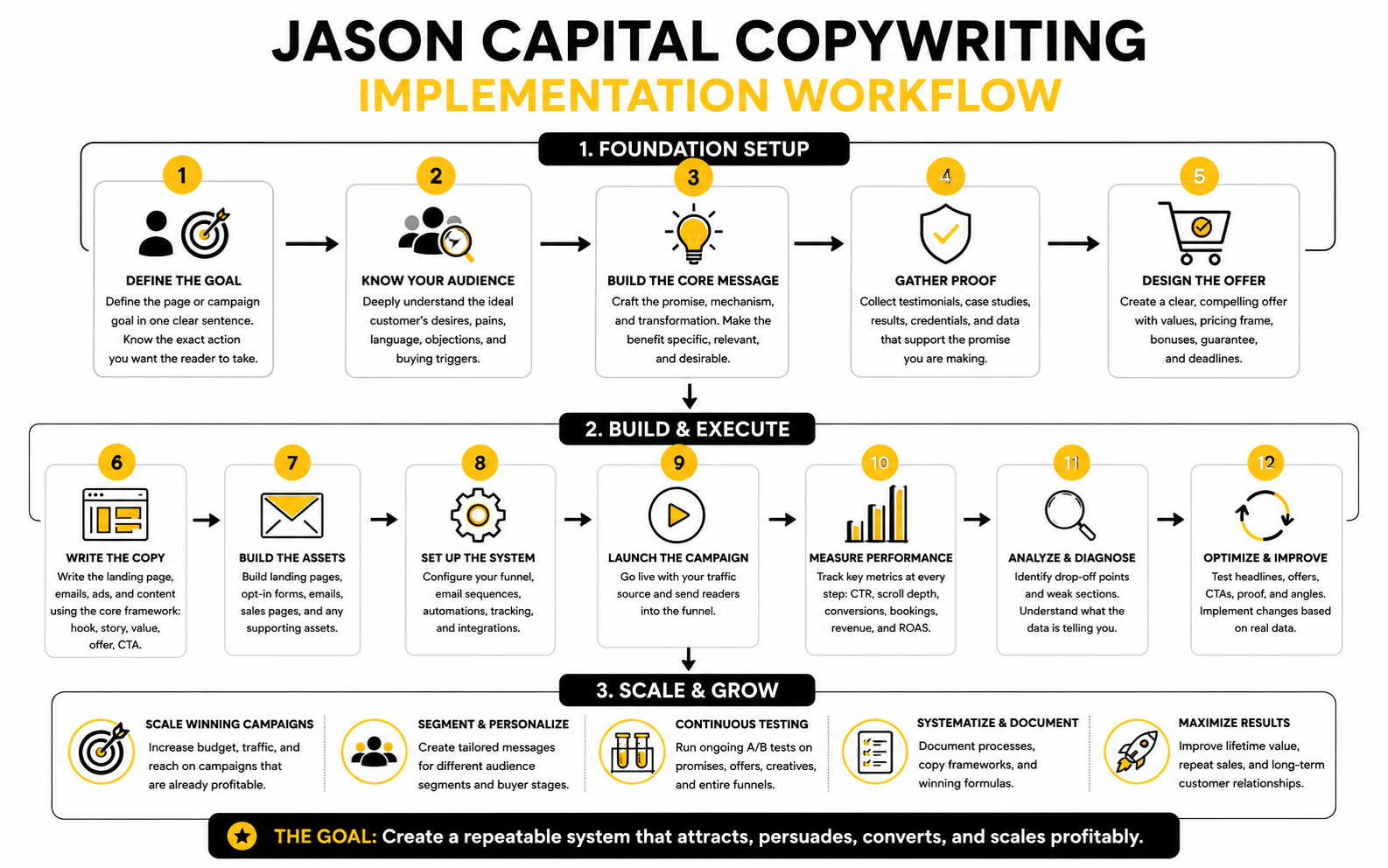
The Execution Process
A clean implementation process prevents the copy from becoming random. You can use this sequence for a landing page, email campaign, webinar registration page, sales page, or lead magnet funnel. The format may change, but the logic stays the same.
This process matters because good copy is not written by mood. It is built through decisions. The more precise those decisions are, the more natural the final copy feels.
Step 4: Write The Opening Around Recognition
The opening should make the reader recognize themselves quickly. Not in a cheesy way. In a specific way that shows you understand the situation they are in.
A weak opening says, “Copywriting is important for every business.” That is true, but it is flat. A stronger opening says, “If people understand your offer only after a sales call, your page is not doing enough work.” That sentence creates recognition because it points to a real business problem.
This is one reason Jason Capital copywriting can feel punchy. The copy often skips generic education and goes straight into the tension. That does not mean every brand should be aggressive, but it does mean the opening should not waste the reader’s attention.
Recognition Comes Before Explanation
Readers are more patient with explanation after they feel understood. That is why the first section should not drown them in background. It should prove that the page is relevant to their situation.
This aligns with how people read online. Web users tend to scan and look for information that matches their intent, which is why concise, scannable writing often performs better than dense promotional blocks.
For implementation, write the first draft of the opening, then remove anything that sounds like it could appear on any competitor’s page. The opening should feel like it belongs to this buyer, this offer, and this moment.
Step 5: Turn The Offer Into A Clear Path
Once the reader sees the problem, the offer has to become the path forward. This is where many marketers get too feature-heavy. They list modules, calls, templates, automations, pages, bonuses, or deliverables without explaining how those pieces create progress.
The better move is to show the path. What happens first? What changes next? What does the reader understand, build, fix, or implement at each stage? A clear path reduces uncertainty, and uncertainty is one of the quiet reasons people do not buy.
For example, a funnel tool like ClickFunnels makes more sense when the copy connects pages, offers, checkout, and follow-up into one conversion journey. The value is not just that pages exist. The value is that the buyer can build a focused path from attention to action.
The Path Should Feel Sequential
People trust a process more when they can see the sequence. If the page jumps from promise to proof to bonus to story to price with no clear logic, the reader has to do too much work. Confused readers rarely convert.
A simple sequence might look like diagnose, reposition, build, launch, optimize. Another sequence might be attract, capture, nurture, convert, retain. The exact words depend on the offer, but the copy should make the journey feel organized.
This is especially useful for service providers and agencies. A structured process makes the offer feel less like labor and more like a reliable method.
Step 6: Place Proof Where Doubt Appears
Proof should not be dumped randomly near the bottom of the page. It should appear where the reader is likely to hesitate. If the claim feels big, add proof near the claim. If the mechanism feels unfamiliar, explain why it works before asking for trust.
Jason Capital copywriting often leans heavily on confidence, but confidence becomes stronger when proof supports it. Proof can include testimonials, demonstrations, screenshots, specific credentials, before-and-after comparisons, process breakdowns, or transparent limitations. The point is not to decorate the page; the point is to reduce doubt.
For a professional implementation, map the buyer’s objections before writing. Then place proof directly after the sections where those objections are likely to appear. This makes the copy feel more like a guided sales conversation and less like a pitch.
Proof Must Match The Claim
Big claims require stronger proof. If the copy promises a transformational outcome, the evidence needs to be serious. If the claim is smaller, a clear explanation or product demonstration may be enough.
Do not fake urgency, testimonials, revenue screenshots, or user numbers. It is not worth it. Trust is hard to earn and easy to lose.
A good rule is simple: every major claim should either be proven, softened, or removed. That one habit will make your copy cleaner immediately.
Step 7: Connect Copy To The Follow-Up System
A sales page or email is only one part of the conversion process. If the message creates interest but the follow-up is weak, money leaks out of the system. This is where copywriting and automation need to work together.
For agencies, coaches, consultants, and local businesses, a CRM and follow-up platform like GoHighLevel can support the process after the copy gets the lead. The copy creates the reason to act, but the system can handle reminders, pipeline movement, messaging, and appointment flow.
This matters because Jason Capital copywriting is fundamentally action-oriented. The point is not to impress the reader with words. The point is to move the reader into a next step that the business can actually handle.
Implementation Fails Without Follow-Through
A strong headline cannot fix a broken sales process. A persuasive landing page cannot save a slow follow-up routine. A great offer cannot convert consistently if leads disappear into a spreadsheet and nobody contacts them quickly.
That is why the execution process should include both message and mechanics. The message answers “why should I care?” The mechanics answer “what happens next?” Both are necessary.
When those two pieces work together, the copy becomes more than a page. It becomes part of a revenue system.
Statistics And Data
Measurement is where Jason Capital copywriting becomes more than a style preference. A headline can sound powerful, an offer can feel sharp, and a page can look polished, but none of that matters if the numbers show weak attention, weak trust, or weak action. Data tells you where the sales argument is working and where the reader is quietly dropping off.
The mistake is treating benchmarks like universal grades. A 4% landing page conversion rate might be weak for one market and solid for another. Unbounce’s conversion benchmark data is useful because it separates performance by industry and is based on more than 57 million conversions across over 41,000 landing pages, which makes one point very clear: context matters.
This is especially important when applying Jason Capital copywriting to real campaigns. The style is built around desire, urgency, status, and action, but the numbers should decide whether those ideas are actually creating movement. If the data does not improve, the copy is not working yet.
The Metrics That Actually Matter
The most useful copywriting metrics are not vanity numbers. Page views, impressions, and email sends can help you understand volume, but they do not prove persuasion. The better question is what percentage of people move from one meaningful step to the next.
For a landing page, watch the headline-to-scroll rate, call-to-action click rate, form start rate, form completion rate, and booked-call or purchase conversion rate. For email, watch open rate carefully, but do not worship it. Apple’s Mail Privacy Protection changed how opens are reported, so Apple itself explains that it can prevent senders from using invisible pixels to collect information about users, including when an email is opened through Mail Privacy Protection.
That means click rate, reply rate, booked-call rate, revenue per recipient, and unsubscribe rate often tell a more honest story. Opens can still reveal directional interest, but they should not be the main scoreboard. If people open but do not click, the promise may be interesting while the body copy fails to build enough desire.
How To Read Landing Page Benchmarks
Landing page benchmarks are useful only when you compare similar intent, traffic quality, offer type, and price point. A free checklist promoted to warm email subscribers cannot be compared fairly to a $5,000 consulting offer sent to cold paid traffic. The friction is completely different.
This is why a Jason Capital copywriting approach should be judged against the funnel’s actual job. If the page is meant to generate qualified calls, a lower conversion rate may be acceptable if call quality and close rate are high. If the page is meant to sell a low-ticket product, conversion volume and average order value matter more.
Benchmarks should trigger questions, not panic. If your page converts below market norms, ask whether the headline is unclear, the promise is too generic, the proof is weak, the form asks for too much, or the offer does not feel urgent enough. The number is not the diagnosis. The number tells you where to investigate.
What A Good Conversion Rate Really Means
A good conversion rate means the page is doing its assigned job profitably. That is less exciting than a universal “good number,” but it is much more useful. A 2% conversion rate can be excellent if the offer is expensive and the leads are qualified.
The opposite is also true. A 20% opt-in rate might look impressive, but it can still be weak if the leads never buy, never reply, or never show up. Copywriting performance has to be measured beyond the first click.
For direct response pages, track the full path from traffic source to final revenue. That is where the truth shows up. The best copy is not the copy that wins applause; it is the copy that produces better business outcomes.
How To Read Email Benchmarks
Email benchmarks are helpful because they show whether your message is earning attention inside a crowded inbox. But again, the number needs context. A newsletter, a cold outreach email, a launch email, and a sales follow-up email all have different expectations.
MailerLite’s 2025 benchmark report covers open rate, click rate, click-to-open rate, unsubscribe rate, industries, and regions across 46 separate industries and 7 regions. That kind of segmentation matters because a general average can hide what is normal for your market.
For Jason Capital copywriting, the email question is not “Did the subject line get curiosity?” The better question is “Did the subject line attract the right reader into the right sales argument?” A curiosity-heavy subject line can lift opens while hurting trust if the body does not pay it off.
The Email Metrics To Watch Closely
Open rate shows whether the sender, subject line, and timing created enough interest to get attention. Click rate shows whether the email body created enough desire to take the next step. Reply rate shows whether the message felt personal, relevant, and worth engaging with.
Unsubscribe rate and spam complaints show whether the copy is pushing too hard or attracting the wrong audience. This matters because aggressive copy can create short-term movement while damaging long-term deliverability. That is not a win.
For campaigns built around persuasion, watch revenue per email and conversion per segment. Those two numbers keep the conversation practical. You are not trying to write the most dramatic email; you are trying to write the email that moves the right people forward.
Build A Simple Analytics System
The analytics system does not need to be complicated. It needs to connect copy decisions to measurable behavior. Every major section of the funnel should have a job, and every job should have a signal.
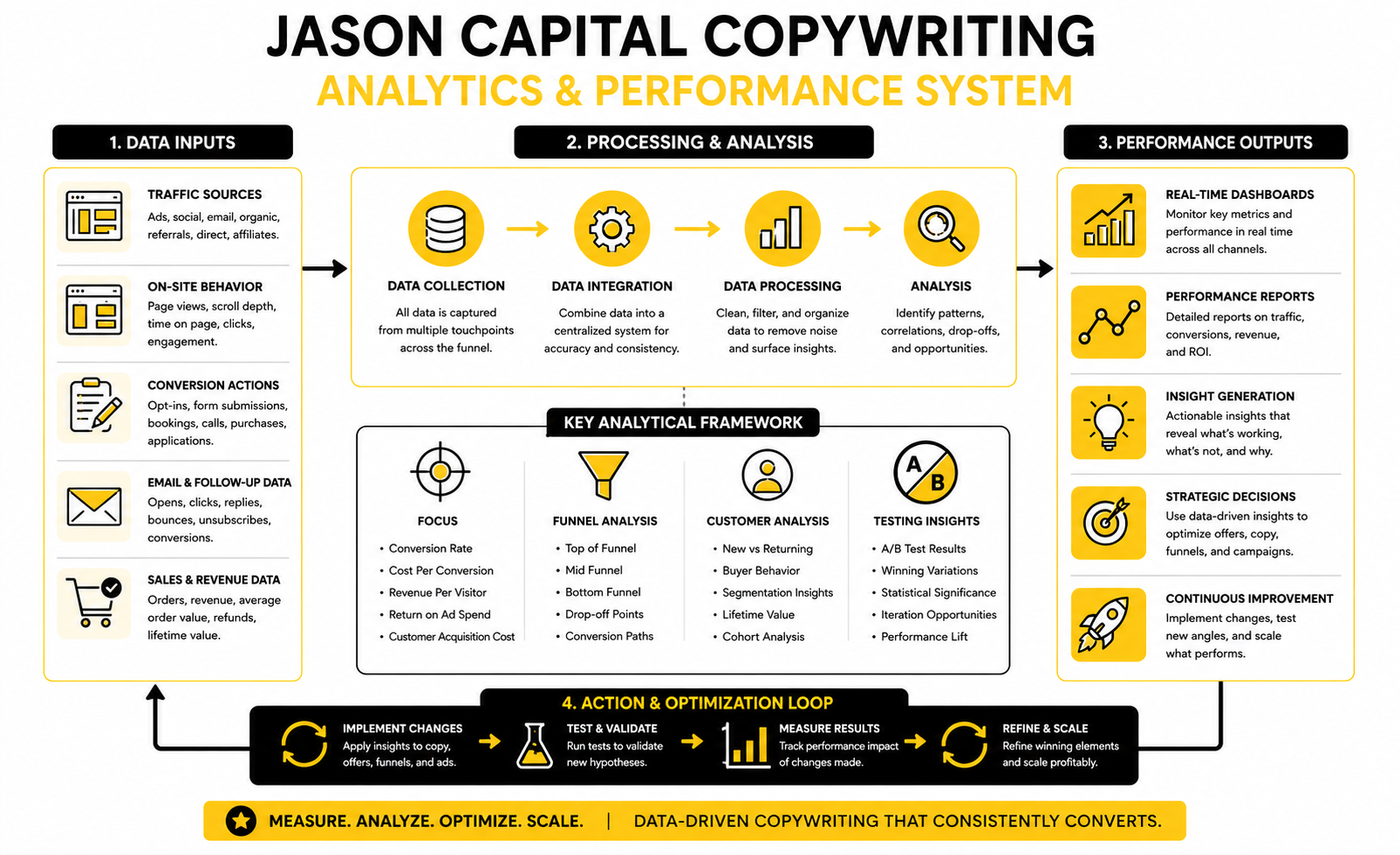
Start with the page or email goal. Then map the reader’s path: impression, open or visit, scroll or read, click, form completion, booking, purchase, show-up, close, and retention. Each step tells you something different about the copy and the offer.
A tool like GoHighLevel can help connect copy to pipeline movement when the goal is booked calls, follow-up, and lead nurturing. A funnel builder like ClickFunnels can make sense when the goal is building and tracking sales pages, opt-in flows, and offer paths. The tool matters less than the discipline: every message should have a measurable next step.
Diagnose The Funnel By Drop-Off Point
Drop-off points tell you what to fix first. If traffic reaches the page but leaves quickly, the headline, lead, page speed, or message match may be the problem. If people scroll but do not click, the body copy may explain the offer without creating enough desire.
If people click but do not complete the form, the form may feel too demanding or the next step may feel unclear. If people book calls but do not show, the confirmation page and follow-up sequence may not reinforce the value of attending. If people show up but do not buy, the issue may be offer fit, sales process, price framing, or proof.
This is why data protects you from random optimization. You do not change everything because one metric looks bad. You change the part of the argument connected to the drop-off.
What Each Signal Usually Means
A weak click-through rate often means the promise is not compelling enough or the call to action is not clear enough. A weak form completion rate often means the reader wants the outcome but feels resistance around the next step. A weak close rate often means the copy created interest but did not qualify the buyer well enough.
A high bounce rate can mean the traffic and page message do not match. It can also mean the page loads slowly, looks untrustworthy, or opens with copy that feels irrelevant. Do not assume the copy is the only problem, but do not let design hide a weak message either.
The smartest move is to fix the biggest leak closest to revenue first. That is usually more profitable than polishing small details at the top of the funnel.
Use A/B Testing Without Fooling Yourself
Testing is useful, but only when the test is designed properly. Changing a headline after 73 visits and declaring a winner is not optimization. It is guessing with a dashboard.
Sample size matters because small tests can easily produce misleading results. AB Tasty’s guidance on sample size explains that proper planning helps a test detect a meaningful difference while avoiding false negatives, wasted resources, or exposing too many users unnecessarily through sample size calculation.
For Jason Capital copywriting, test big persuasion variables before tiny wording tweaks. Test the main promise, the lead angle, the mechanism, the offer framing, the proof block, and the call to action. Once the big argument works, then smaller refinements matter more.
What To Test First
Start with the part of the copy closest to the biggest leak. If people are not clicking from email, test the subject line and first few lines. If people are landing but not scrolling, test the headline and opening section. If people understand the offer but do not act, test proof, urgency, guarantee, pricing frame, or call-to-action clarity.
Do not test random button colors before testing the sales argument. That is busywork. Copywriting performance usually changes when the reader’s belief changes.
A strong test asks one clear question. For example, “Does a status-based promise outperform a speed-based promise for this audience?” That kind of test teaches you something useful even when the lift is smaller than expected.
Turn Data Into Better Copy
Data should not make your copy colder. It should make your copy more precise. If the numbers show that readers stop before the proof section, move proof higher. If the numbers show that readers click but do not book, explain the next step more clearly.
This is the mature version of Jason Capital copywriting. You still use desire, urgency, authority, and directness, but you let behavior shape the final message. That keeps the copy grounded instead of performative.
The best marketers do not treat data and persuasion as separate worlds. They use data to find the weak point, then use persuasion to fix it. That is how copy improves without becoming robotic.
Professional Implementation Without Sounding Hypey
The advanced version of Jason Capital copywriting is not louder copy. It is sharper copy. The difference matters because confident persuasion can create trust, but exaggerated persuasion can make the reader defensive.
This is the tradeoff every marketer has to manage. Strong copy should intensify desire, but it should not inflate claims beyond what the offer can actually deliver. It should create urgency, but it should not manufacture pressure that falls apart the moment the reader thinks twice.
The best implementation keeps the useful parts of the style and removes the fragile parts. Keep the directness. Keep the focus on desire. Keep the clear call to action. But add proof, specificity, compliance, and enough restraint that the copy can survive real scrutiny.
The Risk Of Overusing Status-Based Messaging
Status is powerful because people care about how they are perceived. They want confidence, respect, options, leverage, and the feeling that they are no longer stuck at the bottom of a market. Jason Capital copywriting often taps into that emotional layer very directly.
The risk is that status-based copy can become shallow when it ignores the actual work required. If every promise sounds like instant transformation, the reader may feel excited at first and skeptical a few seconds later. Smart buyers can sense when copy is selling identity without a credible path.
Use status as a lens, not a substitute for substance. A stronger page might say the offer helps the reader communicate with more confidence, position their service more clearly, or follow up with leads more consistently. That is more durable than promising a fantasy version of success.
Confidence Must Match The Offer
A high-confidence voice works only when the offer can support it. If the program, service, or product is still new, the copy should be clear and ambitious without pretending the track record is bigger than it is. If the offer has strong proof, the copy can lean harder into certainty.
This is where ethical copywriting becomes practical. The FTC’s endorsement guidance makes clear that marketers need to handle reviews, testimonials, and endorsements carefully, especially when claims could mislead consumers or require disclosure through endorsement and testimonial guidance. That is not just a legal concern. It is a trust concern.
If your strongest claim depends on a testimonial, make sure the testimonial is real, representative, and properly presented. If the result is unusual, say so. Real credibility beats inflated confidence every time.
The Line Between Persuasion And Manipulation
Persuasion helps the reader make a decision that fits their goals. Manipulation pushes the reader toward a decision that mainly benefits the seller. The tactics can look similar from a distance, but the intent and execution are different.
Jason Capital copywriting uses pressure, identity, urgency, and authority. Those tools are not automatically bad. They become a problem when the copy hides material information, exaggerates outcomes, invents scarcity, or makes the buyer feel foolish for hesitating.
A professional copywriter should be willing to ask one uncomfortable question before publishing: would this message still feel fair if a skeptical customer read it slowly? If the answer is no, tighten it. Long-term brands cannot scale on copy that only works when people do not examine it.
Make The Buyer More Informed
The cleanest way to avoid manipulation is to make the buyer more informed, not less. Explain who the offer is for, who it is not for, what the buyer needs to bring, and what result is realistic. That does not weaken the copy. It filters better.
A page that qualifies buyers may convert fewer total visitors, but it can produce better leads, fewer refunds, stronger customer satisfaction, and better sales conversations. That is a strategic win. More clicks are not always better.
This is especially true for premium offers. If the price is high, clarity is part of the value. Buyers want to feel led, not trapped.
Scaling The Message Across Channels
A strong core message should travel across email, landing pages, ads, social posts, sales calls, webinars, and follow-up sequences. But it should not be pasted everywhere unchanged. Each channel has a different level of intent, attention, and context.
For example, an ad needs faster pattern interruption. A landing page needs a fuller argument. A sales email needs a strong reason to click. A follow-up sequence needs to handle doubt, timing, objections, and decision fatigue.
This is where Jason Capital copywriting becomes a system instead of a single page. The same desire can be expressed differently across the funnel. The same mechanism can be introduced briefly in an ad, explained on a page, reinforced in emails, and clarified on a call.
Keep The Promise Consistent
Scaling breaks when every channel makes a slightly different promise. The ad says one thing, the landing page says another, and the sales call sells something else entirely. That creates distrust.
The promise should stay consistent even when the format changes. The language can adapt, but the core idea should remain stable. If the offer is about stronger sales conversations, do not let the ad drift into passive income fantasy. If the offer is about better copy structure, do not let the follow-up emails imply guaranteed revenue.
Consistency is not boring. It is how trust compounds.
Protect The Brand While Increasing Response
Direct response marketers often focus so heavily on conversion that they forget brand memory. That is a mistake. People may not buy today, but they remember how your copy made them feel.
This is one reason hype can be expensive. It may increase short-term clicks while lowering long-term trust. Nielsen Norman Group’s work on web credibility highlights that trust depends on factors like design quality, upfront disclosure, comprehensive content, and connection to the rest of the web through credibility factors in web design.
For a brand using Jason Capital copywriting principles, the goal is not to choose between response and reputation. The goal is to make the response mechanism credible enough that it strengthens reputation. That is harder, but it is the version worth building.
Strong Copy Should Age Well
Good copy can be direct and still age well. It can make a strong promise without becoming embarrassing six months later. It can create urgency without relying on claims you have to hide from repeat visitors.
Before publishing, read the page as if a customer, competitor, regulator, and future partner will all see it. Because they might. That simple filter removes a lot of weak copy.
If a line only works because it is vague, dramatic, or hard to verify, rewrite it. Sharp copy does not need fog.
Advanced Segmentation And Message Matching
The more a campaign scales, the more segmentation matters. One message rarely fits every buyer stage. A cold visitor, warm subscriber, past customer, abandoned checkout user, and booked-call lead all need different levels of context.
Jason Capital copywriting often speaks to strong desire, but not every prospect is ready for the same level of intensity. Cold traffic may need more education and credibility. Warm leads may need urgency and proof. Existing buyers may need expansion, implementation support, or a next-step offer.
Segmenting the message lets you keep the persuasion tight without forcing one page to do every job. It also makes the copy feel more personal without pretending to know things you do not know.
Match The Message To Intent
High-intent readers can handle more direct calls to action. Low-intent readers often need a softer bridge. This is why the same offer might need a diagnostic quiz, a lead magnet, a webinar, a case study, and a direct application page.
A quiz or form tool like Fillout can help segment visitors before sending them into the right next step. An email platform like Brevo can support different nurture paths after someone joins the list. The point is not to add tools for the sake of tools; the point is to stop treating every prospect like they are in the same buying moment.
Better segmentation usually means cleaner copy. You can say less because the message is aimed at a more specific reader.
Scaling With AI Without Losing Judgment
AI can speed up copy production, but it can also create a serious quality problem. The danger is not that AI writes badly every time. The danger is that it often writes plausible copy that sounds confident while missing the real buyer insight.
Google’s spam policies warn against scaled content abuse and make clear that sites violating those policies may rank lower or disappear from results through Search spam policies. That matters for marketers who think they can mass-produce thin persuasive content and win long term. You probably cannot.
Use AI for research organization, angle exploration, draft variations, objection mapping, and repurposing. Do not outsource judgment. The human job is still to decide what is true, what is persuasive, what is ethical, and what the market actually needs to hear.
AI Should Support The Copywriter, Not Replace The Strategy
A good copywriter can use AI to move faster without becoming generic. They can generate headline variations, compare value propositions, summarize customer research, and stress-test objections. But the final message still needs human taste and market understanding.
This is especially true for Jason Capital copywriting because the style depends on emotional precision. If the copy pushes too hard, it becomes cringe. If it plays too safe, it loses energy.
The winning balance is speed plus judgment. Use tools to accelerate the workflow, then edit like a strategist.
When To Use The Style And When To Pull Back
Jason Capital copywriting fits best when the offer is transformational, the audience has a strong desire, and the next step requires action. It can work for coaching, consulting, education, sales training, lead generation, personal development, and performance-driven funnels. It is less suitable when the market expects calm technical explanation or when the offer requires heavy compliance.
Pull back when the buyer is highly analytical, the category is regulated, or the claim requires careful qualification. Pull back when the brand already has trust and does not need aggressive intensity. Pull back when the copy starts to sound more impressed with itself than useful to the reader.
The point is not to use one voice everywhere. The point is to understand the persuasion principles well enough to adjust the volume.
The Expert Move Is Control
Beginners think strong copy means turning everything up. Experts know when to turn things down. That is the difference.
Use desire, but do not overpromise. Use urgency, but keep it real. Use authority, but support it with proof. Use confidence, but keep the reader’s trust at the center.
That is the professional version of this style. It sells, but it does not need to pretend.
Mistakes To Avoid Before You Scale
The biggest mistake with Jason Capital copywriting is copying the surface and missing the discipline underneath. The surface is confidence, bold claims, direct language, and status-based positioning. The discipline is knowing exactly who the reader is, what they want, what they doubt, and what evidence they need before they take action.
Do not confuse intensity with persuasion. Intensity can create attention, but attention is not the same as trust. If the copy makes a promise the offer cannot support, the campaign may get clicks while creating refunds, complaints, weak leads, or a damaged reputation.
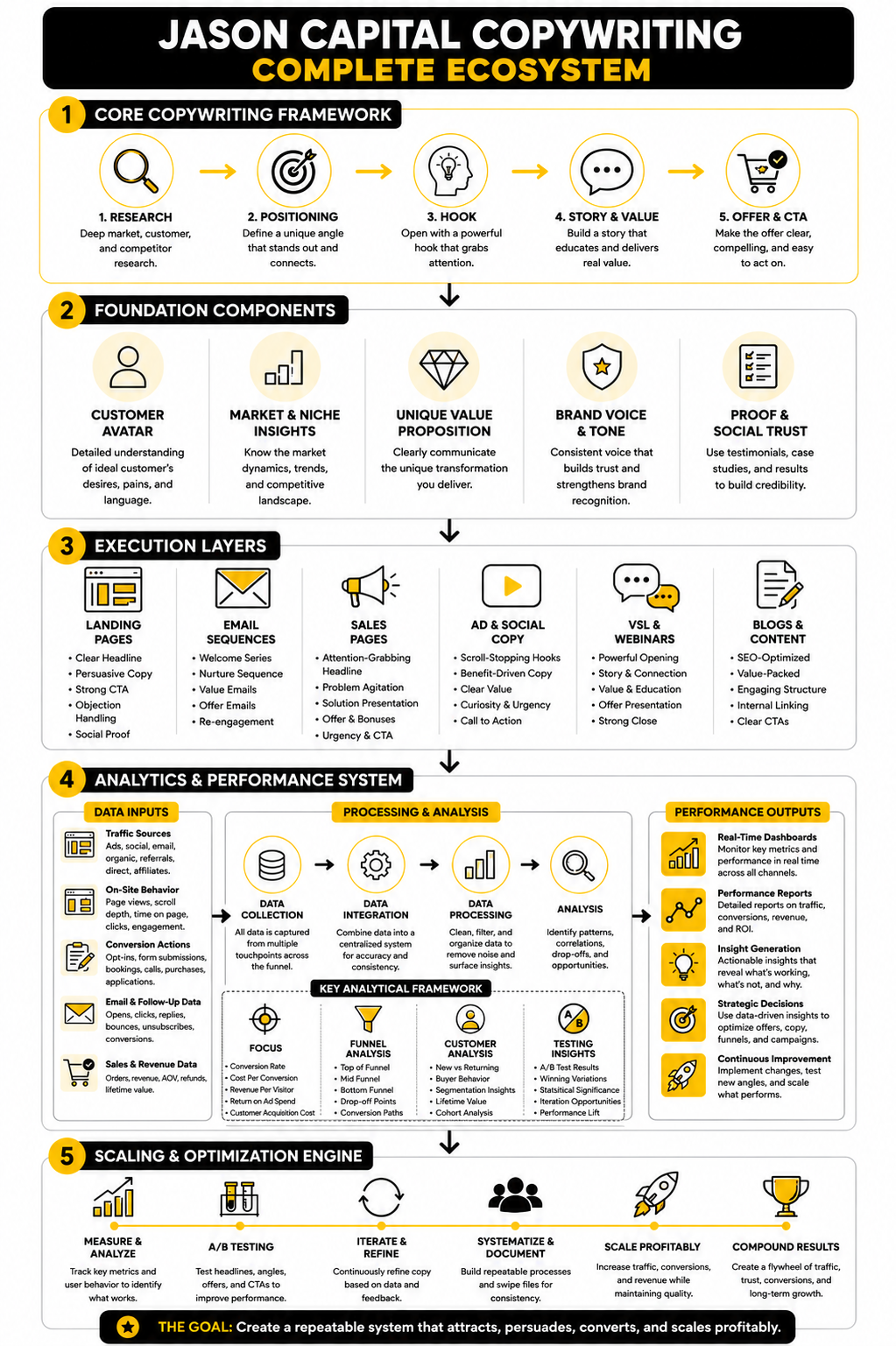
The better move is to build a complete persuasion ecosystem. The ad, page, email, follow-up, sales process, proof, and delivery experience should all support the same promise. That is how strong copy becomes a business asset instead of a one-time campaign.
The Final System
A complete copywriting system has five moving parts. First, the message has to name the right desire. Second, the offer has to present a believable mechanism. Third, the proof has to answer doubt at the right moment. Fourth, the call to action has to feel simple and logical. Fifth, the follow-up has to continue the same sales argument instead of starting over.
This is where Jason Capital copywriting becomes useful beyond one landing page. You can use the same core idea across a sales page, email sequence, short-form content, webinar script, lead magnet, and booking flow. The wording changes, but the strategic thread stays consistent.
That thread is what makes the campaign feel coherent. When the reader sees the same promise reinforced from multiple angles, trust builds faster. When every channel says something different, the copy feels improvised.
The Practical Checklist
Before publishing a page, email, or funnel, review the copy against a simple checklist. This is not glamorous, but it catches the problems that usually cost conversions. Strong copy is often the result of disciplined editing, not one inspired draft.
This checklist keeps the work honest. If a section fails one of these questions, rewrite it before scaling traffic. Buying more traffic does not fix a weak sales argument.
What Is Jason Capital Copywriting?
Jason Capital copywriting refers to a direct response style associated with Jason Capital’s broader work in sales, influence, high-income skills, and status-based positioning. It usually focuses on desire, urgency, authority, emotional framing, and clear calls to action. The useful lesson is not to copy his exact voice, but to understand how the copy moves a reader from attention to action.
Is Jason Capital Copywriting Only For Coaches And Course Creators?
No, but it fits coaches and course creators well because those markets often sell transformation, identity, confidence, income growth, or skill development. The same principles can also apply to consultants, agencies, SaaS companies, ecommerce brands, and local service businesses. The tone should change depending on the market, but the structure can still be useful.
What Makes This Style Different From Normal Content Writing?
Normal content writing often explains, educates, or informs. Jason Capital copywriting is more focused on persuasion and conversion. It does not simply tell the reader what something is; it builds a reason to care, believe, and take the next step.
Is This Style Too Aggressive For Professional Brands?
It can be if it is used without control. The professional version keeps the clarity, confidence, and emotional relevance while removing fake urgency, exaggerated claims, and unnecessary pressure. A serious brand can use the structure without sounding like a hype-driven sales page.
What Is The Most Important Principle To Use First?
Start with the reader’s desired outcome. If you do not understand what the reader wants, every headline, benefit, and call to action becomes weaker. The copy should make the reader feel that the offer is connected to something they already care about.
How Do You Avoid Sounding Like A Cheap Imitation?
Do not copy catchphrases, exaggerated tone, or personality-driven lines. Copy the underlying structure instead. Define the desire, sharpen the problem, introduce a believable mechanism, support the claim with proof, and make the next step clear.
What Metrics Should I Track When Testing This Copy?
Track the metrics that show movement through the funnel. For landing pages, watch click-through rate, scroll depth, form completion, booked calls, purchases, and revenue. For email, watch clicks, replies, conversions, unsubscribes, and revenue per recipient instead of relying only on open rates.
Does Jason Capital Copywriting Work With Cold Traffic?
It can, but cold traffic usually needs more context and proof. A cold reader does not know you yet, so the copy has to build trust faster and avoid assuming too much familiarity. Strong positioning helps, but proof and message match become even more important.
How Much Proof Should A Sales Page Include?
Use enough proof to support the size of the promise. A small claim may need a simple explanation or demonstration. A major transformation claim needs stronger evidence, such as testimonials, transparent process details, examples, credentials, or specific results that are presented honestly.
Can AI Write This Kind Of Copy?
AI can help draft angles, headlines, objections, and variations, but it should not replace strategy. This style depends on emotional precision, market understanding, proof, and judgment. If AI-generated copy sounds confident but misses the buyer’s real situation, it will feel generic.
What Tools Fit A Copywriting Funnel Like This?
Use tools that support the actual conversion path. A funnel builder like ClickFunnels can help with landing pages and sales flows. A CRM and automation platform like GoHighLevel can help with follow-up, pipeline movement, and appointment-based sales processes.
What Is The Biggest Mistake Beginners Make?
Beginners usually make the copy loud before making it clear. They add urgency, power words, and big claims without building a believable argument. The better move is to make the offer specific, the mechanism clear, the proof visible, and the next step easy.
Should Every Business Use This Style?
No. Some businesses need a calmer, more technical, or more compliance-sensitive voice. The principles still matter, but the intensity should be adjusted to the audience, offer, and risk level. The expert move is knowing when to turn the volume up and when to pull it back.
Build a stronger local presence with BAAM AI
Turn your website, Google profile, social channels, and AI visibility into one growth engine
Most businesses do not need more random marketing activity. They need a consistent presence system that helps the right people find them, trust them, and take action. BAAM AI brings strategy, local SEO, website updates, Google Maps visibility, social content, AI-search readiness, media production, and reporting into one practical monthly engine.
If you want your marketing to keep working after the campaign ends, start with a free BAAM AI presence audit. See how your business shows up today and where the fastest visibility wins are at BAAM AI.