
BAAM AI Blog
Jacob McMillen Website Copywriting: A Practical Framework For Turning Pages Into Sales Assets
Most website copy fails for a boring reason: it tries to sound impressive before it becomes useful.
Most website copy fails for a boring reason: it tries to sound impressive before it becomes useful.
That is why Jacob McMillen website copywriting is worth studying. His approach is not built around clever lines, vague branding, or “10x your life” hype. It is built around a simple idea that still beats most tactics: understand the buyer, clarify the offer, answer the real objections, and make the next step obvious.
This matters because people do not patiently read websites like books. They scan, compare, hesitate, and leave when the page makes them work too hard. Nielsen Norman Group’s long-running web usability research found that users typically scan pages instead of reading every word, which means copy has to communicate the main argument quickly without becoming shallow or robotic: people rarely read web pages word by word.
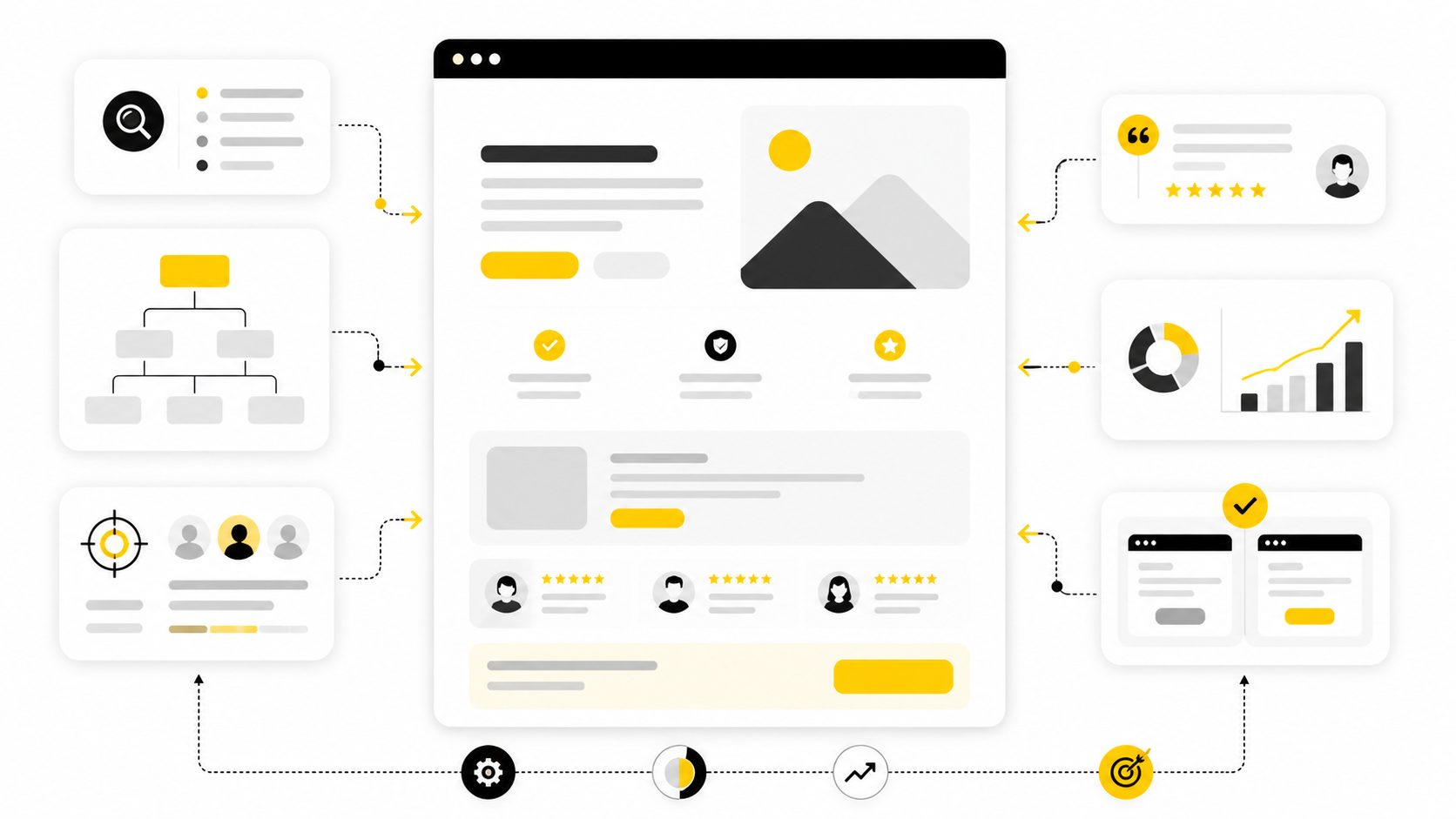
Website copywriting is not just “writing words for a website.” It is the sales logic of the page. The headline, subhead, proof, offer explanation, objection handling, calls to action, and supporting sections all have to work together so the visitor can quickly understand three things: “Is this for me?”, “Why should I trust it?”, and “What should I do next?”
Here is the full structure we will use across this six-part article:
Why Jacob McMillen Website Copywriting Matters
The useful thing about studying Jacob McMillen website copywriting is that it brings copy back to fundamentals. A website is not there to showcase how creative the writer can be. It is there to move a specific reader from confusion to clarity, and from passive interest to a concrete next step.
That is especially important for service businesses, SaaS companies, consultants, agencies, creators, and ecommerce brands where the offer is not always self-explanatory. A visitor may understand the category, but still not understand why this specific company is worth choosing. Good copy closes that gap by translating the business into buyer language.
Jacob’s positioning as a website copywriter and content strategist is also relevant because it connects copywriting to the entire customer journey. His own service page emphasizes conversion copywriting, content writing, B2B experience, and full-funnel messaging: The Website Copywriter Focused On UVP, Revenue & Branding. That is the lens this guide will use: website copy is not decoration, it is infrastructure.
The Website Copywriting Framework
A strong website page needs a clear framework before it needs beautiful sentences. The page has to identify the reader, name the problem, present the offer, prove the claim, reduce perceived risk, and guide the visitor toward action. When those pieces are missing, even polished copy feels weak because the argument underneath it is incomplete.
The simplest way to think about the framework is this: every important page should answer the questions already happening in the buyer’s head. “Do you understand my situation?” “Can you solve this?” “Why are you different?” “What results can I reasonably expect?” “What happens after I click?” If the page avoids those questions, the visitor has to fill in the blanks alone.
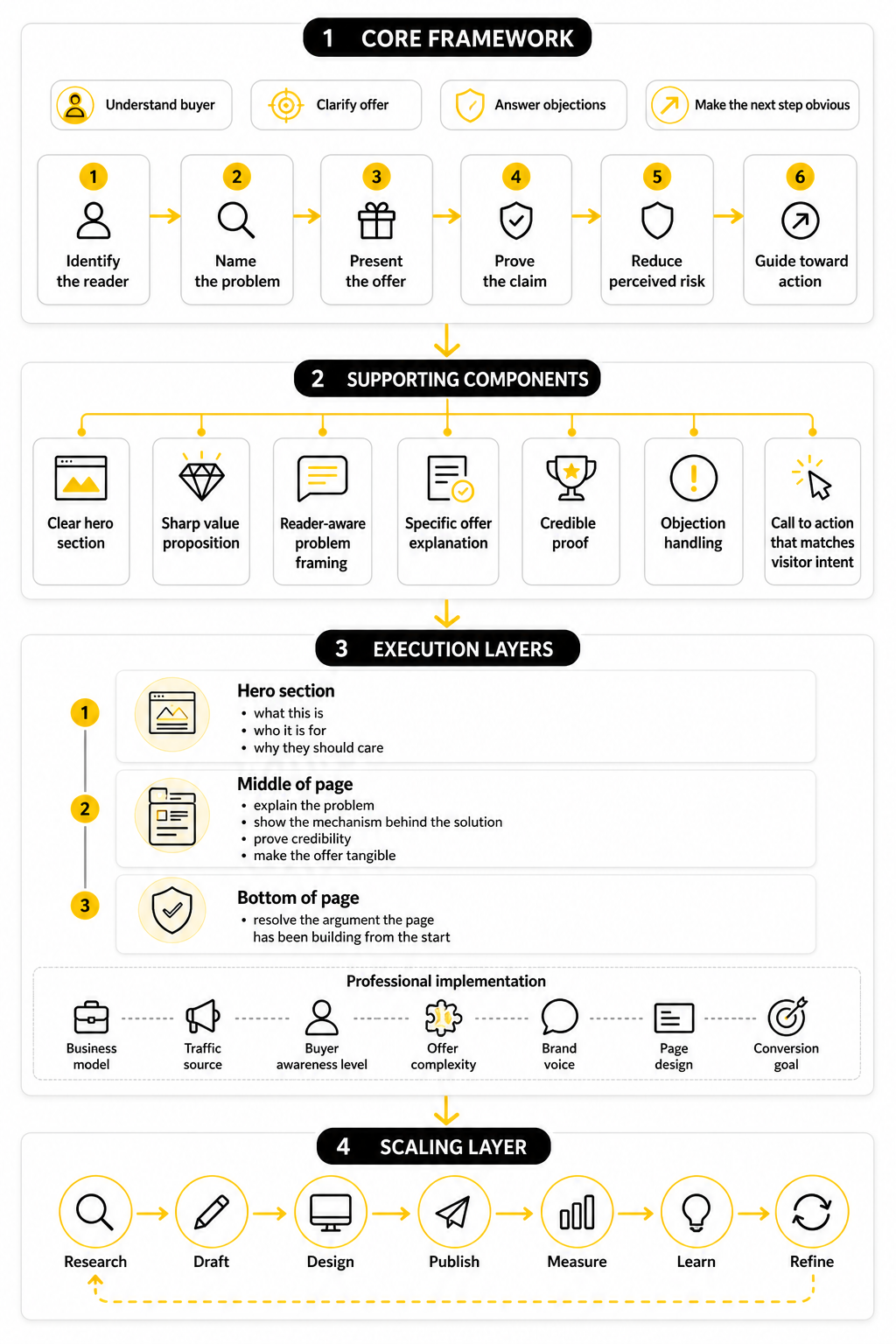
This is why structure matters so much. Website copy is read in fragments, so each section has to carry part of the sales argument on its own while still building toward the next section. The goal is not to trap people on the page with more words. The goal is to make every scroll feel useful.
Core Components Of A High-Converting Page
Most high-performing website pages are built from the same core components, even when the design looks completely different. You need a clear hero section, a sharp value proposition, reader-aware problem framing, a specific offer explanation, credible proof, objection handling, and a call to action that matches the visitor’s level of intent. These are not trendy elements. They are the basic parts of a persuasive page.
The hero section does the first job. It tells the visitor what this is, who it is for, and why they should care. If the hero section is vague, everything else has to work harder because the reader starts the page slightly confused.
The middle of the page does the persuasion work. This is where you explain the problem, show the mechanism behind the solution, prove credibility, and make the offer feel tangible. The bottom of the page should not suddenly introduce a new argument. It should resolve the argument the page has been building from the start.
Professional Implementation
Professional implementation is where most website copywriting projects succeed or collapse. It is not enough to write a clever homepage in isolation. The copy has to fit the business model, traffic source, buyer awareness level, offer complexity, brand voice, page design, and conversion goal.
For example, a homepage for a B2B SaaS company needs different copy logic than a landing page for a creator’s paid workshop. A SaaS homepage may need to help multiple stakeholders understand use cases, integrations, security, and ROI. A workshop page may need to build urgency, demonstrate instructor credibility, explain the transformation, and make enrollment feel like the obvious next step.
This is also where tools can help, but only when they support the strategy. A funnel builder like ClickFunnels can be useful when the page is part of a direct-response sales path. A CRM and automation platform like GoHighLevel can be useful when the copy is tied to lead capture, follow-up, and appointment booking. The tool does not create the message, but it can make the message easier to deploy, measure, and improve.
The key is to avoid treating website copy as a one-time writing task. Better copy usually comes from a loop: research, draft, design, publish, measure, learn, and refine. That loop is what turns a page from “good enough” into a real sales asset.
Research Before Writing
The next part of the Jacob McMillen website copywriting approach is research. Not brainstorming. Not opening a blank doc and trying to sound clever. Research comes first because the strongest copy usually sounds obvious to the buyer and surprisingly specific to everyone else.
The mistake is thinking research means collecting random testimonials and competitor headlines. Real copy research is about finding the language, fears, priorities, buying triggers, and objections that already exist in the market. When you do this well, the copy starts feeling less like persuasion and more like accurate translation.
Jacob’s website copywriting guide puts planning before writing because the page needs a strategy before it needs sentences: his process starts with planning the page before drafting the copy. That matters because a website page is not judged by how good it sounds in isolation. It is judged by whether the right visitor understands the offer and wants to take the next step.
Start With The Buyer’s Actual Situation
The buyer is not arriving on the page in a neutral state. They already have a problem, a half-formed opinion, a few doubts, and probably three other tabs open. Your job is to meet that situation directly instead of forcing them through generic brand language.
This is where website copy gets practical. You want to understand what the buyer is trying to fix, what they already tried, what made those attempts disappointing, and what would make a new solution feel worth the risk. Those details give the page emotional accuracy without needing hype.
For Jacob McMillen website copywriting, this is one of the big lessons: copy should be built from buyer logic, not writer ego. The writer is not trying to prove they are smart. The writer is trying to make the buyer feel, “Yes, this is exactly what I was looking for.”
Look For Language Patterns
Good research gives you raw material. Great research gives you patterns. When the same words, fears, and priorities show up again and again, those patterns should shape the copy.
You can find these patterns in sales calls, customer interviews, reviews, support tickets, surveys, competitor pages, Reddit threads, YouTube comments, and public testimonials. The point is not to steal phrasing blindly. The point is to notice how buyers describe the problem before a marketer gets involved.
This is especially important on website pages because visitors scan quickly. Nielsen Norman Group’s eye-tracking research has repeatedly shown that people often scan web content in predictable patterns rather than reading every line with equal attention: web users frequently scan pages instead of reading them fully. When the page uses language that already matches the visitor’s mental model, the important points become easier to catch.
Separate Research From Writing
One of the most useful habits in professional copywriting is separating research from writing. If you try to research and write at the same time, you usually end up with a messy page that has interesting fragments but no real argument. The better approach is to collect the material first, organize it, and then decide what belongs on the page.
A simple research document can include buyer pains, desired outcomes, objections, proof points, competitor claims, offer details, customer language, and decision criteria. Once that material is organized, writing becomes more controlled. You are not guessing what to say next because the page structure is pulling from real inputs.
This also prevents weak positioning. If every competitor says “save time,” “grow faster,” and “simplify your workflow,” your research should help you find what is actually different. Without that deeper work, the page becomes interchangeable.
Writing The Homepage Argument
A homepage is not a brochure. It is the front door of the business, and it has to orient different types of visitors without becoming vague. That is a hard balance, which is why homepage copy often becomes either too broad to convert or too narrow to explain the business properly.
The best homepage copy makes one clear argument: this company helps this type of person achieve this valuable outcome through this specific approach. Everything else on the page should support that argument. If a section does not clarify, prove, differentiate, or move the visitor forward, it probably does not belong.
This is where Jacob McMillen website copywriting becomes especially useful. The focus is not on filling a homepage with clever brand slogans. The focus is on building a page that helps the visitor understand the offer fast and trust it enough to continue.
The Hero Section Has One Job
The hero section should make the page instantly understandable. A visitor should be able to read the headline and subheadline and know what the business does, who it helps, and why it is relevant. If they have to scroll just to figure out the category, the copy is already creating friction.
A strong hero section usually combines clarity with a meaningful promise. It should not say everything. It should say the right first thing, then invite the reader to keep going.
This is why vague headlines are so expensive. “Empowering growth through innovative solutions” sounds polished, but it does not help a real buyer make a decision. “Book more qualified sales calls from your existing website traffic” gives the reader something concrete to evaluate.
The Page Should Move From Clarity To Confidence
Once the hero section creates clarity, the rest of the homepage needs to build confidence. That means explaining the problem in a way the buyer recognizes, showing how the offer works, proving the company can deliver, and giving the reader a natural next step. Each section should remove a reason to leave.
This is also where the page should become more specific. The top of the page may need to speak broadly enough for multiple visitor types, but the middle should start sharpening the message. Use cases, outcomes, process, proof, and differentiators make the business feel real.
The flow matters. A homepage that jumps from headline to features to testimonials to pricing without a logical thread can feel chaotic. The reader should feel guided, not dumped into a pile of marketing assets.
The Homepage Should Not Try To Close Everyone
A homepage usually has mixed intent. Some visitors are ready to book a call or start a trial. Others are still comparing options, checking credibility, or trying to understand whether the offer fits their situation.
That means the copy should not treat every visitor like they are equally ready to buy. The primary call to action can serve high-intent visitors, while supporting links can help lower-intent visitors explore services, case studies, pricing, demos, or resources. The page should still be decisive, but it should not pretend every visitor is at the same stage.
This is why homepage copy needs restraint. You do not need to answer every possible question on the homepage. You need to create enough clarity and trust for the visitor to choose the next useful step.
Service Page And Landing Page Copy
Once the homepage argument is clear, the next step is turning that message into pages with sharper intent. A service page and a landing page are not the same thing. They can use similar persuasion principles, but they serve different moments in the buyer journey.
A service page usually explains an offer inside a broader website. The visitor may be comparing services, checking credibility, or trying to understand whether the company is a fit. A landing page is usually more focused, often tied to a campaign, lead magnet, paid offer, webinar, demo, or direct conversion goal.
That distinction matters because Jacob McMillen website copywriting is not about using one template everywhere. The structure should match the visitor’s intent. A service page can educate and qualify. A landing page needs to remove distraction and push one clear action.
Service Pages Need Depth And Specificity
A service page has to do more than say what the business offers. It needs to explain the problem, the outcome, the process, the fit, and the reason someone should choose this provider instead of every similar option in the market. That is where many pages fall apart.
Weak service pages rely on broad claims like “custom solutions,” “expert strategy,” and “results-driven service.” Those phrases are easy to write because they avoid commitment. They are also easy to ignore because they do not tell the buyer anything useful.
A stronger service page gives the buyer a concrete mental picture. It explains what happens, what the client receives, how the work is delivered, what decisions the client needs to make, and what kind of outcome the service is designed to support. Jacob’s own copywriting service positioning emphasizes full-funnel experience, B2B copywriting, UVP, revenue, and branding, which is useful because it frames the service around business outcomes rather than just deliverables: his website copywriter page connects conversion copywriting to revenue and positioning.
Landing Pages Need One Clean Path
A landing page should not behave like a mini website. It should have one primary goal and a clean path toward that goal. The reader should not have to decide between five competing actions before they understand the offer.
That does not mean the page has to be short. It means every section has to earn its place. A long landing page can work beautifully when the offer is complex, expensive, unfamiliar, or high-friction. A short landing page can work when the visitor already understands the offer and only needs a quick reason to act.
Jacob’s landing page training material makes the same practical point: layout and copy have to work together because persuasive copy is more than isolated text boxes: his landing page copy training focuses on structure as well as words. That is the mindset you want. Do not write sections first and then hope the layout makes sense. Build the argument, then make the page structure serve that argument.
A Practical Execution Process
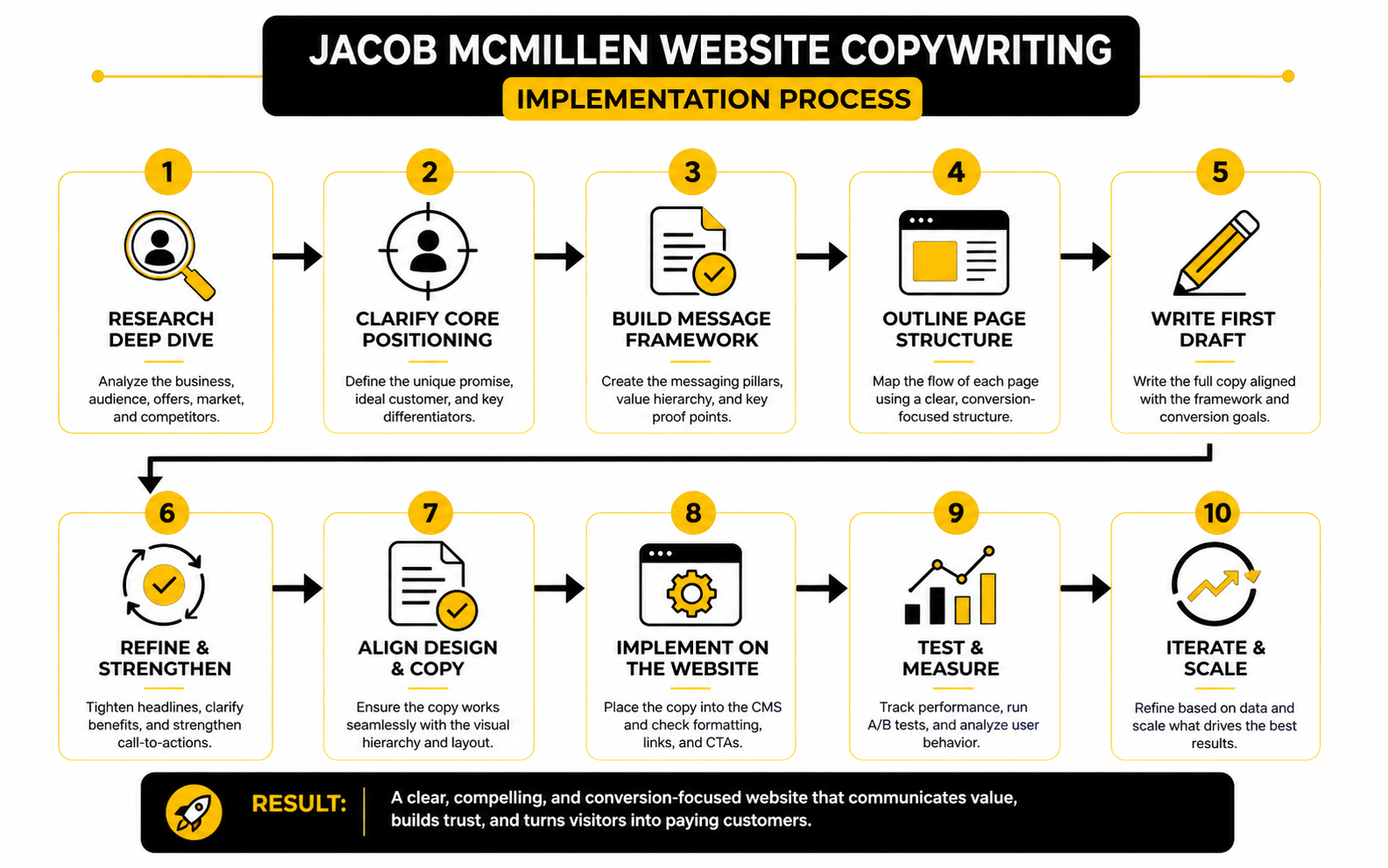
The implementation process should be simple enough to follow, but serious enough to prevent lazy copy. You do not need a 70-step workflow. You need a repeatable sequence that turns research into a page that can be published, measured, and improved.
A useful process looks like this:
This process keeps the page grounded. The goal defines what the copy must accomplish. The research defines what the page must say. The structure defines the order. The edit makes the writing sharper.
Match The Copy To The Design
Copy and design should not fight each other. If the copy needs three paragraphs to explain the offer, but the design only allows one vague sentence, the page will suffer. If the design creates beautiful sections with no strategic purpose, the copy will feel fragmented.
This is why copy should usually be drafted with the page layout in mind. The hero section, benefit blocks, proof sections, comparison areas, process steps, and CTA panels all need different types of writing. A headline has to compress meaning. A process section has to create confidence. A proof section has to reduce doubt.
For ecommerce landing pages, tools like Replo can help teams build and test more polished pages without forcing every small change through a developer. For funnels and direct-response pages, ClickFunnels can make sense when the campaign needs a dedicated conversion path. The important thing is not the tool itself. The important thing is that the page builder supports the message instead of boxing it in.
Write For The Next Decision
Every section should help the visitor make the next decision. The hero helps them decide whether to keep reading. The problem section helps them decide whether the page understands them. The offer section helps them decide whether the solution fits. The proof section helps them decide whether they believe it.
This is where strong website copy feels calm instead of desperate. It does not shout at the reader. It guides them through the decision they already came to make.
That is a big part of why the Jacob McMillen website copywriting framework is useful for real businesses. It treats copy as decision support. The page is not trying to trick someone into clicking. It is making the right next step feel clear, credible, and low-friction.
Statistics And Data
Measurement is where website copy stops being a matter of opinion. You can still have taste, instinct, and experience, but once the page is live, the numbers start showing where the argument is strong and where the visitor is getting stuck. That is why the Jacob McMillen website copywriting approach should not end at the draft.
The goal is not to dump a dashboard full of random metrics into a weekly report. The goal is to connect each number to a decision. If a metric does not help you understand attention, comprehension, trust, intent, or conversion, it probably should not drive the next copy change.
Benchmarks can be useful, but only as context. Unbounce’s conversion benchmark report is based on more than 57 million conversions across over 41,000 landing pages, which makes it helpful for understanding how much performance can vary by industry and offer type. But your page should not be judged by one generic “good conversion rate” number. It should be judged by whether the right visitors are moving through the page with less friction over time.
What Conversion Rate Actually Tells You
Conversion rate tells you how many visitors completed the intended action. That action might be booking a call, filling out a form, starting a trial, joining a waitlist, buying a product, or clicking through to a checkout. It is the most obvious number to track, but it is also one of the easiest numbers to misread.
A low conversion rate does not automatically mean the copy is bad. The traffic might be cold, the offer might be unclear, the price might be wrong, the page might load slowly, or the form might create too much friction. A high conversion rate does not automatically mean the copy is great either. The page might be attracting a small pool of highly qualified visitors who already decided before they landed.
The useful question is not “Is this conversion rate good?” The useful question is “What does this conversion rate mean given the traffic source, visitor intent, offer complexity, and next step?” That keeps you from making lazy edits based on one surface-level number.
Track The Signals Before The Conversion
Before someone converts, they usually send smaller signals. They scroll, click, pause, expand sections, watch a video, start a form, abandon a form, visit the pricing page, or return later through a different channel. These signals help you see whether the copy is creating momentum or confusion.
Google Analytics 4 defines engagement rate around engaged sessions, which can include sessions lasting longer than 10 seconds, sessions with a key event, or sessions with at least two pageviews or screenviews: GA4 engagement rate and bounce rate definitions. That matters because a visitor who does not convert immediately may still be showing serious interest. If the page creates strong engagement but weak conversion, the problem may be the offer, CTA, proof, or form friction rather than the opening message.
You should also separate page-level behavior from funnel-level behavior. A homepage might be doing its job if it sends qualified visitors to a service page, even if the homepage itself does not produce many direct leads. A landing page, on the other hand, usually needs to be judged more directly because it is built around one focused action.
Build A Simple Measurement System
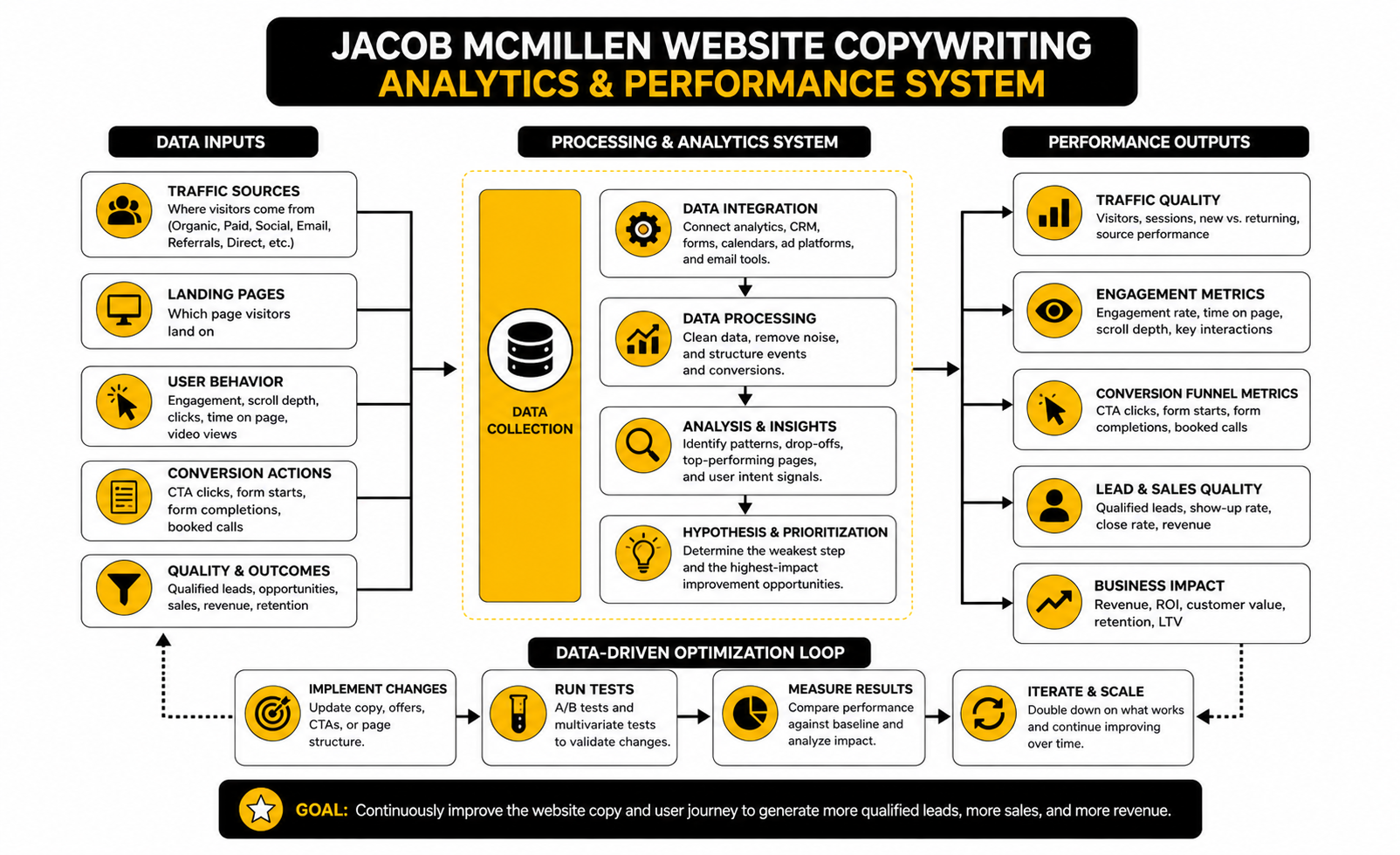
A practical analytics system does not need to be complicated. It needs to be clear enough that you can look at the data and know what to improve next. For website copy, that usually means tracking traffic quality, page engagement, CTA interaction, form starts, form completions, booked calls, qualified leads, sales, and revenue.
A simple measurement system can look like this:
This is where tools can support the copywriting process. GoHighLevel can make sense for agencies and service businesses that want landing pages, forms, calendars, pipelines, automations, and follow-up in one system. Fillout can be useful when the form itself needs to be cleaner, more carefully, and easier to complete. The tool is not the strategy, but the right setup makes the strategy measurable.
Benchmarks Should Start Questions, Not End Them
Benchmarks are useful when they give you perspective. They are dangerous when they become excuses. If a benchmark says your industry converts at one range, that does not mean your page is automatically fine because it sits near the average.
For ecommerce, Smart Insights’ 2025 conversion rate roundup shows how widely conversion rates vary by sector, device, and traffic context: ecommerce conversion benchmarks differ heavily by category. That is the point. A single average cannot tell you whether your headline is clear, your proof is believable, or your CTA matches buyer intent.
The better use of benchmarks is diagnostic. If your page is far below a reasonable range, you may have a major clarity, traffic, offer, trust, or technical problem. If your page is near the average, you still have room to improve the argument. If your page is above average, you should protect what is working before you test random changes.
Interpret Data Like A Copywriter
A copywriter should look at analytics differently than a media buyer or designer. The question is not just “Where did the user click?” The question is “What did the user understand, believe, doubt, or miss before that click?”
If the hero section gets attention but the CTA gets ignored, the page may be clear but not compelling enough. If visitors scroll to proof sections and then leave, the proof may not be specific, relevant, or credible. If users start the form but abandon it, the page may have done its persuasion job while the conversion step creates friction.
This is why data and copy need to work together. Analytics shows where behavior changes. Copy research helps explain why. The best improvements usually come from combining both instead of worshiping one.
Measure Quality, Not Just Quantity
The biggest mistake is optimizing only for more leads. More leads are not always better. More qualified leads are better.
A page that doubles form submissions but fills the pipeline with bad-fit prospects has not really improved the business. It has shifted the cost from marketing to sales. That is why website copy should be measured beyond the form submission.
For service businesses, track booked calls, show-up rate, qualified opportunities, close rate, and revenue. For SaaS, track trial starts, activation, product-qualified leads, paid conversions, and retention. For ecommerce, track add-to-cart rate, checkout completion, average order value, refund rate, and repeat purchase behavior.
Use The Data To Choose The Next Copy Change
Every metric should point toward a practical next move. If traffic is low, copy changes may not create enough data to learn from. If engagement is weak, the first screen and message clarity deserve attention. If engagement is strong but CTA clicks are low, the offer, button language, or section flow may need work.
If CTA clicks are strong but conversions are weak, look at the form, booking flow, pricing page, or checkout step. Baymard’s checkout research has found that checkout design and flow can directly cause users to abandon purchases when the process becomes frustrating or unclear: checkout usability issues often drive abandonment. That matters because the copy may have done its job, while the final action still fails.
This is the professional way to improve website copy. Do not rewrite everything because one metric looks bad. Find the weakest step, form a specific hypothesis, change one meaningful thing, and measure what happens next. That is how Jacob McMillen website copywriting becomes more than a writing style. It becomes a performance system.
Tools, Templates, And Workflow
At a certain point, website copywriting becomes less about knowing what good copy looks like and more about building a workflow that can produce it consistently. That is the advanced layer most beginners miss. They collect frameworks, swipe files, and headline formulas, but they do not build a repeatable system for moving from research to live page.
Jacob McMillen website copywriting is useful here because the work is treated like a business process, not a burst of inspiration. You need inputs, decisions, drafts, approvals, implementation, and measurement. Without that workflow, even talented writers end up rewriting the same sections too many times because nobody agreed on the strategy upfront.
A strong workflow also protects the project from opinion chaos. If the founder, marketer, designer, and sales team all review the page with different goals in mind, the copy can get watered down fast. The process needs to define what the page is supposed to do before everyone starts suggesting word changes.
Build A Copy Brief Before The Draft
A copy brief is the bridge between research and writing. It should not be a bloated document that nobody reads. It should be a practical working file that captures the page goal, audience, offer, positioning, proof, objections, desired action, and must-use language.
The brief matters because it gives the page a spine. If the draft starts drifting, you can compare it against the brief instead of arguing based on personal preference. That makes feedback sharper and less emotional.
A useful copy brief should answer these questions:
This is also where AI tools can be useful, but only if they are used carefully. AI can help organize research, create draft variations, summarize customer language, or generate alternative section angles. It should not replace the strategic thinking that decides what the page actually needs to say.
Keep Templates Flexible
Templates are useful until they become a substitute for thought. A homepage template, service page template, or landing page template can speed up the work, but it should never force every business into the same argument. The structure has to fit the offer, not the other way around.
A simple service page template might include a hero section, problem framing, outcome section, process, proof, offer details, objections, and CTA. That is a solid starting point. But a high-ticket consulting offer may need deeper authority and risk reversal, while a simple productized service may need more clarity around deliverables and turnaround time.
This is why expert copywriters do not worship frameworks. They use frameworks to think faster. Then they adjust based on the page goal, traffic temperature, market sophistication, and buyer risk.
Make The Workflow Easy To Ship
The best copy in the world does not matter if it sits in a Google Doc forever. The workflow needs to make implementation easy for the people who actually publish the page. That means clean section labels, clear CTA instructions, notes for design, and a structure that can move into a page builder without confusion.
For funnel-heavy businesses, ClickFunnels can make this easier because the copy can be deployed inside a dedicated sales path. For service businesses that need forms, calendars, follow-up, and pipeline management around the page, GoHighLevel can help connect the website message to the lead management process. For teams that need simple forms tied to clear conversion intent, Fillout can make the final step feel cleaner.
The tradeoff is that tools can create false momentum. A page builder makes it easy to publish quickly, but it does not guarantee the message is right. The workflow should keep strategy first and use tools to execute faster, not to skip thinking.
Common Website Copywriting Mistakes
Advanced copywriting is often about subtraction. You remove weak claims, unnecessary sections, vague language, fake urgency, and anything that makes the visitor work harder than necessary. Most underperforming website pages are not missing one magic phrase. They are carrying too much friction.
The tricky part is that many mistakes look professional on the surface. The page might be well-designed, grammatically clean, and filled with nice-sounding statements. But if the visitor still cannot tell why the offer matters, the copy is failing quietly.
This is where the Jacob McMillen website copywriting mindset stays practical. The question is not “Does this sound good?” The question is “Does this help the right person make the right decision?”
Mistake 1: Writing For The Company Instead Of The Buyer
A company naturally wants to talk about its story, values, team, features, and process. Some of that can be useful. But the visitor is usually reading through a self-interested lens: “Can this help me?” “Is this worth my time?” “Do I trust this enough to act?”
When the page leads with internal language, the reader has to translate it into personal relevance. That creates friction. The copy should make the relevance obvious.
This does not mean the company should erase its personality. It means the company’s story should be used when it strengthens trust, differentiation, or desire. If it is just there because the team likes talking about itself, cut it or move it somewhere else.
Mistake 2: Confusing Clarity With Simplicity
Clarity does not always mean fewer words. Sometimes a page needs more explanation because the offer is complex, expensive, technical, or unfamiliar. The problem is not length. The problem is wasted language.
A short page can still be confusing if it skips the buyer’s real questions. A long page can still feel easy if every section earns attention. The goal is not to make the page short. The goal is to make the decision easier.
This is especially important for B2B, SaaS, consulting, and specialized services. Buyers may need to understand use cases, implementation, risk, pricing logic, and proof before they feel comfortable. Removing those sections in the name of simplicity can hurt conversions instead of helping them.
Mistake 3: Making Proof Too Generic
Proof is not just a logo strip or a vague testimonial. Proof should support the exact claim the page is making. If the page promises speed, the proof should show speed. If it promises quality leads, the proof should show lead quality. If it promises easier implementation, the proof should reduce fear around setup.
Generic proof feels decorative. Specific proof feels persuasive. That difference matters because modern buyers are used to seeing inflated claims everywhere.
The strongest proof usually comes from real customer outcomes, detailed testimonials, credible third-party validation, product screenshots, process transparency, or concrete before-and-after context. Do not invent numbers. Do not exaggerate results. Trust is hard to build and very easy to lose.
Mistake 4: Treating SEO And Conversion Like Enemies
SEO and conversion should work together, but only when the keyword strategy matches search intent. A page targeting “jacob mcmillen website copywriting” should not simply repeat that phrase until the copy becomes unreadable. The keyword needs to appear naturally while the article still helps the reader understand the topic.
The risk is writing for the algorithm so aggressively that the human reader feels ignored. That might get impressions, but it will not create trust. Search traffic only matters if the page gives visitors a reason to stay, believe, and act.
The better approach is to use SEO to understand demand, then use copywriting to satisfy the intent behind that demand. In practice, that means answering the real questions, using clear headings, covering the topic completely, and making the page genuinely useful. Keyword placement matters, but usefulness matters more.
Mistake 5: Scaling Copy Without Guardrails
Scaling website copy is dangerous when every page starts sounding the same. This happens when teams use one template across dozens of service pages, location pages, product pages, or campaign pages without adding real strategic differences. The pages may look complete, but they do not feel specific.
The solution is to create guardrails, not rigid scripts. Define the brand voice, messaging hierarchy, proof standards, CTA logic, offer language, and page structure rules. Then let each page adapt to its own audience, use case, and conversion goal.
This becomes even more important when AI enters the workflow. AI can create a lot of copy quickly, but speed can multiply weak strategy. Use it to accelerate drafts and variations, but keep human judgment in charge of positioning, claims, proof, nuance, and final edits.
Mistake 6: Optimizing Before The Message Is Ready
Testing is useful, but testing weak ideas faster does not make them strong. If the page has no clear positioning, no compelling offer, no specific proof, and no buyer insight, A/B testing button text is mostly a distraction. You need a coherent message before small optimization work matters.
This is the strategic tradeoff. Early on, the biggest gains usually come from improving the offer, page structure, headline, proof, and objection handling. Later, once the page is already working, smaller tests can help refine performance.
That is why expert-level website copywriting is not just writing or testing. It is knowing which problem you are solving. Sometimes the problem is the sentence. Sometimes the problem is the offer. Sometimes the problem is the entire argument.
Proof, Objections, And Trust Signals
By the final stretch of a website page, the visitor is usually not looking for more hype. They are looking for reasons to trust the claim, reasons to believe the business can deliver, and reasons to feel safe taking the next step. This is where proof, objections, and trust signals need to work together instead of sitting on the page as random decorations.
Jacob McMillen website copywriting is useful because it keeps the page focused on persuasion as a sequence. You do not just state the offer and hope people believe it. You show why the offer is credible, answer the doubts that would stop action, and make the final step feel reasonable.
The strongest pages do this without becoming defensive. They do not bury the reader in proof for proof’s sake. They use the right proof at the right moment, so the visitor can keep moving.
Make Proof Match The Claim
Proof only works when it supports the specific claim the page is making. If the page promises a faster implementation process, the proof should show speed, clarity, or reduced friction. If the page promises better leads, the proof should speak to lead quality, pipeline value, booked calls, or close rates.
This is why generic testimonial blocks often feel weak. A testimonial that says “Great team, highly recommend” may help a little, but it does not answer the buyer’s real question. The buyer wants to know whether the business can solve their version of the problem.
Better proof usually comes from specific customer quotes, before-and-after context, screenshots, process examples, case studies, recognizable clients, public reviews, certifications, guarantees, media mentions, or transparent methodology. The point is not to add everything. The point is to use proof that makes the main promise easier to believe.
Handle Objections Before They Become Exits
Every serious buyer has objections. That is normal. The problem is when the page ignores those objections and forces the visitor to resolve them alone.
Common objections include price, time, complexity, credibility, fit, switching cost, implementation risk, support, and whether the solution will work for their specific situation. A good page does not treat these as annoying questions. It treats them as part of the sales conversation.
This is where website copy becomes more mature. Instead of pretending there are no tradeoffs, the page can explain who the offer is for, who it is not for, what the buyer needs to bring, what happens after they take action, and what makes the process easier. That kind of clarity can reduce unqualified leads while increasing confidence for the right ones.
Build A Complete Conversion Ecosystem
A website page is rarely working alone. The visitor may arrive from search, email, paid ads, referrals, social posts, YouTube, a podcast, or a comparison page. After they leave, they may return through retargeting, email follow-up, a sales call, a demo, or a checkout sequence.
That is why the final system matters. The copy on the page should connect to the rest of the buyer journey, not contradict it. The same positioning, proof, offer language, and CTA logic should carry through the funnel.
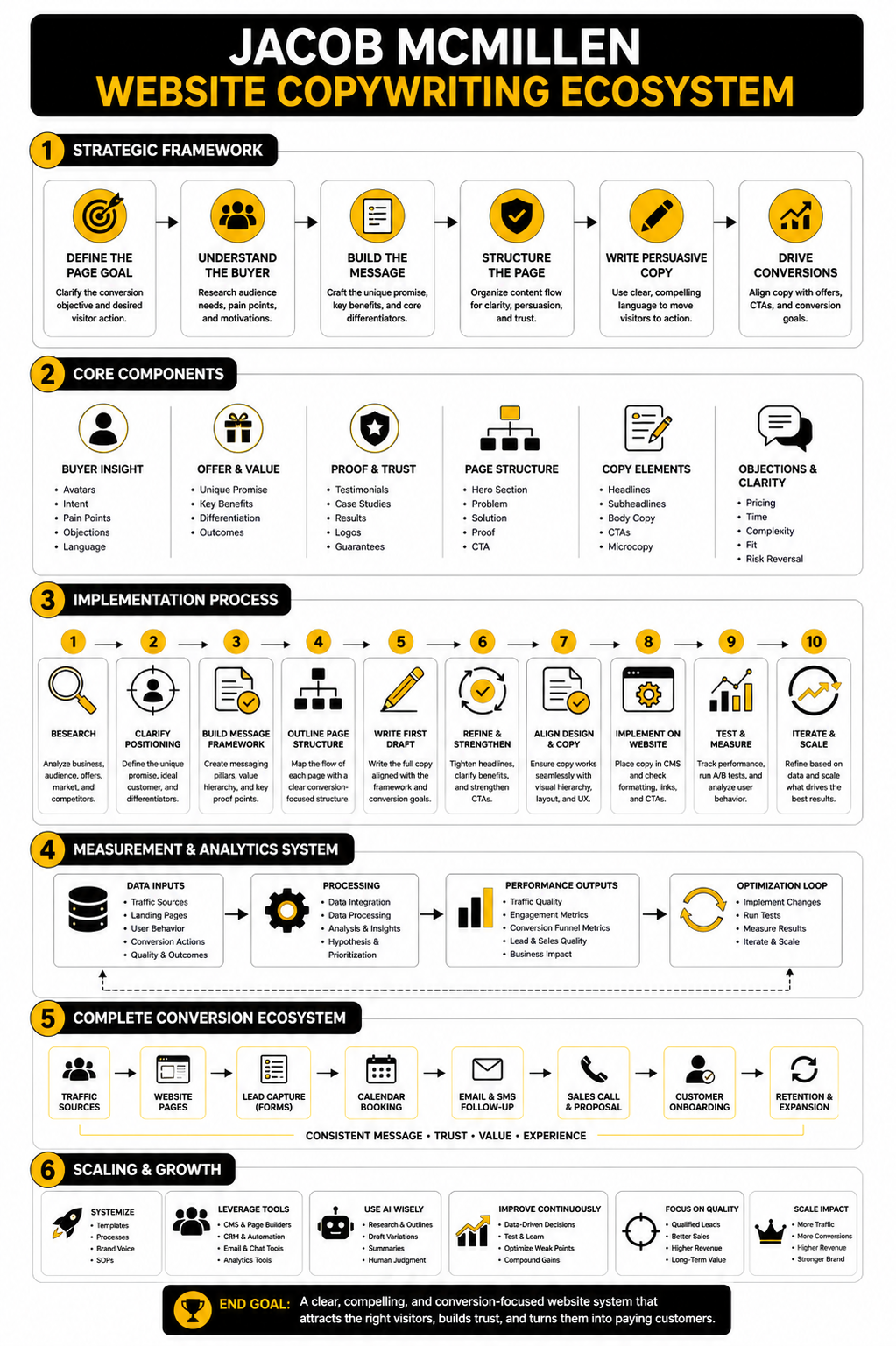
For service businesses, that ecosystem might include the homepage, service page, lead form, calendar, confirmation page, reminder emails, proposal, and sales follow-up. For SaaS, it might include the landing page, demo request, onboarding flow, activation emails, product tours, and sales-assisted follow-up. For ecommerce, it might include the product page, collection page, landing page, cart, checkout, abandoned cart emails, and post-purchase messaging.
This is where tools can help if the message is already clear. Brevo can support email follow-up when leads need nurturing after the first page visit. ManyChat can help when the journey includes automated messaging across chat channels. The copy still has to do the strategic work, but the system makes that work easier to continue after the first click.
What is Jacob McMillen website copywriting?
Jacob McMillen website copywriting refers to the practical approach Jacob teaches and demonstrates around writing website pages that generate leads, subscribers, and sales. The focus is not just on clever writing. It is on planning the page, understanding the buyer, structuring the message, and writing copy that moves people toward action.
Is Jacob McMillen a website copywriter?
Yes, Jacob McMillen positions himself as a copywriter and content strategist with experience in website copy, conversion copywriting, B2B copywriting, and full-funnel content. His website copywriter page presents his work around UVP, revenue, branding, and conversion-focused messaging: Jacob’s website copywriter positioning. That matters because his approach is tied to business outcomes, not just writing style.
What makes his website copywriting approach different?
The main difference is the planning-first mindset. Instead of starting with headlines or slogans, the process starts with the page goal, buyer context, offer clarity, and structure. That makes the copy more useful because every section has a job.
Can beginners use this framework?
Yes, beginners can use it because the framework is practical. You do not need to be a genius writer to start with buyer research, define the page goal, map the sections, and write clearly. The skill comes from doing that consistently and learning how each part of the page affects the next.
What pages should use this approach?
This approach works best for homepages, service pages, landing pages, sales pages, lead generation pages, product pages, and offer pages. Any page that needs to explain value and drive action can benefit from the same principles. The structure should change based on the page goal, but the underlying logic stays similar.
How much research should happen before writing website copy?
Enough research should happen to understand the buyer, the offer, the market, the objections, the proof, and the conversion goal. That usually means reviewing customer language, sales calls, testimonials, competitor pages, reviews, support questions, analytics, and internal business context. The goal is not endless research. The goal is to stop guessing.
What is the most important part of a website page?
The most important part is the main argument. The hero section matters because it creates the first impression, but the page can still fail if the rest of the argument is weak. A strong page needs clarity at the top, proof in the middle, and a natural next step near the end.
How long should website copy be?
Website copy should be as long as needed to help the right visitor make the decision. Simple, low-risk offers may only need a short page. Complex, expensive, or unfamiliar offers usually need more explanation, more proof, and more objection handling.
Should website copy prioritize SEO or conversions?
It should do both, but in the right order. SEO helps bring in qualified visitors when the page matches search intent. Conversion copy helps those visitors understand, trust, and act once they arrive.
How should you measure website copy performance?
Measure the full path, not just one number. Track traffic source, engagement, scroll depth, CTA clicks, form starts, form completions, booked calls, qualified leads, sales, and revenue. A page is not successful just because it gets clicks. It is successful when it moves the right people toward the right outcome.
What is the biggest website copywriting mistake?
The biggest mistake is writing from the company’s perspective instead of the buyer’s perspective. The company wants to talk about its services, values, process, and features. The buyer wants to know whether the offer solves their problem, why it is credible, and what happens next.
Can AI write website copy using this framework?
AI can help with research organization, outlines, variations, summaries, and first drafts. It should not be trusted to own positioning, proof, strategic tradeoffs, or final judgment. AI is useful when the human already knows what the page needs to accomplish.
What tools help with implementing website copy?
The right tool depends on the business model. ClickFunnels can support funnel pages and direct-response campaigns. GoHighLevel can support lead capture, calendars, CRM, automations, and follow-up for service businesses. Replo can support ecommerce landing page implementation when teams need more control over page building.
Is Jacob McMillen website copywriting only for freelancers?
No, the framework is useful for freelancers, founders, marketers, agencies, consultants, SaaS teams, and ecommerce teams. Freelancers can use it to deliver better client work. Businesses can use it to make their own pages clearer and more conversion-focused.
What should happen after the copy is published?
After publishing, the page should be measured and improved. Review how visitors behave, where they stop, what they click, and whether the leads or sales are qualified. Then improve the weakest part of the journey instead of randomly rewriting the page.
Build a stronger local presence with BAAM AI
Turn your website, Google profile, social channels, and AI visibility into one growth engine
Most businesses do not need more random marketing activity. They need a consistent presence system that helps the right people find them, trust them, and take action. BAAM AI brings strategy, local SEO, website updates, Google Maps visibility, social content, AI-search readiness, media production, and reporting into one practical monthly engine.
If you want your marketing to keep working after the campaign ends, start with a free BAAM AI presence audit. See how your business shows up today and where the fastest visibility wins are at BAAM AI.