
BAAM AI Blog
Internet Marketing Service: A Practical Guide To Building Growth That Does Not Depend On Guesswork
An internet marketing service is not just “running ads” or posting on social media. Done properly, it is the operating system that connects positioning, traffic, conversion, automation, analytics, and retention into...
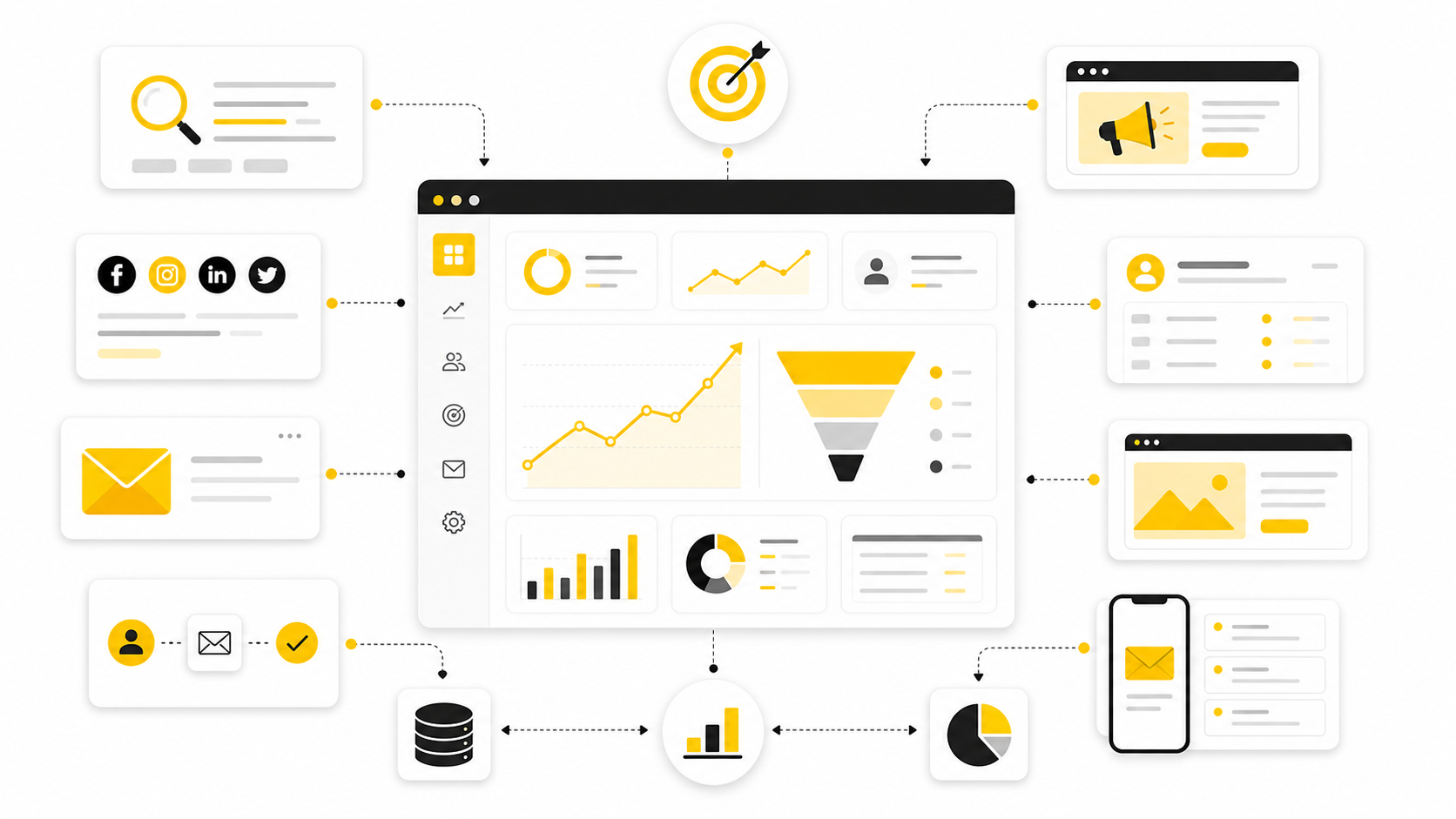
An internet marketing service is not just “running ads” or posting on social media. Done properly, it is the operating system that connects positioning, traffic, conversion, automation, analytics, and retention into one measurable growth engine. That matters because the internet is now where buyers research, compare, trust, hesitate, and finally decide.
The market is not getting quieter. Global internet adoption reached 5.56 billion users at the start of 2025, with 67.9% of the world’s population online, while U.S. internet advertising revenue climbed to $294.6 billion in 2025, its highest recorded level. That tells you something simple: businesses are not moving money online because it is trendy; they are doing it because customer attention, intent, and purchase behavior are already there.
But here is the catch. More channels do not automatically create more growth. Search, paid ads, social media, email, landing pages, automation, analytics, and AI tools can either work together or pull the business in ten different directions. A strong internet marketing service brings those pieces into one clear system, so every campaign has a job, every lead has a path, and every decision can be tied back to revenue.
Why Internet Marketing Services Matter Now
Internet marketing matters because buyers no longer move in a straight line. A potential customer might discover a brand through a short video, search for reviews, compare pricing, read a landing page, abandon the page, receive an email, ask a chatbot a question, and only then book a call or buy. If each of those moments is handled separately, the business leaks trust, attention, and revenue.
The scale of digital behavior makes this even more important. DataReportal’s global research shows that the internet added 136 million users during 2024, while social media reached 5.24 billion active user identities by early 2025. That is not just a bigger audience; it is a more fragmented audience, spread across search engines, feeds, inboxes, marketplaces, communities, and private messaging.
A professional internet marketing service gives a business a way to manage that complexity without drowning in it. Instead of chasing every trend, the service defines the customer journey, chooses the channels that fit the offer, builds conversion assets, and measures what actually moves the business forward. This is where the difference between random marketing activity and a real growth system becomes obvious.
The Internet Marketing Service Framework
A useful internet marketing service starts with strategy, not tactics. Before choosing ads, SEO, email, funnels, or automation, the business needs a clear answer to five practical questions: who is the buyer, what problem do they want solved, why should they trust this offer, where do they spend attention, and what action should they take next. Without those answers, even good tools produce messy outcomes.
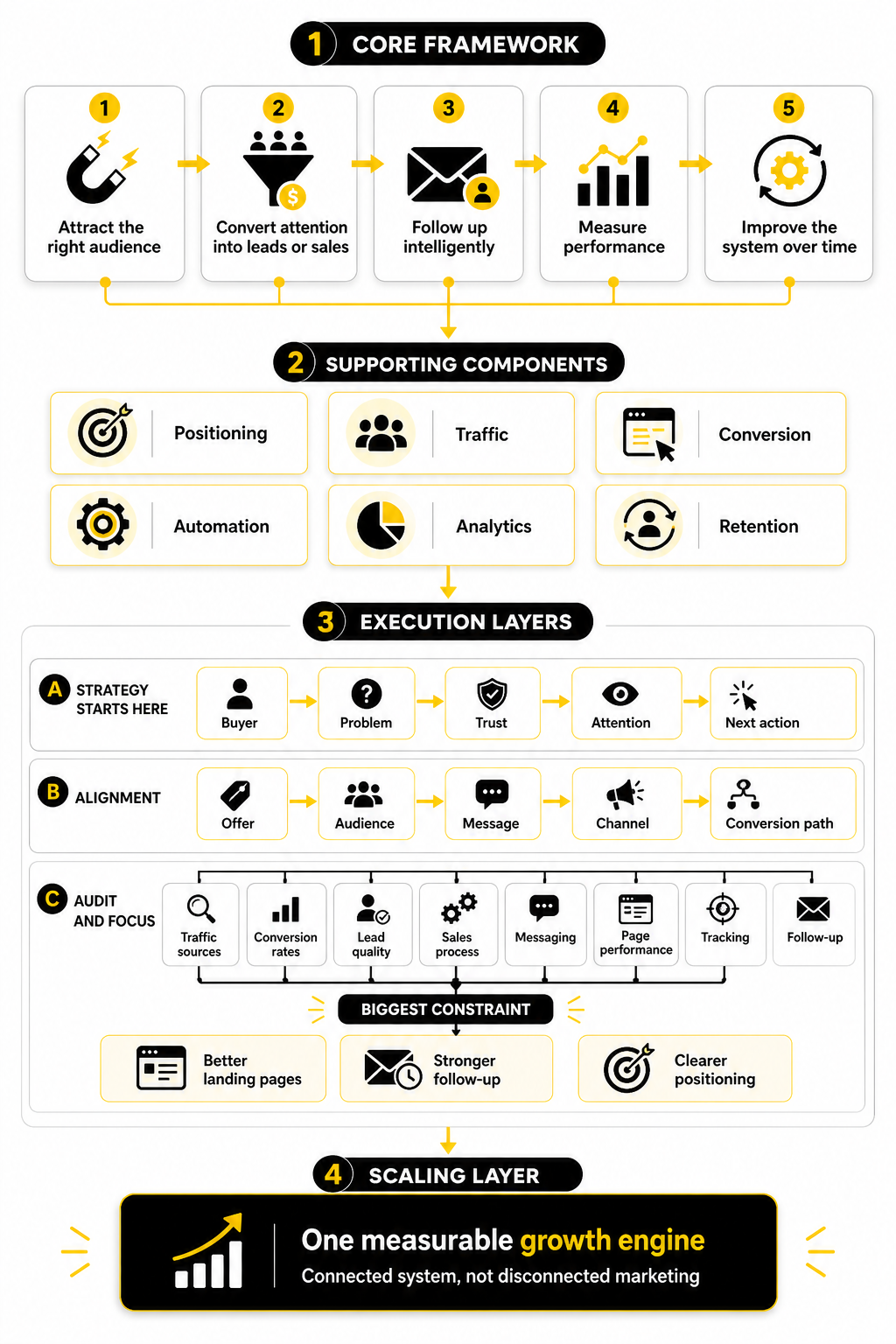
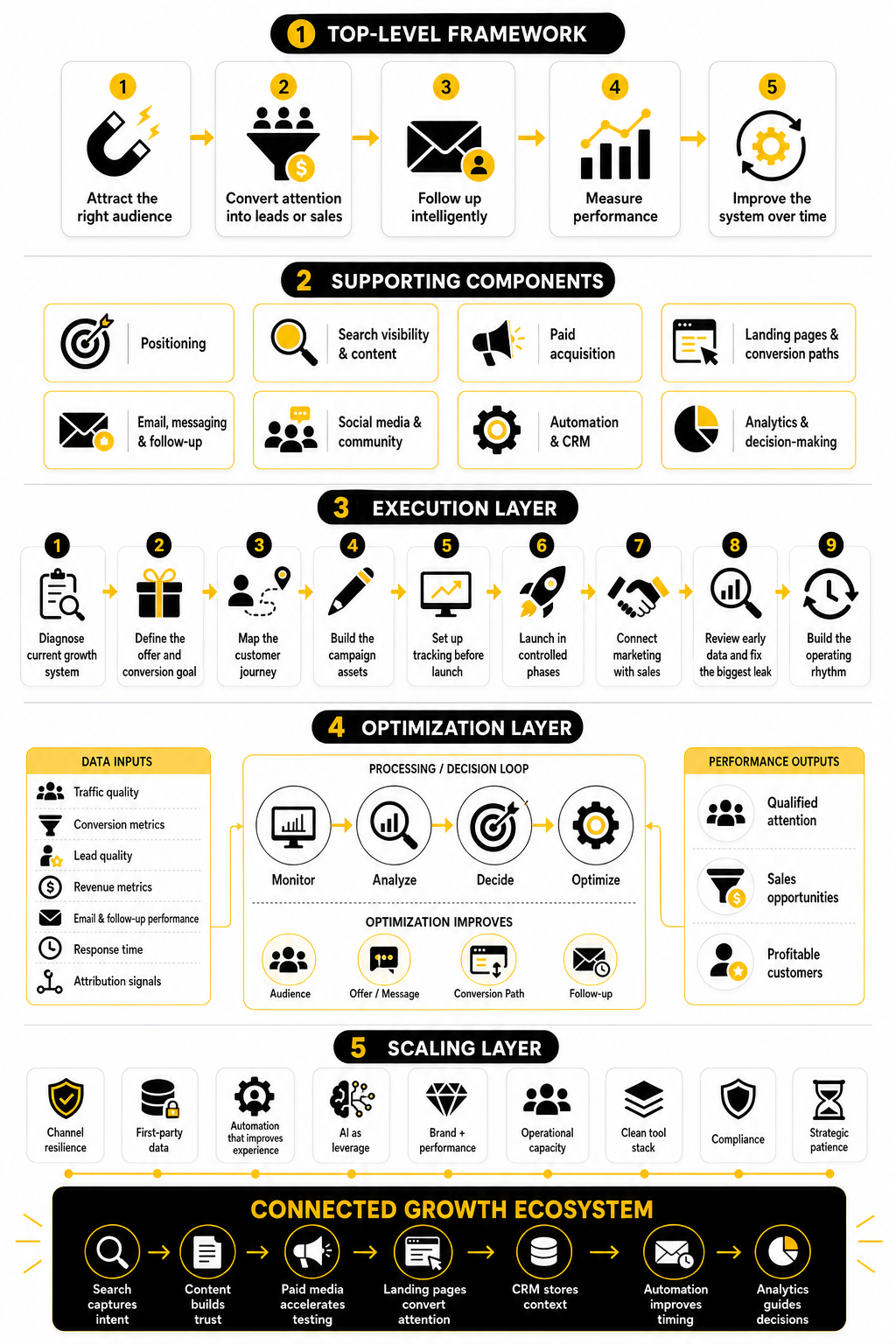
The framework is simple: attract the right audience, convert attention into leads or sales, follow up intelligently, measure performance, and improve the system over time. Each stage depends on the one before it. Traffic without conversion is expensive, conversion without follow-up is wasteful, and automation without a clear offer just makes bad marketing happen faster.
This is also why many businesses move toward integrated platforms when they outgrow scattered tools. A local service business, agency, coach, or consultant may use a platform like GoHighLevel to connect funnels, CRM, messaging, automation, calendars, and reporting in one place. The tool is not the strategy, but the right platform can make the strategy easier to execute consistently.
Core Components Of A Complete Internet Marketing Service
A complete internet marketing service usually includes positioning, content, search visibility, paid acquisition, landing pages, email, automation, analytics, and conversion optimization. These are not separate “extras” bolted onto a campaign. They are parts of one machine, and each part should have a clear purpose.
Search and content help the business capture demand from people already researching a solution. Paid media helps create or accelerate demand when speed and targeting matter. Landing pages, forms, chat, booking flows, and checkout pages turn that attention into measurable action.
The follow-up layer is where many businesses win or lose. Email, SMS, retargeting, CRM pipelines, and conversational automation keep the relationship moving after the first click. For example, a brand that relies heavily on Instagram, Messenger, or WhatsApp conversations may use ManyChat to turn social engagement into structured follow-up instead of letting interested buyers disappear in the inbox.
Professional Implementation Starts With Alignment
Professional implementation does not begin with a campaign launch. It begins with alignment between the offer, audience, message, channel, and conversion path. When those pieces are misaligned, the business often blames the channel, even though the real problem is that the campaign never had a coherent path from attention to action.
The first implementation step is usually an audit. That means reviewing current traffic sources, conversion rates, lead quality, sales process, messaging, page performance, tracking, and follow-up. The goal is not to collect data for the sake of data; the goal is to find the biggest constraint in the current system.
Once the constraint is clear, execution becomes much more focused. A business may need better landing pages before it increases ad spend, stronger follow-up before it buys more leads, or clearer positioning before it publishes more content. That is the real value of an internet marketing service: it helps the business stop doing disconnected marketing and start building a system that compounds.
Core Components Of A Complete Internet Marketing Service
The first real component is positioning. Before an internet marketing service can drive meaningful traffic, it has to clarify why the offer deserves attention in the first place. This includes the promise, audience, pain points, objections, proof, pricing logic, and the specific reason a buyer should choose this business instead of a similar one.
Positioning matters because online buyers compare faster than ever. They do not need to call five vendors, wait for brochures, or sit through a sales pitch to understand the market. They can search, scan reviews, watch videos, ask AI tools, compare competitors, and leave within minutes if the message feels vague.
Good positioning gives every other channel a backbone. SEO content becomes sharper because it answers the right questions. Paid ads become easier to test because the offer is specific. Landing pages convert better because the visitor immediately understands the value.
Search Visibility And Content
Search visibility is still one of the strongest foundations of an internet marketing service because it captures existing intent. People searching for a service, comparison, pricing answer, tutorial, local provider, or specific problem are already telling you what they care about. That makes search different from interruption-based channels, where the campaign has to create attention before it can create demand.
Content supports search, but it should not be treated as filler. A good content plan maps the buyer journey from early problem awareness to final decision. That usually means educational articles, comparison pages, service pages, local pages, case-based proof, FAQs, and conversion-focused landing pages that help people move forward without feeling pushed.
The mistake is publishing because a calendar says so. Content should earn its place by matching real buyer intent, supporting sales conversations, or building trust around a specific decision. If a page does not help the buyer understand, believe, compare, or act, it probably does not belong in the strategy.
Paid Acquisition
Paid acquisition gives an internet marketing service speed. SEO and content can compound over time, but paid ads can test messaging, audiences, offers, and landing pages much faster. That makes paid media especially useful when a business needs market feedback, lead flow, event registrations, product sales, or a predictable testing loop.
But paid traffic is not magic. The IAB and PwC reported that U.S. internet advertising revenue reached a record $294.6 billion in 2025, which shows how heavily businesses now compete for digital attention through paid channels. More spending also means more competition, so weak offers and lazy landing pages get punished quickly.
A professional paid strategy should define the economics before launching. That means knowing the target cost per lead, close rate, average order value, payback period, and lifetime value. Without those numbers, the business is not really managing growth; it is just buying traffic and hoping the math works later.
Landing Pages And Conversion Paths
A landing page has one job: turn intent into action. That action might be booking a call, starting a trial, downloading a resource, joining a list, buying a product, or requesting a quote. The page should remove confusion, answer objections, build confidence, and make the next step obvious.
This is where many campaigns quietly fail. The ad may be good, the audience may be right, and the offer may be strong, but the page creates friction. Slow load times, unclear headlines, generic copy, too many choices, weak proof, and disconnected design can all reduce performance before the sales team ever sees the lead.
For ecommerce teams and high-converting product pages, a builder like Replo can make sense when the business needs faster landing page production without waiting on a full development cycle. For broader funnel builds, checkout flows, and offer testing, ClickFunnels can be useful when the priority is speed, direct response structure, and simple funnel deployment.
Email, Messaging, And Follow-Up
Most buyers do not convert the first time they interact with a business. That is why follow-up is not optional. Email, SMS, chat, retargeting, and CRM workflows keep the conversation alive after the first visit, click, form fill, or abandoned checkout.
Customer expectations are higher now because people are used to relevant, timely communication. Salesforce’s 2024 customer research found that 73% of customers said companies treated them like individuals rather than numbers, while 71% felt increasingly protective of their personal information. That combination is important: buyers want relevance, but they do not want creepy or careless data use.
A strong follow-up system respects that balance. It segments people based on behavior, sends useful next steps, avoids spammy pressure, and gives the sales team context. For email-heavy businesses, tools like Brevo or Moosend can support campaigns, newsletters, and automation when the strategy calls for consistent lifecycle communication.
Social Media And Community Touchpoints
Social media is not just a place to “stay active.” It is a discovery layer, trust layer, research layer, and conversation layer. With 5.24 billion active social media user identities worldwide in early 2025, social channels are too large to ignore, but they are also too noisy to approach casually.
The role of social inside an internet marketing service depends on the business model. Some companies use it to build authority. Some use it for paid distribution. Others use it to drive conversations, capture demand, support launches, or keep existing customers engaged.
The key is to stop treating every platform the same. LinkedIn may support authority and B2B trust, Instagram may support visual proof and community, TikTok may support discovery, and Facebook may still matter heavily for local businesses and retargeting. A social scheduling tool like Buffer can help keep publishing organized, but the real work is deciding what each channel is supposed to accomplish.
Automation And CRM
Automation is where an internet marketing service becomes easier to scale. It connects the first click to the next step, the next step to the sales process, and the sales process to long-term follow-up. Without automation, good leads get missed, responses slow down, and teams waste time doing repetitive work manually.
A CRM gives the business memory. It tracks who the lead is, where they came from, what they asked for, what stage they are in, and what should happen next. That is especially important for service businesses, agencies, consultants, clinics, real estate teams, and local companies where the sale often happens through a conversation rather than an instant checkout.
This is where integrated systems can be powerful. GoHighLevel is often a practical fit when a business wants CRM, funnels, calendars, messaging, pipelines, and automation under one roof. Copper can make sense for teams that live close to Google Workspace and want relationship management without a heavy enterprise setup.
Analytics And Decision-Making
Analytics is not about staring at dashboards. It is about making better decisions. A professional internet marketing service should track the numbers that explain what is happening across traffic, conversion, cost, lead quality, sales velocity, revenue, and retention.
The basics matter more than most people want to admit. Every major campaign should have clean tracking, clear source attribution, conversion events, campaign naming discipline, and a simple reporting rhythm. If the data is messy, every optimization conversation becomes opinion versus opinion.
The best reporting connects marketing activity to business outcomes. That means the service is not just asking which ad got the cheapest click. It is asking which channel produced qualified leads, which landing page created sales conversations, which automation improved response time, and which campaign actually produced profitable customers.
Professional Implementation: From Strategy To Execution
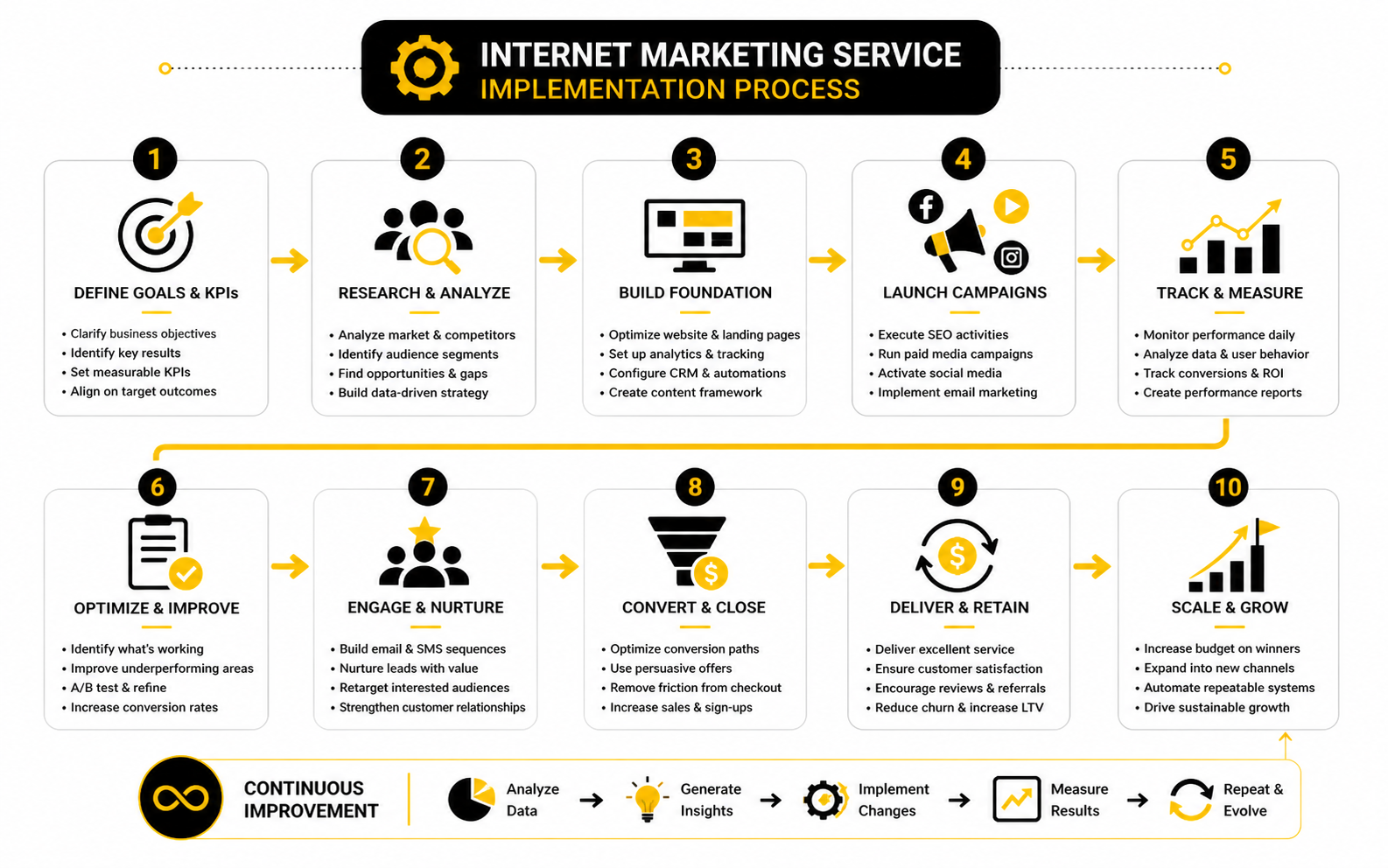
Once the core components are clear, the next question is simple: how does an internet marketing service actually get implemented without turning into chaos? This is where discipline matters. The business needs a process that moves from diagnosis to strategy, then from strategy to launch, then from launch to optimization.
The mistake is trying to build everything at once. That usually creates scattered campaigns, half-finished assets, unclear reporting, and a team that feels busy without knowing what is working. A better approach is to sequence the work so every step strengthens the next one.
Professional implementation is not slow for the sake of being slow. It is structured so the business does not waste money scaling weak foundations. When the system is built in the right order, every new campaign has a stronger chance of producing useful data, better leads, and cleaner revenue attribution.
Step 1: Diagnose The Current Growth System
The first step is to understand what already exists. That means reviewing the website, traffic sources, landing pages, CRM, email list, ad accounts, analytics setup, sales process, lead quality, and customer retention patterns. This is not about criticizing old work; it is about finding the clearest path to improvement.
A good diagnosis separates symptoms from causes. Low sales might look like a traffic problem, but the real issue could be weak positioning, poor follow-up, slow response time, unclear pricing, or a landing page that does not match the ad. If the diagnosis is wrong, the implementation will be wrong too.
This stage should produce a short list of constraints. Not twenty vague recommendations. A real internet marketing service should be able to say, “This is the biggest leak, this is why it matters, and this is the order we should fix it in.”
Step 2: Define The Offer And Conversion Goal
After the audit, the offer needs to be sharpened. The offer is not just the product or service being sold. It includes the promise, the audience, the outcome, the proof, the risk reversal, the pricing logic, and the next action.
The conversion goal should also be specific. A campaign built to generate booked calls is different from a campaign built to sell a low-ticket product, grow an email list, fill a webinar, or drive free trial signups. If the goal is vague, the page, copy, targeting, automation, and reporting will all become vague.
This is where simple beats clever. The buyer should understand what is being offered, who it is for, why it is valuable, and what to do next within seconds. If that does not happen, the campaign is asking the visitor to work too hard.
Step 3: Map The Customer Journey
The customer journey maps how a stranger becomes a visitor, how a visitor becomes a lead, how a lead becomes a customer, and how a customer becomes a repeat buyer or referral source. This map should include the channels, messages, pages, forms, emails, calls, offers, and decision points involved. It turns marketing from a pile of tasks into a visible system.
This step is especially important because buyers rarely move cleanly from first click to final purchase. They compare options, delay decisions, ask questions, revisit pages, check reviews, and respond differently depending on urgency and trust. The journey map helps the business plan for those behaviors instead of pretending they do not exist.
A useful journey map should expose friction. Maybe leads are waiting too long for a reply. Maybe the sales team lacks context. Maybe the email sequence sends the same message to every lead, even though some are ready to buy and others are still researching. Those details matter because small leaks compound quickly.
Step 4: Build The Campaign Assets
Once the path is clear, the actual campaign assets can be built. These usually include ad creative, search pages, landing pages, forms, booking pages, email sequences, SMS follow-ups, retargeting audiences, CRM stages, sales notifications, and reporting dashboards. The exact assets depend on the offer, but the principle stays the same: every asset needs a job.
Landing pages should match the promise that brought the visitor there. Emails should continue the conversation instead of sounding like generic newsletters. CRM stages should reflect the real sales process, not an imaginary pipeline that no one on the team actually uses.
For businesses that need a lean funnel stack, Systeme.io can be a practical option for pages, email, and simple automation. For teams that need forms, quizzes, onboarding flows, or lead capture experiences that feel cleaner than a basic contact form, Fillout can fit naturally into the implementation process.
Step 5: Set Up Tracking Before Launch
Tracking should be installed before the campaign goes live, not after the first week of confusion. This includes conversion events, thank-you pages, source tracking, UTM discipline, CRM source fields, call tracking when relevant, and a reporting view that the team can actually understand. If tracking is an afterthought, optimization becomes guesswork.
The goal is not perfect attribution. Perfect attribution is rare, especially as privacy rules, browser limits, and cross-device behavior make measurement harder. The goal is useful attribution: enough clarity to understand which campaigns, pages, channels, and follow-up steps are moving the business forward.
This matters even more as AI becomes part of marketing workflows. A 2025 SAS and Coleman Parkes study reported that most surveyed CMOs saw clear returns from generative AI in marketing, but those gains still depend on measurement, governance, and practical use cases. AI can help with speed, segmentation, content drafts, analysis, and journey mapping, but it does not remove the need for clean data.
Step 6: Launch In Controlled Phases
A professional launch should be controlled, not chaotic. Start with a focused campaign, a clear audience, a defined budget, and a small number of variables. The point is to learn quickly without spreading the budget so thin that the data becomes useless.
This is where many businesses get impatient. They want five channels, ten audiences, twenty creatives, three offers, and instant clarity. That sounds ambitious, but it often creates noise instead of learning.
A controlled launch makes it easier to see what is working. If the offer gets clicks but no leads, the page needs attention. If leads come in but do not book, the follow-up or qualification process may be the problem. If calls are booked but not closing, the issue may be sales enablement, pricing, expectations, or lead quality.
Step 7: Connect Marketing With Sales
Internet marketing service implementation does not stop when the lead is generated. If the sales process is slow, unclear, or disconnected from the campaign promise, performance will suffer. Marketing can create demand, but sales has to turn that demand into revenue.
This means the sales team needs context. They should know which campaign produced the lead, what the lead requested, which page they converted on, what emails they received, and what problem they likely care about. Without that context, every conversation starts cold.
Automation can help here, but it should support humans instead of replacing judgment. A platform like GoHighLevel can route leads, trigger follow-ups, update pipelines, send reminders, and reduce manual admin. That gives the team a better chance of responding while the buyer still cares.
Step 8: Review Early Data And Fix The Biggest Leak
After launch, the first job is not to celebrate or panic. The first job is to read the data carefully. Early performance should be reviewed by stage: impressions, clicks, page engagement, conversions, lead quality, response time, booked appointments, show rates, close rates, and revenue.
This stage is where restraint matters. Do not change everything at once. If the click-through rate is healthy but the conversion rate is weak, focus on the landing page and offer. If conversions are strong but customers are poor-fit, focus on targeting, messaging, and qualification.
A good internet marketing service prioritizes the biggest leak first because that is where improvement has the most leverage. Small design tweaks are not the priority if the offer is unclear. More traffic is not the priority if the sales team takes two days to reply. Better reporting is not the priority if the campaign has no defined conversion goal.
Step 9: Build The Operating Rhythm
Implementation becomes sustainable when the business has a rhythm. That usually means weekly performance reviews, monthly strategy reviews, quarterly channel decisions, and a clear owner for every major number. Without rhythm, campaigns drift.
The weekly review should focus on immediate performance and bottlenecks. The monthly review should look at trends, experiments, budget allocation, content performance, lead quality, and sales feedback. The quarterly review should decide what to scale, what to pause, and what new opportunities deserve testing.
This rhythm is what turns marketing into a business function instead of a collection of one-off campaigns. It creates accountability without drama. More importantly, it gives the business a way to improve continuously instead of reinventing the strategy every time results fluctuate.
Measurement, Optimization, And Scaling
Measurement is where an internet marketing service becomes accountable. Without it, marketing turns into a debate about opinions, taste, and screenshots from disconnected dashboards. With it, the business can see where attention is coming from, where people drop off, which leads are worth pursuing, and which campaigns deserve more budget.
The point is not to track everything. The point is to track the right things in the right order. A business does not need a dashboard with fifty charts if nobody knows what decision those charts are supposed to support.
A practical measurement system should answer three questions clearly. What is creating qualified attention? What is turning that attention into sales opportunities? What is producing profitable customers? If the reporting cannot answer those questions, the analytics setup is not finished.
Statistics And Data That Actually Matter
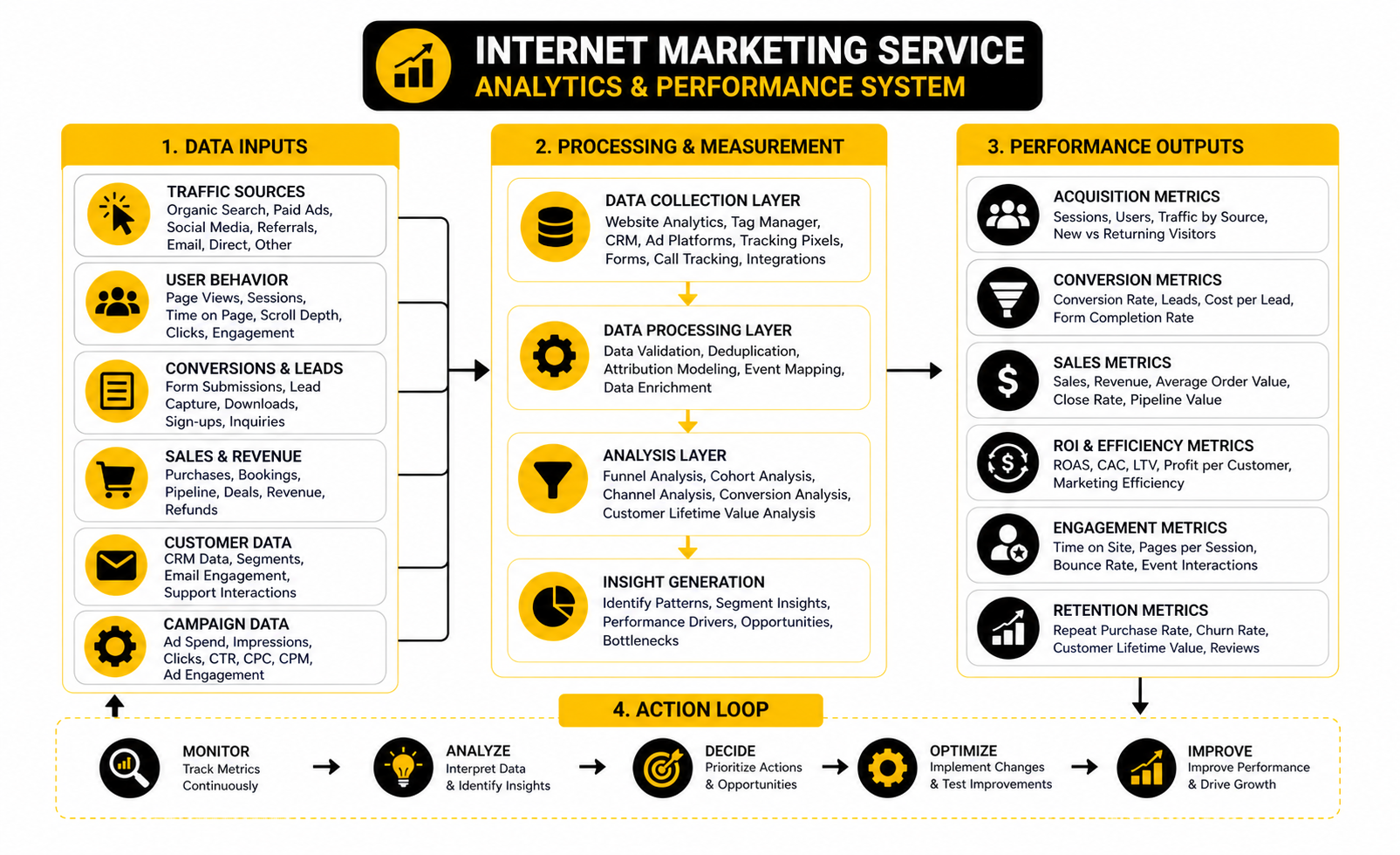
The most useful statistics are not the ones that sound impressive. They are the ones that help a business make better decisions. For an internet marketing service, that usually means separating market-level data, channel-level benchmarks, and company-specific performance numbers.
Market-level data explains why digital strategy deserves attention. At the start of 2025, there were 5.56 billion internet users worldwide, which means the internet is no longer a side channel for most industries. It is where buyers research problems, compare providers, consume proof, and decide whether a business feels credible.
Channel-level data helps set expectations, but it should never be treated as a universal target. The U.S. digital advertising market reached nearly $300 billion in 2025, showing how much competition now exists for online attention. That does not mean every business should spend more on ads; it means every paid campaign needs better targeting, stronger creative, cleaner conversion paths, and sharper economics.
Company-specific data is the layer that matters most. Your conversion rate, lead quality, close rate, response time, customer value, refund rate, and retention are more important than any generic benchmark. Benchmarks give context, but your own numbers tell you where the money is leaking.
Traffic Metrics Show Attention, Not Success
Traffic metrics are useful, but they are easy to misread. Sessions, users, impressions, reach, clicks, and page views tell you whether people are seeing or visiting your assets. They do not prove that the marketing is profitable.
This distinction matters because more traffic can hide a weak system. If a campaign doubles traffic but brings poor-fit visitors, the sales team gets busier without making more money. If a blog post attracts readers who are never likely to buy, the traffic may look good while doing almost nothing for the business.
A professional internet marketing service looks at traffic quality, not just traffic volume. That means reviewing source, intent, location, device, engagement, conversion behavior, and downstream revenue. The real question is not “Did traffic go up?” The real question is “Did the right people move closer to buying?”
Conversion Metrics Reveal Friction
Conversion metrics show whether the buyer is taking the next step. That may include form submissions, booked calls, purchases, demo requests, downloads, quiz completions, chatbot conversations, or trial signups. These numbers reveal whether the message, offer, page, and call to action are working together.
A low conversion rate is not automatically a landing page problem. It could be a mismatch between the ad and the page, a weak offer, poor traffic quality, slow load speed, unclear proof, too many form fields, or a call to action that asks for too much too soon. The data points to the symptom, but the marketer still has to diagnose the cause.
This is why conversion metrics should be reviewed by step. A funnel might have strong ad clicks, weak landing page conversions, good lead volume, poor show rates, and decent close rates from the few people who attend. That tells a very different story than a campaign with fewer leads but higher booking quality and stronger sales outcomes.
Lead Quality Is More Important Than Lead Volume
Lead volume is seductive because it is easy to celebrate. More leads feel like progress. But if those leads are unqualified, unresponsive, too expensive, or misaligned with the offer, they create operational drag instead of growth.
Lead quality should be measured through sales feedback and CRM data. Look at qualified lead rate, booked appointment rate, show rate, close rate, average deal value, sales cycle length, and customer fit. These numbers tell you whether the marketing is attracting people who can actually become good customers.
This is where CRM discipline matters. If the team does not update lead stages, sources, outcomes, and reasons for lost deals, the internet marketing service loses visibility after the form submission. A CRM like GoHighLevel can help connect source tracking, pipelines, appointments, follow-up, and revenue conversations when the business needs one practical place to manage the process.
Revenue Metrics Keep Marketing Honest
Revenue metrics are the reality check. Cost per lead, cost per acquisition, customer acquisition cost, return on ad spend, lifetime value, payback period, gross margin, and churn all help determine whether growth is healthy. A campaign can look successful at the top of the funnel and still fail financially.
This is especially important for paid acquisition. If a business spends aggressively without knowing its average customer value or close rate, it may scale losses instead of growth. The campaign may generate activity, but activity is not the same as profit.
A strong internet marketing service does not optimize only for cheap clicks or cheap leads. It optimizes for profitable customer acquisition. That means the reporting has to connect marketing data with sales and revenue data, even if attribution is not perfect.
Email And Follow-Up Benchmarks Need Context
Email metrics are useful because they show how well the business is nurturing attention after the first interaction. Open rate, click rate, reply rate, unsubscribe rate, conversion rate, and revenue per subscriber can all reveal whether the follow-up is relevant. But these numbers need context because industry, list source, audience warmth, sending frequency, and offer type change everything.
For example, MailerLite’s 2025 benchmark data showed an average email open rate of 43.46% and click rate of 2.09%. Those numbers can help with orientation, but they should not become blind targets. A small list of high-intent prospects may produce lower opens but more revenue, while a large newsletter may produce strong opens and weak sales.
The action is to segment and test. New leads, old subscribers, abandoned checkout users, booked-call no-shows, past customers, and high-intent visitors should not all receive the same message. Tools like Brevo or Moosend can support this kind of lifecycle communication when the strategy needs better segmentation and structured follow-up.
Response Time Is A Hidden Performance Lever
Response time is one of the most overlooked metrics in service-based marketing. A business can spend heavily to generate leads, then lose them because nobody follows up quickly. That is painful because the money was already spent before the leak happened.
Speed matters because interest decays. When someone fills out a form, asks a question, requests pricing, or books a call, they are in a moment of intent. If the response is delayed, competitors, distractions, and doubt enter the conversation.
This is why automation should support fast human follow-up. Confirmation messages, calendar reminders, missed-call text backs, sales notifications, and pipeline tasks can reduce the gap between interest and conversation. When this is handled well, the business does not just generate more leads; it gives those leads a better chance to become revenue.
Attribution Should Guide Decisions, Not Pretend To Be Perfect
Attribution is useful, but it is not flawless. Buyers use multiple devices, privacy rules limit tracking, platforms claim credit differently, and offline sales conversations often influence the final decision. Treating attribution as perfect can lead to bad budget decisions.
The better approach is directional attribution. Look for patterns across source data, CRM outcomes, landing page performance, sales feedback, and revenue trends. If several signals point in the same direction, the business can make a confident decision without pretending every click was tracked perfectly.
This is also why first-party data is becoming more valuable. Email lists, CRM records, customer surveys, call notes, purchase history, and owned analytics give the business more control than relying only on ad platform reporting. The more clearly the internet marketing service captures and organizes first-party data, the less dependent the business becomes on black-box platform numbers.
Benchmarks Are Starting Points, Not Strategy
Benchmarks are helpful when a business has no context. They can show whether a number is obviously weak, unusually strong, or roughly normal for the channel. But benchmarks should never replace diagnosis.
A 3% landing page conversion rate might be terrible for a warm referral campaign and acceptable for cold traffic to a complex B2B offer. A high cost per lead might be fine if the close rate and customer value are strong. A low click-through rate might still be profitable if the traffic is highly qualified and the sales process is efficient.
The correct question is always tied to economics. Can this channel acquire profitable customers at a volume that matters? If the answer is yes, the service should improve and scale it. If the answer is no, the service should diagnose the constraint before spending more.
Optimization Should Follow A Clear Priority Order
Optimization works best when it follows the funnel from highest leverage to lowest leverage. Start with the offer and audience, then the message, then the conversion path, then the follow-up, then the traffic expansion. This order prevents the business from wasting time polishing small details while the main constraint remains untouched.
A practical optimization process might look like this:
This process keeps the work grounded. It stops the team from changing random elements because someone “feels like” the creative is stale. Every change should be connected to a specific performance signal and a specific business outcome.
Scaling Requires Stability Before More Spend
Scaling should happen when the system has enough proof. That does not mean every number has to be perfect. It means the business understands the acquisition economics, the lead quality is acceptable, the sales process can handle volume, and the follow-up system is not breaking under pressure.
The danger is scaling too early. More budget can expose weak infrastructure quickly. More leads can overwhelm a slow sales process, more traffic can reveal poor landing page performance, and more automation can amplify unclear messaging.
A professional internet marketing service scales in layers. First, improve the core campaign. Then expand winning audiences, keywords, creatives, offers, and follow-up sequences. Then test new channels from a position of strength instead of jumping sideways every time a platform gets noisy.
Advanced Strategy: Tradeoffs, Risks, And Scaling Decisions
At this stage, the internet marketing service is no longer just about launching campaigns and reading dashboards. The bigger question becomes strategic: what should the business scale, what should it protect, and what should it deliberately avoid? That is where experienced marketing becomes valuable, because not every growth opportunity is worth chasing.
A campaign can be profitable and still create operational problems. A channel can generate leads and still weaken the brand if the messaging is too aggressive. A tool can save time and still create risk if the data, automation, or customer experience is handled carelessly.
This is why advanced marketing decisions require judgment, not just software. The service has to balance speed with quality, automation with trust, acquisition with retention, and short-term performance with long-term brand value. That balance is where many businesses either mature or plateau.
Channel Dependence Is A Real Risk
One of the biggest risks in internet marketing is depending too heavily on one channel. A business that gets most of its leads from one ad platform, one search ranking, one social account, one marketplace, or one referral partner is more fragile than it looks. Results may feel stable until the algorithm changes, costs rise, tracking weakens, or competition increases.
This does not mean every business needs to be everywhere. That is usually a mistake. It means the business should understand where its demand comes from and build enough resilience to avoid being trapped by one source.
A healthier approach is to develop a primary channel, a secondary channel, and an owned audience. The primary channel drives most current acquisition. The secondary channel creates optionality. The owned audience, usually email, CRM, SMS, community, or direct customer relationships, gives the business more control when rented platforms change the rules.
First-Party Data Becomes A Competitive Advantage
First-party data is becoming more important because businesses need better customer insight without relying completely on third-party tracking. This includes form submissions, purchase history, CRM notes, email engagement, survey responses, chat conversations, call outcomes, quiz answers, and customer support patterns. It is the data a business earns directly through real customer interactions.
This matters because buyers want relevance, but they also care about privacy. Salesforce’s customer research shows that 79% of customers are increasingly protective of their personal data, and that creates a clear strategic lesson. Personalization only works when it feels useful, transparent, and respectful.
A strong internet marketing service should help the business collect better data by offering better value. That can mean useful lead magnets, diagnostic quizzes, booking forms, preference centers, customer surveys, onboarding questions, or post-purchase feedback. Tools like Fillout can support this when the business needs cleaner forms, surveys, or intake flows that improve segmentation without making the experience feel heavy.
Automation Should Improve The Experience, Not Hide The Team
Automation can be powerful, but only when it makes the customer journey smoother. It should speed up confirmations, reminders, routing, segmentation, lead nurturing, support handoffs, and sales follow-up. It should not make the customer feel like they are trapped inside a machine.
The risk is over-automation. Too many businesses create workflows that send irrelevant messages, trigger at the wrong time, ignore context, or keep pushing after a buyer has already taken action. That does not feel professional; it feels careless.
The best automation is almost invisible. It helps the right person get the right message at the right moment, while giving the business better consistency. A tool like GoHighLevel can support this kind of connected follow-up, but the quality still depends on the strategy, message, timing, and data behind the workflow.
AI Can Speed Up Execution, But It Cannot Replace Strategy
AI has become part of modern marketing operations because it can help with drafting, research support, content variation, segmentation ideas, summarization, chatbot flows, campaign analysis, and workflow planning. McKinsey’s 2025 AI survey found that 88% of surveyed organizations reported regular AI use in at least one business function. That tells you AI is no longer a fringe experiment.
But adoption does not automatically mean maturity. The same research also noted that many organizations still struggle to scale AI into measurable enterprise-wide impact. In marketing terms, that means AI can make weak strategy faster, louder, and cheaper, which is not always a good thing.
A smart internet marketing service uses AI as leverage, not as a substitute for thinking. AI can help produce variations, analyze patterns, draft assets, and speed up repetitive work. The human layer still has to define the offer, understand the buyer, protect the brand, check claims, review compliance, and decide what actually deserves to be published.
Content Quality Matters More As AI Content Grows
As AI-generated content becomes easier to produce, the internet gets flooded with more average material. That makes quality more important, not less. Generic content that repeats obvious advice is less likely to build trust, attract links, support sales, or help a serious buyer make a decision.
A stronger content strategy is built around usefulness. It should answer real buyer questions, explain tradeoffs, show clear judgment, compare options honestly, and help the reader understand what to do next. This kind of content is harder to produce, but it also has a better chance of standing out.
The practical move is to create content from assets the business already has. Sales calls, customer questions, objections, onboarding notes, support tickets, product usage patterns, and expert interviews can all become better source material than generic keyword research alone. If the content sounds like it came from real experience, buyers can feel the difference.
Brand And Performance Have To Work Together
Some businesses treat brand and performance like opposites. Brand is seen as soft and long-term, while performance is seen as measurable and immediate. That split creates bad decisions because the strongest internet marketing service needs both.
Performance marketing creates feedback loops. It shows which messages, offers, audiences, and pages produce measurable action. Brand marketing creates familiarity, trust, preference, and memory, which can make every performance campaign easier to convert.
The tradeoff is budget and patience. Brand work may not produce clean attribution in the same way a direct response campaign does. But ignoring brand can make the business dependent on discounts, urgency, aggressive claims, and rising ad spend. That is not a strong position.
Scaling Requires Operational Capacity
Scaling is not only a marketing question. It is also an operations question. More leads, more sales calls, more customers, more onboarding, more support, and more fulfillment can expose weaknesses inside the business quickly.
Before scaling, the business should ask whether the team can handle the extra demand. Can sales respond quickly? Can onboarding deliver the promise? Can support manage more customers? Can the product or service quality stay consistent?
This is where marketing and operations must talk to each other. A campaign that overwhelms fulfillment is not a win. A sustainable internet marketing service should scale demand at a pace the business can actually serve well.
Tool Stack Complexity Can Quietly Slow Growth
A messy tool stack creates hidden costs. Teams lose time switching between platforms, data gets trapped in separate systems, attribution breaks, automations conflict, and nobody fully trusts the reports. The business may think it has a marketing problem when it actually has an integration problem.
The answer is not always to use fewer tools. Sometimes specialized tools are necessary. The real goal is to make sure every tool has a clear role, clean ownership, and a reliable connection to the rest of the system.
A practical stack usually needs a CRM, analytics setup, landing page or website system, email or messaging platform, scheduling tool, form or intake tool, and reporting process. Anything beyond that should earn its place. If a tool does not improve speed, insight, conversion, retention, or customer experience, it may just be adding weight.
The Right Service Model Depends On The Business Stage
Not every business needs the same kind of internet marketing service. A startup may need positioning, fast testing, landing pages, and founder-led content. A local service business may need search visibility, reviews, lead capture, fast follow-up, and appointment booking. An ecommerce brand may need paid acquisition, product pages, email flows, creative testing, and retention.
The business stage changes the priorities. Early-stage companies need proof and learning. Growing companies need systems and consistency. Mature companies need efficiency, segmentation, attribution, and channel diversification.
This is why buying a generic package can be risky. A business should not pay for ten deliverables just because they are listed on a menu. It should invest in the work that solves the current constraint and creates the next layer of growth.
Compliance And Claims Cannot Be Treated As Afterthoughts
Internet marketing can move fast, but claims still matter. Health, finance, legal, business opportunity, education, employment, and regulated services all require extra care. Even outside regulated categories, exaggerated claims can damage trust and create unnecessary risk.
The service should have a review process for sensitive claims, testimonials, guarantees, income statements, before-and-after examples, privacy language, and data collection practices. That does not mean the marketing has to become boring. It means the business should be confident that its strongest claims are also defensible.
This is especially important when using AI-assisted content or outsourced production. Faster output increases the need for review. A professional internet marketing service should protect the business from publishing confident-sounding material that nobody has actually verified.
Strategic Patience Is A Growth Skill
The hardest part of marketing is often staying focused long enough to learn. Many businesses change offers, channels, audiences, and messaging before the data has time to become useful. They mistake impatience for agility.
Real agility means testing deliberately, learning quickly, and making specific changes based on evidence. It does not mean abandoning the plan every time a campaign has a rough week. Some systems need time to gather data, train algorithms, build search visibility, warm audiences, and improve sales feedback.
Strategic patience does not mean tolerating poor performance forever. It means giving the right strategy enough structure to prove itself, while still being honest when the numbers say something is broken. That is the difference between disciplined optimization and random movement.
Choosing The Right Internet Marketing Service And Avoiding Costly Mistakes
Choosing an internet marketing service is not about finding the agency, freelancer, or platform with the longest feature list. It is about finding the team or system that understands the actual constraint in the business. Sometimes the constraint is traffic, but often it is positioning, conversion, follow-up, sales alignment, tracking, or retention.
The wrong provider will usually sell activity first. More posts, more ads, more emails, more reports, more meetings. The right provider will diagnose before prescribing, because the business does not need more motion if the foundation is broken.
This distinction matters a lot. A business can spend months paying for marketing work that looks productive on the surface while the real bottleneck stays untouched. That is why the buying decision should start with strategy, proof, communication, and operational fit.
What A Strong Provider Should Be Able To Explain
A strong provider should be able to explain how their work connects to revenue. They do not need to promise impossible results, and they should not pretend every outcome is fully controllable. But they should be able to describe the path from attention to conversion to follow-up to sales.
They should also be able to explain what they will not do. That is a good sign. Professionals know that every channel is not right for every business, every trend is not worth chasing, and every tactic has tradeoffs.
The best conversations are specific. You should hear clear thinking about the offer, audience, buying journey, campaign structure, measurement, and next steps. If the conversation stays vague, the execution will probably be vague too.
Red Flags To Watch For
Be careful with any internet marketing service that leads with guaranteed revenue, guaranteed rankings, guaranteed viral content, or guaranteed lead volume without first understanding the business model. Marketing can be engineered, improved, and measured, but it cannot be responsibly promised without context. Anyone who skips diagnosis is usually selling confidence more than competence.
Another red flag is reporting that focuses only on vanity metrics. Impressions, followers, clicks, and traffic can matter, but they do not mean much without conversion quality and business outcomes. A report should help the business decide what to do next, not just prove that something happened.
Also watch for tool obsession. Tools are useful, but they are not the strategy. A provider who can only talk about software, templates, hacks, or automation may miss the deeper work that actually drives performance.
Questions To Ask Before Hiring
The best questions are practical. You want to understand how the provider thinks, how they diagnose problems, and how they define success. You are not looking for perfect answers; you are looking for clear reasoning.
Useful questions include:
These questions make weak providers uncomfortable and strong providers more useful. That is exactly what you want. A good internet marketing service should create clarity before it creates campaigns.
How To Match The Service To Your Business Model
A local service business usually needs a different system than a SaaS company, ecommerce store, creator business, agency, or B2B consultancy. Local businesses often depend on search visibility, reviews, booking speed, call handling, location pages, and fast follow-up. Ecommerce teams usually care more about product pages, paid acquisition, email flows, average order value, retention, and creative testing.
B2B and professional services often need authority, lead qualification, sales enablement, CRM discipline, and content that supports a longer decision cycle. Creators and education businesses may need audience growth, landing pages, email sequences, webinars, communities, and offer launches. The point is simple: the service should fit how the buyer actually buys.
This is why a generic package can be dangerous. A package may include deliverables that sound valuable but do not solve the current constraint. Better to buy the work that moves the business forward than to buy a large menu of tasks that nobody can tie to revenue.
Building The Final Growth Ecosystem
At the end, the goal is not to have disconnected campaigns. The goal is to build an ecosystem where each part supports the next. Search captures intent, content builds trust, paid media accelerates testing, landing pages convert attention, CRM stores context, automation improves timing, and analytics guides decisions.
That is what makes an internet marketing service valuable over time. It does not just create one campaign. It creates a system the business can keep improving.
When that ecosystem works, growth becomes less chaotic. The team knows what is being tested, what is being measured, what is being scaled, and what needs to be fixed next. That is the real win.
What Is An Internet Marketing Service?
An internet marketing service helps a business attract, convert, and retain customers through online channels. It can include SEO, paid ads, content, landing pages, email, automation, social media, analytics, and CRM strategy. The best services connect these pieces into one system instead of treating them as separate tasks.
Why Does A Business Need An Internet Marketing Service?
A business needs an internet marketing service when online growth has become too complex to manage casually. Buyers now research, compare, ask questions, and make decisions across multiple digital touchpoints. A structured service helps the business turn that behavior into a measurable path from awareness to revenue.
What Should Be Included In A Complete Internet Marketing Service?
A complete service should include strategy, positioning, traffic generation, conversion assets, follow-up systems, analytics, and optimization. Depending on the business, it may also include paid ads, SEO, email marketing, sales funnels, social media, automation, CRM setup, or customer retention campaigns. The exact mix should depend on the business model and current bottleneck.
How Much Should An Internet Marketing Service Cost?
The cost depends on the scope, provider quality, business goals, ad budget, and level of execution required. A simple setup or consulting engagement may cost far less than full-service growth management with strategy, creative, campaigns, automation, and reporting. The better question is whether the service can create measurable value relative to the business model.
How Long Does Internet Marketing Take To Work?
Some channels can produce feedback quickly, while others need more time. Paid ads and landing page tests can generate data fast, but SEO, content, brand trust, and lifecycle marketing usually compound over months. A professional internet marketing service should set expectations based on the channel, offer, audience, budget, and current assets.
Is SEO Still Important For Internet Marketing?
Yes, SEO is still important because search captures people who are actively looking for answers, comparisons, providers, and solutions. It is especially valuable when the business can create content that matches real buyer intent. SEO works best when it is connected to conversion pages, proof, internal linking, and a clear sales path.
Are Paid Ads Better Than Organic Marketing?
Paid ads are not automatically better than organic marketing, and organic marketing is not automatically better than paid ads. Paid ads are useful for speed, testing, and targeted acquisition. Organic marketing is useful for compounding trust, search visibility, brand authority, and long-term demand.
What Metrics Should I Track First?
Start with the metrics that show whether the system is creating business value. That usually means traffic source, conversion rate, lead quality, cost per lead, booked calls, show rate, close rate, customer acquisition cost, and revenue. Once those basics are reliable, deeper reporting becomes much more useful.
What Is The Biggest Mistake Businesses Make With Internet Marketing?
The biggest mistake is treating tactics as strategy. Businesses often jump into ads, content, automation, or social media without clarifying the offer, audience, message, and conversion path. When the foundation is weak, more activity usually creates more confusion.
Can Automation Replace A Marketing Team?
No, automation cannot replace strategy, judgment, creativity, and customer understanding. It can reduce manual work, improve response speed, segment leads, trigger follow-ups, and keep the process organized. But automation only works well when the underlying offer, message, timing, and data are strong.
How Do I Know If My Marketing Provider Is Doing A Good Job?
A good provider should give you more clarity, not just more deliverables. You should understand what is being tested, why it matters, what the numbers mean, and what action comes next. If reports are vague, strategy keeps changing without reason, or results are never connected to business outcomes, something is off.
Should Small Businesses Use An All-In-One Marketing Platform?
An all-in-one platform can be useful when a small business needs CRM, funnels, messaging, calendars, automation, and reporting in one place. It can reduce tool clutter and make follow-up easier to manage. But the platform still needs a clear strategy behind it, because software alone does not create good marketing.
What Is The Role Of AI In An Internet Marketing Service?
AI can help with research support, content drafts, segmentation ideas, campaign variations, data analysis, chat experiences, and workflow planning. It is useful for speed and leverage. It should not be used as a replacement for verified claims, strategic thinking, customer insight, or human review.
When Should A Business Scale Its Internet Marketing?
A business should scale when the core system is stable enough to handle more volume. That means the offer is clear, tracking is usable, lead quality is acceptable, sales follow-up is reliable, and the economics make sense. Scaling too early can turn small problems into expensive problems.
What Is The Best First Step If Marketing Feels Messy?
The best first step is an audit. Review the offer, website, traffic sources, landing pages, CRM, follow-up, analytics, and sales outcomes. Once the biggest constraint is visible, the business can stop guessing and focus on the work that has the highest leverage.
Build a stronger local presence with BAAM AI
Turn your website, Google profile, social channels, and AI visibility into one growth engine
Most businesses do not need more random marketing activity. They need a consistent presence system that helps the right people find them, trust them, and take action. BAAM AI brings strategy, local SEO, website updates, Google Maps visibility, social content, AI-search readiness, media production, and reporting into one practical monthly engine.
If you want your marketing to keep working after the campaign ends, start with a free BAAM AI presence audit. See how your business shows up today and where the fastest visibility wins are at BAAM AI.