
BAAM AI Blog
Internet Content Marketing
has transformed how businesses connect with audiences. It's not just about promoting products or services; it's about building trust and establishing a relationship with your target market. In today’s competitive...
Why It Matters
Internet content marketing has transformed how businesses connect with audiences. It's not just about promoting products or services; it's about building trust and establishing a relationship with your target market. In today’s competitive digital landscape, businesses that succeed at content marketing are the ones that provide real value to their audiences. They engage, educate, and solve problems through content, creating a long-term connection that extends beyond the first sale.
The reason it’s so important today is that the internet has become the primary source of information for consumers. They’re turning to blogs, social media posts, videos, podcasts, and other content to answer questions, solve problems, or entertain themselves. Without a strong content marketing strategy, companies risk being invisible or irrelevant.
When done right, internet content marketing can significantly impact brand awareness, customer loyalty, and ultimately, sales. A solid content strategy allows businesses to stand out in a crowded marketplace, nurturing prospects and transforming them into lifelong customers.
Framework Overview
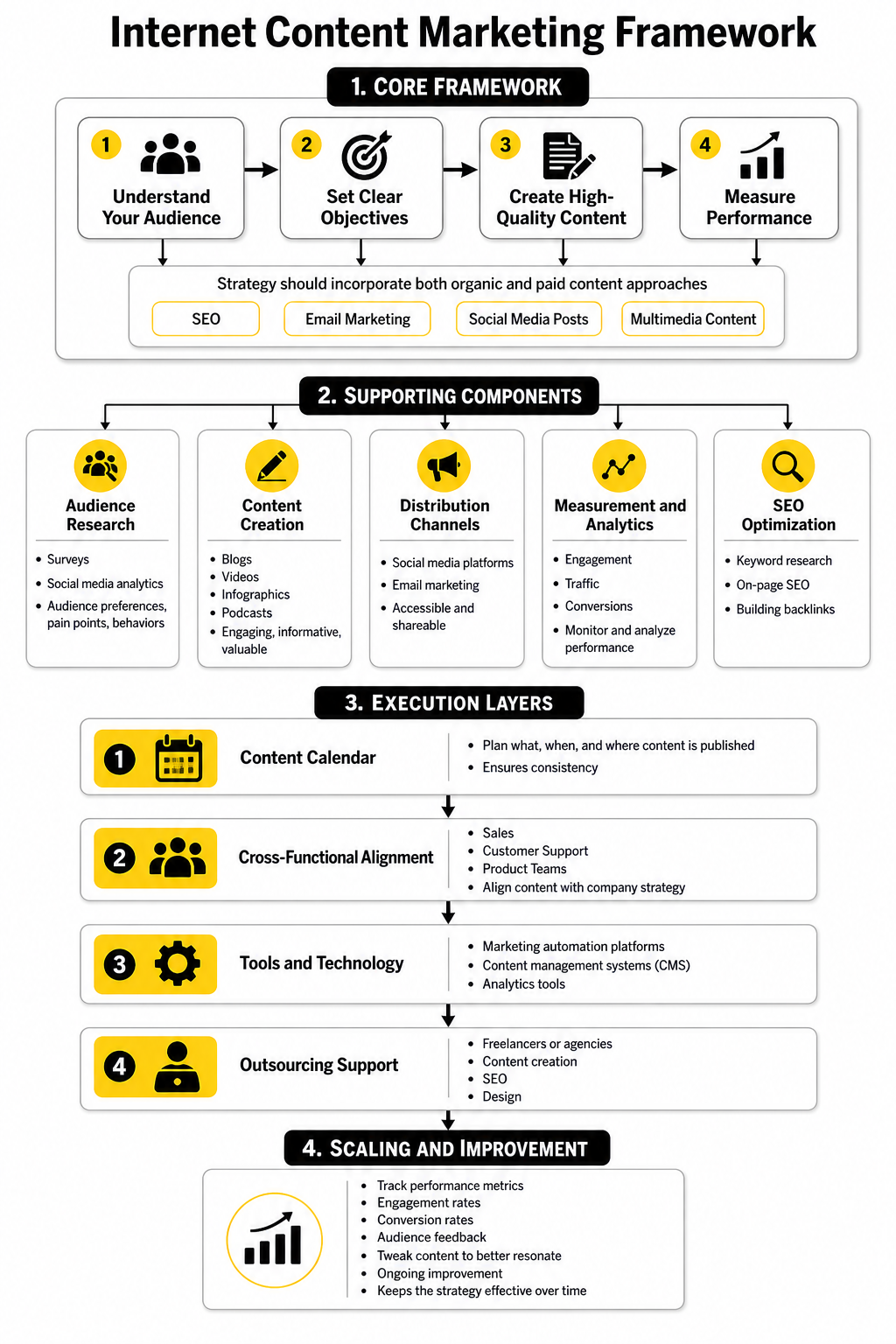
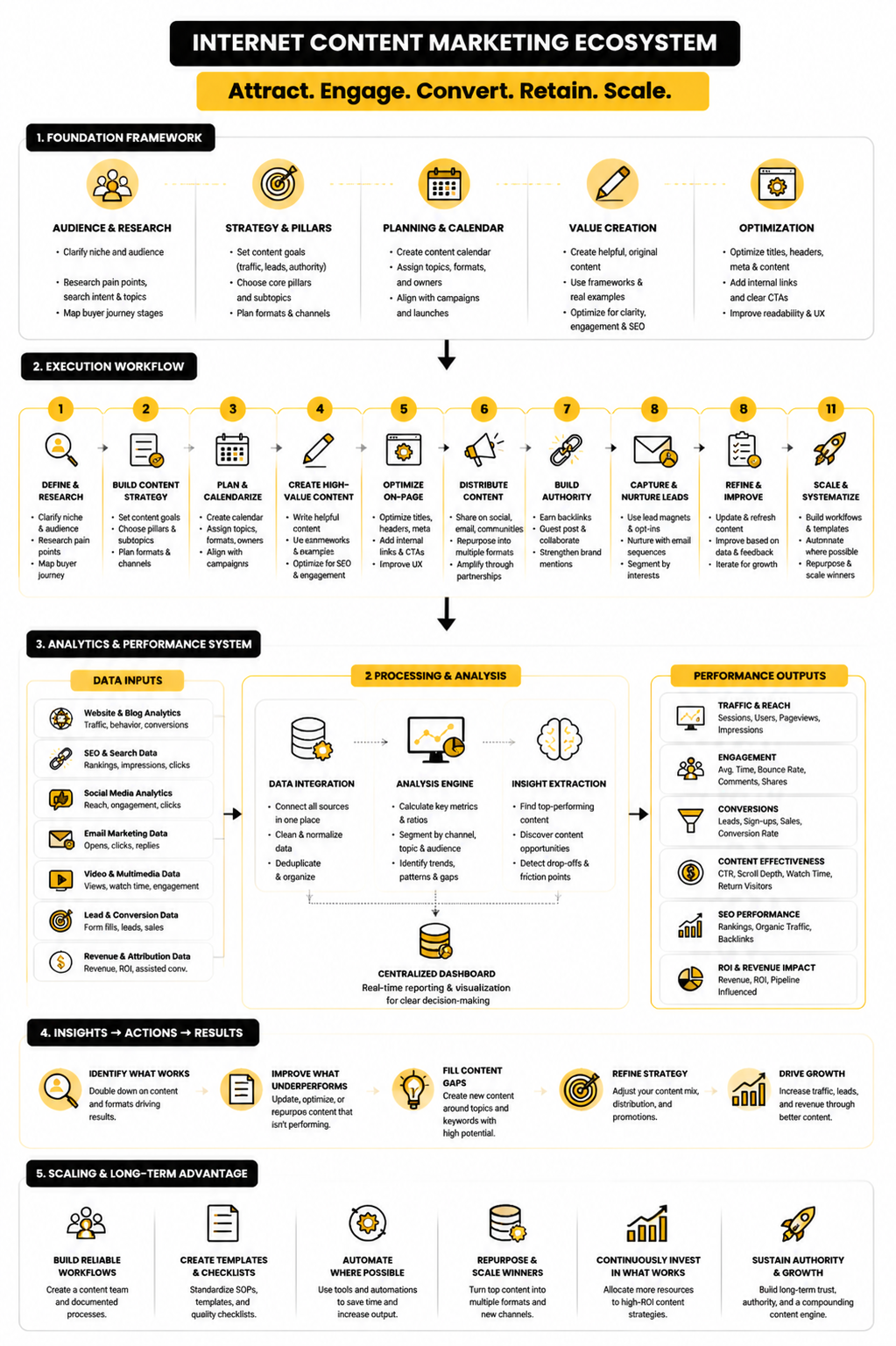
A content marketing framework helps businesses understand how to create, distribute, and measure the effectiveness of their content. This framework provides the structure necessary to implement an efficient content strategy that aligns with business goals.
The basic framework consists of understanding your audience, setting clear objectives, creating high-quality content, and consistently measuring its performance. The strategy should incorporate both organic and paid content approaches, including SEO, email marketing, social media posts, and multimedia content.
Successful content marketing frameworks are adaptable. As businesses track performance metrics like engagement rates, conversion rates, and audience feedback, they can tweak their content to better resonate with their audience. The beauty of this approach is that it allows for ongoing improvement, ensuring the strategy remains effective over time.
Core Components
The core components of internet content marketing go beyond just the creation of blog posts or social media updates. At its heart, content marketing is about creating content that serves the needs and interests of your audience. Here's a breakdown of the key components:
Professional Implementation
When implementing content marketing on a professional scale, businesses need to ensure a clear, strategic approach. It’s no longer enough to simply churn out content and hope for the best. You need to follow a structured process that’s aligned with business objectives.
Start by creating a detailed content calendar that outlines when and where your content will be published. This ensures consistency, which is key to building a loyal audience. Next, involve various departments such as sales, customer support, and product teams to make sure your content is aligned with the overall company strategy.
A professional approach also involves investing in tools and technologies to streamline the content creation and distribution process. Marketing automation platforms, content management systems (CMS), and analytics tools are essential to track and optimize your content efforts.
Lastly, don’t forget the power of outsourcing. Many successful content marketing strategies incorporate freelancers or agencies to handle specialized content creation, SEO, and design. This allows internal teams to focus on higher-level strategic goals.
Common Pitfalls
While content marketing is incredibly effective, it’s not without its challenges. One common pitfall is neglecting the importance of consistency. A few well-crafted blog posts or social media updates won’t make a significant impact if they are sporadic. Consistency helps build trust with your audience and keeps your brand top-of-mind.
Another issue is creating content without a clear strategy. Content that’s not aligned with business objectives can waste time and resources. It’s crucial to know what you want to achieve before you start creating content, whether that’s increasing website traffic, generating leads, or building brand awareness.
Lastly, many businesses fail to measure the success of their content effectively. Without tracking key metrics, you won’t know what’s working and what’s not. Data-driven decisions are crucial to refining your strategy and improving your results over time.
The Future of Internet Content Marketing
The future of internet content marketing lies in personalization and automation. As technology continues to advance, businesses will be able to provide more tailored content to their audiences. From dynamic email campaigns to AI-powered chatbots, the potential for hyper-targeted content is limitless.
Voice search and AI-powered assistants are also reshaping how people access content. Marketers will need to optimize their content for these technologies to stay relevant. Additionally, visual content like video and live streaming will continue to rise in popularity, as consumers increasingly prefer engaging with multimedia content over text-based formats.
The key to staying ahead in content marketing will be the ability to adapt quickly. As platforms evolve and new trends emerge, businesses that embrace change and use data to drive their strategies will be best positioned for long-term success.
Framework Overview
The framework for internet content marketing is a vital tool that businesses use to strategically approach their content efforts. At its core, this framework is about creating a structure that allows for consistent, targeted, and measurable content. To develop a successful content marketing framework, it’s important to understand the fundamental components that make up the strategy, and then align these elements with business goals.
Steps to Building an Effective Framework
This framework is essential for creating a sustainable and results-driven content marketing strategy. It ensures that every piece of content you create is aligned with your business objectives and resonates with your audience.
Core Components
Understanding the core components of internet content marketing is key to ensuring that all elements work harmoniously together. These components form the foundation of any successful strategy and should be approached with care and precision.
1. Audience Research
The first and most important component is understanding your audience. Without detailed insights into who your audience is, what they care about, and how they behave, it’s almost impossible to create content that resonates. Audience research involves both qualitative and quantitative methods, such as surveys, interviews, and analyzing user behavior data. By knowing your audience’s pain points, motivations, and goals, you can create highly relevant content that speaks directly to them.
2. Content Creation
Content creation is the process of producing valuable, informative, or entertaining material that addresses your audience's needs. This includes blog posts, videos, social media posts, case studies, podcasts, and more. The key to effective content creation is quality. Content should not only be engaging but also provide real value to your audience. Whether it’s answering a question, solving a problem, or offering new insights, content should align with the interests and needs of your target audience.
3. SEO Optimization
Content without proper SEO optimization is like a hidden treasure. SEO ensures that your content is discoverable by search engines, helping you drive organic traffic. This involves keyword research, optimizing on-page SEO (like meta tags and headings), and building backlinks. SEO is an ongoing effort that requires tracking rankings, identifying opportunities for improvement, and staying on top of changes in search engine algorithms.
4. Content Distribution
Creating great content is only half the battle—getting it in front of the right people is where many businesses fall short. Distribution refers to how your content is shared and made accessible to your target audience. Whether it’s through social media, email campaigns, or partnerships with other brands, a well-executed distribution plan ensures your content reaches the people who are most likely to engage with it.
5. Analytics and Measurement
The final core component is tracking and analyzing your content’s performance. Without analytics, there’s no way to know if your content is achieving its goals. Key metrics include traffic, engagement rates, social shares, and conversion rates. By analyzing this data, you can see what’s working and what isn’t, allowing you to make data-driven decisions that continuously improve your content marketing strategy.
These core components form the backbone of a successful content marketing plan. Focusing on each element ensures your strategy is comprehensive, results-driven, and adaptable to change.
Professional Implementation
Turning a content marketing strategy into a real, measurable process requires thoughtful execution. The process should be well-organized, actionable, and flexible enough to adapt as performance data comes in. Here's how to implement an internet content marketing strategy successfully:
1. Develop a Content Calendar
A content calendar is essential for keeping your content creation efforts organized. This is where you plan out what content will be created, when it will be published, and on which platforms it will appear. Having a clear plan helps maintain consistency, a key component of successful content marketing.
For example, a simple content calendar will show blog posts, email newsletters, and social media campaigns scheduled for each month. Each piece should be aligned with your audience’s needs and your overarching goals. It’s also important to integrate seasonal or trending topics that can boost engagement.
2. Content Creation Process
Once you have a roadmap, it's time to look at content creation. Whether it’s a blog post, video, or social media content, the process should focus on quality, value, and engagement. It’s essential to collaborate with your team to gather ideas that resonate with your audience and align with your goals.
Ensure your content is consistent with your brand voice, style, and messaging. You can use tools like content management systems (CMS) to streamline content creation and ensure everything stays organized. Depending on the format, your team may need to work with designers, writers, video editors, and SEO specialists.
3. Distribute and Promote
Creating excellent content is only half the battle; getting it in front of the right people is just as important. Distribute your content across the channels where your audience spends time—whether that’s social media, your website, email, or third-party platforms.
Paid promotions such as PPC campaigns can help boost visibility, especially when targeting specific demographics or search queries. Social media ads, sponsored content, and email marketing campaigns can be used to amplify reach. You should also encourage employees and influencers to share your content, as this can expand your reach even further.
4. Track and Analyze
The most important part of the implementation process is measuring results. You must track key metrics such as engagement rates, traffic, conversions, and ROI. Tools like Google Analytics, social media insights, and CRM systems can provide valuable data to assess content performance.
Look at what’s working and what’s not. Are blog posts driving the traffic you expected? Are social media posts leading to meaningful engagement? Analytics help identify opportunities for improvement and ensure your strategy is delivering the results you want.
5. Optimize and Improve
Once you’ve tracked performance, it’s time to optimize. Analyze the data and make adjustments where necessary. If certain topics are performing well, consider creating more content around them. If certain platforms aren’t driving results, refocus your efforts or try new approaches.
This is an ongoing cycle. Internet content marketing is dynamic, and your approach should evolve with the data you gather. Regular reviews and tweaks to your content plan are key to long-term success.
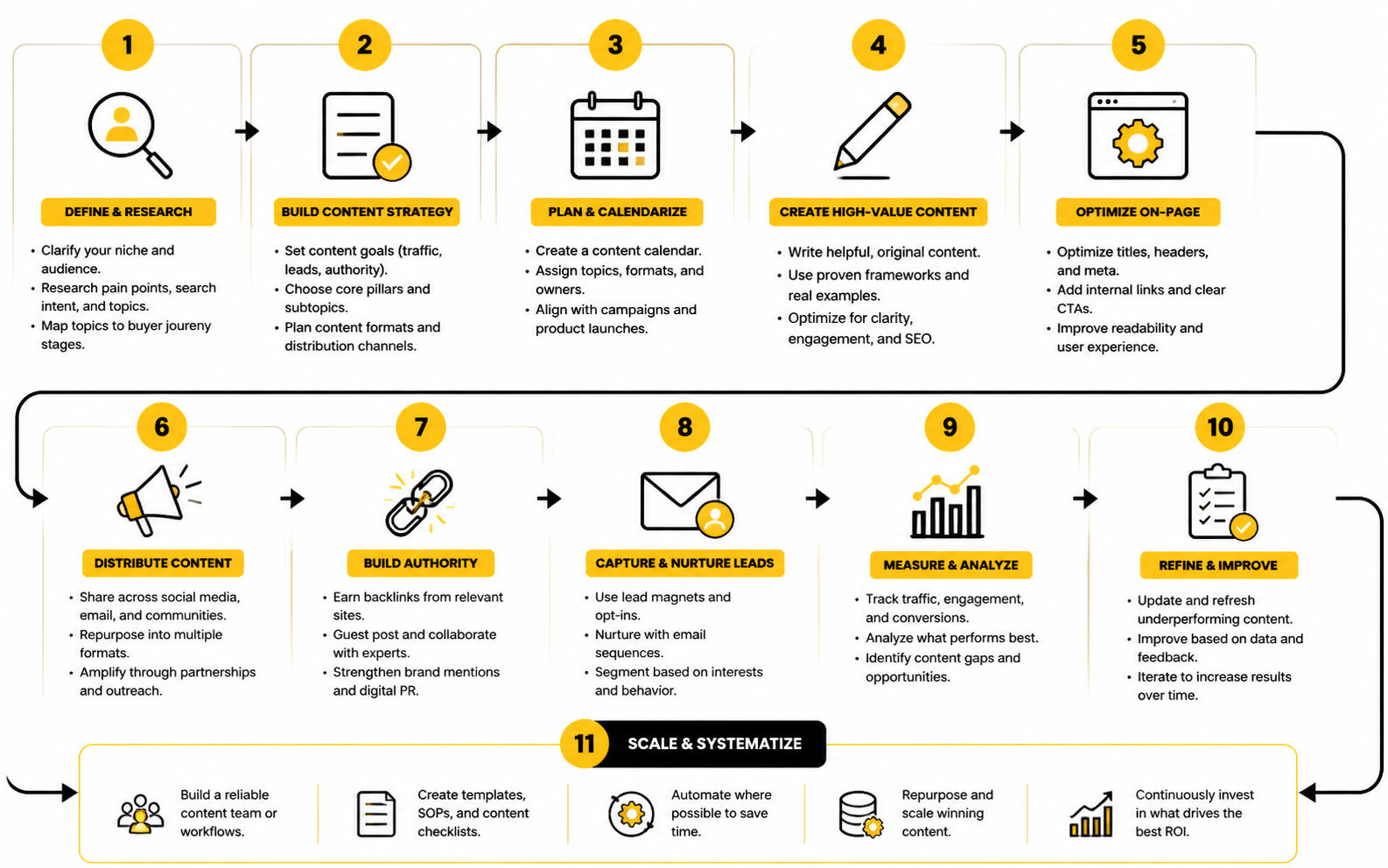
By following a clear, structured process, content marketing becomes more than just a collection of blog posts or social media updates. It becomes a well-oiled machine that drives real, measurable business outcomes. With the right framework in place, the path from strategy to successful implementation becomes straightforward and efficient.
Statistics and Data
Data and analytics are at the heart of effective internet content marketing. Without measuring key metrics, businesses cannot fully understand whether their content is reaching the right audience or achieving their goals. Tracking performance data not only helps evaluate the success of a campaign, but it also allows marketers to make data-driven decisions that optimize content strategies.
Key Performance Indicators (KPIs)
The first step in utilizing data is identifying which Key Performance Indicators (KPIs) to track. KPIs are metrics that directly align with your content marketing goals and provide actionable insights into your strategy’s effectiveness. Common KPIs for content marketing include:
Understanding these metrics is critical because they help inform decisions about where to focus resources and how to adjust content strategies for greater impact.
Interpreting Data
Once data is collected, the real work begins in analyzing it to understand its meaning. Raw numbers only tell part of the story. The interpretation of these figures is what helps businesses take actionable steps.
For instance, if a blog post has high traffic but low engagement, this could indicate that while the topic is attracting visitors, the content itself may not be resonating with them. On the other hand, high engagement but low traffic might suggest that the content is compelling but not reaching enough people. Identifying such discrepancies is key to improving both content creation and distribution strategies.
It’s also crucial to monitor trends over time. Is traffic increasing steadily? Are conversions improving after implementing new strategies? If metrics fluctuate, businesses need to analyze the underlying reasons, whether it’s a shift in audience behavior, seasonal trends, or changes in SEO algorithms.
Benchmarks and Comparisons
To evaluate the success of your content marketing efforts, it's essential to compare your metrics against industry benchmarks. These benchmarks serve as a point of reference, allowing you to understand whether your performance is above or below average in your sector.
For example, the average conversion rate across industries can vary significantly. A standard conversion rate for content marketing can range from 1% to 5%, but understanding your industry’s norm allows you to see whether you’re hitting the right targets. Benchmarking also helps track performance against competitors, giving you insight into areas where you can improve or differentiate.
Actionable Insights
Data is only valuable if it leads to actionable insights. Here are a few ways data can drive decisions in content marketing:
Analytics can provide a wealth of insights, but the key to success is interpreting the data and using it to optimize your strategy continuously.
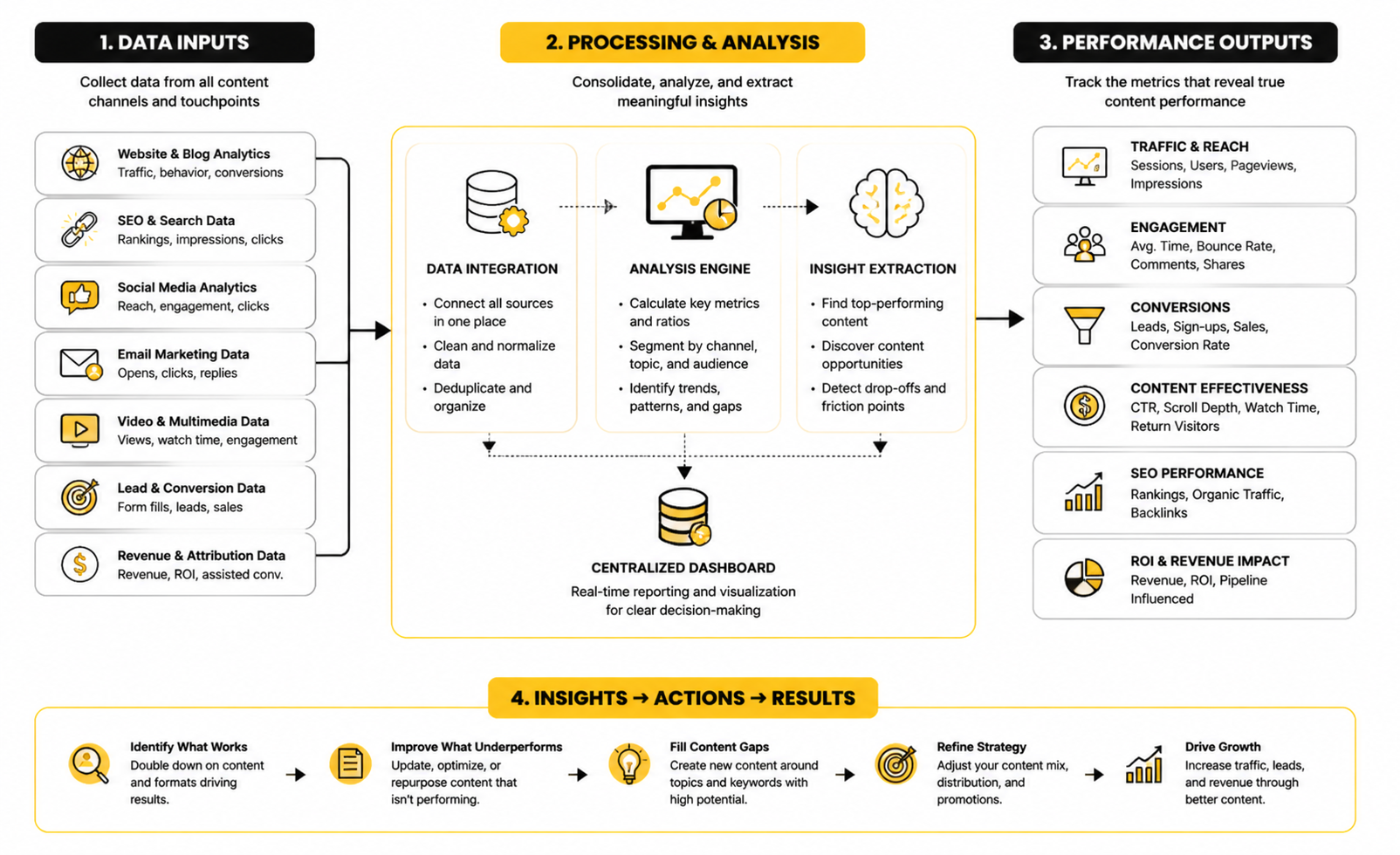
Using analytics as a guide allows content marketers to take a more targeted and informed approach, ensuring that every piece of content is optimized for maximum performance and results. Whether it's refining SEO tactics, adjusting content formats, or tweaking distribution strategies, the numbers are the key to using a more effective content marketing approach.
Advanced Considerations in Content Marketing
As businesses scale their content marketing efforts, they encounter a variety of challenges that require a deeper strategic approach. These include understanding the nuances of content performance, navigating trade-offs between various content formats, and ensuring that the marketing team can handle increased demand without sacrificing quality.
Scaling Content Marketing
When content marketing is first introduced, it often starts small—perhaps a few blog posts or social media updates per week. However, as the business grows and the need for more content increases, scaling becomes a necessary consideration. Scaling isn’t just about producing more content; it’s about maintaining quality, relevance, and engagement at a larger volume.
To scale content marketing effectively, here are a few considerations:
Strategic Trade-offs and Risks
As you implement your content marketing strategy, there are several trade-offs and risks that need careful consideration.
Expert-Level Guidance on Content Marketing Strategy
At an advanced level, content marketing requires more than just execution; it demands continuous optimization and strategic foresight. Here are a few expert-level tactics to improve your content marketing strategy:
Content marketing at scale comes with its challenges, but by focusing on strategic trade-offs, utilizing advanced techniques, and continuously optimizing your approach, you can create a content marketing machine that delivers long-term value for your business.
1. What is internet content marketing?
Internet content marketing is a strategy that involves creating and distributing valuable, relevant, and consistent content to attract and retain a defined audience. The goal is to drive profitable customer action by building trust and providing value through content such as blog posts, videos, social media posts, and other digital formats.
2. Why is content marketing important?
Content marketing is important because it helps businesses build relationships with their audience, establish authority in their field, and drive traffic to their websites. By providing useful and engaging content, businesses can increase brand awareness, generate leads, and boost sales without relying solely on traditional advertising.
3. How do I measure the success of content marketing?
Success can be measured using KPIs like website traffic, engagement rates, lead generation, conversion rates, and SEO rankings. Tools like Google Analytics and social media insights help track these metrics, allowing businesses to optimize their strategies based on real-time data.
4. What are some common types of content used in marketing?
Common types of content used in internet marketing include blog posts, videos, podcasts, social media updates, eBooks, whitepapers, case studies, infographics, and webinars. Each type serves a different purpose, from educating your audience to entertaining or informing them.
5. How do I know what type of content will resonate with my audience?
To determine what type of content resonates with your audience, you should conduct audience research. Use tools like surveys, customer feedback, social media analytics, and competitor analysis to understand your audience's needs, pain points, and preferences. Then, tailor your content to meet those insights.
6. What is the role of SEO in content marketing?
SEO (Search Engine Optimization) is crucial in content marketing because it ensures that your content ranks high in search engine results. Optimizing content for search engines through keyword research, meta tags, backlinks, and quality content increases its visibility and drives organic traffic to your website.
7. How often should I publish content?
The frequency of content publication depends on your resources and strategy. However, consistency is key. Whether it’s daily, weekly, or bi-weekly, make sure to stick to a schedule that works for your team and audience. High-quality content is more important than sheer quantity.
8. Can I automate my content marketing?
Yes, automation tools can help streamline content marketing tasks such as scheduling social media posts, sending email newsletters, and tracking performance metrics. Marketing automation platforms like HubSpot, Buffer, or Mailchimp can save time and ensure consistency in your marketing efforts.
9. What are some challenges in content marketing?
Challenges in content marketing include producing high-quality content consistently, staying relevant with ever-changing audience preferences, managing time and resources, and measuring ROI effectively. Additionally, with increasing competition online, standing out and capturing attention is becoming more difficult.
10. How can I scale content marketing?
To scale content marketing, focus on building a content production process that is efficient and sustainable. This may involve using content management systems (CMS), outsourcing tasks like design or copywriting, repurposing content, and focusing on high-ROI strategies. It’s also essential to continuously track and refine your efforts based on data.
Build a stronger local presence with BAAM AI
Turn your website, Google profile, social channels, and AI visibility into one growth engine
Most businesses do not need more random marketing activity. They need a consistent presence system that helps the right people find them, trust them, and take action. BAAM AI brings strategy, local SEO, website updates, Google Maps visibility, social content, AI-search readiness, media production, and reporting into one practical monthly engine.
If you want your marketing to keep working after the campaign ends, start with a free BAAM AI presence audit. See how your business shows up today and where the fastest visibility wins are at BAAM AI.