
BAAM AI Blog
International PPC Agency
As businesses expand into international markets, the need for targeted, efficient advertising becomes more crucial. An international PPC agency helps brands scale their online presence across multiple countries...
Why International PPC Matters
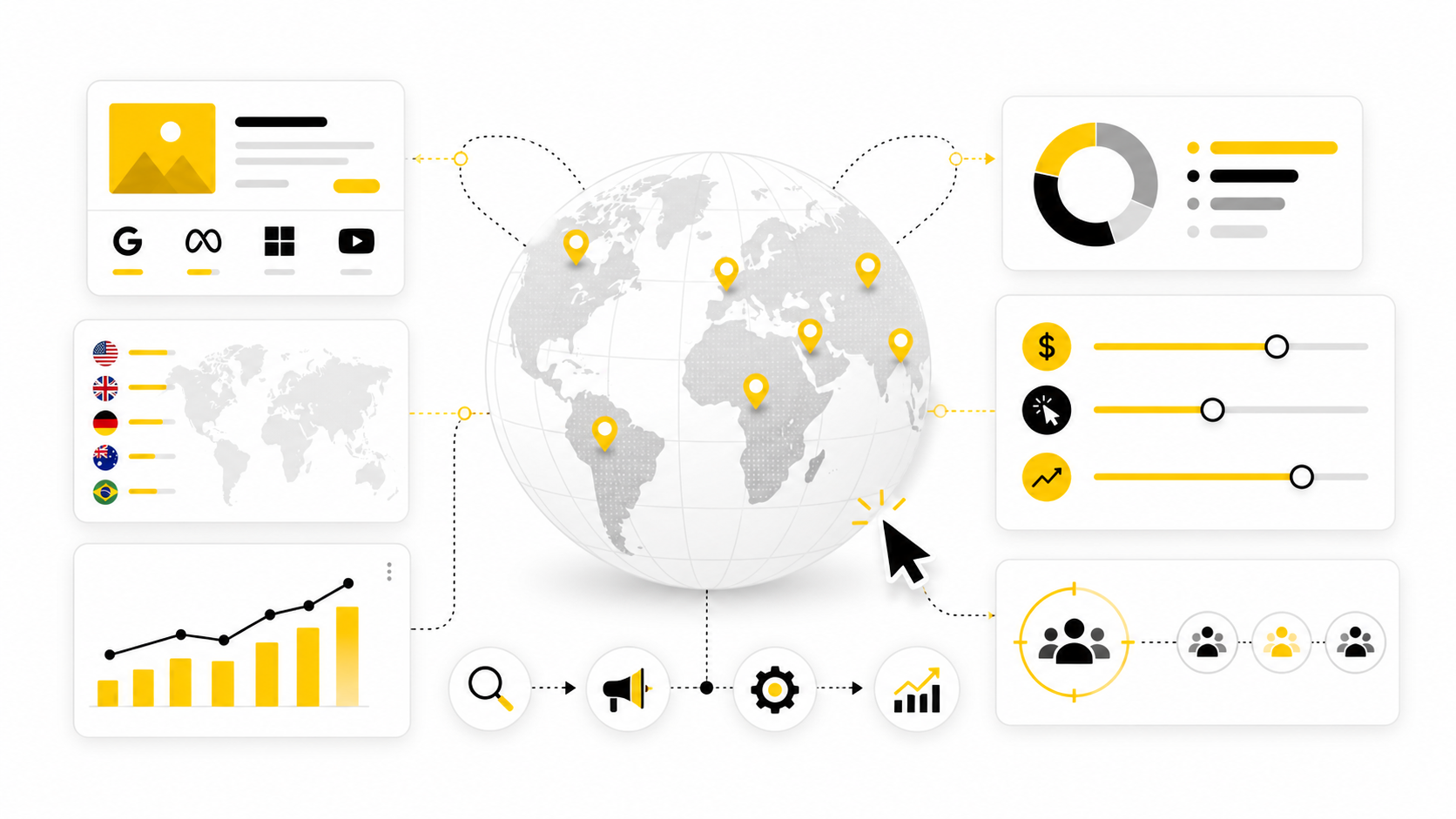
As businesses expand into international markets, the need for targeted, efficient advertising becomes more crucial. An international PPC agency helps brands scale their online presence across multiple countries, maximizing reach and ROI (Return on Investment). What sets international PPC apart is the ability to tailor campaigns for specific regions, ensuring cultural relevance, language accuracy, and alignment with local search behavior.
A successful international PPC campaign isn’t just about translating ads - it’s about understanding regional trends, consumer behavior, and competitive landscapes. For instance, what works in the U.S. might not work in Asia, and a well-run campaign will reflect those nuances. Partnering with an agency that specializes in international PPC allows you to avoid common pitfalls like geo-targeting errors, translation mistakes, and misalignment with local trends.
Framework Overview for Successful PPC Campaigns
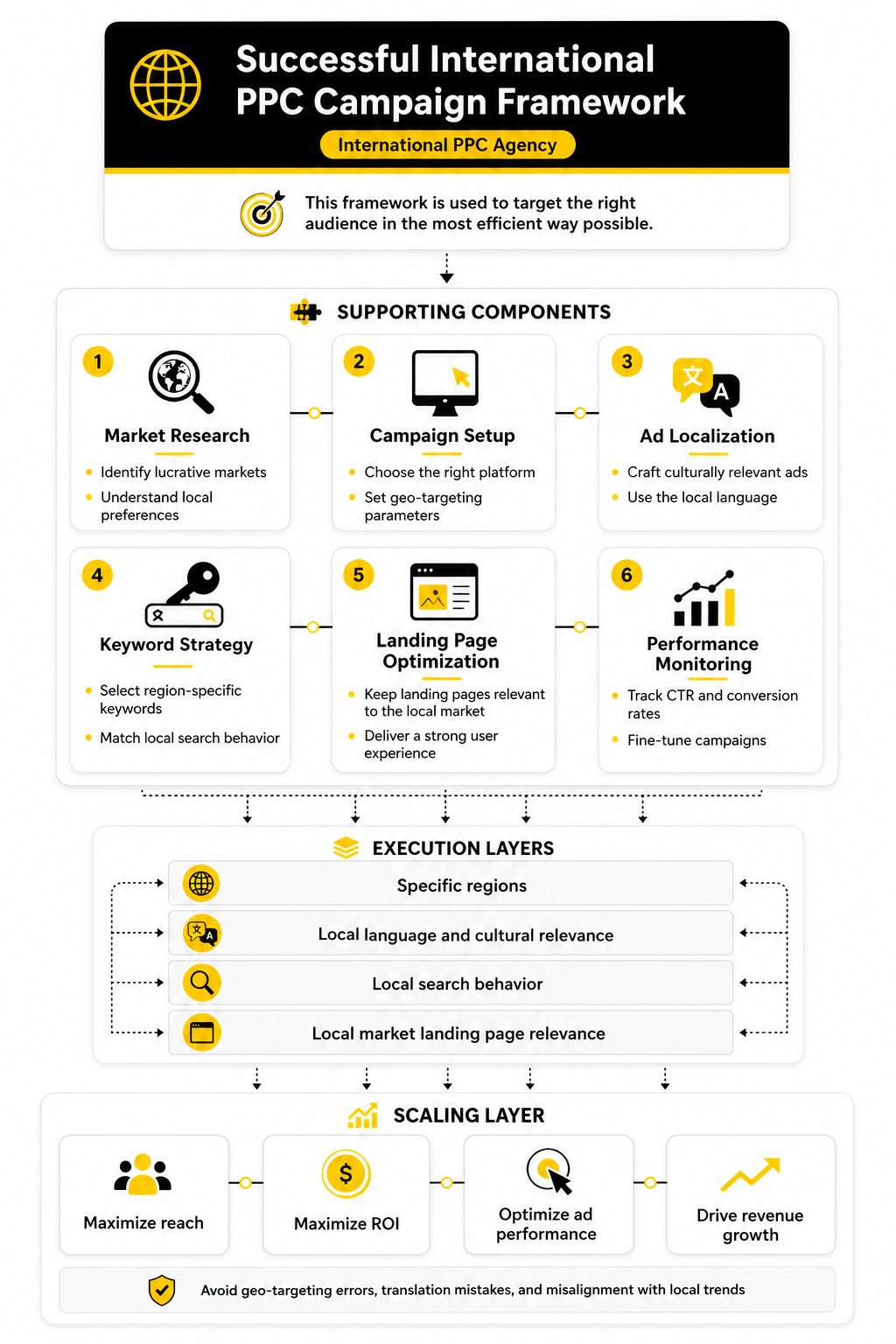
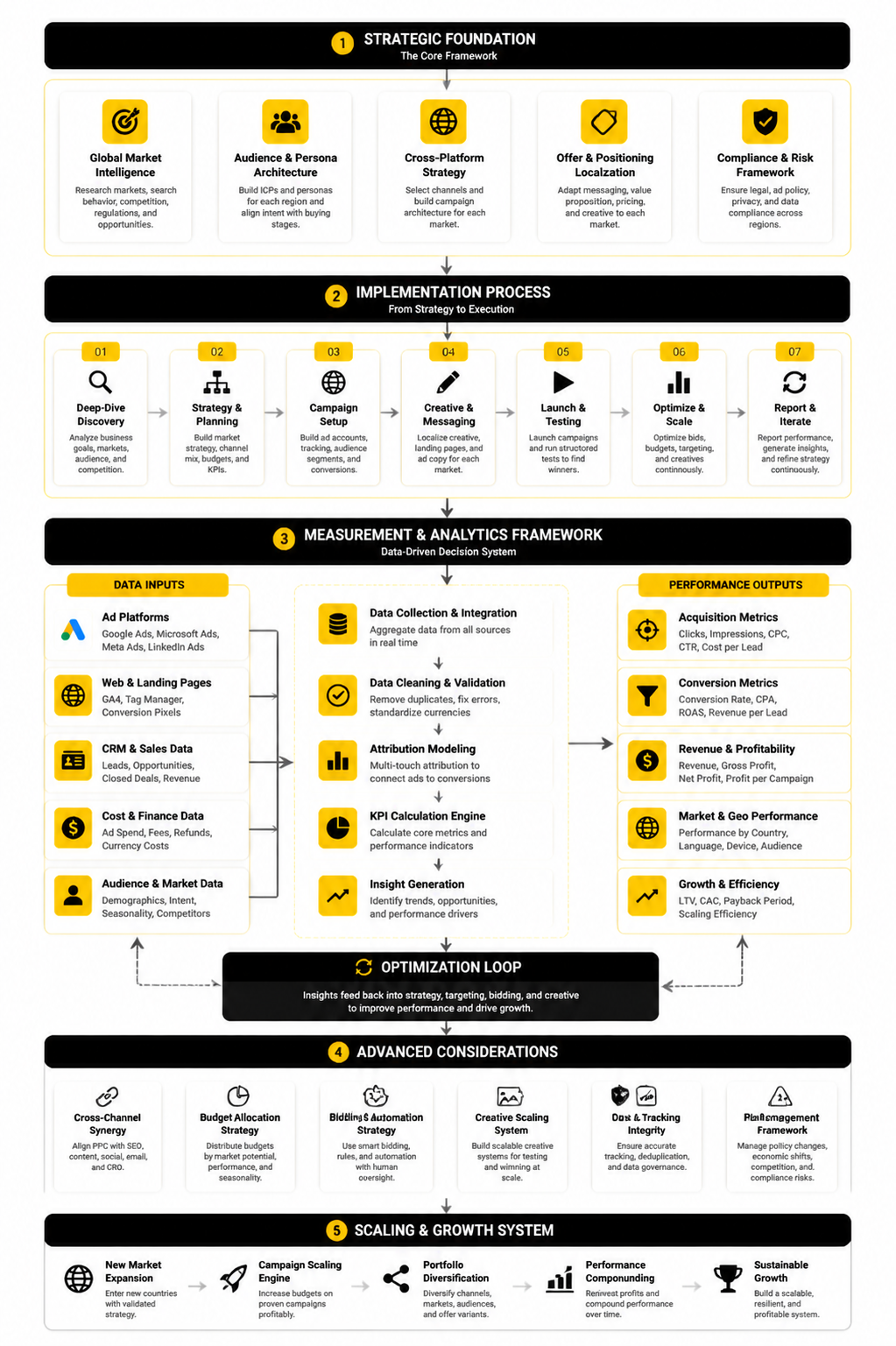
To set up a successful international PPC strategy, a structured framework is crucial. It involves several steps that must be tailored to each specific market, but generally, they include:
With this framework, international PPC agencies help brands ensure they are targeting the right audience in the most efficient way possible, optimizing ad performance and driving revenue growth.
Core Components of an Effective International PPC Strategy
A successful international PPC campaign hinges on several core components that work together seamlessly to drive results. These components form the backbone of any well-executed global PPC strategy, and understanding them will help brands maximize their reach across international markets. Here are the primary elements that define an effective international PPC approach:
One of the first steps in crafting an international PPC strategy is identifying and segmenting your target markets. This involves analyzing the characteristics of each market, including demographics, purchasing behavior, and search trends. A deep understanding of local preferences and cultural nuances helps ensure that campaigns are tailored to resonate with local audiences.
Localization goes beyond translation - it’s about adapting your messaging to fit local cultures, idioms, and expectations. This involves not just language translation but also modifying the tone, imagery, and offers to align with cultural sensitivities. A localized ad can significantly boost engagement and conversion rates in diverse markets, ensuring that your message is not lost in translation.
Different regions have different preferences for online platforms. While Google Ads is dominant in many countries, other platforms like Baidu in China or Yandex in Russia may be more effective in certain regions. A smart PPC agency will know which platforms to target and how to set up geo-targeting features to ensure your ads appear only to the relevant audience.
Keywords vary greatly across regions, not just in terms of language but also in search intent and volume. Conducting in-depth keyword research for each market is vital to ensure that your ads show up for the right queries. This includes identifying local search terms and long-tail keywords that have a high probability of converting.
A well-optimized landing page is just as crucial as the ad itself. International PPC campaigns must ensure that landing pages are designed to appeal to the local market. This includes translating text, adapting offers, and ensuring that the user experience (UX) is smooth across different devices and regions.
Effective PPC strategies are constantly evolving. Regularly analyzing campaign performance and conducting A/B testing allows for continuous improvement. Tracking metrics like click-through rates (CTR), conversion rates, and return on ad spend (ROAS) ensures that campaigns are refined to achieve maximum efficiency and impact.
By focusing on these core components, international PPC agencies help brands optimize their global campaigns for success. With a well-structured strategy, businesses can expand their reach and effectively target new markets, ensuring that their PPC efforts are both impactful and sustainable.
How to Professionally Implement International PPC Campaigns
Once the framework is in place and the strategy is set, it's time to look at the actual implementation of an international PPC campaign. This step brings the process to life and requires a well-executed, systematic approach. The execution phase involves everything from setting up the campaigns on various platforms to fine-tuning them to meet local demands.
Step-by-Step Process for Implementation
The first step in the implementation process is selecting the right platforms and setting up your accounts. Depending on the target countries, this could include Google Ads, Bing, Facebook, or regional platforms like Baidu or Yandex. Each platform has its unique setup process, so it’s important to be familiar with their tools and features.
To optimize performance, geo-targeting is essential. Ads should only be shown to users in specific countries or regions. Depending on the local demand and competition, budgets should be adjusted accordingly. High-demand countries may require a larger budget, while emerging markets may need more conservative spending.
Timing plays a significant role in the success of international PPC campaigns. Different regions have different peak times for internet usage, and you need to adjust your ad schedules accordingly.
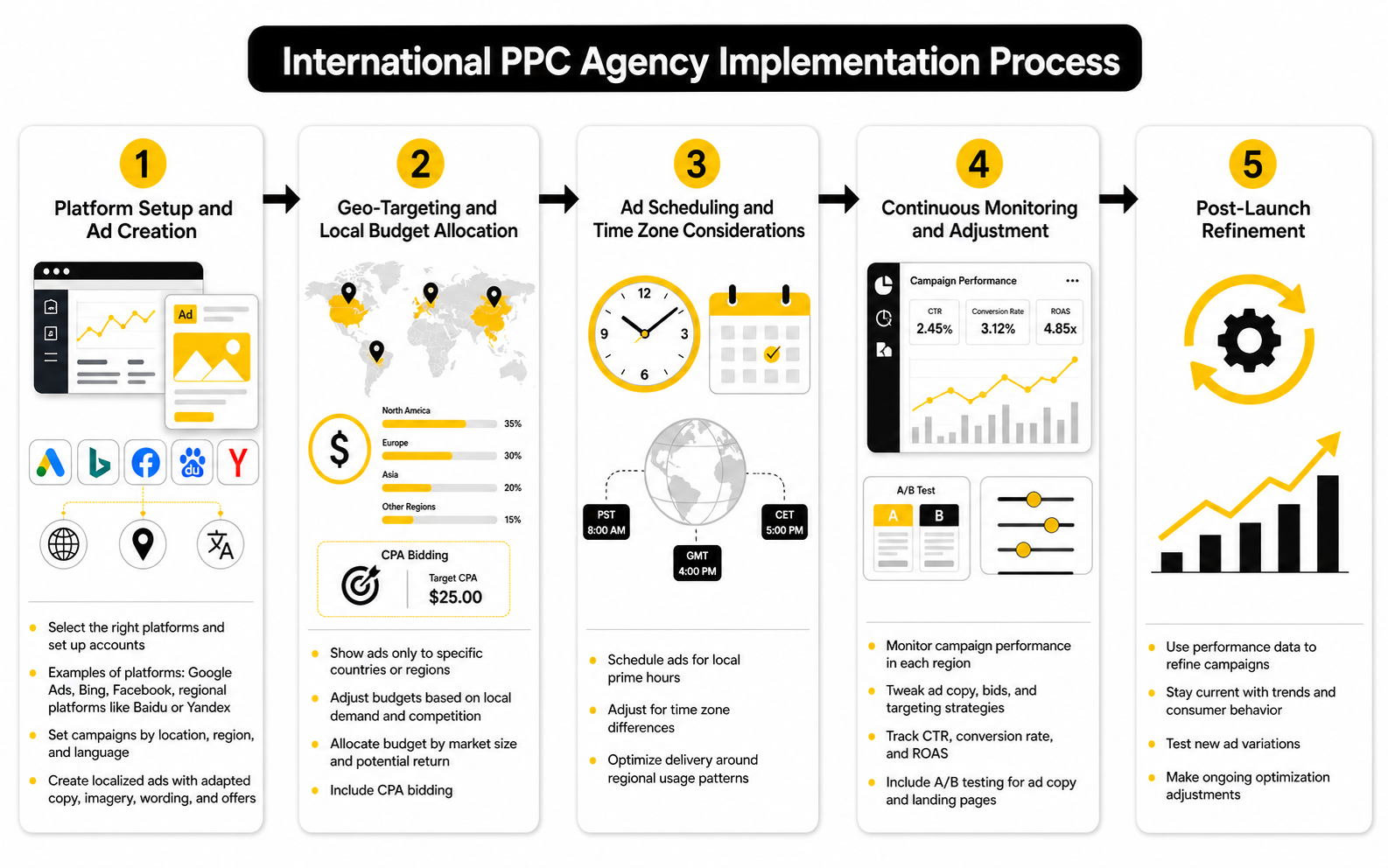
Once your campaigns are live, continuous monitoring is key. Keep a close eye on how the ads perform in each region and adjust accordingly. This could involve tweaking ad copy, changing bids, or reworking targeting strategies.
After your ads have been running for a while, use the data to refine and optimize them. International markets evolve, and staying up-to-date with new trends and consumer behavior is crucial. Continually test new ad variations and make necessary adjustments to improve results.
Understanding Analytics and Measuring PPC Campaign Success
When it comes to international PPC campaigns, the key to improving performance and scaling effectively lies in accurate measurement and data analysis. The results of your campaigns, whether positive or negative, offer invaluable insights that guide future strategies. Knowing how to interpret these numbers—and more importantly, what actions to take based on them—can make or break a global campaign.
Key Performance Metrics to Monitor
CTR is one of the first indicators of how well your ads are performing in terms of attracting attention. A high CTR means your ad is engaging enough to prompt users to click. However, the numbers alone don’t tell the full story—what matters is the relevance of those clicks to your goals. For example, a high CTR in a market where users don’t convert may be less valuable than a lower CTR in a market where clicks drive sales.
While CTR measures engagement, conversion rate shows the success of those engagements. A higher conversion rate indicates that your ads are driving quality traffic—traffic that’s willing to take the desired action, such as making a purchase or signing up. If your conversion rates are low, it may be time to revisit the landing pages or your call-to-action (CTA). Be sure to adjust your campaigns based on specific regional conversion trends, as local behavior can vary widely.
CPA is the price you pay to acquire one customer. This metric is crucial because it directly impacts your ROI. International PPC campaigns often experience higher CPAs due to competition in global markets. However, with the right geo-targeting and budget allocation, you can keep this cost within a profitable range. Understanding the cost of acquisition across different countries allows you to determine which regions provide the most cost-effective leads.
ROAS helps measure the financial effectiveness of your PPC campaigns. It’s a critical metric for understanding whether the money you’re spending is bringing in enough revenue. A ROAS of 5:1, for example, means that for every $1 spent, you’re generating $5 in revenue. However, acceptable ROAS can vary by market and industry. If a region shows a strong ROAS, it might be worth allocating more budget to it.
Impressions refer to the number of times your ad is shown, while reach measures how many unique users have seen your ad. These numbers provide insight into how well your ads are reaching potential customers. While high impressions are good, it’s important that these impressions are from the right audience. For international campaigns, ensure that your reach is broad enough to capture diverse markets while remaining focused on relevant demographics.
Interpreting Data and Taking Action
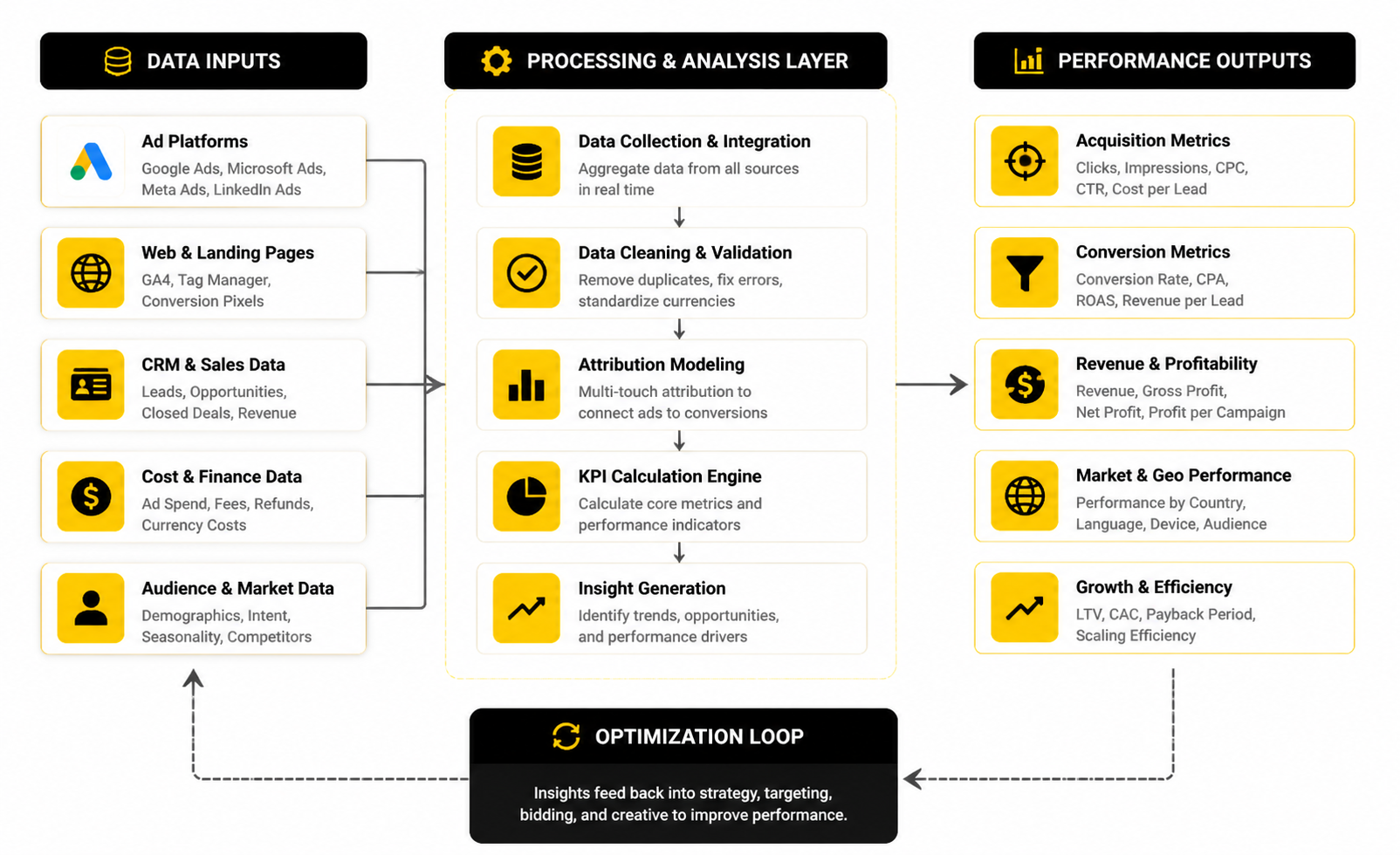
Understanding the raw data is only half the equation. The real challenge is interpreting what the numbers mean and how they should inform your actions. Here’s how to interpret the numbers and what steps to take:
Look at trends across different regions. Are some countries performing better than others? Are certain keywords driving more conversions? By identifying patterns, you can determine which markets are underperforming and which are thriving.
A/B testing is essential for optimizing your campaigns. Test different ad creatives, landing pages, bidding strategies, and more. By comparing performance data, you can fine-tune your strategy to maximize results in each specific region.
Based on the data, you may need to reallocate your budget or adjust your bids. If a certain region shows a high ROAS but a low conversion rate, you may want to increase the budget for that region while adjusting your landing page or ad targeting to improve conversions.
Localizing your campaign is key. If you’re seeing high engagement but low conversions in a specific country, consider adjusting your messaging to better reflect the local culture or addressing regional pain points.
By using analytics effectively, international PPC agencies can continually optimize campaigns, ensuring that every dollar spent contributes to business growth.
Advanced Considerations for Scaling International PPC Campaigns
As you refine your international PPC strategy, you'll inevitably face advanced considerations that affect the scalability and sustainability of your campaigns. These challenges are not simply about increasing your ad spend; they are about fine-tuning every aspect of your strategy to ensure it operates efficiently at a global scale. From managing risk to ensuring long-term profitability, these expert-level insights can help guide your expansion.
Managing Campaign Complexity at Scale
When expanding your PPC efforts internationally, the sheer volume of markets and platforms can make the process daunting. Here’s how to manage that complexity effectively:
While Google Ads is a go-to for many international campaigns, diversifying your ad platforms is essential for maximizing reach in specific markets. For example, in China, Google is not as widely used as Baidu. Similarly, in Russia, Yandex might yield better results than Google. Understanding and adapting to local platforms can increase campaign performance significantly. The challenge lies in managing multiple accounts across various platforms while maintaining consistent branding and tracking. To mitigate this, consider using tools that offer multi-platform management, allowing you to streamline reporting and optimization across regions.
With international PPC campaigns, managing every detail manually can quickly become overwhelming. Leveraging automation tools can help you manage bids, adjust budgets, and pause underperforming ads in real-time. Many platforms, including Google and Facebook, offer automated bidding strategies, such as Target CPA or Target ROAS, that adjust in real-time to maximize performance based on set goals. However, automation should be used with caution. It’s important to monitor automation settings closely, as they might adjust your bids in ways that could lead to over- or under-spending if not calibrated correctly.
One of the major risks when scaling international PPC campaigns is over-allocating budget to underperforming regions. As your campaigns expand, it’s crucial to scale budgets progressively, ensuring you’re allocating resources to high-performing regions. To scale efficiently, use performance-based triggers such as reaching a specific ROAS target or CPA threshold before increasing the budget in a market. This ensures that your ad spend is always working optimally, rather than simply increasing volume without assessing market fit.
Strategic Tradeoffs and Risk Management
Scaling a global PPC campaign introduces a level of risk, but with proper strategy, these risks can be minimized. Here are a few tradeoffs to consider when expanding into new regions:
The more competitive a market, the higher the cost per click (CPC) and the greater the budget required to maintain visibility. In highly competitive markets like the U.S. or Europe, businesses may face higher ad costs, which can erode profits. It’s important to weigh this against the potential return—entering a competitive market may require more aggressive bidding and larger budgets but can provide access to a more affluent audience.
One of the most significant challenges is deciding how much to localize your campaign materials. Total localization (adjusting copy, images, landing pages, etc.) can be resource-intensive but is often necessary for high-impact markets. Alternatively, some businesses take a more standardized approach, using a universal message for multiple regions. This can save time and resources but may limit the effectiveness of the campaign. The decision depends on the nature of your business and the importance of cultural relevance in the target market. A balance between the two is often the best approach—standardize certain elements (like offers) while localizing others (such as language and imagery).
Long-Term Sustainability and Optimization
As your campaigns mature, it’s essential to ensure their sustainability. An international PPC agency should not only help you get started but also ensure that your campaigns are optimized for the long term:
Optimization doesn’t stop once the initial campaign is set up. Continuous A/B testing, especially for international markets, ensures that campaigns evolve as customer preferences and behaviors change. Test everything from ad copy to landing pages to bidding strategies. Over time, this will lead to better-performing ads, more refined targeting, and improved conversion rates.
Markets shift, and consumer behavior evolves. New competitors enter, and search trends change. To maintain success, your PPC strategy should remain flexible. Regularly review your data and adjust strategies as needed to stay ahead of market changes.
Once campaigns are running smoothly in multiple regions, use cross-market data to spot opportunities. For example, a strategy that works well in one region might be adapted and tested in another region with similar demographics. Look at commonalities and differences across your international campaigns to refine your approach and find new avenues for growth.
By managing complexity, understanding the risks, and continuously optimizing your campaigns, you can scale your international PPC efforts effectively and sustainably. A successful global PPC strategy is about more than just reaching new customers; it’s about adapting to each market’s unique characteristics and optimizing your efforts to drive long-term success.
Here are some of the most common questions about working with an international PPC agency and how to get the most from your global campaigns.
1. What is an international PPC agency?
An international PPC agency specializes in creating and managing pay-per-click advertising campaigns that target global markets. They focus on adapting PPC strategies to different regions, languages, and cultural nuances, ensuring that ads are optimized for each market.
2. How do international PPC campaigns differ from local PPC campaigns?
International PPC campaigns require a more complex strategy because they involve multiple countries, languages, and cultural considerations. Local campaigns typically target a single market, making them more straightforward. International campaigns need to adapt to various search behaviors, regulations, and platform preferences.
3. What are the main challenges of running international PPC campaigns?
The main challenges include language barriers, regional differences in consumer behavior, varying competition levels, platform preferences, and complex legal regulations. Each of these factors requires a tailored approach to maximize the effectiveness of PPC campaigns across borders.
4. How do I measure the success of an international PPC campaign?
You can measure success by tracking key performance indicators (KPIs) such as click-through rate (CTR), conversion rate, return on ad spend (ROAS), and cost per acquisition (CPA). It’s also essential to monitor region-specific metrics, as success can vary greatly between different markets.
5. Is it necessary to localize ads for each country?
Yes, localization is crucial for international PPC campaigns. Direct translation is not enough; ads should be culturally relevant to resonate with local audiences. This includes adapting the language, imagery, and offers to align with regional expectations.
6. How do international PPC agencies handle different time zones?
International PPC agencies use sophisticated scheduling tools to optimize ad delivery based on time zones. They also monitor performance at different times of the day to ensure ads reach the target audience during peak hours for each region.
7. Can I run an international PPC campaign on a small budget?
Yes, but you need to be strategic. Focus on high-potential markets and prioritize campaigns based on performance. You can also use automated bidding strategies to maximize your ad spend and continuously optimize your campaigns for efficiency.
8. What platforms should I use for international PPC campaigns?
The most common platforms for international PPC campaigns are Google Ads, Facebook Ads, Bing Ads, and regional platforms like Baidu (China) or Yandex (Russia). The platform choice depends on the market you’re targeting and the digital landscape in that region.
9. How do international PPC agencies manage language differences in ads?
Agencies work with native speakers or localization experts to ensure that ads are not only translated but culturally adapted. This includes adjusting messaging, tone, and even offers to ensure they resonate with the local audience.
10. How long does it take to see results from an international PPC campaign?
The timeline can vary depending on the complexity of the campaign and the market, but you should expect to see measurable results within a few weeks to a few months. Initial testing, learning, and optimizations are crucial for long-term success.
Build a stronger local presence with BAAM AI
Turn your website, Google profile, social channels, and AI visibility into one growth engine
Most businesses do not need more random marketing activity. They need a consistent presence system that helps the right people find them, trust them, and take action. BAAM AI brings strategy, local SEO, website updates, Google Maps visibility, social content, AI-search readiness, media production, and reporting into one practical monthly engine.
If you want your marketing to keep working after the campaign ends, start with a free BAAM AI presence audit. See how your business shows up today and where the fastest visibility wins are at BAAM AI.