
BAAM AI Blog
International Copywriting: A Global Guide for Persuasive, Cross‑Border Messaging
International copywriting is the craft of writing persuasive marketing and brand content that resonates with audiences across multiple cultures, languages, and regions. It goes far beyond basic translation...

International copywriting is the craft of writing persuasive marketing and brand content that resonates with audiences across multiple cultures, languages, and regions. It goes far beyond basic translation: international copywriters adapt tone, structure, cultural references, and messaging strategy to ensure relevance and emotional connection in each target market. This approach bridges linguistic and cultural divides so brands can communicate value authentically on a global scale.
Below is the structure of this guide:
Why International Copywriting Matters
International copywriting matters because brands can no longer assume that a one‑size‑fits‑all message translates into meaningful engagement across borders. In an interconnected marketplace, consumers expect content that reflects their language nuances, cultural values, and local contexts. Without this, even technically accurate messaging can fail to resonate or, worse, confuse or alienate audiences.
Well‑crafted international copy enhances brand trust and perception by respecting cultural norms and speaking in ways each audience understands. It fosters deeper emotional connections that drive everything from brand awareness to conversions, and it helps companies scale their global reach while maintaining a cohesive brand identity.
Framework for International Copywriting
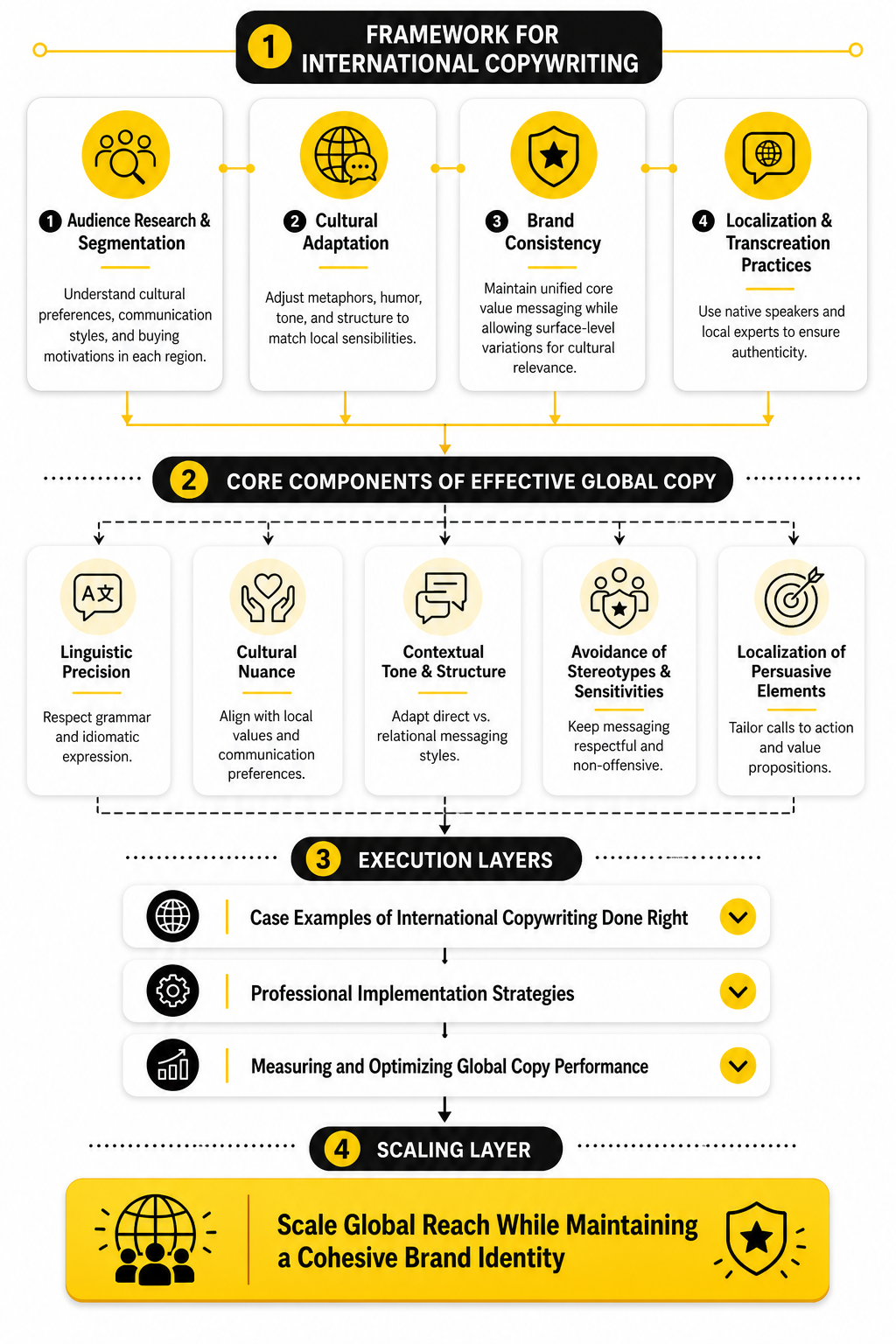
A practical framework for international copywriting combines both strategic planning and creative adaptation. At its core, this framework includes:
This framework helps global marketing teams balance the need for a consistent brand voice with the flexibility required to appeal meaningfully to distinct audiences around the world.
Core Components of Effective Global Copy
To craft copy that works internationally, several core components are essential:
These components ensure that international copywriting is not only understood but also emotionally compelling and action‑driving.
(Upcoming in next parts)
The full article will continue with:
Case Examples of International Copywriting Done Right
International copywriting is an art that combines skill, strategy, and deep understanding of diverse audiences. While global brands often face challenges when trying to deliver a unified message across multiple countries, there are several remarkable examples of companies that have mastered the art of international copywriting. These examples highlight how creativity and cultural intelligence can work together to make a lasting impression.
Coca-Cola's "Share a Coke" Campaign
One of the most iconic international copywriting campaigns is Coca-Cola's "Share a Coke" initiative. This campaign was launched in various countries with a central idea: replacing the classic Coca-Cola logo with popular names, encouraging people to buy a Coke with their name or the name of a friend. While the concept remained the same, the local execution was tailored to each market. For instance, in the U.S., common first names were used, while in countries like the UK, slang terms or even last names were incorporated to better connect with regional identities. The campaign's success demonstrated the power of cultural adaptation, as it resonated deeply with audiences on a personal level, creating a sense of connection and shared experience. (source)
McDonald's Global Adaptation of Menu Descriptions
Another example is McDonald's, which tailors its menu copywriting to align with local tastes and preferences. In Japan, McDonald's promotes its products with a much lighter and playful tone, appealing to younger audiences. In contrast, McDonald’s in India focuses on healthy, vegetarian options and incorporates cultural respect into its messaging, ensuring that the copy resonates with local dietary preferences. This careful consideration of regional culture within the copy not only boosts sales but also enhances brand loyalty in diverse markets. (source)
Airbnb’s Localized Experience Descriptions
Airbnb is a master at international copywriting, using local language nuances and cultural references to create personalized experiences for its users. When translating listings and descriptions, Airbnb doesn't just aim for accurate translation but focuses on transcreation - adapting the message while keeping its original intent. For example, the way "home" is described in each country often differs, reflecting the local sense of comfort and belonging. Whether it’s a cozy apartment in Paris or a traditional Japanese ryokan, Airbnb uses local storytelling techniques to appeal to the audience’s sense of place, inviting them to truly experience the culture. (source)
Unilever’s "Dove Real Beauty" Campaign
Dove’s "Real Beauty" campaign aimed to redefine beauty standards across the globe, and it was a prime example of how international copywriting can evoke emotion while resonating with local cultures. Dove focused on empowering women of all shapes, sizes, and ethnicities, creating an inclusive narrative. This campaign was adapted for each market, with local models and beauty standards reflected in the messaging. Dove's copy spoke directly to women, making them feel beautiful in their own unique way, no matter where they were in the world. This approach helped Dove to become a global brand that champions diversity. (source)
Professional Implementation Strategies
In order to implement effective international copywriting, brands must combine several key strategies:
1. Hire Local Experts for Translation and Localization
Effective international copywriting goes beyond simple translation. The key is localization - adjusting content to make it culturally relevant. This is why many companies employ native speakers or regional experts to handle translation and adaptation. These experts are not just translating words but ensuring that tone, messaging, and nuances fit with the local culture, norms, and values. Hiring professional translators who specialize in both language and culture is essential to avoid costly mistakes or misunderstandings. (source)
2. Conduct Thorough Market Research
Before embarking on any international copywriting project, understanding the target market is crucial. Conducting thorough market research helps companies to identify local preferences, language subtleties, and key cultural differences. This research should also involve analyzing competitors’ copywriting in the same market to understand the kind of messaging that resonates with audiences. Research tools, surveys, and focus groups are effective ways to collect actionable insights. (source)
3. Develop a Global Brand Voice
While localization is important, it’s also essential to maintain a consistent brand voice across markets. A well-defined global brand voice ensures that the core values of a company remain intact, regardless of the cultural differences. This unified brand identity can help companies create a sense of familiarity and trust, which is essential for success in multiple markets. However, how this voice is expressed may differ. For example, some markets may prefer humor and playfulness in messaging, while others may respond better to more formal or emotional tones. (source)
4. Leverage Data for Continuous Optimization
Once international copywriting is implemented, data analytics is crucial for optimization. By tracking metrics like engagement rates, bounce rates, and conversions across different regions, brands can identify which parts of their messaging are effective and which need adjustment. Continuous testing and adapting ensure that the content stays relevant as trends and consumer preferences evolve. Tools like A/B testing can be incredibly helpful in refining messages for specific markets. (source)
5. Invest in Multilingual SEO
Multilingual SEO is another critical component of global copywriting. By optimizing content for different languages and regions, companies can improve their search engine visibility across the globe. This involves using localized keywords, tailoring content to suit search intent in different regions, and adjusting meta descriptions, titles, and headers accordingly. Optimizing copy for search engines in each market increases the likelihood of attracting organic traffic, making it a worthwhile investment. (source)
Next, in Part 3, we’ll dive deeper into measuring and optimizing global copy performance to ensure brands continuously improve their international efforts.
Measuring and Optimizing Global Copy Performance
Effective international copywriting doesn’t end once the content is live. Ongoing measurement and optimization are key to ensuring your copy is resonating with each target market. After launching global campaigns, it’s essential to track performance, identify what’s working, and refine the approach for better engagement and results.
1. Define Key Performance Indicators (KPIs)
Before diving into performance measurement, define your KPIs. These metrics should align with your global campaign objectives and vary based on region, culture, and the goal of your copy. Common KPIs for international copywriting include:
These metrics provide a direct line to understanding how well your copy performs in different markets, and they’re essential for making data-driven improvements.
2. A/B Testing for Global Audiences
A/B testing is a crucial tool for measuring the effectiveness of copy across different regions. By testing different versions of the same message, you can analyze which variations perform best in specific cultural contexts.
For example, you might test different headline variations or calls to action (CTAs). In one market, a straightforward approach may be more effective, while in another, a humorous or emotionally-driven CTA could perform better. Testing and refining allow you to ensure your copy speaks directly to the audience’s preferences. (source)
IMAGE 3
3. Feedback and Surveys from Local Audiences
Sometimes, the best way to measure success is to ask the audience directly. Surveys and focus groups can provide invaluable insights into how your international copy is being received. By collecting feedback from local consumers, you can get a clear picture of:
While surveys may not be as fast as quantitative data, they offer qualitative feedback that can uncover nuances your KPIs may not reveal. (source)
4. Use Multilingual SEO for Performance Insights
SEO performance is another powerful indicator of how well your international copy is performing. By tracking your organic traffic and keyword rankings in different regions, you can assess how well your localized copy is resonating with search engines and users alike. This can also inform future copywriting adjustments.
For example, if certain keywords aren’t performing well in a specific market, it might indicate that the local audience uses different terminology or phrases than what you initially targeted. Adjusting your SEO strategy based on these insights ensures that your content continues to rank and drive traffic from local markets. (source)
5. Analytics Tools for Regional Insights
Leveraging analytics tools is a must for tracking the performance of your global copy across regions. Platforms like Google Analytics and HubSpot offer detailed reports on audience behavior across different markets. These tools can help you track:
By setting up customized reports that filter by region, you can easily spot patterns and identify areas that need optimization. (source)
Iteration and Continuous Improvement
The world of international copywriting is constantly evolving. To stay competitive and relevant, it's essential to adopt an ongoing process of iteration and optimization. The goal is not just to measure but also to use the insights gathered to continually improve your copy across markets. In doing so, you ensure that your messaging evolves alongside changing audience expectations, cultural trends, and market conditions.
As you move forward with your international copywriting efforts, remember: success in global markets requires commitment to refining your approach. It’s not a one-time effort but an ongoing journey of adaptation, measurement, and refinement. By keeping track of your performance metrics and adjusting based on data, you’ll ensure that your copy remains effective and resonates with your diverse global audience.
In Part 4, we’ll look at real-world case studies to examine how top brands execute their international copywriting strategies and the results they achieve.
Understanding the Data: Analytics and Performance Benchmarks
When managing international copywriting, analytics are essential for interpreting how content performs across different markets. It’s not just about tracking raw numbers; understanding the meaning behind these numbers and adjusting your approach accordingly is the key to optimizing your strategy.
1. Setting Benchmarks for Global Campaigns
To interpret the data, establish benchmarks based on the performance of similar content in the market or industry. These benchmarks should act as a point of reference to compare your own results against, allowing you to see where your copy stands.
For example, if your goal is to increase engagement, set a benchmark for engagement rates (likes, shares, comments) from similar campaigns. Once you have these benchmarks, you can measure your performance over time and understand whether your international copywriting efforts are succeeding or falling short.
Keep in mind that different markets have different expectations, and benchmarks should be localized. For instance, social media engagement in the U.S. might be higher than in some European or Asian countries. Tailoring benchmarks to specific regional contexts is crucial for setting realistic goals.
2. Interpreting Key Metrics
After setting benchmarks, the next step is understanding what the metrics actually mean. Here’s a breakdown of key performance indicators (KPIs) and how to interpret them for international campaigns:
IMAGE 4
3. The Role of Multilingual SEO in Performance Measurement
SEO performance across languages can provide rich data about how well your international copy is received. Multilingual SEO involves optimizing your copy for specific regions, including targeting localized keywords that match what users are searching for in their native language. By tracking:
Tracking these SEO signals will help refine your messaging so it resonates in each language and region.
4. Leveraging A/B Testing for Data-Driven Decisions
A/B testing is vital for understanding how variations in your copy perform. Testing small changes, like tone adjustments, headline variations, or call-to-action changes, can help determine which version of your content resonates most in a particular market. Through this process, you'll gain clear insights into which copywriting style works best, providing actionable data for future campaigns.
5. Contextualizing Data for Action
Once you have the data, contextualize it in terms of your goals. For example, let’s say your engagement rates in one country are lower than expected. Before jumping to conclusions, assess factors like:
The interpretation of data should always lead to actionable insights that inform your next steps, whether it’s tweaking copy, rethinking strategies, or even reconsidering cultural nuances in messaging.
Continuous Iteration and Testing
Data is not static, and successful international copywriting requires constant testing and adaptation. Use the insights gained from your performance data to fine-tune your copywriting efforts. Keep iterating, experimenting, and tracking, and don’t forget to adjust your benchmarks as new information and trends emerge.
By consistently measuring, interpreting, and optimizing based on performance data, you’ll be able to create compelling, relevant content that resonates with international audiences, ultimately driving engagement, conversions, and brand loyalty.
In Part 5, we’ll explore more real-world examples of brands executing these strategies and achieving success in global markets.
Advanced Considerations in International Copywriting
As you scale your international copywriting efforts, there are several advanced considerations that become crucial to success. While earlier sections of this guide have focused on foundational principles, this section delves into the strategic trade-offs, risks, and challenges that arise when expanding globally.
1. Managing Cultural Sensitivities and Risks
One of the biggest risks in international copywriting is cultural missteps. Even a seemingly harmless word or image can spark controversy in different regions. For example, certain phrases, humor, or visual representations might carry different meanings or connotations in various cultures, potentially damaging a brand’s reputation.
To avoid these pitfalls, it's essential to conduct thorough cultural research and work closely with local experts. They can guide you in identifying potential issues and ensure that your copy is both culturally sensitive and relevant. In some cases, what works in one country might offend or confuse people in another. For example, visual content that might seem neutral in one market could be perceived as inappropriate or even disrespectful in another.
Mitigating these risks involves localizing content rather than just translating it. This often includes revising copy, tone, and images to fit within the social, religious, and political contexts of each region. A deep understanding of cultural values is crucial to ensure that the content is embraced rather than rejected.
2. Strategic Trade-offs in Language and Tone
International copywriters often face trade-offs when it comes to tone and language. For example, formal language may be more suitable for professional markets like Japan, while a more casual tone might work better in the U.S. or Australia.
A neutral tone might be an easy way out, but it risks appearing disconnected or generic in some markets. At the same time, over-localization can alienate consumers who feel the messaging doesn't resonate with their identity or culture.
Deciding how to balance these tonal choices depends on market maturity, brand identity, and the specific message you’re conveying. In regions where the market is newer or less familiar with your brand, you might lean toward more friendly and relatable language to build a connection. For established markets, a more professional tone might help convey credibility.
3. Scaling International Copywriting Efforts
As brands expand their reach, scaling international copywriting efforts becomes a critical challenge. The complexity increases as the number of languages and regional markets grows. With larger-scale projects, you need to be prepared to handle the logistics of managing a global team, each specializing in different markets.
The main question becomes: How do you scale without sacrificing quality? One effective way to scale is by creating a centralized style guide that ensures consistency across all regions. This style guide should include brand tone, messaging pillars, and language guidelines. By doing so, you ensure that all markets stay on-brand while still tailoring the content to local sensibilities.
4. Tools and Technology for Streamlining the Process
To manage the growing complexity, advanced technology solutions can be a game-changer. Tools like localization management platforms, translation management systems (TMS), and content management systems (CMS) designed for multilingual markets can automate many tasks that would otherwise be manually intensive. These platforms allow teams to collaborate efficiently across geographies, ensuring that content is not only consistent but also delivered on time.
Additionally, AI-powered tools can assist with tasks like localizing ads, optimizing SEO for multiple languages, and ensuring proper keyword translation. These tools can speed up the process and help minimize human error, ultimately improving the quality of copy across multiple regions.
5. Long-Term Brand Cohesion vs. Local Adaptation
One of the most important strategic decisions in international copywriting is whether to prioritize brand cohesion or local adaptation. While consistency across markets helps reinforce a brand's global identity, there are times when deep localization is required to connect with specific cultural nuances.
It’s a balancing act: if you overly adapt your messaging to fit each market, you risk losing the cohesive voice and message that define your brand. On the other hand, sticking too rigidly to a single voice across diverse markets may lead to missed opportunities for connection.
The solution lies in strategic flexibility. For example, maintaining core messaging around your brand values, products, or services is crucial, but allowing for some degree of creative freedom and flexibility in how those messages are expressed can help you better resonate with local audiences. The goal should be to create a globally recognized brand identity while still ensuring that each market feels the message is tailored for them.
6. The Importance of Monitoring Trends and Continuous Learning
In the ever-changing world of international marketing, the landscape constantly evolves. What works today might not be as effective tomorrow. To stay relevant, you must actively monitor global trends, cultural shifts, and market feedback.
Be sure to stay informed about emerging markets, as these regions might have different expectations for copy, language use, and even brand perception. For instance, new social media platforms and trends in specific countries may require a pivot in your content approach.
Moreover, continuous learning about different cultures and adapting your strategies over time ensures your content remains fresh and engaging. This requires maintaining close relationships with local market experts, agencies, and even your audience to stay attuned to their changing preferences and concerns.
In Part 6, we will wrap up the series by discussing best practices, a final look at the challenges, and key takeaways for successfully scaling and executing international copywriting strategies in a world of global consumers.
1. What is international copywriting?
International copywriting is the practice of creating marketing content that resonates with audiences across different countries, cultures, and languages. It involves adapting your messaging to suit local cultural norms, preferences, and language nuances while maintaining the brand’s global identity.
2. Why is cultural sensitivity important in international copywriting?
Cultural sensitivity is vital because messages that work well in one region may be misunderstood or offensive in another. Understanding the local context ensures that the content is not only respectful but also resonates with the target audience, preventing potential PR disasters and building stronger connections.
3. How does localization differ from translation in international copywriting?
Localization goes beyond mere translation. It involves adapting the message, tone, and visual elements to suit local cultural nuances, idioms, and preferences. Translation focuses on converting text from one language to another, while localization ensures that the content feels native to the target audience.
4. What are the key challenges in scaling international copywriting efforts?
Scaling international copywriting comes with challenges like maintaining consistency across different markets while ensuring localization, managing a global team, adhering to local legal and cultural norms, and handling multiple languages simultaneously. Effective project management tools and a consistent global style guide are essential for overcoming these challenges.
5. How do I measure the success of my international copywriting efforts?
Success can be measured using KPIs such as engagement rates, conversion rates, click-through rates, bounce rates, and localized SEO performance. Regular A/B testing and collecting direct feedback from local audiences are also crucial to evaluate effectiveness.
6. Can I use the same copy in all international markets?
While you can maintain core messaging, it’s important to adapt your copy for each market. Different regions have distinct preferences, humor, and values. Using the same copy may result in disconnection, so it's essential to tailor the messaging to each market’s culture and language.
7. What role does SEO play in international copywriting?
SEO is crucial in international copywriting to ensure that your content ranks well in local search engines. This involves using region-specific keywords, optimizing content for local search trends, and ensuring that your site is accessible in different languages. Multilingual SEO helps drive organic traffic to your content across global markets.
8. How do I ensure brand consistency across international markets?
Maintaining brand consistency while localizing content requires a strong global style guide. This guide should define your brand voice, core messaging, and values, ensuring that all local copywriters understand and adhere to these principles while making content culturally relevant.
9. How do I handle different writing styles across markets?
Each market may have its preferred writing style—some may prefer a formal tone, while others are more casual or conversational. Researching the preferences of your target audience, using local copywriters familiar with the culture, and employing flexible tone guidelines can help you adjust without compromising the brand’s voice.
10. What tools can help with international copywriting?
There are several tools that can streamline international copywriting, including translation management systems (TMS) like Smartling, content management systems (CMS) like WordPress, and localization platforms such as Transifex or Lokalise. These tools help ensure consistency, manage multiple languages, and maintain a smooth workflow.
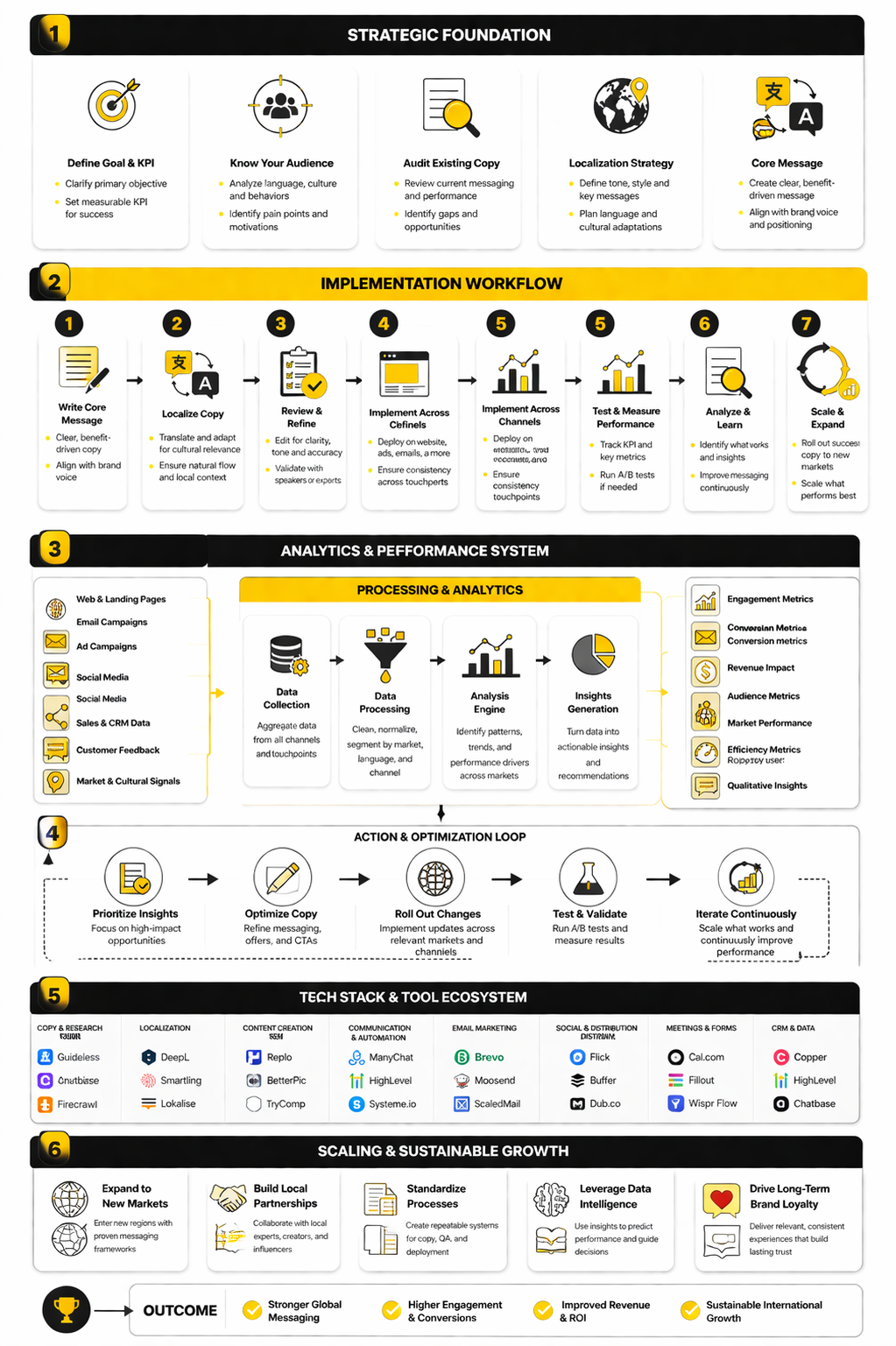
Build a stronger local presence with BAAM AI
Turn your website, Google profile, social channels, and AI visibility into one growth engine
Most businesses do not need more random marketing activity. They need a consistent presence system that helps the right people find them, trust them, and take action. BAAM AI brings strategy, local SEO, website updates, Google Maps visibility, social content, AI-search readiness, media production, and reporting into one practical monthly engine.
If you want your marketing to keep working after the campaign ends, start with a free BAAM AI presence audit. See how your business shows up today and where the fastest visibility wins are at BAAM AI.