
BAAM AI Blog
Influencer Marketing Google Scholar: Foundations, Frameworks, and Future Directions
Influencer marketing has rapidly evolved into a dominant force in digital marketing scholarship and practice. Academic research indexed on Google Scholar highlights its theoretical roots, empirical evidence, and...

Influencer marketing has rapidly evolved into a dominant force in digital marketing scholarship and practice. Academic research indexed on Google Scholar highlights its theoretical roots, empirical evidence, and practical implications in shaping how brands connect with consumers through social media personalities. By synthesizing peer‑reviewed studies, this guide begins to map the structure of influencer marketing research and its implications for both scholars and practitioners.
Influencer marketing refers to a strategy where brands collaborate with individuals who have established credibility, social influence, and an engaged audience—often on platforms like Instagram, YouTube, TikTok, and others—to promote products and shape consumer perceptions. This form of marketing is deeply embedded in social media environments and leverages authentic content that resonates with followers in ways that traditional advertising often cannot . Research on this topic on Google Scholar has grown significantly over the past decade, reflecting both its real‑world prominence and scholarly interest in its mechanisms and outcomes.
Scholars typically approach influencer marketing through systematic literature reviews, meta‑analyses, and empirical studies, showing that influencer marketing impacts consumer attitudes, engagement levels, and purchase intentions. For example, a comprehensive meta‑analysis synthesizing over 250 papers identified key antecedents such as post characteristics, follower attributes, and influencer traits that collectively shape both engagement and transactional outcomes like purchase behavior . Another extensive literature review synthesizing more than 200 articles highlights the theoretical constructs most frequently explored in the field, such as parasocial interactions, sponsorship, authenticity, and audience engagement .
While industry practitioners often focus on execution and ROI, academic research provides a multidimensional view of influencer marketing as a complex communicative and psychological phenomenon. This research draws from theories such as Source Credibility, Cognitive Dissonance, Social Identity, and Heuristic‑Systematic Models to explain why and how influencers persuade audiences, making influencer marketing an intersection of communication, consumer psychology, and digital media analysis .
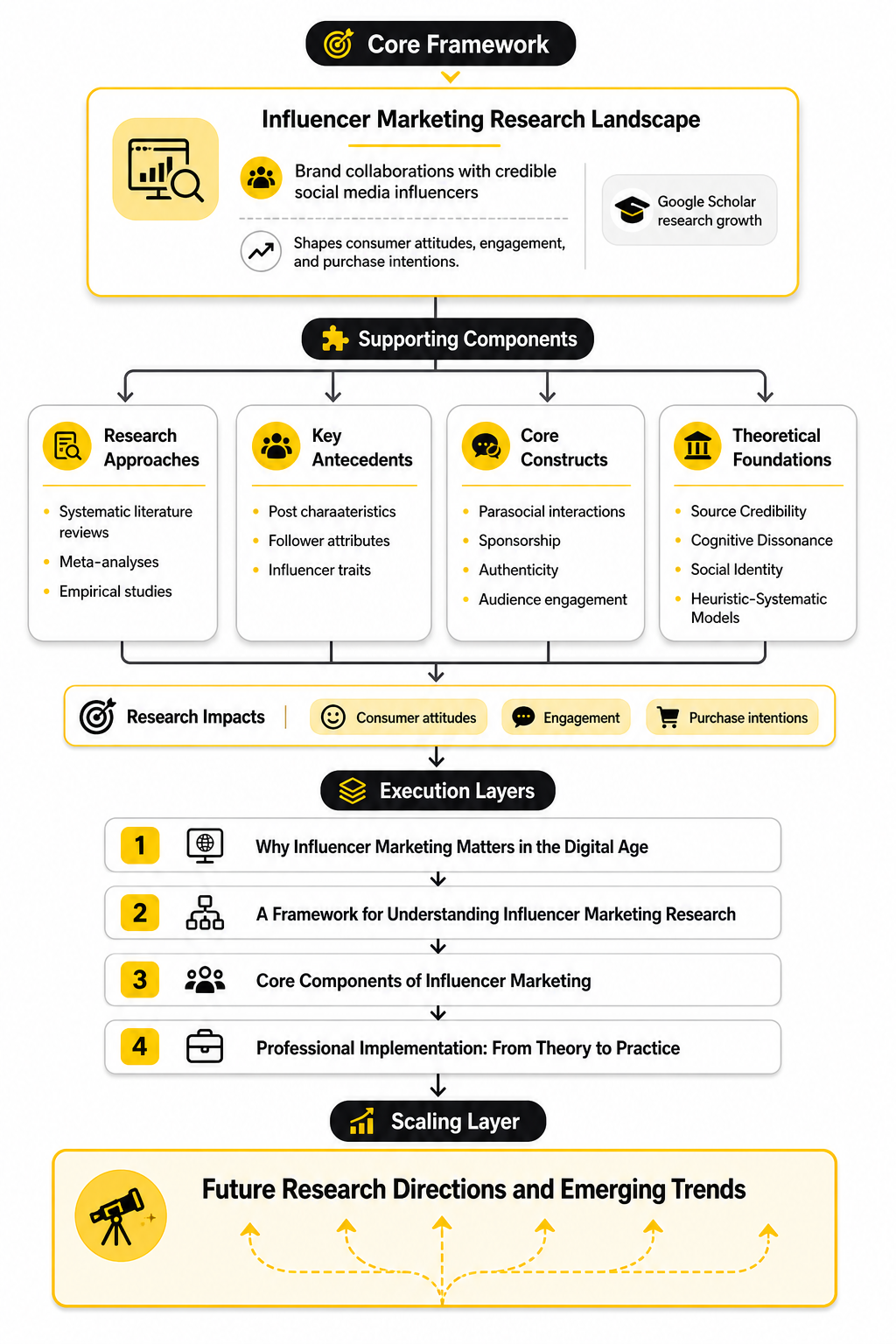
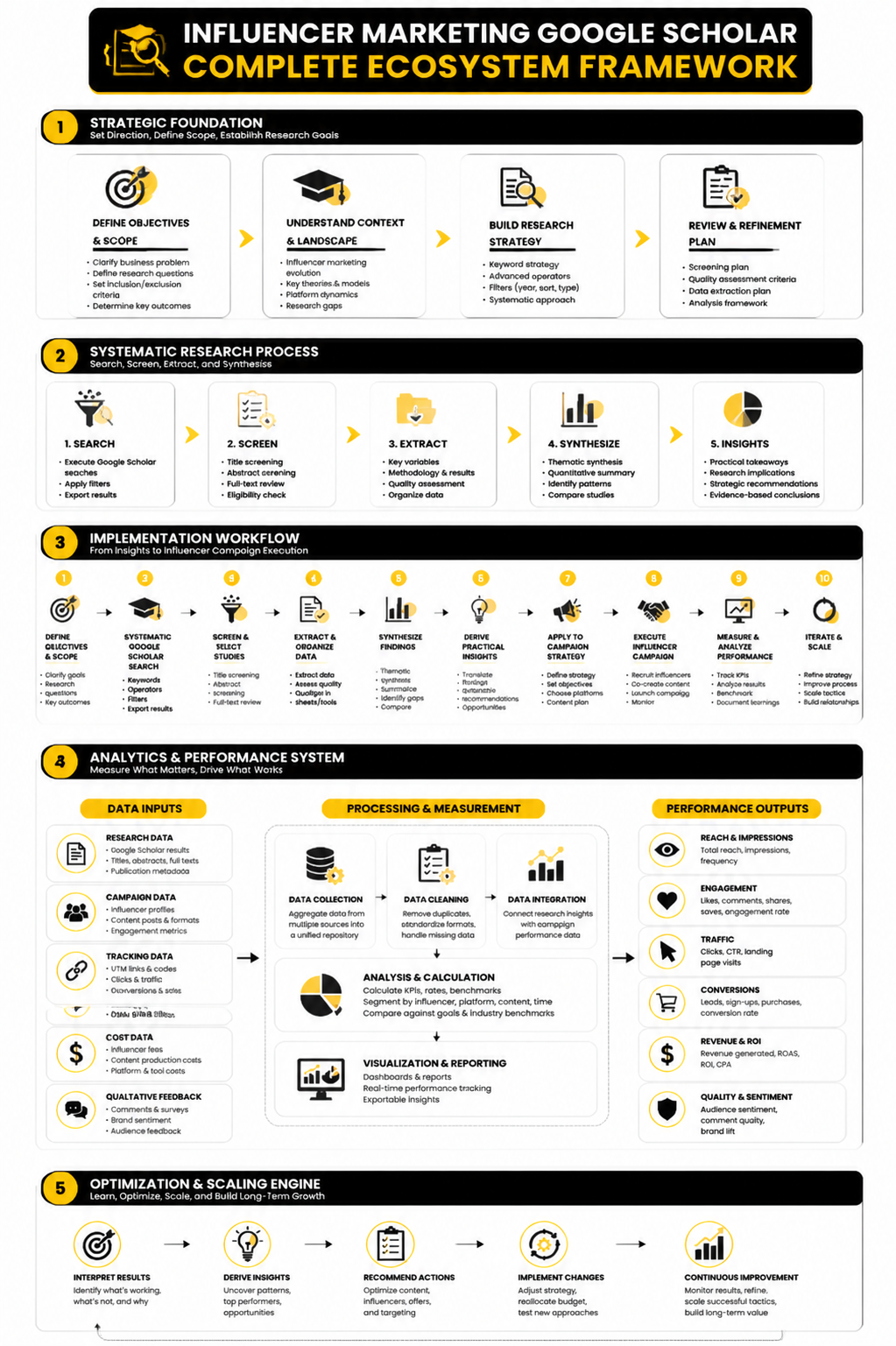
In subsequent sections, this guide will explore the importance of influencer marketing in the digital economy, present structured frameworks derived from academic research, identify core components that drive effectiveness, discuss professional implementation grounded in evidence, and finally chart future research directions that reflect ongoing scholarly inquiry.
Why Influencer Marketing Matters in the Digital Age
The rise of influencer marketing has reshaped the way brands connect with consumers, leveraging personal relationships between influencers and their followers. As traditional advertising methods like TV commercials and print media become less effective, influencer marketing has flourished in the digital space. Social media platforms like Instagram, TikTok, and YouTube have become powerful channels for influencers to shape public perception and drive consumer decisions.
Brands increasingly see the value in partnering with influencers who have built dedicated, loyal audiences. Research suggests that 49% of consumers rely on influencer recommendations to make purchasing decisions. This trend has led to a surge in investments in influencer marketing. Companies are not only trying to reach larger audiences but are also aiming for highly engaged consumers who trust the influencer’s opinion more than a brand’s direct messaging. As a result, influencer marketing is now an essential part of any comprehensive digital marketing strategy.
The effectiveness of influencer marketing goes beyond just increasing sales. It allows brands to tap into a community of followers that feels connected to the influencer, resulting in heightened levels of trust and engagement. Research has shown that influencer marketing can help improve brand awareness, foster brand loyalty, and influence the purchasing decisions of followers by leveraging this authentic connection. Moreover, the ability to track metrics such as engagement, clicks, and conversion rates has made influencer marketing a highly measurable and ROI-driven strategy.
A Framework for Understanding Influencer Marketing Research
To understand how influencer marketing works and how it affects consumer behavior, it is essential to establish a structured framework. A well‑designed research framework breaks down the complex elements of influencer marketing into smaller, more manageable components. It includes understanding key influencer attributes, audience profiles, content strategies, and the outcomes these strategies aim to achieve.
One widely used framework categorizes influencers into several tiers: micro, macro, and mega influencers. Micro influencers, often with a smaller, but highly engaged audience, tend to have more authentic and relatable content. In contrast, macro influencers may have a wider reach, but their audience may not be as engaged, reducing the authenticity of their influence. Mega influencers, including celebrities, have the broadest reach, but their influence can be seen as less personal.
Understanding the roles that content, audience type, and influencer characteristics play in the effectiveness of influencer marketing can help brands make more informed decisions. For example, research has shown that authenticity is one of the most crucial factors in a successful campaign. Audiences are more likely to engage with content that feels genuine, whether it's a product recommendation or a branded post. This underscores the importance of selecting influencers whose personal brand aligns with the company’s values.
The framework also includes analyzing how different platforms influence marketing outcomes. Instagram, for instance, is particularly effective for visual-driven campaigns, while YouTube excels in delivering long-form content that tells a deeper story. TikTok, on the other hand, is known for its viral nature, allowing brands to reach a younger, trend-sensitive audience.
Core Components of Influencer Marketing
Influencer marketing is multifaceted and encompasses various components that contribute to its success. Understanding these core elements is crucial for designing effective campaigns that can lead to measurable results. These components include the following:
1. Influencer Selection
Choosing the right influencer is critical to a campaign's success. Brands need to identify influencers whose values, style, and audience align with their own brand’s image. Research indicates that influencer fit, in terms of both content and values, has a significant impact on how well the audience receives the message. This requires not just assessing the size of the influencer’s following but also their engagement rates and audience demographics.
2. Content Creation
The content shared by influencers is what drives engagement. High-quality, relatable, and authentic content has been shown to be more effective in capturing audience attention and prompting action. The content should not only highlight the product but also fit seamlessly into the influencer’s usual posts, ensuring that it doesn’t disrupt the flow of their typical narrative.
3. Audience Engagement
Audience engagement is the backbone of influencer marketing. Campaigns that foster genuine interaction, such as responding to comments, running giveaways, or incorporating user-generated content, tend to see higher levels of success. Studies have shown that influencer marketing works best when the influencer encourages their followers to actively participate rather than passively view the content.
4. Measurement and Analysis
A successful influencer marketing campaign needs to be measurable. Brands should define clear goals (e.g., awareness, sales, engagement) and track relevant metrics. Tools that measure social media activity, such as likes, shares, comments, and click-through rates, help marketers understand how well the campaign is performing and adjust tactics if necessary.
These core components are integral to building a strategy that is both effective and sustainable. As the landscape continues to evolve, understanding these elements helps brands stay competitive in the digital marketplace.
Professional Implementation: From Theory to Practice
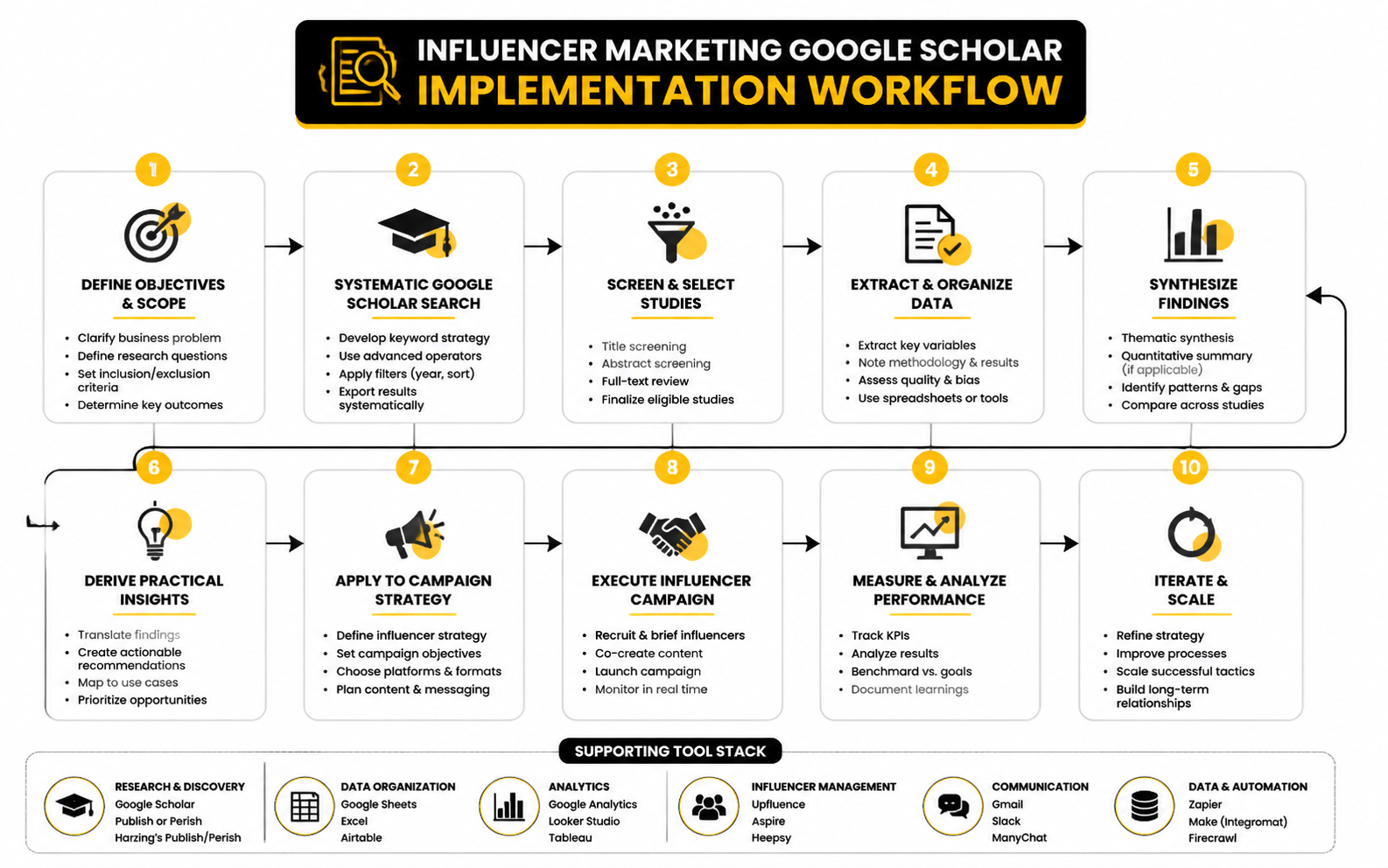
Influencer marketing is not just a theoretical concept; it’s a practical, actionable strategy that brands can implement to achieve significant outcomes. However, turning theoretical insights into effective execution requires a well-structured process, careful planning, and constant adjustment. Let’s break down the steps brands need to follow to implement influencer marketing effectively.
Step 1: Define Clear Objectives and Metrics
The first step in any influencer marketing campaign is to define clear, measurable objectives. These goals could range from increasing brand awareness, boosting sales, generating leads, or improving customer engagement. Once the objectives are clear, it is crucial to establish key performance indicators (KPIs) to track success. Metrics such as engagement rates (likes, shares, comments), conversion rates (clicks, sales), and reach (impressions, video views) are common indicators.
By defining these objectives upfront, brands ensure that they have a clear direction and can measure their efforts accurately. It also helps in selecting the right influencers whose audiences align with the campaign’s goals.
Step 2: Identify the Right Influencers
Choosing the right influencers is pivotal to campaign success. Influencers should be selected based on factors like relevance to the brand, audience size, engagement rate, and authenticity. A well-curated influencer selection process involves research into the influencer’s previous collaborations, the tone of their content, and the level of trust their followers place in them.
Influencers are not just chosen for the size of their following but also for their ability to resonate with the target audience. Micro-influencers, for example, tend to have smaller but more loyal and engaged audiences, making them a great choice for niche marketing. Meanwhile, macro or mega influencers can be considered for campaigns that aim to maximize reach and brand visibility.
Step 3: Develop Authentic and Engaging Content
Content is at the core of influencer marketing. The content created must feel authentic and align with the influencer's voice, ensuring that it resonates with their followers. Influencers should be given the creative freedom to incorporate the brand in a way that feels natural rather than forced.
Brands should collaborate closely with influencers to ensure that the message is clear, but they should avoid micromanaging the creative process. The content should be designed to engage followers, whether through storytelling, product demonstrations, or entertaining formats like challenges, giveaways, or contests. It’s important to remember that the goal is not just to inform but to build a connection between the brand and the influencer’s audience.
Step 4: Track and Analyze Campaign Performance
Once the campaign is live, it's essential to track its performance in real-time. This involves monitoring the pre-established KPIs and adjusting strategies as needed. Tools like Google Analytics, Instagram Insights, and third-party influencer platforms can provide detailed reports on the campaign’s success, including engagement metrics, traffic generation, and sales conversions.
Analyzing the data allows brands to see which aspects of the campaign are performing well and which are not. This feedback loop is crucial for improving future campaigns and ensuring that influencer marketing remains an effective tool for brand growth.
Step 5: Build Long-Term Relationships with Influencers
Influencer marketing should not be a one-off transaction. Building long-term relationships with influencers can lead to more authentic and successful campaigns. When influencers feel like valued partners, they are more likely to go above and beyond in promoting the brand, which results in greater trust from their followers.
These long-term partnerships are also beneficial for the brand. They allow for a consistent and ongoing brand narrative that doesn’t feel like sporadic, one-time promotions. The longer the partnership, the more the influencer’s audience begins to view the brand as a trusted entity.
Step 6: Adjust and Optimize for Future Campaigns
After a campaign ends, brands should evaluate the overall success and identify areas for improvement. This involves reflecting on what worked, what didn’t, and how to optimize future campaigns. It’s important to keep refining the approach, whether that means adjusting influencer selection criteria, altering content strategies, or exploring new platforms.
By continuously learning from each campaign, brands can adapt to changes in influencer marketing trends and maintain a competitive edge in an ever-evolving digital landscape.
Statistics and Data in Influencer Marketing
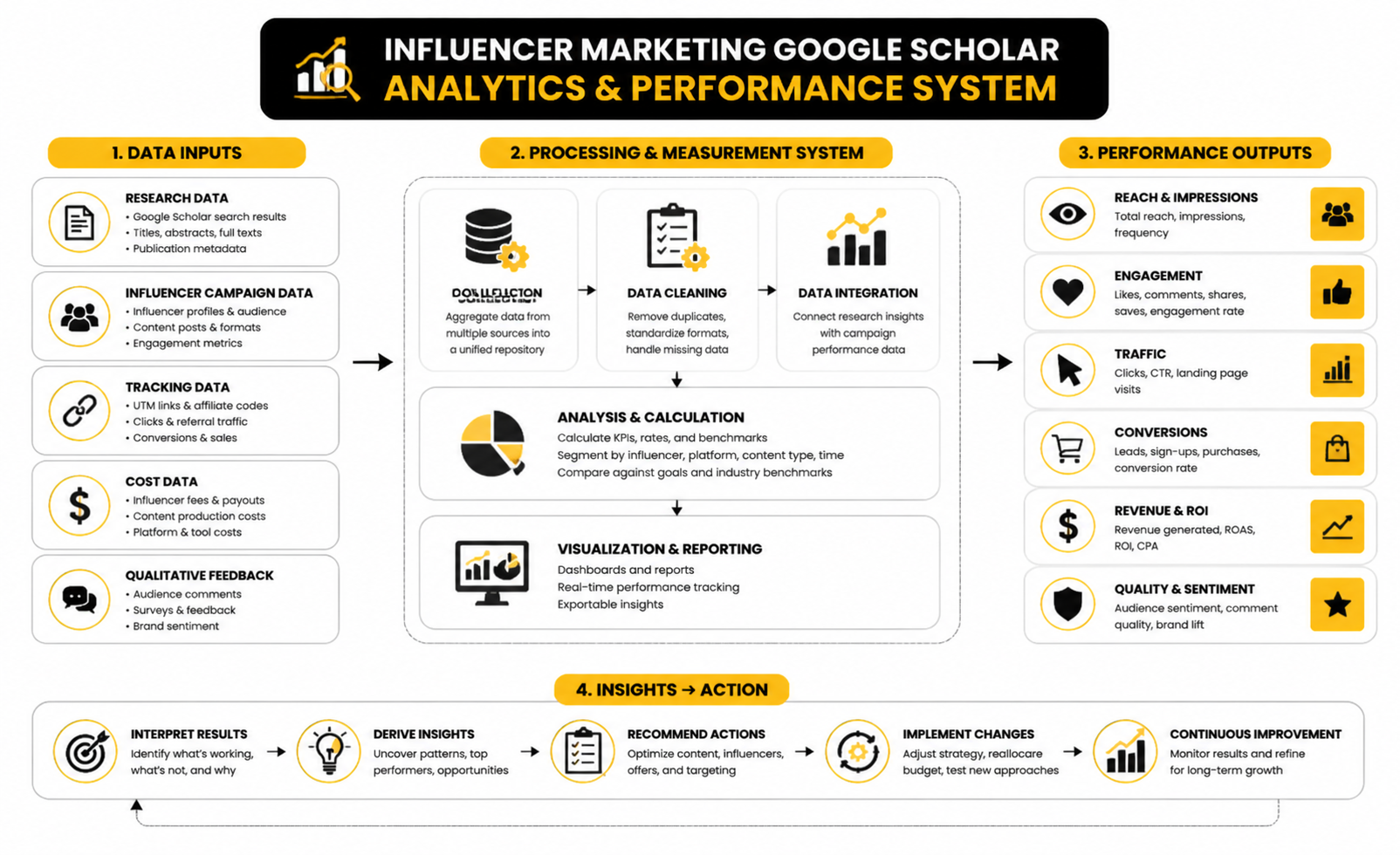
Influencer marketing has become a data-driven field, where measuring and analyzing campaign performance is essential to understanding its success. The data not only helps brands gauge the effectiveness of their campaigns but also informs decisions for future strategies. Let's break down some of the key metrics and performance signals that matter in influencer marketing, why they’re crucial, and how they should be interpreted.
Engagement Rate: A Key Signal of Success
Engagement rate is one of the most critical metrics in influencer marketing. This refers to the level of interaction (likes, comments, shares, etc.) that a piece of content receives in relation to the influencer's audience size. The engagement rate is often calculated as:
Engagement Rate=Total FollowersTotal Interactions (likes + comments + shares)×100
Why does this matter? A high engagement rate typically indicates that the influencer’s followers are actively interested and invested in the content they share. It’s often more valuable than just a large number of followers because engagement reflects the trust and connection the influencer has built with their audience. For instance, a micro-influencer with an engagement rate of 10% might be more effective in driving action than a macro-influencer with 2% engagement, even if their follower count is much higher.
Click-Through Rate (CTR) and Conversions
Click-through rate (CTR) measures how many people clicked on a link shared by the influencer compared to how many saw it. This is particularly important for campaigns where the goal is to drive traffic to a website or product page. For example, if the influencer shares a link to a product page, the CTR tells you how many people followed through to learn more or purchase.
A high CTR indicates that the content was compelling and relevant enough for followers to take the next step. However, it’s essential to go beyond just clicks and look at conversions—how many of those clicks actually resulted in purchases or sign-ups. A low CTR but high conversion rate might indicate that while fewer people are clicking, those who do are highly targeted and ready to make a purchase.
Return on Investment (ROI)
ROI in influencer marketing goes beyond the immediate metrics like likes and shares. It’s about understanding how much revenue was generated relative to the cost of the campaign. The formula to calculate ROI is:
ROI=Cost of CampaignRevenue from Campaign−Cost of Campaign×100
Understanding ROI is crucial for justifying influencer marketing expenditures. Brands must evaluate how the influencer’s influence directly contributed to their bottom line. This is particularly relevant for e-commerce brands where influencers may directly influence purchasing decisions.
Audience Insights and Demographics
Understanding the demographics of an influencer’s audience is essential for brands to assess whether they are reaching the right target market. Metrics such as age, gender, location, and interests of the influencer’s followers can help brands tailor their campaigns more effectively. For instance, if a beauty brand partners with a fitness influencer whose followers are predominantly male, the partnership may not be as effective as one with a female beauty influencer whose audience aligns with the brand’s target market.
Influencer Fit and Authenticity
Beyond numbers, the alignment between the influencer and the brand is crucial. Even the most impressive engagement numbers won’t matter if the influencer doesn’t authentically represent the brand or resonate with their audience. Authenticity is a key factor that can influence how the data is interpreted. Studies suggest that 80% of consumers are more likely to purchase a product recommended by an influencer they trust. This trust is often built over time through consistent, authentic interactions, which are harder to measure with raw numbers but can be just as powerful as any statistic.
Interpreting the Data: What Action Should Be Taken?
The ultimate goal of analyzing influencer marketing data is to take actionable insights that can improve future campaigns. Brands should regularly review key metrics like engagement, CTR, ROI, and audience demographics to see what’s working and what’s not.
For instance, if an influencer’s campaign shows high engagement but low conversions, it may indicate that the content needs to be more compelling in terms of driving sales or there may be a mismatch between the influencer’s content and the audience’s readiness to purchase. In such cases, adjusting the call to action or offering exclusive deals might boost conversions.
If the campaign’s ROI is low, it’s time to reassess the influencer’s fit, the platforms being used, or even the creative direction of the content. Over time, these insights help fine-tune strategies, improve relationships with influencers, and ultimately increase the effectiveness of influencer marketing as a whole.
Scaling and Advanced Considerations in Influencer Marketing
As influencer marketing continues to evolve, brands are faced with advanced challenges that go beyond simply finding the right influencer. In this section, we will explore some of the complexities involved in scaling influencer marketing efforts, strategic trade-offs, and expert-level guidance to maximize the long-term effectiveness of campaigns.
Scaling Influencer Marketing: Beyond the Basics
Scaling influencer marketing is a nuanced process that involves expanding campaigns from small, localized efforts to large, global initiatives. While small businesses often start by partnering with a handful of micro-influencers, larger companies eventually look to diversify their influencer portfolio. This means working with influencers across various categories, from micro to macro, in a more structured and systematic way.
When scaling, brands must ensure they maintain the authenticity and engagement that made smaller campaigns successful. One key challenge here is maintaining quality control. As the influencer roster expands, managing consistency across content quality, brand voice, and messaging can become increasingly complex. Brands need a reliable content approval process and should consider tools for automation and centralizing communication.
Strategic Trade-offs: Reach vs. Authenticity
A common dilemma brands face in influencer marketing is the trade-off between reach and authenticity. Mega-influencers, with their millions of followers, offer unmatched reach but often lack the deep connection that micro-influencers have with their audience. This raises an important question: which should brands prioritize?
If a brand’s goal is immediate visibility, mega-influencers may be the right choice. However, if the aim is to foster long-term customer relationships, micro-influencers might deliver a more profound impact due to their more personal, authentic connections with followers. Deciding which direction to go often depends on the specific goals of the campaign and the resources available. For brands that are just starting to scale their influencer marketing efforts, balancing both can be an effective strategy.
The Risks: Influencer Fraud and Brand Safety
As influencer marketing grows, so do the risks. One of the most prominent risks in the industry is influencer fraud, where influencers inflate their follower counts through bots or purchase fake engagement. Brands investing heavily in influencer marketing need to take steps to ensure that their influencers are genuine and deliver real value.
To mitigate this risk, brands should use advanced analytics tools to track engagement and verify authenticity. Some platforms now provide a "fraud detection" feature, analyzing an influencer’s following for signs of artificial growth. Additionally, ensuring the influencer's brand values align with the company’s is critical to avoid any potential reputation damage.
Expert Tips for Long-Term Success
To maximize the impact of influencer marketing, brands need to think beyond individual campaigns. Here are some expert-level tips for ensuring sustained success:
These advanced considerations ensure that influencer marketing remains a powerful tool as brands scale their efforts, helping them navigate the challenges that come with reaching larger audiences while maintaining authentic engagement.
1. What is influencer marketing?
Influencer marketing is a form of marketing where brands collaborate with influencers—individuals who have a significant following and influence on social media—to promote their products or services. The goal is to leverage the influencer's reach and credibility to increase brand awareness, trust, and sales.
2. How do I find the right influencer for my brand?
Finding the right influencer requires researching their audience demographics, engagement rate, content quality, and values. Platforms like Instagram, YouTube, and TikTok are popular places to start, but it’s essential to look for influencers whose followers match your target market. You can also use influencer platforms that provide analytics to help make data-driven decisions.
3. What are the main types of influencers?
Influencers are generally categorized into:
4. How much do influencers charge?
Influencer fees vary widely based on their follower count, engagement rate, and platform. Micro-influencers tend to charge less, while celebrities and mega-influencers command higher fees. On average, micro-influencers can charge a few hundred dollars per post, while mega-influencers may charge tens of thousands.
5. What metrics should I track in an influencer marketing campaign?
Key metrics include engagement rate (likes, comments, shares), click-through rate (CTR), conversions (sales or leads generated), return on investment (ROI), and audience demographics. These metrics help measure how effective the campaign is and how it drives business outcomes.
6. How do I know if an influencer is authentic?
To verify an influencer’s authenticity, check their engagement rates and look for any signs of inflated follower counts, such as sudden spikes or poor engagement despite a large following. Tools like Social Blade can help analyze influencer data and verify their legitimacy.
7. What is the difference between influencer marketing and traditional advertising?
Influencer marketing leverages the trust and influence of individuals with dedicated audiences, while traditional advertising relies on direct messaging through mediums like TV, radio, or print. Influencer marketing is often more personal and can lead to higher engagement, as consumers trust influencers more than brands themselves.
8. How do I measure the ROI of an influencer marketing campaign?
ROI is calculated by comparing the revenue generated from the campaign to the costs associated with it. The formula is:
ROI=CostRevenue−Cost×100
Tracking conversion metrics like sales, leads, and the cost per acquisition helps determine if the campaign was financially successful.
9. How can I scale influencer marketing?
Scaling influencer marketing involves working with a broader range of influencers (from micro to mega), experimenting with content formats and strategies, and using tools to manage multiple partnerships. Maintaining consistency in messaging and tracking performance across various campaigns is essential as you scale.
10. What are the biggest risks in influencer marketing?
The risks in influencer marketing include influencer fraud (e.g., fake followers or engagement), misalignment with brand values, and negative public reactions to influencer behavior. It’s crucial to vet influencers carefully, monitor campaign performance, and ensure clear communication about expectations.
Build a stronger local presence with BAAM AI
Turn your website, Google profile, social channels, and AI visibility into one growth engine
Most businesses do not need more random marketing activity. They need a consistent presence system that helps the right people find them, trust them, and take action. BAAM AI brings strategy, local SEO, website updates, Google Maps visibility, social content, AI-search readiness, media production, and reporting into one practical monthly engine.
If you want your marketing to keep working after the campaign ends, start with a free BAAM AI presence audit. See how your business shows up today and where the fastest visibility wins are at BAAM AI.