
BAAM AI Blog
Inbound Marketing on Social Media: A Comprehensive Guide
Inbound marketing is becoming increasingly critical in the age of social media. Unlike traditional marketing methods that interrupt potential customers, inbound marketing attracts them by creating relevant and...
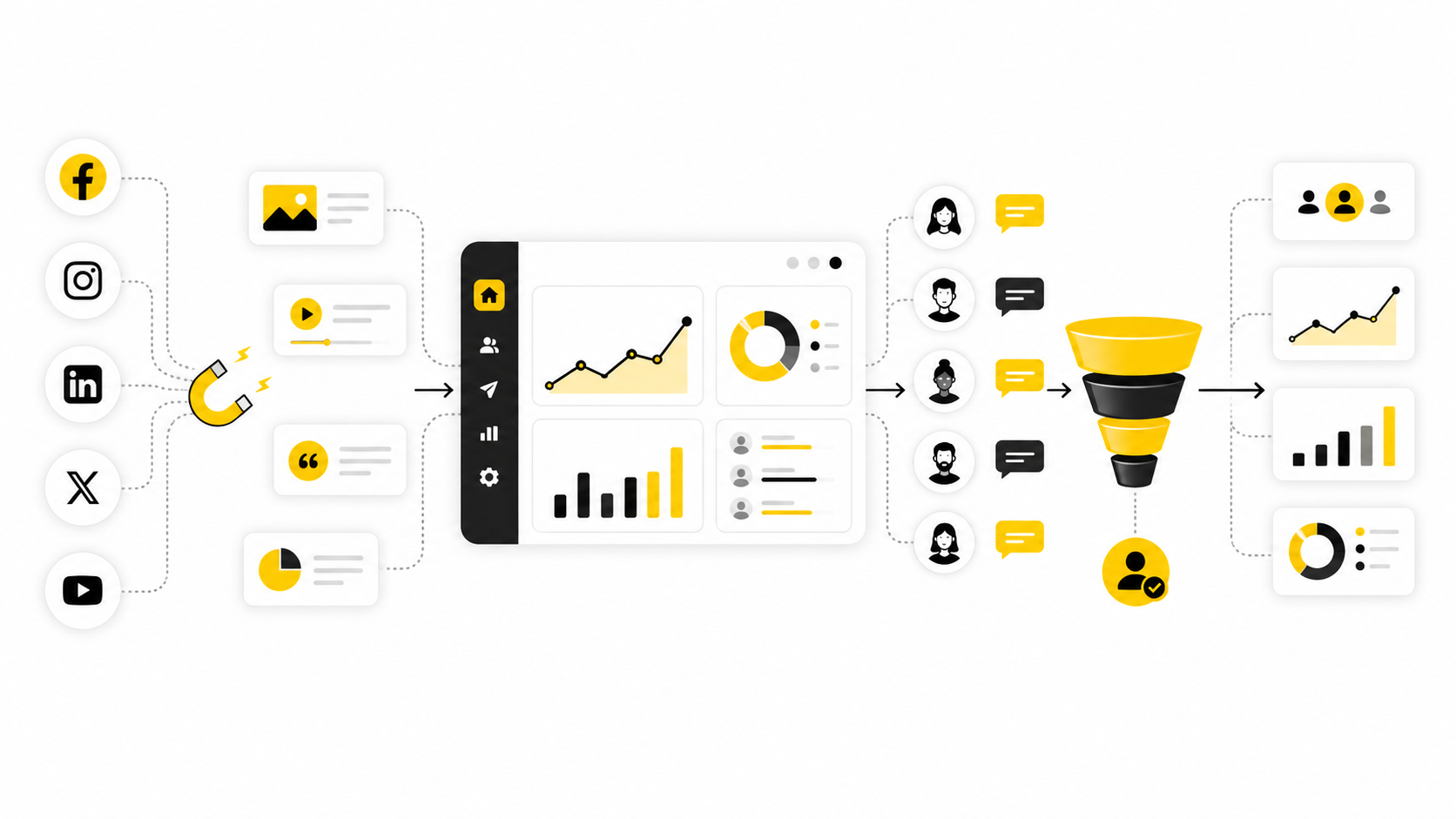
Why It Matters
Inbound marketing is becoming increasingly critical in the age of social media. Unlike traditional marketing methods that interrupt potential customers, inbound marketing attracts them by creating relevant and helpful content. By meeting your audience where they are on social platforms, you can guide them through a journey that builds trust and loyalty.
Social media offers the perfect environment for inbound marketing because of its wide reach, low cost, and ability to interact with customers in real-time. The best part? The people you reach on social platforms are already interested in topics related to your brand, making them more likely to engage with your content. This shift from outbound to inbound allows businesses to build long-term relationships that foster customer loyalty and increase lifetime value.
Framework Overview
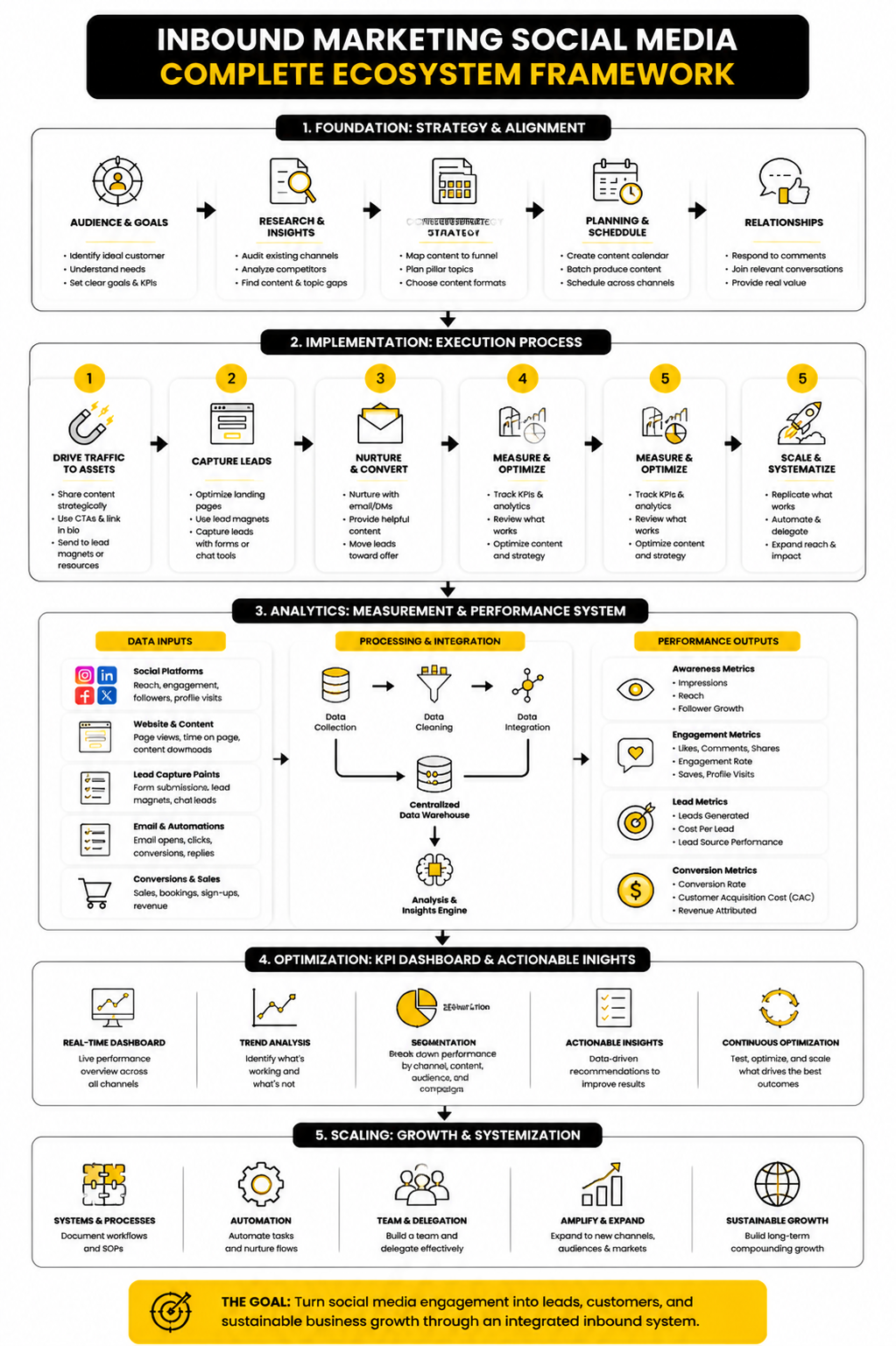
When implementing inbound marketing on social media, it's essential to follow a structured framework. This framework ensures that your efforts are systematic, measurable, and adaptable to your audience’s needs. It includes creating compelling content, attracting the right audience, engaging with them, and converting them into customers.
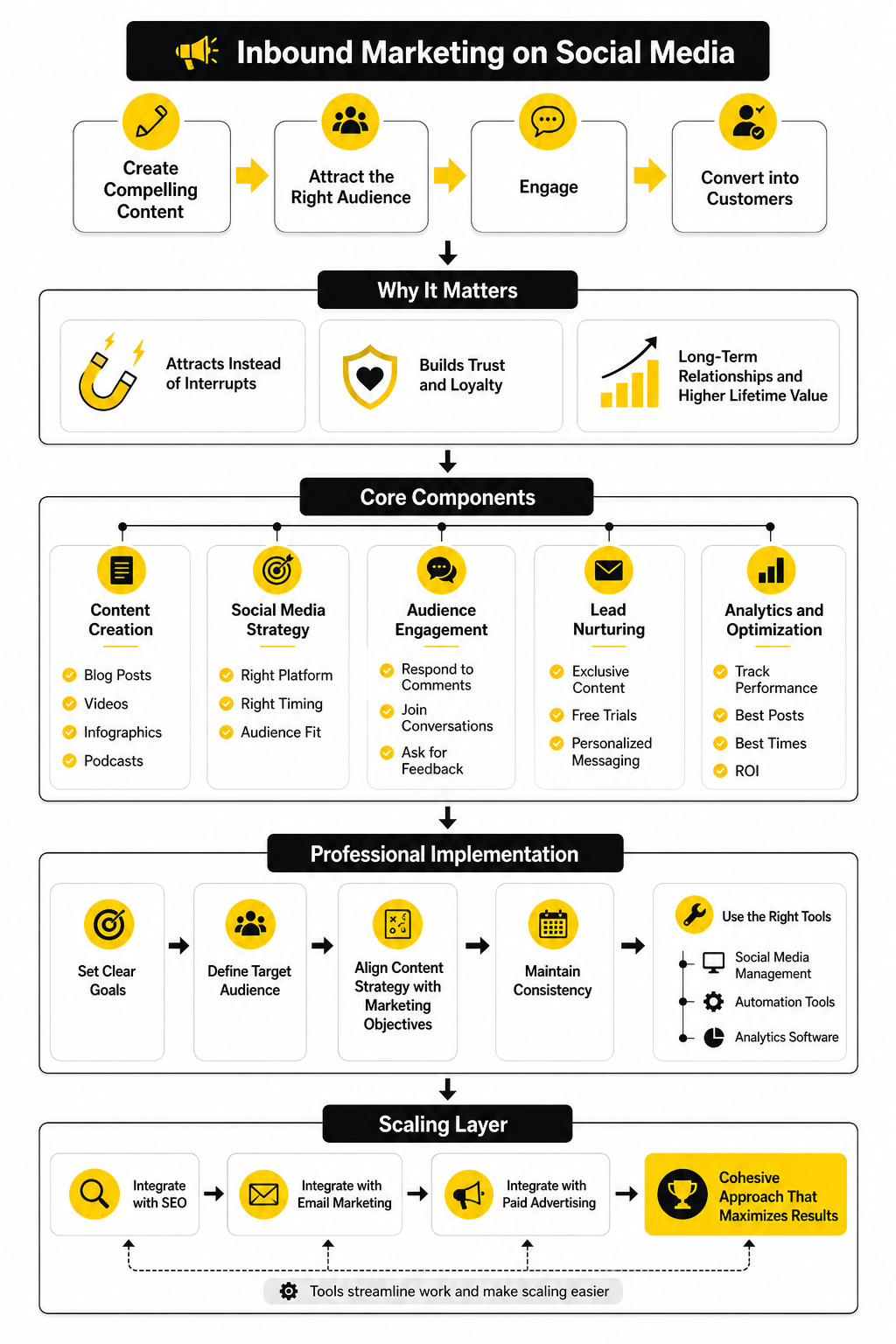
Core Components of Inbound Marketing on Social Media
The foundation of inbound marketing is creating valuable content that speaks to your audience’s pain points, needs, and interests. Whether it's blog posts, videos, infographics, or podcasts, content should be informative, engaging, and tailored to the preferences of your audience. The goal is to provide answers and solutions that resonate with your followers.
A well-crafted social media strategy ensures that your content is not only high-quality but also shared at the right times and on the right platforms. Platforms like Facebook, Instagram, LinkedIn, and Twitter each serve a unique purpose, so it's essential to understand where your target audience spends their time.
Building meaningful relationships with your audience is critical. Inbound marketing on social media is not a one-way street. Respond to comments, join conversations, and ask for feedback. Engagement helps increase brand visibility and trust.
Not every interaction on social media will immediately turn into a sale, but every interaction has the potential to build a relationship. Implementing lead nurturing tactics, such as offering exclusive content, free trials, or personalized messaging, helps convert followers into loyal customers.
Social media marketing requires ongoing monitoring and optimization. Use analytics to track which posts perform the best, what times are most effective for posting, and which platforms yield the highest ROI. This data helps refine your inbound marketing strategy for better results over time.
Professional Implementation
To effectively implement inbound marketing on social media, a professional approach is needed. This involves setting clear goals, defining your target audience, and aligning your content strategy with your overall marketing objectives. Consistency is key in maintaining an active social media presence and staying top of mind with your audience. Additionally, investing in the right tools—such as social media management platforms, automation tools, and analytics software—can streamline your efforts and make it easier to scale.
The professional implementation of inbound marketing involves aligning your social media efforts with other digital marketing tactics like SEO, email marketing, and paid advertising. By integrating these strategies, you can create a cohesive and comprehensive approach that maximizes your results.
How to Implement Inbound Marketing on Social Media Professionally
In Part 1, we explored why inbound marketing is crucial for businesses leveraging social media and introduced a foundational framework for success. Now, let's dive deeper into how to professionally implement inbound marketing on social media to achieve measurable, long-term results.
Setting Clear Goals and KPIs
A critical first step in any professional inbound marketing strategy is defining your goals. Without clear objectives, it’s impossible to measure success or optimize your approach. Start by determining what you want to achieve through your social media efforts—whether it's increasing brand awareness, generating leads, or driving sales.
Once your goals are clear, establish key performance indicators (KPIs) to measure progress. KPIs might include metrics like engagement rates, follower growth, website traffic, and conversion rates. Regularly track these metrics to assess whether your strategy is working and where adjustments might be needed.
Content Strategy and Creation
Content is at the heart of inbound marketing on social media. To implement it professionally, you must create a content strategy that aligns with your business goals and resonates with your target audience.
Begin by defining your content pillars—these are the broad topics that support your marketing objectives. For example, if you run a fitness brand, your content pillars might include fitness tips, nutrition advice, and motivational content. Each post should tie back to your brand’s core message and values while offering genuine value to your audience.
Next, develop a content calendar that outlines the timing, format, and platform for each piece of content. A well-organized content calendar ensures consistency in your posts and keeps your audience engaged over time. Content types can vary from blog posts, videos, and podcasts to infographics and user-generated content.
Engagement and Community Building
A successful inbound marketing strategy goes beyond just posting content; it’s about building a relationship with your audience. Engage with your followers by responding to comments, sharing user-generated content, and asking questions that encourage conversations.
Being responsive shows your audience that you value their input and fosters a sense of community. This can significantly increase the likelihood of turning followers into loyal customers. Additionally, using features like Instagram Stories or LinkedIn polls allows for real-time interaction and keeps the conversation going beyond static posts.
Leveraging Social Media Advertising
While inbound marketing focuses on organic growth, incorporating social media advertising can amplify your efforts. Social media platforms offer highly targeted ad options that can help you reach specific demographics and drive traffic to your content.
Consider using paid social ads to promote valuable content, such as eBooks, webinars, or exclusive offers. These ads should align with your organic content strategy, acting as a natural extension rather than a disruption. Additionally, using retargeting ads allows you to reconnect with users who have interacted with your content but haven’t yet converted.
Tools and Automation for Efficiency
To scale your inbound marketing efforts effectively, invest in tools and automation platforms that streamline processes. Social media management tools like Hootsuite, Buffer, and Sprout Social allow you to schedule posts, monitor engagement, and analyze performance—all in one place. Automation tools can also help nurture leads by sending personalized messages or content based on user behavior.
By automating repetitive tasks, you free up time for more strategic work, such as engaging with your community and analyzing campaign results. This efficiency is key to executing a professional inbound marketing strategy that’s both impactful and sustainable over time.
Analytics and Optimization
Finally, no inbound marketing strategy is complete without ongoing analysis and optimization. Regularly review your analytics to identify which content is performing best and which platforms are driving the most engagement. Use these insights to refine your strategy, improve underperforming areas, and test new approaches.
Tools like Google Analytics, native platform insights (e.g., Facebook Insights, Twitter Analytics), and social listening tools can provide valuable data. Use this information to optimize your content calendar, adjust ad targeting, and enhance audience engagement strategies.
By continuously measuring and optimizing your approach, you’ll ensure your social media efforts are as effective as possible, helping your business grow and thrive in an ever-changing digital landscape.
Executing Inbound Marketing on Social Media: A Step-by-Step Guide
Now that we’ve laid the foundation for inbound marketing and explored how to implement it professionally, it's time to look at the execution process. This section will break down the actionable steps you need to take to execute your inbound marketing strategy on social media successfully. From planning to execution, each step will help ensure that your efforts are structured and targeted for maximum results.
Step 1: Develop Your Content Calendar
A content calendar is crucial for organizing and planning your social media activities. This calendar should include the types of content you'll publish, when you'll post, and on which platforms. It’s important to align your content schedule with your audience's habits and preferences.
Start by mapping out monthly themes or campaigns that align with your business goals. For example, if your business is focused on product launches, build your content calendar around the lead-up to those events. Include content types such as blog posts, videos, infographics, polls, and stories. Make sure your content is varied to maintain interest across different platforms.
Step 2: Create and Curate Engaging Content
The next step in your inbound marketing process is creating content that will resonate with your audience. Whether you’re creating original content or curating content from other sources, your posts should aim to educate, entertain, or inspire your followers.
Always remember, quality matters more than quantity. Each piece of content should align with your brand values and be visually appealing.
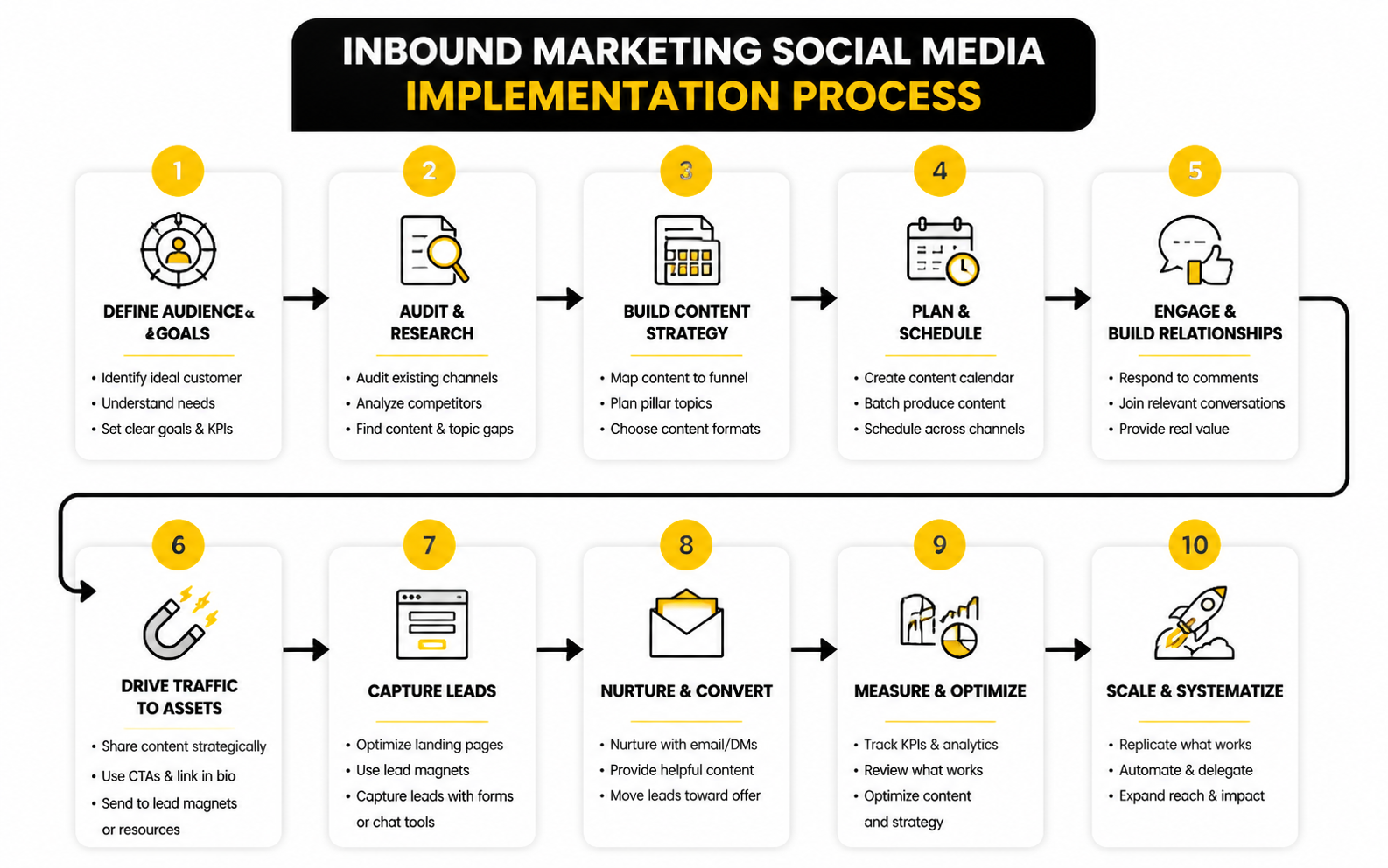
Step 3: Optimize for Each Platform
Different social media platforms have different audiences and content consumption behaviors. It’s important to optimize your content for each platform rather than posting the same thing everywhere.
Tailor your approach to each platform's strengths to maximize engagement and effectiveness.
Step 4: Engage with Your Audience
Once your content is live, it’s essential to engage with your audience. Respond to comments, questions, and mentions promptly. Social media isn’t just about broadcasting; it’s about creating a two-way dialogue. By responding to your audience, you build trust and show that you care about their feedback.
Use social listening tools to track conversations about your brand and your industry. This can help you identify opportunities to engage with potential customers and address concerns before they become larger issues.
Step 5: Monitor, Measure, and Optimize
Execution isn’t a one-and-done process; it requires constant monitoring and optimization. Use social media analytics tools to track the performance of your posts. Look at engagement rates, click-through rates, and conversion rates to understand what content is resonating most with your audience.
Once you have data, make adjustments. For example, if you notice that video content performs better than images, increase your video content output. Continuously test and tweak your content strategy based on real-time feedback.
The key here is to never stop optimizing. Social media trends change quickly, so your strategy should be flexible enough to adapt.
By following these steps, you'll be able to execute your inbound marketing strategy on social media effectively, building a strong brand presence, increasing engagement, and driving conversions over time.
Measuring Success: Analytics and Key Performance Indicators (KPIs)
Now that you’ve implemented inbound marketing on social media, it’s time to measure the success of your efforts. Analytics and data play a crucial role in understanding whether your strategy is working or if adjustments are needed. In this section, we’ll break down key metrics, how to interpret them, and the actions you should take based on what the data tells you.
Key Metrics to Track
To effectively evaluate the success of your inbound marketing efforts, you need to focus on a few critical performance indicators. Here are some key metrics to monitor:
Engagement is the backbone of inbound marketing on social media. Engagement rate refers to the level of interaction (likes, comments, shares, etc.) your content receives relative to your audience size. A high engagement rate indicates that your content resonates with your audience, while a low rate might suggest that it’s not capturing their interest.
Action: If engagement is low, refine your content strategy by analyzing what types of posts (e.g., videos, polls, or infographics) generate the most interaction.
CTR is the percentage of people who click on a link in your post compared to how many saw it. It’s a critical metric for understanding how well your content drives traffic to your website or landing pages.
Action: A low CTR could mean your call-to-action (CTA) isn’t compelling enough or that the link you’re promoting isn’t relevant to the audience. Test different CTAs or link placements to improve results.
The conversion rate measures how many of your social media interactions lead to a specific action, such as signing up for a newsletter or making a purchase. This is the ultimate goal of inbound marketing—turning followers into customers.
Action: If your conversion rate is low, consider optimizing your landing pages or offering more valuable incentives (e.g., free trials or exclusive content) to encourage conversions.
Tracking how your follower count increases over time is essential for understanding if your content is gaining traction. A healthy follower growth rate indicates that your social media presence is expanding and attracting new potential customers.
Action: If your follower growth is stagnating, try running social media ads to increase visibility or host giveaways and contests to encourage engagement and shares.
These metrics indicate how many people have seen your content. Reach refers to the number of unique individuals who saw your posts, while impressions show how many times the post was viewed in total. Both metrics are essential for understanding your brand’s visibility.
Action: Low reach could indicate that your content isn’t being shared enough. Boosting your posts or collaborating with influencers in your industry can help expand your reach.
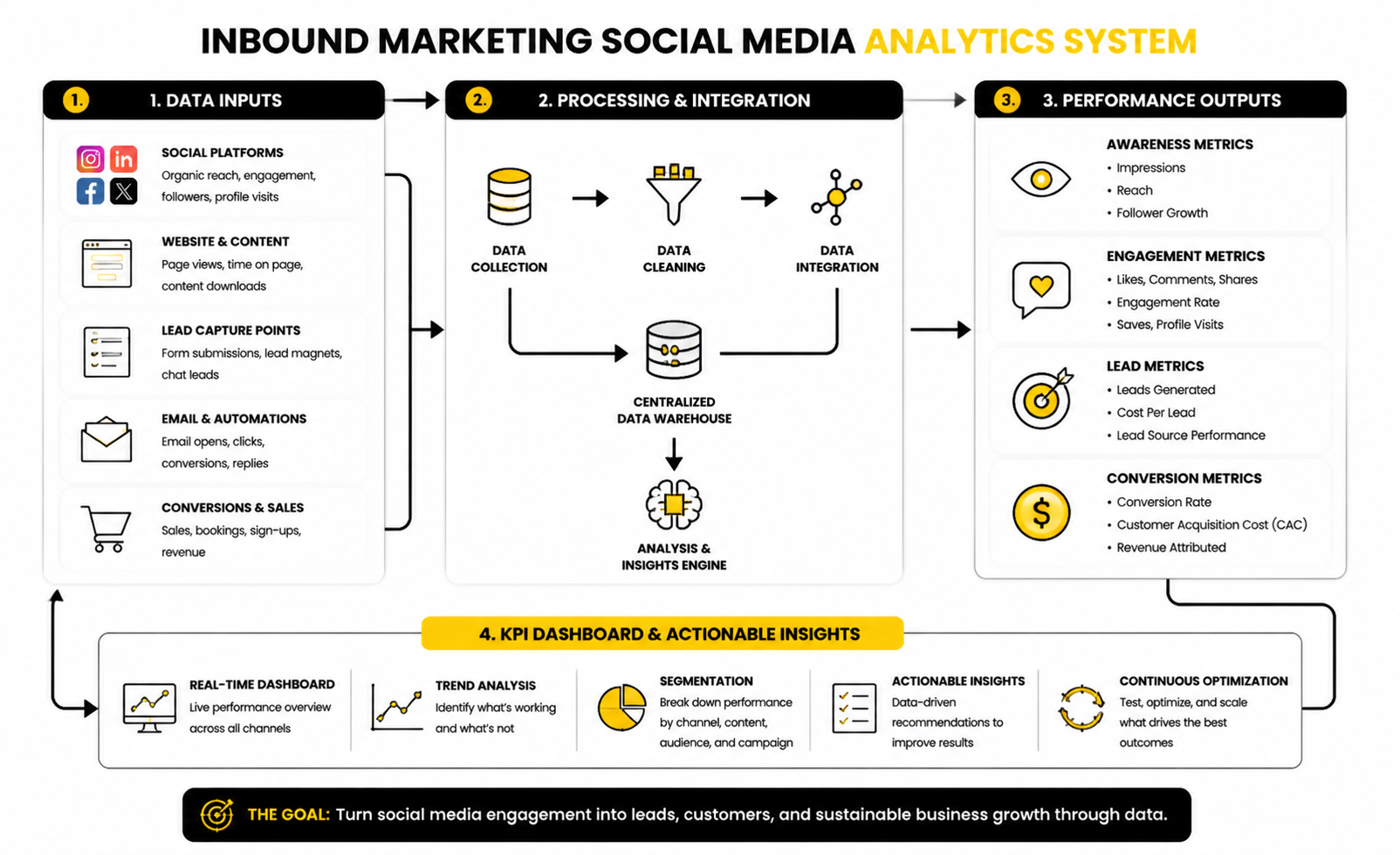
Interpreting the Data: What Do These Numbers Really Mean?
The numbers you track tell a story about how your audience is interacting with your content. But it's not enough to just look at the data—you need to understand what it signifies and what actions to take based on the insights.
For example, if your engagement rate is high but your conversion rate is low, it could mean that people enjoy your content but aren’t taking the next step toward becoming a customer. In this case, refining your CTA or providing better incentives might be the next step to turn engagement into conversion.
On the other hand, if you notice a drop in follower growth, it could suggest that your content is no longer resonating with your audience. This is where audience research and content refreshment come into play. Use analytics tools to track demographics and adjust your messaging accordingly.
Tools for Social Media Analytics
To collect and analyze this data effectively, you’ll need the right tools. Popular social media management platforms like Hootsuite, Sprout Social, and Buffer allow you to track engagement, clicks, conversions, and other metrics across multiple platforms. These tools consolidate your social media performance, making it easier to monitor trends and make adjustments as needed.
By regularly tracking these metrics and analyzing the trends, you can make data-driven decisions that will continuously improve your inbound marketing efforts on social media. Always remember: numbers without context aren’t useful, but when interpreted correctly, they can guide you to greater success.
Scaling and Advanced Considerations for Inbound Marketing on Social Media
As your inbound marketing efforts begin to generate results, scaling those efforts becomes a key focus. But scaling requires more than simply increasing the volume of content you produce. It involves strategic decision-making to optimize resources, fine-tune your approach, and handle potential risks. In this section, we will discuss advanced considerations for scaling your inbound marketing on social media, including common trade-offs and the strategic adjustments needed to continue growing.
Scaling Challenges and Trade-offs
As you scale, maintaining the quality of your content becomes increasingly difficult. It’s tempting to prioritize quantity—posting more frequently, running more ads, or engaging in numerous partnerships—but sacrificing quality can dilute your brand’s voice and impact.
Action: Focus on creating highly engaging, well-crafted content, even if it means posting less frequently. This ensures your messaging remains consistent, on-brand, and impactful.
Scaling your social media efforts typically means expanding your team or investing in technology, such as social media management tools. However, scaling too quickly without the right resources can lead to inefficiency and mismanagement.
Action: Invest in training for your team to maintain consistency and quality at scale. Consider using tools like Hootsuite or Buffer to automate tasks, freeing up time for more strategic work. Start small, test your process, and adjust as necessary before fully committing to scaling.
As your social media presence expands, you might be tempted to join every social platform available. While diversifying is important, trying to spread yourself too thin can result in burnout and inconsistent messaging.
Action: Prioritize platforms where your target audience is most active. For instance, B2B brands may find LinkedIn more effective, while lifestyle brands might thrive on Instagram. Focus your efforts on a few key platforms and do them well before branching out to others.
Expert-Level Strategy Adjustments
One of the hallmarks of inbound marketing is the personal connection you create with your audience. As you scale, personalization becomes harder, but it’s not impossible. Tools like chatbots and email automation can help tailor content and responses to each individual.
Action: Use dynamic content features on social media platforms (e.g., Facebook’s dynamic ads) to deliver personalized experiences. Consider using tools like ManyChat or GoHighLevel for segmentation and personalized follow-ups to keep your interactions relevant and engaging.
As you scale, UGC becomes a powerful tool for maintaining authenticity and increasing brand engagement. Encouraging your followers to share their experiences with your brand helps create a sense of community and can serve as social proof.
Action: Run hashtag campaigns, contests, or challenges that incentivize users to share content about your brand. UGC can be shared on your platforms, adding to your content pool while fostering customer loyalty.
Scaling also requires continuous optimization. Running A/B tests on everything from post copy to images to CTAs can help you identify the most effective strategies. As you expand your efforts, the insights from these tests are invaluable for ensuring your content resonates with a larger audience.
Action: Implement a structured testing plan where you experiment with different types of content, posting times, and engagement tactics. Use insights from these tests to fine-tune your approach and keep improving your performance.
Risks of Scaling Social Media Inbound Marketing
While scaling inbound marketing on social media has great potential, it also comes with certain risks:
To mitigate these risks, maintain a balance between scaling efforts and monitoring audience feedback. Regularly check analytics to ensure your strategy remains aligned with your audience’s needs.
The Path Forward: Sustainable Growth
The goal of scaling inbound marketing on social media isn’t just about increasing reach—it’s about sustaining long-term, authentic engagement. By focusing on quality, using the right tools, and making strategic adjustments, you can grow your social media presence without sacrificing the values that make inbound marketing successful. By carefully managing trade-offs and risks, you ensure your growth is sustainable and impactful.
1. What is inbound marketing on social media?
Inbound marketing on social media refers to the strategy of attracting, engaging, and delighting potential customers by sharing valuable content on social platforms. It’s about creating connections, not just pushing products.
2. How does inbound marketing differ from traditional marketing?
Traditional marketing often interrupts the audience, such as through cold calls or ads, while inbound marketing pulls them in through useful content. Inbound focuses on creating long-term relationships, whereas traditional marketing is more transactional.
3. Why is inbound marketing important for businesses?
Inbound marketing helps businesses attract their ideal customers by addressing their needs and pain points. It fosters trust and loyalty, which leads to long-term relationships and higher conversion rates.
4. Which social media platforms are best for inbound marketing?
The best platforms depend on your target audience. For B2B marketing, LinkedIn is great, while B2C brands might see more success on Instagram, Facebook, or TikTok. Choose platforms where your audience is most active.
5. How often should I post content on social media?
Consistency is more important than frequency. Aim to post consistently but prioritize quality over quantity. For many brands, posting 3-5 times per week is enough to stay top of mind without overwhelming followers.
6. What types of content work best for inbound marketing on social media?
Educational content such as blogs, how-to videos, and infographics works well. Also, engaging content like polls, stories, and behind-the-scenes glimpses can help build deeper connections with your audience.
7. How can I measure the success of my social media inbound marketing efforts?
Use metrics like engagement rate, click-through rate (CTR), conversion rate, and follower growth to track success. Tools like Google Analytics, Hootsuite, and native platform insights can help gather data.
8. What is the role of content personalization in inbound marketing?
Personalized content helps create a deeper connection with your audience by delivering tailored messages. Tools like chatbots, dynamic content features, and segmentation can help deliver personalized experiences at scale.
9. Can I scale inbound marketing on social media without losing quality?
Yes, but it requires strategy. Focus on automating repetitive tasks, using analytics to guide decisions, and ensuring your team stays aligned with your core brand message to maintain quality as you scale.
10. What are common mistakes to avoid when implementing inbound marketing?
Some common mistakes include not tracking analytics, creating content that doesn’t align with your audience's interests, neglecting to engage with followers, and failing to optimize content for each platform.
Build a stronger local presence with BAAM AI
Turn your website, Google profile, social channels, and AI visibility into one growth engine
Most businesses do not need more random marketing activity. They need a consistent presence system that helps the right people find them, trust them, and take action. BAAM AI brings strategy, local SEO, website updates, Google Maps visibility, social content, AI-search readiness, media production, and reporting into one practical monthly engine.
If you want your marketing to keep working after the campaign ends, start with a free BAAM AI presence audit. See how your business shows up today and where the fastest visibility wins are at BAAM AI.