
BAAM AI Blog
Inbound Email Marketing Strategy
Effective inbound email marketing is a game changer in the digital marketing landscape, particularly when it comes to nurturing leads, building relationships, and driving conversions. By crafting personalized email...
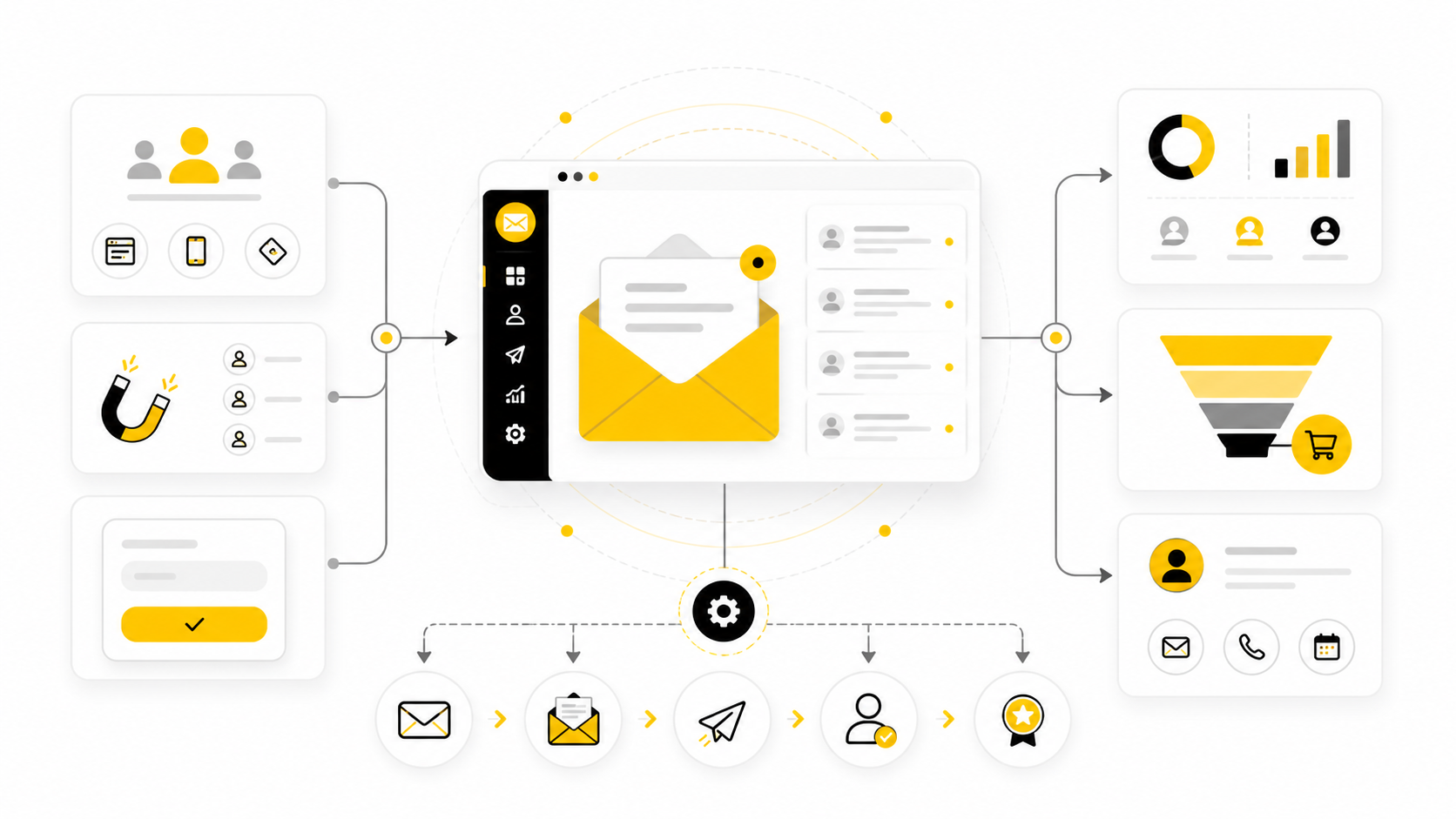
Effective inbound email marketing is a game changer in the digital marketing landscape, particularly when it comes to nurturing leads, building relationships, and driving conversions. By crafting personalized email campaigns that resonate with your target audience, businesses can foster deeper connections while delivering value. This approach, grounded in permission-based marketing, allows brands to engage with recipients in a way that feels authentic and relevant.
Outline:
Why It Matters
Inbound email marketing is pivotal because it focuses on building trust over time with your audience. Rather than interrupting potential customers with cold outreach, inbound email marketing offers value that aligns with their interests, making them more receptive to your messages. According to a recent study, email marketing continues to offer one of the highest ROI among digital marketing channels, with businesses seeing an average return of $42 for every dollar spent.
This strategy leverages the permission of the recipient, giving you an invaluable advantage. With more than 4 billion email users worldwide, the ability to target the right people with tailored messaging is critical. Not only does it foster better relationships, but it also aligns perfectly with modern privacy and personalization demands.
Framework Overview
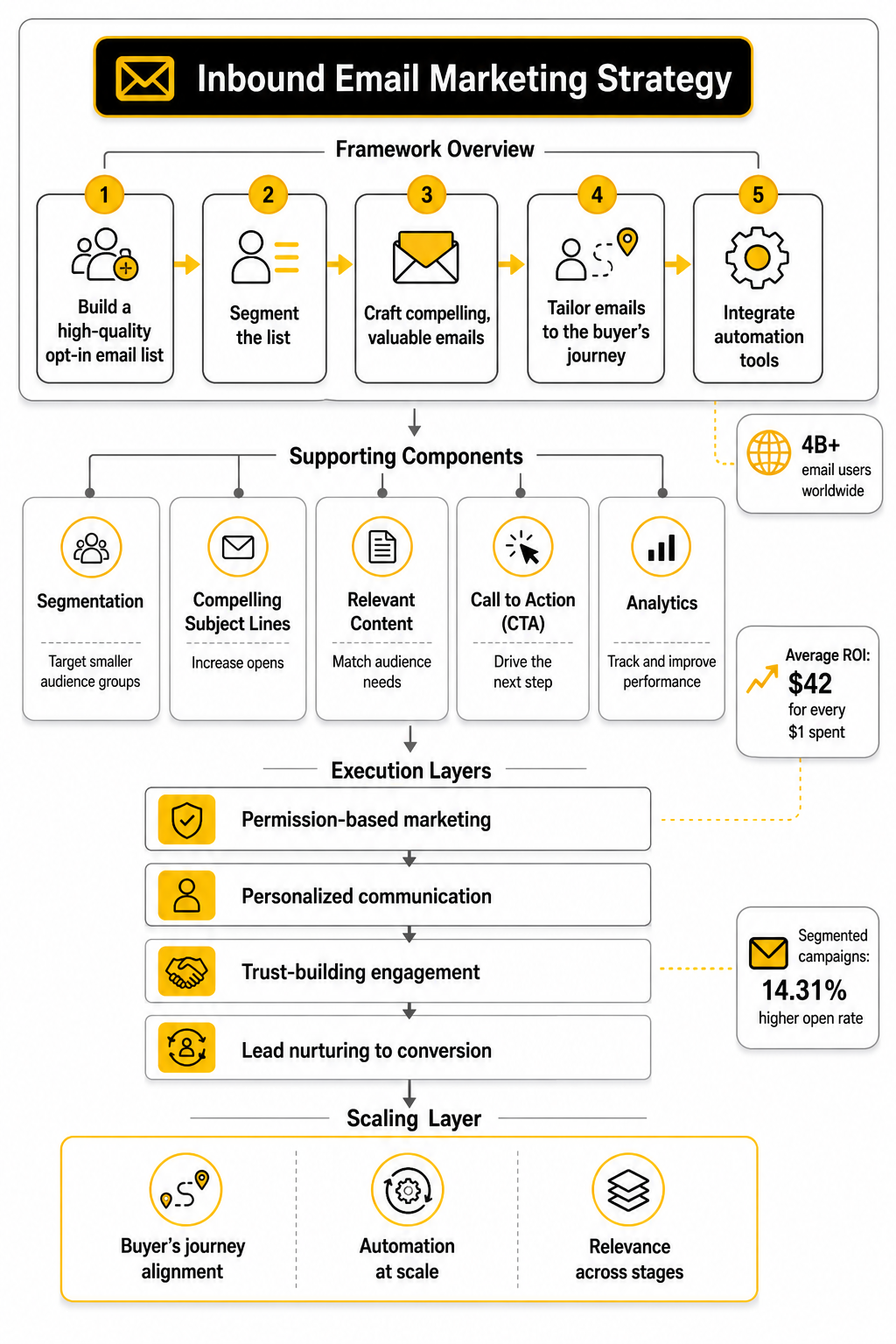
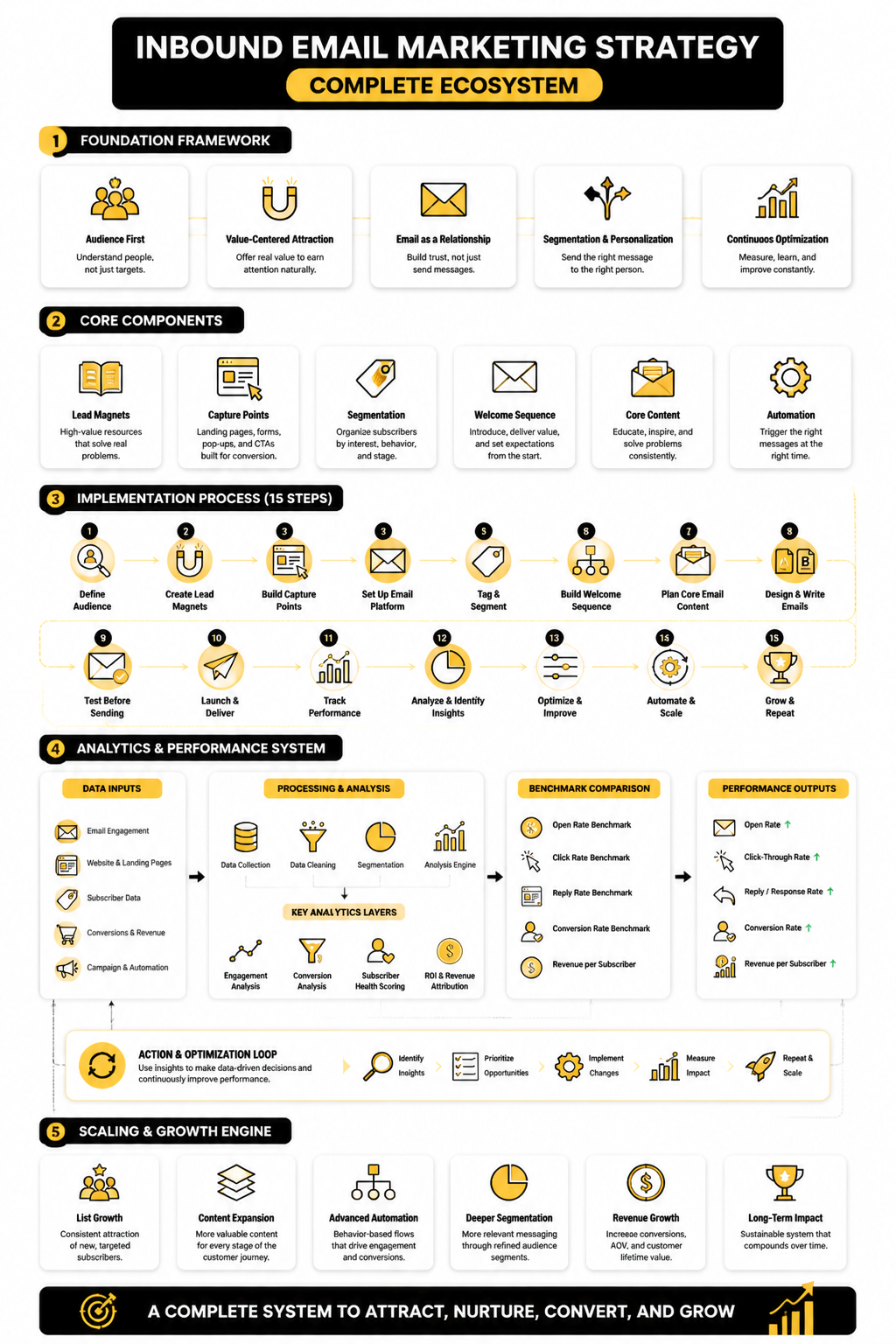
An effective inbound email marketing strategy begins with a well-structured framework. First, you must build a high-quality email list that consists of people who have opted into receiving your communications. Next, segment that list to ensure that you’re sending the most relevant content to each subscriber. From there, you’ll craft compelling, valuable emails designed to convert leads into customers.
The key to this framework is understanding the buyer's journey. Emails should be tailored to different stages—whether they’re just discovering your brand or are ready to make a purchase. Additionally, integrating automation tools can streamline the process, helping you send personalized messages at scale without sacrificing quality.
Core Components
To develop a successful inbound email marketing strategy, you must master a few core components:
The combination of segmentation, engaging content, and strategic calls to action ensures that your inbound email marketing strategy remains effective and scalable.
Professional Implementation
Once the foundation of your inbound email marketing strategy is set, it's time to move into professional implementation. This stage requires careful planning and execution to ensure that your efforts translate into measurable results. Professional implementation involves integrating advanced tools, building automation flows, and consistently optimizing campaigns based on real-time data.
A successful email marketing campaign is not just about sending emails—it's about sending the right message at the right time to the right person. By leveraging automation tools like ManyChat, businesses can save time while maintaining personalized communication with their audience.
Automation and Segmentation
At the core of professional implementation is automation. By setting up email sequences that are triggered by specific actions or timeframes, you can ensure that your emails reach the right audience at the right moment. Automation tools help streamline this process, allowing you to create workflows that nurture leads, provide educational content, and drive conversions without needing manual intervention.
In tandem with automation, segmentation plays a critical role. The more granular you can get with segmentation, the more effective your emails will be. Divide your list based on behaviors, interests, geographic location, purchase history, or engagement levels. For instance, someone who has downloaded a lead magnet may benefit from a different email series compared to a first-time visitor.
Email Design and Copywriting
The next key element of professional implementation is the design and copy of your emails. You don’t need to be a designer, but using a clean, responsive design ensures your emails are easy to read on any device. Tools like Replo can help create visually appealing and user-friendly email templates that maintain consistency with your branding.
Copywriting is equally crucial. Each email must be strategically crafted to provide value, spark interest, and encourage action. Focus on delivering clear, concise messaging. Use compelling subject lines to increase open rates, and always include a call to action that aligns with the email’s purpose.
Testing and Optimization
Even the best-laid email campaigns require testing to ensure optimal performance. A/B testing, for instance, allows you to test different subject lines, CTAs, or even sending times to see what resonates most with your audience. Make sure to analyze results regularly and adjust your strategy accordingly.
One area often overlooked is email deliverability. No matter how compelling your content is, it won’t matter if your emails are ending up in spam folders. Make sure you’re following best practices for list hygiene and using tools like Moosend to maintain a healthy sender reputation. Monitoring your email deliverability can directly impact the success of your strategy.
By taking a strategic approach to implementation, including automation, segmentation, and constant optimization, you can improve your inbound email marketing to a level that drives growth, improves engagement, and increases conversions. This level of professionalism will ensure long-term success.
Execution Process: Step-by-Step Guide
Now that you have a clear understanding of the components necessary for a successful inbound email marketing strategy, it’s time to break down the execution process. This step-by-step guide will provide you with a clear framework to start implementing your strategy with precision.
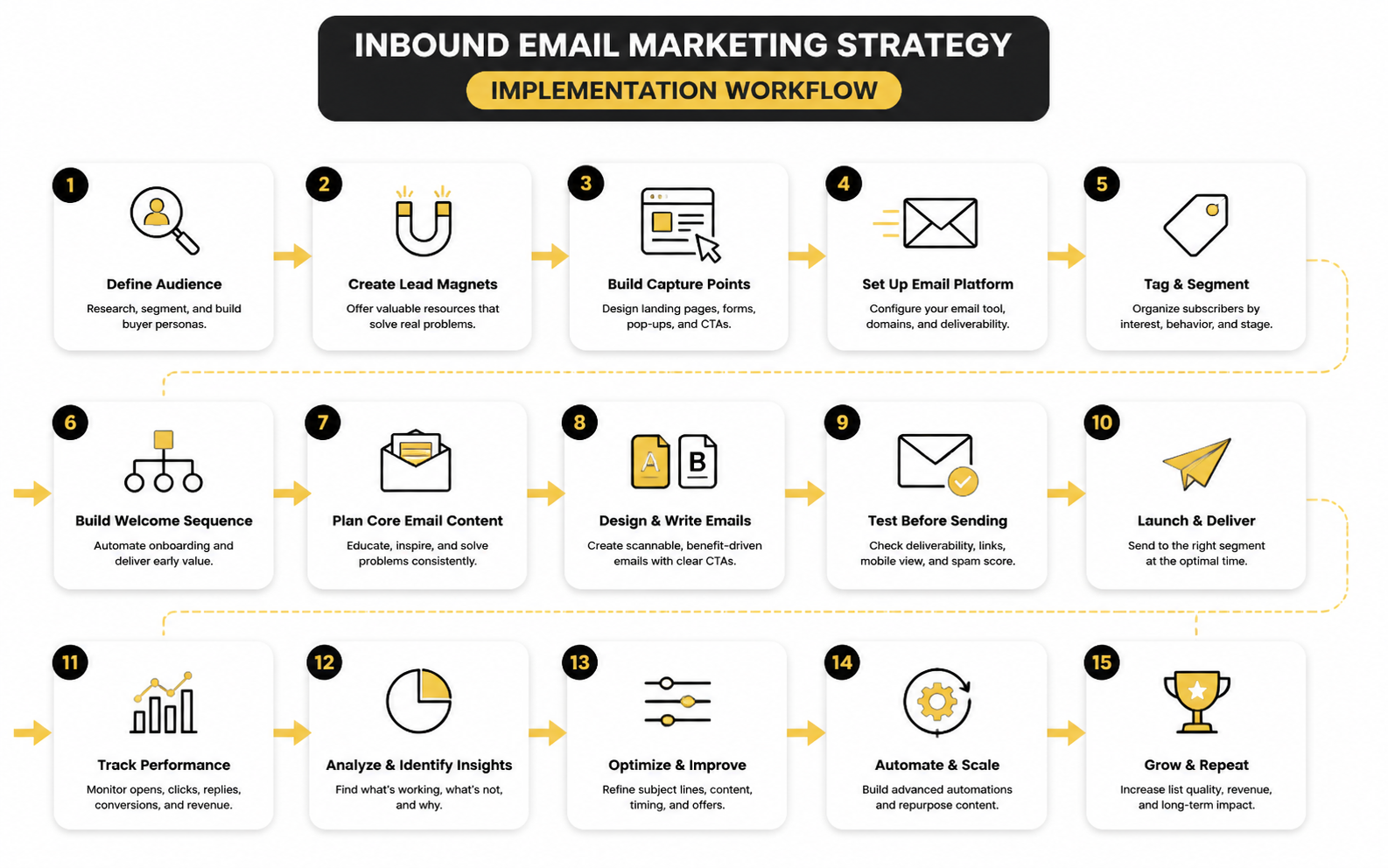
Step 1: Building Your Email List
The first and most crucial step in the execution process is to build your email list. Without a solid list of engaged subscribers, even the most perfectly crafted email campaigns will fall short. Start by creating valuable lead magnets, such as eBooks, free trials, or resource guides, to entice users to sign up for your email list.
Make sure that your sign-up forms are visible on key pages of your website and offer an easy, frictionless experience for your subscribers. Always ensure that people are opting in voluntarily to your communications. Using services like ManyChat can help automate the sign-up process via chatbots, making it easy for users to subscribe directly from your website or social media platforms.
Step 2: Segmenting Your Audience
Once you have built your list, the next step is to segment your audience. Not all subscribers are the same, and sending the same email to everyone is ineffective. Segment your audience based on key criteria such as demographics, purchase history, or engagement level. This ensures that you’re sending targeted, personalized messages to each group.
Advanced segmentation can also be based on the buyer’s journey. A first-time visitor to your website should receive different content compared to someone who has made a purchase in the past. Segmentation allows you to create more relevant and engaging email content that resonates with your audience’s specific needs.
Step 3: Crafting Compelling Emails
Now that you’ve built your list and segmented your audience, it’s time to start crafting your emails. A strong subject line is crucial in ensuring your emails get opened. Aim for a subject line that sparks curiosity, offers value, or creates a sense of urgency.
The body of your email should be clear, concise, and action-oriented. Use short paragraphs and bullet points to make your emails easily scannable. Don’t forget to include a strong call to action (CTA) that aligns with the content of your email. For instance, if you're offering a discount, the CTA could be "Claim Your Offer Now."
Step 4: Setting Up Automation
With your emails ready, the next step is to set up automation workflows. Automation tools allow you to send personalized emails at scale without manually sending each message. Tools like Replo or ManyChat can help you set up triggered email sequences based on specific actions, such as signing up for a newsletter, downloading a resource, or abandoning a cart.
For example, a welcome email sequence should be sent as soon as a new subscriber joins your list. Similarly, follow-up emails can be automatically triggered after a customer makes a purchase or abandons a cart.
Step 5: Testing and Analyzing Performance
Once your automation is in place, it’s time to test and analyze your email campaigns. A/B testing is a powerful tool for optimizing email performance. Test different subject lines, CTAs, and email content to see what resonates best with your audience. Keep track of key metrics such as open rates, click-through rates, and conversions.
By analyzing these metrics, you can continuously optimize your email marketing campaigns. Tools like Moosend provide detailed analytics that help you fine-tune your strategy and achieve better results.
Step 6: Refining Your Strategy
The final step in the process is continuous refinement. Email marketing is an ongoing process, and there’s always room for improvement. Based on the data collected from your campaigns, tweak your email content, timing, and segmentation strategies to improve performance.
Make sure to regularly clean your email list by removing inactive subscribers and ensuring that your emails are being delivered to the right people. Regularly update your content and try new tactics to keep your audience engaged.
By following this structured execution process, you can create a smooth inbound email marketing strategy that delivers consistent results. Whether you’re nurturing leads, converting customers, or re-engaging inactive subscribers, these steps will help you stay on track and maximize the effectiveness of your campaigns.
Measuring the Success of Your Inbound Email Marketing Strategy
The effectiveness of your inbound email marketing strategy hinges on your ability to measure, analyze, and interpret key metrics. Without a solid understanding of performance signals, it becomes difficult to know what’s working and what needs adjustment. By leveraging data, you can fine-tune your strategy for continuous improvement and ensure that your emails are achieving the desired outcomes.
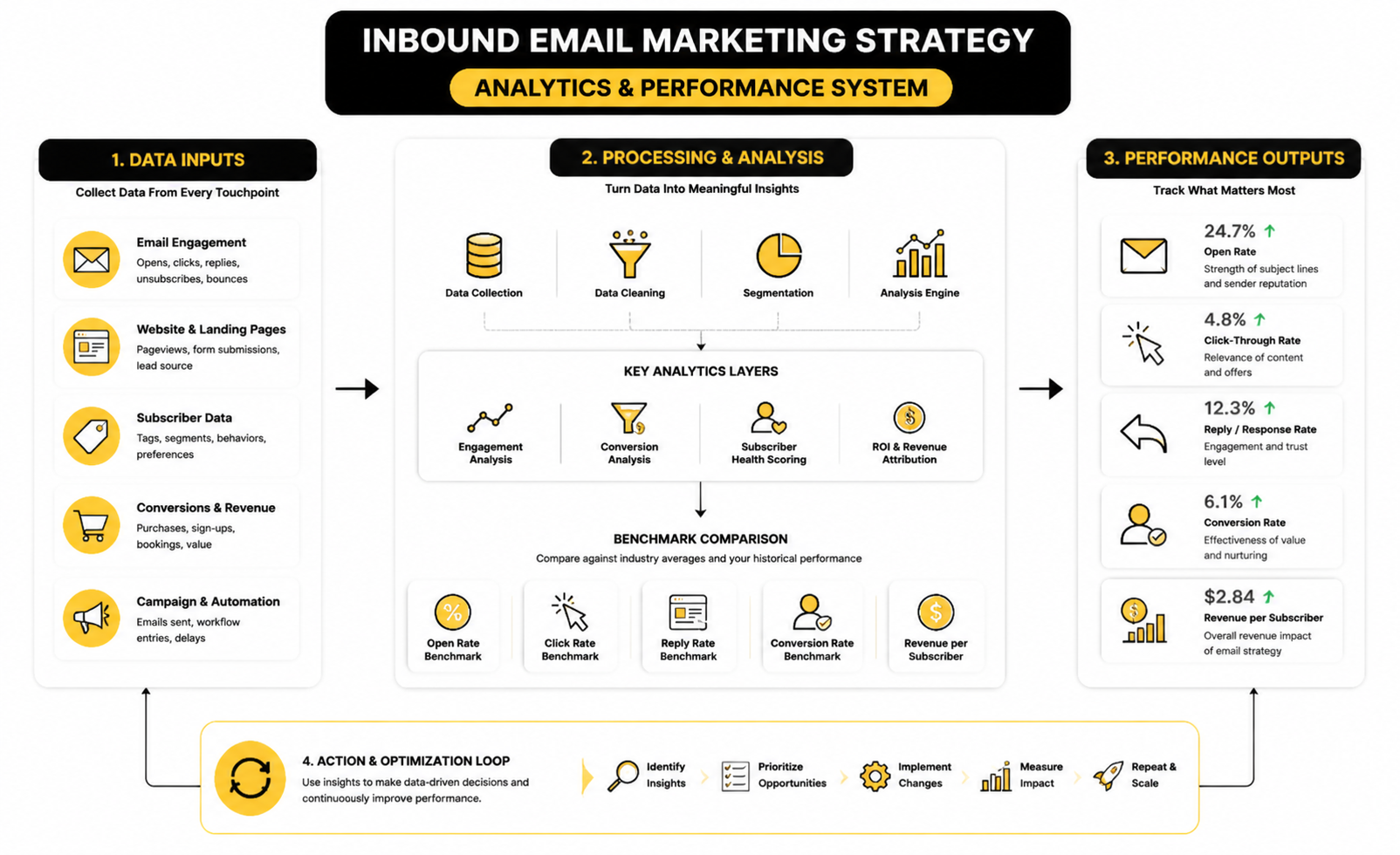
Key Metrics to Track
To evaluate the success of your email marketing campaigns, focus on the following key performance indicators (KPIs):
Interpreting the Data
While tracking these metrics is crucial, it’s just as important to understand what they actually mean and what actions they should drive. For example, if your open rates are high but your conversion rates are low, it might suggest that your emails are getting attention, but your messaging or CTA isn’t compelling enough. In this case, tweaking your copy or adjusting the positioning of your CTA could help improve conversions.
On the other hand, if your bounce rate is high, you may need to focus on cleaning your email list and ensuring that your emails are properly formatted and tested for deliverability. It’s also worth considering whether your emails are optimized for mobile devices, as an increasing number of people read emails on their phones.
Using Analytics to Optimize Your Strategy
Once you have a solid grasp on the key metrics, the next step is using this data to optimize your campaigns. Here are a few strategies:
By understanding and leveraging the insights that come from your email analytics, you can continuously refine your inbound email marketing strategy. Tracking the right metrics, interpreting the data effectively, and using that information to optimize your campaigns will help you achieve the best results possible.
Scaling and Advanced Strategies for Inbound Email Marketing
As your inbound email marketing strategy grows, the complexity of managing your campaigns increases. Scaling your email marketing efforts requires not just more automation but also more advanced strategies to maintain relevance and engagement. The process involves refining your approach, leveraging new technologies, and mitigating the risks that come with scaling. Let’s look at the advanced considerations you need to be aware of as your strategy evolves.
Managing Increased Volume and Complexity
As your email list grows, you’ll face the challenge of managing an increasing number of contacts and messages. The automation and segmentation you set up initially will need to scale as well. Here are key considerations to handle this growth effectively:
Advanced Analytics and Optimization
Once your email marketing program scales, the sheer amount of data coming in can be overwhelming. Using advanced analytics tools can help you make sense of it all and drive more carefully decisions. Focus on the following:
Managing Risks and Maintaining Deliverability
As your email strategy scales, deliverability issues can become a significant concern. It's crucial to maintain a good sender reputation to ensure your emails actually reach the inbox. Here’s how to protect your deliverability:
Leveraging AI and Automation for Efficiency
With the power of AI, email marketing can be further automated and personalized. Advanced platforms like Moosend and GoHighLevel allow you to set up sophisticated workflows that react to user behavior in real-time. AI tools can analyze past interactions to predict future behavior and send the right message at the right time without manual intervention.
These tools also enable you to create content that dynamically adapts to each recipient. For example, an email promoting a new product might feature a personalized recommendation based on the recipient’s previous purchases or browsing behavior. This level of personalization can significantly improve engagement and conversion rates.
Conclusion
Scaling your inbound email marketing strategy is no small feat, but with the right tools, strategies, and data analysis, it’s completely achievable. By focusing on advanced segmentation, leveraging AI for personalization, and continuously optimizing your campaigns with data-driven insights, you can maximize your email marketing effectiveness. Ultimately, maintaining relevance, personalization, and deliverability will be the key to long-term success as you scale.
Inbound email marketing is a strategy that involves sending targeted and personalized emails to prospects and customers, with the aim of nurturing relationships, providing value, and driving conversions. Unlike outbound email marketing, which interrupts recipients, inbound email marketing focuses on creating content that is valuable to the audience, engaging them with helpful information, and building trust over time.
Building an email list starts with offering value in exchange for contact details. Create lead magnets such as free guides, eBooks, or access to webinars that encourage people to subscribe. Use opt-in forms on your website and social media platforms, and ensure that your emails are relevant and desirable to your audience. Focus on organic list-building methods to ensure high-quality, engaged subscribers.
Key metrics to track include open rates, click-through rates (CTR), conversion rates, bounce rates, and unsubscribe rates. These metrics provide insight into how your emails are performing, how engaging your content is, and whether your calls to action (CTAs) are compelling enough to drive the desired results.
To improve open rates, focus on writing compelling subject lines that spark curiosity or promise value. Test different subject lines to see which resonates best with your audience. Also, consider the timing of your emails—send them when your subscribers are most likely to open them. Regularly clean your email list to ensure you’re reaching an engaged audience.
Personalizing emails means using the recipient’s name and tailoring the content based on their preferences, behaviors, or previous interactions. Use data collected from customer behavior to suggest relevant products or content, but be careful not to overdo it. For example, avoid excessive personal details that could make recipients uncomfortable.
Email segmentation is the practice of dividing your email list into smaller groups based on factors like demographics, purchase history, or engagement. This allows you to send more targeted and relevant content to each group, improving engagement and conversion rates. Segmenting your list ensures that you don’t send irrelevant emails to subscribers, which can lead to unsubscribes.
Use marketing automation tools like Moosend or Replo to set up email sequences that are triggered by specific actions, such as signing up for your newsletter or abandoning a shopping cart. These tools allow you to send personalized emails at scale, ensuring that your content is timely and relevant without requiring manual effort.
Common mistakes include sending too many emails, neglecting to segment your email list, and not optimizing emails for mobile devices. Also, avoid using spammy subject lines or failing to include a clear call to action. Focusing on relevancy and frequency is key to maintaining a healthy email marketing program.
The frequency of your emails depends on your audience and the type of content you’re sending. Some audiences may appreciate weekly newsletters, while others may prefer monthly updates. Start with a frequency that works for your content and adjust based on engagement metrics. Be mindful not to overwhelm your subscribers with too many emails, as this can lead to unsubscribes.
To measure ROI in email marketing, calculate the revenue generated from your email campaigns versus the cost of the campaign (including tools, labor, and content creation). Track how many subscribers convert into paying customers and assess the long-term value of your email efforts, including customer retention and repeat purchases.
Build a stronger local presence with BAAM AI
Turn your website, Google profile, social channels, and AI visibility into one growth engine
Most businesses do not need more random marketing activity. They need a consistent presence system that helps the right people find them, trust them, and take action. BAAM AI brings strategy, local SEO, website updates, Google Maps visibility, social content, AI-search readiness, media production, and reporting into one practical monthly engine.
If you want your marketing to keep working after the campaign ends, start with a free BAAM AI presence audit. See how your business shows up today and where the fastest visibility wins are at BAAM AI.