
BAAM AI Blog
HSO Copywriting: Hook, Story, Offer for Persuasive Marketing
HSO copywriting refers to a structured framework - Hook, Story, Offer - used to craft highly persuasive marketing content that draws attention, builds emotional engagement, and drives conversions. In a digital...

Here’s how this guide will unfold:
HSO copywriting refers to a structured framework - Hook, Story, Offer - used to craft highly persuasive marketing content that draws attention, builds emotional engagement, and drives conversions. In a digital landscape crowded with content, using a formula like HSO helps your message cut through noise and resonate with your audience’s motivations. It’s a simple but powerful approach widely used across ads, landing pages, emails, and social campaigns because it mirrors how people naturally absorb and act on information.
At its core, HSO isn’t just a sequence of writing steps - it’s a psychologically grounded pathway that guides readers from initial interest to a decision. This part of the article will outline what to expect in each section and how they build on each other to make your copy more effective than ad‑hoc writing ever could.
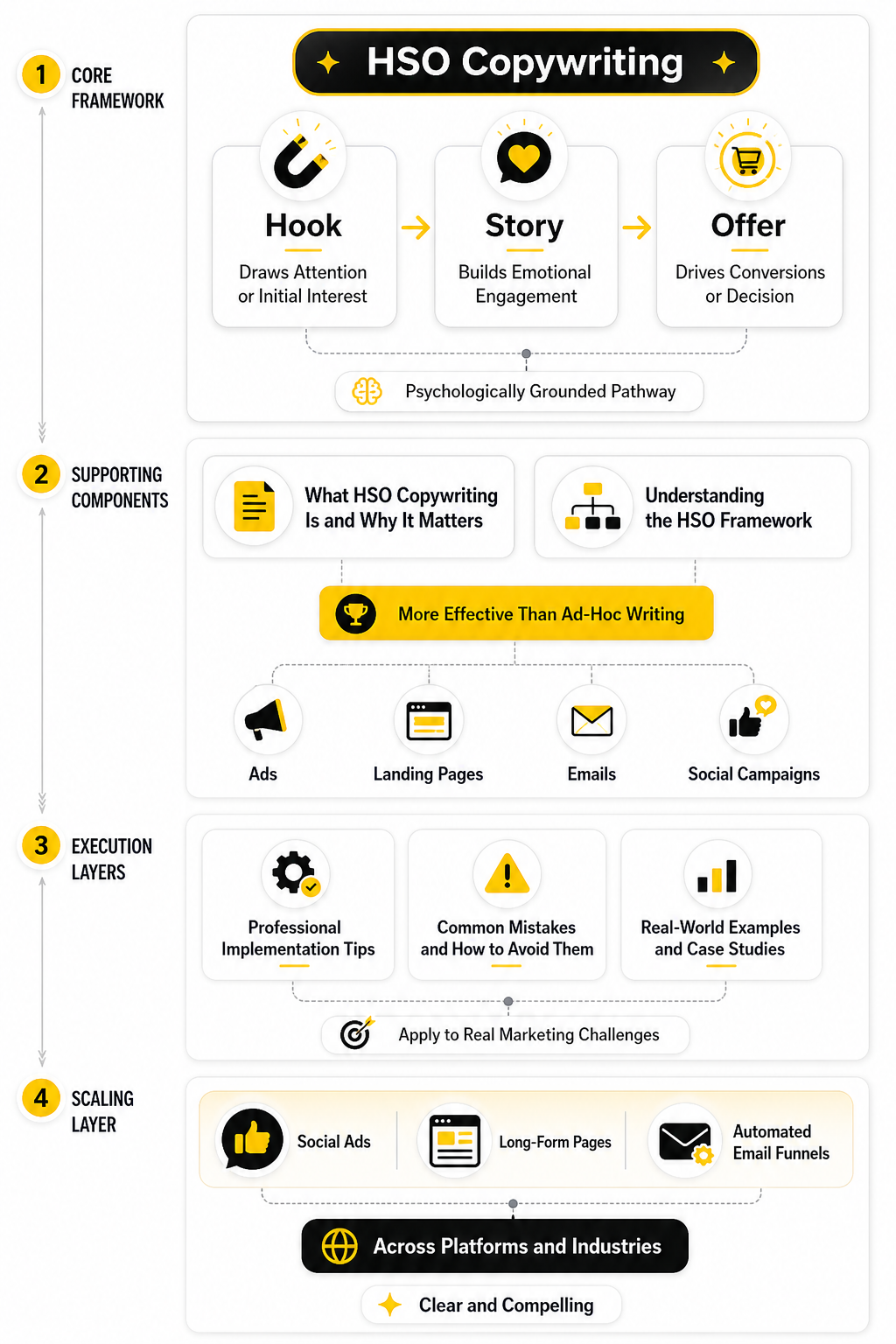
In the sections that follow, we’ll unpack the HSO framework in depth, break down its core elements - Hook, Story, and Offer, and show you how to apply it professionally to real marketing challenges. You’ll also learn common pitfalls to avoid and see real examples that illustrate why this time‑tested structure continues to convert across platforms and industries.
This structured approach isn’t just theory - it’s practical, adaptable, and designed to make your copy both clear and compelling, whether you’re writing for social ads, long‑form pages, or automated email funnels.
Why HSO Copywriting Matters
HSO copywriting is far more than a formula. It’s a proven structure for creating content that doesn’t just inform, but also persuades. Understanding why HSO matters helps you apply the framework more effectively, whether you’re crafting a quick social post or a comprehensive email sequence.
The Hook is your first impression. It captures attention in the first few seconds of reading. Whether it’s a headline, the opening sentence, or a subject line, it’s essential to be compelling enough to make the reader want to know more.
The Story builds engagement. It turns a quick interaction into an experience. A well-crafted story resonates emotionally, helps readers connect with your message, and sets the stage for the Offer - the culmination of your effort that asks for action, like making a purchase or signing up for an offer.
Without a strong hook, your content may never get read. Without a good story, readers are less likely to engage. And without a clear, valuable offer, your audience may leave without taking the desired action.
Understanding the HSO Framework
The HSO framework isn’t just a writing tool; it’s a marketing philosophy that revolves around human psychology. The idea is simple: get the attention, keep it, and then make it easy for the reader to act.
Hook: The Attention-Grabber
The hook serves as the critical first step in the HSO copywriting formula. A strong hook is concise, captivating, and impossible to ignore. Whether it’s a question, statistic, or bold statement, it must instantly make the reader want to continue. In a world full of distractions, the hook ensures that your message doesn’t get lost in the noise.
Story: Build the Emotional Connection
Once you’ve got the reader’s attention, the story takes over. Stories aren’t just about entertainment; they’re about creating empathy and identifying with the reader's challenges. By framing your product or service as a solution to their problems, you turn the abstract into something tangible and personal.
Offer: The Call to Action
The offer is the logical conclusion to a well-built hook and story. After engaging the reader emotionally and mentally, you present a simple, clear, and irresistible call to action (CTA). Whether it’s a special discount or an exclusive offer, your CTA should be framed in a way that feels like the natural next step for your audience.
The beauty of the HSO framework is in its simplicity. The formula works across all types of content and marketing channels because it’s based on how people naturally process and respond to information.
By adhering to this structure, you’re not just writing content—you’re creating a persuasive journey that guides your audience to take action, with each step feeling both logical and emotionally compelling.
Professional Implementation of the HSO Framework
Now that we understand the core elements of HSO copywriting, it's time to look at how to apply this powerful structure. The real magic happens when you begin to implement the process in your own marketing materials, step by step. This section will walk you through how to take the HSO framework and execute it in a way that leads to more conversions and better results.
Step 1: Crafting the Perfect Hook
Your hook is the first and most crucial step in grabbing attention. It needs to stop people mid-scroll, in whatever environment your content appears - social media, email, or your landing page. The key to a successful hook is relevance and intrigue. A well-crafted hook will promise something valuable, sparking curiosity.
Here are a few ways to approach your hook:
The hook is all about the initial impression. You’ll only have a moment to convince the reader that they need to read on.
Step 2: Developing the Story
Once you’ve caught your audience’s attention, it’s time to weave the story. The story section builds engagement by giving context and framing your product or service as the hero of the narrative. This is where your emotional appeal comes into play. People don’t buy products; they buy solutions to their problems, and stories can illustrate this like nothing else.
Here’s how to develop the story:
A compelling story doesn’t need to be long, but it should create a sense of urgency and relevance. You want the reader to feel like this is a story that can change their situation.
Step 3: Delivering the Offer
Finally, after drawing the reader in with your hook and building a connection with your story, it’s time for the offer. The offer is your call to action - the next step you want the reader to take. Whether it’s purchasing a product, signing up for a newsletter, or scheduling a demo, the offer should feel like the logical conclusion to everything they’ve read.
To make your offer compelling:
Remember, the offer should be framed as the natural next step after they’ve read your hook and story. If it feels like a sudden pitch or a hard sell, it may disrupt the flow you’ve created.
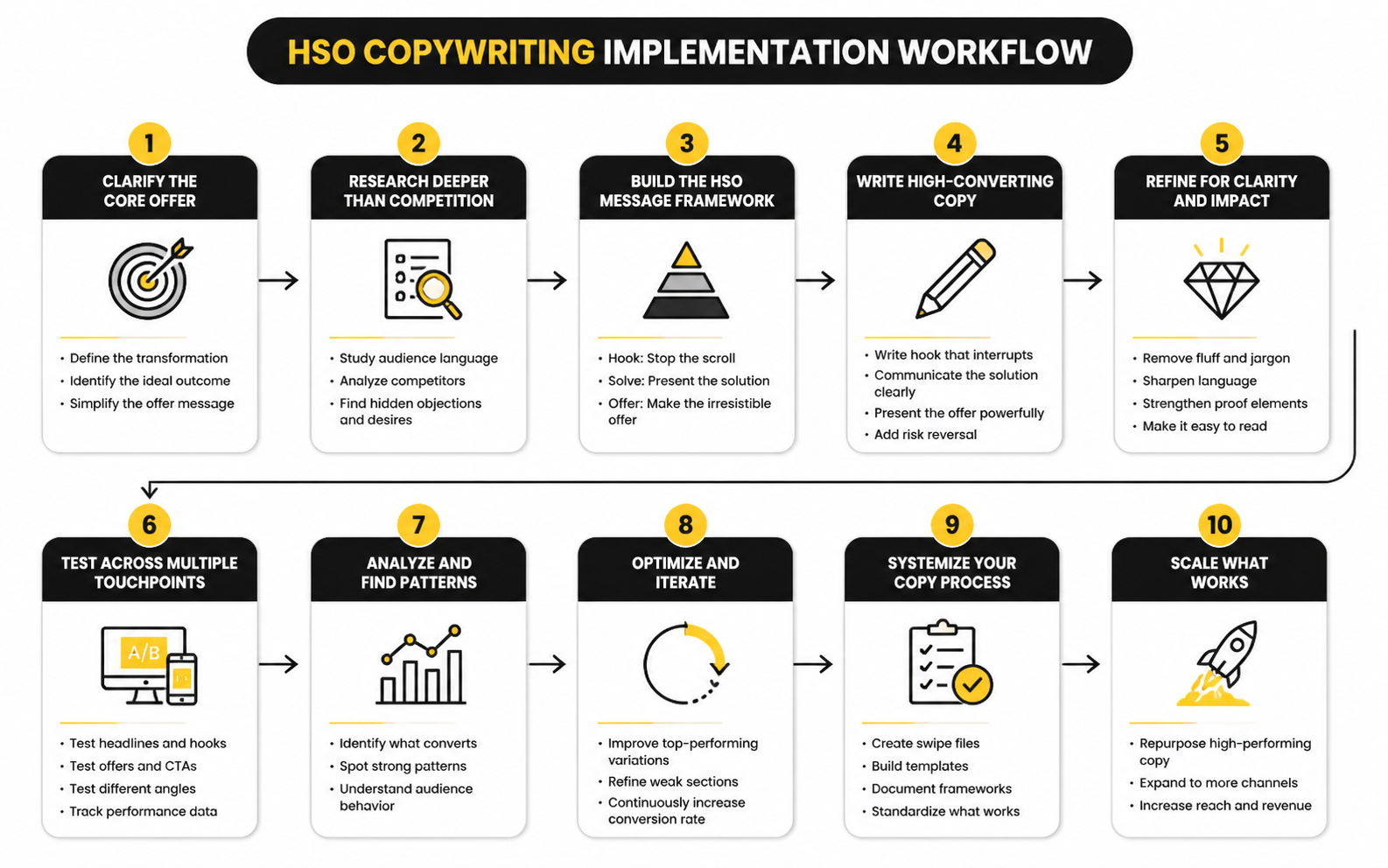
Implementing the HSO framework in this way isn’t just about following a structure - it’s about creating a smooth, persuasive journey that guides your audience from curiosity to action. By focusing on crafting each element with care and attention to the audience’s needs, you can dramatically increase the impact of your copywriting.
Measuring the Success of Your HSO Copywriting
Now that you’ve implemented the HSO framework, it’s time to assess how well your copy is performing. The key to refining any strategy is to measure the impact of your actions. In the case of HSO copywriting, performance metrics like conversion rates, click-through rates, and engagement levels can tell you whether the framework is hitting the mark or if adjustments are necessary.
Key Metrics to Track
When analyzing the success of your HSO copy, it’s important to track relevant metrics that directly reflect how your audience is interacting with your content. Here are some of the key performance signals you should focus on:
Interpreting the Data
Interpreting your data correctly is crucial. Here’s how to make sense of the numbers:
What Action to Take
Once you understand the data, the next step is adjusting your approach based on the insights:
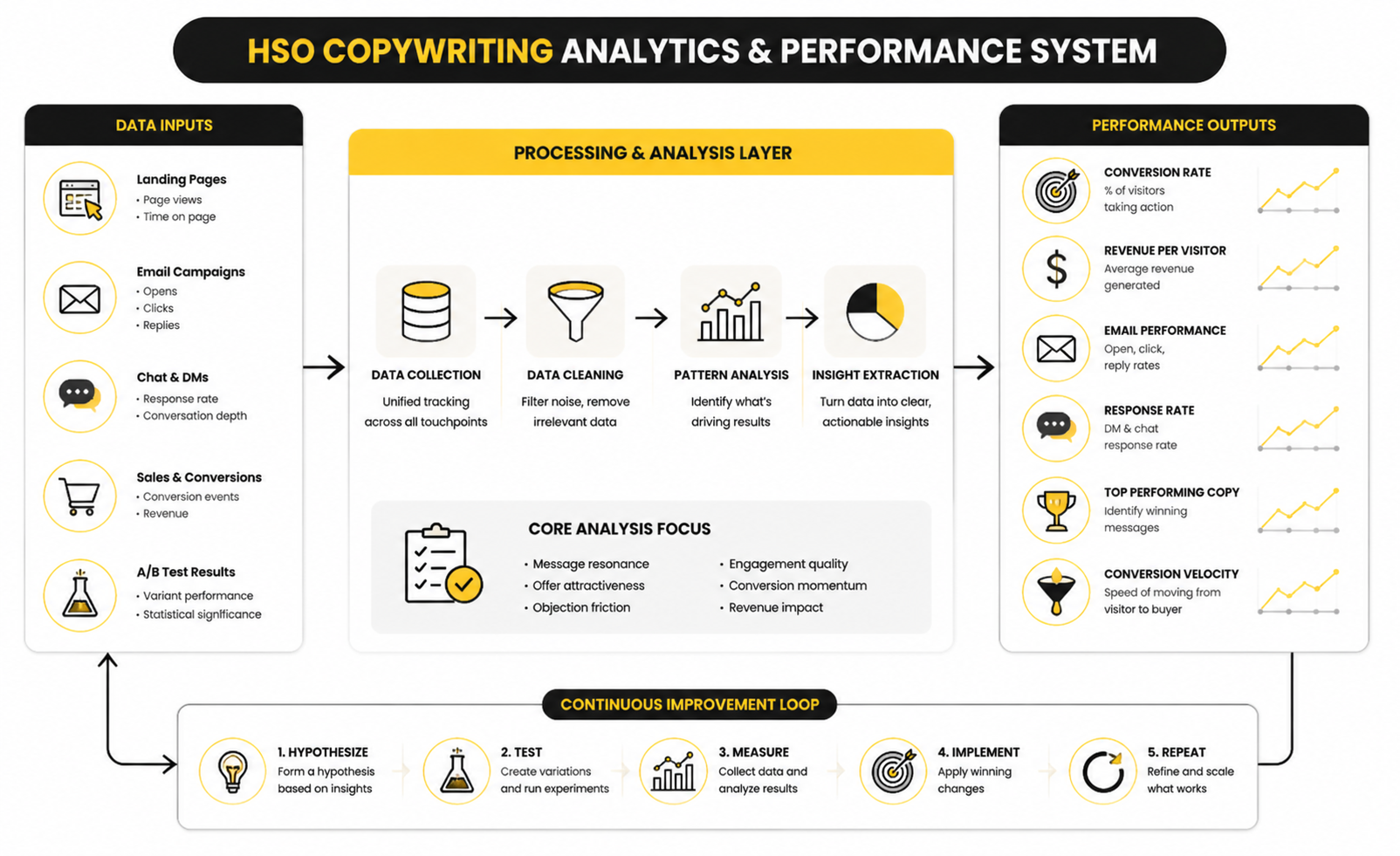
Analyzing these signals is a continuous process. With each campaign, you’ll fine-tune your HSO copy to better match your audience’s preferences and drive even better results. This data-driven approach ensures that every piece of content is more effective than the last, making your marketing efforts increasingly successful.
Advanced Considerations for Scaling HSO Copywriting
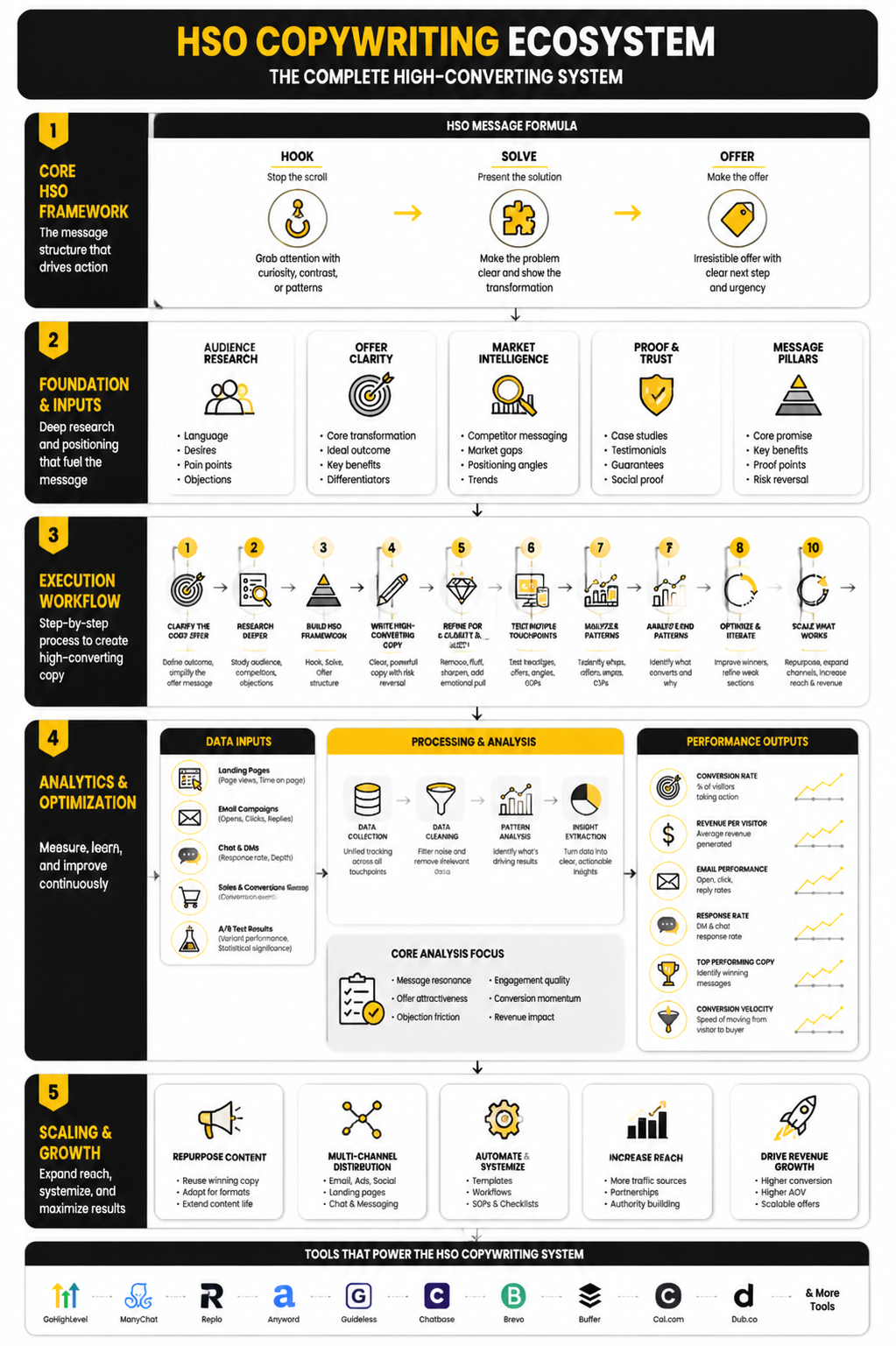
Implementing the HSO framework successfully for your content is just the beginning. As you move from individual campaigns to larger-scale operations, there are several advanced considerations to factor in. These include scaling your efforts, making strategic trade-offs, and being mindful of potential risks. To truly master HSO copywriting, it’s essential to understand the complexities involved when scaling and refining your copy.
Scaling Your HSO Copywriting Efforts
As you grow your content strategy, the complexity of your HSO framework increases. The key to scaling successfully is maintaining consistency in quality while adjusting for the broader audience and diverse contexts. Here’s how to scale HSO copywriting effectively:
The challenge here is keeping track of numerous variations of your HSO copy while ensuring consistency and alignment with your brand’s voice and values.
Strategic Trade-offs and Risks
With growth comes the need for strategic trade-offs. HSO copywriting is powerful, but certain adjustments may be necessary when targeting different audience segments, channels, or stages of the customer journey. These are some key trade-offs to consider:
While HSO offers high engagement and conversion potential, these trade-offs must be carefully considered in the context of your goals.
Scaling Without Losing Effectiveness
The ultimate goal when scaling HSO copywriting is to maintain its effectiveness without overwhelming your resources. Here are some tips to scale without sacrificing quality:
With these strategies in place, scaling becomes a systematic process that maintains the integrity of your HSO copy while meeting the needs of a larger audience.
By considering these advanced aspects of scaling and making strategic trade-offs, you can ensure that your HSO copywriting remains effective, efficient, and aligned with your broader marketing strategy as your efforts grow.
HSO copywriting is a framework that stands for Hook, Story, and Offer. It's a strategic method for crafting compelling content that grabs attention, builds engagement, and drives conversions. The structure helps marketers create persuasive copy that guides readers naturally from curiosity to action.
The hook is your first impression. It’s designed to immediately capture your audience’s attention, making them want to read more. Without a strong hook, your content risks being ignored, no matter how good the rest of the copy is.
A compelling story should focus on the reader's pain points, how they can overcome them, and why your solution is the best choice. The story must build emotional engagement and lead logically to the offer, showing how it resolves the reader's problem.
A good offer is clear, valuable, and time-sensitive. It should be framed as the logical next step for the reader, offering a solution that feels like the perfect resolution to the problems presented in the hook and story.
Yes, the HSO framework is versatile and can be applied across various marketing channels, including social media, email marketing, landing pages, and advertisements. The key is to adapt the language and structure to fit the medium.
Key metrics to track include click-through rates (CTR), conversion rates, engagement levels, and bounce rates. These metrics help you understand how well your hook, story, and offer are performing and where adjustments may be needed.
While HSO is highly effective for persuasive content like ads and landing pages, other types of content such as informational blogs or long-form articles may require a more nuanced approach. However, elements of the HSO framework can still be useful for maintaining structure and focus.
To make your hook more engaging, try using curiosity, surprise, or a bold statement that resonates with your audience’s desires or fears. Testing different types of hooks will help you find the one that best connects with your target audience.
Absolutely. By focusing on compelling hooks, engaging stories, and irresistible offers, HSO copywriting can significantly improve lead generation efforts. The framework helps capture attention and guide prospects through a journey that ends with a clear call to action.
Some common mistakes include:
Scaling HSO involves creating adaptable templates for each part of the framework, automating content distribution, and running continuous A/B testing to optimize each element (hook, story, offer) across different platforms and audiences.
If you notice a low click-through rate, high bounce rates, or low conversions despite good engagement, it’s a signal that your hook or offer might not be compelling enough. Analyzing these metrics can help you identify which part of the HSO framework needs adjustment.
Build a stronger local presence with BAAM AI
Turn your website, Google profile, social channels, and AI visibility into one growth engine
Most businesses do not need more random marketing activity. They need a consistent presence system that helps the right people find them, trust them, and take action. BAAM AI brings strategy, local SEO, website updates, Google Maps visibility, social content, AI-search readiness, media production, and reporting into one practical monthly engine.
If you want your marketing to keep working after the campaign ends, start with a free BAAM AI presence audit. See how your business shows up today and where the fastest visibility wins are at BAAM AI.