
BAAM AI Blog
Homepage Copywriting: How to Write Copy That Converts
Your homepage is not just a digital address - it’s the front door to your entire business. In a few seconds, a visitor decides whether to stay or bounce, and much of that decision hinges on the clarity and strength...
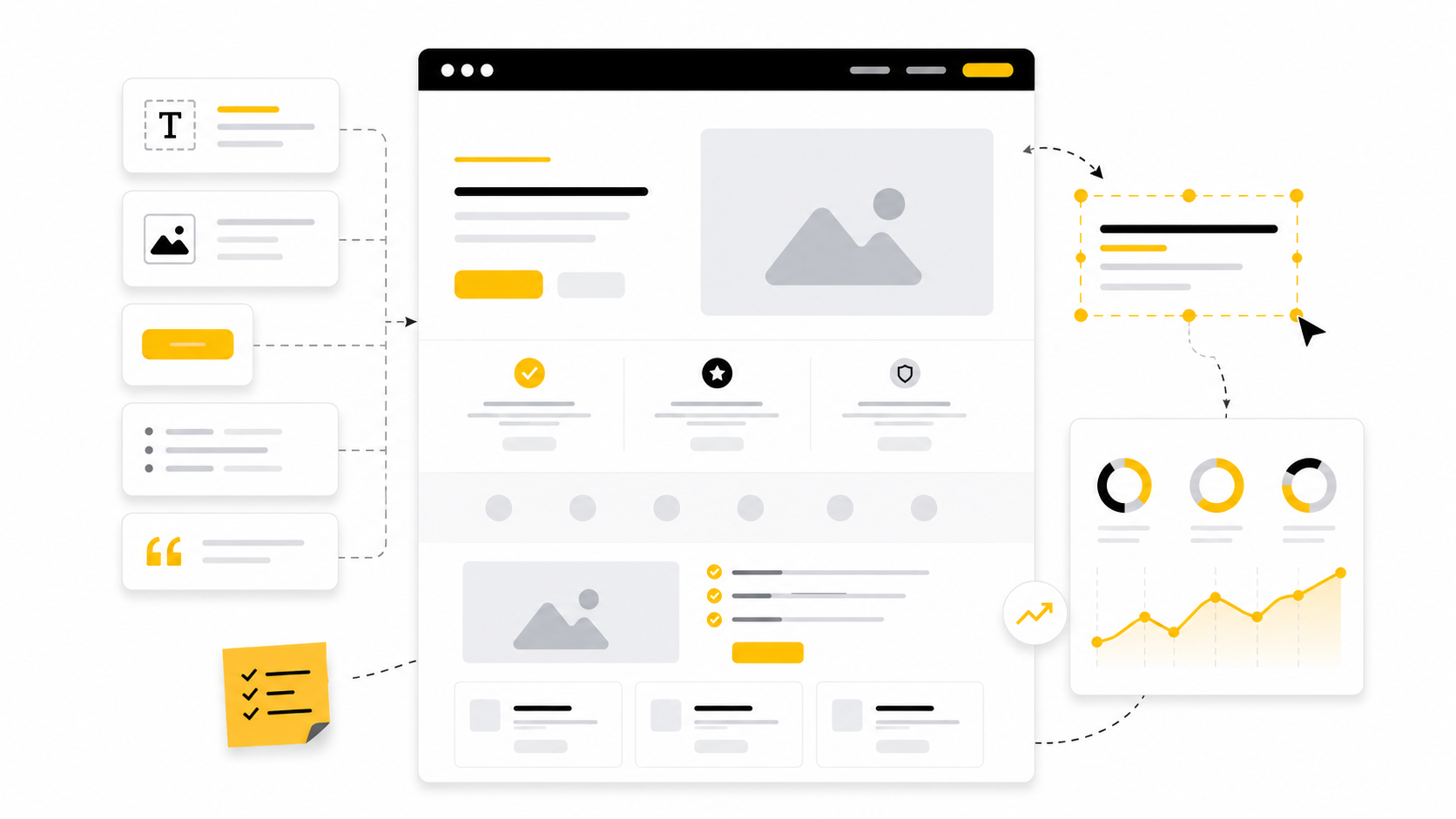
Your homepage is not just a digital address - it’s the front door to your entire business. In a few seconds, a visitor decides whether to stay or bounce, and much of that decision hinges on the clarity and strength of your copy. A well‑written homepage doesn’t just describe what you do - it persuades, clarifies, and guides visitors toward a meaningful action. Effective homepage copy communicates who you are, what you offer, who it’s for, and why it matters in under a few seconds - or you risk losing that visitor forever.
Homepage copywriting differs from general website writing because it must be fast to scan, benefit‑oriented, and conversion‑focused. According to usability research, most visitors only read a small fraction of the words on a page and decide almost instantly whether to stay or go. That reality makes strategic homepage copywriting essential for capturing attention and driving conversions.
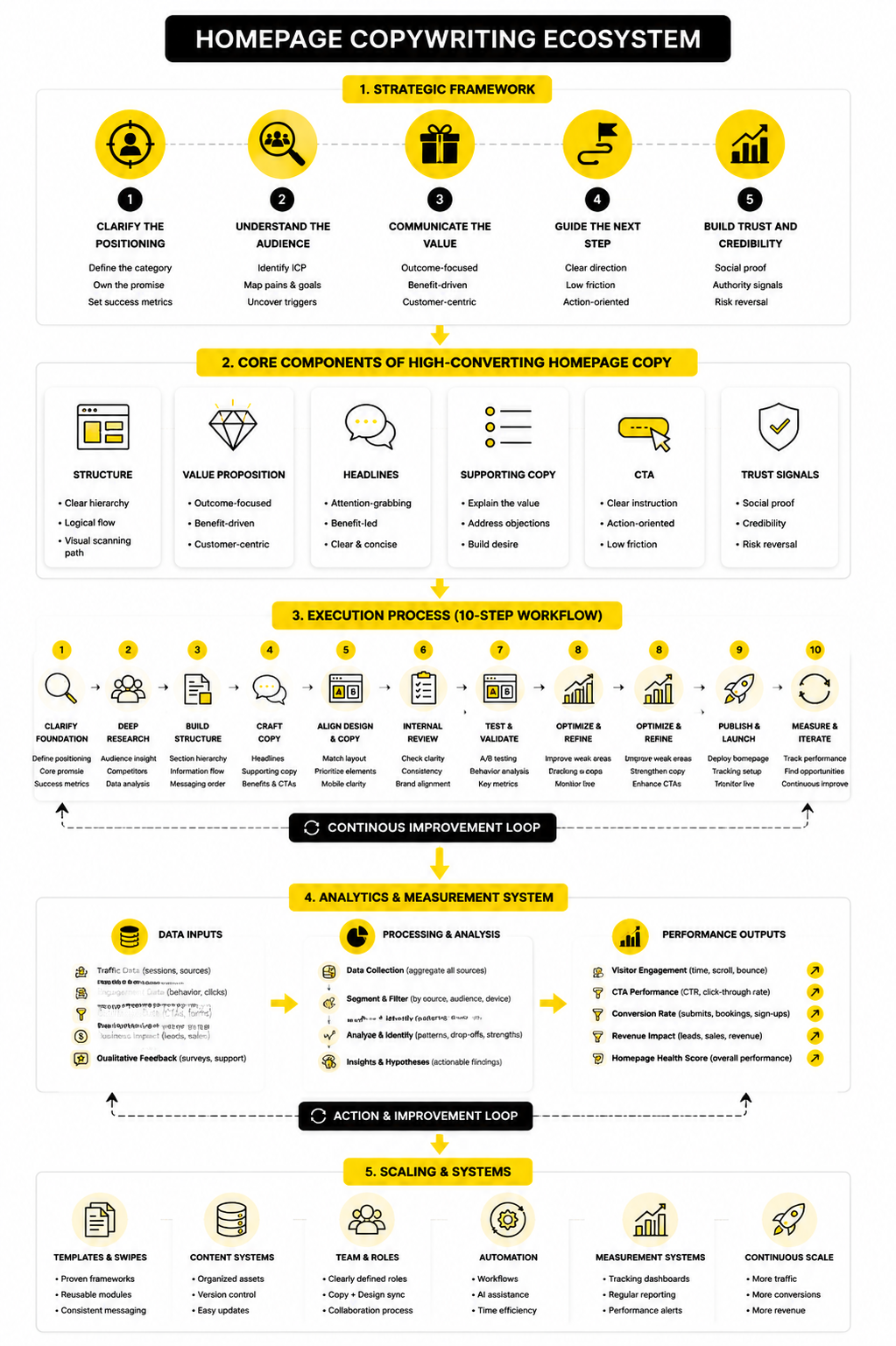
Below is an overview of the full article structure you’ll see across the next sections:
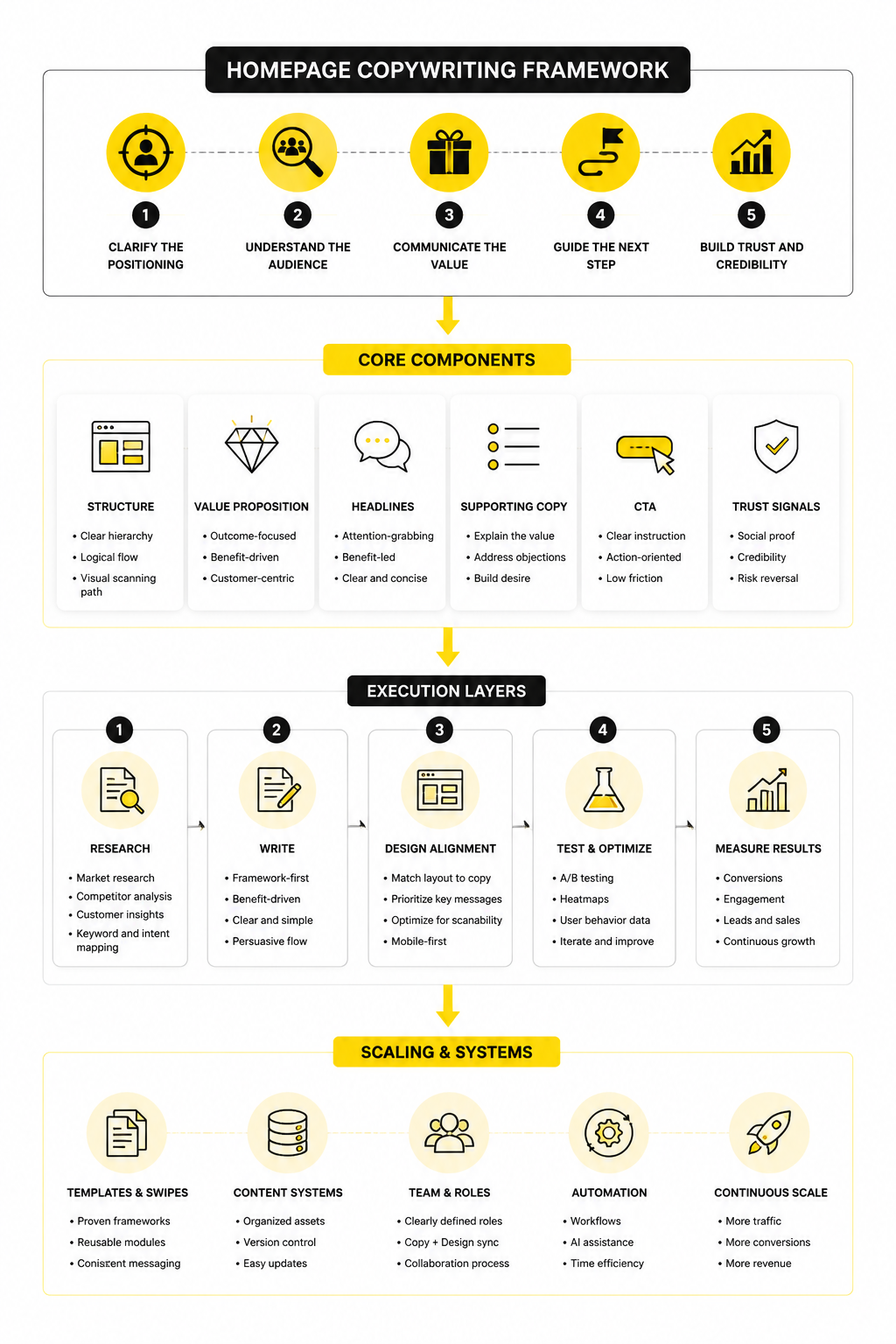
In the next parts, we’ll explore how to build high‑impact homepage copy step by step - from understanding your visitor’s most urgent questions to crafting headlines and calls to action that move them down your conversion funnel. This foundation will help you boost clarity, engagement, and measurable results from your homepage text.
Why Homepage Copywriting Matters
Effective homepage copywriting serves a critical role in how your audience perceives your business in the first moments they arrive. Research shows that visitors begin forming impressions in as little as 50 milliseconds, and the combination of design and copy shapes nearly 94 % of that first impression of your brand. If a homepage doesn’t clearly answer the fundamental questions - What is this? Who is it for? How does it help me? - most visitors will bounce before engaging further.
Homepage copywriting matters because it does more than inform - it persuades and directs. A strong opening headline and supporting copy can instantly stop a visitor’s scroll and guide them toward conversion actions, whether that’s signing up, exploring your services, or purchasing. This isn’t just about clever wording; it’s strategic communication grounded in human behavior and decision making. When done right, homepage copy becomes a minimalist yet powerful sales pitch guiding your visitor from curiosity to conversion in seconds.
Skimming is the norm online. Eye‑tracking studies show that most people read only about a fifth of the words on a page unless those words hook them from the start. Homepage copywriting that captures attention quickly, prioritizes clarity over cleverness, and aligns with visitor intent significantly increases the likelihood of deeper engagement.
Framework Overview for Effective Homepage Copywriting
A practical copywriting framework helps you organize your homepage text so every word serves a purpose in guiding your visitor toward a desired action. The core idea is simple: clarify, connect, convert. First, you clarify your value and relevance. Then, you connect emotionally and logically with the visitor’s needs. Finally, you convert that engagement into measurable actions such as clicks, sign‑ups, or purchases.
At the foundation of an effective framework is the hero section - the part of the homepage visible without scrolling, often called “above the fold.” Here, you must communicate three key things instantly:
This becomes your Unique Value Proposition (UVP), which sits at the center of your framework.
Below the hero, well‑structured copy continues the conversation by:
This framework ensures every piece of copy - whether a headline, subheadline, or CTA - is working in harmony toward a single conversion goal. It helps you avoid common pitfalls like vague language or mixed messages that dilute your impact.
Core Components of Homepage Copywriting
There are several essential elements that high‑impact homepage copy must include to engage and convert effectively:
Clear Value Proposition and Headline
Your headline is the first and most crucial sentence on the page. It should immediately communicate the core benefit you offer and signal to the right audience that they’re in the right place. Effective headlines are concise, benefit‑oriented, and free of jargon.
Supporting the headline, a subheadline adds necessary context, clarifies the promise, and speaks directly to the visitor’s needs. The combination of headline and subheadline is where your UVP takes shape in a way visitors can grasp in just a few seconds.
Strategic Calls to Action (CTAs)
Every homepage needs clear, prominent calls to action that tell visitors what to do next. Whether it’s “Start Your Free Trial,” “Request a Demo,” or “Learn More,” your CTA should be action‑oriented, simple, and visually distinct. Place CTAs above the fold and at logical points throughout the page’s copy flow so users don’t have to hunt for the next step.
Benefit‑Focused Body Copy
After hooking attention with your hero section, the body copy should reinforce your main value by highlighting tangible benefits and outcomes rather than just features. Use simple sentences and bullet lists where possible to support scanning behavior. Good homepage copy focuses on what visitors gain from your offer and how it helps them solve specific problems.
Trust and Credibility Signals
Visitors are more likely to convert when they feel confident in your credibility. Incorporating elements such as testimonials, client logos, certifications, or data points into your copy and layout reinforces trust and reduces risk perception. These signals should be seamlessly woven into your text so they feel like natural proof points rather than distractions.
Logical Flow and Navigation Clarity
Finally, homepage copy must be structured with a clear flow that mirrors how visitors read online. Simple navigation labels and a logical progression from awareness (headline) through interest (benefits) to action (CTA) help keep visitors engaged and reduce cognitive load. Short paragraphs and clearly labeled sections help sustain attention and guide decisions.
Each of these components works together to transform your homepage from a static page into a dynamic guide that leads your visitors toward becoming customers. Proper copywriting doesn’t just support your design - it amplifies it by making the text actionable, relevant, and easy to follow.
Copywriting Strategies for Better Engagement
Once you understand the core components of homepage copywriting, the next step is to implement a process that brings those elements together in a way that resonates with your audience. Good copy isn’t written once and forgotten - it evolves with data, user intent, and business goals. A strategic implementation process helps you write with clarity and purpose rather than guessing what might work.
Start by mapping your ideal visitor’s journey: What are they trying to accomplish? Where might they hesitate? What objections might they need addressed before converting? This mindset lets you write each sentence with intention, moving beyond generic phrases to person‑first communication. Keep your tone friendly but confident, and always lead with value rather than features alone.
Next, anchor your copy around clear metrics and goals. Decide what action you want the visitor to take - signing up, booking a demo, making a purchase - and ensure every block of text either supports that action or guides the user toward it. By measuring engagement (click‑through rates, scroll depth, conversion points), you can iterate and refine, rather than hoping your first draft is perfect.
To make this actionable, follow a step‑by‑step process that keeps your homepage copywriting organized and results‑driven.
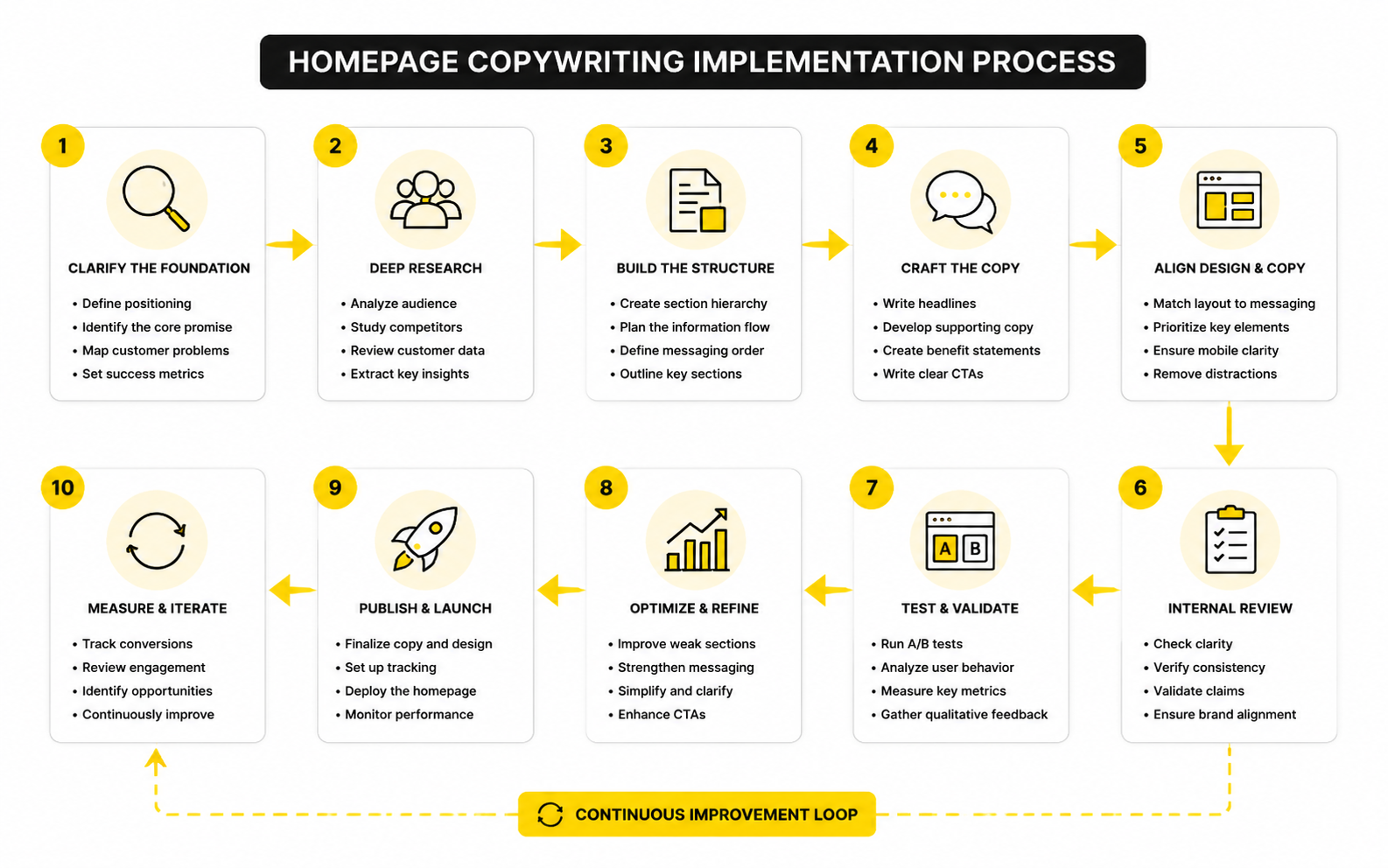
Step‑by‑Step Implementation Process
1. Define Your Audience and Their Intent
Begin with research. Use analytics, customer interviews, or surveys to understand who your visitors are and what they’re trying to achieve. High‑intent visitors, for example, may arrive ready to buy, while others might still be exploring solutions. Knowing this helps you tailor messaging that meets expectations and reduces friction in decision‑making.
2. Craft the Core Message First
Before writing full paragraphs, craft a clear core message that states who you serve, what problem you solve, and why it matters to them. This becomes the backbone of your headline and subheadline. Keep it simple, specific, and benefit‑oriented, so visitors know immediately they’re in the right place.
3. Write Supporting Copy in Layers
After your core message is defined, build the rest of your homepage copy in layers:
Writing this way helps you maintain a logical flow that feels natural to users rather than fragmented or overwhelming.
4. Place Strategic Calls to Action Throughout
Your homepage should have multiple opportunities for visitors to convert without scrolling endlessly. Place CTAs not just at the bottom - but after key sections where a visitor’s interest is most piqued. These CTAs should be actionable, specific, and aligned with the visitor’s mindset at each point.
5. Review and Refine Based on Behavioral Data
Once your homepage copy is live, use tools like heatmaps and conversion analytics to see how users interact with your text. This data highlights where visitors hesitate, scroll past, or click away. Use this feedback to rewrite weak sections, clarify confusing language, and simplify where needed.
6. A/B Test and Iterate
Don’t settle on your first draft. Test different versions of headlines, CTAs, body copy, and value statements to see what resonates best. Even small tweaks - a single word in a headline or CTA button - can shift conversion rates. Treat homepage copywriting as an ongoing optimization exercise rather than a one‑and‑done task.
By following this structured process, you make homepage copywriting repeatable, measurable, and aligned with your business outcomes. You also build a foundation that supports scalability - as your product, audience, or goals evolve, your copy continues to align with user intent and performance data rather than gut feeling alone.
Analytics, Benchmarks, and What the Data Really Means
Effective homepage copywriting isn’t just about writing catchy sentences - it’s about moving the needle on real performance metrics that tell you whether your messaging and structure are working. Your homepage is often the most visited page on your site, so it’s where you’ll find the most actionable data about visitor intent, engagement, and conversion outcomes.
The numbers you track - like bounce rate, conversion rate, session duration, and scroll depth - become meaningful only when you understand why they move the way they do and how to interpret them to drive better decisions. Benchmarks provide context, but your own goals and traffic sources ultimately determine whether a metric is “good” or “bad.” For instance, a bounce rate that appears high in isolation might be perfectly normal for certain traffic types or industries. Always interpret your data relative to benchmarks and your specific business goals.
What Key Metrics Tell You
Why These Numbers Matter
Each metric gives you insight into a specific aspect of your copywriting effectiveness:
Understanding where visitors drop off - above the fold, during navigation, in secondary sections - lets you prioritize what to rewrite or reorganize. Use your analytics platform to segment behavior by device type, traffic source, and user intent, because the same number can mean different things depending on context.
Below is a visual example of how these metrics interplay within a typical analytics dashboard.
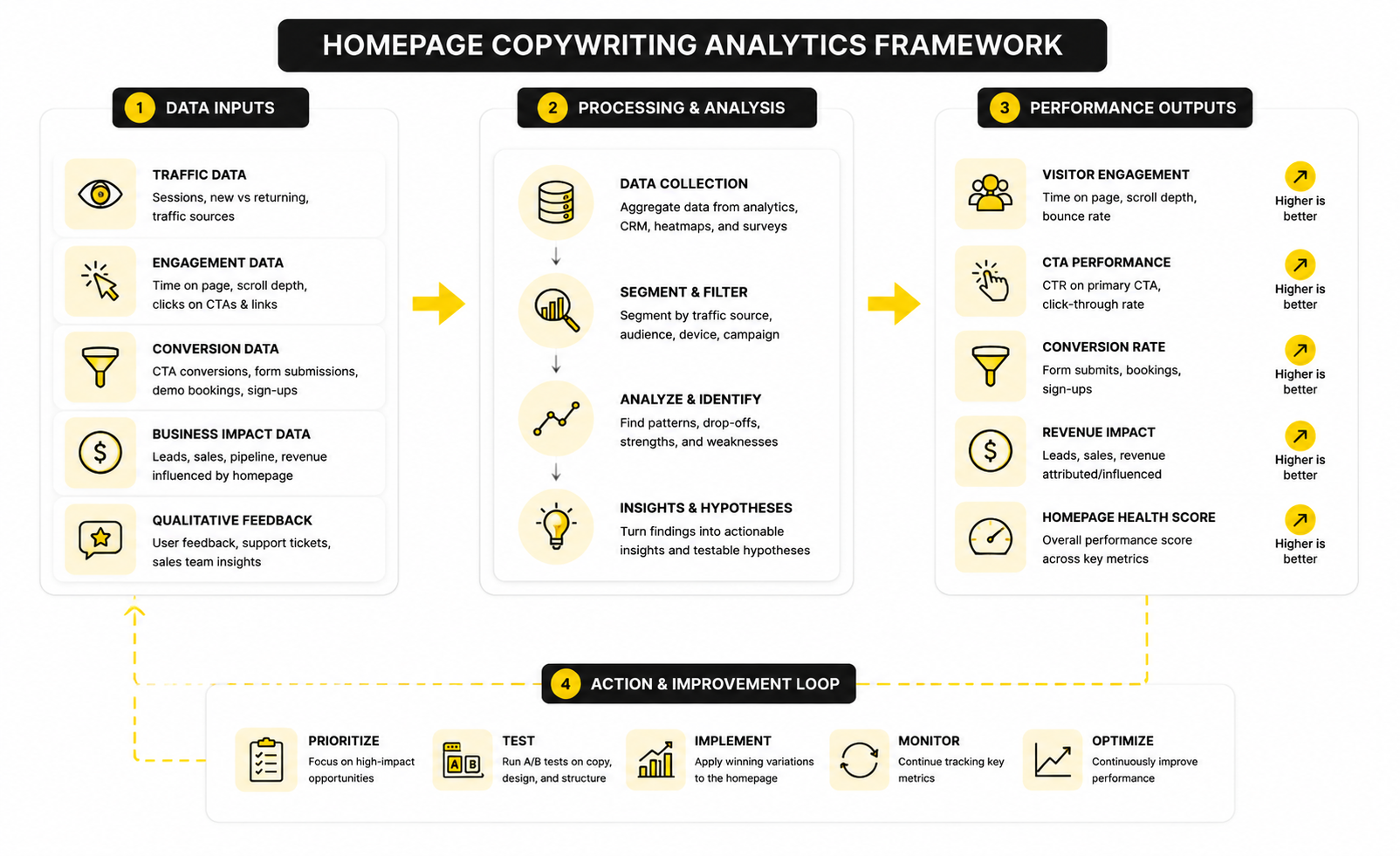
What Actions the Data Should Drive
Benchmarks give you a compass, but your own segmented performance is where the real decisions come from. Taking a systematic, data‑informed approach to homepage copywriting turns guesswork into measurable progress. Using analytics this way means you’re not just writing for persuasion - you’re writing with evidence.
Professional Implementation and Advanced Considerations
As you refine your homepage copywriting, moving beyond basics into strategic, expert-level implementation is what separates a functional homepage from a high-performing one. At this stage, every choice - from headline length to CTA phrasing - involves trade-offs, risk assessment, and scalability considerations.
Strategic Trade-Offs in Copywriting
You’ll often face decisions where one choice benefits one metric but may slightly hurt another. For example:
Risk Management and Copy Scalability
Copywriting decisions carry potential risks if implemented without foresight. Overly clever language may confuse visitors, while generic phrasing can dilute your brand’s voice. Scaling your copy across campaigns or new landing pages introduces further challenges: inconsistent messaging, tone drift, and loss of core UVP clarity are common pitfalls.
To manage these risks:
Expert-Level Execution
Top-performing homepage copywriters leverage data-informed storytelling. This means:
Preparing for Scale
As your website grows and campaigns expand:
By treating homepage copywriting as both a science and an art, you can maximize clarity, engagement, and conversion potential - while avoiding pitfalls that often occur when scaling messaging across broader digital properties. The result is a homepage that not only communicates but consistently converts.
1. What is homepage copywriting?
Homepage copywriting is the practice of writing clear, persuasive, and strategic text for a website’s homepage, aimed at communicating value, capturing attention, and driving visitors toward specific actions like sign-ups or purchases.
2. Why is homepage copywriting important for conversions?
Visitors form impressions of your business in seconds. Effective copy increases clarity, establishes trust, and guides users toward desired actions, which directly improves conversion rates.
3. How long should a homepage headline be?
Headlines should be concise enough to capture attention within seconds but informative enough to communicate your core value proposition. A good range is typically 5–12 words, depending on your message.
4. Should I focus on benefits or features?
Homepage copy should prioritize benefits over features. Visitors care more about how your product or service solves their problem rather than technical specifications alone.
5. How often should I update my homepage copy?
Regularly revisiting your homepage copy is essential. Consider updates whenever you launch new products, identify changing audience needs, or have analytics indicating declining engagement.
6. Can homepage copywriting improve SEO?
Yes. Well-crafted copy with relevant keywords, proper headings, and meta descriptions helps search engines understand your page content, improving organic visibility without sacrificing clarity for human readers.
7. What role do CTAs play in homepage copywriting?
CTAs (calls to action) guide visitors toward your conversion goals. Placement, clarity, and wording are critical - a strong CTA makes the next step obvious and compelling.
8. How do I measure homepage copy effectiveness?
Track metrics like bounce rate, conversion rate, session duration, and scroll depth. Combine quantitative data with qualitative feedback to understand whether your copy is engaging and persuasive.
9. Should testimonials be included on the homepage?
Yes. Strategic testimonials or client logos add credibility and trust. Place them near key value points or CTAs to reinforce your messaging.
10. Can I scale homepage copywriting across multiple sites?
Absolutely, but consistency is key. Maintain a style guide, replicate core value propositions, and adapt copy to specific audiences or campaigns while keeping messaging clear and actionable.
11. How do I handle multiple target audiences on a single homepage?
Segment messaging where possible. Use layered copy, modular sections, or dynamic content to address different personas without cluttering or confusing the primary message.
12. Is it worth hiring a professional copywriter?
Yes. Professionals bring expertise in clarity, conversion psychology, and strategic messaging. They can craft copy that resonates with audiences, increases conversions, and avoids common pitfalls.
Build a stronger local presence with BAAM AI
Turn your website, Google profile, social channels, and AI visibility into one growth engine
Most businesses do not need more random marketing activity. They need a consistent presence system that helps the right people find them, trust them, and take action. BAAM AI brings strategy, local SEO, website updates, Google Maps visibility, social content, AI-search readiness, media production, and reporting into one practical monthly engine.
If you want your marketing to keep working after the campaign ends, start with a free BAAM AI presence audit. See how your business shows up today and where the fastest visibility wins are at BAAM AI.