
BAAM AI Blog
Freelance Marketing Websites: How to Choose, Build, and Use Them to Win Better Clients
Freelance marketing websites are no longer just places to find quick gigs. They are discovery engines, trust signals, lead sources, portfolio hubs, and sometimes full business infrastructure for independent marketers...
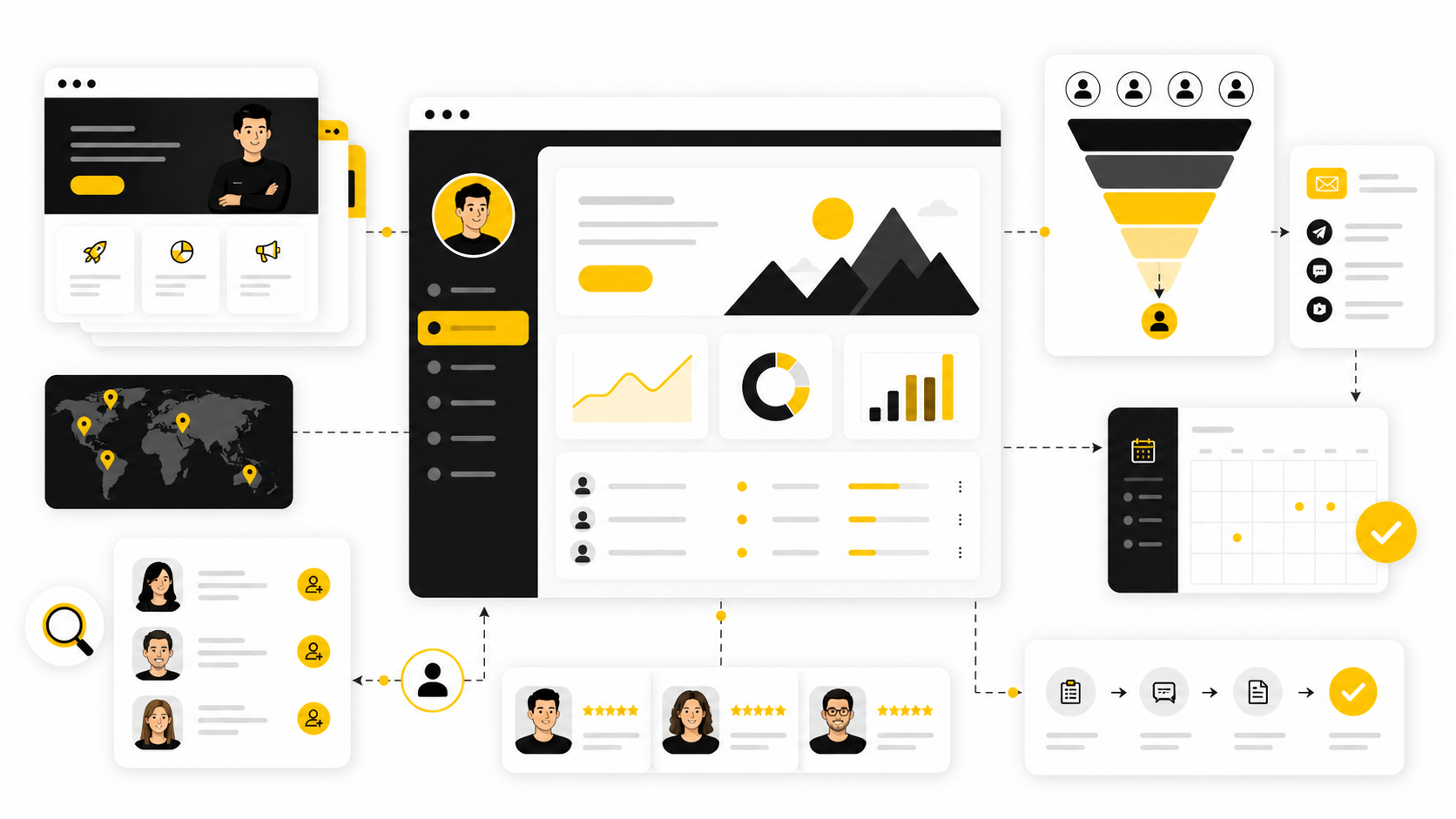
Freelance marketing websites are no longer just places to find quick gigs. They are discovery engines, trust signals, lead sources, portfolio hubs, and sometimes full business infrastructure for independent marketers who want better clients without relying only on referrals.
That matters because the freelance market is big, crowded, and getting more professional. The 2025 Upwork Future Workforce Index found that 28% of skilled knowledge workers now operate as freelancers or independent professionals, while MBO Partners’ 2025 State of Independence report tracks 73 million independent workers in the United States alone. At the same time, the global freelance platform market was valued at $6.37 billion in 2025, which shows how much money is moving through platforms that connect clients with independent talent.
For freelance marketers, the opportunity is real, but the trap is also real. A website can bring serious clients, or it can turn you into one more profile competing on price. The difference usually comes down to positioning, proof, platform choice, service packaging, and how well your own site supports the trust-building process before a client ever books a call.
Why Freelance Marketing Websites Matter Now
The best freelance marketing websites help clients answer one simple question: “Can this person solve my problem better than the alternatives?” That question applies whether the client finds you on a marketplace, a portfolio platform, LinkedIn, a personal website, or a niche directory. The platform is only the entry point; the real job is to reduce doubt.
This is especially important because marketing work is harder to evaluate than many clients expect. A client can see a logo, a landing page, or a social post, but they may not immediately understand whether the strategy behind it was good. Strong freelance marketing websites make the invisible parts of your work visible by explaining the problem, the thinking, the execution, and the business result.
The rise of AI has made this even more important, not less. Clients can generate copy, images, ads, and content drafts faster than ever, but many still need a human marketer who can choose the right message, judge quality, build a funnel, and connect the work to revenue. That is why your website should not just say what you do; it should show how you think.
The Framework for Choosing the Right Website Strategy
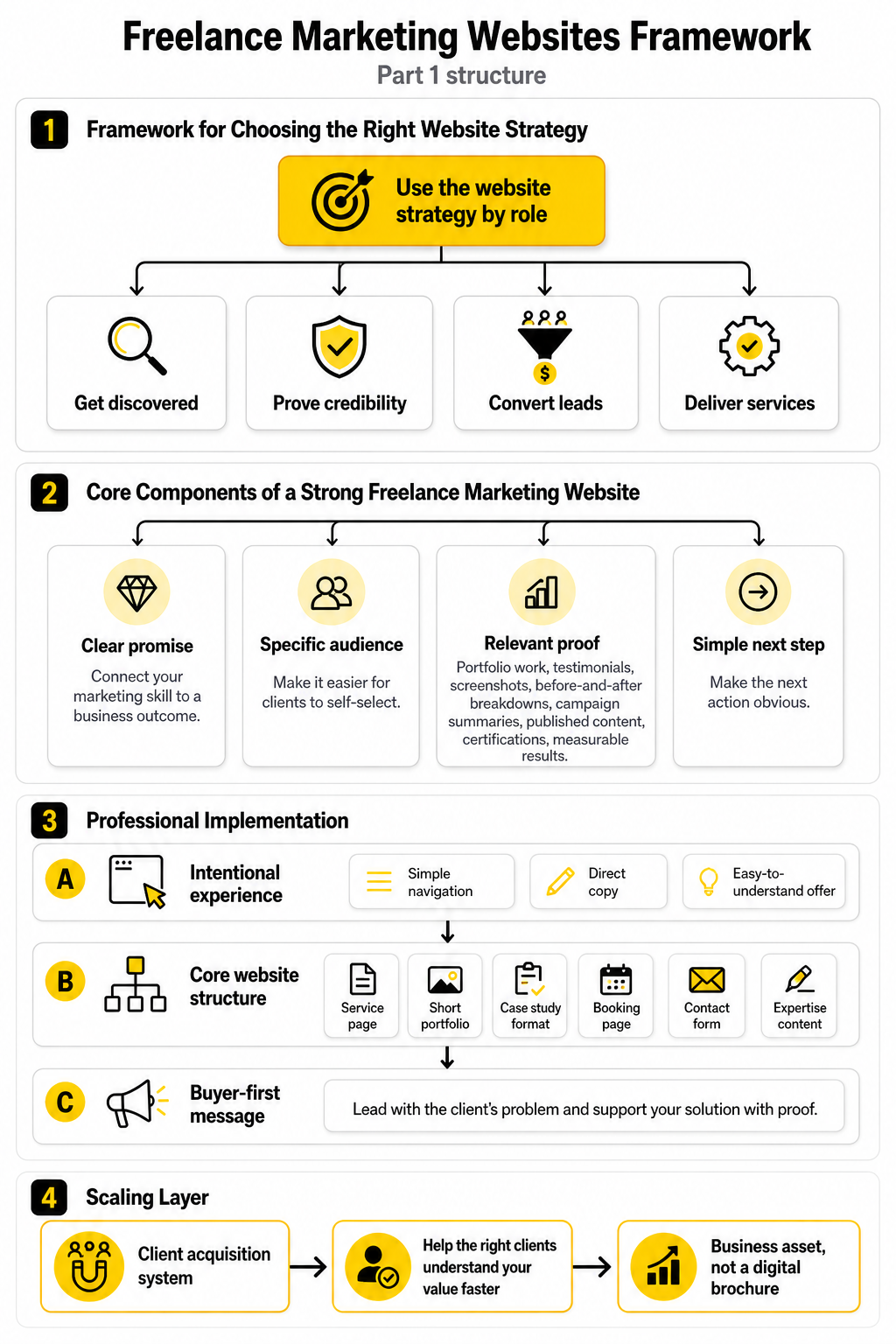
A useful framework starts with one practical distinction: are you using a website to get discovered, prove credibility, convert leads, or deliver services? Many freelancers confuse these goals and end up choosing the wrong platform. A marketplace profile, for example, can help with discovery, but it may not be enough to position you as a premium strategist.
A personal website gives you more control, but it usually needs traffic from another source. A portfolio platform can display work beautifully, but it may not explain your offer clearly enough to convert a serious buyer. A funnel or booking system can improve conversion, but only after your positioning and proof are strong enough to make people care.
That is the core idea behind this guide. Instead of treating freelance marketing websites as one category, we will break them into practical roles and show how each one fits into a client acquisition system. The goal is not to be everywhere; the goal is to build a web presence that helps the right clients understand your value faster.
Core Components of a Strong Freelance Marketing Website
A strong freelance marketing website needs a clear promise, a specific audience, relevant proof, and a simple next step. Without those pieces, even a beautiful website can feel vague. Clients do not want to decode your value; they want to understand quickly whether you are the right person for their situation.
Your promise should connect your marketing skill to a business outcome. “I do social media marketing” is weaker than a focused message around generating qualified leads, improving retention, growing email revenue, or helping founders turn content into sales conversations. The more specific the promise, the easier it becomes for clients to self-select.
Proof is the second major component. This can include portfolio work, testimonials, screenshots, before-and-after breakdowns, campaign summaries, published content, certifications, or measurable results when you are allowed to share them. The best proof does not just say “this looked good”; it explains why the work mattered.
Professional Implementation
A professional implementation does not mean your website has to be expensive or complicated. It means the experience feels intentional from the first click to the final call-to-action. The navigation should be simple, the copy should be direct, and the offer should be easy to understand without a long explanation.
Freelance marketers should also think beyond the homepage. A strong setup may include a service page, a short portfolio, a case study format, a booking page, a contact form, and a few pieces of content that show expertise. These pages work together to move a visitor from curiosity to confidence.
The biggest mistake is building a website around the freelancer instead of the buyer. Clients care about your background, but only after they understand how you can help them. When your website leads with the client’s problem and then supports your solution with proof, it becomes a business asset instead of a digital brochure.
this guide is structured as a six-part guide so each section can build naturally on the last. Part 1 sets the foundation by explaining why freelance marketing websites matter, how the framework works, and what components separate a credible website from a forgettable one. The remaining parts will move from strategy into platform selection, site structure, implementation, and optimization.
The Main Types of Freelance Marketing Websites
Once you understand the role your website should play, the next step is choosing the type of web presence that fits your business model. This is where many freelancers overcomplicate things. They compare tools before they understand the job each platform is supposed to do.
Freelance marketing websites usually fall into a few practical categories. Some help you get found by clients who are already searching. Some help you prove expertise after someone discovers you somewhere else. Others help you package, sell, book, automate, or deliver the work more professionally.
The smartest setup is rarely one website doing everything perfectly. A freelance marketer might use a marketplace profile for discovery, a personal website for positioning, a landing page for a specific offer, and a booking or CRM system to manage leads. That is not messy if every piece has a clear job.
Marketplace Websites
Marketplace websites are the obvious starting point because they already have client demand. Platforms like Upwork, Fiverr, Contra, Freelancer, PeoplePerHour, and similar marketplaces let clients search for specific skills, compare profiles, and hire without building a relationship from scratch. For a new freelancer, that built-in traffic can be valuable.
The downside is that marketplaces create direct comparison. Clients can see many freelancers offering similar services, which means your positioning has to be sharper than your competition. If your profile says the same generic things as everyone else, the client’s brain naturally moves toward price, reviews, and speed.
For freelance marketers, marketplaces work best when the offer is specific. “Email marketing setup for ecommerce brands” is easier to evaluate than “digital marketing services.” “Landing page audit for paid ad campaigns” is easier to buy than “conversion optimization.” Specificity makes your profile easier to trust because the client can see exactly where you fit.
Portfolio Websites
Portfolio websites are built to show your work, but they should not be treated like a visual archive. A weak portfolio says, “Here are some things I made.” A strong portfolio says, “Here is the problem, here is what I changed, and here is why the work mattered.”
That distinction is huge for marketers. Marketing is not just design, copy, social media, ads, analytics, or automation in isolation. It is the connection between a business goal and a customer action, so your portfolio should explain the thinking behind the deliverable.
Portfolio-first platforms can be useful for brand designers, content creators, social media specialists, copywriters, paid ad creatives, and landing page builders. But even then, the portfolio should point toward a commercial next step. If someone likes the work, they should immediately understand what to book, request, or buy next.
Personal Brand Websites
A personal brand website gives you the most control. You control the copy, the structure, the offers, the proof, the calls-to-action, and the overall impression. That matters when you want to move away from being judged like a commodity.
This type of site is especially useful once you know your niche. A general freelance marketer can look replaceable, but a specialist who helps B2B SaaS founders turn founder-led content into qualified sales calls feels much more concrete. The website gives you room to explain that positioning without being squeezed into a marketplace profile template.
The weakness is traffic. A personal website does not magically bring clients just because it exists. It needs inputs from content, search, referrals, partnerships, social platforms, outbound campaigns, communities, or paid traffic. Think of it as your trust hub, not your entire acquisition strategy.
Landing Page and Funnel Websites
A landing page is not the same thing as a full website. A landing page is built around one action, one offer, and one audience. That is why it can work so well for freelance marketers selling audits, strategy sessions, implementation packages, workshops, retainers, or productized services.
This is where tools like ClickFunnels, Systeme.io, and GoHighLevel can make sense. They are not just “website builders” in the simple brochure-site sense. They are built around pages, forms, follow-up, offers, and conversion paths.
The important thing is not the software itself. The important thing is the offer clarity. If the promise is vague, the funnel will only make the vagueness more obvious. But when the offer is sharp, a focused landing page can outperform a larger website because it removes distractions.
Directory and Listing Websites
Directory websites can help clients find specialists in a specific category, location, industry, or tool ecosystem. These are different from broad marketplaces because the client often arrives with a narrower intent. They may be looking for a certified partner, a local consultant, a niche service provider, or someone with experience using a particular platform.
This can be useful for freelance marketers who specialize in email platforms, CRM systems, analytics tools, automation software, ecommerce builders, or paid media channels. A directory listing gives you borrowed trust because the platform has already framed you as relevant. That does not replace your own proof, but it can reduce the first layer of doubt.
The limitation is that directories rarely give you enough room to sell deeply. Your listing needs a strong headline, a clear specialty, and a reason to click through. The goal is usually not to close the client inside the directory; the goal is to move them toward your own website, booking page, or consultation process.
Social Profile Websites
Some freelance marketers treat LinkedIn, X, Instagram, TikTok, YouTube, or other social profiles as their main website. That can work for discovery because social platforms reward publishing, interaction, and visibility. A strong profile can attract inbound leads before a client ever searches Google or visits a portfolio.
But a social profile is rented space. The layout, algorithm, reach, and rules are not yours. You can build real authority there, but you still need a place where a serious buyer can understand your offer without scrolling through months of posts.
The practical move is to make your social profile act like a front door. Your bio should say who you help, what outcome you support, and where someone should go next. That next step might be a personal site, a landing page, a booking page through Cal.com, or a short application form built with a tool like Fillout.
Content and SEO Websites
Content websites are built around search demand, education, and authority. They work well when your clients search for problems before they search for freelancers. For example, a founder may search for why their ads are not converting long before they search for a conversion copywriter.
This type of website takes more patience because content compounds over time. You need useful pages, clear topical focus, internal linking, and a reason for readers to move from learning into action. A blog with no offer is just free advice; a content site with a clear service path can become a serious lead source.
Freelance marketers should be careful not to publish random content just to look active. Every article should support a buying journey. It should answer a real question, build trust, and naturally guide the reader toward a relevant service, audit, checklist, consultation, or implementation offer.
Service Business Websites
A service business website is built less like a freelancer profile and more like a small agency site. It has defined services, client segments, process pages, proof, and often a more polished sales path. This type of site is useful when you want to sell retainers, larger projects, or done-for-you implementation.
The advantage is perception. Clients may feel more comfortable paying higher fees when the business looks organized and dependable. That does not mean pretending to be a big agency if you are not one. It means presenting your work with enough structure that clients understand what happens after they say yes.
This setup pairs well with CRM and follow-up systems because higher-value leads usually need more than one touch. A platform like GoHighLevel can fit this model when you need forms, pipelines, follow-up automations, calendars, and client communication in one place. The key is to use automation to support a human sales process, not to hide behind it.
Productized Service Websites
Productized service websites turn a freelance skill into a packaged offer. Instead of asking every client what they need from scratch, you define the scope, deliverables, timeline, price range, and outcome upfront. That makes buying easier because the client knows what they are getting.
This works well for audits, content packages, email sequences, landing page builds, ad account reviews, funnel setup, social media calendars, analytics dashboards, and CRM cleanup projects. The offer should be narrow enough to feel concrete but valuable enough to justify the price. A good productized service removes confusion without making the work feel cheap.
The risk is oversimplifying a service that needs strategy. Not every marketing problem fits inside a fixed package. The best productized offers usually solve a clear first problem, then create a natural path into deeper work if the client needs ongoing support.
Tool-Based Websites and Client Portals
Some freelance marketing websites are not mainly for discovery. They are used to manage client relationships, collect information, deliver assets, share reports, or organize communication. This matters more as your workload grows because messy delivery can damage trust even when the marketing work itself is good.
A client portal, intake form, reporting dashboard, or shared workspace can make you look more professional immediately. It also saves time because clients know where to submit details, review assets, approve work, or find next steps. For freelancers selling implementation-heavy services, that operational clarity becomes part of the client experience.
This does not need to be complex. A simple booking flow, onboarding form, shared folder, CRM pipeline, and automated follow-up can be enough. Tools like Fillout, Cal.com, Copper, or GoHighLevel can support different parts of that workflow depending on how your business is set up.
How These Website Types Work Together
The biggest shift is to stop asking, “Which freelance marketing website is best?” A better question is, “Which website type solves the next bottleneck in my business?” If nobody knows you exist, you need discovery. If people visit but do not inquire, you need better positioning and proof. If leads are interested but not booking, you need a stronger conversion path.
A beginner might start with a marketplace profile and a simple portfolio page. A growing freelancer might add a personal brand site, niche landing page, and booking system. A more established consultant might use content, email, funnels, CRM, and client portals to create a complete acquisition and delivery system.
That is the practical way to think about freelance marketing websites. Each type has a role, and each role should connect to the next step in your client journey. When the pieces support each other, your web presence stops feeling scattered and starts acting like a real business system.
How to Choose the Right Platform for Your Freelance Marketing Business
Choosing between freelance marketing websites gets easier when you stop comparing features first. Features matter, but they are not the starting point. The starting point is your business model, your client acquisition channel, and the level of trust a buyer needs before they are ready to contact you.
A freelance social media manager who sells monthly content packages does not need the same website setup as a conversion strategist selling high-ticket funnel audits. A paid ads consultant who gets leads from referrals does not need the same system as a copywriter trying to rank on search. The right platform is the one that supports how clients actually find, evaluate, and hire you.
This part is about implementation. Not in the abstract “build your brand” sense. We are going to turn the decision into a practical process so your website becomes easier to plan, easier to launch, and easier to improve.
Start With Your Client Acquisition Source
Before you build anything, identify where your best clients are most likely to come from. This could be referrals, LinkedIn, YouTube, search, marketplaces, cold outreach, partnerships, communities, paid ads, or direct traffic from your content. Your website strategy should support that source instead of pretending every channel matters equally.
If referrals are your main source, your website does not need to educate a cold audience from zero. It needs to confirm trust, show credibility, and make the next step easy. If search is your main source, your website needs content depth, topic structure, and pages that match real buying questions. If marketplaces are your main source, your personal site should strengthen your positioning after someone checks you outside the platform.
This one decision prevents a lot of wasted work. You do not need a complex blog if nobody is discovering you through search yet. You do not need a full funnel if your offer is still unclear. You do not need ten pages when one strong service page would help more.
Match the Website Type to Your Offer
Your offer should decide the shape of your website. A one-time audit needs a different flow than a monthly retainer. A productized service needs clear scope and deliverables. A custom consulting offer needs more trust-building, qualification, and context.
For simple services, a focused landing page can be enough. It should explain the problem, the outcome, who it is for, what is included, how the process works, and how to take the next step. Tools like Systeme.io or ClickFunnels can work well when the goal is a focused offer with a direct conversion path.
For higher-value services, a broader site usually makes more sense. You may need a homepage, service pages, proof, process explanation, and a qualification step before booking. A platform like GoHighLevel can fit when you want the website, calendar, forms, CRM, and follow-up system to work together instead of being scattered across separate tools.
Decide What the Visitor Must Believe
Every freelance marketing website has a belief problem. Before someone contacts you, they need to believe that their problem is real, your approach makes sense, your experience is relevant, and the next step is worth their time. If one of those beliefs is missing, the visitor hesitates.
This is why website copy should not be built around your resume alone. Your experience matters, but the page has to guide the buyer through a decision. The visitor should understand what pain you solve, what outcome you help create, what makes your approach different, and what happens after they inquire.
Write these beliefs down before you design the page. For example, a landing page strategist might need visitors to believe that their traffic problem is partly a conversion problem, that a better page can improve paid media efficiency, and that an expert review is cheaper than wasting another month of ad spend. Once those beliefs are clear, the structure of the page becomes much easier.
Build the First Version Around One Primary Action
A freelance website should not ask visitors to do five things at once. Follow me, read the blog, download the guide, book a call, view my portfolio, subscribe, and check my pricing is too much for one page. Pick the primary action and make the rest support it.
For many freelance marketers, the primary action is booking a call. In that case, the page should qualify the visitor before they reach the calendar. A tool like Cal.com can handle scheduling cleanly, while a short form through Fillout can collect the context you need before the call.
For lower-ticket or productized offers, the primary action may be a checkout, request form, or audit purchase. For content-led websites, it may be joining an email list first. The point is not that every freelance marketing website needs the same call-to-action. The point is that each page needs one dominant next step.
Use a Simple Implementation Process
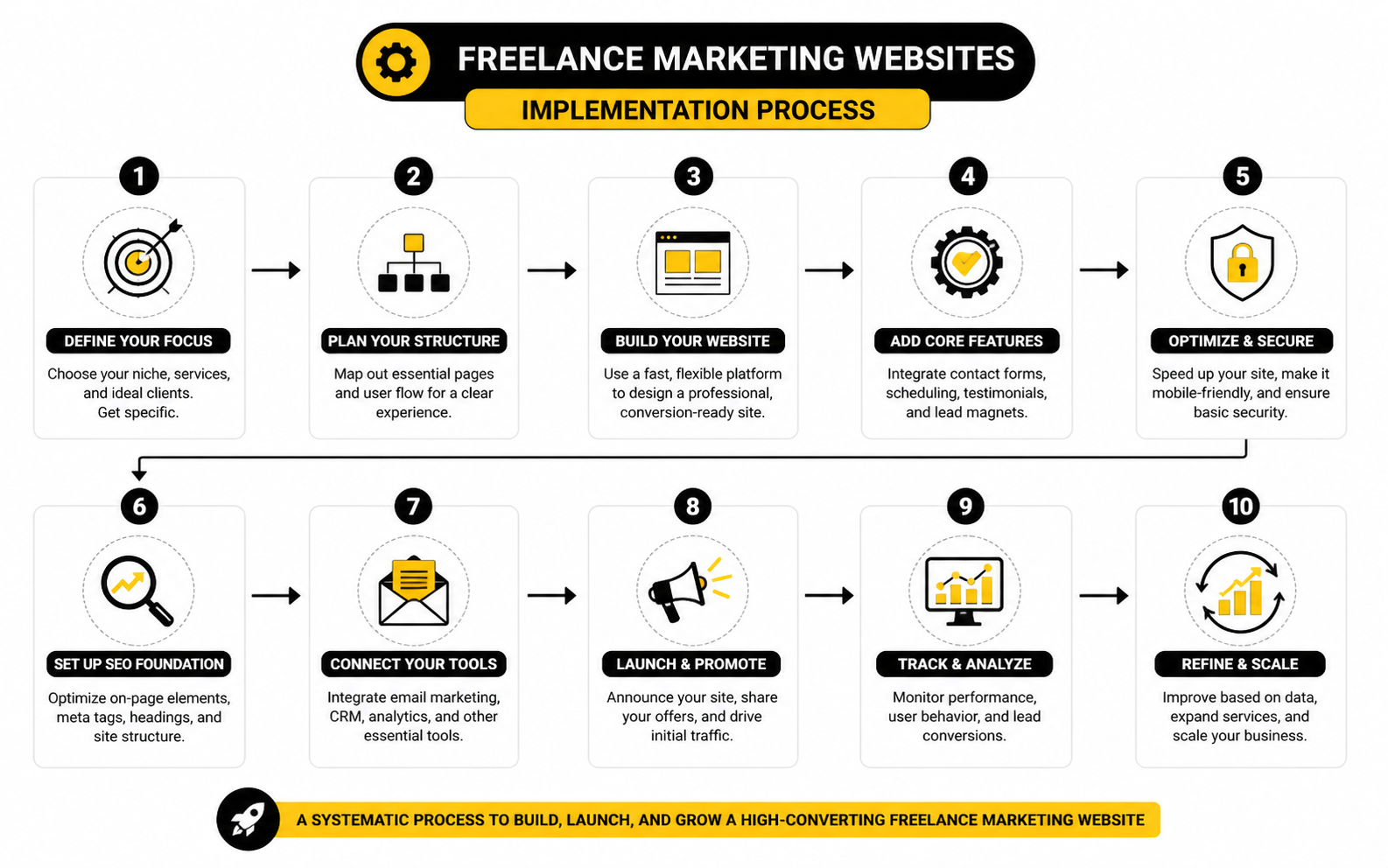
A good implementation process keeps you from building random pages. It also stops you from obsessing over design before the strategy is ready. The best version is simple enough to follow in a weekend, but structured enough to create a professional result.
This process works because it forces the website to serve a business function. You are not just making something look professional. You are building a path from attention to trust to action.
Choose Tools Based on Workflow, Not Hype
The tool stack should match the way you actually work. If you mainly need a simple site and a booking page, do not buy a complex platform just because it looks powerful. If you manage multiple leads, follow-ups, pipelines, and client communication, do not rely on a basic contact form and memory.
For social media-led freelancers, a scheduler like Buffer can support the top of the funnel, but it still needs to point people somewhere credible. For email-focused freelancers, tools like Brevo or Moosend can help nurture leads who are not ready to buy immediately.
For freelancers who sell automation, CRM, funnels, or client acquisition systems, the website may need to demonstrate operational maturity. In that case, GoHighLevel, ClickFunnels, or Systeme.io can be practical choices. Just remember: tools do not fix weak positioning. They amplify whatever strategy you already have.
Build Trust Before You Ask for the Sale
The more expensive or strategic your service is, the more trust your website needs to create. A visitor might book a quick audit after reading one strong page, but a client considering a large retainer usually needs more context. They want to know how you think, what your process looks like, what kind of clients you understand, and whether your recommendations will be grounded in business reality.
This is where process pages, case study summaries, detailed service pages, and thoughtful content help. You do not need to overload the site with everything you know. You need to answer the questions that create hesitation.
Good freelance marketing websites make the sales conversation easier before it starts. By the time a serious prospect books, they should already understand your focus, your approach, and the kind of result you are trying to create. That means the call can be about fit and next steps instead of basic explanation.
Make the Website Easy to Maintain
A website that only works when you have hours to update it every week is not a good system. Freelancers are busy, and the site has to stay useful even when client work gets intense. That means the structure should be simple, the content should be durable, and the update process should not feel like a second job.
Start with pages that do not need constant editing: homepage, services, proof, process, about, and contact. Add content only when it supports a real acquisition strategy. If you publish articles, organize them around topics that your ideal clients actually search or ask about during sales conversations.
Maintenance also includes checking broken forms, outdated offers, old testimonials, slow pages, and unclear calls-to-action. This is not glamorous work, but it matters. A freelance marketing website can only build trust if the experience feels current, clear, and cared for.
Know When to Upgrade
You do not need the perfect setup on day one. In fact, trying to build the final version too early can slow you down. The first version should help real prospects understand your value and take action.
Upgrade when the business gives you a reason. If leads are coming in but you are losing track of follow-up, add a CRM. If people ask the same questions before every call, improve the service page. If referrals are strong but cold visitors do not convert, add better proof and clearer positioning. If one offer is working, build a dedicated landing page around it.
This is the practical rhythm: launch, learn, tighten, and expand. The best freelance marketing websites are not built in one dramatic push. They are improved through real conversations, real objections, and real client behavior.
Statistics and Data
Measurement is where freelance marketing websites stop being a guessing game. A site can look polished, sound professional, and still fail because the wrong people visit it, the right people do not trust it, or interested prospects never take the next step. Data helps you separate those problems instead of changing random things every month.
The key is not to chase every metric. A freelance marketer does not need the same reporting dashboard as a large SaaS company or ecommerce brand. You need a simple measurement system that shows whether your website is attracting relevant visitors, building enough trust, and turning attention into qualified conversations.
The market context matters too. Freelancing is not a tiny side category anymore. The 2025 Upwork Future Workforce Index found that 28% of skilled knowledge workers work in freelance or non-traditional models, while the 2025 MBO Partners State of Independence report reported a record 5.6 million independent workers earning more than $100,000 annually. That means clients have more choice, and your numbers need to show whether your website is helping you stand out or simply adding another profile to the noise.
What Website Data Should Actually Tell You
The first job of analytics is diagnosis. If traffic is low, the problem is usually distribution. If traffic is decent but people leave quickly, the problem may be relevance, positioning, page speed, message clarity, or weak proof. If people read but do not inquire, the offer or call-to-action may not feel compelling enough.
This is why raw traffic is overrated. A freelance marketing website with 200 highly relevant visitors can outperform a site with 5,000 random visitors. The question is not “how many people came?” The better question is “how many qualified prospects understood the offer and took a meaningful next step?”
That next step depends on the site type. For a marketplace profile, it may be profile views, saves, invitations, or direct messages. For a personal website, it may be contact form submissions, booked calls, email signups, or portfolio clicks. For a landing page, it may be applications, audit purchases, or consultation requests.
The Core Metrics Worth Tracking
The best measurement setup for freelance marketing websites is simple. You want a small group of metrics that connect to real business decisions. Anything else becomes dashboard decoration.
Track these first:
These metrics work because they follow the buyer journey. They show the path from attention to interest to inquiry to revenue. That is the only path that really matters.
A Simple Analytics System for Freelancers
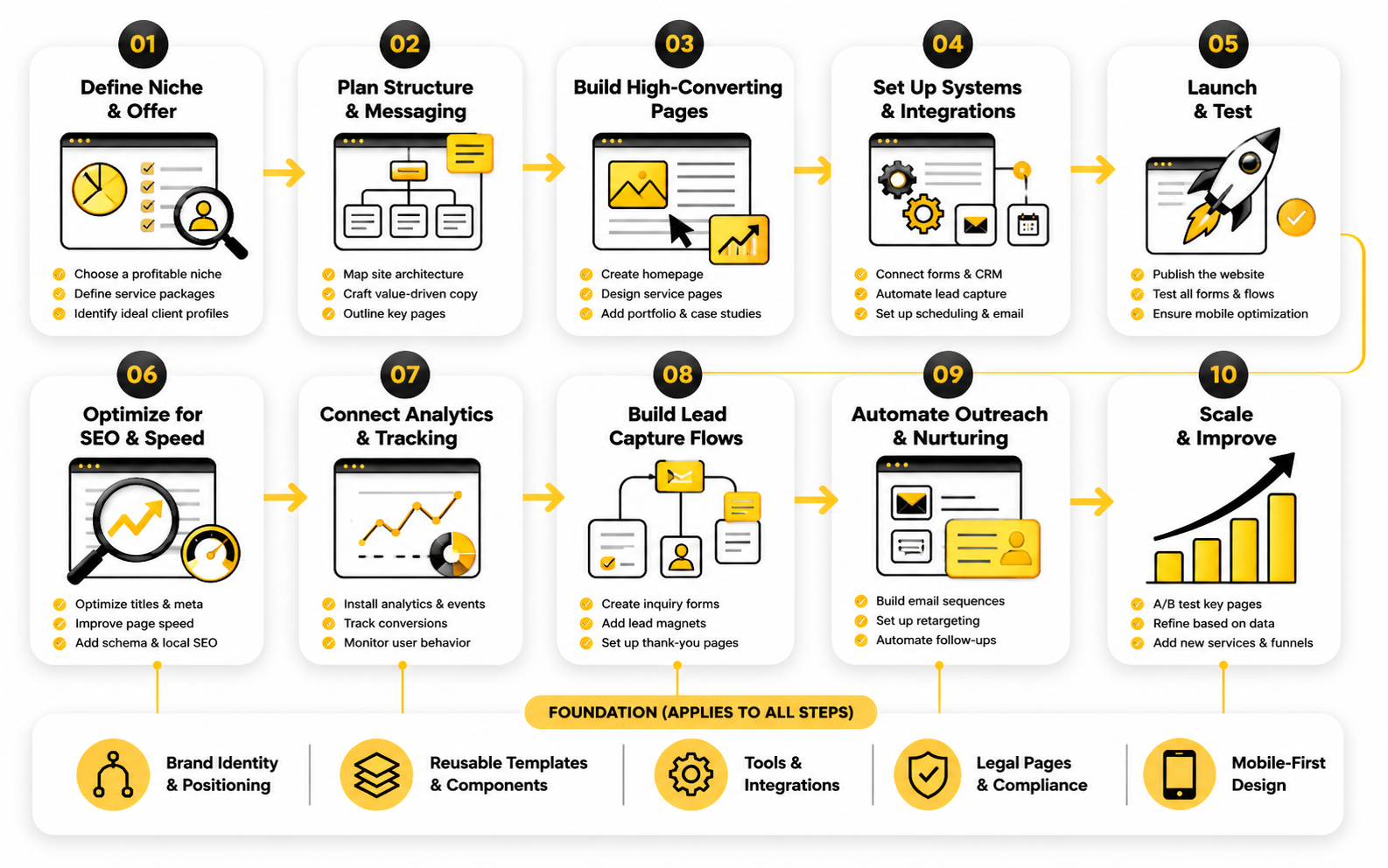
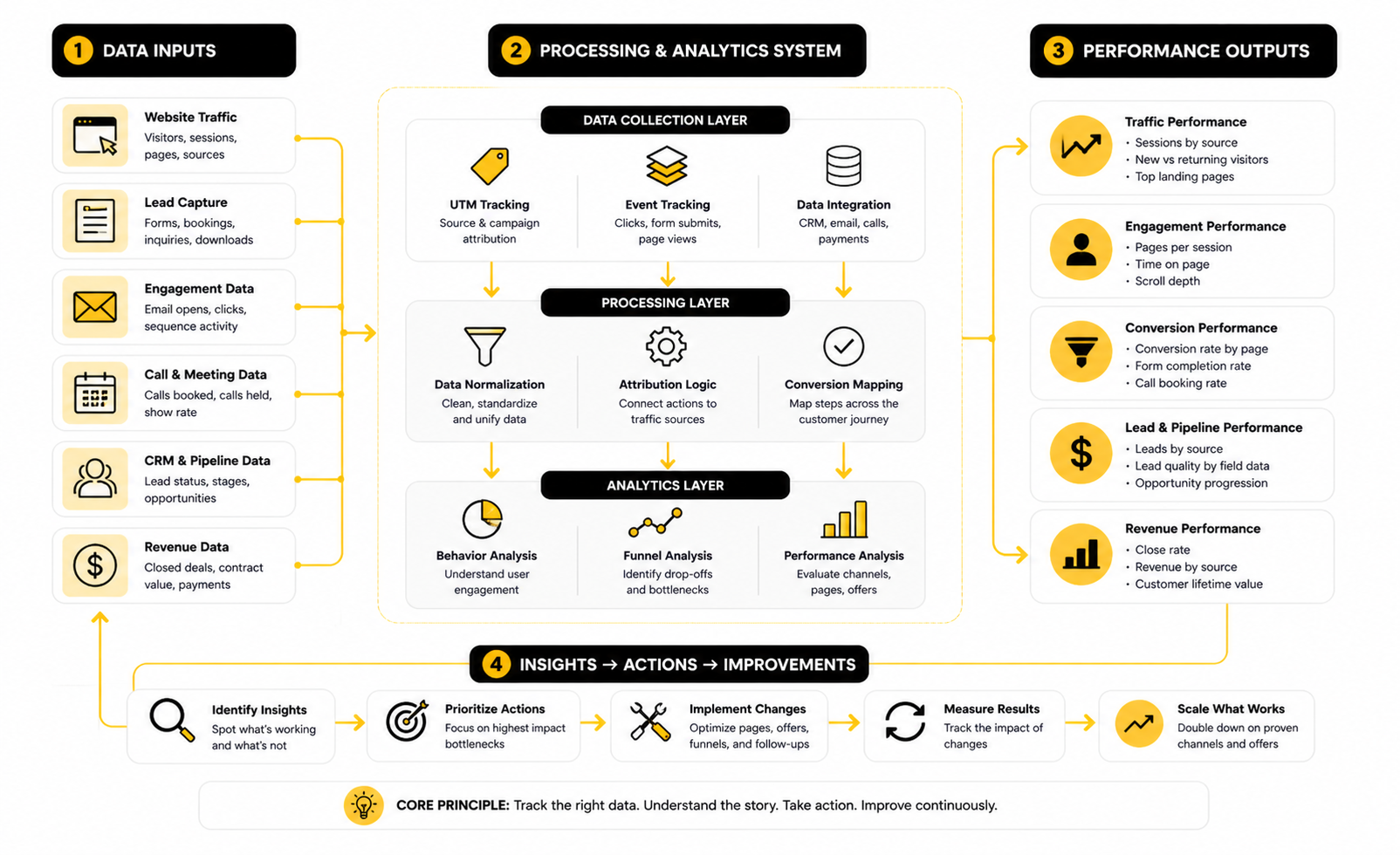
A clean analytics system has four layers: traffic, behavior, conversion, and sales quality. Traffic shows whether your distribution is working. Behavior shows whether the page holds attention. Conversion shows whether the offer creates action. Sales quality shows whether the action is worth your time.
This structure keeps you from making the wrong fix. If traffic is weak, redesigning the homepage will not solve the real problem. If traffic is strong but lead quality is poor, adding more traffic may only create more bad calls. If calls are qualified but not closing, the website may be doing its job while the offer, pricing, or sales conversation needs work.
For implementation, a basic setup can be enough. Use website analytics to track traffic and page behavior, a form or booking tool to capture inquiries, and a simple CRM to track source, fit, deal value, and outcome. A system like GoHighLevel can help when you want forms, booking, follow-up, pipelines, and reporting in one place, while tools like Cal.com and Fillout can support a leaner setup.
Benchmarks Are Useful, but Only With Context
Benchmarks can be helpful, but they can also mislead you. A public benchmark does not know your niche, price point, offer strength, traffic source, brand awareness, or sales process. A $300 audit page and a $5,000 monthly retainer page should not be judged by the same conversion expectation.
Still, benchmarks give you a sanity check. Recent B2B lead generation analysis often places broad website visitor-to-lead conversion in the low single digits, with one 2025 benchmark summary putting many B2B website conversion rates around the 2% to 3% range. That does not mean your freelance site is failing if it converts below that number, especially if you sell expensive services to a narrow audience. It means you should look at both volume and quality before drawing conclusions.
A narrow specialist site may convert fewer visitors but produce better sales calls. A broad content site may bring more traffic but lower buyer intent. A marketplace profile may generate fewer visits than a blog but produce prospects who are already closer to hiring. The benchmark is only useful when you compare it against intent.
Traffic Quality Beats Traffic Volume
Freelancers often treat website growth like a numbers game. More visitors feels like progress, and sometimes it is. But for service businesses, traffic quality matters more because your capacity is limited and your sales process is personal.
A freelance marketer does not need thousands of leads. You need enough of the right leads to fill your client pipeline without spending your week on bad-fit calls. That means a smaller audience from referrals, niche content, partner recommendations, or targeted LinkedIn posts may be more valuable than a large audience from generic search traffic.
This is where source tracking becomes powerful. If LinkedIn sends 80 visitors and 5 qualified calls, while search sends 1,000 visitors and 1 weak inquiry, the smaller channel is doing more business work. Without source tracking, you might mistakenly invest in the channel that looks bigger instead of the channel that pays.
Conversion Rate Is Not the Whole Story
Conversion rate tells you how many visitors took action, but it does not tell you whether that action was valuable. A page can increase conversion by attracting cheaper, less qualified leads. That looks good in analytics and bad in your calendar.
This is why lead quality should be measured next to conversion rate. Track whether inquiries have the right budget, urgency, industry, problem, and willingness to follow your process. If a page converts at 8% but most leads are poor fit, it may be worse than a page converting at 2% with strong prospects.
For freelance marketing websites, the real metric is not form submissions. It is qualified opportunities. A qualified opportunity is a person or company with a real problem, a clear reason to act, enough budget, and a service fit that you can actually deliver.
Engagement Metrics Need Careful Interpretation
Engagement metrics can help, but they are easy to misread. A long time on page might mean someone is deeply interested. It might also mean the page is confusing. A short visit might mean the visitor bounced, or it might mean they quickly found your booking link and left to schedule.
Look at engagement in context. If visitors spend time on your service page, view proof, and then book calls, that is a healthy pattern. If they bounce from the homepage without clicking anything, your first message may not be clear enough. If they visit the portfolio but never move to the contact page, your proof may be interesting but not connected to a strong offer.
Scroll depth can also reveal where attention drops. If most visitors never reach your testimonials, process, or call-to-action, those sections are buried too low or the opening is not earning enough attention. The fix may be structure, not more content.
What Good Performance Looks Like
Good performance looks different at each stage. Early on, your goal is not perfect conversion. Your goal is signal. You want to know whether the message attracts the right people, whether the offer makes sense, and whether the next step creates real conversations.
A healthy early freelance website might show modest traffic but clear inquiry quality. Visitors may come from referrals, social posts, marketplaces, or direct outreach, then use the website to validate your credibility before booking. That is a legitimate win even if the traffic chart looks small.
As the site matures, performance should become more predictable. You should know which channels create qualified visitors, which pages support trust, which calls-to-action work best, and which objections appear repeatedly. That gives you a practical improvement roadmap instead of vague website anxiety.
How to Turn Data Into Better Decisions
Data is only useful when it changes your decisions. If your homepage gets traffic but nobody clicks into services, rewrite the headline and make the offer clearer. If people view your services but do not book, strengthen proof, clarify the process, or reduce friction around the call-to-action. If people book but do not buy, review your qualification, pricing, and sales conversation.
Use a monthly review rhythm. Look at traffic sources, top pages, conversion actions, inquiry quality, and closed revenue. Then choose one improvement for the next month instead of changing everything at once.
For example, if referral traffic converts well but search traffic does not, your issue may be search intent. If social traffic reads content but does not inquire, your content may need stronger bridges into your services. If marketplace prospects click through to your site but do not contact you, your positioning may not be reinforcing the reason they were interested in the first place.
The Metrics That Do Not Matter Much
Some numbers feel important because they are visible. Follower count, total impressions, generic traffic growth, and raw page views can create a sense of progress. But they are not enough to judge freelance marketing websites.
A freelancer can have a small audience and a strong business. They can also have a large audience and no clear offer. Do not let vanity metrics distract you from the numbers that connect to pipeline and revenue.
The practical rule is simple. If a metric does not help you improve your message, traffic source, offer, conversion path, or sales process, it is probably not a priority. Keep your dashboard lean enough that you can actually use it.
Reporting Your Own Website Like a Client Project
Treat your own website like a client project. That does not mean overbuilding a huge report. It means giving yourself the same discipline you would recommend to someone paying you.
Create a short monthly review with five questions:
This keeps your website grounded in business reality. You are not just maintaining a digital presence. You are improving a system that should help better clients understand, trust, and hire you.
Tools, Workflows, and Professional Implementation
By this point, the website should no longer feel like a standalone asset. It is part of a client acquisition and delivery system. The next level is making sure the system can handle better leads, cleaner follow-up, stronger positioning, and more consistent client experience without turning your freelance business into a pile of disconnected tools.
This is where advanced decisions matter. A beginner can survive with a simple site, a contact form, and a calendar link. But as your rates increase, your services become more strategic, and your pipeline gets more serious, your freelance marketing websites need to support a more professional workflow.
The goal is not to make everything complicated. The goal is to remove friction. Your website should help prospects understand your value, help you qualify the right clients, and help both sides move into the project with fewer delays, fewer unclear expectations, and fewer manual admin tasks.
The Tradeoff Between Simplicity and Control
Simple platforms help you launch faster. That is useful when you are testing a new offer, validating a niche, or getting your first serious clients. You do not want to spend weeks building a complicated site when the offer itself has not been proven.
Control matters more when the website becomes a core business asset. If you are investing in SEO, paid traffic, advanced tracking, custom funnels, or multiple service pages, you need more flexibility. That includes control over page structure, conversion paths, integrations, analytics, and how prospects move from content into inquiry.
The practical rule is simple: start with the least complex setup that can support your current offer, then upgrade when the business case is obvious. Do not choose a platform because it feels impressive. Choose it because it solves a bottleneck you can clearly name.
Avoid Building Around the Wrong Persona
One of the quiet risks with freelance marketing websites is building for other marketers instead of buyers. Freelancers often write copy that sounds clever to peers but unclear to clients. They show tactics, acronyms, dashboards, and tools before they explain the business problem.
Your buyer may not care that you know every platform, framework, or automation trick. They care that you understand their pain, can diagnose the situation, and can make the next move feel safe. The website should make them feel understood before it tries to make you look impressive.
This matters even more when you sell to founders, local businesses, coaches, consultants, creators, agencies, or ecommerce teams. Each buyer group has different fears. A founder may fear wasting another month on poor positioning. A local business may fear being locked into a confusing marketing contract. A creator may fear losing their voice to generic content. Your site has to speak to the buyer’s real decision, not your internal skill list.
Make Qualification Part of the User Experience
Qualification should not feel like a wall, but it should exist. If your website makes it too easy for anyone to book, you may end up with a calendar full of weak-fit calls. That looks like traction, but it drains energy fast.
A better approach is to qualify naturally through the page. Your copy should say who the offer is for, who it is not for, what problems you solve, what level of commitment is required, and what the next step involves. By the time someone fills out a form, they should already have a realistic sense of fit.
Forms can support this without becoming annoying. A short application through Fillout, followed by scheduling through Cal.com, can help you collect budget, timeline, goals, current bottlenecks, and decision context before the call. That makes the conversation sharper and saves both sides from wasting time.
Build Follow-Up Into the System
Many freelance marketers lose leads because follow-up is manual, inconsistent, or forgotten. A prospect fills out a form, asks a question, downloads something, or visits a booking page, and then nothing happens unless the freelancer remembers to respond. That is not a website problem. That is a workflow problem.
Your website should trigger the next step automatically where possible. A form submission can create a CRM record, send a confirmation email, notify you, tag the lead source, and start a short follow-up sequence. A booked call can send reminders, collect pre-call notes, and move the lead into the right pipeline stage.
This is where CRM and automation tools become useful. GoHighLevel can make sense if you want pipelines, forms, calendars, email, SMS, and follow-up automations in one place. Brevo or Moosend can support email nurturing when you are building a content-led or list-based acquisition path.
Protect Your Positioning as You Add More Offers
Scaling creates a positioning risk. At first, one clear offer makes the website easy to understand. Then you add consulting, audits, content, ads, funnels, automation, workshops, retainers, and maybe even templates. Suddenly the site starts to feel like a menu.
The problem is not having multiple offers. The problem is presenting them without hierarchy. A strong website should make the main path obvious while still giving serious prospects a way to explore related services.
Use one primary positioning statement and then organize offers underneath it. For example, if your core promise is helping B2B founders turn content into pipeline, your offers might include strategy, content systems, LinkedIn ghostwriting, and email nurture. Those are related. If you also add logo design, TikTok editing, local SEO, and webinar production, the buyer may struggle to understand what you are truly best at.
Separate Proof by Buyer Intent
Not all proof does the same job. A testimonial can build confidence, but a process breakdown can reduce uncertainty. A portfolio screenshot can show taste, but a campaign summary can show judgment. A certification can support credibility, but a specific result can support urgency.
As your site grows, organize proof based on the decision it supports. On a homepage, use broad trust signals that show you are credible. On a service page, use proof that matches that exact service. On a landing page, use proof that supports the specific promise and audience on that page.
This is especially important for freelance marketing websites because clients often compare different types of marketers. They may not know whether they need a strategist, copywriter, media buyer, automation expert, or generalist. Your proof should help them understand why your role fits their current problem.
Handle AI Without Sounding Generic
AI has changed the expectations around marketing work. Many clients now assume basic content production, first drafts, research, and simple automation can be done faster than before. That means your website should not position you as someone who merely produces assets.
The strongest positioning moves up the value chain. You are not just “writing content.” You are shaping a message that helps the right buyer take the next step. You are not just “building funnels.” You are designing a path from attention to trust to conversion. You are not just “using AI.” You are applying judgment to make AI-assisted work useful, accurate, and commercially relevant.
This matters because skilled freelancers are already leaning into AI. Upwork’s workforce research reported that 54% of freelancers described themselves as highly proficient with AI tools, compared with 38% of full-time employees. The takeaway is not to plaster “AI-powered” everywhere. The takeaway is to show that you combine modern tools with taste, strategy, and accountability.
Build a Stack You Can Explain to Clients
Your tools should make you more professional, not harder to understand. If a client asks how your process works, you should be able to explain it in plain language. They should know where they submit information, where meetings happen, where assets live, how revisions work, and how progress is tracked.
This is especially important if you sell implementation. Clients judge your marketing skill partly by the experience of working with you. If onboarding is scattered, communication is unclear, and files are hard to find, your delivery feels less reliable even if the final output is strong.
A practical stack might include a website or funnel builder, a booking tool, an intake form, a CRM, an email platform, a project workspace, and a simple reporting method. It does not have to be fancy. It has to be coherent.
Reduce Platform Risk
Relying on one platform can be dangerous. A marketplace can change its algorithm. A social network can reduce reach. A SaaS tool can change pricing. An account can get restricted. A traffic source can decline.
That does not mean you should avoid platforms. It means your business should not be trapped inside one. Your personal website, email list, CRM, and direct client relationships give you more resilience because they are assets you can control more directly.
This is why freelance marketing websites should eventually connect to owned channels. If someone discovers you on LinkedIn, YouTube, a marketplace, or a directory, give them a reason to visit your site, join your list, book a call, or engage with your owned process. Discovery can happen on rented land, but trust and conversion should increasingly move into your own system.
Know the Difference Between Automation and Abdication
Automation is useful when it removes repetitive friction. It is dangerous when it replaces judgment. A freelancer can automate reminders, form routing, lead tagging, meeting confirmations, onboarding steps, and simple follow-up. That is smart.
But you should not automate away the moments where trust is built. A serious prospect may need a thoughtful reply. A qualified lead may need a custom recommendation. A client may need a human explanation when a project changes direction.
The best systems feel responsive, not robotic. Use automation to make sure nothing slips through the cracks, then bring human judgment where it matters. That balance is what makes a small freelance business feel professional without feeling impersonal.
Prepare the Website for Higher-Value Clients
As your rates increase, your website has to carry more trust. A low-ticket service can often be sold with a clear page and a fast checkout. A premium retainer, strategic consulting package, or complex implementation offer needs more evidence.
Higher-value clients want to see sharper positioning, stronger process clarity, relevant proof, and a confident point of view. They also want to feel that you understand tradeoffs. If your site promises everything instantly, it sounds inexperienced. If it explains what matters, what does not, and how decisions are made, it sounds mature.
That is the level to aim for. The best freelance marketing websites do not just attract attention. They pre-frame the sales conversation so the right clients arrive more informed, more confident, and more ready to work.
Optimization, Common Mistakes, and FAQ
At this stage, freelance marketing websites should be treated as living systems. You have the strategy, the platform logic, the implementation process, the measurement framework, and the professional workflow. The final step is knowing how to refine the system without overreacting to every small number or rebuilding everything too often.
Optimization is not about endlessly tweaking button colors. It is about making the path clearer for the right buyer. The better your website gets, the more it should filter bad-fit leads, support serious prospects, and make your sales conversations easier.
This is also where the best freelancers separate themselves from the crowd. A crowded market rewards clarity. The 2025 MBO Partners State of Independence report reported 72.9 million independent workers in the United States, and the 2025 Upwork Future Workforce Index found that skilled freelancers are leading in AI proficiency and self-directed learning. That means clients have options, and your website needs to communicate why your specific expertise is worth choosing.
Common Mistakes That Hold Freelance Websites Back
The first common mistake is trying to look bigger instead of clearer. Some freelancers hide behind agency language, vague taglines, oversized service menus, and polished but empty copy. Clients do not need you to sound like a Fortune 500 consultancy. They need to understand what problem you solve and why you are credible.
The second mistake is making the website about deliverables instead of outcomes. A client may buy email sequences, landing pages, ads, dashboards, or content calendars, but they are usually trying to solve a deeper problem. They want more qualified leads, better conversion, cleaner positioning, stronger retention, or a more reliable sales process. Your site should connect the deliverable to the business reason behind it.
The third mistake is ignoring the post-click experience. A prospect might trust your homepage, then hit a confusing form, a broken calendar, a slow response, or a vague confirmation message. That weakens the entire experience. The sales process starts before the call, and every step either builds or reduces confidence.
How to Improve Without Rebuilding Everything
Most freelance marketing websites do not need a full rebuild. They need one smart improvement at a time. Start with the part of the buyer journey that is leaking the most value.
If the right people are not visiting, improve distribution and channel focus. If visitors are landing but not engaging, sharpen the first screen, headline, and promise. If people read but do not inquire, improve the offer, proof, and next step. If inquiries are weak-fit, strengthen qualification and make your ideal client more obvious.
This approach keeps optimization practical. You are not guessing. You are looking at where attention, trust, or action breaks down, then fixing that specific point.
The Final Website Ecosystem
The strongest setup is an ecosystem, not a single page. Discovery can come from marketplaces, referrals, social platforms, search, partnerships, or directories. Trust can be built through a personal site, portfolio, content, case studies, and proof. Conversion happens through clear offers, forms, calendars, follow-up, and sales conversations.
Delivery is part of the ecosystem too. Once someone becomes a client, the experience should feel organized. Intake, onboarding, communication, approvals, reporting, and next steps should all support the same professional impression your website created.
This is the full picture. Freelance marketing websites work best when they connect discovery, trust, conversion, and delivery into one coherent system. When each piece supports the next, the website stops being “something you should have” and becomes a real growth asset.
What are freelance marketing websites?
Freelance marketing websites are online platforms, personal sites, portfolios, landing pages, directories, or marketplaces that help freelance marketers get discovered, prove credibility, and convert prospects into clients. They can be broad platforms where clients search for talent, or owned websites where freelancers control the message and sales process. The best setup usually combines more than one website type because discovery, trust, conversion, and delivery all need different support.
Do freelance marketers need their own website?
Yes, most freelance marketers benefit from having their own website, even if they also use marketplaces or social platforms. A personal website gives you more control over positioning, proof, service pages, calls-to-action, and the way prospects understand your value. Marketplaces and social profiles can bring attention, but your own site gives serious buyers a clearer place to evaluate you.
What should a freelance marketing website include?
A strong freelance marketing website should include a clear promise, a defined audience, service pages, proof, a simple process explanation, and one obvious next step. It should also make it easy for prospects to contact you, book a call, or submit project details. The goal is not to include everything you have ever done; the goal is to help the right client decide whether you are a strong fit.
Which type of website is best for beginners?
Beginners usually do best with a simple personal website, portfolio page, or focused landing page. The first version should explain who you help, what problem you solve, what services you offer, and how someone can contact you. A marketplace profile can also be useful early because it gives access to existing demand, but it should not be your only long-term asset.
Should I use a marketplace or build my own website?
Use both if they serve different jobs. A marketplace can help with discovery because clients are already searching there. Your own website helps with trust, positioning, and control. If someone finds you on a marketplace and then searches your name, a strong personal site can make you feel more credible and less interchangeable.
How many pages does a freelance marketing website need?
A simple freelance marketing website can start with four to six pages: homepage, services, portfolio or proof, process, about, and contact. If you have one focused offer, a single landing page can be enough. As your business grows, you can add service-specific pages, case studies, content, lead magnets, and client resources.
What metrics should I track on my freelance website?
Track traffic source, landing pages, engagement, conversion actions, inquiry quality, close rate, and revenue by source. These numbers show whether your website is attracting the right people and turning attention into real opportunities. Do not obsess over vanity metrics like total page views if they do not connect to qualified leads.
What is a good conversion rate for a freelance marketing website?
There is no universal conversion rate because the offer, niche, price, traffic source, and buyer intent all change the number. Broad B2B benchmarks often sit in the low single digits, while focused landing pages with strong intent can perform higher. The better question is whether your website creates enough qualified opportunities to support your business goals.
How do I make my freelance marketing website stand out?
Make it specific. Say who you help, what result you support, and why your approach is different. Generic claims like “I help brands grow online” are easy to ignore, but a focused message around a concrete audience and problem is easier to trust. Strong proof, clear process, and confident copy also make a big difference.
Should I list prices on my freelance marketing website?
Listing prices can be useful if you sell productized services, audits, packages, or clear deliverables. For custom strategy or high-value retainers, a price range or “starting at” figure can help qualify leads without locking you into the wrong scope. The main goal is to reduce bad-fit inquiries while still giving serious prospects enough context to move forward.
How important is SEO for freelance marketing websites?
SEO can be powerful if your ideal clients search for the problems you solve. It is less important if most of your leads come from referrals, outbound, social content, or partnerships. The right question is not whether SEO matters in general. The right question is whether search is a realistic acquisition channel for your niche, offer, and timeline.
Can a social media profile replace a website?
A social media profile can create attention, but it should not fully replace a website. Social platforms control the layout, reach, algorithm, and rules. Your own website gives you a more stable trust hub where prospects can understand your offer, view proof, and take the next step without scrolling through posts.
How often should I update my freelance marketing website?
Review the site monthly and update it whenever your offer, proof, positioning, pricing, or process changes. You do not need constant redesigns. You need the website to stay accurate, clear, and aligned with the kind of clients you want to attract.
What tools should freelance marketers use with their website?
The right tools depend on your workflow. A simple stack might include a website builder, booking tool, intake form, email platform, and CRM. Tools like Cal.com, Fillout, Brevo, and GoHighLevel can support different parts of the system depending on how complex your sales and follow-up process is.
What is the biggest mistake freelancers make with their websites?
The biggest mistake is being too vague. A vague website forces the client to figure out what you do, who you help, and why it matters. Serious buyers do not want to solve that puzzle. They want a clear reason to trust you and a simple next step.
Build a stronger local presence with BAAM AI
Turn your website, Google profile, social channels, and AI visibility into one growth engine
Most businesses do not need more random marketing activity. They need a consistent presence system that helps the right people find them, trust them, and take action. BAAM AI brings strategy, local SEO, website updates, Google Maps visibility, social content, AI-search readiness, media production, and reporting into one practical monthly engine.
If you want your marketing to keep working after the campaign ends, start with a free BAAM AI presence audit. See how your business shows up today and where the fastest visibility wins are at BAAM AI.