
BAAM AI Blog
Email Marketing Trends 2022: What Changed And What Still Matters
Email marketing trends 2022 were not just about prettier newsletters or better subject lines. The bigger shift was that email moved from “send more campaigns” to “build a more carefully owned audience system.”...
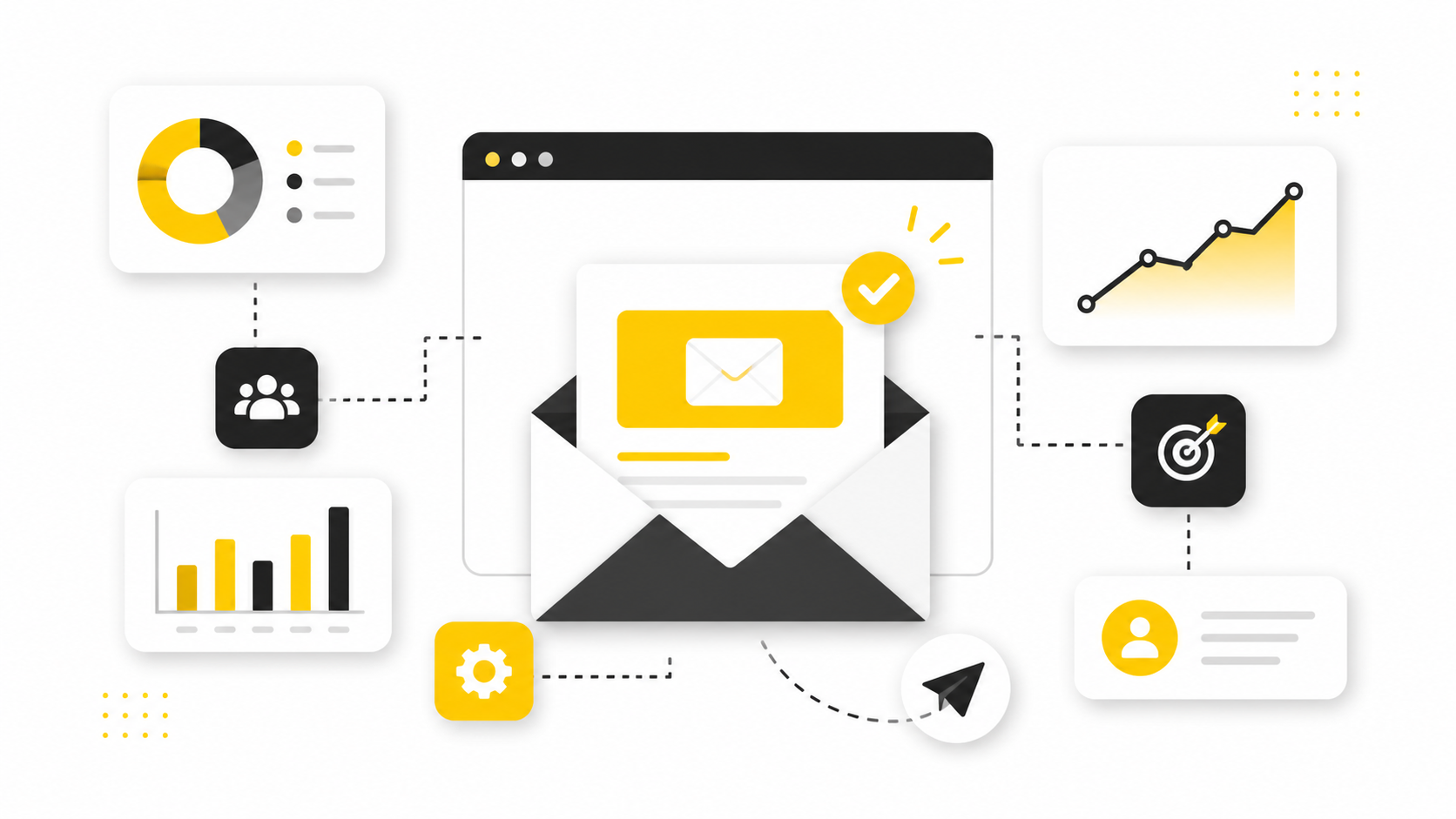
Email marketing trends 2022 were not just about prettier newsletters or better subject lines. The bigger shift was that email moved from “send more campaigns” to “build a more carefully owned audience system.” Privacy changes, automation, first-party data, mobile behavior, and personalization all forced marketers to rethink how email should actually work.
That matters even more now because the best email programs still follow the same logic. You earn permission, collect useful data, segment with intent, automate the right moments, and measure revenue instead of vanity metrics. Mailchimp’s benchmark data shows average email performance still varies heavily by industry, which is exactly why copying generic tactics rarely works.
Here is the structure this six-part article will follow:
Why Email Marketing Trends 2022 Still Matter
The reason email marketing trends 2022 still matter is simple: that year exposed the weak parts of lazy email marketing. Apple’s privacy changes made open rates less reliable, inbox competition kept rising, and customers became less tolerant of irrelevant blasts. Marketers who depended on broad lists and basic campaign calendars had to start thinking more seriously about trust, timing, and customer intent.
The strongest shift was toward owned data. Instead of relying only on third-party tracking, brands had to collect better zero-party and first-party data through forms, preferences, purchase behavior, quizzes, and direct engagement. Ascend2’s 2022 email marketing report highlighted personalization, automation, and mobile-friendly design as major priorities for marketers that year.
This is why the topic is not outdated. The tools have changed, AI has accelerated execution, and platforms have become more advanced, but the foundation is the same. Email still works when it feels relevant, arrives at the right moment, and helps the reader make a useful decision.
The Framework Behind Modern Email Marketing
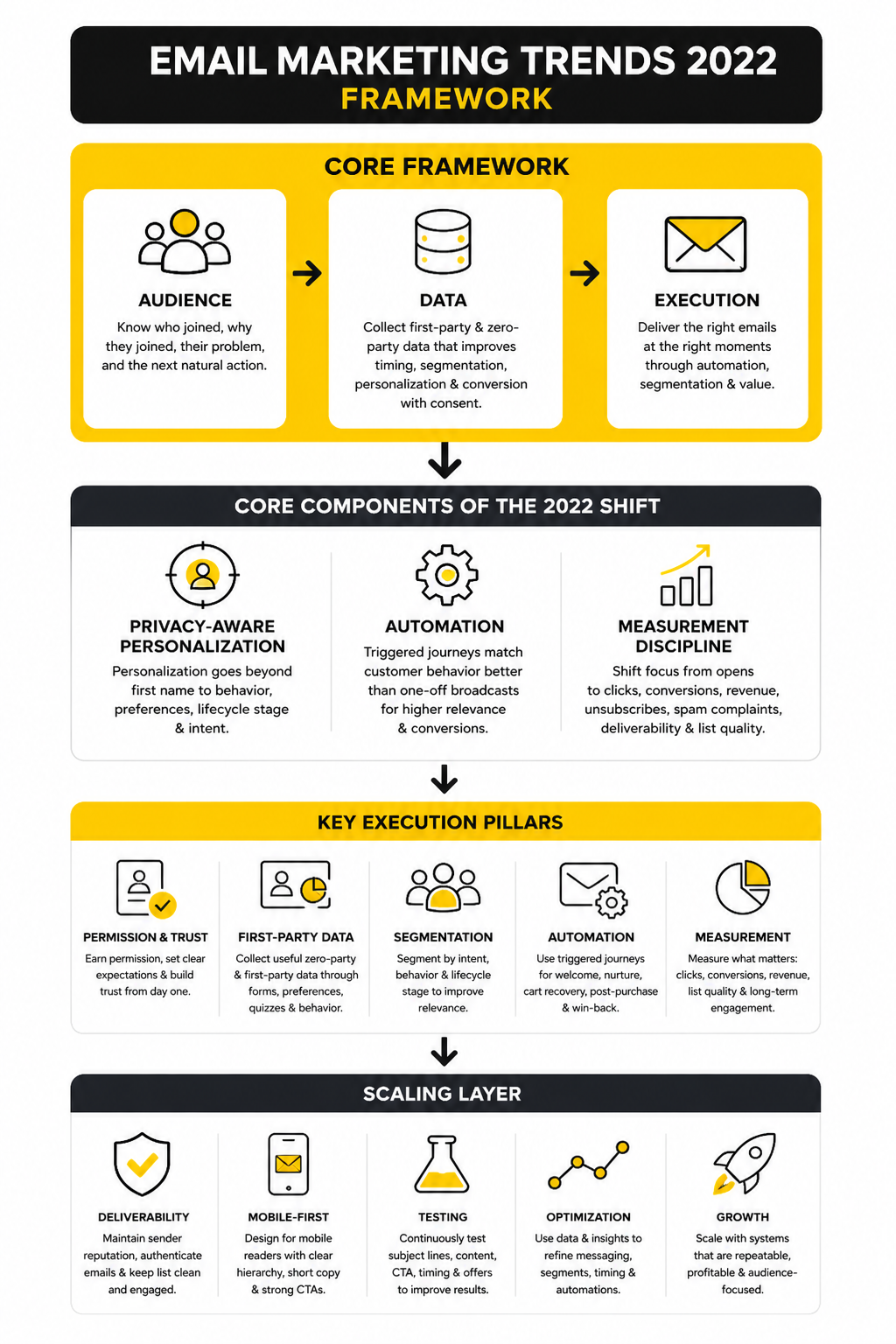
A practical email framework starts with the audience, not the campaign. You need to know who joined the list, why they joined, what problem they are trying to solve, and what action should naturally come next. Without that, automation only makes bad messaging faster.
The second layer is data. This does not mean collecting every possible data point just because your platform allows it. It means collecting the data that improves timing, segmentation, personalization, and conversion while respecting consent and customer expectations.
The third layer is execution. That includes welcome flows, nurture sequences, promotional campaigns, cart recovery, post-purchase emails, win-back campaigns, and newsletters that people actually want to open. Tools such as Brevo or Moosend fit naturally here because businesses need a reliable platform before they can build consistent automation and measurement.
Core Components Of The 2022 Shift
The first core component was privacy-aware personalization. Personalization stopped being only “Hi First Name” and started becoming more about behavior, preferences, lifecycle stage, and intent. That is a much healthier direction because it makes emails more useful without making customers feel watched.
The second component was automation. Marketers began putting more focus on triggered journeys because they usually match customer behavior better than one-off broadcasts. A welcome email after signup, a reminder after abandoned checkout, or a post-purchase education sequence can create value at moments when attention is already high.
The third component was measurement discipline. Open rates still had a place, but they became less useful as the main success metric after privacy changes distorted tracking. Better teams shifted more attention toward clicks, conversions, revenue, unsubscribes, spam complaints, deliverability, and list quality.
Automation, Segmentation, And Lifecycle Campaigns
Once privacy and first-party data became central, the next move was execution. This is where email marketing trends 2022 became practical, because the winners were not just collecting better data. They were using that data to build journeys that matched the customer’s stage, behavior, and intent.
Automation mattered because it made timing more precise. A manual newsletter might reach people once a week, but an automated flow can respond when someone subscribes, browses, buys, books, abandons, upgrades, or goes quiet. Ascend2’s 2022 email marketing research found that email automation and personalization beyond the first name were among the top trends marketers planned to use, which shows how closely strategy and execution were becoming connected.
Segmentation mattered because automation without segmentation is just scheduled noise. You do not need a hundred micro-segments on day one, but you do need meaningful groups that change the message. A new lead, a repeat buyer, a dormant subscriber, and a high-intent prospect should not all receive the same email just because they live in the same database.
Build The Journey Before Writing The Emails
The mistake many teams make is starting with copy. They open a blank email, write something clever, and only then ask where it fits. That backwards process creates disconnected campaigns that may look polished but do not move the subscriber anywhere useful.
A stronger process starts with the customer journey. Map the main stages first: new subscriber, active prospect, first-time buyer, repeat customer, loyal customer, and inactive contact. Then define what each person needs to understand, believe, or do before moving to the next stage.
Only after that should you write the emails. The copy becomes much easier because every message has a job. You are no longer “sending content”; you are helping someone take the next logical step.
A Practical Email Implementation Process
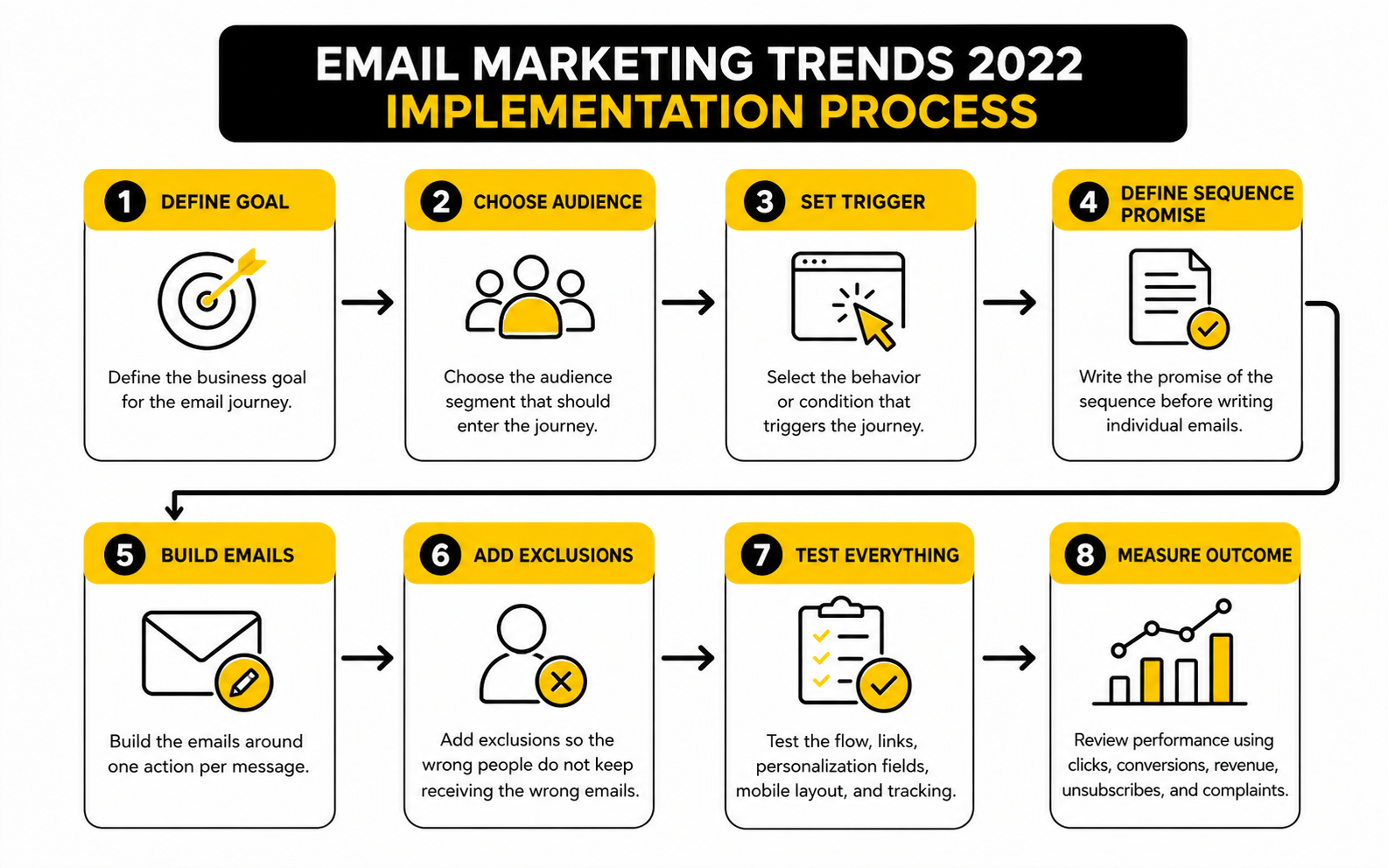
A clean implementation process keeps the strategy from turning into a mess. You start with the offer, define the audience, identify the trigger, choose the message sequence, connect the data, test the flow, and then measure the outcome. Simple does not mean basic; it means the system is clear enough to improve.
A practical workflow looks like this:
This process works because it forces every automation to earn its place. A welcome sequence should build trust and guide the next action. A cart recovery sequence should reduce hesitation. A post-purchase sequence should improve the customer experience, not immediately beg for another sale.
Core Lifecycle Campaigns Worth Building First
The best place to start is usually the welcome sequence. It reaches people when intent is fresh, which makes it one of the most important assets in the whole email program. This is where you clarify the value, set expectations, introduce the brand, and guide the reader toward the next useful step.
The second priority is a lead nurture or sales follow-up sequence. This matters for service businesses, agencies, consultants, coaches, SaaS companies, and higher-ticket offers where people need more context before they convert. Tools like GoHighLevel are useful here because email can work alongside forms, calendars, pipelines, SMS, and CRM follow-up instead of sitting alone.
The third priority is post-purchase communication. This is where many brands leave money and trust on the table. A strong post-purchase flow can reduce buyer’s remorse, explain how to get value from the product, request feedback at the right moment, and introduce the next relevant offer without sounding desperate.
Keep The System Human
Automation should not make the brand feel robotic. The point is to create timely, helpful communication at scale, not to trap people in endless sequences that ignore what they already did. This is why exclusions, suppression rules, and behavior-based exits are so important.
For example, someone who booked a call should stop receiving emails asking them to book the same call. Someone who purchased should leave the sales nurture and enter a customer onboarding flow. Someone who has stopped engaging should receive a respectful re-engagement path instead of being hammered forever.
This is the professional difference. Beginners build more emails. Operators build more carefully systems.
Build a stronger local presence with BAAM AI
Turn your website, Google profile, social channels, and AI visibility into one growth engine
Most businesses do not need more random marketing activity. They need a consistent presence system that helps the right people find them, trust them, and take action. BAAM AI brings strategy, local SEO, website updates, Google Maps visibility, social content, AI-search readiness, media production, and reporting into one practical monthly engine.
If you want your marketing to keep working after the campaign ends, start with a free BAAM AI presence audit. See how your business shows up today and where the fastest visibility wins are at BAAM AI.