
BAAM AI Blog
Email Marketing Services Near Me: How To Choose The Right Local Partner Without Wasting Budget
Searching for email marketing services near me usually means one thing: you do not just want software. You want someone who can understand your local market, your customers, your offers, your follow-up process, and...
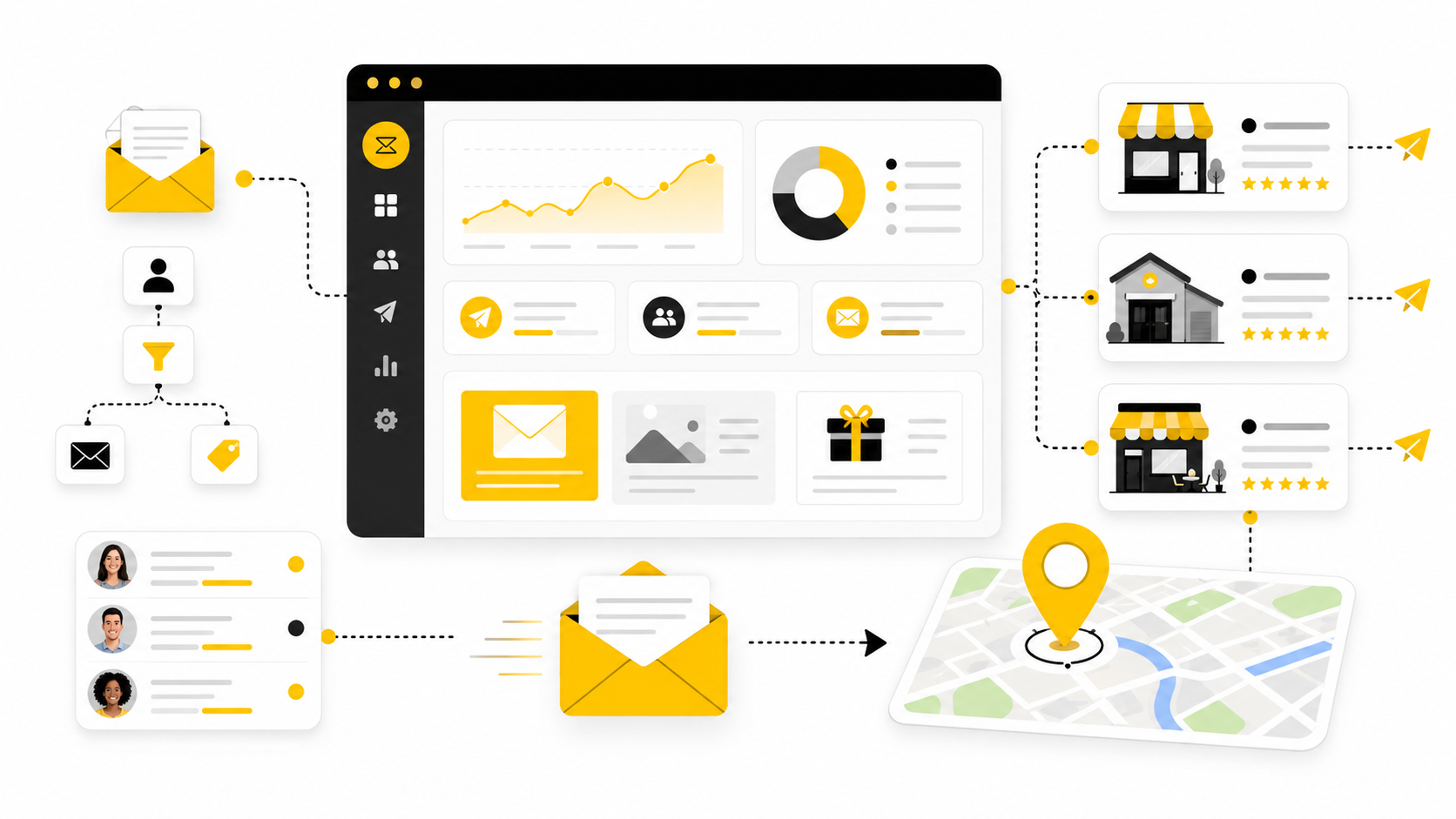
Searching for email marketing services near me usually means one thing: you do not just want software. You want someone who can understand your local market, your customers, your offers, your follow-up process, and the messy reality of running a business where every lead matters.
That matters because email is still one of the few marketing channels you actually own. Social reach can drop, ad costs can rise, and search rankings can move, but a clean email list gives you a direct line to people who already showed interest. Recent industry benchmarks still show email performing as a reliable revenue channel, with the DMA Email Benchmarking Report 2025 reporting strong delivery rates and rising click engagement across measured campaigns.
The problem is not that email marketing is dead. The problem is that many businesses treat it like a newsletter tool instead of a sales, retention, and relationship system. That is why choosing a local email marketing service should not start with “Who can send emails for me?” It should start with “Who can help me turn attention into booked calls, repeat purchases, referrals, and measurable revenue?”
this guide is split into six connected parts so the strategy builds in the right order. Part 1 sets the foundation and gives you the full map before we get tactical. The later parts will move from choosing a provider to implementation, measurement, and final decision-making.
Why Local Email Marketing Services Matter
A local provider can be useful when your business depends on timing, geography, reputation, and repeat customer behavior. A dental clinic, med spa, gym, restaurant, realtor, repair company, or local ecommerce brand does not need generic email blasts. It needs email flows that reflect real customer intent, local seasonality, appointment windows, service areas, and trust signals.
This is where “near me” intent becomes important. Someone looking for email marketing help locally is often not looking for a massive enterprise platform or a faceless freelancer on the other side of the world. They usually want practical guidance, faster communication, and someone who can connect email with the rest of their marketing stack.
That said, local does not automatically mean better. A nearby agency that only sends monthly newsletters can be less useful than a remote specialist who understands segmentation, deliverability, automation, and revenue tracking. The right answer is not “hire local at all costs.” The right answer is to hire the closest fit for your business model, your list quality, your sales cycle, and your growth stage.
Framework Overview
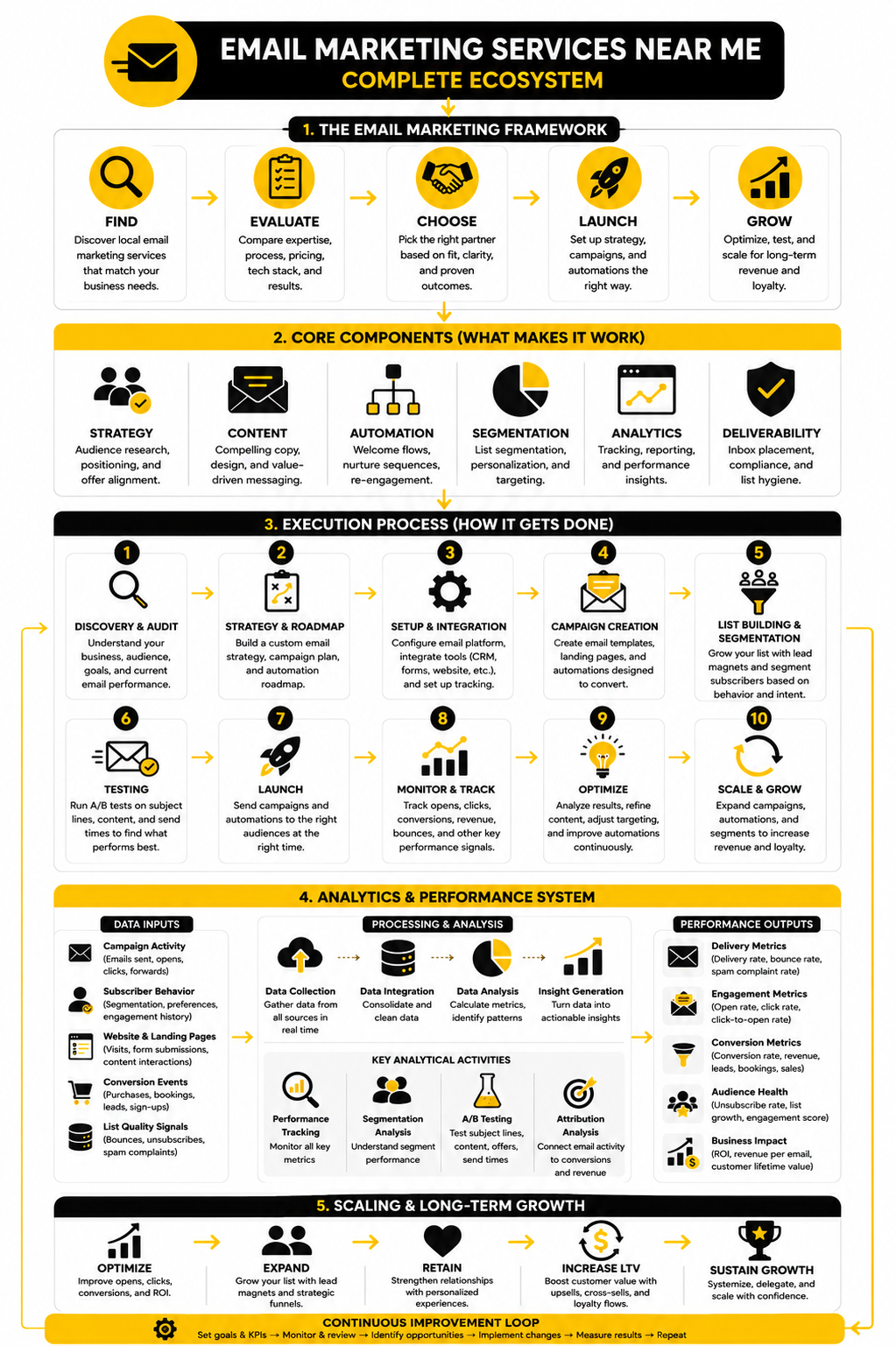
The best way to evaluate email marketing services near you is to look at the full system, not just the campaign calendar. A strong provider should be able to help with list growth, segmentation, copywriting, design, automation, deliverability, compliance, reporting, and continuous improvement. If one of those pieces is weak, the whole system becomes harder to trust.
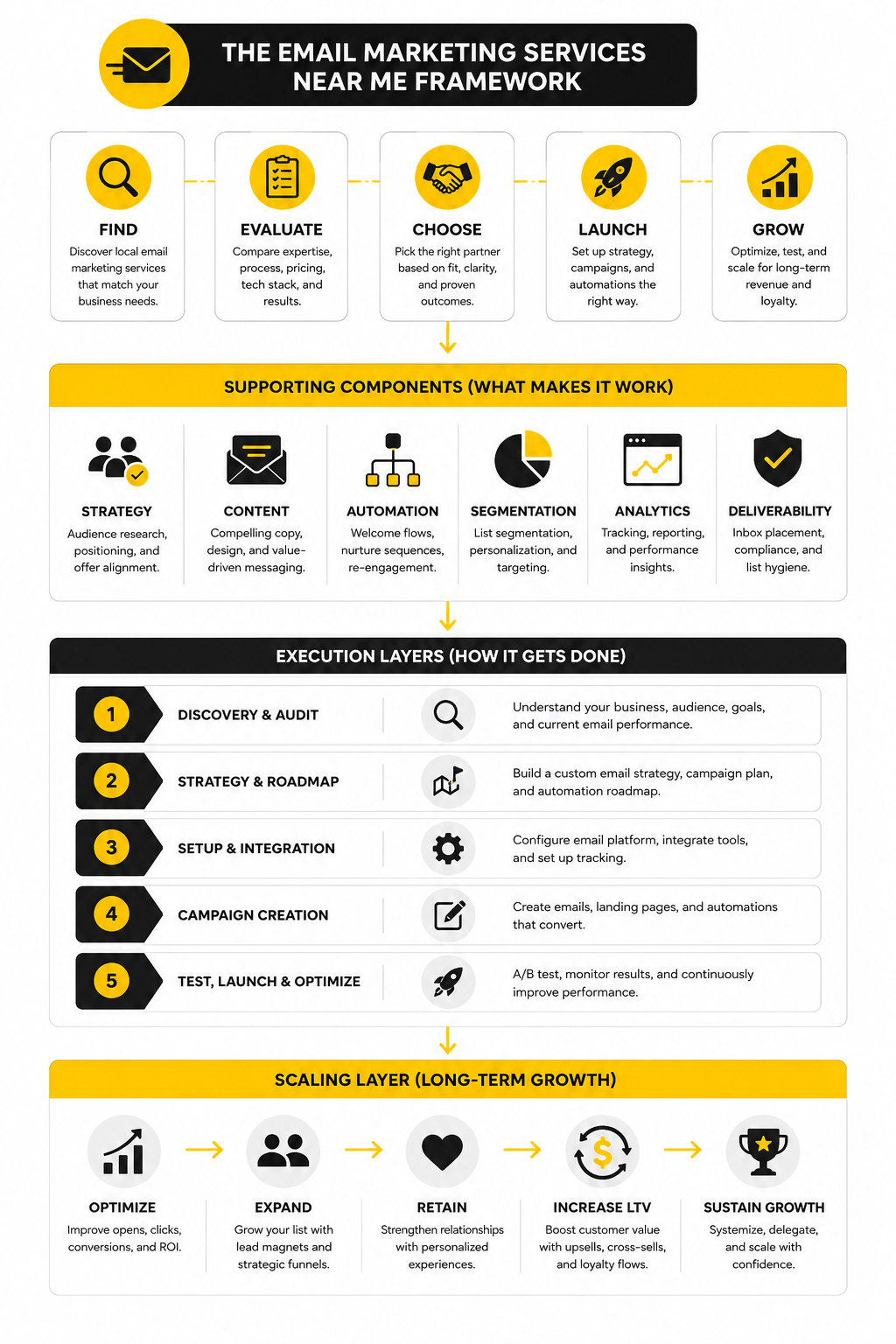
Think of email marketing as a loop. You attract the right contacts, capture permission, segment based on behavior, send relevant messages, measure what happens, and improve the next campaign. When this loop works, email stops being a random broadcast channel and becomes a predictable part of your customer journey.
This is also why the tool matters, but it should not dominate the decision. Platforms like Brevo, Moosend, GoHighLevel, and systeme.io can all support email marketing in different ways. The real question is whether the person or team managing the platform knows how to turn it into revenue, retention, and better customer communication.
Core Components Of A Strong Email Marketing Service
A good email marketing service should not begin by asking how many emails you want to send each month. That is the wrong starting point. The better starting point is your customer journey, because email only works when it matches what people are trying to do next.
When you search for email marketing services near me, look for a provider that can connect strategy, copy, automation, deliverability, and reporting into one clean system. Sending emails is the visible part. The real value sits underneath: clean data, better timing, sharper offers, stronger segmentation, and follow-up that does not depend on someone remembering to do it manually.
The strongest providers will also be honest about what email can and cannot fix. Email can increase repeat sales, recover missed opportunities, nurture leads, and improve customer retention. It cannot magically repair a weak offer, a broken sales process, poor customer experience, or a list full of people who never gave proper permission.
List Growth And Permission
List growth is not just about collecting as many email addresses as possible. It is about earning permission from people who have a real reason to hear from you again. That difference matters because a smaller list of qualified contacts will usually outperform a larger list of cold or careless signups.
A local provider should help you identify the best places to capture email permission across your business. That might include your website, checkout process, booking forms, lead magnets, consultations, events, QR codes, in-store prompts, webinars, or post-purchase flows. The point is not to interrupt people; the point is to give them a useful next step.
This is also where compliance needs to be baked in from the beginning. Email rules vary by market, but the practical principle is simple: people should understand what they are signing up for, and they should be able to unsubscribe easily. A provider that treats consent casually is not protecting your business.
Segmentation And Customer Intent
Segmentation is where email starts becoming useful instead of noisy. A new lead should not receive the same message as a loyal customer. Someone who booked a consultation should not be treated the same as someone who abandoned a checkout page or downloaded a guide six months ago.
Good email marketing services near you should help you organize contacts by behavior, source, interest, lifecycle stage, purchase history, and engagement. This lets your emails feel more relevant without needing to write a completely custom message for every person. It also protects your list health because people are less likely to ignore or unsubscribe from messages that actually match their needs.
Behavior-based targeting is especially important now because generic broadcasts are easier to ignore. Large benchmark datasets show that triggered and personalized emails often perform differently from broad campaigns, with MoEngage’s 2025 email benchmark research highlighting how behavior-based email can materially outperform non-personalized messaging. You do not need to overcomplicate this, but you do need a provider who understands the difference between a list and an audience.
Email Copy And Offer Positioning
Email copy is not just writing nice sentences. It is the work of matching a message to a person, a moment, and a desired action. That action might be booking a call, using a coupon, completing a purchase, confirming an appointment, leaving a review, or coming back after a long gap.
A strong provider should be able to write in your brand voice while still making the email clear and conversion-focused. That means the subject line earns the open, the first lines create relevance, the body builds trust, and the call to action feels obvious. Simple beats clever almost every time.
Offer positioning matters just as much as the copy itself. If your email says “book now” but gives no reason to act, the message is weak. If it explains the benefit, removes friction, creates a timely reason, and links to the right next step, the same email can become a real sales asset.
Automation And Follow-Up
Automation is one of the biggest reasons to hire a proper email marketing provider instead of handling everything manually. A manual newsletter can help, but automated follow-up is where many businesses recover lost revenue and reduce admin work. This is especially true for local service businesses where missed inquiries, no-shows, delayed quotes, and forgotten follow-ups directly cost money.
Your provider should be able to build practical automations around real customer behavior. Common examples include welcome sequences, lead nurture flows, appointment reminders, abandoned cart recovery, review requests, reactivation campaigns, quote follow-ups, post-purchase education, and renewal reminders. These flows should feel helpful, not robotic.
For businesses that need email, SMS, pipeline tracking, landing pages, and appointment follow-up in one system, GoHighLevel can be a practical fit. For simpler email campaigns and automations, tools like Brevo, Moosend, and systeme.io may be easier to manage depending on your setup.
Design And Mobile Experience
Email design should support the message, not compete with it. A beautiful email that hides the offer, loads slowly, or breaks on mobile is not good marketing. Most people will scan quickly, so the layout needs to make the next action clear within seconds.
A provider should know how to create templates that are readable, branded, and flexible. That includes strong spacing, simple hierarchy, clear buttons, concise sections, and enough plain-text clarity that the email still works even if images do not load. Overdesigned emails often look impressive in a mockup but perform poorly in a real inbox.
Mobile experience is non-negotiable. People check email while commuting, between meetings, at home, or right before making a decision. If your email requires pinching, zooming, hunting for the button, or reading tiny text, you are creating friction at the worst possible moment.
Deliverability And List Health
Deliverability is the part many business owners ignore until results suddenly drop. It covers whether your emails reach the inbox, land in promotions, get filtered, or fail entirely. A provider who does not understand deliverability can make your email program look active while quietly damaging performance.
A serious email marketing service should help with sender authentication, list cleaning, bounce management, spam complaint monitoring, engagement tracking, and sending frequency. They should also know when not to send. Blasting inactive contacts can hurt your sender reputation and make it harder to reach the people who actually want your emails.
This is why list quality matters more than list size. If your provider brags about volume but avoids conversations about consent, engagement, bounces, and complaints, that is a warning sign. The best email systems are built for long-term trust, not short-term noise.
How To Evaluate Email Marketing Providers Near You
Choosing a provider is where many businesses rush the decision. They compare a few monthly prices, glance at portfolios, and pick the person who sounds easiest to work with. That can work for simple design tasks, but it is risky for email because the provider is touching your customer data, your reputation, and your follow-up engine.
A better evaluation process starts with fit. You want someone who understands your sales cycle, your customer journey, your local market, and the tools you already use. The best email marketing services near you will ask uncomfortable but useful questions before they ever pitch a campaign calendar.
They should want to know how leads currently come in, what happens after someone submits a form, where sales conversations get lost, how often past customers return, and which offers already convert. If they skip straight to “we can send four newsletters per month,” be careful. That is activity, not strategy.
Start With Your Business Model
A local service business, ecommerce store, coach, agency, clinic, restaurant, and real estate team all need different email systems. The message timing, offer structure, segmentation, and automation logic should change based on how people buy. That is why a provider who uses the same template for every client will usually hit a ceiling fast.
Start by mapping how money actually moves through your business. Do new customers book a call first, request a quote, visit a location, buy online, or attend an event? Once that is clear, email can support the real buying path instead of forcing everyone into a generic newsletter sequence.
This also helps you avoid overbuying. Some businesses need a full CRM, pipeline automations, SMS reminders, and appointment flows through a system like GoHighLevel. Others only need clean email campaigns, signup forms, and simple automations through tools like Brevo or Moosend.
Check Their Discovery Process
A strong provider will not treat discovery like a formality. They should review your current list, email history, lead sources, offers, website paths, CRM setup, analytics, and sales follow-up. That work is not glamorous, but it is where the important problems usually appear.
You want to hear questions like these:
These questions reveal whether the provider thinks like a marketer or just an email sender. A good provider will be looking for gaps, not just deliverables. They should be able to explain what needs to happen before the first campaign goes out.
Review Their Technical Setup Standards
Technical setup is not optional anymore. Authentication, sending domains, unsubscribe handling, bounce management, and list hygiene all affect whether emails reach people in the first place. Microsoft expanded high-volume sender requirements in 2025 to include stricter SPF, DKIM, and DMARC expectations, and the broader direction is clear: inbox providers want properly authenticated, lower-risk mail.
A serious provider should be able to explain SPF, DKIM, and DMARC without making the conversation painful. They do not need to bury you in acronyms. They just need to show that your sending setup will be configured properly before campaigns scale.
Ask how they handle domain authentication, dedicated sending domains, suppression lists, inactive contacts, spam complaints, and re-engagement campaigns. If their answer is vague, that is not a small issue. Weak deliverability can make every other part of the strategy look worse than it really is.
Look At Their Reporting Philosophy
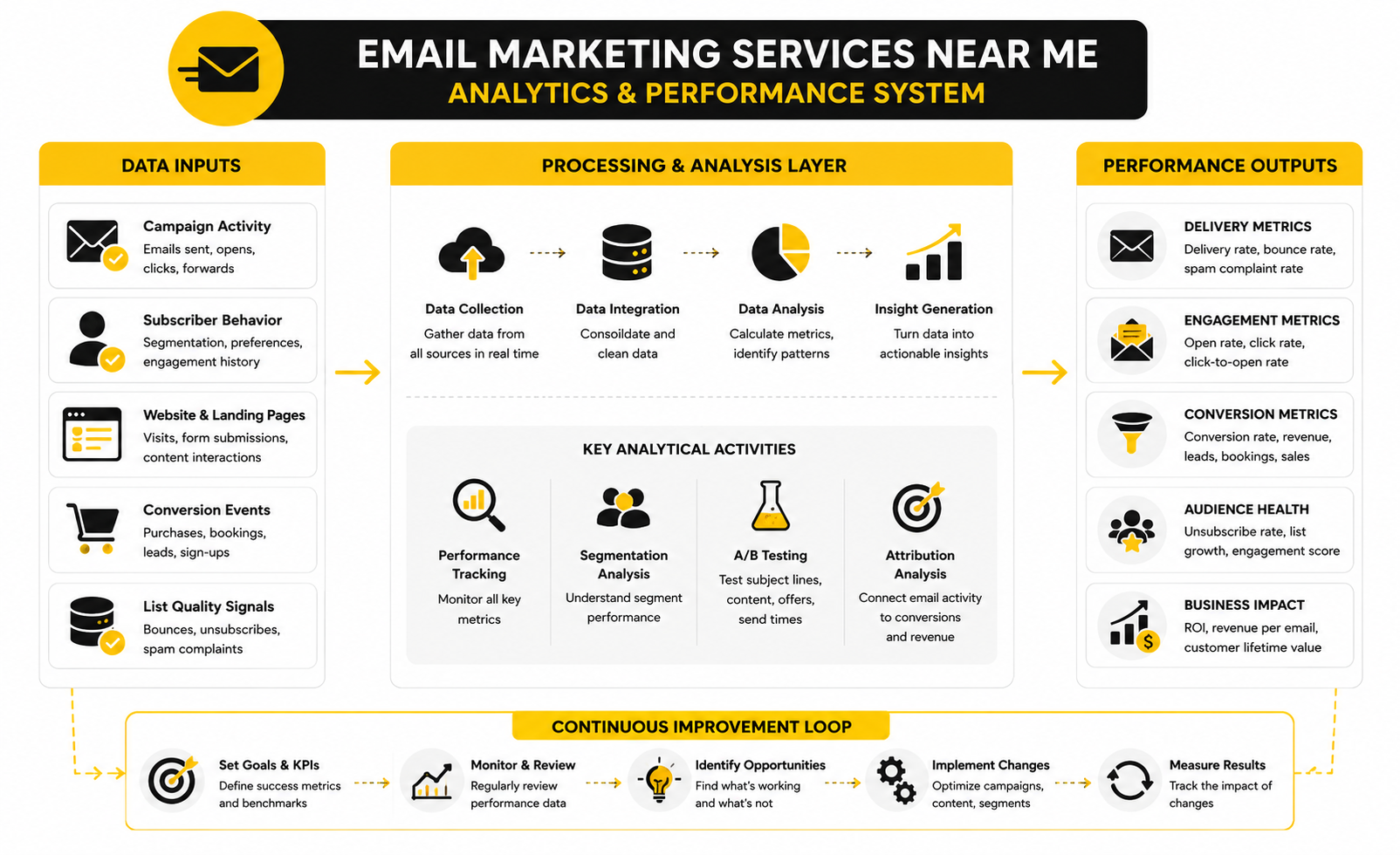
Reporting should connect email activity to business outcomes. Opens and clicks are useful signals, but they are not the final scoreboard. The provider should help you understand what email is doing for leads, sales conversations, purchases, appointments, repeat orders, customer retention, and revenue.
This matters because many businesses still run email without clear ROI tracking. Recent reporting from Sinch Mailgun’s 2026 research found that many teams cannot reliably measure email ROI, even though companies that do measure it often report strong returns. The practical takeaway is simple: measurement is not a luxury; it is part of the job.
A good provider will define success before work begins. That might include booked consultations, quote requests, online sales, returning customers, review requests completed, event registrations, churn reduction, or recovered carts. The exact metric depends on your business model, but there must be a metric.
Professional Implementation And Campaign Setup
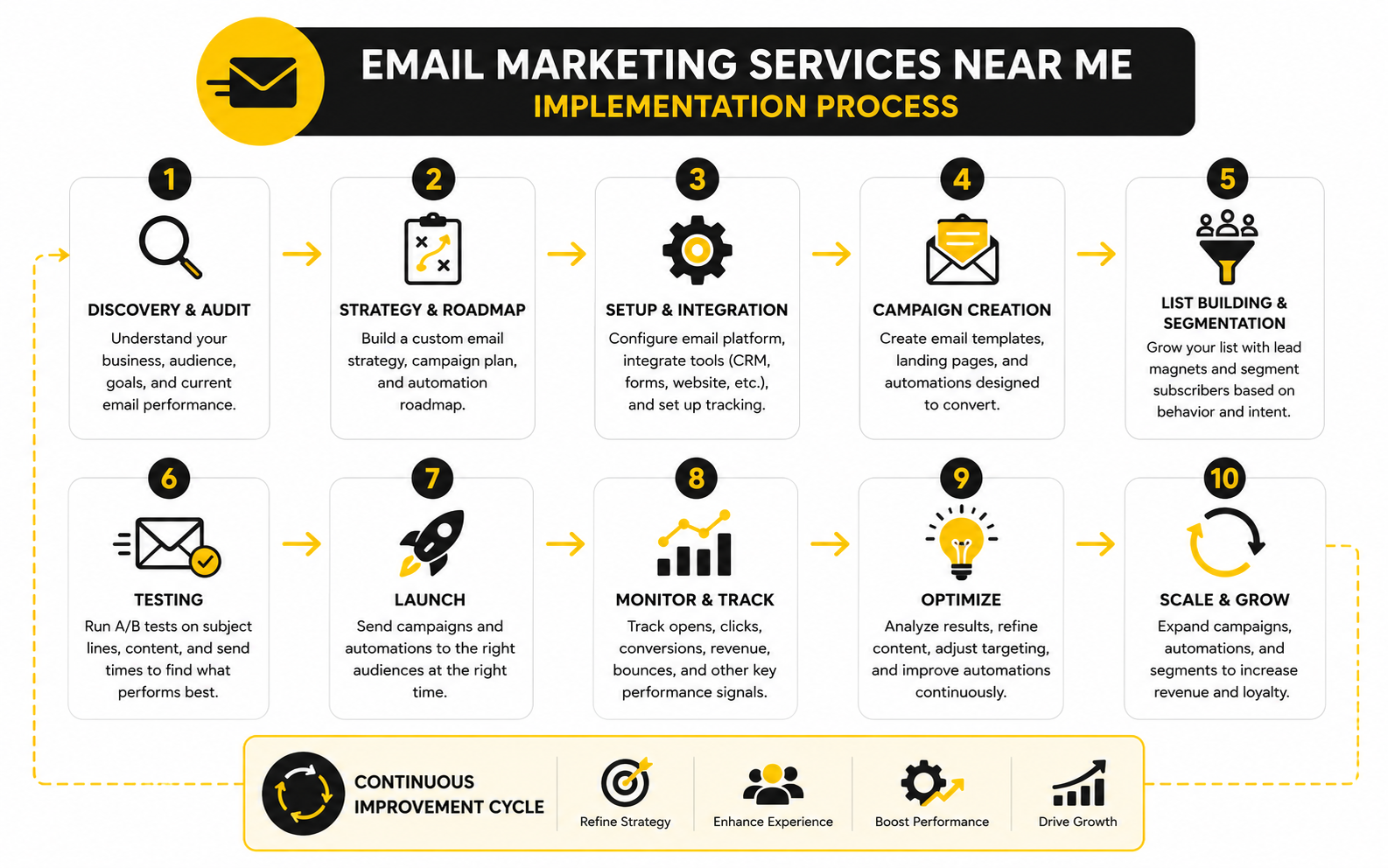
Once you have the right provider, the next step is implementation. This is where the work becomes real. Strategy is useful, but only if it turns into clean data, working automations, clear copy, proper tracking, and campaigns that can be improved over time.
The implementation phase should feel structured. If it feels random, rushed, or dependent on guesswork, the system will be difficult to maintain later. A professional provider should be able to show you what happens first, what depends on what, and what must be approved before launch.
For most businesses, implementation should not start with a giant campaign plan. It should start with fixing the foundation, then building the highest-impact flows, then layering in regular campaigns. That order keeps the system practical and prevents your team from getting buried in unnecessary complexity.
Step 1: Audit The Current Email System
The first step is an audit of what already exists. That includes your list, forms, tags, segments, templates, previous campaigns, automations, sender setup, unsubscribe process, and tracking. The goal is not to criticize the old system. The goal is to find what can be reused, repaired, removed, or rebuilt.
A proper audit should separate technical issues from strategic issues. Technical issues might include poor authentication, duplicate contacts, broken forms, missing tracking, or outdated templates. Strategic issues might include unclear offers, weak follow-up, irrelevant segmentation, or no plan for different customer stages.
This step often reveals quick wins. A business may already have leads coming in, but no welcome sequence. It may have past customers, but no reactivation campaign. It may have abandoned inquiries, but no automated follow-up after the first missed response.
Step 2: Clean And Organize The List
List cleanup is boring, but it protects everything that comes after it. A messy list makes reporting unreliable and can hurt deliverability. It also increases the chance that people receive messages that do not match their relationship with your business.
Your provider should remove obvious bad data, organize contacts into useful groups, suppress contacts that should not be mailed, and identify inactive subscribers. They should also preserve important customer history where possible, because purchase behavior and lead source data can shape better campaigns later.
This is not about deleting people aggressively just to make the list look neat. It is about making the list usable. Clean data gives your email strategy a fair shot.
Step 3: Build The Core Automations
After the foundation is clean, build the automations that support your most important customer moments. These are the emails that should go out consistently even when your team is busy. Done well, they make the business feel more responsive without adding manual work.
The exact flows depend on the business, but most companies should consider:
Each automation should have a job. Do not build flows just because they sound impressive. Build them because they remove friction, answer objections, improve timing, or help a customer take the next step.
Step 4: Create Campaign Templates And Messaging Rules
Templates make execution faster, but they should not trap every email into the same format. A good implementation process creates flexible campaign structures that can handle promotions, education, announcements, reminders, seasonal messages, and customer updates. This keeps the brand consistent while still allowing the message to breathe.
Messaging rules are just as important as design rules. Your provider should define how your brand sounds, what claims can be made, what offers are allowed, how urgency should be used, and how calls to action should be written. This prevents the email program from becoming inconsistent as more campaigns are added.
For funnel-heavy businesses, pairing email with landing pages can make implementation cleaner. A platform like ClickFunnels can be useful when the email goal is to move people into a focused offer, checkout, registration page, or lead capture path. The key is to keep the page and the email aligned so the click does not feel like a bait-and-switch.
Step 5: Test Before Sending
Testing is where professional implementation separates itself from amateur work. Every form, link, trigger, segment, tag, unsubscribe path, and automation rule should be checked before launch. The point is not perfectionism. The point is avoiding obvious mistakes that damage trust.
Test emails should be reviewed on desktop and mobile. Links should go to the right pages. Personalization fields should display correctly. Timing rules should make sense. Suppression rules should prevent the wrong people from receiving the wrong campaign.
This is especially important for local businesses because small mistakes feel personal. Sending the wrong offer to the wrong customer, promoting a service in the wrong location, or triggering a reminder after someone already booked can create confusion fast. Good testing prevents those problems before customers see them.
Statistics And Data
Email marketing numbers are useful only when they help you make better decisions. A benchmark should never become an ego scorecard. It should tell you whether your emails are reaching people, whether the message is relevant, whether the offer is strong, and whether the next step is clear enough.
This is especially important when you are comparing email marketing services near me, because weak providers often hide behind surface metrics. They may show open rates without explaining privacy inflation, report clicks without tying them to revenue, or celebrate list growth while deliverability gets worse. A serious provider will translate the numbers into action.
The goal is not to chase perfect benchmarks. The goal is to build a measurement system that shows what is working, what is leaking, and what should be improved next.
Delivery Rate Shows Whether Your Emails Are Even Getting A Chance
Delivery rate is the first metric to check because nothing else matters if your emails do not reach mail servers. The DMA Email Benchmarking Report 2025 reported delivery rates rising to 98% in 2024, with B2C reaching 99.2%. That gives you a useful reference point, but it does not mean your own program is healthy just because the platform says emails were “sent.”
Delivery is not the same as inbox placement. An email can be accepted by the receiving server and still land in spam, promotions, clutter, or a low-visibility tab. That is why a provider should look beyond the send button and review authentication, complaints, bounces, engagement, and inbox placement signals.
The action is simple: before you obsess over copy or design, confirm that your technical foundation is clean. SPF, DKIM, DMARC, bounce handling, suppression rules, and list hygiene should be checked before campaigns scale. If a provider does not treat deliverability as part of performance, they are not managing the full system.
Open Rate Is A Signal, Not The Truth
Open rate can still be useful, but it is no longer a clean measure of human attention. Privacy features, image loading behavior, bots, and inbox tools can inflate or distort opens. That means open rate should guide subject line testing and audience interest, but it should not be treated as proof that people actually read the email.
Recent benchmark data from MailerLite’s 2026 email benchmarks showed an average 2025 open rate of 43.46% across its dataset. That sounds high, but it needs context. A local business with a warm, permission-based list may beat that, while a business with old contacts, broad promotions, or weak consent may fall below it.
The right action is to compare open rate against your own history first. If opens drop sharply after a list import, a domain change, or a new campaign style, investigate. If opens are stable but sales are flat, the issue is probably not the subject line; it is more likely the offer, audience match, landing page, or follow-up path.
Click Rate Shows Whether The Message Created Movement
Click rate is often more useful than open rate because it shows whether people took a visible action. It tells you whether the email created enough interest for someone to move from inbox to website, booking page, product page, form, or checkout. For local businesses, this is where email starts becoming measurable instead of theoretical.
The same MailerLite benchmark dataset reported an average 2025 click rate of 2.09%. That number should not scare you or impress you by itself. A simple appointment reminder may get fewer clicks because the key action happens elsewhere, while a strong offer sent to a tight segment may perform much higher.
The action is to judge clicks based on intent. A low click rate on a broad educational newsletter may be acceptable if it improves long-term trust. A low click rate on a promotional email with a clear offer is a warning sign. In that case, review the audience, promise, call to action, email layout, and the strength of the page after the click.
Conversion Rate Tells You If Email Is Creating Business Results
Conversion rate is where the conversation gets serious. A click means someone showed interest. A conversion means they did the thing that matters: booked a consultation, bought a product, requested a quote, registered for an event, renewed a plan, left a review, or came back as a repeat customer.
This is why email marketing services near me should not report performance only inside the email platform. The provider should connect email activity with your CRM, booking system, ecommerce store, payment platform, forms, and analytics. If email sends traffic but nobody can see what happens after the click, the reporting is incomplete.
The action is to define conversions before campaigns launch. Do not wait until after the send to decide what success means. A campaign built for bookings should be judged by bookings, not just clicks; a reactivation campaign should be judged by returning customers, not just opens.
Revenue Per Recipient Helps You Compare Campaign Quality
Revenue per recipient is one of the cleanest metrics for ecommerce and offer-driven campaigns. It shows how much revenue each email recipient generated on average. This helps you compare campaigns with different list sizes without getting distracted by total revenue alone.
For example, a campaign sent to 20,000 people may produce more total revenue than a campaign sent to 2,000 people. But the smaller campaign may be healthier if it generates more revenue per recipient, fewer unsubscribes, and stronger customer intent. This is why segmentation can outperform volume.
The action is to stop asking only, “How many people received this?” Ask, “Was this the right group, with the right message, at the right time?” A provider who understands this will often recommend smaller, sharper campaigns instead of blasting the full list every time.
Unsubscribe Rate Shows Whether Expectations Are Breaking
Unsubscribes are not automatically bad. Some people should leave your list because they are no longer interested, no longer local, no longer in-market, or no longer a fit. A healthy unsubscribe process protects your sender reputation and keeps your audience cleaner.
The problem starts when unsubscribes spike. ActiveCampaign’s 2025 benchmark guidance treats unsubscribe rates below 0.5% as generally good, with rates below 0.2% considered excellent. That kind of benchmark is useful because it gives you a quick sense of whether your messaging is creating friction.
The action is to investigate patterns, not panic over one campaign. If unsubscribes rise after a discount-heavy campaign, the offer may have felt irrelevant. If they rise after increasing frequency, the cadence may be too aggressive. If they rise after importing contacts, the list quality may be the issue.
Complaint Rate Is A Reputation Warning Light
Spam complaints are more serious than unsubscribes. When someone marks your email as spam, they are not just leaving your list; they are telling inbox providers your message was unwanted. Too many complaints can hurt deliverability and damage future campaigns.
A good provider should monitor complaints closely and look for the cause. Common causes include poor permission, misleading subject lines, unfamiliar sender names, irrelevant content, too much frequency, or sending to inactive contacts. The fix is usually not one tiny copy tweak; it is a better consent and segmentation strategy.
The action is to make opting out easier than complaining. Clear unsubscribe links, preference options, recognizable branding, and relevant sending all reduce risk. If your email program needs tricks to keep people subscribed, the strategy is already weak.
Engagement Over Time Matters More Than One Send
One campaign rarely tells the whole story. A single strong email might be helped by timing, offer urgency, or a unusually warm segment. A single weak email might be affected by seasonality, list fatigue, or a poor landing page.
That is why your provider should track trends over time. Opens, clicks, conversions, revenue, unsubscribes, complaints, bounce rates, and inactive contacts should be reviewed across campaigns and automations. Patterns matter more than isolated wins.
The action is to build a monthly performance rhythm. Review what improved, what declined, what was tested, what was learned, and what changes next. Without that rhythm, reporting becomes a screenshot instead of a feedback loop.
Automation Metrics Should Be Judged Differently
Automated emails should not be measured exactly like newsletters. A welcome sequence, abandoned cart flow, quote follow-up, review request, or reactivation campaign has a specific job. The metric should match that job.
Klaviyo’s public benchmark messaging for larger brands shows a clear gap between broad campaign performance and automated flow performance, with automated flows often producing stronger purchase intent than general campaigns. That makes sense because automations are triggered by behavior. They arrive closer to the moment when the customer is actually thinking about the next step.
The action is to evaluate each automation by its purpose. A review request should be judged by review completion. A quote follow-up should be judged by replies or booked calls. A cart recovery flow should be judged by recovered checkout revenue, not whether people found the email “interesting.”
ROI Tracking Separates Guessing From Management
ROI tracking is where many businesses still fall short. Recent coverage of Sinch Mailgun’s 2026 Email Impact research reported that fewer than half of organizations can reliably track email ROI, even though many companies that do measure it report strong returns. That gap is the real opportunity.
For a local business, ROI tracking does not need to be complicated at first. You need to know what was sent, who received it, what they clicked, what they did next, and whether that action created revenue or a valuable lead. Clean UTM tracking, CRM stages, booking tags, ecommerce attribution, and call tracking can all help.
The action is to make measurement part of setup, not an afterthought. If a provider launches campaigns without tracking the next step, they are making optimization harder than it needs to be. You should not have to guess whether email is working.
What Good Reporting Should Look Like
Good reporting should be short enough to read and clear enough to act on. It should not be a giant dashboard that makes everyone feel busy. The best reports explain what happened, why it likely happened, and what will change because of it.
A useful report should include:
The most important part is the final section: recommended next actions. Data without decisions is just decoration. A strong email marketing provider will use reporting to improve targeting, offers, timing, copy, design, automation logic, and list quality month after month.
Advanced Considerations Before You Scale
Once the foundation is working, the next challenge is scale. More contacts, more campaigns, more automations, and more tools can create growth, but they can also create confusion fast. This is where many businesses accidentally turn a simple email program into a messy system nobody fully understands.
The goal is not to make email marketing complicated. The goal is to make it durable. When you compare email marketing services near me, look for a provider who can help you grow without creating a fragile setup that breaks every time you add a new offer, location, team member, or campaign type.
Scaling email properly means making sharper choices. You will need to decide what to automate, what to keep manual, which segments deserve more attention, how often to send, when to clean the list, and how much technology your business can realistically manage.
Local Provider Versus Remote Specialist
A local provider can be valuable when you need market familiarity, in-person collaboration, local partnerships, or a deeper understanding of regional buying behavior. That can matter for service-area businesses, community brands, clinics, restaurants, and companies that depend heavily on reputation. A provider who understands the local customer mindset may write more relevant campaigns and spot opportunities that a generic vendor would miss.
A remote specialist can be better when you need deeper technical skill. Deliverability, automation architecture, ecommerce lifecycle strategy, CRM integration, and attribution often matter more than physical proximity. If the remote provider has stronger experience with your exact business model, they may outperform a nearby generalist.
The smart move is not to choose local or remote based on geography alone. Choose based on capability, communication, and fit. If a local provider has the strategic and technical depth, great. If not, do not sacrifice performance just because someone is nearby.
Full-Service Agency Versus Specialist
A full-service agency can help when email needs to connect with ads, landing pages, SEO, social media, design, and sales operations. That can be useful if your team wants one partner to coordinate the broader marketing system. The risk is that email becomes one small deliverable inside a larger package instead of a channel with serious attention.
A specialist can go deeper into segmentation, copy, automation, deliverability, and testing. That is often better when email is already a meaningful revenue channel or when your current setup is underperforming. The risk is that a specialist may need stronger coordination with whoever handles your website, CRM, ads, or sales process.
The best choice depends on where the bottleneck sits. If your business has no coherent marketing system, a full-service partner may help create order. If the system exists but email is weak, a specialist is usually the better bet.
Software Choice Should Follow Strategy
Do not pick email software before you understand the job it needs to do. That is how businesses end up paying for features they never use or switching platforms every year. The tool should support the strategy, not become the strategy.
For service businesses that need CRM pipelines, text follow-up, missed-call handling, booking flows, and automation in one place, GoHighLevel can make sense. For businesses that want simpler email campaigns and automation without building a large sales operations system, Brevo, Moosend, or systeme.io may be a cleaner fit.
The real test is whether the platform can support your actual customer journey. Can it capture leads cleanly, tag behavior, trigger follow-ups, connect to sales actions, track results, and stay manageable for your team? If not, the software is not the right fit, no matter how popular it is.
The Hidden Risk Of Over-Automation
Automation is powerful, but too much automation can make a business feel careless. Customers can tell when they are being pushed through a machine that does not understand their situation. That is especially dangerous for local businesses where trust and personal reputation matter.
The best automations remove friction without removing judgment. Appointment reminders, welcome sequences, post-purchase education, abandoned inquiry follow-ups, and review requests can be extremely useful. But sensitive situations, high-value sales conversations, complaints, and complex customer decisions may still need human involvement.
A good provider should help you decide where automation belongs and where it does not. The goal is not to automate every possible interaction. The goal is to make the right moments faster, clearer, and more consistent while keeping the relationship human.
AI Can Help, But It Needs Guardrails
AI can speed up subject line testing, draft campaign angles, summarize customer segments, generate content variations, and help marketers work through more ideas faster. Recent research on AI-generated marketing email titles found that large language models can improve engagement when used carefully with personalized content and proper production controls. That is useful, but it does not mean AI should run your email strategy unsupervised.
The risk with AI is sameness. If every campaign starts sounding polished but generic, your brand loses its edge. Worse, AI can produce claims, offers, or wording that create compliance problems if nobody reviews them properly.
Use AI as a drafting and testing assistant, not as the final decision-maker. A strong email marketing service should keep human control over strategy, offers, claims, segmentation, tone, and final approvals. Speed is useful only when quality stays intact.
Frequency Is A Strategic Decision
Sending more often can increase revenue, but it can also create fatigue. Sending less often can protect the list, but it can also make your brand forgettable. There is no universal perfect email frequency because the right cadence depends on customer intent, offer strength, buying cycle, and how useful your messages are.
A local gym, restaurant, med spa, ecommerce brand, B2B service provider, and home repair company should not follow the same schedule. Some audiences welcome frequent promotions because they are actively looking for deals or updates. Others need slower, more educational nurturing before they trust you enough to buy.
The provider should test frequency carefully instead of guessing. Watch clicks, conversions, unsubscribes, complaints, replies, and revenue per recipient as cadence changes. If revenue rises while complaints and unsubscribes stay controlled, frequency may be working. If engagement falls and opt-outs rise, the list is telling you something.
List Ownership And Access Matter
This is one of the most important points in the whole article. You should own your email list, your sending domain, your platform account, your templates, your analytics access, and your customer data. If a provider controls everything and you cannot leave without losing your system, that is a business risk.
Before hiring anyone, clarify who owns the account, who pays for the software, who controls DNS records, who can export contacts, who has admin access, and what happens if the relationship ends. This is not about distrust. It is basic operational hygiene.
A professional provider will not be offended by these questions. They will have clear answers. If they avoid the topic or make ownership confusing, treat that as a serious warning sign.
Compliance Cannot Be An Afterthought
Email compliance is not just legal paperwork. It shapes consent, unsubscribe handling, data storage, customer trust, and platform risk. A provider should understand the rules that apply to your market and should be careful with claims, targeting, and data use.
Gmail’s sender guidelines now require proper authentication practices for bulk senders, including SPF or DKIM authentication and DMARC alignment expectations. That matters because compliance and deliverability are now closely connected. A sloppy setup can create both legal and inbox problems.
Your provider should also respect permission quality. Purchased lists, scraped contacts, unclear opt-ins, and aggressive cold email tactics may look tempting, but they can damage your reputation quickly. Good email marketing is built on trust, not tricks.
When To Bring Email In-House
Outsourcing email makes sense when you need strategy, setup, copy, technical configuration, or consistent execution that your team cannot handle yet. But as the channel grows, some work may belong inside the business. Nobody understands your customers, objections, operations, and offers better than your team.
A smart long-term setup often blends both. The provider handles strategy, architecture, testing, reporting, and advanced execution. Your internal team contributes customer insights, approvals, sales feedback, product updates, and timely local context.
Bringing email fully in-house makes sense when you have enough volume, internal skill, and process discipline to maintain quality. Do not do it just to save money. Bad internal execution can cost more than a good provider because the damage shows up in lost sales, poor deliverability, and confused customers.
Red Flags That Should Slow You Down
Some warning signs are easy to spot once you know what to look for. A provider who promises huge results without seeing your list, offer, or sales process is guessing. A provider who focuses only on design and ignores segmentation, deliverability, and tracking is missing the bigger picture.
Be careful if you notice these patterns:
These red flags do not always mean the provider is dishonest. Sometimes they simply mean the provider is inexperienced. Either way, your business should not pay for someone else’s learning curve when customer relationships are on the line.
What A Strong Scaling Plan Looks Like
A strong scaling plan is boring in the best way. It is structured, measurable, and realistic. It does not depend on one viral campaign or one clever subject line.
The plan should usually move in this order:
That order matters. If you skip the foundation and jump straight into advanced personalization, you are building on sand. Get the basics working first, then scale the parts that are already proving value.
Final Decision Checklist
By this point, the decision should feel much clearer. You are not just looking for someone who can “do email.” You are looking for a provider who can protect your sender reputation, understand your customer journey, build the right automations, write useful campaigns, measure what matters, and improve the system over time.
When you compare email marketing services near me, use this checklist before signing anything. It will save you from vague retainers, weak reporting, and rushed setup work that looks fine on the surface but creates problems later.
A strong provider should be able to clearly explain:
The right partner will welcome these questions. They will not hide behind jargon, inflated promises, or pretty campaign previews. Good email marketing is practical, measurable, and tied to business outcomes.
What are email marketing services near me?
Email marketing services near you are local or locally available providers that help businesses plan, write, design, automate, send, and measure email campaigns. They may be freelancers, consultants, agencies, CRM specialists, or full-service marketing teams. The best ones help connect email with your sales process instead of treating it as a standalone newsletter task.
Is it better to hire a local email marketing provider?
A local provider can be better if your business depends on regional context, in-person collaboration, local reputation, or service-area knowledge. That said, local is not automatically better. A remote specialist with stronger experience in automation, deliverability, segmentation, or your exact industry may be a better fit than a nearby generalist.
How much should email marketing services cost?
Pricing depends on the scope, list size, platform, campaign frequency, automation complexity, and reporting requirements. A basic monthly newsletter service should cost far less than a full lifecycle email system with CRM integration, automation, testing, and revenue tracking. Be careful with any provider who gives a serious quote before understanding your list, customer journey, and goals.
What should be included in an email marketing service?
A serious service should include strategy, list review, segmentation, copywriting, design, campaign setup, automation, deliverability checks, testing, reporting, and optimization. Some providers also help with landing pages, CRM setup, SMS, forms, booking flows, and sales pipeline automation. The right package should match the way your business actually gets customers.
Which email platform is best for local businesses?
There is no single best platform for every local business. Service businesses that need CRM pipelines, SMS, appointments, and follow-up automation may prefer GoHighLevel. Businesses that want simpler email campaigns and automation may prefer Brevo, Moosend, or systeme.io.
How long does it take to see results from email marketing?
Some results can appear quickly if you already have a warm list, strong offer, and clear conversion path. Examples include reactivation campaigns, appointment reminders, abandoned checkout emails, and promotional campaigns to engaged subscribers. Bigger improvements usually take longer because deliverability, segmentation, automation, list quality, and offer testing need time to compound.
What metrics should I ask my provider to report?
You should ask for delivery rate, bounce rate, open rate, click rate, click-to-open rate, unsubscribe rate, spam complaint rate, conversion rate, and revenue or lead outcomes where possible. Open rate is useful, but it should not be the main scoreboard because privacy features can distort it. The most important report is the one that connects email activity to actual business outcomes.
Do I need automation or just newsletters?
Most businesses need both, but automation usually creates the stronger foundation. Newsletters and campaigns help you stay visible, educate your audience, and promote timely offers. Automations handle repeatable moments like welcome emails, quote follow-ups, appointment reminders, review requests, post-purchase education, and reactivation.
Can email marketing help service businesses, or is it only for ecommerce?
Email marketing can work extremely well for service businesses when it supports the customer journey. It can help follow up with leads, reduce no-shows, educate prospects, request reviews, bring past customers back, and promote seasonal services. The key is to measure the right actions, such as calls, bookings, consultations, quote requests, or repeat appointments.
What are the biggest mistakes businesses make with email marketing?
The biggest mistakes are sending generic blasts, ignoring deliverability, buying or scraping lists, failing to segment contacts, tracking only opens, and sending without a clear next step. Another common mistake is choosing software before defining the strategy. Email works best when the list, offer, message, timing, and follow-up path are aligned.
Should I use AI for email marketing?
AI can help with drafting subject lines, creating campaign variations, summarizing audience insights, and speeding up content production. It should not replace human strategy, customer understanding, compliance review, or final approval. The strongest approach is to use AI for speed while keeping humans responsible for judgment, positioning, and brand voice.
How do I know if my current email provider is underperforming?
Look for weak reporting, vague strategy, poor communication, no deliverability discussion, no segmentation plan, and no connection between emails and business results. If your provider only reports opens and clicks but cannot explain what those numbers mean, that is a problem. If they cannot show what they are improving month by month, you may be paying for activity instead of progress.
What should I ask before hiring an email marketing service?
Ask how they would audit your current system, which automations they would build first, how they handle deliverability, how they measure ROI, which platform they recommend, and who owns the account and data. Also ask what they would not do. A strong provider should be able to tell you which tactics are risky, unnecessary, or not worth doing yet.
Can I manage email marketing myself?
You can manage email yourself if your needs are simple and you have time to learn the basics. That usually means choosing a platform, setting up forms, writing campaigns, building simple automations, and reviewing performance. Hiring a provider makes more sense when email needs to connect with CRM, sales follow-up, ecommerce, deliverability, segmentation, and serious revenue tracking.
What is the best first email automation to build?
For most businesses, the best first automation is a welcome or lead follow-up sequence. This is the moment when interest is freshest, so the first few emails can clarify the offer, build trust, answer objections, and guide the person to the next step. After that, appointment reminders, review requests, abandoned inquiry follow-ups, and reactivation campaigns are usually strong next priorities.
Build a stronger local presence with BAAM AI
Turn your website, Google profile, social channels, and AI visibility into one growth engine
Most businesses do not need more random marketing activity. They need a consistent presence system that helps the right people find them, trust them, and take action. BAAM AI brings strategy, local SEO, website updates, Google Maps visibility, social content, AI-search readiness, media production, and reporting into one practical monthly engine.
If you want your marketing to keep working after the campaign ends, start with a free BAAM AI presence audit. See how your business shows up today and where the fastest visibility wins are at BAAM AI.