
BAAM AI Blog
Email Marketing For Ecommerce Website: A Practical Growth Framework
Email marketing for ecommerce website growth is not about blasting discounts until the list stops caring. It is about building a owned customer channel that helps visitors become first-time buyers, helps buyers come...
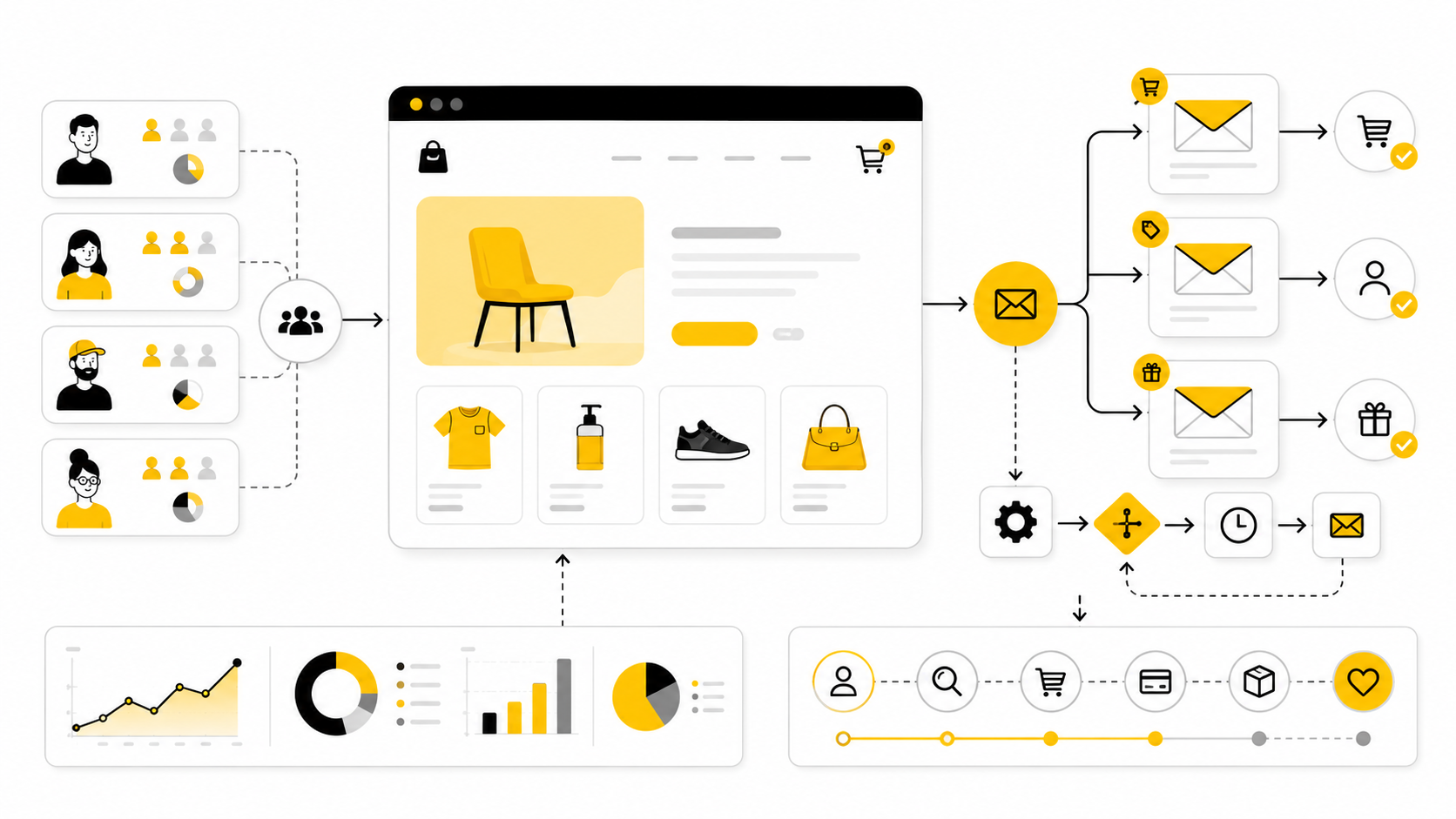
Email marketing for ecommerce website growth is not about blasting discounts until the list stops caring. It is about building a owned customer channel that helps visitors become first-time buyers, helps buyers come back, and helps your store earn more from the traffic you already paid to acquire.
That matters because ecommerce is usually won in the margins. Ads get more expensive, marketplaces take control away from the brand, and social reach is never guaranteed. Email gives your store a direct line to people who already showed intent, whether they joined a popup, browsed a product, abandoned a cart, bought once, or became a loyal customer.
The best ecommerce email programs are not random newsletters. They are systems. They combine list growth, segmentation, automated flows, campaign planning, deliverability, creative testing, and revenue measurement into one repeatable engine.
Why Email Marketing Matters For Ecommerce Websites
Email is valuable because it sits close to purchase intent. Someone who joins your list from a product page, quiz, discount popup, checkout, or post-purchase experience is not a cold audience. They have already interacted with your store, which means your job is not to interrupt them; your job is to continue the buying conversation in a useful way.
This is where ecommerce email becomes different from generic email marketing. An ecommerce website has behavior data: viewed products, cart contents, order history, average order value, purchase frequency, category preference, discount sensitivity, and loyalty signals. When that data is used well, email becomes less like a newsletter and more like a personalized sales assistant that follows up at the right time.
Recent ecommerce benchmarks keep pointing in the same direction: automation does a disproportionate amount of the work. In Omnisend’s 2025 ecommerce marketing data, automated emails represented a tiny share of total sends but generated a much larger share of email-attributed revenue, with automated messages earning far more per send than scheduled campaigns in its reported dataset 2025 ecommerce marketing report. Klaviyo’s ecommerce benchmark research also shows how important lifecycle flows can be, especially abandoned cart emails, which often produce the highest revenue per recipient among common ecommerce automations ecommerce email marketing benchmarks.
That does not mean campaigns are useless. It means campaigns and automations need different jobs. Campaigns create demand around launches, offers, education, seasonal moments, and merchandising, while automations capture intent that already exists.
The Framework Overview
A strong ecommerce email marketing system has four layers. First, the store needs a clear way to capture subscribers without damaging the shopping experience. Second, it needs behavior-based automations that respond to what people actually do on the website.
Third, it needs campaigns that keep the list warm between buying moments. Fourth, it needs measurement that separates vanity metrics from actual commercial performance. Open rates and clicks can be useful signals, but revenue per recipient, conversion rate, repeat purchase rate, unsubscribe rate, complaint rate, and deliverability are what keep the program honest.
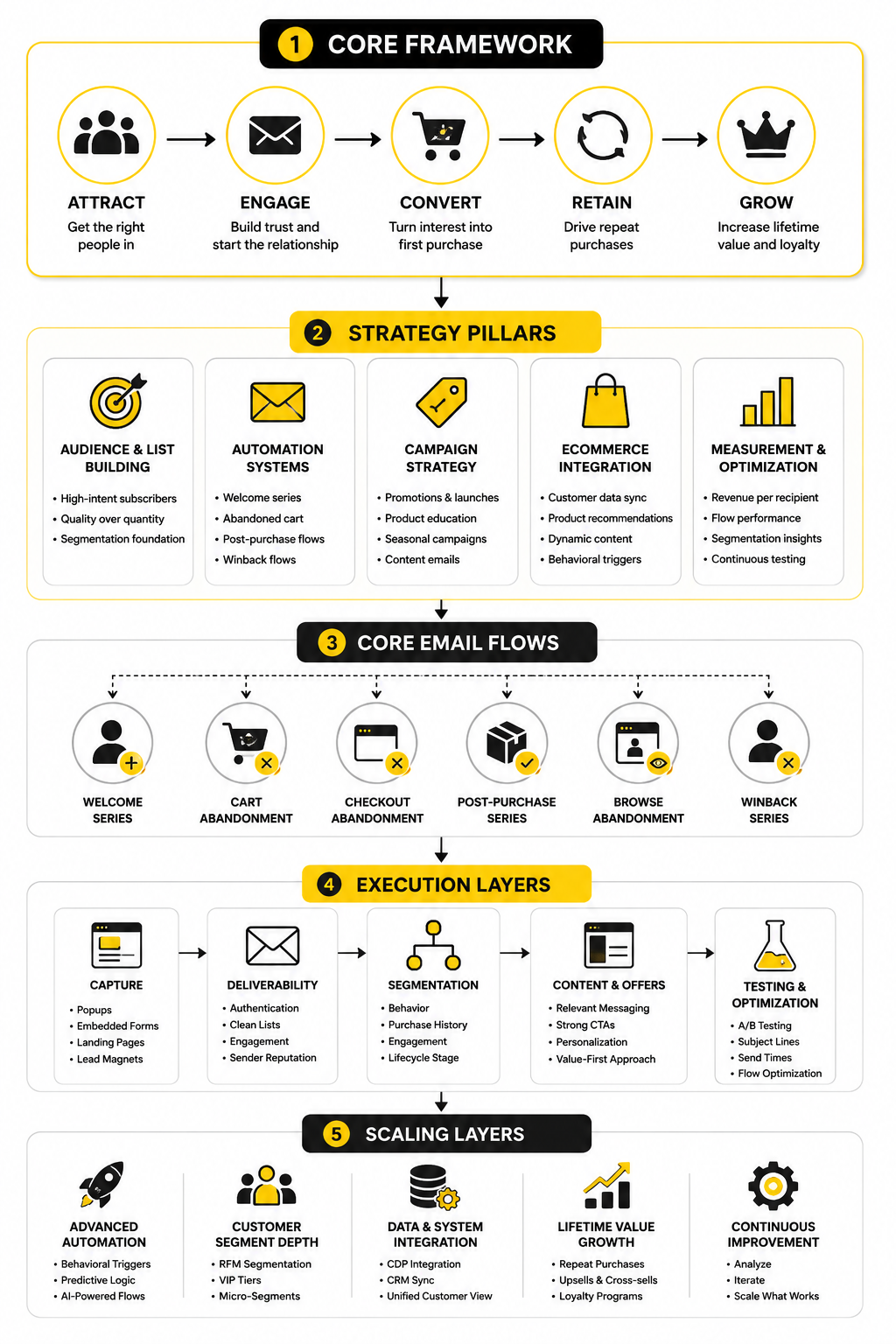
The mistake many stores make is starting with design before strategy. They obsess over templates, colors, and clever subject lines before deciding what each email is supposed to accomplish. A better approach is to define the customer journey first, then build emails that remove friction at each stage.
For example, a welcome flow should not simply say “thanks for subscribing.” It should help a new visitor understand why the brand exists, what makes the products different, which products are best for first-time buyers, and what to do next. A cart recovery flow should not just repeat “you left something behind.” It should answer the hesitation that probably stopped the purchase.
Core Components Of Ecommerce Email Marketing
The first core component is list growth. This includes popups, embedded forms, checkout opt-ins, quizzes, waitlists, loyalty programs, and lead magnets that make sense for the product category. The goal is not to collect the biggest list possible; the goal is to collect reachable buyers who actually want to hear from the brand.
The second core component is segmentation. A skincare store should not speak to a first-time visitor the same way it speaks to a customer who has bought three times. A fashion brand should not send the same product recommendations to every subscriber if size, style, gender, seasonality, or buying behavior clearly differs.
The third core component is automation. Welcome, browse abandonment, cart abandonment, checkout abandonment, post-purchase, replenishment, winback, review request, and VIP flows can cover a large part of the ecommerce customer journey. These flows are powerful because they run continuously, improve with testing, and respond to customer behavior without needing a new campaign every time.
The fourth core component is campaign planning. Campaigns should support business moments: product launches, seasonal events, inventory pushes, educational content, gift guides, limited offers, customer stories, and category-specific promotions. A good campaign calendar gives the list a reason to stay engaged without training subscribers to wait for discounts every week.
Professional Implementation
Professional implementation starts with the website, not the email platform. If the product pages are unclear, the offer is weak, the mobile experience is slow, or the checkout creates friction, email can only recover so much. Email marketing works best when it amplifies a store that already gives people a strong reason to buy.
The platform still matters. A store that needs ecommerce automation, segmentation, and email campaigns should use tools that connect cleanly with its ecommerce stack. For simple email and SMS execution, tools like Brevo or Moosend can fit lean teams, while stores that also need broader CRM, funnels, and sales automation may look at GoHighLevel depending on their operating model.
There is also a creative layer. Landing pages, product education, quizzes, and conversational touchpoints often influence how well email converts after the click. A store using custom landing pages may consider Replo, while brands using chat-based capture or follow-up can explore ManyChat. The tool is not the strategy, but the wrong tool can make a good strategy painful to execute.
The real standard is simple: every email should have a reason to exist. It should either help the customer make a better decision, help the brand capture existing demand, or help the business increase lifetime value. When an ecommerce website treats email this way, the channel stops being an afterthought and becomes part of the store’s growth infrastructure.
The Ecommerce Email Marketing Framework
A proper ecommerce email system starts with the customer journey, not the email calendar. The question is simple: what does a shopper need to hear after each meaningful action on your website? When you answer that clearly, email marketing for ecommerce website growth becomes much easier to plan, write, and improve.
Think of the framework in four layers: capture, understand, respond, and retain. Capture turns anonymous visitors into reachable subscribers. Understand uses behavior and purchase data to group people by intent. Respond sends the right automated message at the right moment. Retain keeps customers engaged after the first purchase so the store does not need to win every order from scratch.
This matters because ecommerce behavior is rarely linear. A customer may discover a product on social, compare options on mobile, abandon a cart on desktop, return through email, and finally buy after reading reviews. Your email system needs to support that messy path without sounding pushy, repetitive, or disconnected from what the shopper already did.
Capture The Right Subscribers
Subscriber capture is not just “add a popup.” That is the lazy version. The real goal is to give visitors a useful reason to identify themselves before they are ready to buy.
For some stores, that reason is a first-order incentive. For others, it might be early access, a size guide, a quiz result, a product finder, a waitlist, a back-in-stock alert, or educational content that helps the shopper choose correctly. The offer should match the product category and the level of decision friction.
A low-consideration product can often use a simple discount or bundle offer. A higher-consideration product needs more trust-building before the sale. If someone is buying skincare, supplements, furniture, baby products, or expensive electronics, the email capture should help them feel more confident, not just cheaper.
The capture point also affects subscriber quality. A footer form usually attracts lower intent than a product-page popup tied to a specific category. A checkout opt-in from a buyer is more valuable than a giveaway signup from someone who only wanted a prize.
Understand Visitor And Customer Intent
Once someone joins the list, the next job is to understand where they are in the buying journey. A new subscriber who has never viewed a product needs a different message than someone who viewed the same product three times in two days. A repeat customer who buys every month needs a different message than someone who bought once six months ago and disappeared.
This is where segmentation becomes practical. You do not need fifty segments on day one. You need useful groups that change what you say, what you offer, and when you send.
Start with these intent-based segments:
Each segment should change the message. First-time customers may need education and reassurance. Repeat customers may need replenishment reminders, product pairings, loyalty perks, or early access. Inactive subscribers may need a sharp re-engagement angle, but they also need suppression if they keep ignoring your emails.
The important part is restraint. More data is not automatically better. Data becomes useful only when it helps the brand send a more relevant email or avoid sending an unnecessary one.
Respond With Automated Lifecycle Flows
Automated lifecycle flows are the backbone of ecommerce email because they react to real behavior. They are not based on a marketer guessing what the list might want this week. They are based on what the shopper just did.
That is why automations often outperform one-off campaigns on a per-recipient basis. Omnisend’s ecommerce report found that automated emails generated 37% of email sales from only 2% of email volume in its dataset, which shows how much intent is hidden inside triggered messages ecommerce marketing report. Klaviyo’s benchmark data also shows abandoned cart flows generating much higher revenue per recipient than standard campaigns, which is exactly what you would expect when the email follows a clear buying signal email benchmarks by industry.
A strong lifecycle setup usually includes:
These flows should not all say the same thing with different subject lines. Each one has a different job. A browse abandonment email should help the shopper evaluate a product, while a post-purchase email should reduce buyer’s remorse and prepare the next purchase.
Timing also matters. A cart email sent too late may miss the buying window. A review request sent before the product has arrived feels careless. A winback offer sent too aggressively can train customers to wait for discounts.
Retain Customers After The First Purchase
The first purchase is not the finish line. It is the beginning of the most profitable part of the relationship. A store that ignores customers after checkout is leaving lifetime value on the table.
Post-purchase email should do three things. First, it should help the customer use or enjoy the product properly. Second, it should reduce support questions by setting expectations around shipping, care, sizing, installation, returns, or product usage. Third, it should open the door to the next logical purchase.
This is where many stores get too aggressive. They ask for another sale before the customer has even received the first product. That can work for some low-friction categories, but in most ecommerce businesses, the better move is to deliver confidence first and ask for the second purchase when the customer has had enough time to experience value.
A practical retention system might include product education, usage tips, review requests, replenishment reminders, complementary product recommendations, loyalty invitations, and VIP access. The mix depends on the buying cycle. Coffee, supplements, pet food, cosmetics, and household products can use replenishment logic, while apparel, accessories, and home decor often need style inspiration and seasonal merchandising.
Connect Email With The Store Experience
Email cannot fix a weak ecommerce website. It can bring the customer back, but the website still has to close the sale. That means the email promise, landing page, product page, checkout, and post-purchase experience need to feel connected.
If the email promotes a specific product, the click should land close to that product. If the email talks about a bundle, the landing page should make the bundle easy to understand. If the email answers objections, the product page should reinforce those same answers with reviews, guarantees, product details, and clear shipping information.
This is why ecommerce email teams should care about landing pages. A great email that sends people to a confusing page wastes attention. Tools like Replo can help teams build campaign-specific ecommerce landing pages without waiting on a full development cycle, especially when speed matters during launches or seasonal promotions.
The same applies to conversational capture. If a store uses chat, Instagram DMs, or Messenger to collect leads, the follow-up should connect with the email journey instead of living in a separate silo. A tool like ManyChat can support that kind of conversational entry point when it genuinely fits the store’s acquisition strategy.
Build The Framework Before You Scale
The biggest mistake is scaling send volume before the framework is clean. More emails do not automatically mean more revenue. Sometimes they just create more unsubscribes, more complaints, and weaker deliverability.
A better sequence is to build the customer journey first, then improve each layer one by one. Capture better subscribers. Segment based on intent. Build the highest-impact flows. Improve landing pages. Then increase campaign frequency only when the list is responding well.
That is the practical way to approach email marketing for ecommerce website growth. You are not trying to send as much as possible. You are building a system that notices customer intent, responds with useful messages, and keeps the relationship alive after the first sale.
Core Email Flows Every Store Should Build
Once the framework is clear, implementation becomes much more practical. You are no longer asking, “What should we send this week?” You are asking, “Which customer behavior deserves a response, and what message would help that person move forward?”
That is the right question. Email marketing for ecommerce website growth works best when the store has a set of flows that cover the highest-value moments in the customer journey. These flows do not need to be complicated at first, but they do need to be intentional.
The goal is not to build every automation imaginable. The goal is to build the flows that protect revenue, improve the customer experience, and create a foundation you can optimize over time.
Start With The Highest-Intent Moments
Not every automation deserves equal priority. A cart abandoner is usually closer to buying than someone who downloaded a general guide. A repeat customer is usually more valuable than a cold subscriber who has never clicked anything.
This is why implementation should begin with intent. Build flows around actions that show clear interest, then expand into lighter-touch engagement later. In most ecommerce stores, the first implementation sprint should focus on welcome, cart abandonment, checkout abandonment, post-purchase, and winback.
Cart abandonment deserves special attention because the buying intent is obvious. Baymard’s long-running cart abandonment research places the average documented cart abandonment rate around 70%, which means a huge share of potential orders never reaches completion cart abandonment research. You will not recover all of that. But even recovering a small slice can change the economics of your store.
The important part is to treat abandoned cart emails as help, not harassment. People abandon carts because of shipping costs, comparison shopping, payment friction, distractions, uncertainty, or timing. A good flow addresses those barriers instead of simply repeating the product image and begging for the order.
Map The Flow Before You Write The Emails
Before writing copy, map each flow on paper. Decide who enters, what removes them, how long the flow lasts, and what each message is supposed to accomplish. This prevents messy automation logic that sends the wrong email to the wrong person.
For every flow, define five things:
The trigger is the behavior that starts the flow. The audience rules decide who should receive it. The exit rules prevent awkward emails after someone buys or takes another important action. The sequence defines timing and message purpose. The success metric tells you whether the flow is actually working.
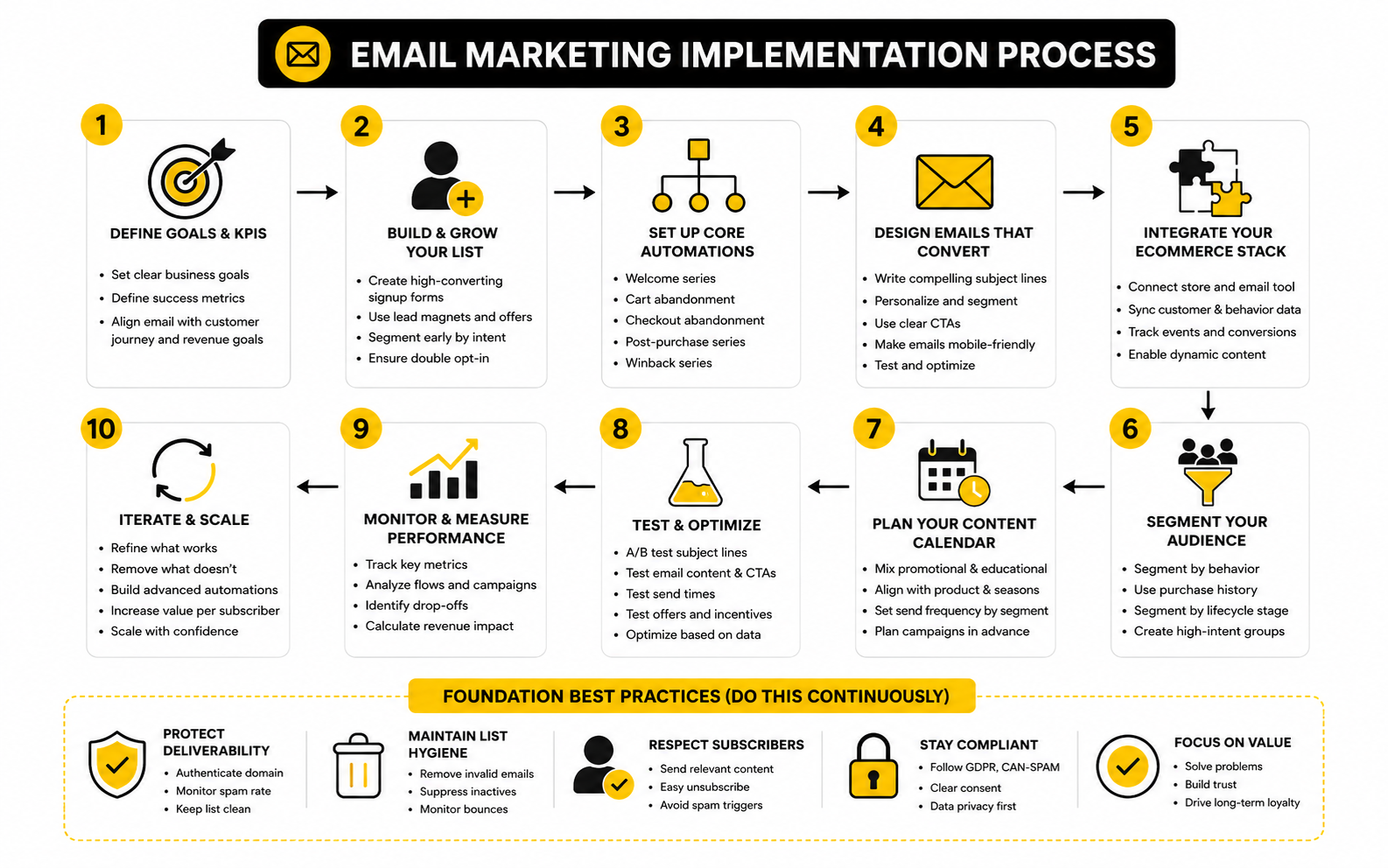
This is where execution becomes tangible. You are not just “setting up email automation.” You are building a decision path. If someone joins the list, send the welcome flow. If someone views a product but does not add to cart, send browse abandonment. If someone starts checkout but does not buy, send checkout recovery. If someone buys, stop selling for a moment and help them feel good about the purchase.
That logic is simple, but it is powerful. Most broken ecommerce email programs are not broken because the team lacks creativity. They are broken because the logic is sloppy.
Build The Welcome Flow First
The welcome flow is your first controlled conversation with a new subscriber. It sets expectations, introduces the brand, and gives the shopper a clear next step. If the store offers an incentive, this is also where the incentive should be delivered cleanly and immediately.
A practical welcome flow usually has three to five emails. The first email delivers the promise and points people toward the best starting point. The second explains what makes the brand or product different. The third handles common objections, such as sizing, ingredients, materials, shipping, returns, or use cases.
Additional emails can introduce bestsellers, social proof, founder context, category education, or a gentle reminder about the first-purchase offer. But do not turn the welcome flow into a long lecture. The subscriber just raised their hand; respect that attention.
The welcome flow should also split buyers from non-buyers. Once someone purchases, they should leave the welcome selling path and move into the post-purchase experience. Sending “buy your first order” emails after someone already bought is one of those small mistakes that makes a brand look careless.
Build Cart And Checkout Recovery Separately
Cart abandonment and checkout abandonment are not the same thing. A cart abandoner added a product but may not have seen shipping, payment options, or final cost. A checkout abandoner moved further, entered more intent, and may have stopped because of a specific checkout issue.
Separating these flows gives you better control. Cart recovery can focus on product benefits, reviews, comparison points, and reminder value. Checkout recovery can be more direct because the shopper was closer to completing the order.
A simple cart flow might include:
A checkout flow can be shorter and more focused. It should remove friction quickly. Mention payment options, shipping clarity, returns, customer support, and anything else that commonly blocks completion.
Do not lead with discounts every time. If every abandoned cart gets a coupon, customers learn the pattern. Use incentives carefully, especially for repeat visitors or high-margin products where the incremental conversion is worth it.
Build A Post-Purchase Flow That Reduces Regret
Post-purchase email is where many stores quietly lose the second order. They send a receipt, maybe a shipping update, and then jump straight back into promotions. That misses the moment when the customer is most open to reassurance.
The first post-purchase emails should confirm the decision. Thank the customer, set expectations, and help them understand what happens next. If the product requires care, setup, sizing, installation, onboarding, or usage guidance, the email should make that simple.
A strong post-purchase flow can include:
Timing is everything here. Asking for a review before the product has arrived is lazy. Pushing a second purchase before the customer has experienced the first one is impatient. The post-purchase flow should feel like customer success first and marketing second.
Build Browse Abandonment Once Tracking Is Reliable
Browse abandonment is useful, but it depends on reliable tracking and enough product interest to justify the email. Someone who accidentally lands on a product page for five seconds should not immediately receive a sales sequence. Someone who views the same product or category multiple times is different.
A good browse abandonment flow should be softer than cart recovery. The shopper has not committed as much intent yet. The email can remind them of the product, explain benefits, recommend related items, or help them choose between options.
This flow works especially well when product discovery is complex. Apparel, beauty, home goods, accessories, specialty food, and gift categories often benefit from product education and recommendation support. The goal is to help the shopper continue exploring, not to pressure them like they already owe you a purchase.
Browse abandonment should also respect suppression rules. Do not send it to recent buyers if the message does not make sense. Do not send it too frequently. And do not let it collide with cart, checkout, or post-purchase flows.
Build Winback Without Sounding Desperate
A winback flow is for customers or subscribers who have gone quiet. The purpose is to bring back people who still have potential value, while also identifying contacts who should be suppressed for deliverability. This is both a revenue play and a list hygiene play.
The message should depend on the relationship. A past buyer can receive a different winback angle than someone who joined the list and never purchased. A VIP customer who has lapsed deserves more care than a low-intent subscriber who has ignored every campaign.
Good winback emails often use one of four angles:
The worst winback emails sound needy. “We miss you” is not enough. Give people a reason to care again, then let inactive contacts go if they continue ignoring you.
Implement In A Clean Order
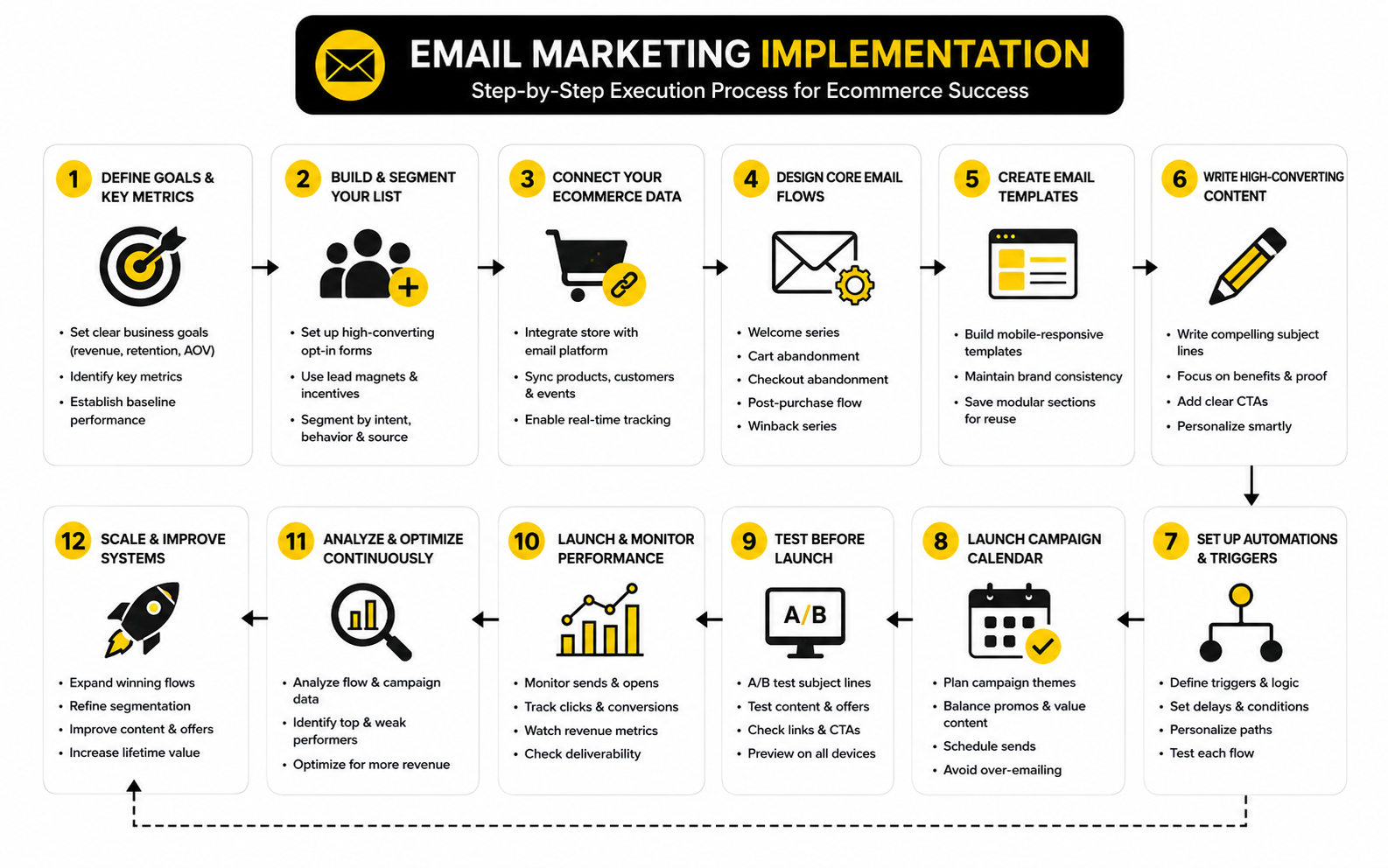
The cleanest implementation order is not the most exciting order. It is the order that gets the store profitable automation coverage without creating chaos. Build the foundations first, then add complexity only when the basics work.
A practical rollout looks like this:
Tools can help here, but they should support the process rather than replace it. Platforms like Brevo and Moosend can support email automation for lean ecommerce teams, while GoHighLevel can fit businesses that also need CRM, funnels, pipeline automation, and broader customer follow-up in one place.
The rule is simple: build only what you can maintain. A clean five-flow setup that is measured and improved will beat a messy twenty-flow setup that nobody understands. Ecommerce email becomes powerful when the system is simple enough to manage and specific enough to match real customer behavior.
Statistics And Data That Actually Matter
Data should make your ecommerce email program easier to manage, not harder. The point is not to collect every possible metric and stare at dashboards all day. The point is to understand which numbers show customer intent, which numbers show revenue impact, and which numbers warn you that the list is getting tired.
This is where many stores get distracted. They celebrate a high open rate without checking whether people clicked or bought. They panic over one weak campaign without comparing it to the segment, offer, send time, and product category. They look at revenue without checking whether the email platform is over-attributing sales that would have happened anyway.
Good measurement keeps the strategy honest. It tells you where the money is coming from, where the customer journey is leaking, and which emails deserve improvement first.
Start With The Revenue Metrics
The most important ecommerce email metrics are tied to money. That does not mean every email needs to sell directly, but the channel still needs to prove that it helps the business grow. For email marketing for ecommerce website performance, revenue metrics are the clearest way to separate activity from impact.
Track these before obsessing over anything else:
Revenue per recipient is especially useful because it normalizes performance. A campaign sent to 10,000 people and a flow email sent to 500 people cannot be judged fairly by total revenue alone. Revenue per recipient shows how much each send is worth on average, which makes it easier to compare flows, campaigns, segments, and offers.
Automations often look small when you only check send volume, but they can be huge when you check revenue efficiency. Omnisend’s 2025 ecommerce report found that automated emails accounted for 37% of email-driven sales while representing only 2% of email volume, which is exactly why flows should be measured separately from campaigns 2025 ecommerce marketing report. Klaviyo’s ecommerce benchmark data also shows abandoned cart flows producing meaningfully higher revenue per recipient than many other common flows, which makes sense because the shopper has already shown strong buying intent ecommerce benchmark data.
Use Engagement Metrics As Diagnostic Signals
Open rate, click rate, and click-to-open rate are still useful, but they are not the final score. They are diagnostic signals. They help you understand where attention is being lost.
Open rate mostly tells you whether the sender name, subject line, preview text, timing, and deliverability are working together well enough to get the email seen. It is helpful, but it has become less reliable because privacy changes can inflate or obscure opens. Treat open rate as a directional signal, not a perfect measure of human attention.
Click rate is more useful because it shows whether the email created enough interest for someone to act. If opens are strong but clicks are weak, the problem is usually the offer, message, creative, product fit, or call to action. If clicks are strong but conversions are weak, the problem may be on the landing page, product page, checkout, pricing, shipping, or trust layer.
Click-to-open rate can help diagnose the email body itself. It compares clicks against opens, so it is useful for judging how persuasive the content was after someone opened. But even that number should not be isolated from revenue, because a highly clickable email can still attract low-quality traffic.
Measure The Whole Customer Path
Email analytics should connect the inbox to the website. Otherwise, you only see half the story. A campaign might look weak in the email platform but perform well in analytics if people come back later through direct or organic traffic. Another campaign might look strong in the platform because of attribution rules, even though many purchases were already likely to happen.
This is why your measurement system should look at the full path:
This path shows where action is needed. If deliverability is weak, fix list quality and sending reputation. If opens are weak, work on subject lines, sender trust, segmentation, and send timing. If clicks are weak, improve the offer and email content. If clicks are strong but orders are weak, stop blaming email and inspect the page experience.
That last point matters. Email is often blamed for problems created by the website. If shoppers click from a strong email and abandon the product page, the email did its job. The next improvement may be product photography, reviews, shipping clarity, page speed, bundles, guarantees, or checkout friction.
Compare Campaigns And Flows Separately
Campaigns and flows need different benchmarks because they behave differently. Campaigns are usually broader and time-based. Flows are triggered by behavior and often sent to smaller, higher-intent audiences.
A launch campaign, a holiday offer, a product education email, and a cart recovery email should not be judged by the same standard. The cart recovery email has much stronger intent behind it. The education email may influence future purchases without converting immediately. The launch campaign may drive revenue but also create more unsubscribes if it pushes too hard.
A clean dashboard should separate:
Once separated, the data becomes more useful. You can see whether campaigns are carrying too much of the revenue burden. You can see whether automations are underbuilt. You can see whether post-purchase emails are creating repeat customers or simply filling space.
Watch List Health Before It Hurts Revenue
A list can look profitable while quietly getting weaker. That is dangerous because deliverability problems often appear after the bad habits are already established. If too many people ignore, unsubscribe, complain, or stop engaging, inbox providers have less reason to trust your sends.
Track list health every month. Look at unsubscribe rate, spam complaint rate, bounce rate, engagement by segment, inactive subscriber growth, and revenue from engaged versus unengaged contacts. These numbers tell you whether the list is becoming more valuable or just bigger.
The best ecommerce teams do not send to everyone just because they can. They protect engagement by suppressing people who have gone cold, segmenting heavy promotions, and using re-engagement campaigns before cutting inactive contacts loose. This is not being conservative. It is protecting the channel.
Signup quality also belongs in list health. Omnisend’s popup research found an average email popup conversion rate of 2.1% across its 2025 dataset, with rates below 1.5% underperforming and 5% or higher considered excellent email popup statistics. That number is useful only if you pair it with downstream quality. A popup that converts at 8% but brings in people who never buy may be worse than a 3% popup that attracts serious shoppers.
Turn Benchmarks Into Decisions
Benchmarks are useful for context, not as commandments. A luxury furniture brand, a supplement subscription, a fashion store, and a low-cost impulse product will not behave the same way. Purchase cycle, product price, margin, urgency, category trust, and traffic source all change the numbers.
Use benchmarks to ask better questions. If your abandoned cart revenue per recipient is far below your category range, inspect timing, offer, checkout friction, and product-page trust. If your welcome flow gets opens but no purchases, check whether the first email gives a clear buying path. If campaigns generate revenue but unsubscribe rates spike, your offer cadence may be too aggressive.
A practical measurement rhythm looks like this:
The action is the whole point. Data that does not change what you do is just decoration. If the numbers show weak clicks, improve the message. If they show weak conversion after the click, improve the page. If they show strong first purchases but weak repeat purchases, improve post-purchase and retention.
Avoid Attribution Traps
Email platforms want to show value, so attribution settings matter. A long attribution window can make email look more profitable than it really is. A short window can undercount email’s influence, especially for higher-consideration products.
Do not treat platform-reported revenue as absolute truth. Compare it with your ecommerce analytics, overall store revenue, campaign timing, and customer behavior. Look for directionally useful patterns rather than pretending attribution is perfect.
This is especially important during big sales periods. If a customer receives five emails, clicks one, sees a retargeting ad, comes back through direct traffic, and buys two days later, attribution can get messy. The question is not “which dashboard gets all the credit?” The question is “did this email program help move profitable customers through the buying journey?”
That mindset keeps measurement grounded. You are not trying to win a reporting argument. You are trying to make better decisions about segmentation, offers, creative, timing, landing pages, and retention.
Build A Dashboard You Can Actually Use
A useful ecommerce email dashboard should be simple enough to review quickly and detailed enough to guide action. If it takes an hour to understand, nobody will use it consistently. If it only shows topline revenue, it will hide the problems that need fixing.
At minimum, your dashboard should show:
For teams that need broader funnel tracking, a CRM and automation platform like GoHighLevel can help connect follow-up, pipeline activity, and customer communication in one place. For ecommerce-focused email execution, tools like Brevo or Moosend can support campaign and automation reporting without making the setup unnecessarily heavy.
The best dashboard gives you one clear next move. Not twenty. One. Fix the weakest high-intent flow, improve the highest-traffic landing page, clean up the least engaged segment, or test the campaign angle that has the strongest buying signal. Data becomes powerful when it forces focus.
Professional Implementation, Tools, And Optimization
At this stage, the basics are in place: the journey is mapped, the key flows exist, and the numbers are being watched properly. The next level is not “send more emails.” The next level is building a professional operating system around the channel so it can scale without burning the list.
This is where email marketing for ecommerce website growth becomes a management discipline. You are balancing revenue, trust, deliverability, creative quality, segmentation, retention, and margin. Push too little and you leave money on the table. Push too hard and the channel starts to decay quietly.
The best teams treat email like a product. They maintain it, test it, clean it, improve it, and retire parts that no longer work.
Scale Frequency Without Training People To Ignore You
More email can drive more revenue, but only up to the point where attention starts to wear down. That is the tradeoff. Sending once a month is usually too passive for an active ecommerce brand, but sending every day to the whole list can create fatigue fast.
The answer is not a universal send frequency. The answer is segmented frequency. Engaged subscribers, recent buyers, VIPs, and high-intent shoppers can often handle more communication than cold subscribers who have not opened, clicked, or bought in months.
A practical cadence might look like this:
This keeps the strongest audiences active without dragging the weakest audiences through every send. It also protects deliverability because inbox providers pay attention to engagement patterns. If too many people consistently ignore your emails, the channel becomes harder to scale.
Protect Deliverability Like Revenue Depends On It
Deliverability is not a technical side issue. It is revenue protection. If emails do not reach the inbox, the best copy, offer, design, and automation logic do not matter.
Modern deliverability requires authentication, low complaints, clean list practices, and easy unsubscribe handling. Google’s sender guidance says senders should keep spam rates below 0.1% and prevent them from reaching 0.3% or higher, which gives ecommerce brands a clear warning line for list quality and campaign pressure email sender guidelines. That number should not be treated casually. If your complaint rate climbs, your future campaigns may pay the price.
A professional setup should include:
Deliverability problems usually do not appear out of nowhere. They build from small decisions: sending to old lists, overusing discounts, ignoring inactive contacts, hiding unsubscribe options, or pushing too many campaigns to people who stopped caring. Fixing those habits is less exciting than writing a new campaign, but it is more important.
Personalization Should Feel Useful, Not Creepy
Personalization is powerful when it helps the shopper. It becomes uncomfortable when it makes the brand look like it is watching too closely. The line is simple: use data to reduce friction, not to show off how much data you have.
Good ecommerce personalization includes product recommendations, category-based content, replenishment timing, size or style preferences, loyalty status, location-sensitive shipping messages, and lifecycle stage. Bad personalization includes forced first-name usage, overly specific browsing references, or irrelevant “recommended for you” blocks that clearly do not match the shopper.
The real move is relevance. If someone bought a coffee subscription, send brewing tips, refill reminders, and related accessories. If someone bought a dress, send styling ideas, matching items, and care guidance. If someone only browsed a category, send a helpful comparison instead of pretending you know exactly what they want.
Recent marketplace research has also explored using item recommendations and language models to improve personalized email titles, with large-scale experiments showing that more relevant subject framing can improve engagement when personalization is productionized carefully personalized email title research. The takeaway is not that AI should write everything. The takeaway is that personalization works best when the message reflects the actual content and customer context.
Use AI As A Workflow Assistant, Not A Strategy Replacement
AI can speed up email production, but it should not be allowed to run the strategy unsupervised. That is where brands get generic fast. AI is useful for drafts, variations, segmentation ideas, subject line angles, summarizing customer reviews, and turning product details into clearer email copy.
The risk is sameness. If every brand uses AI to write the same polished promotional language, customers will feel it. Your emails may become grammatically clean and commercially dead.
Use AI for speed, then add the human layer:
That is the difference between output and strategy. AI can help produce options. The marketer still needs to choose the angle, protect the brand voice, and connect the message to the business goal.
Build Campaigns Around Buying Context
Advanced email is not just better segmentation. It is better timing around buying context. A person shopping for a gift, replacing a product, comparing alternatives, or preparing for a seasonal moment has a different mental state than someone casually browsing.
Campaigns should be planned around those contexts. A product launch needs anticipation, explanation, proof, and urgency. A seasonal sale needs clear merchandising and margin discipline. A replenishment campaign needs timing accuracy. A gift guide needs decision support. A loyalty campaign needs recognition, not just another coupon.
This is where ecommerce brands can move beyond “20% off ends tonight.” Discounts work, but they are expensive. If discounts become the only reason your list clicks, you are slowly training customers to devalue the brand.
Better campaign angles include:
The strongest campaigns give people a reason to buy beyond price. That is how you protect both conversion and margin.
Match The Tool Stack To The Operating Model
The best tool is the one your team can actually use well. A small ecommerce business does not need a bloated enterprise stack if nobody has the time to manage it. A scaling brand should not stay on a lightweight setup if it cannot handle segmentation, reporting, and automation properly.
Match the platform to the way the business operates. If the store needs simple email automation and campaign sending, a lean email platform may be enough. If the business also runs funnels, sales calls, agencies, local offers, or multi-step customer follow-up, a broader platform like GoHighLevel may make more sense.
If the store relies heavily on campaign landing pages, product drops, advertorials, or custom shopping experiences, a landing page tool like Replo can support faster execution. If the acquisition strategy includes chat, social DMs, or conversational lead capture, ManyChat can help connect those entry points to follow-up. If the team wants straightforward email and automation execution, Brevo or Moosend can be practical options.
The stack should remove friction, not create another operational mess. Before adding a tool, ask whether it improves capture, segmentation, execution speed, measurement, or customer experience. If it does not clearly improve one of those, it is probably a distraction.
Balance Automation With Brand Taste
Automation can make a store more efficient, but it can also make the brand feel mechanical. That is the danger. When every message is triggered, templated, and optimized only for conversion, the customer starts to feel like a target instead of a person.
Brand taste shows up in restraint. It shows up in knowing when not to send. It shows up in writing emails that sound like a real brand with standards instead of a coupon machine with a logo.
This is especially important for premium ecommerce brands. A luxury, wellness, design, or high-consideration product cannot always use the same aggressive tactics as a low-ticket impulse store. The messaging, timing, visuals, and offers need to match the trust level required to buy.
That does not mean premium brands should avoid direct response. It means the response should be earned. Strong proof, better education, elegant merchandising, and clear product value can sell without cheapening the brand.
Create A Testing System That Does Not Chase Noise
Testing is useful only when the test is meaningful. Changing one emoji in a subject line and declaring victory after a small sample is not strategy. It is noise.
A serious testing system starts with high-impact questions:
Test things that can change decisions. Subject lines matter, but offer, audience, timing, landing page, and flow structure usually matter more. Start there.
Give tests enough time and volume before making decisions. Ecommerce data can swing because of seasonality, inventory, promotions, traffic source, and product mix. One weird campaign does not prove a strategy. Patterns do.
Know When To Simplify
As stores scale, email programs often become too complex. Too many flows, too many segments, too many tags, too many old campaigns, and too many exceptions can make the system fragile. Nobody knows what is firing, who is suppressed, or why certain customers received certain messages.
Complexity should earn its place. If a segment does not change the message, remove it. If a flow email does not add value, cut it. If a test does not lead to a decision, stop running it. If a dashboard metric does not change action, hide it.
The mature move is often simplification. Clean systems scale better than clever systems. They are easier to audit, easier to improve, and easier to hand off when the team grows.
That is the expert-level mindset: use email to build a more valuable customer relationship, not just a louder marketing calendar. The stores that win with ecommerce email are not always the ones sending the most. They are the ones sending with the clearest intent.
Measurement, Mistakes, FAQs, And The Next Steps
By now, the full system should be clear. Ecommerce email is not one tactic. It is a customer communication layer that touches acquisition, conversion, retention, loyalty, support, and measurement.
The best version of that system is not loud. It is coordinated. The signup forms, automations, campaigns, landing pages, product pages, customer data, deliverability rules, and reporting all support the same goal: helping the right customer take the right next step.
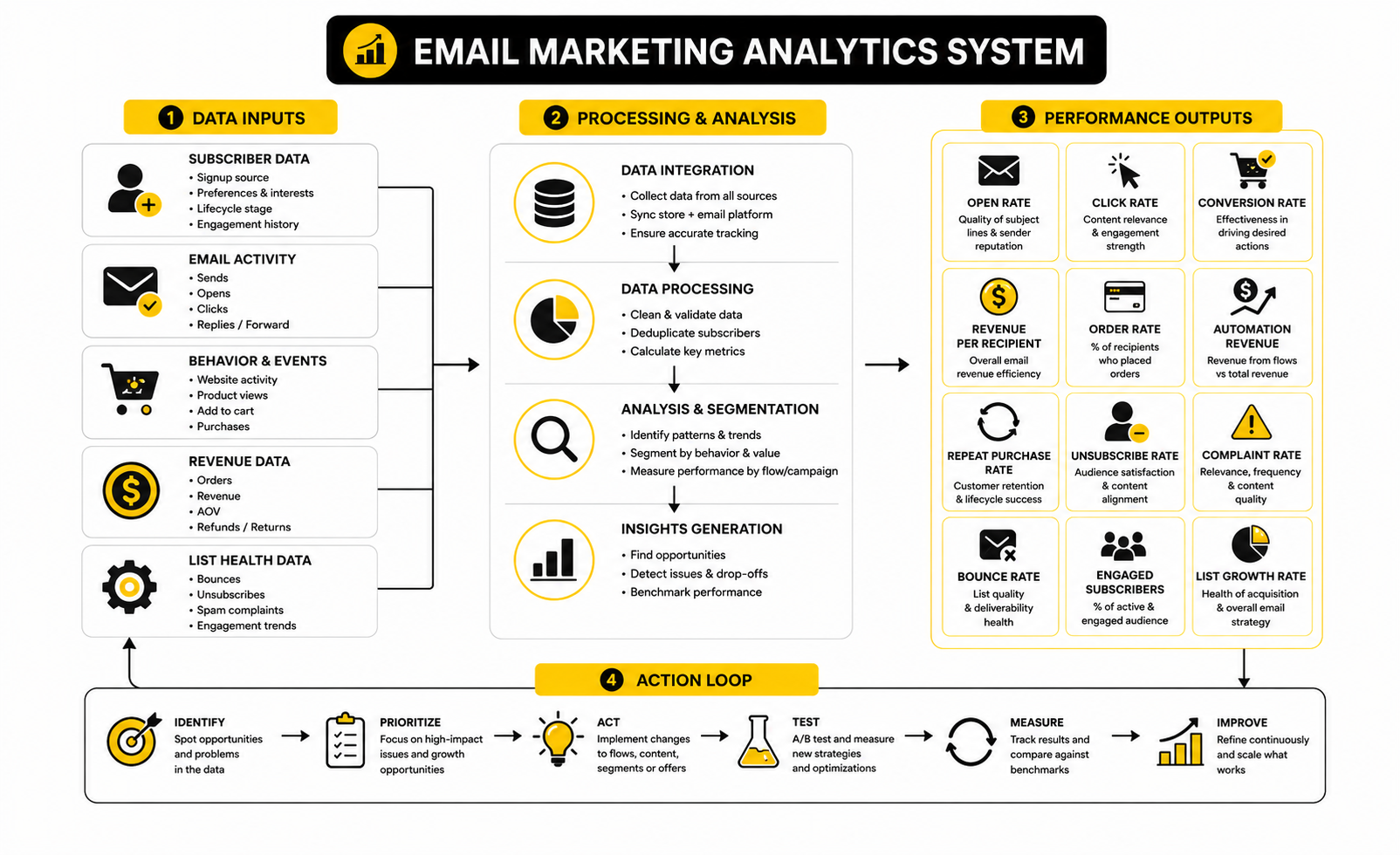
That is the final shift. Email marketing for ecommerce website growth becomes much more predictable when it is treated as an ecosystem instead of a collection of random sends. Each part has a role, and each part affects the others.
The Mistakes That Quietly Kill Ecommerce Email Performance
The most damaging mistakes are usually not dramatic. They are small operating habits that compound over time. A weak popup attracts low-quality subscribers, a messy welcome flow wastes first attention, a discount-heavy cart flow trains shoppers to wait, and poor list hygiene slowly hurts deliverability.
Another common mistake is judging every email by immediate sales. Some emails should sell now, but others should build trust, explain the product, reduce support pressure, increase review volume, or prepare the next purchase. If every message is forced to act like a flash sale, the brand becomes predictable in the worst way.
The biggest mistake is forgetting that customers experience the whole system, not just one email. They see the popup, the welcome offer, the product page, the checkout, the shipping updates, the post-purchase emails, and the next campaign. If those pieces feel disconnected, the customer feels the friction even if the dashboard looks fine.
What To Fix First
The best first fix is usually the highest-intent leak. If checkout abandonment is high, fix checkout recovery and inspect the checkout experience. If new subscribers are not buying, fix the welcome path and the first-click landing page. If repeat purchases are weak, improve post-purchase education, replenishment logic, and customer-specific recommendations.
Do not try to optimize everything at once. Pick one part of the system, improve it properly, then move to the next. A focused month fixing cart and checkout recovery can be worth more than ten random subject line tests.
A clean priority order looks like this:
That is how the channel matures. You move from “we send emails” to “we manage a customer journey.” There is a huge difference.
What is email marketing for ecommerce website growth?
Email marketing for ecommerce website growth is the process of using email to turn visitors into subscribers, subscribers into customers, and customers into repeat buyers. It includes signup forms, welcome emails, abandoned cart recovery, post-purchase messages, campaigns, segmentation, and performance tracking. The goal is not just to send promotions, but to build a direct customer channel that supports revenue and retention.
Why is email important for ecommerce stores?
Email is important because it gives ecommerce stores a direct way to reach people who already showed interest. Paid ads, social platforms, and marketplaces can change quickly, but an email list remains an owned audience when it is built properly. It also helps stores recover abandoned carts, educate buyers, launch products, increase repeat purchases, and reduce dependence on paid traffic.
What email flows should an ecommerce website build first?
The first flows should usually be welcome, cart abandonment, checkout abandonment, post-purchase, and winback. These cover the most important customer moments: joining the list, showing purchase intent, completing an order, and becoming inactive. Once those are working, the store can add browse abandonment, replenishment, review requests, loyalty, VIP, and product-specific flows.
How many emails should be in a welcome flow?
A practical welcome flow usually has three to five emails. The first email should deliver the promised incentive or value, the next emails should explain the brand and product difference, and later emails can handle objections or point people toward bestsellers. The flow should stop or change once someone buys so they do not keep receiving first-purchase messages after becoming a customer.
How often should an ecommerce store send campaigns?
There is no universal frequency that works for every store. A small brand with a slow buying cycle may send one or two campaigns per week, while a larger brand with frequent launches, strong segmentation, and engaged audiences may send more. The real rule is to send based on audience engagement, campaign quality, product relevance, and list health rather than forcing a fixed schedule.
Should ecommerce emails always include discounts?
No. Discounts can work, but they should not become the entire strategy. If every email relies on a coupon, customers learn to wait for deals and the brand slowly weakens its margins. Better ecommerce email programs mix discounts with product education, bundles, social proof, new arrivals, replenishment reminders, loyalty benefits, and useful buying guidance.
What is a good abandoned cart email strategy?
A good abandoned cart strategy reminds the shopper what they left behind, removes buying friction, and gives them a clear path back to checkout. The first email can be a simple reminder, the second can answer objections with reviews or guarantees, and the final email can add urgency or an incentive if the economics make sense. The best strategy depends on margin, product price, purchase cycle, and how often customers abandon carts before buying.
What metrics matter most in ecommerce email marketing?
The most useful metrics are revenue per recipient, conversion rate, order rate, click rate, repeat purchase rate, unsubscribe rate, complaint rate, and automation revenue. Open rate can still be helpful, but it should not be treated as the main success metric. The best measurement system shows where the customer journey is leaking and what action should be taken next.
How do I know if my email list is healthy?
A healthy email list grows with people who actually engage and buy. Look at engagement by segment, unsubscribe trends, spam complaints, bounce rate, inactive subscriber growth, and revenue from engaged contacts versus cold contacts. If the list is growing but engagement and revenue per recipient are falling, the store may be attracting weak subscribers or sending too broadly.
What is the difference between campaigns and automations?
Campaigns are one-time or scheduled emails sent to a selected audience, such as launches, sales, product education, gift guides, or seasonal promotions. Automations are triggered by customer behavior, such as joining the list, viewing a product, abandoning a cart, buying a product, or becoming inactive. Campaigns create planned momentum, while automations respond to individual customer intent.
Can a small ecommerce store use email marketing effectively?
Yes. A small store does not need a complicated system to benefit from email. It needs clean signup capture, a useful welcome flow, cart recovery, post-purchase communication, and a basic campaign rhythm. Once those pieces work, the store can add segmentation and more advanced flows as revenue and data grow.
What tools are useful for ecommerce email marketing?
The right tool depends on the store’s needs. Some teams want a lean email and automation platform such as Brevo or Moosend, while others need broader CRM and funnel automation through GoHighLevel. Stores that depend on custom ecommerce landing pages can also use Replo, and brands using conversational capture can connect social or chat follow-up with ManyChat.
How long does it take to see results from ecommerce email marketing?
Some results can appear quickly when high-intent flows are missing, especially cart recovery, checkout recovery, and welcome emails. Retention improvements usually take longer because repeat purchases depend on product experience, buying cycle, and customer satisfaction. The practical goal is to build the core system first, then improve each flow and campaign layer over time.
Is email marketing still worth it with SMS, ads, and social media?
Yes, but it should not operate alone. Email works best when it supports the broader ecommerce system, including paid traffic, organic content, landing pages, SMS, customer support, and loyalty. SMS can be stronger for urgency, ads can bring in new traffic, and social can create discovery, but email remains one of the most useful channels for structured follow-up and lifecycle communication.
The Next Step
The next step is to audit the system you already have. Do not start by writing ten new campaigns. Start by checking whether the customer journey makes sense from signup to repeat purchase.
Look at the store like a customer. Join the list, browse a product, abandon a cart, place an order, read the post-purchase emails, and check what happens next. You will usually find gaps quickly.
Then fix the most valuable gap first. That might be a broken welcome flow, weak cart recovery, no post-purchase education, poor segmentation, missing tracking, or a campaign calendar that depends too heavily on discounts. One focused fix at a time is how a reliable ecommerce email engine gets built.
Build a stronger local presence with BAAM AI
Turn your website, Google profile, social channels, and AI visibility into one growth engine
Most businesses do not need more random marketing activity. They need a consistent presence system that helps the right people find them, trust them, and take action. BAAM AI brings strategy, local SEO, website updates, Google Maps visibility, social content, AI-search readiness, media production, and reporting into one practical monthly engine.
If you want your marketing to keep working after the campaign ends, start with a free BAAM AI presence audit. See how your business shows up today and where the fastest visibility wins are at BAAM AI.