
BAAM AI Blog
Email Marketing Campaign Tips: What Works in 2026
Email marketing continues to be one of the most effective digital channels for reaching customers directly in their inboxes and driving measurable business results. In 2026, businesses still see unparalleled...
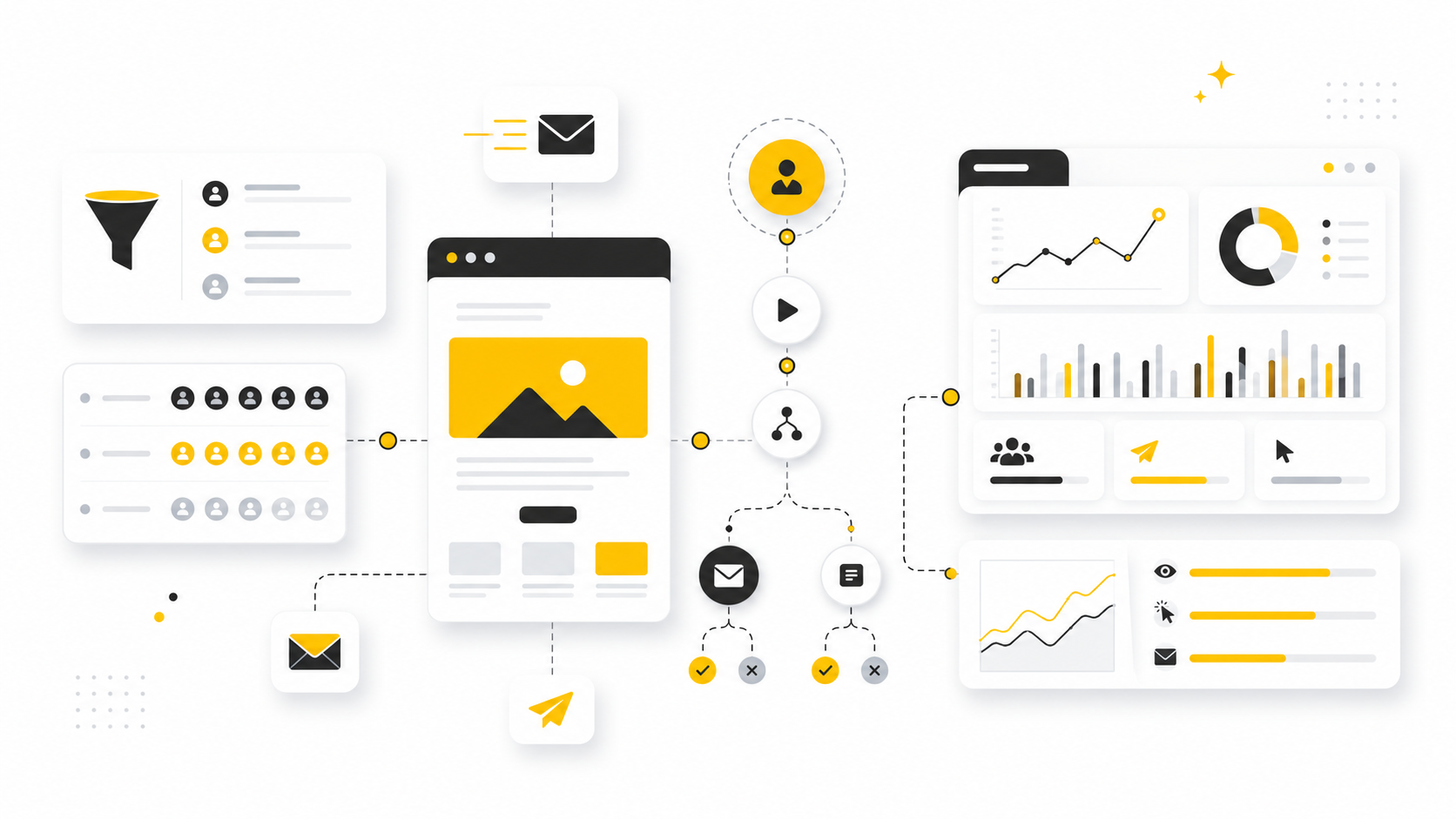
Email marketing continues to be one of the most effective digital channels for reaching customers directly in their inboxes and driving measurable business results. In 2026, businesses still see unparalleled returns—often around $36–$42 for every $1 spent—making it a critical part of growth strategies across industries.
Despite changes in privacy rules and shifts in consumer behaviour, email remains a personal touchpoint where subscribers ask to hear from brands. That makes it uniquely powerful compared with social platforms or paid ads where you compete for attention.
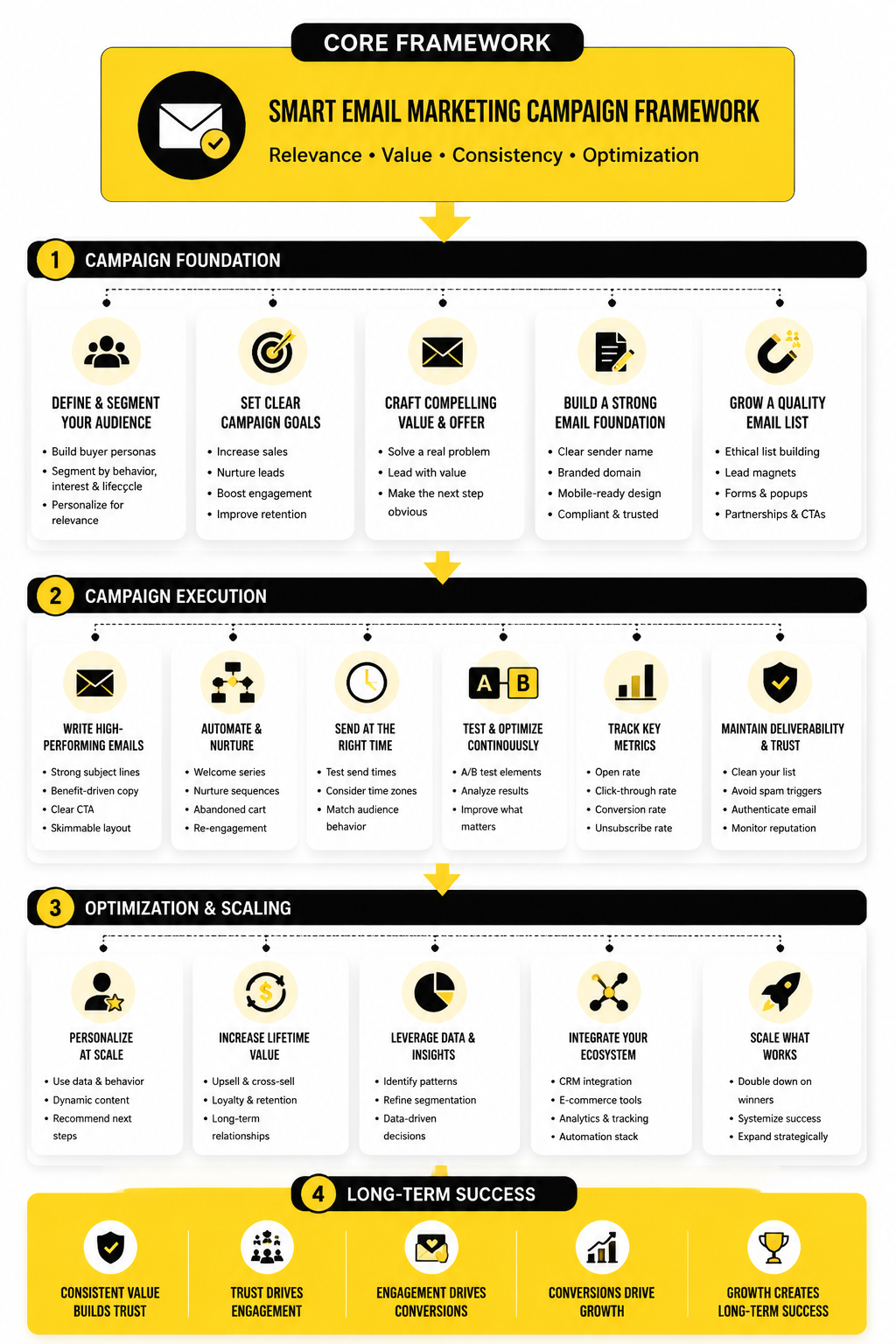
In this first part, we define the structure and context you’ll follow throughout the rest of this guide. You’ll start with the why, then move into the how, and finally address implementation and optimization. Each section builds on the last so you can develop campaigns that perform and scale over time.
Why Email Marketing Still Matters in 2026
Email marketing’s strength isn’t just historical—its current performance metrics and trends show it remains a cornerstone of effective digital engagement.
This combination of reach, ROI, and expectation is why email remains central to customer acquisition, revenue growth, and long‑term engagement strategies in 2026.
From here, we’ll explore a practical framework you can apply, starting with defining goals and understanding your audience—because without the right foundation, even the best email tip won’t move the needle.
A Practical Framework for Campaign Success
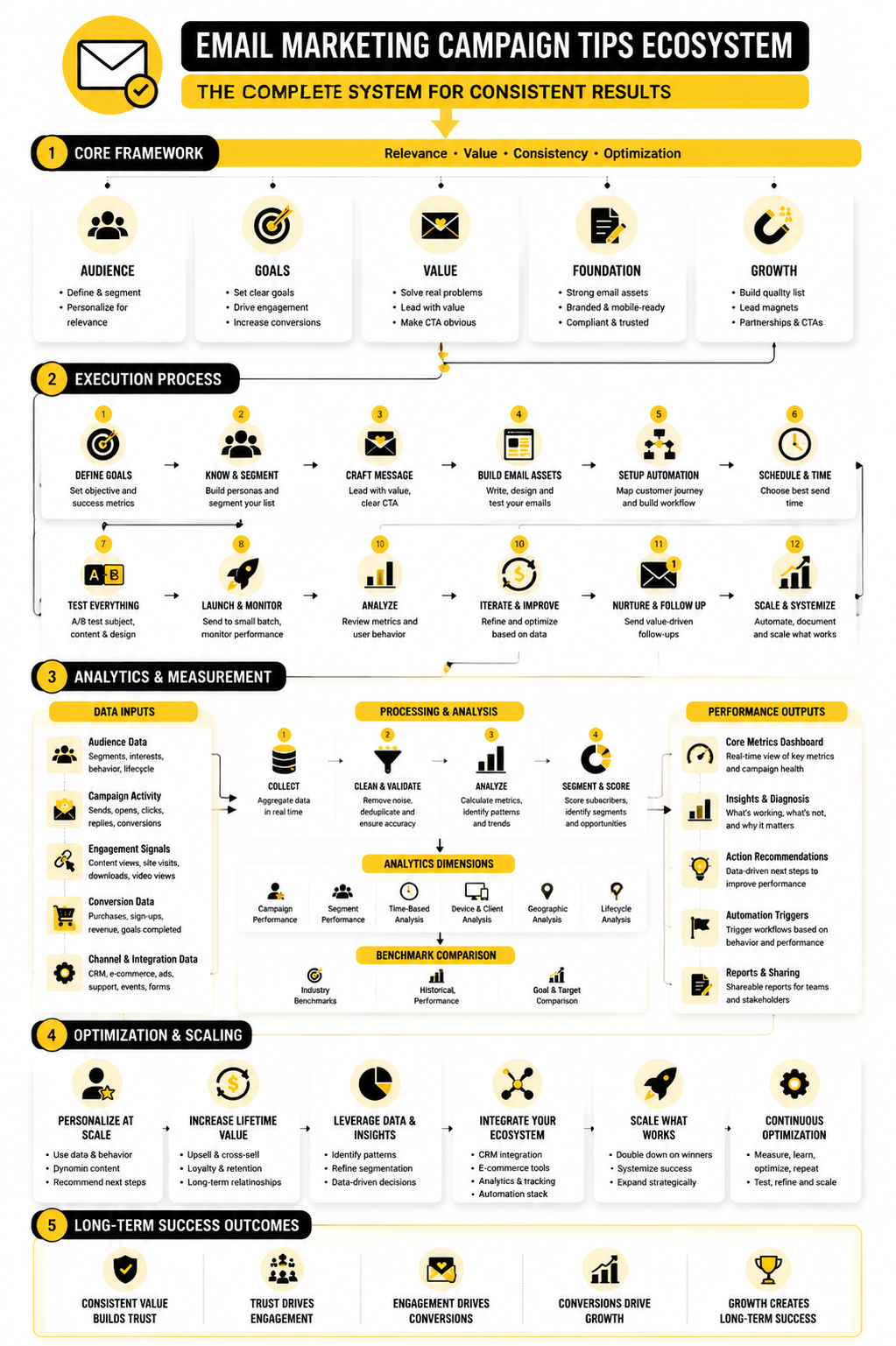
Before you start writing anything or choosing design elements, the most successful email marketing campaigns begin with a clear framework that aligns strategy with execution. This framework acts like your strategic blueprint, ensuring every campaign has a purpose, a target, and a measurable outcome.
1. Set Clear, Measurable Objectives
Every campaign in your strategy should start with a specific goal—not vague aspirations like “drive engagement,” but something you can measure. Good objectives include driving purchases for a specific product, encouraging webinar sign‑ups, or re‑engaging subscribers who haven’t opened a message in months. When goals are too broad, your team can’t focus messaging, call‑to‑action design, or evaluation metrics around one outcome, which weakens performance.
Clear campaign objectives help guide decisions like segmentation criteria (who sees the email), subject line strategy (how you capture attention), and metrics for success (what you measure post‑send). Think in terms of one objective per campaign to avoid mixed messages that confuse your audience and dilute results.
2. Understand Your Target Audience
The heart of a strong email marketing campaign is a deep understanding of who you’re talking to. Your audience isn’t a monolith—customers differ by behaviour, interests, purchase history, and lifecycle stage. Email campaigns tailored to these differences consistently outperform generic blasts that treat everyone the same.
Break your list into segments based on criteria such as past purchases, engagement patterns, or specific interests. For example, people who have clicked product links but never bought might be grouped separately from loyal customers who purchase monthly. These distinctions allow you to craft messaging that speaks directly to each group’s motivations and barriers.
3. Match Content With the Audience and Objective
Once you’ve set a goal and defined your audience segments, the next step is to align what you say with who you’re saying it to and what you want them to do. Content strategy in email campaigns isn’t one‑size‑fits‑all; it’s guided by relevance. That means the headline, body copy, and call to action should all reinforce the campaign objective and feel genuinely useful to the segment receiving it.
For example, a welcome campaign for new subscribers should focus on value and orientation to your brand, while a re‑engagement campaign might need to highlight exclusive incentives or ask for feedback. Avoid treating all segments the same; the more specific your content is to a segment’s needs and interests, the more effective your campaign will be.
4. Build a Repeatable Process
Great email campaigns don’t happen by accident. They require repeatable steps that teams can follow for consistency and continuous improvement. A high‑level process often includes:
This repeatable rhythm ensures that every campaign contributes to broader strategic goals while allowing you to refine and improve over time.
Core Components of High‑Performing Campaigns
To bring the framework above to life, understanding the essential building blocks of any successful email campaign is key. These components work together to influence deliverability, relevance, engagement, and conversion.
Audience Segmentation and Personalization
Segmentation is a foundational component that lets you send the right message to the right people at the right time. Generic blasts to your entire list are far less effective than segmented sends that consider behaviour, purchase history, or engagement level. Targeted segments often deliver higher open rates, click‑throughs, and revenue because they speak to specific needs.
Personalization goes beyond adding a first name in the subject line. It includes tailoring content based on past behaviour, like recommending products related to a previous purchase or sending reminders based on a site visit. The combination of segmentation and meaningful personalization significantly boosts relevance and results compared with broad messaging.
Automation and Lifecycle Journeys
Automation enables you to serve highly relevant messages at scale without manual effort for every send. Workflows like welcome sequences, post‑purchase follow‑ups, abandoned cart reminders, and re‑engagement flows make sure your audience receives timely, contextual content based on their actions. These triggered emails often outperform one‑off campaigns because they arrive when subscribers are most interested or ready to act.
Automated journeys not only save time but maintain consistent communication that nurtures leads toward your business outcomes—whether that’s revenue, retention, or deeper engagement.
Messaging and Design Principles
Even with smart segmentation and automation, your campaign will only convert if the messaging and design are strong:
These components should work in harmony so subscribers aren’t left guessing what to do next. A clear, singular CTA increases the chance of conversion because it reduces friction and focuses attention on a single desired outcome.
Metrics and Iteration
Finally, the campaigns that improve over time are those measured and refined based on performance data. Instead of fixating on vanity metrics like open rates alone, track metrics tied to your objective—click‑through rate, conversions, revenue per email, or unsubscribe rate. Use these insights to iterate subject lines, segment definitions, and sending times so each campaign performs better than the last.
In Part 3, we’ll dive deeper into common mistakes that trip up email campaigns and how to fix them so your results don’t plateau.
Putting Email Marketing Tips Into Action
At this point in your campaign planning, you’ve defined goals, built a strong strategic framework, and identified the key components of successful email marketing. Now it’s time to implement those tips step by step so your campaigns actually launch and perform reliably.
Establish Your Campaign Workflow
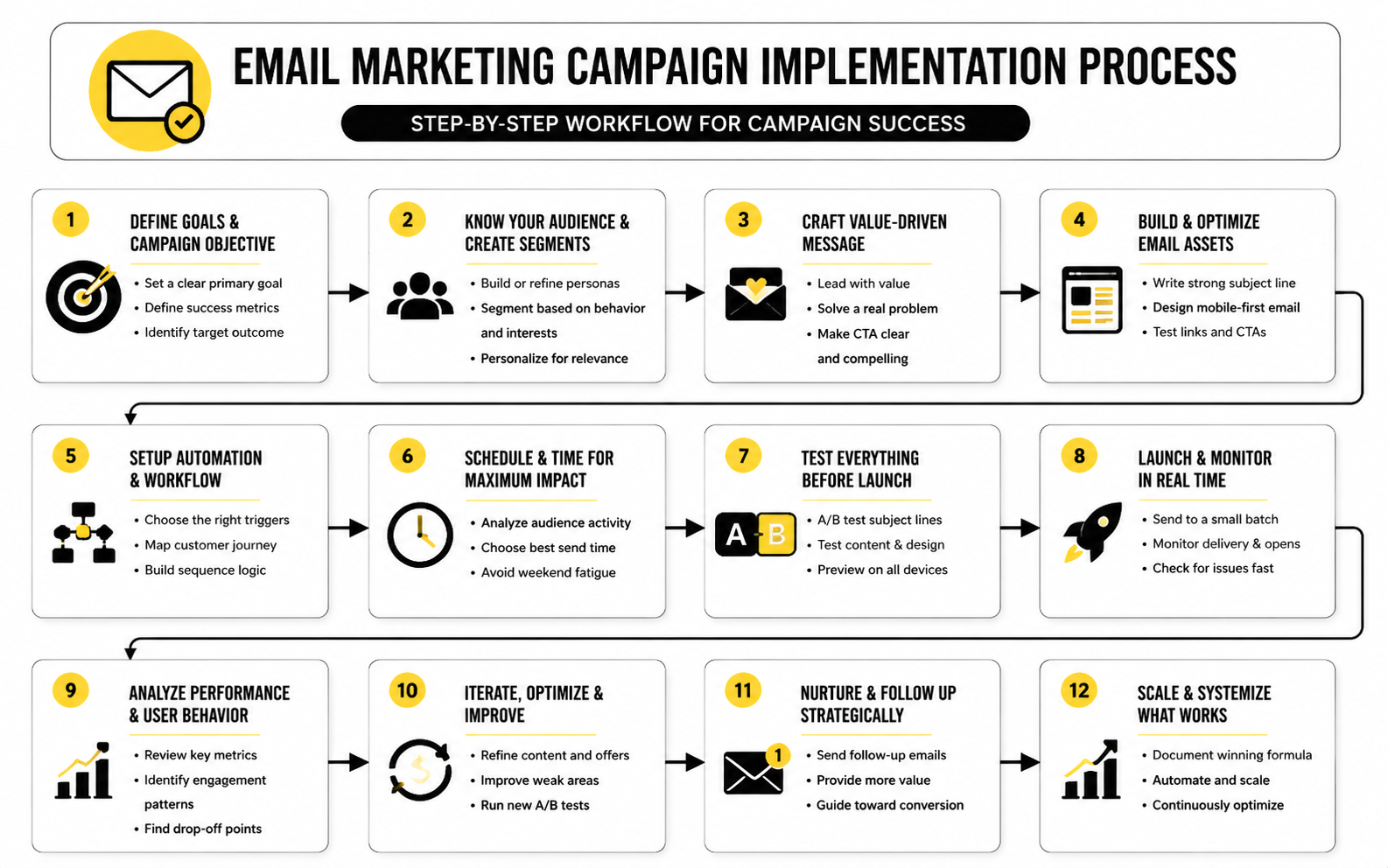
A consistent execution process gives every campaign structure and makes sure you don’t miss critical steps. Most successful teams follow a workflow like this:
Set your objective, audience segment, and key metric (e.g., click‑through rate, conversion, or revenue). Keep the goal singular per campaign so nothing dilutes your message.
Write your subject line, preview text, and body copy with the audience and objective in mind. Design the email for readability and engagement—remember that well over half of opens now come on mobile, so mobile‑friendly layouts are essential.
If your campaign is part of a sequence—like a welcome flow, abandoned cart reminder, or re‑engagement series—define clear triggers and entry conditions so messages hit at the right moment.
Always preview your email across multiple devices and clients. Use A/B tests on subject lines or call‑to‑actions to identify which variants perform best before rolling out to your full audience.
Choose timing based on known engagement patterns for your audience. Sending at the wrong time—like Friday late afternoon for B2B—can hurt open and click rates.
After the send, compare results to your defined objective and KPIs. Use what you learn to iterate on future campaigns. Testing, measurement, and refinement are where you transform tips into results.
Prepare Your Platform and Infrastructure
Before you ever hit send, your email infrastructure should be set up to support consistent delivery and performance:
Configuring SPF, DKIM, and DMARC protocols helps ensure your emails reach the inbox and not the spam folder—especially as filters tighten in 2026.
Regular list hygiene—removing invalid or inactive subscribers—protects your sender reputation and improves engagement metrics.
Use behaviour‑based criteria (like recent purchases or engagement recency) to build dynamic groups that update automatically and trigger relevant campaigns.
Start with essential sequences like welcome series and post‑purchase follow‑ups, then add more advanced flows like cart abandonment or winbacks. These automated messages often drive the most predictable revenue.
Write and Design with Purpose
Strong implementation isn’t just technical—it’s creative and persuasive too:
Craft subject lines that clearly communicate value and invite opens. Effective preheaders complement the subject by reinforcing that value.
Every email should have one main call‑to‑action that advances your objective. Multiple CTAs dilute focus and reduce conversion.
Break text into short paragraphs, use bullet lists for clarity, and keep copy concise. Most people skim email content—make it scannable.
Test, Review, and Optimize
No campaign should launch without testing. Testing isn’t just for subject lines; it extends to:
Different audiences engage at different times. A/B testing send days and hours reveals when your list is most receptive.
Test variations like button colours, image placement, or even text length to see what drives higher interaction.
Review how segments perform and refine rules so your messages reach the most receptive subscribers.
As you implement these steps, you’ll see the difference between tips on paper and campaigns that actually convert. In the next part, we’ll explore how to spot and fix common mistakes that can silently sabotage your success.
What Email Marketing Data Tells You and Why It Matters
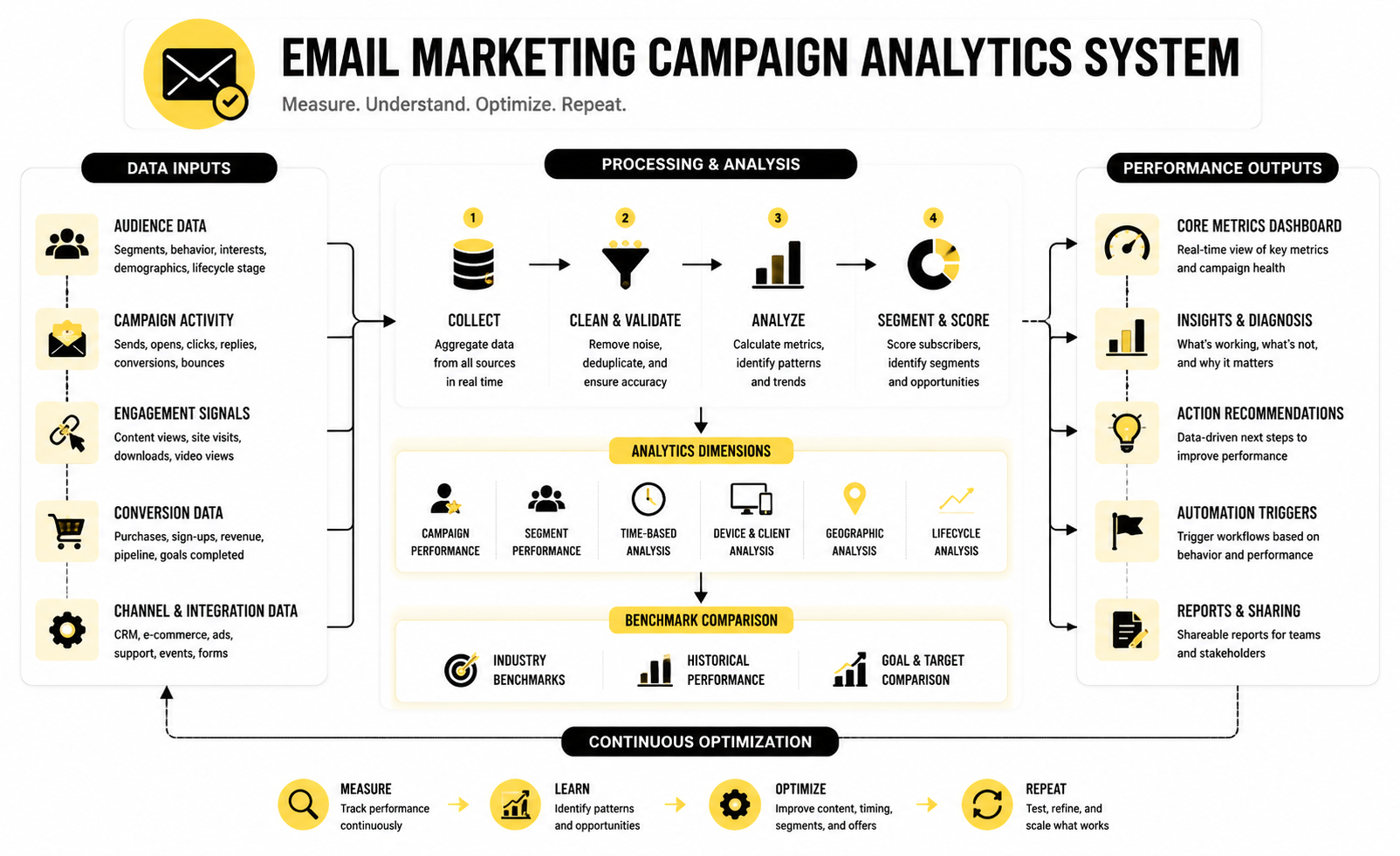
Numbers by themselves don’t drive better outcomes - insights from the right metrics do. As you build and optimize campaigns, understanding what to measure, how to interpret it, and what action each signal should drive turns guesses into growth.
Which Metrics Are Worth Tracking
Not all email statistics are equally useful. Some have become less reliable due to modern privacy features, while others tell you exactly how your message is resonating.
Why Benchmarks Help You Contextualize Results
Benchmarks are useful, but only when you understand what they mean:
How to Turn Numbers Into Actions
Understanding the “why” behind the numbers positions you to make decisions that improve future campaigns:
By interpreting email marketing analytics through these lenses, you transform raw statistics into meaningful performance signals that guide actionable improvements - moving campaigns from well‑intentioned to truly effective.
Advanced Guidance for Scaling and Long‑Term Growth
Once you’ve mastered the foundational email marketing campaign tips - planning, executing, measuring, and iterating - the next level is strategic sophistication. This is where teams shift from reactive tweaks to proactive systems that sustain growth, protect deliverability, and extract more value from every subscriber relationship.
Treat Your List as a Long‑Term Asset
As your subscriber base grows, it becomes more than a short‑term audience - it becomes a strategic business asset. Large, engaged lists drive recurring revenue, increase customer lifetime value, and lower acquisition costs over time. But without intentional care, that asset can degrade:
Building a strategy for long‑term list health - including how you re‑engage, segment, and prune - ensures your email database remains a competitive advantage, not a liability.
Balance Personalization With Privacy and Compliance
Advanced email marketers recognize that personalization drives engagement but must be balanced with evolving privacy expectations and regulations:
A thoughtful approach to personalization respects subscriber autonomy and builds trust, which is increasingly important as consumers become more protective of their data.
Integrate Email With Other Channels
Email doesn’t operate in a vacuum - integrated campaigns that link email with other marketing channels consistently outperform siloed efforts:
By thinking beyond email in isolation, you make every channel more carefully and more effective.
Strategic Trade‑Offs: Speed vs. Quality
As teams scale, you’ll encounter trade‑offs between rapid execution and deep quality control:
Good teams know when to accept a quick send and when to invest in careful optimization.
Risk Management and Deliverability Protection
When scaling, risks around deliverability and reputation can threaten performance if left unmanaged:
Scaling your email marketing isn’t just about sending more - it’s about sending better.
Build a Culture of Experimentation
Top‑performing teams embrace continuous testing beyond basics:
A disciplined testing culture turns intuition into predictable performance gains.
Expert Tools and Automation Platforms
As complexity grows, the right tools help you implement advanced strategies without overwhelming your team. Platforms that support automation workflows, reliable segmentation, and deep analytics - and integrate with your CRM - make scaling manageable and impactful.
For many teams, tools that combine email automation with CRM and behavioural triggers outperform isolated email platforms, especially when you want to build sophisticated lifecycle journeys or cross‑channel campaigns. Selecting the right platform should be a strategic decision tied to your long‑term growth goals, not a short‑term convenience choice.
In Part 6, we’ll wrap up with FAQs and expert insights that address common challenges and help you avoid pitfalls experienced practitioners see again and again.
1. How often should I send marketing emails without annoying subscribers?
Frequency depends on your audience and content relevance. Start with once a week or biweekly, monitor engagement, and adjust based on open rates, CTR, and unsubscribe trends. Segmentation can help send more to highly engaged users and less to inactive ones.
2. What’s the most effective type of email content?
Content that delivers clear value, whether educational, promotional, or transactional, consistently performs best. Personalization and segmentation amplify relevance, leading to higher engagement than generic mass emails.
3. How important are subject lines in email campaigns?
Extremely important - subject lines determine whether recipients open your email. A compelling, concise, and benefit-driven subject line can significantly increase open rates, while misleading or clickbait subject lines often increase complaints or unsubscribes.
4. Should I prioritize open rates or click-through rates?
Click-through rates (CTR) provide more actionable insight than open rates alone. They indicate whether readers actually engage with your content, whereas opens can be inflated due to privacy protections on email platforms.
5. How can I improve deliverability?
Maintain clean lists, authenticate your domain (SPF, DKIM, DMARC), and monitor bounce and complaint rates. Regularly pruning inactive or invalid addresses helps protect your sender reputation and ensures more emails reach inboxes.
6. What role does automation play in campaign success?
Automation allows timely, personalized interactions like welcome sequences, abandoned cart reminders, and re-engagement flows. Properly configured automation increases efficiency and ROI without manual intervention for each send.
7. How do I know if my campaigns are effective?
Track KPIs aligned with your objectives - clicks, conversions, revenue per email, and engagement metrics provide a full picture. Benchmarking against industry averages helps contextualize results and guide improvements.
8. Can personalization improve engagement significantly?
Yes, but it must be relevant and privacy-compliant. Tailoring messages based on behaviour, purchase history, or preferences drives higher open and click rates compared with generic messages.
9. How do I manage a growing email list effectively?
Segment your list dynamically, implement preference centers, and use engagement scoring to target high-value subscribers. This helps scale campaigns without overwhelming or fatiguing recipients.
10. Which tools are recommended for advanced campaigns?
Platforms that combine automation, CRM integration, segmentation, and analytics support complex campaigns and scaling. Consider solutions like GoHighLevel or Brevo for professional-grade capabilities.
11. How can I optimize campaigns continuously?
Adopt a culture of testing: A/B subject lines, CTAs, content blocks, and send times. Analyze performance against goals, iterate quickly, and apply lessons learned to future campaigns for compounding improvement.
12. Are there risks when scaling email marketing?
Yes - scaling too quickly without monitoring engagement can harm deliverability and sender reputation. Gradual volume increases, list hygiene, and continuous testing mitigate these risks.
Build a stronger local presence with BAAM AI
Turn your website, Google profile, social channels, and AI visibility into one growth engine
Most businesses do not need more random marketing activity. They need a consistent presence system that helps the right people find them, trust them, and take action. BAAM AI brings strategy, local SEO, website updates, Google Maps visibility, social content, AI-search readiness, media production, and reporting into one practical monthly engine.
If you want your marketing to keep working after the campaign ends, start with a free BAAM AI presence audit. See how your business shows up today and where the fastest visibility wins are at BAAM AI.