
BAAM AI Blog
Email Lead Generation: The Practical System For Turning Attention Into Owned Pipeline
Email lead generation is the process of attracting the right people, earning permission to contact them, and moving them into a follow-up system that can turn interest into sales conversations, demos, trials...
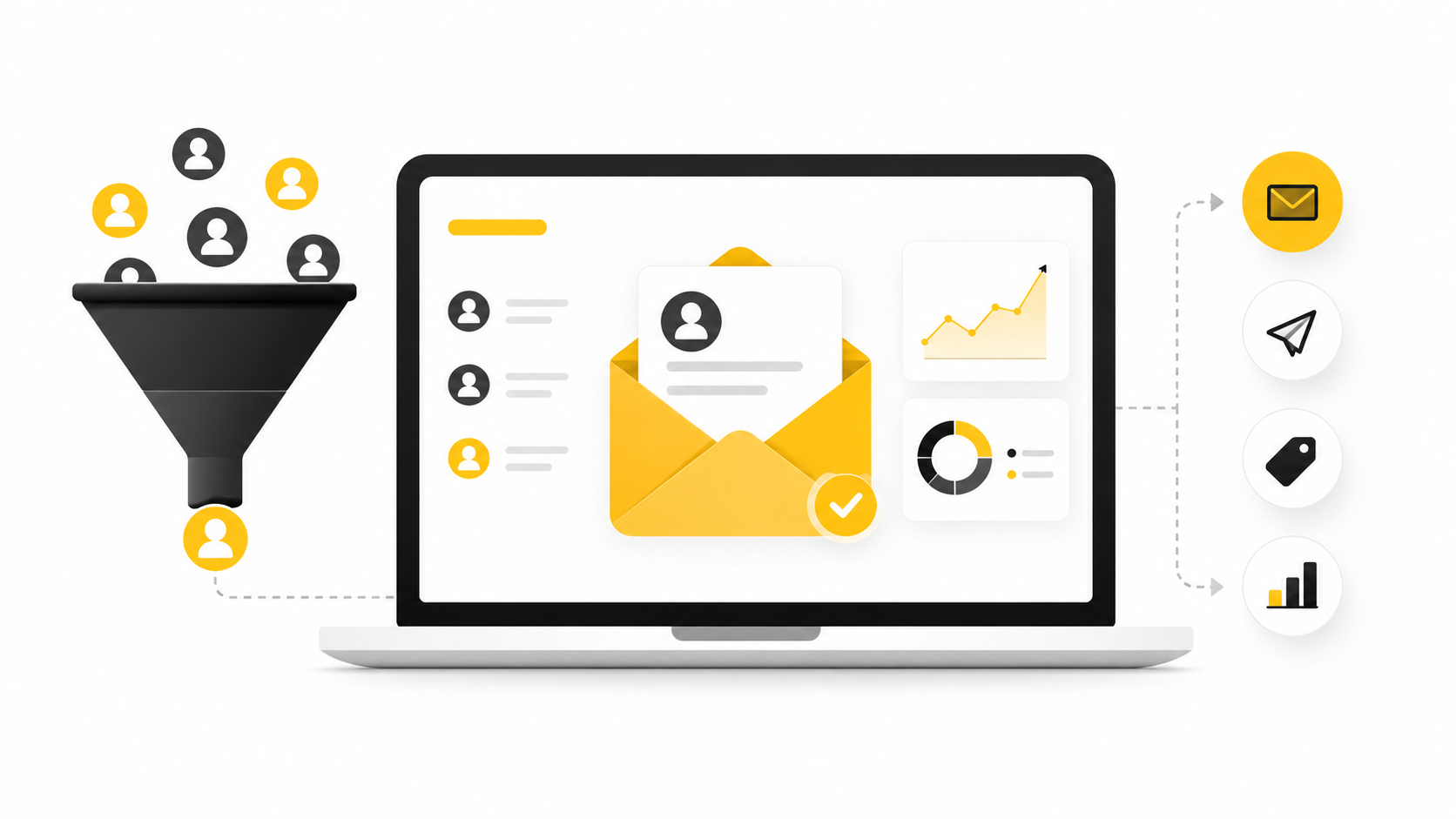
Email lead generation is the process of attracting the right people, earning permission to contact them, and moving them into a follow-up system that can turn interest into sales conversations, demos, trials, bookings, or purchases.
That sounds simple. It is not.
The hard part is not “getting emails.” Anyone can slap a form on a page, buy a list, or run a giveaway that attracts people who will never buy. Real email lead generation is about building a clean, relevant, compliant, and conversion-focused pipeline you actually own.
Email still deserves serious attention because it combines three things most channels struggle to deliver at the same time: ownership, repeatability, and measurable intent. The channel remains financially powerful, with Litmus reporting an average return of $36 for every $1 spent, while newer sender rules from Gmail and Yahoo make quality, consent, and authentication more important than ever. If your lead generation system depends only on ads, algorithms, or cold traffic, email gives you a steadier asset to build around.
this guide breaks email lead generation into a practical six-part system. We will look at why it matters, how the framework works, what the core components are, how to implement it professionally, how to measure and improve it, and how to scale without wrecking trust or deliverability.
Why Email Lead Generation Still Matters
Email lead generation matters because it turns borrowed attention into owned opportunity. A visitor from search, social, paid ads, YouTube, partnerships, or referrals can disappear forever if you do not capture the relationship. A good email system gives you a way to keep educating, segmenting, qualifying, and converting that person after the first visit.
It also matters because buyers rarely move the moment they first discover you. They compare options, wait for timing, ask internal questions, get distracted, and come back later when the pain becomes urgent. Email gives your business a controlled way to stay useful during that gap without relying on retargeting pixels or hoping the algorithm shows your content again.
The catch is that email lead generation only works when the lead is earned properly. Gmail’s sender rules now require stronger authentication, low spam rates, and easier unsubscribes for senders who want reliable inbox placement, which means sloppy list-building is not just annoying anymore; it is operationally risky. Google’s own guidance says senders must follow requirements designed to prevent mail from being limited, blocked, or marked as spam, and bulk senders face even stricter expectations around authentication and complaint rates through the Google email sender guidelines.
The Email Lead Generation Framework
A strong email lead generation system has four simple layers: attract, capture, qualify, and convert. You attract the right audience with content, ads, offers, partnerships, communities, search, or outbound activity. You capture the relationship with a clear offer that makes leaving an email feel useful, not manipulative.
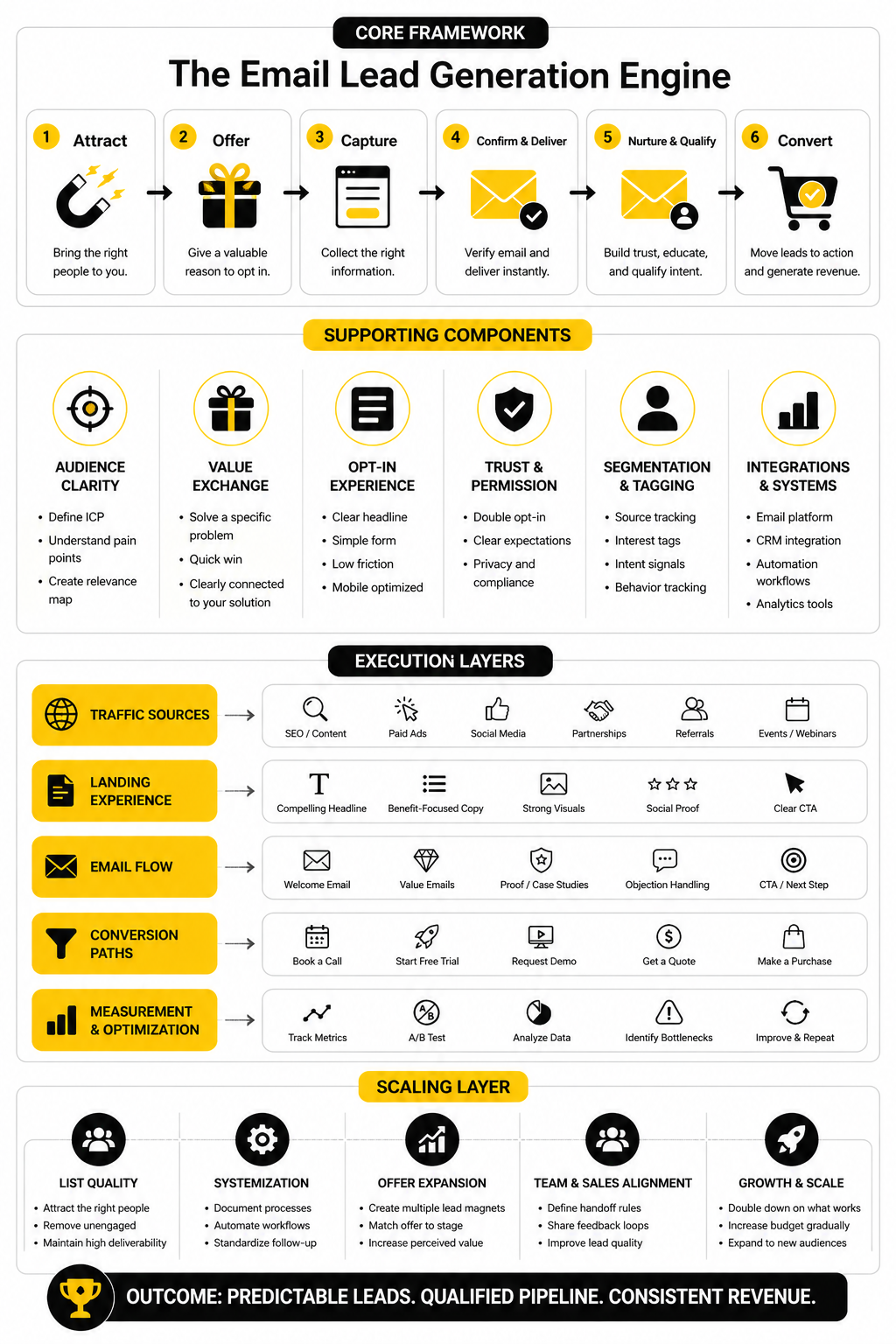
Then you qualify the lead by learning what they care about, what problem they have, where they are in the buying process, and whether they match your ideal customer profile. This can happen through form fields, quiz answers, behavior, tags, lead magnets, webinar attendance, reply data, CRM activity, or sales conversations. The goal is not to collect endless data; the goal is to collect enough signal to send better follow-up.
Finally, you convert the lead through a sequence that matches intent. A newsletter subscriber may need education and trust. A demo requester may need fast routing and a sales handoff. A pricing-page lead may need proof, objection handling, and a clear next step. Tools like GoHighLevel, Brevo, Moosend, and ManyChat can support pieces of this system, but the framework matters more than the software.
How The Rest Of this guide Will Build The System
The next part will go deeper into the framework and show how lead sources, offers, landing pages, forms, segmentation, and follow-up connect into one working machine. This is where most businesses make the first big mistake: they treat the opt-in as the goal instead of treating it as the start of the sales journey. That creates bloated lists, weak engagement, and leads that look good in a dashboard but do not create revenue.
After that, we will break down the core components of a high-quality lead system. That includes the lead magnet, the promise, the landing page, the form, the confirmation experience, the welcome sequence, and the qualification logic. Each component has a job, and when one job is unclear, the whole system gets weaker.
The final parts will cover professional implementation, measurement, optimization, and scaling. We will also deal with consent and compliance because email lead generation is not separate from trust. The FTC’s CAN-SPAM guidance makes clear that commercial email must avoid deceptive headers and subject lines, include a valid postal address, and give recipients a way to opt out through the CAN-SPAM Act compliance guide, while European rules place even more weight on clear consent through GDPR consent standards.
Scaling Email Lead Generation Without Burning Your List
Scaling email lead generation is not just about increasing traffic. It is about increasing qualified demand without damaging trust, deliverability, sales capacity, or brand reputation. That balance matters because the same system that works at 500 leads per month can become messy at 5,000 if the data, routing, and follow-up are not ready.
The biggest mistake is scaling the top of the funnel before the middle and bottom can handle it. More leads mean more segmentation, more qualification, more deliverability pressure, more sales handoffs, and more reporting complexity. If those pieces are weak, growth does not feel like momentum. It feels like noise.
Scale should happen when the system has proven that it can convert the right leads into the right outcomes. That does not mean every metric has to be perfect. It means you know which sources produce quality, which offers attract serious buyers, which segments engage, and which follow-up paths create revenue.
Lead Quality Gets More Important As Volume Rises
Small campaigns can survive a little mess. Big campaigns cannot. Once volume increases, every weak assumption gets multiplied.
If your lead magnet attracts the wrong audience, scaling brings more wrong people. If your form collects poor data, scaling creates a bigger CRM cleanup problem. If your sales team receives unqualified leads, scaling increases frustration instead of revenue.
This is why lead scoring and segmentation matter more as the list grows. A lead who visits a pricing page, requests a demo, or replies with buying intent should not be treated the same as someone who downloaded a beginner checklist six months ago. Your system should recognize the difference and adjust the next step.
Do Not Let Automation Replace Judgment
Automation is powerful, but it can also make bad decisions happen faster. A weak email sequence sent manually is a small problem. A weak email sequence sent to 40,000 people is a brand problem.
Use automation to handle repeatable actions: delivery, tagging, reminders, routing, lead scoring, re-engagement, and follow-up timing. Do not use it to remove human thinking from strategy, messaging, qualification, or sales conversations where context matters.
AI can help with drafts, segmentation ideas, and workflow speed, but it should not become the voice of the business without review. Tools like GoHighLevel AI, Chatbase, and Wispr Flow can support faster execution, but the offer, positioning, and buyer understanding still need human judgment. That is where the edge is.
Protect Consent As You Add Channels
As you scale, you may add paid ads, organic search, partner campaigns, webinars, social DMs, referral programs, quizzes, calculators, and outbound motions. That creates more entry points into the list. It also creates more ways to confuse people if consent is unclear.
Every opt-in should make the value exchange obvious. The person should understand what they are getting and what kind of follow-up to expect. If the source is a webinar, the follow-up should relate to that webinar. If the source is a consultation request, the follow-up should support that buying process.
This is not just about legal caution. It is about trust. Google’s sender guidance pushes senders to authenticate messages, make unsubscribing easy, and keep spam rates low through its email sender guidelines. If people feel tricked into your list, the inbox will eventually tell you.
Build Different Paths For Different Intent Levels
A mature email lead generation system does not send every lead through the same funnel. It separates people by intent, readiness, and fit. That makes the follow-up feel more useful and makes the sales process more efficient.
Low-intent leads may need education, perspective, and trust. Medium-intent leads may need comparison content, proof, calculators, or objection handling. High-intent leads may need immediate booking, routing, pricing support, or a sales conversation.
This is where many businesses leave money on the table. They either sell too early to people who are not ready, or they nurture too slowly when someone is clearly ready to act. The right path should match the signal.
Watch The Hidden Cost Of Bad Fit
Bad-fit leads are not free. They consume inbox reputation, CRM storage, sales attention, reporting clarity, support time, and mental energy. The larger the list gets, the more expensive bad fit becomes.
This is why you should not be afraid to disqualify. A clear landing page, honest offer, useful form questions, and direct follow-up can all help the wrong person opt out before they become a cost. That is a good thing.
A strong system does not try to convince everyone. It helps the right people move faster and lets the wrong people leave cleanly. That is how you protect both revenue and reputation.
Use Re-Engagement Before You Use Suppression
At scale, some leads will stop engaging. That is normal. People change jobs, solve the problem, lose interest, switch priorities, or simply stop opening emails.
Before removing inactive subscribers, run a simple re-engagement sequence. Ask whether they still want the content. Offer a clear preference option. Give them a final useful reason to stay.
If they still do not engage, suppress them from regular campaigns. This protects deliverability and keeps your reporting cleaner. Mailgun’s deliverability research highlights list hygiene, authentication, and unsubscribe accessibility as major operational priorities in the State of Email Deliverability report, and those habits become even more important as volume increases.
Scale Offers, Not Just Traffic
More traffic is the obvious way to scale, but better offers are often more profitable. A sharper offer can improve conversion, lead quality, and sales readiness without increasing spend. That is the kind of scaling most teams ignore because it looks less exciting than launching another campaign.
Create offers for different levels of intent. A beginner guide can build the top of the funnel. A calculator can attract comparison-stage buyers. A diagnostic can qualify service leads. A demo or consultation can convert high-intent prospects.
You can also build offer-specific funnels with tools like ClickFunnels, systeme.io, or Replo. The goal is not to create more pages for the sake of it. The goal is to match the offer, traffic source, and buyer stage with less friction.
Keep Sales And Marketing Aligned
Email lead generation breaks down when marketing celebrates volume and sales complains about quality. Both sides are usually seeing part of the truth. Marketing may be producing real interest, but sales may be receiving it too late, with poor context, or without qualification.
Define the handoff rules clearly. Which actions create a sales alert? Which fields are required before a lead becomes sales-qualified? How quickly should high-intent leads be contacted? What feedback should sales send back to marketing?
This feedback loop is not optional. It helps marketing improve targeting and messaging, and it helps sales focus on the leads most likely to move. Without it, the same problems repeat every month under slightly different campaign names.
Scale Slowly Enough To Learn
Fast growth feels good, but controlled growth teaches more. When you scale too many variables at once, you lose the ability to know what caused the result. Was it the offer, the audience, the page, the source, the season, the follow-up, or the sales team?
Scale one proven path first. Increase budget gradually. Expand one audience at a time. Add one new offer at a time. Keep a clean record of what changed.
This sounds slower, but it usually gets you further. Email lead generation compounds when the system gets more carefully with every campaign. Random growth does not compound. It just creates more data you cannot trust.
Build a stronger local presence with BAAM AI
Turn your website, Google profile, social channels, and AI visibility into one growth engine
Most businesses do not need more random marketing activity. They need a consistent presence system that helps the right people find them, trust them, and take action. BAAM AI brings strategy, local SEO, website updates, Google Maps visibility, social content, AI-search readiness, media production, and reporting into one practical monthly engine.
If you want your marketing to keep working after the campaign ends, start with a free BAAM AI presence audit. See how your business shows up today and where the fastest visibility wins are at BAAM AI.